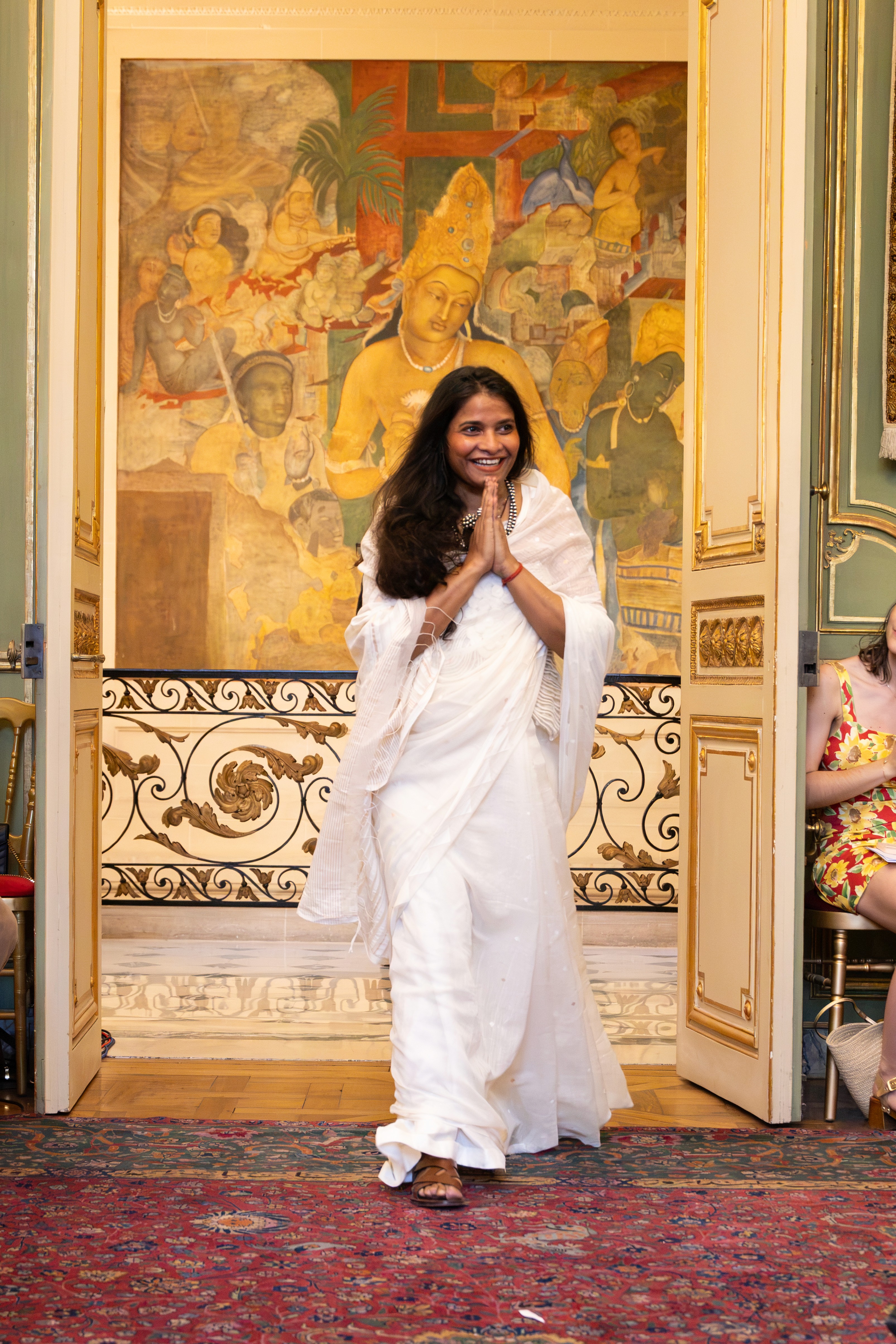
Every movement eventually gets a rebrand, and Bastar's just got its glossiest one yet. On National Handloom Day this August, a group of former Maoist fighters walked a ramp in Raipur wearing handwoven sarees, under lights built for maximum flattery, while Chief Minister Vishnu Deo Sai looked on from the front row, watching sixty years of counterinsurgency wrap up in handloom. If the original Naxal story was rifles, red flags, and half a century of forest warfare, this was version two point o: same women, entirely different plot, and a wardrobe department that clearly got the memo. The internet crowned it instantly, captioning the clips "guns to gulaabs" and meaning every syllable.
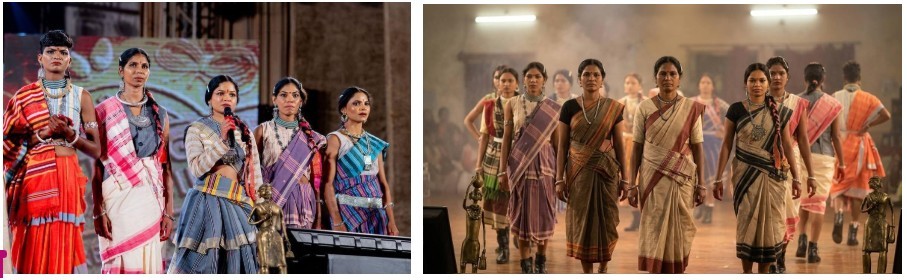
Former women Maoist cadres walk the ramp in handwoven sarees in Raipur
Madvi Malle, one of the women on the ramp, talked about the nerves she felt walking into rehearsal and the confidence that built through weeks of practice, the kind of glow-up arc social media devours. For a region that's spent generations as shorthand for violence, watching its women trade a rifle for a runway felt less like a policy update and more like a plot twist nobody saw coming.
Except it isn't really a plot twist. It's the finale, and to understand why it landed with such force, the story has to rewind almost sixty years.
The Naxalite movement takes its name from Naxalbari, a village in West Bengal where, in 1967, a group of peasants rose up against local landlords over land rights and got crushed, then inspired a Maoist insurgency that would eventually spread across nearly a third of India. At its peak in the mid-2000s, the movement fielded between 15 and 20,000 armed cadres, controlled a "Red Corridor" stretching through Chhattisgarh, Jharkhand, Odisha, and Andhra Pradesh, and forced the Indian state to fight a war within its own borders. More than twelve thousand people, rebels, soldiers and civilians, have died since that first uprising, and Bastar carried a brutal share of that math on its own: in the last twenty four years alone, the region recorded 1,833 civilian deaths against 1,292 security personnel killed, with 2007 and 2010 standing as the bloodiest years, including a single 2010 ambush in Sukma's Chintalnar that killed 76 CRPF jawans in one morning. This wasn't a low-grade nuisance. This was a genuine war, fought in dense forest, largely invisible to the rest of the country until the body count forced its way into headlines.
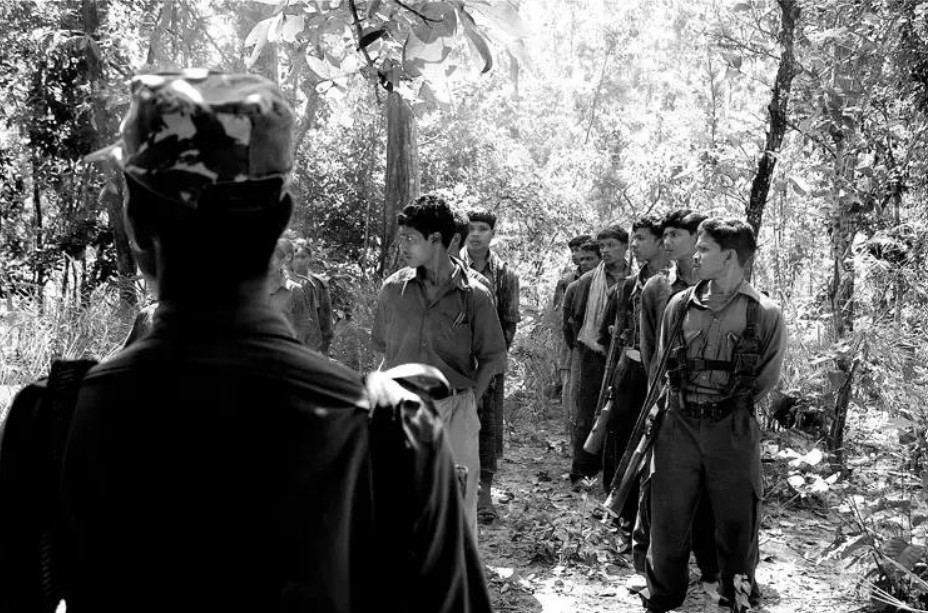
For decades, Bastar’s dense forests were the battleground of a long-running Maoist insurgency.
What changed the arithmetic was a deliberate, decades-long counterinsurgency strategy that stopped relying on force alone. Operations built specialised units such as the COBRA commandos and Chhattisgarh's own tribal Bastariya Battalion, while a 2017 framework called SAMADHAN sought to coordinate intelligence, technology, and aggressive action across all affected states at once. The results, on paper, are staggering. Naxal-linked violence dropped more than 80 per cent between 2010 and 2024. The number of insurgency-affected districts collapsed from 126 in 2013 to just 11 by 2025, with only 3 still classified as seriously affected, all in Chhattisgarh. In May last year, security forces killed Nambala Keshav Rao, alias Basavaraju, the movement's general secretary and, per India's home minister, its actual backbone, in what officials called the most significant blow to Naxal leadership in three decades. By this March, the home ministry stood up in parliament and declared the country formally free of the insurgency, citing 2025 figures alone: 364 insurgents killed, 1,022 arrested, and 2,337 surrendered.
That declaration is the real backstory to the ramp walk. Raipur's fashion show didn't happen in a vacuum; it happened as the government's victory lap, a soft, camera-ready coda to a hard military campaign that had just been officially closed out in Delhi. Which is precisely why it carries the gravitas it does. A state that spent sixty years fighting an insurgency now gets to stage its ending as a fashion show instead of a ceasefire, and that is, genuinely, a remarkable thing to witness.
It's also worth sitting with for longer than one viral video allows. Surrender numbers like 2,337 don't arrive in isolation; they arrive alongside arrest and kill counts from the same operations, in the same window, which is a polite way of saying the door marked "walk out peacefully" sits next to two other doors that are considerably less peaceful. And plenty of the women walking through that first door didn't arrive at the Maoist ranks purely through ideology to begin with. Bastar's villages, for decades, offered tribal women little say over land, marriage or violence at home, and the movement, whatever else it was, handed some of them a rank, a rifle and a voice their own communities rarely gave them. The state's rehabilitation policy, approved last year, now offers them money, housing, training and jobs in exchange for that rifle, and a rehabilitation cafe in Jagdalpur already has former cadres learning to pull espresso and weld instead of planting IEDs, genuine, unglamorous progress that deserves real credit.
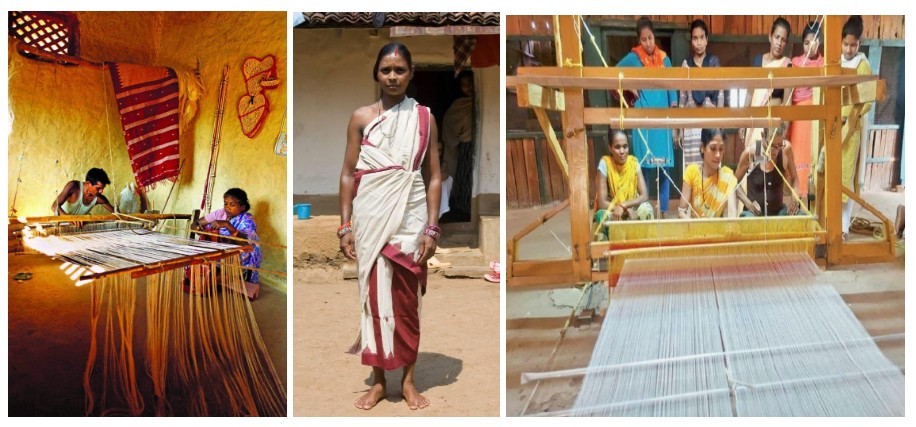
Bastar's handloom tradition became part of the women's new public identity on the runway.
But a saree on a ramp tells you nothing about whether any of that follow-through actually reaches the women wearing it. It tells you the state has finally figured out that an ending photograph is better in silk than in a spreadsheet. So here's the sequel worth watching for: not the applause in Raipur, but whether Madvi Malle and the women beside her still have a job, a home and a village that says their name without flinching, long after Delhi's declaration and Raipur's runway have both become old news.
TO BE CONTINUED, FOR SUBSCRIBERS ONLY.
This is where the surface ends and the reporting begins.
The complete piece, the full archive, and access to The French Press Circle. Reporting answerable only to its readers.
Already a subscriber ?
Login
Read these on the house, with our compliments.
A selection from the current issue, open to all readers. Read them in full. The rest is one decision away.








Every movement eventually gets a rebrand, and Bastar's just got its glossiest one yet. On National Handloom Day this August, a group of former Maoist fighters walked a ramp in Raipur wearing handwoven sarees, under lights built for maximum flattery, while Chief Minister Vishnu Deo Sai looked on from the front row, watching sixty years of counterinsurgency wrap up in handloom. If the original Naxal story was rifles, red flags, and half a century of forest warfare, this was version two point o: same women, entirely different plot, and a wardrobe department that clearly got the memo. The internet crowned it instantly, captioning the clips "guns to gulaabs" and meaning every syllable.
Former women Maoist cadres walk the ramp in handwoven sarees in Raipur
Madvi Malle, one of the women on the ramp, talked about the nerves she felt walking into rehearsal and the confidence that built through weeks of practice, the kind of glow-up arc social media devours. For a region that's spent generations as shorthand for violence, watching its women trade a rifle for a runway felt less like a policy update and more like a plot twist nobody saw coming.
Except it isn't really a plot twist. It's the finale, and to understand why it landed with such force, the story has to rewind almost sixty years.
The Naxalite movement takes its name from Naxalbari, a village in West Bengal where, in 1967, a group of peasants rose up against local landlords over land rights and got crushed, then inspired a Maoist insurgency that would eventually spread across nearly a third of India. At its peak in the mid-2000s, the movement fielded between 15 and 20,000 armed cadres, controlled a "Red Corridor" stretching through Chhattisgarh, Jharkhand, Odisha, and Andhra Pradesh, and forced the Indian state to fight a war within its own borders. More than twelve thousand people, rebels, soldiers and civilians, have died since that first uprising, and Bastar carried a brutal share of that math on its own: in the last twenty four years alone, the region recorded 1,833 civilian deaths against 1,292 security personnel killed, with 2007 and 2010 standing as the bloodiest years, including a single 2010 ambush in Sukma's Chintalnar that killed 76 CRPF jawans in one morning. This wasn't a low-grade nuisance. This was a genuine war, fought in dense forest, largely invisible to the rest of the country until the body count forced its way into headlines.
For decades, Bastar’s dense forests were the battleground of a long-running Maoist insurgency.
What changed the arithmetic was a deliberate, decades-long counterinsurgency strategy that stopped relying on force alone. Operations built specialised units such as the COBRA commandos and Chhattisgarh's own tribal Bastariya Battalion, while a 2017 framework called SAMADHAN sought to coordinate intelligence, technology, and aggressive action across all affected states at once. The results, on paper, are staggering. Naxal-linked violence dropped more than 80 per cent between 2010 and 2024. The number of insurgency-affected districts collapsed from 126 in 2013 to just 11 by 2025, with only 3 still classified as seriously affected, all in Chhattisgarh. In May last year, security forces killed Nambala Keshav Rao, alias Basavaraju, the movement's general secretary and, per India's home minister, its actual backbone, in what officials called the most significant blow to Naxal leadership in three decades. By this March, the home ministry stood up in parliament and declared the country formally free of the insurgency, citing 2025 figures alone: 364 insurgents killed, 1,022 arrested, and 2,337 surrendered.
That declaration is the real backstory to the ramp walk. Raipur's fashion show didn't happen in a vacuum; it happened as the government's victory lap, a soft, camera-ready coda to a hard military campaign that had just been officially closed out in Delhi. Which is precisely why it carries the gravitas it does. A state that spent sixty years fighting an insurgency now gets to stage its ending as a fashion show instead of a ceasefire, and that is, genuinely, a remarkable thing to witness.
It's also worth sitting with for longer than one viral video allows. Surrender numbers like 2,337 don't arrive in isolation; they arrive alongside arrest and kill counts from the same operations, in the same window, which is a polite way of saying the door marked "walk out peacefully" sits next to two other doors that are considerably less peaceful. And plenty of the women walking through that first door didn't arrive at the Maoist ranks purely through ideology to begin with. Bastar's villages, for decades, offered tribal women little say over land, marriage or violence at home, and the movement, whatever else it was, handed some of them a rank, a rifle and a voice their own communities rarely gave them. The state's rehabilitation policy, approved last year, now offers them money, housing, training and jobs in exchange for that rifle, and a rehabilitation cafe in Jagdalpur already has former cadres learning to pull espresso and weld instead of planting IEDs, genuine, unglamorous progress that deserves real credit.
Bastar's handloom tradition became part of the women's new public identity on the runway.
But a saree on a ramp tells you nothing about whether any of that follow-through actually reaches the women wearing it. It tells you the state has finally figured out that an ending photograph is better in silk than in a spreadsheet. So here's the sequel worth watching for: not the applause in Raipur, but whether Madvi Malle and the women beside her still have a job, a home and a village that says their name without flinching, long after Delhi's declaration and Raipur's runway have both become old news.
TO BE CONTINUED, FOR SUBSCRIBERS ONLY.
This is where the surface ends and the reporting begins.
The complete piece, the full archive, and access to The French Press Circle. Reporting answerable only to its readers.
Already a subscriber ?
Login
Read these on the house, with our compliments.
A selection from the current issue, open to all readers. Read them in full. The rest is one decision away.