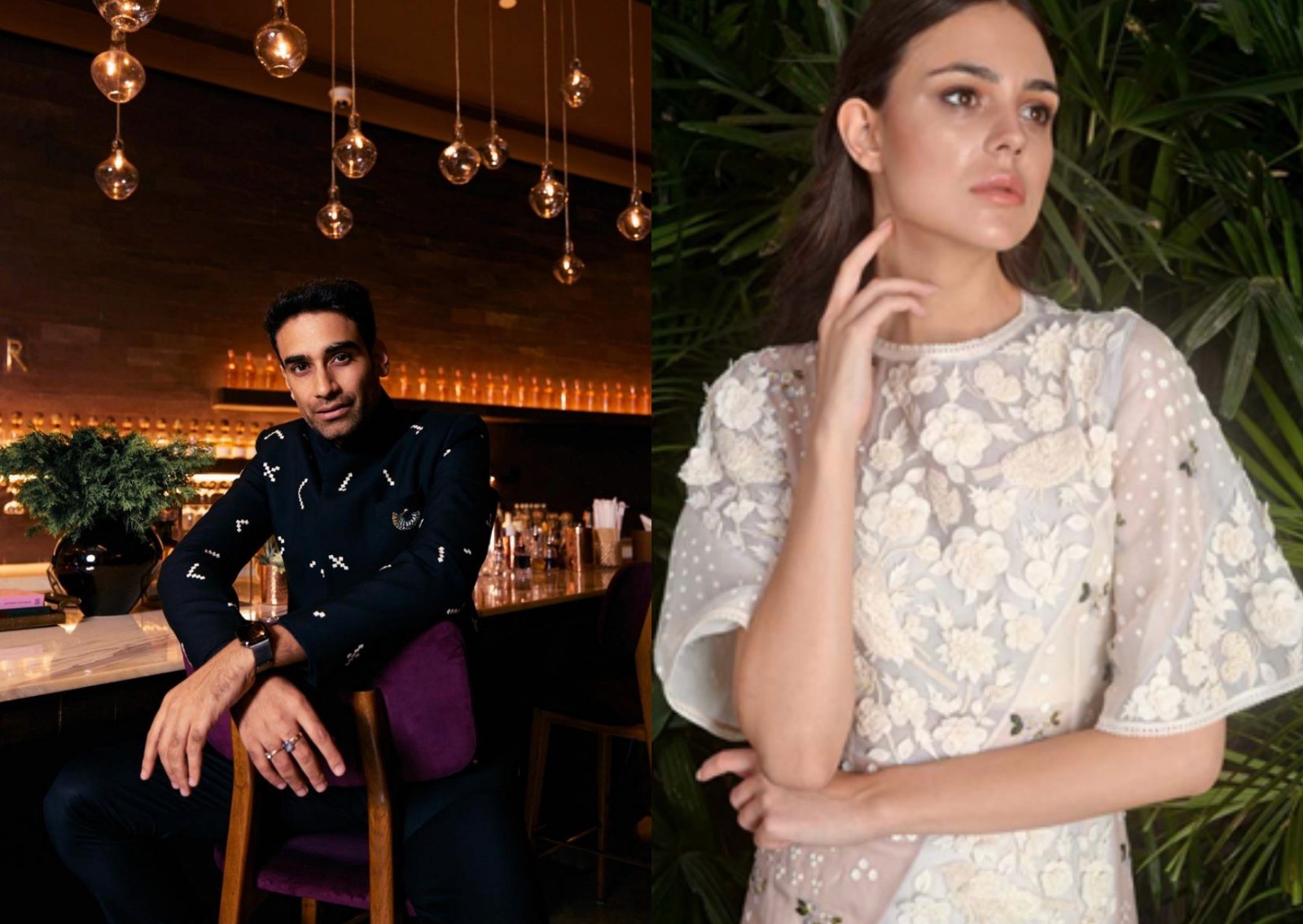
On 23 September, at Ananta Spa & Resort in Ajabgarh, Sahil Kochhar will show Savera, his Spring/Summer 2027 prêt collection, beside a pool in the middle of the Aravalli Hills. The room is closed and the list is short: patrons, journalists, industry figures, stylists and a handful of people whose opinion sets the temperature for the season ahead, gathered amid resounding interest from partners across the board. There is no livestream, no front row optics, no phones held aloft for a runway that has already been decided elsewhere.
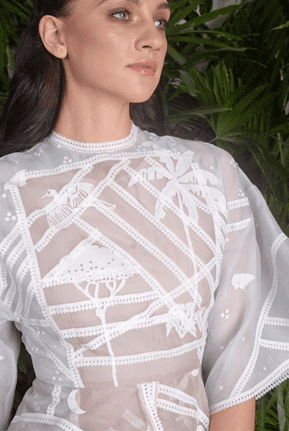

SPRING/SUMMER 2027 PRÉT COLLECTION
The setting is the argument. Ajabgarh sits beside Sariska, a tiger reserve that went from a single surviving animal to a stable population, which is the closest thing Indian conservation has to a redemption narrative. Restoration is the theme of this issue, and Kochhar has spent his entire career practising a version of it that starts inside the atelier, with fabric. Every piece of appliqué in Savera began as material somebody else discarded.
Kochhar sources surplus from his own production unit and from production houses, vendors, fabric markets and independent shopkeepers across India. Delhi holds the densest reserves, where textiles left over from large export houses and finished production runs accumulate in volume, waiting for a buyer who actually wants them. He has spent years building relationships with the people who collect and curate this material.
"Our intention, and something that's core to how we build the brand, is to always source and use leftover fabric for our appliqué work rather than reach for anything fresh," he explains.
At the atelier, that fabric is cut by hand and by laser into precise forms, then assembled into elaborate appliqué artwork. The technique is one of accumulation: hundreds of individual shapes, layered and stitched until they resolve into a single dimensional surface.
"It takes real effort to identify, collect, and curate these fabrics," he says, "but it lets us do our small part in reducing waste and staying mindful of the environment."
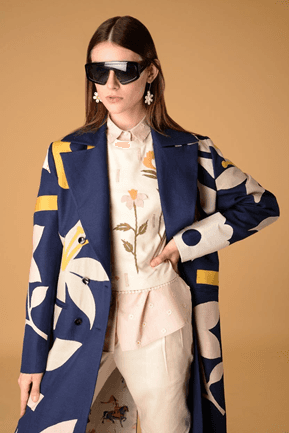

RAMSHA & SUHANA,| HRIDYA, LIVA ECO GREEN HEART SHOW
The practice predates the industry's current enthusiasm for talking about it. In 2019, Kochhar presented "Hridya" at Lotus Makeup India Fashion Week's Liva Eco Green Heart Show, working fabric remnants onto eco-friendly, biodegradable LIVA bases.
"Our collaboration with LIVA happened because sustainability and environmentally responsible fabrics have always been part of our philosophy," he says. "It wasn't something that began with that partnership. From the very start of the brand, we've explored fabrics and processes that are more mindful of their impact on the environment."
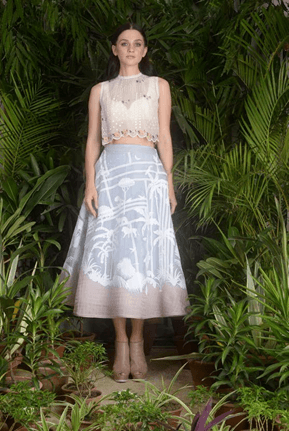
GULMOHAR | ROOH, SPRING / SUMMER
Collections since have kept the natural world as both subject and constraint. "Rooh" took the Sundarbans, its flora, fauna, landscapes and biodiversity, and translated them into delicate ivory appliqué on organza, reading the forest through the language of couture.
Savera closes that loop in the Aravallis.
"Presenting in Ajabgarh now feels like coming full circle", Kochhar says. "We began with inspiration from one of India's most remarkable ecosystems, and now we are showing our craft beside Sariska, a tiger reserve with its own inspiring conservation story."
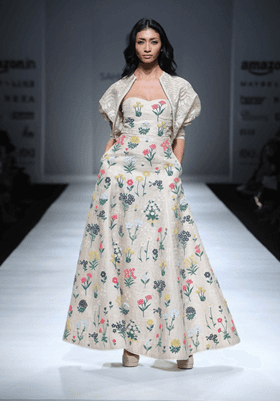

PHILAURI | KYARI, AUTUMN / WINTER 2017 KHUSH | KYARI, AUTUMN / WINTER 2017
He treats the reserve's recovery as evidence of what sustained attention produces. "Knowing that Sariska once had just a single tiger and now has a thriving population is incredibly encouraging," he says. "As a brand that keeps drawing from nature, landscape and wildlife, it means a great deal to present our work somewhere that reflects those very values."
The collection is built on linen, cotton blends, silk organza and viscose linen. Its most technically ambitious pieces dispense with a base fabric almost entirely.
"One of the things I'm most excited about is that we experimented with creating our own textiles through extensive threadwork and embroidery," Kochhar says. "In several pieces, the embroidery itself becomes the textile, with barely any reliance on a conventional base fabric."
Thread becomes structure. Embroidery becomes surface. Appliqué becomes an architecture assembled from fragments.
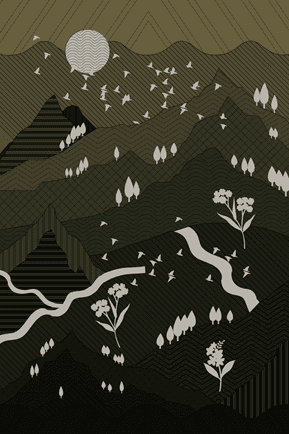
COLLECTION ARTWORK | KYARI
"All the appliqué work in the collection has also been made using leftover fabric that would otherwise have gone to waste," he adds. "Collecting and repurposing these materials lets us create richly layered surfaces and intricate embroidery while giving discarded fabric a new life."
The richness of the result comes from the interaction of colour, texture, embroidery, appliqué and the hands that bring each layer together. Kochhar declines to reduce those hands to a number.
"A large number of artisans contributed to this collection," he says. "It represents an entire ecosystem of craftspeople, embroiderers, technicians, and makers, all coming together with real passion and dedication to bring the vision to life."
That labour is what carries a garment past its season. Hours of specialised work turn fabric into an object of memory, craftsmanship and identity, and Kochhar measures the outcome in timelessness rather than years.
"For us, it was never about whether a garment lasts twenty years or fifty. It's about creating something timeless," he says.
The atelier spends its attention on technique, artwork and detailing, producing pieces that disclose themselves slowly. "Even if you've worn a garment before, when you go back to it months or years later, you often notice details you'd missed the first time," he explains.
The studio stays involved after the sale. Repair, restoration and resizing are offered to clients as standard.
"Absolutely. We've restored and repaired garments for many of our clients over the years," Kochhar says. "We believe exceptional craftsmanship deserves to be preserved and enjoyed for generations."
Longevity becomes its own dimension of luxury, the privilege of owning something made with enough depth to stay relevant, beautiful and meaningful over time.
Kochhar situates his practice inside a broader shift in Indian fashion, and treats sustainability as an evolving discipline rather than a fixed target.
"What I do believe is that there's been a real shift in mindset across the industry," he says. "Even when the efforts are small, the intention to be more conscious and responsible matters."
Experimentation carries its own risk. "Innovation involves experimentation, and not every attempt works out exactly as planned. Sometimes an idea succeeds; sometimes it just points you toward a better solution."
"Across the industry, I see real willingness to contribute in whatever way people can, and I think that's a positive step forward," he says.
At Ajabgarh, the elements arrange themselves neatly. The Aravallis provide the landscape, Sariska provides the proof that damage can be reversed, and Savera provides a third reading of nature through the meticulous language of the atelier.
Thousands of small shapes become a surface. Surplus textiles become intricate artwork. Thread becomes textile. Craftsmanship becomes memory. A garment becomes something capable of travelling through generations.
This is the arithmetic of appliqué: an appreciation of what can be brought together, calculated from what was left behind.
For Sahil Kochhar, beauty and responsibility occupy the same garment. Savera is the proof, and 80 to 100 people in the Aravallis will see it first.
TO BE CONTINUED, FOR SUBSCRIBERS ONLY.
This is where the surface ends and the reporting begins.
The complete piece, the full archive, and access to The French Press Circle. Reporting answerable only to its readers.
Already a subscriber ?
Login
Read these on the house, with our compliments.
A selection from the current issue, open to all readers. Read them in full. The rest is one decision away.

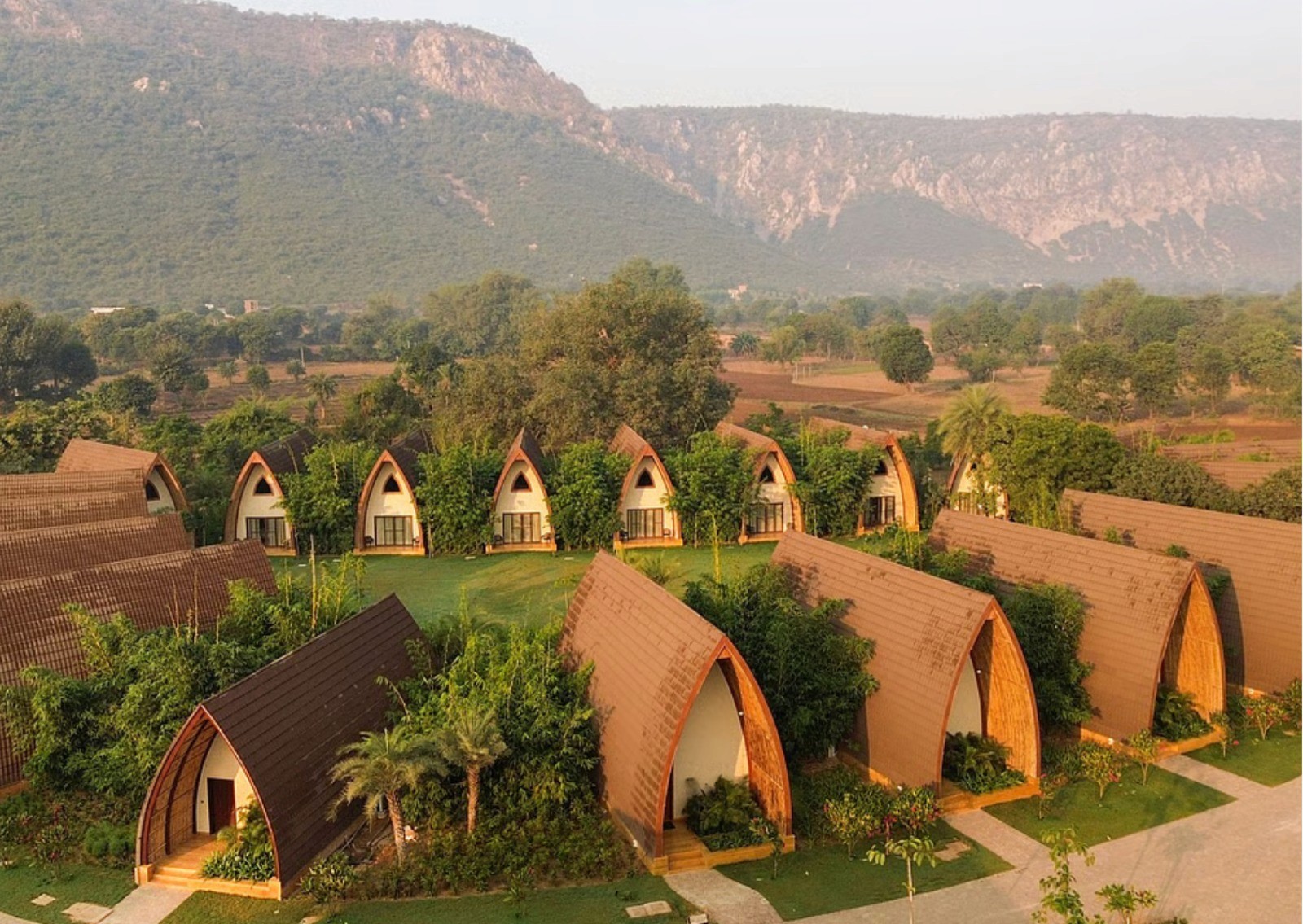



On 23 September, at Ananta Spa & Resort in Ajabgarh, Sahil Kochhar will show Savera, his Spring/Summer 2027 prêt collection, beside a pool in the middle of the Aravalli Hills. The room is closed and the list is short: patrons, journalists, industry figures, stylists and a handful of people whose opinion sets the temperature for the season ahead, gathered amid resounding interest from partners across the board. There is no livestream, no front row optics, no phones held aloft for a runway that has already been decided elsewhere.
SPRING/SUMMER 2027 PRÉT COLLECTION
The setting is the argument. Ajabgarh sits beside Sariska, a tiger reserve that went from a single surviving animal to a stable population, which is the closest thing Indian conservation has to a redemption narrative. Restoration is the theme of this issue, and Kochhar has spent his entire career practising a version of it that starts inside the atelier, with fabric. Every piece of appliqué in Savera began as material somebody else discarded.
Kochhar sources surplus from his own production unit and from production houses, vendors, fabric markets and independent shopkeepers across India. Delhi holds the densest reserves, where textiles left over from large export houses and finished production runs accumulate in volume, waiting for a buyer who actually wants them. He has spent years building relationships with the people who collect and curate this material.
"Our intention, and something that's core to how we build the brand, is to always source and use leftover fabric for our appliqué work rather than reach for anything fresh," he explains.
At the atelier, that fabric is cut by hand and by laser into precise forms, then assembled into elaborate appliqué artwork. The technique is one of accumulation: hundreds of individual shapes, layered and stitched until they resolve into a single dimensional surface.
"It takes real effort to identify, collect, and curate these fabrics," he says, "but it lets us do our small part in reducing waste and staying mindful of the environment."
RAMSHA & SUHANA,| HRIDYA, LIVA ECO GREEN HEART SHOW
The practice predates the industry's current enthusiasm for talking about it. In 2019, Kochhar presented "Hridya" at Lotus Makeup India Fashion Week's Liva Eco Green Heart Show, working fabric remnants onto eco-friendly, biodegradable LIVA bases.
"Our collaboration with LIVA happened because sustainability and environmentally responsible fabrics have always been part of our philosophy," he says. "It wasn't something that began with that partnership. From the very start of the brand, we've explored fabrics and processes that are more mindful of their impact on the environment."
GULMOHAR | ROOH, SPRING / SUMMER
Collections since have kept the natural world as both subject and constraint. "Rooh" took the Sundarbans, its flora, fauna, landscapes and biodiversity, and translated them into delicate ivory appliqué on organza, reading the forest through the language of couture.
Savera closes that loop in the Aravallis.
"Presenting in Ajabgarh now feels like coming full circle", Kochhar says. "We began with inspiration from one of India's most remarkable ecosystems, and now we are showing our craft beside Sariska, a tiger reserve with its own inspiring conservation story."
PHILAURI | KYARI, AUTUMN / WINTER 2017 KHUSH | KYARI, AUTUMN / WINTER 2017
He treats the reserve's recovery as evidence of what sustained attention produces. "Knowing that Sariska once had just a single tiger and now has a thriving population is incredibly encouraging," he says. "As a brand that keeps drawing from nature, landscape and wildlife, it means a great deal to present our work somewhere that reflects those very values."
The collection is built on linen, cotton blends, silk organza and viscose linen. Its most technically ambitious pieces dispense with a base fabric almost entirely.
"One of the things I'm most excited about is that we experimented with creating our own textiles through extensive threadwork and embroidery," Kochhar says. "In several pieces, the embroidery itself becomes the textile, with barely any reliance on a conventional base fabric."
Thread becomes structure. Embroidery becomes surface. Appliqué becomes an architecture assembled from fragments.
COLLECTION ARTWORK | KYARI
"All the appliqué work in the collection has also been made using leftover fabric that would otherwise have gone to waste," he adds. "Collecting and repurposing these materials lets us create richly layered surfaces and intricate embroidery while giving discarded fabric a new life."
The richness of the result comes from the interaction of colour, texture, embroidery, appliqué and the hands that bring each layer together. Kochhar declines to reduce those hands to a number.
"A large number of artisans contributed to this collection," he says. "It represents an entire ecosystem of craftspeople, embroiderers, technicians, and makers, all coming together with real passion and dedication to bring the vision to life."
That labour is what carries a garment past its season. Hours of specialised work turn fabric into an object of memory, craftsmanship and identity, and Kochhar measures the outcome in timelessness rather than years.
"For us, it was never about whether a garment lasts twenty years or fifty. It's about creating something timeless," he says.
The atelier spends its attention on technique, artwork and detailing, producing pieces that disclose themselves slowly. "Even if you've worn a garment before, when you go back to it months or years later, you often notice details you'd missed the first time," he explains.
The studio stays involved after the sale. Repair, restoration and resizing are offered to clients as standard.
"Absolutely. We've restored and repaired garments for many of our clients over the years," Kochhar says. "We believe exceptional craftsmanship deserves to be preserved and enjoyed for generations."
Longevity becomes its own dimension of luxury, the privilege of owning something made with enough depth to stay relevant, beautiful and meaningful over time.
Kochhar situates his practice inside a broader shift in Indian fashion, and treats sustainability as an evolving discipline rather than a fixed target.
"What I do believe is that there's been a real shift in mindset across the industry," he says. "Even when the efforts are small, the intention to be more conscious and responsible matters."
Experimentation carries its own risk. "Innovation involves experimentation, and not every attempt works out exactly as planned. Sometimes an idea succeeds; sometimes it just points you toward a better solution."
"Across the industry, I see real willingness to contribute in whatever way people can, and I think that's a positive step forward," he says.
At Ajabgarh, the elements arrange themselves neatly. The Aravallis provide the landscape, Sariska provides the proof that damage can be reversed, and Savera provides a third reading of nature through the meticulous language of the atelier.
Thousands of small shapes become a surface. Surplus textiles become intricate artwork. Thread becomes textile. Craftsmanship becomes memory. A garment becomes something capable of travelling through generations.
This is the arithmetic of appliqué: an appreciation of what can be brought together, calculated from what was left behind.
For Sahil Kochhar, beauty and responsibility occupy the same garment. Savera is the proof, and 80 to 100 people in the Aravallis will see it first.
TO BE CONTINUED, FOR SUBSCRIBERS ONLY.
This is where the surface ends and the reporting begins.
The complete piece, the full archive, and access to The French Press Circle. Reporting answerable only to its readers.
Already a subscriber ?
Login
Read these on the house, with our compliments.
A selection from the current issue, open to all readers. Read them in full. The rest is one decision away.