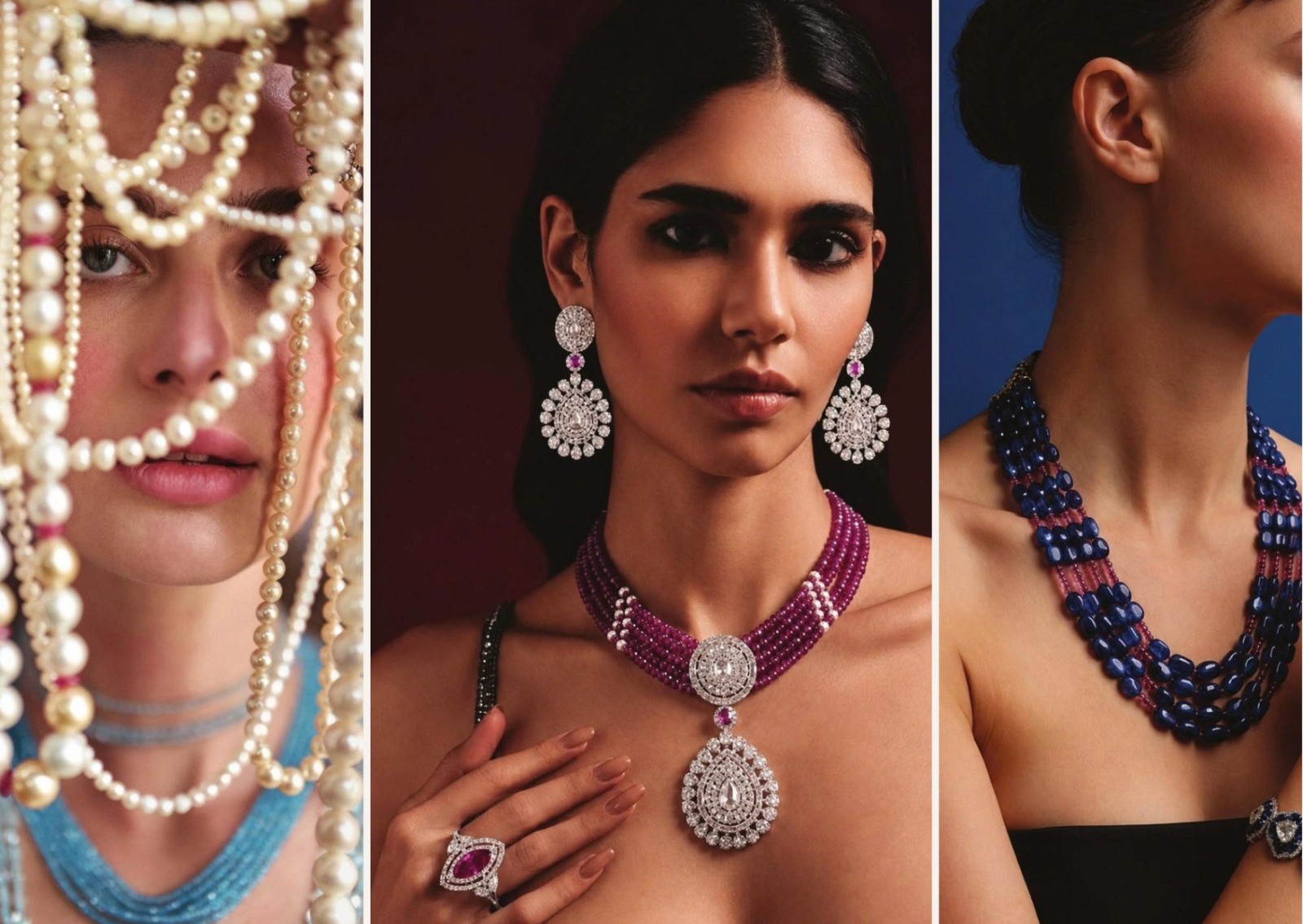
This spring, at a Delhi preview, Isvari India unveiled Maalya. The collection is built around a simple premise: gemstones gathered across seventy years of the house's history, restrung into contemporary heirlooms rather than sold off or replaced. Maalya required no new sourcing. The material was already there, held in decades of the house's own archive, waiting to be used again.

Six weeks later, the rest of the industry began racing to catch up. In May 2026, India raised its gold import duty from 6% to 15%, and the response was immediate. Within days, Kalyan Jewellers launched its "Nation First – Gold4India" initiative, explicitly designed to reduce import dependence and bring gold already inside the country back into circulation. PNG Jewellers followed with Swarna Swaraj, framed the same way and tied to a direct government appeal for gold conservation. Mandatory hallmarking, which covered 380 districts as of March 2026 and has since expanded to 392, continued to tighten oversight of gold purity and traceability, while Augmont piloted an AI-assisted purity-evaluation machine at its Chennai branch to make recycled gold easier to verify. The sector spent the middle of the year building infrastructure for an idea Isvari had already turned into a finished collection.
This is the story of a family jeweller that wasn't reacting to policy but was already ahead of it, a house where the macroeconomics of the trade shifted to meet the position it already held. It also means the honest version of the sustainability question is more interesting than the marketing version. There is still no enforceable Indian or international standard for certified recycled gold, so when Manik Jain says none of Isvari's metal carries formal recycled certification, that isn't a gap in his practice. It's a gap in the paperwork built to describe practices like his. The story worth telling is of a house that was doing the harder thing, restringing rather than re-sourcing, before the rest of the industry had a campaign name for it, and of a national policy shift that is only now catching up to a decades-old archive.
The Infrastructure of Preservation
To understand how Maalya sidestepped the supply shock of 2026, one has to look at the physical engineering of high jewellery.
For generations, mainstream production has treated metal settings as permanent. Precious stones are cast into heavy, rigid mountings, glued into recessed channels, or encased in ways that make extraction destructive. Changing a design traditionally meant risking damage to the gem or losing significant gold weight in re-melting.
Maalya works on an entirely different structural logic: open-wire architecture.
Instead of fixed mountings, every gemstone bead in a Maalya strand is hand-threaded and bound with continuous solid gold wire. Refined over twenty-four years of Manik Jain's own bench practice, and building on techniques passed down through four generations of the family, this approach keeps essentially all of the material fully recoverable.

The mechanics are straightforward:
Zero-Loss Disassembly: Artisans unspin the gold wire links by hand, without grinding or burning. Every milligram of gold is accounted for, recovered, and ready to be re-alloyed without structural loss.
Non-Destructive Extraction: Because the gemstones are never chemically bonded or subjected to high-pressure friction settings, their facets, clarity, and carat weight remain fully intact.
Infinite Reconfiguration: A long traditional mala can be unspun and reworked into a modern choker, a pair of stacked bracelets, or a contemporary geometric collar, adapting to modern wardrobes without a single gram of newly mined material.
When the 2026 import duties hit, jewellers who relied on traditional, destructive manufacturing found themselves caught in a high-cost loop. Isvari simply opened its safes. "Everything is designed, and everything is produced under our own roof," Manik Jain explains. "When you control the bench, you control the lifecycle of the piece." The gold wire was there. The stones were there. The mechanics of endless, non-destructive restoration were already built into the product line.
The Certification Paradox: When Paperwork Lags Practice
In today's consumer landscape, "sustainability" is often reduced to a branding exercise, a claim validated by third-party certificates, green seals, and corporate compliance audits.
Asked whether the metal in Maalya carries formal certified-recycled accreditation, Jain answers plainly: it does not.
In another context, that might sound like an admission. In the context of the Indian jewellery trade, it exposes the gap between real bench practice and the paperwork meant to describe it. At present, neither Indian regulators nor international trade bodies maintain a standardised, enforceable, widely accepted certification framework for recycled gold that fits the reality of traditional family ateliers.
Most global recycled-gold certifications are designed for large industrial refineries processing bulk electronics or secondary-market bullion. They were not built for a multi-generation family jeweller who takes a decades-old necklace handed down from a client's grandmother (her Nani or Dadi), melts the gold in-house, unthreads the uncut polki diamonds, and reworks the same metal into a contemporary everyday piece.
"True sustainability in fine jewellery isn't about buying a badge or a paper certificate," says Jain. "Mining inherently impacts nature, but fine jewellery by its very nature is meant to be eternal. When you melt down a hundred-year-old heirloom to craft something a young woman can wear every day, that is the purest form of recycling that exists."
Isvari's practice is inherently circular, but it rests on trust, hallmarking, and metallurgical integrity rather than marketing badges.
For decades, the house's reputation has depended on absolute accuracy in karatage. Long before government hallmarking expanded across hundreds of districts, Isvari's name rested on ensuring that its 18-karat or 20-karat gold was exactly what it claimed to be. When an ancestral piece enters Jain's workshop to be restored or transformed into a Maalya creation, the metal is verified, melted, and recrafted under strict metallurgical controls. "What every jeweller needs to adopt starting now isn't a new marketing campaign, but absolute honesty in purity and fair trade ethics," Jain notes. The absence of a "recycled" label isn't a flaw in Isvari's method. It is evidence that the house was practising true circularity before any certification existed to describe it.
Sourcing as an Archive, Not a Commodity
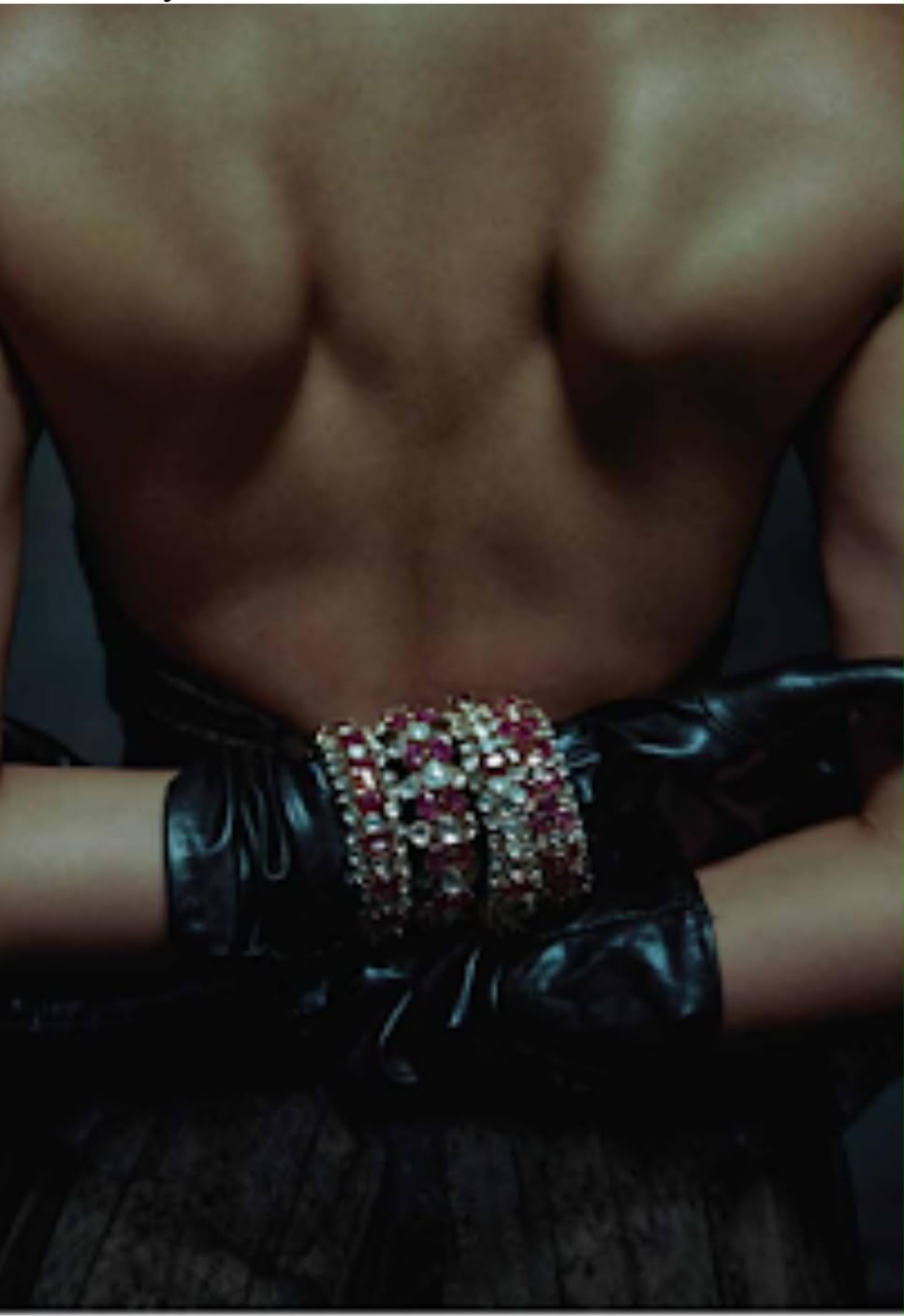
This archival approach extends well beyond metal recovery; it shapes how Jain thinks about gemstone procurement as a whole.
Across twenty-four years in the trade, Jain's sourcing strategy was never about buying for fast, high-volume turnover. It was an exercise in continuous curation. Long before post-COVID trade shifts made Bangkok a primary gemstone hub, prompting Jain's current schedule of five to eight procurement trips a year, the house was quietly accumulating rare, high-quality gems from Australia, Brazil, and estate sales in Hong Kong.
"We have always operated on a gem-first philosophy," says Jain. "We don't buy stones just to fill a seasonal catalogue or chase a fleeting trend. We look at a gemstone's rarity, colour, and character, knowing it might sit in our vault for years until the right design or the right collection, like Maalya, demands it."
Where other houses bought stones only to set them immediately into rigid, trend-driven inventory, Isvari treated procurement as a living vault. Gems were chosen for their intrinsic character, colour saturation, and ability to withstand decades of handling.
That depth allowed Isvari to anticipate two notable shifts in the Indian market.

1. The Architectural Shift in Bridal Wear
As gold prices climbed, younger brides began turning away from heavy, fixed gold bridal sets that spent decades locked in bank vaults after a single wedding day. Through Artisanal by ISVARI, the house moved into structural sterling silver, setting polki, diamonds, and carved emeralds into silver bases finished with Egyptian-inspired surface textures. "Brides today don't want their jewellery locked away in a safe," Jain observes. "They want pieces that carry weight, statement, and history, but offer the versatility and comfort to be worn long after the wedding day is over."
2. The Men's Regal Renaissance
At the same time, Indian menswear was changing. Influenced by couture styling and historical cinema, grooms began moving away from plain tailored sherwanis and back toward the regal adornments of the old courts. Multi-strand malas, layered with pearls, emeralds, and rubies, have become an increasingly visible force in the wedding market, which remains the single largest driver of India's jewellery trade.
"Indian men are reconnecting with their cultural roots," Jain explains. "The mala isn't just an accessory for a groom anymore; it's a statement of heritage and divinity. Because our strands are designed to be re-threaded and modular, a groom can wear a royal multi-strand mala on his wedding day, and later reconfigure those exact gemstone beads into layered bracelets or sleeker strands."

The Preservation of Soul in an Age of Automation
One final reality sets Isvari's archival model apart from the corporate campaigns of 2026: the preservation of human labour.
Over the past two decades, the global jewellery industry has mechanised rapidly. In the push for efficiency, bench jewellers have been replaced by 3D printers, automated casting machines, and robotic polishers, and traditional hand-workers have been turned into machine operators.
At Isvari, machinery is limited strictly to dimensional measurement and tolerance checks. The soul of each piece stays in the hands of master artisans: the careful unspinning of gold wire, the hand-sorting of gemstone gradations, and the textured surface finishing.
Jain's father, a craftsman with decades at the bench, still guides the atelier's design language. "My father always taught me that the client is our greatest teacher," Jain reflects. "They bring us their stories, their inherited family treasures, and their travel experiences. A machine can stamp out a million precise gold bands, but it cannot listen to a family's history or understand the emotional soul of an ancestral ruby before giving it new life."
Ahead of the Curve
When Maalya was presented in Delhi this spring, it wasn't designed as a political statement about import tariffs, national gold reserves, or corporate ESG targets. It was simply the natural expression of a decades-old family rule: respect the raw material, build things that last, and never destroy what can be restored.
As the rest of the Indian jewellery sector continues to spend millions on infrastructure, AI purity checkers, and marketing campaigns to persuade consumers to recycle their gold, Isvari India keeps doing what it has always done.
In the quiet corners of the atelier, artisans are unspinning gold wire, re-sorting decades-old emeralds, and proving that the future of luxury isn't about finding something new. It's about having the vision, discipline, and heritage to see the possibilities already sitting in the archive.
TO BE CONTINUED, FOR SUBSCRIBERS ONLY.
This is where the surface ends and the reporting begins.
The complete piece, the full archive, and access to The French Press Circle. Reporting answerable only to its readers.
Already a subscriber ?
Login
Read these on the house, with our compliments.
A selection from the current issue, open to all readers. Read them in full. The rest is one decision away.







This spring, at a Delhi preview, Isvari India unveiled Maalya. The collection is built around a simple premise: gemstones gathered across seventy years of the house's history, restrung into contemporary heirlooms rather than sold off or replaced. Maalya required no new sourcing. The material was already there, held in decades of the house's own archive, waiting to be used again.
Six weeks later, the rest of the industry began racing to catch up. In May 2026, India raised its gold import duty from 6% to 15%, and the response was immediate. Within days, Kalyan Jewellers launched its "Nation First – Gold4India" initiative, explicitly designed to reduce import dependence and bring gold already inside the country back into circulation. PNG Jewellers followed with Swarna Swaraj, framed the same way and tied to a direct government appeal for gold conservation. Mandatory hallmarking, which covered 380 districts as of March 2026 and has since expanded to 392, continued to tighten oversight of gold purity and traceability, while Augmont piloted an AI-assisted purity-evaluation machine at its Chennai branch to make recycled gold easier to verify. The sector spent the middle of the year building infrastructure for an idea Isvari had already turned into a finished collection.
This is the story of a family jeweller that wasn't reacting to policy but was already ahead of it, a house where the macroeconomics of the trade shifted to meet the position it already held. It also means the honest version of the sustainability question is more interesting than the marketing version. There is still no enforceable Indian or international standard for certified recycled gold, so when Manik Jain says none of Isvari's metal carries formal recycled certification, that isn't a gap in his practice. It's a gap in the paperwork built to describe practices like his. The story worth telling is of a house that was doing the harder thing, restringing rather than re-sourcing, before the rest of the industry had a campaign name for it, and of a national policy shift that is only now catching up to a decades-old archive.
The Infrastructure of Preservation
To understand how Maalya sidestepped the supply shock of 2026, one has to look at the physical engineering of high jewellery.
For generations, mainstream production has treated metal settings as permanent. Precious stones are cast into heavy, rigid mountings, glued into recessed channels, or encased in ways that make extraction destructive. Changing a design traditionally meant risking damage to the gem or losing significant gold weight in re-melting.
Maalya works on an entirely different structural logic: open-wire architecture.
Instead of fixed mountings, every gemstone bead in a Maalya strand is hand-threaded and bound with continuous solid gold wire. Refined over twenty-four years of Manik Jain's own bench practice, and building on techniques passed down through four generations of the family, this approach keeps essentially all of the material fully recoverable.
The mechanics are straightforward:
Zero-Loss Disassembly: Artisans unspin the gold wire links by hand, without grinding or burning. Every milligram of gold is accounted for, recovered, and ready to be re-alloyed without structural loss.
Non-Destructive Extraction: Because the gemstones are never chemically bonded or subjected to high-pressure friction settings, their facets, clarity, and carat weight remain fully intact.
Infinite Reconfiguration: A long traditional mala can be unspun and reworked into a modern choker, a pair of stacked bracelets, or a contemporary geometric collar, adapting to modern wardrobes without a single gram of newly mined material.
When the 2026 import duties hit, jewellers who relied on traditional, destructive manufacturing found themselves caught in a high-cost loop. Isvari simply opened its safes. "Everything is designed, and everything is produced under our own roof," Manik Jain explains. "When you control the bench, you control the lifecycle of the piece." The gold wire was there. The stones were there. The mechanics of endless, non-destructive restoration were already built into the product line.
The Certification Paradox: When Paperwork Lags Practice
In today's consumer landscape, "sustainability" is often reduced to a branding exercise, a claim validated by third-party certificates, green seals, and corporate compliance audits.
Asked whether the metal in Maalya carries formal certified-recycled accreditation, Jain answers plainly: it does not.
In another context, that might sound like an admission. In the context of the Indian jewellery trade, it exposes the gap between real bench practice and the paperwork meant to describe it. At present, neither Indian regulators nor international trade bodies maintain a standardised, enforceable, widely accepted certification framework for recycled gold that fits the reality of traditional family ateliers.
Most global recycled-gold certifications are designed for large industrial refineries processing bulk electronics or secondary-market bullion. They were not built for a multi-generation family jeweller who takes a decades-old necklace handed down from a client's grandmother (her Nani or Dadi), melts the gold in-house, unthreads the uncut polki diamonds, and reworks the same metal into a contemporary everyday piece.
"True sustainability in fine jewellery isn't about buying a badge or a paper certificate," says Jain. "Mining inherently impacts nature, but fine jewellery by its very nature is meant to be eternal. When you melt down a hundred-year-old heirloom to craft something a young woman can wear every day, that is the purest form of recycling that exists."
Isvari's practice is inherently circular, but it rests on trust, hallmarking, and metallurgical integrity rather than marketing badges.
For decades, the house's reputation has depended on absolute accuracy in karatage. Long before government hallmarking expanded across hundreds of districts, Isvari's name rested on ensuring that its 18-karat or 20-karat gold was exactly what it claimed to be. When an ancestral piece enters Jain's workshop to be restored or transformed into a Maalya creation, the metal is verified, melted, and recrafted under strict metallurgical controls. "What every jeweller needs to adopt starting now isn't a new marketing campaign, but absolute honesty in purity and fair trade ethics," Jain notes. The absence of a "recycled" label isn't a flaw in Isvari's method. It is evidence that the house was practising true circularity before any certification existed to describe it.
Sourcing as an Archive, Not a Commodity
This archival approach extends well beyond metal recovery; it shapes how Jain thinks about gemstone procurement as a whole.
Across twenty-four years in the trade, Jain's sourcing strategy was never about buying for fast, high-volume turnover. It was an exercise in continuous curation. Long before post-COVID trade shifts made Bangkok a primary gemstone hub, prompting Jain's current schedule of five to eight procurement trips a year, the house was quietly accumulating rare, high-quality gems from Australia, Brazil, and estate sales in Hong Kong.
"We have always operated on a gem-first philosophy," says Jain. "We don't buy stones just to fill a seasonal catalogue or chase a fleeting trend. We look at a gemstone's rarity, colour, and character, knowing it might sit in our vault for years until the right design or the right collection, like Maalya, demands it."
Where other houses bought stones only to set them immediately into rigid, trend-driven inventory, Isvari treated procurement as a living vault. Gems were chosen for their intrinsic character, colour saturation, and ability to withstand decades of handling.
That depth allowed Isvari to anticipate two notable shifts in the Indian market.
1. The Architectural Shift in Bridal Wear
As gold prices climbed, younger brides began turning away from heavy, fixed gold bridal sets that spent decades locked in bank vaults after a single wedding day. Through Artisanal by ISVARI, the house moved into structural sterling silver, setting polki, diamonds, and carved emeralds into silver bases finished with Egyptian-inspired surface textures. "Brides today don't want their jewellery locked away in a safe," Jain observes. "They want pieces that carry weight, statement, and history, but offer the versatility and comfort to be worn long after the wedding day is over."
2. The Men's Regal Renaissance
At the same time, Indian menswear was changing. Influenced by couture styling and historical cinema, grooms began moving away from plain tailored sherwanis and back toward the regal adornments of the old courts. Multi-strand malas, layered with pearls, emeralds, and rubies, have become an increasingly visible force in the wedding market, which remains the single largest driver of India's jewellery trade.
"Indian men are reconnecting with their cultural roots," Jain explains. "The mala isn't just an accessory for a groom anymore; it's a statement of heritage and divinity. Because our strands are designed to be re-threaded and modular, a groom can wear a royal multi-strand mala on his wedding day, and later reconfigure those exact gemstone beads into layered bracelets or sleeker strands."
The Preservation of Soul in an Age of Automation
One final reality sets Isvari's archival model apart from the corporate campaigns of 2026: the preservation of human labour.
Over the past two decades, the global jewellery industry has mechanised rapidly. In the push for efficiency, bench jewellers have been replaced by 3D printers, automated casting machines, and robotic polishers, and traditional hand-workers have been turned into machine operators.
At Isvari, machinery is limited strictly to dimensional measurement and tolerance checks. The soul of each piece stays in the hands of master artisans: the careful unspinning of gold wire, the hand-sorting of gemstone gradations, and the textured surface finishing.
Jain's father, a craftsman with decades at the bench, still guides the atelier's design language. "My father always taught me that the client is our greatest teacher," Jain reflects. "They bring us their stories, their inherited family treasures, and their travel experiences. A machine can stamp out a million precise gold bands, but it cannot listen to a family's history or understand the emotional soul of an ancestral ruby before giving it new life."
Ahead of the Curve
When Maalya was presented in Delhi this spring, it wasn't designed as a political statement about import tariffs, national gold reserves, or corporate ESG targets. It was simply the natural expression of a decades-old family rule: respect the raw material, build things that last, and never destroy what can be restored.
As the rest of the Indian jewellery sector continues to spend millions on infrastructure, AI purity checkers, and marketing campaigns to persuade consumers to recycle their gold, Isvari India keeps doing what it has always done.
In the quiet corners of the atelier, artisans are unspinning gold wire, re-sorting decades-old emeralds, and proving that the future of luxury isn't about finding something new. It's about having the vision, discipline, and heritage to see the possibilities already sitting in the archive.
TO BE CONTINUED, FOR SUBSCRIBERS ONLY.
This is where the surface ends and the reporting begins.
The complete piece, the full archive, and access to The French Press Circle. Reporting answerable only to its readers.
Already a subscriber ?
Login
Read these on the house, with our compliments.
A selection from the current issue, open to all readers. Read them in full. The rest is one decision away.