Sariska lost its tigers by 2005, and with them went much of the momentum for investing in the villages around the reserve. When the first cat returned, ST-1, translocated from Ranthambhore in July 2008, the reserve's own conservationists credited community engagement as much as science for making that recovery hold. That history gives any new development on Sariska's fringe a natural measure to live up to, and Ananta Spa & Resort, Ajabgarh, sits close enough to that fringe to be worth measuring against it.

Director Ashutosh Goyal
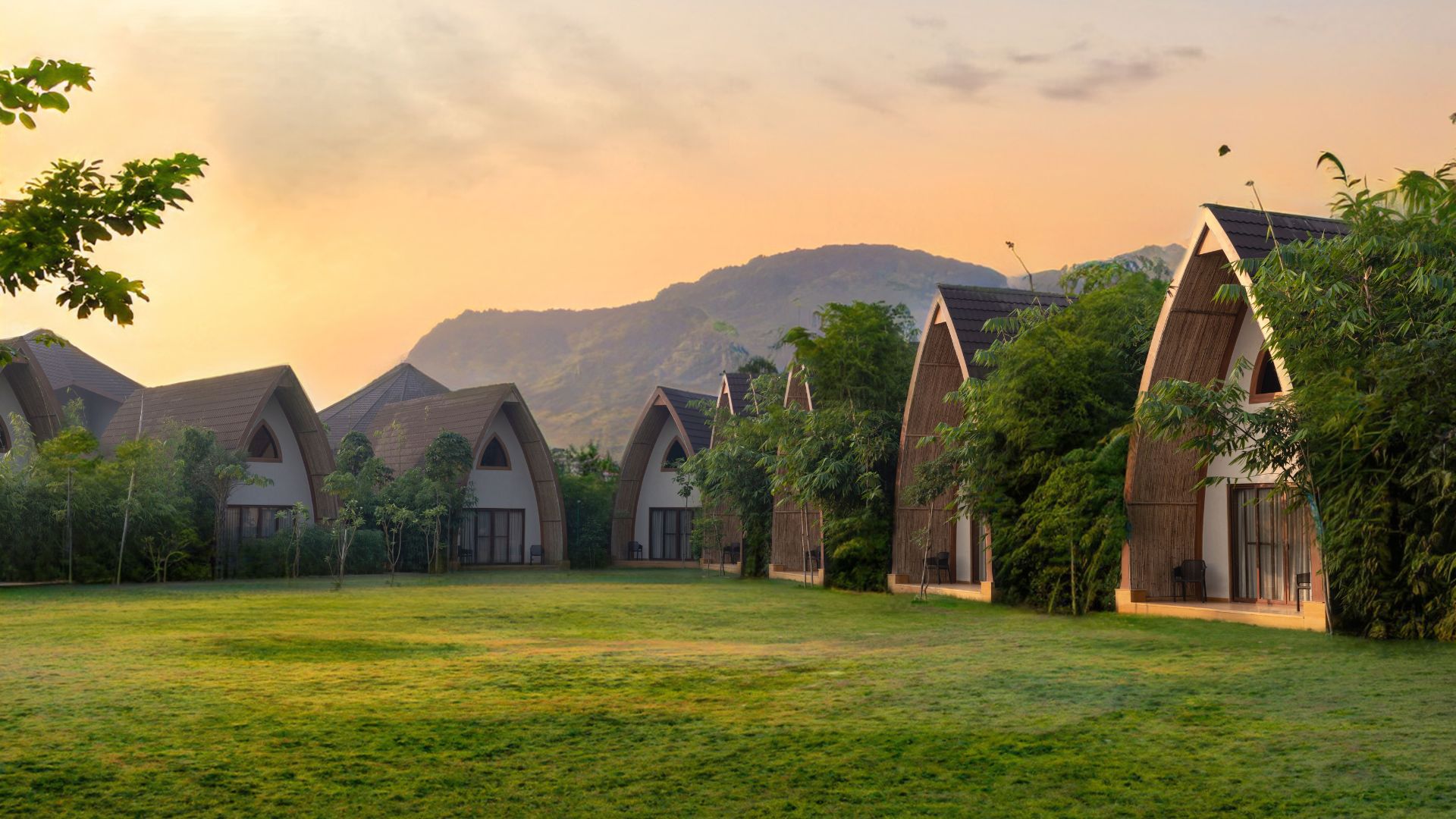
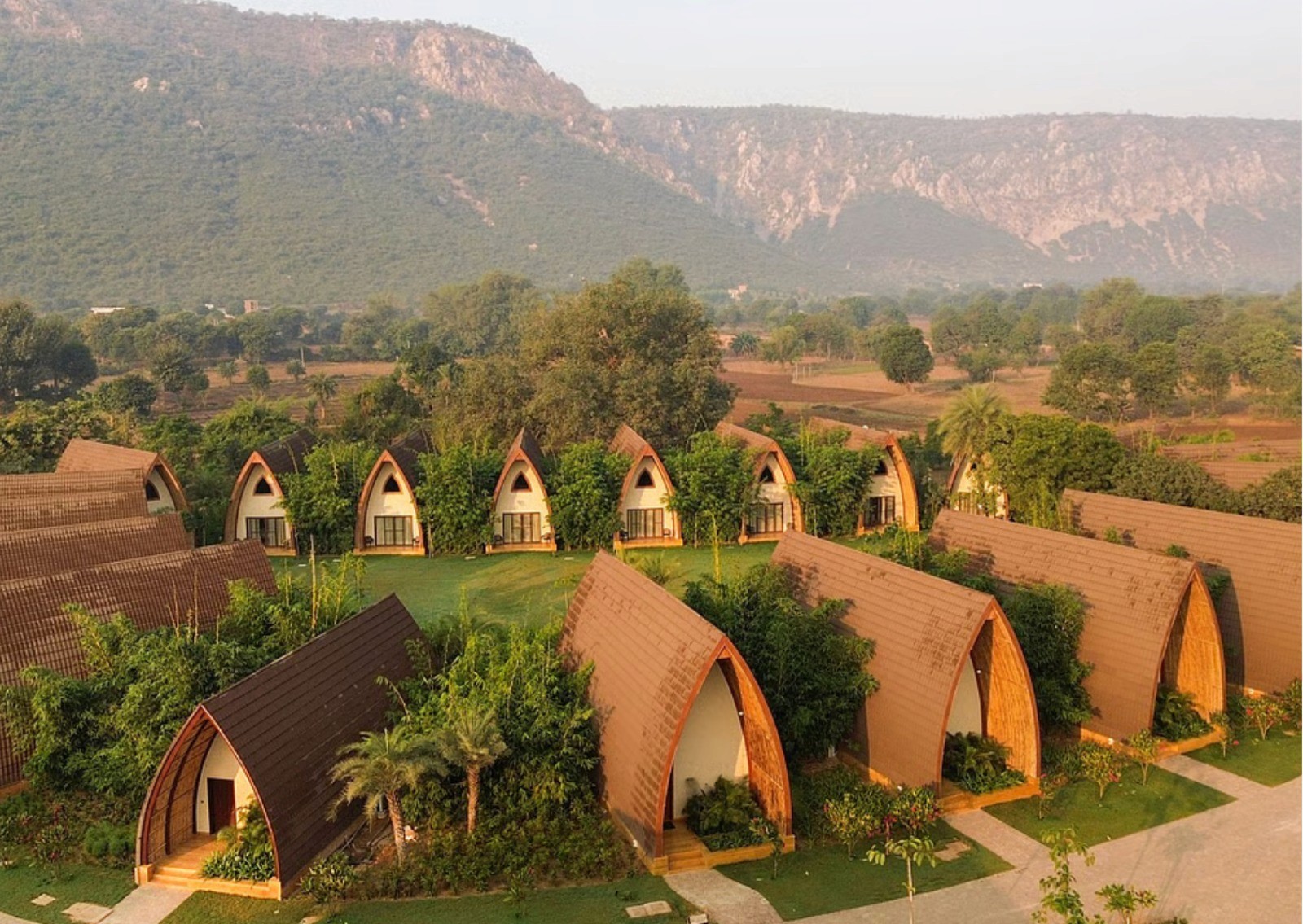
The property spans thirty acres off the Jaipur-Delhi highway, with the ruins of Ajabgarh Fort visible from several of its hundred and thirty-five villas. Director Ashutosh Goyal talks about the region in the same breath as the resort itself, and the figures he shares point to a property genuinely building itself into the local economy rather than simply borrowing the landscape's good name.
The Villas Built From the Land
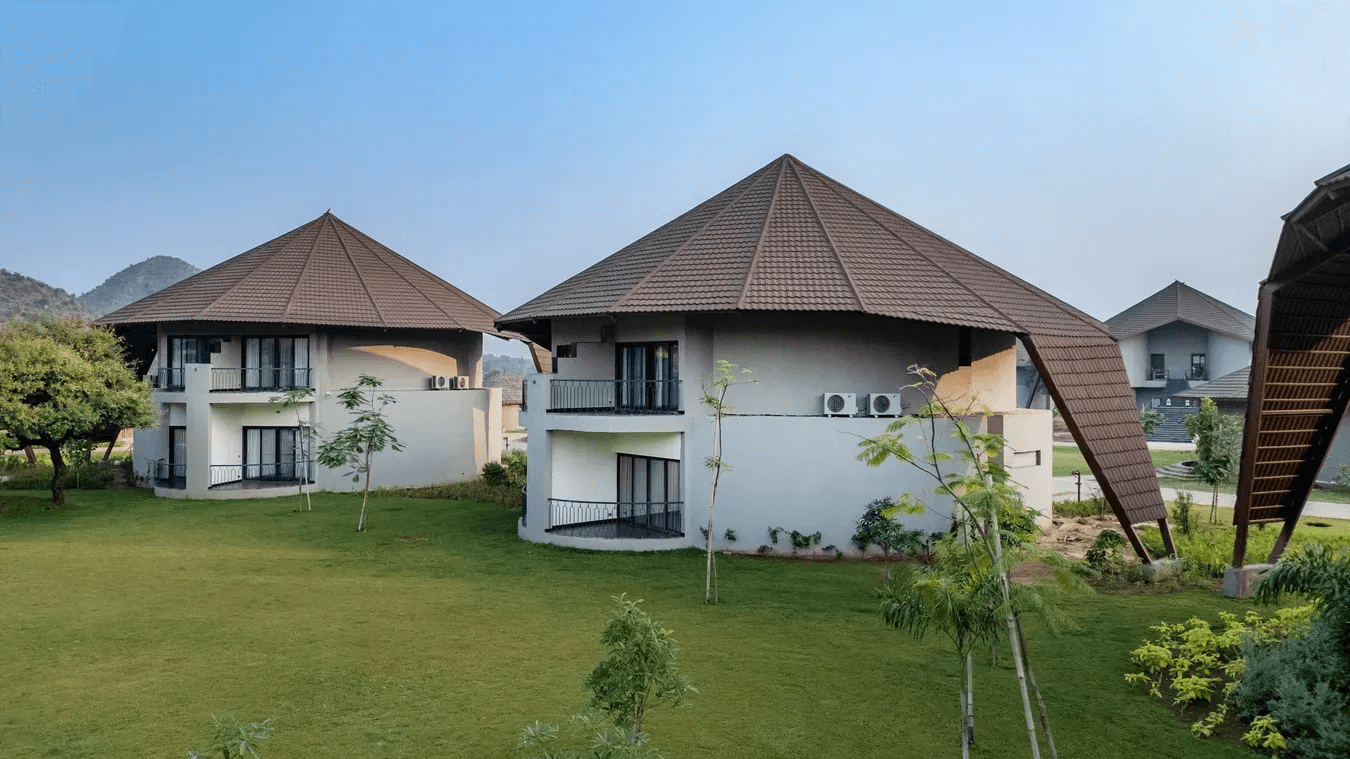
Ananta Ajabgarh sits inside mustard fields that run to the base of the Aravallis, and the architecture takes its cues directly from that setting. Each villa is built around one of four elements, bamboo, water, earth, and fire, a design language that carries through from the exteriors to the interiors. A February 2025 feature in Man's World India described the effect as walking into the future after a drive through a landscape steeped in older stories, with eco-friendly villas equipped with state-of-the-art modern amenities set against a fort whose ruins carry centuries of local legend.
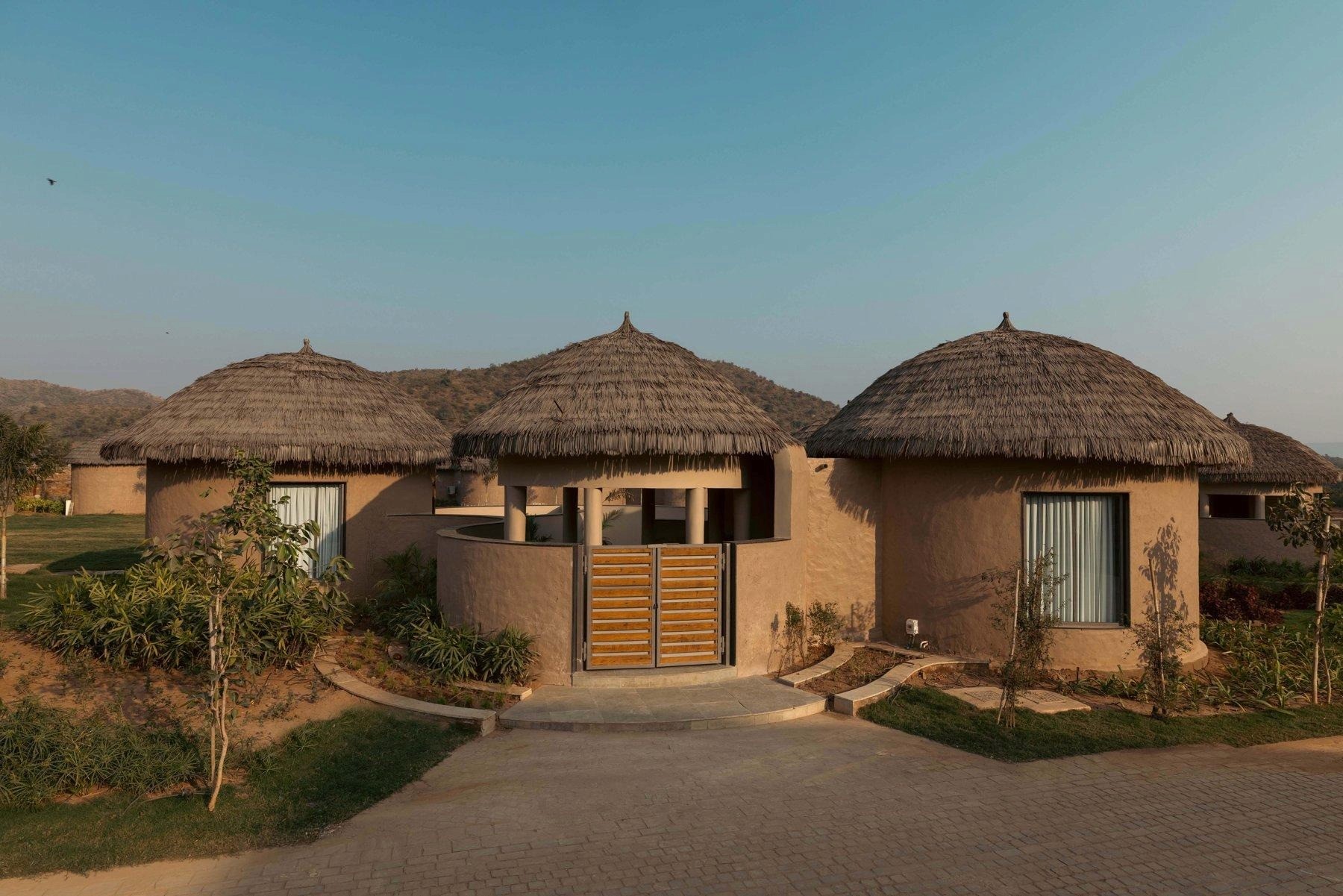
Earth Villas, with curved earthen walls and thatched roofs, one of the four elements that shape Ananta's design | Image Source Credit- Ananta Team
That legend is central to how Goyal wants guests to experience the property. "This is where actual royalty used to live before they shifted to Jaipur," he says, describing the Lost Kingdom Rising theme built around the region's pre-Jaipur history. "We're trying to bring that legacy back to that place." The framing gives the resort's minimalism a narrative anchor: guests are not just looking at empty ruins across a valley, they are staying inside a story the property is actively working to keep alive.
The old town around the resort still produces the kind of craft that predates any of this. Local carpet makers in Ajabgarh sell their work through Jaipur-based stores to international buyers, and the Raghunath Temple, linked by local legend to a tunnel once used by the fort's queen, sits within a chhatri that Ananta plans to turn into a venue for private breakfasts. The resort's presence has given some of that heritage a new audience rather than replacing it.
The Numbers on the Payroll
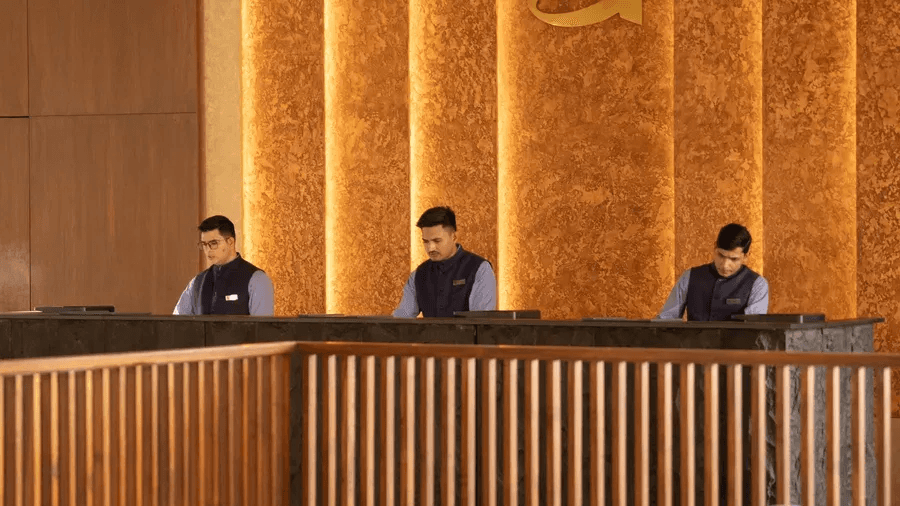
Local staff at Ananta Ajabgarh, trained alongside department heads to build skills and move up | Image Source Credit- Google
Goyal's clearest figure is also the one that carries the most weight for a property this new. "Sixty percent of the team is from the local areas," he says, describing a structure where senior department heads bring expertise from Delhi or Jaipur while the base of the workforce is drawn from Ajabgarh and its surrounding villages. Crucially, that arrangement is designed to close over time rather than stay fixed. "There are regular training sessions," Goyal explains, describing a deliberate pipeline where local staff work alongside HODs specifically to build the expertise that would let more of them move up.
For a property barely two years old, sixty percent local hiring already puts Ajabgarh ahead of the vague community language that usually stands in for a real figure, and the training structure behind it suggests the number is meant to grow rather than plateau.
What's on the Table
The sourcing figure is smaller, and Goyal is direct about why. "For now, if we talk about today, I would say around 10 to 12% is locally taken," he says, pointing to an organic orchard on the property that is still developing rather than mature. What matters alongside the percentage is the mechanism he describes for the produce that is sourced locally. "Earlier, they would have to transport all these things to Jaipur or to different parts of surrounding villages and Alwar," he says of nearby farmers. "Now they are able to supply it directly to a property right next door. It sees their cost, and at the same time, we're giving them a framework to supply locally."
That framework is the more durable achievement here, a direct channel that did not exist before the resort arrived. The property also keeps two Nilgai cows for what Goyal describes as A2 milk, part of a broader push toward provenance that shows up on the table as dal baati churma, laal maas, and ker sangri, alongside gulkand gulab ki kheer, an heirloom dessert that Man's World India traced to the Ajabgarh royals themselves. As the orchard matures, Goyal expects the local sourcing figure to climb toward 20 to 25% within the year, a trajectory built on infrastructure the resort is still putting in place.
Clean Air by Design
The property's environmental pitch translates easily into something measurable. "The average AQI in the property is 45," Goyal says, "and as soon as you move outside the peripheries of the property, to the main roads, the AQI shoots up to 200." The contrast is not incidental. It reflects plantation work Goyal describes as still young, with the promise of denser green cover as the cottages settle further into their surroundings over the coming years.
Giving Back to the Villages
Beyond payroll, Ananta's support for the area runs through two government schools nearby, where the resort funds hygiene infrastructure and toilets, supplies books, and helps teachers with their syllabuses. During festivals, staff distribute sweets to the children and hand out saplings for them to plant, a small ritual that ties the resort's own plantation ambitions to the next generation growing up around it. "We promote them to grow more trees and plants," Goyal says, describing an effort that treats the villages not just as a labour pool but as partners in the same environmental project the resort is running on its own thirty acres.
The Next Five Years
Ananta's plans ahead extend the same logic. Goyal describes a wellness program launching within the year, a planned solar park on five acres of adjacent, currently unused land, and villas that will grow from four elements to seven, adding metal, air, and wood over the next three to four years. "Nature is the best form of architecture," he says, pointing to plantation still filling in around the cottages as evidence that the property's best version of itself is still ahead of it rather than behind it.
Fire Villas against the Aravallis; the resort plans to add metal, air and wood to its four villa elements | Image Source Credit- Ananta Team
That same instinct shapes how Goyal talks about India's hospitality market more broadly. In a conversation with Robb Report India earlier this year, he argued that India does not need to chase the African safari template, since it already offers density, mythology and civilisational context that no borrowed story could replicate, and that a property like Ajabgarh works because its fort ruins function as a living backdrop rather than a prop.

Sariska's tigers came back with the help of the villages around the reserve | Image Source Credit: Google
Sariska's tigers came back because the villages around them had a reason to protect what returned. On the figures Goyal shares, Ajabgarh is building that same reason on its own doorstep, through jobs that come with training attached, through a supply line that pays local farmers directly, and through a landscape the resort is actively trying to make greener rather than simply photograph. The story is still young, much like the orchard and the plantation it depends on, but the direction it is moving in is the right one.
TO BE CONTINUED, FOR SUBSCRIBERS ONLY.
This is where the surface ends and the reporting begins.
The complete piece, the full archive, and access to The French Press Circle. Reporting answerable only to its readers.
Already a subscriber ?
Login
Read these on the house, with our compliments.
A selection from the current issue, open to all readers. Read them in full. The rest is one decision away.






Sariska lost its tigers by 2005, and with them went much of the momentum for investing in the villages around the reserve. When the first cat returned, ST-1, translocated from Ranthambhore in July 2008, the reserve's own conservationists credited community engagement as much as science for making that recovery hold. That history gives any new development on Sariska's fringe a natural measure to live up to, and Ananta Spa & Resort, Ajabgarh, sits close enough to that fringe to be worth measuring against it.
Director Ashutosh Goyal
The property spans thirty acres off the Jaipur-Delhi highway, with the ruins of Ajabgarh Fort visible from several of its hundred and thirty-five villas. Director Ashutosh Goyal talks about the region in the same breath as the resort itself, and the figures he shares point to a property genuinely building itself into the local economy rather than simply borrowing the landscape's good name.
The Villas Built From the Land
Ananta Ajabgarh sits inside mustard fields that run to the base of the Aravallis, and the architecture takes its cues directly from that setting. Each villa is built around one of four elements, bamboo, water, earth, and fire, a design language that carries through from the exteriors to the interiors. A February 2025 feature in Man's World India described the effect as walking into the future after a drive through a landscape steeped in older stories, with eco-friendly villas equipped with state-of-the-art modern amenities set against a fort whose ruins carry centuries of local legend.
Earth Villas, with curved earthen walls and thatched roofs, one of the four elements that shape Ananta's design | Image Source Credit- Ananta Team
That legend is central to how Goyal wants guests to experience the property. "This is where actual royalty used to live before they shifted to Jaipur," he says, describing the Lost Kingdom Rising theme built around the region's pre-Jaipur history. "We're trying to bring that legacy back to that place." The framing gives the resort's minimalism a narrative anchor: guests are not just looking at empty ruins across a valley, they are staying inside a story the property is actively working to keep alive.
The old town around the resort still produces the kind of craft that predates any of this. Local carpet makers in Ajabgarh sell their work through Jaipur-based stores to international buyers, and the Raghunath Temple, linked by local legend to a tunnel once used by the fort's queen, sits within a chhatri that Ananta plans to turn into a venue for private breakfasts. The resort's presence has given some of that heritage a new audience rather than replacing it.
The Numbers on the Payroll
Local staff at Ananta Ajabgarh, trained alongside department heads to build skills and move up | Image Source Credit- Google
Goyal's clearest figure is also the one that carries the most weight for a property this new. "Sixty percent of the team is from the local areas," he says, describing a structure where senior department heads bring expertise from Delhi or Jaipur while the base of the workforce is drawn from Ajabgarh and its surrounding villages. Crucially, that arrangement is designed to close over time rather than stay fixed. "There are regular training sessions," Goyal explains, describing a deliberate pipeline where local staff work alongside HODs specifically to build the expertise that would let more of them move up.
For a property barely two years old, sixty percent local hiring already puts Ajabgarh ahead of the vague community language that usually stands in for a real figure, and the training structure behind it suggests the number is meant to grow rather than plateau.
What's on the Table
The sourcing figure is smaller, and Goyal is direct about why. "For now, if we talk about today, I would say around 10 to 12% is locally taken," he says, pointing to an organic orchard on the property that is still developing rather than mature. What matters alongside the percentage is the mechanism he describes for the produce that is sourced locally. "Earlier, they would have to transport all these things to Jaipur or to different parts of surrounding villages and Alwar," he says of nearby farmers. "Now they are able to supply it directly to a property right next door. It sees their cost, and at the same time, we're giving them a framework to supply locally."
That framework is the more durable achievement here, a direct channel that did not exist before the resort arrived. The property also keeps two Nilgai cows for what Goyal describes as A2 milk, part of a broader push toward provenance that shows up on the table as dal baati churma, laal maas, and ker sangri, alongside gulkand gulab ki kheer, an heirloom dessert that Man's World India traced to the Ajabgarh royals themselves. As the orchard matures, Goyal expects the local sourcing figure to climb toward 20 to 25% within the year, a trajectory built on infrastructure the resort is still putting in place.
Clean Air by Design
The property's environmental pitch translates easily into something measurable. "The average AQI in the property is 45," Goyal says, "and as soon as you move outside the peripheries of the property, to the main roads, the AQI shoots up to 200." The contrast is not incidental. It reflects plantation work Goyal describes as still young, with the promise of denser green cover as the cottages settle further into their surroundings over the coming years.
Giving Back to the Villages
Beyond payroll, Ananta's support for the area runs through two government schools nearby, where the resort funds hygiene infrastructure and toilets, supplies books, and helps teachers with their syllabuses. During festivals, staff distribute sweets to the children and hand out saplings for them to plant, a small ritual that ties the resort's own plantation ambitions to the next generation growing up around it. "We promote them to grow more trees and plants," Goyal says, describing an effort that treats the villages not just as a labour pool but as partners in the same environmental project the resort is running on its own thirty acres.
The Next Five Years
Ananta's plans ahead extend the same logic. Goyal describes a wellness program launching within the year, a planned solar park on five acres of adjacent, currently unused land, and villas that will grow from four elements to seven, adding metal, air, and wood over the next three to four years. "Nature is the best form of architecture," he says, pointing to plantation still filling in around the cottages as evidence that the property's best version of itself is still ahead of it rather than behind it.
Fire Villas against the Aravallis; the resort plans to add metal, air and wood to its four villa elements | Image Source Credit- Ananta Team
That same instinct shapes how Goyal talks about India's hospitality market more broadly. In a conversation with Robb Report India earlier this year, he argued that India does not need to chase the African safari template, since it already offers density, mythology and civilisational context that no borrowed story could replicate, and that a property like Ajabgarh works because its fort ruins function as a living backdrop rather than a prop.
Sariska's tigers came back with the help of the villages around the reserve | Image Source Credit: Google
Sariska's tigers came back because the villages around them had a reason to protect what returned. On the figures Goyal shares, Ajabgarh is building that same reason on its own doorstep, through jobs that come with training attached, through a supply line that pays local farmers directly, and through a landscape the resort is actively trying to make greener rather than simply photograph. The story is still young, much like the orchard and the plantation it depends on, but the direction it is moving in is the right one.
TO BE CONTINUED, FOR SUBSCRIBERS ONLY.
This is where the surface ends and the reporting begins.
The complete piece, the full archive, and access to The French Press Circle. Reporting answerable only to its readers.
Already a subscriber ?
Login
Read these on the house, with our compliments.
A selection from the current issue, open to all readers. Read them in full. The rest is one decision away.