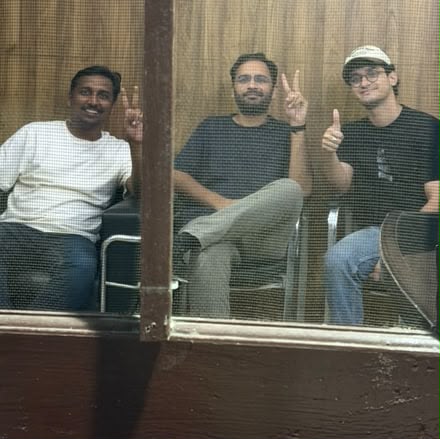
Every state eventually tells you what it fears. On Wednesday, a Special Executive Magistrate in Delhi sent Saurav Das and Ashutosh Ranka of the Cockroach Janta Party to Tihar Jail for 5 days. The police case against them rests on trespass, the violation of prohibitory orders, obstruction of public servants and the breach of a peace bond. The property they are accused of trespassing upon is Jantar Mantar. For as long as most of us can remember, that short stretch of road near Parliament has been where this republic allowed its citizens to be inconvenient. 2 young men are now in prison for entering the single address in the capital that existed, in our civic imagination, for exactly what they went there to do.
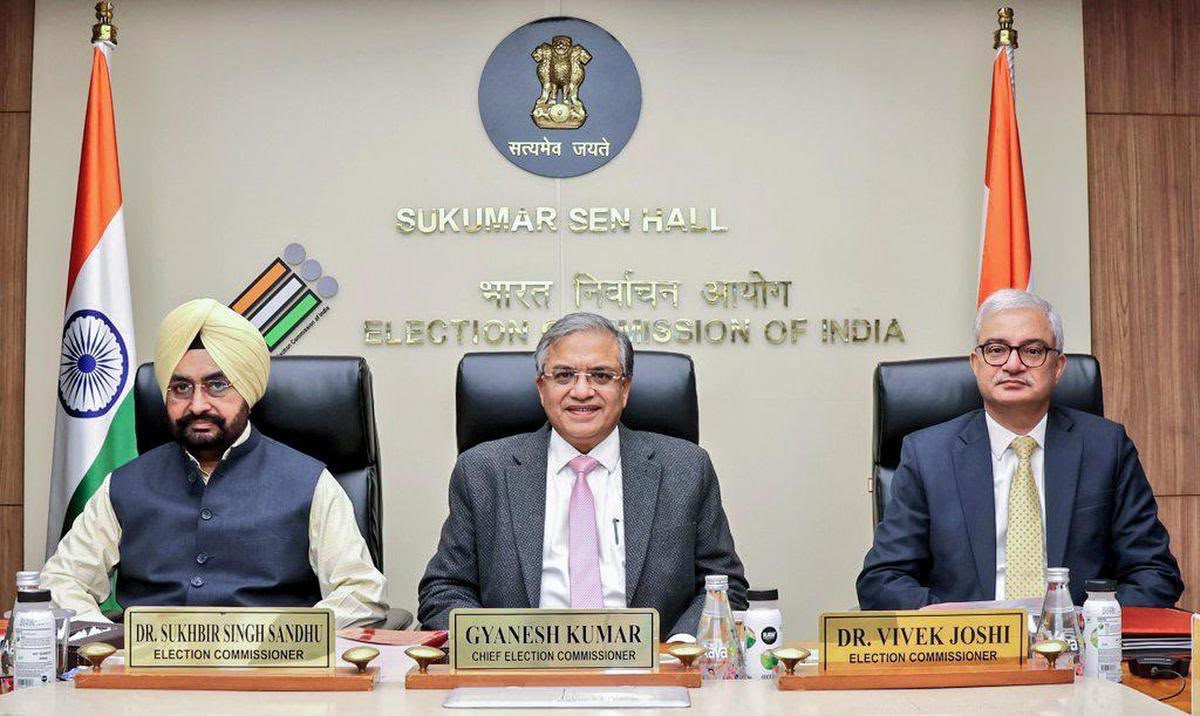
The sequence matters, because power hides in sequence. On 2 October, protests began at Jantar Mantar demanding the resignation of Chief Election Commissioner Gyanesh Kumar over alleged irregularities in the Special Intensive Revision of electoral rolls. On 9 October, the Supreme Court, hearing petitions on metro closures linked to the protests, observed that those who protest peacefully and lawfully deserve basic amenities, and asked the authorities to identify suitable alternative sites. On 10 October, with permission refused and prohibitory orders in force, hundreds were detained. Das and Ranka were held in preventive custody and released the next morning by an executive magistrate after signing bonds to keep the peace. On 11 October, the Delhi Police Commissioner issued a standing order removing Jantar Mantar from the list of designated protest sites and naming Ramlila Maidan, Burari Ground and CBD Ground in its place. On 13 October, police say, 14 members of the party reached Jantar Mantar through private premises and obstructed officers who tried to stop them. 2 FIRs followed. On 14 October, Tihar.
Consider what became of the Supreme Court's words. A court asked the state to make protest more humane, to give the people who gather water, shade and somewhere to sit. 2 days later, Jantar Mantar was gone from the list, and before the Delhi High Court the police described its removal as compliance with that very order. A judicial instruction to treat protesters with dignity became the warrant for exiling them. Burari lies at the northern edge of the city. CBD Ground lies across the Yamuna. Jantar Mantar lies a short walk from Parliament. Geography, here, is the argument. The state has decided that citizens may speak wherever power is least likely to hear them. In July 2018, in Mazdoor Kisan Shakti Sangathan v Union of India, the Supreme Court held that a complete ban on protests at Jantar Mantar and the Boat Club was impermissible and directed the government to frame guidelines. What a court refused to allow as a ban has now arrived as an administrative order.
The legal machinery deserves scrutiny precisely because it looks so ordinary. Sections 126 and 170 of the Bharatiya Nagarik Suraksha Sanhita are preventive provisions, designed to stop an offence before it occurs. The magistrate ordered custody on the reasoning that the 2 men could repeat the violations and encourage others if released. Sit with that logic for a moment. 2 citizens are in jail for a future the state has imagined on their behalf. Ranka had written earlier this week that he had signed no bond promising to stop protesting. The party's founder, Abhijeet Dipke, says their real offence was raising the tricolour at Jantar Mantar. Its legal head, Ratna Singh, has accused the police of misinforming the court. These claims will be tested in time. The custody, meanwhile, is already being served. In a liberal order, procedure is meant to protect the citizen; here the procedure has become the sentence.
Look at who these men are. Saurav Das is an investigative journalist who began filing RTIs as a teenager and has spent years reporting on the courts. Ashutosh Ranka studied at IIT Kanpur and the London School of Economics and worked at McKinsey before turning to public life. In June, both sat across the table from Union ministers, negotiating on behalf of students wronged by the NEET paper leak. The state found them reasonable enough to negotiate with in summer and dangerous enough to jail in autumn. What changed between June and October is the question they were asking. A paper leak embarrasses a ministry. A question about the electoral roll reaches the foundation on which every ministry stands.
Now look at the other road. On 10 October, while the state's preventive energy was trained on protesters, groups of men moved through Connaught Place and the streets around it. Witnesses, including the scientist Gauhar Raza and the journalist Mandeep Punia, described men arriving in numbers. In one video that circulated widely, a young woman is dragged and beaten near the Civic Centre, and can be heard saying that nobody came to save her. 4 men, who reportedly told police they belonged to the Hindu Raksha Dal, were arrested after another video went viral, and police said they acted without a formal complaint. A petition before the Delhi High Court seeks an independent investigation into the wider violence and the preservation of CCTV footage from that afternoon. Those 4 aside, the men in those crowds remain unnamed. The preventive imagination of the Delhi Police, so vivid when it contemplates 2 spokespersons with social media accounts, appears to have found the arrival of these crowds entirely unforeseeable.
Jantar Mantar has seen this choreography before. In January 2023, India's finest wrestlers sat there to demand action against Brij Bhushan Sharan Singh, then a BJP MP and president of the Wrestling Federation of India, over allegations of sexual harassment. On 28 May 2023, the day the new Parliament was inaugurated, police dragged them away and cleared their site. A year later, a Delhi court framed sexual harassment charges against him. The wrestlers were removed in hours; the charges took a year. The rhythm repeats elsewhere. In August 2022, the 11 men convicted in the Bilkis Bano gang rape and murder case walked out of prison on remission granted by the Gujarat government and were garlanded on their release; the Supreme Court quashed that remission in January 2024. In December 2025, the Delhi High Court suspended the life sentence of Kuldeep Singh Sengar, the expelled BJP MLA convicted of raping a minor in Unnao, and the Supreme Court had to intervene to stay that order. Each case travelled its own legal path. Together they describe a temperament: forbearance and due process for the well-connected accused, haste and suspicion for the inconvenient citizen.
The same temperament decides who is pursued and who is forgiven. In April 2024, an Indian Express investigation found that 25 opposition leaders facing corruption investigations had joined the BJP since 2014, and that 23 of them had received relief, with 3 cases closed and 20 stalled. In April this year, 7 of the Aam Aadmi Party's Rajya Sabha MPs, Raghav Chadha among them, crossed over to the BJP. 9 days earlier, the Enforcement Directorate had searched business entities linked to 1 of the 7, Ashok Mittal, in a foreign exchange probe. The ruling party's doors swing wide for those who arrive carrying files. Tihar's gates close on 2 young men who arrived carrying only a question.
Much of our television press has watched this sequence and directed its scepticism at the protesters. One website greeted the remand with a headline about "cockroaches" in Tihar. A press worthy of the name asks the question the state would prefer left alone: why are 2 citizens in jail for standing on 1 road, while accountability for those who beat citizens on another road moves at the speed of a viral video?
Ambedkar warned the Constituent Assembly that constitutional morality has to be cultivated, that it grows only where a people and their rulers practise it. Article 19 guarantees every citizen the right to assemble peaceably and without arms. Rights of this kind live or die in places like Jantar Mantar, in the daily willingness of the powerful to be shouted at within earshot. A government secure in its mandate can afford a crowd on a road near Parliament. A government that jails 2 spokespersons for entering that road is announcing something about its own nerve.
French Press Global calls for the immediate release of Saurav Das and Ashutosh Ranka, the restoration of Jantar Mantar as a designated site of protest, and an independent investigation into the violence of 10 October. A republic reveals itself in what it can bear to hear. This week, ours has shown us how little that is.
Release them.
TO BE CONTINUED, FOR SUBSCRIBERS ONLY.
This is where the surface ends and the reporting begins.
The complete piece, the full archive, and access to The French Press Circle. Reporting answerable only to its readers.
Already a subscriber ?
Login
Read these on the house, with our compliments.
A selection from the current issue, open to all readers. Read them in full. The rest is one decision away.









Every state eventually tells you what it fears. On Wednesday, a Special Executive Magistrate in Delhi sent Saurav Das and Ashutosh Ranka of the Cockroach Janta Party to Tihar Jail for 5 days. The police case against them rests on trespass, the violation of prohibitory orders, obstruction of public servants and the breach of a peace bond. The property they are accused of trespassing upon is Jantar Mantar. For as long as most of us can remember, that short stretch of road near Parliament has been where this republic allowed its citizens to be inconvenient. 2 young men are now in prison for entering the single address in the capital that existed, in our civic imagination, for exactly what they went there to do.
The sequence matters, because power hides in sequence. On 2 October, protests began at Jantar Mantar demanding the resignation of Chief Election Commissioner Gyanesh Kumar over alleged irregularities in the Special Intensive Revision of electoral rolls. On 9 October, the Supreme Court, hearing petitions on metro closures linked to the protests, observed that those who protest peacefully and lawfully deserve basic amenities, and asked the authorities to identify suitable alternative sites. On 10 October, with permission refused and prohibitory orders in force, hundreds were detained. Das and Ranka were held in preventive custody and released the next morning by an executive magistrate after signing bonds to keep the peace. On 11 October, the Delhi Police Commissioner issued a standing order removing Jantar Mantar from the list of designated protest sites and naming Ramlila Maidan, Burari Ground and CBD Ground in its place. On 13 October, police say, 14 members of the party reached Jantar Mantar through private premises and obstructed officers who tried to stop them. 2 FIRs followed. On 14 October, Tihar.
Consider what became of the Supreme Court's words. A court asked the state to make protest more humane, to give the people who gather water, shade and somewhere to sit. 2 days later, Jantar Mantar was gone from the list, and before the Delhi High Court the police described its removal as compliance with that very order. A judicial instruction to treat protesters with dignity became the warrant for exiling them. Burari lies at the northern edge of the city. CBD Ground lies across the Yamuna. Jantar Mantar lies a short walk from Parliament. Geography, here, is the argument. The state has decided that citizens may speak wherever power is least likely to hear them. In July 2018, in Mazdoor Kisan Shakti Sangathan v Union of India, the Supreme Court held that a complete ban on protests at Jantar Mantar and the Boat Club was impermissible and directed the government to frame guidelines. What a court refused to allow as a ban has now arrived as an administrative order.
The legal machinery deserves scrutiny precisely because it looks so ordinary. Sections 126 and 170 of the Bharatiya Nagarik Suraksha Sanhita are preventive provisions, designed to stop an offence before it occurs. The magistrate ordered custody on the reasoning that the 2 men could repeat the violations and encourage others if released. Sit with that logic for a moment. 2 citizens are in jail for a future the state has imagined on their behalf. Ranka had written earlier this week that he had signed no bond promising to stop protesting. The party's founder, Abhijeet Dipke, says their real offence was raising the tricolour at Jantar Mantar. Its legal head, Ratna Singh, has accused the police of misinforming the court. These claims will be tested in time. The custody, meanwhile, is already being served. In a liberal order, procedure is meant to protect the citizen; here the procedure has become the sentence.
Look at who these men are. Saurav Das is an investigative journalist who began filing RTIs as a teenager and has spent years reporting on the courts. Ashutosh Ranka studied at IIT Kanpur and the London School of Economics and worked at McKinsey before turning to public life. In June, both sat across the table from Union ministers, negotiating on behalf of students wronged by the NEET paper leak. The state found them reasonable enough to negotiate with in summer and dangerous enough to jail in autumn. What changed between June and October is the question they were asking. A paper leak embarrasses a ministry. A question about the electoral roll reaches the foundation on which every ministry stands.
Now look at the other road. On 10 October, while the state's preventive energy was trained on protesters, groups of men moved through Connaught Place and the streets around it. Witnesses, including the scientist Gauhar Raza and the journalist Mandeep Punia, described men arriving in numbers. In one video that circulated widely, a young woman is dragged and beaten near the Civic Centre, and can be heard saying that nobody came to save her. 4 men, who reportedly told police they belonged to the Hindu Raksha Dal, were arrested after another video went viral, and police said they acted without a formal complaint. A petition before the Delhi High Court seeks an independent investigation into the wider violence and the preservation of CCTV footage from that afternoon. Those 4 aside, the men in those crowds remain unnamed. The preventive imagination of the Delhi Police, so vivid when it contemplates 2 spokespersons with social media accounts, appears to have found the arrival of these crowds entirely unforeseeable.
Jantar Mantar has seen this choreography before. In January 2023, India's finest wrestlers sat there to demand action against Brij Bhushan Sharan Singh, then a BJP MP and president of the Wrestling Federation of India, over allegations of sexual harassment. On 28 May 2023, the day the new Parliament was inaugurated, police dragged them away and cleared their site. A year later, a Delhi court framed sexual harassment charges against him. The wrestlers were removed in hours; the charges took a year. The rhythm repeats elsewhere. In August 2022, the 11 men convicted in the Bilkis Bano gang rape and murder case walked out of prison on remission granted by the Gujarat government and were garlanded on their release; the Supreme Court quashed that remission in January 2024. In December 2025, the Delhi High Court suspended the life sentence of Kuldeep Singh Sengar, the expelled BJP MLA convicted of raping a minor in Unnao, and the Supreme Court had to intervene to stay that order. Each case travelled its own legal path. Together they describe a temperament: forbearance and due process for the well-connected accused, haste and suspicion for the inconvenient citizen.
The same temperament decides who is pursued and who is forgiven. In April 2024, an Indian Express investigation found that 25 opposition leaders facing corruption investigations had joined the BJP since 2014, and that 23 of them had received relief, with 3 cases closed and 20 stalled. In April this year, 7 of the Aam Aadmi Party's Rajya Sabha MPs, Raghav Chadha among them, crossed over to the BJP. 9 days earlier, the Enforcement Directorate had searched business entities linked to 1 of the 7, Ashok Mittal, in a foreign exchange probe. The ruling party's doors swing wide for those who arrive carrying files. Tihar's gates close on 2 young men who arrived carrying only a question.
Much of our television press has watched this sequence and directed its scepticism at the protesters. One website greeted the remand with a headline about "cockroaches" in Tihar. A press worthy of the name asks the question the state would prefer left alone: why are 2 citizens in jail for standing on 1 road, while accountability for those who beat citizens on another road moves at the speed of a viral video?
Ambedkar warned the Constituent Assembly that constitutional morality has to be cultivated, that it grows only where a people and their rulers practise it. Article 19 guarantees every citizen the right to assemble peaceably and without arms. Rights of this kind live or die in places like Jantar Mantar, in the daily willingness of the powerful to be shouted at within earshot. A government secure in its mandate can afford a crowd on a road near Parliament. A government that jails 2 spokespersons for entering that road is announcing something about its own nerve.
French Press Global calls for the immediate release of Saurav Das and Ashutosh Ranka, the restoration of Jantar Mantar as a designated site of protest, and an independent investigation into the violence of 10 October. A republic reveals itself in what it can bear to hear. This week, ours has shown us how little that is.
Release them.
TO BE CONTINUED, FOR SUBSCRIBERS ONLY.
This is where the surface ends and the reporting begins.
The complete piece, the full archive, and access to The French Press Circle. Reporting answerable only to its readers.
Already a subscriber ?
Login
Read these on the house, with our compliments.
A selection from the current issue, open to all readers. Read them in full. The rest is one decision away.