
Sabyasachi Mukherjee and The Metropolitan Museum of Art announced a multi-year collaboration on August 11, 2026. The partnership begins with a fine jewellery collection unveiling on September 15 during New York Fashion Week, at Sabyasachi's flagship at 160 Christopher Street in the West Village, with distribution through his global stores and select specialty retailers worldwide. The collection draws on the more than 5,000 years of art and culture held in The Met's collection, and its first chapter reinterprets the cultural exchange of the Byzantine Empire. Imperial medallions, architectural adornments, ancient statuary and stonework, and religious iconography serve as the starting points. Every piece is handcrafted in India by artisans. This is conceived as a continuing relationship, with future collections spanning jewellery, accessories, and clothing, rather than a single capsule.
In his statement, Sabyasachi described the collaboration as an exploration of how culture travels, evolves, and endures, drawing from five thousand years of history preserved within The Met's collection. He noted that ornament and craftsmanship have moved between civilisations for centuries through trade and exchange, and said the resulting jewellery is meant to feel like modern heirlooms rooted in the past yet crafted for today. From the museum's side, Stephen Mannello, its Head of Retail and Global Licensing, framed the partnership as a way to view works from antiquity through a new lens and to spotlight stories of the past through a contemporary maker's viewpoint. The choice of Byzantium to open the series sits comfortably alongside that idea, since the empire occupied the seam between East and West, absorbing Persian, Roman, and Asian influences and sending them outward again.
What Sabyasachi has said around the announcement is where the ambition becomes explicit. Speaking to WWD, he located the project within a longer argument about India's place in the luxury system. For a long time, he observed, the world came to India to make luxury, drawing on its gemstones, textiles, embroidery, and generations of specialised artisans. What interests him now is moving that role from behind the scenes to one where Indian companies own the brands, ideas, and cultural narratives around that expertise. He put it plainly: it is time for India to take its luxury to the world, and Sabyasachi has a role to play in that. He also framed the moment against his own beginnings, recalling that when he first showed in New York in 2006 he lacked exposure and his understanding of global fashion was still parochial. Nearly two decades later, he returns to a New York runway with considerably more behind him.
The partnership has its own prehistory within the same institution, and it must be highlighted because it is the arc the fashion internet has been narrating in real time. In 2022, Natasha Poonawalla carried a gold Sabyasachi couture sari to the Met Gala paired with a Schiaparelli bustier, a look widely counted among the night's best-dressed. In 2024, Sabyasachi became the first Indian designer to walk the Met Gala red carpet, accompanying Alia Bhatt in a mint-green couture saree with a 23-foot train that reportedly took 1,905 hours and 163 artisans to complete. In 2025, Shah Rukh Khan made his Met Gala debut in a custom Sabyasachi ensemble for the Superfine: Tailoring Black Style theme, a floor-length Tasmanian superfine wool coat finished with an 18k gold Bengal Tiger Head Cane and layered talisman-inspired jewellery.
The SRK news was first surfaced not by a press release but by Diet Sabya, the anonymous fashion-commentary account that functions as India's unofficial style watchdog, which confirmed the debut over a weekend and framed Sabyasachi flatly as India's biggest luxury brand. When Khan emerged from the Mandarin Oriental with a tiger sceptre and a blinged-out 'K' necklace, the clip Diet Sabya shared drove much of the online reaction, and commentators reached for the shorthand of "modern Maharaja" to describe the look. The New York Times' Guy Trebay observed that the room tilted toward Khan, and the Times later placed him among its most stylish people of the year. Each of those was an appearance on the museum's steps for a single evening. The new arrangement moves inside, into an ongoing relationship with the institution itself. Sabya has something that cannot be bought: word of mouth.
The reception around Sabyasachi has never been uniformly reverent, and that context sharpens what this partnership is reaching for. His 2021 collaboration with H&M drew a meme-fest online, with social users joking that the pieces resembled a grandmother's saree and that the prices were steep for the format. His bridal work has made him the default choice for a certain kind of high-profile Indian wedding, the "Sabya bride" among the likes of Deepika Padukone, Priyanka Chopra, and Anushka Sharma, and he has said openly that he expects to polarise, that some will like what he does and some will not. A museum partnership built on handcrafted fine jewellery and framed as heirloom-making sits at the opposite pole from a fast-fashion capsule, which is part of its argument.
The announcement arrives in a year when Indian design has been moving from the edges of global fashion toward its institutional centre. Four Indian designers, among them Rahul Mishra, Gaurav Gupta, Vaishali S, and Manish Malhotra, showed on the official Paris Haute Couture calendar in July 2026, a schedule long counted among the industry's most closed rooms. International figures including Beyoncé, Cardi B, and Zendaya have worn Indian labels on major red carpets, and houses such as Prada and Ralph Lauren have drawn openly on Indian forms, from Kolhapuri sandals to bandhani. At a Forbes India panel this year, the stylist Anaita Shroff Adajania argued that fashion may be India's most visible soft power because it needs no translation, and that coming from such a heritage of textiles, India's soft power is "not very soft" but quite hard. India's luxury market is projected to reach somewhere between USD 14 and 15 billion by 2026, and the country's handcraft and made-to-order tradition maps onto a global appetite drifting toward slower, limited-production luxury.
Within that landscape, the industry has been circling a specific distinction, and the Met partnership speaks directly to it. The recurring point in India's luxury conversation this year is that cultural authority has already been established while the structures that let excellence travel and endure remain uneven. The frequent counsel is to design fewer, better, longer-lasting things and to make provenance legible rather than assumed. A named partnership with The Met, built on jewellery handcrafted in India, attaches an internationally recognised institution to Indian workmanship as authorship rather than as anonymous supply. It also arrives with real corporate weight behind it: in early 2021, Aditya Birla Fashion and Retail acquired a 51 percent stake in the brand for around Rs 398 crore, describing Sabyasachi as India's largest and most influential luxury designer label, with a franchise across India, the US, the UK, and the Middle East.
Two threads run underneath the announcement without being stated in it. One concerns direction of travel. For much of the modern era, Indian craft entered global fashion as material and as inspiration credited elsewhere, the very behind-the-scenes role Sabyasachi described to WWD. A collection handcrafted in India, displayed under a co-authored name beside one of the world's most visited museums, places the making and the conception in the same country. The other concerns the handling of heritage itself. Designers working this year have spoken about the risk that terms like heritage and nostalgia can wall a practice off from a global audience, and about craft understood as evolution rather than preservation. A project that treats five thousand years of holdings as living material to be reworked, rather than relics to be reproduced, is a working demonstration of that position. Sabyasachi has called the aim the making of modern heirlooms. What that phrase describes, and what the September 15 unveiling will begin to test, is a way for the old to keep moving.
TO BE CONTINUED, FOR SUBSCRIBERS ONLY.
This is where the surface ends and the reporting begins.
The complete piece, the full archive, and access to The French Press Circle. Reporting answerable only to its readers.
Already a subscriber ?
Login
Read these on the house, with our compliments.
A selection from the current issue, open to all readers. Read them in full. The rest is one decision away.



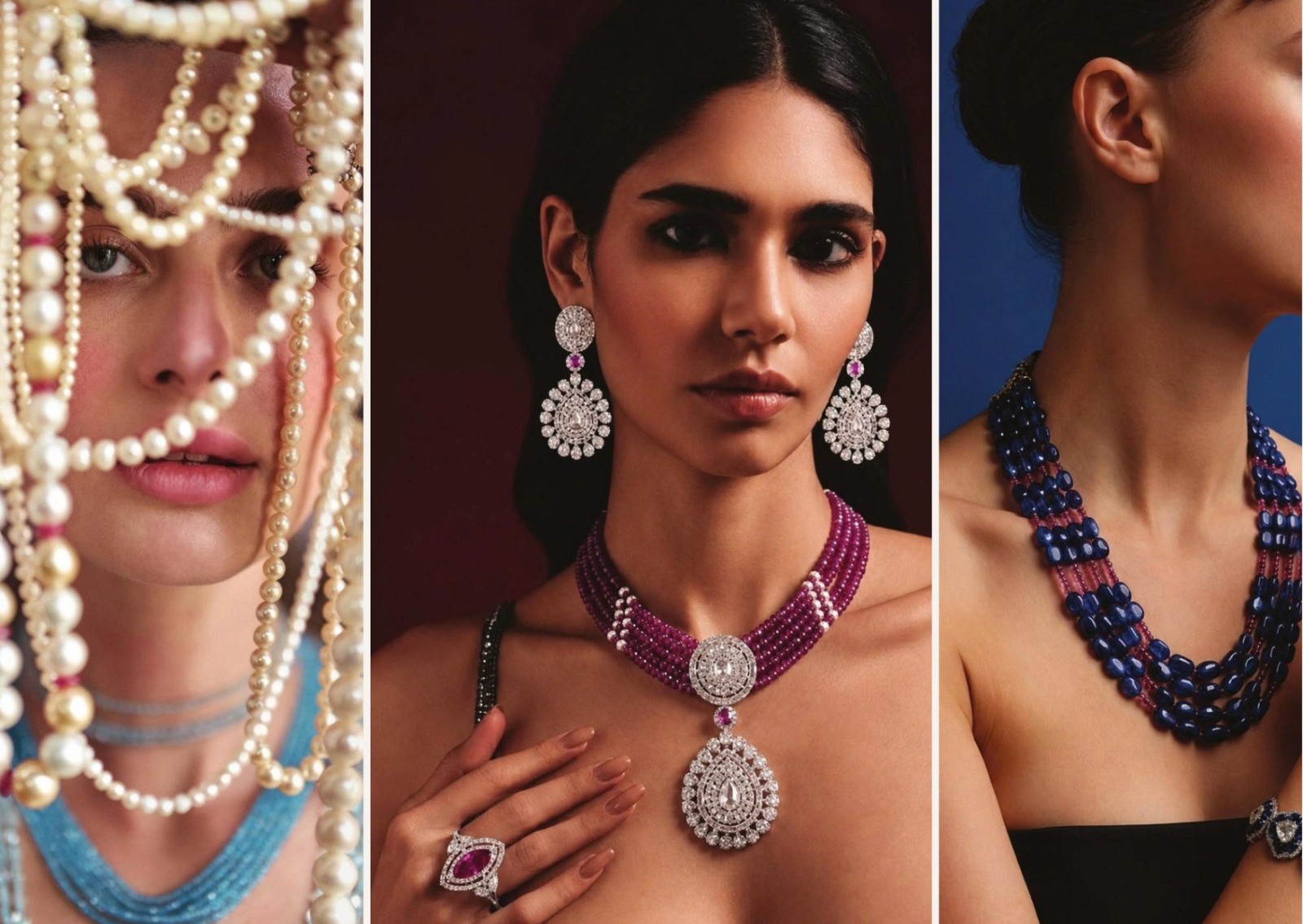
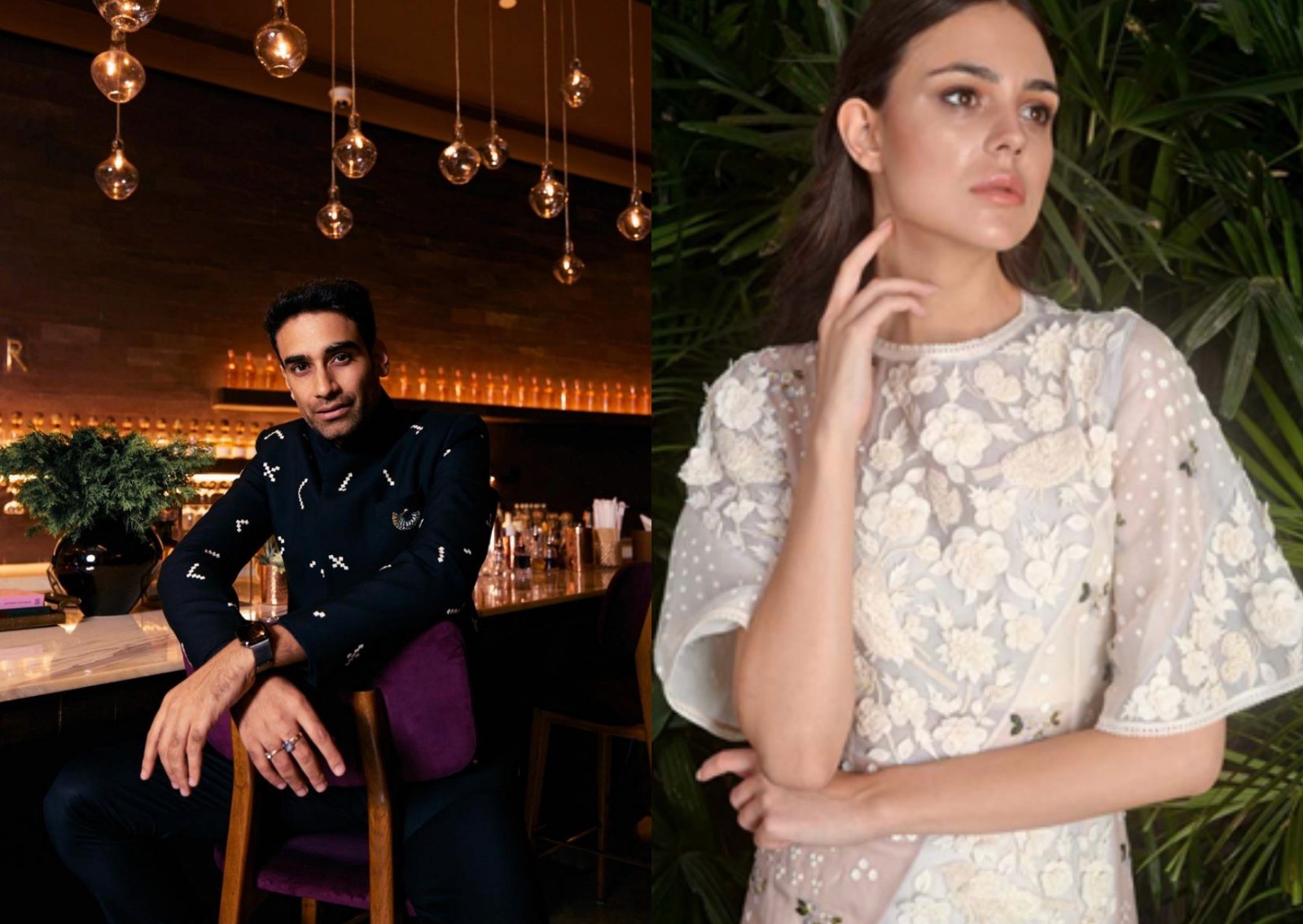




Sabyasachi Mukherjee and The Metropolitan Museum of Art announced a multi-year collaboration on August 11, 2026. The partnership begins with a fine jewellery collection unveiling on September 15 during New York Fashion Week, at Sabyasachi's flagship at 160 Christopher Street in the West Village, with distribution through his global stores and select specialty retailers worldwide. The collection draws on the more than 5,000 years of art and culture held in The Met's collection, and its first chapter reinterprets the cultural exchange of the Byzantine Empire. Imperial medallions, architectural adornments, ancient statuary and stonework, and religious iconography serve as the starting points. Every piece is handcrafted in India by artisans. This is conceived as a continuing relationship, with future collections spanning jewellery, accessories, and clothing, rather than a single capsule.
In his statement, Sabyasachi described the collaboration as an exploration of how culture travels, evolves, and endures, drawing from five thousand years of history preserved within The Met's collection. He noted that ornament and craftsmanship have moved between civilisations for centuries through trade and exchange, and said the resulting jewellery is meant to feel like modern heirlooms rooted in the past yet crafted for today. From the museum's side, Stephen Mannello, its Head of Retail and Global Licensing, framed the partnership as a way to view works from antiquity through a new lens and to spotlight stories of the past through a contemporary maker's viewpoint. The choice of Byzantium to open the series sits comfortably alongside that idea, since the empire occupied the seam between East and West, absorbing Persian, Roman, and Asian influences and sending them outward again.
What Sabyasachi has said around the announcement is where the ambition becomes explicit. Speaking to WWD, he located the project within a longer argument about India's place in the luxury system. For a long time, he observed, the world came to India to make luxury, drawing on its gemstones, textiles, embroidery, and generations of specialised artisans. What interests him now is moving that role from behind the scenes to one where Indian companies own the brands, ideas, and cultural narratives around that expertise. He put it plainly: it is time for India to take its luxury to the world, and Sabyasachi has a role to play in that. He also framed the moment against his own beginnings, recalling that when he first showed in New York in 2006 he lacked exposure and his understanding of global fashion was still parochial. Nearly two decades later, he returns to a New York runway with considerably more behind him.
The partnership has its own prehistory within the same institution, and it must be highlighted because it is the arc the fashion internet has been narrating in real time. In 2022, Natasha Poonawalla carried a gold Sabyasachi couture sari to the Met Gala paired with a Schiaparelli bustier, a look widely counted among the night's best-dressed. In 2024, Sabyasachi became the first Indian designer to walk the Met Gala red carpet, accompanying Alia Bhatt in a mint-green couture saree with a 23-foot train that reportedly took 1,905 hours and 163 artisans to complete. In 2025, Shah Rukh Khan made his Met Gala debut in a custom Sabyasachi ensemble for the Superfine: Tailoring Black Style theme, a floor-length Tasmanian superfine wool coat finished with an 18k gold Bengal Tiger Head Cane and layered talisman-inspired jewellery.
The SRK news was first surfaced not by a press release but by Diet Sabya, the anonymous fashion-commentary account that functions as India's unofficial style watchdog, which confirmed the debut over a weekend and framed Sabyasachi flatly as India's biggest luxury brand. When Khan emerged from the Mandarin Oriental with a tiger sceptre and a blinged-out 'K' necklace, the clip Diet Sabya shared drove much of the online reaction, and commentators reached for the shorthand of "modern Maharaja" to describe the look. The New York Times' Guy Trebay observed that the room tilted toward Khan, and the Times later placed him among its most stylish people of the year. Each of those was an appearance on the museum's steps for a single evening. The new arrangement moves inside, into an ongoing relationship with the institution itself. Sabya has something that cannot be bought: word of mouth.
The reception around Sabyasachi has never been uniformly reverent, and that context sharpens what this partnership is reaching for. His 2021 collaboration with H&M drew a meme-fest online, with social users joking that the pieces resembled a grandmother's saree and that the prices were steep for the format. His bridal work has made him the default choice for a certain kind of high-profile Indian wedding, the "Sabya bride" among the likes of Deepika Padukone, Priyanka Chopra, and Anushka Sharma, and he has said openly that he expects to polarise, that some will like what he does and some will not. A museum partnership built on handcrafted fine jewellery and framed as heirloom-making sits at the opposite pole from a fast-fashion capsule, which is part of its argument.
The announcement arrives in a year when Indian design has been moving from the edges of global fashion toward its institutional centre. Four Indian designers, among them Rahul Mishra, Gaurav Gupta, Vaishali S, and Manish Malhotra, showed on the official Paris Haute Couture calendar in July 2026, a schedule long counted among the industry's most closed rooms. International figures including Beyoncé, Cardi B, and Zendaya have worn Indian labels on major red carpets, and houses such as Prada and Ralph Lauren have drawn openly on Indian forms, from Kolhapuri sandals to bandhani. At a Forbes India panel this year, the stylist Anaita Shroff Adajania argued that fashion may be India's most visible soft power because it needs no translation, and that coming from such a heritage of textiles, India's soft power is "not very soft" but quite hard. India's luxury market is projected to reach somewhere between USD 14 and 15 billion by 2026, and the country's handcraft and made-to-order tradition maps onto a global appetite drifting toward slower, limited-production luxury.
Within that landscape, the industry has been circling a specific distinction, and the Met partnership speaks directly to it. The recurring point in India's luxury conversation this year is that cultural authority has already been established while the structures that let excellence travel and endure remain uneven. The frequent counsel is to design fewer, better, longer-lasting things and to make provenance legible rather than assumed. A named partnership with The Met, built on jewellery handcrafted in India, attaches an internationally recognised institution to Indian workmanship as authorship rather than as anonymous supply. It also arrives with real corporate weight behind it: in early 2021, Aditya Birla Fashion and Retail acquired a 51 percent stake in the brand for around Rs 398 crore, describing Sabyasachi as India's largest and most influential luxury designer label, with a franchise across India, the US, the UK, and the Middle East.
Two threads run underneath the announcement without being stated in it. One concerns direction of travel. For much of the modern era, Indian craft entered global fashion as material and as inspiration credited elsewhere, the very behind-the-scenes role Sabyasachi described to WWD. A collection handcrafted in India, displayed under a co-authored name beside one of the world's most visited museums, places the making and the conception in the same country. The other concerns the handling of heritage itself. Designers working this year have spoken about the risk that terms like heritage and nostalgia can wall a practice off from a global audience, and about craft understood as evolution rather than preservation. A project that treats five thousand years of holdings as living material to be reworked, rather than relics to be reproduced, is a working demonstration of that position. Sabyasachi has called the aim the making of modern heirlooms. What that phrase describes, and what the September 15 unveiling will begin to test, is a way for the old to keep moving.
TO BE CONTINUED, FOR SUBSCRIBERS ONLY.
This is where the surface ends and the reporting begins.
The complete piece, the full archive, and access to The French Press Circle. Reporting answerable only to its readers.
Already a subscriber ?
Login
Read these on the house, with our compliments.
A selection from the current issue, open to all readers. Read them in full. The rest is one decision away.