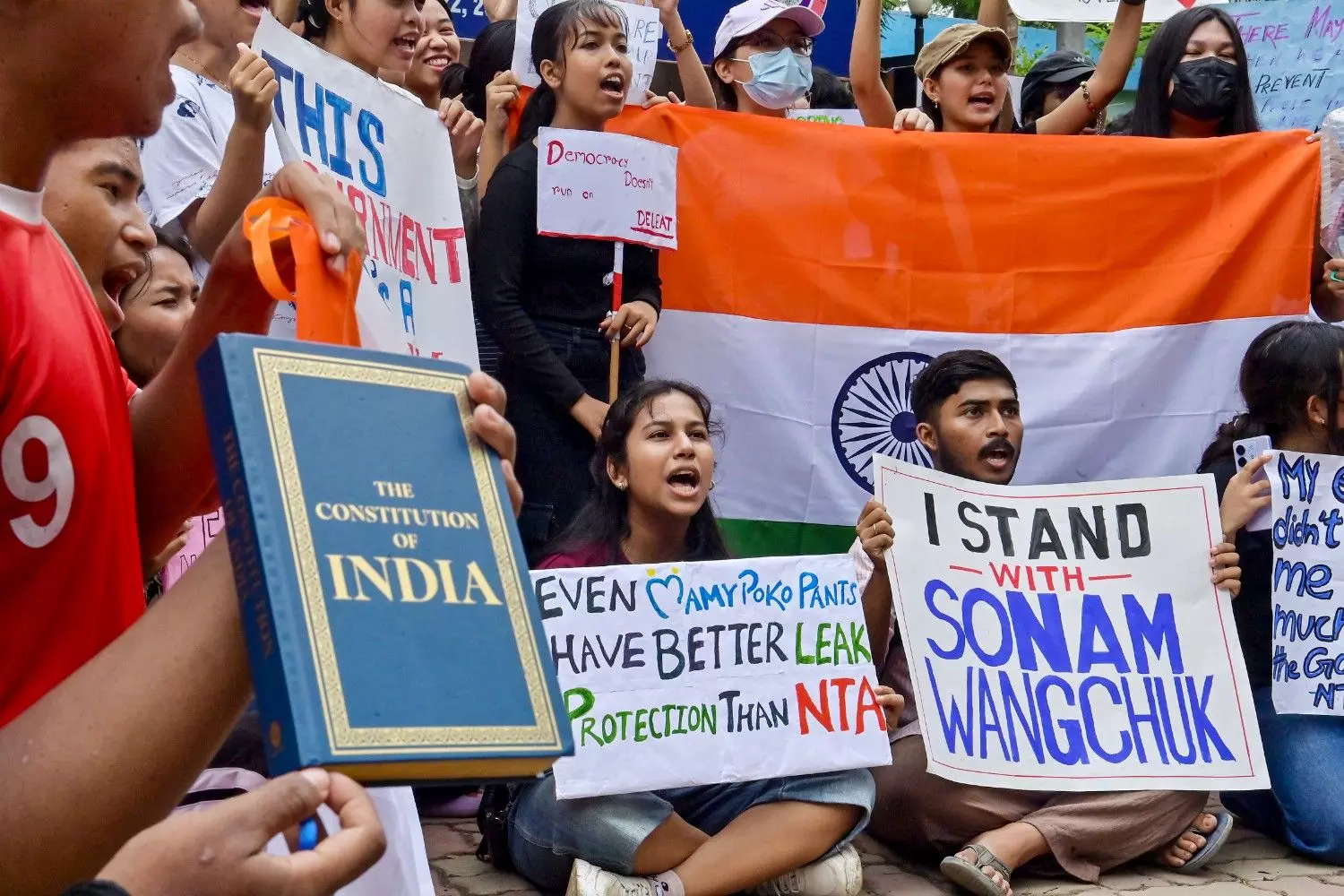
The Cockroach Janta Party did not simply protest. It performed, it filmed, it edited, and then it uploaded, and somewhere in that sequence, a genuine political movement became appointment viewing for an entire generation that had, until then, mostly reserved that kind of devotion for a nine PM serial or a cricket final. This was a dissent with production values. This was outrage with a content calendar. This was the moment India's most chronically online cohort proved that a revolution absolutely can be scheduled around a good ring light.
It began, as these things now reliably do, with an insult meant to sting that instead became a costume everyone wanted to wear. In May 2026, Chief Justice of India Surya Kant referred to unemployed young people as "cockroaches" in the context of online criticism, and within hours, the internet had done what the internet does best: it took the slur, held it up to the light, decided it was actually kind of iconic, and built a political party around it. The Cockroach Janta Party arrived fully formed, fully self-aware, and fully committed to the bit.
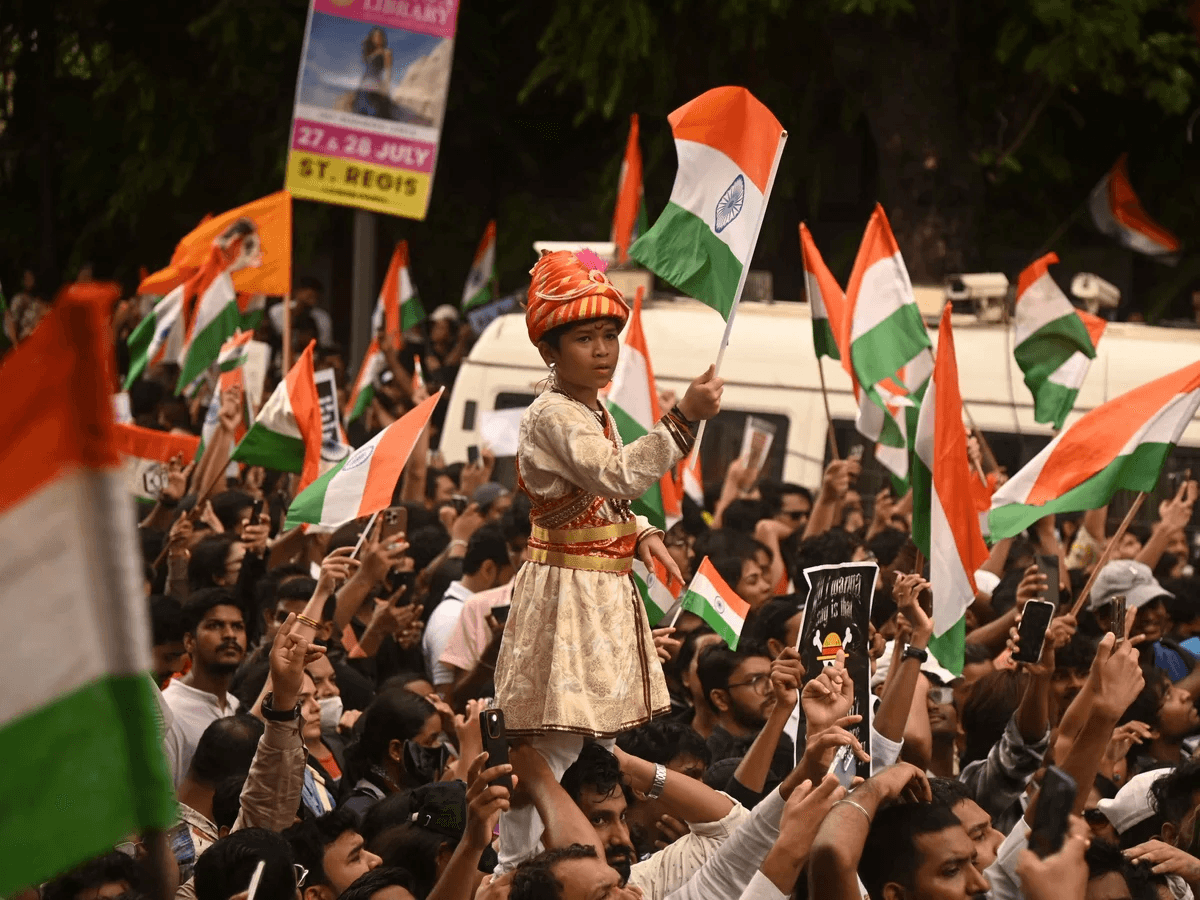
Cockroach janta party supporters celebrate the resignation of Dharmendra Pradhan. | Image Source: Deep Nair/Zuma Press Wire/Shutterstock
The Grievance Underneath the Punchline
Every good joke needs a wound to work from, and this one had a real one. The CJP protest was rooted in anger over examination irregularities and a demand for accountability from the government, particularly over the NEET paper leak and the resulting resignation of the Education Minister. For students who had built entire futures around a single exam date, a leaked paper was not an abstract bureaucratic hiccup. It was months of preparation rendered irrelevant overnight, and a generation decided the correct response to institutional betrayal was to make institutional betrayal go viral.
That decision changed everything about how the protest looked, sounded, and spread.
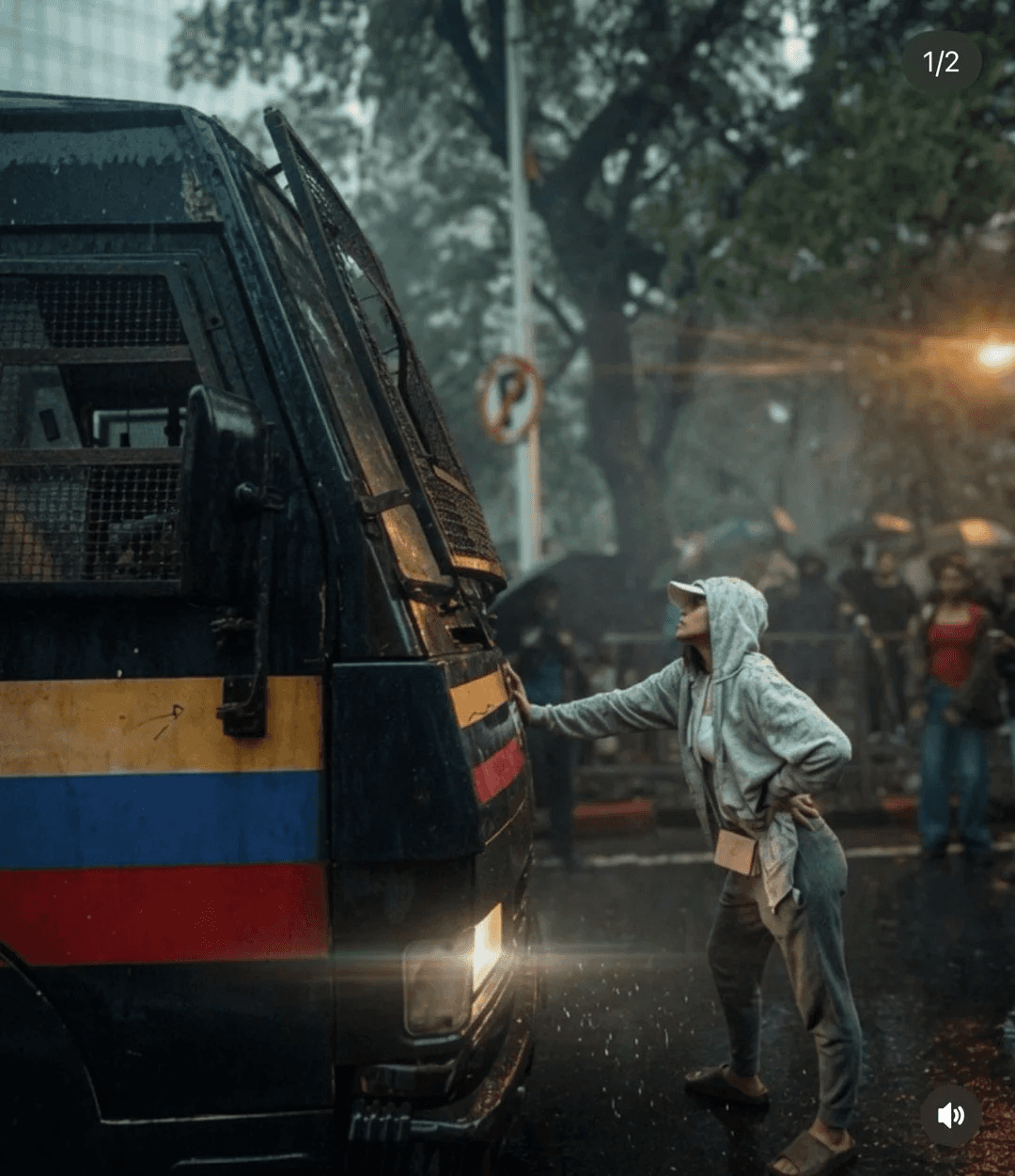
The power that Gen-Z holds.| Image Source: via Instagram
Doorbell Dash, Now With Political Commentary
Somewhere between the placards and the police barricades, protesters discovered that the "ding dong ditch" reel format, previously reserved for pranking neighbours and startling delivery drivers, translated beautifully to running from a police chase. Clips of protesters sprinting from barricades with the same theatrical panic and comic timing usually reserved for a doorbell prank format began circulating widely, complete with the reaction cuts and slow-motion drama the genre demands. The joke worked precisely because everyone already knew the format, and recognising it meant no explanation was necessary. A police chase became instantly legible as content, and content, unlike a press release, gets watched to the end.
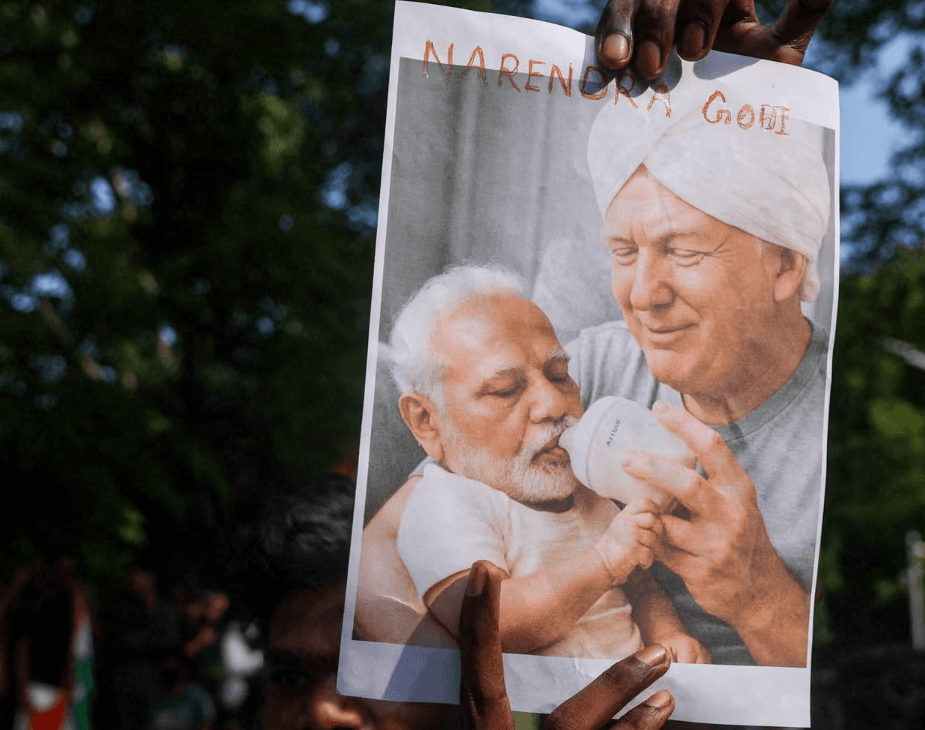
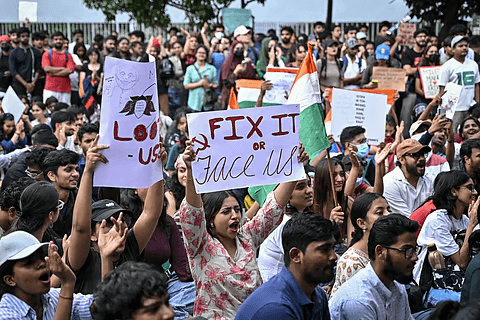
Image1,2: Google
The National Anthem as a De-escalation Tactic and a Meme
Elsewhere, protesters found that standing still and singing the national anthem in the middle of a crackdown did something a shouted slogan never could: it made continued force look, on camera, exactly like what it was. Groups broke into the anthem as police moved to disperse them, and the resulting footage did double duty, functioning as a genuine act of dignified resistance and as a meme format that outlets and users alike could not stop replaying. The tactic borrowed the emotional register of patriotism and pointed it, with surgical precision, straight back at the state.

Image Source: via Instagram
Bihar Danced Through the Water Cannons
If there is a single image that captures the entire spirit of this movement, it might be the footage from Bihar of protesters dancing directly under the spray of water cannons, treating a crowd-control weapon as a monsoon party. People turned up with soap, actual bars of soap, ready to lather up mid-protest, and the resulting videos looked less like a dispersal operation and more like a music video shoot that the state had unwittingly sponsored. The water cannon, designed to punish and scatter, instead became the best-attended event of the day, and somewhere in a control room, someone in uniform must have realised that force only works on people who are still afraid of it.
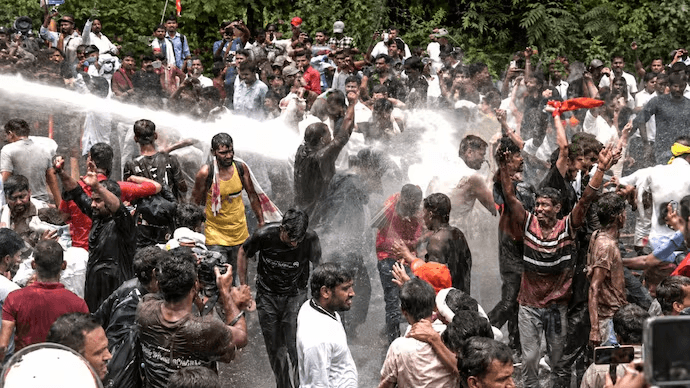
Image Source: Google
The FOMO Was Real, and So Was the Feed
Here is the part traditional protest coverage always misses: people joined the CJP protest because their Instagram told them to, and they are not embarrassed about it. The format did the recruiting. A friend's story from Jantar Mantar, a reel of the anthem sing-in, a clip of the Bihar water cannon dance party, and suddenly staying home felt like missing the one event of the year everyone would be talking about on Monday. The feed filled with protest content the way it usually fills with weddings and vacations, and attending stopped being an act of political conviction alone and became, additionally, a social one. People wanted to be in the next video.
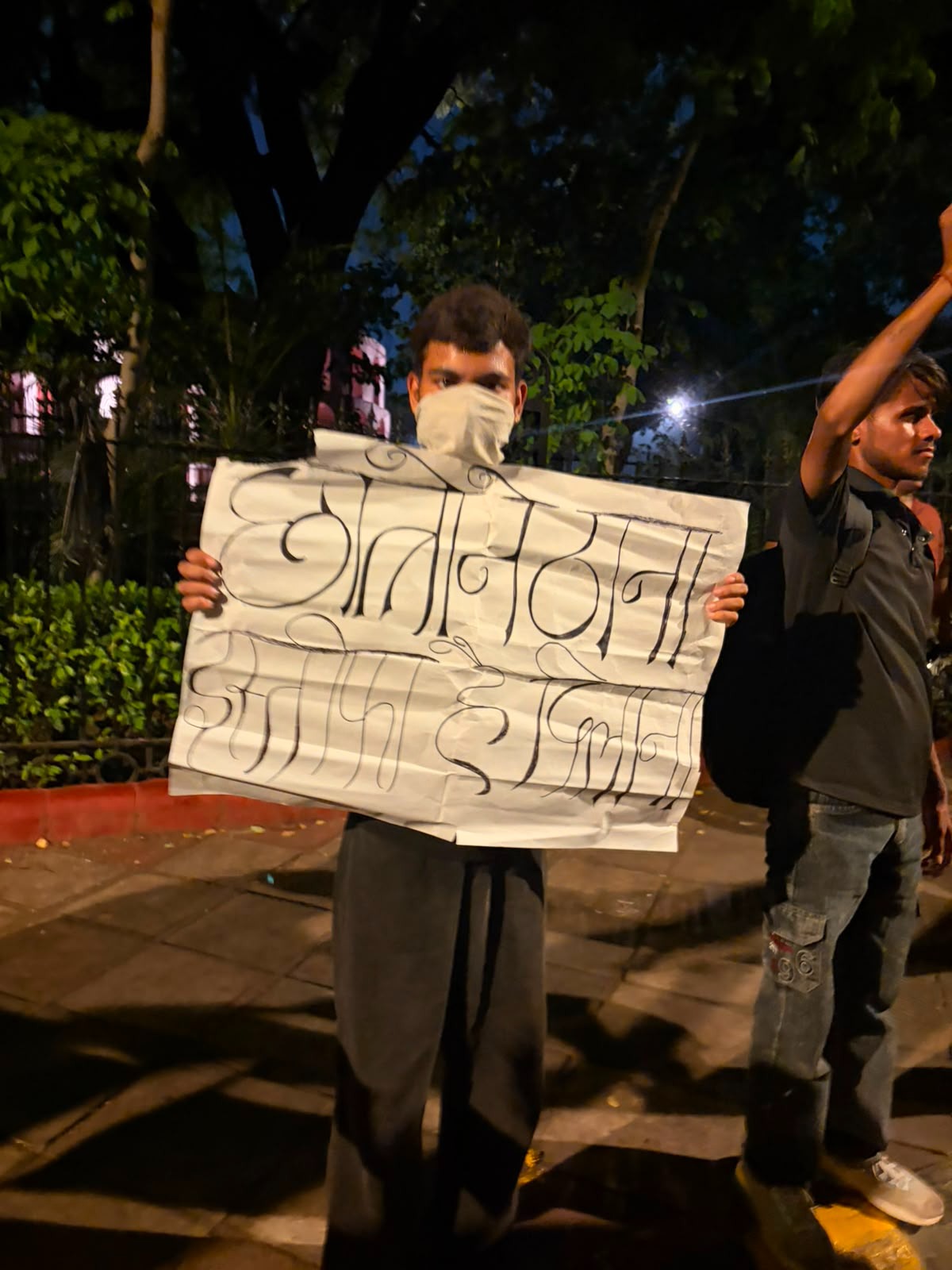
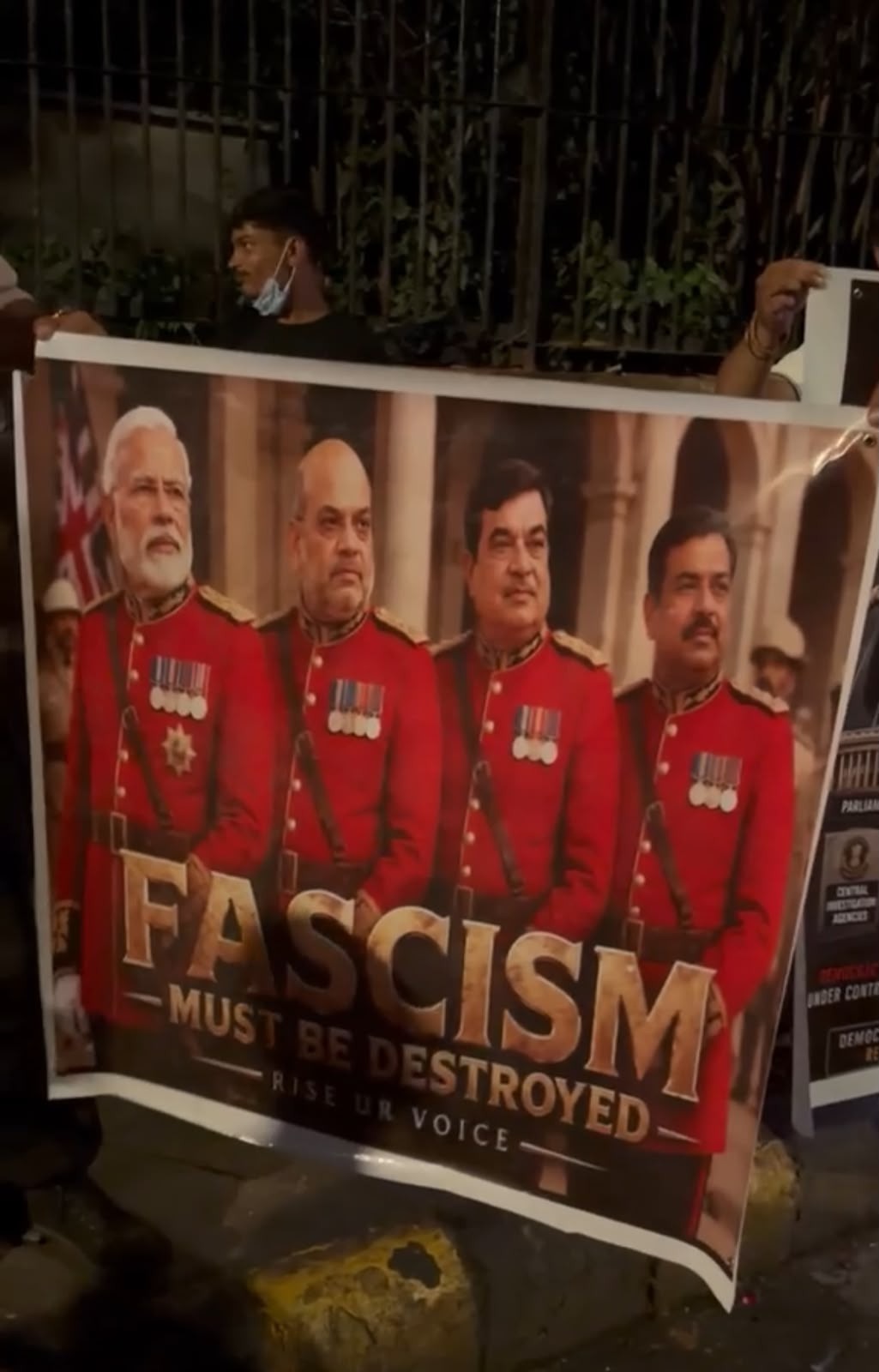
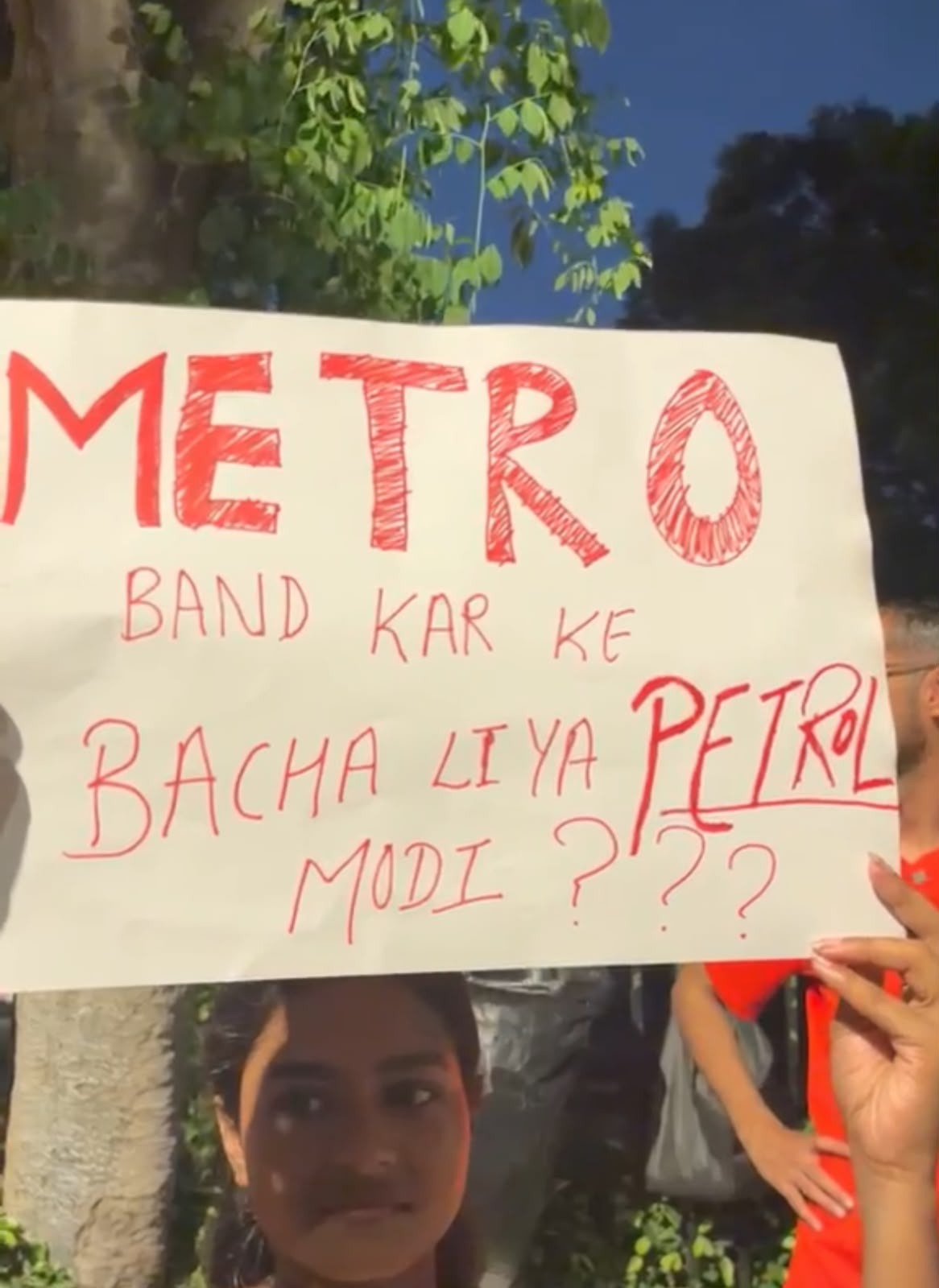
A Gen Z protester holds a handwritten placard during a street demonstration, capturing the raw, spontaneous energy and creative expression of India’s youth-led protests. | Images Source: via Whatsapp
And once the protest wound down, the withdrawal set in fast. Timelines that had been full of daily footage, daily jokes, and daily proof of a shared fight suddenly went quiet, and a genuine, if slightly absurd, nostalgia took hold. People openly said they missed the protest days, the way one might miss a festival or a long, chaotic family trip. That is a strange thing for a protest to inspire, and it is also, in its way, the clearest evidence of how completely this movement had rewired the emotional experience of political participation. Grievance became belonging, belonging became routine, and routine, once it ended, left a gap.
Comedy as Strategy, Not Accident
None of this happened because a generation could not take its own crisis seriously. It happened because comedy is the native language of people who processed the news through memes before they processed it any other way, and because a joke, unlike a statement, gets forwarded. When protesters weren't holding conventional placards, they were holding up punchlines. A delay in the Education Minister's resignation became fodder for jokes about employment being so scarce that even resigning was apparently unavailable. The minister's reluctance to step down was compared, memorably, to an employee stalling for a final paycheck before submitting their resignation letter. The jokes worked because they were instantly recognisable, borrowing the language of corporate life, dating, and everyday internet humour and pointing it directly at the machinery of government.
Political criticism, for the first time in a long time, sounded like something a friend might actually send you.
The Meme as the Real Press Release
Social media did not amplify this protest. Social media was where a meaningful share of the protest actually happened, and the crowds at Jantar Mantar were often simply the offline echo of jokes that had already done their work online hours earlier. Every dismissive statement from an institution built for a slower news cycle became new raw material, remixed and recirculated within the hour. A caption became a template, a photograph became an edit, and a single joke multiplied into a thousand versions of itself, each carrying the same sentiment forward without ever needing a single author or spokesperson.
That is the real innovation here, and it deserves to be named plainly: this generation built a faster, funnier, more resilient distribution network for dissent than any institution currently knows how to answer.
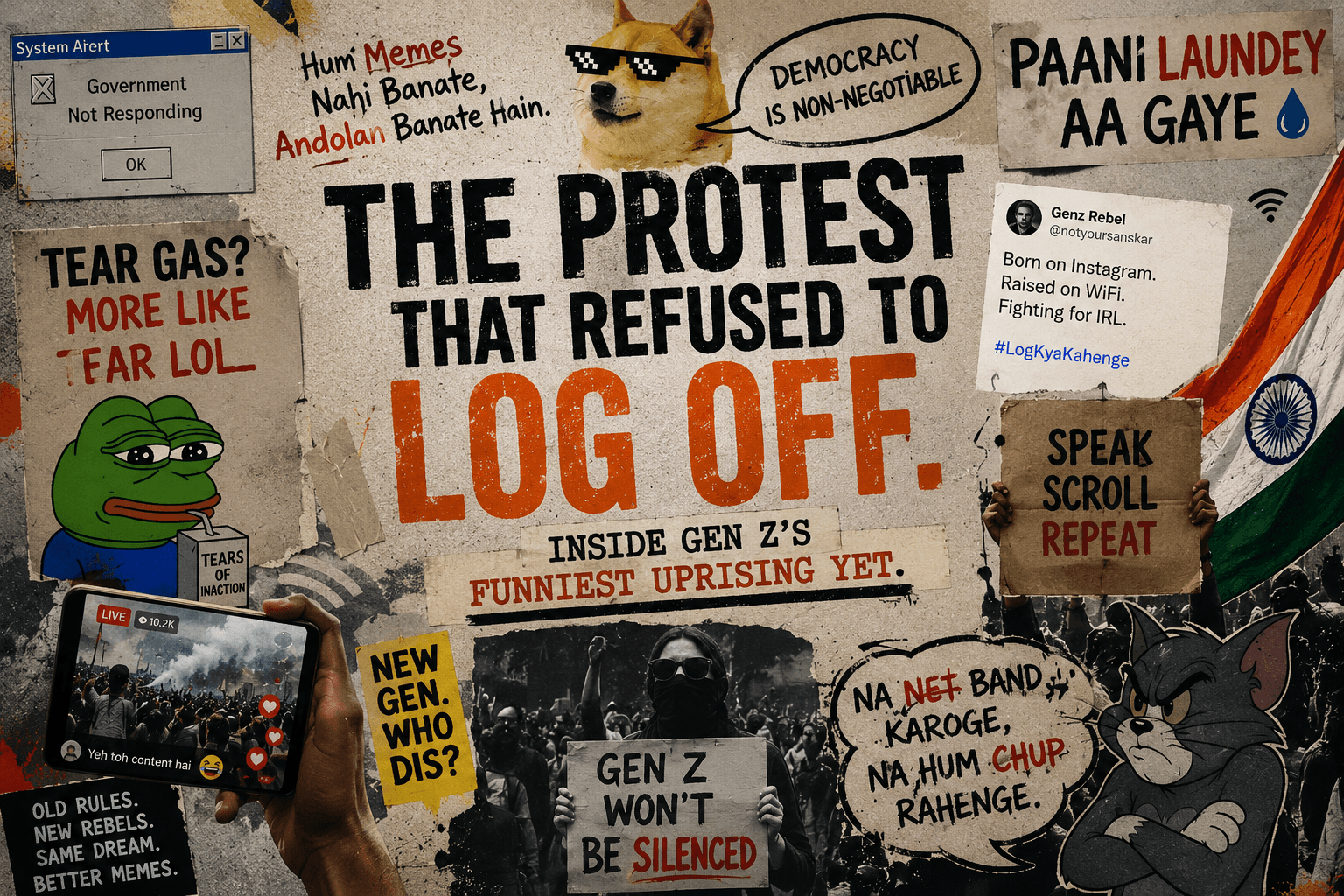
Image Source: AI Generated
What CJP Actually Proved
In this movement, the protester was never just the person holding a sign. They were also the person filming the DoorDash chase, captioning the anthem sing-in, editing the Bihar water-cannon dance floor, and sending all of it to ten friends before the story even finished loading. The laughter ran alongside the anger the entire time, and the two never once cancelled each other out. A word meant to diminish an entire generation became a party name they wore with pride. A joke became a movement that people wanted to attend twice. A meme became the message, and the message, unlike so many that came before it, actually landed.
TO BE CONTINUED, FOR SUBSCRIBERS ONLY.
This is where the surface ends and the reporting begins.
The complete piece, the full archive, and access to The French Press Circle. Reporting answerable only to its readers.
Already a subscriber ?
Login
Read these on the house, with our compliments.
A selection from the current issue, open to all readers. Read them in full. The rest is one decision away.










The Cockroach Janta Party did not simply protest. It performed, it filmed, it edited, and then it uploaded, and somewhere in that sequence, a genuine political movement became appointment viewing for an entire generation that had, until then, mostly reserved that kind of devotion for a nine PM serial or a cricket final. This was a dissent with production values. This was outrage with a content calendar. This was the moment India's most chronically online cohort proved that a revolution absolutely can be scheduled around a good ring light.
It began, as these things now reliably do, with an insult meant to sting that instead became a costume everyone wanted to wear. In May 2026, Chief Justice of India Surya Kant referred to unemployed young people as "cockroaches" in the context of online criticism, and within hours, the internet had done what the internet does best: it took the slur, held it up to the light, decided it was actually kind of iconic, and built a political party around it. The Cockroach Janta Party arrived fully formed, fully self-aware, and fully committed to the bit.
Cockroach janta party supporters celebrate the resignation of Dharmendra Pradhan. | Image Source: Deep Nair/Zuma Press Wire/Shutterstock
The Grievance Underneath the Punchline
Every good joke needs a wound to work from, and this one had a real one. The CJP protest was rooted in anger over examination irregularities and a demand for accountability from the government, particularly over the NEET paper leak and the resulting resignation of the Education Minister. For students who had built entire futures around a single exam date, a leaked paper was not an abstract bureaucratic hiccup. It was months of preparation rendered irrelevant overnight, and a generation decided the correct response to institutional betrayal was to make institutional betrayal go viral.
That decision changed everything about how the protest looked, sounded, and spread.
The power that Gen-Z holds.| Image Source: via Instagram
Doorbell Dash, Now With Political Commentary
Somewhere between the placards and the police barricades, protesters discovered that the "ding dong ditch" reel format, previously reserved for pranking neighbours and startling delivery drivers, translated beautifully to running from a police chase. Clips of protesters sprinting from barricades with the same theatrical panic and comic timing usually reserved for a doorbell prank format began circulating widely, complete with the reaction cuts and slow-motion drama the genre demands. The joke worked precisely because everyone already knew the format, and recognising it meant no explanation was necessary. A police chase became instantly legible as content, and content, unlike a press release, gets watched to the end.
Image1,2: Google
The National Anthem as a De-escalation Tactic and a Meme
Elsewhere, protesters found that standing still and singing the national anthem in the middle of a crackdown did something a shouted slogan never could: it made continued force look, on camera, exactly like what it was. Groups broke into the anthem as police moved to disperse them, and the resulting footage did double duty, functioning as a genuine act of dignified resistance and as a meme format that outlets and users alike could not stop replaying. The tactic borrowed the emotional register of patriotism and pointed it, with surgical precision, straight back at the state.
Image Source: via Instagram
Bihar Danced Through the Water Cannons
If there is a single image that captures the entire spirit of this movement, it might be the footage from Bihar of protesters dancing directly under the spray of water cannons, treating a crowd-control weapon as a monsoon party. People turned up with soap, actual bars of soap, ready to lather up mid-protest, and the resulting videos looked less like a dispersal operation and more like a music video shoot that the state had unwittingly sponsored. The water cannon, designed to punish and scatter, instead became the best-attended event of the day, and somewhere in a control room, someone in uniform must have realised that force only works on people who are still afraid of it.
Image Source: Google
The FOMO Was Real, and So Was the Feed
Here is the part traditional protest coverage always misses: people joined the CJP protest because their Instagram told them to, and they are not embarrassed about it. The format did the recruiting. A friend's story from Jantar Mantar, a reel of the anthem sing-in, a clip of the Bihar water cannon dance party, and suddenly staying home felt like missing the one event of the year everyone would be talking about on Monday. The feed filled with protest content the way it usually fills with weddings and vacations, and attending stopped being an act of political conviction alone and became, additionally, a social one. People wanted to be in the next video.
A Gen Z protester holds a handwritten placard during a street demonstration, capturing the raw, spontaneous energy and creative expression of India’s youth-led protests. | Images Source: via Whatsapp
And once the protest wound down, the withdrawal set in fast. Timelines that had been full of daily footage, daily jokes, and daily proof of a shared fight suddenly went quiet, and a genuine, if slightly absurd, nostalgia took hold. People openly said they missed the protest days, the way one might miss a festival or a long, chaotic family trip. That is a strange thing for a protest to inspire, and it is also, in its way, the clearest evidence of how completely this movement had rewired the emotional experience of political participation. Grievance became belonging, belonging became routine, and routine, once it ended, left a gap.
Comedy as Strategy, Not Accident
None of this happened because a generation could not take its own crisis seriously. It happened because comedy is the native language of people who processed the news through memes before they processed it any other way, and because a joke, unlike a statement, gets forwarded. When protesters weren't holding conventional placards, they were holding up punchlines. A delay in the Education Minister's resignation became fodder for jokes about employment being so scarce that even resigning was apparently unavailable. The minister's reluctance to step down was compared, memorably, to an employee stalling for a final paycheck before submitting their resignation letter. The jokes worked because they were instantly recognisable, borrowing the language of corporate life, dating, and everyday internet humour and pointing it directly at the machinery of government.
Political criticism, for the first time in a long time, sounded like something a friend might actually send you.
The Meme as the Real Press Release
Social media did not amplify this protest. Social media was where a meaningful share of the protest actually happened, and the crowds at Jantar Mantar were often simply the offline echo of jokes that had already done their work online hours earlier. Every dismissive statement from an institution built for a slower news cycle became new raw material, remixed and recirculated within the hour. A caption became a template, a photograph became an edit, and a single joke multiplied into a thousand versions of itself, each carrying the same sentiment forward without ever needing a single author or spokesperson.
That is the real innovation here, and it deserves to be named plainly: this generation built a faster, funnier, more resilient distribution network for dissent than any institution currently knows how to answer.
Image Source: AI Generated
What CJP Actually Proved
In this movement, the protester was never just the person holding a sign. They were also the person filming the DoorDash chase, captioning the anthem sing-in, editing the Bihar water-cannon dance floor, and sending all of it to ten friends before the story even finished loading. The laughter ran alongside the anger the entire time, and the two never once cancelled each other out. A word meant to diminish an entire generation became a party name they wore with pride. A joke became a movement that people wanted to attend twice. A meme became the message, and the message, unlike so many that came before it, actually landed.
TO BE CONTINUED, FOR SUBSCRIBERS ONLY.
This is where the surface ends and the reporting begins.
The complete piece, the full archive, and access to The French Press Circle. Reporting answerable only to its readers.
Already a subscriber ?
Login
Read these on the house, with our compliments.
A selection from the current issue, open to all readers. Read them in full. The rest is one decision away.