
Every so often Indian democracy produces a moment that rearranges the furniture of our assumptions, and the summer of 2026 has given us one. A satirical movement that did not exist in April, that holds no seats, runs no candidates and is not registered with the Election Commission, has done what the entire organised opposition failed to do across a decade. It forced the Modi government to blink. On 25 July, Dharmendra Pradhan resigned as Union Education Minister, and the Cockroach Janta Party, born from a Supreme Court insult, declared victory at Jantar Mantar.
One argument is already settled, and it was settled on a phone screen. Social media can produce change; the CJP has closed that debate. The more demanding question is what kind of change it produces, and whether a generation that has learnt to win the timeline yet knows how to win the country.
Begin with the achievement, because it is considerable and the temptation to be knowing about it should be resisted. When the Chief Justice of India likened unemployed youth to cockroaches and parasites, he handed a restless generation the one thing no movement can invent for itself: a name, an insult to reclaim, a wound to organise around. Within days the CJP had more followers on Instagram than either the Bharatiya Janata Party or the Congress, a fact that ought to unsettle anyone who still believes political legitimacy is conferred in television studios. It was not. It was conferred in reels, in livestreams, in the grainy vertical footage of a girl running from tear gas near Parliament with the caption that she had rung the doorbell and fled.
Here lies the real story, and it is a story about journalism as much as about protest. India’s mainstream television news, for the most part, looked away. The largest movement in a decade unfolded, and the channels that command the biggest audiences decided it was not happening, or worse, that it was the B-team of something sinister, a phrase the outgoing minister himself reached for. So the young did what the young now do by instinct. They became the coverage. I spent much of this protest at Jantar Mantar, and what stayed with me was not the noise of the crowd but the phones: every act of defiance performed once for the people present and again for the millions who were not, the protest and its broadcast happening in a single motion. They filmed, edited, captioned and distributed their own reality faster than any assignment desk could have suppressed it, and in doing so they exposed the quiet scandal of Indian media, which is that a handful of conglomerates have turned much of the fourth estate into a public relations wing of the state.
Into that vacuum have stepped the independents, and they deserve to be named, because naming them is itself an act of media criticism. Newslaundry and The News Minute did the reporting that legacy newsrooms would not, Akash Banerjee’s The Deshbhakt turned political satire into a genuine instrument of accountability, and a clutch of newer platforms proved that a generation raised on the phone screen need not surrender its news to either the state or the algorithm’s worst instincts. The most interesting of them is Peek TV, the short-form news venture built by two former NDTV anchors, Vedanta Agarwal and Priyanshi Sharma, both barely into their mid-twenties, who left the security of a legacy studio on the wager that the truth could be made compelling in sixty seconds. That wager has aged well. When a movement lives on the feed, the outlets that speak the language of the feed become the record of the age.
And yet. A serious publication owes its readers the sentence that begins with a caution, and here is ours. A resignation is not an accounting, and the danger of a victory that goes viral is that it feels like the end when it is barely the beginning. Pradhan has gone. In his place the government has installed Pralhad Joshi, a veteran Modi loyalist of older ideological pedigree, who now holds education as an additional charge alongside consumer affairs and renewable energy. Read that arrangement carefully, because it tells you what the establishment believes. It believes the crisis was a matter of personnel rather than of structure. It has offered a face, not a policy. The examination system that leaked, the agency that failed, the youth unemployment that made a judge’s cruelty land like a match on petrol, all of it remains exactly where it was. We have moved from one man to another and called it accountability.
This is the pattern the internet is peculiarly bad at seeing. Virality rewards the moment of catharsis, the trophy, the clip of the minister’s resignation letter, the celebration when the news broke. It is far less interested in the unglamorous, decade-long labour of building institutions, of drafting policy, of contesting elections, of the slow accumulation of power that alone can make a resignation stick. Sonam Wangchuk fasted for twenty-six days. That is not a social media tactic. That is an old, bodily, deeply Indian form of moral pressure, and it is worth noticing that the movement’s most decisive weapons combined the newest tools with the oldest ones. The feed brought the numbers. The street and the fasting body brought the risk.
So can social media activism make change? Of course it can, and the CJP has proved it beyond argument. It can shift the terms of debate in an afternoon, it can force a government to negotiate with people it had dismissed, it can turn an insult into a mass movement and a movement into a minister’s exit. What it has not yet proved it can do is turn a moment of feeling into an enduring institution. The government understands this asymmetry perfectly. It is content to lose a minister because it knows that outrage has a short half-life, that the timeline will move on to the next injustice by the weekend, and that the structures which produced the grievance will still be standing when the hashtags have gone cold.
The cockroaches, to their enormous credit, seem to know this too. They have said the fight is not over, that real change begins at the grassroots, that a resignation was the first demand and not the last. Whether a generation fluent in the grammar of virality can also learn the grammar of endurance is the open question of this decade. If it can, 2026 will be remembered as the year Indian democracy found a new source of oxygen. If it cannot, it will be remembered as the summer the feed won a famous battle and quietly lost the war.
Either way, one verdict is already in and it will not be reversed. The people were not watching the news. They were making it.
TO BE CONTINUED, FOR SUBSCRIBERS ONLY.
This is where the surface ends and the reporting begins.
The complete piece, the full archive, and access to The French Press Circle. Reporting answerable only to its readers.
Already a subscriber ?
Login
Read these on the house, with our compliments.
A selection from the current issue, open to all readers. Read them in full. The rest is one decision away.










Every so often Indian democracy produces a moment that rearranges the furniture of our assumptions, and the summer of 2026 has given us one. A satirical movement that did not exist in April, that holds no seats, runs no candidates and is not registered with the Election Commission, has done what the entire organised opposition failed to do across a decade. It forced the Modi government to blink. On 25 July, Dharmendra Pradhan resigned as Union Education Minister, and the Cockroach Janta Party, born from a Supreme Court insult, declared victory at Jantar Mantar.
One argument is already settled, and it was settled on a phone screen. Social media can produce change; the CJP has closed that debate. The more demanding question is what kind of change it produces, and whether a generation that has learnt to win the timeline yet knows how to win the country.
Begin with the achievement, because it is considerable and the temptation to be knowing about it should be resisted. When the Chief Justice of India likened unemployed youth to cockroaches and parasites, he handed a restless generation the one thing no movement can invent for itself: a name, an insult to reclaim, a wound to organise around. Within days the CJP had more followers on Instagram than either the Bharatiya Janata Party or the Congress, a fact that ought to unsettle anyone who still believes political legitimacy is conferred in television studios. It was not. It was conferred in reels, in livestreams, in the grainy vertical footage of a girl running from tear gas near Parliament with the caption that she had rung the doorbell and fled.
Here lies the real story, and it is a story about journalism as much as about protest. India’s mainstream television news, for the most part, looked away. The largest movement in a decade unfolded, and the channels that command the biggest audiences decided it was not happening, or worse, that it was the B-team of something sinister, a phrase the outgoing minister himself reached for. So the young did what the young now do by instinct. They became the coverage. I spent much of this protest at Jantar Mantar, and what stayed with me was not the noise of the crowd but the phones: every act of defiance performed once for the people present and again for the millions who were not, the protest and its broadcast happening in a single motion. They filmed, edited, captioned and distributed their own reality faster than any assignment desk could have suppressed it, and in doing so they exposed the quiet scandal of Indian media, which is that a handful of conglomerates have turned much of the fourth estate into a public relations wing of the state.
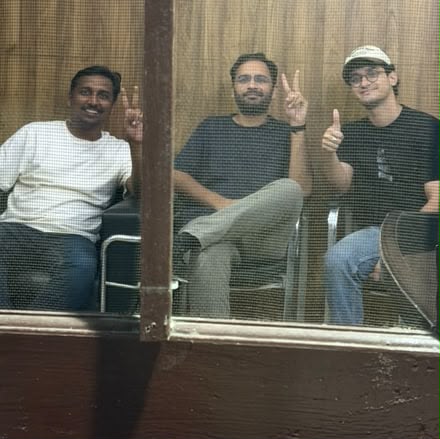
Into that vacuum have stepped the independents, and they deserve to be named, because naming them is itself an act of media criticism. Newslaundry and The News Minute did the reporting that legacy newsrooms would not, Akash Banerjee’s The Deshbhakt turned political satire into a genuine instrument of accountability, and a clutch of newer platforms proved that a generation raised on the phone screen need not surrender its news to either the state or the algorithm’s worst instincts. The most interesting of them is Peek TV, the short-form news venture built by two former NDTV anchors, Vedanta Agarwal and Priyanshi Sharma, both barely into their mid-twenties, who left the security of a legacy studio on the wager that the truth could be made compelling in sixty seconds. That wager has aged well. When a movement lives on the feed, the outlets that speak the language of the feed become the record of the age.
And yet. A serious publication owes its readers the sentence that begins with a caution, and here is ours. A resignation is not an accounting, and the danger of a victory that goes viral is that it feels like the end when it is barely the beginning. Pradhan has gone. In his place the government has installed Pralhad Joshi, a veteran Modi loyalist of older ideological pedigree, who now holds education as an additional charge alongside consumer affairs and renewable energy. Read that arrangement carefully, because it tells you what the establishment believes. It believes the crisis was a matter of personnel rather than of structure. It has offered a face, not a policy. The examination system that leaked, the agency that failed, the youth unemployment that made a judge’s cruelty land like a match on petrol, all of it remains exactly where it was. We have moved from one man to another and called it accountability.
This is the pattern the internet is peculiarly bad at seeing. Virality rewards the moment of catharsis, the trophy, the clip of the minister’s resignation letter, the celebration when the news broke. It is far less interested in the unglamorous, decade-long labour of building institutions, of drafting policy, of contesting elections, of the slow accumulation of power that alone can make a resignation stick. Sonam Wangchuk fasted for twenty-six days. That is not a social media tactic. That is an old, bodily, deeply Indian form of moral pressure, and it is worth noticing that the movement’s most decisive weapons combined the newest tools with the oldest ones. The feed brought the numbers. The street and the fasting body brought the risk.
So can social media activism make change? Of course it can, and the CJP has proved it beyond argument. It can shift the terms of debate in an afternoon, it can force a government to negotiate with people it had dismissed, it can turn an insult into a mass movement and a movement into a minister’s exit. What it has not yet proved it can do is turn a moment of feeling into an enduring institution. The government understands this asymmetry perfectly. It is content to lose a minister because it knows that outrage has a short half-life, that the timeline will move on to the next injustice by the weekend, and that the structures which produced the grievance will still be standing when the hashtags have gone cold.
The cockroaches, to their enormous credit, seem to know this too. They have said the fight is not over, that real change begins at the grassroots, that a resignation was the first demand and not the last. Whether a generation fluent in the grammar of virality can also learn the grammar of endurance is the open question of this decade. If it can, 2026 will be remembered as the year Indian democracy found a new source of oxygen. If it cannot, it will be remembered as the summer the feed won a famous battle and quietly lost the war.
Either way, one verdict is already in and it will not be reversed. The people were not watching the news. They were making it.
TO BE CONTINUED, FOR SUBSCRIBERS ONLY.
This is where the surface ends and the reporting begins.
The complete piece, the full archive, and access to The French Press Circle. Reporting answerable only to its readers.
Already a subscriber ?
Login
Read these on the house, with our compliments.
A selection from the current issue, open to all readers. Read them in full. The rest is one decision away.