There is a version of the wellness conversation in this city that has very little to do with the body. It is about the plunge pool photographed at the right angle, the red light panel as proof of membership, the sauna as an accessory to a certain kind of Sunday. Delhi has learned the vocabulary of recovery quickly and fluently, and the vocabulary now travels faster than the competence behind it.
So I went to Sawadhee Recovery Rituals in Defence Colony with a specific test in mind. I train with weights, seriously and regularly, and I live with fibromyalgia. The combination means that massage is not indulgence for me. It is maintenance, on the same list as sleep and protein and the discipline of showing up at the gym on days when the body would prefer otherwise. Strength training keeps me functional. Bodywork keeps the strength training possible. When one of those fails, the other follows within a fortnight.
I booked the traditional Thai dry work. Here is what happened, and here is why the choice matters more than the venue.
What Thai dry massage actually is
Begin with the fact that it is not a massage in the sense most people in this country mean the word. You stay clothed, in loose cotton the spa provides. There is no oil, no gliding, no dimmed room designed to send you to sleep. You lie on a mat rather than a table. The therapist works with palms, thumbs, forearms, elbows, knees and feet, using body weight and leverage rather than hand strength alone, and moves you through a long sequence of assisted stretches while applying rhythmic compression along the body's energy lines.
The tradition is old and it is codified. Thai medicine attributes its origins to Jivaka Kumar Bhaccha, physician to the Buddha, and the practice was preserved and taught for centuries at Wat Pho in Bangkok. It is regulated in Thailand by the Department for Development of Thai Traditional and Alternative Medicine, which sets standards for practitioners and venues, and UNESCO added Nuad Thai to its Representative List of the Intangible Heritage of Humanity in 2019. This is a therapeutic system with a curriculum, not a spa treatment invented by a marketing department.
The philosophy underneath it is worth understanding, because it explains the sensation. Thai medicine holds that the body is threaded with sen lines, channels along which vital energy moves, and that stagnation along those channels expresses itself as pain, stiffness and fatigue. The therapist's job is to restore flow. Whether or not you accept the metaphysics, the anatomy of what happens is legible enough. Sustained compression along predictable pathways, combined with passive movement through end range, does measurable things to fascia, joint capsules and the nervous system's sense of where the body ends.
The other principle is reciprocity. Thai bodywork is traditionally taught as a meditative practice for the practitioner as much as a treatment for the receiver, performed with attention and a certain evenness of breath. A good Thai session has a rhythm to it that you can feel the therapist keeping. A mediocre one feels like being folded by someone thinking about lunch.
What it does that the others do not
Swedish massage works the surface and the circulation, long strokes on oiled skin, designed to sedate the nervous system. Deep tissue goes narrow and hard into specific adhesions and trigger points, excellent when you know exactly which knot is ruining your week. Aromatherapy works primarily through smell and slow touch, and its target is the mind before the muscle. Sports massage borrows from all of these and points them at performance.
Thai dry does something structurally different. It treats the body as a connected chain rather than a collection of sore parts. A tight hip flexor is addressed by opening the hip through movement, not only by pressing on it. Shoulders are freed by rotating the whole girdle through positions you would never reach on your own. You leave with range of motion you did not walk in with, which is a different currency from the pleasant heaviness an oil massage gives you.
For anyone who lifts, that distinction is the whole argument. Strength training shortens tissue. It builds capacity and it builds restriction at the same time, and the restriction is what eventually injures you. Passive stretching under someone else's control gets you into positions your own nervous system guards you out of. For a body with fibromyalgia, there is a further benefit, which is that Thai work is done clothed and involves a great deal of predictable, sustained pressure rather than unpredictable digging. Predictability matters when your pain signalling is unreliable.
Who it suits, and who should stay away
It suits people who sit at desks and have lost their hips to it. It suits lifters, runners, cyclists and anyone whose training has quietly narrowed their range. It suits people who find oil massage soporific rather than restorative, and people who would simply rather stay dressed. It suits anyone who wants to leave a spa feeling switched on instead of switched off.
Approach it with caution, and with medical advice first, if you have osteoporosis or low bone density, a recent fracture or surgery, an acute disc injury or nerve compression, uncontrolled hypertension or cardiac disease, a clotting disorder or blood thinning medication, active inflammatory arthritis in flare, or a recent soft tissue injury still in its early stages. Pregnancy requires a therapist specifically trained in prenatal Thai work rather than a general practitioner of it. And for those of us with fibromyalgia, the honest guidance is that tolerance moves day to day. On a good day the deep work is the best thing available. On a flare day the same session can set you back a week. Tell the therapist where you are before they start, every single time, and mean it.
The room, the house, the verdict
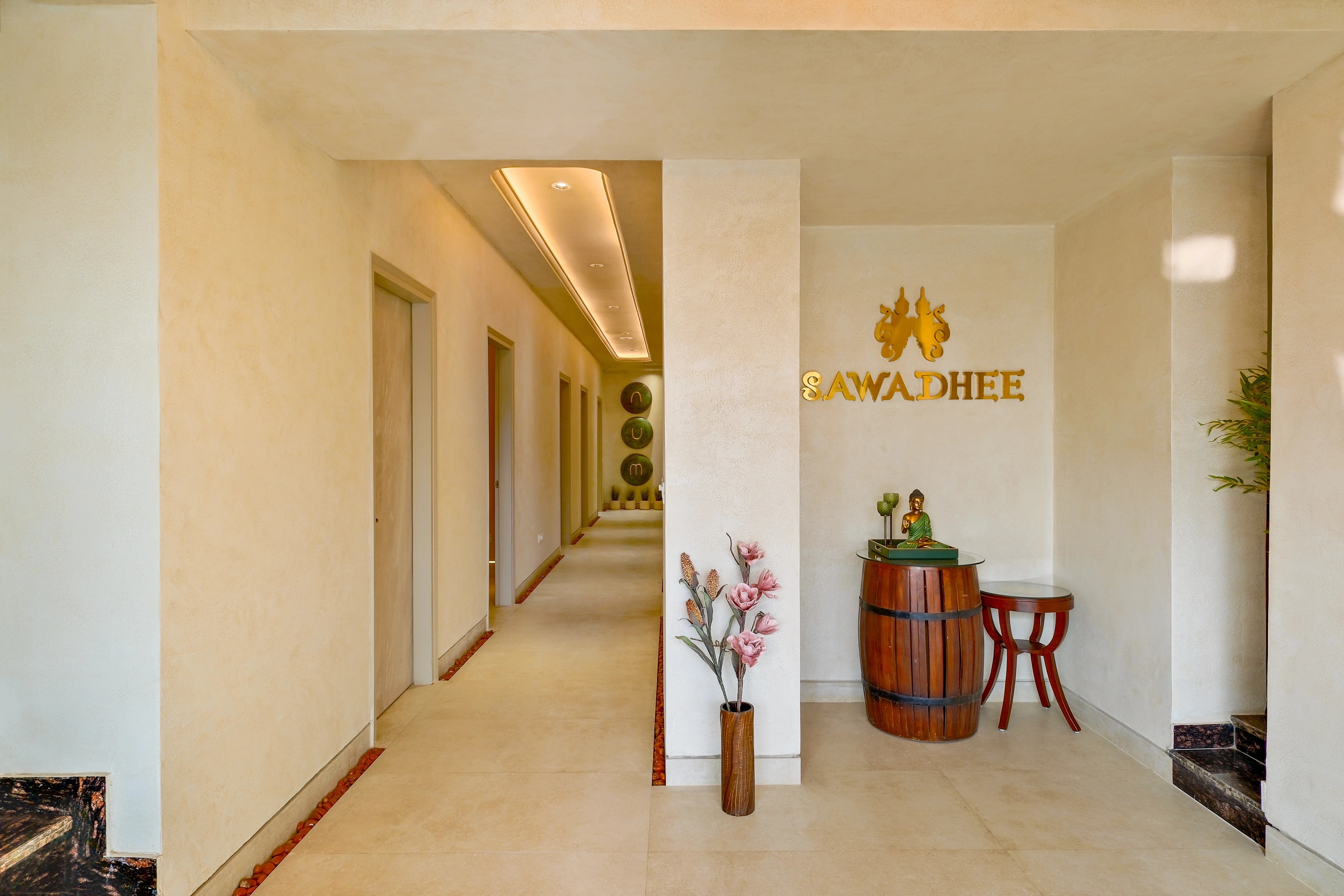
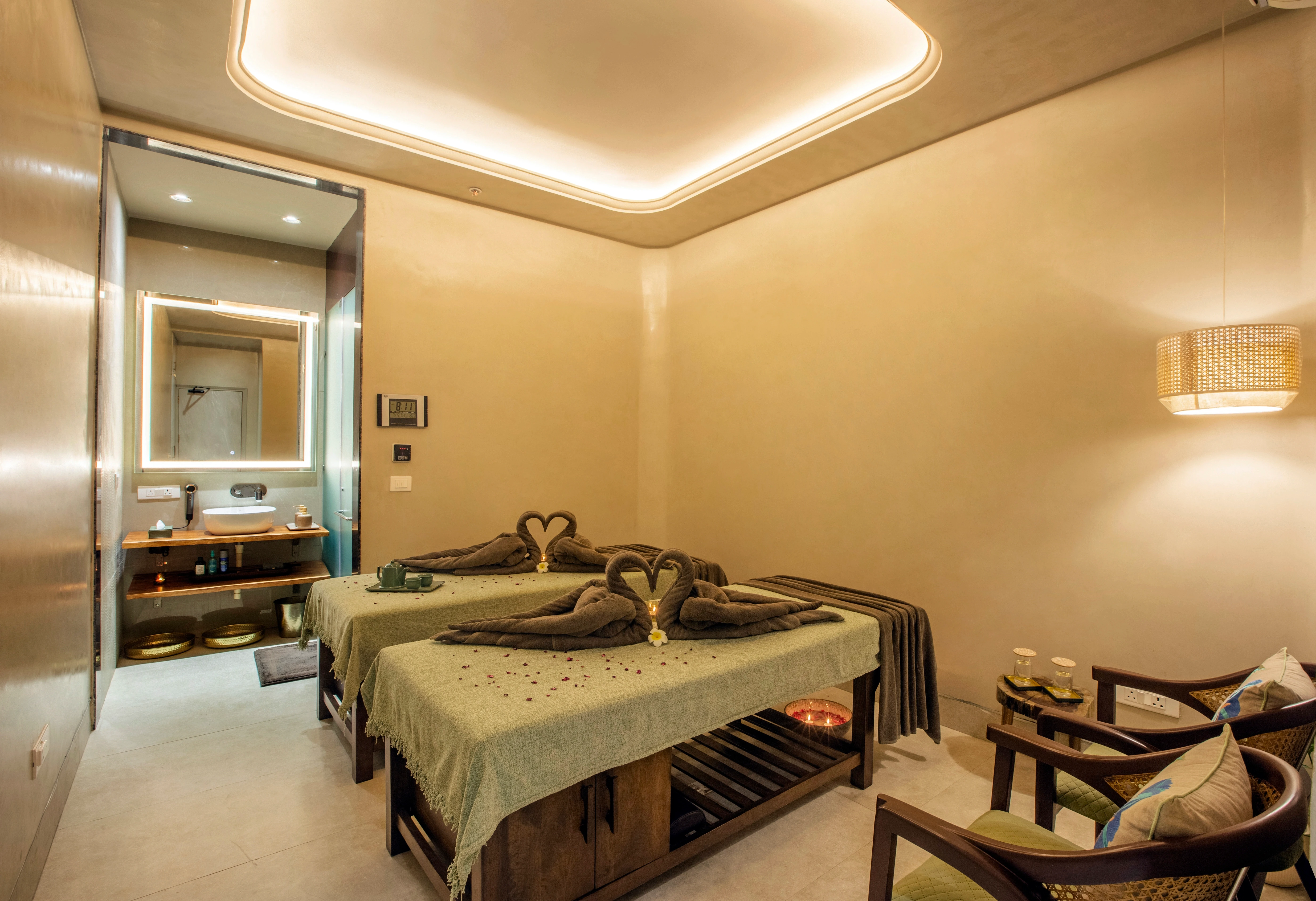
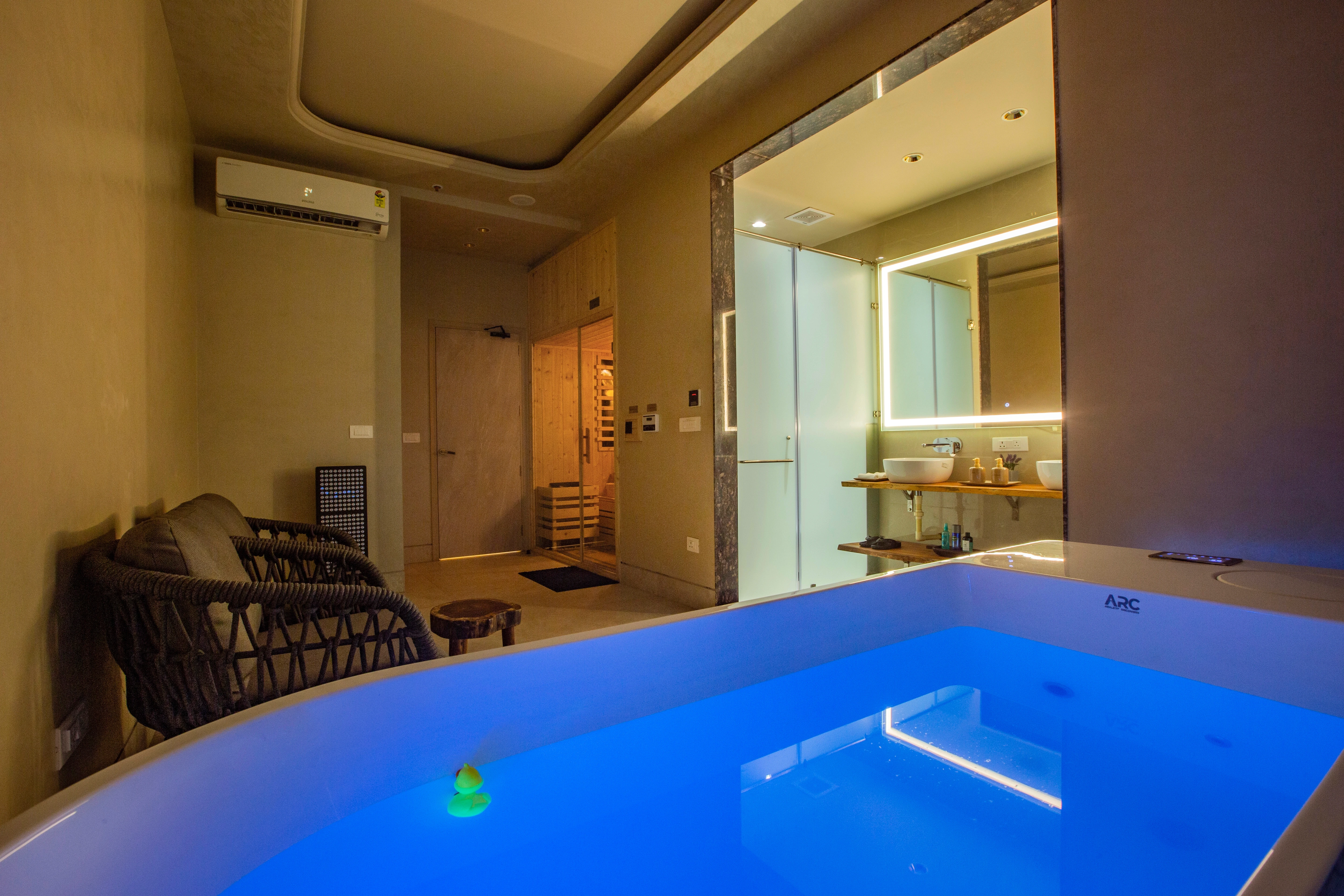
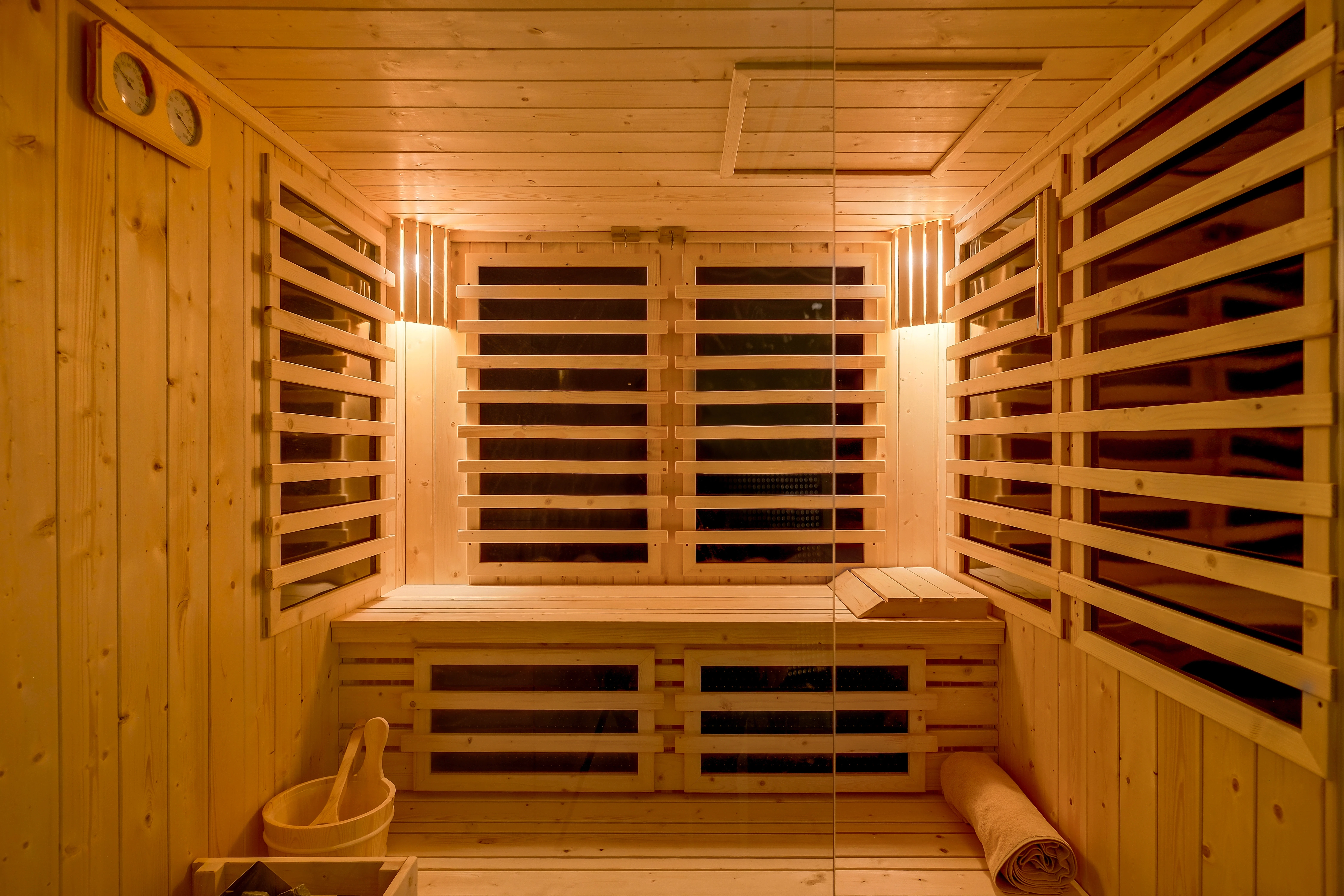
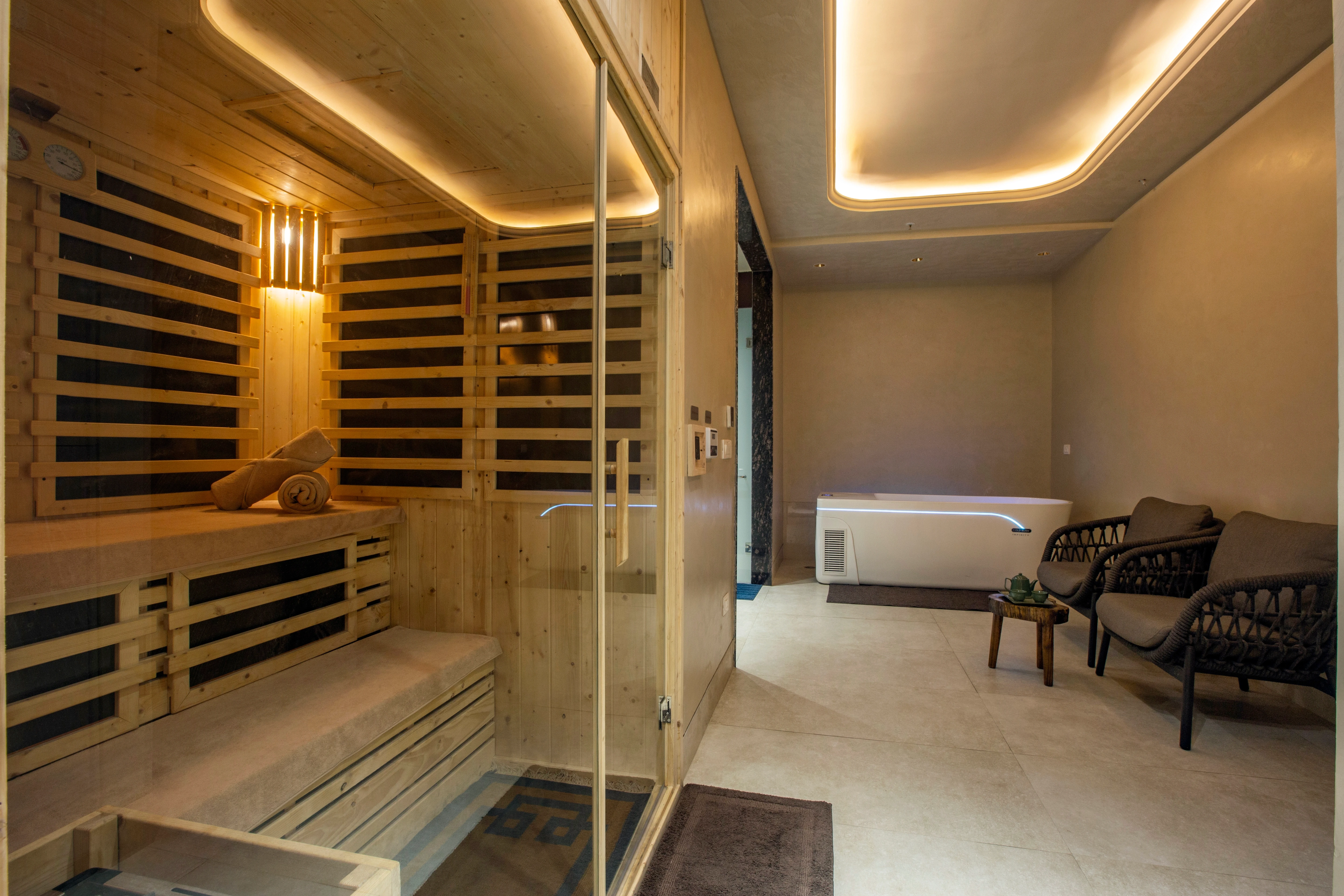
Sawadhee's Defence Colony address sits on Ring Road and functions as the recovery-focused sibling to the older Thai spa in Vasant Kunj. The build is genuinely good. Textured walls in white and sand, wood, plants, sound insulation that actually works, and a level of cleanliness that most spas in this city describe in copy and fail to deliver in fact. The shower rooms are immaculate. The heat room is properly maintained. The red light therapy room is a real draw and still uncommon at this price point in South Delhi, running twenty minute sessions on a full panel, and there is a cold plunge for those who want the full contrast protocol.
The hospitality is the house signature and it deserves saying plainly. The team is warm, exact and unfailingly courteous, the handover from reception to therapist to shower is seamless, and nobody attempts to upsell you into a package on the way out. Service here reads as trained rather than performed, which is rarer than it should be.
On price, Sawadhee is honest. The oil-free assisted stretching and dry massage session runs from around four thousand rupees, sports therapy and deep work sit at a similar level, and the two-hour options and four-hand sessions climb from there. For the standard of the space, the training and the facilities included, this is fair value rather than Delhi's usual exercise in charging for the address.
Now the one thing I would change, and I want to frame it accurately because it is a note rather than a complaint. The technique was correct. The sequencing was textbook, the therapist knew the work, the stretches were properly executed and my range of motion improved measurably by the end. What was missing was force. For a body carrying the density that regular heavy lifting produces, the pressure sat lighter than it needed to, and there were moments where I could feel the intention landing on the surface rather than through it.
Here is the useful part, and it is as much my error as the spa's. The harder work exists on the same menu. Sawadhee lists a deep relaxation therapy built for chronically overworked muscle and a sports therapy session designed for exactly the body I brought in. I chose the traditional Thai route because it is my preference and my long habit, and I got the technique I asked for delivered at a pressure calibrated for the average guest rather than for someone who deadlifts. Next visit I will either book sports therapy or ask, at the point of booking rather than at the point of lying down, for a therapist trained to work at higher intensity within the Thai framework.
Where I would push the house is on that last point specifically. As Delhi's strength training population grows, and it is growing fast, there is a clear case for a deeper-pressure Thai option staffed by therapists trained for load-bearing bodies, named on the menu so that guests can ask for it without negotiating. Sawadhee has built the best recovery room in this part of the city. Training a bench of therapists who can meet a heavy body at its own resistance would make it unmatched.
Five out of five, with the caveat that the number belongs to the room, the team and the standard, and the missing pressure belongs to me and my particular requirements. Go. Book the right thing when you do.
Sawadhee Recovery Rituals, E-4 Defence Colony, Ground Floor, Ring Road, New Delhi 110024. Open daily.
*This article is not medical advice. If you live with a chronic pain condition, a cardiovascular condition or a recent injury, consult your physician before beginning any bodywork protocol.*
TO BE CONTINUED, FOR SUBSCRIBERS ONLY.
This is where the surface ends and the reporting begins.
The complete piece, the full archive, and access to The French Press Circle. Reporting answerable only to its readers.
Already a subscriber ?
Login
Read these on the house, with our compliments.
A selection from the current issue, open to all readers. Read them in full. The rest is one decision away.








There is a version of the wellness conversation in this city that has very little to do with the body. It is about the plunge pool photographed at the right angle, the red light panel as proof of membership, the sauna as an accessory to a certain kind of Sunday. Delhi has learned the vocabulary of recovery quickly and fluently, and the vocabulary now travels faster than the competence behind it.
So I went to Sawadhee Recovery Rituals in Defence Colony with a specific test in mind. I train with weights, seriously and regularly, and I live with fibromyalgia. The combination means that massage is not indulgence for me. It is maintenance, on the same list as sleep and protein and the discipline of showing up at the gym on days when the body would prefer otherwise. Strength training keeps me functional. Bodywork keeps the strength training possible. When one of those fails, the other follows within a fortnight.
I booked the traditional Thai dry work. Here is what happened, and here is why the choice matters more than the venue.
What Thai dry massage actually is
Begin with the fact that it is not a massage in the sense most people in this country mean the word. You stay clothed, in loose cotton the spa provides. There is no oil, no gliding, no dimmed room designed to send you to sleep. You lie on a mat rather than a table. The therapist works with palms, thumbs, forearms, elbows, knees and feet, using body weight and leverage rather than hand strength alone, and moves you through a long sequence of assisted stretches while applying rhythmic compression along the body's energy lines.
The tradition is old and it is codified. Thai medicine attributes its origins to Jivaka Kumar Bhaccha, physician to the Buddha, and the practice was preserved and taught for centuries at Wat Pho in Bangkok. It is regulated in Thailand by the Department for Development of Thai Traditional and Alternative Medicine, which sets standards for practitioners and venues, and UNESCO added Nuad Thai to its Representative List of the Intangible Heritage of Humanity in 2019. This is a therapeutic system with a curriculum, not a spa treatment invented by a marketing department.
The philosophy underneath it is worth understanding, because it explains the sensation. Thai medicine holds that the body is threaded with sen lines, channels along which vital energy moves, and that stagnation along those channels expresses itself as pain, stiffness and fatigue. The therapist's job is to restore flow. Whether or not you accept the metaphysics, the anatomy of what happens is legible enough. Sustained compression along predictable pathways, combined with passive movement through end range, does measurable things to fascia, joint capsules and the nervous system's sense of where the body ends.
The other principle is reciprocity. Thai bodywork is traditionally taught as a meditative practice for the practitioner as much as a treatment for the receiver, performed with attention and a certain evenness of breath. A good Thai session has a rhythm to it that you can feel the therapist keeping. A mediocre one feels like being folded by someone thinking about lunch.
What it does that the others do not
Swedish massage works the surface and the circulation, long strokes on oiled skin, designed to sedate the nervous system. Deep tissue goes narrow and hard into specific adhesions and trigger points, excellent when you know exactly which knot is ruining your week. Aromatherapy works primarily through smell and slow touch, and its target is the mind before the muscle. Sports massage borrows from all of these and points them at performance.
Thai dry does something structurally different. It treats the body as a connected chain rather than a collection of sore parts. A tight hip flexor is addressed by opening the hip through movement, not only by pressing on it. Shoulders are freed by rotating the whole girdle through positions you would never reach on your own. You leave with range of motion you did not walk in with, which is a different currency from the pleasant heaviness an oil massage gives you.
For anyone who lifts, that distinction is the whole argument. Strength training shortens tissue. It builds capacity and it builds restriction at the same time, and the restriction is what eventually injures you. Passive stretching under someone else's control gets you into positions your own nervous system guards you out of. For a body with fibromyalgia, there is a further benefit, which is that Thai work is done clothed and involves a great deal of predictable, sustained pressure rather than unpredictable digging. Predictability matters when your pain signalling is unreliable.
Who it suits, and who should stay away
It suits people who sit at desks and have lost their hips to it. It suits lifters, runners, cyclists and anyone whose training has quietly narrowed their range. It suits people who find oil massage soporific rather than restorative, and people who would simply rather stay dressed. It suits anyone who wants to leave a spa feeling switched on instead of switched off.
Approach it with caution, and with medical advice first, if you have osteoporosis or low bone density, a recent fracture or surgery, an acute disc injury or nerve compression, uncontrolled hypertension or cardiac disease, a clotting disorder or blood thinning medication, active inflammatory arthritis in flare, or a recent soft tissue injury still in its early stages. Pregnancy requires a therapist specifically trained in prenatal Thai work rather than a general practitioner of it. And for those of us with fibromyalgia, the honest guidance is that tolerance moves day to day. On a good day the deep work is the best thing available. On a flare day the same session can set you back a week. Tell the therapist where you are before they start, every single time, and mean it.
The room, the house, the verdict
Sawadhee's Defence Colony address sits on Ring Road and functions as the recovery-focused sibling to the older Thai spa in Vasant Kunj. The build is genuinely good. Textured walls in white and sand, wood, plants, sound insulation that actually works, and a level of cleanliness that most spas in this city describe in copy and fail to deliver in fact. The shower rooms are immaculate. The heat room is properly maintained. The red light therapy room is a real draw and still uncommon at this price point in South Delhi, running twenty minute sessions on a full panel, and there is a cold plunge for those who want the full contrast protocol.
The hospitality is the house signature and it deserves saying plainly. The team is warm, exact and unfailingly courteous, the handover from reception to therapist to shower is seamless, and nobody attempts to upsell you into a package on the way out. Service here reads as trained rather than performed, which is rarer than it should be.
On price, Sawadhee is honest. The oil-free assisted stretching and dry massage session runs from around four thousand rupees, sports therapy and deep work sit at a similar level, and the two-hour options and four-hand sessions climb from there. For the standard of the space, the training and the facilities included, this is fair value rather than Delhi's usual exercise in charging for the address.
Now the one thing I would change, and I want to frame it accurately because it is a note rather than a complaint. The technique was correct. The sequencing was textbook, the therapist knew the work, the stretches were properly executed and my range of motion improved measurably by the end. What was missing was force. For a body carrying the density that regular heavy lifting produces, the pressure sat lighter than it needed to, and there were moments where I could feel the intention landing on the surface rather than through it.
Here is the useful part, and it is as much my error as the spa's. The harder work exists on the same menu. Sawadhee lists a deep relaxation therapy built for chronically overworked muscle and a sports therapy session designed for exactly the body I brought in. I chose the traditional Thai route because it is my preference and my long habit, and I got the technique I asked for delivered at a pressure calibrated for the average guest rather than for someone who deadlifts. Next visit I will either book sports therapy or ask, at the point of booking rather than at the point of lying down, for a therapist trained to work at higher intensity within the Thai framework.
Where I would push the house is on that last point specifically. As Delhi's strength training population grows, and it is growing fast, there is a clear case for a deeper-pressure Thai option staffed by therapists trained for load-bearing bodies, named on the menu so that guests can ask for it without negotiating. Sawadhee has built the best recovery room in this part of the city. Training a bench of therapists who can meet a heavy body at its own resistance would make it unmatched.
Five out of five, with the caveat that the number belongs to the room, the team and the standard, and the missing pressure belongs to me and my particular requirements. Go. Book the right thing when you do.
Sawadhee Recovery Rituals, E-4 Defence Colony, Ground Floor, Ring Road, New Delhi 110024. Open daily.
*This article is not medical advice. If you live with a chronic pain condition, a cardiovascular condition or a recent injury, consult your physician before beginning any bodywork protocol.*
TO BE CONTINUED, FOR SUBSCRIBERS ONLY.
This is where the surface ends and the reporting begins.
The complete piece, the full archive, and access to The French Press Circle. Reporting answerable only to its readers.
Already a subscriber ?
Login
Read these on the house, with our compliments.
A selection from the current issue, open to all readers. Read them in full. The rest is one decision away.