
Drive east out of central Delhi towards Ghaziabad and the skyline does something the eye refuses at first. A hill rises where no hill belongs: grey-brown, terraced, ringed by kites. In 2018 a parliamentary standing committee put the Ghazipur landfill at 65 metres, eight short of the Qutub Minar, on a site declared exhausted in 2002 and still receiving thousands of tonnes a day. Ashita Singhal, founder of Paiwand Studio, saw it from the back seat of her father's car as a child and asked what it was. "He replied, it's our mountain," she says. "I often joke that Ghazipur is my mountain of opportunities."
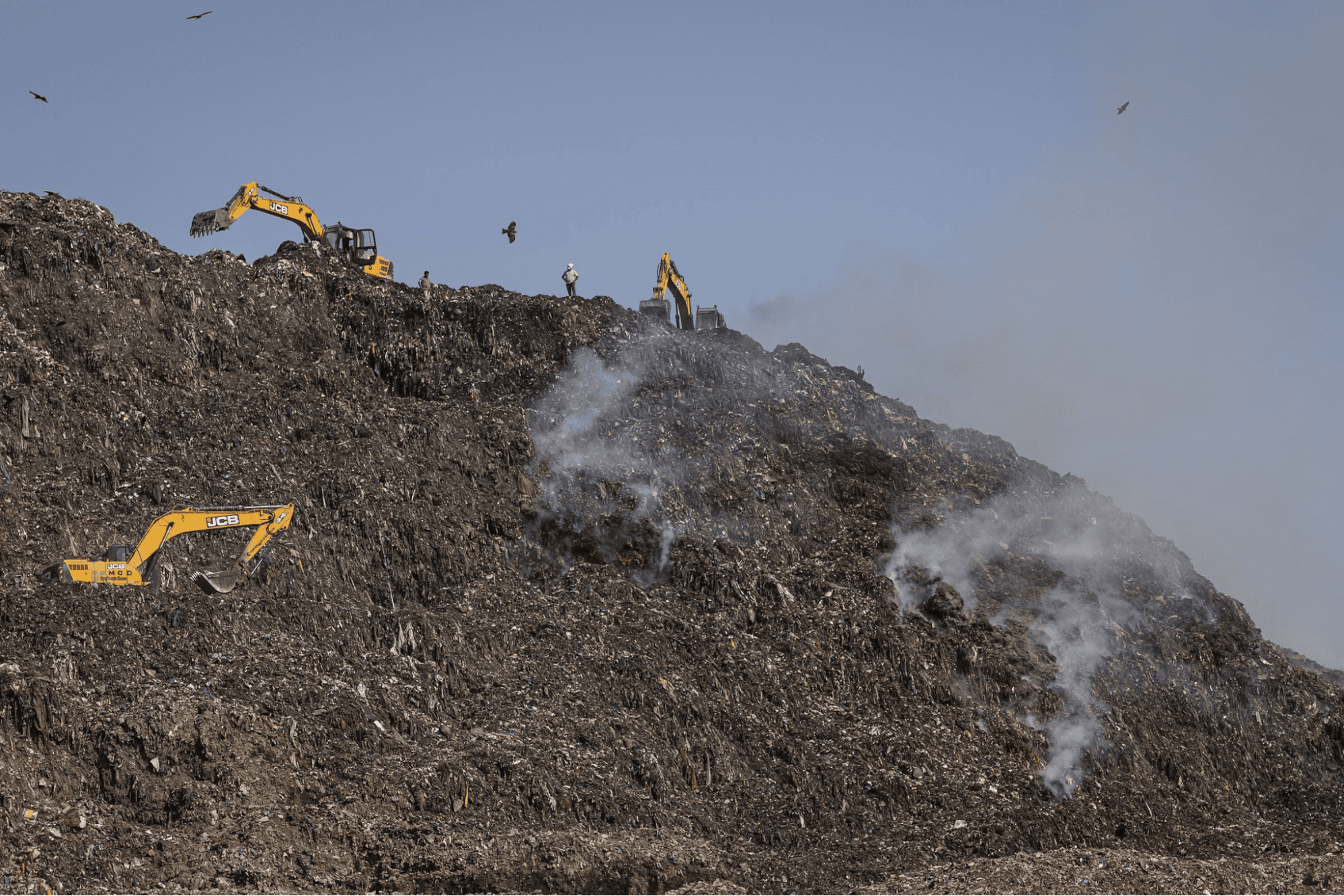
The Ghazipur landfill in New Delhi, India. Image shot by Noemi Cassanelli for CNN.
That sentence holds the whole shift this piece is about.
For most of its modern history, fashion has organised itself around the studio: a room governed by the sketch, the drape, the seasonal calendar and one authoritative eye, asking one question, which is what a thing should look like. A second room has been filling up beside it. It asks what the thing is made of, how it was grown, what becomes of it when someone is finished with it, and whether a microbe, a milkweed shrub or a mountain of discarded cloth can participate in the making. Call it the lab. Its arrival signals a change in what fashion believes itself to be, because a garment treated as an image can be beautiful on its own terms, while a garment treated as a claim about resources, labour and cost has to answer for how it came to exist.
India is an unusually interesting place to watch this happen, for a reason that has little to do with novelty. The global industry spent a century learning to sever making from meaning. Indian craft never agreed to that separation. Kantha, rafu, chindi rugs, godhadi quilts and the household economy of the bartan-badlo vendor, who still trades steel utensils for worn clothes, all assume that cloth has a continuing life. What follows is less an import of a Western sustainable future and more a recovery of something native, handed new instruments.
Waste as raw material: the Indian numbers behind a design decision
The scale is documented. Fashion for Good's Wealth in Waste study, produced with Sattva, Reverse Resources and Saahas Zero Waste, put India's annual textile waste at roughly 7.8 million tonnes, about 8.5 per cent of the global total, of which 59 per cent already returns to the industry through reuse or recycling. Most of it converges on Panipat and Tirupur. Panipat, the "cast-off capital," built its shoddy industry in the 1990s partly on second-hand machinery bought from the Italian recycling town of Prato, and now handles a large share of the country's recycled textile flows through a workforce that is overwhelmingly informal.

Ashita Singhal, founder of Delhi based upcycling studio, Paiwand Studio
So when Singhal says Paiwand took inspiration from the rag rugs of Panipat and set out to make something suited to high fashion, with modern colour palettes and lighter weights, she is describing an intervention at a precise point in an existing industrial system, one that has historically converted the world's cast-offs into low-grade blankets.
Her account of the turn is domestic rather than statistical. Design school, where a single class generated piles of scrap in hours. An internship, where she found rooms filled with textile waste. The same question each time: why do we decide a material is no longer valuable? "I started looking at textile waste as leftover fabric and started looking at it as a yarn," she says, "and that shift changed everything for me." Indian crafts have long spoken of circularity through chindi, kantha, patchwork and rafu. "At Paiwand we just found our dialect."
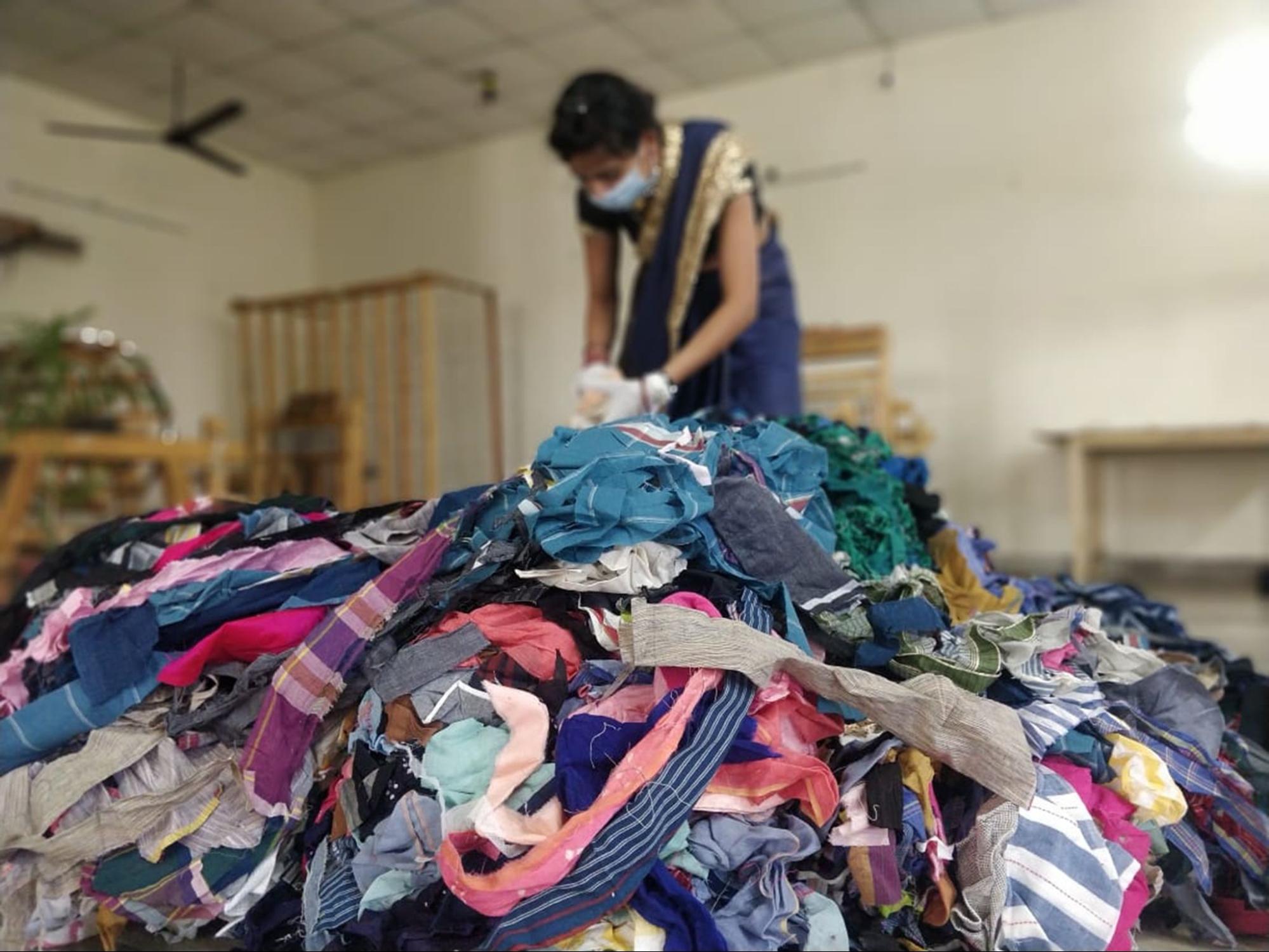
Piles of discarded fabric which is upcycled at Paiwand Studio
The studio, founded in 2018 and now in Noida, inside one of India's largest export-garment clusters, has upcycled more than 30,000 kilograms of fabric. Singhal describes it plainly as a waste management company that happens to design. The technique depends on the properties of the waste: its colour, its print, its composition. Scrap is used in its original state, without bleaching or overdyeing.
Singhal has little use for the word the sector leans on. Asked what she reaches for in place of "sustainable," she offers Conscious Design, defined by the integrity behind each decision: choosing to see waste as raw material, respecting its inherent value, and routing it back into the supply chain through craft. Circularity, on her account, is a way of living that lengthens the work. "It often means taking a much longer route in our design journey but it's one we are proud to follow."
Chennai's CRCLE works the same seam from the other end of the country. Founded eighteen months before winning the R|Elan Circular Design Challenge and showing DIALOGUE at Lakmé Fashion Week x FDCI in 2026, Varshne B's menswear label has recycled over 400 kilograms of textile waste and works with more than 100 artisans and 50 craft communities. Her material library reads like a map: naturally dyed Weganool from Auroville, handwoven Korai grass from Pattamadai, cotton from Chennimalai, deadstock from Tirupur, leather offcuts from Chennai, metal buttons from Kutch, repurposed stainless steel.

Varshne B alongside models, all wearing CRCLE
"I love experimenting and working with new materials, so I think I'm always subconsciously on the lookout for anything new," she says, describing a research method that runs on curiosity and cold outreach: find the material, find the person who makes it, go and meet them.
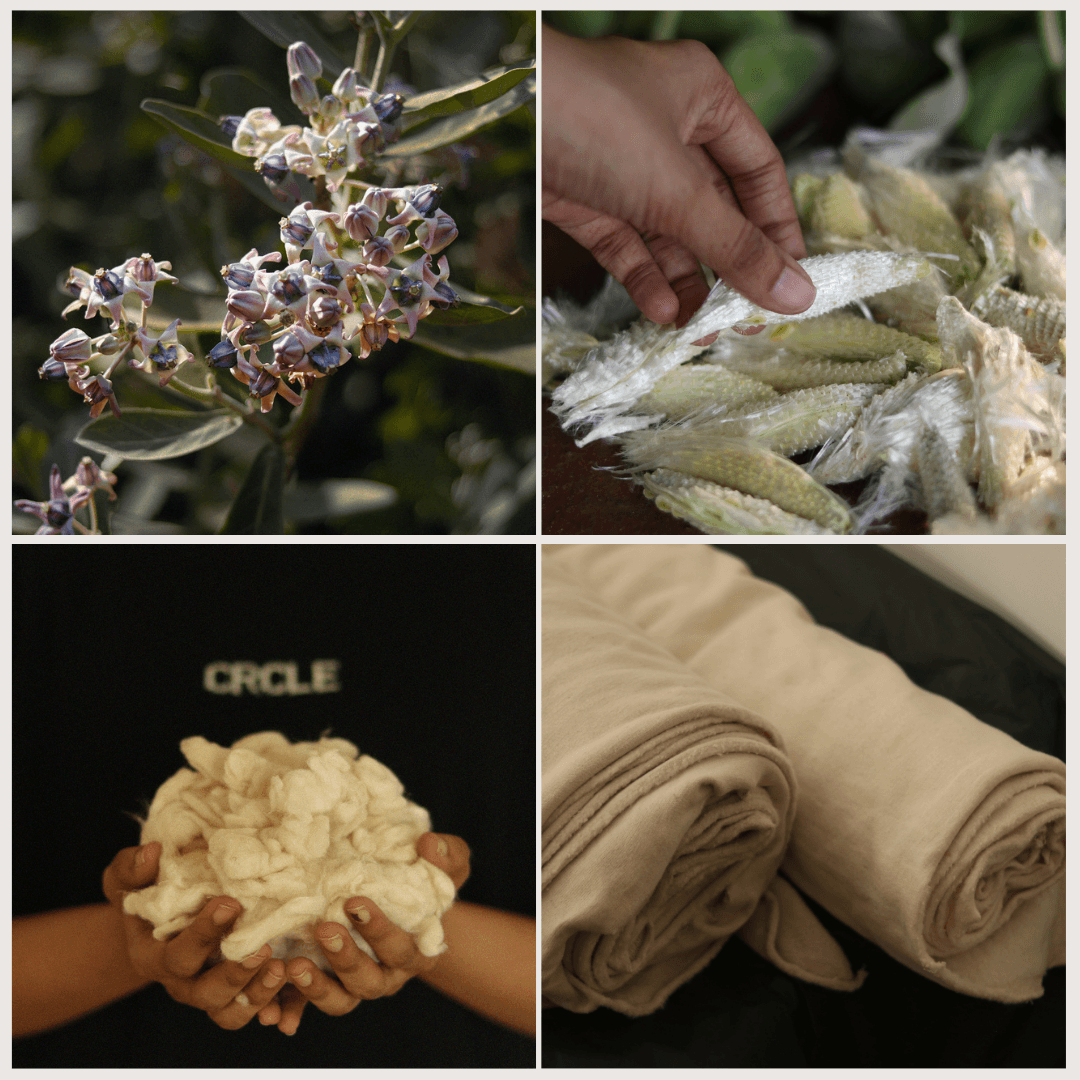
The Weganool plant fibre developed by Gowri Shankar
That is how she found Weganool, the plant fibre developed by Gowri Shankar at Faborg near Auroville from Calotropis, the milkweed shrub known across India as aak or erukku, a weed that grows on degraded, dry land. The fibres are hollow and cellulosic, blended at roughly 30 per cent with organic cotton, and Shankar patented the process in 2017. What drew Varshne was the residue. The leftover plant matter becomes Aarka, a fermented extract sold to farmers as a pest repellent and soil input; Shankar, the grandson of a farmer who sold his land to clear pesticide debts, built the agricultural side of the business for that reason. CRCLE's 400 kilograms of recycled textile waste sit alongside a contribution to some 5,800 litres of Aarka now in use across Tamil Nadu and Kerala.
"It's more like a double circular process," Varshne says. Fibre for the garment, extract for the soil, plant residue for cattle fodder. The garment is one output of a system rather than its purpose.
Origins: what pulled them off the conventional design path
Varshne B settled on fashion at thirteen and on purpose in college. "Passion became purpose, I think, when I was in college, because that's when I realized how much harm the industry actually creates. Because what we see on the outside is just like fancy clothes. But on the back, when you get into making the garments, there's so much wastage of fabrics and paper." The years after college went into production, daily operations, marketing and sales before she returned to Chennai to start CRCLE, an unusually procedural apprenticeship for someone who now shows at Lakmé Fashion Week. Menswear came out of her own wardrobe, borrowed from her brothers as a child and androgynous in her college portfolio even when the brief said womenswear. She also read the field correctly: few people were building circular menswear, which she treated as an opening she could occupy.
Anuj Sharma's education in material began in Rajasthan, decades before the field had a name for it. "I come from Rajasthan so I always knew the value for material and upcycling and recycling because the resources were limited in Rajasthan. We were also from a not very rich family so we were always trying to preserve and save and Rajasthan has very little water. So right in childhood I knew the value for material." Read alongside Singhal at Ghazipur and Basnett at the Food Waste Network, a pattern surfaces: the first principle here tends to arrive from domestic scarcity, well ahead of any design brief.
SAIM's origin note is temperamental. "If you're not married to fashion in every literal sense, you cannot creatively thrive in it forever, at least that's a thought I've always stuck with since my early days." The atelier reads clothing as an adaptive, functional craft with a long evolutionary tail, and takes an unusually long view of its own output: "100 years later what we create today is what goes into the books of history."
Who is driving: authorship when the material leads
Anuj Sharma, who studied apparel design at NID and has taught his Button Masala method to more than 20,000 people, including, in 2017, the design team at Adidas, offers a sharp formulation of the authorship problem. His system joins cloth with buttons and rubber bands, no cutting, no stitching, no machine, which places it in a lineage as old as the sari and the dhoti and as immediate as a bedsheet.
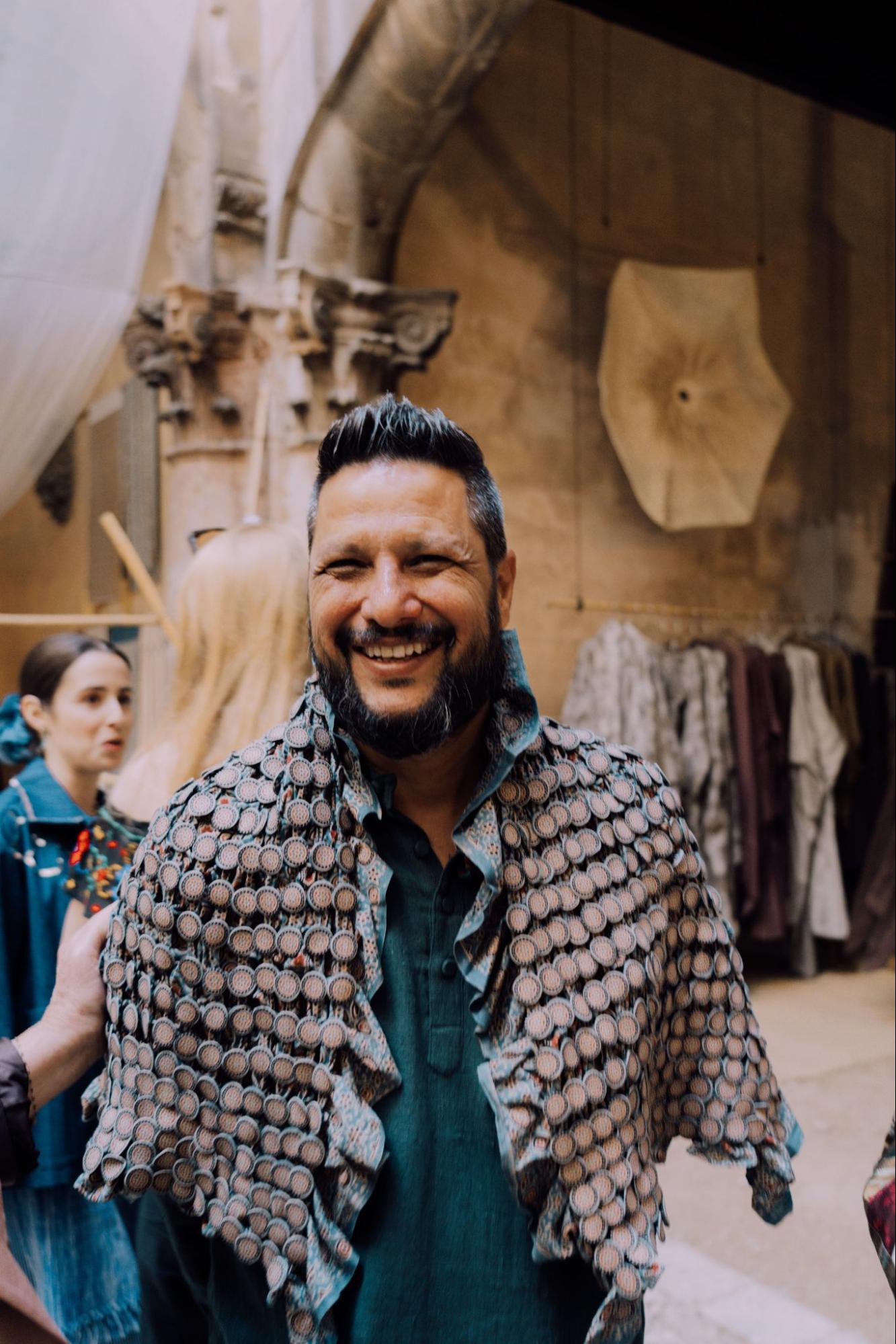
Anuj Sharma, professor and inventor of the Button Masala technique, in a Button Masala cape
"There are two kinds of drivers," he says. "There's a daddy driver and there's an Uber driver. Uber driver takes you wherever you want to go. It doesn't matter where you want to go, but the daddy driver always asks you questions and decides where the daddy wants to drop you. So designers are mostly daddy drivers." His conclusion: "We are the transporters to the happiness of the material. We transport material to its happiest point."
His reasoning for the reversal runs on competence. Mastery of a material is, in his account, an egoistic idea, available only after many years of work with it, and even then the smarter move is to let the material lead you to what it wants to become.
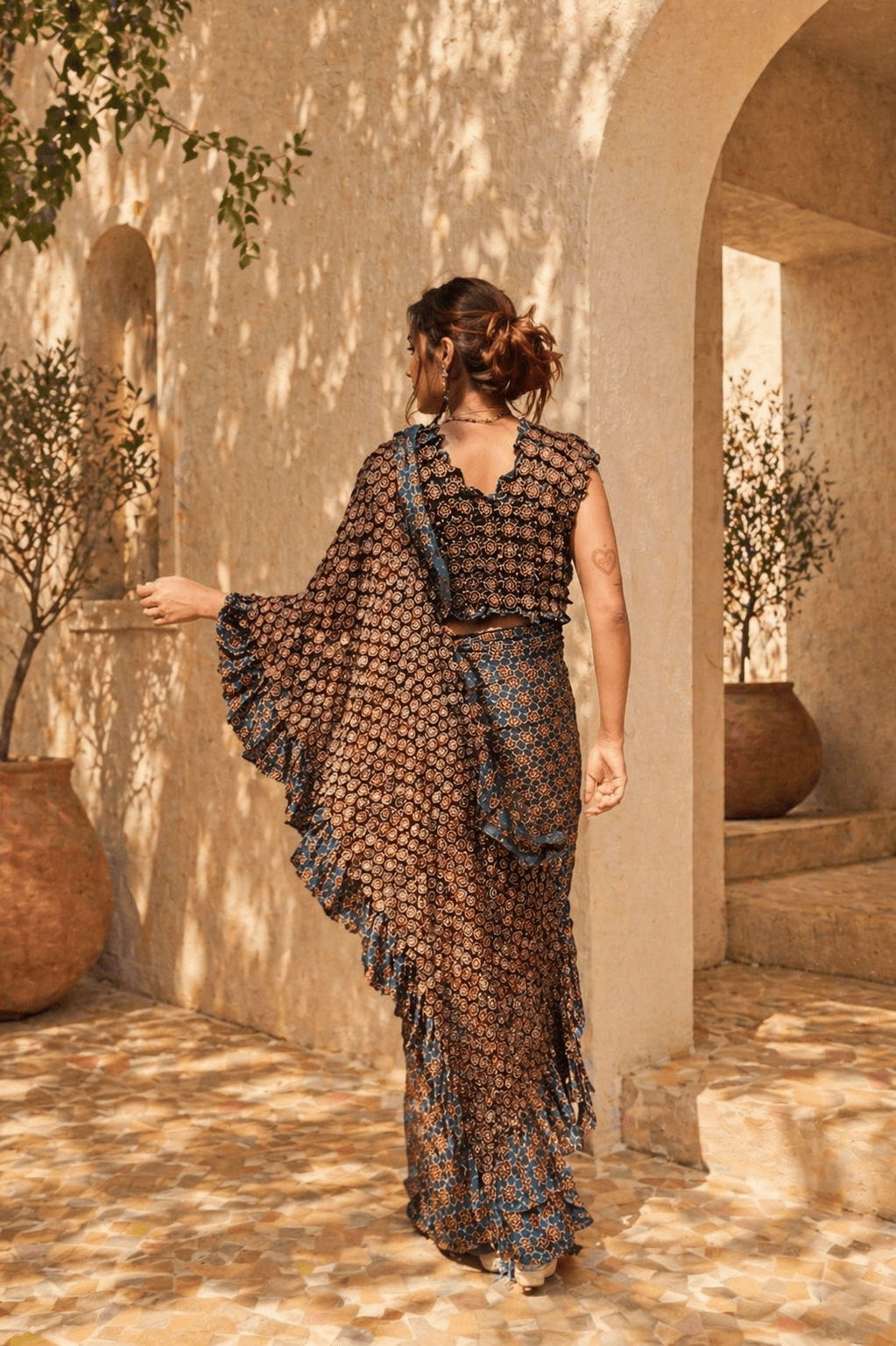
A saree fashioned from the Button Masala technique by Anuj Sharma
Sharma is careful to correct the premise of the question put to him. His practice rests on the art of not throwing at all, because a garment that can only be worn one way, and cannot be repaired when it tears, has already decided its own ending.
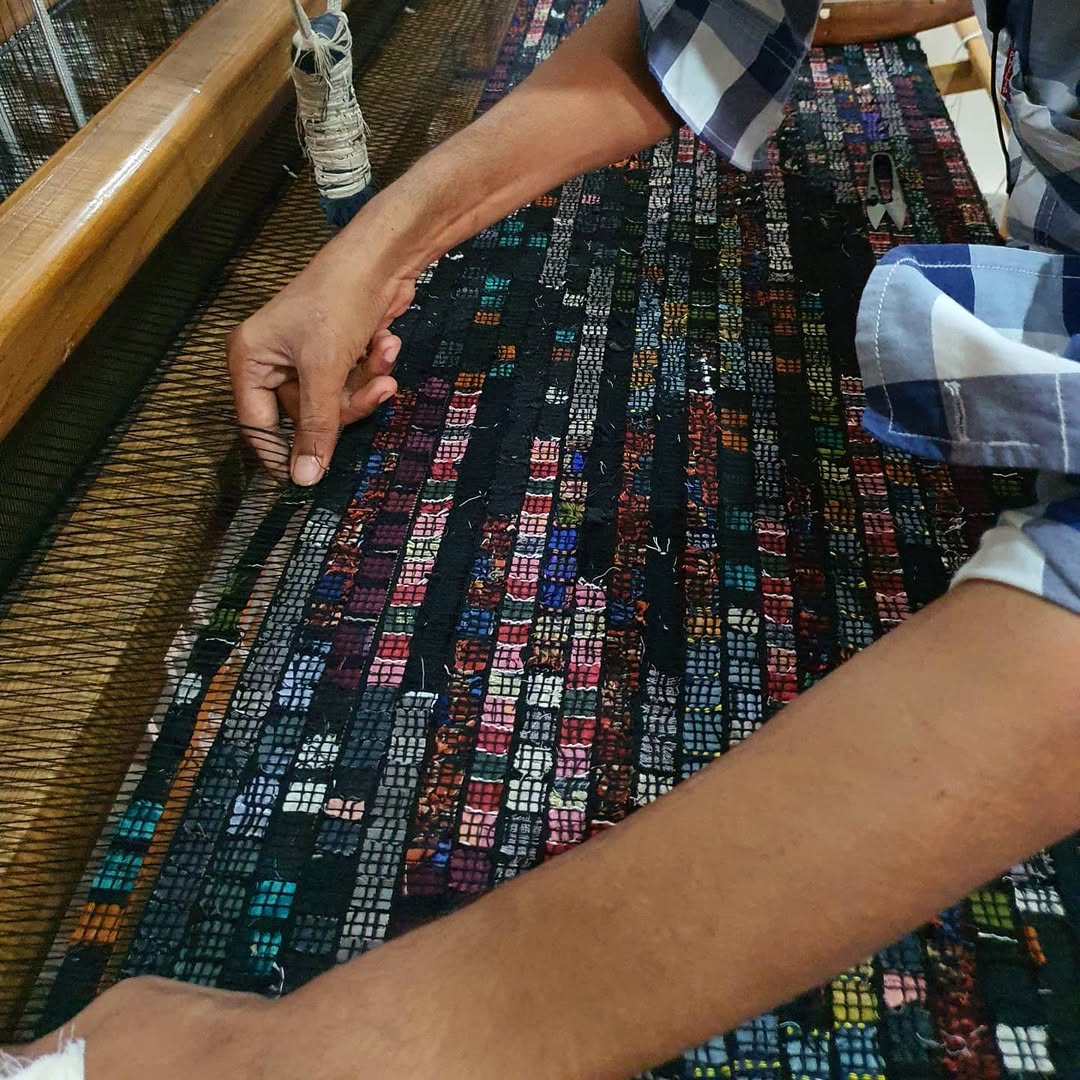
The making of the Pond Reflections Jacket by Paiwand Studio
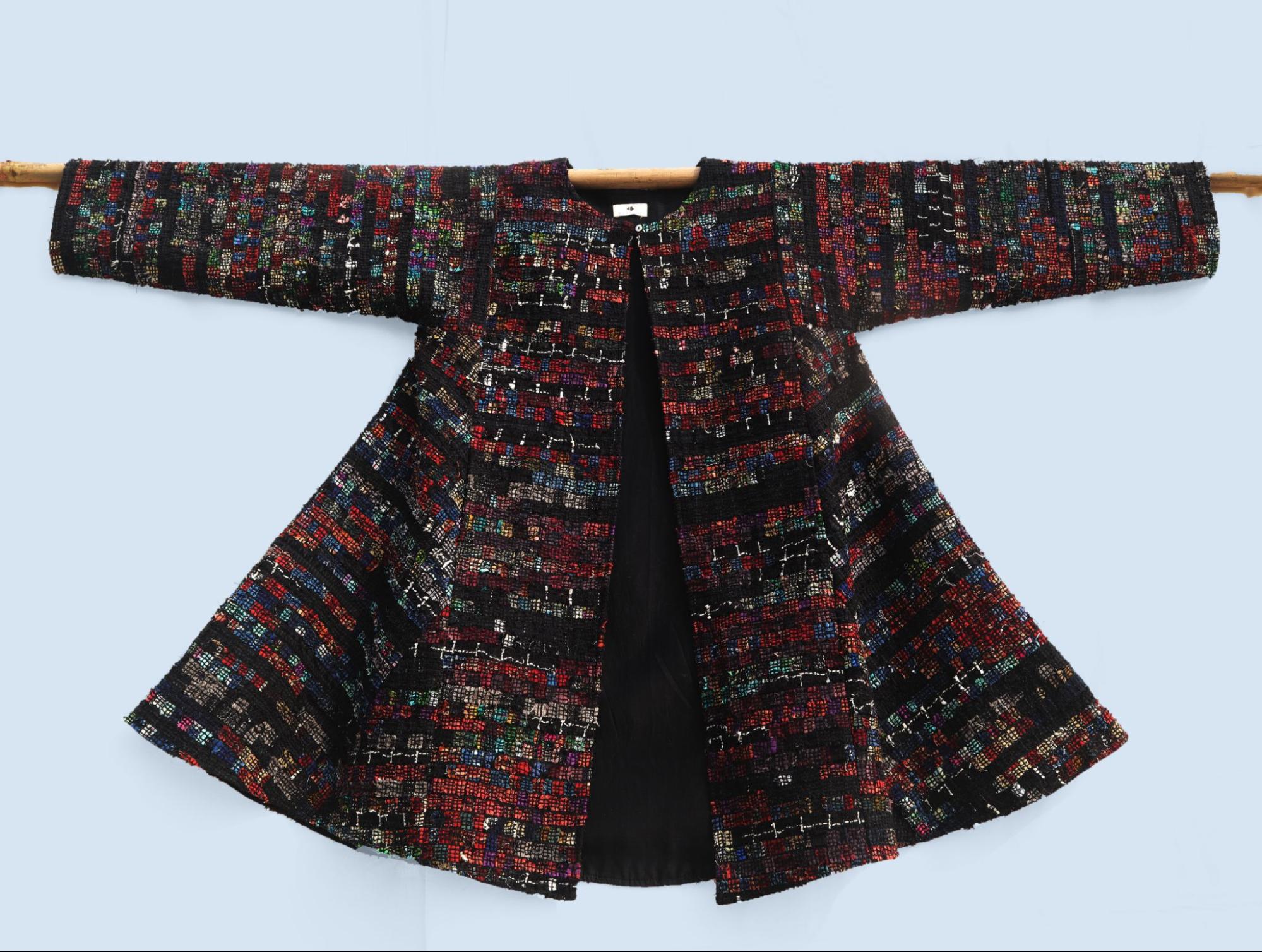
The Pond Reflections Jacket by Paiwand Studio
Singhal reaches the same place from the loom. Paiwand calls its scraps awara, wanderers, cloth that has already lived a life and arrives carrying history, texture and imperfection. "We don't begin imposing ideas on a blank canvas, rather we start listening to what the material is already telling us. Our role as designers is less about control and more about interpretation."
Sharma declines the romance around that inheritance, which produces the sharpest internal disagreement in this set of interviews. Second-hand cloth arriving in bulk, he says, carries no retrievable history. "Eventually, all the shirts are shirts and trousers are trousers and fabrics are fabrics. So I think it's not important to preserve unless there is a need for it. There's a story which is already connecting. If you connect it to a story, then it's fine." Set against Paiwand's awara, the two positions mark the working limits of provenance. Singhal keeps the evidence visible because her cloth arrives traceable to a mill or an export house; Sharma works with anonymous bulk and declines to invent a biography for it.
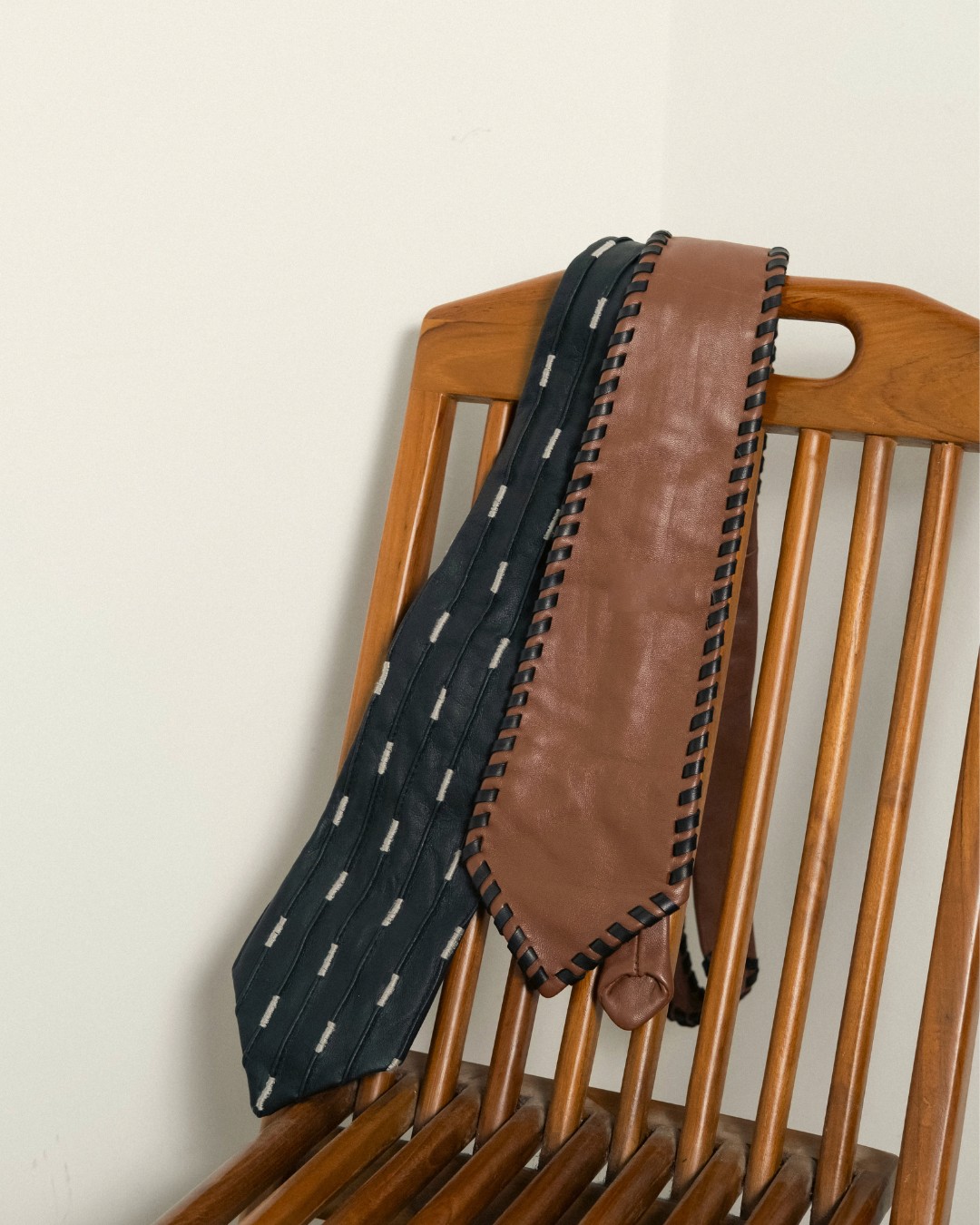
Upcycled leather ties by CRCLE
For Varshne, the constraint is generative. Limited quantities of dead stock or offcuts force design decisions that abundance would never provoke. "Circularity lets you think in new ways. And I think that's the fun part, because otherwise when you have so much fabric, you can be like, okay, I want to do this," and out come the usual ideas. CRCLE also designs for disassembly, with a take-back programme in the works, so returned pieces can be taken apart and their sound components redeployed.
She is equally careful about credit. "Vegan wool isn't something that I came up with. I work with material innovators who come up with new materials and I source materials from them." Weganool was invented by Gowri Shankar at Faborg; her contribution was the collaboration that got it made to specification for the label, which locates the design work in the relationship as much as in the cloth.
Riddhi Jain, whose Studio Medium she runs in New Delhi with Dhruv Satija after training at NID and ENSCI Paris, describes the moment the tool itself entered the design. Pattern-making, cutting, dyeing and construction stopped being separate processes and became systems capable of generating form. "Instead of starting with a finished object and figuring out how to make it, we could start with a set of rules, introduce a tool, and see what kind of object emerged. That changed our relationship with authorship too. We became less interested in controlling every outcome and more interested in creating the conditions for unexpected ones."
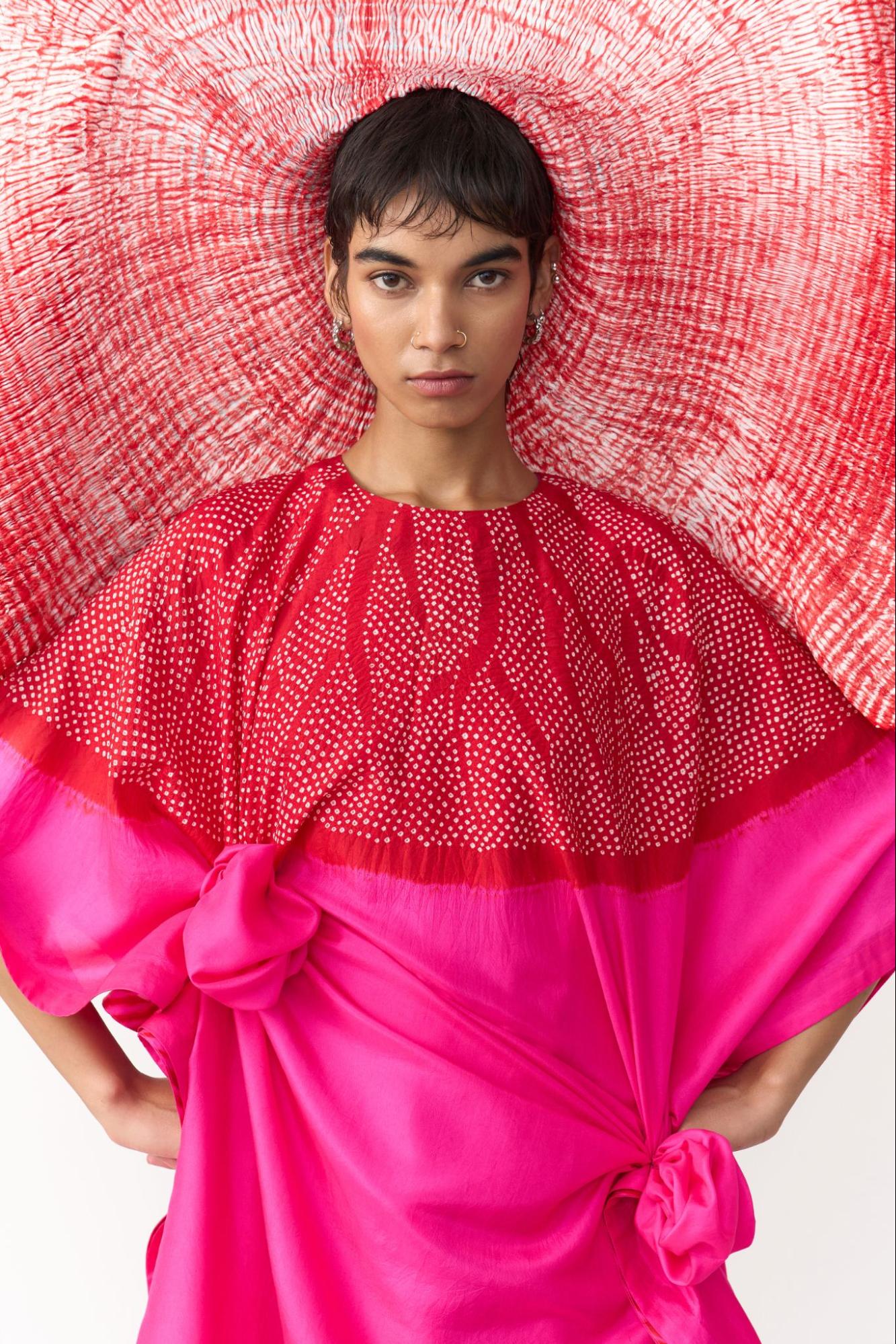
Lumo Kaftan by Studio Medium, from their ‘Beat, Repeat’ collection
Everyone here is circling the same reversal. The process belongs to the practitioner; the outcome belongs to the material. This is closer to how a Banarasi drawloom or a bandhani workshop has always behaved than to how a fashion house presents itself.
The seam between machine and hand in Indian craft
Studio Medium's position on technology is the most carefully drawn in this set of conversations, and it refuses the usual opposition. "The machine proposes, the material responds, and the hand decides what is worth keeping," Jain says. The hand stays wherever judgement, irregularity and response matter: when a colour runs slightly too cold, when a fold needs to move, when an irregularity suddenly makes the whole thing alive. She declines to treat the hand as a nostalgic object requiring protection. It is another tool. The boundary earns its keep because the work should retain evidence of decisions being made, "not necessarily evidence of labour for its own sake, but evidence of a person having been there."
Her starting condition rules speed out as a motive. "We've never been interested in using a machine to make something faster simply because it can. We're interested in what a tool allows us to attempt that the hand, on its own, may not be able to." What the machine contributes is rhythm, scale, repetition and precision, and the event she watches for is what those do on contact with the unpredictability of a material.
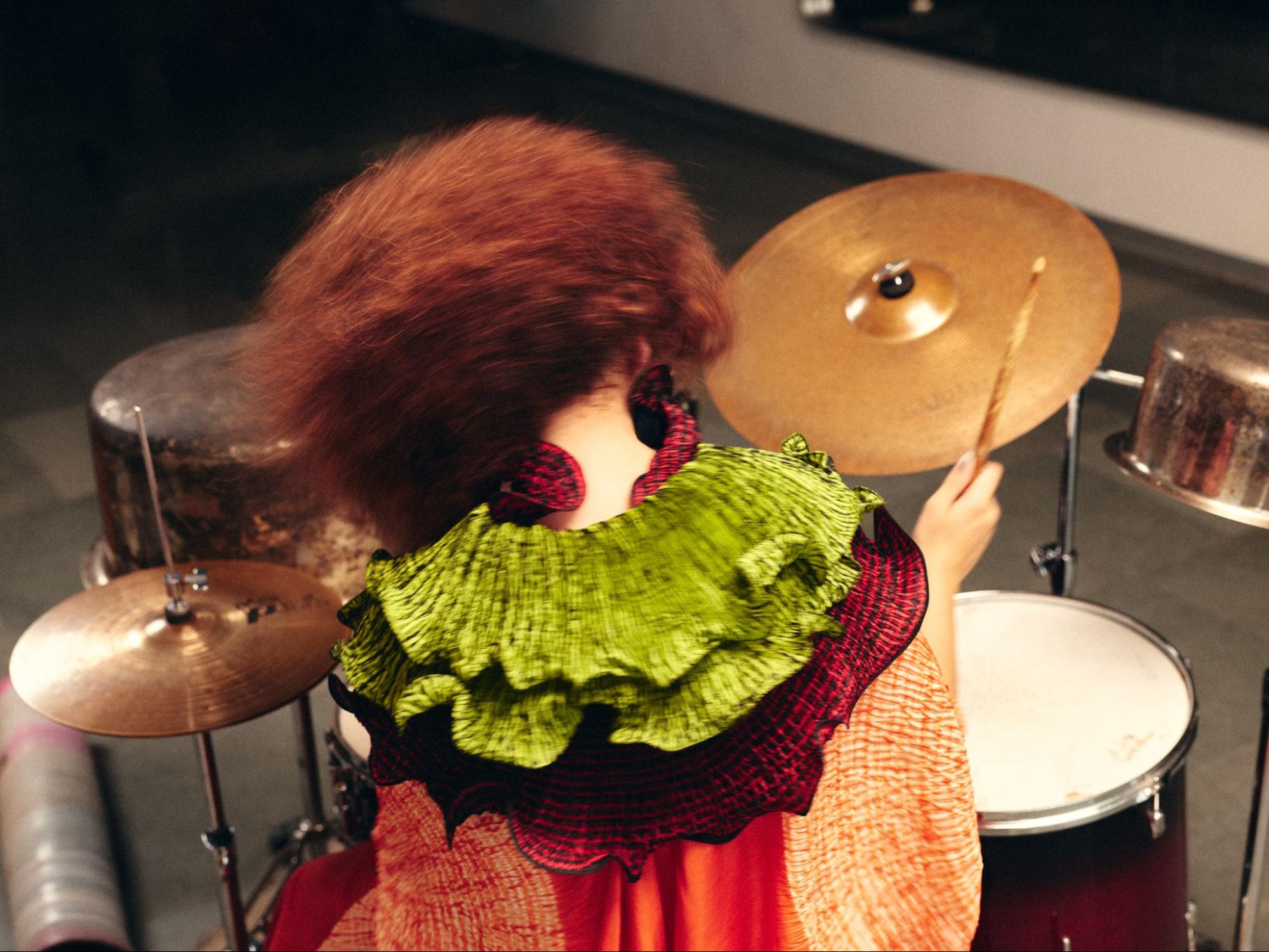
Studio Medium’s Pre Festive 2026 Collection - ‘Beat, Repeat’
Ask her whether the technical kills the romantic and she points at the loom itself, a marvel of engineering with a great many moving parts, producing objects as romantic as anything in the Indian textile canon. Issey Miyake and Dai Fujiwara arrived somewhere similar with A-POC in 1998, a knitting machine programmed to output a whole garment from a single thread, where the buyer's scissors completed the design.
Vasavi Sridhar, a transdisciplinary designer working across biodesign, material innovation and textile systems, reframes the question at its root. "The question is not, how can technology improve craft, but rather, what is preventing this knowledge or material from evolving, and can technology remove that constraint without erasing its context?"
Her defence of the hand is physiological, though it lands some distance from SAIM's. "I believe the soul of a project lies in the adrenaline of the nerves." Biodesign, she says, shows material behaviour to be emotive, intuitive and almost playful, which places tactility and humanness inside the process itself. Once a practice works that way, "a garment or an object is no longer an isolated outcome. It becomes a part of the moment in a much larger system." The trap she sets for a viewer follows the same logic: a material that looks familiar and behaves differently, an object of a recognisable typology whose surface or construction interrupts the recognition.

Vasavi Sridhar is an inter-disciplinary designer whose practice seamlessly integrates emerging materials, textile systems, and sustainable strategies.
Her answer to where personal aesthetic survives in a systematic process is precise: inside the hundreds of subjective decisions the system still demands. What to investigate. What to preserve. What to exaggerate. Which imperfections to leave standing. Jain puts the same idea another way: "aesthetic comes less from what you make and more from what you choose to notice. The system gives us possibilities. Taste is deciding which possibilities are ours."
Both want the encounter before the explanation. Sridhar: "I want them to move closer. I want a small window of curiosity before the explanation." Jain: "We don't want someone to see a garment and think, this is technically interesting. We want them to think, I don't quite know what this is, but I want to get closer."
Biodesign and the living lab: what it takes to trust a material
At the University of Westminster's Cavendish Living Lab, a Quintin Hogg Trust-funded project co-led by Dr Pooja Basnett with Dr Linda Percy and Dr Dipankar Sengupta, the work began without a plan to change fashion at all. An architecture student, Nour Said, started experimenting with turning food waste into usable materials and grew a costume from kombucha cellulose. Basnett, whose background is in biomaterials and sustainable biotechnology, was drawn in. The lab now runs strands across urban food growing, bioplastics and water management, with microbial polymers, biobased plastics from food waste, and bacterial cellulose all in play.
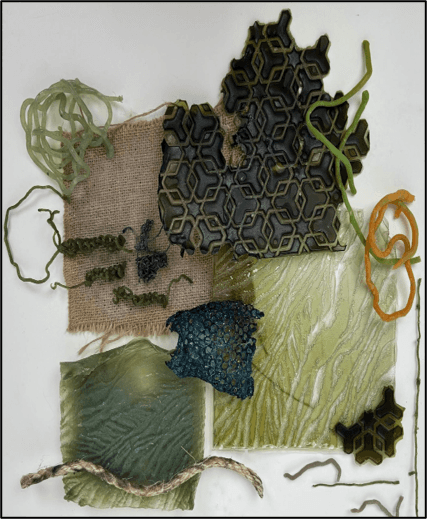
Collection of circular biomaterials developed and photographed by Cavendish Living Lab Innovators Naqib Naser and Nour Said
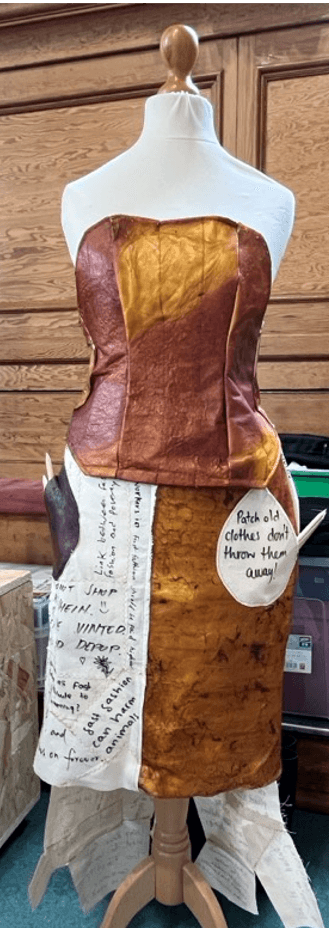
Garment created from dried kombucha leather developed by Cavendish Living Lab Innovator Nour Said
Basnett cites the figure that fashion accounts for around 10 per cent of global carbon emissions. That number, traceable to UNEP and a 2018 Quantis study, sits at the high end of a contested range; the Apparel Impact Institute's 2025 accounting put apparel at 944 million tonnes of CO2e in 2023, close to 2 per cent of the global total, and rising 7.5 per cent in a single year on the back of overproduction and virgin polyester, which now makes up 57 per cent of global fibre production. The range is disputed. The direction is not.
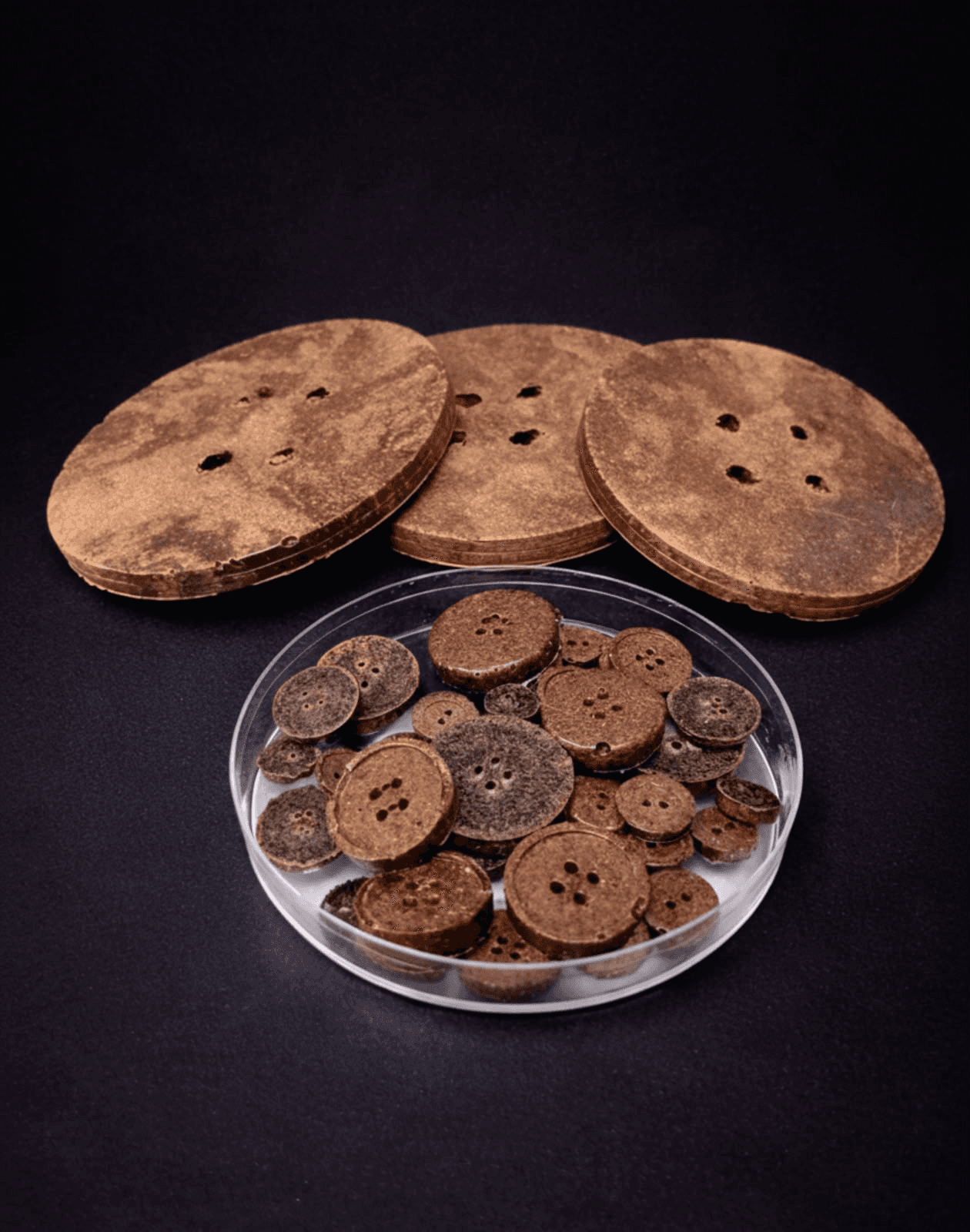
Coffee buttons developed from spent coffee grounds collected from the University café
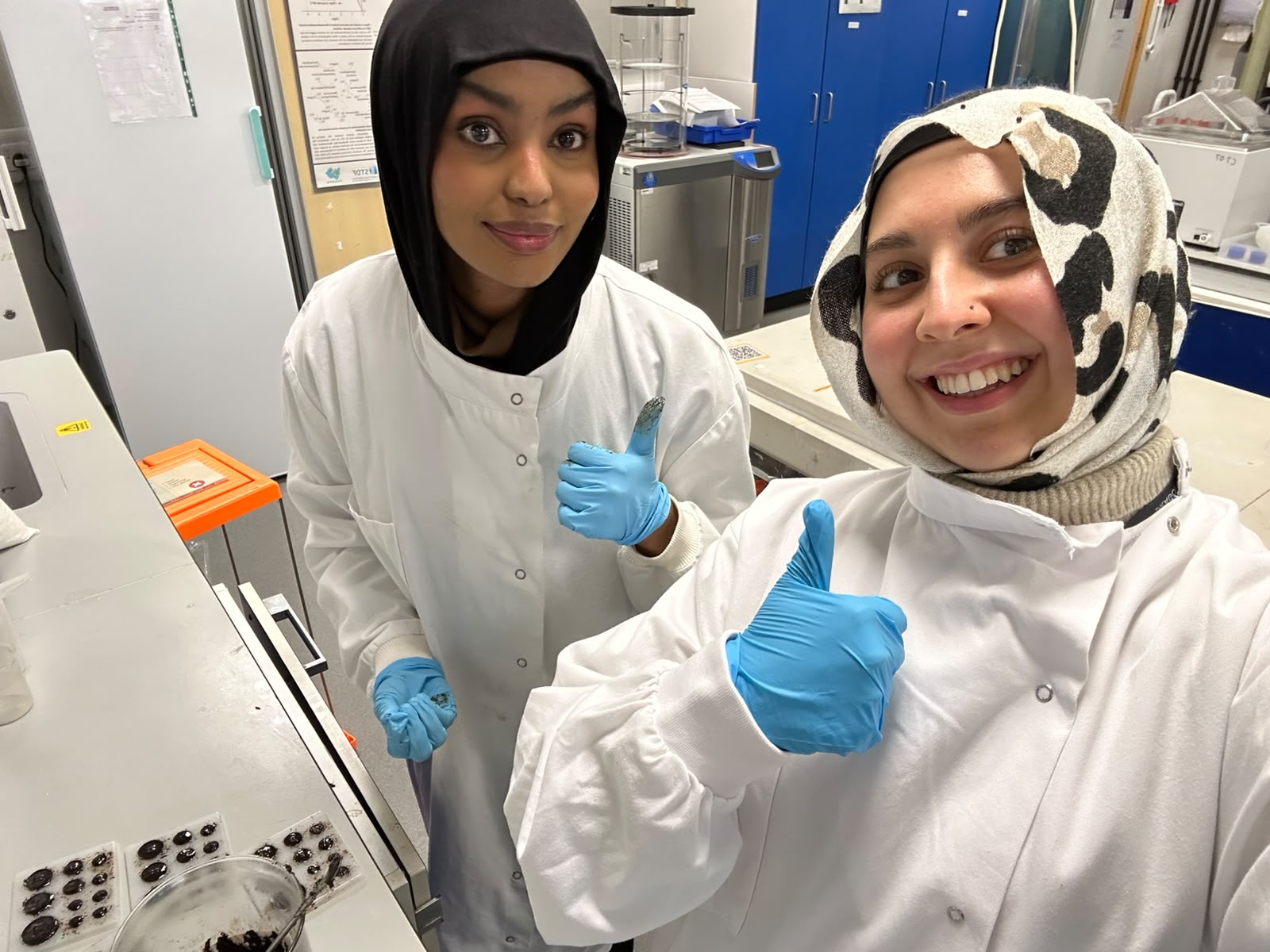
Student Innovators Safia Irfan and Fay Mohamed Hirsi creating coffee buttons in the lab
Her first unlearning came from food. Some years ago Basnett was part of the Food Waste Network, and that stint reorganised what the word waste pointed at. "I realised that what we call waste is often a resource with hidden value." The Cavendish operation now runs on that assumption at both ends of the building. Eggshells, orange peels and coffee grounds collected from businesses around Fitzrovia go into biomaterials; campus food waste is composted to grow produce on site, some of which has gone to a food bank in Euston. Transforming materials that would otherwise be discarded into value-added products, she says, is a key part of what the lab does.
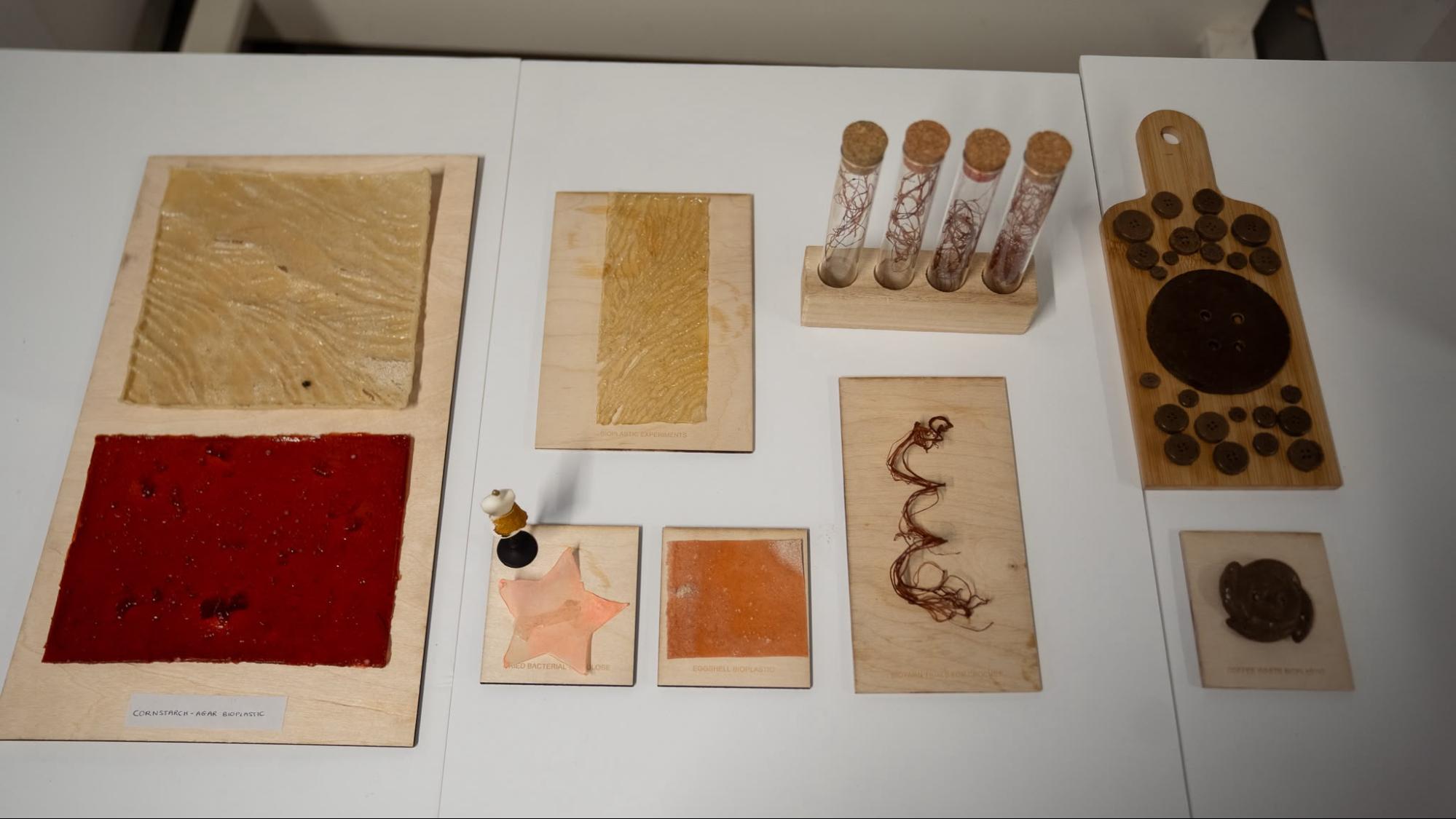
Collection of biomaterials developed by Cavendish Living Lab student innovators from food waste and other sustainable bio-based resources
Her account of the eureka moment is notably unromantic about eureka moments. "Looking promising isn't enough for us to trust a material. It has to be reproducible, practical and durable." Reproducibility is the boundary between a result and a thing a person can wear. Crossing it, she says, requires scientists, designers, engineers and industry together, because each holds a different piece.

Cavendish Living Lab Innovators showcasing student-developed circular biomaterials at the Eco Ensembles Exhibition 2026, organised by the University of Westminster's Fashion Department
She is precise about where her lab sits in that chain. "At this stage, our role is to push the boundaries, explore new ideas and demonstrate what could be possible. We are building the knowledge, evidence and foundations that can help take these materials further towards future application." The output is a body of evidence, assembled for whoever picks it up next. The project, shortlisted for a Green Gown Award in 2023 and exhibited with Fashion Business Management students at a zero-waste show on Westminster's Harrow campus, is built to be handed on. What she wants in return is more rooms like it. Give young people the freedom to experiment, collaborate and learn from one another, she says, and "they come up with ideas that none of us would have developed on our own."
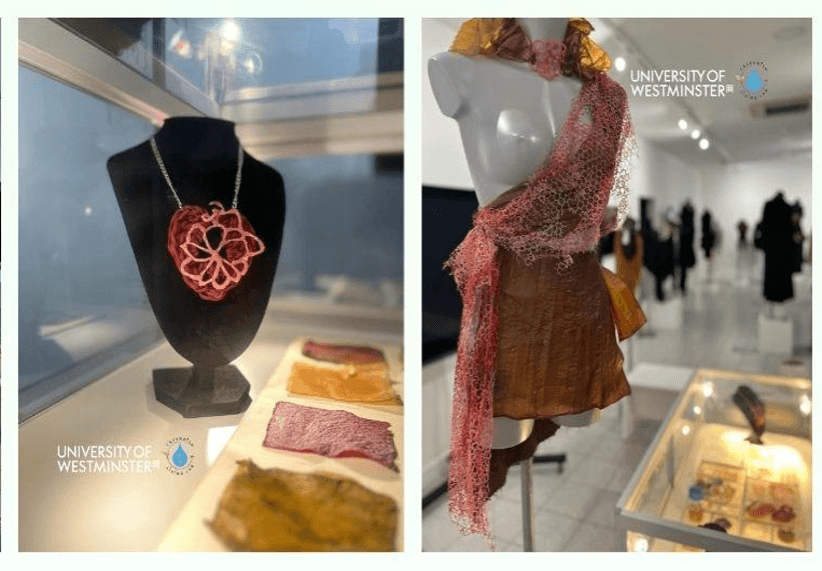
Biobased Fashion Prototypes showcased at Zero Waste Exhibition 2026, University of Westminster
What she describes as the real finding is social. A life sciences student and an architecture student look at the same sheet of bacterial cellulose and see different objects. "The innovation doesn't just come from the materials, it comes from the conversations between people who see those materials in completely different ways." The second thing she had to unlearn, after the idea that waste has no value, was the idea that a complex problem needs a single expert.
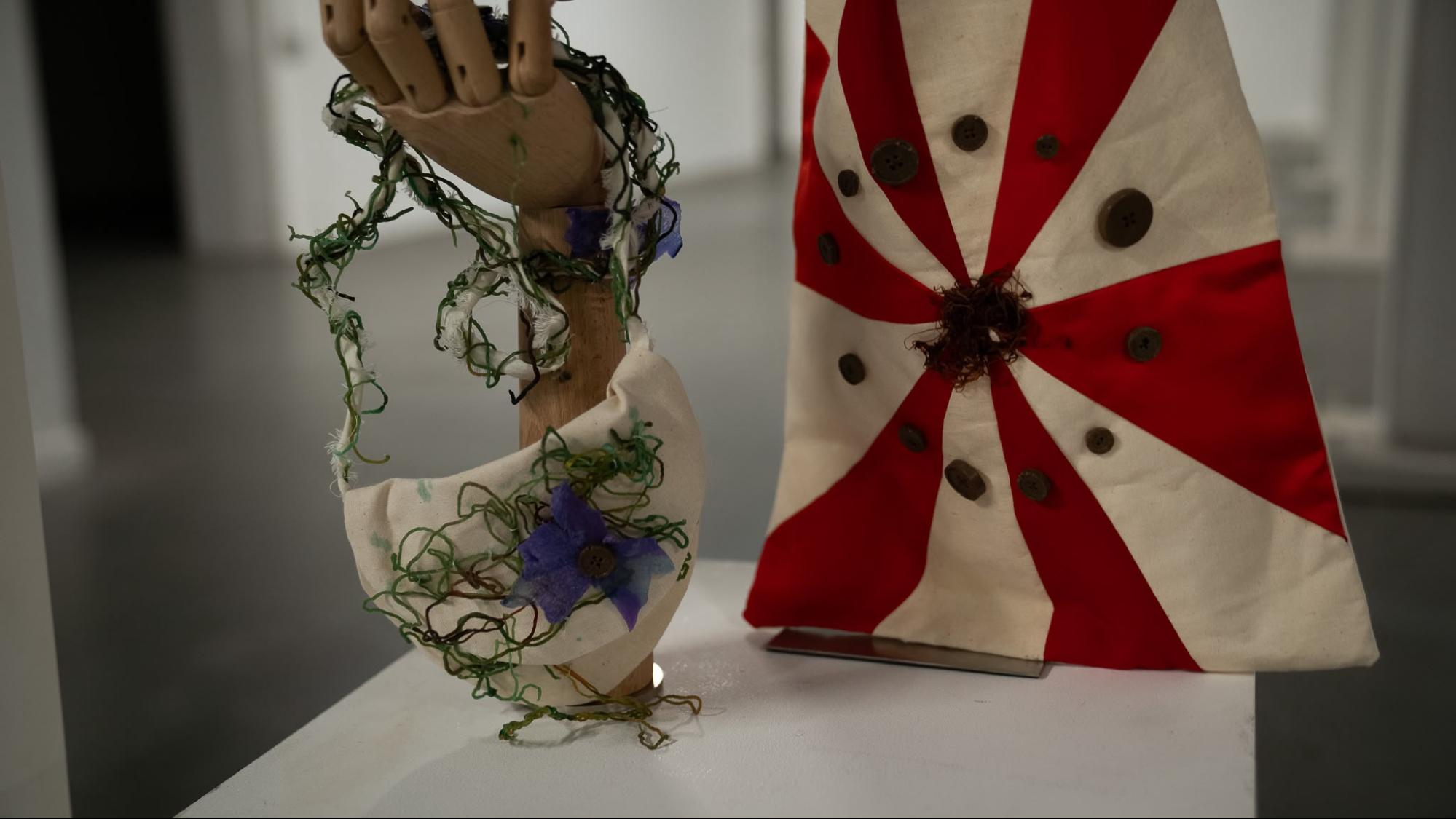
Upcycled tote bags created from waste fabrics by student innovator Nadezda Zelve
The failures carry the field's central lesson. "One thing we have really learned from working with natural materials is that they have their own way of behaving," Basnett says. "They are not always predictable, and that can be challenging, but it is also what makes them so interesting." Every failed run leaves the group more resilient and moves it closer to materials that, in her phrase, work with nature rather than against it. Naisha Arora, creative director and founder of Maison Rora, reaches the same finding in steel later in this piece.
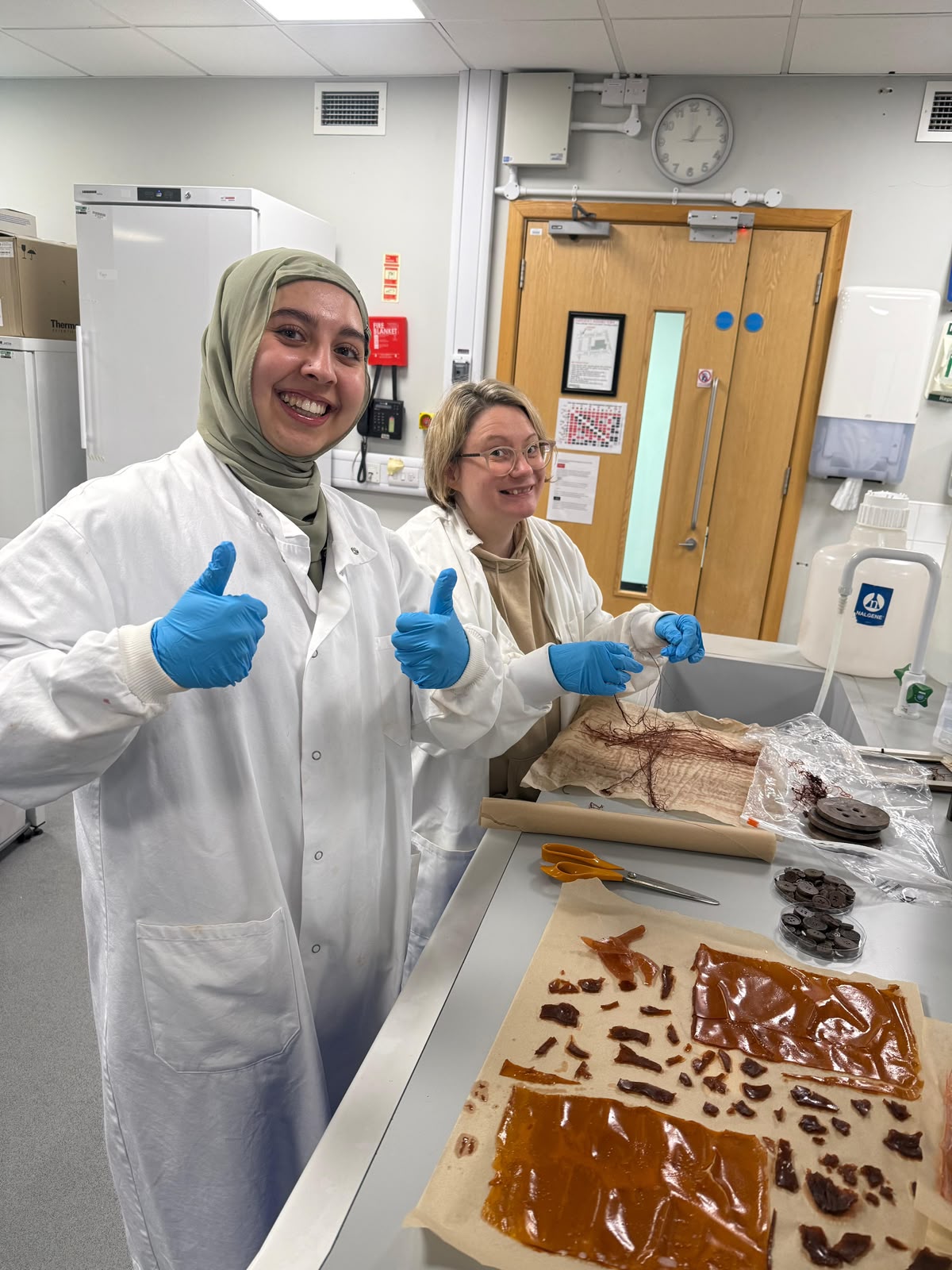
Student innovators Safia Irfan (R) and Ildiko Laszlo (L) creating biomaterials in the Lab
Sridhar arrives at the same conclusion through practice: material development and product development cannot be fully separated, because thickness, flexibility, surface, strength and degradation are all design variables. "This way the tactility and humanness become integral to the design process."
The economics of conviction: where good material ideas go unnoticed
Scale is the trapdoor. In 2023 Bolt Threads paused Mylo, its mycelium leather, after raising more than $300 million and partnering with Stella McCartney, Kering, Adidas and Lululemon. Chief executive Dan Widmaier described the material as devastatingly close to commercial scale, then explained the failure in one line: scale-up is the most expensive and hardest part, and there are no shortcuts. Investor attention, he added, had moved to artificial intelligence.
Basnett is clear-eyed about this. The Cavendish materials have not been scaled and she expects the journey from lab-scale proof of concept to commercial production to be difficult. She defines honest scale by its conditions: renewable resources, reduced impact, a demonstrable improvement on what already exists, and fidelity to the reason the work started, which in her lab's case is students giving their own time outside their coursework because they believe there is a better way of doing things. "Honest scaling is not just about making more material, it is about making sure we stay true to the reason we started creating these materials in the first place."
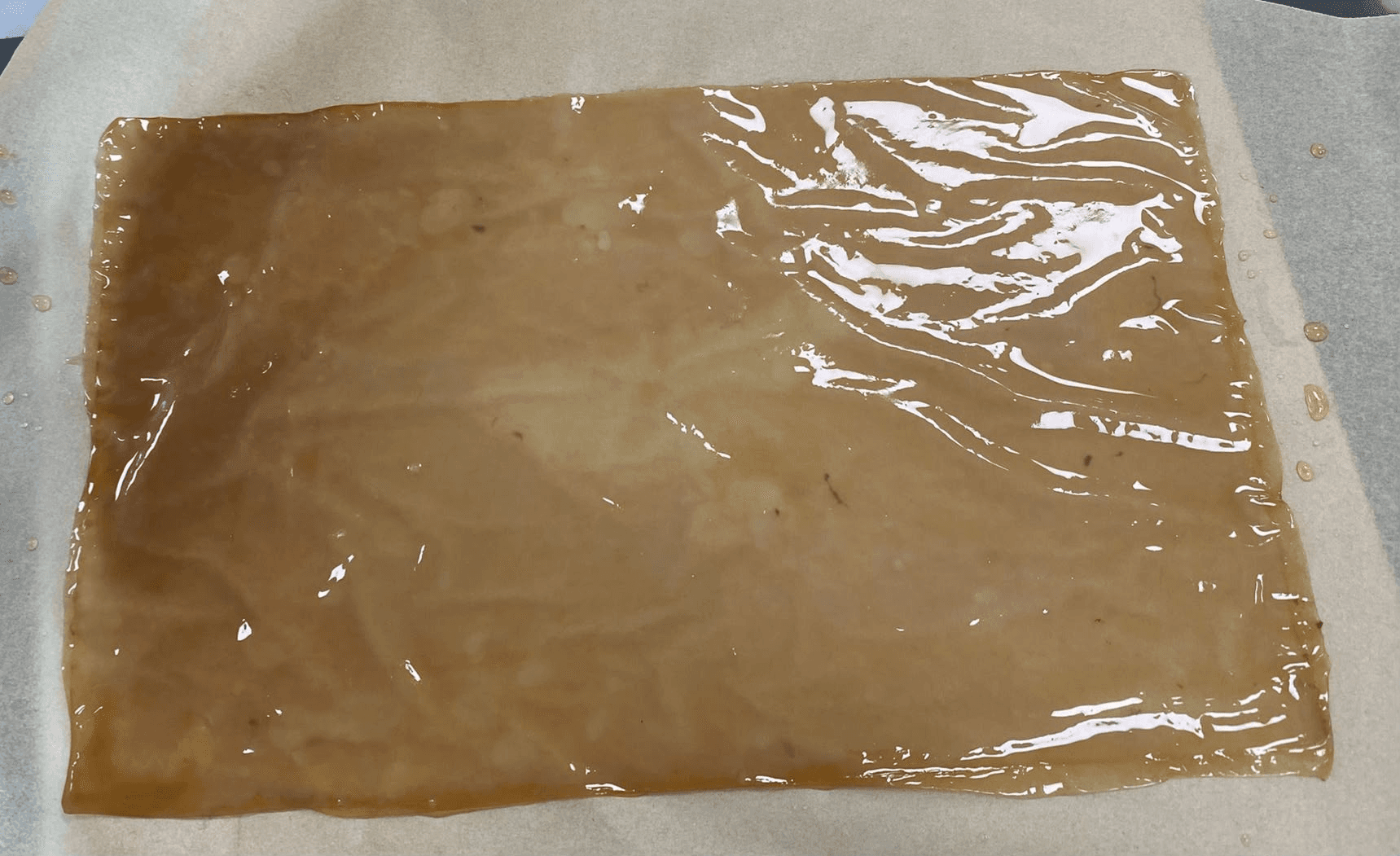
White Tea Kombucha Leather by Cavendish Living Lab
Asked what would have to change for biomaterials to become standard within a decade, she names mindset ahead of technology. Sustainability would enter at the start of decisions about materials, design and production, in place of arriving later as a credential to be demonstrated. Her second condition concerns who gets taken seriously. "I would also hope that young people with new ideas are taken more seriously as contributors to solving these challenges," she says, and then puts a number on the infrastructure that implies: "I think we need more innovation hubs within universities and communities where young people can come together, explore ideas and work on real-world challenges." The Mylo collapse, where a decade of capital and four blue-chip partners still stopped short of a factory, sets the scale of what she is asking for.
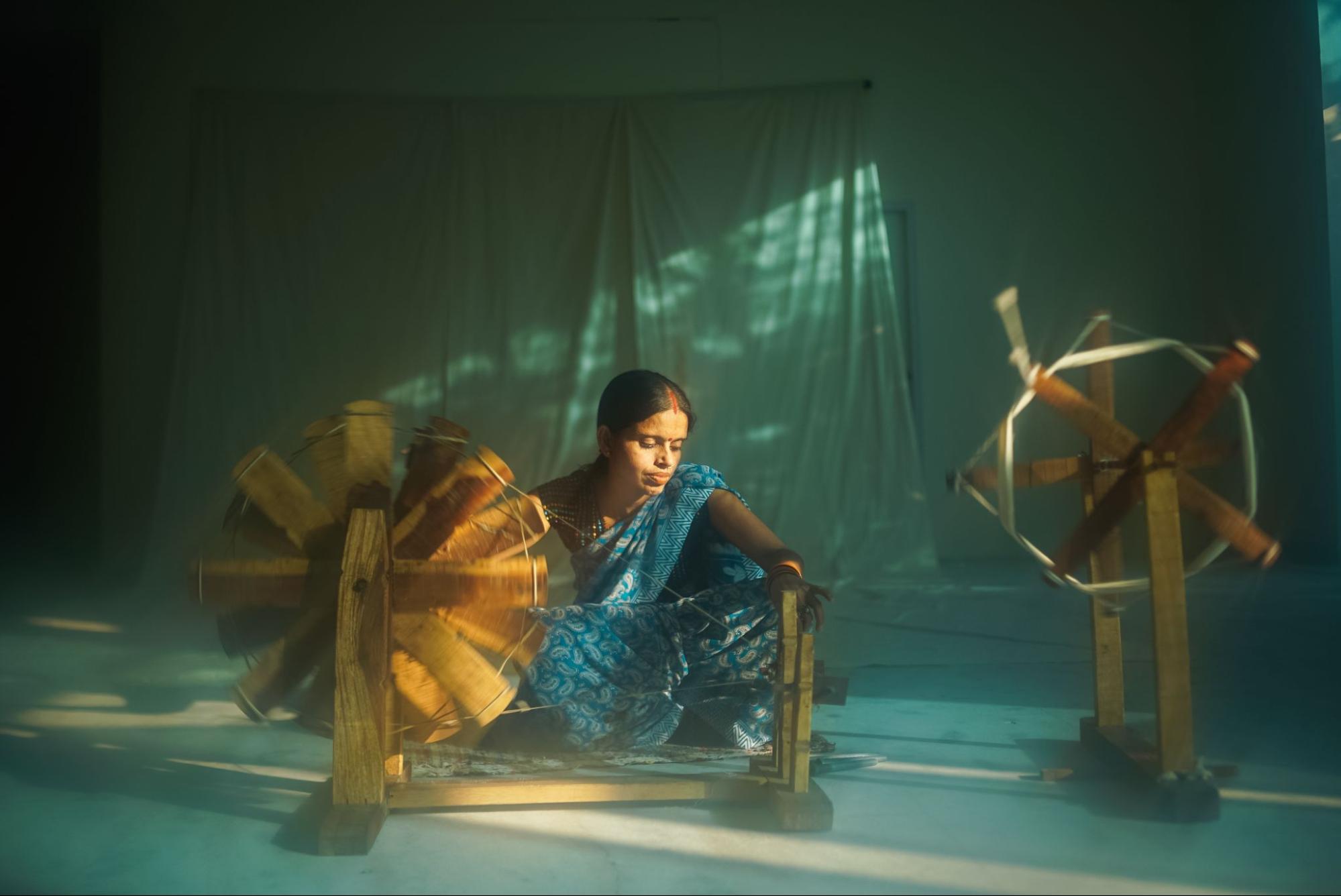
Artisan working on a Charkha, at Paiwand Studio
Paiwand ran into the trapdoor from the inside. Cutting patterns for its own garments generated offcut waste, which broke the circularity of a studio built on offcuts. The response was to collect that already-upcycled waste, feed it back through the same channel, and produce a re-rewoven textile, woven twice. It is Anand Gandhi's Ship of Theseus rendered as a fabric swatch: keep replacing the parts and ask at what point the thing stops being itself. Singhal's formulation is blunter. "To be circular, to not create waste out of waste."
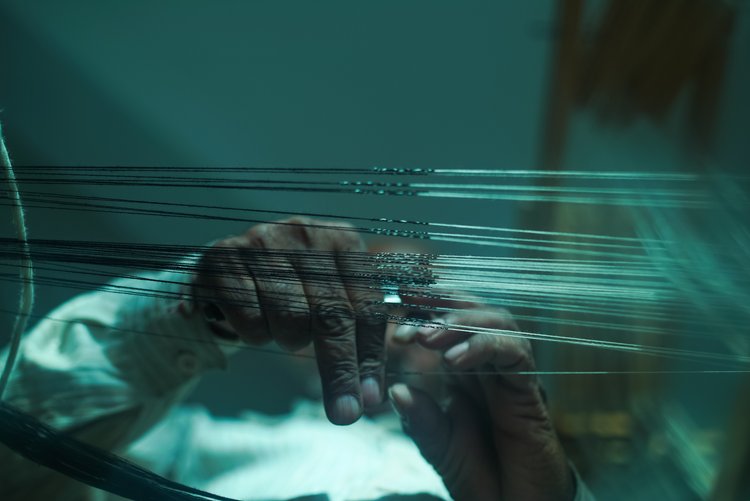
‘Gathni’ - The binding technique mastered by Paiwand Studio
Her test for a practice that is circular against one that has learned to look responsible is procedural: observe the process, identify where circularity breaks, mend it. Sharma sets a harsher bar. "I think the human should become sustainable, not the products." Designers, he notes, live expensively, buy constantly, air-condition their offices and generate waste in a dozen unexamined ways, then locate all their virtue in the object.
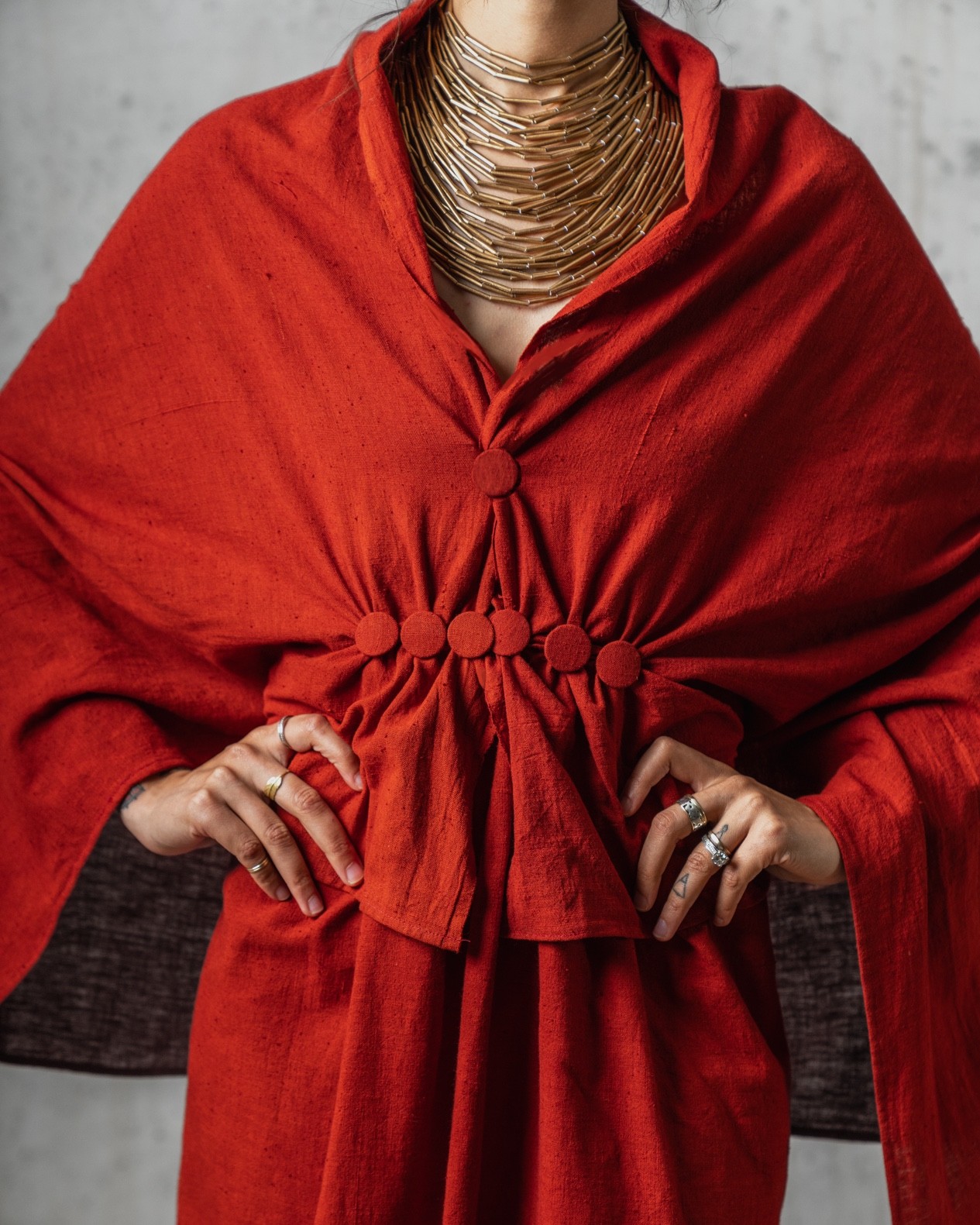
Garment handcrafted using the Button Masala technique by Anuj Sharma
Varshne's answer to the question of motivation at this scale is the most level-headed in the file. The waste took decades of factories and designers to accumulate. It will take years of conscious planning and meticulous action to unwind. "Just the thought that CRCLE is in the right path and that you're very focused and clear about what we are doing gives me the motivation."
The dissent: what the lab might cost
Not everyone in this conversation wants the lab, and the piece is stronger for it.
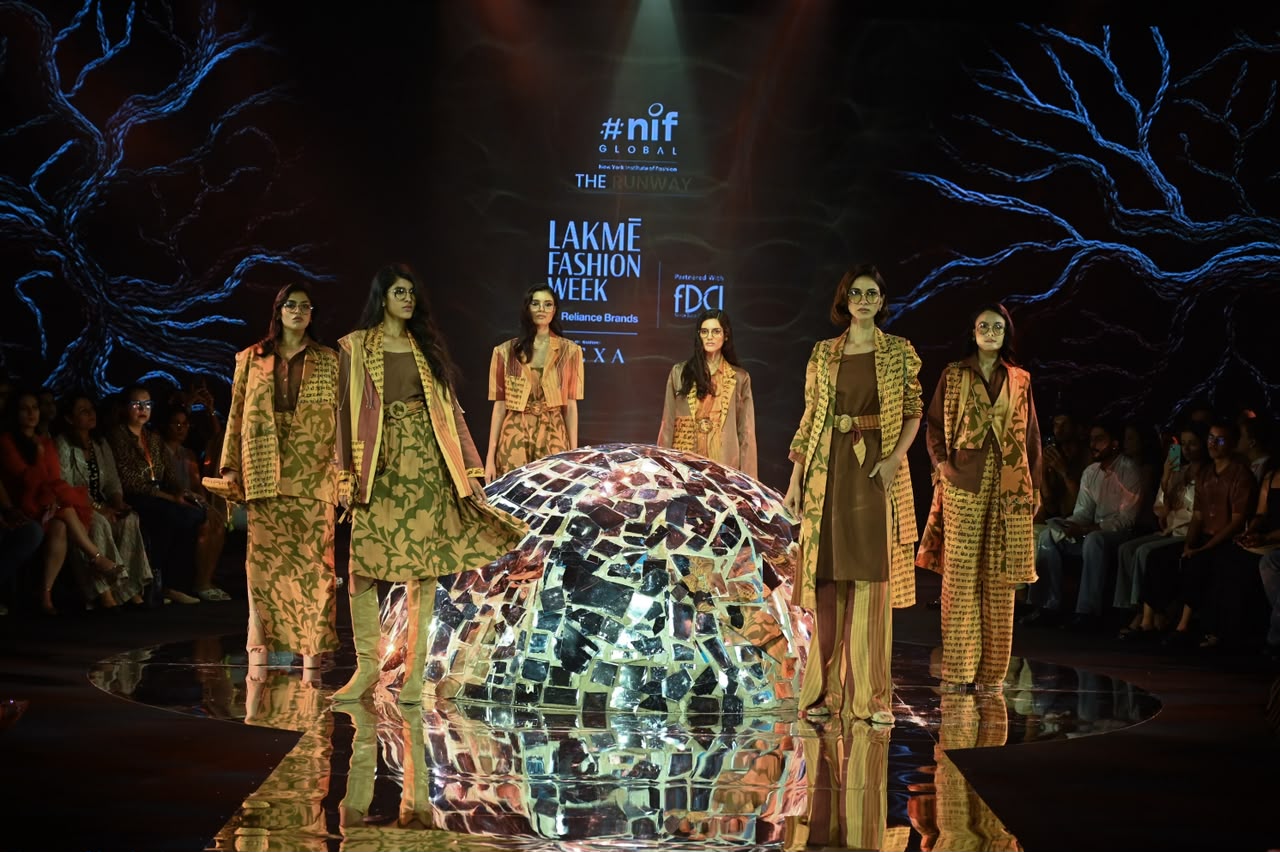
SAIM, the Calcutta-rooted label founded by NIFT graduate Syed Saim Ghani, whose atelier work follows time at Raghavendra Rathore and Anamika Khanna, treats advanced tools as a business instrument and nothing more: a way to sample one design in three colourways, or test ten variations of an ensemble. "It's more like a catalyst for cost effectiveness." The studio still writes task lists and emails by hand before typing them, and keeps ruled paper out of the building on the grounds that boxing limits you.
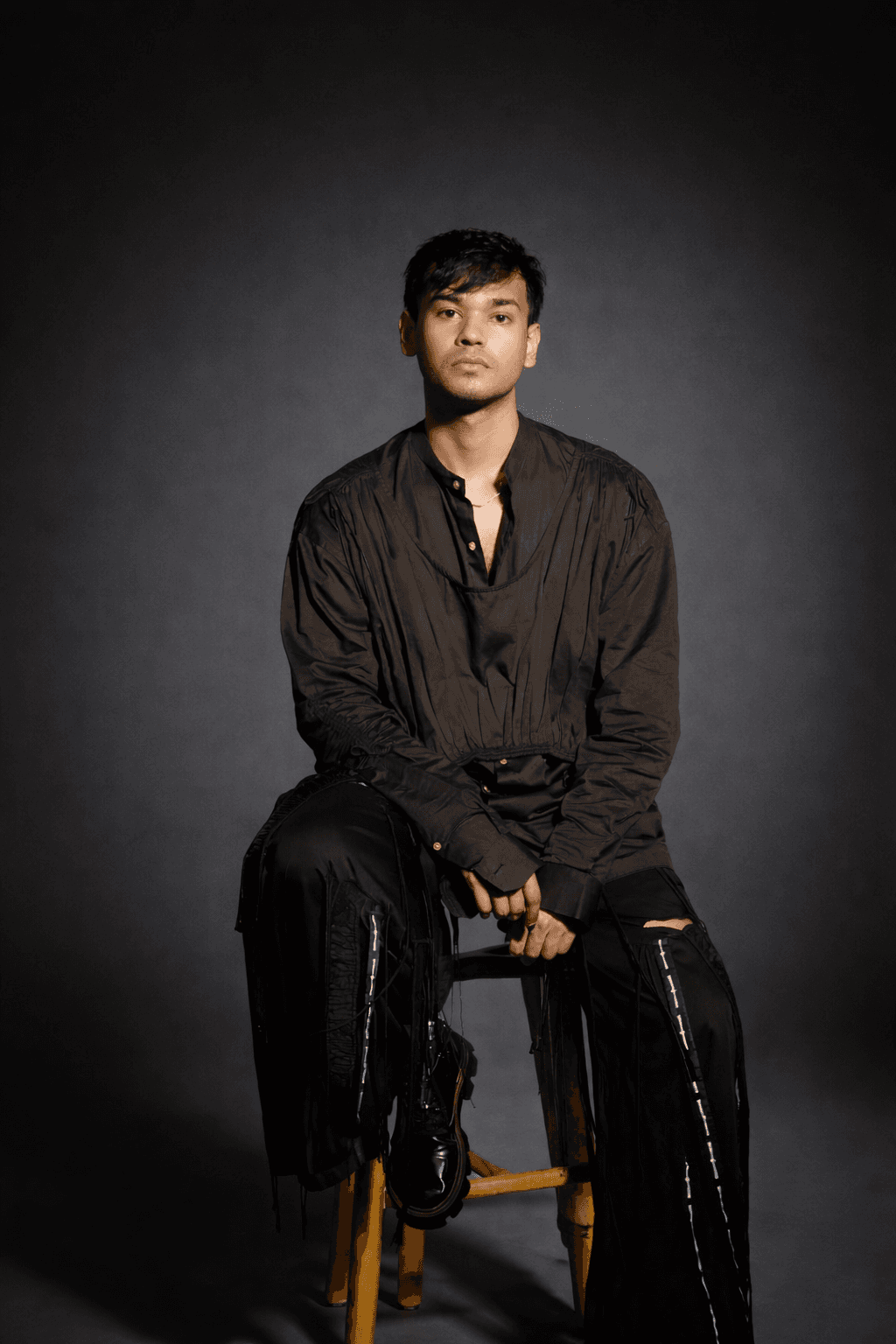
NIFT graduate Syed Saim Ghani, founder of SAIM
The defence of the hand there is physiological. "The hand is like a river, it gets trained over time to visualise our minds. It never lies to the world, it's pure and from the heart." What the atelier wants a viewer to feel first is the chaos behind the finished surface: the dye mark, the tiny glitch in an embroidery that could not be fixed and so honours the karigars whose training runs across generations.
The counter-proposal is anatomical. "Our biggest technological asset is our own mind and brain. I mean how beautifully does our body function and work and how complex we are from the inside functionings? It's like a motherboard or wired network inside of us; we simply need to discover that instead of chasing virtual easier options; why not go the harder long impactful route and be fearless." The same principle governs a spreadsheet, which arrives filled with colours and columns on the theory that there is more creativity in chaos, and that an Excel sheet can be made to feel like chart paper covered in stray thoughts.
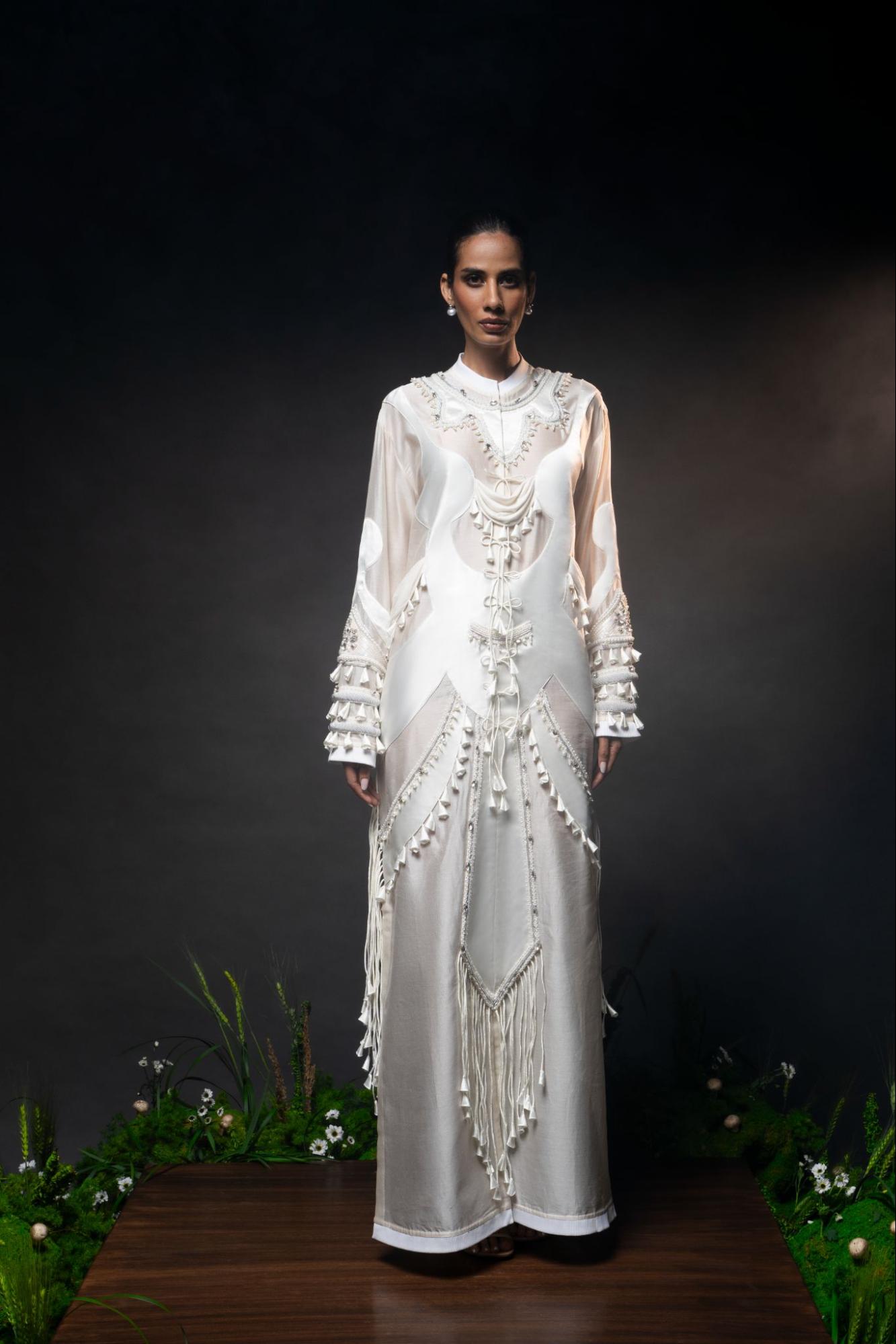
Sculptural patchwork dress by SAIM
And on the central question, the reply is a warning rather than an endorsement. "The lab is a model of convenience I feel. It's being exploited and used as replacements to human minds today and soon down the years everything will start looking the same. Because slowly the human minds will retract and our distinguished identities, beliefs and creative rushes won't really exist."
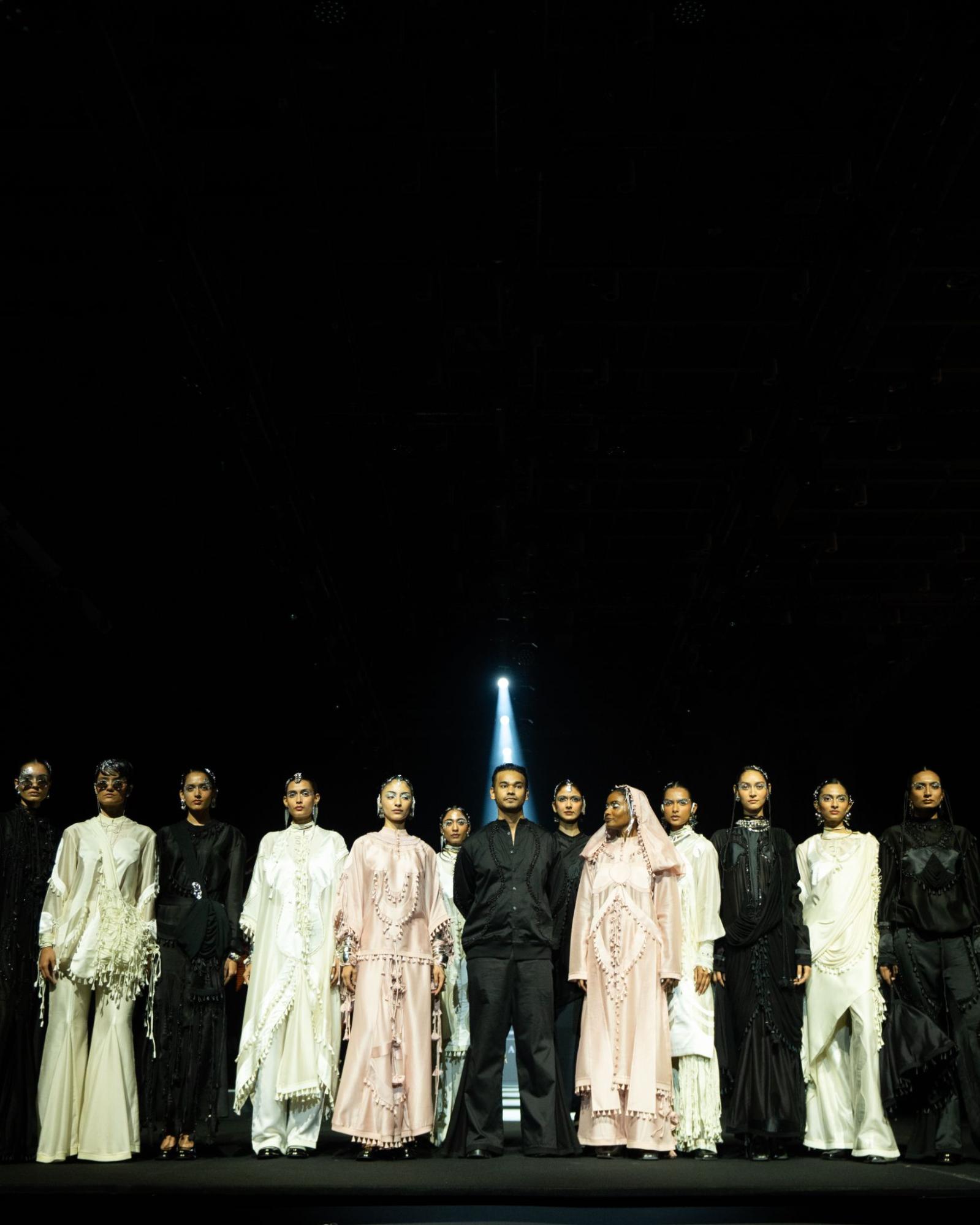
SAIM’s debut at FDCI’s Lakme Fashion Week March 2026
Sharma files a different objection, aimed at the discipline itself. "The garment still remains the same. For 100 years, we're still wearing the shirts and trousers and the jackets and the kurtas, and the garment hasn't changed. So if a fashion designer is not changing the garment, what is he changing?" His verdict is that most Indian fashion designers are textile designers working in the realm of fashion, and that the larger value in India is generated by craftsmen, so the credit should follow them. "The craft is not important, it's the craftsman who's important here."
Singhal's answer to that runs through the studio floor. Delhi weavers who had given up the loom returned to it through Paiwand. Hand embroiderers had to unlearn their definition of a yarn before they could work with waste strips, and then came back with stitches nobody there had seen. Rag pickers call about a katran pile. Export houses call about rejects. "It is the people across different stages, different regions and different hierarchies, bound together by one question: what if we don't throw this? What if?"
Varshne's education in that web came as patience. Working across 50 craft communities means explaining a brief to people in different parts of the country and going back and forth until the sample is right. "It's a lot of patience I think I learned and I don't think I was this patient back when I was in design school."
Luxury, recalculated
Naisha Arora's Maison Rora begins with an object nobody looks at twice, a crushed can, executed in silver. "There's something almost rude about it: I'm handing you trash, except it's silver, it's heavy, it took a manufacturer weeks to get right. The permanence isn't decorative, it's the point."
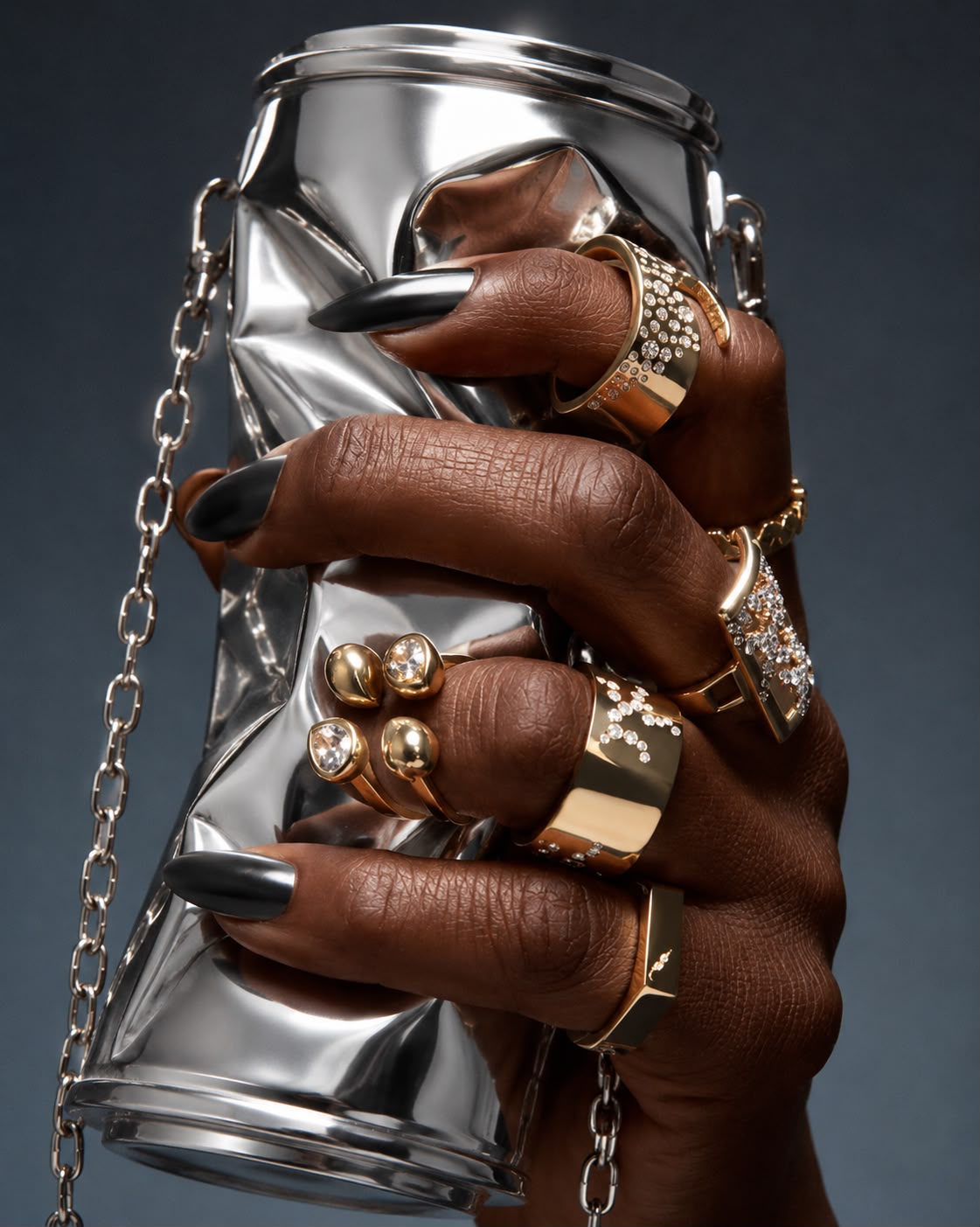
The Crushed Can Bag by Maison Rora, founded by Naisha Arora
The lineage is long and respectable. Duchamp put a urinal in a gallery in 1917; Paco Rabanne showed twelve unwearable dresses in metal in 1966; Warhol boxed the Brillo pad. What Arora adds is the tactile double-take. "Before anyone clocks how it was made, I want them to feel doubt. That half second where your brain says that's trash and your hands say that's heavy, that's cold, that's real."
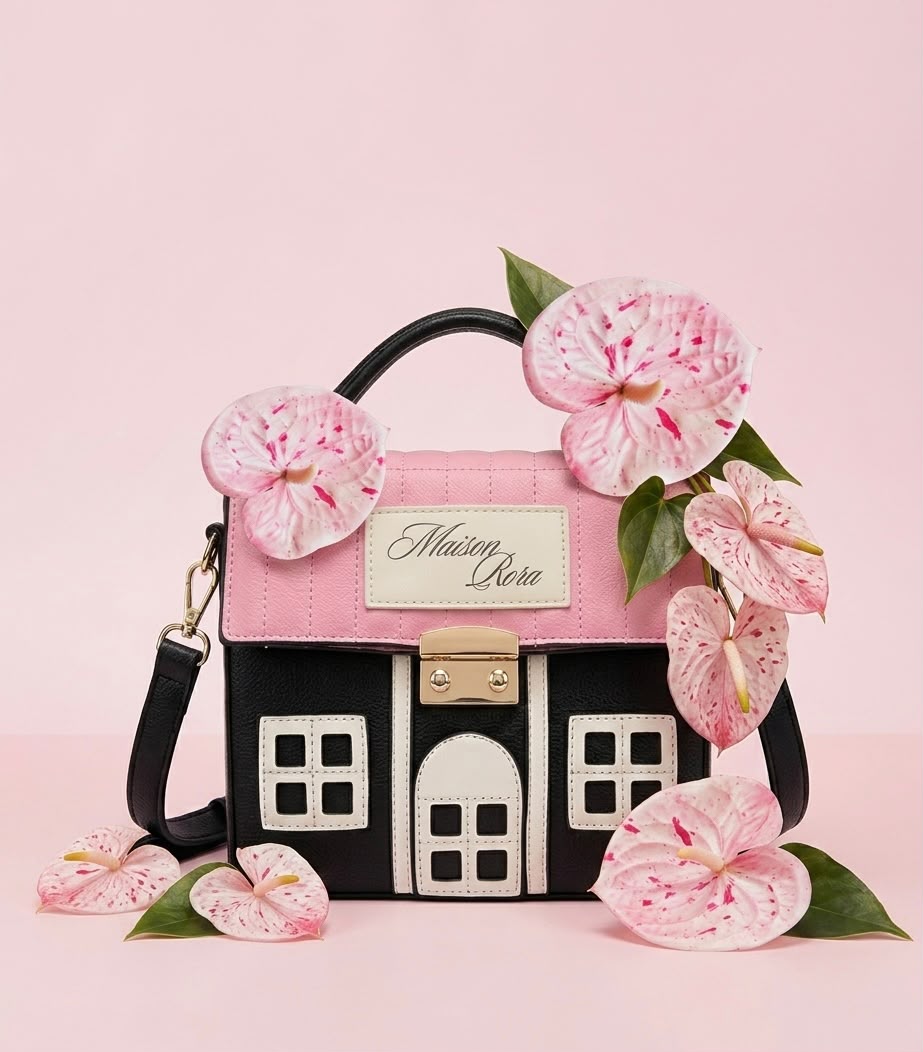
The House of Rora Bag in black
Her material education came from failure, and she is precise about why failure teaches more. Cloth forgives; steel does not. A year of visits to manufacturing units around Delhi NCR taught her where metal dents cleanly and where it tears. PLA, biodegradable and cheap enough to fail on, became the sketchbook. "A finished piece only shows you what worked; a failed one shows you the argument you had with the material to get there."
The division of labour in her studio is settled at the end of the process. "The machine gets the form right; I get to decide where it needs to feel touched. That's usually the last stage in the process, and I keep it manual on purpose, because a piece that's 100% machine from start to finish stops being mine." Where a printer or fabricator executes, taste stays with her. "The tools don't have taste, I do." Her peers, she says, identify a Rora piece by the surreal logic of the silhouette and the world built around it, the colours and the packaging, before they clock the material at all.
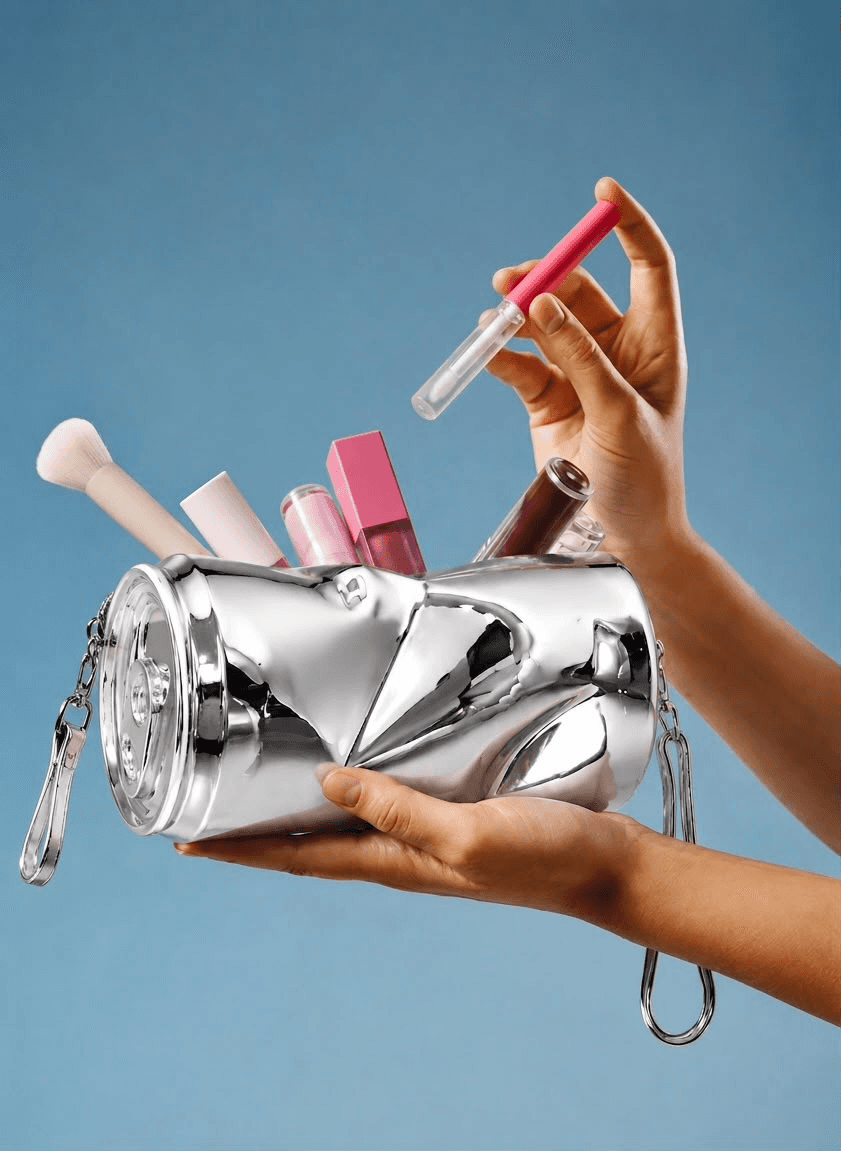
The Crushed Can Bag is as structurally sound as it is aesthetically appealing
Her definition of luxury dispenses with material value altogether. "Luxury at Rora isn't the material, it's the improbability. It's small batch, it's slow, it's a dented can that took longer to make than a proper bag would have. Clients who get it stop asking is this real silver and start asking how did you even make this."
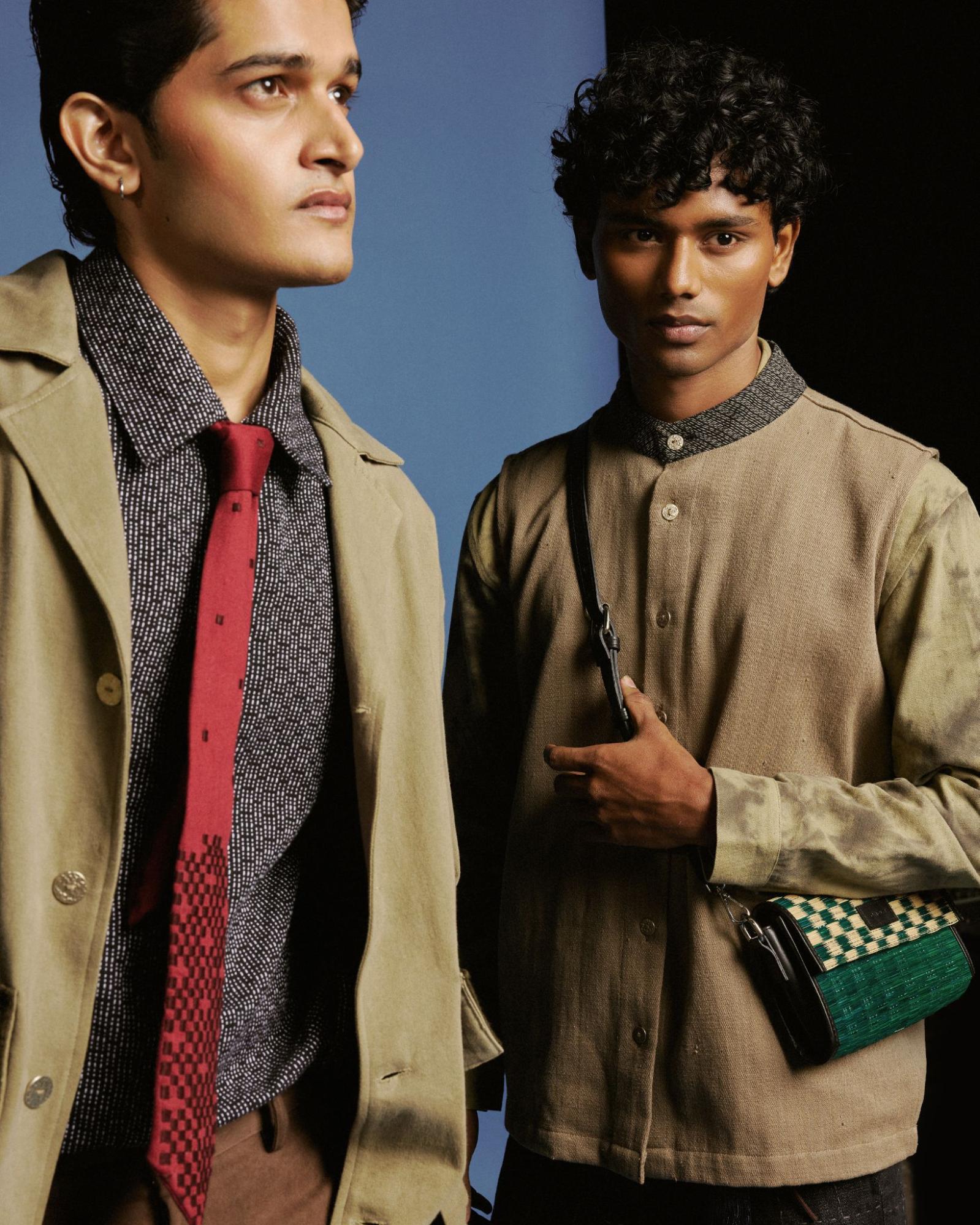
CRCLE’s ‘Dialogue’ collection by Varshne B
Varshne locates the same value in irregularity, which she treats as evidence of a person. Machine-made comes out neat; a hand-woven or hand-embroidered surface carries small errors that are part of the process. "That makes all of us, like, imperfectly human as well." Both of them are describing a market that already exists for Japanese boro and kintsugi, where visible repair raises value rather than lowering it.
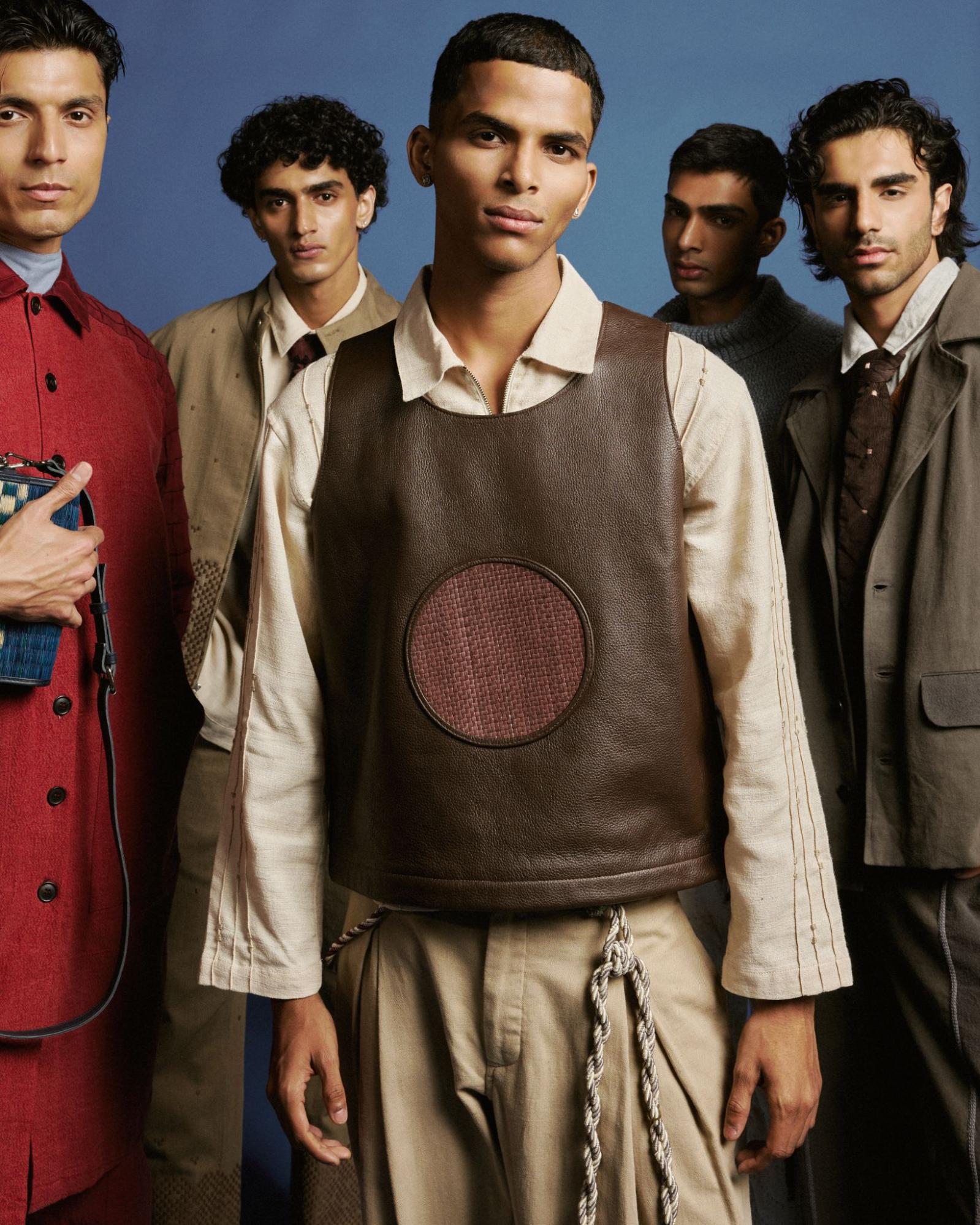
CRCLE’s ‘Dialogue’ collection by Varshne B
Texture carries the other half of that value for her. Sight and smell get regular attention, she points out, while touch goes unexamined, and a garment touches skin for the whole day. Surface technique and layered texture are how she gets a wearer to hold on to the feeling in a piece, and holding on is the commercial objective: DIALOGUE was built to interrupt the buy-use-throw sequence by making the person behind the product visible. "The whole idea of CRCLE is to close the loop and bring things back into the production cycle, but also make consumers hold on to pieces for a longer time."
Singhal, whose whole practice could be sold on ethics, declines to. "We strive not to be circular, or sustainable, but to be beautiful. The ones who buy Paiwand make an investment in a beautiful piece that also happens to be upcycled." She remembers a client saying her Paiwand piece felt healing, that it reconnected her with her inner child. Sharma wants five to ten minutes of a wearer's curiosity, turning the piece inside out to work out how it holds together. Nobody here wants to be admired for their principles.
What the lab is a model of
The most expansive answer to the question this piece was built on came from Vasavi Sridhar, and it dissolves the premise in the best way.
"A pastoral landscape can be a lab. A craft community can be a lab. A wardrobe can be a lab. An archive can be a lab. The important shift is that the designer is not simply making within a given system, but examining the system itself as material. If the studio was a place where form was composed, perhaps the lab is a place where relationships are tested."
Read that against Ghazipur, and against Panipat's second-hand Italian machines, and against a Calotropis weed on land too dry to farm, and the Indian version of this movement comes into focus. The material is a systems question. Waste is feedstock, a livelihood for millions of informal workers, a groundwater problem, a soil input and a design constraint at once, and no single discipline holds all four.
Basnett describes the same expansion from the science side of the room. "For me, the future of sustainable fashion is not just about new materials, it is about creating a culture where different voices and disciplines are valued, because that is where real innovation happens." Her lab is built to that specification, integrated vertically and horizontally so that first-years sit beside doctoral researchers and life sciences sits beside architecture and fashion, an arrangement most design education still keeps at its margins.
Varshne's forward plan is the most consumer-facing here: stabilise CRCLE in India, then take it global, then extend into home and accessories, on the premise that circularity can be an ordinary lifestyle. Her read on the market supports it. The modern man's wardrobe, as she sees it, has already turned experimental in colour, texture and layering, and confident enough to wear the result on a Tuesday.
What the practitioners in this piece share is a refusal to treat the object as separable from its origins. Sridhar calls the split a historical accident of how disciplines were built. "Perhaps, art and engineering were never truly separate. We simply built disciplines that taught us to speak about them separately. My work is often an attempt to bring those languages back into the same room."
In Indian craft, they were never in different rooms. Which is why the most accurate description of what is happening here comes from Naisha Arora, talking about where she wants her practice to go next: a house where the lab lives inside the art space, the making stays visible, and the audience stays inside the process. A room people can walk into, open all year, in place of a season.
Fashion has always been able to answer what a thing should look like. The room next door is learning to answer what it is made of, who made it, and what it costs. Both questions are being asked in the same building now, which is the only interesting thing that has happened to the discipline in a while.
TO BE CONTINUED, FOR SUBSCRIBERS ONLY.
This is where the surface ends and the reporting begins.
The complete piece, the full archive, and access to The French Press Circle. Reporting answerable only to its readers.
Already a subscriber ?
Login
Read these on the house, with our compliments.
A selection from the current issue, open to all readers. Read them in full. The rest is one decision away.






Drive east out of central Delhi towards Ghaziabad and the skyline does something the eye refuses at first. A hill rises where no hill belongs: grey-brown, terraced, ringed by kites. In 2018 a parliamentary standing committee put the Ghazipur landfill at 65 metres, eight short of the Qutub Minar, on a site declared exhausted in 2002 and still receiving thousands of tonnes a day. Ashita Singhal, founder of Paiwand Studio, saw it from the back seat of her father's car as a child and asked what it was. "He replied, it's our mountain," she says. "I often joke that Ghazipur is my mountain of opportunities."
The Ghazipur landfill in New Delhi, India. Image shot by Noemi Cassanelli for CNN.
That sentence holds the whole shift this piece is about.
For most of its modern history, fashion has organised itself around the studio: a room governed by the sketch, the drape, the seasonal calendar and one authoritative eye, asking one question, which is what a thing should look like. A second room has been filling up beside it. It asks what the thing is made of, how it was grown, what becomes of it when someone is finished with it, and whether a microbe, a milkweed shrub or a mountain of discarded cloth can participate in the making. Call it the lab. Its arrival signals a change in what fashion believes itself to be, because a garment treated as an image can be beautiful on its own terms, while a garment treated as a claim about resources, labour and cost has to answer for how it came to exist.
India is an unusually interesting place to watch this happen, for a reason that has little to do with novelty. The global industry spent a century learning to sever making from meaning. Indian craft never agreed to that separation. Kantha, rafu, chindi rugs, godhadi quilts and the household economy of the bartan-badlo vendor, who still trades steel utensils for worn clothes, all assume that cloth has a continuing life. What follows is less an import of a Western sustainable future and more a recovery of something native, handed new instruments.
Waste as raw material: the Indian numbers behind a design decision
The scale is documented. Fashion for Good's Wealth in Waste study, produced with Sattva, Reverse Resources and Saahas Zero Waste, put India's annual textile waste at roughly 7.8 million tonnes, about 8.5 per cent of the global total, of which 59 per cent already returns to the industry through reuse or recycling. Most of it converges on Panipat and Tirupur. Panipat, the "cast-off capital," built its shoddy industry in the 1990s partly on second-hand machinery bought from the Italian recycling town of Prato, and now handles a large share of the country's recycled textile flows through a workforce that is overwhelmingly informal.
Ashita Singhal, founder of Delhi based upcycling studio, Paiwand Studio
So when Singhal says Paiwand took inspiration from the rag rugs of Panipat and set out to make something suited to high fashion, with modern colour palettes and lighter weights, she is describing an intervention at a precise point in an existing industrial system, one that has historically converted the world's cast-offs into low-grade blankets.
Her account of the turn is domestic rather than statistical. Design school, where a single class generated piles of scrap in hours. An internship, where she found rooms filled with textile waste. The same question each time: why do we decide a material is no longer valuable? "I started looking at textile waste as leftover fabric and started looking at it as a yarn," she says, "and that shift changed everything for me." Indian crafts have long spoken of circularity through chindi, kantha, patchwork and rafu. "At Paiwand we just found our dialect."
Piles of discarded fabric which is upcycled at Paiwand Studio
The studio, founded in 2018 and now in Noida, inside one of India's largest export-garment clusters, has upcycled more than 30,000 kilograms of fabric. Singhal describes it plainly as a waste management company that happens to design. The technique depends on the properties of the waste: its colour, its print, its composition. Scrap is used in its original state, without bleaching or overdyeing.
Singhal has little use for the word the sector leans on. Asked what she reaches for in place of "sustainable," she offers Conscious Design, defined by the integrity behind each decision: choosing to see waste as raw material, respecting its inherent value, and routing it back into the supply chain through craft. Circularity, on her account, is a way of living that lengthens the work. "It often means taking a much longer route in our design journey but it's one we are proud to follow."
Chennai's CRCLE works the same seam from the other end of the country. Founded eighteen months before winning the R|Elan Circular Design Challenge and showing DIALOGUE at Lakmé Fashion Week x FDCI in 2026, Varshne B's menswear label has recycled over 400 kilograms of textile waste and works with more than 100 artisans and 50 craft communities. Her material library reads like a map: naturally dyed Weganool from Auroville, handwoven Korai grass from Pattamadai, cotton from Chennimalai, deadstock from Tirupur, leather offcuts from Chennai, metal buttons from Kutch, repurposed stainless steel.
Varshne B alongside models, all wearing CRCLE
"I love experimenting and working with new materials, so I think I'm always subconsciously on the lookout for anything new," she says, describing a research method that runs on curiosity and cold outreach: find the material, find the person who makes it, go and meet them.
The Weganool plant fibre developed by Gowri Shankar
That is how she found Weganool, the plant fibre developed by Gowri Shankar at Faborg near Auroville from Calotropis, the milkweed shrub known across India as aak or erukku, a weed that grows on degraded, dry land. The fibres are hollow and cellulosic, blended at roughly 30 per cent with organic cotton, and Shankar patented the process in 2017. What drew Varshne was the residue. The leftover plant matter becomes Aarka, a fermented extract sold to farmers as a pest repellent and soil input; Shankar, the grandson of a farmer who sold his land to clear pesticide debts, built the agricultural side of the business for that reason. CRCLE's 400 kilograms of recycled textile waste sit alongside a contribution to some 5,800 litres of Aarka now in use across Tamil Nadu and Kerala.
"It's more like a double circular process," Varshne says. Fibre for the garment, extract for the soil, plant residue for cattle fodder. The garment is one output of a system rather than its purpose.
Origins: what pulled them off the conventional design path
Varshne B settled on fashion at thirteen and on purpose in college. "Passion became purpose, I think, when I was in college, because that's when I realized how much harm the industry actually creates. Because what we see on the outside is just like fancy clothes. But on the back, when you get into making the garments, there's so much wastage of fabrics and paper." The years after college went into production, daily operations, marketing and sales before she returned to Chennai to start CRCLE, an unusually procedural apprenticeship for someone who now shows at Lakmé Fashion Week. Menswear came out of her own wardrobe, borrowed from her brothers as a child and androgynous in her college portfolio even when the brief said womenswear. She also read the field correctly: few people were building circular menswear, which she treated as an opening she could occupy.
Anuj Sharma's education in material began in Rajasthan, decades before the field had a name for it. "I come from Rajasthan so I always knew the value for material and upcycling and recycling because the resources were limited in Rajasthan. We were also from a not very rich family so we were always trying to preserve and save and Rajasthan has very little water. So right in childhood I knew the value for material." Read alongside Singhal at Ghazipur and Basnett at the Food Waste Network, a pattern surfaces: the first principle here tends to arrive from domestic scarcity, well ahead of any design brief.
SAIM's origin note is temperamental. "If you're not married to fashion in every literal sense, you cannot creatively thrive in it forever, at least that's a thought I've always stuck with since my early days." The atelier reads clothing as an adaptive, functional craft with a long evolutionary tail, and takes an unusually long view of its own output: "100 years later what we create today is what goes into the books of history."
Who is driving: authorship when the material leads
Anuj Sharma, who studied apparel design at NID and has taught his Button Masala method to more than 20,000 people, including, in 2017, the design team at Adidas, offers a sharp formulation of the authorship problem. His system joins cloth with buttons and rubber bands, no cutting, no stitching, no machine, which places it in a lineage as old as the sari and the dhoti and as immediate as a bedsheet.
Anuj Sharma, professor and inventor of the Button Masala technique, in a Button Masala cape
"There are two kinds of drivers," he says. "There's a daddy driver and there's an Uber driver. Uber driver takes you wherever you want to go. It doesn't matter where you want to go, but the daddy driver always asks you questions and decides where the daddy wants to drop you. So designers are mostly daddy drivers." His conclusion: "We are the transporters to the happiness of the material. We transport material to its happiest point."
His reasoning for the reversal runs on competence. Mastery of a material is, in his account, an egoistic idea, available only after many years of work with it, and even then the smarter move is to let the material lead you to what it wants to become.
A saree fashioned from the Button Masala technique by Anuj Sharma
Sharma is careful to correct the premise of the question put to him. His practice rests on the art of not throwing at all, because a garment that can only be worn one way, and cannot be repaired when it tears, has already decided its own ending.
The making of the Pond Reflections Jacket by Paiwand Studio
The Pond Reflections Jacket by Paiwand Studio
Singhal reaches the same place from the loom. Paiwand calls its scraps awara, wanderers, cloth that has already lived a life and arrives carrying history, texture and imperfection. "We don't begin imposing ideas on a blank canvas, rather we start listening to what the material is already telling us. Our role as designers is less about control and more about interpretation."
Sharma declines the romance around that inheritance, which produces the sharpest internal disagreement in this set of interviews. Second-hand cloth arriving in bulk, he says, carries no retrievable history. "Eventually, all the shirts are shirts and trousers are trousers and fabrics are fabrics. So I think it's not important to preserve unless there is a need for it. There's a story which is already connecting. If you connect it to a story, then it's fine." Set against Paiwand's awara, the two positions mark the working limits of provenance. Singhal keeps the evidence visible because her cloth arrives traceable to a mill or an export house; Sharma works with anonymous bulk and declines to invent a biography for it.
Upcycled leather ties by CRCLE
For Varshne, the constraint is generative. Limited quantities of dead stock or offcuts force design decisions that abundance would never provoke. "Circularity lets you think in new ways. And I think that's the fun part, because otherwise when you have so much fabric, you can be like, okay, I want to do this," and out come the usual ideas. CRCLE also designs for disassembly, with a take-back programme in the works, so returned pieces can be taken apart and their sound components redeployed.
She is equally careful about credit. "Vegan wool isn't something that I came up with. I work with material innovators who come up with new materials and I source materials from them." Weganool was invented by Gowri Shankar at Faborg; her contribution was the collaboration that got it made to specification for the label, which locates the design work in the relationship as much as in the cloth.
Riddhi Jain, whose Studio Medium she runs in New Delhi with Dhruv Satija after training at NID and ENSCI Paris, describes the moment the tool itself entered the design. Pattern-making, cutting, dyeing and construction stopped being separate processes and became systems capable of generating form. "Instead of starting with a finished object and figuring out how to make it, we could start with a set of rules, introduce a tool, and see what kind of object emerged. That changed our relationship with authorship too. We became less interested in controlling every outcome and more interested in creating the conditions for unexpected ones."
Lumo Kaftan by Studio Medium, from their ‘Beat, Repeat’ collection
Everyone here is circling the same reversal. The process belongs to the practitioner; the outcome belongs to the material. This is closer to how a Banarasi drawloom or a bandhani workshop has always behaved than to how a fashion house presents itself.
The seam between machine and hand in Indian craft
Studio Medium's position on technology is the most carefully drawn in this set of conversations, and it refuses the usual opposition. "The machine proposes, the material responds, and the hand decides what is worth keeping," Jain says. The hand stays wherever judgement, irregularity and response matter: when a colour runs slightly too cold, when a fold needs to move, when an irregularity suddenly makes the whole thing alive. She declines to treat the hand as a nostalgic object requiring protection. It is another tool. The boundary earns its keep because the work should retain evidence of decisions being made, "not necessarily evidence of labour for its own sake, but evidence of a person having been there."
Her starting condition rules speed out as a motive. "We've never been interested in using a machine to make something faster simply because it can. We're interested in what a tool allows us to attempt that the hand, on its own, may not be able to." What the machine contributes is rhythm, scale, repetition and precision, and the event she watches for is what those do on contact with the unpredictability of a material.
Studio Medium’s Pre Festive 2026 Collection - ‘Beat, Repeat’
Ask her whether the technical kills the romantic and she points at the loom itself, a marvel of engineering with a great many moving parts, producing objects as romantic as anything in the Indian textile canon. Issey Miyake and Dai Fujiwara arrived somewhere similar with A-POC in 1998, a knitting machine programmed to output a whole garment from a single thread, where the buyer's scissors completed the design.
Vasavi Sridhar, a transdisciplinary designer working across biodesign, material innovation and textile systems, reframes the question at its root. "The question is not, how can technology improve craft, but rather, what is preventing this knowledge or material from evolving, and can technology remove that constraint without erasing its context?"
Her defence of the hand is physiological, though it lands some distance from SAIM's. "I believe the soul of a project lies in the adrenaline of the nerves." Biodesign, she says, shows material behaviour to be emotive, intuitive and almost playful, which places tactility and humanness inside the process itself. Once a practice works that way, "a garment or an object is no longer an isolated outcome. It becomes a part of the moment in a much larger system." The trap she sets for a viewer follows the same logic: a material that looks familiar and behaves differently, an object of a recognisable typology whose surface or construction interrupts the recognition.
Vasavi Sridhar is an inter-disciplinary designer whose practice seamlessly integrates emerging materials, textile systems, and sustainable strategies.
Her answer to where personal aesthetic survives in a systematic process is precise: inside the hundreds of subjective decisions the system still demands. What to investigate. What to preserve. What to exaggerate. Which imperfections to leave standing. Jain puts the same idea another way: "aesthetic comes less from what you make and more from what you choose to notice. The system gives us possibilities. Taste is deciding which possibilities are ours."
Both want the encounter before the explanation. Sridhar: "I want them to move closer. I want a small window of curiosity before the explanation." Jain: "We don't want someone to see a garment and think, this is technically interesting. We want them to think, I don't quite know what this is, but I want to get closer."
Biodesign and the living lab: what it takes to trust a material
At the University of Westminster's Cavendish Living Lab, a Quintin Hogg Trust-funded project co-led by Dr Pooja Basnett with Dr Linda Percy and Dr Dipankar Sengupta, the work began without a plan to change fashion at all. An architecture student, Nour Said, started experimenting with turning food waste into usable materials and grew a costume from kombucha cellulose. Basnett, whose background is in biomaterials and sustainable biotechnology, was drawn in. The lab now runs strands across urban food growing, bioplastics and water management, with microbial polymers, biobased plastics from food waste, and bacterial cellulose all in play.
Collection of circular biomaterials developed and photographed by Cavendish Living Lab Innovators Naqib Naser and Nour Said
Garment created from dried kombucha leather developed by Cavendish Living Lab Innovator Nour Said
Basnett cites the figure that fashion accounts for around 10 per cent of global carbon emissions. That number, traceable to UNEP and a 2018 Quantis study, sits at the high end of a contested range; the Apparel Impact Institute's 2025 accounting put apparel at 944 million tonnes of CO2e in 2023, close to 2 per cent of the global total, and rising 7.5 per cent in a single year on the back of overproduction and virgin polyester, which now makes up 57 per cent of global fibre production. The range is disputed. The direction is not.
Coffee buttons developed from spent coffee grounds collected from the University café
Student Innovators Safia Irfan and Fay Mohamed Hirsi creating coffee buttons in the lab
Her first unlearning came from food. Some years ago Basnett was part of the Food Waste Network, and that stint reorganised what the word waste pointed at. "I realised that what we call waste is often a resource with hidden value." The Cavendish operation now runs on that assumption at both ends of the building. Eggshells, orange peels and coffee grounds collected from businesses around Fitzrovia go into biomaterials; campus food waste is composted to grow produce on site, some of which has gone to a food bank in Euston. Transforming materials that would otherwise be discarded into value-added products, she says, is a key part of what the lab does.
Collection of biomaterials developed by Cavendish Living Lab student innovators from food waste and other sustainable bio-based resources
Her account of the eureka moment is notably unromantic about eureka moments. "Looking promising isn't enough for us to trust a material. It has to be reproducible, practical and durable." Reproducibility is the boundary between a result and a thing a person can wear. Crossing it, she says, requires scientists, designers, engineers and industry together, because each holds a different piece.
Cavendish Living Lab Innovators showcasing student-developed circular biomaterials at the Eco Ensembles Exhibition 2026, organised by the University of Westminster's Fashion Department
She is precise about where her lab sits in that chain. "At this stage, our role is to push the boundaries, explore new ideas and demonstrate what could be possible. We are building the knowledge, evidence and foundations that can help take these materials further towards future application." The output is a body of evidence, assembled for whoever picks it up next. The project, shortlisted for a Green Gown Award in 2023 and exhibited with Fashion Business Management students at a zero-waste show on Westminster's Harrow campus, is built to be handed on. What she wants in return is more rooms like it. Give young people the freedom to experiment, collaborate and learn from one another, she says, and "they come up with ideas that none of us would have developed on our own."
Biobased Fashion Prototypes showcased at Zero Waste Exhibition 2026, University of Westminster
What she describes as the real finding is social. A life sciences student and an architecture student look at the same sheet of bacterial cellulose and see different objects. "The innovation doesn't just come from the materials, it comes from the conversations between people who see those materials in completely different ways." The second thing she had to unlearn, after the idea that waste has no value, was the idea that a complex problem needs a single expert.
Upcycled tote bags created from waste fabrics by student innovator Nadezda Zelve
The failures carry the field's central lesson. "One thing we have really learned from working with natural materials is that they have their own way of behaving," Basnett says. "They are not always predictable, and that can be challenging, but it is also what makes them so interesting." Every failed run leaves the group more resilient and moves it closer to materials that, in her phrase, work with nature rather than against it. Naisha Arora, creative director and founder of Maison Rora, reaches the same finding in steel later in this piece.
Student innovators Safia Irfan (R) and Ildiko Laszlo (L) creating biomaterials in the Lab
Sridhar arrives at the same conclusion through practice: material development and product development cannot be fully separated, because thickness, flexibility, surface, strength and degradation are all design variables. "This way the tactility and humanness become integral to the design process."
The economics of conviction: where good material ideas go unnoticed
Scale is the trapdoor. In 2023 Bolt Threads paused Mylo, its mycelium leather, after raising more than $300 million and partnering with Stella McCartney, Kering, Adidas and Lululemon. Chief executive Dan Widmaier described the material as devastatingly close to commercial scale, then explained the failure in one line: scale-up is the most expensive and hardest part, and there are no shortcuts. Investor attention, he added, had moved to artificial intelligence.
Basnett is clear-eyed about this. The Cavendish materials have not been scaled and she expects the journey from lab-scale proof of concept to commercial production to be difficult. She defines honest scale by its conditions: renewable resources, reduced impact, a demonstrable improvement on what already exists, and fidelity to the reason the work started, which in her lab's case is students giving their own time outside their coursework because they believe there is a better way of doing things. "Honest scaling is not just about making more material, it is about making sure we stay true to the reason we started creating these materials in the first place."
White Tea Kombucha Leather by Cavendish Living Lab
Asked what would have to change for biomaterials to become standard within a decade, she names mindset ahead of technology. Sustainability would enter at the start of decisions about materials, design and production, in place of arriving later as a credential to be demonstrated. Her second condition concerns who gets taken seriously. "I would also hope that young people with new ideas are taken more seriously as contributors to solving these challenges," she says, and then puts a number on the infrastructure that implies: "I think we need more innovation hubs within universities and communities where young people can come together, explore ideas and work on real-world challenges." The Mylo collapse, where a decade of capital and four blue-chip partners still stopped short of a factory, sets the scale of what she is asking for.
Artisan working on a Charkha, at Paiwand Studio
Paiwand ran into the trapdoor from the inside. Cutting patterns for its own garments generated offcut waste, which broke the circularity of a studio built on offcuts. The response was to collect that already-upcycled waste, feed it back through the same channel, and produce a re-rewoven textile, woven twice. It is Anand Gandhi's Ship of Theseus rendered as a fabric swatch: keep replacing the parts and ask at what point the thing stops being itself. Singhal's formulation is blunter. "To be circular, to not create waste out of waste."
‘Gathni’ - The binding technique mastered by Paiwand Studio
Her test for a practice that is circular against one that has learned to look responsible is procedural: observe the process, identify where circularity breaks, mend it. Sharma sets a harsher bar. "I think the human should become sustainable, not the products." Designers, he notes, live expensively, buy constantly, air-condition their offices and generate waste in a dozen unexamined ways, then locate all their virtue in the object.
Garment handcrafted using the Button Masala technique by Anuj Sharma
Varshne's answer to the question of motivation at this scale is the most level-headed in the file. The waste took decades of factories and designers to accumulate. It will take years of conscious planning and meticulous action to unwind. "Just the thought that CRCLE is in the right path and that you're very focused and clear about what we are doing gives me the motivation."
The dissent: what the lab might cost
Not everyone in this conversation wants the lab, and the piece is stronger for it.
SAIM, the Calcutta-rooted label founded by NIFT graduate Syed Saim Ghani, whose atelier work follows time at Raghavendra Rathore and Anamika Khanna, treats advanced tools as a business instrument and nothing more: a way to sample one design in three colourways, or test ten variations of an ensemble. "It's more like a catalyst for cost effectiveness." The studio still writes task lists and emails by hand before typing them, and keeps ruled paper out of the building on the grounds that boxing limits you.
NIFT graduate Syed Saim Ghani, founder of SAIM
The defence of the hand there is physiological. "The hand is like a river, it gets trained over time to visualise our minds. It never lies to the world, it's pure and from the heart." What the atelier wants a viewer to feel first is the chaos behind the finished surface: the dye mark, the tiny glitch in an embroidery that could not be fixed and so honours the karigars whose training runs across generations.
The counter-proposal is anatomical. "Our biggest technological asset is our own mind and brain. I mean how beautifully does our body function and work and how complex we are from the inside functionings? It's like a motherboard or wired network inside of us; we simply need to discover that instead of chasing virtual easier options; why not go the harder long impactful route and be fearless." The same principle governs a spreadsheet, which arrives filled with colours and columns on the theory that there is more creativity in chaos, and that an Excel sheet can be made to feel like chart paper covered in stray thoughts.
Sculptural patchwork dress by SAIM
And on the central question, the reply is a warning rather than an endorsement. "The lab is a model of convenience I feel. It's being exploited and used as replacements to human minds today and soon down the years everything will start looking the same. Because slowly the human minds will retract and our distinguished identities, beliefs and creative rushes won't really exist."
SAIM’s debut at FDCI’s Lakme Fashion Week March 2026
Sharma files a different objection, aimed at the discipline itself. "The garment still remains the same. For 100 years, we're still wearing the shirts and trousers and the jackets and the kurtas, and the garment hasn't changed. So if a fashion designer is not changing the garment, what is he changing?" His verdict is that most Indian fashion designers are textile designers working in the realm of fashion, and that the larger value in India is generated by craftsmen, so the credit should follow them. "The craft is not important, it's the craftsman who's important here."
Singhal's answer to that runs through the studio floor. Delhi weavers who had given up the loom returned to it through Paiwand. Hand embroiderers had to unlearn their definition of a yarn before they could work with waste strips, and then came back with stitches nobody there had seen. Rag pickers call about a katran pile. Export houses call about rejects. "It is the people across different stages, different regions and different hierarchies, bound together by one question: what if we don't throw this? What if?"
Varshne's education in that web came as patience. Working across 50 craft communities means explaining a brief to people in different parts of the country and going back and forth until the sample is right. "It's a lot of patience I think I learned and I don't think I was this patient back when I was in design school."
Luxury, recalculated
Naisha Arora's Maison Rora begins with an object nobody looks at twice, a crushed can, executed in silver. "There's something almost rude about it: I'm handing you trash, except it's silver, it's heavy, it took a manufacturer weeks to get right. The permanence isn't decorative, it's the point."
The Crushed Can Bag by Maison Rora, founded by Naisha Arora
The lineage is long and respectable. Duchamp put a urinal in a gallery in 1917; Paco Rabanne showed twelve unwearable dresses in metal in 1966; Warhol boxed the Brillo pad. What Arora adds is the tactile double-take. "Before anyone clocks how it was made, I want them to feel doubt. That half second where your brain says that's trash and your hands say that's heavy, that's cold, that's real."
The House of Rora Bag in black
Her material education came from failure, and she is precise about why failure teaches more. Cloth forgives; steel does not. A year of visits to manufacturing units around Delhi NCR taught her where metal dents cleanly and where it tears. PLA, biodegradable and cheap enough to fail on, became the sketchbook. "A finished piece only shows you what worked; a failed one shows you the argument you had with the material to get there."
The division of labour in her studio is settled at the end of the process. "The machine gets the form right; I get to decide where it needs to feel touched. That's usually the last stage in the process, and I keep it manual on purpose, because a piece that's 100% machine from start to finish stops being mine." Where a printer or fabricator executes, taste stays with her. "The tools don't have taste, I do." Her peers, she says, identify a Rora piece by the surreal logic of the silhouette and the world built around it, the colours and the packaging, before they clock the material at all.
The Crushed Can Bag is as structurally sound as it is aesthetically appealing
Her definition of luxury dispenses with material value altogether. "Luxury at Rora isn't the material, it's the improbability. It's small batch, it's slow, it's a dented can that took longer to make than a proper bag would have. Clients who get it stop asking is this real silver and start asking how did you even make this."
CRCLE’s ‘Dialogue’ collection by Varshne B
Varshne locates the same value in irregularity, which she treats as evidence of a person. Machine-made comes out neat; a hand-woven or hand-embroidered surface carries small errors that are part of the process. "That makes all of us, like, imperfectly human as well." Both of them are describing a market that already exists for Japanese boro and kintsugi, where visible repair raises value rather than lowering it.
CRCLE’s ‘Dialogue’ collection by Varshne B
Texture carries the other half of that value for her. Sight and smell get regular attention, she points out, while touch goes unexamined, and a garment touches skin for the whole day. Surface technique and layered texture are how she gets a wearer to hold on to the feeling in a piece, and holding on is the commercial objective: DIALOGUE was built to interrupt the buy-use-throw sequence by making the person behind the product visible. "The whole idea of CRCLE is to close the loop and bring things back into the production cycle, but also make consumers hold on to pieces for a longer time."
Singhal, whose whole practice could be sold on ethics, declines to. "We strive not to be circular, or sustainable, but to be beautiful. The ones who buy Paiwand make an investment in a beautiful piece that also happens to be upcycled." She remembers a client saying her Paiwand piece felt healing, that it reconnected her with her inner child. Sharma wants five to ten minutes of a wearer's curiosity, turning the piece inside out to work out how it holds together. Nobody here wants to be admired for their principles.
What the lab is a model of
The most expansive answer to the question this piece was built on came from Vasavi Sridhar, and it dissolves the premise in the best way.
"A pastoral landscape can be a lab. A craft community can be a lab. A wardrobe can be a lab. An archive can be a lab. The important shift is that the designer is not simply making within a given system, but examining the system itself as material. If the studio was a place where form was composed, perhaps the lab is a place where relationships are tested."
Read that against Ghazipur, and against Panipat's second-hand Italian machines, and against a Calotropis weed on land too dry to farm, and the Indian version of this movement comes into focus. The material is a systems question. Waste is feedstock, a livelihood for millions of informal workers, a groundwater problem, a soil input and a design constraint at once, and no single discipline holds all four.
Basnett describes the same expansion from the science side of the room. "For me, the future of sustainable fashion is not just about new materials, it is about creating a culture where different voices and disciplines are valued, because that is where real innovation happens." Her lab is built to that specification, integrated vertically and horizontally so that first-years sit beside doctoral researchers and life sciences sits beside architecture and fashion, an arrangement most design education still keeps at its margins.
Varshne's forward plan is the most consumer-facing here: stabilise CRCLE in India, then take it global, then extend into home and accessories, on the premise that circularity can be an ordinary lifestyle. Her read on the market supports it. The modern man's wardrobe, as she sees it, has already turned experimental in colour, texture and layering, and confident enough to wear the result on a Tuesday.
What the practitioners in this piece share is a refusal to treat the object as separable from its origins. Sridhar calls the split a historical accident of how disciplines were built. "Perhaps, art and engineering were never truly separate. We simply built disciplines that taught us to speak about them separately. My work is often an attempt to bring those languages back into the same room."
In Indian craft, they were never in different rooms. Which is why the most accurate description of what is happening here comes from Naisha Arora, talking about where she wants her practice to go next: a house where the lab lives inside the art space, the making stays visible, and the audience stays inside the process. A room people can walk into, open all year, in place of a season.
Fashion has always been able to answer what a thing should look like. The room next door is learning to answer what it is made of, who made it, and what it costs. Both questions are being asked in the same building now, which is the only interesting thing that has happened to the discipline in a while.
TO BE CONTINUED, FOR SUBSCRIBERS ONLY.
This is where the surface ends and the reporting begins.
The complete piece, the full archive, and access to The French Press Circle. Reporting answerable only to its readers.
Already a subscriber ?
Login
Read these on the house, with our compliments.
A selection from the current issue, open to all readers. Read them in full. The rest is one decision away.