
India has 1.03 billion internet users and 500 million active social media identities. Every complaint about a broken road, every rant about unemployment, every WhatsApp forward about a minister’s speech, sits inside a pool that size, and for over a decade, that pool has been continuously read, sorted, and converted into political strategy. The citizens generating that data were never asked whether they wanted to be studied. Most still don’t know they are.
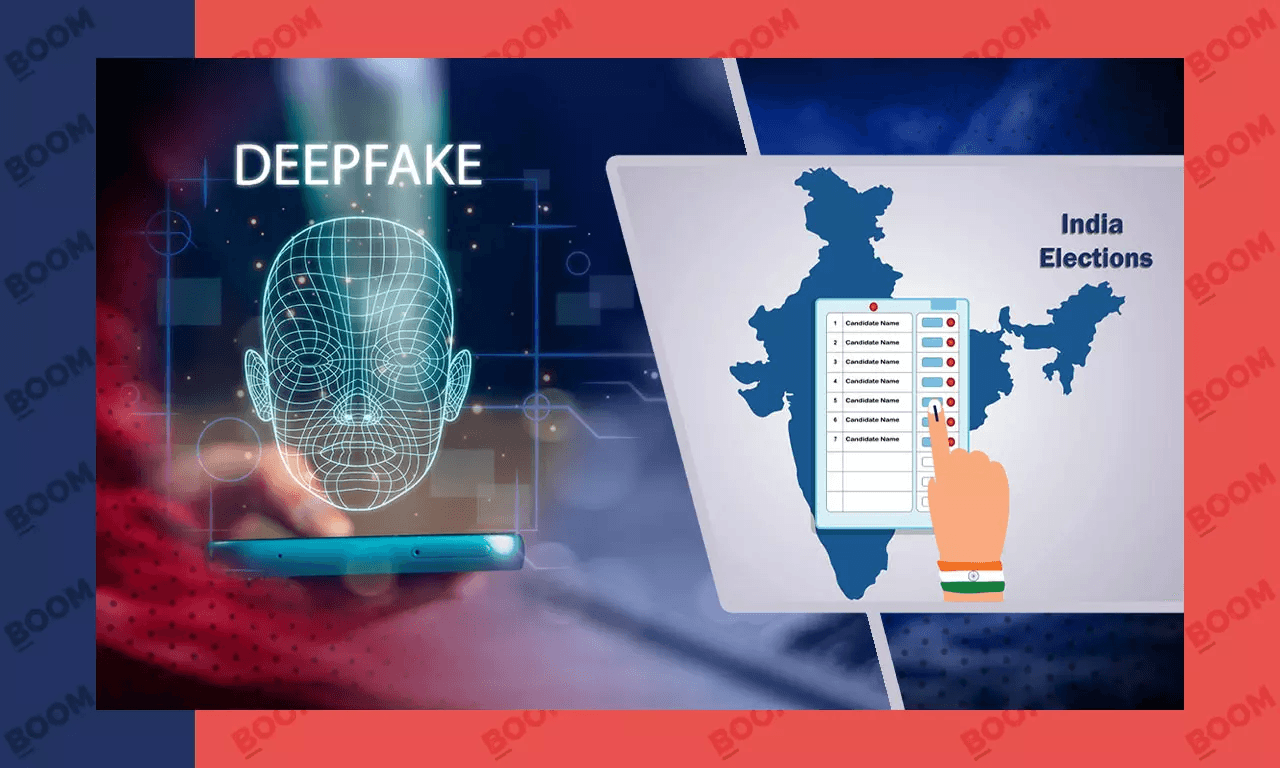
India's Use Of AI In Elections Offers Insights For Global Democracies | Image Source- Google
The infrastructure is old. The scale is new.
The BJP built its IT Cell in 2007. By 2012, under Narendra Modi’s tenure as Gujarat’s Chief Minister, the operation moved from managing messaging into building genuine data science capability. In 2013, when Modi made a controversial statement, the party’s IT team ran real-time sentiment analysis and found that traditional BJP voters were angry while floating, undecided voters actually responded well to it, and the party pivoted its public narrative toward sanitation within days. That single pivot, over a decade ago, is the founding proof of concept for everything that followed.
Today the same IT Cell draws on internal party databases to segment voters by caste, religion, profession, and past voting history, enabling messaging targeted down to the level of a single polling booth, with each booth classified as safe, favorable, battleground, or difficult. The party’s own Saral app, built for booth-level workers, has reportedly crossed 2.9 million downloads, feeding a continuous stream of granular voter data upward into that classification system. This is not a campaign-season tool switched on and off. It is standing infrastructure.
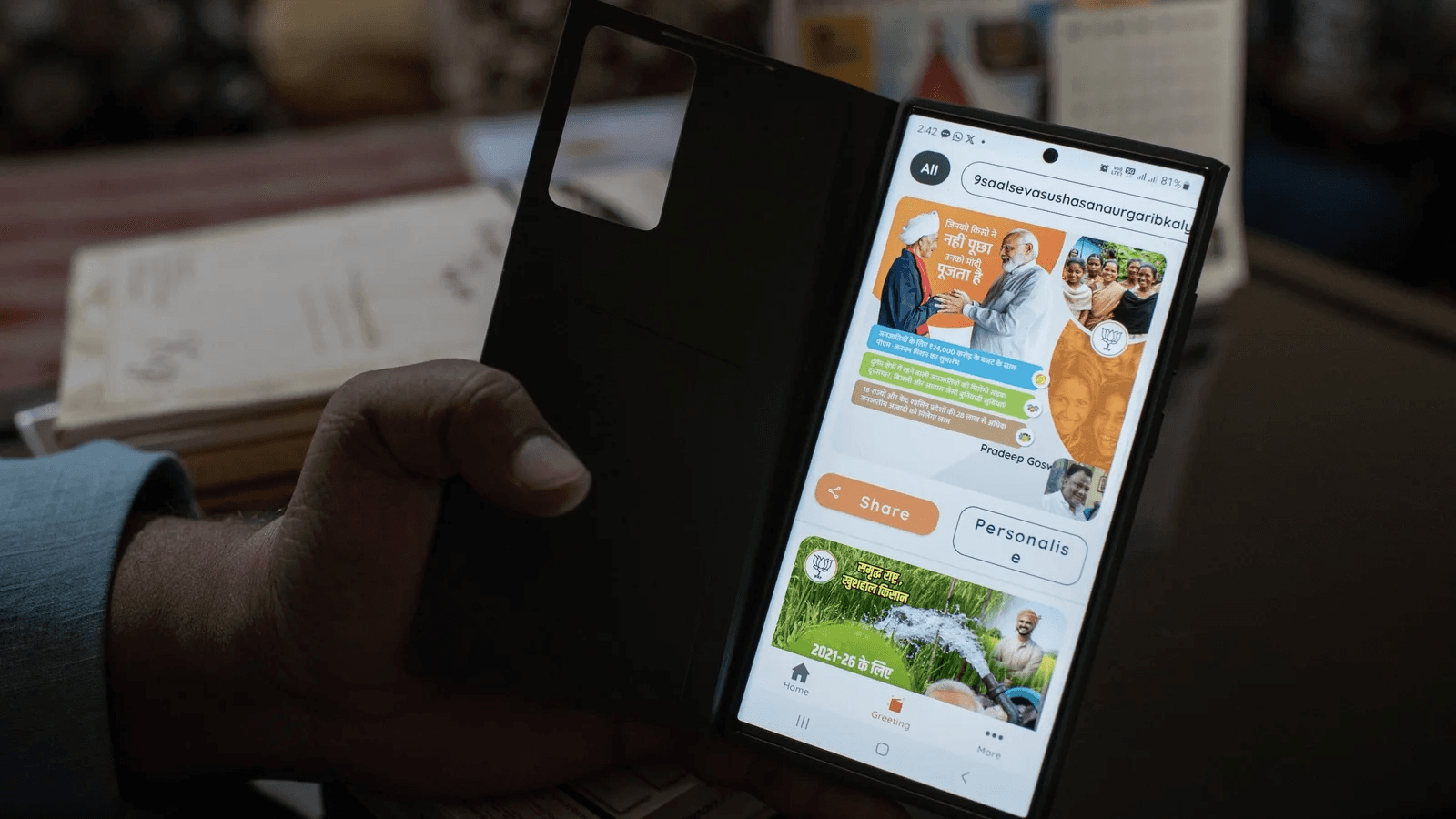
The data collection app at the heart of the BJP’s Indian election campaign | Image Source - Google
What AI added: speed, scale, and 50 million phone calls
The 2024 general election is the clearest evidence of how far this has moved technically. In the two months before campaigning even began, more than 50 million AI-generated voice calls went out to voters, cloning the voices of local politicians to deliver personalised messages directly to phones. The economics explain why: using AI for outreach was roughly eight times cheaper than human call centres, and one operator noted a politician could send 10 million personalised calls or video messages for around 50 lakh rupees, compared to five crore rupees for an in-person rally equivalent. That is a hundredfold cost advantage for synthetic, targeted communication over a real gathering of real people.
The exposure was not marginal. More than 75 percent of Indians encountered political deepfakes during the 2024 election, and nearly one in four believed the AI-generated content they saw was real. Meta approved 14 AI-generated electoral ads that carried Hindu supremacist language and calls for violence, before they were caught. Fake videos placed Bollywood celebrities into fabricated endorsements. In Telangana’s state election that November, a seven-second AI-generated clip showing a sitting minister appearing to endorse the opposition circulated to over 500,000 views on X before voting had even finished, timed precisely so there was no window left to correct it.
This is the environment sentiment analysis now operates inside: not a neutral listening exercise, but one layer in a communications ecosystem that has already shown it will manufacture the sentiment it later claims to be measuring.
Uma Peri, a strategist who works across political, government, and business sentiment mapping, is candid about how much distance sits between raw AI output and any responsible use of it. “I don’t like the idea of a black box where someone says: ‘The AI told us,’” she says. “AI is an input into strategic decision-making. It is not the decision-maker.” It is a useful caution, and also an admission that the discipline she works in relies on exactly the kind of institutional restraint the Telangana clip shows can evaporate the moment an election clock is running out.
The state itself has reached for citizen data
The clearest documented overreach did not come from a private vendor. In April 2024, during the Lok Sabha campaign and while the Model Code of Conduct was legally in force, the Indian Express reported that Jharkhand Police’s Special Branch had formally written to Deputy Superintendents across all 24 districts, asking each to supply caste-wise voter numbers and percentages. The state BJP unit publicly distanced itself from the request. The state’s Chief Electoral Officer flagged it as a likely MCC violation and warned strict action would follow. No public accounting of who ultimately requested that data, or why a police department needed it, has ever been produced.

As India gets into election season, deepfakes of politicians are on the rise. | Image source AI-generated Image
That single episode is the sharpest illustration of the fear underneath this entire story: that the machinery built to understand public sentiment can just as easily be redirected to identify, sort, and target citizens by identity, using the state’s own law enforcement infrastructure as the collection arm. Peri’s own framework draws a hard boundary around exactly this kind of move. “Someone publishing a complaint publicly is one thing,” she says. “Combining multiple datasets to infer someone’s political preferences, vulnerabilities or behaviour is another. Technical accessibility does not automatically equal ethical permission.” Jharkhand’s Special Branch had every technical ability to request that data. Her point is that ability was never the question that mattered.
The law arrived late, and still has not arrived
India’s Digital Personal Data Protection Act was passed in 2023. Its operating Rules were not notified until November 2025, more than two years later, and full enforcement does not begin until May 2027. That means the infrastructure described above, booth-level segmentation, AI voice cloning at a scale of tens of millions of calls, caste-wise data requests from police departments, has been operating for years inside a country that is only now finishing the paperwork for the law meant to govern it. Penalties under the new rules run as high as ₹250 crore for serious violations, but a penalty regime with an 18-month grace period offers little to a citizen whose data was aggregated and used in the interim.
Peri describes the honest version of what the technology can and cannot promise. “The algorithm may be mathematically neutral,” she says. “The question we give it rarely is.” She points to Karnataka’s 2023 election, where Congress’s “40% commission” corruption narrative could register in a sentiment model as simple negative sentiment, when strategically it represented something far larger: a referendum on trust and governance. Her caution about the technology’s limits extends to consent itself. Asked whether a citizen posting about a pothole understands that post might be feeding a political sentiment model somewhere, her answer is unambiguous. “Probably not. A citizen knows that their public post is visible. They may not realise that technology can aggregate, classify and transform thousands of such conversations into strategic intelligence.”
Listening and surveillance, on paper, are different things
The distinction the industry leans on is that public sentiment analysis studies communities, not individuals. Peri draws that line explicitly. “If I want to understand whether citizens are unhappy about roads, employment or welfare delivery, that’s useful public intelligence. It doesn’t mean I need to identify the political identity of every person complaining about the road.” In principle, that distinction is real and defensible. In practice, the Jharkhand case shows how thin the wall between the two can be once a government agency, rather than a private consultancy, is the one doing the requesting.
Peri’s own account of where accountability breaks down points at the same seam. “Technology generally serves the objective of whoever commissions it,” she says. A political question asks how to manage a negative news cycle. A governance question asks why citizens are experiencing the underlying problem at all. The same dashboard, the same underlying data, can serve either question, and nothing about the technology itself decides which one gets asked. “A sophisticated dashboard without accountability,” she adds, “can still produce very poor strategy.”
Image source AI-generated Image
What the numbers add up to
A billion people online. Over 500 million active social identities generating constant, minable signal. A political IT infrastructure with a seventeen-year head start on organising that signal into strategy. Fifty million AI-generated calls deployed in two months during a single election cycle. A police department caught requesting citizens’ caste data mid-campaign. A data protection law that took two years to get its operating rules and still has eighteen months left before it can fine anyone.
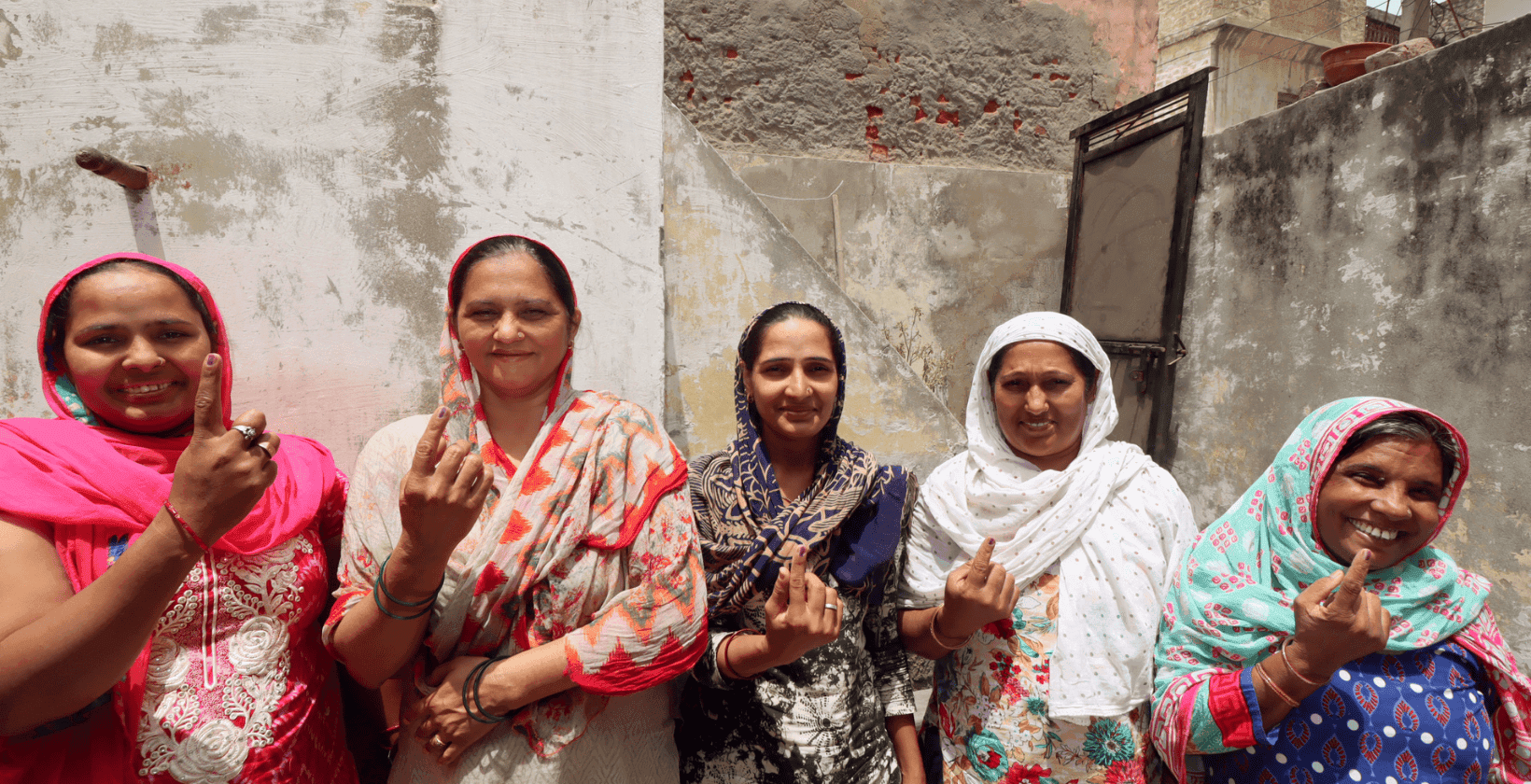
Image source - Google
Set against that, the industry’s own defenders, Peri included, argue the technology is not inherently the problem. “Citizens should feel heard, not surveilled,” she says, describing the version of this work she believes is defensible. Her closing framing of the discipline is almost a warning wrapped as a mission statement: “Data tells you what is happening. Intelligence tells you why. Strategy tells you what to do next. Leadership decides whether you act.” The trouble the numbers keep exposing is that in India today, at this scale, with this little transparency and this much regulatory lag, the difference between being heard and being surveilled is being decided entirely behind a client relationship the public was never made party to.
TO BE CONTINUED, FOR SUBSCRIBERS ONLY.
This is where the surface ends and the reporting begins.
The complete piece, the full archive, and access to The French Press Circle. Reporting answerable only to its readers.
Already a subscriber ?
Login
Read these on the house, with our compliments.
A selection from the current issue, open to all readers. Read them in full. The rest is one decision away.


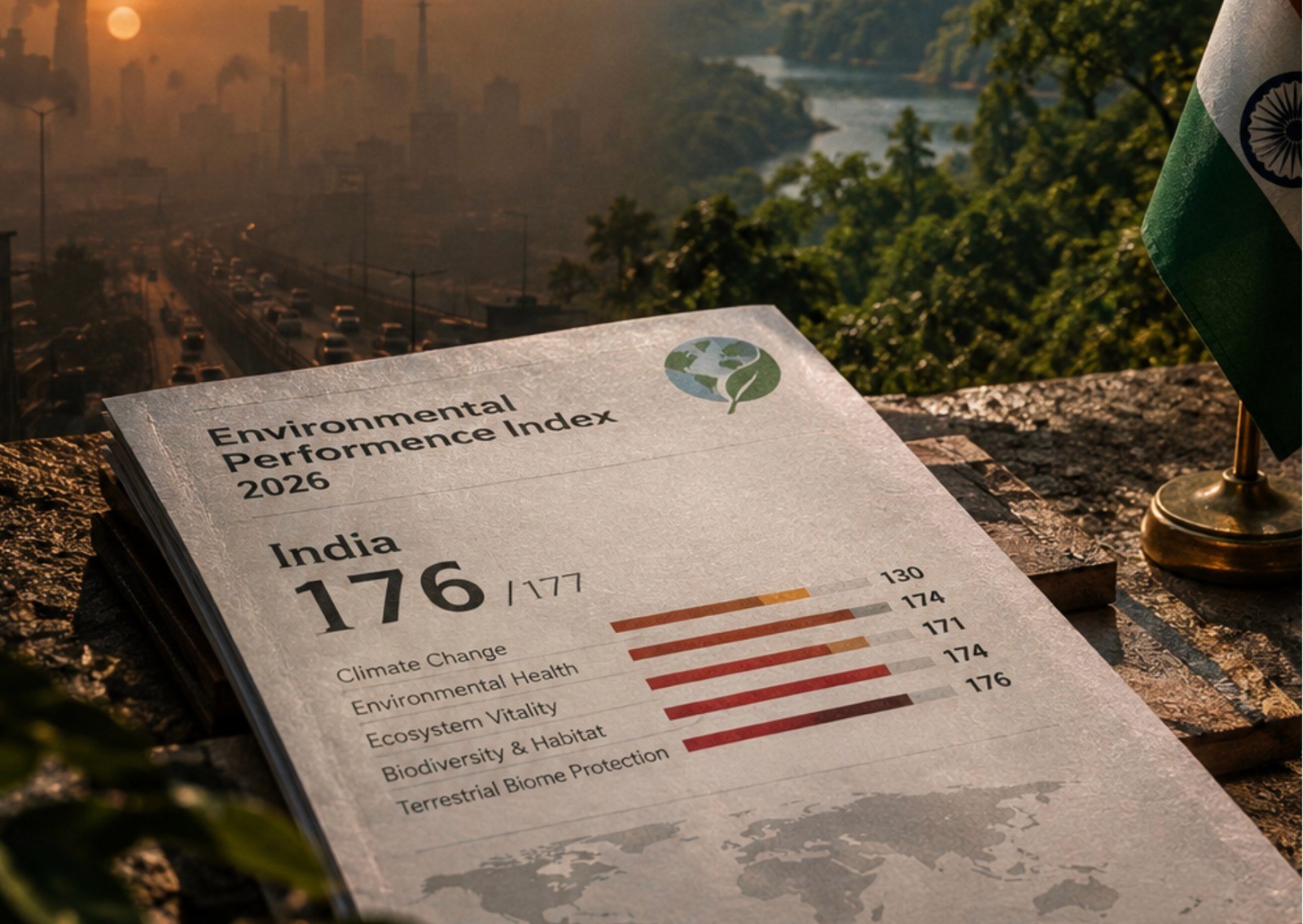








India has 1.03 billion internet users and 500 million active social media identities. Every complaint about a broken road, every rant about unemployment, every WhatsApp forward about a minister’s speech, sits inside a pool that size, and for over a decade, that pool has been continuously read, sorted, and converted into political strategy. The citizens generating that data were never asked whether they wanted to be studied. Most still don’t know they are.
India's Use Of AI In Elections Offers Insights For Global Democracies | Image Source- Google
The infrastructure is old. The scale is new.
The BJP built its IT Cell in 2007. By 2012, under Narendra Modi’s tenure as Gujarat’s Chief Minister, the operation moved from managing messaging into building genuine data science capability. In 2013, when Modi made a controversial statement, the party’s IT team ran real-time sentiment analysis and found that traditional BJP voters were angry while floating, undecided voters actually responded well to it, and the party pivoted its public narrative toward sanitation within days. That single pivot, over a decade ago, is the founding proof of concept for everything that followed.
Today the same IT Cell draws on internal party databases to segment voters by caste, religion, profession, and past voting history, enabling messaging targeted down to the level of a single polling booth, with each booth classified as safe, favorable, battleground, or difficult. The party’s own Saral app, built for booth-level workers, has reportedly crossed 2.9 million downloads, feeding a continuous stream of granular voter data upward into that classification system. This is not a campaign-season tool switched on and off. It is standing infrastructure.
The data collection app at the heart of the BJP’s Indian election campaign | Image Source - Google
What AI added: speed, scale, and 50 million phone calls
The 2024 general election is the clearest evidence of how far this has moved technically. In the two months before campaigning even began, more than 50 million AI-generated voice calls went out to voters, cloning the voices of local politicians to deliver personalised messages directly to phones. The economics explain why: using AI for outreach was roughly eight times cheaper than human call centres, and one operator noted a politician could send 10 million personalised calls or video messages for around 50 lakh rupees, compared to five crore rupees for an in-person rally equivalent. That is a hundredfold cost advantage for synthetic, targeted communication over a real gathering of real people.
The exposure was not marginal. More than 75 percent of Indians encountered political deepfakes during the 2024 election, and nearly one in four believed the AI-generated content they saw was real. Meta approved 14 AI-generated electoral ads that carried Hindu supremacist language and calls for violence, before they were caught. Fake videos placed Bollywood celebrities into fabricated endorsements. In Telangana’s state election that November, a seven-second AI-generated clip showing a sitting minister appearing to endorse the opposition circulated to over 500,000 views on X before voting had even finished, timed precisely so there was no window left to correct it.
This is the environment sentiment analysis now operates inside: not a neutral listening exercise, but one layer in a communications ecosystem that has already shown it will manufacture the sentiment it later claims to be measuring.
Uma Peri, a strategist who works across political, government, and business sentiment mapping, is candid about how much distance sits between raw AI output and any responsible use of it. “I don’t like the idea of a black box where someone says: ‘The AI told us,’” she says. “AI is an input into strategic decision-making. It is not the decision-maker.” It is a useful caution, and also an admission that the discipline she works in relies on exactly the kind of institutional restraint the Telangana clip shows can evaporate the moment an election clock is running out.
The state itself has reached for citizen data
The clearest documented overreach did not come from a private vendor. In April 2024, during the Lok Sabha campaign and while the Model Code of Conduct was legally in force, the Indian Express reported that Jharkhand Police’s Special Branch had formally written to Deputy Superintendents across all 24 districts, asking each to supply caste-wise voter numbers and percentages. The state BJP unit publicly distanced itself from the request. The state’s Chief Electoral Officer flagged it as a likely MCC violation and warned strict action would follow. No public accounting of who ultimately requested that data, or why a police department needed it, has ever been produced.
As India gets into election season, deepfakes of politicians are on the rise. | Image source AI-generated Image
That single episode is the sharpest illustration of the fear underneath this entire story: that the machinery built to understand public sentiment can just as easily be redirected to identify, sort, and target citizens by identity, using the state’s own law enforcement infrastructure as the collection arm. Peri’s own framework draws a hard boundary around exactly this kind of move. “Someone publishing a complaint publicly is one thing,” she says. “Combining multiple datasets to infer someone’s political preferences, vulnerabilities or behaviour is another. Technical accessibility does not automatically equal ethical permission.” Jharkhand’s Special Branch had every technical ability to request that data. Her point is that ability was never the question that mattered.
The law arrived late, and still has not arrived
India’s Digital Personal Data Protection Act was passed in 2023. Its operating Rules were not notified until November 2025, more than two years later, and full enforcement does not begin until May 2027. That means the infrastructure described above, booth-level segmentation, AI voice cloning at a scale of tens of millions of calls, caste-wise data requests from police departments, has been operating for years inside a country that is only now finishing the paperwork for the law meant to govern it. Penalties under the new rules run as high as ₹250 crore for serious violations, but a penalty regime with an 18-month grace period offers little to a citizen whose data was aggregated and used in the interim.
Peri describes the honest version of what the technology can and cannot promise. “The algorithm may be mathematically neutral,” she says. “The question we give it rarely is.” She points to Karnataka’s 2023 election, where Congress’s “40% commission” corruption narrative could register in a sentiment model as simple negative sentiment, when strategically it represented something far larger: a referendum on trust and governance. Her caution about the technology’s limits extends to consent itself. Asked whether a citizen posting about a pothole understands that post might be feeding a political sentiment model somewhere, her answer is unambiguous. “Probably not. A citizen knows that their public post is visible. They may not realise that technology can aggregate, classify and transform thousands of such conversations into strategic intelligence.”
Listening and surveillance, on paper, are different things
The distinction the industry leans on is that public sentiment analysis studies communities, not individuals. Peri draws that line explicitly. “If I want to understand whether citizens are unhappy about roads, employment or welfare delivery, that’s useful public intelligence. It doesn’t mean I need to identify the political identity of every person complaining about the road.” In principle, that distinction is real and defensible. In practice, the Jharkhand case shows how thin the wall between the two can be once a government agency, rather than a private consultancy, is the one doing the requesting.
Peri’s own account of where accountability breaks down points at the same seam. “Technology generally serves the objective of whoever commissions it,” she says. A political question asks how to manage a negative news cycle. A governance question asks why citizens are experiencing the underlying problem at all. The same dashboard, the same underlying data, can serve either question, and nothing about the technology itself decides which one gets asked. “A sophisticated dashboard without accountability,” she adds, “can still produce very poor strategy.”
Image source AI-generated Image
What the numbers add up to
A billion people online. Over 500 million active social identities generating constant, minable signal. A political IT infrastructure with a seventeen-year head start on organising that signal into strategy. Fifty million AI-generated calls deployed in two months during a single election cycle. A police department caught requesting citizens’ caste data mid-campaign. A data protection law that took two years to get its operating rules and still has eighteen months left before it can fine anyone.
Image source - Google
Set against that, the industry’s own defenders, Peri included, argue the technology is not inherently the problem. “Citizens should feel heard, not surveilled,” she says, describing the version of this work she believes is defensible. Her closing framing of the discipline is almost a warning wrapped as a mission statement: “Data tells you what is happening. Intelligence tells you why. Strategy tells you what to do next. Leadership decides whether you act.” The trouble the numbers keep exposing is that in India today, at this scale, with this little transparency and this much regulatory lag, the difference between being heard and being surveilled is being decided entirely behind a client relationship the public was never made party to.
TO BE CONTINUED, FOR SUBSCRIBERS ONLY.
This is where the surface ends and the reporting begins.
The complete piece, the full archive, and access to The French Press Circle. Reporting answerable only to its readers.
Already a subscriber ?
Login
Read these on the house, with our compliments.
A selection from the current issue, open to all readers. Read them in full. The rest is one decision away.