
On May 27, 2026, Justices Prashant Kumar Mishra and N. V. Anjaria closed a door that critics of Vantara had spent a year pushing against. The application before them sought fresh investigations by the CBI, the Enforcement Directorate, the Directorate of Revenue Intelligence and the Wildlife Crime Control Bureau into how animals reached the Jamnagar complex backed by Reliance Foundation. The bench dismissed it. Everything the Court-constituted Special Investigation Team had examined, the order held, sat behind what the judges called a "bar of finality."

Supreme Court of India building, New Delhi.| Image source: Google
Vantara's supporters could have stopped reading there. The same order, however, contains a second instruction, and it points the opposite way. The Court directed India's CITES Management Authority to consult the CITES Secretariat and draft a Standard Operating Procedure for imports of live Appendix I animals, preferably within three months of receiving the order. A court that believed the past required no further examination had nonetheless found reason to rewrite the rules for the future.
Eight days before the calendar date that three months implies, Vantara filed an application of its own. It disclosed a twelve-month moratorium on applying for animal imports, dated from June 5, 2026, the day of its last physical import, along with permanent restrictions on the categories of animal that had drawn the sharpest questions. Nobody had ordered it to do any of this.
That sequence deserves scrutiny, and the scrutiny begins with two documents that looked at the same animals and reached different conclusions.
Two reviews, two questions
The first document is the SIT report, accepted by the Supreme Court on September 15, 2025 and left undisturbed when the Court declined to revisit it on March 9, 2026. According to the May order, the SIT worked under terms of reference "of the widest amplitude." It examined the affairs of the relevant entities from their inception, held meetings and site inspections, heard complainants, journalists and environmentalists, and questioned foreign donor zoos. It sought responses from CITES authorities in countries including the UAE and the Democratic Republic of Congo. Its central finding turned on permits: valid CITES export and import documents existed for what it examined.

Vantara animal care facilities in Jamnagar.| Image Source : Google
The Court built on that foundation. An irregularity by a foreign exporter, it reasoned, would not automatically create liability for the Indian recipient. A lawful zoo-to-zoo transfer could not necessarily be recast as unlawful because a foreign transaction had commercial features. And the Court worried that uprooting living animals from settled custody could itself amount to cruelty. Protection extended to the trust, its trustees and management, and the sponsoring entities Reliance Foundation and Reliance Industries, for matters examined and concluded up to September 2025.
The second document asked something else entirely. The CITES Secretariat sent a mission to India between September 15 and 20, 2025, visiting the Jamnagar facilities, and its findings went to the Standing Committee at Samarkand in November as SC79 Doc. 6.3.4. The Secretariat's mixed verdict deserves a fair summary. It found no evidence that animals had entered India without the required export permits or re-export certificates. It found no evidence, at that stage, of primarily commercial imports. It described the facilities as operating to "exceptionally high standards," with veterinary infrastructure that left it with no reason to doubt the institutions could house Appendix I animals.

Vantara rescue and rehabilitation centre, Jamnagar.| Image source: Google
Then came the sentence that gives the document its weight. Several imports, the Secretariat said, raised questions about origin, about the source and purpose codes attached to the animals, about whether captive-breeding criteria had been met, and about whether India had exercised the due diligence CITES expects of an importing state.
The two reviews therefore worked on different questions. The SIT asked whether the transfers were legally supported and whether Vantara could be held liable. The Secretariat asked whether India's permitting system had interrogated the paperwork it received, especially where the animals were among the most protected on earth and the chains of custody looked strange. A yes to the first question never settled the second.
The Supreme Court saw this. Its order says the CITES document did not establish the culpability alleged against Vantara, yet it contained "forward-looking and systemic" observations about due diligence by India's CITES authorities, the scrutiny of source and purpose codes, the captive-breeding test under Resolution Conf. 10.16, and the institutional capacity of the Management Authority and the Wildlife Crime Control Bureau. The direction to draft an SOP followed directly.
The imports that carried the concern
Read closely, the Secretariat's document reads like a catalogue of cases where a permit and a provenance told different stories.
Start with the chimpanzees from Kinshasa. The Secretariat's document concerns nine animals exported by the Kinshasa Zoo, though India reported that eight arrived in February 2025. The DRC said the animals were already in captivity and that the transaction was a rescue under an MoU, with valid permits. Yet the Secretariat flagged unresolved questions: whether the eight imported animals were the same ones in the DRC's records, whether they had truly been moved to the zoo from the locations described, and whether the source code "C," which denotes captive-bred, was justified. The Secretariat made a point that reaches well beyond this case. An animal being in captivity does not make it "bred in captivity" under CITES. India, it said, could have established full traceability before export with greater diligence.
The UAE supplied 31 chimpanzees to India in 2023 and 2024, and their recorded histories wander through Egypt, Kuwait, Iraq and, in some cases, countries unknown. Several of those places have no known chimpanzee-breeding programmes, and the trade records contained discrepancies. The Secretariat did not treat the existence of permits as proof of fraud. It said the circumstances demanded more than accepting re-export certificates at face value.

Image source:AI
Then there is the mountain gorilla, re-exported from the UAE in 2024 with Haiti listed as country of origin and source code "C." Haiti is not a CITES Party. The Trade Database held no record of gorilla exports to Haiti. India offered a rescue-from-unrest rationale, and Vantara and other experts suggested the animal might have been misidentified, with further zoological classification under way. The Secretariat concluded heightened due diligence was warranted. Whatever the animal turns out to be, the file shows a specimen whose paper trail ran through a country that, on the Secretariat's account, has no recorded gorilla trade.
The remaining items are smaller but instructive. Czech authorities appeared to understand certain transactions as sales from commercial breeding facilities, while India treated the invoices as reflecting insurance, freight and customs costs. The Secretariat noted that CITES does not prohibit buying listed specimens for zoological purposes, so its concern was transparency and whether the codes matched the transactions. Two snow leopards left Germany under purpose code "T" and entered India under "Z," for zoological, and the Indian authority did not contact its German counterpart about the difference before issuing the permit. Animals routed from Germany to Togo and on to India suggested Togo might be functioning as a transit hub. And on Mexican cheetahs, the database showed 14 exported, 12 imported and 24 recorded, while India said no cheetahs had come from Mexico at all.
None of these entries alleges illegality. Each one describes a moment where a regulator could have picked up the telephone and did not, or where a code on a form invited a question that nobody asked.
What Vantara is, and is not, in law
Precision about the entities matters here, and the record rewards it. Per the CITES Secretariat, "Vantara" is the umbrella under which the Greens Zoological Rescue and Rehabilitation Centre and the Radha Krishna Temple Elephant Welfare Trust operate, and technically Vantara itself does not import, hold or manage animals. GZRRC was recognised by the Central Zoo Authority in 2019, has approvals to acquire 84,822 animals, and reported holding 41,839 as of September 11, 2025. RKTEWT reported 5,794. Those are facility-specific figures supplied during the mission and they should stay attached to their facilities.
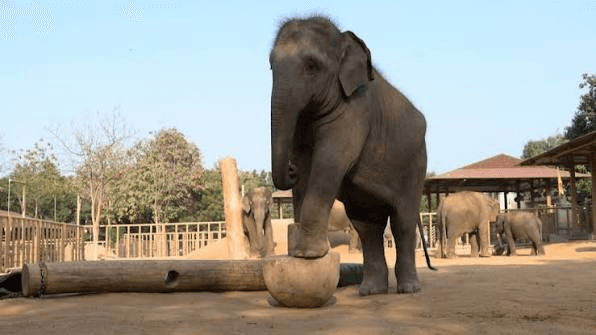
Elephants at Vantara, Jamnagar.
Vantara's account of itself is rescue, rehabilitation and conservation breeding. Its representatives told the Secretariat the centres mainly receive confiscated, rescued or donated animals and that none had been bought, a claim the Secretariat weighed against evidence that some animals came from commercial breeders and that at least one exporting authority described transactions differently.
The contractor in the background
One thread in the case remains unresolved, and it should be reported that way. On May 1, 2026, Brazil's Federal Police seized phones and a computer from bird specialist Tony Silva at São Paulo's Guarulhos Airport, according to Mongabay, in an investigation into the trafficking of Brazilian wildlife including golden lion tamarins. Mongabay, citing an unnamed source, reported that Silva was suspected of coordinating purchases of illegally traded animals allegedly intended for Vantara. The investigation continues.
The Supreme Court order describes Silva as a consultant of the Vantara-linked respondents and records that the SIT had considered the Brazilian allegations and rejected them, because the material relied upon, private communications, screenshots and emails, lacked physical corroboration. The Court added that an investigation or prosecution of Silva abroad creates no liability for Vantara.
Vantara's response to Mongabay was that it has "no connection with the buying of illegal animals," and that tying Silva's personal affairs to the organisation would be "factually incorrect and legally untenable." It says Silva was never an employee, that an independent contractor engaged him for limited consultancy on enclosure curation, husbandry and nutrition, and that he never spoke or acted for Vantara. Nothing in the material reviewed establishes that Vantara took part in trafficking.
The pause
Against that backdrop, the August 19 application reads differently from a routine filing. Vantara told the Supreme Court that a twelve-month moratorium on applying to import animals had taken effect internally on June 5, 2026, the date of its last physical import. It reported no fresh import requests since February 2026 and no pending applications. The stated purpose was to let enhanced governance expertise and due-diligence procedures become operational, along with structured international outreach, accreditation and benchmarking.
The permanent commitments go further than a pause. Vantara said it would import no wild-caught specimens directly from range states, even where the animals are later described as captive-bred. It would use no CITES re-export certificates unless seven years had passed since the animal's original import. It would withdraw pending applications. And it would redirect resources toward treatment, placement and lifetime care for animals in distress in their countries of origin, instead of bringing them to Jamnagar.
Read those restrictions against the Secretariat's catalogue and the overlap is close. Wild-caught animals relabelled as captive-bred were the worry in the DRC file. Re-export certificates from intermediary countries were the worry in the UAE and Togo files. A seven-year seasoning period on re-exports would have foreclosed the UAE chimpanzee route almost entirely.
Vantara later announced an independent Governing Council chaired by John E. Scanlon, a former CITES Secretary-General. Under the reforms, no import application will be made before June 5, 2027, and any later one requires the council's prior written approval following an internal due-diligence process. Vantara frames all of this as a reset in conservation strategy, a shift from bringing animals to India toward habitat protection, support in range countries and governance-building. It describes the pause as a forward-looking institutional choice, and it has never characterised it as an admission that earlier imports were unlawful.
The gap where the story lives
The record supports a precise set of statements. The Supreme Court issued its order on May 27, 2026. It refused to reopen transfers the SIT had examined, and it said so with unusual finality. It also ordered India's CITES Management Authority to build safeguards that the Secretariat's document had shown to be missing. Vantara then adopted restrictions that exceed what any court required, and it disclosed them within days of the calendar mark that the Court's three-month window implies. The order itself says "preferably," excludes time spent coordinating with the Secretariat, and runs from receipt, so whether August 27 bound anyone depends on facts the public record does not supply.
The record does not supply motive either. The moratorium could reflect reputational repair. It could reflect institutional learning, a genuine turn toward in-situ conservation, or an anticipation of the stricter regime the SOP will bring, in which case Vantara would be choosing its own terms before a regulator chose them for it. It could be several of these at once. A restraint volunteered under the shadow of an incoming rule reads differently from a restraint volunteered in a vacuum, and the timing invites that reading without proving it.
What the documents do establish is a difference in the standards applied. Legal liability turned on permits, and the permits held up under the review the Court accepted. Regulatory adequacy turned on whether the state asked hard questions of the paperwork, and there the Secretariat found gaps that the Court chose to act upon. An institution can be entirely clear of liability and still operate in a system where a gorilla's paper trail runs through a country with no recorded gorilla trade.
That is the space Vantara's moratorium occupies. The open questions belong to the next twelve months and to the SOP still being drafted: whether the Management Authority's new procedure demands the traceability the Secretariat described, whether Vantara's self-imposed rules match it or exceed it, and whether the Governing Council under Scanlon will hold its own applicants to a standard the state has yet to set. The Supreme Court has said the past is closed. The reforms now taking shape will show whether any
TO BE CONTINUED, FOR SUBSCRIBERS ONLY.
This is where the surface ends and the reporting begins.
The complete piece, the full archive, and access to The French Press Circle. Reporting answerable only to its readers.
Already a subscriber ?
Login
Read these on the house, with our compliments.
A selection from the current issue, open to all readers. Read them in full. The rest is one decision away.
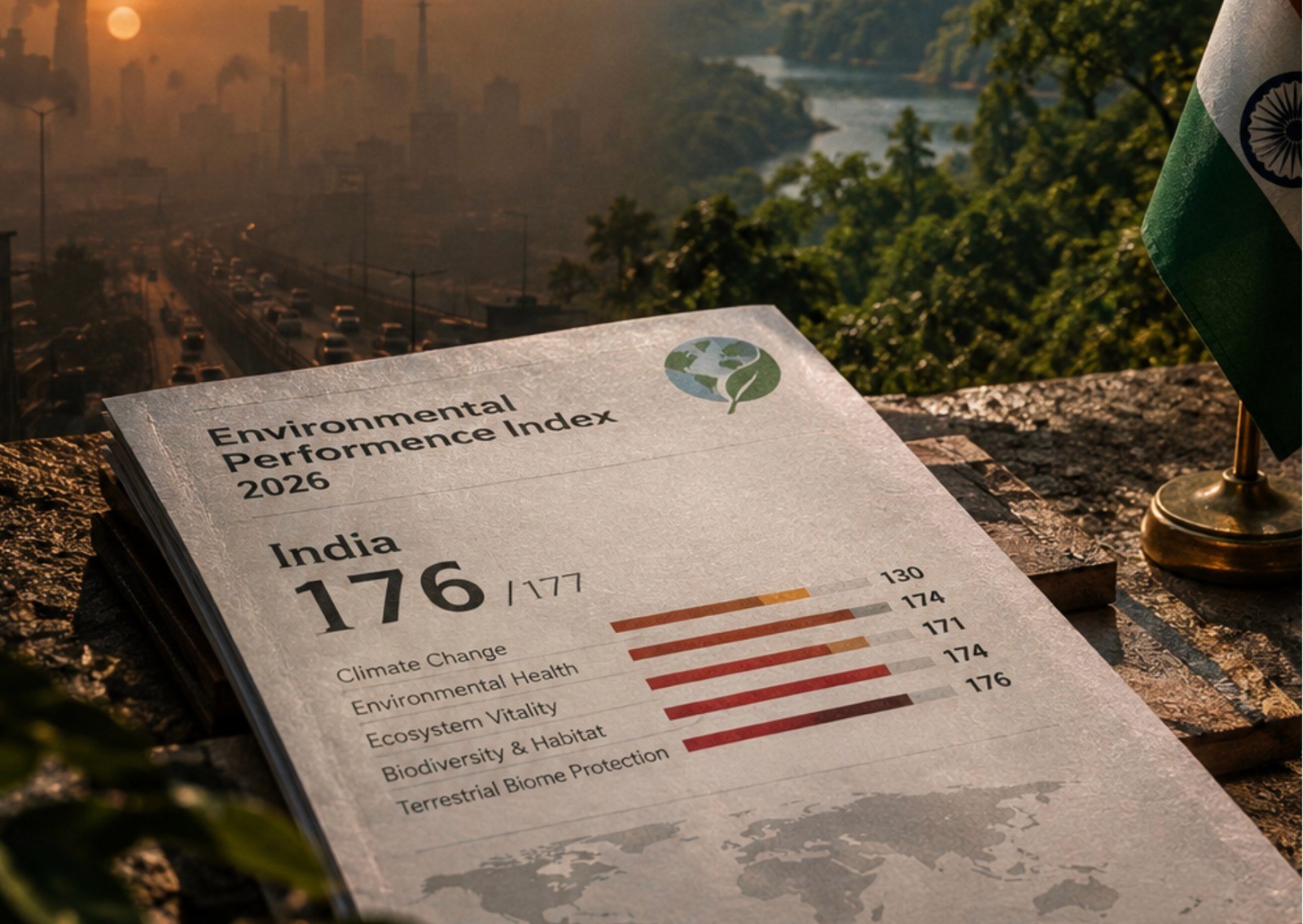








On May 27, 2026, Justices Prashant Kumar Mishra and N. V. Anjaria closed a door that critics of Vantara had spent a year pushing against. The application before them sought fresh investigations by the CBI, the Enforcement Directorate, the Directorate of Revenue Intelligence and the Wildlife Crime Control Bureau into how animals reached the Jamnagar complex backed by Reliance Foundation. The bench dismissed it. Everything the Court-constituted Special Investigation Team had examined, the order held, sat behind what the judges called a "bar of finality."
Supreme Court of India building, New Delhi.| Image source: Google
Vantara's supporters could have stopped reading there. The same order, however, contains a second instruction, and it points the opposite way. The Court directed India's CITES Management Authority to consult the CITES Secretariat and draft a Standard Operating Procedure for imports of live Appendix I animals, preferably within three months of receiving the order. A court that believed the past required no further examination had nonetheless found reason to rewrite the rules for the future.
Eight days before the calendar date that three months implies, Vantara filed an application of its own. It disclosed a twelve-month moratorium on applying for animal imports, dated from June 5, 2026, the day of its last physical import, along with permanent restrictions on the categories of animal that had drawn the sharpest questions. Nobody had ordered it to do any of this.
That sequence deserves scrutiny, and the scrutiny begins with two documents that looked at the same animals and reached different conclusions.
Two reviews, two questions
The first document is the SIT report, accepted by the Supreme Court on September 15, 2025 and left undisturbed when the Court declined to revisit it on March 9, 2026. According to the May order, the SIT worked under terms of reference "of the widest amplitude." It examined the affairs of the relevant entities from their inception, held meetings and site inspections, heard complainants, journalists and environmentalists, and questioned foreign donor zoos. It sought responses from CITES authorities in countries including the UAE and the Democratic Republic of Congo. Its central finding turned on permits: valid CITES export and import documents existed for what it examined.
Vantara animal care facilities in Jamnagar.| Image Source : Google
The Court built on that foundation. An irregularity by a foreign exporter, it reasoned, would not automatically create liability for the Indian recipient. A lawful zoo-to-zoo transfer could not necessarily be recast as unlawful because a foreign transaction had commercial features. And the Court worried that uprooting living animals from settled custody could itself amount to cruelty. Protection extended to the trust, its trustees and management, and the sponsoring entities Reliance Foundation and Reliance Industries, for matters examined and concluded up to September 2025.
The second document asked something else entirely. The CITES Secretariat sent a mission to India between September 15 and 20, 2025, visiting the Jamnagar facilities, and its findings went to the Standing Committee at Samarkand in November as SC79 Doc. 6.3.4. The Secretariat's mixed verdict deserves a fair summary. It found no evidence that animals had entered India without the required export permits or re-export certificates. It found no evidence, at that stage, of primarily commercial imports. It described the facilities as operating to "exceptionally high standards," with veterinary infrastructure that left it with no reason to doubt the institutions could house Appendix I animals.
Vantara rescue and rehabilitation centre, Jamnagar.| Image source: Google
Then came the sentence that gives the document its weight. Several imports, the Secretariat said, raised questions about origin, about the source and purpose codes attached to the animals, about whether captive-breeding criteria had been met, and about whether India had exercised the due diligence CITES expects of an importing state.
The two reviews therefore worked on different questions. The SIT asked whether the transfers were legally supported and whether Vantara could be held liable. The Secretariat asked whether India's permitting system had interrogated the paperwork it received, especially where the animals were among the most protected on earth and the chains of custody looked strange. A yes to the first question never settled the second.
The Supreme Court saw this. Its order says the CITES document did not establish the culpability alleged against Vantara, yet it contained "forward-looking and systemic" observations about due diligence by India's CITES authorities, the scrutiny of source and purpose codes, the captive-breeding test under Resolution Conf. 10.16, and the institutional capacity of the Management Authority and the Wildlife Crime Control Bureau. The direction to draft an SOP followed directly.
The imports that carried the concern
Read closely, the Secretariat's document reads like a catalogue of cases where a permit and a provenance told different stories.
Start with the chimpanzees from Kinshasa. The Secretariat's document concerns nine animals exported by the Kinshasa Zoo, though India reported that eight arrived in February 2025. The DRC said the animals were already in captivity and that the transaction was a rescue under an MoU, with valid permits. Yet the Secretariat flagged unresolved questions: whether the eight imported animals were the same ones in the DRC's records, whether they had truly been moved to the zoo from the locations described, and whether the source code "C," which denotes captive-bred, was justified. The Secretariat made a point that reaches well beyond this case. An animal being in captivity does not make it "bred in captivity" under CITES. India, it said, could have established full traceability before export with greater diligence.
The UAE supplied 31 chimpanzees to India in 2023 and 2024, and their recorded histories wander through Egypt, Kuwait, Iraq and, in some cases, countries unknown. Several of those places have no known chimpanzee-breeding programmes, and the trade records contained discrepancies. The Secretariat did not treat the existence of permits as proof of fraud. It said the circumstances demanded more than accepting re-export certificates at face value.
Image source:AI
Then there is the mountain gorilla, re-exported from the UAE in 2024 with Haiti listed as country of origin and source code "C." Haiti is not a CITES Party. The Trade Database held no record of gorilla exports to Haiti. India offered a rescue-from-unrest rationale, and Vantara and other experts suggested the animal might have been misidentified, with further zoological classification under way. The Secretariat concluded heightened due diligence was warranted. Whatever the animal turns out to be, the file shows a specimen whose paper trail ran through a country that, on the Secretariat's account, has no recorded gorilla trade.
The remaining items are smaller but instructive. Czech authorities appeared to understand certain transactions as sales from commercial breeding facilities, while India treated the invoices as reflecting insurance, freight and customs costs. The Secretariat noted that CITES does not prohibit buying listed specimens for zoological purposes, so its concern was transparency and whether the codes matched the transactions. Two snow leopards left Germany under purpose code "T" and entered India under "Z," for zoological, and the Indian authority did not contact its German counterpart about the difference before issuing the permit. Animals routed from Germany to Togo and on to India suggested Togo might be functioning as a transit hub. And on Mexican cheetahs, the database showed 14 exported, 12 imported and 24 recorded, while India said no cheetahs had come from Mexico at all.
None of these entries alleges illegality. Each one describes a moment where a regulator could have picked up the telephone and did not, or where a code on a form invited a question that nobody asked.
What Vantara is, and is not, in law
Precision about the entities matters here, and the record rewards it. Per the CITES Secretariat, "Vantara" is the umbrella under which the Greens Zoological Rescue and Rehabilitation Centre and the Radha Krishna Temple Elephant Welfare Trust operate, and technically Vantara itself does not import, hold or manage animals. GZRRC was recognised by the Central Zoo Authority in 2019, has approvals to acquire 84,822 animals, and reported holding 41,839 as of September 11, 2025. RKTEWT reported 5,794. Those are facility-specific figures supplied during the mission and they should stay attached to their facilities.
Elephants at Vantara, Jamnagar.
Vantara's account of itself is rescue, rehabilitation and conservation breeding. Its representatives told the Secretariat the centres mainly receive confiscated, rescued or donated animals and that none had been bought, a claim the Secretariat weighed against evidence that some animals came from commercial breeders and that at least one exporting authority described transactions differently.
The contractor in the background
One thread in the case remains unresolved, and it should be reported that way. On May 1, 2026, Brazil's Federal Police seized phones and a computer from bird specialist Tony Silva at São Paulo's Guarulhos Airport, according to Mongabay, in an investigation into the trafficking of Brazilian wildlife including golden lion tamarins. Mongabay, citing an unnamed source, reported that Silva was suspected of coordinating purchases of illegally traded animals allegedly intended for Vantara. The investigation continues.
The Supreme Court order describes Silva as a consultant of the Vantara-linked respondents and records that the SIT had considered the Brazilian allegations and rejected them, because the material relied upon, private communications, screenshots and emails, lacked physical corroboration. The Court added that an investigation or prosecution of Silva abroad creates no liability for Vantara.
Vantara's response to Mongabay was that it has "no connection with the buying of illegal animals," and that tying Silva's personal affairs to the organisation would be "factually incorrect and legally untenable." It says Silva was never an employee, that an independent contractor engaged him for limited consultancy on enclosure curation, husbandry and nutrition, and that he never spoke or acted for Vantara. Nothing in the material reviewed establishes that Vantara took part in trafficking.
The pause
Against that backdrop, the August 19 application reads differently from a routine filing. Vantara told the Supreme Court that a twelve-month moratorium on applying to import animals had taken effect internally on June 5, 2026, the date of its last physical import. It reported no fresh import requests since February 2026 and no pending applications. The stated purpose was to let enhanced governance expertise and due-diligence procedures become operational, along with structured international outreach, accreditation and benchmarking.
The permanent commitments go further than a pause. Vantara said it would import no wild-caught specimens directly from range states, even where the animals are later described as captive-bred. It would use no CITES re-export certificates unless seven years had passed since the animal's original import. It would withdraw pending applications. And it would redirect resources toward treatment, placement and lifetime care for animals in distress in their countries of origin, instead of bringing them to Jamnagar.
Read those restrictions against the Secretariat's catalogue and the overlap is close. Wild-caught animals relabelled as captive-bred were the worry in the DRC file. Re-export certificates from intermediary countries were the worry in the UAE and Togo files. A seven-year seasoning period on re-exports would have foreclosed the UAE chimpanzee route almost entirely.
Vantara later announced an independent Governing Council chaired by John E. Scanlon, a former CITES Secretary-General. Under the reforms, no import application will be made before June 5, 2027, and any later one requires the council's prior written approval following an internal due-diligence process. Vantara frames all of this as a reset in conservation strategy, a shift from bringing animals to India toward habitat protection, support in range countries and governance-building. It describes the pause as a forward-looking institutional choice, and it has never characterised it as an admission that earlier imports were unlawful.
The gap where the story lives
The record supports a precise set of statements. The Supreme Court issued its order on May 27, 2026. It refused to reopen transfers the SIT had examined, and it said so with unusual finality. It also ordered India's CITES Management Authority to build safeguards that the Secretariat's document had shown to be missing. Vantara then adopted restrictions that exceed what any court required, and it disclosed them within days of the calendar mark that the Court's three-month window implies. The order itself says "preferably," excludes time spent coordinating with the Secretariat, and runs from receipt, so whether August 27 bound anyone depends on facts the public record does not supply.
The record does not supply motive either. The moratorium could reflect reputational repair. It could reflect institutional learning, a genuine turn toward in-situ conservation, or an anticipation of the stricter regime the SOP will bring, in which case Vantara would be choosing its own terms before a regulator chose them for it. It could be several of these at once. A restraint volunteered under the shadow of an incoming rule reads differently from a restraint volunteered in a vacuum, and the timing invites that reading without proving it.
What the documents do establish is a difference in the standards applied. Legal liability turned on permits, and the permits held up under the review the Court accepted. Regulatory adequacy turned on whether the state asked hard questions of the paperwork, and there the Secretariat found gaps that the Court chose to act upon. An institution can be entirely clear of liability and still operate in a system where a gorilla's paper trail runs through a country with no recorded gorilla trade.
That is the space Vantara's moratorium occupies. The open questions belong to the next twelve months and to the SOP still being drafted: whether the Management Authority's new procedure demands the traceability the Secretariat described, whether Vantara's self-imposed rules match it or exceed it, and whether the Governing Council under Scanlon will hold its own applicants to a standard the state has yet to set. The Supreme Court has said the past is closed. The reforms now taking shape will show whether any
TO BE CONTINUED, FOR SUBSCRIBERS ONLY.
This is where the surface ends and the reporting begins.
The complete piece, the full archive, and access to The French Press Circle. Reporting answerable only to its readers.
Already a subscriber ?
Login
Read these on the house, with our compliments.
A selection from the current issue, open to all readers. Read them in full. The rest is one decision away.
