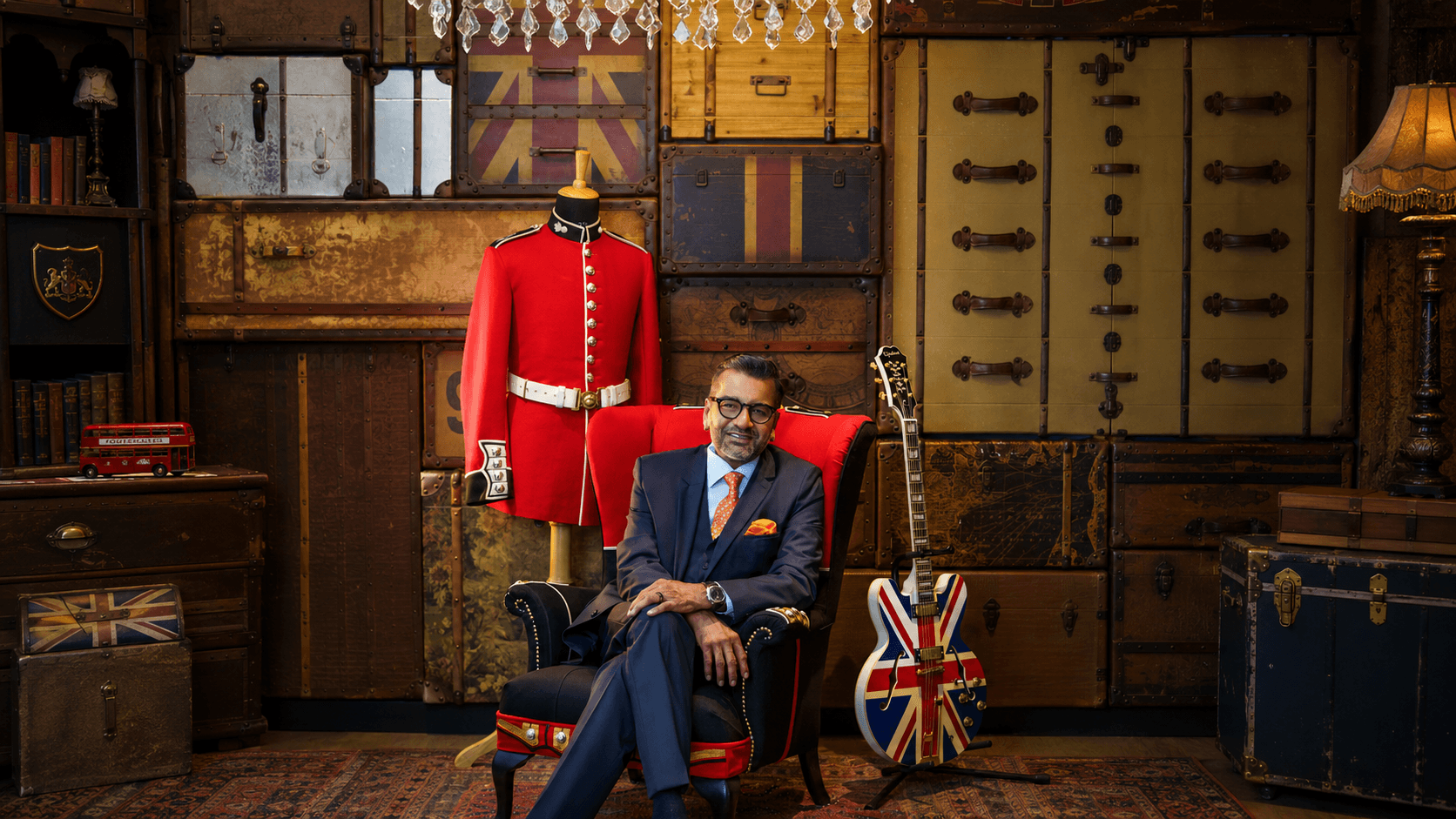
Before the interview begins, Samir Modi is already talking about landfills.
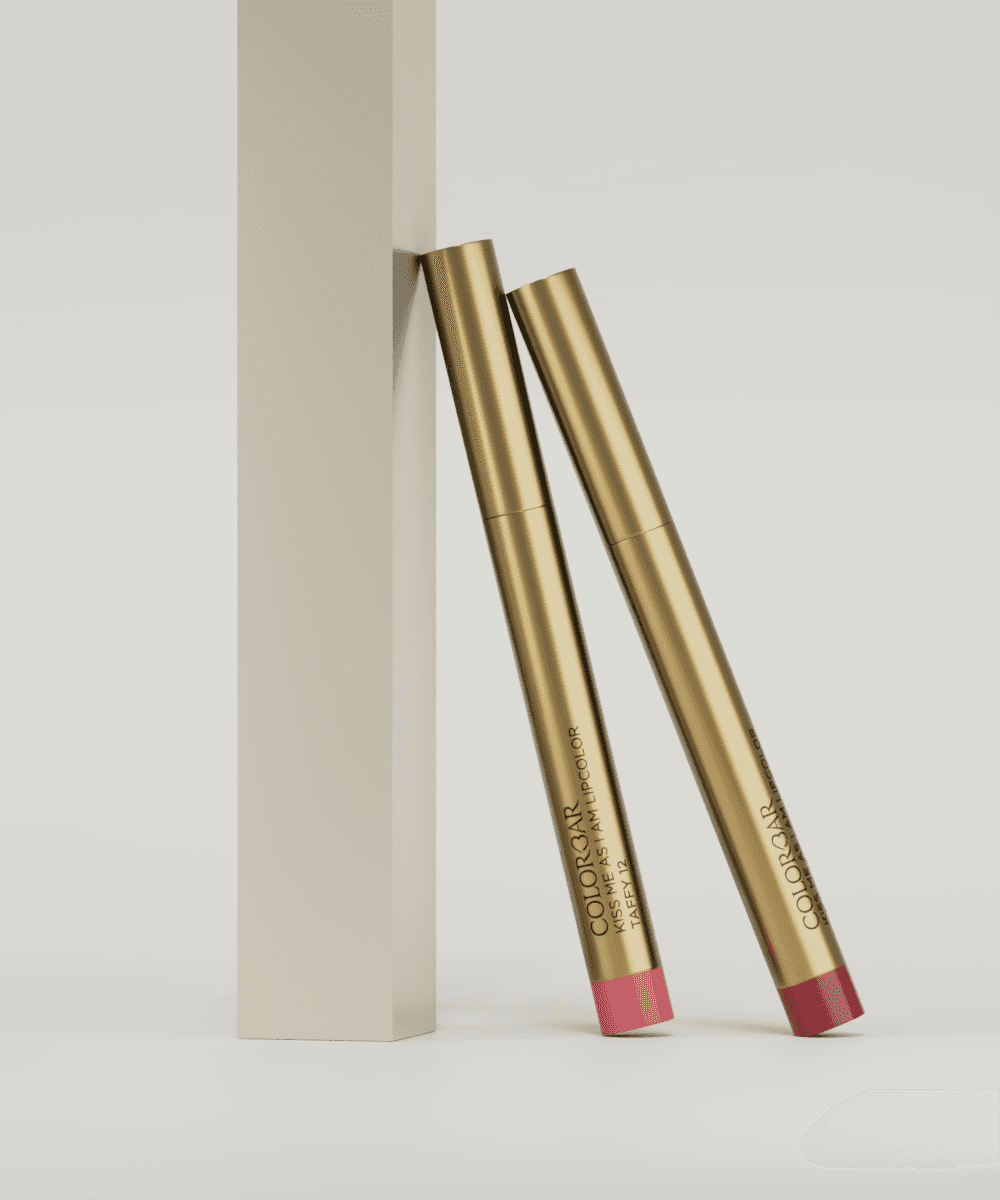
About the billions of cosmetics casings dumped into global waste streams every year. About Colorbar's plan to convert its entire product range to refillables before 2029. He is meticulous and agitated in the way of someone who has already turned an annoyance into a product decision: the compacts have converted, the lipstick range is in process, the packaging is shifting from plastic to aluminium. By the time the formal questions arrive, he has given you more about how he thinks than most founders offer in an hour.
It says something about the man who built one of India's most recognisable beauty brands that he spends his pre-interview time on packaging waste. Colorbar launched with 30,000 lipsticks and nail polishes, sold out of a corner pharmacy in Chandigarh. It now manufactures alongside the same Italian contract producers who make Charlotte Tilbury, Bobbi Brown, and Pat McGrath. The distance between those two facts is the story. And Mr. Modi, who has been telling it for twenty years, is still not finished with it.
The Gap Nobody Else Saw
India's beauty market in 2004 had a settled hierarchy. L'Oréal held the aspirational end through its premium range. Lakme, then majority-owned by Hindustan Unilever following its acquisition from the Tata Group in the late 1990s, and Revlon occupied the functional middle. What he identified was a gap that was generational as much as commercial, young women moving from school into college, old enough to want makeup, young enough to have no connection to their mothers' brands. "ELLE18 streetwear was too young, Lakme and Revlon were too old. That was the space we entered."
He launched with products manufactured in India and went shop to shop. Retailers handed him a basket beside the Chinese imports. He came back. His uncle held Revlon's distribution rights in India and met his father every Thursday. And the morning after, the feedback came back home with his father. "For years I got bashed up. Every Friday morning, my uncle would criticise Colorbar and I would get a bashing."
The real turning point arrived at home. Mr. Modi noticed his own children were reluctant to use the products he was selling. If Colorbar was going to compete internationally, he realised it would need to be built differently. That conclusion took him to Italy. The trip was far from glamorous. Most manufacturers had little interest in working with a young Indian beauty brand without scale or proven demand. Eventually, a door opened at Ancorotti Cosmetics.
The Italian Pivot
Nobody in Italy wanted to deal with him. The cosmetics contract manufacturing industry operates on minimum order quantities and established relationships, and a new Indian brand with no proof of concept offered neither. The door opened at Ancorotti Cosmetics, a specialist Italian manufacturer in the prestige segment whose clients had included Bobbi Brown. "The Ancorotti family gave me a break," he says. "They were the first ones."
Two other names carry particular weight in how Modi tells this story: Regi Cosmetics and Omnicos, and the people behind them, Vittoria Chiccetti and Domenico. They backed Colorbar before the brand had the numbers to justify being backed. “Colorbar would not have survived without them,” he says, and the plainness of the statement is the point. The Italian manufacturing relationships that the brand now holds at the highest tier of the industry were built on a foundation of people who believed in the product before the product had proven itself.
What he learned inside that system reshaped his understanding of the global prestige beauty industry. Contract manufacturers hold the copyright on formulations. A brand commissions a product from a factory; the formula is the factory's intellectual property, licensed to whoever pays for it. Two brands working with the same manufacturer are, at a chemical level, selling the same product. Charlotte Tilbury and Colorbar, sourcing from the same Italian contract producer, are selling the same eyeshadow. The difference is in the markup that European prestige branding commands.
Intercos Group, the Milan-based manufacturer founded in 1972, is the world leader in outsourced colour cosmetics, holding a market share of over eleven percent in that category according to its own filings. Its client list includes Estée Lauder and Dolce & Gabbana. In 2025, the group posted net sales of €1.05 billion, with colour cosmetics accounting for 62.6 percent of revenue across 16 plants and 11 research centres. Mr. Modi says Colorbar is the only Indian brand in its portfolio. He adds that Colorbar works with eight of the world's leading cosmetic manufacturers, giving the brand access to global innovation and best-in class product development capabilities.
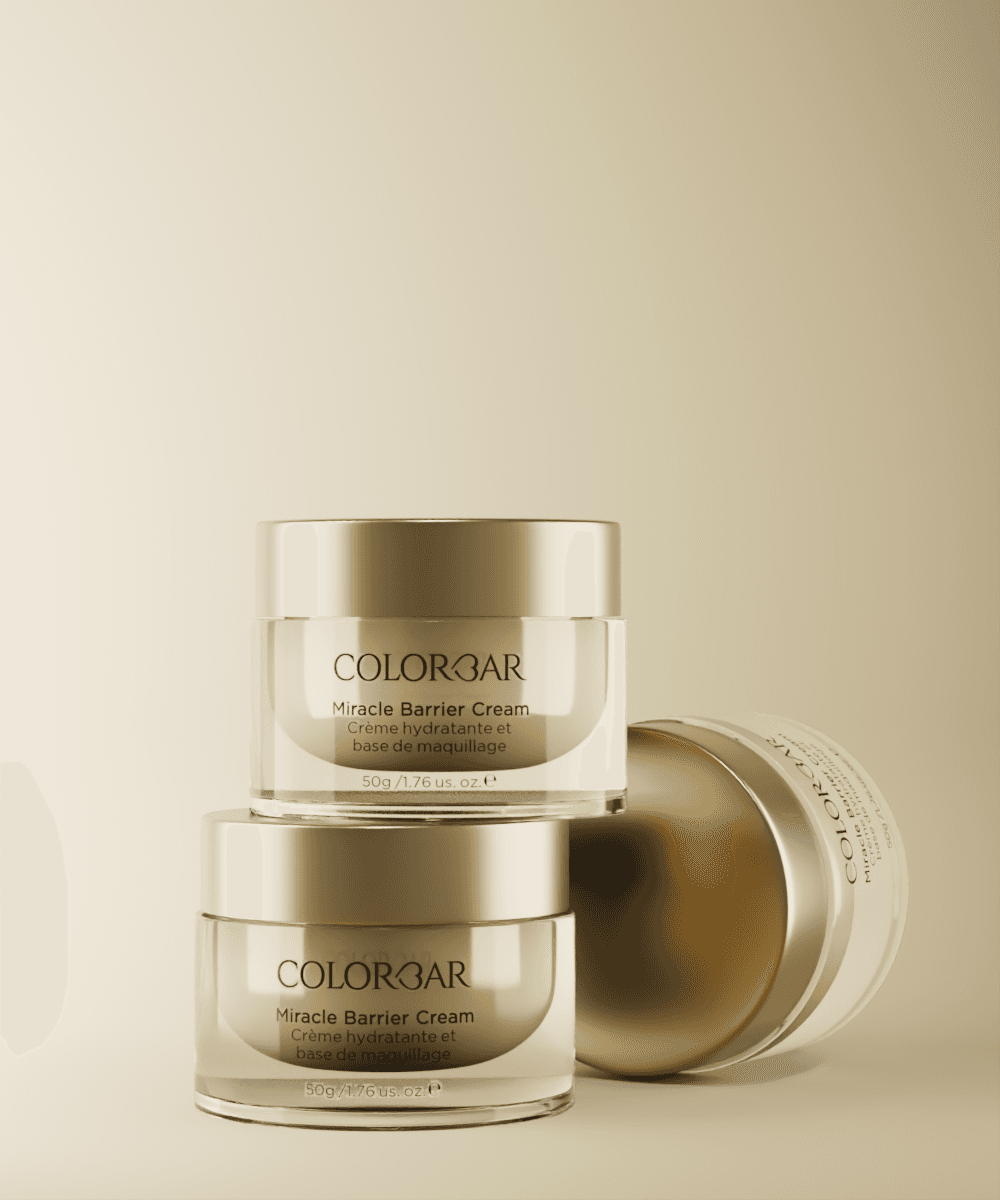
"The Magic Cream of Charlotte and the Miracle Cream of Colorbar are the same. The eye shadow palette of Charlotte and of Colorbar are the same formulation. Colours may differ, including to account for Indian skin. But the formulation is the same." He says this not as a provocation but as industry structure. He wanted a benchmark that would hold up internationally, and he found one. If you open a Charlotte Tilbury palette beside a Colorbar palette, they behave identically.
From this came the organising logic for the brand's positioning: manufacture at the same level as the European prestige tier, price at a fraction of what those brands charge, and let the product make the case. He puts it simply, "I'm not one for made in India. I'm one for made by India."
Lessons From the Modi Playbook
Samir Modi comes from one of India's most prominent business families. His grandfather, Rai Bahadur Gujarmal Modi, founded what became the Modi Group, a vast industrial conglomerate that at its height spanned textiles, electronics, sugar production, aluminium and financial services. His father, Krishan Kumar Modi, built K.K. Modi Group into a diversified enterprise whose holdings included Godfrey Phillips India, one of the country's largest tobacco companies listed on both the Bombay and National Stock Exchanges.
His grandfather's operating philosophy stayed with him: "Either you die for the best or you make the best. There should be no compromise." Mr. Modi absorbed the principle and found his own application of it. When he returned to India after two years working with Philip Morris in the United States, he was handed sick companies to revive. He had spent those American years moving through tobacco manufacturing, then doing what he calls the "Marlboro index" for the Philip Morris chairman, a benchmarking exercise tracking brand health across markets. His VP would cut advertisements from newspapers, attach them to paper with a Post-it note, and send him to Chicago on the nine o'clock flight to get them executed and return for work the next morning. He would land at midnight, work until six, catch the return flight, and be at his desk by nine.
His father ran a particular kind of dialogue with him. "Anything I would say, he would say it's not good. I said, what is the problem? He said: my job is to put holes in your theory. Your job is to fill those holes." When he opened Colorbar's first standalone store at Select City Walk in Delhi, his father called him. "I've got a son who went and opened a store in Select City. All the established players are there. The rent is high. Have you lost your mind?"
He opened it anyway. "Suddenly we started looking different in people's eyes."
The discipline from those Friday morning reckonings and from his father's interrogations was not merely resilience. It trained him to build conviction by pressure-testing it rather than by seeking validation.
The Man Who Wears His Own Lipstick
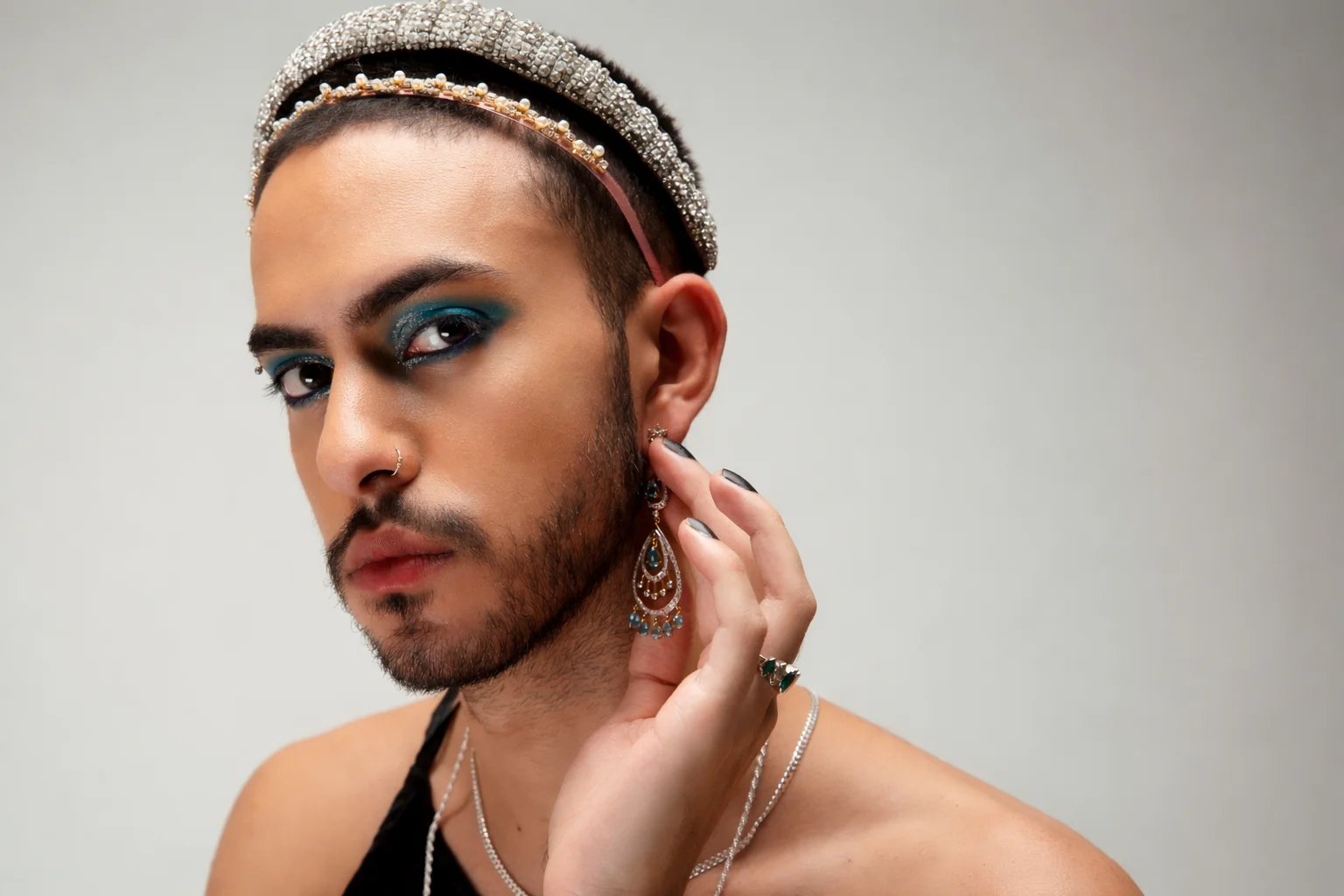
At Cosmoprof, the global beauty industry trade fair held annually in Bologna, Samir Modi wears his own lipstick for the full duration of the show. He wore a red Colorbar lip colour to a Cosmobloggers award. His children used to be embarrassed. "Dad, you're in a magazine wearing this," they would tell him. He responds, the way Indian fathers usually do, "If that pays for the bread you enjoy, and if I don't do it, who will?"
The reasoning is product-led and entirely his own. "How do you say this product works unless you don't try it? I try every single product of mine on myself before I can even say yes, I like it." This is not a gimmick or a campaign. He has been doing it publicly for twenty years, in a social context where Indian masculinity carries considerable weight around these questions, and he seems, if anything, mildly impatient that anyone finds it remarkable.
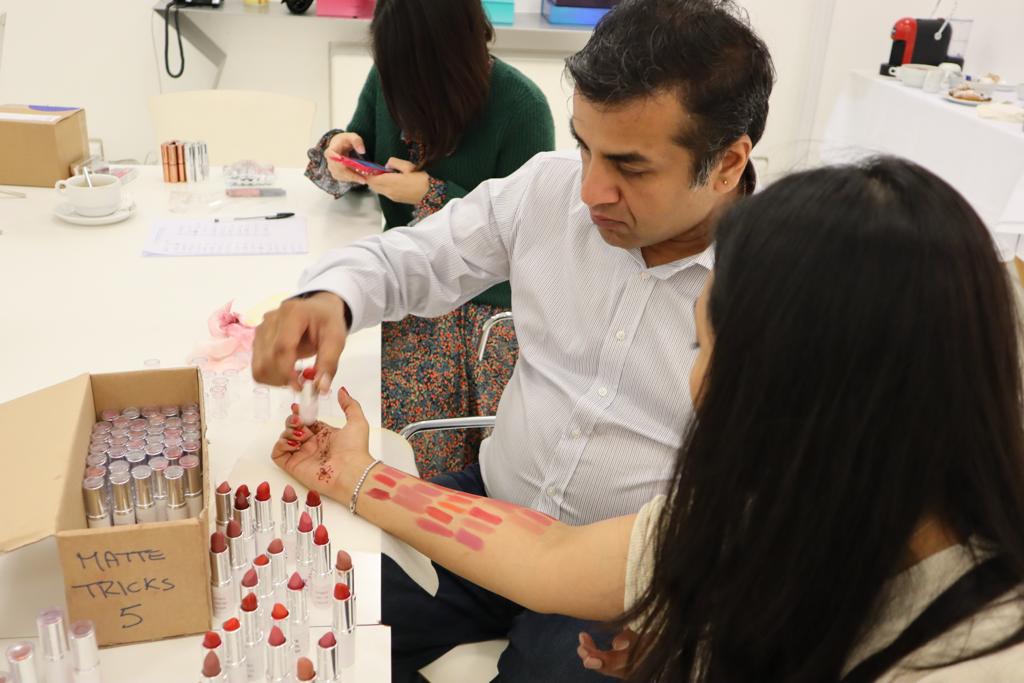
The brand's recent campaign positioning, built around what Mr. Modi calls "Made for Magic," extends the same premise to a broader audience. "Every individual should have the right to their own form of expression. There is no same face, no same eyes, no same lips, no ideal combination. Everybody should take pride and look in the mirror." The campaign logic and the founder's personal practice arrived at the same destination from different directions.
His frustration with the way beauty marketing has traditionally operated in India is evident. “Our industry has long relied on celebrity culture, but how many of us can truly relate to that? Beauty should feel attainable and authentic,” he says. Guided by this belief, Colorbar has moved away from celebrity-led campaigns and paid endorsements, choosing instead to celebrate real consumers. “If anyone should represent our brand, it should be the people who use and love our products every day. Authenticity matters most.
The brand is now building what Mr. Modi describes as real social media: direct comparisons between Colorbar and international luxury brands, tested by actual users and working makeup artists who apply both products and let the consumer decide.
The Anti-Upsell Strategy
A significant proportion of Mr. Modi's professional travel is spent at beauty counters and other brands counters. What he observes consistently at international prestige concessions is the pressure model: buy the foundation, the primer, the setting spray. "You come home with a full bag of products you never use."
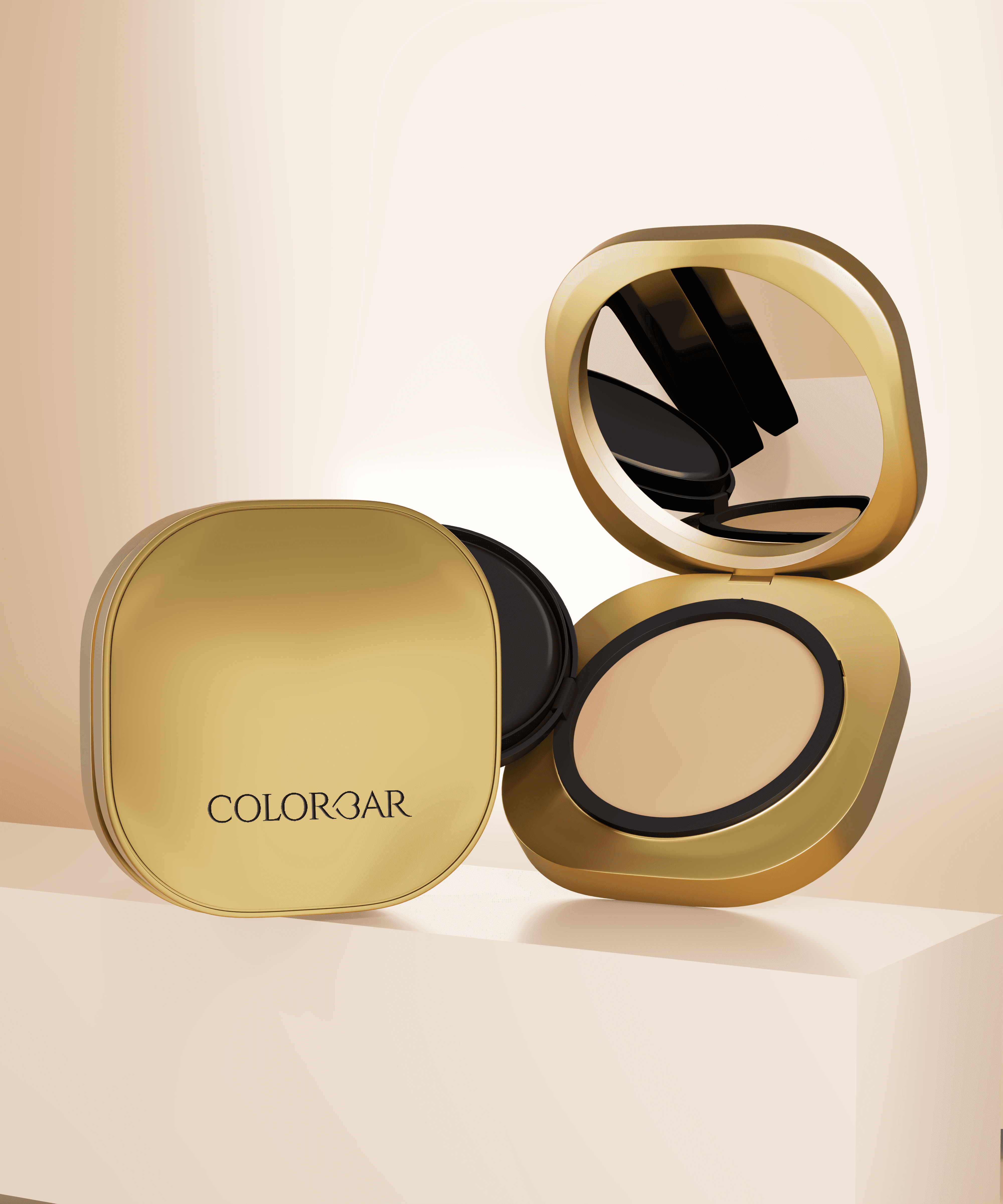
The Colorbar counter was built as a deliberate departure from that. His instruction to beauty advisors is to ask what the consumer uses and recommend accordingly. A customer who receives a full makeover and leaves without buying anything represents a successful interaction.
When Colorbar entered retail in the mid-2000s, the dedicated beauty advisor model, a trained staff member managing a brand's counter, was rare in India. "We went to 100 percent beauty advisor retail at a time when there were not that many brands opening stores with beauty advisors." It was expensive and counterintuitive at a moment when the brand was still fighting for recognition. It became the foundation of the customer relationship.
"In coming future, the stores will integrate AI. After a makeover session, customers receive a personalised tutorial video sent to their own WhatsApp, kept as a permanent reference."
"The mind doesn't understand animation. The mind only understands emotion." Ask what the consumer uses, recommend according to that, and leave the upselling for someone else. The training is built around this premise. The measure of a good interaction is not the size of the basket at checkout. It is what the customer feels when they walk out.
In a country where consumer protection law has historically provided limited recourse for cosmetics buyers, the guarantee is integral. "Consumer trust is very important."
He was the first Indian cosmetics brand to print full ingredient disclosure on packaging before disclosure was legally required. "It's not a question of law. It's a question of being transparent."
The Reckoning of D2C Beauty
India's beauty and personal care market was valued at approximately $28 to $31 billion in 2025. According to a Redseer Strategy Consultants report published in early 2026, it is on a path to $40 billion by 2030, at which point it would rank as the world's fourth-largest BPC market. The report projects Gen Z and Gen Alpha accounting for around half of total BPC spending by that year, with ingredient transparency and product quality among their primary purchase criteria.
The post-COVID years produced a flood of new entrants operating on direct-to-consumer models. Venture capital moved into startups that competed on top-line growth, heavy discounting, and social media volume. Sugar Cosmetics, once valued at around $500 million, has faced sustained questions about profitability. MyGlam was absorbed into the Good Glamm Group in 2021. A wider cohort of influencer-backed brands that raised aggressively in 2021 and 2022 has since contracted.
Mr. Modi watches none of this closely, by design. He does not have Indian brands on his desk. His benchmarks are Charlotte Tilbury, Mac, Pat McGrath, and Fenty. "If I don't know what the competition is doing, I can't follow them, which allows me to focus on what we are doing." The Colorbar model is old school by his own description, where top line is secondary and bottom line is primary, a philosophy that made him a relative outlier during the funding-driven boom and looks prescient now.
He criticised the funding-driven wave, and said, "Top line is secondary. Bottom line is primary. The bottom line is money should come in proportion to your turnover." The category fragmentation that D2C enabled, brands sourcing minimum quantities from Chinese manufacturers without full ingredient testing, FDA approval, or consumer recourse mechanisms, concerns him on safety grounds as much as commercial ones.
The nail polish formulation is the case he returns to. Colorbar's is 21-free, excluding toluene and dibutyl phthalate among others. These are the compounds that make conventional nail polish dry faster, and they are classified as harmful with regular exposure. The Colorbar formulation takes longer to dry. "The faster it dries, the more likely it has harmful ingredients. That is what makes it dry faster." The brand carries FDA approvals across India, Russia, the Middle East, the US, the EU, Australia, and Japan.
"Read the label. Read the ingredients on the box. Don't buy blindly."
Why India Still Has No Global Beauty Brand
South Korea, a country of roughly 52 million people, is now the world's second-largest cosmetics exporter after France, according to Korea Customs Service data. K-beauty exports have pivoted from China to the United States, where they reached nearly $1.8 billion in recent years, doubling from 2022. Laneige, Sulwhasoo, and COSRX hold shelf space at Sephora beside European prestige brands. Amorepacific, the conglomerate behind several of those labels, reported 80 percent sales growth in North America in the first quarter of 2023 alone.
A 2026 analysis by the Georgetown Journal of International Affairs described K-beauty's global success as built on what it calls a "Trinity" model: shared manufacturing and logistics infrastructure that let small digitally-native brands scale internationally without owning factories. The South Korean government institutionalised this through K-beauty export hubs backed by the Ministry of SMEs and Startups. The cultural wave and the industrial architecture moved together.
India has no equivalent to this. The bridal palette alone, the reds and fuchsias and magentas that define the wedding economy, which KPMG valued at over $50 billion annually, represents a relationship with pigment that has no Western parallel. Everyday professional dress in India carries colour in ways that would read as statement dressing in London or New York. "You come to work in black, people ask what's wrong." Wedding white is a mourning colour. Fuchsia and orange are everyday.
Mr. Modi also points to the absence of TikTok as a missed growth engine for Indian beauty brands. India removed the platform from its market in June 2020 as part of broader restrictions on Chinese applications. By that point TikTok had become the most powerful organic beauty discovery tool on earth. Charlotte Tilbury's viral growth in the American market, Maybelline's Sky High mascara moment, e.l.f. Cosmetics' emergence as a Gen Z brand: all of these were TikTok-driven. A WWD analysis from 2025 found that in India's post-ban landscape, 58 percent of beauty brand media impact flows through Instagram and 26 percent through YouTube, against a global split where TikTok still commands 34 percent in markets where it operates. Indian brands were excluded from the acceleration window.
Ayurveda has partially crossed the gap. Kama Ayurveda and Forest Essentials have built international retail presence, and the global clean beauty movement has given Indian botanical ingredients more visibility than at any prior point. But neither occupies a counter beside Charlotte Tilbury with equivalent cultural standing. India's colour culture, the wedding industry alone estimated at over $50 billion annually, the daily visual register of fuchsia and magenta and orange in professional dress, has produced no beauty brand that the world identifies by name.
"White is our mourning colour," Mr. Modi says. "And yet we are not known for colour globally. Any country that should have been up there in the beauty industry should have been India."
He intends Colorbar to be the first answer to that. In Russia, where the brand has been present since its first international expansion, it outsells Mac, Bobbi Brown, and Charlotte Tilbury. In the American market, it prices at parity with Mac. "It's not just a far dream. I'm very confident in what we're bringing to the table, in terms of our product, our experiences, the customisation we've built in-house."
The Sustainability Bet
The beauty industry generates an estimated 120 billion units of packaging annually, the majority of which ends up in landfill. The refillable model, where a consumer purchases a casing once and replaces only the product, is one of the structural interventions that addresses the waste at a consumer level. Mr. Modi has had suppliers refuse to sell him certain product formats because the supplier knew the formula would not meet Colorbar's clean criteria. He tells this as a story about a glow stick: he was persistent, the supplier was not. "After ten minutes of me rambling, he said, Samir, you won't buy it because you are clean. You should have known in the first place."
The suppliers know Colorbar only buys clean. They know it buys the best available formulation, not the cheapest. "Whatever we do sell, we will stand behind. We need to be true to what we do."
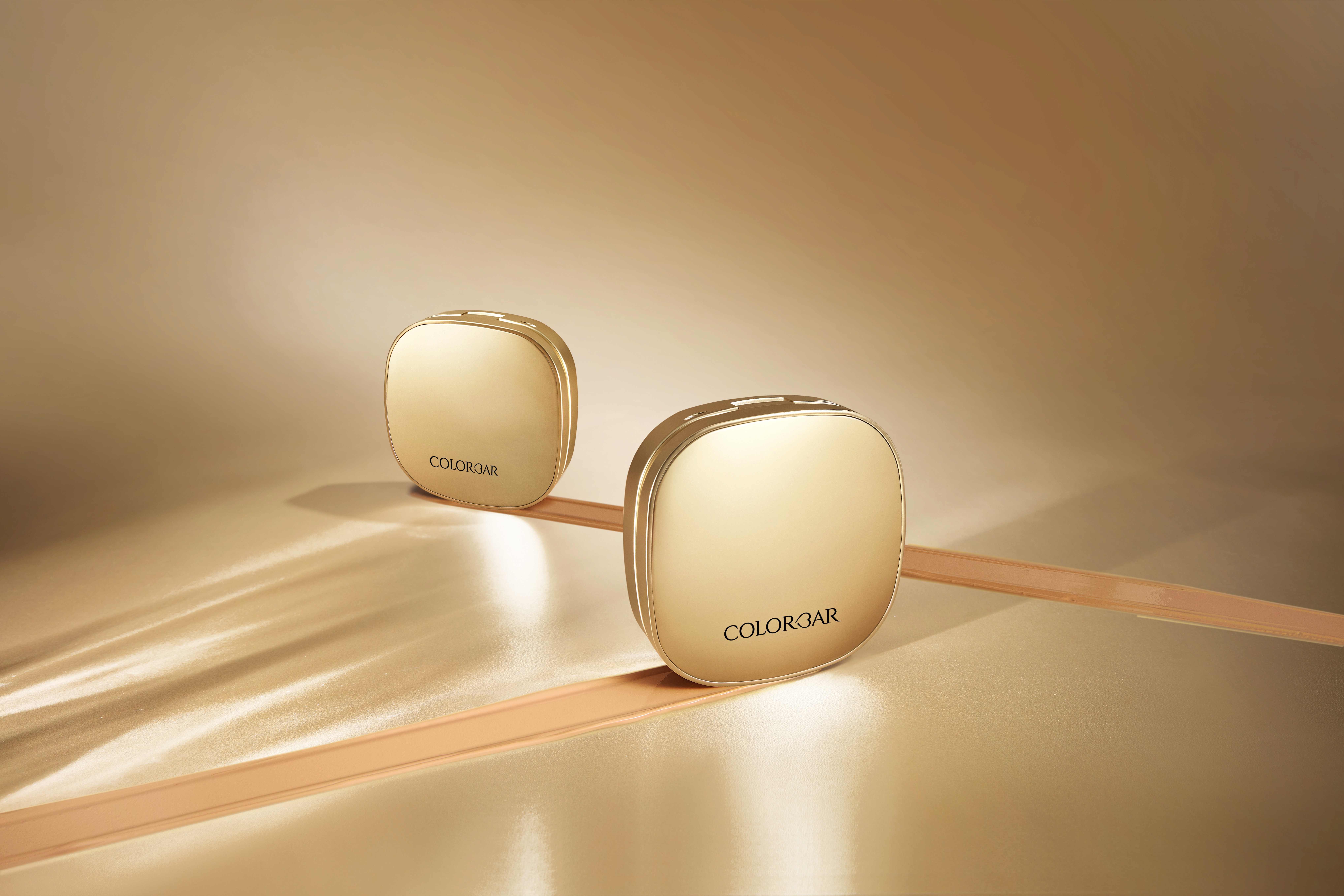
Colorbar is converting its entire range to refillables before 2029. The compacts have already converted. The lipstick range is in process. Packaging is shifting from plastic to aluminium. He believes Colorbar will be among the first brands in India, and among a small group globally, to implement refillables at this scale.
Colorbar's Next Chapter
Samir Modi became acting CEO of Colorbar on 1st May 2026, taking operational control alongside the founder role at a moment when, as he describes it, the brand is in active reinvention. He has been working on an internal playbook that grew to 687 pages before he cut it to a hundred. He has a 3D printer for prototyping packaging. He is making artisanal sauces at home, which he raises as illustration of how he keeps creative instincts from calcifying in a single category.
Colorbar launches between 1400 new SKUs annually. The foundation range covers 23 shades against a category standard of six to eight. A line for teenagers is in development. A high-end fragrance range is forthcoming, made by the same perfumer behind Byredo. Banaras Bhang, a separate lifestyle brand with approximately 75 products in the portfolio, will open its first physical store in Sri Lanka, designed around the visual language of the Orient Express.
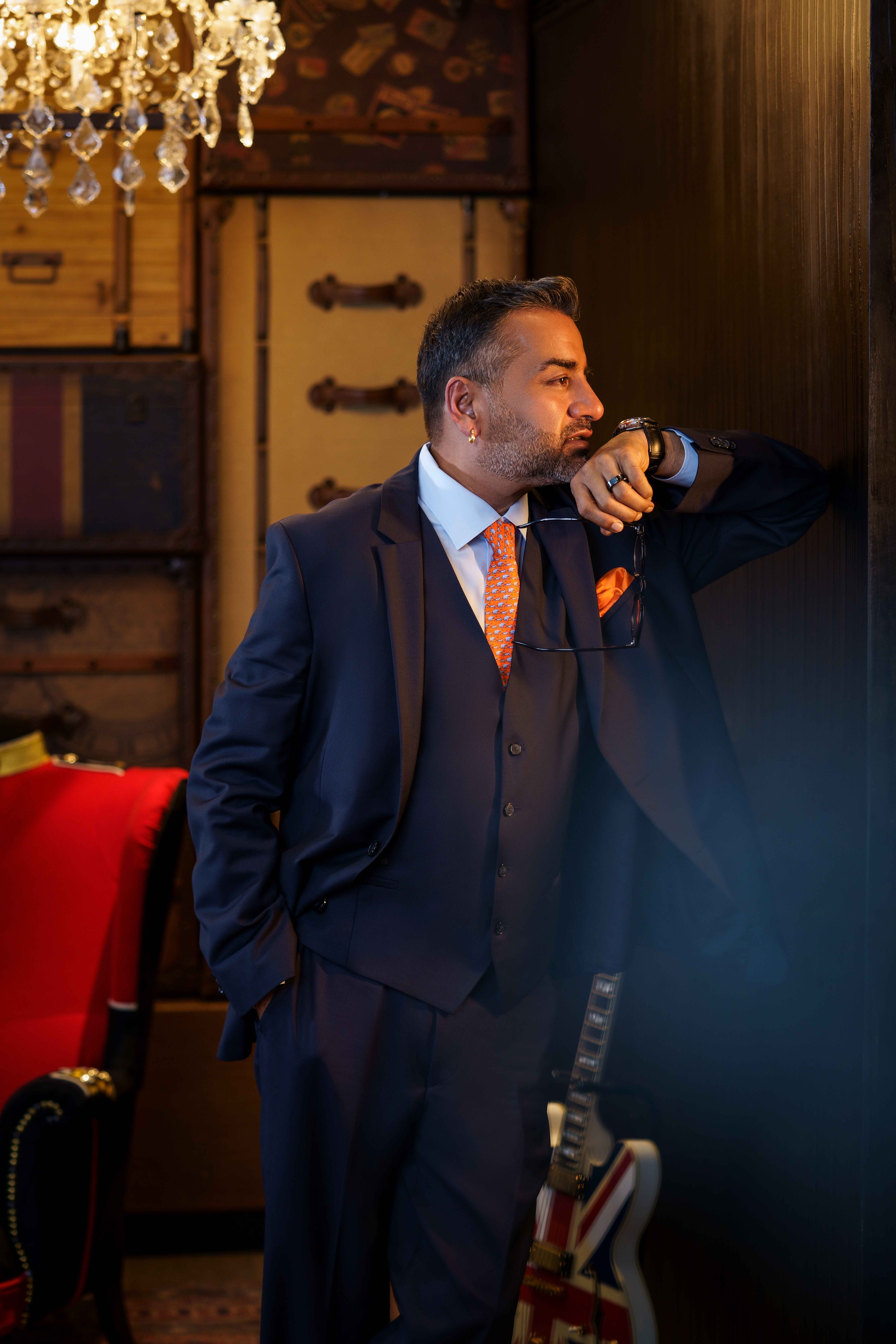
The Fortune 500 has been the stated long-term benchmark since he started working in 1992. He says this without drama, and without any sense that it has become a relic of a younger ambition. "That's always been the long-term mission. Hopefully in the next five years we should get there."
His description of a brand, the phrase he returns to in every context where it comes up, is consistent: a living thing that requires nurturing and must be made strong enough to outlast the person who built it. "I am a keeper of a brand, not an owner of a brand." He has been rebuilding himself, he says, every decade for thirty-five years of working. The reinvention is the method.
Truly Mine
Towards the end of the conversation, FPG founder and editor-in-chief Chaiti Narula mentions a discontinued Colorbar shade she has spent years trying to replace. ‘Truly Mine’, has been out of stock since she last got her hands on it. And nothing has come close for her since. Mr. Modi picks up his phone. "If you don't have it, I'll get it made for you."
TO BE CONTINUED, FOR SUBSCRIBERS ONLY.
This is where the surface ends and the reporting begins.
The complete piece, the full archive, and access to The French Press Circle. Reporting answerable only to its readers.
Already a subscriber ?
Login
Read these on the house, with our compliments.
A selection from the current issue, open to all readers. Read them in full. The rest is one decision away.


Before the interview begins, Samir Modi is already talking about landfills.
About the billions of cosmetics casings dumped into global waste streams every year. About Colorbar's plan to convert its entire product range to refillables before 2029. He is meticulous and agitated in the way of someone who has already turned an annoyance into a product decision: the compacts have converted, the lipstick range is in process, the packaging is shifting from plastic to aluminium. By the time the formal questions arrive, he has given you more about how he thinks than most founders offer in an hour.
It says something about the man who built one of India's most recognisable beauty brands that he spends his pre-interview time on packaging waste. Colorbar launched with 30,000 lipsticks and nail polishes, sold out of a corner pharmacy in Chandigarh. It now manufactures alongside the same Italian contract producers who make Charlotte Tilbury, Bobbi Brown, and Pat McGrath. The distance between those two facts is the story. And Mr. Modi, who has been telling it for twenty years, is still not finished with it.
The Gap Nobody Else Saw
India's beauty market in 2004 had a settled hierarchy. L'Oréal held the aspirational end through its premium range. Lakme, then majority-owned by Hindustan Unilever following its acquisition from the Tata Group in the late 1990s, and Revlon occupied the functional middle. What he identified was a gap that was generational as much as commercial, young women moving from school into college, old enough to want makeup, young enough to have no connection to their mothers' brands. "ELLE18 streetwear was too young, Lakme and Revlon were too old. That was the space we entered."
He launched with products manufactured in India and went shop to shop. Retailers handed him a basket beside the Chinese imports. He came back. His uncle held Revlon's distribution rights in India and met his father every Thursday. And the morning after, the feedback came back home with his father. "For years I got bashed up. Every Friday morning, my uncle would criticise Colorbar and I would get a bashing."
The real turning point arrived at home. Mr. Modi noticed his own children were reluctant to use the products he was selling. If Colorbar was going to compete internationally, he realised it would need to be built differently. That conclusion took him to Italy. The trip was far from glamorous. Most manufacturers had little interest in working with a young Indian beauty brand without scale or proven demand. Eventually, a door opened at Ancorotti Cosmetics.
The Italian Pivot
Nobody in Italy wanted to deal with him. The cosmetics contract manufacturing industry operates on minimum order quantities and established relationships, and a new Indian brand with no proof of concept offered neither. The door opened at Ancorotti Cosmetics, a specialist Italian manufacturer in the prestige segment whose clients had included Bobbi Brown. "The Ancorotti family gave me a break," he says. "They were the first ones."
Two other names carry particular weight in how Modi tells this story: Regi Cosmetics and Omnicos, and the people behind them, Vittoria Chiccetti and Domenico. They backed Colorbar before the brand had the numbers to justify being backed. “Colorbar would not have survived without them,” he says, and the plainness of the statement is the point. The Italian manufacturing relationships that the brand now holds at the highest tier of the industry were built on a foundation of people who believed in the product before the product had proven itself.
What he learned inside that system reshaped his understanding of the global prestige beauty industry. Contract manufacturers hold the copyright on formulations. A brand commissions a product from a factory; the formula is the factory's intellectual property, licensed to whoever pays for it. Two brands working with the same manufacturer are, at a chemical level, selling the same product. Charlotte Tilbury and Colorbar, sourcing from the same Italian contract producer, are selling the same eyeshadow. The difference is in the markup that European prestige branding commands.
Intercos Group, the Milan-based manufacturer founded in 1972, is the world leader in outsourced colour cosmetics, holding a market share of over eleven percent in that category according to its own filings. Its client list includes Estée Lauder and Dolce & Gabbana. In 2025, the group posted net sales of €1.05 billion, with colour cosmetics accounting for 62.6 percent of revenue across 16 plants and 11 research centres. Mr. Modi says Colorbar is the only Indian brand in its portfolio. He adds that Colorbar works with eight of the world's leading cosmetic manufacturers, giving the brand access to global innovation and best-in class product development capabilities.
"The Magic Cream of Charlotte and the Miracle Cream of Colorbar are the same. The eye shadow palette of Charlotte and of Colorbar are the same formulation. Colours may differ, including to account for Indian skin. But the formulation is the same." He says this not as a provocation but as industry structure. He wanted a benchmark that would hold up internationally, and he found one. If you open a Charlotte Tilbury palette beside a Colorbar palette, they behave identically.
From this came the organising logic for the brand's positioning: manufacture at the same level as the European prestige tier, price at a fraction of what those brands charge, and let the product make the case. He puts it simply, "I'm not one for made in India. I'm one for made by India."
Lessons From the Modi Playbook
Samir Modi comes from one of India's most prominent business families. His grandfather, Rai Bahadur Gujarmal Modi, founded what became the Modi Group, a vast industrial conglomerate that at its height spanned textiles, electronics, sugar production, aluminium and financial services. His father, Krishan Kumar Modi, built K.K. Modi Group into a diversified enterprise whose holdings included Godfrey Phillips India, one of the country's largest tobacco companies listed on both the Bombay and National Stock Exchanges.
His grandfather's operating philosophy stayed with him: "Either you die for the best or you make the best. There should be no compromise." Mr. Modi absorbed the principle and found his own application of it. When he returned to India after two years working with Philip Morris in the United States, he was handed sick companies to revive. He had spent those American years moving through tobacco manufacturing, then doing what he calls the "Marlboro index" for the Philip Morris chairman, a benchmarking exercise tracking brand health across markets. His VP would cut advertisements from newspapers, attach them to paper with a Post-it note, and send him to Chicago on the nine o'clock flight to get them executed and return for work the next morning. He would land at midnight, work until six, catch the return flight, and be at his desk by nine.
His father ran a particular kind of dialogue with him. "Anything I would say, he would say it's not good. I said, what is the problem? He said: my job is to put holes in your theory. Your job is to fill those holes." When he opened Colorbar's first standalone store at Select City Walk in Delhi, his father called him. "I've got a son who went and opened a store in Select City. All the established players are there. The rent is high. Have you lost your mind?"
He opened it anyway. "Suddenly we started looking different in people's eyes."
The discipline from those Friday morning reckonings and from his father's interrogations was not merely resilience. It trained him to build conviction by pressure-testing it rather than by seeking validation.
The Man Who Wears His Own Lipstick
At Cosmoprof, the global beauty industry trade fair held annually in Bologna, Samir Modi wears his own lipstick for the full duration of the show. He wore a red Colorbar lip colour to a Cosmobloggers award. His children used to be embarrassed. "Dad, you're in a magazine wearing this," they would tell him. He responds, the way Indian fathers usually do, "If that pays for the bread you enjoy, and if I don't do it, who will?"
The reasoning is product-led and entirely his own. "How do you say this product works unless you don't try it? I try every single product of mine on myself before I can even say yes, I like it." This is not a gimmick or a campaign. He has been doing it publicly for twenty years, in a social context where Indian masculinity carries considerable weight around these questions, and he seems, if anything, mildly impatient that anyone finds it remarkable.
The brand's recent campaign positioning, built around what Mr. Modi calls "Made for Magic," extends the same premise to a broader audience. "Every individual should have the right to their own form of expression. There is no same face, no same eyes, no same lips, no ideal combination. Everybody should take pride and look in the mirror." The campaign logic and the founder's personal practice arrived at the same destination from different directions.
His frustration with the way beauty marketing has traditionally operated in India is evident. “Our industry has long relied on celebrity culture, but how many of us can truly relate to that? Beauty should feel attainable and authentic,” he says. Guided by this belief, Colorbar has moved away from celebrity-led campaigns and paid endorsements, choosing instead to celebrate real consumers. “If anyone should represent our brand, it should be the people who use and love our products every day. Authenticity matters most.
The brand is now building what Mr. Modi describes as real social media: direct comparisons between Colorbar and international luxury brands, tested by actual users and working makeup artists who apply both products and let the consumer decide.
The Anti-Upsell Strategy
A significant proportion of Mr. Modi's professional travel is spent at beauty counters and other brands counters. What he observes consistently at international prestige concessions is the pressure model: buy the foundation, the primer, the setting spray. "You come home with a full bag of products you never use."
The Colorbar counter was built as a deliberate departure from that. His instruction to beauty advisors is to ask what the consumer uses and recommend accordingly. A customer who receives a full makeover and leaves without buying anything represents a successful interaction.
When Colorbar entered retail in the mid-2000s, the dedicated beauty advisor model, a trained staff member managing a brand's counter, was rare in India. "We went to 100 percent beauty advisor retail at a time when there were not that many brands opening stores with beauty advisors." It was expensive and counterintuitive at a moment when the brand was still fighting for recognition. It became the foundation of the customer relationship.
"In coming future, the stores will integrate AI. After a makeover session, customers receive a personalised tutorial video sent to their own WhatsApp, kept as a permanent reference."
"The mind doesn't understand animation. The mind only understands emotion." Ask what the consumer uses, recommend according to that, and leave the upselling for someone else. The training is built around this premise. The measure of a good interaction is not the size of the basket at checkout. It is what the customer feels when they walk out.
In a country where consumer protection law has historically provided limited recourse for cosmetics buyers, the guarantee is integral. "Consumer trust is very important."
He was the first Indian cosmetics brand to print full ingredient disclosure on packaging before disclosure was legally required. "It's not a question of law. It's a question of being transparent."
The Reckoning of D2C Beauty
India's beauty and personal care market was valued at approximately $28 to $31 billion in 2025. According to a Redseer Strategy Consultants report published in early 2026, it is on a path to $40 billion by 2030, at which point it would rank as the world's fourth-largest BPC market. The report projects Gen Z and Gen Alpha accounting for around half of total BPC spending by that year, with ingredient transparency and product quality among their primary purchase criteria.
The post-COVID years produced a flood of new entrants operating on direct-to-consumer models. Venture capital moved into startups that competed on top-line growth, heavy discounting, and social media volume. Sugar Cosmetics, once valued at around $500 million, has faced sustained questions about profitability. MyGlam was absorbed into the Good Glamm Group in 2021. A wider cohort of influencer-backed brands that raised aggressively in 2021 and 2022 has since contracted.
Mr. Modi watches none of this closely, by design. He does not have Indian brands on his desk. His benchmarks are Charlotte Tilbury, Mac, Pat McGrath, and Fenty. "If I don't know what the competition is doing, I can't follow them, which allows me to focus on what we are doing." The Colorbar model is old school by his own description, where top line is secondary and bottom line is primary, a philosophy that made him a relative outlier during the funding-driven boom and looks prescient now.
He criticised the funding-driven wave, and said, "Top line is secondary. Bottom line is primary. The bottom line is money should come in proportion to your turnover." The category fragmentation that D2C enabled, brands sourcing minimum quantities from Chinese manufacturers without full ingredient testing, FDA approval, or consumer recourse mechanisms, concerns him on safety grounds as much as commercial ones.
The nail polish formulation is the case he returns to. Colorbar's is 21-free, excluding toluene and dibutyl phthalate among others. These are the compounds that make conventional nail polish dry faster, and they are classified as harmful with regular exposure. The Colorbar formulation takes longer to dry. "The faster it dries, the more likely it has harmful ingredients. That is what makes it dry faster." The brand carries FDA approvals across India, Russia, the Middle East, the US, the EU, Australia, and Japan.
"Read the label. Read the ingredients on the box. Don't buy blindly."
Why India Still Has No Global Beauty Brand
South Korea, a country of roughly 52 million people, is now the world's second-largest cosmetics exporter after France, according to Korea Customs Service data. K-beauty exports have pivoted from China to the United States, where they reached nearly $1.8 billion in recent years, doubling from 2022. Laneige, Sulwhasoo, and COSRX hold shelf space at Sephora beside European prestige brands. Amorepacific, the conglomerate behind several of those labels, reported 80 percent sales growth in North America in the first quarter of 2023 alone.
A 2026 analysis by the Georgetown Journal of International Affairs described K-beauty's global success as built on what it calls a "Trinity" model: shared manufacturing and logistics infrastructure that let small digitally-native brands scale internationally without owning factories. The South Korean government institutionalised this through K-beauty export hubs backed by the Ministry of SMEs and Startups. The cultural wave and the industrial architecture moved together.
India has no equivalent to this. The bridal palette alone, the reds and fuchsias and magentas that define the wedding economy, which KPMG valued at over $50 billion annually, represents a relationship with pigment that has no Western parallel. Everyday professional dress in India carries colour in ways that would read as statement dressing in London or New York. "You come to work in black, people ask what's wrong." Wedding white is a mourning colour. Fuchsia and orange are everyday.
Mr. Modi also points to the absence of TikTok as a missed growth engine for Indian beauty brands. India removed the platform from its market in June 2020 as part of broader restrictions on Chinese applications. By that point TikTok had become the most powerful organic beauty discovery tool on earth. Charlotte Tilbury's viral growth in the American market, Maybelline's Sky High mascara moment, e.l.f. Cosmetics' emergence as a Gen Z brand: all of these were TikTok-driven. A WWD analysis from 2025 found that in India's post-ban landscape, 58 percent of beauty brand media impact flows through Instagram and 26 percent through YouTube, against a global split where TikTok still commands 34 percent in markets where it operates. Indian brands were excluded from the acceleration window.
Ayurveda has partially crossed the gap. Kama Ayurveda and Forest Essentials have built international retail presence, and the global clean beauty movement has given Indian botanical ingredients more visibility than at any prior point. But neither occupies a counter beside Charlotte Tilbury with equivalent cultural standing. India's colour culture, the wedding industry alone estimated at over $50 billion annually, the daily visual register of fuchsia and magenta and orange in professional dress, has produced no beauty brand that the world identifies by name.
"White is our mourning colour," Mr. Modi says. "And yet we are not known for colour globally. Any country that should have been up there in the beauty industry should have been India."
He intends Colorbar to be the first answer to that. In Russia, where the brand has been present since its first international expansion, it outsells Mac, Bobbi Brown, and Charlotte Tilbury. In the American market, it prices at parity with Mac. "It's not just a far dream. I'm very confident in what we're bringing to the table, in terms of our product, our experiences, the customisation we've built in-house."
The Sustainability Bet
The beauty industry generates an estimated 120 billion units of packaging annually, the majority of which ends up in landfill. The refillable model, where a consumer purchases a casing once and replaces only the product, is one of the structural interventions that addresses the waste at a consumer level. Mr. Modi has had suppliers refuse to sell him certain product formats because the supplier knew the formula would not meet Colorbar's clean criteria. He tells this as a story about a glow stick: he was persistent, the supplier was not. "After ten minutes of me rambling, he said, Samir, you won't buy it because you are clean. You should have known in the first place."
The suppliers know Colorbar only buys clean. They know it buys the best available formulation, not the cheapest. "Whatever we do sell, we will stand behind. We need to be true to what we do."
Colorbar is converting its entire range to refillables before 2029. The compacts have already converted. The lipstick range is in process. Packaging is shifting from plastic to aluminium. He believes Colorbar will be among the first brands in India, and among a small group globally, to implement refillables at this scale.
Colorbar's Next Chapter
Samir Modi became acting CEO of Colorbar on 1st May 2026, taking operational control alongside the founder role at a moment when, as he describes it, the brand is in active reinvention. He has been working on an internal playbook that grew to 687 pages before he cut it to a hundred. He has a 3D printer for prototyping packaging. He is making artisanal sauces at home, which he raises as illustration of how he keeps creative instincts from calcifying in a single category.
Colorbar launches between 1400 new SKUs annually. The foundation range covers 23 shades against a category standard of six to eight. A line for teenagers is in development. A high-end fragrance range is forthcoming, made by the same perfumer behind Byredo. Banaras Bhang, a separate lifestyle brand with approximately 75 products in the portfolio, will open its first physical store in Sri Lanka, designed around the visual language of the Orient Express.
The Fortune 500 has been the stated long-term benchmark since he started working in 1992. He says this without drama, and without any sense that it has become a relic of a younger ambition. "That's always been the long-term mission. Hopefully in the next five years we should get there."
His description of a brand, the phrase he returns to in every context where it comes up, is consistent: a living thing that requires nurturing and must be made strong enough to outlast the person who built it. "I am a keeper of a brand, not an owner of a brand." He has been rebuilding himself, he says, every decade for thirty-five years of working. The reinvention is the method.
Truly Mine
Towards the end of the conversation, FPG founder and editor-in-chief Chaiti Narula mentions a discontinued Colorbar shade she has spent years trying to replace. ‘Truly Mine’, has been out of stock since she last got her hands on it. And nothing has come close for her since. Mr. Modi picks up his phone. "If you don't have it, I'll get it made for you."
TO BE CONTINUED, FOR SUBSCRIBERS ONLY.
This is where the surface ends and the reporting begins.
The complete piece, the full archive, and access to The French Press Circle. Reporting answerable only to its readers.
Already a subscriber ?
Login
Read these on the house, with our compliments.
A selection from the current issue, open to all readers. Read them in full. The rest is one decision away.