The First Decision
The founding decision of péro was about stairs.
Aneeth Arora was freelancing out of a third-floor flat in Siddhartha Extension, Delhi, and clients were arriving winded and irritable, having climbed three floors with no elevator. She rented a ground-floor space in the same residential colony. One tailor, one runner, herself. The year was 2009. She had no clear template for what a commercially operational label looked like, and she says as much: "For a girl not from Delhi, renting a place without knowing anything about how to build a business."
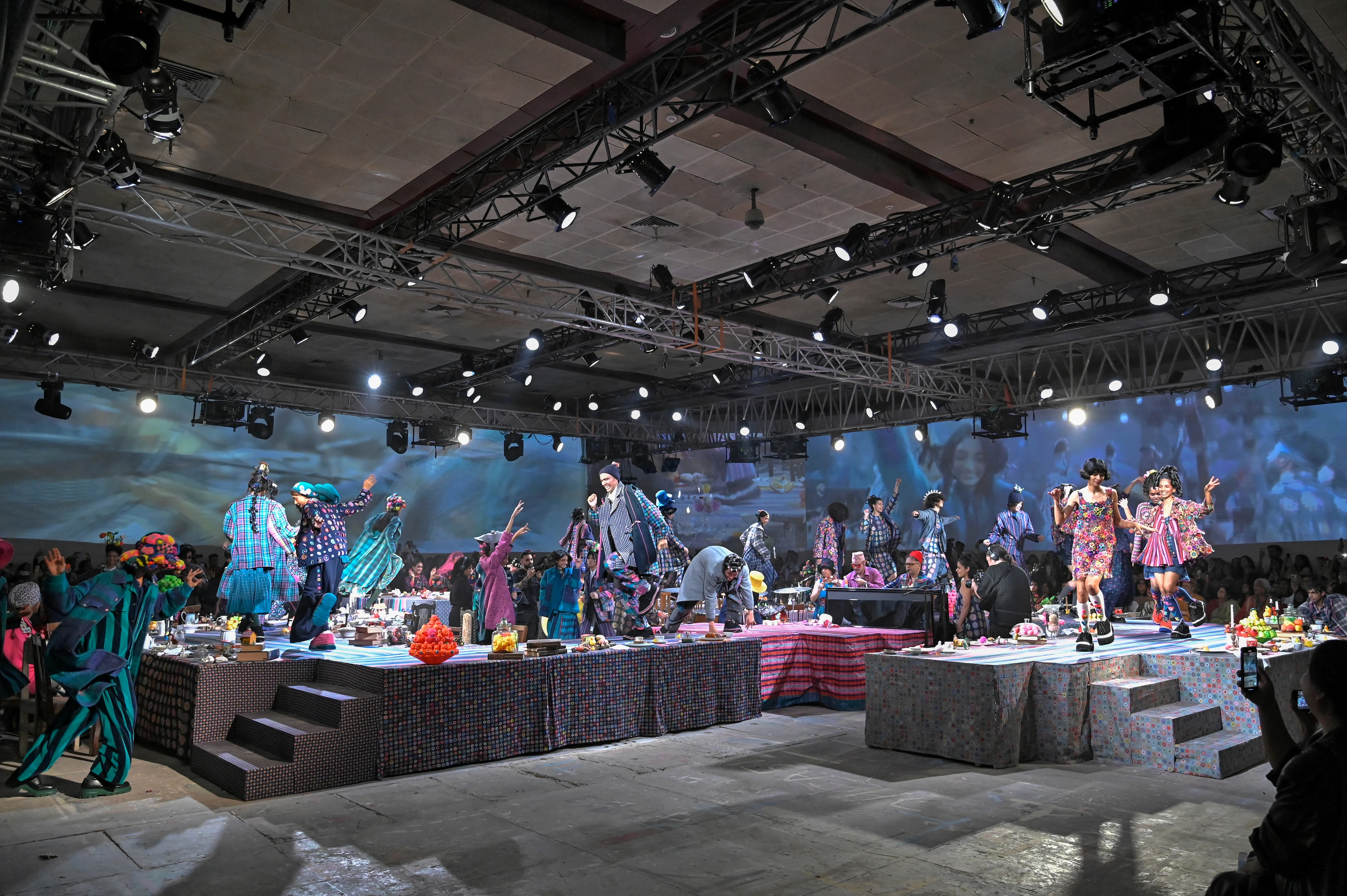
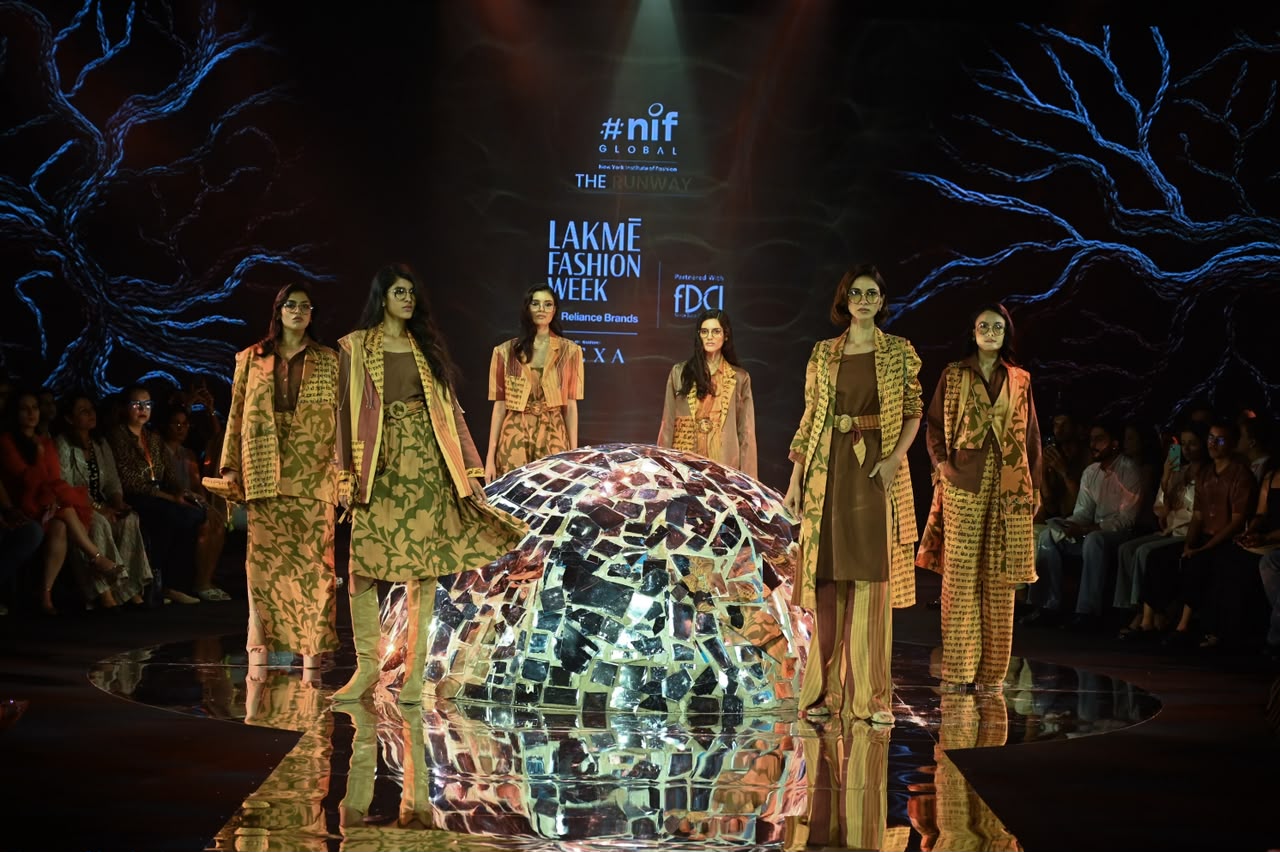
A moment from Cuckoo & Co. , Péro’s Fall winter 2023 collection at Lakmé fashion week x FDCI
The brand did not launch with a manifesto or a runway moment. It accumulated. The confidence to keep going came from early signals: a response at Gennex, elated words from Sabyasachi Mukherjee about the first collection, and an instinct backed by evidence. From that ground-floor flat, Arora has built a label now stocked in over 300 stores across 26 to 30 countries, collected by the Victoria and Albert Museum in London, worn by Arundhati Roy, Gwen Stefani, Mira Nair, Kiran Rao and The Sartorialist, shown consecutively for 34 seasons at Tranoi in Paris, and carrying the honour of the only standing ovation at Lakmé Fashion Week 2026. It has been a long road from Udaipur to creating a million-dollar business.
The Taxonomy Problem
Aneeth Arora is very particular in not wanting to refer to herself as a ‘fashion designer’. She uses the word dressmaker. She also uses ‘textile maker’. Her refusal to identify as one is far from a gimmick. Even as a student at NIFT Mumbai, when asked to draw a croquis or make a fashion illustration, she never related to the manipulation of the human form that the exercise required. At NID Ahmedabad, where she studied textiles after NIFT, she learned that design means solving problems. “If you come to think of it, clothing that we make is not really solving any problem, it's just offering aesthetic choices to people to dress on a given day.”
At péro, any given season starts at least two years in advance, if not more, because they develop their own fabrics. Each season's inspiration can come from various sources: sometimes a colour, sometimes a single character. The process begins with a directive sent to craft clusters across India, an instruction as minimal as a motif or a colour temperature, and what comes back shapes the collection forward. One season, the word was polka dots: Jamdani dots, Ikat dots, brocade dots, each cluster interpreting the same starting point through its own technique. The textiles arrive and collect in a room at the studio, and the team begins mixing. The garment is a consequence of that accumulation. Arora describes it as weaving your own canvas before painting on it: "The end result is never in clear sight. We don't know what is going to be the outcome."
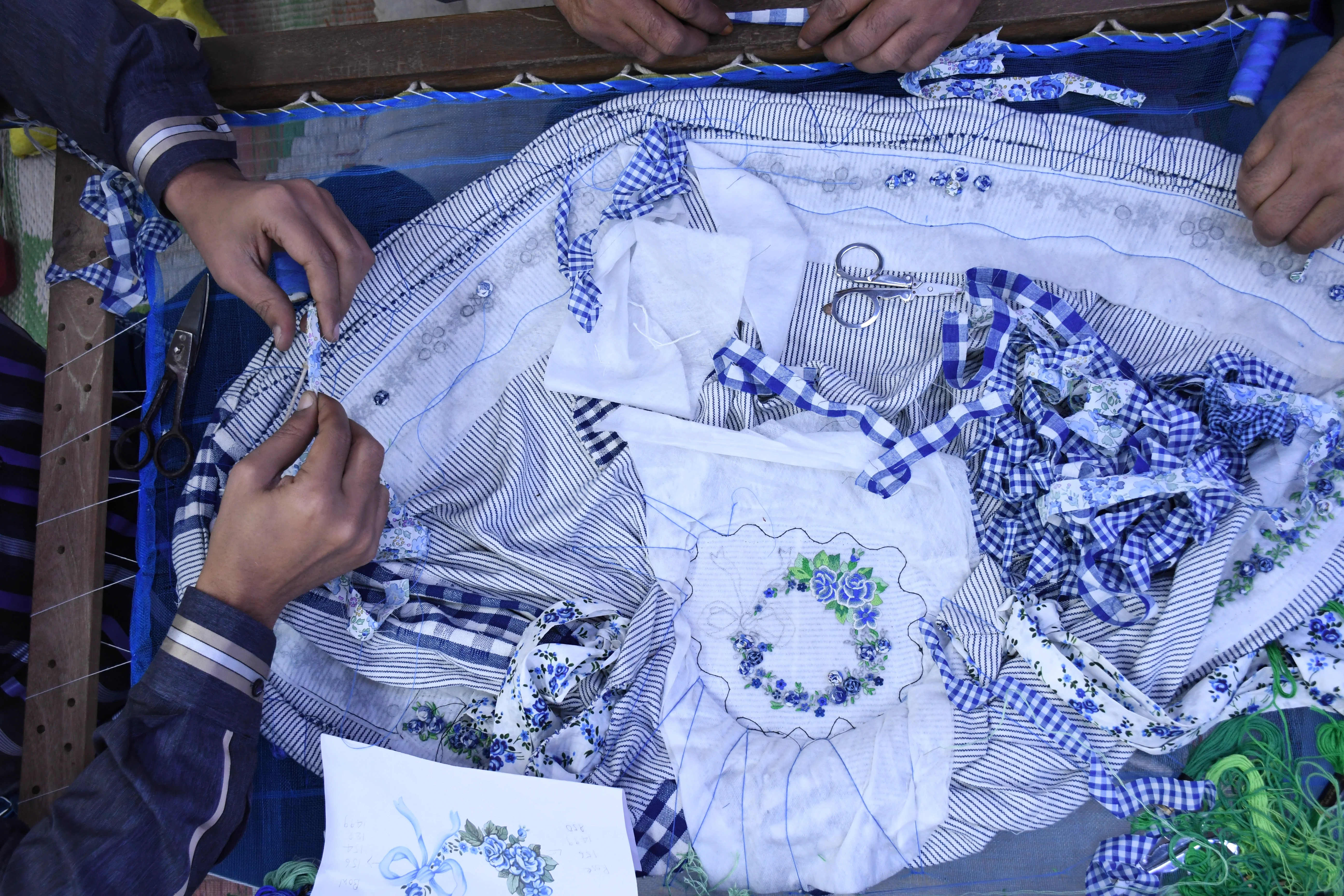
In the making: handcrafted details from the péro studio
Every season, péro develops approximately 50 varied textiles with at least five different regions in India, involving at least 500 weavers across the country. The association continues irrespective of changing fashion trends. Fashion, by its operational logic, depends on the last season becoming irrelevant to sell the next one. The process requires the opposite: continuity, relationship, accumulated material knowledge. These are incompatible with fashion's foundational premise, and the brand has operated for seventeen years thriving in the contradiction.
From Udaipur to NID, and What the Villages Taught Her
Arora grew up in Udaipur, and her earliest memory of fabric is her mother asking her to stitch a button on her father's shirt. She distinctly remembers telling her that this was not what she wanted to do with her life. She studied at NIFT Mumbai, where the graduation collection experience crystallised what she felt was missing: everyone was running to the same store to buy fabric, and she felt she hadn't much understanding of textile itself. That was when she decided it had to begin at the fabric stage.
At NID Ahmedabad, the textile course required students to live in craft communities, learn from artisans in their own contexts, and observe how clothing functioned in places entirely outside the fashion world's reach. What she found there reoriented everything. In tribal clusters in Gujarat and elsewhere, people were dressing with a personal logic and confidence that had nothing to do with global trend cycles. The textile was the base for everything. The garment followed from it as a natural extension of the maker's knowledge and surroundings. "I realised that I found my calling," she said. "Whenever I start a label, it has to be about making our own textiles and then making clothes with it."
Her NID teacher, Romani Jaitley, taught her to mix geometry with plain textures: some floral, some checked, some plain. The idea of mixing, she has said, started there. It is now the most recognisable ethos in a péro collection. Every season, textiles from separate regions are brought together in the studio, and pieces are assembled from that encounter. The roots of India rest in the textile process, where materials pass through the hands of one craftsperson to the other, belonging to different parts of the country, carrying forward the tradition of the handmade.
The Craft Relationship as an Economic Model
India is home to an estimated 6.4 million registered handloom and handicraft artisans, according to government figures as of August 2025, with unofficial estimates placing the number closer to 200 million when informal artisan activity is counted. The textile industry contributes around 2% to India's GDP and approximately 11% of manufacturing GVA, with over 45 million people engaged across the value chain. Women account for 64% of total artisans and 71% of handloom weavers. It has created a sustainable economy of its own in the craft ecosystem, which is a commendable feat in today’s contemporary fashion landscape.
When Arora approached craft clusters in 2009, the artisans were skeptical. They had watched fashion brands arrive, commission work for a season, and disappear. She told them she was not there to do fashion in that sense: "We will not be dependent on six months of changing trends." She promised continuity of association, even when the specific innovation changed. "It always sounded like a collaboration, and it didn't look like, you know, wo humare client hai, humare buyer aage." That distinction, between client and collaborator, has governed every relationship the label has built since.
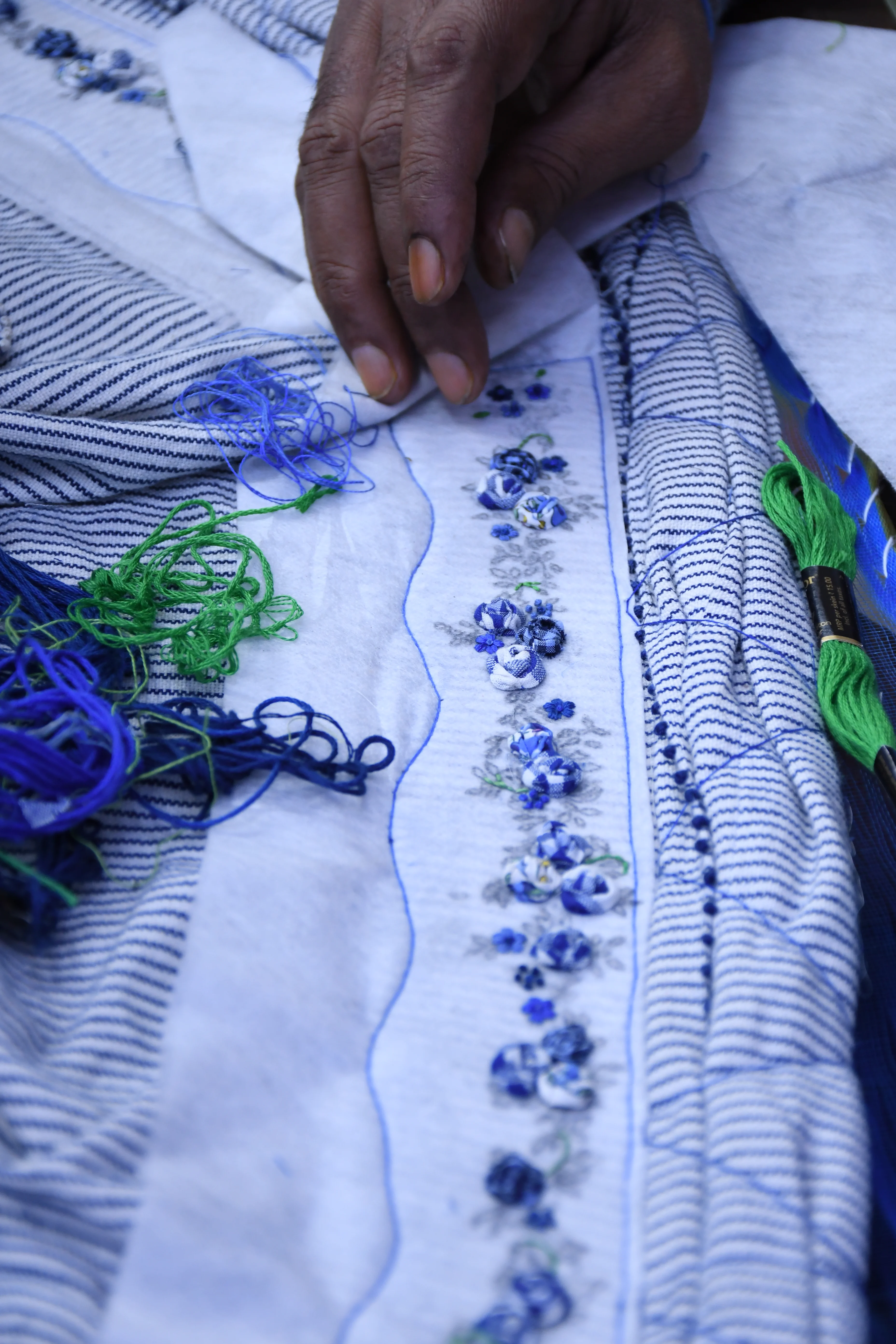
In the making: handcrafted details from the péro studio
The team has grown to approximately 5,000 people, with new craft clusters added each season while older ones continue. péro now engages with over 2,000 weavers. The clusters Arora first worked with are still active partners. The core definition of sustainability for the brand is about creating sustainable livelihoods. The measure she uses for the health of the relationship is not ethical certification or CSR reporting. It is whether the artisans themselves have grown: whether the design intervention has pushed their own skill and self-knowledge forward, whether they have produced something they could not previously have imagined, and whether they know it.
She described sending clusters photographs of their work in shop windows in Japan, images of Gwen Stefani carrying Jamdani. "We are constantly feeding them with this information." The reach of the work is shared and celebrated. Arora's read of where the favour actually runs is direct: "I always felt that more than us, they are doing us a favour by giving into our designs and making things for us. Because all we can do is imagine and sketch it on paper."

In the making: handcrafted details from the péro studio
The Dot. Capsule: A Geography of Collaboration
In 2025, péro released a capsule that made the textile geography of a collection visible in a way the brand had not attempted before. The Dot. capsule began as a tie-dye project, but Arora's team chose to work on woven checks and tartans rather than plain cloth. Silk was woven in South India. Chanderi in Madhya Pradesh. Cotton checks in West Bengal. Silk checks in Banaras. Kashmina and wool checks in Kashmir and Punjab. Those woven textiles traveled to Bhuj in Gujarat, where bandhani artisans the brand has been working with, received them. The brand's textile team marked the dot placements on the tartans in a meticulously engineered design, and the artisans in Bhuj tied and dyed them.
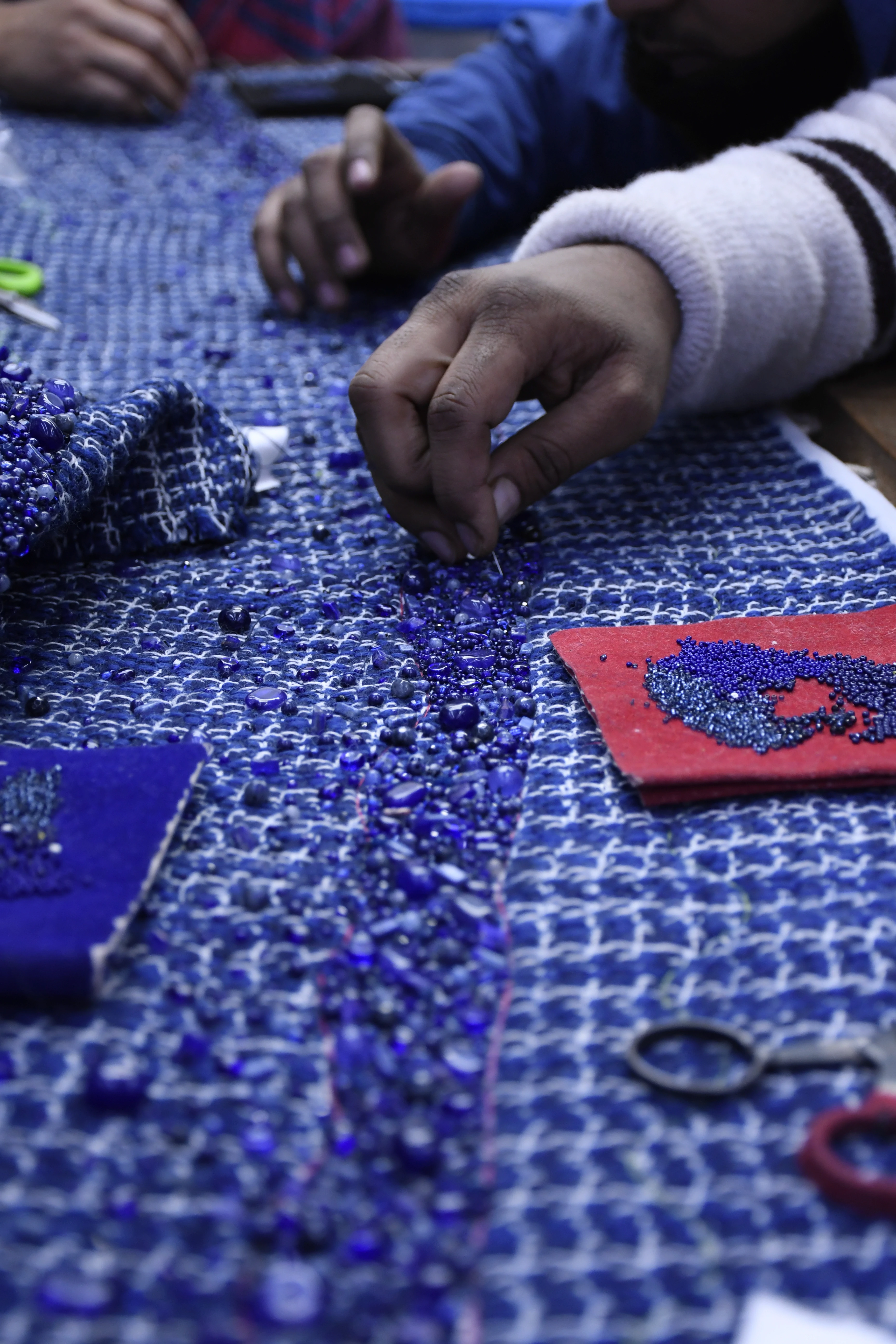
In the making: handcrafted details from the péro studio
"It's for the first time in the history of péro that we have had to ship hand-woven textiles from five different regions to a region where they did their craft on it." That is what Arora called the biggest collaboration of 2025, not Liberty Fabrics, not the Sanrio anniversary. "The biggest collaboration of 2025 was with the artisans." The capsule is now present across hundreds of stockists of the brand worldwide.
The Dot. capsule is also a testament to a major threat that the Indian craft economy has not resolved at scale. India has 318 GI-tagged handicraft products and approximately 455 formally classified craft categories. The categories are named, documented, and in many cases legally protected. The movement of knowledge and material across those categories, the possibility of one craft tradition working on another's output, is seldom put in a framework. The textile team functioned as the infrastructure that made that crossing possible: designing the intervention, coordinating the logistics, managing the relationship between communities whose work does not normally travel toward each other.
The Reversal
The standard frame for Indian craft brands engaging with global markets positions the West as destination: the work travels outward to meet foreign appetite. péro's history runs in a different direction.
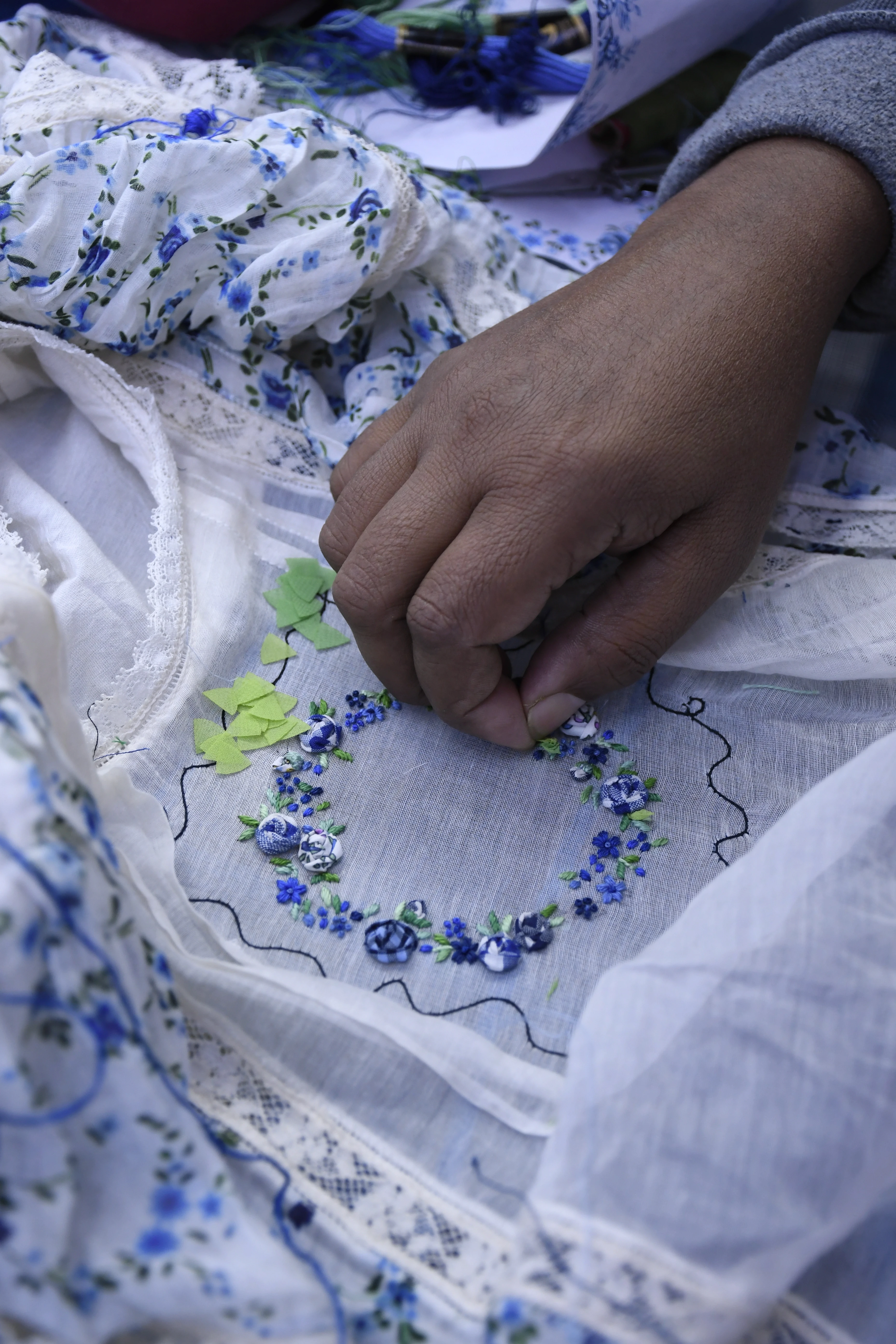
In the making: handcrafted details from the péro studio
They showed at Pitti Uomo, Pitti Bimbo, White in Milan, Tranoi in Paris, Premium and Berlin Fashion Week, Designers and Agents and Coterie in New York, Green Apple in Düsseldorf, Playtime in Tokyo, and Alchemy in London. The international platform came before domestic recognition. Arora describes the early Indian reception of the brand with a specific phrase, ‘Ghar ki murgi daal barabar’, which means that things or people we already possess or have easy access to are often undervalued or taken for granted. For Indian consumers, a refined Ajrak still looked like craft-mela textile. They were not registering that péro's intervention had happened at the yarn stage, that the garment's softness against the skin was the result of months of material research. "The West understood it first," she said. "Our journey has been the other way around."
By the time Liberty Fabrics approached péro for the Flowers Flower collaboration, which launched in July 2025, they were reaching out to a brand they had watched show consistently on international platforms, season after season, for over a decade. The BoF 500 recognised Arora as one of the people shaping the global fashion industry. The collaboration was, in Arora's reading, a consequence of the brand’s sustained global presence, an acknowledgment that the craft-to-brand model was something Liberty was keen to work within.

Heartsong, péro’s spring summer 2024 collection
The Heartsong collection, which preceded Flowers Flower in the brand's relationship with French reference points, drew on French florals rendered by in-house Indian artists, Vichy checks woven in West Bengal, Chanderi from Madhya Pradesh, and linen from Bhagalpur. The BONNIE collection for Fall/Winter 2025 took Scottish tartan and processed it through Indian craft: a tartan bandhani coat, tartan floral patchwork on jackets, Chanderi tops paired with culottes featuring tartan pattern. The campaign shoot, originally planned in Himachal Pradesh, was relocated indoors when rains prevented it. Four hand-painted backdrops of the Scottish Highlands from dusk to dawn were commissioned from skilled painters. A bagpipe band from Uttarakhand was invited to the shoot. The Scottish aesthetic was absorbed into the production system entirely: the setting fabricated in Delhi, the music sourced from Uttarakhand, the textiles woven across Indian regions.
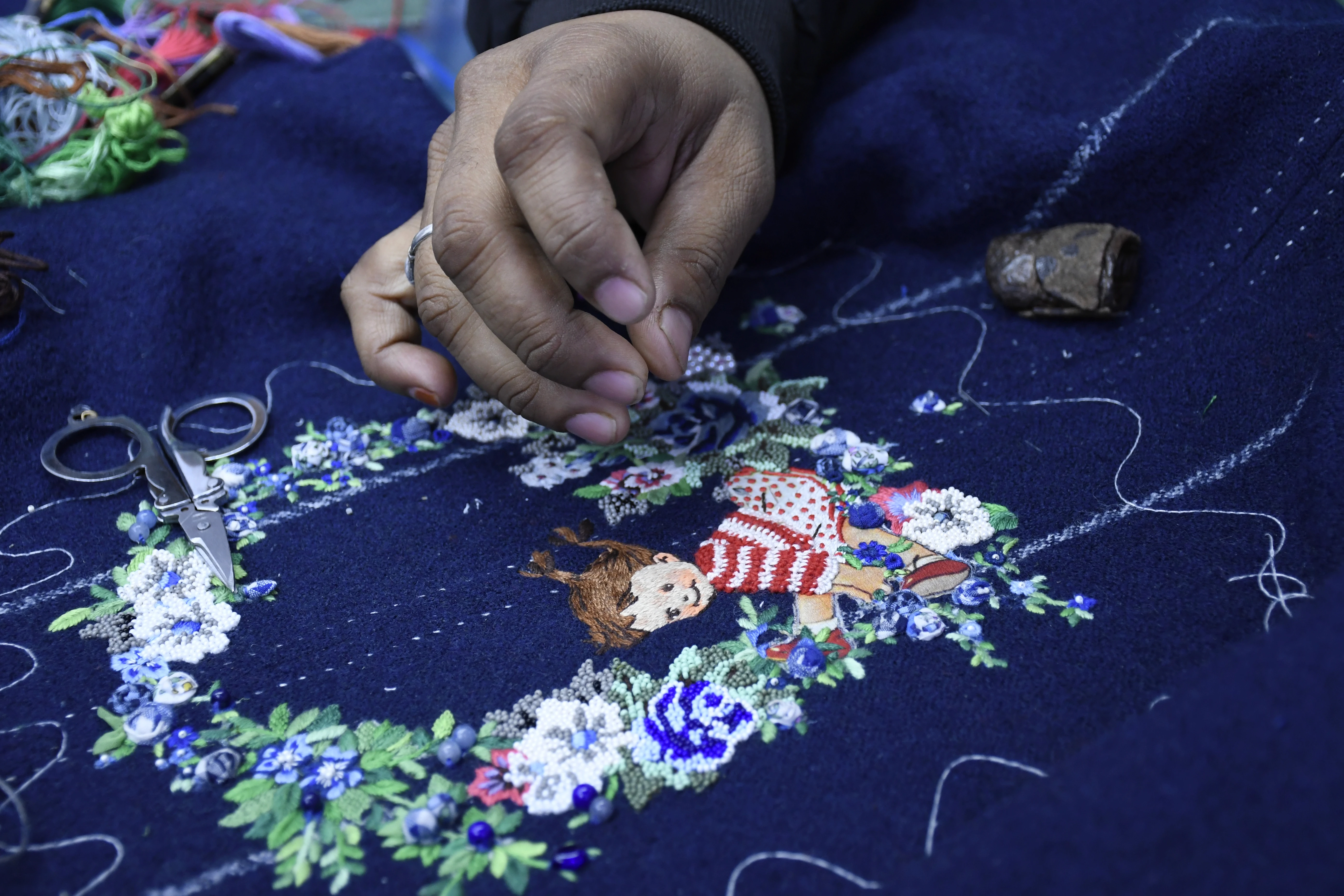
In the making: handcrafted details from the péro studio
This is what Arora means when she says boundaries are erasing. The Western reference does not travel to India as an external influence to be adopted. It arrives as material to be processed, remade, routed through the craft economy that the brand has spent seventeen years building. The direction of the exchange, who is the raw material and who is the refinery, has reversed.
The Aesthetics of Innocence
Arora's mother stitched clothes for a young Aneeth from leftover fabrics from her grandfather's kurtas: cartoons, laces, patches, flowers. Her dresses were admired in the housing society where she played. The visual language carries that early formation forward: florals, gingham, archival childhood references, the persistent quality of play. Colourful checks, patchwork of handcrafted and hand-painted textiles, effortlessly layered pieces. The Sanrio collaboration, marking Hello Kitty's 50th anniversary, emerged from Arora finding during the pandemic that péro and Hello Kitty shared more fundamental similarities than she had realised.
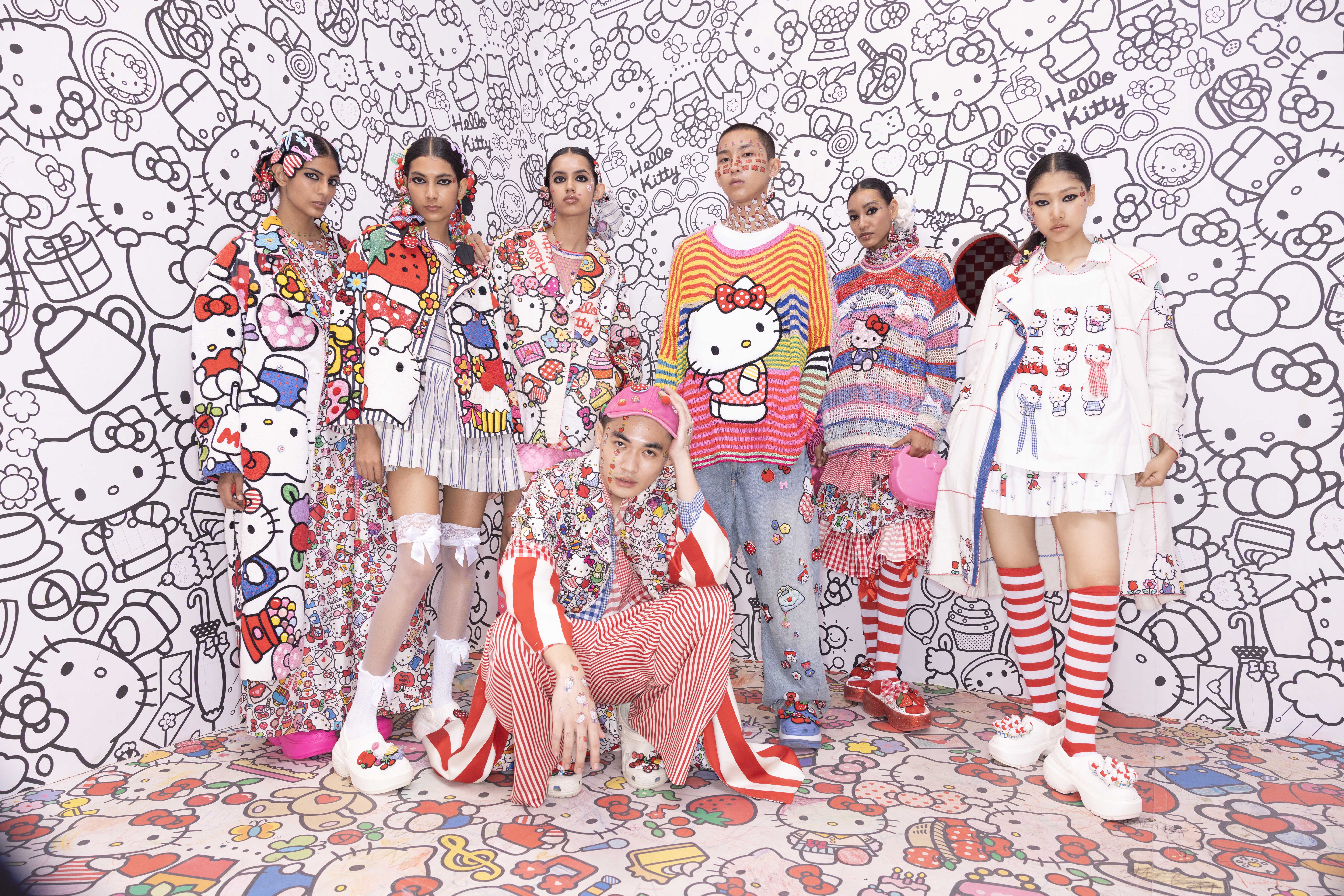
Péro x Hello Kitty, Spring Summer 2025
In fashion criticism, this register is often coded as commercially unserious, associated with a softness that does not carry the weight of brands operating in a more austere or conceptual vocabulary. The evidence from the label’s history runs against that reading. The label has outlasted Indian contemporaries who built on more legible luxury codes. It has held the same visual logic across 34 seasons without critical backlash or market fatigue. It counts Kiran Rao, Ranveer Singh, Karuna Ezara Parikh and Nandita Das among its wearers. Its first customers included Arundhati Roy, Dayanita Singh and Mira Nair, a set of names that indexed the brand immediately to a certain intellectual and cultural seriousness, despite, or because of, the florals.
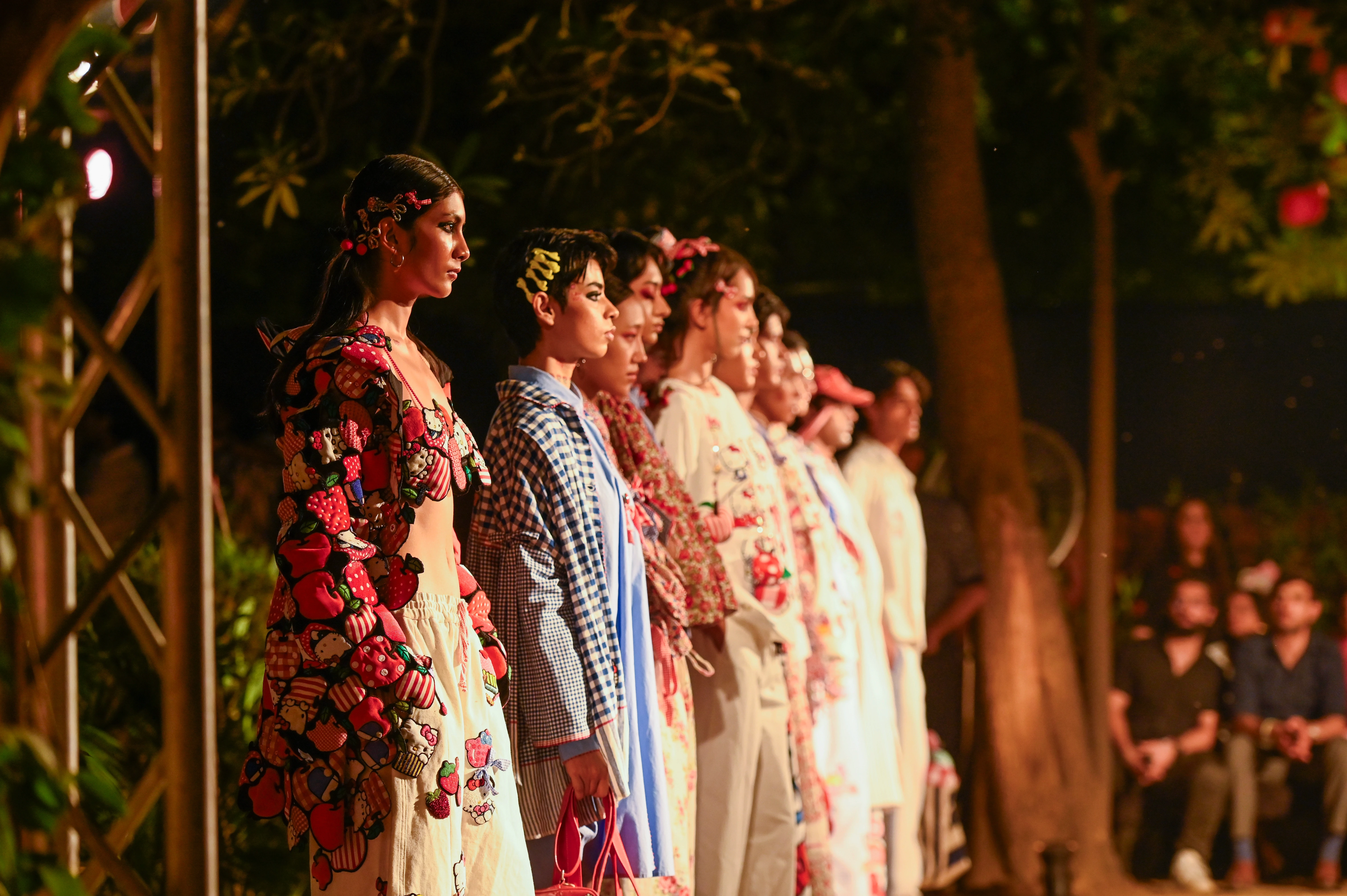
A moment from the péro x Hello Kitty, opening show of Lakmé Fashion Week 2024
Arora's explanation of how this works is a science perfected by her. The presentation is light-hearted because the research is heavy. Every collection involves serious yarn intervention, dyeing problem-solving, two years of accumulated material thinking. "All the hard work is done at the back end," she said, invoking Karl Lagerfeld's popular quote, ‘Nobody wants to know how many times the needle poked your finger’. The playfulness is the form in which a significant amount of intellectual and physical labor reaches the public. The five senses are consciously engineered into every péro show: musicians are selected for their fit with the season's material, food served during presentations is chosen to carry the same sensory logic, press kits are made from the season's textiles so that the touch of the work is the first thing a journalist experiences. "We write down all the five senses and we say, this is how we are tackling touch, this is how we are tackling sound." The whimsy is, in this reading, a delivery mechanism for a much larger project.
The Founder Who Stepped Back
péro declines to share photographs or videos of Arora. She has consistently refused to be the face of the brand. "Why should one person bag the limelight? It's a collective effort." She describes herself as the dreamer, while acknowledging that a team of now over 5,000 people is what makes the dreams material. Her mother and brother both work with the label.
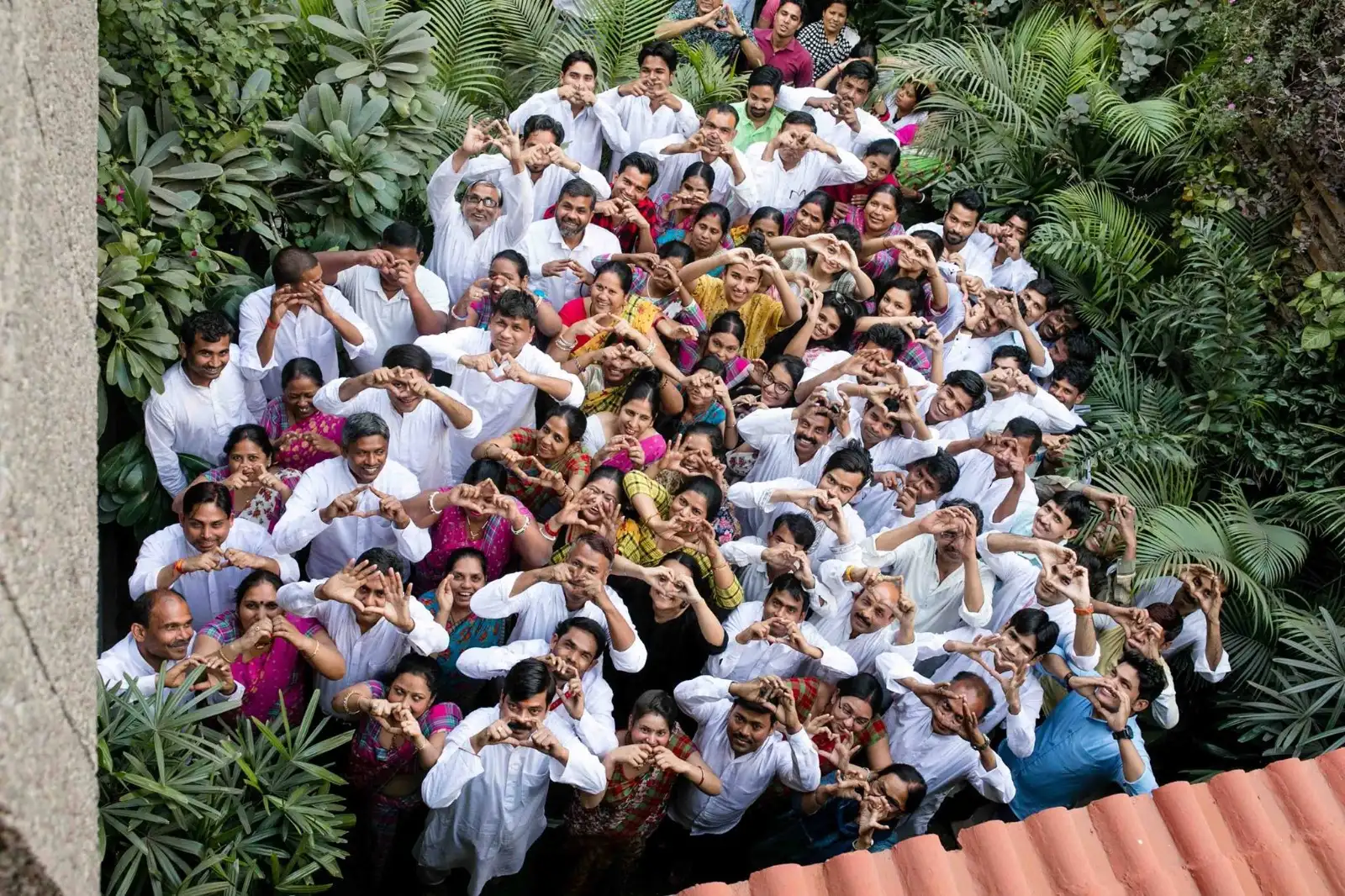
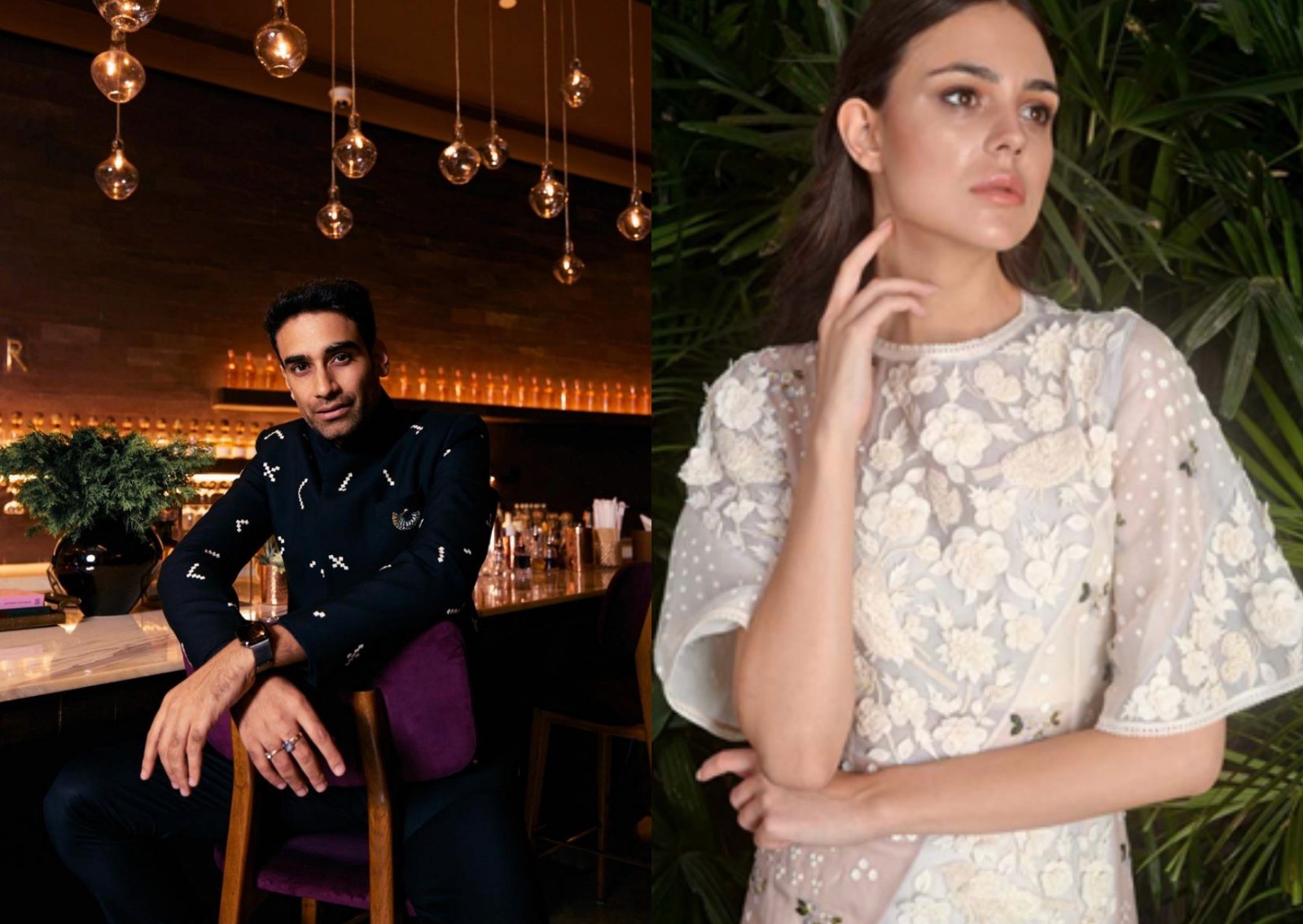
The team behind péro
In 2025 Indian fashion, the designer persona is, for most commercially successful labels, the primary brand asset. Look at the biggest names in fashion, eponymous labels, and in each case, the founder's identity and the brand's identity have collapsed into each other. The cultural authority of the label flows through the cultural authority of the person. They have built international distribution, institutional museum collection, and global cult following on a different inherent logic. The value is in the textile and the process, not the face. The first line ever produced was naturally dyed, hand-woven textiles from India. The only embellishment was a handmade button with 'pero' embossed on it. The authorship was declared through the cloth, from the first season.
The Standing Ovation
The Out of Office collection at Lakmé Fashion Week 2026 received the only standing ovation of the edition. Arora gets visibly moved describing it: "I'm getting goosebumps right now." What she says people responded to was the sum: "Nobody was looking at the parts." Musicians, dancers, women in the mountains who had knitted the sweaters. "When everybody's putting their heart and soul into it, then the sum is always greater than its parts." She frames the audience response as reciprocated love, the feeling that the affection put into making the work came back from the room.
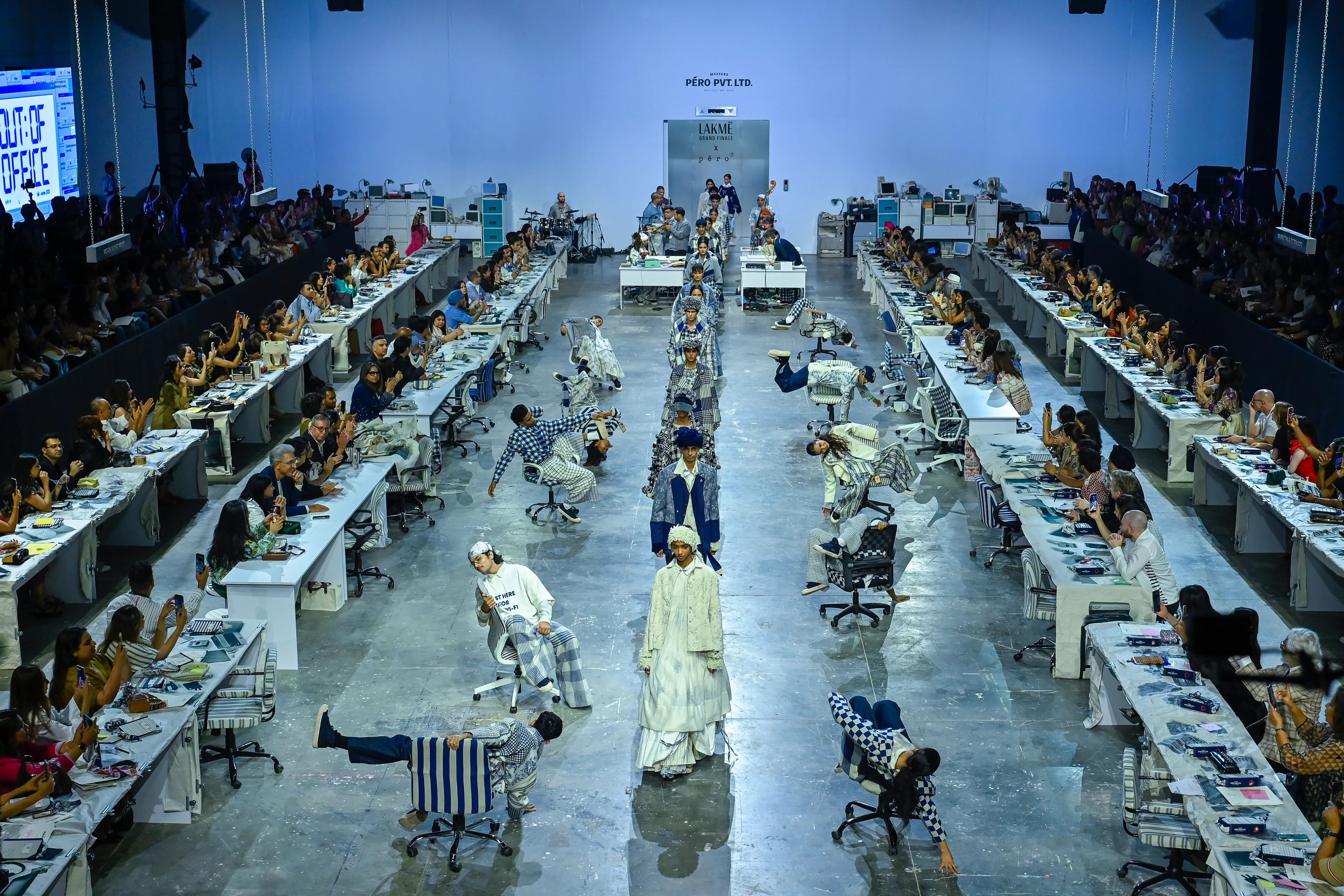
Pero's 'Out of Office' collection showcased at FDCI X Lakme Fashion Week 2026 | All images courtesy of péro
This is also an accurate description of how the brand’s model functions economically. The value is distributed across the network: the weavers in West Bengal who have been working with the brand since 2009, the bandhani artisans in Bhuj who received the Dot. textiles, the in-house artists who painted the BONNIE backdrops, the musician from Uttarakhand brought in for a campaign. The audience in the room at Lakmé was responding to the presence of all of that, even without being able to name it.
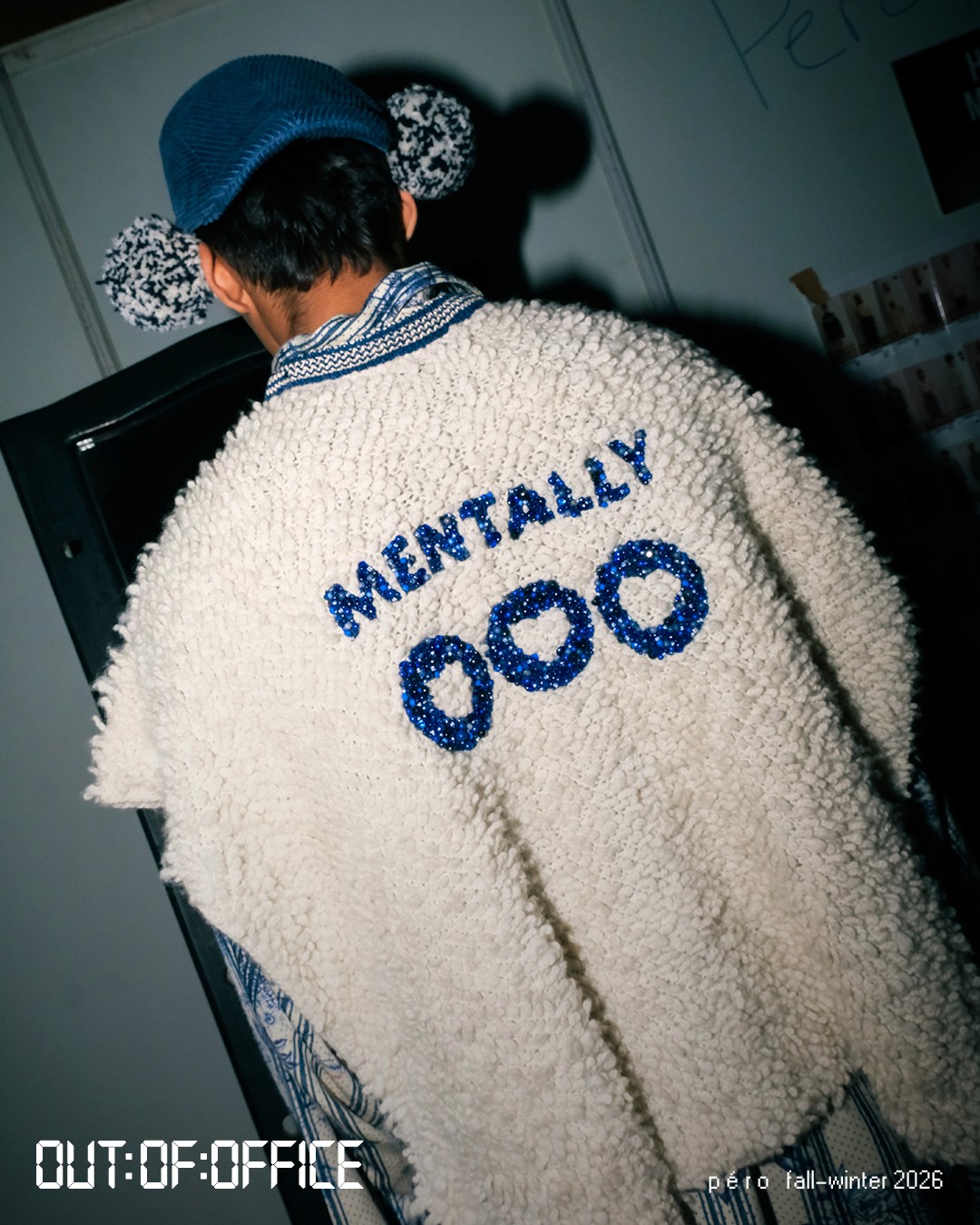
Out of Office, péro fall winter 2026 presented at the Lakmé Grand Finale
péro is working toward a physical retail space in India, a room where anyone who arrives, from anywhere, can step into the brand's world without it needing to be explained. More global collaborations are being developed, building on Liberty and Sanrio, because Arora has found that these partnerships make the brand globally legible without a Paris Fashion Week runway. "People connect with us that way."
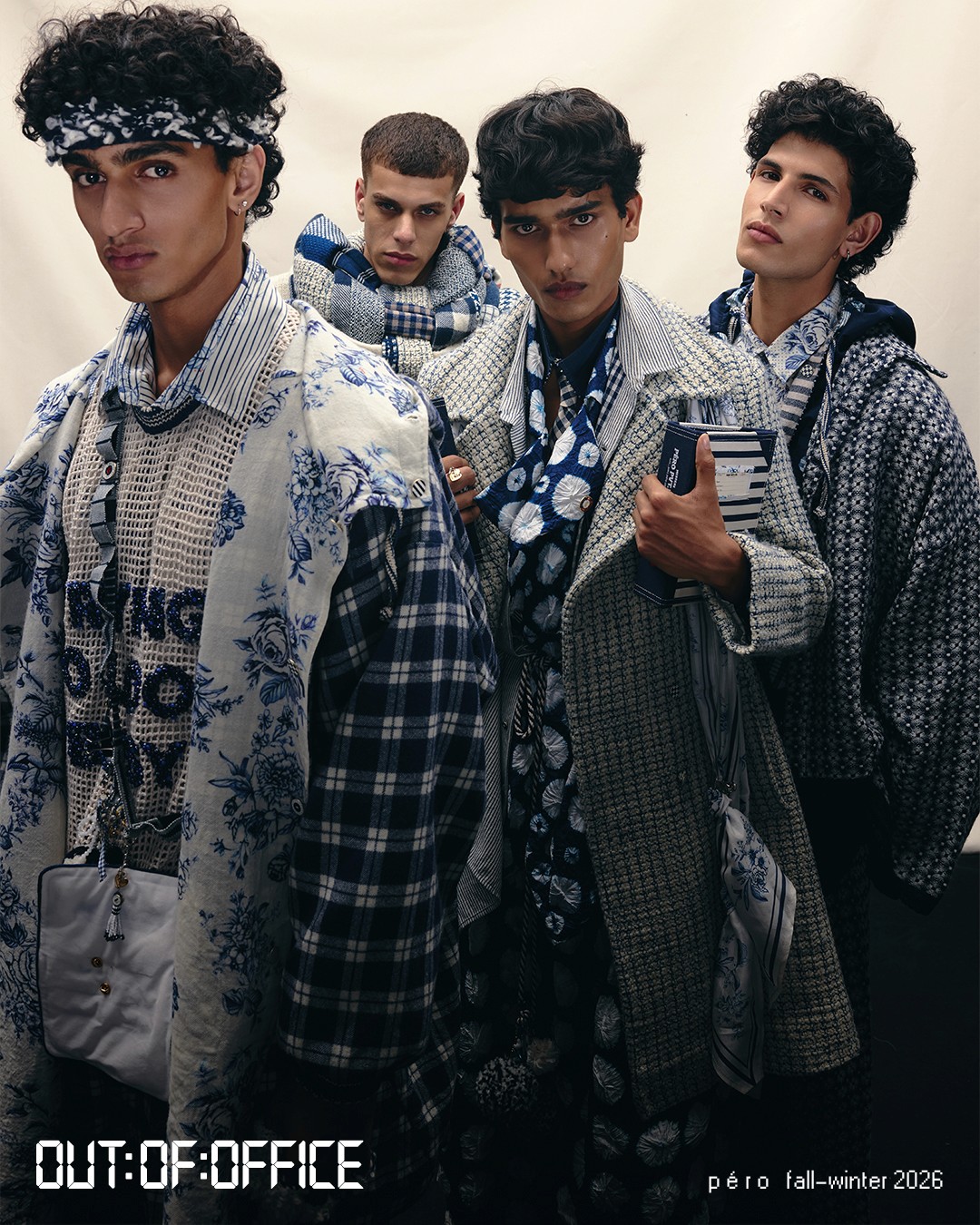
Out of Office, péro fall winter 2026 presented at the Lakmé Grand Finale
India's handicrafts market reached USD 4.56 billion in 2024 and is projected to reach USD 8.19 billion by 2033, growing at 6.39% annually. The sector is moving, and the global appetite for craft-led luxury is building from multiple directions simultaneously. What the label represents in that landscape is a brand that was operating this logic before it became legible as strategy: the inception in 2009 carried the specific aim of making a global product using indigenous craft, connecting with people wherever in the world it is placed. The word pero means to wear, in Marwari, the language of Rajasthan where Arora grew up. The name was not chosen for its resonance or its market positioning. It was chosen because it described, in the simplest possible terms, what the whole project was actually about.
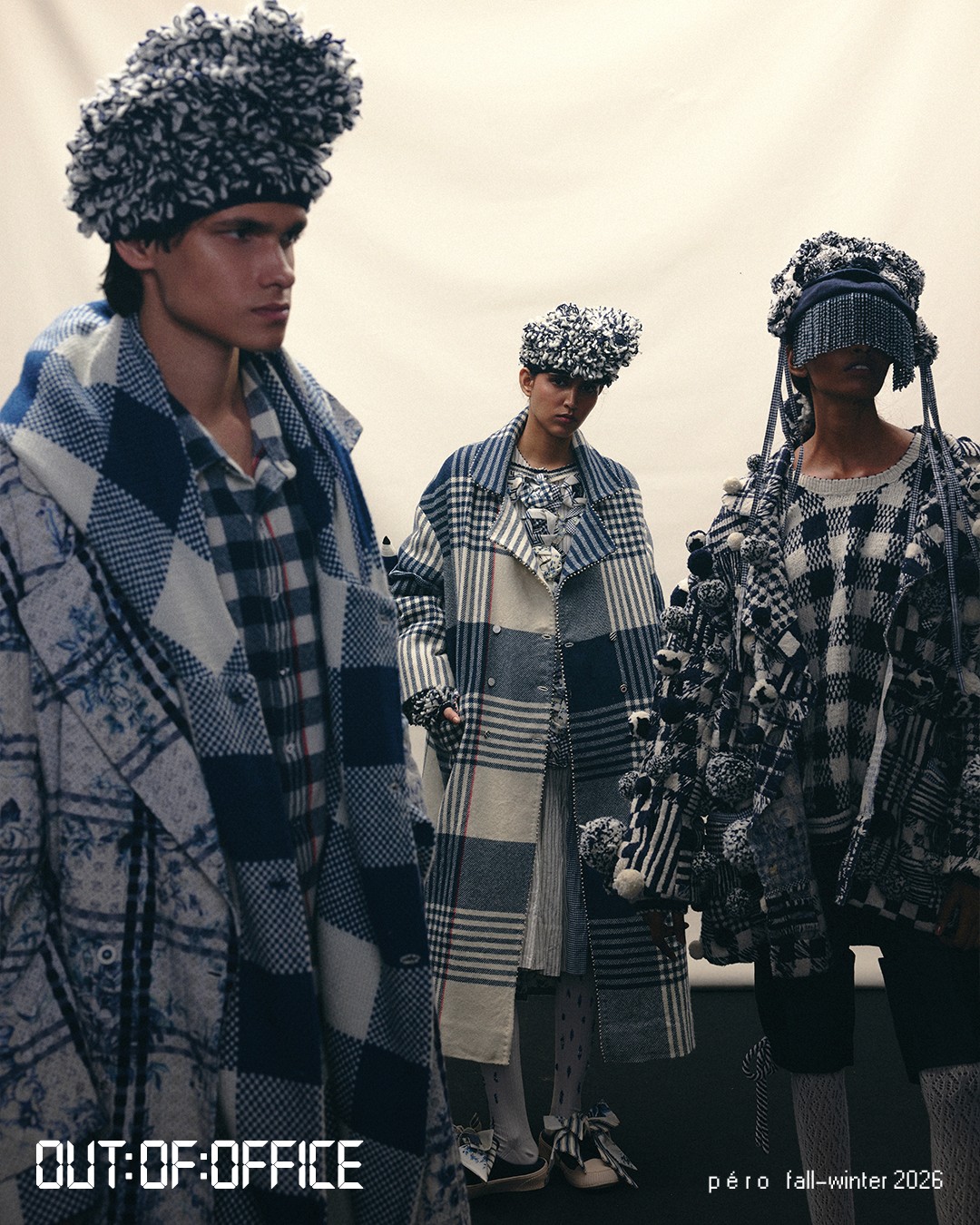
Out of Office, péro fall winter 2026 presented at the Lakmé Grand Finale
Seventeen years on, that simplicity is the most dynamic thing about it.
TO BE CONTINUED, FOR SUBSCRIBERS ONLY.
This is where the surface ends and the reporting begins.
The complete piece, the full archive, and access to The French Press Circle. Reporting answerable only to its readers.
Already a subscriber ?
Login
Read these on the house, with our compliments.
A selection from the current issue, open to all readers. Read them in full. The rest is one decision away.





The First Decision
The founding decision of péro was about stairs.
Aneeth Arora was freelancing out of a third-floor flat in Siddhartha Extension, Delhi, and clients were arriving winded and irritable, having climbed three floors with no elevator. She rented a ground-floor space in the same residential colony. One tailor, one runner, herself. The year was 2009. She had no clear template for what a commercially operational label looked like, and she says as much: "For a girl not from Delhi, renting a place without knowing anything about how to build a business."
A moment from Cuckoo & Co. , Péro’s Fall winter 2023 collection at Lakmé fashion week x FDCI
The brand did not launch with a manifesto or a runway moment. It accumulated. The confidence to keep going came from early signals: a response at Gennex, elated words from Sabyasachi Mukherjee about the first collection, and an instinct backed by evidence. From that ground-floor flat, Arora has built a label now stocked in over 300 stores across 26 to 30 countries, collected by the Victoria and Albert Museum in London, worn by Arundhati Roy, Gwen Stefani, Mira Nair, Kiran Rao and The Sartorialist, shown consecutively for 34 seasons at Tranoi in Paris, and carrying the honour of the only standing ovation at Lakmé Fashion Week 2026. It has been a long road from Udaipur to creating a million-dollar business.
The Taxonomy Problem
Aneeth Arora is very particular in not wanting to refer to herself as a ‘fashion designer’. She uses the word dressmaker. She also uses ‘textile maker’. Her refusal to identify as one is far from a gimmick. Even as a student at NIFT Mumbai, when asked to draw a croquis or make a fashion illustration, she never related to the manipulation of the human form that the exercise required. At NID Ahmedabad, where she studied textiles after NIFT, she learned that design means solving problems. “If you come to think of it, clothing that we make is not really solving any problem, it's just offering aesthetic choices to people to dress on a given day.”
At péro, any given season starts at least two years in advance, if not more, because they develop their own fabrics. Each season's inspiration can come from various sources: sometimes a colour, sometimes a single character. The process begins with a directive sent to craft clusters across India, an instruction as minimal as a motif or a colour temperature, and what comes back shapes the collection forward. One season, the word was polka dots: Jamdani dots, Ikat dots, brocade dots, each cluster interpreting the same starting point through its own technique. The textiles arrive and collect in a room at the studio, and the team begins mixing. The garment is a consequence of that accumulation. Arora describes it as weaving your own canvas before painting on it: "The end result is never in clear sight. We don't know what is going to be the outcome."
In the making: handcrafted details from the péro studio
Every season, péro develops approximately 50 varied textiles with at least five different regions in India, involving at least 500 weavers across the country. The association continues irrespective of changing fashion trends. Fashion, by its operational logic, depends on the last season becoming irrelevant to sell the next one. The process requires the opposite: continuity, relationship, accumulated material knowledge. These are incompatible with fashion's foundational premise, and the brand has operated for seventeen years thriving in the contradiction.
From Udaipur to NID, and What the Villages Taught Her
Arora grew up in Udaipur, and her earliest memory of fabric is her mother asking her to stitch a button on her father's shirt. She distinctly remembers telling her that this was not what she wanted to do with her life. She studied at NIFT Mumbai, where the graduation collection experience crystallised what she felt was missing: everyone was running to the same store to buy fabric, and she felt she hadn't much understanding of textile itself. That was when she decided it had to begin at the fabric stage.
At NID Ahmedabad, the textile course required students to live in craft communities, learn from artisans in their own contexts, and observe how clothing functioned in places entirely outside the fashion world's reach. What she found there reoriented everything. In tribal clusters in Gujarat and elsewhere, people were dressing with a personal logic and confidence that had nothing to do with global trend cycles. The textile was the base for everything. The garment followed from it as a natural extension of the maker's knowledge and surroundings. "I realised that I found my calling," she said. "Whenever I start a label, it has to be about making our own textiles and then making clothes with it."
Her NID teacher, Romani Jaitley, taught her to mix geometry with plain textures: some floral, some checked, some plain. The idea of mixing, she has said, started there. It is now the most recognisable ethos in a péro collection. Every season, textiles from separate regions are brought together in the studio, and pieces are assembled from that encounter. The roots of India rest in the textile process, where materials pass through the hands of one craftsperson to the other, belonging to different parts of the country, carrying forward the tradition of the handmade.
The Craft Relationship as an Economic Model
India is home to an estimated 6.4 million registered handloom and handicraft artisans, according to government figures as of August 2025, with unofficial estimates placing the number closer to 200 million when informal artisan activity is counted. The textile industry contributes around 2% to India's GDP and approximately 11% of manufacturing GVA, with over 45 million people engaged across the value chain. Women account for 64% of total artisans and 71% of handloom weavers. It has created a sustainable economy of its own in the craft ecosystem, which is a commendable feat in today’s contemporary fashion landscape.
When Arora approached craft clusters in 2009, the artisans were skeptical. They had watched fashion brands arrive, commission work for a season, and disappear. She told them she was not there to do fashion in that sense: "We will not be dependent on six months of changing trends." She promised continuity of association, even when the specific innovation changed. "It always sounded like a collaboration, and it didn't look like, you know, wo humare client hai, humare buyer aage." That distinction, between client and collaborator, has governed every relationship the label has built since.
In the making: handcrafted details from the péro studio
The team has grown to approximately 5,000 people, with new craft clusters added each season while older ones continue. péro now engages with over 2,000 weavers. The clusters Arora first worked with are still active partners. The core definition of sustainability for the brand is about creating sustainable livelihoods. The measure she uses for the health of the relationship is not ethical certification or CSR reporting. It is whether the artisans themselves have grown: whether the design intervention has pushed their own skill and self-knowledge forward, whether they have produced something they could not previously have imagined, and whether they know it.
She described sending clusters photographs of their work in shop windows in Japan, images of Gwen Stefani carrying Jamdani. "We are constantly feeding them with this information." The reach of the work is shared and celebrated. Arora's read of where the favour actually runs is direct: "I always felt that more than us, they are doing us a favour by giving into our designs and making things for us. Because all we can do is imagine and sketch it on paper."
In the making: handcrafted details from the péro studio
The Dot. Capsule: A Geography of Collaboration
In 2025, péro released a capsule that made the textile geography of a collection visible in a way the brand had not attempted before. The Dot. capsule began as a tie-dye project, but Arora's team chose to work on woven checks and tartans rather than plain cloth. Silk was woven in South India. Chanderi in Madhya Pradesh. Cotton checks in West Bengal. Silk checks in Banaras. Kashmina and wool checks in Kashmir and Punjab. Those woven textiles traveled to Bhuj in Gujarat, where bandhani artisans the brand has been working with, received them. The brand's textile team marked the dot placements on the tartans in a meticulously engineered design, and the artisans in Bhuj tied and dyed them.
In the making: handcrafted details from the péro studio
"It's for the first time in the history of péro that we have had to ship hand-woven textiles from five different regions to a region where they did their craft on it." That is what Arora called the biggest collaboration of 2025, not Liberty Fabrics, not the Sanrio anniversary. "The biggest collaboration of 2025 was with the artisans." The capsule is now present across hundreds of stockists of the brand worldwide.
The Dot. capsule is also a testament to a major threat that the Indian craft economy has not resolved at scale. India has 318 GI-tagged handicraft products and approximately 455 formally classified craft categories. The categories are named, documented, and in many cases legally protected. The movement of knowledge and material across those categories, the possibility of one craft tradition working on another's output, is seldom put in a framework. The textile team functioned as the infrastructure that made that crossing possible: designing the intervention, coordinating the logistics, managing the relationship between communities whose work does not normally travel toward each other.
The Reversal
The standard frame for Indian craft brands engaging with global markets positions the West as destination: the work travels outward to meet foreign appetite. péro's history runs in a different direction.
In the making: handcrafted details from the péro studio
They showed at Pitti Uomo, Pitti Bimbo, White in Milan, Tranoi in Paris, Premium and Berlin Fashion Week, Designers and Agents and Coterie in New York, Green Apple in Düsseldorf, Playtime in Tokyo, and Alchemy in London. The international platform came before domestic recognition. Arora describes the early Indian reception of the brand with a specific phrase, ‘Ghar ki murgi daal barabar’, which means that things or people we already possess or have easy access to are often undervalued or taken for granted. For Indian consumers, a refined Ajrak still looked like craft-mela textile. They were not registering that péro's intervention had happened at the yarn stage, that the garment's softness against the skin was the result of months of material research. "The West understood it first," she said. "Our journey has been the other way around."
By the time Liberty Fabrics approached péro for the Flowers Flower collaboration, which launched in July 2025, they were reaching out to a brand they had watched show consistently on international platforms, season after season, for over a decade. The BoF 500 recognised Arora as one of the people shaping the global fashion industry. The collaboration was, in Arora's reading, a consequence of the brand’s sustained global presence, an acknowledgment that the craft-to-brand model was something Liberty was keen to work within.
Heartsong, péro’s spring summer 2024 collection
The Heartsong collection, which preceded Flowers Flower in the brand's relationship with French reference points, drew on French florals rendered by in-house Indian artists, Vichy checks woven in West Bengal, Chanderi from Madhya Pradesh, and linen from Bhagalpur. The BONNIE collection for Fall/Winter 2025 took Scottish tartan and processed it through Indian craft: a tartan bandhani coat, tartan floral patchwork on jackets, Chanderi tops paired with culottes featuring tartan pattern. The campaign shoot, originally planned in Himachal Pradesh, was relocated indoors when rains prevented it. Four hand-painted backdrops of the Scottish Highlands from dusk to dawn were commissioned from skilled painters. A bagpipe band from Uttarakhand was invited to the shoot. The Scottish aesthetic was absorbed into the production system entirely: the setting fabricated in Delhi, the music sourced from Uttarakhand, the textiles woven across Indian regions.
In the making: handcrafted details from the péro studio
This is what Arora means when she says boundaries are erasing. The Western reference does not travel to India as an external influence to be adopted. It arrives as material to be processed, remade, routed through the craft economy that the brand has spent seventeen years building. The direction of the exchange, who is the raw material and who is the refinery, has reversed.
The Aesthetics of Innocence
Arora's mother stitched clothes for a young Aneeth from leftover fabrics from her grandfather's kurtas: cartoons, laces, patches, flowers. Her dresses were admired in the housing society where she played. The visual language carries that early formation forward: florals, gingham, archival childhood references, the persistent quality of play. Colourful checks, patchwork of handcrafted and hand-painted textiles, effortlessly layered pieces. The Sanrio collaboration, marking Hello Kitty's 50th anniversary, emerged from Arora finding during the pandemic that péro and Hello Kitty shared more fundamental similarities than she had realised.
Péro x Hello Kitty, Spring Summer 2025
In fashion criticism, this register is often coded as commercially unserious, associated with a softness that does not carry the weight of brands operating in a more austere or conceptual vocabulary. The evidence from the label’s history runs against that reading. The label has outlasted Indian contemporaries who built on more legible luxury codes. It has held the same visual logic across 34 seasons without critical backlash or market fatigue. It counts Kiran Rao, Ranveer Singh, Karuna Ezara Parikh and Nandita Das among its wearers. Its first customers included Arundhati Roy, Dayanita Singh and Mira Nair, a set of names that indexed the brand immediately to a certain intellectual and cultural seriousness, despite, or because of, the florals.
A moment from the péro x Hello Kitty, opening show of Lakmé Fashion Week 2024
Arora's explanation of how this works is a science perfected by her. The presentation is light-hearted because the research is heavy. Every collection involves serious yarn intervention, dyeing problem-solving, two years of accumulated material thinking. "All the hard work is done at the back end," she said, invoking Karl Lagerfeld's popular quote, ‘Nobody wants to know how many times the needle poked your finger’. The playfulness is the form in which a significant amount of intellectual and physical labor reaches the public. The five senses are consciously engineered into every péro show: musicians are selected for their fit with the season's material, food served during presentations is chosen to carry the same sensory logic, press kits are made from the season's textiles so that the touch of the work is the first thing a journalist experiences. "We write down all the five senses and we say, this is how we are tackling touch, this is how we are tackling sound." The whimsy is, in this reading, a delivery mechanism for a much larger project.
The Founder Who Stepped Back
péro declines to share photographs or videos of Arora. She has consistently refused to be the face of the brand. "Why should one person bag the limelight? It's a collective effort." She describes herself as the dreamer, while acknowledging that a team of now over 5,000 people is what makes the dreams material. Her mother and brother both work with the label.
The team behind péro
In 2025 Indian fashion, the designer persona is, for most commercially successful labels, the primary brand asset. Look at the biggest names in fashion, eponymous labels, and in each case, the founder's identity and the brand's identity have collapsed into each other. The cultural authority of the label flows through the cultural authority of the person. They have built international distribution, institutional museum collection, and global cult following on a different inherent logic. The value is in the textile and the process, not the face. The first line ever produced was naturally dyed, hand-woven textiles from India. The only embellishment was a handmade button with 'pero' embossed on it. The authorship was declared through the cloth, from the first season.
The Standing Ovation
The Out of Office collection at Lakmé Fashion Week 2026 received the only standing ovation of the edition. Arora gets visibly moved describing it: "I'm getting goosebumps right now." What she says people responded to was the sum: "Nobody was looking at the parts." Musicians, dancers, women in the mountains who had knitted the sweaters. "When everybody's putting their heart and soul into it, then the sum is always greater than its parts." She frames the audience response as reciprocated love, the feeling that the affection put into making the work came back from the room.
Pero's 'Out of Office' collection showcased at FDCI X Lakme Fashion Week 2026 | All images courtesy of péro
This is also an accurate description of how the brand’s model functions economically. The value is distributed across the network: the weavers in West Bengal who have been working with the brand since 2009, the bandhani artisans in Bhuj who received the Dot. textiles, the in-house artists who painted the BONNIE backdrops, the musician from Uttarakhand brought in for a campaign. The audience in the room at Lakmé was responding to the presence of all of that, even without being able to name it.
Out of Office, péro fall winter 2026 presented at the Lakmé Grand Finale
péro is working toward a physical retail space in India, a room where anyone who arrives, from anywhere, can step into the brand's world without it needing to be explained. More global collaborations are being developed, building on Liberty and Sanrio, because Arora has found that these partnerships make the brand globally legible without a Paris Fashion Week runway. "People connect with us that way."
Out of Office, péro fall winter 2026 presented at the Lakmé Grand Finale
India's handicrafts market reached USD 4.56 billion in 2024 and is projected to reach USD 8.19 billion by 2033, growing at 6.39% annually. The sector is moving, and the global appetite for craft-led luxury is building from multiple directions simultaneously. What the label represents in that landscape is a brand that was operating this logic before it became legible as strategy: the inception in 2009 carried the specific aim of making a global product using indigenous craft, connecting with people wherever in the world it is placed. The word pero means to wear, in Marwari, the language of Rajasthan where Arora grew up. The name was not chosen for its resonance or its market positioning. It was chosen because it described, in the simplest possible terms, what the whole project was actually about.
Out of Office, péro fall winter 2026 presented at the Lakmé Grand Finale
Seventeen years on, that simplicity is the most dynamic thing about it.
TO BE CONTINUED, FOR SUBSCRIBERS ONLY.
This is where the surface ends and the reporting begins.
The complete piece, the full archive, and access to The French Press Circle. Reporting answerable only to its readers.
Already a subscriber ?
Login
Read these on the house, with our compliments.
A selection from the current issue, open to all readers. Read them in full. The rest is one decision away.