“Does anyone here know what LGBTQIA means? If four people among us can explain it, then I shall agree… you have no awareness,” said Renuka Chowdhury in the Rajya Sabha (Upper House of the Indian Parliament) when the highly opposed Transgender Persons (Protection of Rights) Amendment Bill, 2026 was passed. Within a matter of days, with no consultation with the very community it promises to protect, the bill was introduced and subsequently cleared.
The fashion world, which has often been a comparatively free and accepting space for trans and queer people, stayed silent on this issue. Fashion, frequently called the strongest tool for self-expression and identity – a creative and commercial intersection where gender and sexuality blur – has, over time, taken many cues from the queer community. But when things get hot, how much has the industry given back to the very people it draws inspiration from?
In recent times, the much-debated door of inclusivity has been flung open, allowing many voices to shape the narrative. Whether be it the recent triumph of Trans models like Alex Consani, becoming the first openly transgender woman to win the prestigious "Model of the Year" award at the British Fashion Awards in 2025, or our very own Anjali Lama stomping the runway and shattering the glass ceiling, with some even getting hurt (Victoria’s Secrets and Abercrombie & Fitch) – or designers such as Saisha Shinde, India’s first openly trans designer.
But is casting one trans model or changing brand logos to Pride colours enough?
Fashion designer Sumiran Kabir Sharma, one of the early proponents of genderless clothing, says, “Fashion is a very privileged space. Bills like these don’t affect already protected queer individuals as much as they impact those who are less privileged–especially queer people in rural India.”
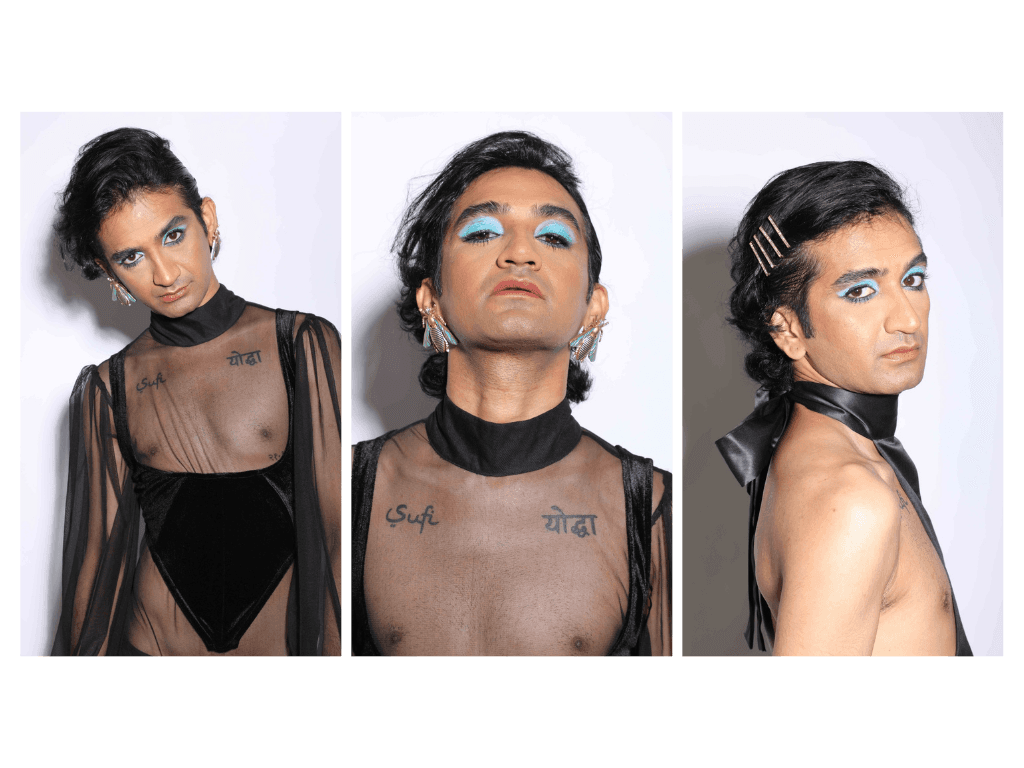
Fashion Designer and Silhouette generation artist Sumiran Kabir Sharma (they/them) of no gender label ANAAM was genNEXT winner at the Lakmē Fashion Week in 2017. Photo credit- YANI, photographed by Raghav Bhatia
Speaking about the design process, Kabir adds, “Art and design are inherently trans and queer experiences. When designing garments, a designer steps into the body of the wearer and imagines how it would look. For example, when designing womenswear, you visualise how the fabric falls on a woman’s body or what she would like to wear.”
But what about non-binary individuals who use fashion as a form of self-expression? Should designers create specifically for them?
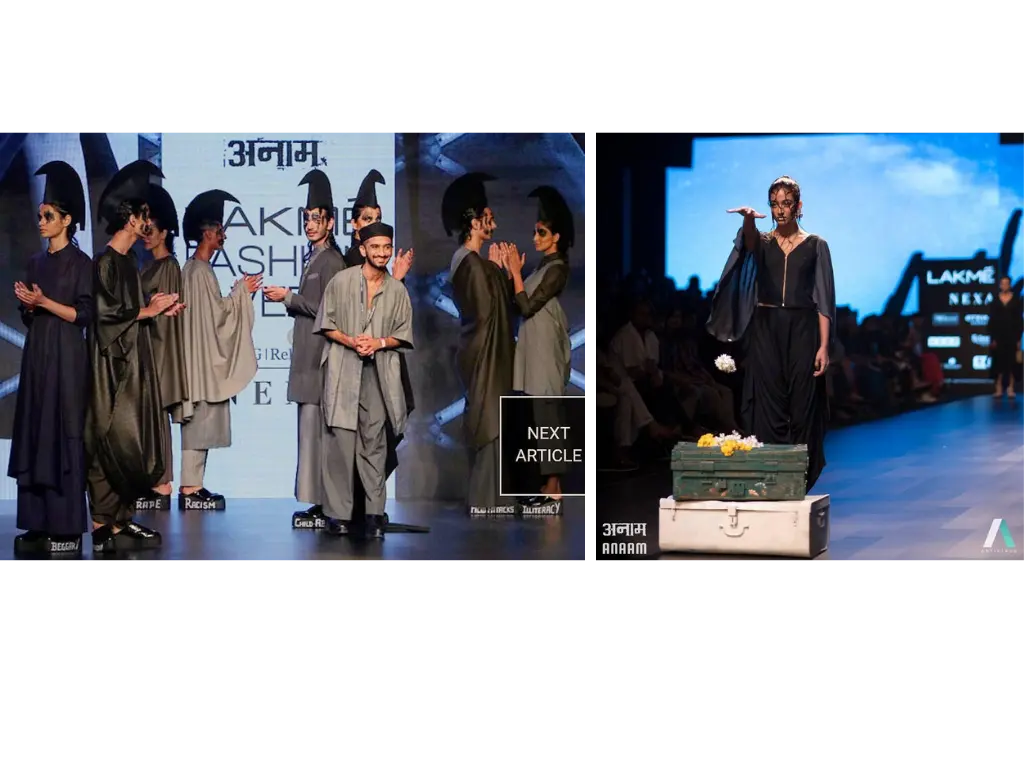
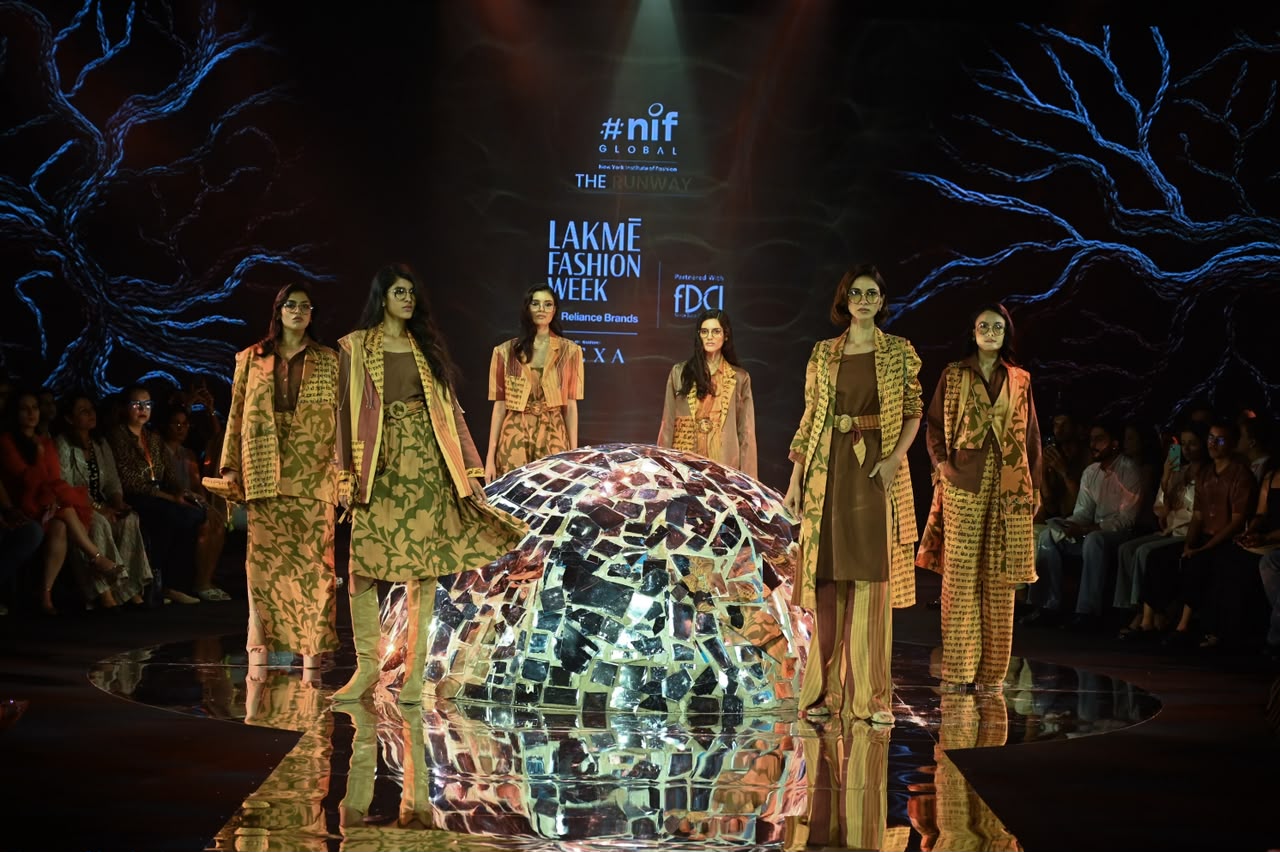
KABIR’S label ANAAM at theLakmē Fashion Week received great reviews from the fashion community for its out of the box inspiration and presentation. Image credit @anaamofficial.
Kabir responds, “There is nothing like ‘trans clothing.’ People often gravitate toward menswear or womenswear based on identity. What is needed is to bridge the gap by creating gender-neutral clothing that caters to non-binary individuals.” Of course, many, including J. K. Rowling, might disagree with this perspective.
“I am a singer and artist first, then trans. I hate when my identity is reduced to just being trans,” says model and singer Lasya Kahli.
On the passing of the 2026 bill, Lasya questions, “What is the criteria here? Are we only focusing on genitals? There are many layers to being trans that need to be understood. There are many experiences that need to be acknowledged. Someone else defining who you are, after you have already identified yourself, is something I don’t agree with.”
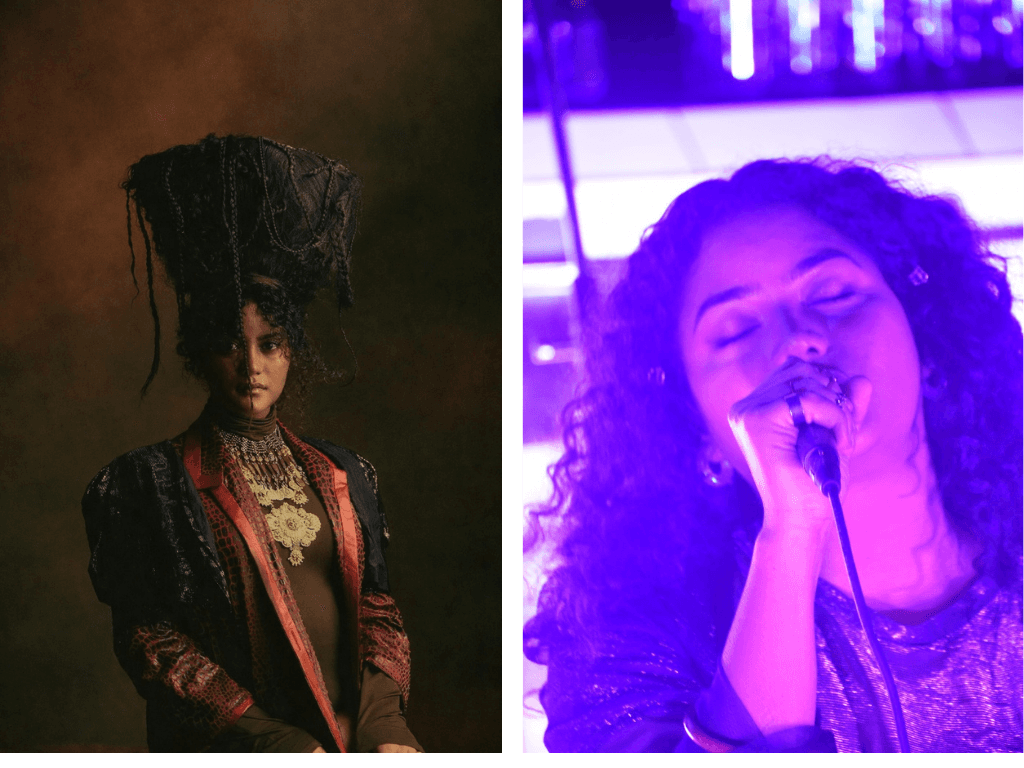
Lasya Kahli (She/Her) is a New Delhi based singer, music producer and a model
Lasya, who has appeared in several fashion and beauty campaigns, adds that while trans visibility exists in fashion, true inclusivity remains questionable. “Casting directors should look beyond the body and focus on confidence and attitude,” she says, pointing out that trans models who fit cisgender beauty standards are more likely to get opportunities, while others are overlooked.
Anjali Lama, who became a regular on major fashion runways in India, is neither overly impressed nor entirely disappointed by trans representation. She believes in speaking up and addressing issues directly. Speaking about trans consumers, Lama emphasises that brands must recognise that all bodies are different – especially trans bodies – and move beyond rigid sizing charts.
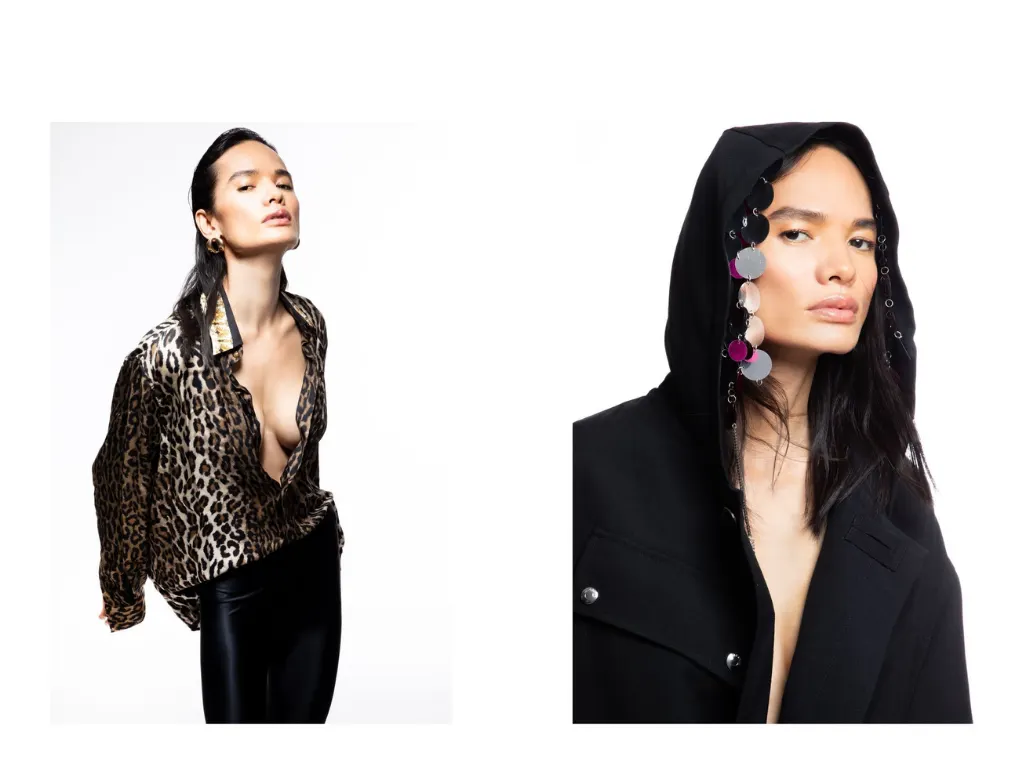
ANJALI LAMA (She/Her)
She also highlights a common issue that has haunted us all: changing rooms. “They should not be limited to male and female categories. There should be gender-neutral fitting rooms,” she says.
Lama also points to the 700 billion-dollar beauty industry, suggesting that cosmetic brands should include trans models consistently, not just during Pride Month.
Delhi-based trans modelling agency Bold Models was among the first in India to represent trans talent. Founder Rudrani Chhetri expressed concern over the lack of opportunities. “There are very few inquiries for trans models. And when there are, it often feels like brands are doing them a favour, sometimes even refusing to pay them,” she says.
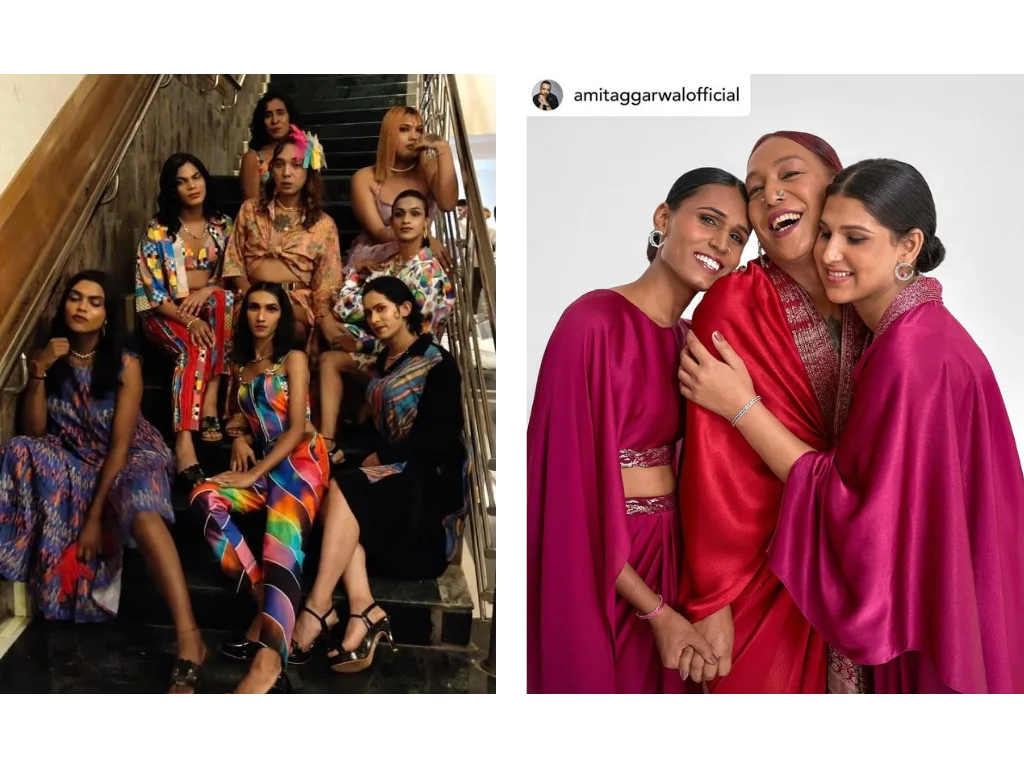
Left: Trans models at BOLD MODELS AGENCY, Right: Rudrani Chhetri with her daughters for Designer Amit Aggarwal
“When I scout and groom talent, I tell them to treat it as a hobby rather than a serious career due to the lack of opportunities,” she adds.
Luxury Indian wear brand Shanti Banaras cast 15 trans women in its campaign titled “Akathya” – not as an act of empowerment, but simply representation. Creative director and co-founder Khushi Shah says, “The campaign came from a place of clarity, not risk.” When asked about potential backlash, she said it was received with curiosity and respect, rather than hesitation.
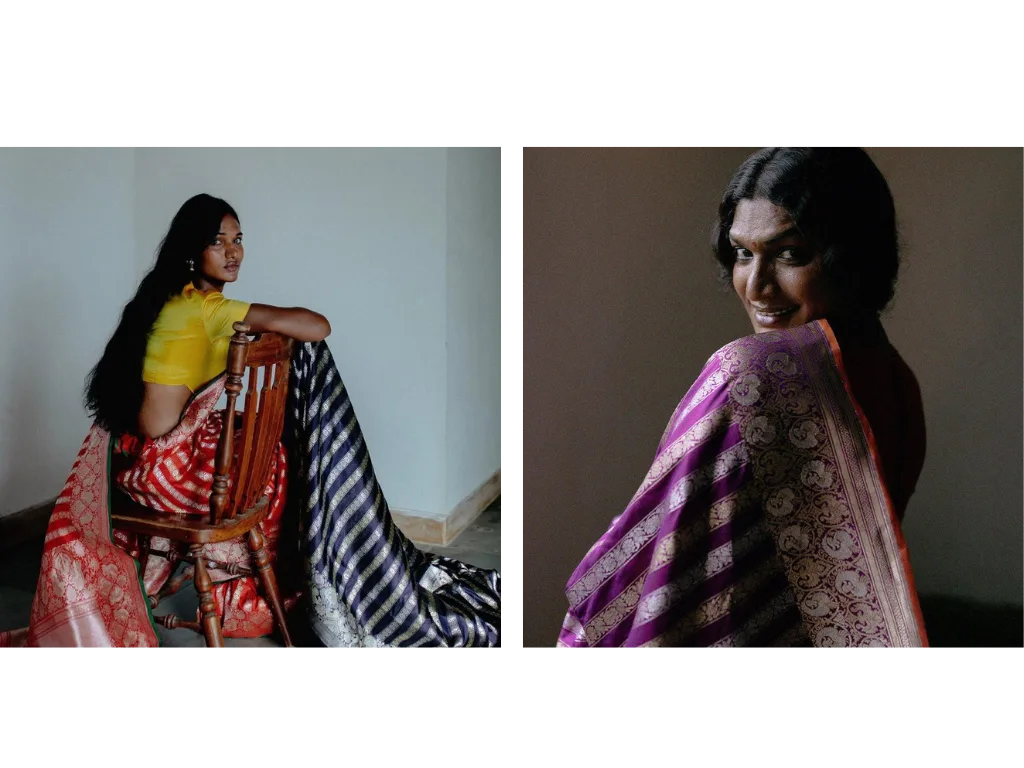
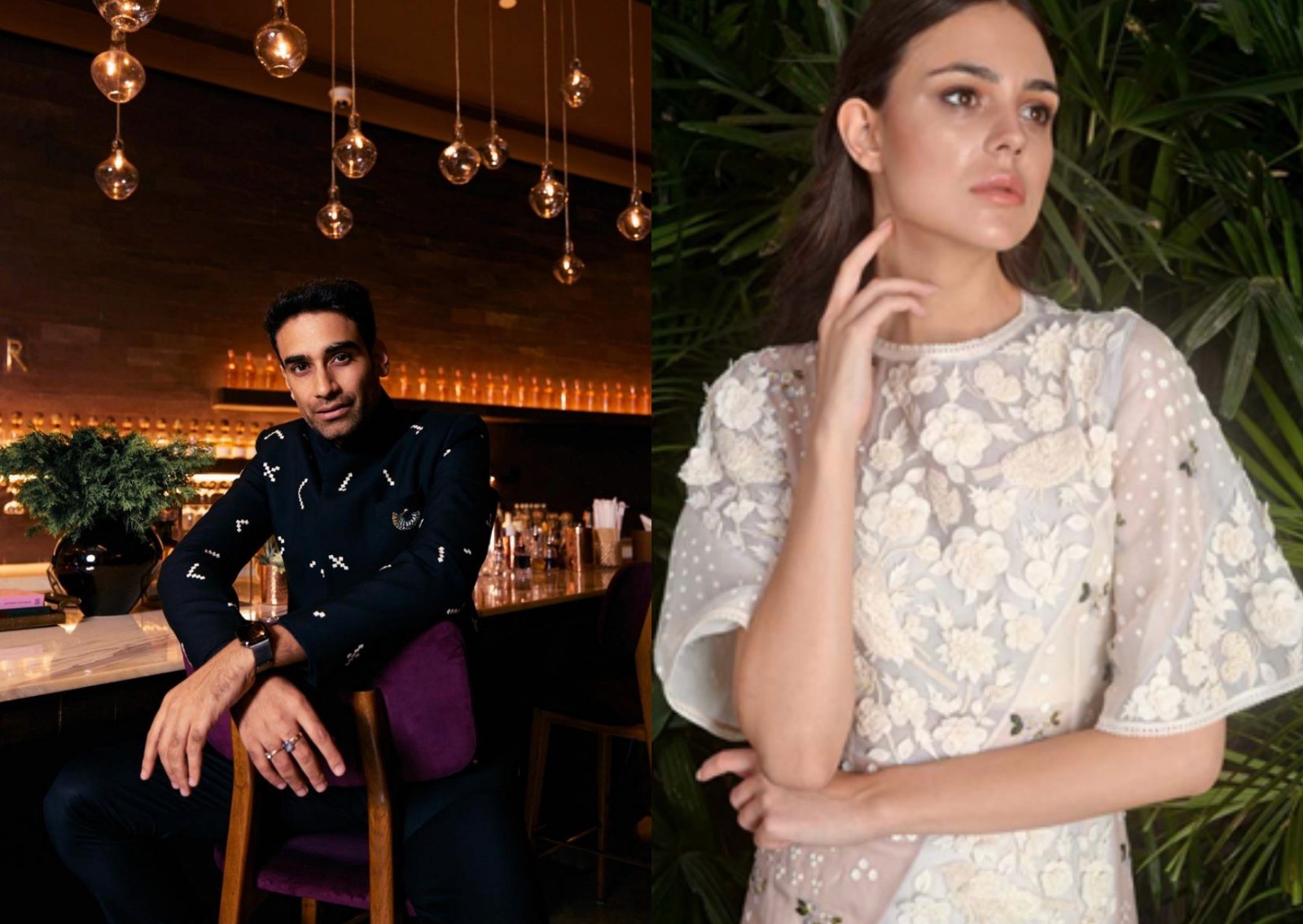
Shanti Banaras’s campaign AKATHYA featured 15 Transgender individuals across professions. Image via Shanti Banaras.
In the aftermath of the 2026 bill, the queer community in India has expressed concern about increased marginalisation or even erasure. The government, however, maintains that the bill is “progressive and compassionate,” aimed at protecting those facing socio-cultural exclusion.
But the ground reality remains far from this goal.
Whether in fashion or other industries, transgender and non-binary individuals are often reduced to symbolic representation – especially during Pride Month – used to appear politically correct or appeal to so-called “woke” audiences.
It is impossible to deny the immense influence of queer culture on mainstream fashion and popular culture–from Madonna’s Vogue era, inspired by New York’s underground ballroom scene, to modern-day drag slang like “spill the tea” and “slay” becoming part of Gen-Z vocabulary.
Pop stars like Harry Styles – who challenged gender norms with his fashion choices, including his famous December 2020 Vogue cover in a skirt–have sparked debates about masculinity and queer appropriation, known as ‘queer-baiting’ in pop culture.
This raises an important question: where do we draw the line between queer appreciation and appropriation?
In India, figures like Ranveer Singh and Karan Johar, who are deeply influenced by queer culture, when it comes to their style or scripts, have largely remained silent to advocate for the community.
There remains a significant gap in acknowledging and crediting queer contributions in mainstream media. For years queer roles and characters have remained as source of mockery on screen but with the recent rise of OTT platforms this has changed a bit. More queer stories of intimacy and sensitivity have started appearing on Indian screens.
As writer and performer Alok V. Menon once said, “Always on the mood board, never on the runway.”
With the recent passing of the Trans Bill many feel their fight and struggle has gone in vain.
Much of the fashion, beauty, and lifestyle industry is shaped by queer individuals, yet many feel there is still a long way to go.
This road may be well-traveled – but not all paths lead home.
TO BE CONTINUED, FOR SUBSCRIBERS ONLY.
This is where the surface ends and the reporting begins.
The complete piece, the full archive, and access to The French Press Circle. Reporting answerable only to its readers.
Already a subscriber ?
Login
Read these on the house, with our compliments.
A selection from the current issue, open to all readers. Read them in full. The rest is one decision away.






“Does anyone here know what LGBTQIA means? If four people among us can explain it, then I shall agree… you have no awareness,” said Renuka Chowdhury in the Rajya Sabha (Upper House of the Indian Parliament) when the highly opposed Transgender Persons (Protection of Rights) Amendment Bill, 2026 was passed. Within a matter of days, with no consultation with the very community it promises to protect, the bill was introduced and subsequently cleared.
The fashion world, which has often been a comparatively free and accepting space for trans and queer people, stayed silent on this issue. Fashion, frequently called the strongest tool for self-expression and identity – a creative and commercial intersection where gender and sexuality blur – has, over time, taken many cues from the queer community. But when things get hot, how much has the industry given back to the very people it draws inspiration from?
In recent times, the much-debated door of inclusivity has been flung open, allowing many voices to shape the narrative. Whether be it the recent triumph of Trans models like Alex Consani, becoming the first openly transgender woman to win the prestigious "Model of the Year" award at the British Fashion Awards in 2025, or our very own Anjali Lama stomping the runway and shattering the glass ceiling, with some even getting hurt (Victoria’s Secrets and Abercrombie & Fitch) – or designers such as Saisha Shinde, India’s first openly trans designer.
But is casting one trans model or changing brand logos to Pride colours enough?
Fashion designer Sumiran Kabir Sharma, one of the early proponents of genderless clothing, says, “Fashion is a very privileged space. Bills like these don’t affect already protected queer individuals as much as they impact those who are less privileged–especially queer people in rural India.”
Fashion Designer and Silhouette generation artist Sumiran Kabir Sharma (they/them) of no gender label ANAAM was genNEXT winner at the Lakmē Fashion Week in 2017. Photo credit- YANI, photographed by Raghav Bhatia
Speaking about the design process, Kabir adds, “Art and design are inherently trans and queer experiences. When designing garments, a designer steps into the body of the wearer and imagines how it would look. For example, when designing womenswear, you visualise how the fabric falls on a woman’s body or what she would like to wear.”
But what about non-binary individuals who use fashion as a form of self-expression? Should designers create specifically for them?
KABIR’S label ANAAM at theLakmē Fashion Week received great reviews from the fashion community for its out of the box inspiration and presentation. Image credit @anaamofficial.
Kabir responds, “There is nothing like ‘trans clothing.’ People often gravitate toward menswear or womenswear based on identity. What is needed is to bridge the gap by creating gender-neutral clothing that caters to non-binary individuals.” Of course, many, including J. K. Rowling, might disagree with this perspective.
“I am a singer and artist first, then trans. I hate when my identity is reduced to just being trans,” says model and singer Lasya Kahli.
On the passing of the 2026 bill, Lasya questions, “What is the criteria here? Are we only focusing on genitals? There are many layers to being trans that need to be understood. There are many experiences that need to be acknowledged. Someone else defining who you are, after you have already identified yourself, is something I don’t agree with.”
Lasya Kahli (She/Her) is a New Delhi based singer, music producer and a model
Lasya, who has appeared in several fashion and beauty campaigns, adds that while trans visibility exists in fashion, true inclusivity remains questionable. “Casting directors should look beyond the body and focus on confidence and attitude,” she says, pointing out that trans models who fit cisgender beauty standards are more likely to get opportunities, while others are overlooked.
Anjali Lama, who became a regular on major fashion runways in India, is neither overly impressed nor entirely disappointed by trans representation. She believes in speaking up and addressing issues directly. Speaking about trans consumers, Lama emphasises that brands must recognise that all bodies are different – especially trans bodies – and move beyond rigid sizing charts.
ANJALI LAMA (She/Her)
She also highlights a common issue that has haunted us all: changing rooms. “They should not be limited to male and female categories. There should be gender-neutral fitting rooms,” she says.
Lama also points to the 700 billion-dollar beauty industry, suggesting that cosmetic brands should include trans models consistently, not just during Pride Month.
Delhi-based trans modelling agency Bold Models was among the first in India to represent trans talent. Founder Rudrani Chhetri expressed concern over the lack of opportunities. “There are very few inquiries for trans models. And when there are, it often feels like brands are doing them a favour, sometimes even refusing to pay them,” she says.
Left: Trans models at BOLD MODELS AGENCY, Right: Rudrani Chhetri with her daughters for Designer Amit Aggarwal
“When I scout and groom talent, I tell them to treat it as a hobby rather than a serious career due to the lack of opportunities,” she adds.
Luxury Indian wear brand Shanti Banaras cast 15 trans women in its campaign titled “Akathya” – not as an act of empowerment, but simply representation. Creative director and co-founder Khushi Shah says, “The campaign came from a place of clarity, not risk.” When asked about potential backlash, she said it was received with curiosity and respect, rather than hesitation.
Shanti Banaras’s campaign AKATHYA featured 15 Transgender individuals across professions. Image via Shanti Banaras.
In the aftermath of the 2026 bill, the queer community in India has expressed concern about increased marginalisation or even erasure. The government, however, maintains that the bill is “progressive and compassionate,” aimed at protecting those facing socio-cultural exclusion.
But the ground reality remains far from this goal.
Whether in fashion or other industries, transgender and non-binary individuals are often reduced to symbolic representation – especially during Pride Month – used to appear politically correct or appeal to so-called “woke” audiences.
It is impossible to deny the immense influence of queer culture on mainstream fashion and popular culture–from Madonna’s Vogue era, inspired by New York’s underground ballroom scene, to modern-day drag slang like “spill the tea” and “slay” becoming part of Gen-Z vocabulary.
Pop stars like Harry Styles – who challenged gender norms with his fashion choices, including his famous December 2020 Vogue cover in a skirt–have sparked debates about masculinity and queer appropriation, known as ‘queer-baiting’ in pop culture.
This raises an important question: where do we draw the line between queer appreciation and appropriation?
In India, figures like Ranveer Singh and Karan Johar, who are deeply influenced by queer culture, when it comes to their style or scripts, have largely remained silent to advocate for the community.
There remains a significant gap in acknowledging and crediting queer contributions in mainstream media. For years queer roles and characters have remained as source of mockery on screen but with the recent rise of OTT platforms this has changed a bit. More queer stories of intimacy and sensitivity have started appearing on Indian screens.
As writer and performer Alok V. Menon once said, “Always on the mood board, never on the runway.”
With the recent passing of the Trans Bill many feel their fight and struggle has gone in vain.
Much of the fashion, beauty, and lifestyle industry is shaped by queer individuals, yet many feel there is still a long way to go.
This road may be well-traveled – but not all paths lead home.
TO BE CONTINUED, FOR SUBSCRIBERS ONLY.
This is where the surface ends and the reporting begins.
The complete piece, the full archive, and access to The French Press Circle. Reporting answerable only to its readers.
Already a subscriber ?
Login
Read these on the house, with our compliments.
A selection from the current issue, open to all readers. Read them in full. The rest is one decision away.