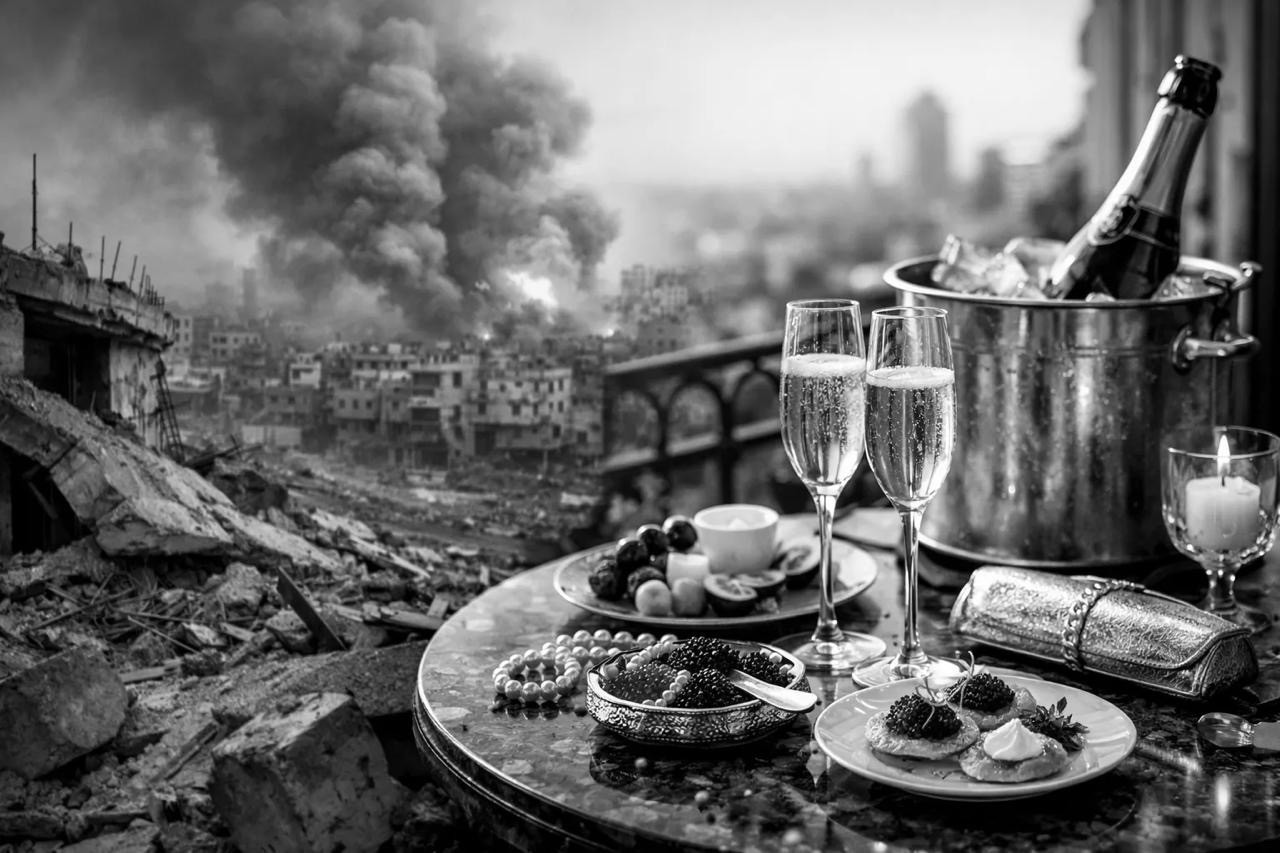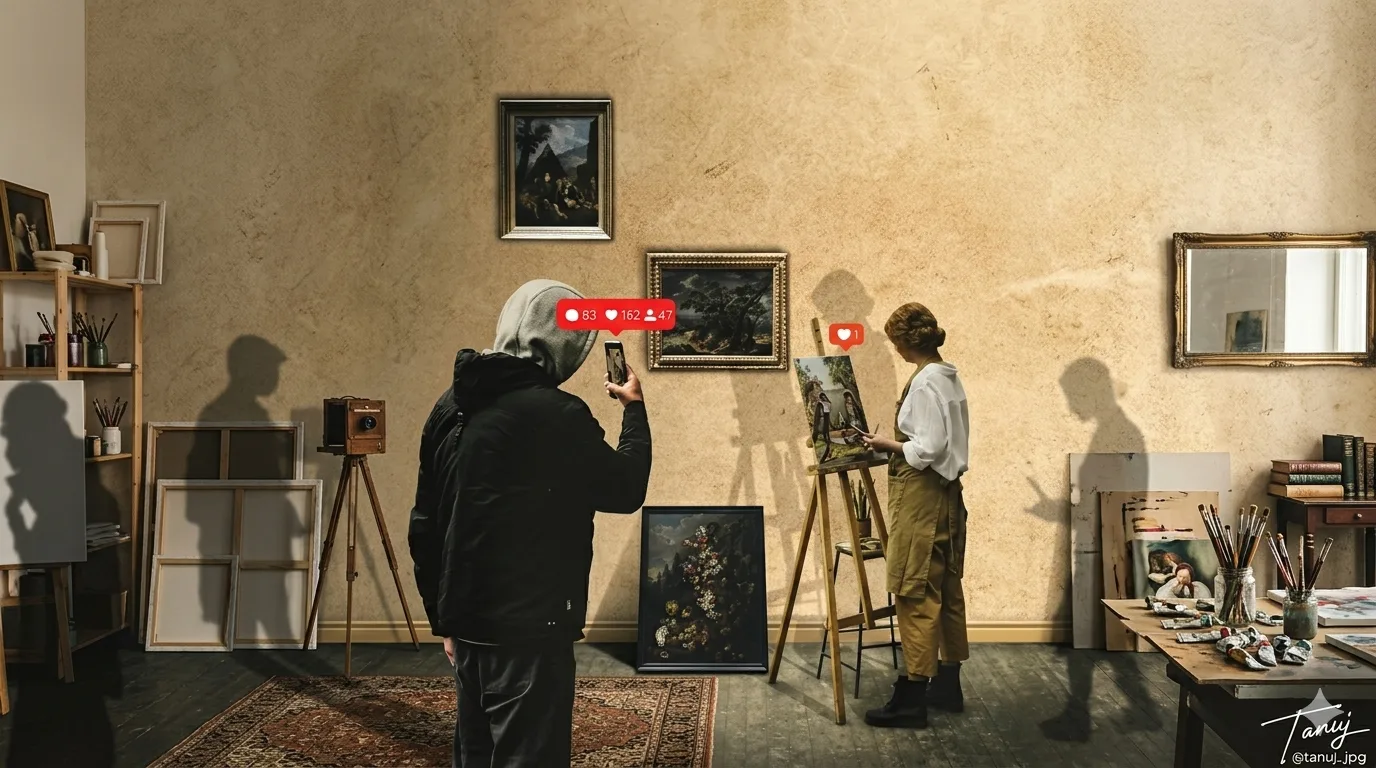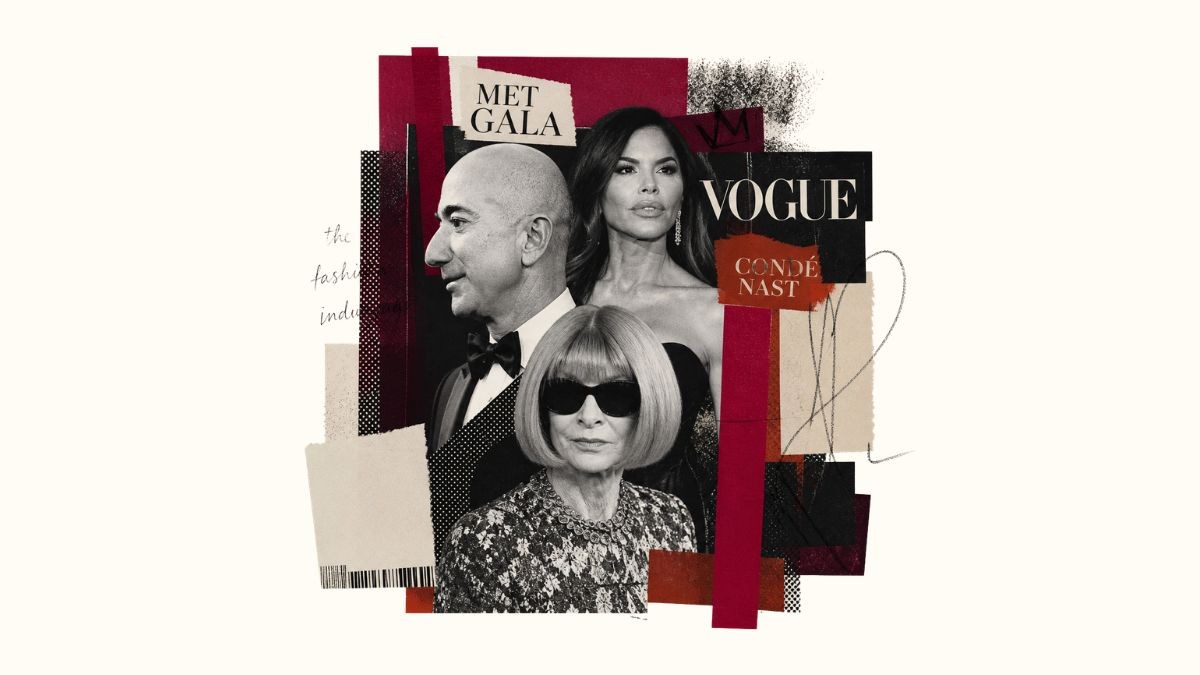
There is a formula to the Met Gala that has always made it useful to people who want to be seen without being scrutinised. You ascend a staircase. You are photographed from seventeen angles simultaneously. Someone with a very good vocabulary describes what you are wearing. Nobody asks you anything. The whole event is engineered around the sanctity of the surface, a cathedral built for appearances, in the most literal and theological sense.
For a fashion institution, this is perfectly appropriate. For a tech billionaire managing a multi-front reputational catastrophe, it is, frankly, a gift.
Tonight, the 2026 Met Gala descends upon the Metropolitan Museum of Art under the exhibition theme "Costume Art" and a dress code of "Fashion Is Art." The exhibition itself, running from May 10 through January 10, 2027, opens the Costume Institute's first permanent galleries, now named the Condé M. Nast Galleries, because apparently the art-fashion-philanthropy pipeline required a formal dedication plaque. Curator-in-Charge Andrew Bolton described "Costume Art" as striving to make the connection between bodies and the clothes people wear, with nearly 400 objects contributing to the museum's initiative of appreciating fashion as an art form. It is, by all accounts, a genuinely ambitious exhibition.
The theme is so admirably open-ended that it can accommodate Jean Paul Gaultier's trompe l'oeil muscled torso suits, Schiaparelli's surrealist anatomy, and, presumably, whatever a certain billionaire's wife has decided to wear, which by multiple accounts will be risqué, overexposed, and emphatically not subject to Anna Wintour's approval, because she is "not going through Anna." In an event governed entirely by a woman who has spent five decades deciding what everyone else may wear in her presence, this is either an act of radical self-expression or proof that the person who signs the largest cheque answers to nobody, including the editor-in-chief who left that role in June 2025 but somehow still controls the guest list.
That person, as you are probably already aware, is Jeff Bezos. Him and his wife Lauren Sánchez Bezos, who reportedly brought a seven-figure donation to the table, some sources placing the total at ten million dollars, with others suggesting it may reach twenty, to secure their roles as the event's honorary co-chairs and lead financial sponsors. This is the first time in the Met Gala's 78-year history that a private individual, rather than a corporation, has served as lead sponsor. Jeff Bezos did not send Amazon, he sent himself.
Individual tickets this year are priced at $100,000. A table costs $350,000, up from $75,000 per seat last year, in what may be the most counterintuitive pricing strategy attempted in recent memory, given that the gala is also, per multiple industry insiders cited by the Daily Mail, struggling to fill seats. "The demand just isn't there," one source told the publication bluntly. Meanwhile, the Costume Institute remains the only curatorial department at the entire Metropolitan Museum required to fund its own operations, which is either a testament to the enduring institutional bias against fashion as a serious discipline, or a very elegant explanation for why Anna Wintour has spent thirty years turning a charity dinner into the most commercially potent event in culture.
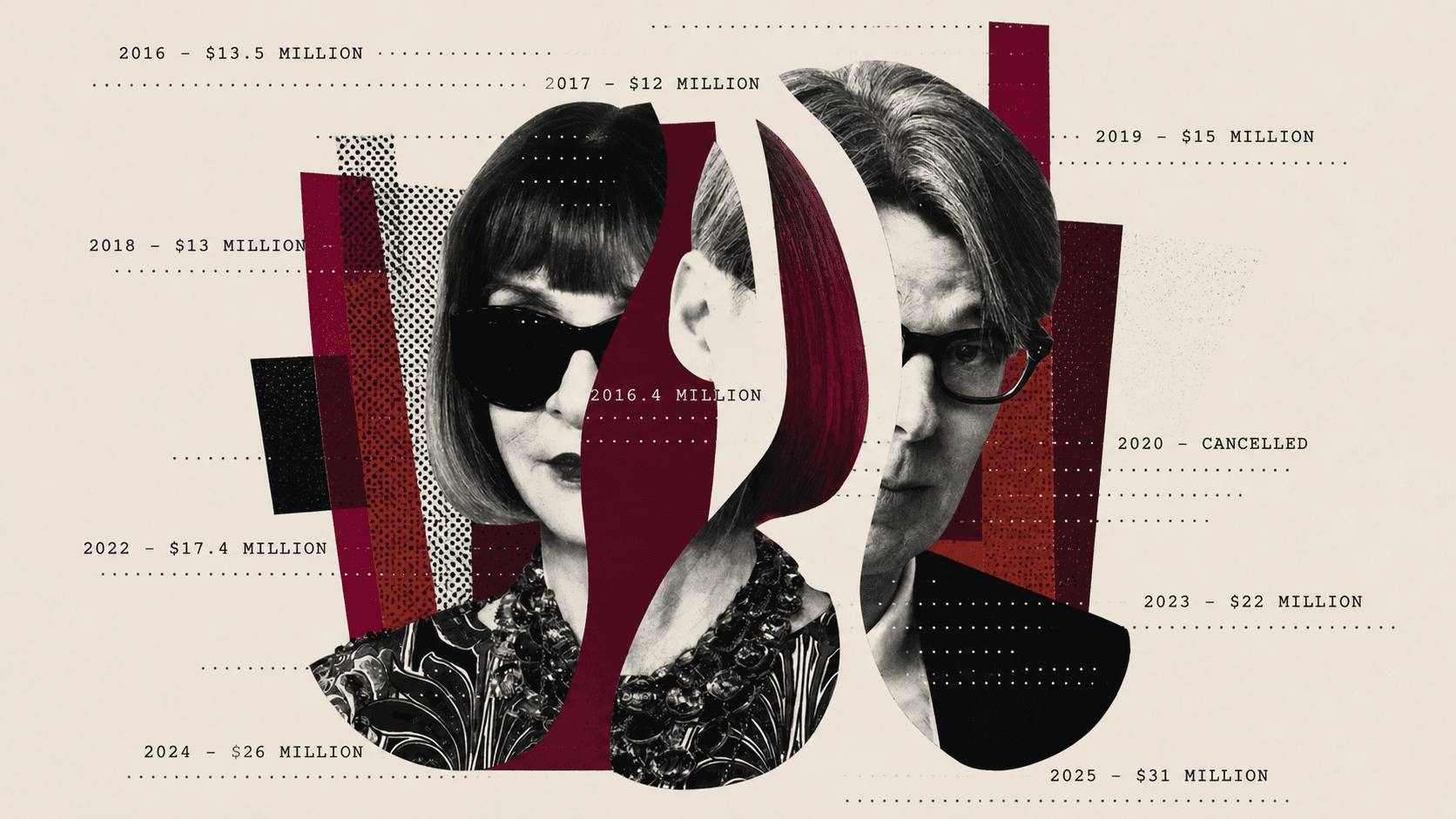
The museum's curator-in-charge Max Hollein has been at considerable pains to describe the arrangement as purely philanthropic. "This is not a show on Amazon," Hollein told the press. "This is not a show on Lauren Sanchez's dresses." The denial was so comprehensive it practically constituted a list of things one might otherwise suspect.
The Seven-Figure RSVP
The timeline is instructive, so let us walk through it in order.
In October 2024, Jeff Bezos blocked a planned presidential endorsement at the Washington Post, a paper he has owned since 2013. Within weeks, over 300,000 digital subscribers cancelled. In November 2025, it was announced that Bezos and Sánchez Bezos would serve as lead sponsors and honorary co-chairs of the 2026 Met Gala, having made their gala debut only in 2024 at the "Sleeping Beauties" event.
In June 2025, two things happened more or less simultaneously. Anna Wintour stepped down as Editor-in-Chief of American Vogue after 37 years, transitioning into the role of Global Editorial Director at Condé Nast. And in that same month, Vogue's digital cover featured Lauren Sánchez Bezos in a custom Dolce and Gabbana gown, shot on the grounds of an 18th-century villa outside Milan, styling by Tabitha Simmons, photography by Tierney Gearon. The Venice wedding had just concluded, reportedly at a cost exceeding $50 million, with protesters outside concerned about the event's impact on the city. The cover was unveiled on Instagram as the last guests were still leaving.
Fashion photographers noted in comments that they "didn't realise you could just buy a cover now." One anonymous commenter offered the longest summary: "As Anna Wintour closes her era at Vogue, the final cover could have been a bold statement, a tribute to women who are redefining leadership, pushing boundaries, or creating real change. Instead, it features a woman most widely known through her association with extreme wealth and one of the most powerful men in the world." Forum critics at theFashionSpot were characteristically precise: "If you're going to do it, at least do it right. This feels so pedestrian and flat. There's no production value, no substance, no style, no nothing."
When Sarah Jessica Parker appeared on Watch What Happens Live with Andy Cohen shortly after and was asked her opinion, she went briefly, magnificently mute before recovering with: "I... I mean, why shouldn't she?" Parker, who has appeared on the cover of Vogue at least six times across her career, was reportedly so alarmed by how the pause had read that she privately sent notes to both Wintour and Sánchez Bezos to clarify she had not meant to "throw shade." Fashion insiders told multiple outlets that her silence had "spoken volumes." It was, perhaps, the most eloquent response anyone offered.
Anna Wintour, for her part, responded with the calibrated warmth of someone who is famous in pop culture for her sarcasm, calling Sánchez "a wonderful asset to the museum and the event" and expressing that she is "very grateful for her incredible generosity." If you have spent any time studying the grammar of Wintour's compliments, you will notice the careful framing: gratitude for money, praise for enthusiasm, nothing whatsoever about taste, vision, or craft. She is, per Wintour, "a great lover of costume and obviously of fashion." One should always pay attention to Wintour's phrasing, because it is selected with the precision of surgical tools. A great lover of costume. Not a curator, not a philanthropist with a specific portfolio of commitments to the Costume Institute, not a person whose stated interest in fashion policy or sustainability or labour practices in the textile industry has been documented anywhere in the public record. A lover of costume. Which is, to be fair, all the dress code requires.
Money Can’t Buy Taste. But It Can Buy You A Vogue Cover.
There is a category of publicity that billionaires have discovered in the last decade which might be called accountability-free exposure. It works as follows: you attend an event, you stand somewhere photogenic, cameras record your presence, and millions of people spend 48 hours debating your outfit. No one asks you about injury rates. No one raises the matter of the Amazon reporter laid off from the Washington Post. No one asks about the six-point-zero injury rate per hundred workers that Amazon recorded in its warehouses in 2024, a figure that represented only a ten percent improvement since 2020 despite a publicly stated goal of fifty percent reduction. A Senate committee report found that Amazon warehouses recorded over thirty percent more injuries than the industry average in 2023, and that workers were nearly twice as likely to be injured as those at comparable facilities. The EEOC found, in February 2026, that Amazon had systemically violated the rights of pregnant warehouse workers nationwide. These facts were available to the Metropolitan Museum of Art before the sponsorship was announced.
None of this is discussed at the Met Gala. At the Met Gala, the discussion is about hemlines and headlines of a very different kind.
The red carpet is an extraordinary venue for the abandonment of accountability. You walk up some stairs. You wear something beautiful or interesting or, in some recent cases, architecturally improbable. The cameras click. The internet renders its verdict within the hour. You are, briefly, a person rather than a corporate structure, relatable in your choice of neckline, warm in your apparent delight at being photographed. No press conference follows. No one from the New York Times is waiting at the bottom of the stairs with a follow-up on your subcontracting arrangements. The format does not permit questions. The format, in fact, was designed to make that kind of question feel not just inappropriate but aesthetically jarring, like bringing a spreadsheet to a ballet.
Amy Odell, author of Anna: The Biography and one of the more clear-eyed observers of the fashion-industrial complex, identified the novelty of the arrangement in an interview with the Daily Mail: the strangeness is not that wealthy people attend the Met Gala. They always have. The strangeness is in reckoning with the idea that two private individuals can sponsor it at this scale "during a time like now," when questions about the ethics of that kind of wealth are no longer theoretical. Fashion houses sponsor the Met Gala because the Met Gala is fashion's turf. When a private individual sponsors it, that relationship reverses. You are no longer a guest in fashion's house. Fashion has come to yours.
Somewhere in all of this it is worth remembering that Lauren Sánchez spent twenty years in journalism before she became a story instead of a byline. She knows what the press can do when it is allowed to do it. Tonight she is on the other side of the rope, and the press is not allowed to do very much at all.
Glamour, it turns out, is the best press release money can buy, and it costs considerably less than accountability.
On the Washington Post, and Its Current Condition
A rundown on the latest at The Washington Post, owned by Jeff Bezos, because the Met Gala press will not be mentioning it tonight.
In February 2025, Bezos announced that the Post's opinion section would henceforth be written "in support and defense of two pillars: personal liberties and free markets," with viewpoints opposing those pillars to be "left to be published by others." David Shipley, the Post's opinion editor, resigned rather than continue under those terms. Former executive editor Martin Baron, who shepherded the Post through some of its most consequential journalism, described the move as an effort to focus the paper on those who "think exactly as he does."
A further 75,000 digital subscribers cancelled within two days of that announcement, per NPR's reporting. Associate editor Ruth Marcus, whose 40-year tenure at the Post was among the longest in its modern history, resigned after the publisher killed her column criticising the restructuring. In September 2025, the Post fired founding global opinion editor Karen Attiah, who stated publicly she had been punished for "speaking out against political violence, racial double standards, and America's apathy towards guns."
The Washington Post cut more than 300 journalists in 2025, including its entire sports department, amid losses exceeding $100 million, according to the Wall Street Journal. The paper lost 21.2 percent of its print circulation in just six months of 2025. David Maraniss, an associate editor with forty years at the paper, wrote on Bluesky that he would never write for it again under current ownership, adding that the paper was "dying in darkness," a direct reference to the Post's own masthead slogan. NPR reported in October 2025 that on at least three occasions, Post editorials had failed to disclose that they focused on matters in which the paper's owner held a direct financial interest, and that in each case the editorial line had landed in sync with those interests. The Nation reviewed the editorial board's output and concluded that some of its headlines might as well have read "Don't Tax Jeff Bezos More" or "Don't Let Unions Threaten Jeff Bezos's Control Over His Workers."
This is a man who has spent the past year methodically transforming a Pulitzer Prize-winning newspaper into a portfolio management tool, and who is now spending his Monday evening ascending the steps of the Metropolitan Museum of Art in black tie.
Bezos himself wrote in 2024 that "when it comes to the appearance of conflict, I am not an ideal owner of The Post." It was, of all the things he has written since acquiring the paper in 2013 for $250 million, the most accurate.
The Rebranding Industrial Complex
Tech billionaires have discovered, somewhat belatedly, that money alone does not make you interesting. It makes you powerful, certainly. It makes you untouchable, legally speaking. But it does not make you compelling at a dinner party, and it does not generate the kind of warm societal approval that softens public outrage. Fashion and media, however, can do that. A well-placed Vogue cover, an honorary chair title, a red carpet ascent in something fundamentally ambitious: appearances do not answer questions, but they do change the subject.
What we are watching, in real time, is the colonisation of cultural credibility by people who already own everything else.
The deeper logic of this is not, despite frequent characterisation, purely about ego. Bezos, who built Amazon on the principle of owning every layer of the supply chain from warehouse to doorstep, understands better than most people alive that whoever controls distribution controls value. A media company is not a vanity object. It is a machine that decides what is culturally legitimate. Vogue does not merely report on fashion; it determines, in real time, which designers exist and which do not. The New Yorker does not merely publish journalism; it confers seriousness. Vanity Fair does not merely cover celebrity; it decides which celebrities are interesting. Owning these mechanisms means owning the definition of aspiration itself, which is considerably more useful than owning a newspaper.
Rumours that the Bezos family might be interested in acquiring Vogue and Condé Nast outright have circulated since the cover dropped. The Newhouse family, which has owned Condé Nast since 1959, has consistently denied the company is for sale. Sources close to Bezos have described the acquisition rumours as "completely untrue." These denials have not, in any meaningful sense, made the rumours quieter, possibly because the circumstantial evidence is rather elaborate for something that isn't happening. Anna Wintour stepped down as editor-in-chief after 37 years. Lauren Sánchez appeared on the cover of Vogue in her wedding dress. Wintour, who has equity in Condé Nast and therefore a financial stake in any hypothetical sale, has described Sánchez as a wonderful asset. The new wing of the Metropolitan Museum is named for Condé Nast. The Met Gala is sponsored by the man who reportedly wants to buy Condé Nast. The event's dress code invites people to celebrate fashion as art in a gallery named for the publishing company the man might be buying.
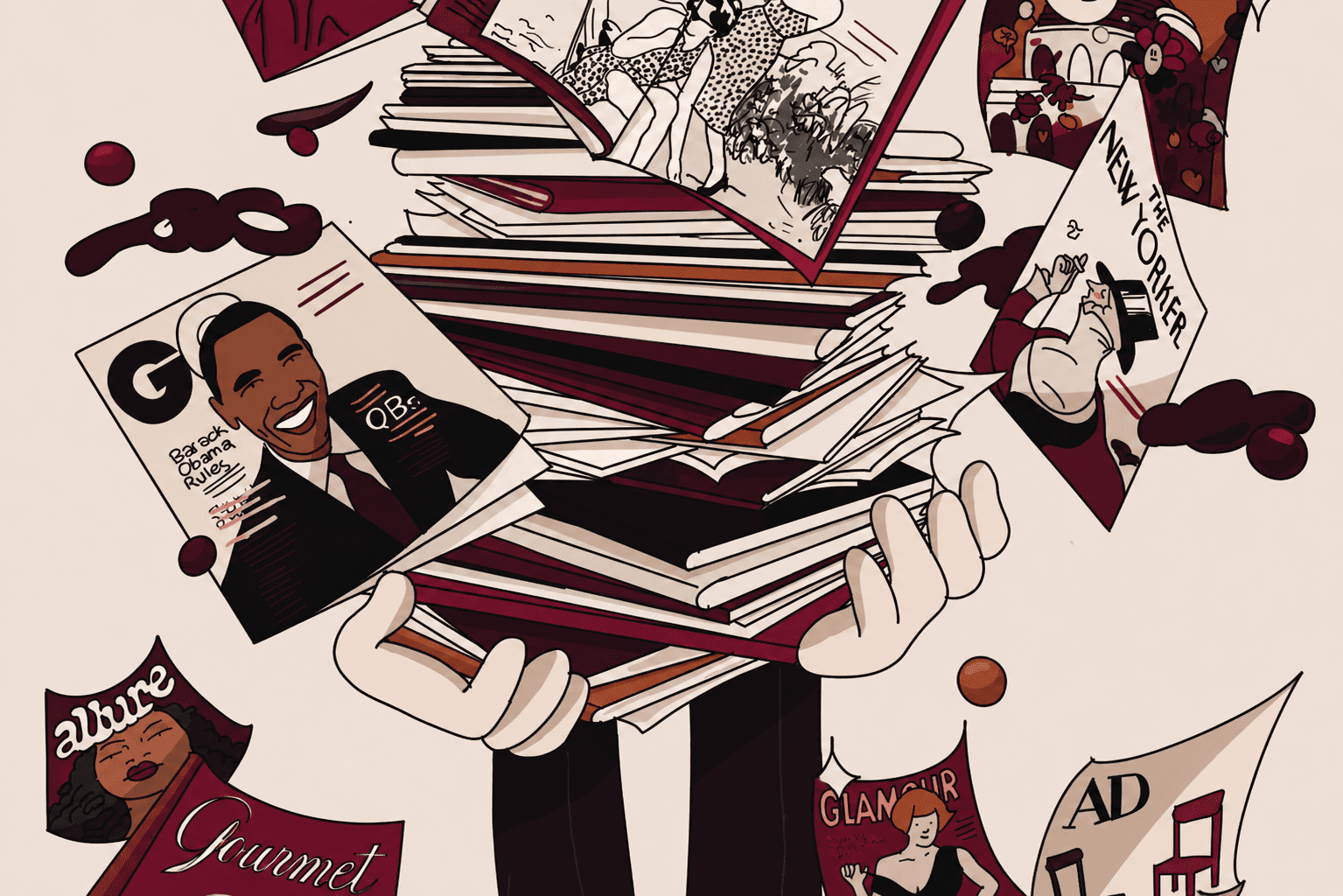
If an acquisition were to occur, the roster of publications at stake would include not only Vogue but The New Yorker, Vanity Fair, GQ, Teen Vogue, and Pitchfork. The New Yorker alone has published some of the most consequential investigative journalism of the last three decades. Ronan Farrow's reporting on Harvey Weinstein ran there. Patrick Radden Keefe's work on Purdue Pharma ran there. These are publications whose value lies almost entirely in their institutional willingness to investigate people with money and power. Bezos's purchase of the Washington Post in 2013 was described at the time as a commitment to independent journalism. We can see how that ended.
Art Imitates Life, or Life Imitates Art?
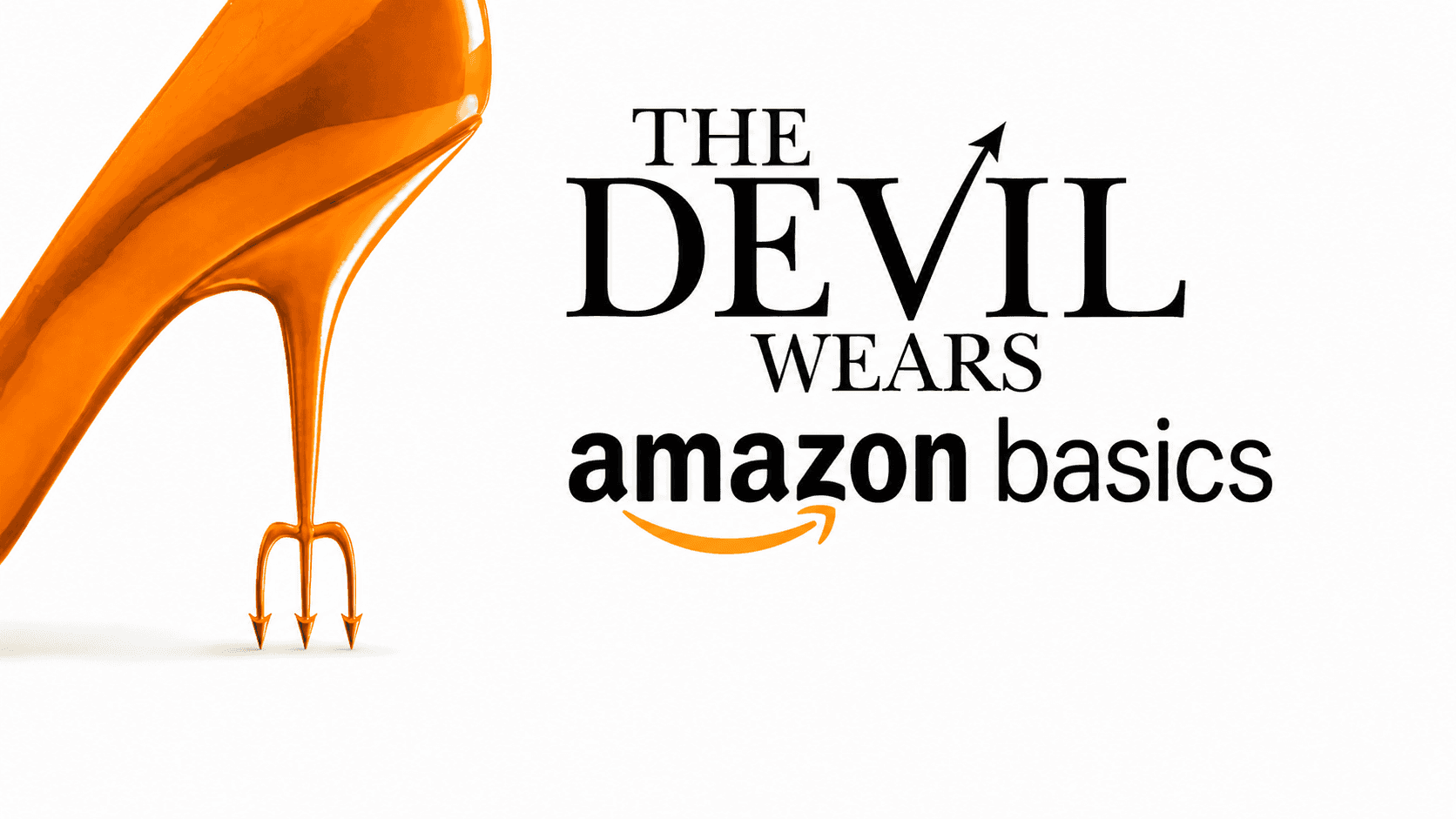
It would be remiss, in a discussion of billionaires acquiring fashion media empires, to omit the fact that The Devil Wears Prada 2 opened in cinemas last week. The film, written by Aline Brosh McKenna and directed by David Frankel, grossed $234 million in its first days against a $100 million budget and returns to Miranda Priestly's Runway magazine twenty years on, where Andy Sachs is now an established investigative journalist who gets pulled back into fashion's orbit after her newsroom is gutted by layoffs.
The film's central antagonist is Benji Barnes, a tech billionaire played by Justin Theroux as a man who, by what the filmmakers have described as pure coincidence, laughs exactly like Jeff Bezos, underwent a dramatic physical transformation after his divorce, and whose primary ambition is to purchase Runway so that his partner, Emily Charlton, who was once Miranda’s assistant many moons ago, played by Emily Blunt reprising her role, can run it. His ex-wife, played by Lucy Liu, used her divorce settlement to give away billions to charitable causes, which is also purely a coincidence and in no way a reference to MacKenzie Scott, who has donated more than nineteen billion dollars since her divorce from Bezos and declines to attend events like this one.
Emily Blunt's spokesperson confirmed that the character was absolutely not based on Lauren Sánchez. The character was developed twenty years ago. This could not be further from the truth. It is purely coincidental apparently, that the fictional plot of a major Disney film, in which a buff tech billionaire with a characteristic laugh attempts to buy the world's most powerful fashion magazine as a vanity exercise for his wife, has arrived in cinemas during the same week that the real tech billionaire who reportedly wants to buy the world's most powerful fashion publisher is co-chairing and sponsoring the Met Gala while his wife is described by its longtime organiser as "a great lover of costume."
When satire and reality reach this degree of convergence, one of two things has happened: either art is genuinely prophetic, or power has simply become so brazen that fiction has stopped needing to exaggerate.
The film ends, mercifully, with Benji's reclusive ex-wife purchasing Runway and ensuring it remains under Miranda's editorial control. The real world does not have a Sasha. The real world has the Washington Post.
The Tastemakers and What Replaced Them
When Wintour arrived at American Vogue in 1988, she placed model Michaela Bercu on her first cover wearing a Christian Lacroix haute couture jacket over a pair of stonewashed jeans. Vogue staff were horrified. The combination of extreme high and low was considered a categorical violation. It turned out to be the defining gesture of thirty-seven years of editorial vision. She had a vision, and the authority to impose it, and the capacity to be held responsible when it was wrong. An editor's power was always that accountability went both ways.
Grace Coddington's decades as creative director at Vogue produced imagery that will outlast the institutional context in which it was made. Diana Vreeland's tenure at Harper's Bazaar and then Vogue produced a visual language for American glamour that influenced photography, film, and interior design. They were tastemakers with strong opinions and the professional standing to back them.
The gatekeeper model attracted significant criticism, much of it legitimate. Fashion's history with diversity, with body image, with the economics of who gets to participate, is not a proud one. But the gatekeeper model at least maintained the premise that someone with aesthetic intelligence and industry knowledge was making decisions based on standards that were, in principle, articulable. The question the 2026 gala poses is what replaces that logic when the tastemaker's role is occupied by someone whose primary credential is the size of their donation.
The answer, based on available evidence, is that taste does not get replaced. It gets dissolved. Gradually, then all at once, as the money goes, so goes the standard. The fashion industry is not the only institution currently field-testing this theory.
The logic that has stripped a third of the Washington Post's newsroom and converted its opinion pages into what The Nation called a vehicle for "pro-billionaire propaganda" is the same logic that would, given the opportunity, look at an atelier full of hand-embroiderers and see a process that has not yet been optimised. The two things, the decline of editorial independence and the potential dilution of craft-based fashion, are not the same crisis. But they share a root. Institutions built on the slow accretion of expertise, trust, and aesthetic intelligence are poorly defended against people with significant capital and no particular commitment to the institution's original aspiration.
The Indian Annexation
India's corner of the Met Gala red carpet has expanded from a diplomatic delegation into approaching a full pop-cultural occupation, which is its own interesting story. Natasha Poonawalla, the philanthropist and vaccine manufacturing heiress who has become the gala's most reliably experimental Indian attendee, is expected to return. Isha Ambani, attending since her Dior couture debut in 2017, whose 2025 appearance in a custom Anamika Khanna ensemble accompanied by a Cartier necklace previously owned by the Maharaja of Nawanagar was subtly the most interesting piece of heritage storytelling on the entire carpet, is anticipated again. Deepika Padukone is rumoured to be returning for the first time since her 2019 Zac Posen moment. Designer Manish Malhotra has spoken about Indian embroidery "finally taking centre stage" on the global fashion circuit.
The observation that several of these attendees represent inherited industrial or pharmaceutical wealth, rather than the film industry money that first brought India to these steps, is not a criticism. The Met Gala has always been a room where wealth and visibility convert into cultural presence. The observation is simply that this conversion process is accelerating across multiple geographies simultaneously, and that the currency in question has less and less to do with fashion and art.
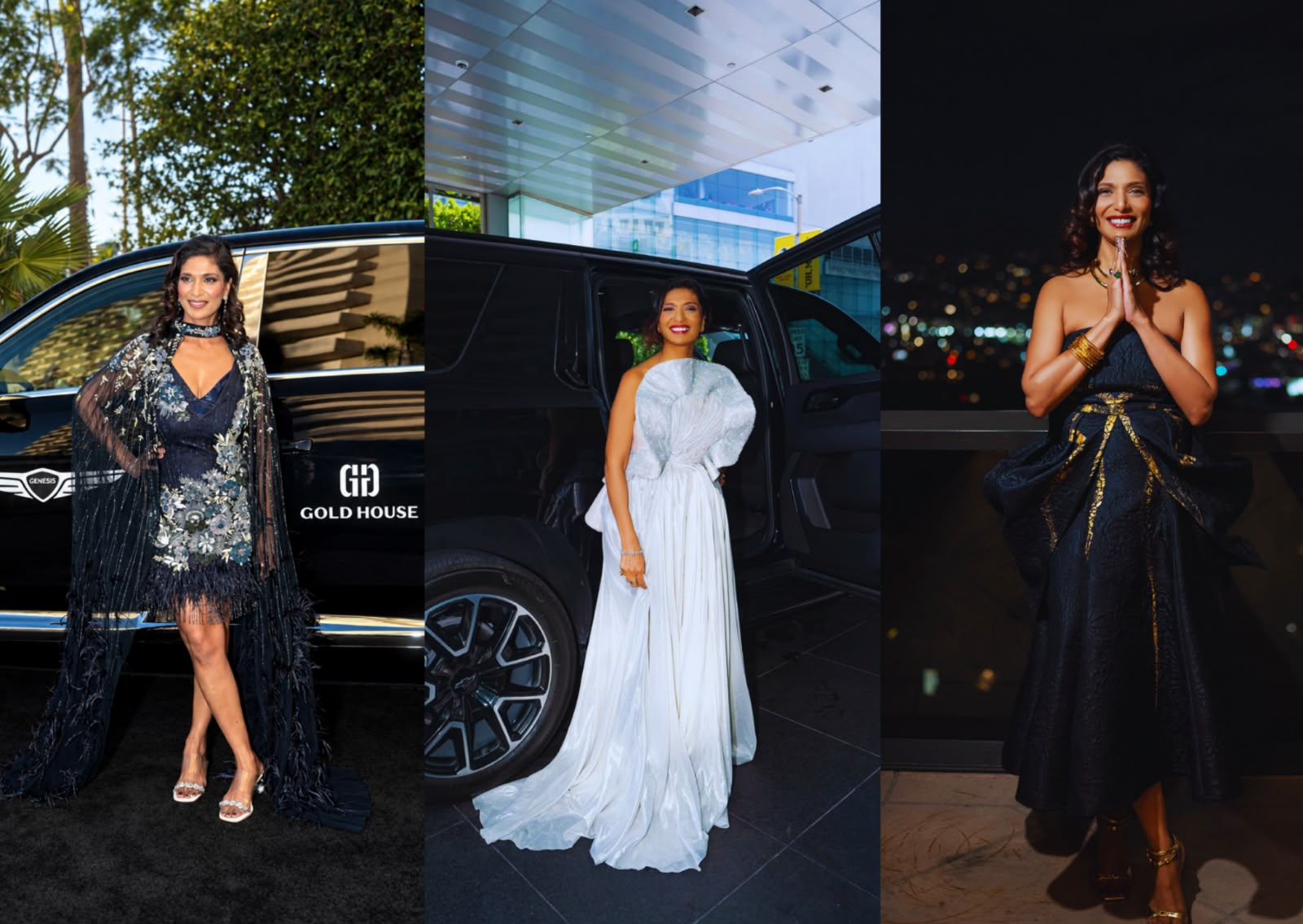
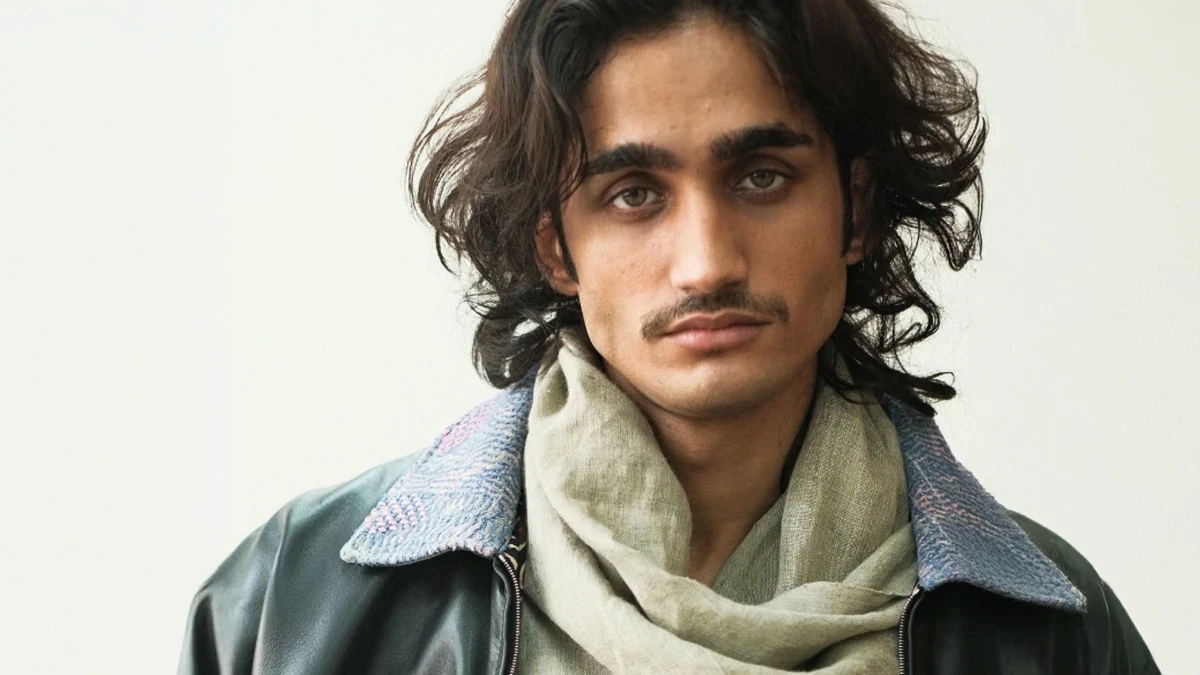
Manish Malhotra has spoken at length about the years it took for Indian embroidery to receive international recognition for the craft it represents. The embroidered bodice that Mona Patel wore in her Thom Browne suit at the 2025 gala was as much a statement about the irreplaceability of that labour as it was a style choice. And here is the thing: the logic of efficiency that has gutted one newsroom and restructured one opinion section is the same logic that would look at eight hundred hours of hand embroidery and wonder if there is a faster way. There is always a faster way. Amazon will remind you of this twice a year, at considerable volume, when it holds a sale on the exact category of cheap, machine-made clothing that eight hundred hours of hand embroidery exists in defiance of. This year's theme is Fashion Is Art. The event is sponsored by the company that wants to deliver art to your door by tomorrow if you order it in the next 40 minutes.
Accountability Is Not On the Dress Code
Outside, the conversation is happening in a different register. Activist group Everyone Hates Elon, named in reference to a different but adjacent figure in the tech-billionaire ecosystem, has plastered New York's subway walls with posters reading "The Bezos Met Gala: Brought to you by worker exploitation." Labour coalitions including the Service Employees International Union and the Amazon Labor Union organised a counter-event called "Ball Without Billionaires." The Met's gift shop briefly stocked commemorative plates reading "The Bezos Met Gala: The World's Most Expensive Midlife Crisis," which have the distinction of being the most unambiguous consumer objects available in connection with this year's event.
Zendaya and Meryl Streep, both regulars, are absent this year, having given no public reason, which is the most elegant protest available to people who understand how image works. New York City's mayor, Zohran Mamdani, told Hell Gate in April that he and his wife would not be attending, as he was focused on "affordability and making the most expensive city in the United States affordable." One assumes he chose the venue for that statement deliberately. Given that Meryl Streep's most famous role has now been made into a sequel satirising the precise situation unfolding on those stairs tonight, one suspects her instincts remain impeccable.
Miranda Survived. But Will Journalism?
The 2026 Met Gala's exhibition is subtitled with a commitment to "displaying and appreciating fashion as an art form." It will run until January 10, 2027, in galleries named after a media conglomerate, inaugurated by an event sponsored by a man whose newspaper lost its print circulation at a rate of 21.2 percent in a single six-month period, while his wife appeared on the cover of the magazine that organises the event in the same month that the magazine's editor of 37 years stepped aside.
The theme is "Fashion Is Art." Art, in most serious formulations, is the thing that holds a mirror up to power rather than posing for the power's photographer. The most honest artwork produced in connection with this year's gala may be those guerrilla plates in the gift shop. They at least are staying true to their craft.
Andy Sachs got her journalism back, and the magazine survived, because the people who loved both were thinking one step ahead of the people who wanted to monetise them. That is a very satisfying ending but alas it is also just a film.
Tonight, patrons to fashion's biggest night will ascend those famous stairs, and it will be photographed beautifully, and the photographs will be analysed for days, and the craftsmanship of some of the looks will be extraordinary, and the conversation about what it all means will happen everywhere except on those steps. The press will write what the press writes. Access journalism, it turns out, is just another product with a price.
There is a meaningful difference between fashion celebrating itself and a tech empire buying a seat at fashion's table and then photographing the seat from every angle. One is vanity. The other is strategy. The red carpet, this year, runs all the way to the boardroom.
The free press was a wonderful concept. Someone should write its obituary. Preferably before the remaining staff are let go.
TO BE CONTINUED, FOR SUBSCRIBERS ONLY.
This is where the surface ends and the reporting begins.
The complete piece, the full archive, and access to The French Press Circle. Reporting answerable only to its readers.
Already a subscriber ?
Login
Read these on the house, with our compliments.
A selection from the current issue, open to all readers. Read them in full. The rest is one decision away.


There is a formula to the Met Gala that has always made it useful to people who want to be seen without being scrutinised. You ascend a staircase. You are photographed from seventeen angles simultaneously. Someone with a very good vocabulary describes what you are wearing. Nobody asks you anything. The whole event is engineered around the sanctity of the surface, a cathedral built for appearances, in the most literal and theological sense.
For a fashion institution, this is perfectly appropriate. For a tech billionaire managing a multi-front reputational catastrophe, it is, frankly, a gift.
Tonight, the 2026 Met Gala descends upon the Metropolitan Museum of Art under the exhibition theme "Costume Art" and a dress code of "Fashion Is Art." The exhibition itself, running from May 10 through January 10, 2027, opens the Costume Institute's first permanent galleries, now named the Condé M. Nast Galleries, because apparently the art-fashion-philanthropy pipeline required a formal dedication plaque. Curator-in-Charge Andrew Bolton described "Costume Art" as striving to make the connection between bodies and the clothes people wear, with nearly 400 objects contributing to the museum's initiative of appreciating fashion as an art form. It is, by all accounts, a genuinely ambitious exhibition.
The theme is so admirably open-ended that it can accommodate Jean Paul Gaultier's trompe l'oeil muscled torso suits, Schiaparelli's surrealist anatomy, and, presumably, whatever a certain billionaire's wife has decided to wear, which by multiple accounts will be risqué, overexposed, and emphatically not subject to Anna Wintour's approval, because she is "not going through Anna." In an event governed entirely by a woman who has spent five decades deciding what everyone else may wear in her presence, this is either an act of radical self-expression or proof that the person who signs the largest cheque answers to nobody, including the editor-in-chief who left that role in June 2025 but somehow still controls the guest list.
That person, as you are probably already aware, is Jeff Bezos. Him and his wife Lauren Sánchez Bezos, who reportedly brought a seven-figure donation to the table, some sources placing the total at ten million dollars, with others suggesting it may reach twenty, to secure their roles as the event's honorary co-chairs and lead financial sponsors. This is the first time in the Met Gala's 78-year history that a private individual, rather than a corporation, has served as lead sponsor. Jeff Bezos did not send Amazon, he sent himself.
Individual tickets this year are priced at $100,000. A table costs $350,000, up from $75,000 per seat last year, in what may be the most counterintuitive pricing strategy attempted in recent memory, given that the gala is also, per multiple industry insiders cited by the Daily Mail, struggling to fill seats. "The demand just isn't there," one source told the publication bluntly. Meanwhile, the Costume Institute remains the only curatorial department at the entire Metropolitan Museum required to fund its own operations, which is either a testament to the enduring institutional bias against fashion as a serious discipline, or a very elegant explanation for why Anna Wintour has spent thirty years turning a charity dinner into the most commercially potent event in culture.
The museum's curator-in-charge Max Hollein has been at considerable pains to describe the arrangement as purely philanthropic. "This is not a show on Amazon," Hollein told the press. "This is not a show on Lauren Sanchez's dresses." The denial was so comprehensive it practically constituted a list of things one might otherwise suspect.
The Seven-Figure RSVP
The timeline is instructive, so let us walk through it in order.
In October 2024, Jeff Bezos blocked a planned presidential endorsement at the Washington Post, a paper he has owned since 2013. Within weeks, over 300,000 digital subscribers cancelled. In November 2025, it was announced that Bezos and Sánchez Bezos would serve as lead sponsors and honorary co-chairs of the 2026 Met Gala, having made their gala debut only in 2024 at the "Sleeping Beauties" event.
In June 2025, two things happened more or less simultaneously. Anna Wintour stepped down as Editor-in-Chief of American Vogue after 37 years, transitioning into the role of Global Editorial Director at Condé Nast. And in that same month, Vogue's digital cover featured Lauren Sánchez Bezos in a custom Dolce and Gabbana gown, shot on the grounds of an 18th-century villa outside Milan, styling by Tabitha Simmons, photography by Tierney Gearon. The Venice wedding had just concluded, reportedly at a cost exceeding $50 million, with protesters outside concerned about the event's impact on the city. The cover was unveiled on Instagram as the last guests were still leaving.
Fashion photographers noted in comments that they "didn't realise you could just buy a cover now." One anonymous commenter offered the longest summary: "As Anna Wintour closes her era at Vogue, the final cover could have been a bold statement, a tribute to women who are redefining leadership, pushing boundaries, or creating real change. Instead, it features a woman most widely known through her association with extreme wealth and one of the most powerful men in the world." Forum critics at theFashionSpot were characteristically precise: "If you're going to do it, at least do it right. This feels so pedestrian and flat. There's no production value, no substance, no style, no nothing."
When Sarah Jessica Parker appeared on Watch What Happens Live with Andy Cohen shortly after and was asked her opinion, she went briefly, magnificently mute before recovering with: "I... I mean, why shouldn't she?" Parker, who has appeared on the cover of Vogue at least six times across her career, was reportedly so alarmed by how the pause had read that she privately sent notes to both Wintour and Sánchez Bezos to clarify she had not meant to "throw shade." Fashion insiders told multiple outlets that her silence had "spoken volumes." It was, perhaps, the most eloquent response anyone offered.
Anna Wintour, for her part, responded with the calibrated warmth of someone who is famous in pop culture for her sarcasm, calling Sánchez "a wonderful asset to the museum and the event" and expressing that she is "very grateful for her incredible generosity." If you have spent any time studying the grammar of Wintour's compliments, you will notice the careful framing: gratitude for money, praise for enthusiasm, nothing whatsoever about taste, vision, or craft. She is, per Wintour, "a great lover of costume and obviously of fashion." One should always pay attention to Wintour's phrasing, because it is selected with the precision of surgical tools. A great lover of costume. Not a curator, not a philanthropist with a specific portfolio of commitments to the Costume Institute, not a person whose stated interest in fashion policy or sustainability or labour practices in the textile industry has been documented anywhere in the public record. A lover of costume. Which is, to be fair, all the dress code requires.
Money Can’t Buy Taste. But It Can Buy You A Vogue Cover.
There is a category of publicity that billionaires have discovered in the last decade which might be called accountability-free exposure. It works as follows: you attend an event, you stand somewhere photogenic, cameras record your presence, and millions of people spend 48 hours debating your outfit. No one asks you about injury rates. No one raises the matter of the Amazon reporter laid off from the Washington Post. No one asks about the six-point-zero injury rate per hundred workers that Amazon recorded in its warehouses in 2024, a figure that represented only a ten percent improvement since 2020 despite a publicly stated goal of fifty percent reduction. A Senate committee report found that Amazon warehouses recorded over thirty percent more injuries than the industry average in 2023, and that workers were nearly twice as likely to be injured as those at comparable facilities. The EEOC found, in February 2026, that Amazon had systemically violated the rights of pregnant warehouse workers nationwide. These facts were available to the Metropolitan Museum of Art before the sponsorship was announced.
None of this is discussed at the Met Gala. At the Met Gala, the discussion is about hemlines and headlines of a very different kind.
The red carpet is an extraordinary venue for the abandonment of accountability. You walk up some stairs. You wear something beautiful or interesting or, in some recent cases, architecturally improbable. The cameras click. The internet renders its verdict within the hour. You are, briefly, a person rather than a corporate structure, relatable in your choice of neckline, warm in your apparent delight at being photographed. No press conference follows. No one from the New York Times is waiting at the bottom of the stairs with a follow-up on your subcontracting arrangements. The format does not permit questions. The format, in fact, was designed to make that kind of question feel not just inappropriate but aesthetically jarring, like bringing a spreadsheet to a ballet.
Amy Odell, author of Anna: The Biography and one of the more clear-eyed observers of the fashion-industrial complex, identified the novelty of the arrangement in an interview with the Daily Mail: the strangeness is not that wealthy people attend the Met Gala. They always have. The strangeness is in reckoning with the idea that two private individuals can sponsor it at this scale "during a time like now," when questions about the ethics of that kind of wealth are no longer theoretical. Fashion houses sponsor the Met Gala because the Met Gala is fashion's turf. When a private individual sponsors it, that relationship reverses. You are no longer a guest in fashion's house. Fashion has come to yours.
Somewhere in all of this it is worth remembering that Lauren Sánchez spent twenty years in journalism before she became a story instead of a byline. She knows what the press can do when it is allowed to do it. Tonight she is on the other side of the rope, and the press is not allowed to do very much at all.
Glamour, it turns out, is the best press release money can buy, and it costs considerably less than accountability.
On the Washington Post, and Its Current Condition
A rundown on the latest at The Washington Post, owned by Jeff Bezos, because the Met Gala press will not be mentioning it tonight.
In February 2025, Bezos announced that the Post's opinion section would henceforth be written "in support and defense of two pillars: personal liberties and free markets," with viewpoints opposing those pillars to be "left to be published by others." David Shipley, the Post's opinion editor, resigned rather than continue under those terms. Former executive editor Martin Baron, who shepherded the Post through some of its most consequential journalism, described the move as an effort to focus the paper on those who "think exactly as he does."
A further 75,000 digital subscribers cancelled within two days of that announcement, per NPR's reporting. Associate editor Ruth Marcus, whose 40-year tenure at the Post was among the longest in its modern history, resigned after the publisher killed her column criticising the restructuring. In September 2025, the Post fired founding global opinion editor Karen Attiah, who stated publicly she had been punished for "speaking out against political violence, racial double standards, and America's apathy towards guns."
The Washington Post cut more than 300 journalists in 2025, including its entire sports department, amid losses exceeding $100 million, according to the Wall Street Journal. The paper lost 21.2 percent of its print circulation in just six months of 2025. David Maraniss, an associate editor with forty years at the paper, wrote on Bluesky that he would never write for it again under current ownership, adding that the paper was "dying in darkness," a direct reference to the Post's own masthead slogan. NPR reported in October 2025 that on at least three occasions, Post editorials had failed to disclose that they focused on matters in which the paper's owner held a direct financial interest, and that in each case the editorial line had landed in sync with those interests. The Nation reviewed the editorial board's output and concluded that some of its headlines might as well have read "Don't Tax Jeff Bezos More" or "Don't Let Unions Threaten Jeff Bezos's Control Over His Workers."
This is a man who has spent the past year methodically transforming a Pulitzer Prize-winning newspaper into a portfolio management tool, and who is now spending his Monday evening ascending the steps of the Metropolitan Museum of Art in black tie.
Bezos himself wrote in 2024 that "when it comes to the appearance of conflict, I am not an ideal owner of The Post." It was, of all the things he has written since acquiring the paper in 2013 for $250 million, the most accurate.
The Rebranding Industrial Complex
Tech billionaires have discovered, somewhat belatedly, that money alone does not make you interesting. It makes you powerful, certainly. It makes you untouchable, legally speaking. But it does not make you compelling at a dinner party, and it does not generate the kind of warm societal approval that softens public outrage. Fashion and media, however, can do that. A well-placed Vogue cover, an honorary chair title, a red carpet ascent in something fundamentally ambitious: appearances do not answer questions, but they do change the subject.
What we are watching, in real time, is the colonisation of cultural credibility by people who already own everything else.
The deeper logic of this is not, despite frequent characterisation, purely about ego. Bezos, who built Amazon on the principle of owning every layer of the supply chain from warehouse to doorstep, understands better than most people alive that whoever controls distribution controls value. A media company is not a vanity object. It is a machine that decides what is culturally legitimate. Vogue does not merely report on fashion; it determines, in real time, which designers exist and which do not. The New Yorker does not merely publish journalism; it confers seriousness. Vanity Fair does not merely cover celebrity; it decides which celebrities are interesting. Owning these mechanisms means owning the definition of aspiration itself, which is considerably more useful than owning a newspaper.
Rumours that the Bezos family might be interested in acquiring Vogue and Condé Nast outright have circulated since the cover dropped. The Newhouse family, which has owned Condé Nast since 1959, has consistently denied the company is for sale. Sources close to Bezos have described the acquisition rumours as "completely untrue." These denials have not, in any meaningful sense, made the rumours quieter, possibly because the circumstantial evidence is rather elaborate for something that isn't happening. Anna Wintour stepped down as editor-in-chief after 37 years. Lauren Sánchez appeared on the cover of Vogue in her wedding dress. Wintour, who has equity in Condé Nast and therefore a financial stake in any hypothetical sale, has described Sánchez as a wonderful asset. The new wing of the Metropolitan Museum is named for Condé Nast. The Met Gala is sponsored by the man who reportedly wants to buy Condé Nast. The event's dress code invites people to celebrate fashion as art in a gallery named for the publishing company the man might be buying.
If an acquisition were to occur, the roster of publications at stake would include not only Vogue but The New Yorker, Vanity Fair, GQ, Teen Vogue, and Pitchfork. The New Yorker alone has published some of the most consequential investigative journalism of the last three decades. Ronan Farrow's reporting on Harvey Weinstein ran there. Patrick Radden Keefe's work on Purdue Pharma ran there. These are publications whose value lies almost entirely in their institutional willingness to investigate people with money and power. Bezos's purchase of the Washington Post in 2013 was described at the time as a commitment to independent journalism. We can see how that ended.
Art Imitates Life, or Life Imitates Art?
It would be remiss, in a discussion of billionaires acquiring fashion media empires, to omit the fact that The Devil Wears Prada 2 opened in cinemas last week. The film, written by Aline Brosh McKenna and directed by David Frankel, grossed $234 million in its first days against a $100 million budget and returns to Miranda Priestly's Runway magazine twenty years on, where Andy Sachs is now an established investigative journalist who gets pulled back into fashion's orbit after her newsroom is gutted by layoffs.
The film's central antagonist is Benji Barnes, a tech billionaire played by Justin Theroux as a man who, by what the filmmakers have described as pure coincidence, laughs exactly like Jeff Bezos, underwent a dramatic physical transformation after his divorce, and whose primary ambition is to purchase Runway so that his partner, Emily Charlton, who was once Miranda’s assistant many moons ago, played by Emily Blunt reprising her role, can run it. His ex-wife, played by Lucy Liu, used her divorce settlement to give away billions to charitable causes, which is also purely a coincidence and in no way a reference to MacKenzie Scott, who has donated more than nineteen billion dollars since her divorce from Bezos and declines to attend events like this one.
Emily Blunt's spokesperson confirmed that the character was absolutely not based on Lauren Sánchez. The character was developed twenty years ago. This could not be further from the truth. It is purely coincidental apparently, that the fictional plot of a major Disney film, in which a buff tech billionaire with a characteristic laugh attempts to buy the world's most powerful fashion magazine as a vanity exercise for his wife, has arrived in cinemas during the same week that the real tech billionaire who reportedly wants to buy the world's most powerful fashion publisher is co-chairing and sponsoring the Met Gala while his wife is described by its longtime organiser as "a great lover of costume."
When satire and reality reach this degree of convergence, one of two things has happened: either art is genuinely prophetic, or power has simply become so brazen that fiction has stopped needing to exaggerate.
The film ends, mercifully, with Benji's reclusive ex-wife purchasing Runway and ensuring it remains under Miranda's editorial control. The real world does not have a Sasha. The real world has the Washington Post.
The Tastemakers and What Replaced Them
When Wintour arrived at American Vogue in 1988, she placed model Michaela Bercu on her first cover wearing a Christian Lacroix haute couture jacket over a pair of stonewashed jeans. Vogue staff were horrified. The combination of extreme high and low was considered a categorical violation. It turned out to be the defining gesture of thirty-seven years of editorial vision. She had a vision, and the authority to impose it, and the capacity to be held responsible when it was wrong. An editor's power was always that accountability went both ways.
Grace Coddington's decades as creative director at Vogue produced imagery that will outlast the institutional context in which it was made. Diana Vreeland's tenure at Harper's Bazaar and then Vogue produced a visual language for American glamour that influenced photography, film, and interior design. They were tastemakers with strong opinions and the professional standing to back them.
The gatekeeper model attracted significant criticism, much of it legitimate. Fashion's history with diversity, with body image, with the economics of who gets to participate, is not a proud one. But the gatekeeper model at least maintained the premise that someone with aesthetic intelligence and industry knowledge was making decisions based on standards that were, in principle, articulable. The question the 2026 gala poses is what replaces that logic when the tastemaker's role is occupied by someone whose primary credential is the size of their donation.
The answer, based on available evidence, is that taste does not get replaced. It gets dissolved. Gradually, then all at once, as the money goes, so goes the standard. The fashion industry is not the only institution currently field-testing this theory.
The logic that has stripped a third of the Washington Post's newsroom and converted its opinion pages into what The Nation called a vehicle for "pro-billionaire propaganda" is the same logic that would, given the opportunity, look at an atelier full of hand-embroiderers and see a process that has not yet been optimised. The two things, the decline of editorial independence and the potential dilution of craft-based fashion, are not the same crisis. But they share a root. Institutions built on the slow accretion of expertise, trust, and aesthetic intelligence are poorly defended against people with significant capital and no particular commitment to the institution's original aspiration.
The Indian Annexation
India's corner of the Met Gala red carpet has expanded from a diplomatic delegation into approaching a full pop-cultural occupation, which is its own interesting story. Natasha Poonawalla, the philanthropist and vaccine manufacturing heiress who has become the gala's most reliably experimental Indian attendee, is expected to return. Isha Ambani, attending since her Dior couture debut in 2017, whose 2025 appearance in a custom Anamika Khanna ensemble accompanied by a Cartier necklace previously owned by the Maharaja of Nawanagar was subtly the most interesting piece of heritage storytelling on the entire carpet, is anticipated again. Deepika Padukone is rumoured to be returning for the first time since her 2019 Zac Posen moment. Designer Manish Malhotra has spoken about Indian embroidery "finally taking centre stage" on the global fashion circuit.
The observation that several of these attendees represent inherited industrial or pharmaceutical wealth, rather than the film industry money that first brought India to these steps, is not a criticism. The Met Gala has always been a room where wealth and visibility convert into cultural presence. The observation is simply that this conversion process is accelerating across multiple geographies simultaneously, and that the currency in question has less and less to do with fashion and art.
Manish Malhotra has spoken at length about the years it took for Indian embroidery to receive international recognition for the craft it represents. The embroidered bodice that Mona Patel wore in her Thom Browne suit at the 2025 gala was as much a statement about the irreplaceability of that labour as it was a style choice. And here is the thing: the logic of efficiency that has gutted one newsroom and restructured one opinion section is the same logic that would look at eight hundred hours of hand embroidery and wonder if there is a faster way. There is always a faster way. Amazon will remind you of this twice a year, at considerable volume, when it holds a sale on the exact category of cheap, machine-made clothing that eight hundred hours of hand embroidery exists in defiance of. This year's theme is Fashion Is Art. The event is sponsored by the company that wants to deliver art to your door by tomorrow if you order it in the next 40 minutes.
Accountability Is Not On the Dress Code
Outside, the conversation is happening in a different register. Activist group Everyone Hates Elon, named in reference to a different but adjacent figure in the tech-billionaire ecosystem, has plastered New York's subway walls with posters reading "The Bezos Met Gala: Brought to you by worker exploitation." Labour coalitions including the Service Employees International Union and the Amazon Labor Union organised a counter-event called "Ball Without Billionaires." The Met's gift shop briefly stocked commemorative plates reading "The Bezos Met Gala: The World's Most Expensive Midlife Crisis," which have the distinction of being the most unambiguous consumer objects available in connection with this year's event.
Zendaya and Meryl Streep, both regulars, are absent this year, having given no public reason, which is the most elegant protest available to people who understand how image works. New York City's mayor, Zohran Mamdani, told Hell Gate in April that he and his wife would not be attending, as he was focused on "affordability and making the most expensive city in the United States affordable." One assumes he chose the venue for that statement deliberately. Given that Meryl Streep's most famous role has now been made into a sequel satirising the precise situation unfolding on those stairs tonight, one suspects her instincts remain impeccable.
Miranda Survived. But Will Journalism?
The 2026 Met Gala's exhibition is subtitled with a commitment to "displaying and appreciating fashion as an art form." It will run until January 10, 2027, in galleries named after a media conglomerate, inaugurated by an event sponsored by a man whose newspaper lost its print circulation at a rate of 21.2 percent in a single six-month period, while his wife appeared on the cover of the magazine that organises the event in the same month that the magazine's editor of 37 years stepped aside.
The theme is "Fashion Is Art." Art, in most serious formulations, is the thing that holds a mirror up to power rather than posing for the power's photographer. The most honest artwork produced in connection with this year's gala may be those guerrilla plates in the gift shop. They at least are staying true to their craft.
Andy Sachs got her journalism back, and the magazine survived, because the people who loved both were thinking one step ahead of the people who wanted to monetise them. That is a very satisfying ending but alas it is also just a film.
Tonight, patrons to fashion's biggest night will ascend those famous stairs, and it will be photographed beautifully, and the photographs will be analysed for days, and the craftsmanship of some of the looks will be extraordinary, and the conversation about what it all means will happen everywhere except on those steps. The press will write what the press writes. Access journalism, it turns out, is just another product with a price.
There is a meaningful difference between fashion celebrating itself and a tech empire buying a seat at fashion's table and then photographing the seat from every angle. One is vanity. The other is strategy. The red carpet, this year, runs all the way to the boardroom.
The free press was a wonderful concept. Someone should write its obituary. Preferably before the remaining staff are let go.
TO BE CONTINUED, FOR SUBSCRIBERS ONLY.
This is where the surface ends and the reporting begins.
The complete piece, the full archive, and access to The French Press Circle. Reporting answerable only to its readers.
Already a subscriber ?
Login
Read these on the house, with our compliments.
A selection from the current issue, open to all readers. Read them in full. The rest is one decision away.