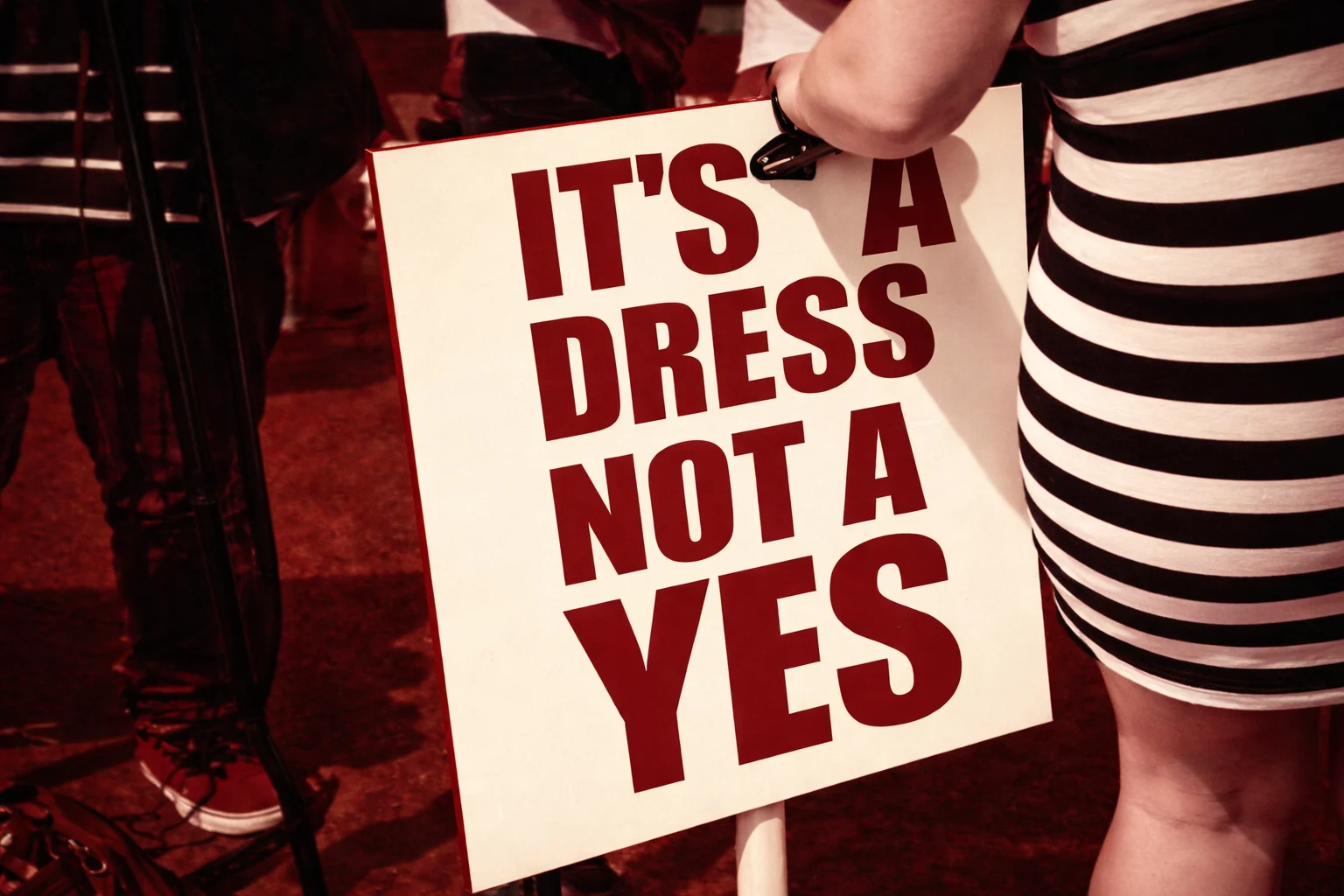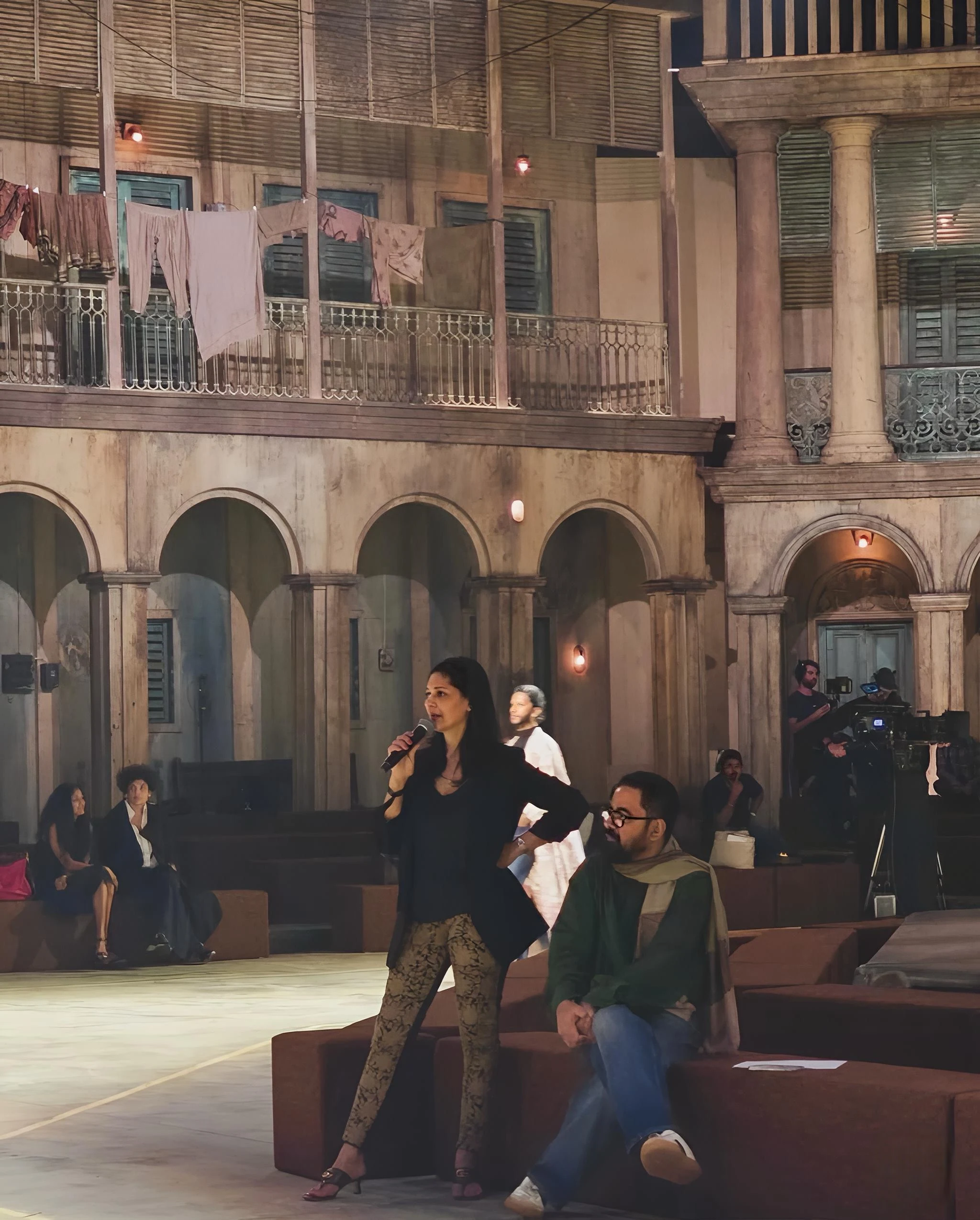
If politics governs the distribution of power in both public and private life, then fashion becomes one of its most compelling instruments.
Across decades, clothing has served far more than decoration. It has carried the codes of class, belief, rebellion, and authority, shaping how bodies are read within systems of power. Fashion operates as a visual language, communicating allegiance and authority before words are spoken. BJP spokesperson Charu Pragya articulates this dynamic as intentional visual communication. “Even before I open my mouth, my clothes are speaking for me." To this, designer Khushi Shah, creative director of Shanti Banaras, also adds, “I’ve always seen clothing as something that carries meaning before it carries style. What someone wears often communicates where they come from, what they value, and who they want to feel connected to.”
RAMA DUWAJI AS A CULTURAL RECEPTION
A contemporary example is Rama Duwaji. Long before she entered public life by proximity, Duwaji was already a visual author with a politically conscious practice. Her body of work depicted moments of quiet resistance embedded in everyday life, focusing on themes like grief, intimacy, and collective care, in contrast to the accustomed visual jargon typically associated with authority. Rendered in soft lines and restrained palettes, her illustrations demonstrate a myriad of individual personas.
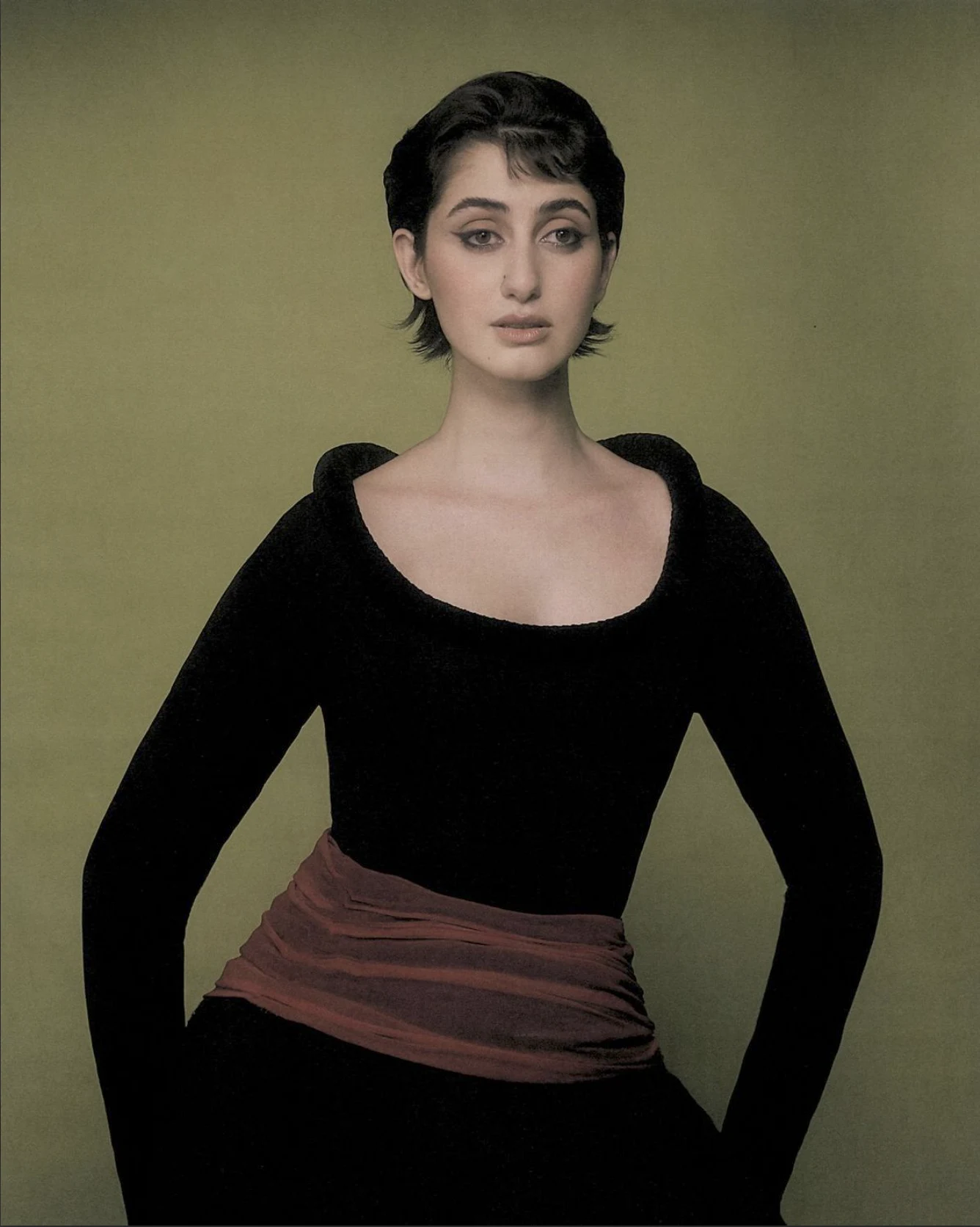
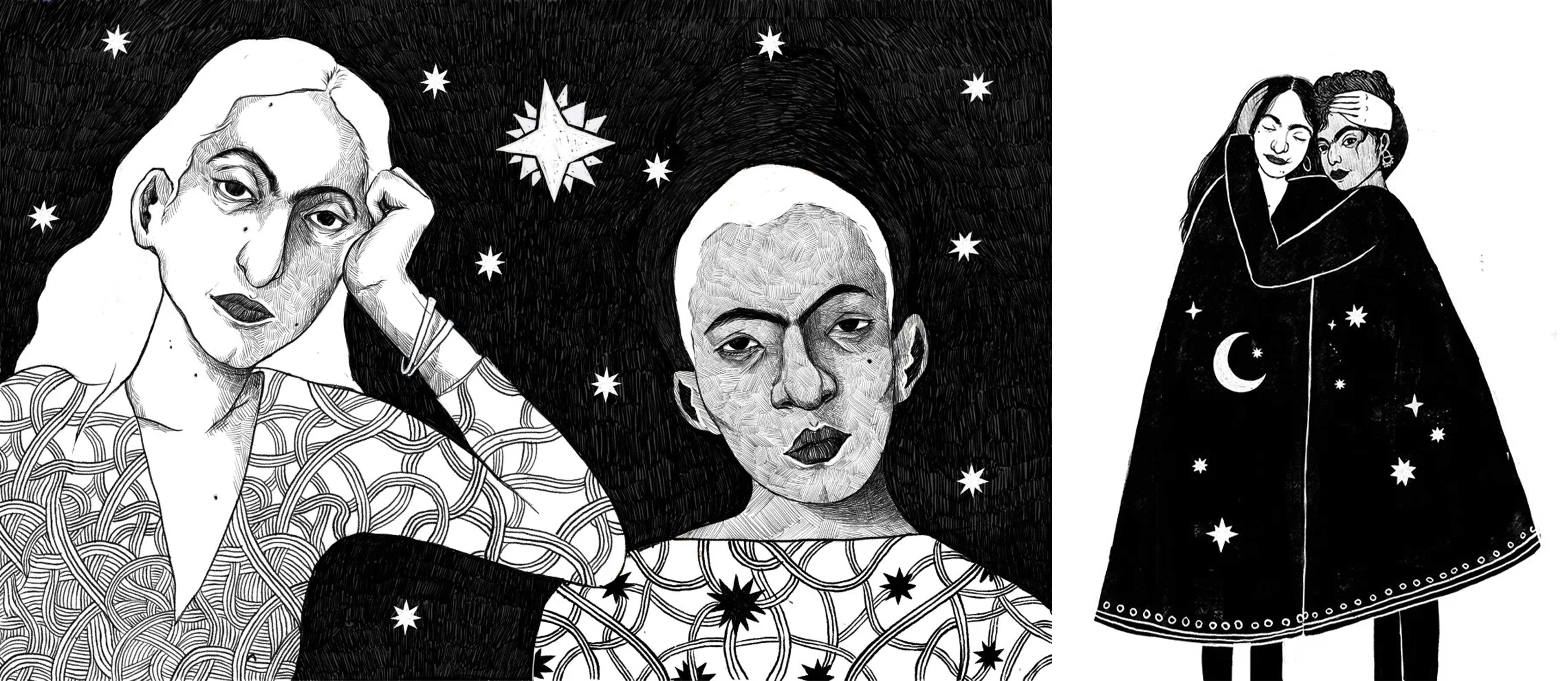
It is this sensibility she carries that precedes her entry into public life. Duwaji’s clothing resists the expectations typically placed on women adjacent to power. On the night of Mamdani’s victory, she wore a laser-cut denim top by Palestinian-Jordanian designer Zeid Hijazi. Her outfit was simply interpreted as ‘Palestinian coded’, a piece that subtly referenced her heritage. What might have been read as a mere aesthetic choice was cohesively layered with political and cultural meaning. In Duwaji’s scenario, her artistic practice and her style presented her individuality coherently.
FASHION FROM THE WESTERN POLITICAL CONTEXT
Moreover, in the Western world, fashion is no longer treated as an interruption of power but as part of its construction. Clothing is capable of carrying ideology, heritage, and personal politics without undermining stoicism. The question shifts from why a woman in power has a personal style to what her sartorial choices intend to communicate.
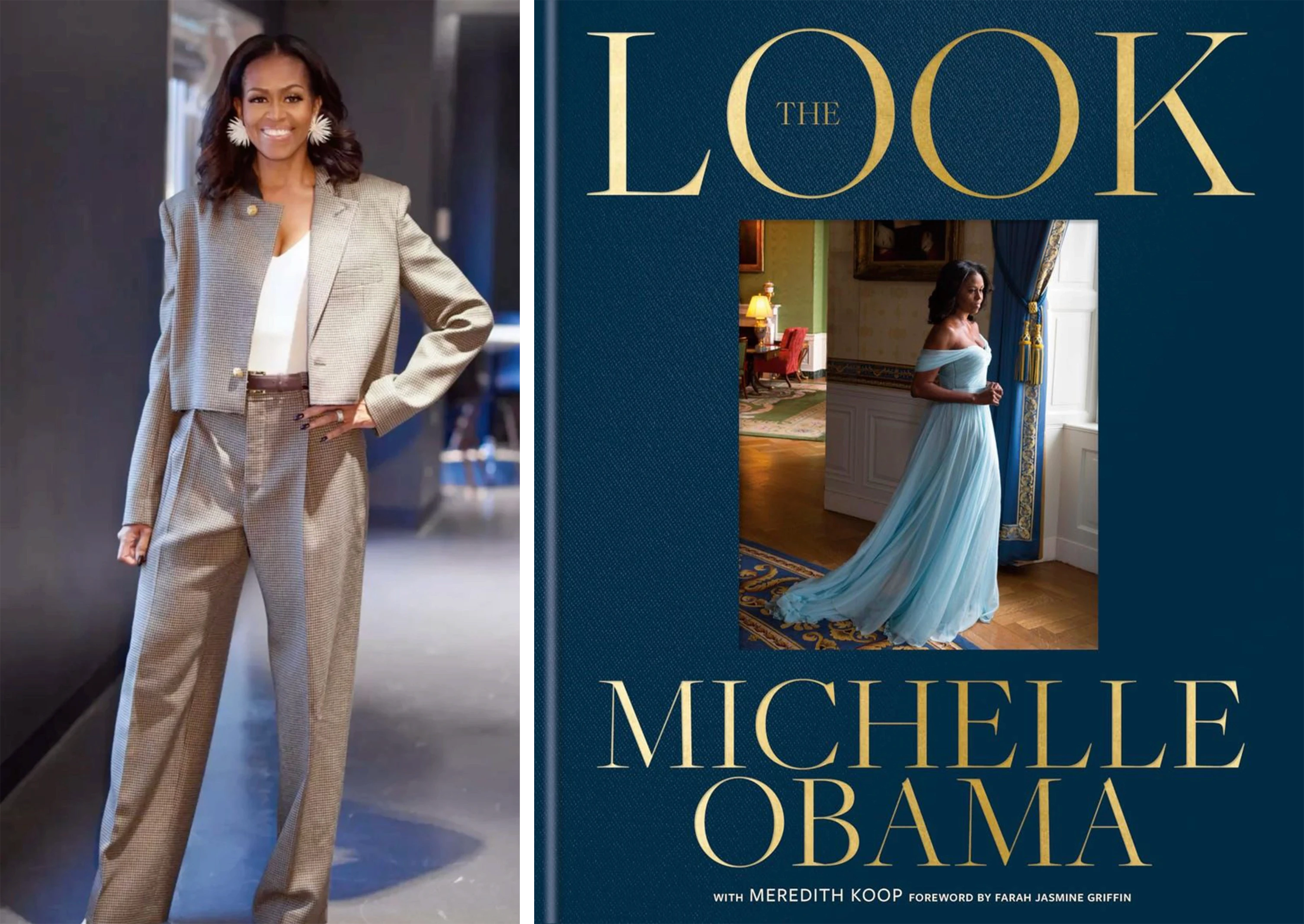
Michelle Obama’s sartorial choices became a contemplated tool of visibility and representation. In her book, The Look, Obama reflects on fashion as a communicative strategy that allowed her to navigate race, gender, and authority within an intensely scrutinised political space. Obama’s fashion was celebrated only when it aligned with archetypes of discretion, security, and service and questioned when it appeared too autonomous or eccentric. It’s telling; even within Western political culture, style is often perceived as more permissive. Visual freedom operates within invisible boundaries. Complexity is welcomed, but it is rarely unregulated.
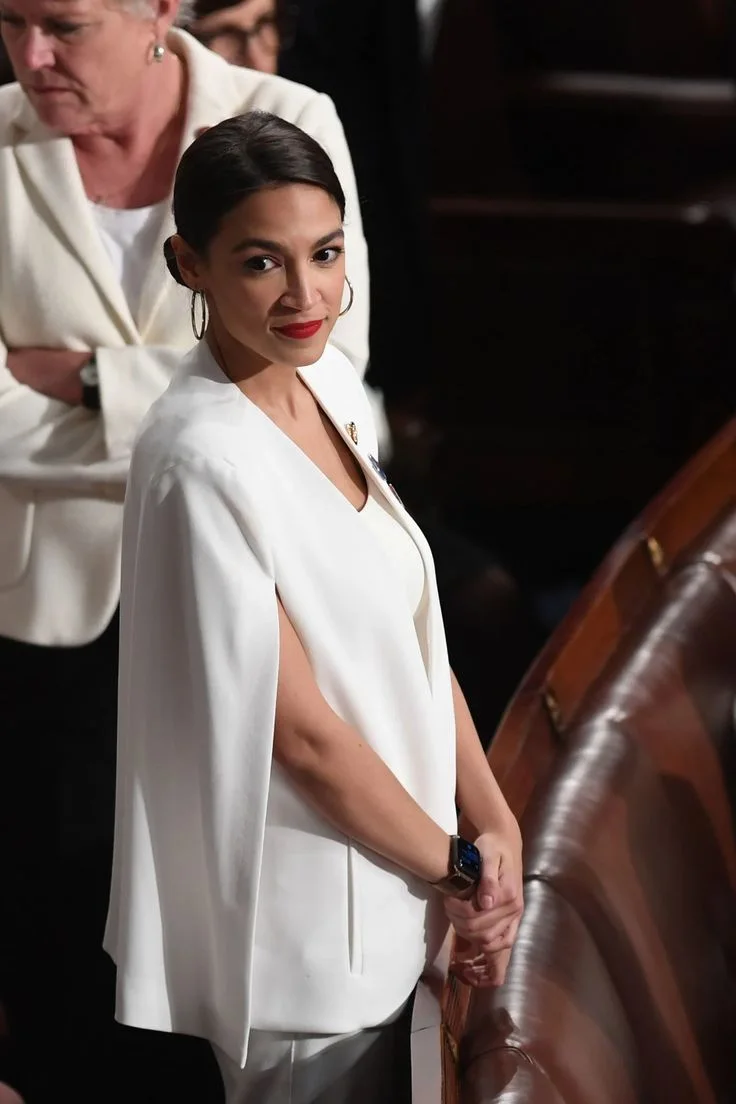
Another contemporary figure who demonstrates how fashion operates as a political signal is Alexandria Ocasio-Cortez. Rather than adopting visual neutrality, her style foregrounds clothing as an emblem of political expression. In her 2020 Vogue Beauty Secrets, she set the record straight, quoting, “Just being a woman is quite politicised here in Washington. There’s a false idea that if you care about fashion, that’s somehow frivolous, but some of the substantive decisions we make every morning are.” This doesn't completely erase scrutiny, but it treats it as an inevitable aspect of political life rather than a moral indictment.
TRANSITION FROM WESTERN TO INDIAN
Therefore, figures such as Rama Duwaji, Michelle Obama, and Alexandria Ocasio-Cortez operate within political cultures where personal style can function as an extension of political branding. Yet the interpretation of fashion is never universally subjective. Every political system develops its own visual grammar, an unspoken code that defines how authority should be presented.
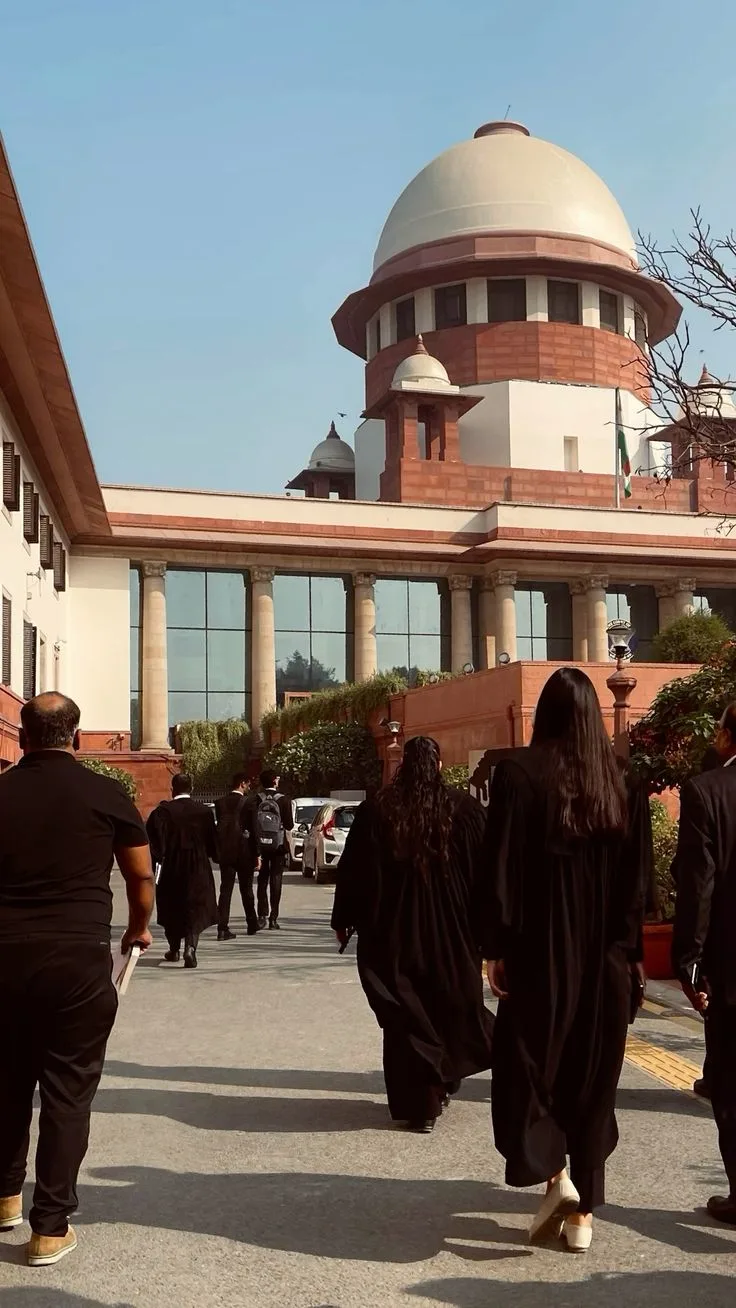
In India, the grammar is shaped by a diverse historical inheritance. The freedom struggle embedded austerity and uniformity into the nation’s political imagination. Visual restraint became synonymous with moral seriousness. As a result, designer Khushi Shah observes, “Indian political culture places a lot of value on relatability. Leaders are expected to feel accessible and grounded. " Parliament demands deliberateness. The expectation of portraying a certain subtlety has been inherited; simplicity became the shorthand of seriousness during India’s independence movement, and that association continues to shape public perception.
SAREE AS A SYMBOL OF POWER IN INDIAN POLITICS
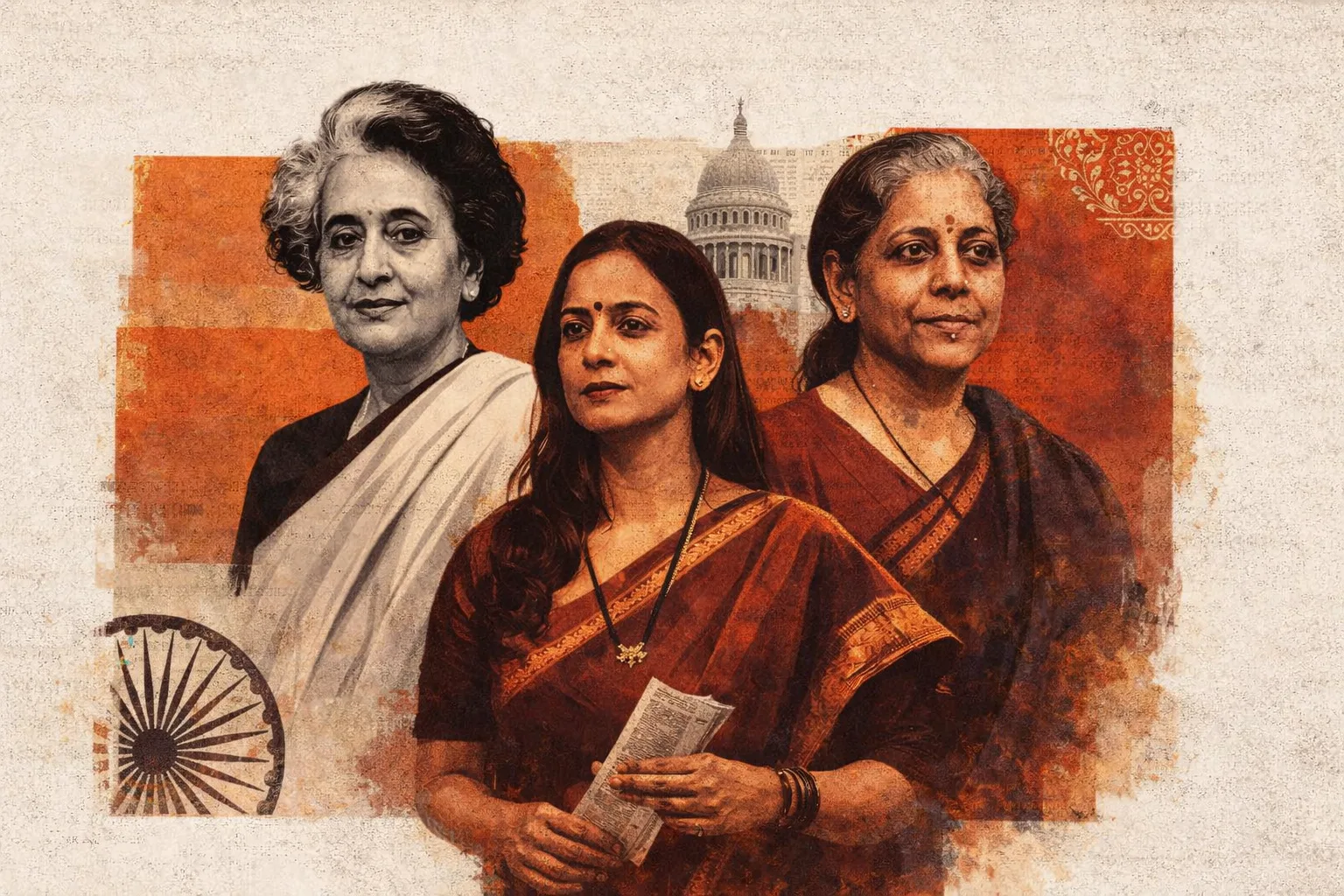
Indira Gandhi’s handloom sarees have exemplified this visual continuity. Draped in subdued tones, her attire reinforced the image of discipline. In her case, the saree was an extension of her authority, which functioned as a symbol of the sacrifice and duty she possessed towards the nation.
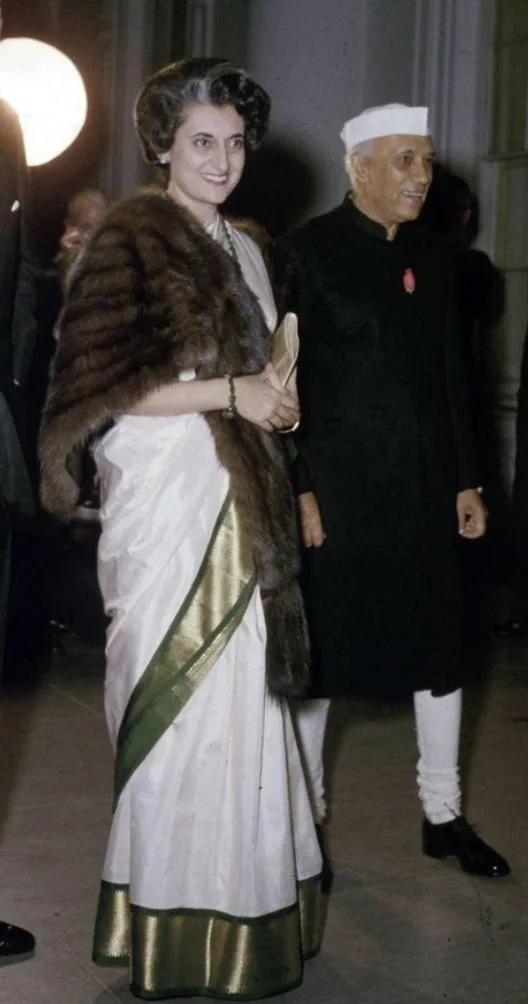
Historically speaking, the saree in Indian politics has represented continuity and traditional identity. While variations in weave, colour, and styling exist, the garment itself remains a stable anchor within a political culture flexible enough to carry symbolic nuance.
DISSECTING SCRUTINY OF PERSONAL STYLE IN INDIA
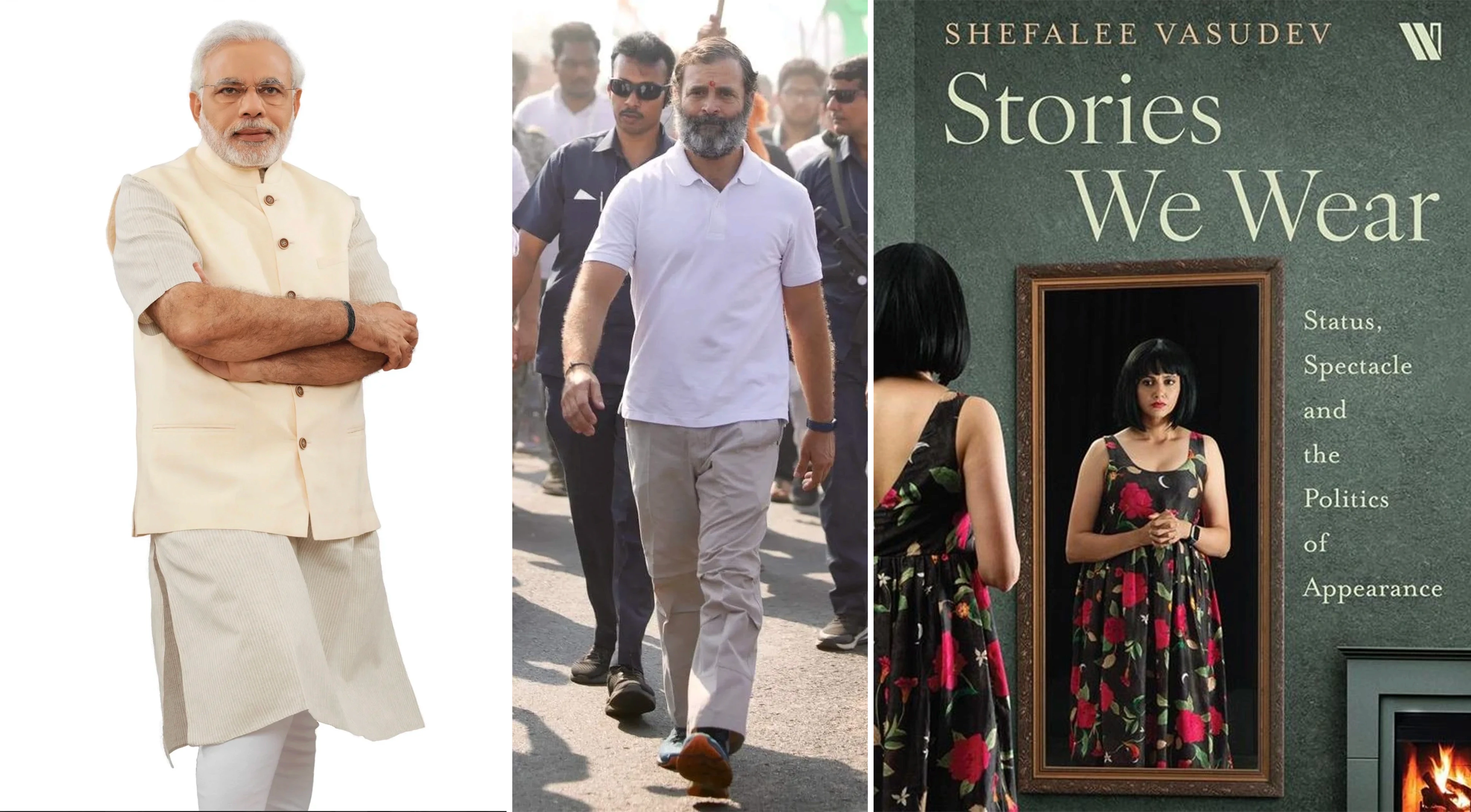
Scrutiny, of course, is not exclusive to women. As Charu Pragya notes, "Male politicians too have seen their attire become subject to public commentary, along with their style being discussed as well.” Pragya points out Narendra Modi’s half-sleeved kurtas once sparked conversation and were eventually branded the ‘Modi kurta’. In addition, she emphasised Rahul Gandhi’s white T-shirt and jeans in Parliament, suggesting it reflects lack of sincerity, similar to dressing up in a t-shirt at a black tie event.
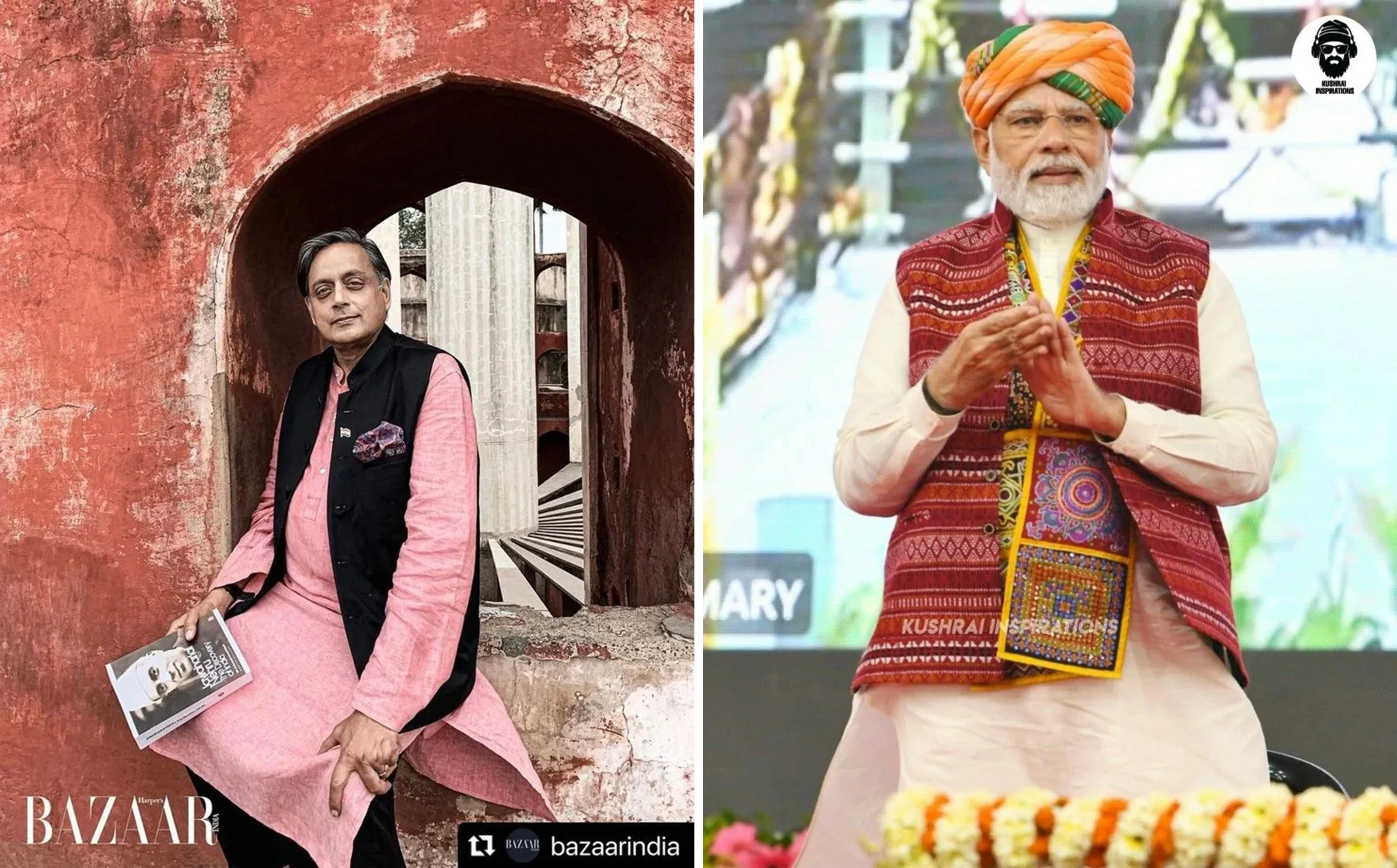
Male political style in India has also embraced experimentation, from Shashi Tharoor’s form-meets-fluent-thought aesthetic, represented through his tailored Nehru jackets and pocket squares, to PM Modi’s unique turban choices on national occasions.
For women leaders, however, the scrutiny can become more granular. While cultural depiction is widely existent, commentary is more readily transcended into more close-knit or the ‘nitty-gritty’ details, like makeup, accessories, and sleeve length, making aesthetic evaluation feel more intimate and, at times, more personal. On this note, Charu Pragya added, “I think the easiest entry point in critiquing women is her appearance; that’s where most people begin, and everything is up for discussion, especially when it comes to women."
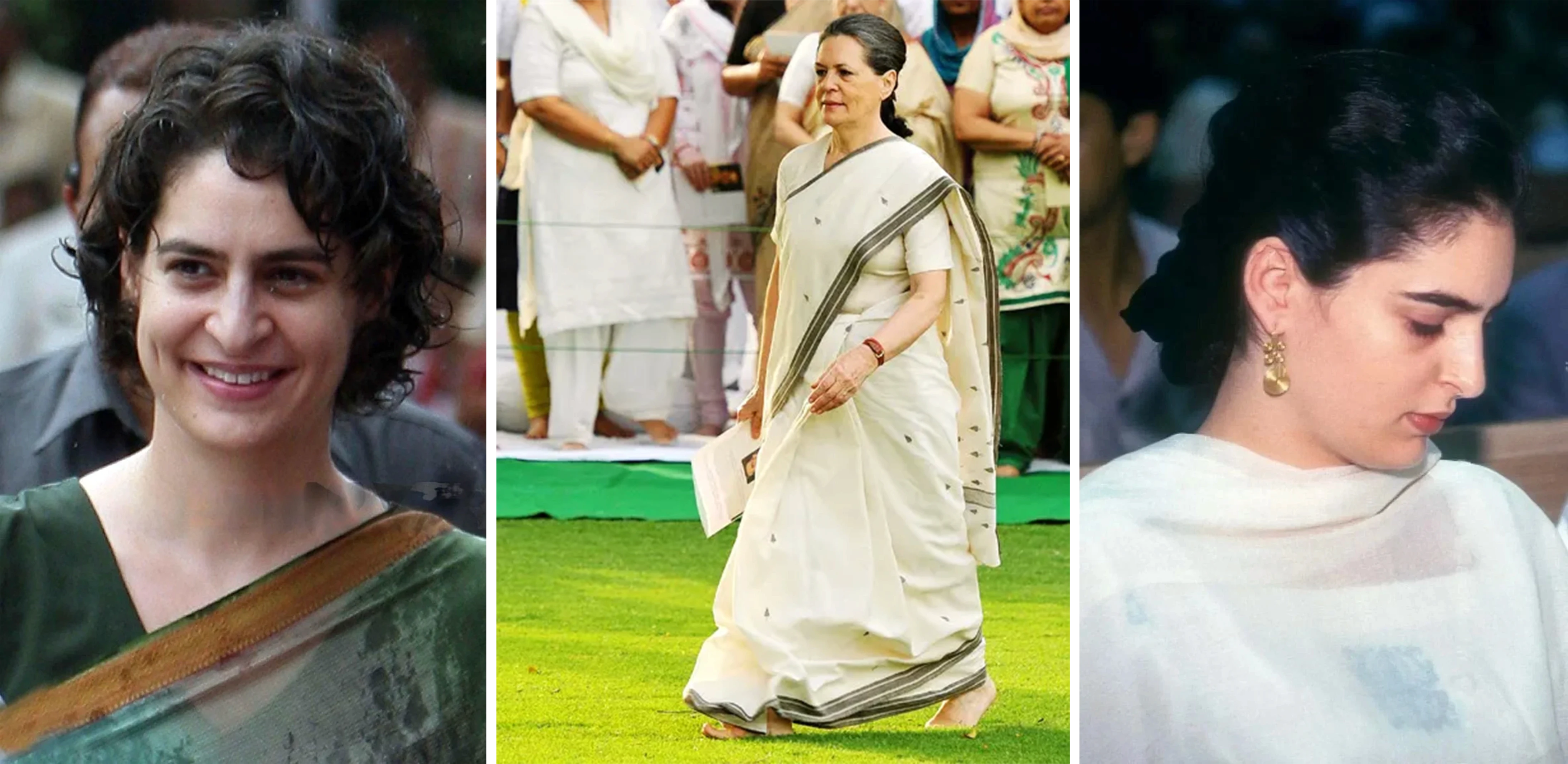
According to the Inter-Parliamentary Union (IPU), the percentage of women in parliament has been recorded as extremely low, at 13.6% in the Lok Sabha and 16.8% in the Rajya Sabha. Globally as well, India has roughly around 15% of women in the national legislature, right before Japan, compared to other countries. This under-representation reinforces a system in which a woman must establish her credibility before authority is assumed.
The differentiation lies in how a visual message is interpreted, which, in the case of clothing, deviates from sartorial signalling to surveillance signalling. Over the years, Finance Minister Nirmala Sitharaman’s budget day sarees have made a prominent mark in the parliamentary fashion industry with how intricately she showcases Kanjivaram sarees with traditional elements of handloom/handcrafted embroidery, graciously honouring heritage and Indian craftsmanship through her sartorial choices. In addition to this, she has spoken very candidly about this scenario in her recent budget day interview, discussing how often she is asked questions about her attire and how her male counterparts are rarely asked similar questions. To this, Charu Pragya views these moments from a more open-ended and constructive lens, emphasising her adoration of fashion and cultural heritage. “People looking at the messaging behind the saree, the colour, where the weave originated from. For me, this is a very positive discussion. So, discussions around clothing can be positive if curated carefully. " This implies clothing and appearances can be viewed with curiosity and admiration instead of caution and controversy if one tends to shift the narrative.
Another fine example is Kangana Ranaut. From the visual screen to the parliamentary stages, her sharply curated looks create an elegant juxtaposition with her local Himachali heritage. From Pahadi shawls to saree drapes, accompanied by her muted trench coat and blazers. Much like her style, her provocative statements have also attained the status of a flashpoint. Whether instinctively or tactically, she has managed to create an intriguing paradox of style and substance, cementing her parliamentary messaging.
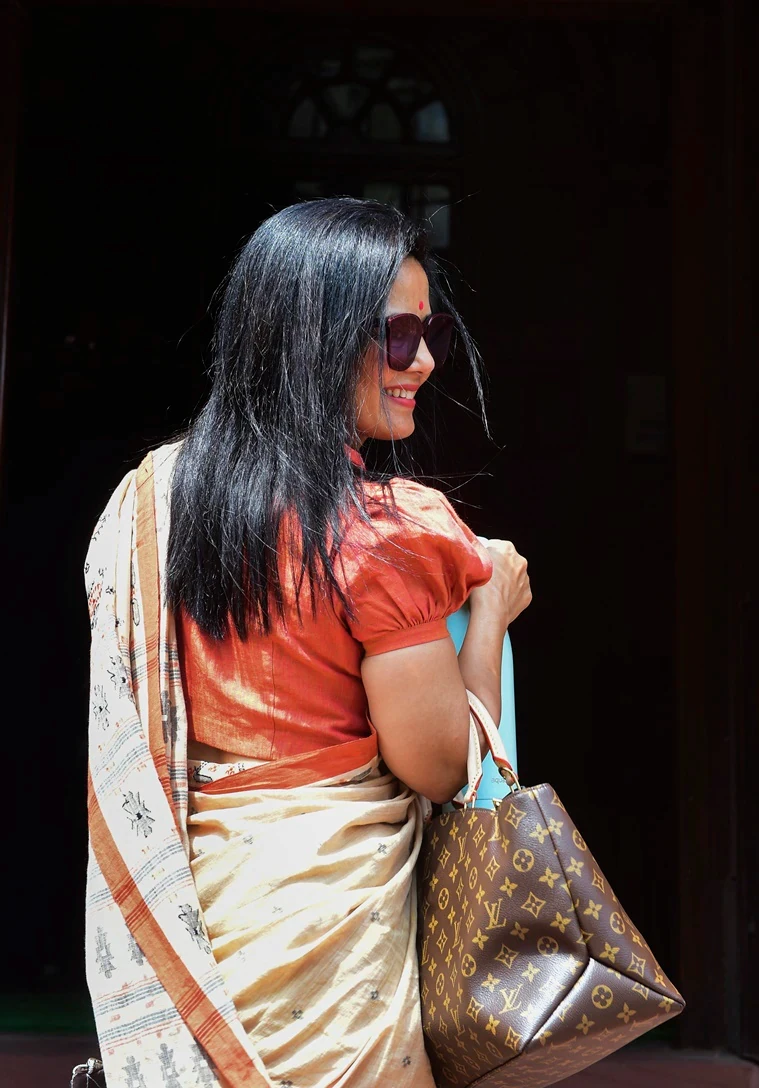
In parliamentary fashion, interpretation and intention don’t always share a similar trajectory. For instance, Mahua Moitra does justice to adding substantial character to her sarees by balancing whimsical Indian textile prints with modern and minimal high-end luxury accessories. Conversely, during moments of political turbulence, when she carried her luxury Louis Vuitton handbag, what might have ordinarily been viewed as an incidental accessory became a penetrating topic for debate. Charu Pragya added on to this: the debate was less about the accessory itself but more about the significance it entailed in the particular situation. “The conversation was about corruption and not the bag." Ultimately, this demonstrates how figures in Parliament have to ensure their visual representation aligns well with the values they present, and fashion is one aspect of it to signify their credibility as leaders.
This tension resurfaced when Shreya Doundial was anchoring at Mirror Now. Her guest, Fredric Landau, accused her of making a controversial political statement. He claimed her saree represented the Palestine flag and told her ‘to save it for another occasion’. Her saree, which was meant as a gesture to her ancestral legacy, was misconstrued as a protest. Dhoundial quoted, ‘I will not let you choose what I wear, and I will not let you choose what I say.' Khushi Shah adds. “In India, especially, textiles are emotional and cultural markers."
It’s ironic, to say the least, that a country so rich in textiles, producing magnificent creations grand in history, identity, and geography, is condemned as a strategy still.
WHAT TRUE FEMINIST REPRESENTATION SHOULD LOOK LIKE
If fashion is to be understood as a political language, then feminist representation cannot be confined to numbers and perceptibility alone. It must also include the right for women in public to decide how they are seen. As Congress spokesperson, Dr. Shama Mohammad argues, "A costume should not decide a woman leader’s position." They should be perceived for their talent and acumen, just like it is done with male leaders.”
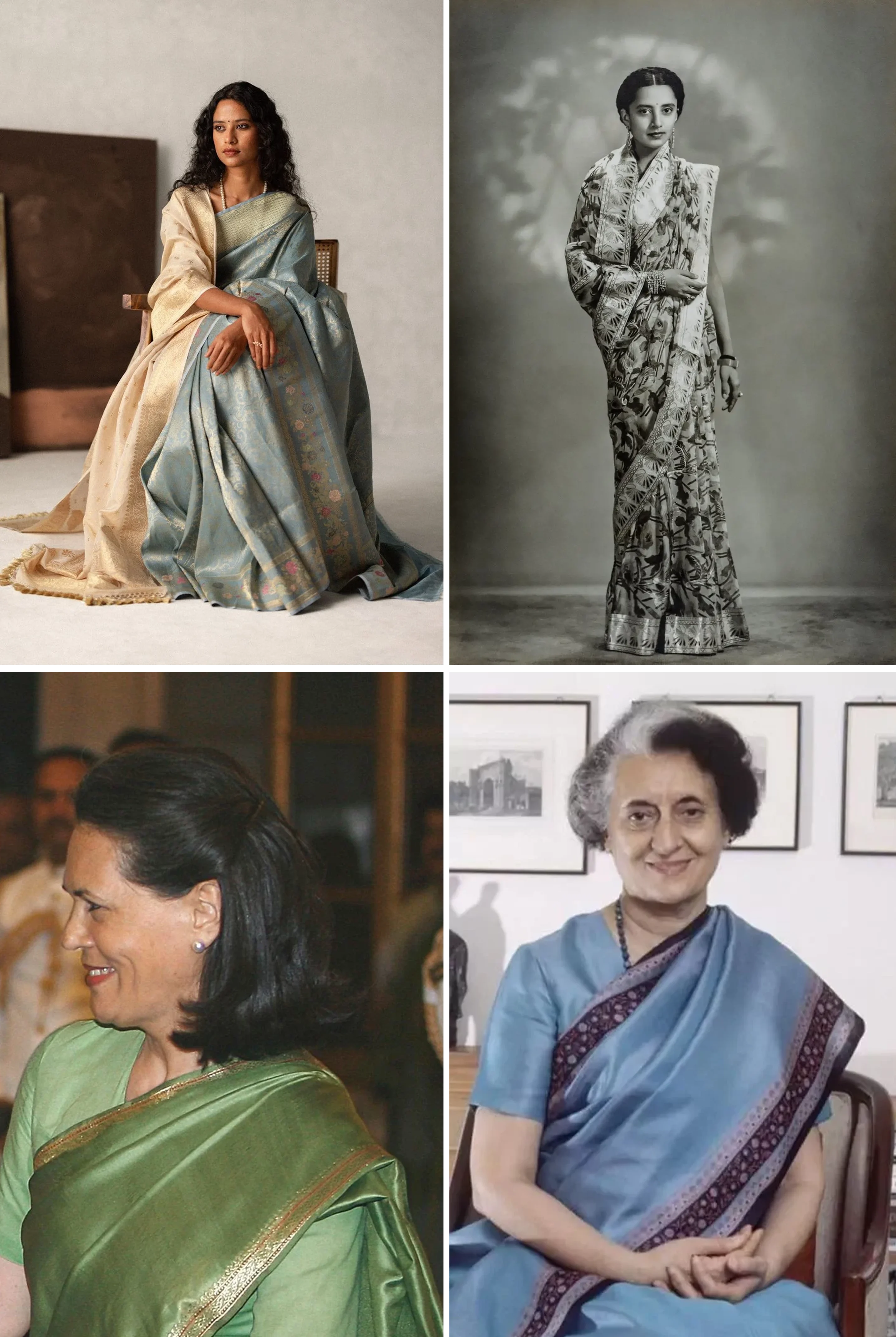
Moreover, fashion itself tends to be looked at as an embellishment, being oblivious to the fact that it stands for much more and plays a colossal part in the formation of the world’s greatest disciplines. Specifically, a country like India has made some remarkable discoveries in the world of fashion and culture.
Therefore, true representation does not demand neutrality; it welcomes it. A costume, a saree, a jacket, or a bindi; none of these should automatically be read into virtue or vice unless articulated as such. To take fashion seriously is not to be trivial; it is to treat it as a medium to reinforce self-expression and creativity, as Charu Pragya denoted, "Your clothing defines you." The more frequently fashion is read through diverse expressions in leadership, the less unusual it begins to feel.
Perhaps fashion and politics are fields that desire to be read with nuance and novelty without overshadowing them with critique. To recognise their existence is to acknowledge that one can’t exist without the other.
TO BE CONTINUED, FOR SUBSCRIBERS ONLY.
This is where the surface ends and the reporting begins.
The complete piece, the full archive, and access to The French Press Circle. Reporting answerable only to its readers.
Already a subscriber ?
Login
Read these on the house, with our compliments.
A selection from the current issue, open to all readers. Read them in full. The rest is one decision away.






If politics governs the distribution of power in both public and private life, then fashion becomes one of its most compelling instruments.
Across decades, clothing has served far more than decoration. It has carried the codes of class, belief, rebellion, and authority, shaping how bodies are read within systems of power. Fashion operates as a visual language, communicating allegiance and authority before words are spoken. BJP spokesperson Charu Pragya articulates this dynamic as intentional visual communication. “Even before I open my mouth, my clothes are speaking for me." To this, designer Khushi Shah, creative director of Shanti Banaras, also adds, “I’ve always seen clothing as something that carries meaning before it carries style. What someone wears often communicates where they come from, what they value, and who they want to feel connected to.”
RAMA DUWAJI AS A CULTURAL RECEPTION
A contemporary example is Rama Duwaji. Long before she entered public life by proximity, Duwaji was already a visual author with a politically conscious practice. Her body of work depicted moments of quiet resistance embedded in everyday life, focusing on themes like grief, intimacy, and collective care, in contrast to the accustomed visual jargon typically associated with authority. Rendered in soft lines and restrained palettes, her illustrations demonstrate a myriad of individual personas.
It is this sensibility she carries that precedes her entry into public life. Duwaji’s clothing resists the expectations typically placed on women adjacent to power. On the night of Mamdani’s victory, she wore a laser-cut denim top by Palestinian-Jordanian designer Zeid Hijazi. Her outfit was simply interpreted as ‘Palestinian coded’, a piece that subtly referenced her heritage. What might have been read as a mere aesthetic choice was cohesively layered with political and cultural meaning. In Duwaji’s scenario, her artistic practice and her style presented her individuality coherently.
FASHION FROM THE WESTERN POLITICAL CONTEXT
Moreover, in the Western world, fashion is no longer treated as an interruption of power but as part of its construction. Clothing is capable of carrying ideology, heritage, and personal politics without undermining stoicism. The question shifts from why a woman in power has a personal style to what her sartorial choices intend to communicate.
Michelle Obama’s sartorial choices became a contemplated tool of visibility and representation. In her book, The Look, Obama reflects on fashion as a communicative strategy that allowed her to navigate race, gender, and authority within an intensely scrutinised political space. Obama’s fashion was celebrated only when it aligned with archetypes of discretion, security, and service and questioned when it appeared too autonomous or eccentric. It’s telling; even within Western political culture, style is often perceived as more permissive. Visual freedom operates within invisible boundaries. Complexity is welcomed, but it is rarely unregulated.
Another contemporary figure who demonstrates how fashion operates as a political signal is Alexandria Ocasio-Cortez. Rather than adopting visual neutrality, her style foregrounds clothing as an emblem of political expression. In her 2020 Vogue Beauty Secrets, she set the record straight, quoting, “Just being a woman is quite politicised here in Washington. There’s a false idea that if you care about fashion, that’s somehow frivolous, but some of the substantive decisions we make every morning are.” This doesn't completely erase scrutiny, but it treats it as an inevitable aspect of political life rather than a moral indictment.
TRANSITION FROM WESTERN TO INDIAN
Therefore, figures such as Rama Duwaji, Michelle Obama, and Alexandria Ocasio-Cortez operate within political cultures where personal style can function as an extension of political branding. Yet the interpretation of fashion is never universally subjective. Every political system develops its own visual grammar, an unspoken code that defines how authority should be presented.
In India, the grammar is shaped by a diverse historical inheritance. The freedom struggle embedded austerity and uniformity into the nation’s political imagination. Visual restraint became synonymous with moral seriousness. As a result, designer Khushi Shah observes, “Indian political culture places a lot of value on relatability. Leaders are expected to feel accessible and grounded. " Parliament demands deliberateness. The expectation of portraying a certain subtlety has been inherited; simplicity became the shorthand of seriousness during India’s independence movement, and that association continues to shape public perception.
SAREE AS A SYMBOL OF POWER IN INDIAN POLITICS
Indira Gandhi’s handloom sarees have exemplified this visual continuity. Draped in subdued tones, her attire reinforced the image of discipline. In her case, the saree was an extension of her authority, which functioned as a symbol of the sacrifice and duty she possessed towards the nation.
Historically speaking, the saree in Indian politics has represented continuity and traditional identity. While variations in weave, colour, and styling exist, the garment itself remains a stable anchor within a political culture flexible enough to carry symbolic nuance.
DISSECTING SCRUTINY OF PERSONAL STYLE IN INDIA
Scrutiny, of course, is not exclusive to women. As Charu Pragya notes, "Male politicians too have seen their attire become subject to public commentary, along with their style being discussed as well.” Pragya points out Narendra Modi’s half-sleeved kurtas once sparked conversation and were eventually branded the ‘Modi kurta’. In addition, she emphasised Rahul Gandhi’s white T-shirt and jeans in Parliament, suggesting it reflects lack of sincerity, similar to dressing up in a t-shirt at a black tie event.
Male political style in India has also embraced experimentation, from Shashi Tharoor’s form-meets-fluent-thought aesthetic, represented through his tailored Nehru jackets and pocket squares, to PM Modi’s unique turban choices on national occasions.
For women leaders, however, the scrutiny can become more granular. While cultural depiction is widely existent, commentary is more readily transcended into more close-knit or the ‘nitty-gritty’ details, like makeup, accessories, and sleeve length, making aesthetic evaluation feel more intimate and, at times, more personal. On this note, Charu Pragya added, “I think the easiest entry point in critiquing women is her appearance; that’s where most people begin, and everything is up for discussion, especially when it comes to women."
According to the Inter-Parliamentary Union (IPU), the percentage of women in parliament has been recorded as extremely low, at 13.6% in the Lok Sabha and 16.8% in the Rajya Sabha. Globally as well, India has roughly around 15% of women in the national legislature, right before Japan, compared to other countries. This under-representation reinforces a system in which a woman must establish her credibility before authority is assumed.
The differentiation lies in how a visual message is interpreted, which, in the case of clothing, deviates from sartorial signalling to surveillance signalling. Over the years, Finance Minister Nirmala Sitharaman’s budget day sarees have made a prominent mark in the parliamentary fashion industry with how intricately she showcases Kanjivaram sarees with traditional elements of handloom/handcrafted embroidery, graciously honouring heritage and Indian craftsmanship through her sartorial choices. In addition to this, she has spoken very candidly about this scenario in her recent budget day interview, discussing how often she is asked questions about her attire and how her male counterparts are rarely asked similar questions. To this, Charu Pragya views these moments from a more open-ended and constructive lens, emphasising her adoration of fashion and cultural heritage. “People looking at the messaging behind the saree, the colour, where the weave originated from. For me, this is a very positive discussion. So, discussions around clothing can be positive if curated carefully. " This implies clothing and appearances can be viewed with curiosity and admiration instead of caution and controversy if one tends to shift the narrative.
Another fine example is Kangana Ranaut. From the visual screen to the parliamentary stages, her sharply curated looks create an elegant juxtaposition with her local Himachali heritage. From Pahadi shawls to saree drapes, accompanied by her muted trench coat and blazers. Much like her style, her provocative statements have also attained the status of a flashpoint. Whether instinctively or tactically, she has managed to create an intriguing paradox of style and substance, cementing her parliamentary messaging.
In parliamentary fashion, interpretation and intention don’t always share a similar trajectory. For instance, Mahua Moitra does justice to adding substantial character to her sarees by balancing whimsical Indian textile prints with modern and minimal high-end luxury accessories. Conversely, during moments of political turbulence, when she carried her luxury Louis Vuitton handbag, what might have ordinarily been viewed as an incidental accessory became a penetrating topic for debate. Charu Pragya added on to this: the debate was less about the accessory itself but more about the significance it entailed in the particular situation. “The conversation was about corruption and not the bag." Ultimately, this demonstrates how figures in Parliament have to ensure their visual representation aligns well with the values they present, and fashion is one aspect of it to signify their credibility as leaders.
This tension resurfaced when Shreya Doundial was anchoring at Mirror Now. Her guest, Fredric Landau, accused her of making a controversial political statement. He claimed her saree represented the Palestine flag and told her ‘to save it for another occasion’. Her saree, which was meant as a gesture to her ancestral legacy, was misconstrued as a protest. Dhoundial quoted, ‘I will not let you choose what I wear, and I will not let you choose what I say.' Khushi Shah adds. “In India, especially, textiles are emotional and cultural markers."
It’s ironic, to say the least, that a country so rich in textiles, producing magnificent creations grand in history, identity, and geography, is condemned as a strategy still.
WHAT TRUE FEMINIST REPRESENTATION SHOULD LOOK LIKE
If fashion is to be understood as a political language, then feminist representation cannot be confined to numbers and perceptibility alone. It must also include the right for women in public to decide how they are seen. As Congress spokesperson, Dr. Shama Mohammad argues, "A costume should not decide a woman leader’s position." They should be perceived for their talent and acumen, just like it is done with male leaders.”
Moreover, fashion itself tends to be looked at as an embellishment, being oblivious to the fact that it stands for much more and plays a colossal part in the formation of the world’s greatest disciplines. Specifically, a country like India has made some remarkable discoveries in the world of fashion and culture.
Therefore, true representation does not demand neutrality; it welcomes it. A costume, a saree, a jacket, or a bindi; none of these should automatically be read into virtue or vice unless articulated as such. To take fashion seriously is not to be trivial; it is to treat it as a medium to reinforce self-expression and creativity, as Charu Pragya denoted, "Your clothing defines you." The more frequently fashion is read through diverse expressions in leadership, the less unusual it begins to feel.
Perhaps fashion and politics are fields that desire to be read with nuance and novelty without overshadowing them with critique. To recognise their existence is to acknowledge that one can’t exist without the other.
TO BE CONTINUED, FOR SUBSCRIBERS ONLY.
This is where the surface ends and the reporting begins.
The complete piece, the full archive, and access to The French Press Circle. Reporting answerable only to its readers.
Already a subscriber ?
Login
Read these on the house, with our compliments.
A selection from the current issue, open to all readers. Read them in full. The rest is one decision away.