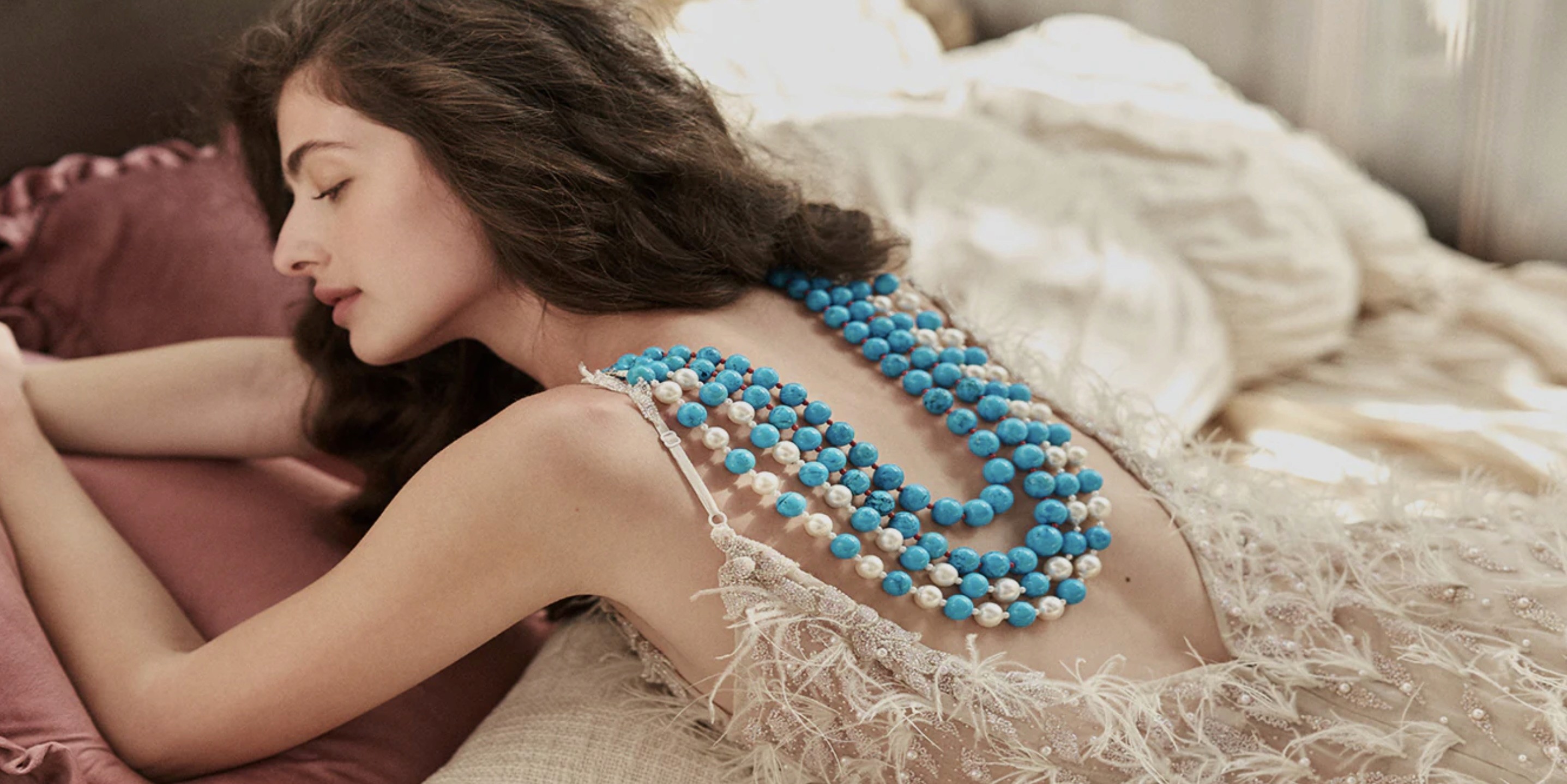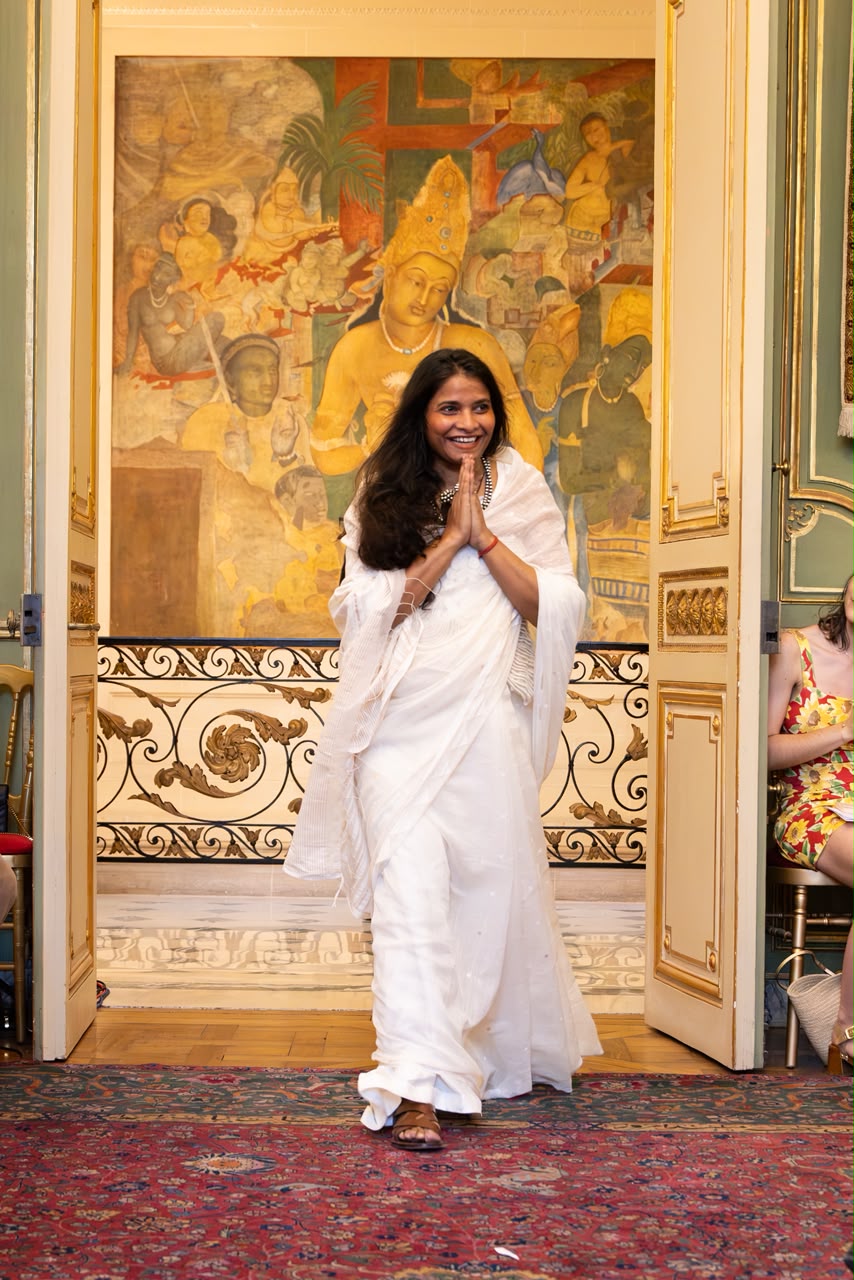
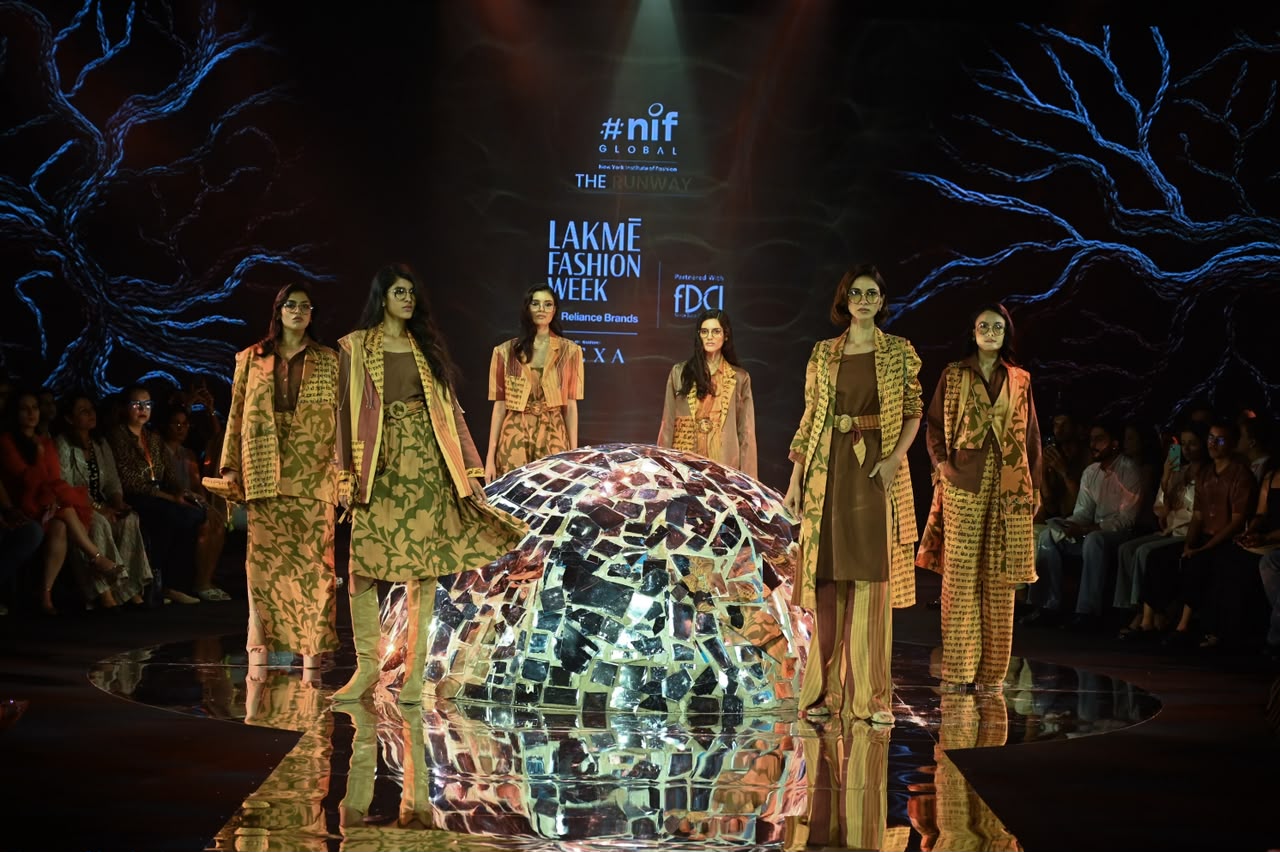
At Vaishali S's Swayam show this July, the loudest thing on the runway was, paradoxically, the quietest fabric in the room. Uppada silk - sheer, liquid, barely-there showed up in gold, and it did not come to blend in.
Uppada is a small coastal town in East Godavari, Andhra Pradesh, and until recently, it was a name known mostly to sari connoisseurs, not couture experts. The town's weavers have spent generations perfecting a Jamdani technique so fine that even experts can't always tell the front of the cloth from its back - a party trick, if party tricks took a lifetime to learn. When it earned the GI tag in 2009, it wasn't a marketing flourish; it was the government formally admitting what the weavers already knew: that nobody else on earth makes this cloth quite like this.
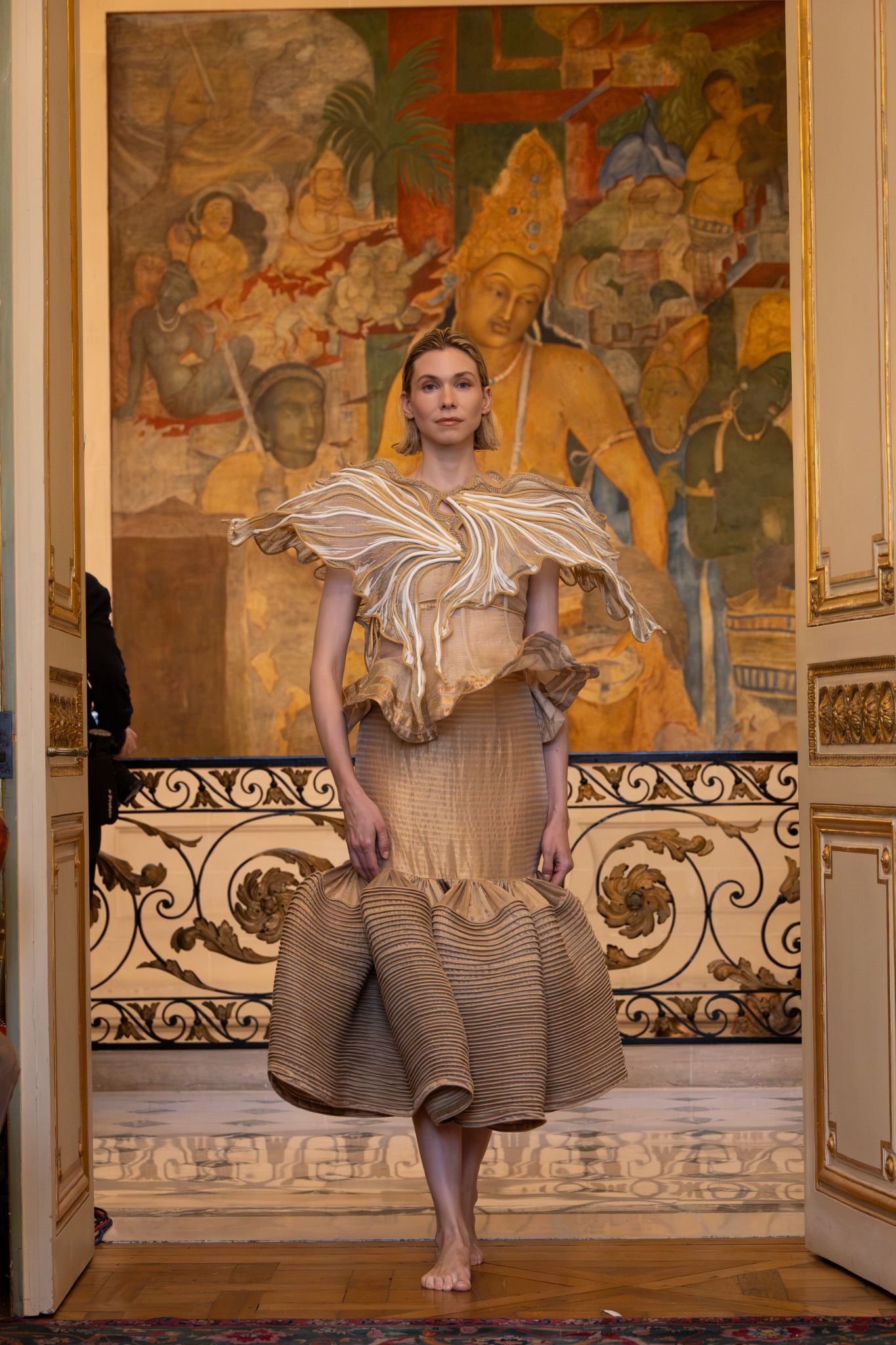
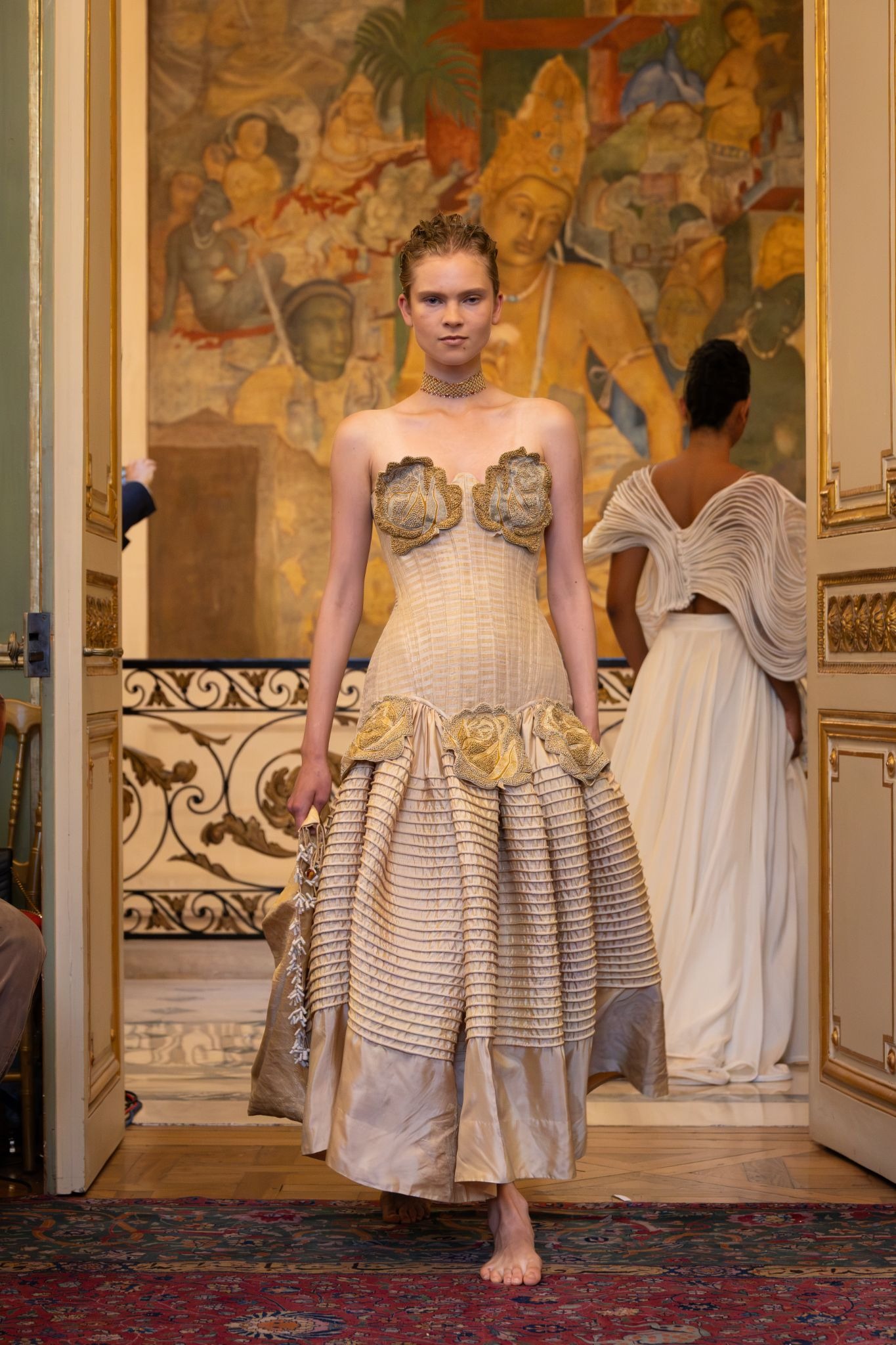
Uppada Silk, Reimagined in Gold
Image credits: Aglography
Here's the plot twist nobody saw coming: that same unassuming Jamdani weave - hand-thrown extra weft, zero machine assistance, a week minimum for even the simplest design is now doing double duty as a red-carpet material on the world's most glamorous fashion stage.
Vaishali S, presented ‘Swayam’ during Paris Haute Couture Week, in collaboration with the Office of the Development Commissioner (Handlooms), Ministry of Textiles, Government of India. Shadangule made history in 2021 as the first woman of Indian origin on the official Paris Haute Couture calendar. With Swayam, her thirty-look, fourteen-textile opus (Banarasi, Kanjivaram, Patola, Ikkat, Chanderi, Uppada and more all make cameos), she's not asking for a seat at the table anymore. She's redesigning the table.
Swayam was staged as a single breath, unfolding in three acts, and you could feel the shift happening in real time.
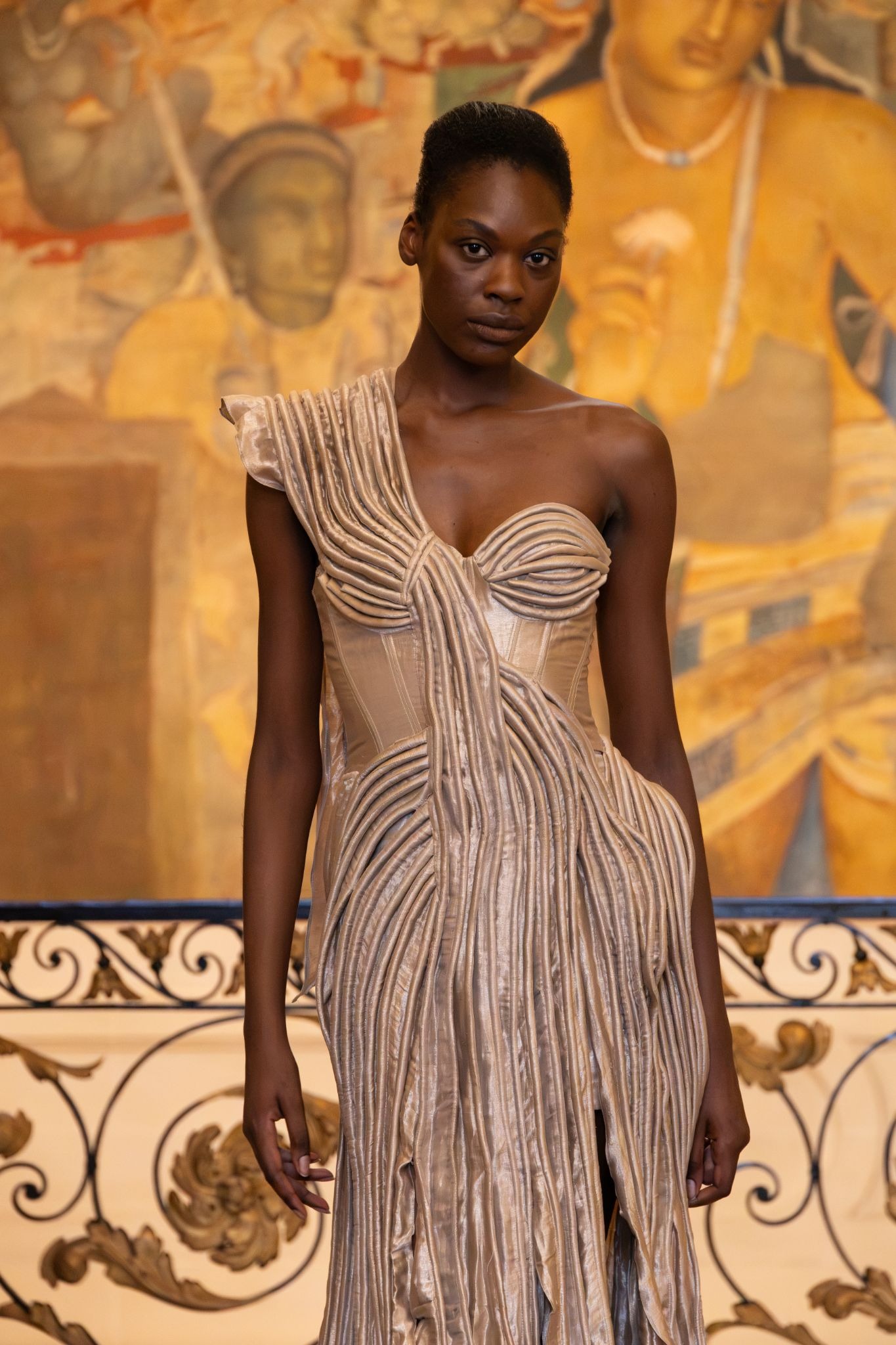
It opens with the closed form: structured, withholding silhouettes in stone, ash and the deep green of an unopened bud. The architecture of a self that still waits to be seen. Shadangule’s cording works across these pieces as internal scaffolding, suggesting the energy that exists before release. These first looks carry their names from “Beej”, the sealed seed, forward: everything present, held in waiting.
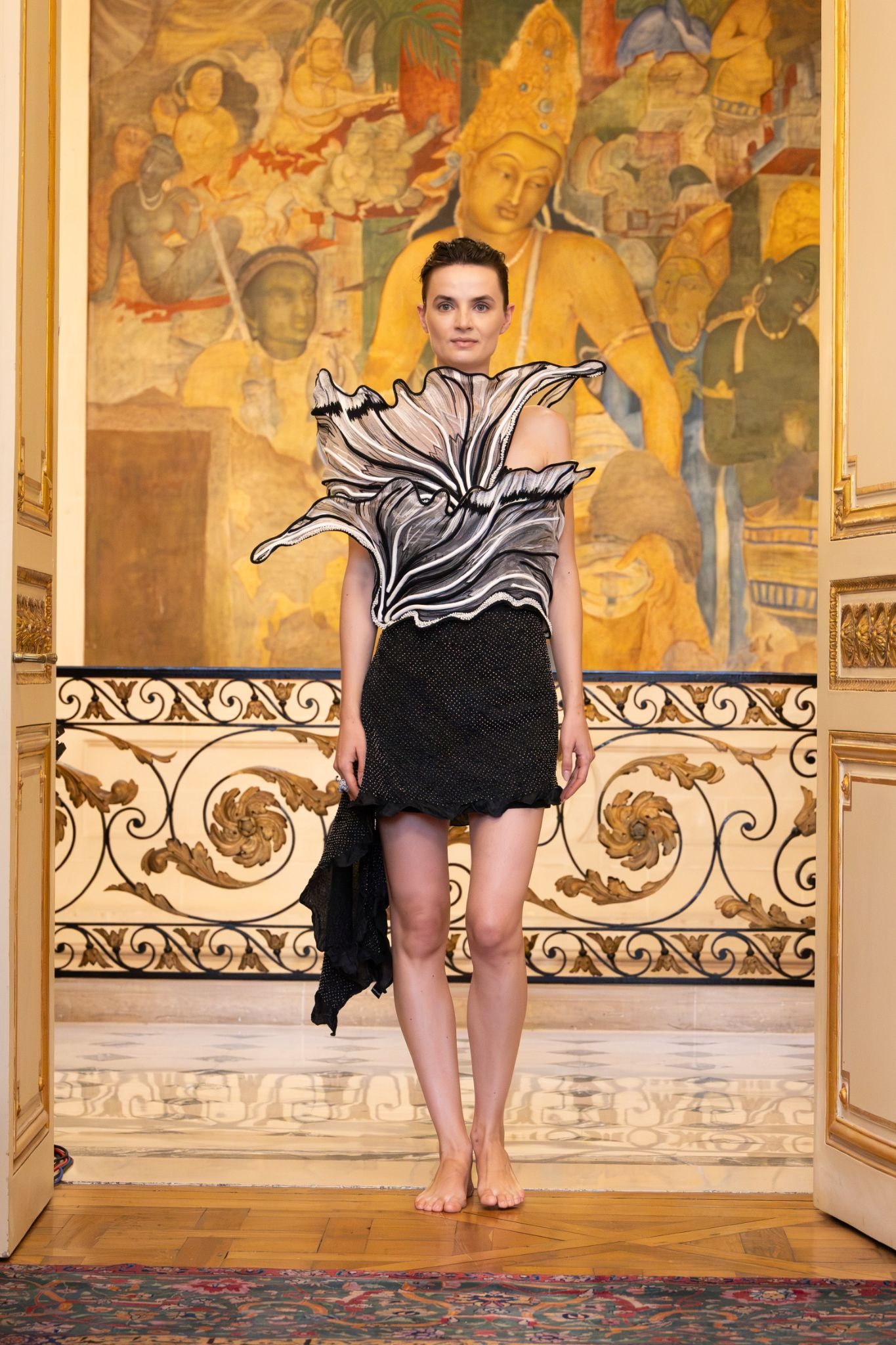
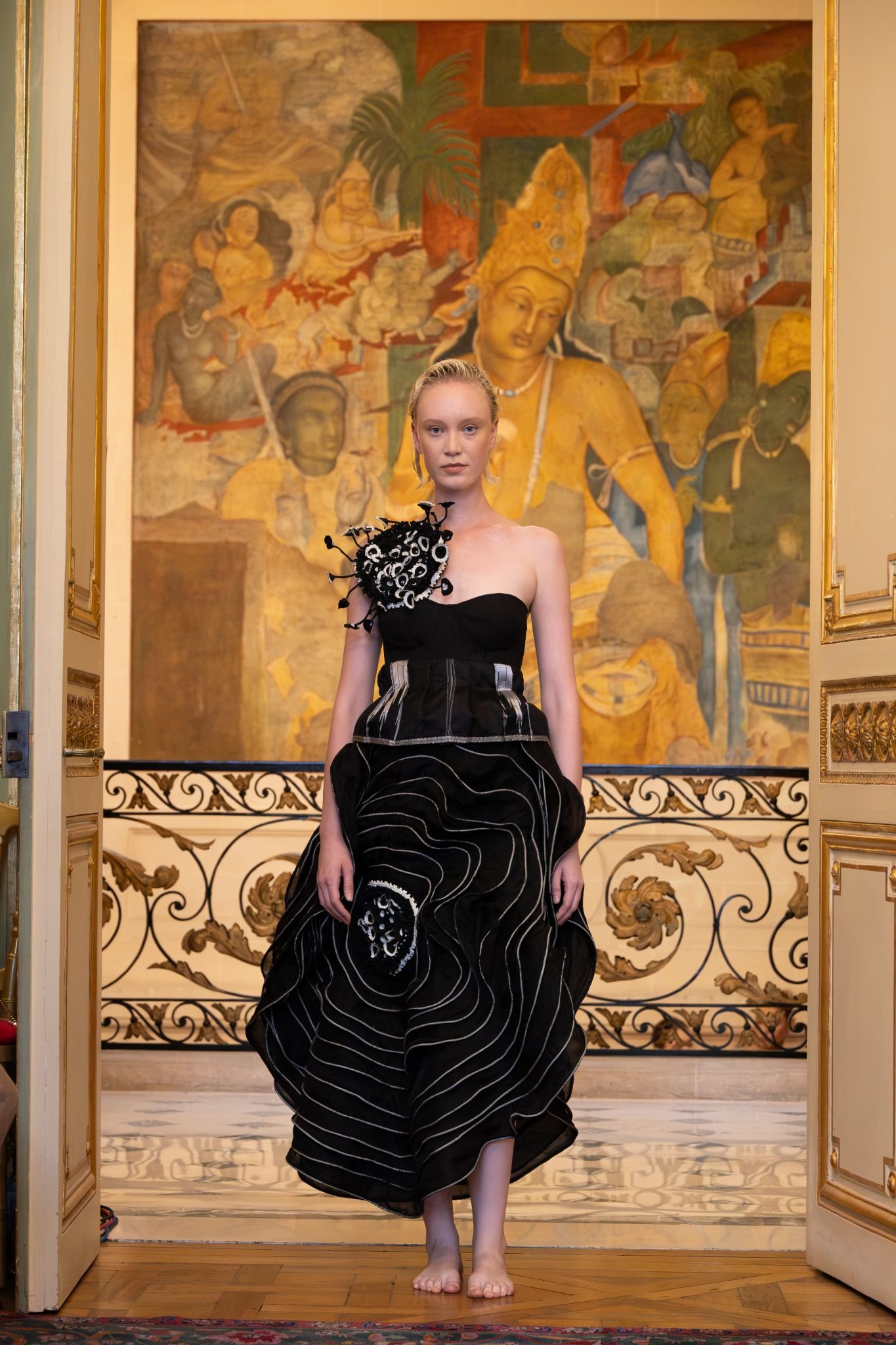
Image Credits: Anglography
Then comes the threshold. Seams give way. Pleats are caught mid-motion. The palette warms toward first light, carmine enters, then fuchsia, and Shadangule’s embroidery, drawn from the anatomy of flowers observed as structure rather than ornament, begins to appear on the surface as though it has grown there.
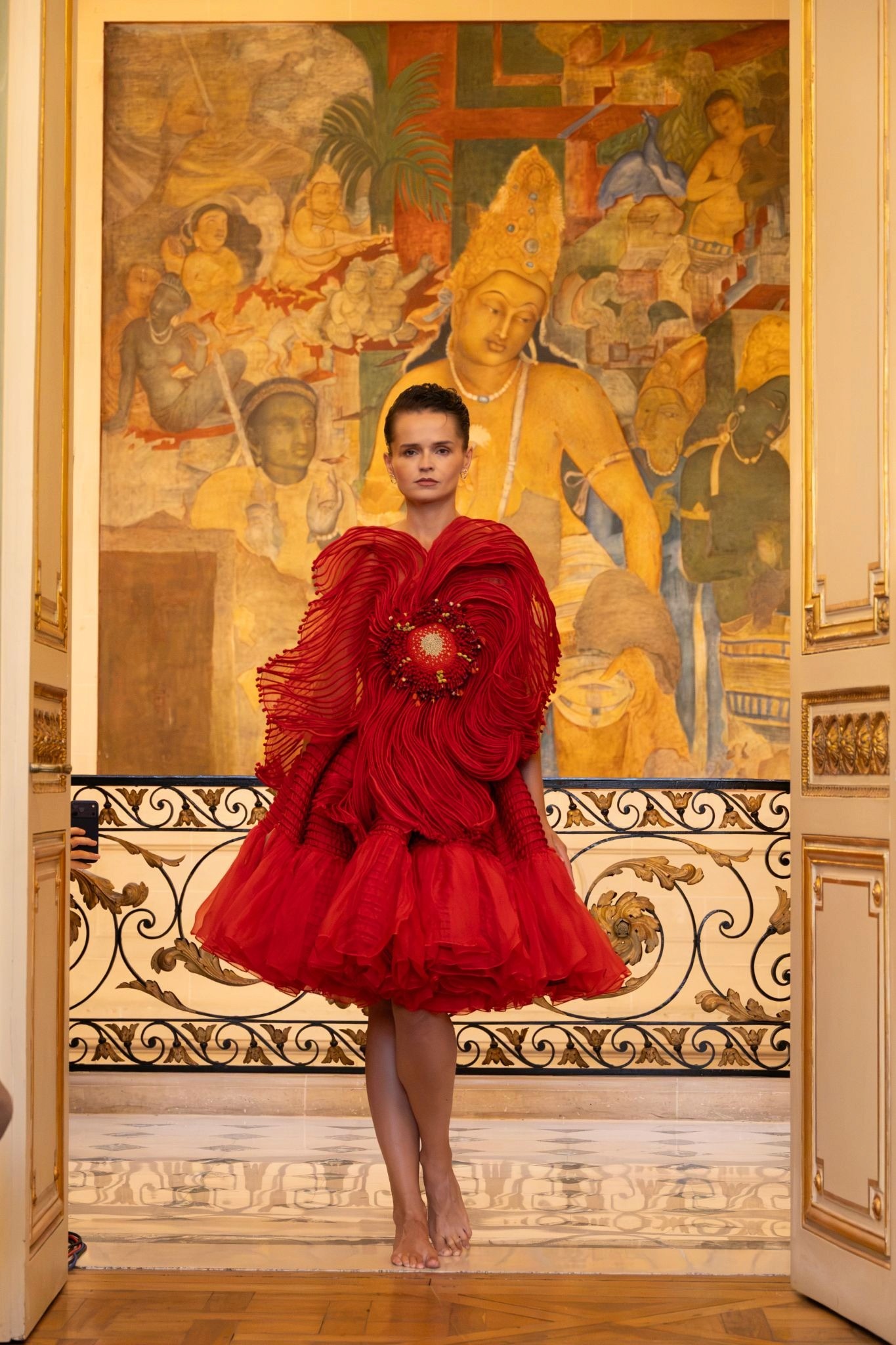
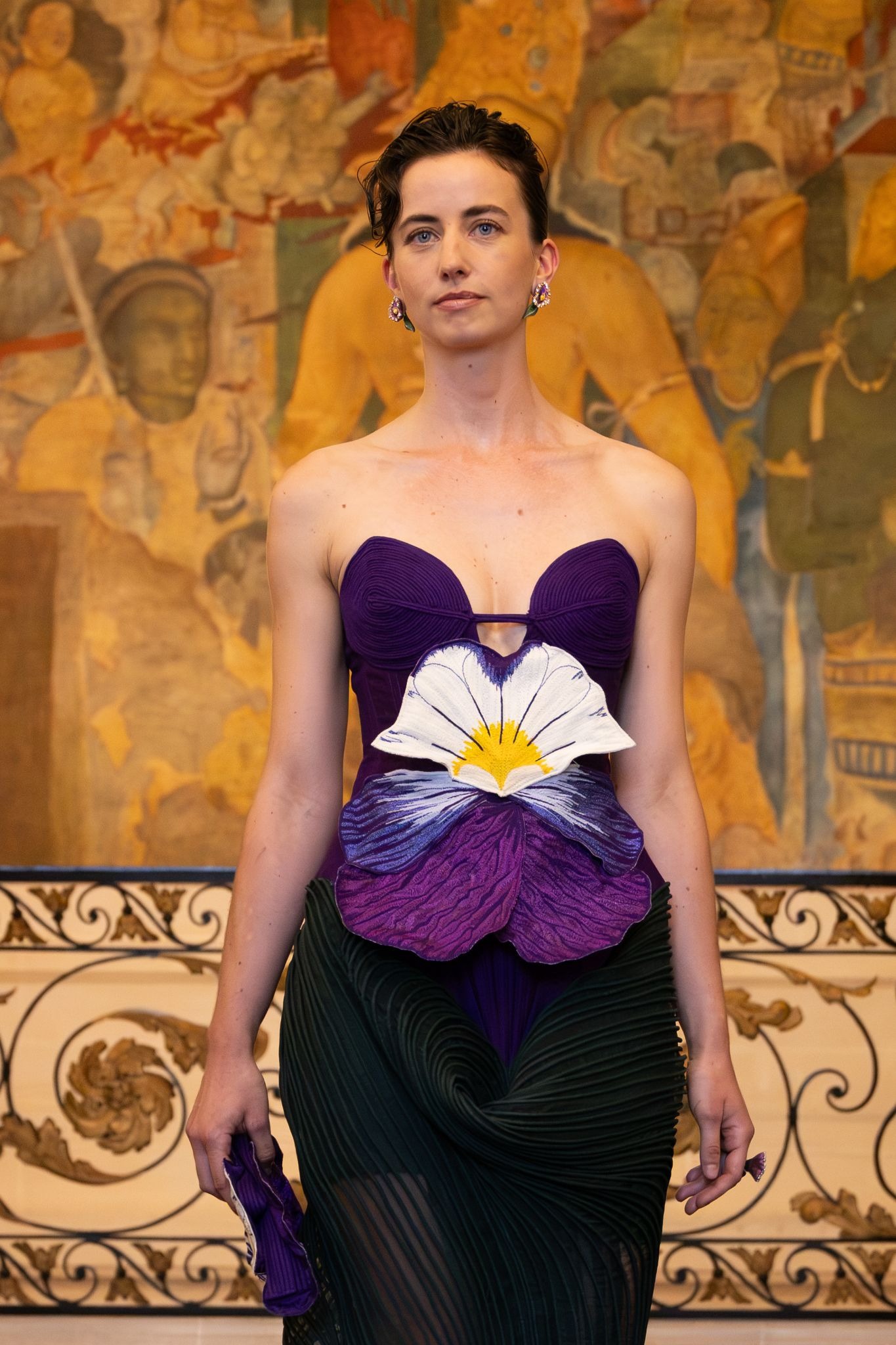
Image Credits: Anglography
The collection arrives, finally, at full bloom: the most expansive, most fluid, most utterly unselfconscious pieces in Swayam. The hand-embroidery here compels. A bodice becomes a flower at full opening, petals in Murshidabad silk, stamens in Chanderi cord, the whole structure weighted with the authority of something that has taken months to arrive at this exact form. The palette reaches its full range: amethyst, peacock, sapphire. At the centre of it all sits Swayamprabha, who shines by her own light.
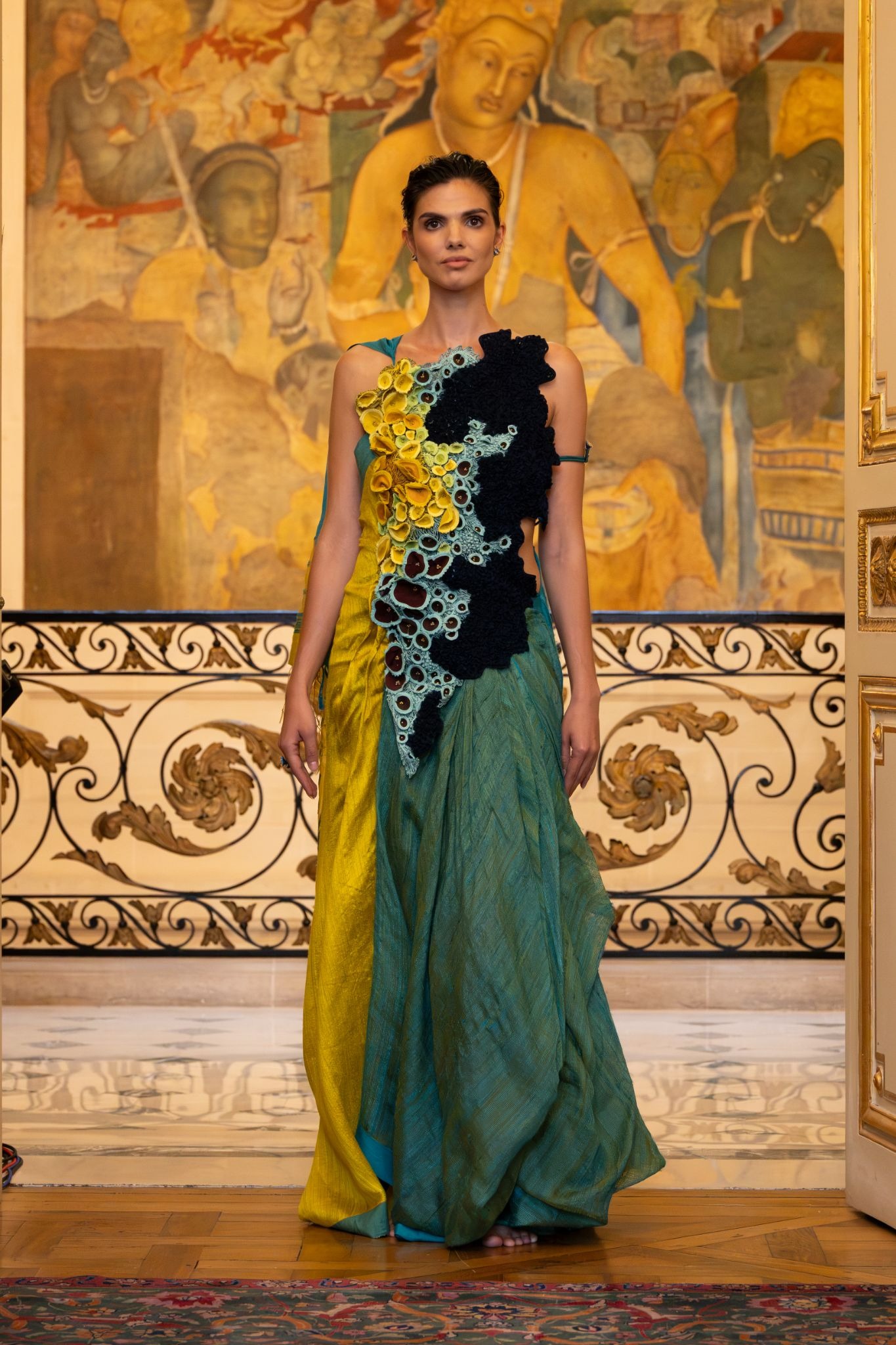
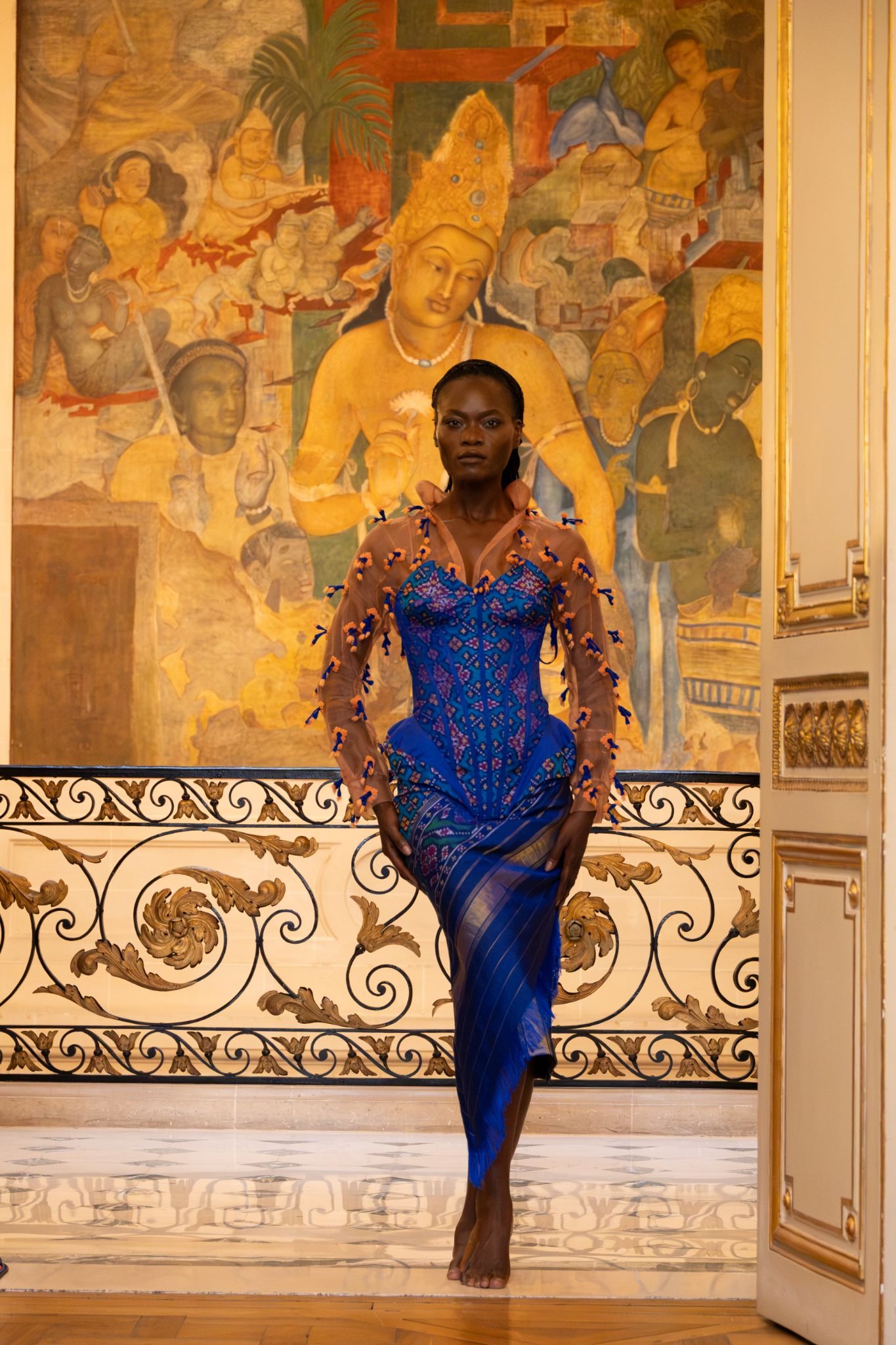
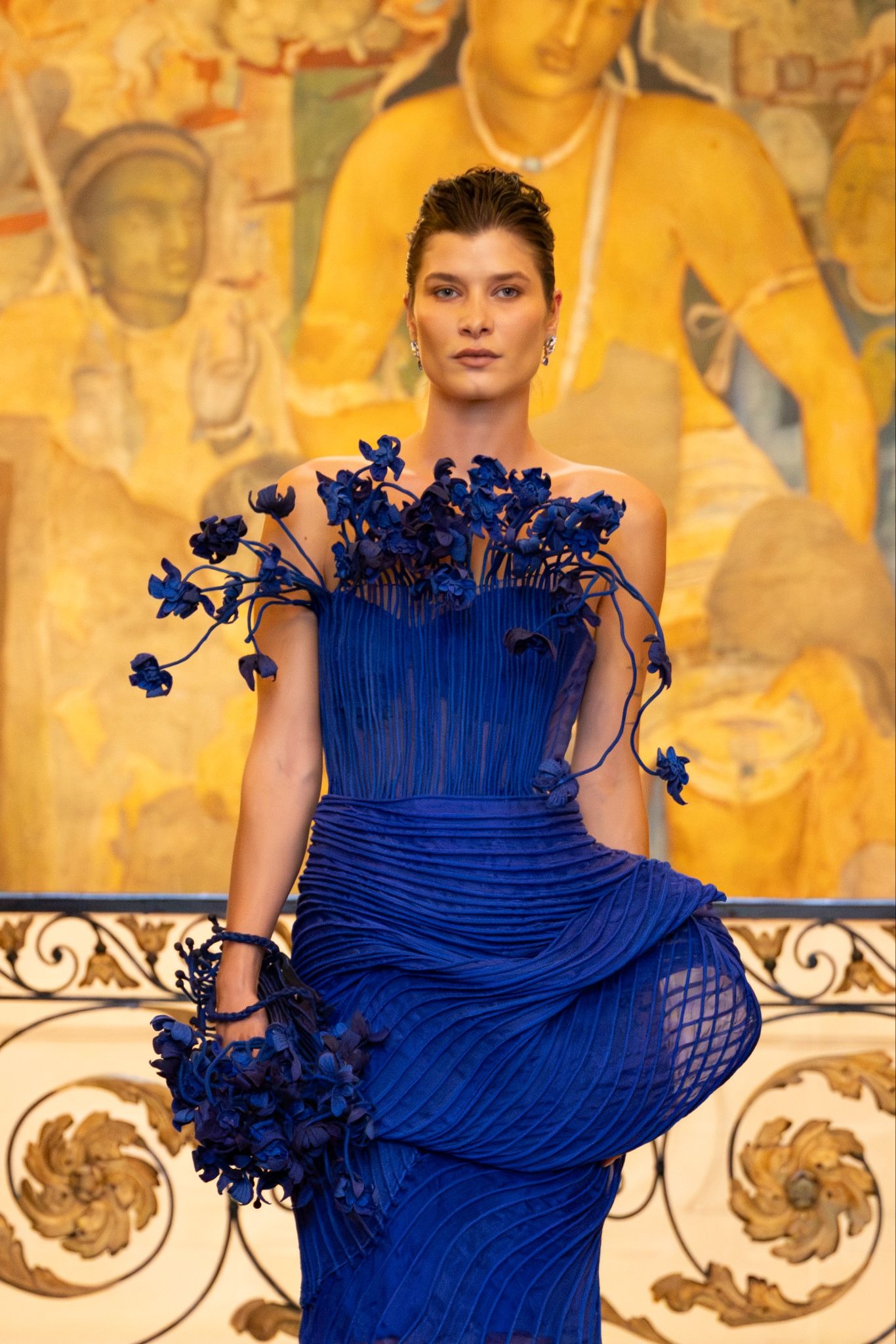
Image Credits: Anglography
It's a rare thing for a couture show to have a plot. Swayam has one, and it's told entirely through fabric tension - tight, to loosening, to fully released.
Swayam is Sanskrit for "of one's own accord," "by oneself," "through one's own being." Not confidence. Not defiance. Something quieter and, frankly, harder to fake: the complete absence of needing an audience at all. Every model walked barefoot, the collection returning to its primal instinct: a woman in full self-possession needs nothing between herself and the earth. That bare skin on the floor of the Ambassador's residence became the show's quietest, most radical gesture; rootedness before bloom. Nothing flowers without first touching ground.
“I kept returning to the flower that blooms in an empty field, with no one to see it. It is not lonely, and it is not waiting. It is simply, completely itself. That is the woman I wanted to dress; one whose beauty asks for nothing back. Swayam is my way of saying you do not need to be admired to be allowed to open. You only need to be true.” Vaishali Shadangule, Founder and Creative Director, Vaishali S
It's a genuinely bold move to build a couture collection around, considering couture exists specifically to be seen, front row, spotlights, etc. Swayam quietly argues the opposite: that the most powerful thing a woman (or a fabric, or a two-hundred-year-old weaving tradition) can do is stop performing altogether and simply be what it already is.
There's a reason that argument lands so easily here. Which, incidentally, is exactly the story of Uppada gold silk. The weavers in that riverside town have always worked this way, quietly, expertly, generation after generation, for an audience that never needed to exist.
Swayam, as a title, isn't just a name for the collection; it's the fabric's biography, told back to it in a language it didn't know it needed translating into.
That's the quiet provocation sitting underneath all the tulle, and the front-row flashbulbs: the most self-possessed thing in the room was never the couture. It was the silk that never asked to be looked at in the first place.
*Vaishali S is a client with Maison French Press
TO BE CONTINUED, FOR SUBSCRIBERS ONLY.
This is where the surface ends and the reporting begins.
The complete piece, the full archive, and access to The French Press Circle. Reporting answerable only to its readers.
Already a subscriber ?
Login
Read these on the house, with our compliments.
A selection from the current issue, open to all readers. Read them in full. The rest is one decision away.








At Vaishali S's Swayam show this July, the loudest thing on the runway was, paradoxically, the quietest fabric in the room. Uppada silk - sheer, liquid, barely-there showed up in gold, and it did not come to blend in.
Uppada is a small coastal town in East Godavari, Andhra Pradesh, and until recently, it was a name known mostly to sari connoisseurs, not couture experts. The town's weavers have spent generations perfecting a Jamdani technique so fine that even experts can't always tell the front of the cloth from its back - a party trick, if party tricks took a lifetime to learn. When it earned the GI tag in 2009, it wasn't a marketing flourish; it was the government formally admitting what the weavers already knew: that nobody else on earth makes this cloth quite like this.
Uppada Silk, Reimagined in Gold
Image credits: Aglography
Here's the plot twist nobody saw coming: that same unassuming Jamdani weave - hand-thrown extra weft, zero machine assistance, a week minimum for even the simplest design is now doing double duty as a red-carpet material on the world's most glamorous fashion stage.
Vaishali S, presented ‘Swayam’ during Paris Haute Couture Week, in collaboration with the Office of the Development Commissioner (Handlooms), Ministry of Textiles, Government of India. Shadangule made history in 2021 as the first woman of Indian origin on the official Paris Haute Couture calendar. With Swayam, her thirty-look, fourteen-textile opus (Banarasi, Kanjivaram, Patola, Ikkat, Chanderi, Uppada and more all make cameos), she's not asking for a seat at the table anymore. She's redesigning the table.
Swayam was staged as a single breath, unfolding in three acts, and you could feel the shift happening in real time.
It opens with the closed form: structured, withholding silhouettes in stone, ash and the deep green of an unopened bud. The architecture of a self that still waits to be seen. Shadangule’s cording works across these pieces as internal scaffolding, suggesting the energy that exists before release. These first looks carry their names from “Beej”, the sealed seed, forward: everything present, held in waiting.
Image Credits: Anglography
Then comes the threshold. Seams give way. Pleats are caught mid-motion. The palette warms toward first light, carmine enters, then fuchsia, and Shadangule’s embroidery, drawn from the anatomy of flowers observed as structure rather than ornament, begins to appear on the surface as though it has grown there.
Image Credits: Anglography
The collection arrives, finally, at full bloom: the most expansive, most fluid, most utterly unselfconscious pieces in Swayam. The hand-embroidery here compels. A bodice becomes a flower at full opening, petals in Murshidabad silk, stamens in Chanderi cord, the whole structure weighted with the authority of something that has taken months to arrive at this exact form. The palette reaches its full range: amethyst, peacock, sapphire. At the centre of it all sits Swayamprabha, who shines by her own light.
Image Credits: Anglography
It's a rare thing for a couture show to have a plot. Swayam has one, and it's told entirely through fabric tension - tight, to loosening, to fully released.
Swayam is Sanskrit for "of one's own accord," "by oneself," "through one's own being." Not confidence. Not defiance. Something quieter and, frankly, harder to fake: the complete absence of needing an audience at all. Every model walked barefoot, the collection returning to its primal instinct: a woman in full self-possession needs nothing between herself and the earth. That bare skin on the floor of the Ambassador's residence became the show's quietest, most radical gesture; rootedness before bloom. Nothing flowers without first touching ground.
“I kept returning to the flower that blooms in an empty field, with no one to see it. It is not lonely, and it is not waiting. It is simply, completely itself. That is the woman I wanted to dress; one whose beauty asks for nothing back. Swayam is my way of saying you do not need to be admired to be allowed to open. You only need to be true.” Vaishali Shadangule, Founder and Creative Director, Vaishali S
It's a genuinely bold move to build a couture collection around, considering couture exists specifically to be seen, front row, spotlights, etc. Swayam quietly argues the opposite: that the most powerful thing a woman (or a fabric, or a two-hundred-year-old weaving tradition) can do is stop performing altogether and simply be what it already is.
There's a reason that argument lands so easily here. Which, incidentally, is exactly the story of Uppada gold silk. The weavers in that riverside town have always worked this way, quietly, expertly, generation after generation, for an audience that never needed to exist.
Swayam, as a title, isn't just a name for the collection; it's the fabric's biography, told back to it in a language it didn't know it needed translating into.
That's the quiet provocation sitting underneath all the tulle, and the front-row flashbulbs: the most self-possessed thing in the room was never the couture. It was the silk that never asked to be looked at in the first place.
*Vaishali S is a client with Maison French Press
TO BE CONTINUED, FOR SUBSCRIBERS ONLY.
This is where the surface ends and the reporting begins.
The complete piece, the full archive, and access to The French Press Circle. Reporting answerable only to its readers.
Already a subscriber ?
Login
Read these on the house, with our compliments.
A selection from the current issue, open to all readers. Read them in full. The rest is one decision away.