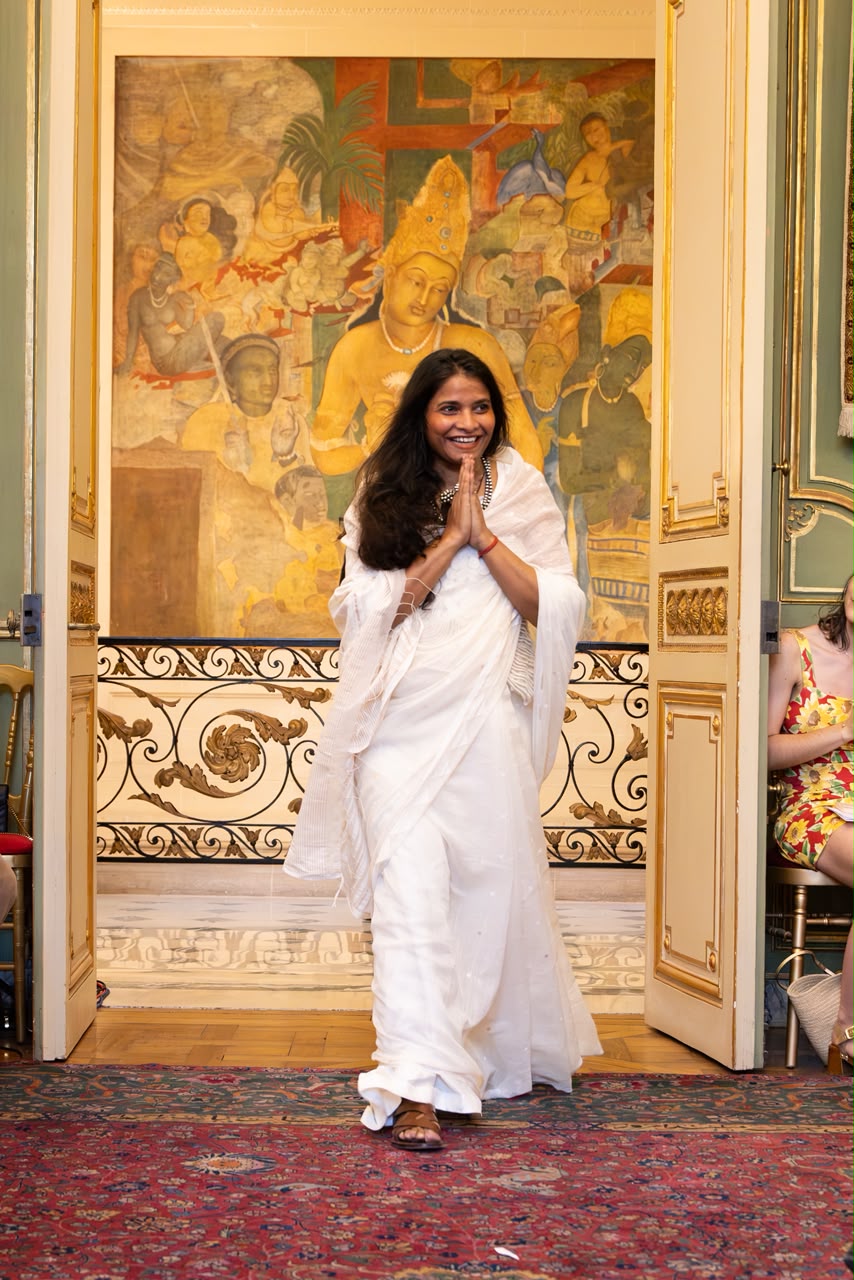

Rahul Misha Couture Fall 2026 collection, ‘Devi’ presented at Haute Couture Week, Paris.
Let’s start with what’s true and settled. Tarun Tahiliani is the man who built the room Indian couture now lives in. He opened Ensemble in 1987, the country’s first multi-designer luxury store, and effectively invented the retail idea of homegrown Indian couture as a category. He founded his own design studio in 1995 and, over three decades, developed the drape, the structured sari-gown, the fusion of Indian embroidery with Western tailoring, that now reads as the default grammar of the entire Indian couture industry. Every designer working in this space today, Mishra and Gupta included, is working in a vocabulary Tahiliani wrote the first draft of. Gaurav Gupta’s atelier is similarly serious, hundreds of hours of hand embroidery per garment, a sculptural signature entirely his own. Rahul Mishra’s embroidery work on Devi is technically accomplished, staged inside the Gothic vaults of the Collège des Bernardins and scored to temple percussion recorded inside the Ajanta Caves. This is a piece about a shared archive, and about an industry where the newest headline-makers are still, knowingly or not, standing on ground Tahiliani cleared decades ago.
But somewhere between the mridangam score and the murti inspired busts sculpted in zardozi, a section of the fashion fraternity started asking a quieter question. Where exactly had they seen this before. As it turns out, further back, and in more places, than Devi’s own framing suggested.
The timeline. Gaurav Gupta showed a temple sculpture inspired breastplate as part of his Spring/Summer 2026 couture in Paris this January, five months before Mishra’s own murti carved busts walked the same city. Gupta reposted a video on the making of that piece a day before Devi went up. Shefalee Vasudev’s review of Devi for The Voice of Fashion named the echo directly, calling it hard to look past, while noting fairly that shared source material can lead any two designers to the same door.
Gaurav Gupta’s Divine Androgyne, SS26 collection showcased at the Haute Couture Week, Paris on Tuesday, 27 January, 2026
The reckoning. A sharper critique came from fashion journalist Shweta Shiware, who, on her own Instagram, argued that Mishra had history on his side to do something couture rarely does: put the actual body Hoysala temple sculpture celebrates, fuller, fleshier, unmistakably corporeal, onto the runway. Instead, she said, he kept the crowns and the carved stone surface and mapped it onto couture’s usual tall, lean frame, leaving breasts and hips traced onto the fabric rather than embodied by the women wearing it. Her verdict, posted directly under the reel: history handed him the argument, and he missed the opportunity. Cardi B’s own presence complicated that critique in real time, several viewers reading her figure as strikingly close to the Didarganj Yakshi, one of Indian sculpture’s most celebrated ancient figures, famous for exactly the fullness of form the rest of the cast was missing.

Cardi B at Rahul Misha Couture Fall 2026 collection, ‘Devi’ presented at Haute Couture Week, Paris
The archive, part one. Wearable stone sculpture as a visual idea has been alive in India’s own creative economy for a while, well outside the couture calendar. A SIPA Dancing School wedding entrance sequence from 24 June 2026 staged exactly this: guests welcomed by living sculptures inspired by India’s rich heritage, dancers in full metallic temple warrior costuming. Choreographer Shashank’s work with the Terence Lewis Dance Company, dated 9 November 2025, shows the same sculptural corset and armour vocabulary, grey-toned, temple-carved, worn as living art, eight months before Devi’s Paris debut.
SIPA Dancing School wedding entrance sequence from 24 June 2026
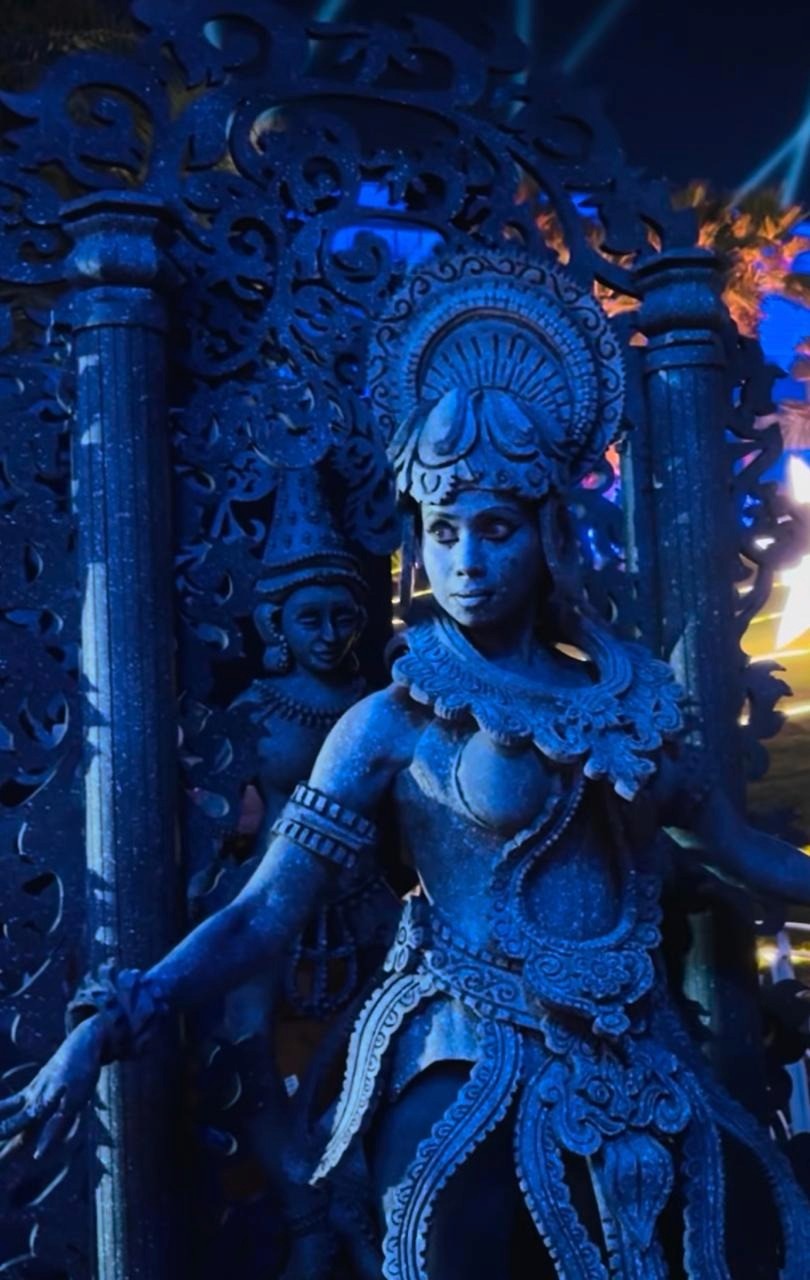
Scene from Terence Lewis Dance Company, dated 9 November 2025
The archive, part two. And then, the following evening, Tarun Tahiliani’s own account posted a carousel that made the point better than any critic could. The caption: India’s artistic legacy has always been at the heart of our journey. Inspired by the power and rhythm of Nataraja, we celebrate movement, craftsmanship, and culture. The images: dancers emerging from a monumental Nataraja arch in stone grey and gold, headpieces built like temple crowns, staged for TT’s Annual Parade Edition Two, a show that actually took place in 2024, two years before Devi. Buried further in the same carousel is an archival throwback to Tahiliani’s Spring/Summer 2001 collection, captioned in his own words: Inspired by the sensuality of Indian sculpture and mythology, Nataraj, apsaras, and temple torsos. My designs echo a legacy where fabric isn’t worn, it’s sculpted. That’s the house’s own archive speaking, dated a full quarter century before Devi, making the same claim to the same iconography in almost identical language, from the designer who was arguably the first to make that claim at all.
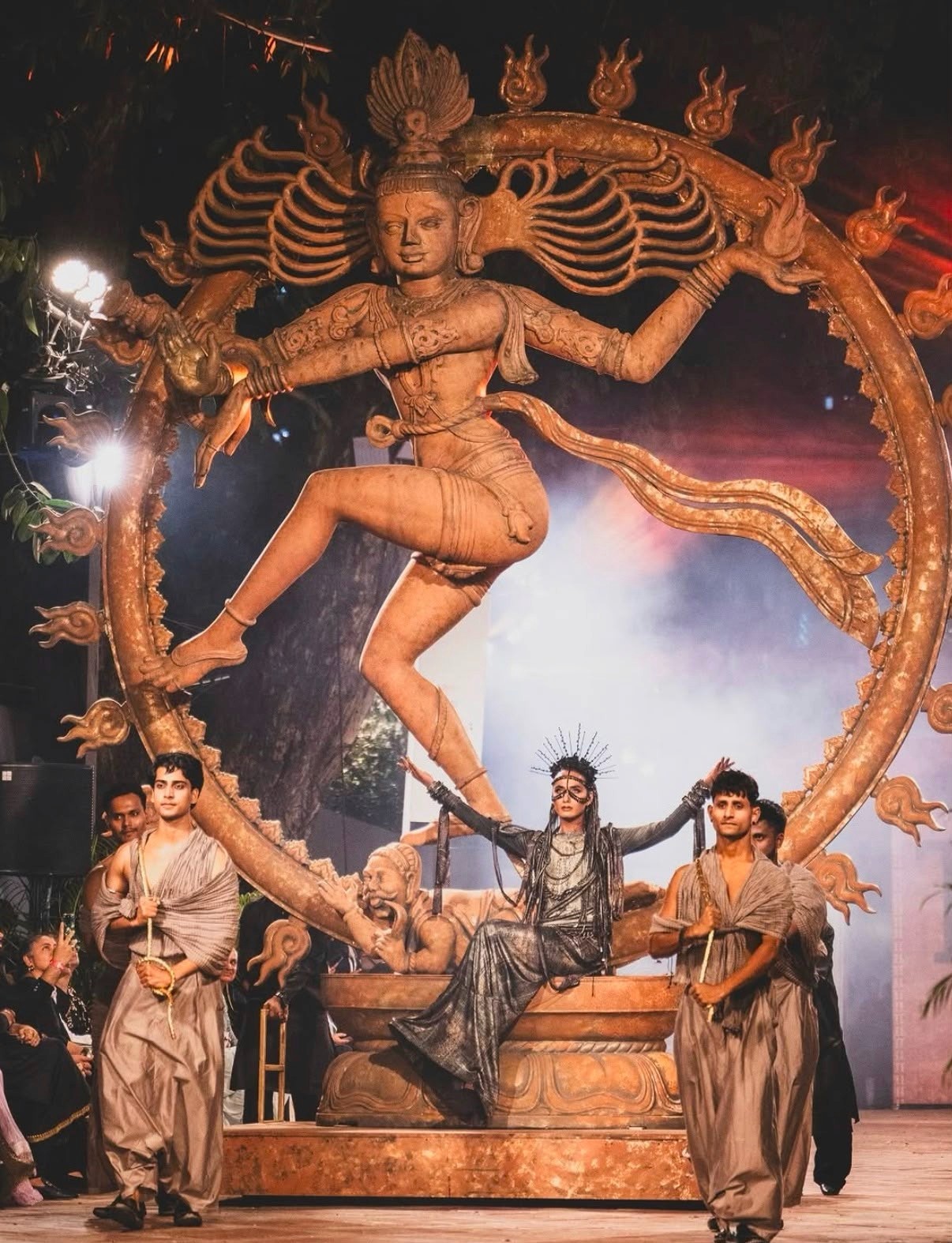
Tarun Tahiliani annual parade edition two showcased in 2024
This is a story about convergence, plain and simple, and a gentler one than plagiarism or accusation, Mishra included. A collection that stages 2,000 year old temple iconography as couture’s next frontier was always going to run into the fact that Indian couture has been standing on that frontier for a while, and that the frontier itself has Tahiliani’s fingerprints on it from the very start. Gupta was there in Paris this January. Tahiliani was working this same temple iconography as far back as 2001, at a point when Indian couture as a category barely existed, revisited it again for his own showcase in 2024, and, pointedly, posted the archive again within a day of Devi’s Paris debut, on home ground, not in Paris at all. Wedding choreographers and dance companies have been there even longer, with none of the Paris address attached.

Image courtesy @taruntahiliani on Instagram
Great work stands on its own without needing to be first, and the coverage around Devi might have served Mishra better by saying so plainly instead of reaching for time travel. It’s fair to ask why the framing insisted on that word anyway, when the temple, it turns out, has had visitors all along, starting with the man who opened its doors.
TO BE CONTINUED, FOR SUBSCRIBERS ONLY.
This is where the surface ends and the reporting begins.
The complete piece, the full archive, and access to The French Press Circle. Reporting answerable only to its readers.
Already a subscriber ?
Login
Read these on the house, with our compliments.
A selection from the current issue, open to all readers. Read them in full. The rest is one decision away.








Rahul Misha Couture Fall 2026 collection, ‘Devi’ presented at Haute Couture Week, Paris.
Let’s start with what’s true and settled. Tarun Tahiliani is the man who built the room Indian couture now lives in. He opened Ensemble in 1987, the country’s first multi-designer luxury store, and effectively invented the retail idea of homegrown Indian couture as a category. He founded his own design studio in 1995 and, over three decades, developed the drape, the structured sari-gown, the fusion of Indian embroidery with Western tailoring, that now reads as the default grammar of the entire Indian couture industry. Every designer working in this space today, Mishra and Gupta included, is working in a vocabulary Tahiliani wrote the first draft of. Gaurav Gupta’s atelier is similarly serious, hundreds of hours of hand embroidery per garment, a sculptural signature entirely his own. Rahul Mishra’s embroidery work on Devi is technically accomplished, staged inside the Gothic vaults of the Collège des Bernardins and scored to temple percussion recorded inside the Ajanta Caves. This is a piece about a shared archive, and about an industry where the newest headline-makers are still, knowingly or not, standing on ground Tahiliani cleared decades ago.
But somewhere between the mridangam score and the murti inspired busts sculpted in zardozi, a section of the fashion fraternity started asking a quieter question. Where exactly had they seen this before. As it turns out, further back, and in more places, than Devi’s own framing suggested.
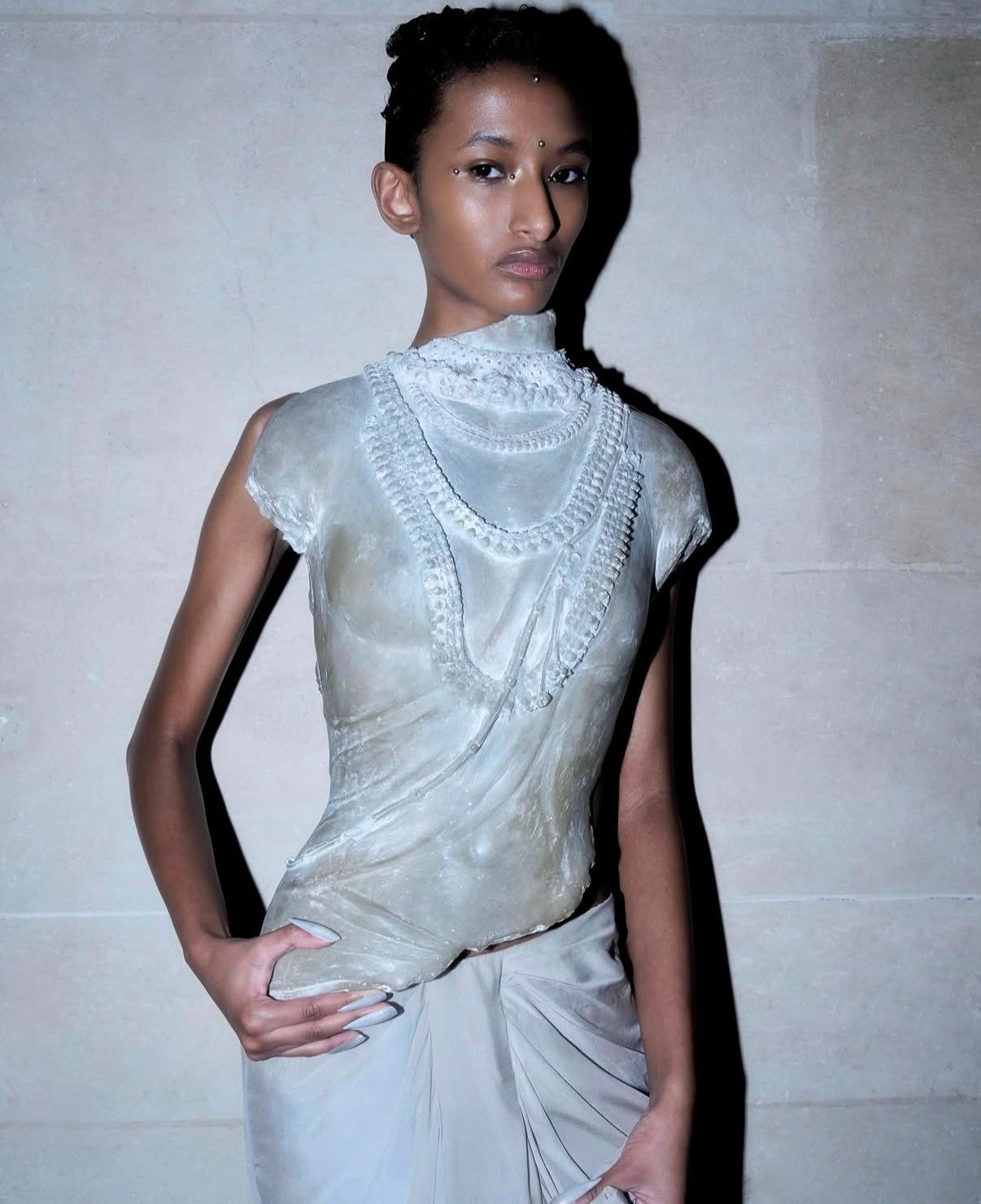
The timeline. Gaurav Gupta showed a temple sculpture inspired breastplate as part of his Spring/Summer 2026 couture in Paris this January, five months before Mishra’s own murti carved busts walked the same city. Gupta reposted a video on the making of that piece a day before Devi went up. Shefalee Vasudev’s review of Devi for The Voice of Fashion named the echo directly, calling it hard to look past, while noting fairly that shared source material can lead any two designers to the same door.
Gaurav Gupta’s Divine Androgyne, SS26 collection showcased at the Haute Couture Week, Paris on Tuesday, 27 January, 2026
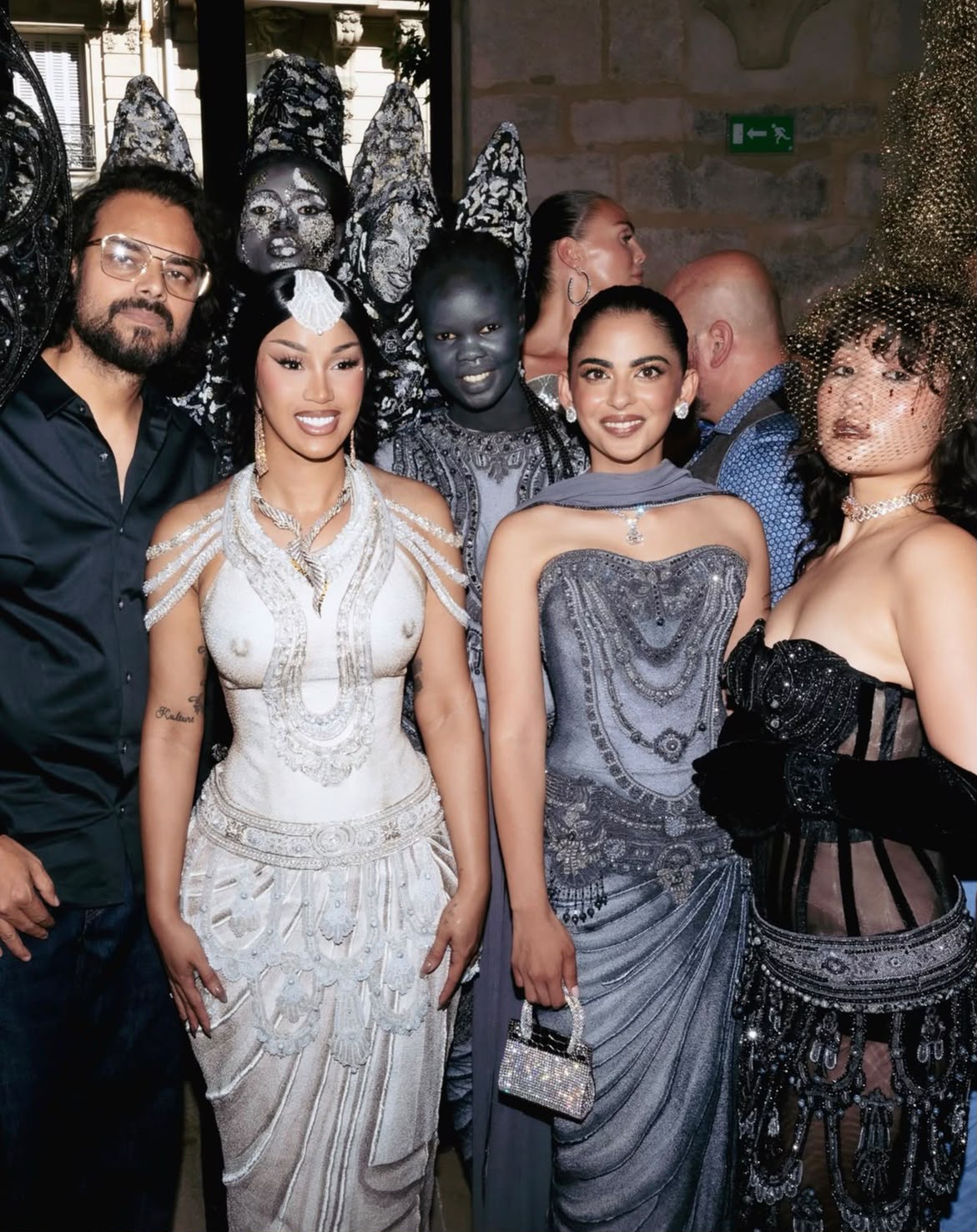
The reckoning. A sharper critique came from fashion journalist Shweta Shiware, who, on her own Instagram, argued that Mishra had history on his side to do something couture rarely does: put the actual body Hoysala temple sculpture celebrates, fuller, fleshier, unmistakably corporeal, onto the runway. Instead, she said, he kept the crowns and the carved stone surface and mapped it onto couture’s usual tall, lean frame, leaving breasts and hips traced onto the fabric rather than embodied by the women wearing it. Her verdict, posted directly under the reel: history handed him the argument, and he missed the opportunity. Cardi B’s own presence complicated that critique in real time, several viewers reading her figure as strikingly close to the Didarganj Yakshi, one of Indian sculpture’s most celebrated ancient figures, famous for exactly the fullness of form the rest of the cast was missing.
Cardi B at Rahul Misha Couture Fall 2026 collection, ‘Devi’ presented at Haute Couture Week, Paris
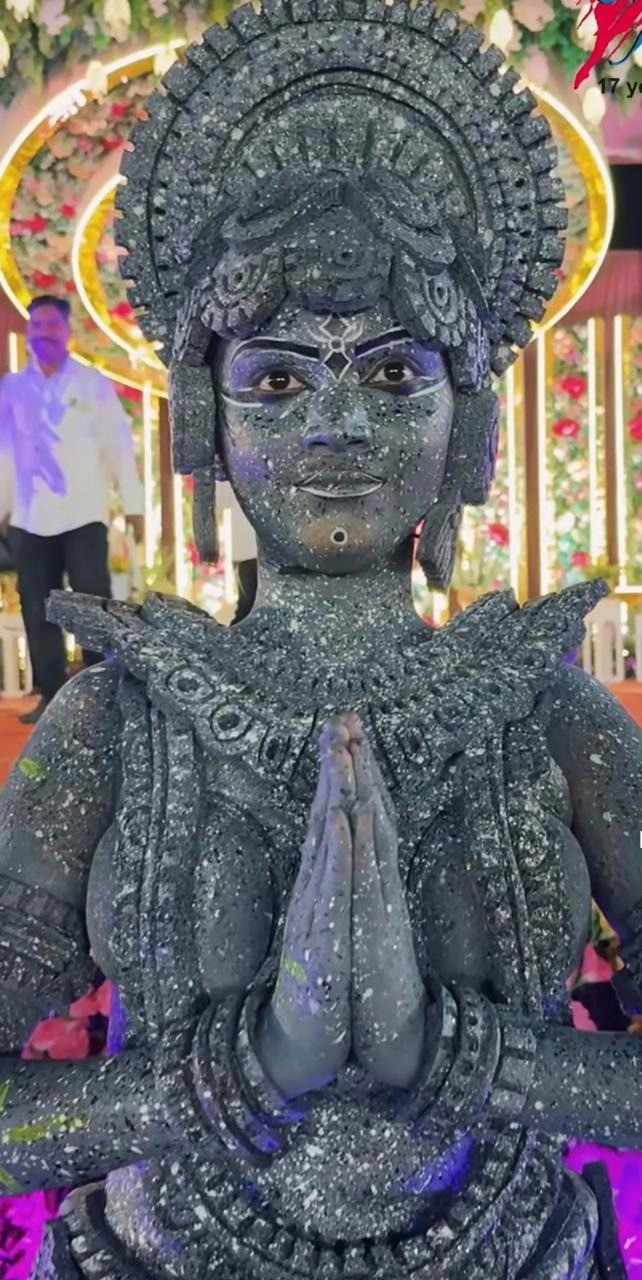
The archive, part one. Wearable stone sculpture as a visual idea has been alive in India’s own creative economy for a while, well outside the couture calendar. A SIPA Dancing School wedding entrance sequence from 24 June 2026 staged exactly this: guests welcomed by living sculptures inspired by India’s rich heritage, dancers in full metallic temple warrior costuming. Choreographer Shashank’s work with the Terence Lewis Dance Company, dated 9 November 2025, shows the same sculptural corset and armour vocabulary, grey-toned, temple-carved, worn as living art, eight months before Devi’s Paris debut.
SIPA Dancing School wedding entrance sequence from 24 June 2026
Scene from Terence Lewis Dance Company, dated 9 November 2025
The archive, part two. And then, the following evening, Tarun Tahiliani’s own account posted a carousel that made the point better than any critic could. The caption: India’s artistic legacy has always been at the heart of our journey. Inspired by the power and rhythm of Nataraja, we celebrate movement, craftsmanship, and culture. The images: dancers emerging from a monumental Nataraja arch in stone grey and gold, headpieces built like temple crowns, staged for TT’s Annual Parade Edition Two, a show that actually took place in 2024, two years before Devi. Buried further in the same carousel is an archival throwback to Tahiliani’s Spring/Summer 2001 collection, captioned in his own words: Inspired by the sensuality of Indian sculpture and mythology, Nataraj, apsaras, and temple torsos. My designs echo a legacy where fabric isn’t worn, it’s sculpted. That’s the house’s own archive speaking, dated a full quarter century before Devi, making the same claim to the same iconography in almost identical language, from the designer who was arguably the first to make that claim at all.
Tarun Tahiliani annual parade edition two showcased in 2024
This is a story about convergence, plain and simple, and a gentler one than plagiarism or accusation, Mishra included. A collection that stages 2,000 year old temple iconography as couture’s next frontier was always going to run into the fact that Indian couture has been standing on that frontier for a while, and that the frontier itself has Tahiliani’s fingerprints on it from the very start. Gupta was there in Paris this January. Tahiliani was working this same temple iconography as far back as 2001, at a point when Indian couture as a category barely existed, revisited it again for his own showcase in 2024, and, pointedly, posted the archive again within a day of Devi’s Paris debut, on home ground, not in Paris at all. Wedding choreographers and dance companies have been there even longer, with none of the Paris address attached.
Image courtesy @taruntahiliani on Instagram
Great work stands on its own without needing to be first, and the coverage around Devi might have served Mishra better by saying so plainly instead of reaching for time travel. It’s fair to ask why the framing insisted on that word anyway, when the temple, it turns out, has had visitors all along, starting with the man who opened its doors.
TO BE CONTINUED, FOR SUBSCRIBERS ONLY.
This is where the surface ends and the reporting begins.
The complete piece, the full archive, and access to The French Press Circle. Reporting answerable only to its readers.
Already a subscriber ?
Login
Read these on the house, with our compliments.
A selection from the current issue, open to all readers. Read them in full. The rest is one decision away.