Midnight arrived on Wednesday carrying more consequence than any single hour has in this NEET crisis so far. Within roughly 24 hours of each other, Prime Minister Narendra Modi posted an unscheduled selfie-style video addressed to India's students, and Sonam Wangchuk ended a 26-day hunger strike that had already put him in two hospitals. The two events aren't coincidences so much as cause and effect: one man's body had become the pressure the other man's government could no longer absorb. Union Health Minister JP Nadda and Minister of State Dr Jitendra Singh were the ones who closed the loop, negotiating Wangchuk's exit from the fast in person at Medanta Hospital in Gurugram, but that came only after Wangchuk had already forced the terms himself.
The facts, laid flat: Wangchuk began his fast on June 28, joining the Cockroach Janta Party protest at Jantar Mantar to demand Education Minister Dharmendra Pradhan's resignation over the NEET paper leak, sweeping reform of the National Testing Agency, and one crore rupees in compensation for the families of NEET aspirants who died by suicide after the exam's integrity collapsed. He was hospitalised first at Safdarjung, then moved to Medanta after a Delhi High Court order sought by his wife, Gitanjali J. Angmo, once his condition worsened. His one remaining condition for ending the fast was an unequivocal government assurance that no legal or retaliatory action would be taken against the students and young protesters involved in the movement. According to Wangchuk, Nadda, and Singh visited him the day before he broke his fast, appealed for him to end it, and indicated the government would positively consider several of his demands, including compensation for the families of students who died by suicide. He ended the fast just after midnight Thursday, with both ministers present in the room.
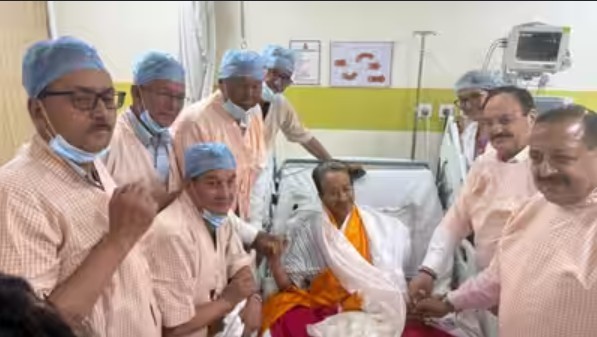
Sonam Wangchuk, ends hunger strike with JP Nadda and Dr Jitendra Singh
(Image via: BJP's Instagram)
Modi's video, posted hours earlier, declared that nothing mattered more than the welfare and future of the country's youth, and announced that fast-track courts would be set up to deliver swift, stringent punishment for those responsible for the paper leaks. He called it a continuation of steps already taken to protect students and warned that those who harmed young Indians' futures would not be spared. It's resolute language on paper, but it lands very differently once you set it against the fact that it took a Health Minister making a personal hospital visit, and a man twenty-six days into starving himself, to move anything at all.
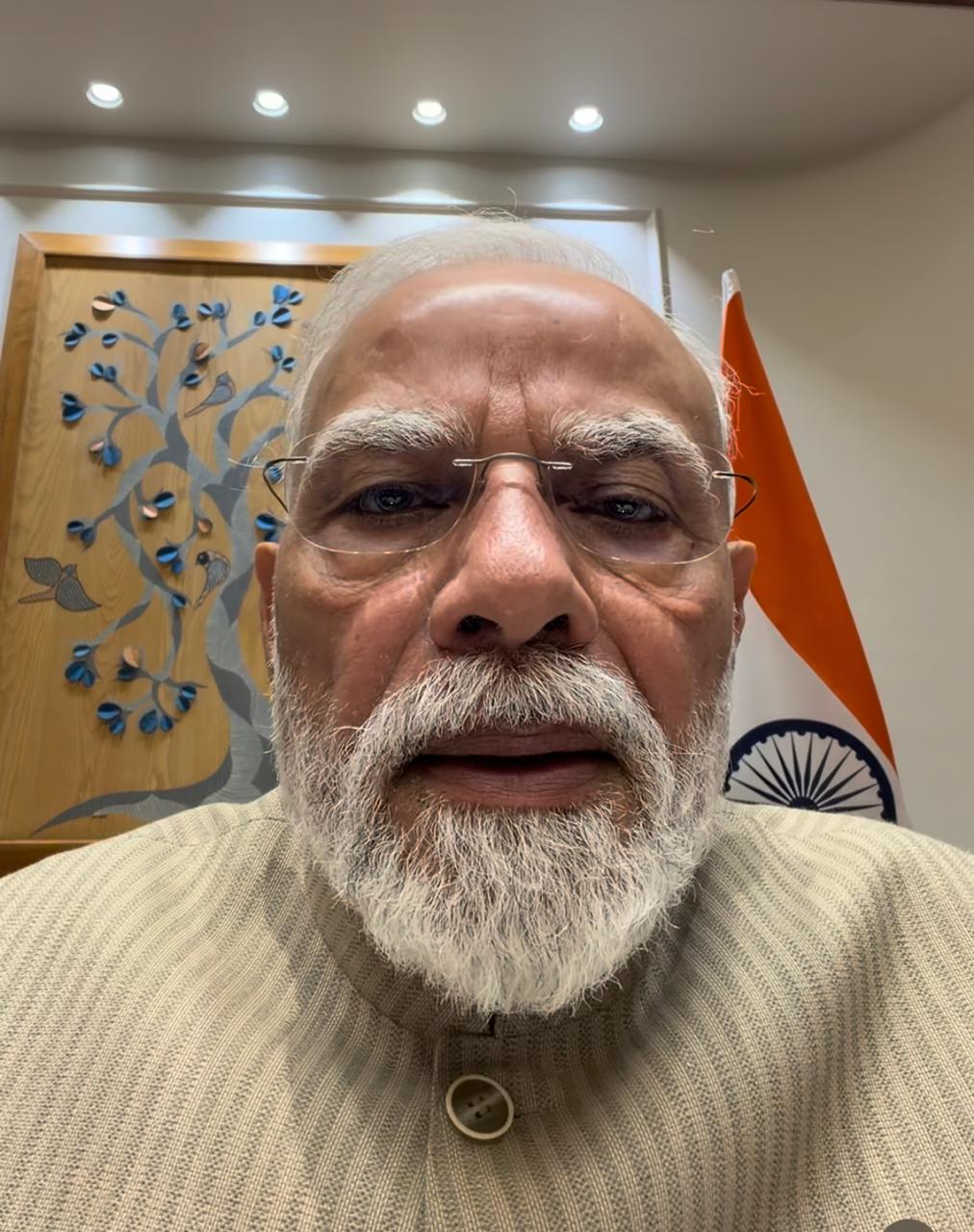
PM Narendra Modi on NEET Paper leak
(Image Via: PM Narendra Modi's Instagram Handle)
That's the accountability gap worth sitting inside, because right now every commitment on the table is a verbal one. Fast-track courts have been announced, not established. There's no bench assigned, no timeline published, no case docket to point to. Compensation for the bereaved families is something the government will "positively consider," and that phrase is doing an enormous amount of load-bearing work for a promise that hasn't been costed, budgeted, or written into an order. And the assurance Wangchuk actually fasted for, immunity from legal action for the students who protested, hasn't been issued as a public, signed guarantee. It exists right now as Wangchuk's own account of a private conversation, relayed in an open letter, not as a notification from the Home Ministry or a statement from Nadda's office confirming the same terms.
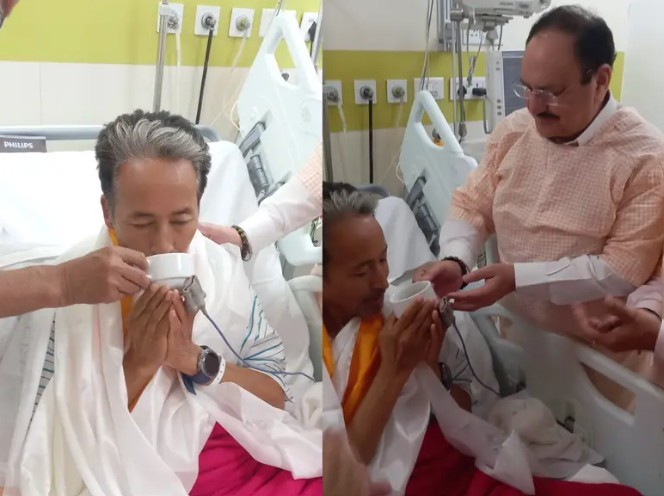
Sonam Wangchuk, ends hunger strike in the presence of JP Nadda and Dr Jitendra Singh
(Image via: BJP's Instagram)
That distinction is exactly why Wangchuk didn't just walk away and declare victory. He's committed to appealing to the students still sitting at Jantar Mantar to pause the movement and enter dialogue only once the assurance is formally in hand, which means the CJP protest itself isn't standing down on Modi's video or on Wangchuk's fast ending. It's standing down, if it does, on paperwork that doesn't exist yet. That's where the follow-up story lives: not whether Wangchuk broke bread, but whether the Home Ministry actually puts something in writing before the goodwill of a midnight video and a hospital-room handshake runs out. If the fast-track courts don't have a bench named within weeks, if the compensation figure never turns into a line item, if no formal immunity order ever reaches the students still deciding whether to trust the government or stay in the street, that's where accountability journalism needs to plant its next flag. The promise was made at midnight. The policy, so far, is still nowhere on paper.
This is a developing story, and details are being updated as they emerge. This article was filed at 3:50 AM.
TO BE CONTINUED, FOR SUBSCRIBERS ONLY.
This is where the surface ends and the reporting begins.
The complete piece, the full archive, and access to The French Press Circle. Reporting answerable only to its readers.
Already a subscriber ?
Login
Read these on the house, with our compliments.
A selection from the current issue, open to all readers. Read them in full. The rest is one decision away.






Midnight arrived on Wednesday carrying more consequence than any single hour has in this NEET crisis so far. Within roughly 24 hours of each other, Prime Minister Narendra Modi posted an unscheduled selfie-style video addressed to India's students, and Sonam Wangchuk ended a 26-day hunger strike that had already put him in two hospitals. The two events aren't coincidences so much as cause and effect: one man's body had become the pressure the other man's government could no longer absorb. Union Health Minister JP Nadda and Minister of State Dr Jitendra Singh were the ones who closed the loop, negotiating Wangchuk's exit from the fast in person at Medanta Hospital in Gurugram, but that came only after Wangchuk had already forced the terms himself.
The facts, laid flat: Wangchuk began his fast on June 28, joining the Cockroach Janta Party protest at Jantar Mantar to demand Education Minister Dharmendra Pradhan's resignation over the NEET paper leak, sweeping reform of the National Testing Agency, and one crore rupees in compensation for the families of NEET aspirants who died by suicide after the exam's integrity collapsed. He was hospitalised first at Safdarjung, then moved to Medanta after a Delhi High Court order sought by his wife, Gitanjali J. Angmo, once his condition worsened. His one remaining condition for ending the fast was an unequivocal government assurance that no legal or retaliatory action would be taken against the students and young protesters involved in the movement. According to Wangchuk, Nadda, and Singh visited him the day before he broke his fast, appealed for him to end it, and indicated the government would positively consider several of his demands, including compensation for the families of students who died by suicide. He ended the fast just after midnight Thursday, with both ministers present in the room.
Sonam Wangchuk, ends hunger strike with JP Nadda and Dr Jitendra Singh
(Image via: BJP's Instagram)
Modi's video, posted hours earlier, declared that nothing mattered more than the welfare and future of the country's youth, and announced that fast-track courts would be set up to deliver swift, stringent punishment for those responsible for the paper leaks. He called it a continuation of steps already taken to protect students and warned that those who harmed young Indians' futures would not be spared. It's resolute language on paper, but it lands very differently once you set it against the fact that it took a Health Minister making a personal hospital visit, and a man twenty-six days into starving himself, to move anything at all.
PM Narendra Modi on NEET Paper leak
(Image Via: PM Narendra Modi's Instagram Handle)
That's the accountability gap worth sitting inside, because right now every commitment on the table is a verbal one. Fast-track courts have been announced, not established. There's no bench assigned, no timeline published, no case docket to point to. Compensation for the bereaved families is something the government will "positively consider," and that phrase is doing an enormous amount of load-bearing work for a promise that hasn't been costed, budgeted, or written into an order. And the assurance Wangchuk actually fasted for, immunity from legal action for the students who protested, hasn't been issued as a public, signed guarantee. It exists right now as Wangchuk's own account of a private conversation, relayed in an open letter, not as a notification from the Home Ministry or a statement from Nadda's office confirming the same terms.
Sonam Wangchuk, ends hunger strike in the presence of JP Nadda and Dr Jitendra Singh
(Image via: BJP's Instagram)
That distinction is exactly why Wangchuk didn't just walk away and declare victory. He's committed to appealing to the students still sitting at Jantar Mantar to pause the movement and enter dialogue only once the assurance is formally in hand, which means the CJP protest itself isn't standing down on Modi's video or on Wangchuk's fast ending. It's standing down, if it does, on paperwork that doesn't exist yet. That's where the follow-up story lives: not whether Wangchuk broke bread, but whether the Home Ministry actually puts something in writing before the goodwill of a midnight video and a hospital-room handshake runs out. If the fast-track courts don't have a bench named within weeks, if the compensation figure never turns into a line item, if no formal immunity order ever reaches the students still deciding whether to trust the government or stay in the street, that's where accountability journalism needs to plant its next flag. The promise was made at midnight. The policy, so far, is still nowhere on paper.
This is a developing story, and details are being updated as they emerge. This article was filed at 3:50 AM.
TO BE CONTINUED, FOR SUBSCRIBERS ONLY.
This is where the surface ends and the reporting begins.
The complete piece, the full archive, and access to The French Press Circle. Reporting answerable only to its readers.
Already a subscriber ?
Login
Read these on the house, with our compliments.
A selection from the current issue, open to all readers. Read them in full. The rest is one decision away.