
Disclosure: In light of the ongoing protests and the difficult conversations unfolding across the country, publishing coverage of a couture show may feel at odds with the present moment. We recognise that reality. This piece exists to document the months of craftsmanship, creativity and labour invested by ateliers, karigars and the many hands behind the collection. It is a recognition of their work and livelihood, written with an awareness that fashion does not exist in isolation from the world around it.
As the first models emerged from the palace corridors, it became evident that Anamika Khanna was reimagining royalty through her own contemporary language, presenting Moonlit Palace, where sculptural tailoring met fluid silhouettes and hand-painted textiles met intricate embroidery on simple fabrics. The palette is restrained; champagne, ivory, gold, black and muted sage dominate the frame allowing texture to become the protagonist. One of the most striking elements is Anamika Khanna’s continued dialogue between tradition and modernity.
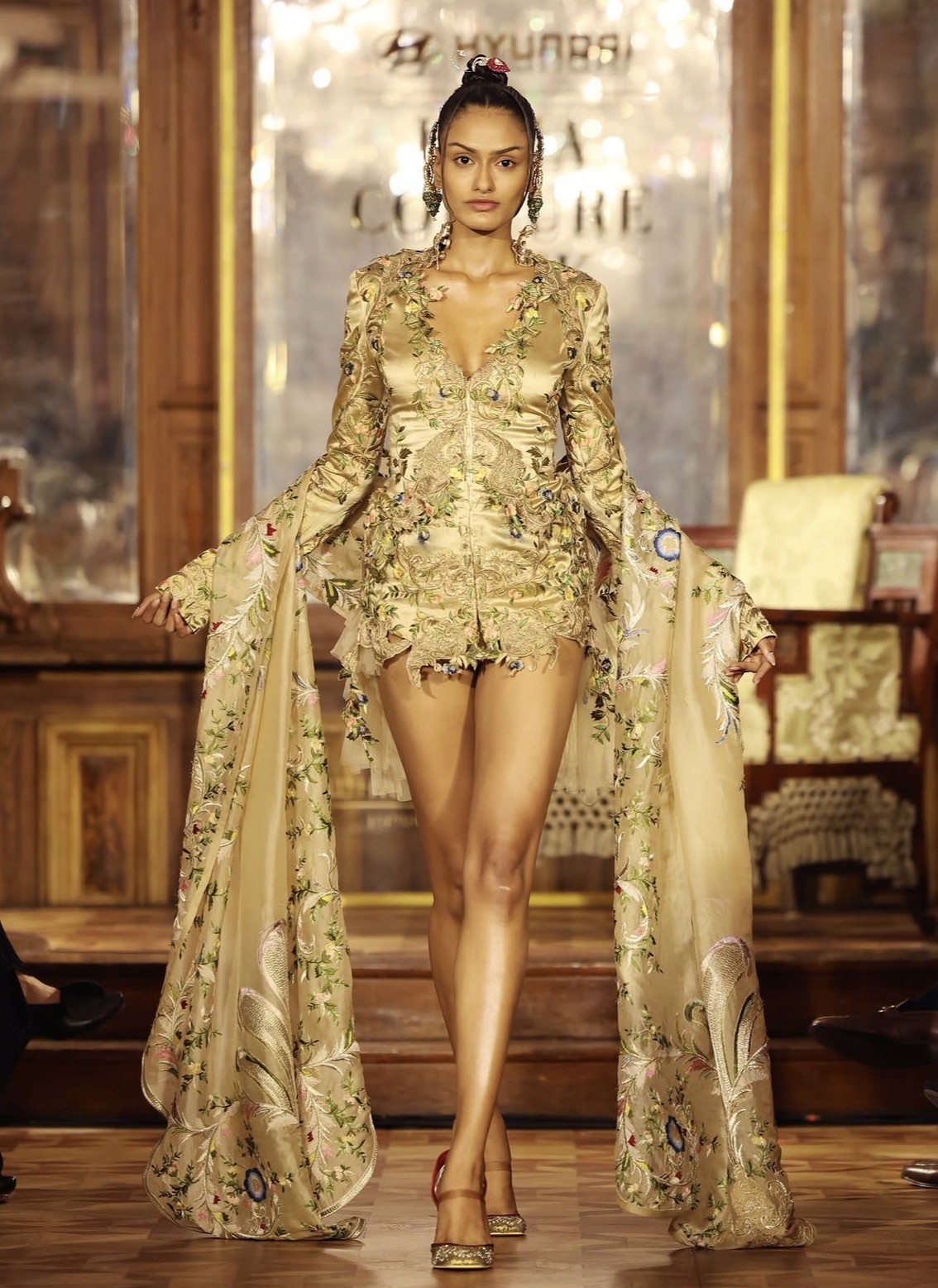

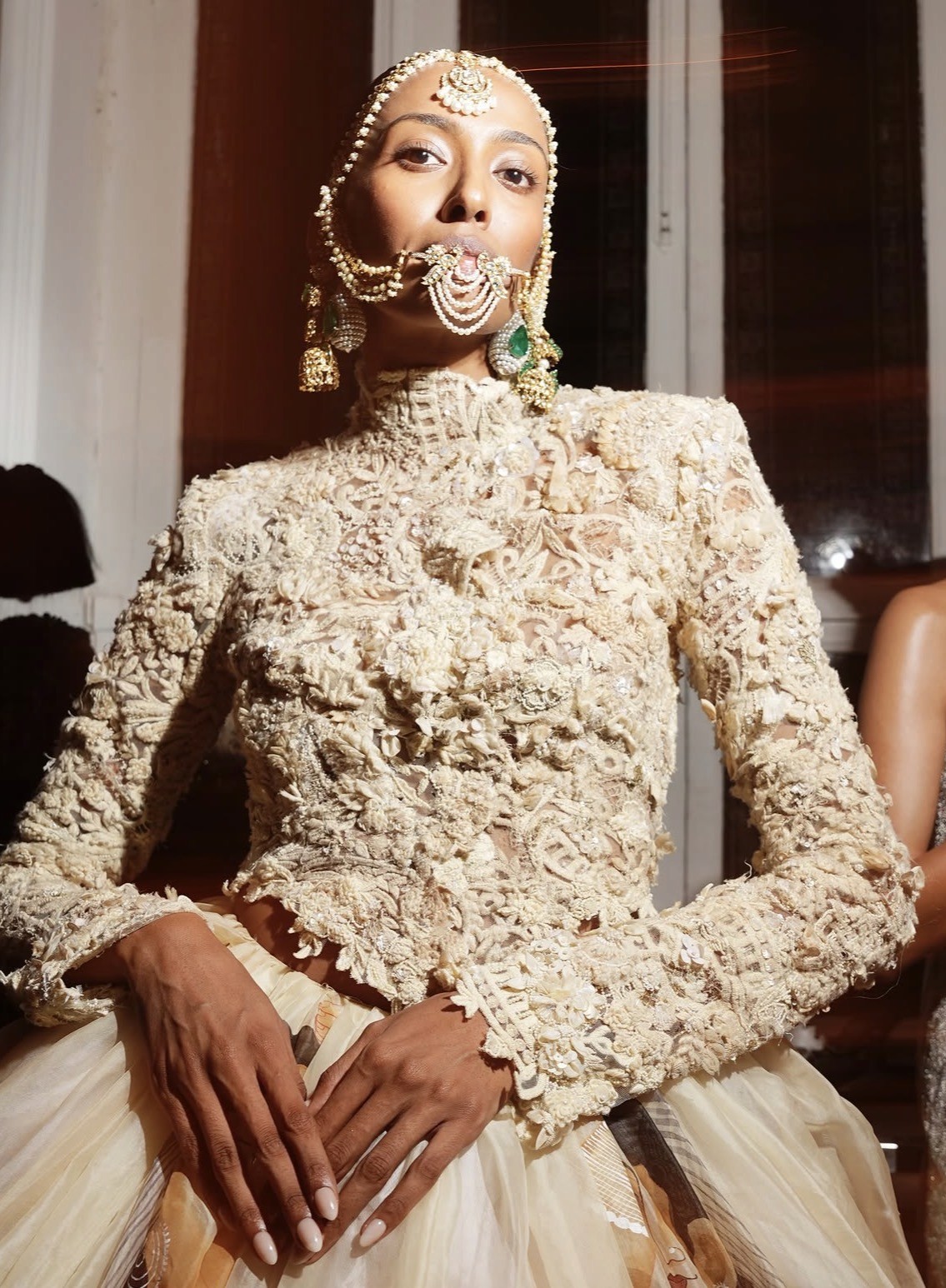
Image credits: @FDCI on Instagram
Structured metallic jackets were paired with fluid drapes, while heavily embroidered bridal-wear shared the spotlight with tailored coats. Hand-painted textiles, sculptural organza, intricate three-dimensional floral embroidery and embellished surfaces were just some of the standout elements we saw on the runway.
The conversation in this show was one of silhouette- voluminous, sculptural, fitted, it felt every garment was designed to move with the body rather than simply adorn it. There was an effortless ease to the collection, where the garments never felt restrictive, allowing craftsmanship and movement to coexist in perfect harmony.
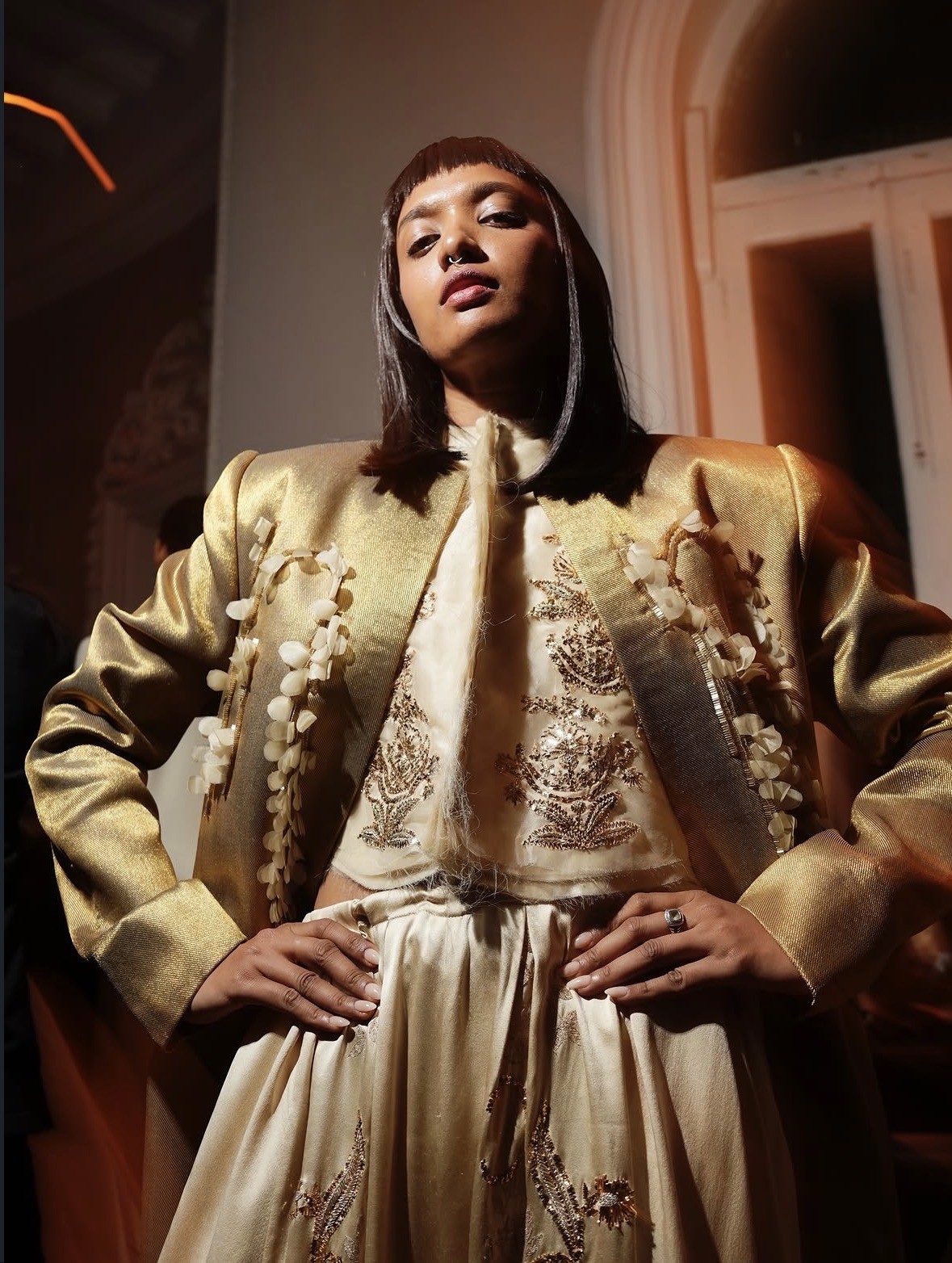


Image credits: @FDCI on Instagram
At the heart of the collection lay two deeply personal artistic influences: the textiles of Barmer in Rajasthan, Anamika Khanna's birthplace and the iconic Kalighat paintings of Kolkata, the city she now calls home. Together, these references formed the emotional and visual foundation of the collection, shaping both its silhouettes and its narrative.
Drawing from the city of Barmer, Rajasthan's rich textile heritage, fabrics crafted by women artisan communities were transformed through patchwork, natural dyeing, hand painting, embroidery and delicate gold foiling. Khanna's interpretation of Kolkata's Kalighat paintings was equally compelling. Rather than reproducing the artworks literally, she translated their graceful proportions into her silhouettes. The result was a collection that captured the spirit of the paintings without becoming costume, modern in execution yet deeply rooted in cultural memory.

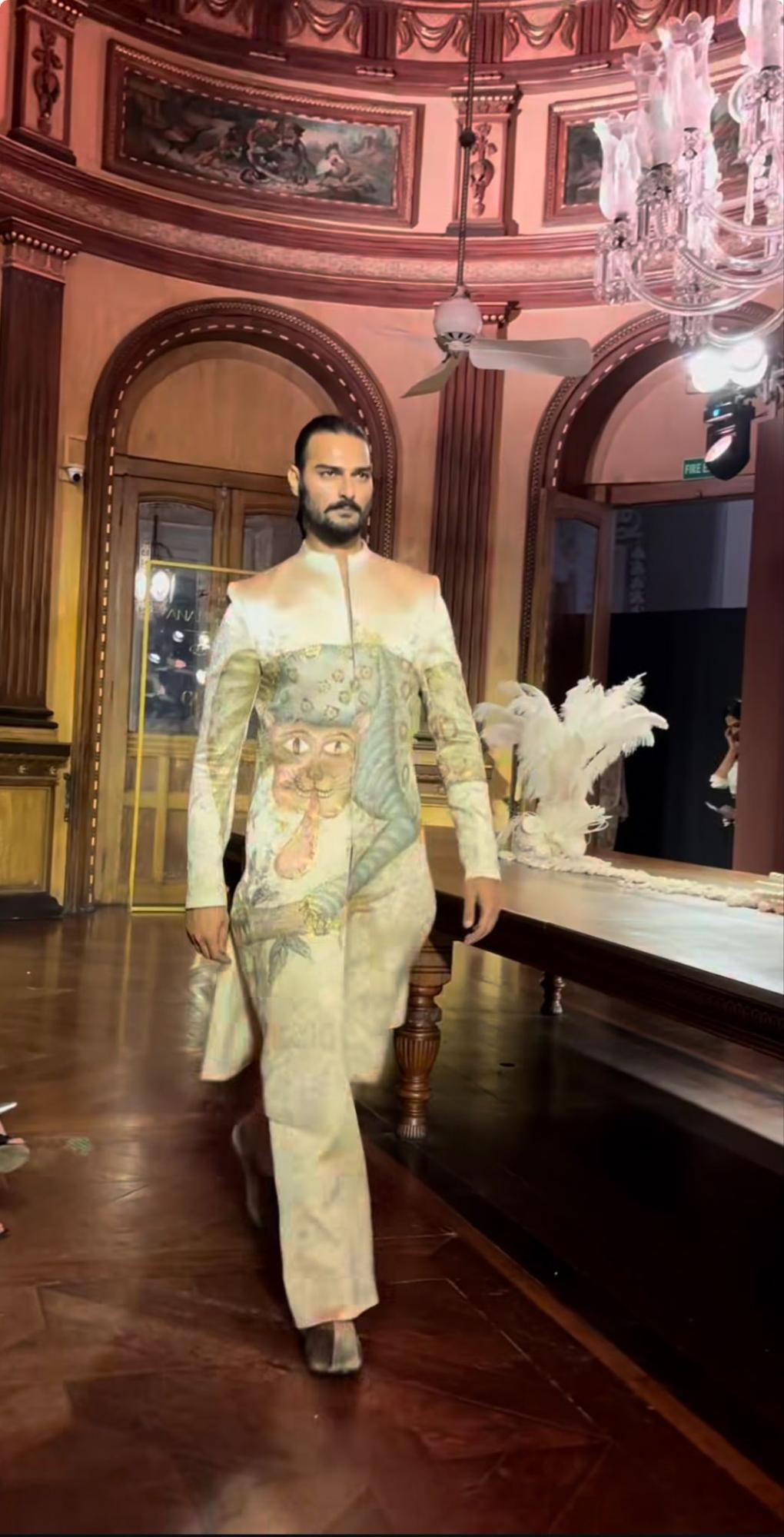
Image credits: @FDCI on Instagram
More than a showcase of couture, the presentation became a celebration of India's living craft traditions. It served as a reminder that the country's diverse textile practices are not relics of the past, but evolving art forms shaped by generations of artisans. Through Moonlit Palace, Anamika Khanna presented a vision of Indian couture, rooted in heritage, by carrying it forward with sensitivity, and splendid innovation.
TO BE CONTINUED, FOR SUBSCRIBERS ONLY.
This is where the surface ends and the reporting begins.
The complete piece, the full archive, and access to The French Press Circle. Reporting answerable only to its readers.
Already a subscriber ?
Login
Read these on the house, with our compliments.
A selection from the current issue, open to all readers. Read them in full. The rest is one decision away.


Disclosure: In light of the ongoing protests and the difficult conversations unfolding across the country, publishing coverage of a couture show may feel at odds with the present moment. We recognise that reality. This piece exists to document the months of craftsmanship, creativity and labour invested by ateliers, karigars and the many hands behind the collection. It is a recognition of their work and livelihood, written with an awareness that fashion does not exist in isolation from the world around it.
As the first models emerged from the palace corridors, it became evident that Anamika Khanna was reimagining royalty through her own contemporary language, presenting Moonlit Palace, where sculptural tailoring met fluid silhouettes and hand-painted textiles met intricate embroidery on simple fabrics. The palette is restrained; champagne, ivory, gold, black and muted sage dominate the frame allowing texture to become the protagonist. One of the most striking elements is Anamika Khanna’s continued dialogue between tradition and modernity.
Image credits: @FDCI on Instagram
Structured metallic jackets were paired with fluid drapes, while heavily embroidered bridal-wear shared the spotlight with tailored coats. Hand-painted textiles, sculptural organza, intricate three-dimensional floral embroidery and embellished surfaces were just some of the standout elements we saw on the runway.
The conversation in this show was one of silhouette- voluminous, sculptural, fitted, it felt every garment was designed to move with the body rather than simply adorn it. There was an effortless ease to the collection, where the garments never felt restrictive, allowing craftsmanship and movement to coexist in perfect harmony.
Image credits: @FDCI on Instagram
At the heart of the collection lay two deeply personal artistic influences: the textiles of Barmer in Rajasthan, Anamika Khanna's birthplace and the iconic Kalighat paintings of Kolkata, the city she now calls home. Together, these references formed the emotional and visual foundation of the collection, shaping both its silhouettes and its narrative.
Drawing from the city of Barmer, Rajasthan's rich textile heritage, fabrics crafted by women artisan communities were transformed through patchwork, natural dyeing, hand painting, embroidery and delicate gold foiling. Khanna's interpretation of Kolkata's Kalighat paintings was equally compelling. Rather than reproducing the artworks literally, she translated their graceful proportions into her silhouettes. The result was a collection that captured the spirit of the paintings without becoming costume, modern in execution yet deeply rooted in cultural memory.
Image credits: @FDCI on Instagram
More than a showcase of couture, the presentation became a celebration of India's living craft traditions. It served as a reminder that the country's diverse textile practices are not relics of the past, but evolving art forms shaped by generations of artisans. Through Moonlit Palace, Anamika Khanna presented a vision of Indian couture, rooted in heritage, by carrying it forward with sensitivity, and splendid innovation.
TO BE CONTINUED, FOR SUBSCRIBERS ONLY.
This is where the surface ends and the reporting begins.
The complete piece, the full archive, and access to The French Press Circle. Reporting answerable only to its readers.
Already a subscriber ?
Login
Read these on the house, with our compliments.
A selection from the current issue, open to all readers. Read them in full. The rest is one decision away.