Some designers make clothes. Then there are designers who make mythology.
Jatin Malik has always belonged to the second category, the sort of couturier who would rather construct an idea than chase a trend cycle. While the industry spent the last decade aggressively discovering “quiet luxury,” Malik was somewhere in Noida stitching philosophy into lapels and treating couture like an existential exercise.
With Boho, his first archival limited-edition womenswear collection, the New Delhi-based designer delivers something fashion rarely manages without sounding painfully self-important: sincerity, the real kind. The kind rooted in memory, accident, obsession, and a sketchbook that disappeared for nearly a decade before returning like a particularly stylish ghost.
Fashion loves a comeback story. But this one reads less like a PR strategy and more like Paulo Coelho wandered into an atelier.
The story begins in 2016.
A tiny studio in Noida. Two people. Limited resources. Unlimited ambition. Malik carried a sketchbook everywhere, cafés, commutes, airports, half-finished conversations. The pages slowly filled with fragmented silhouettes, metallic textures, broad shoulders, fluid drapes, and the earliest traces of what would eventually become Boho. Unpolished designs. More like visual murmurs. Fashion before it knew what it wanted to say.
Then the sketchbook vanished.
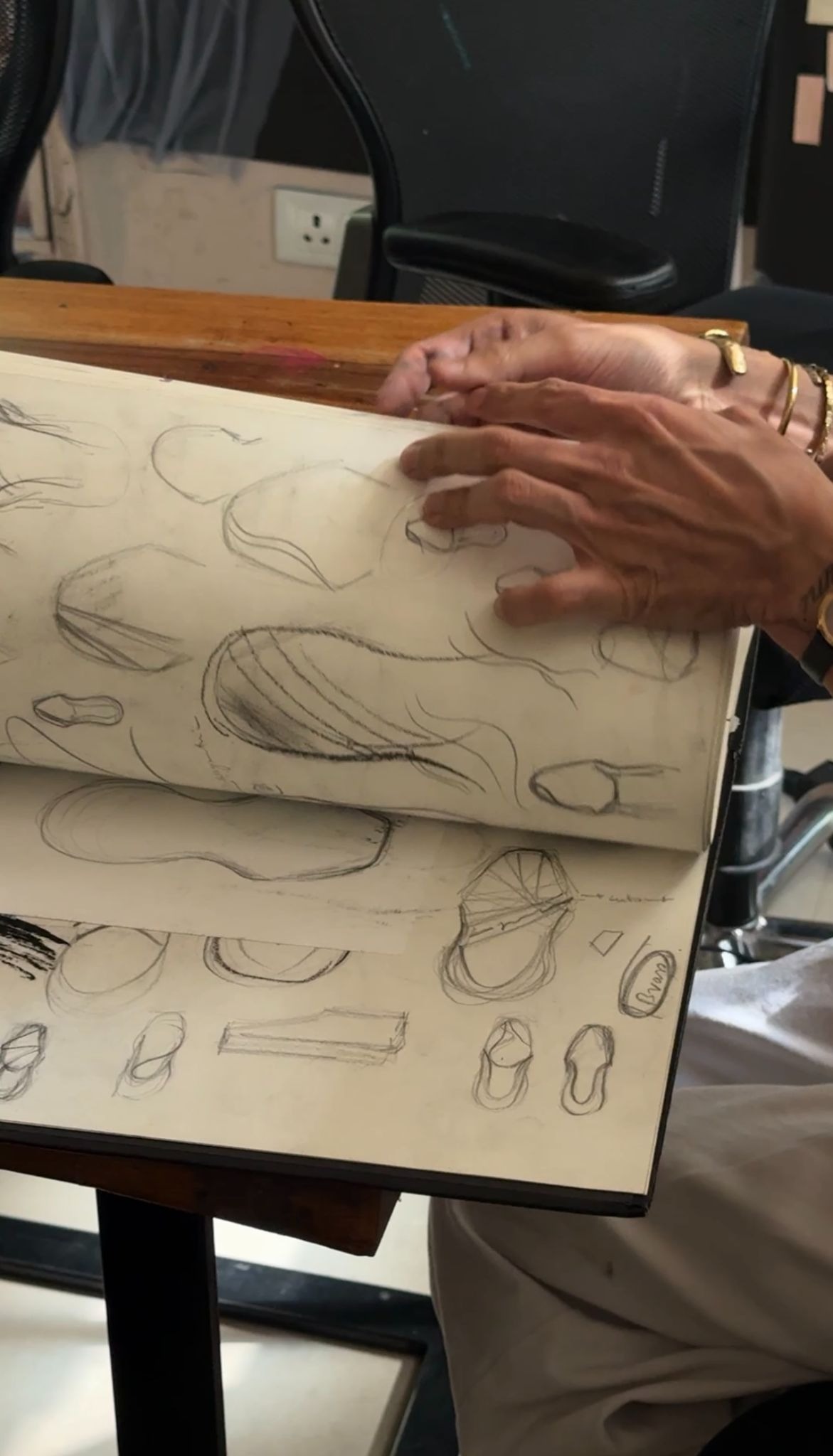
THE LOST SKETCHBOOK
Which, in retrospect, feels almost aggressively poetic.
While it stayed lost, Jatin Malik Couture did the opposite. The label evolved from a small experimental menswear house into one of India’s most distinct couture identities, particularly in a fashion ecosystem still disproportionately obsessed with brides and lehengas. Malik chose the groom. Then he made him interesting.
Collection after collection, Dali, Pablo, Monet, arrived like art-school dissertations tailored in silk and structure. French surrealism. Abstract impressionism. Fluid masculinity. Heavy tailoring. His work consistently operated in that delicious space between romance and control.
And then, because the universe clearly enjoys a dramatic subplot, the sketchbook found its way home.
A friend of a friend. A shared circle. An image was sent casually. One of those bizarre chains of coincidence that sounds fabricated until it happens to you.
Most people would archive it for sentimentality.
Malik did something more dangerous.
He decided to finish it.
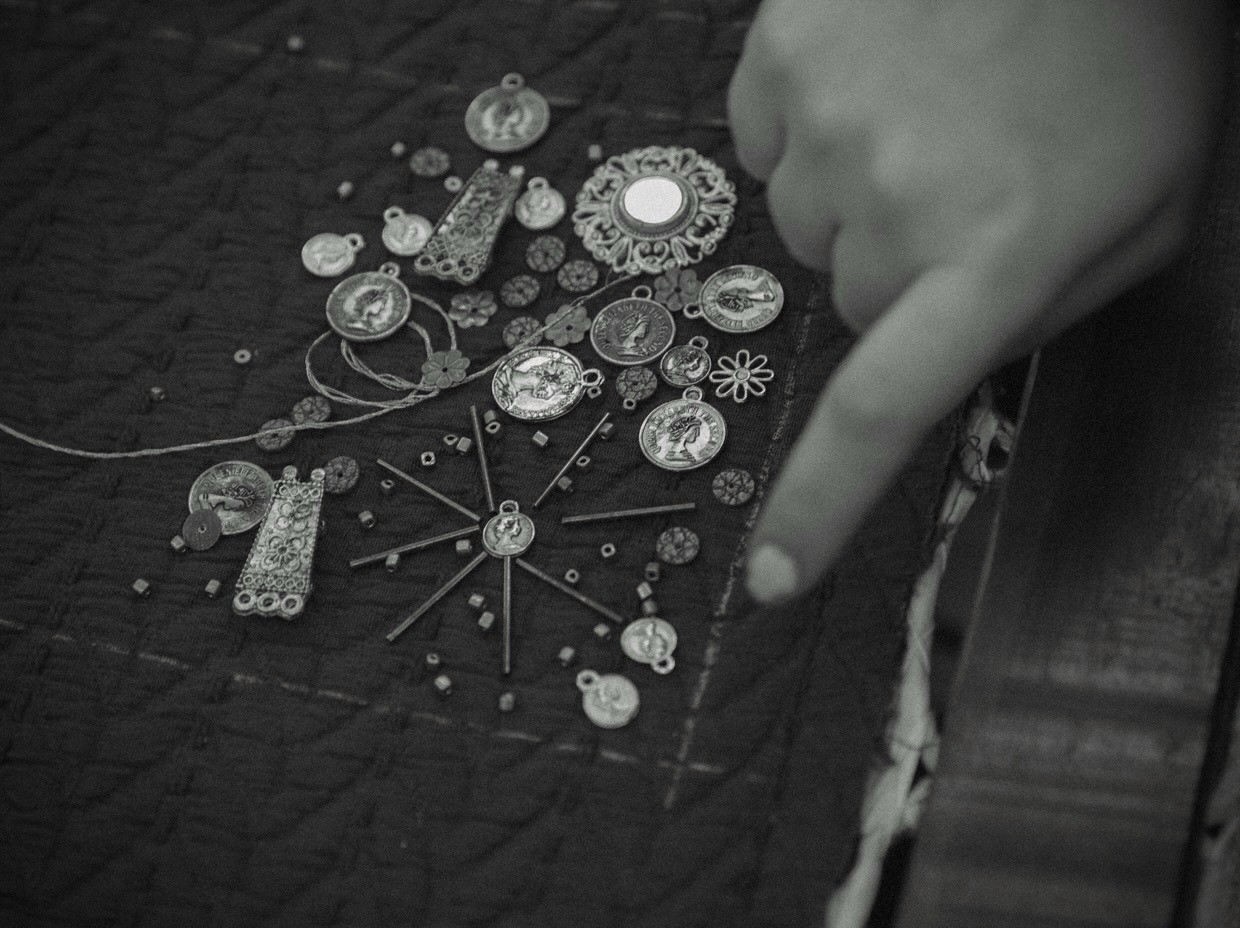
ANTIQUE COINS USED IN HIS COUTURE
That unfinished idea eventually became Boho, though calling it simply a collection seems insufficient. This is less “fashion line” and more “philosophical mood spiral with exceptional tailoring.”
At its core sits Hermetic philosophy, the ancient metaphysical framework built around seven principles governing existence itself: Mentalism, Correspondence, Vibration, Polarity, Rhythm, Cause and Effect, and Gender.
Which sounds wildly ambitious for a clothing collection until you see the garments.
Then it somehow makes perfect sense.
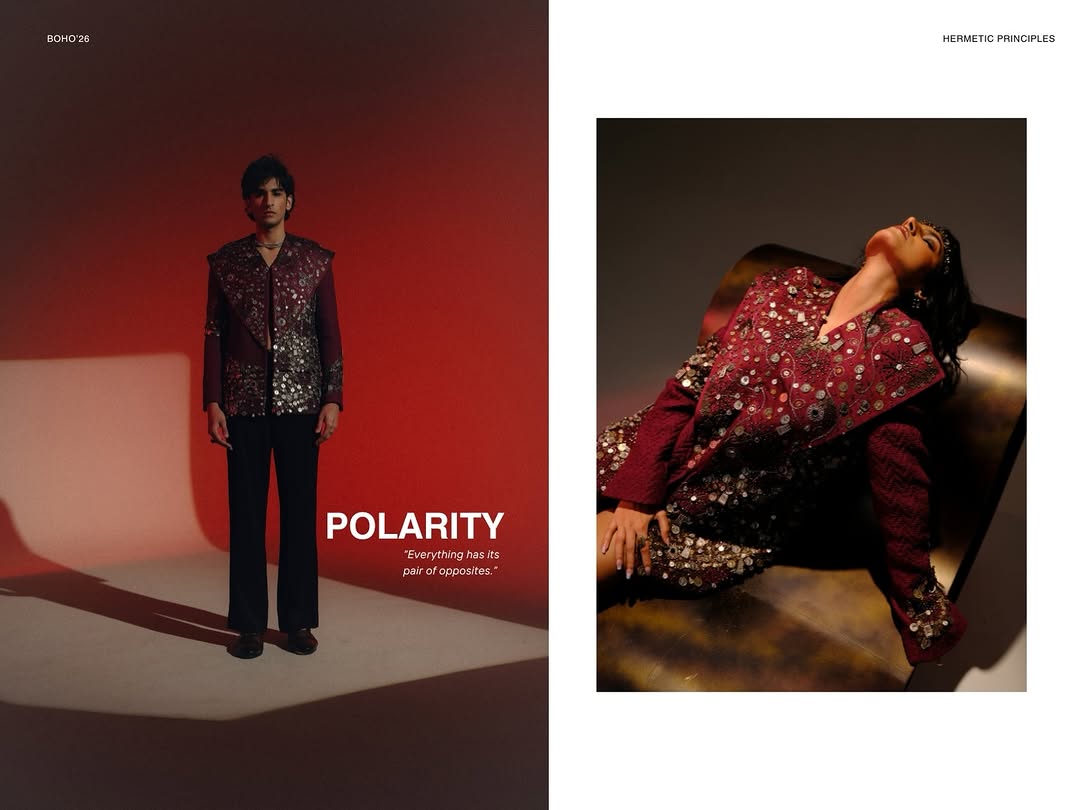
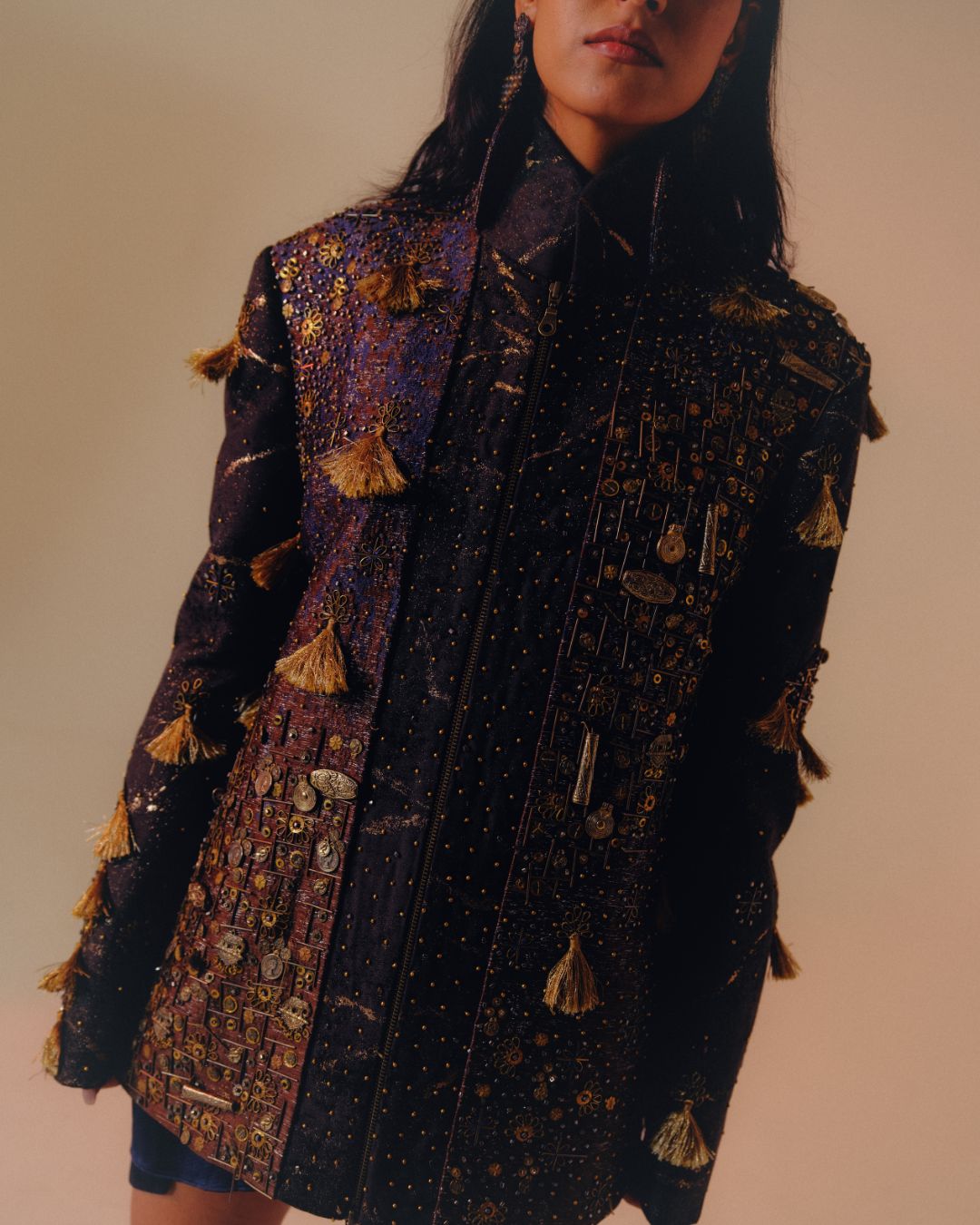
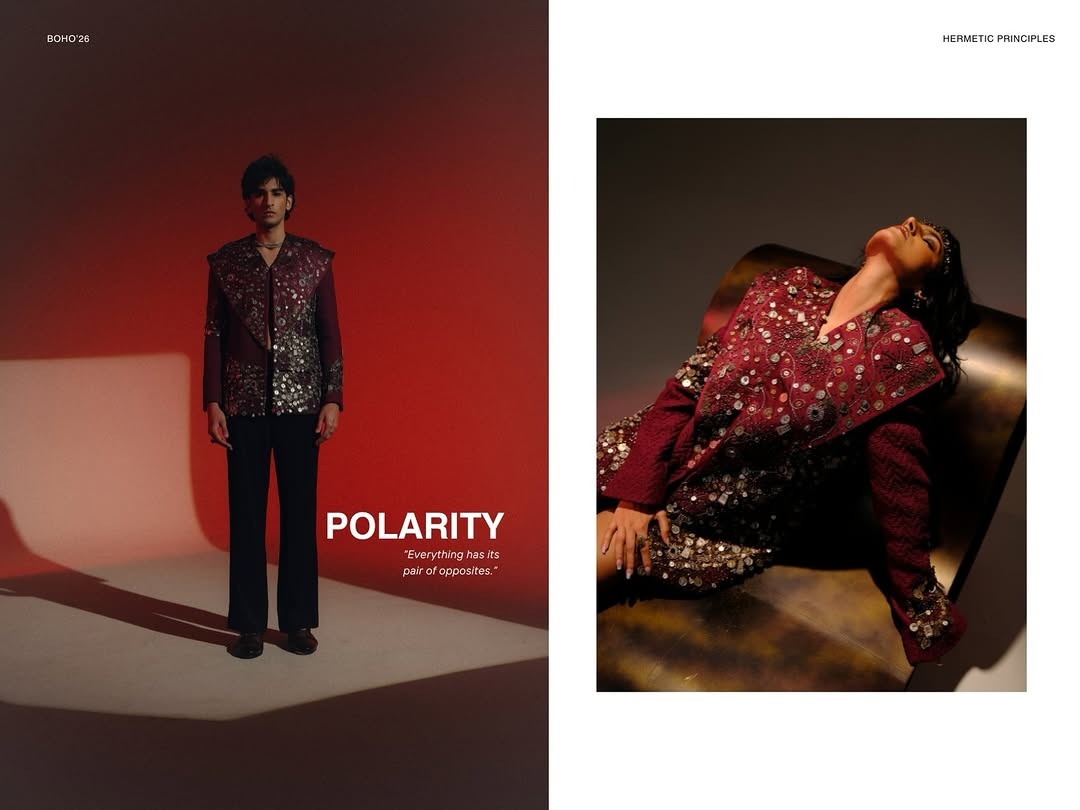
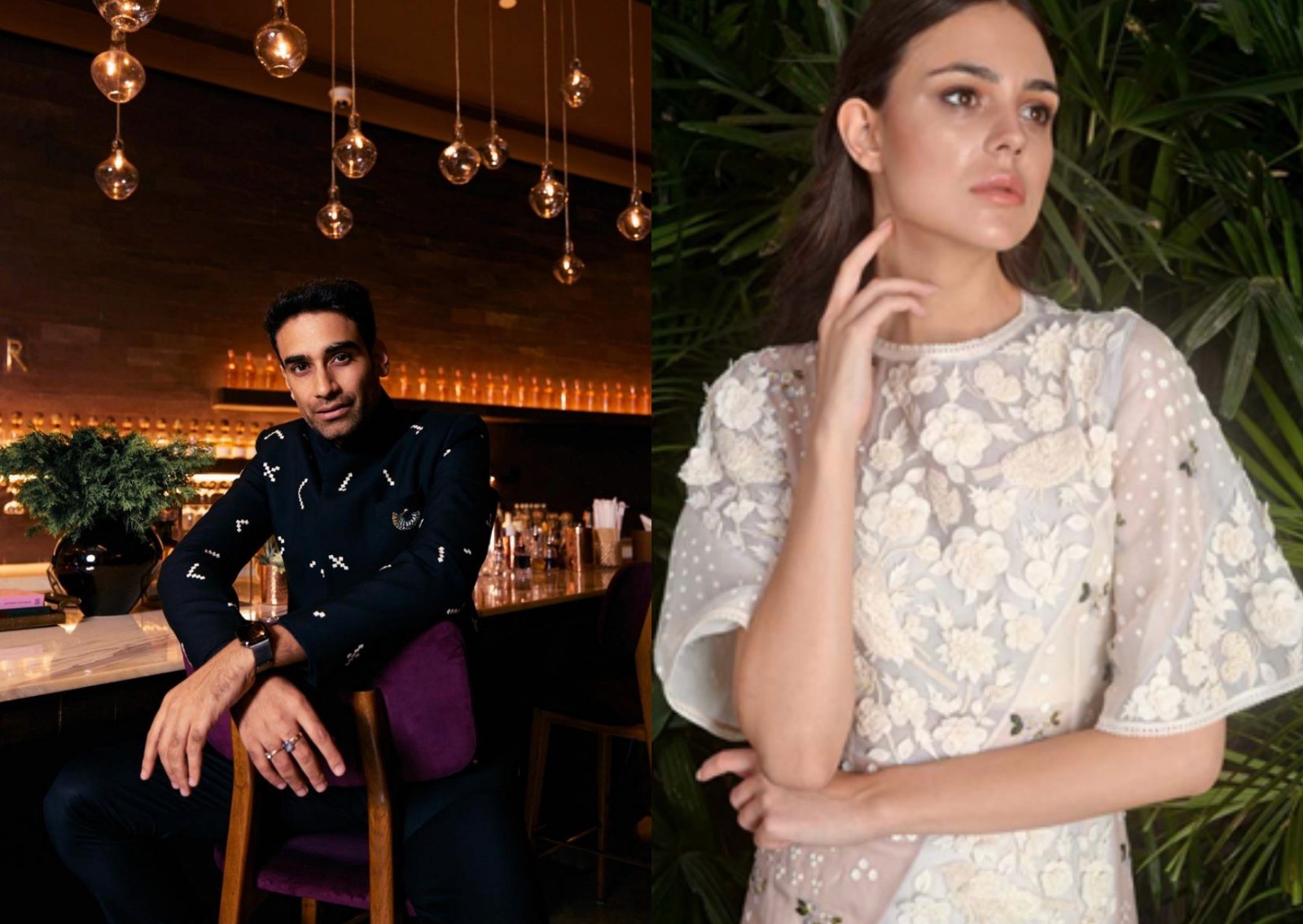
The standout piece, a sharply structured jacket in Blackpink, Malik’s signature shade, functions almost like a wearable doctrine. Architectural shoulders lend authority without aggression. A plunging V-line slices through the silhouette with surgical precision. Antique coins from his grandfather’s collection are hand-embroidered directly into the garment, turning inheritance into embellishment.
And underneath? Nothing.
Just skin.
Because Malik wanted the jacket to exist identically on both a man and a woman. No styling compromise. No gender negotiation. One silhouette. Two bodies. Zero explanation.
In lesser hands, androgyny often becomes branding. Here, it feels ideological.
For Malik, masculinity and femininity are not opposites to balance but energies designed to coexist, a direct interpretation of the Hermetic principle of Polarity. Strength with softness. Control with sensuality. Structure with fluidity.
He calls his design language “restrained fluidity with heavy structure,” which may also accidentally describe every emotionally unavailable person in fashion.
The metallic embroideries glimmering across the collection are not merely decorative flourishes. They represent Vibration, movement, frequency, and energy caught in motion. Mirrored detailing becomes Correspondence: the conversation between inner identity and outward expression. Every seam, every line, every engineered proportion reflects Cause and Effect, the idea that nothing exists arbitrarily.
Which is what makes Boho so compelling.
Nothing here feels accidental.
Not even the womenswear debut itself.
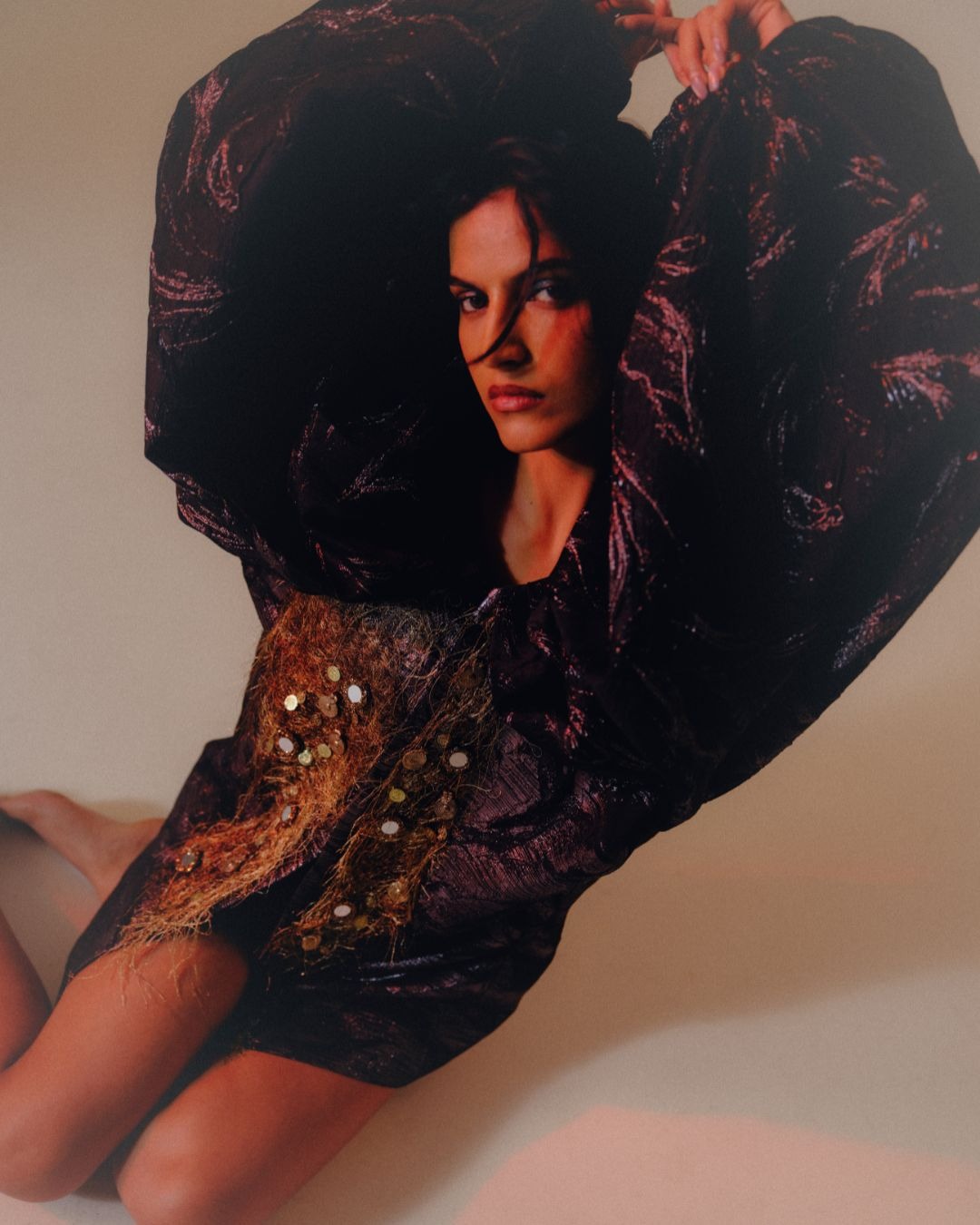
In typical Malik fashion, the collection quietly sidesteps convention. Every piece is constructed from raw factory scraps and leftover textiles. No newly sourced fabrics. No waste disguised as luxury. No sustainability sermon stitched onto a hangtag for applause.
Just instinct.
The same instinct that convinced him years ago that menswear couture in India deserved seriousness now pushes him into womenswear, not delicately, but decisively.
His brief was deceptively simple: she should feel powerful, sensual, and entirely herself at once.
And Boho succeeds precisely because it never tries too hard to announce its importance.
It doesn’t scream for virality. It doesn’t chase trend forecasts. It doesn’t perform well for Instagram.
Instead, it asks something far more difficult of fashion: to mean something.
Malik describes the collection as “an act of becoming.” And perhaps that’s the most accurate way to understand it. This is a collector’s capsule born at the intersection of memory, philosophy, art, and construction, where garments stop functioning as clothing and become artefacts.
The sketchbook returned.
The coins never left.
And somewhere between lost ideas, Hermetic philosophy, and a sharply tailored Blackpink jacket, Jatin Malik may have created the most intellectually seductive collection of his career.
Truly unforgettable.
TO BE CONTINUED, FOR SUBSCRIBERS ONLY.
This is where the surface ends and the reporting begins.
The complete piece, the full archive, and access to The French Press Circle. Reporting answerable only to its readers.
Already a subscriber ?
Login
Read these on the house, with our compliments.
A selection from the current issue, open to all readers. Read them in full. The rest is one decision away.









Some designers make clothes. Then there are designers who make mythology.
Jatin Malik has always belonged to the second category, the sort of couturier who would rather construct an idea than chase a trend cycle. While the industry spent the last decade aggressively discovering “quiet luxury,” Malik was somewhere in Noida stitching philosophy into lapels and treating couture like an existential exercise.
With Boho, his first archival limited-edition womenswear collection, the New Delhi-based designer delivers something fashion rarely manages without sounding painfully self-important: sincerity, the real kind. The kind rooted in memory, accident, obsession, and a sketchbook that disappeared for nearly a decade before returning like a particularly stylish ghost.
Fashion loves a comeback story. But this one reads less like a PR strategy and more like Paulo Coelho wandered into an atelier.
The story begins in 2016.
A tiny studio in Noida. Two people. Limited resources. Unlimited ambition. Malik carried a sketchbook everywhere, cafés, commutes, airports, half-finished conversations. The pages slowly filled with fragmented silhouettes, metallic textures, broad shoulders, fluid drapes, and the earliest traces of what would eventually become Boho. Unpolished designs. More like visual murmurs. Fashion before it knew what it wanted to say.
Then the sketchbook vanished.
THE LOST SKETCHBOOK
Which, in retrospect, feels almost aggressively poetic.
While it stayed lost, Jatin Malik Couture did the opposite. The label evolved from a small experimental menswear house into one of India’s most distinct couture identities, particularly in a fashion ecosystem still disproportionately obsessed with brides and lehengas. Malik chose the groom. Then he made him interesting.
Collection after collection, Dali, Pablo, Monet, arrived like art-school dissertations tailored in silk and structure. French surrealism. Abstract impressionism. Fluid masculinity. Heavy tailoring. His work consistently operated in that delicious space between romance and control.
And then, because the universe clearly enjoys a dramatic subplot, the sketchbook found its way home.
A friend of a friend. A shared circle. An image was sent casually. One of those bizarre chains of coincidence that sounds fabricated until it happens to you.
Most people would archive it for sentimentality.
Malik did something more dangerous.
He decided to finish it.
ANTIQUE COINS USED IN HIS COUTURE
That unfinished idea eventually became Boho, though calling it simply a collection seems insufficient. This is less “fashion line” and more “philosophical mood spiral with exceptional tailoring.”
At its core sits Hermetic philosophy, the ancient metaphysical framework built around seven principles governing existence itself: Mentalism, Correspondence, Vibration, Polarity, Rhythm, Cause and Effect, and Gender.
Which sounds wildly ambitious for a clothing collection until you see the garments.
Then it somehow makes perfect sense.
The standout piece, a sharply structured jacket in Blackpink, Malik’s signature shade, functions almost like a wearable doctrine. Architectural shoulders lend authority without aggression. A plunging V-line slices through the silhouette with surgical precision. Antique coins from his grandfather’s collection are hand-embroidered directly into the garment, turning inheritance into embellishment.
And underneath? Nothing.
Just skin.
Because Malik wanted the jacket to exist identically on both a man and a woman. No styling compromise. No gender negotiation. One silhouette. Two bodies. Zero explanation.
In lesser hands, androgyny often becomes branding. Here, it feels ideological.
For Malik, masculinity and femininity are not opposites to balance but energies designed to coexist, a direct interpretation of the Hermetic principle of Polarity. Strength with softness. Control with sensuality. Structure with fluidity.
He calls his design language “restrained fluidity with heavy structure,” which may also accidentally describe every emotionally unavailable person in fashion.
The metallic embroideries glimmering across the collection are not merely decorative flourishes. They represent Vibration, movement, frequency, and energy caught in motion. Mirrored detailing becomes Correspondence: the conversation between inner identity and outward expression. Every seam, every line, every engineered proportion reflects Cause and Effect, the idea that nothing exists arbitrarily.
Which is what makes Boho so compelling.
Nothing here feels accidental.
Not even the womenswear debut itself.
In typical Malik fashion, the collection quietly sidesteps convention. Every piece is constructed from raw factory scraps and leftover textiles. No newly sourced fabrics. No waste disguised as luxury. No sustainability sermon stitched onto a hangtag for applause.
Just instinct.
The same instinct that convinced him years ago that menswear couture in India deserved seriousness now pushes him into womenswear, not delicately, but decisively.
His brief was deceptively simple: she should feel powerful, sensual, and entirely herself at once.
And Boho succeeds precisely because it never tries too hard to announce its importance.
It doesn’t scream for virality. It doesn’t chase trend forecasts. It doesn’t perform well for Instagram.
Instead, it asks something far more difficult of fashion: to mean something.
Malik describes the collection as “an act of becoming.” And perhaps that’s the most accurate way to understand it. This is a collector’s capsule born at the intersection of memory, philosophy, art, and construction, where garments stop functioning as clothing and become artefacts.
The sketchbook returned.
The coins never left.
And somewhere between lost ideas, Hermetic philosophy, and a sharply tailored Blackpink jacket, Jatin Malik may have created the most intellectually seductive collection of his career.
Truly unforgettable.
TO BE CONTINUED, FOR SUBSCRIBERS ONLY.
This is where the surface ends and the reporting begins.
The complete piece, the full archive, and access to The French Press Circle. Reporting answerable only to its readers.
Already a subscriber ?
Login
Read these on the house, with our compliments.
A selection from the current issue, open to all readers. Read them in full. The rest is one decision away.