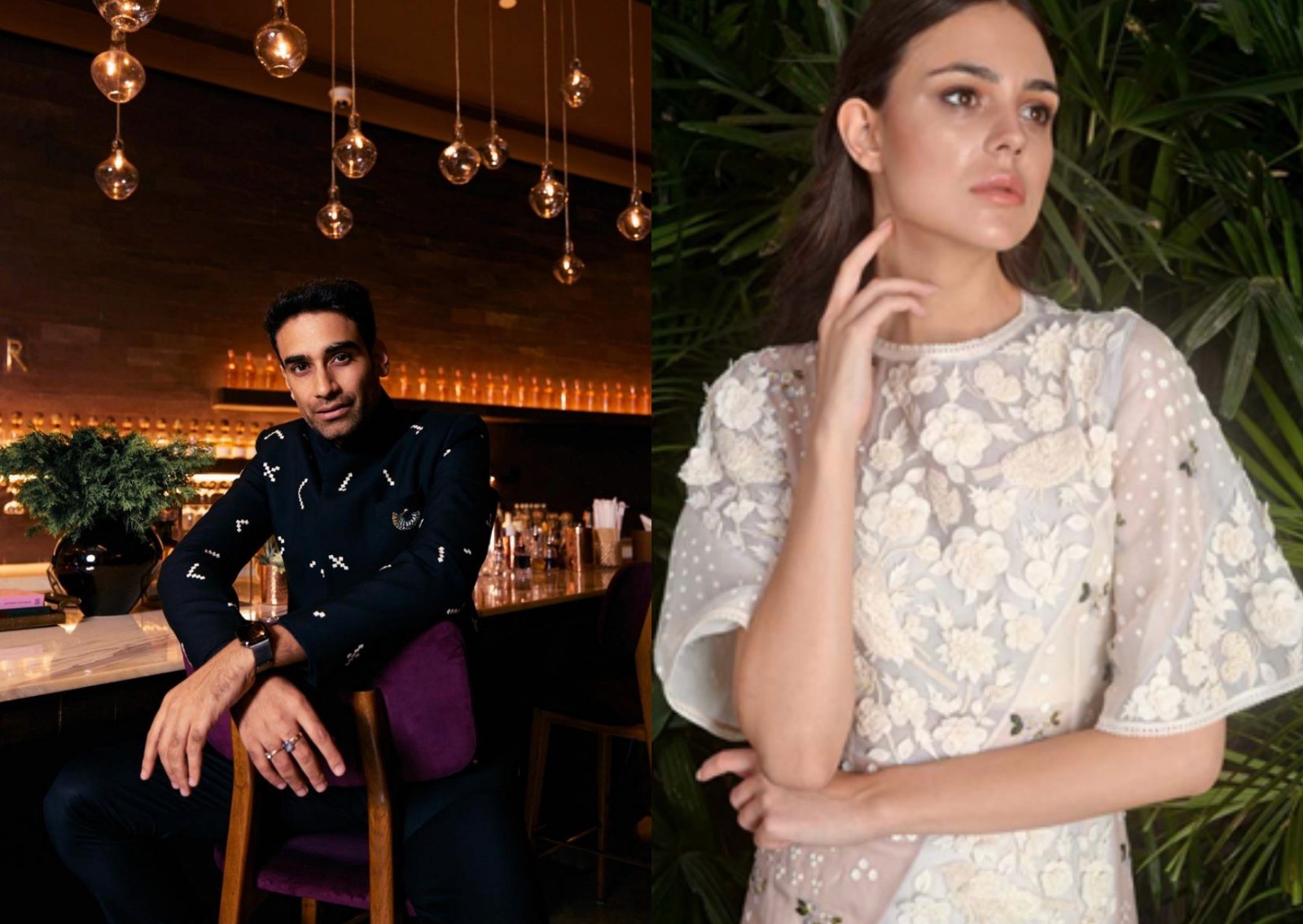
Keeping up with Delhi's dining scene has become a relentless pursuit, one that has steadily displaced the authenticity and legacy the city once carried so naturally. Most places have adapted westernisation too liberally, chasing relevance at the cost of identity and cultural heritage.
Daryaganj stands apart. The gem of Delhi's history, a space fiercely loyal to its legacy and balanced with a calibrated dose of modernity that never once forgets where it came from.
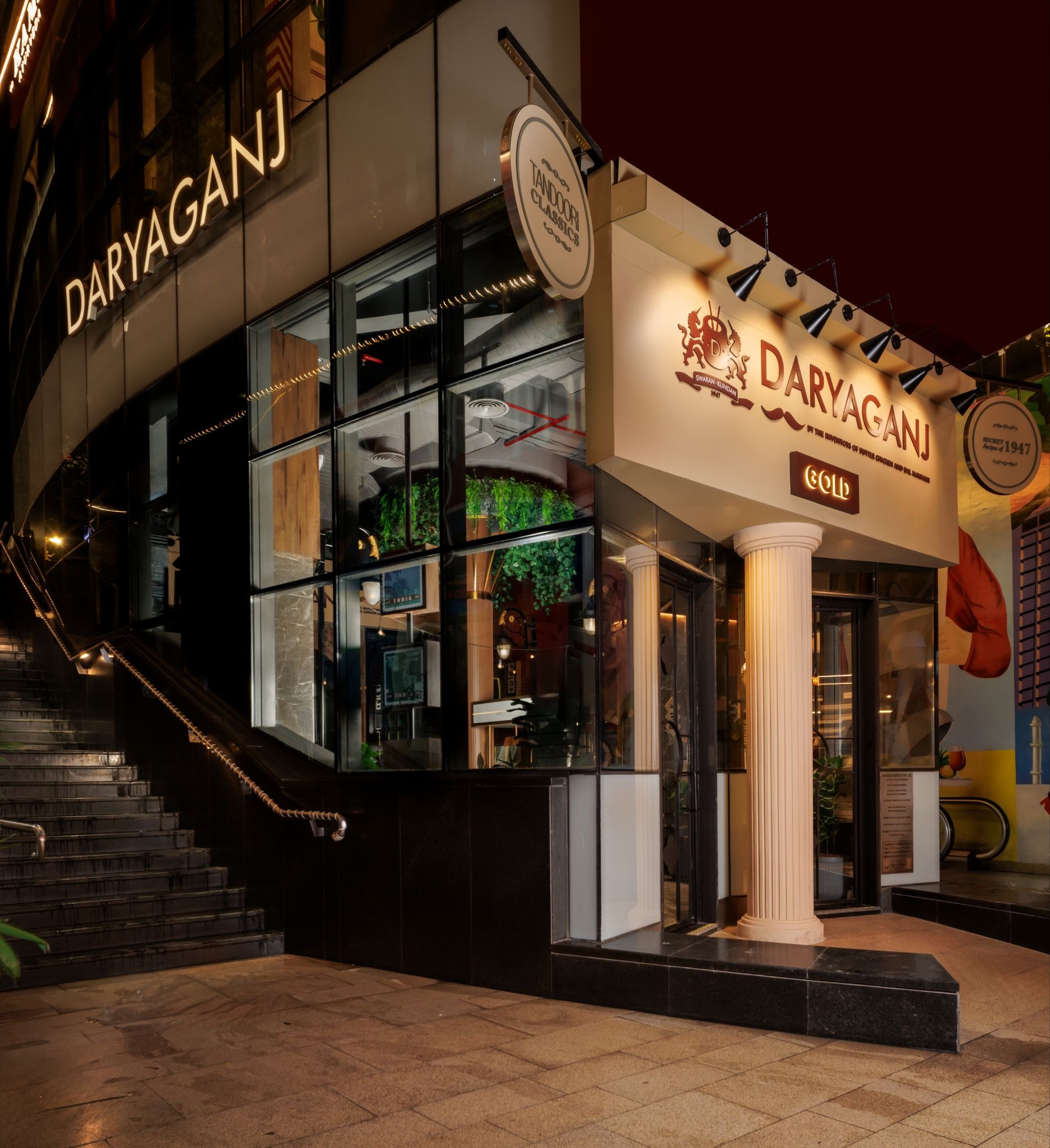
Daryaganj Gold, Aerocity: Where legacy is reinvented.
A STORY ROOTED IN 1947
Before there was a restaurant, there was a refugee and a tandoor.
In 1947, as the tremors of Partition reshuffled an entire subcontinent, a man named Kundan Lal Jaggi arrived in Delhi with almost nothing. A native of Peshawar who had honed his craft at the restaurant of his mentor Mokha Singh in the 1930s, Jaggi carried no capital, no property, only a mastery of tandoori cuisine and an unflinching resolve to rebuild. He found a modest shop in a neighbourhood called Daryaganj in Old Delhi, and alongside two partners, Kundan Lal Gujral and Thakur Dass Mago, opened the city's first tandoor restaurant. In doing so, they quietly started a revolution.
The two most iconic dishes of North Indian cuisine were born from necessity and improvisation, not from any recipe book. One late evening in 1947, as Jaggi prepared to close, a group of unexpected guests arrived. The kitchen was nearly empty, save for leftover portions of tandoori chicken. A Bengali diner suggested making a gravy so that everyone could eat. Jaggi worked with what he had: tomatoes, fresh butter, a handful of spices, and folded the tandoori chicken in. The guests never left a morsel. That accidental dish became Butter Chicken. Dal Makhani followed soon after, when a regular named Sucha Singh urged Jaggi to do something more creative with the humble maa ki dal. Jaggi slow-cooked black lentils overnight on the tandoor with tomatoes, fresh white butter, herbs and spices. By morning, the lentils had transformed into something creamy, deep, and wholly extraordinary. He named it Dal Makhani, buttery, because no other word would do.
These were recipes born in the same year as independent India itself. Butter Chicken, Dal Makhani, the Original Tandoori Chicken: they did not merely define a cuisine, they became inseparable from the identity of a newly independent nation finding its flavour. Recipes as old as the Indian tricolour, as deeply embedded in the country's cultural fabric as any monument or anthem. The restaurant drew dignitaries and eventually earned the patronage of Prime Minister Jawaharlal Nehru. Kundan Lal Jaggi had, from the ashes of displacement, invented the two most universally loved dishes in Indian cuisine.
The original restaurant was sold in 1992. Jaggi passed away in 2018, his closely guarded recipes and uncompromising philosophy already passed through his family, already safe. The legacy went quiet. It was never lost.
In 2019, Raghav Jaggi, Kundan Lal Jaggi's grandson, and his childhood friend, restaurateur Amit Bagga, decided it was time to bring it back. Growing up in the long shadow of his grandfather's legendary kitchen, Raghav had always understood the weight of what that man built. Together, they launched Daryaganj, By the Inventors of Butter Chicken and Dal Makhani, with one founding conviction: to present the original 1947 recipes to a contemporary India that had largely only ever tasted versions of them. Not interpretations. The originals, reconstructed from within the family, cooked the way they were before blenders and shortcuts existed.
DARYAGANJ GOLD, AEROCITY: WHERE LEGACY IS REINVENTED
Walking into Daryaganj is like stepping into a culinary history book. The ambiance was a coherent balance between old-school charm and modern flair. Our evening began with the pleasure of interacting with Amit Bagga, the co-founder and CEO, the man behind the meticulous details and the driving vision that defines Daryaganj. Speaking with Mr Bagga provided us with an immersive insight into a story rooted in tradition, friendship, and family honor as much as it is about the food.
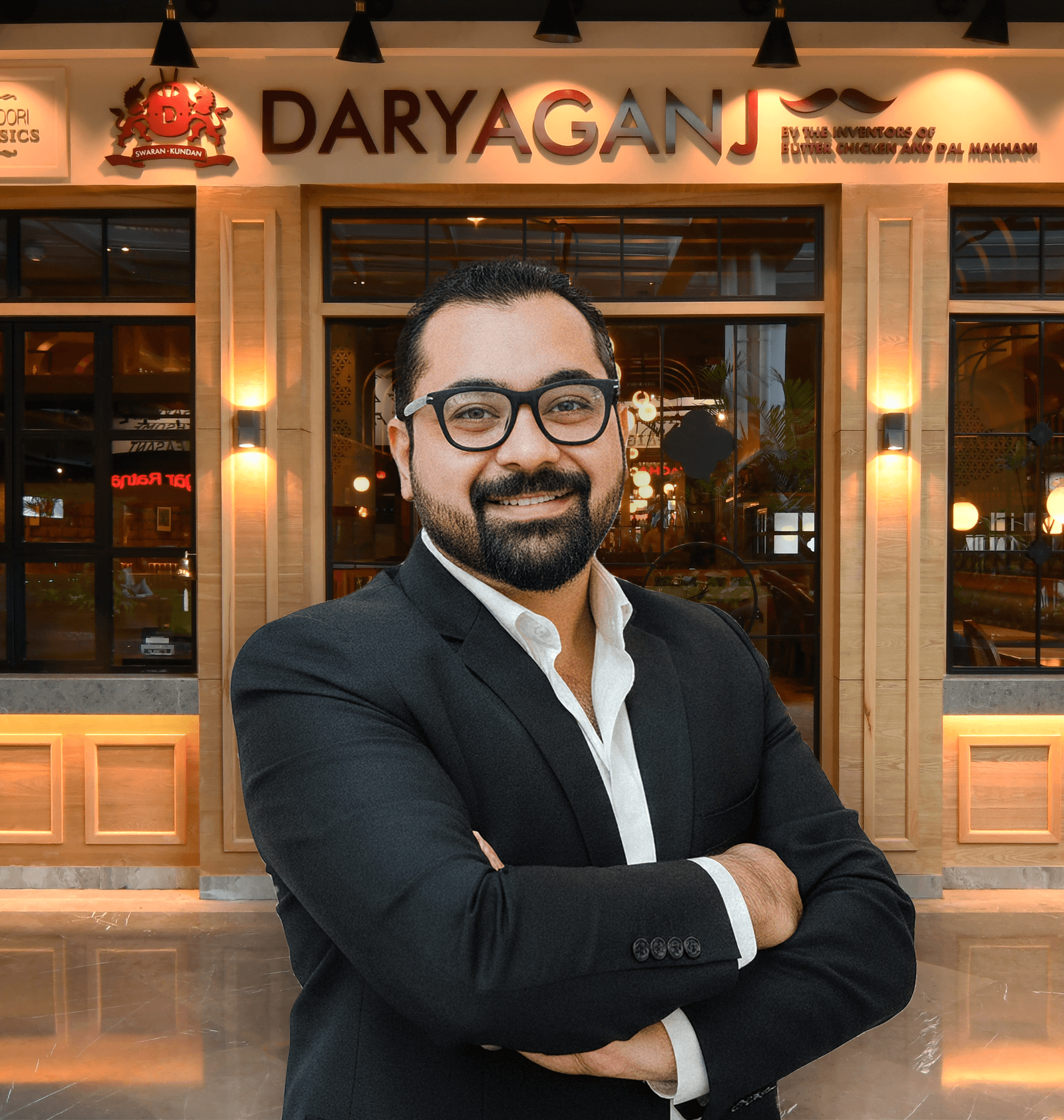
Amit Bagga, Co-Founder and CEO of Daryaganj: The man behind the details.
IT’S ALL IN THE DETAILS
The entrance serves as a reminder of how Daryaganj embodies the cultural essence of Delhi. The walls are lined with pictures and antique plates, framing the ancestral delicacies of the place: the Butter Chicken and the Dal Makhani, the symbolic dishes of Daryaganj since 1947. Looking at every corner reflects an obsession with the granular, a commitment to each detail that makes the space feel less like a restaurant and more like a curated cultural archive. Every relic placed here earns its place. The antiques feel like evidence. Like documents. The space makes its heritage tangible, and that is what separates Daryaganj from the many restaurants that reach for nostalgia as an aesthetic without truly living inside it.
We proceeded towards the carefully curated and illustrated painting of the old town of Daryaganj. It almost transported us back in time, offering a glimpse of Old Delhi before the city reinvented itself. The monochrome strokes pull you in a specific direction, a tour through the 1940s, making the history Amit Bagga spoke about feel entirely real and within reach.
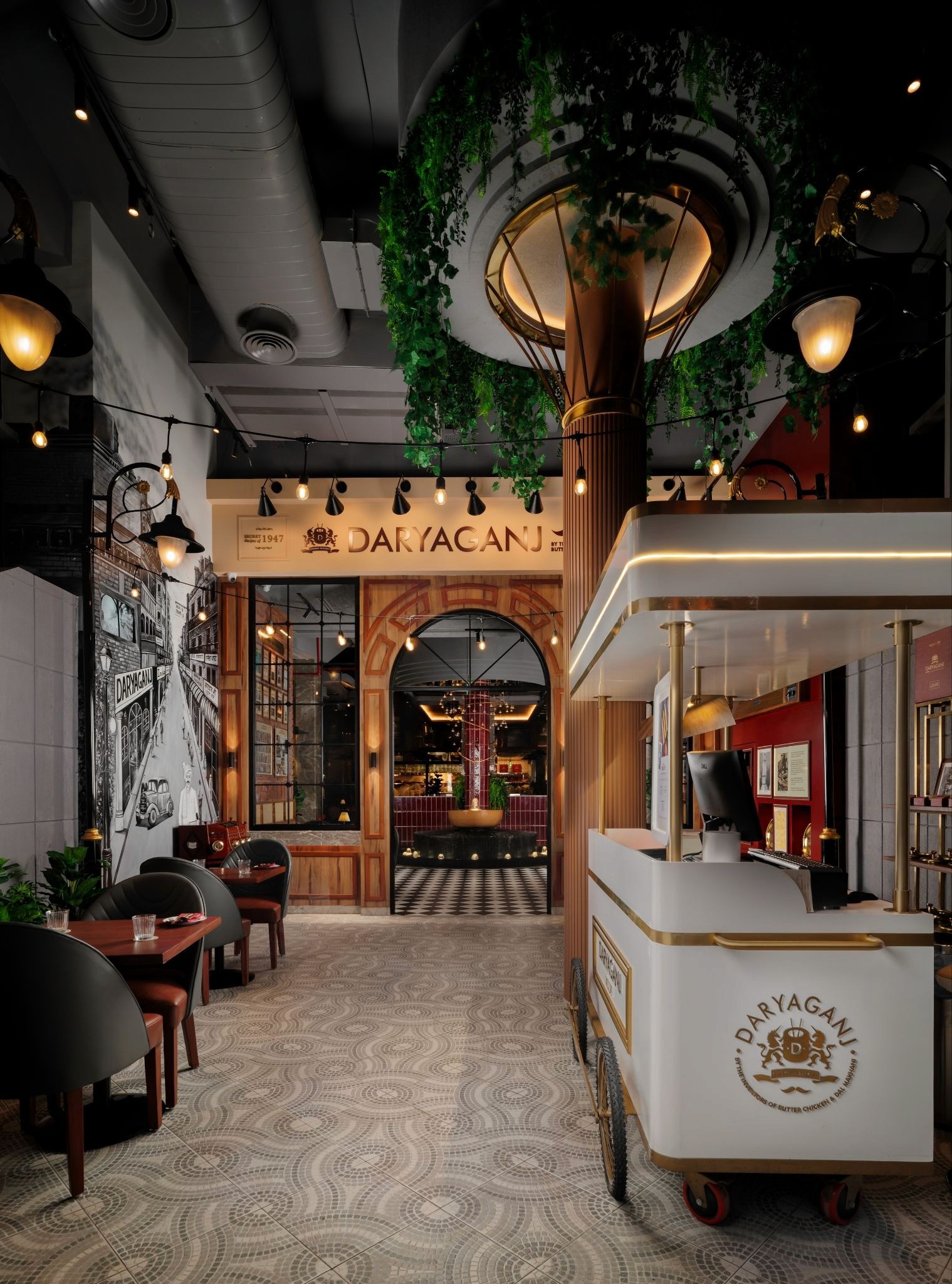
The space blends old-world charm with posh refinement.
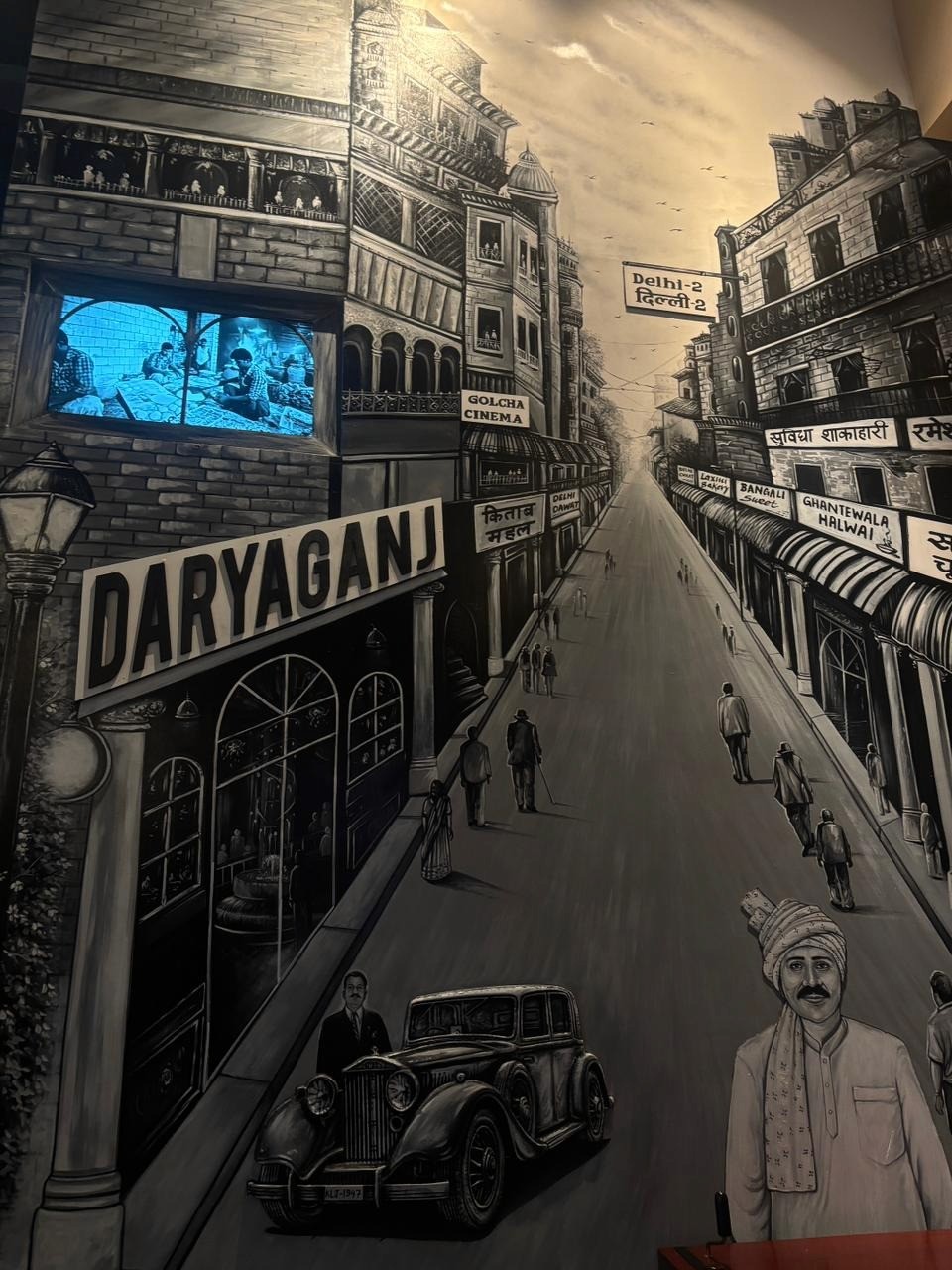
Old Town Daryaganj Hand-drawn Illustration
The hand-painted wall also encompassed an AI-generated video through a screen, a theme recurring across the interiors of the restaurant, depicting a glimpse of what Kundan Lal Jaggi’s original kitchen must have looked like in 1947. Finally, a use of AI we can wholeheartedly get behind! What stood out the most was that this painting was accompanied by a looking glass below. In the age of digital screens and gadgets, there is something extremely enchanting about leaning into a looking glass and getting a glimpse into the architectural wonders of Delhi, allowing history to unfold. It offered an invitation to unwind and pause from the tumultuous hindrances of the day.
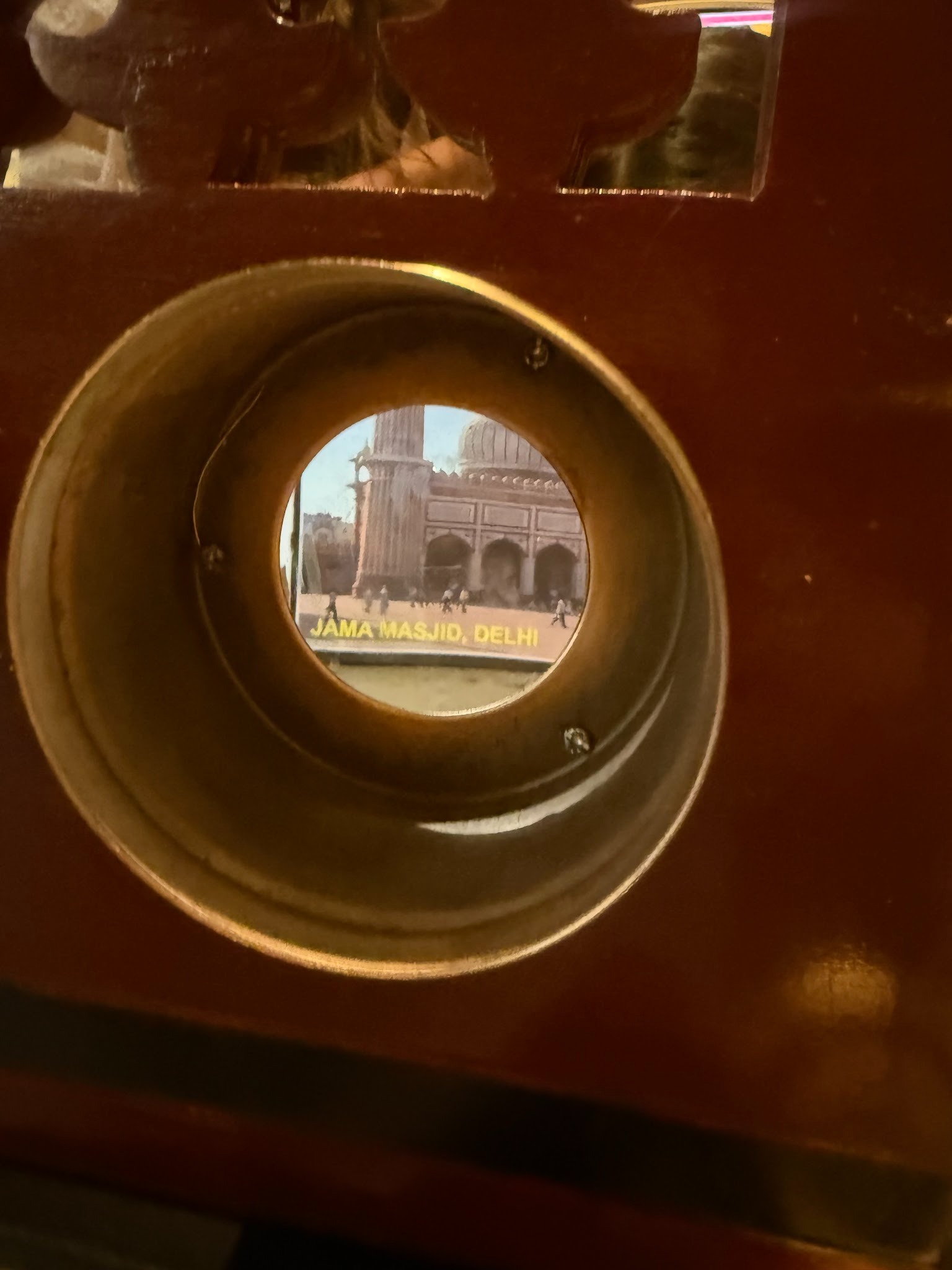
A visual journey to the architectural wonders of Delhi
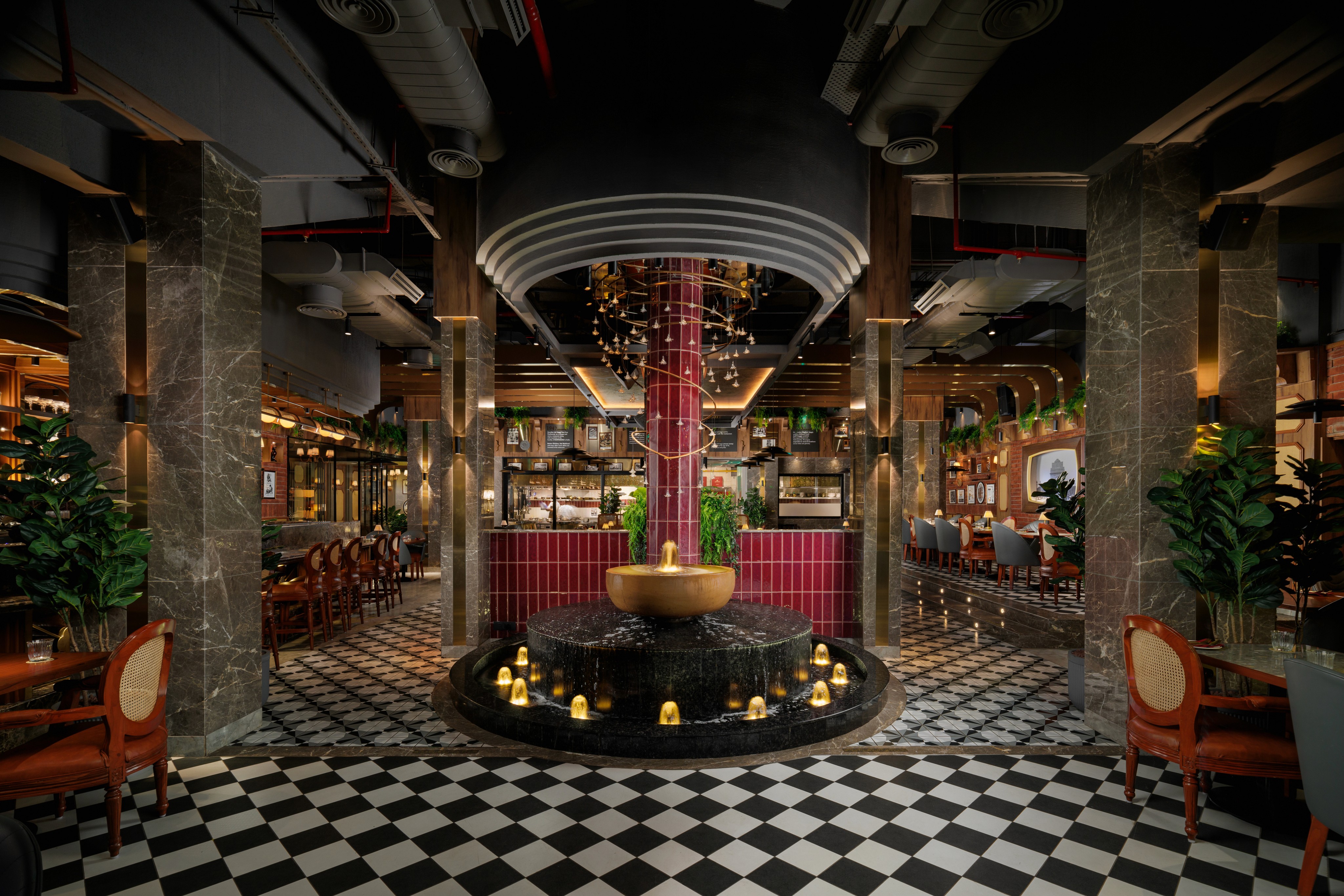
Moreover, the waterfall acts as the centrepiece of the restaurant. It creates a layer of serenity and tranquility in the bustling dining room, and its soft lighting reflected off the marble and brick, along with the earthy colour palette used in the overall restaurant, providing a slight Bohemian texture as well.
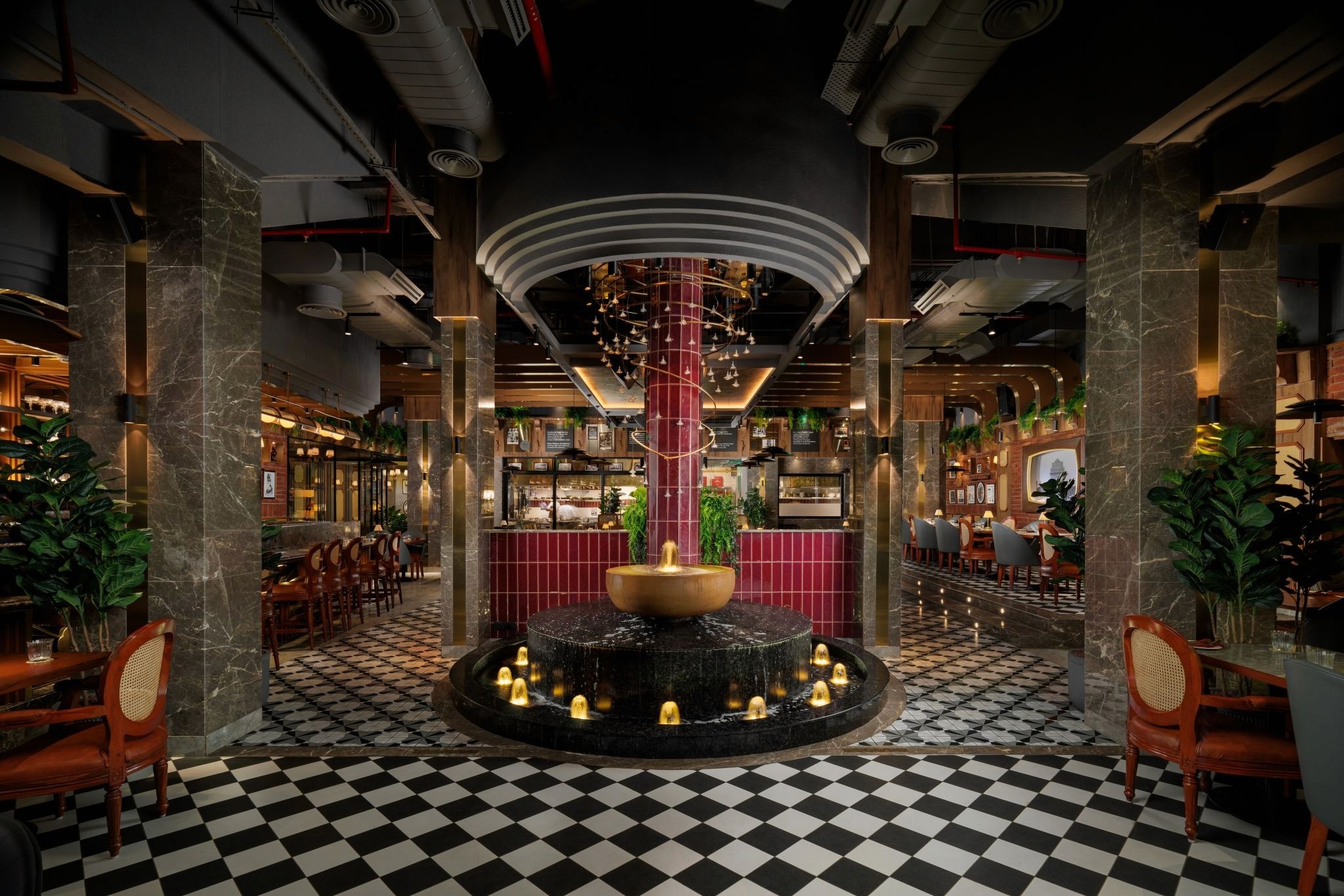
A softly illuminated waterfall reflecting Daryaganj’s balance of warmth, heritage, and modernity.
THE OPEN KITCHEN AS THE USP
The transparency of Mr Bagga's vision is literal. The restaurant features a striking open kitchen, a bold and, for this cuisine, innovative move. North Indian cooking carries a long tradition of the back kitchen, where the process is hidden and the plate simply arrives. Daryaganj inverts that entirely. Here, you watch the chefs work. You see the tandoors breathe fire, the dough being rolled, the proteins being placed with care and pulled out at exactly the right moment. The cleanliness, the precision, the freshness of the ingredients moving from hand to flame to plate: all of it visible, all of it deliberate. For a cuisine built on techniques passed down through generations, the open kitchen is a statement of confidence. There is everything to show.
It also deepens the relationship between the diner and the plate. Watching the rhythmic, fiery dance of the golden tandoors creates a sentimental connection to the food, an understanding that while the presentation keeps evolving, the process of making it stays true to its roots. The soul of the cooking remains raw, grounded, and entirely without pretence.
What makes Daryaganj's menu truly compelling is how it holds both worlds in the same hand. The technique is innovation-forward: plating is modern, ingredients are thoughtfully sourced, and dishes like the avocado bhel puri or the truffle mushroom lollipops push familiar forms into unexpected territory. The flavours, however, remain exactly where they have always been: classic, consistent, and perfected over decades of unbroken practice. The recipes themselves have not moved. They have only been framed differently. That balance between a modern eye and an ancestral palate is what sets Daryaganj apart in a category where most restaurants choose one or the other, rarely holding both at once.
Then comes the bar area, placing itself elegantly beside the vintage and antique pieces. The lighting plays a significant role in mood-setting, casting the drinks in warm, considered tones. It manages to feel cool and entirely approachable, providing a sleek restraint that has made it a fixture in Delhi's dining landscape.
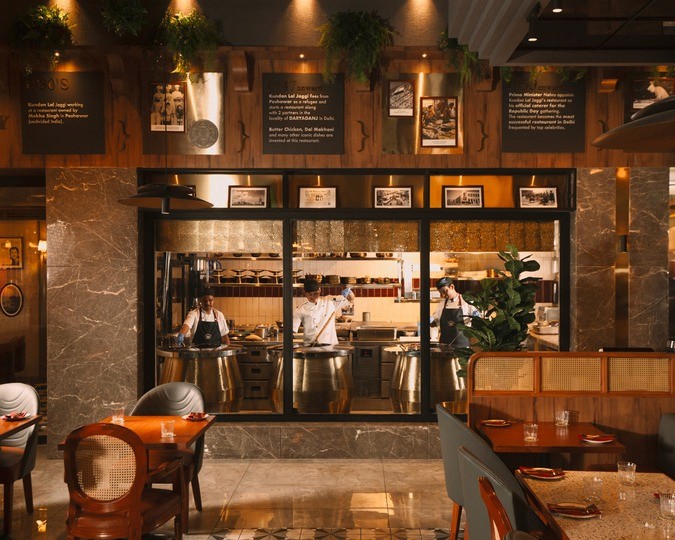
The open kitchen offers a glimpse into the precision and craft of Daryaganj’s tandoors
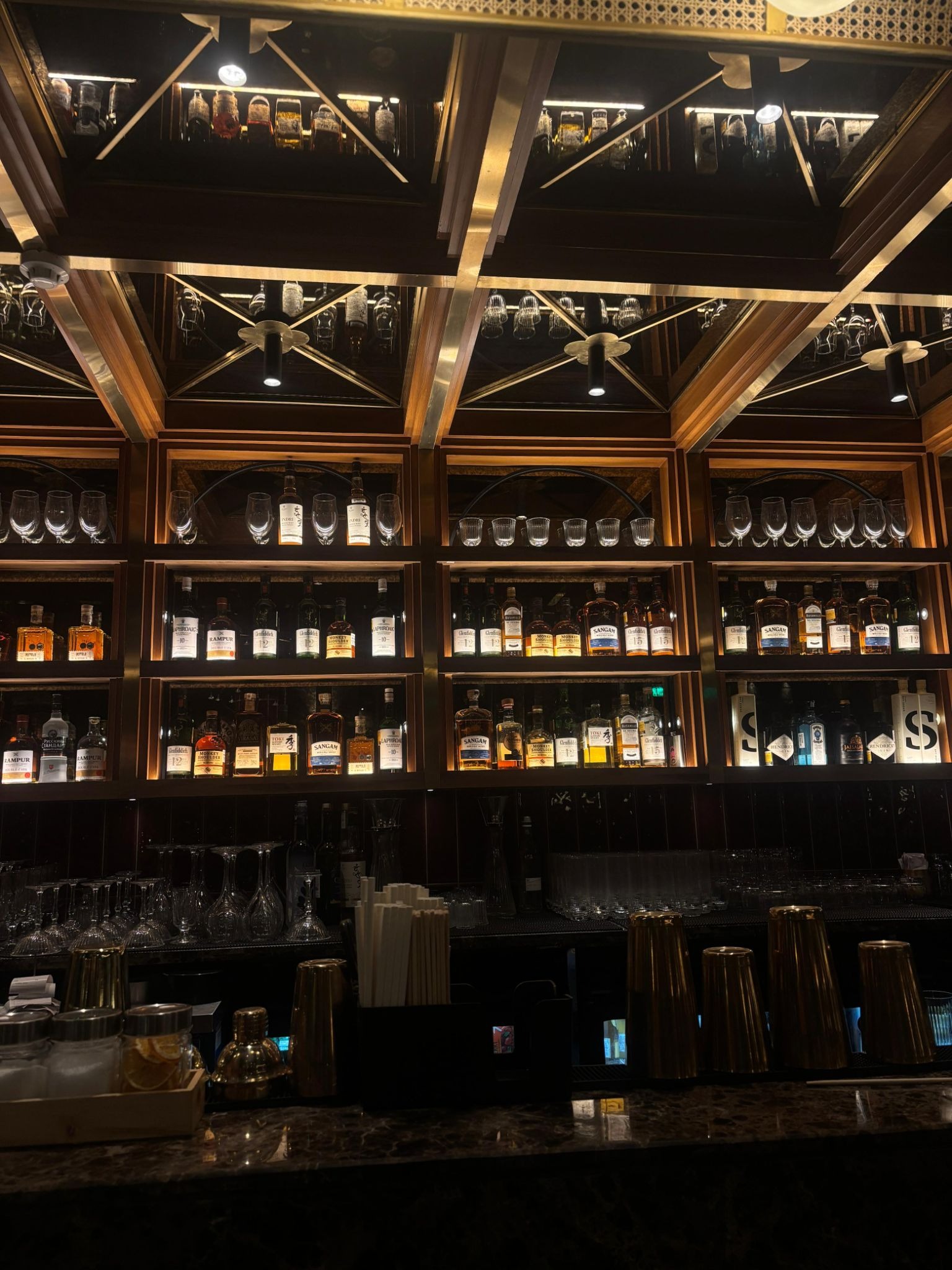
The bar balances minimal modernism with vintage warmth.
FROM SHARK TANK TO THE WORLD STAGE
By 2023, Daryaganj had become the subject of national conversation in a way few restaurants ever manage. Raghav Jaggi, Amit Bagga, and brand chef Gurpreet Singh walked onto the set of Shark Tank India Season 2 and made history as the first casual dining restaurant to be featured on the show. Their pitch was characteristically direct: they served Butter Chicken and Dal Makhani straight to the Sharks, letting the food do the talking. They entered asking for ₹90 lakhs for 0.5% equity at a valuation of ₹180 crore, anchored by three reasons: an irreplicable legacy, individually profitable outlets, and exceptional cash flow. After vigorous exchanges across the panel, they struck a deal with Aman Gupta, co-founder of boAt and already a long-standing Daryaganj regular, for ₹90 lakhs at 1% equity. They walked out carrying a cultural endorsement that no marketing budget can manufacture.
That moment affirmed what the food had always said. Daryaganj has since accumulated over 63 prestigious awards, including recognition among the FOOD FOOD Top 50 Restaurants in India, Zomato's User's Choice Award for Best Butter Chicken and Best Dal Makhani, and a Restaurateur of the Year title for Amit Bagga, while sustaining a 59% repeat customer rate and serving over 2.7 million guests. The Aerocity flagship now generates 80% higher revenue than in its first year, a number that speaks to the compounding power of legacy tended to with care.
The next chapter was international. In May 2025, with 15 outlets operating across India, Daryaganj made its first move beyond Indian borders, opening at Park Plaza Bangkok, Sukhumvit Soi 18, inside a five-star hotel in the world's most visited city. The Bangkok outpost was launched under the brand's premium vertical, Daryaganj Gold. The format was conceived to carry the founding legacy into a more elevated, innovation-forward presentation, keeping the soul of the 1947 recipes completely intact. The Gold menu offered diners two renditions of Butter Chicken side by side: the Original 1947 version, with its coarse, tomato-forward gravy and on-the-bone tandoori chicken made without cream or modern shortcuts, and the contemporary version, smoother and richer, for the palates of today. It was a conversation between two eras served on the same table.
The success of Bangkok brought the Daryaganj Gold vision home. The Aerocity outlet we dined at this evening is that format on home soil, the Gold standard transplanted to Delhi's most cosmopolitan corridor, where diplomats, global travellers, and long-standing locals converge. What began as a tribute to a grandfather's recipes in 2019 has become a living global brand carrying the full weight of Indian culinary history.
SIP & FEAST
Looking at the drinks menu and the bar, ‘being tempted’ was an understatement. Due to the variety of cocktails, we were unable to decide which one we should commence the evening with. So, instead of mindlessly scanning the menu, we left it in the hands of the mixologists and the real tastemakers to surprise us. A move that intricately showcased the staff’s intuitive understanding of their craft.
What arrived were two cocktails that felt like summer in a glass: The Gulabo and The Do Rum. In the midst of the scorching Delhi heat, this was exactly the need of the hour.
The Gulabo, the name says it all, had a floral and fruity taste. It was fragrant at its best and had that nostalgic ‘sweet Indian taste’ we all grew up loving, but executed with a sophisticated restraint. It managed to capture the delicate essence of the rose with the right amount of sweetness without triggering any dreaded icy brain freeze, balanced with a slight crispness to keep the palate sharp.
Rating:4/5
The Do Rum is also a personal favourite of Mr Bagga, and it’s easy to understand why. The botanical punch of the lemongrass infused drink with both black and white rum served a citrusy edge that acted as a refreshing, boozy intervention against the heat. The delicious irony of the drink was that, despite it being a cocktail, it tasted like a cleanser to the body and wonderfully resonated with Mr Bagga’s overall philosophy: clean, sharp, and revitalising.
Rating: 5/5
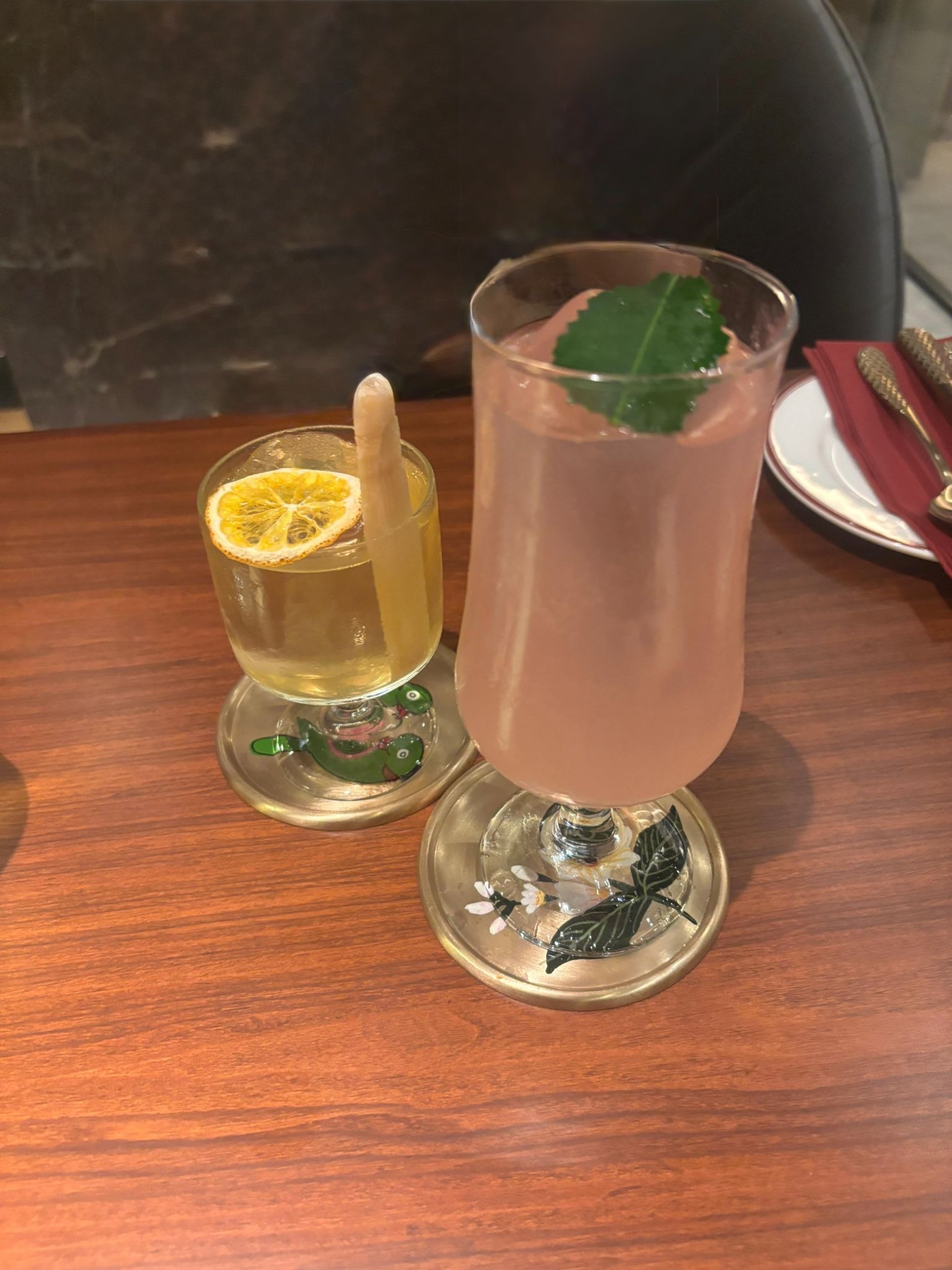
A vibrant start to the evening with citrusy-forward cocktails
Now onto the food!
Our feast and introduction to the menu began with the bite-sized Mango Tart. Served on a plate that beautifully narrated the visual timeline of Daryaganj’s legacy from Kundan Lal Jaggi’s late 1930s to Raghav Jaggi and Amit Bagga redefining the current avatar in 2019.
The exterior of the tart was crisp and buttery, cradling a bright, fresh mango salsa punctuated with herbs. The mango provided a tropical lead-in to the North Indian flavours, melting into the mouth, the touch of herb keeping the freshness intact. A bright, zesty start: a fruit central to Indian summers, wrapped in a delicate pastry shell, doing exactly what a good amuse-bouche should.
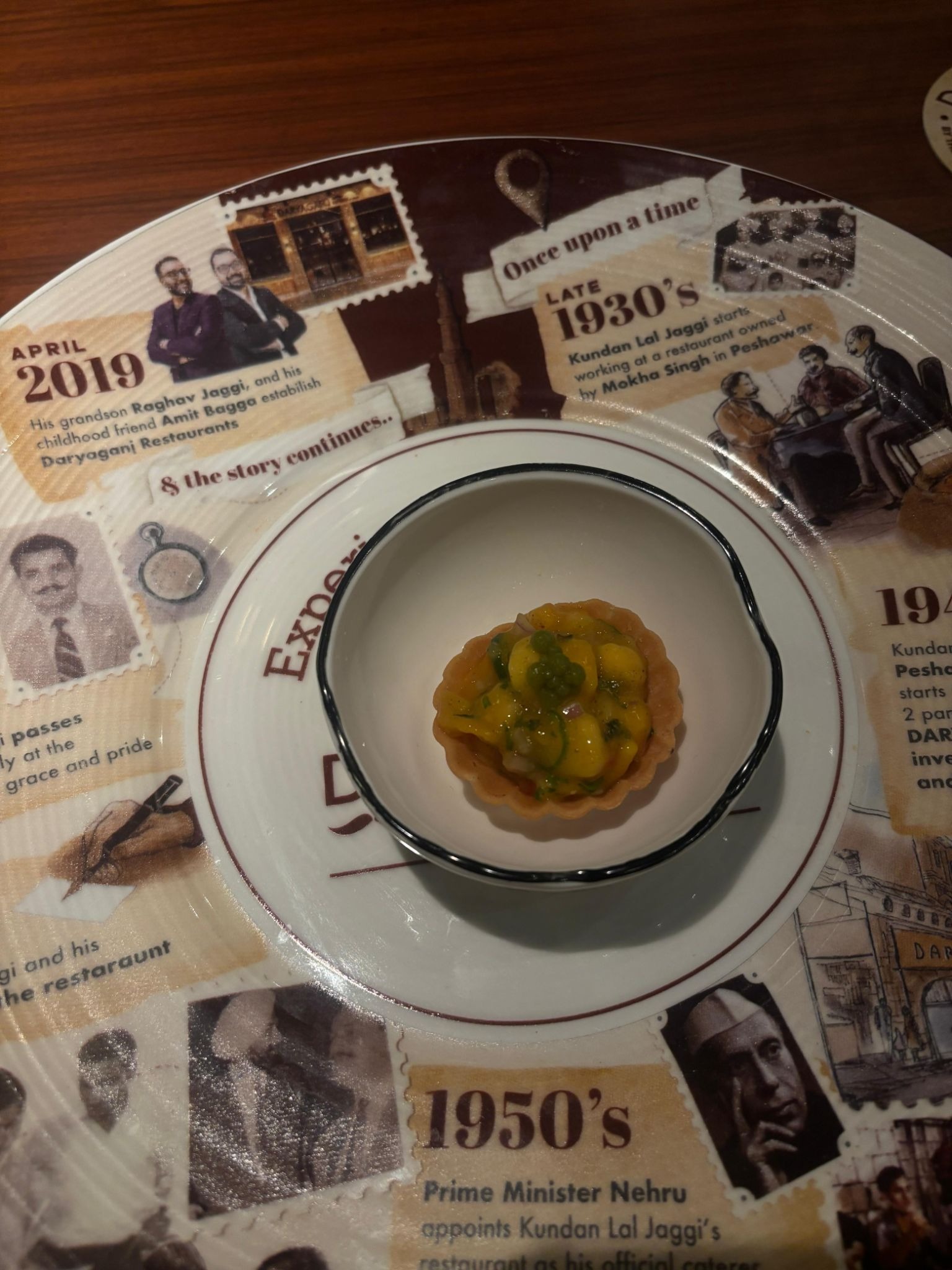
A bite-sized mango tart with an evolving timeline of Daryaganj’s history
Then arrived the celebrated Palak Patta Chaat, selected by our Executive Editor-in-Chief, Sia Sethi. Crunchy crisp leaves as a base, sitting atop kaala khatta and mango spheres, followed by the cold, creamy burst of yogurt spheres forming a bittersweet contrast with the fruit. The chaat spirit is honoured here while carrying a more polished touch. Familiar and refined in the same mouthful.
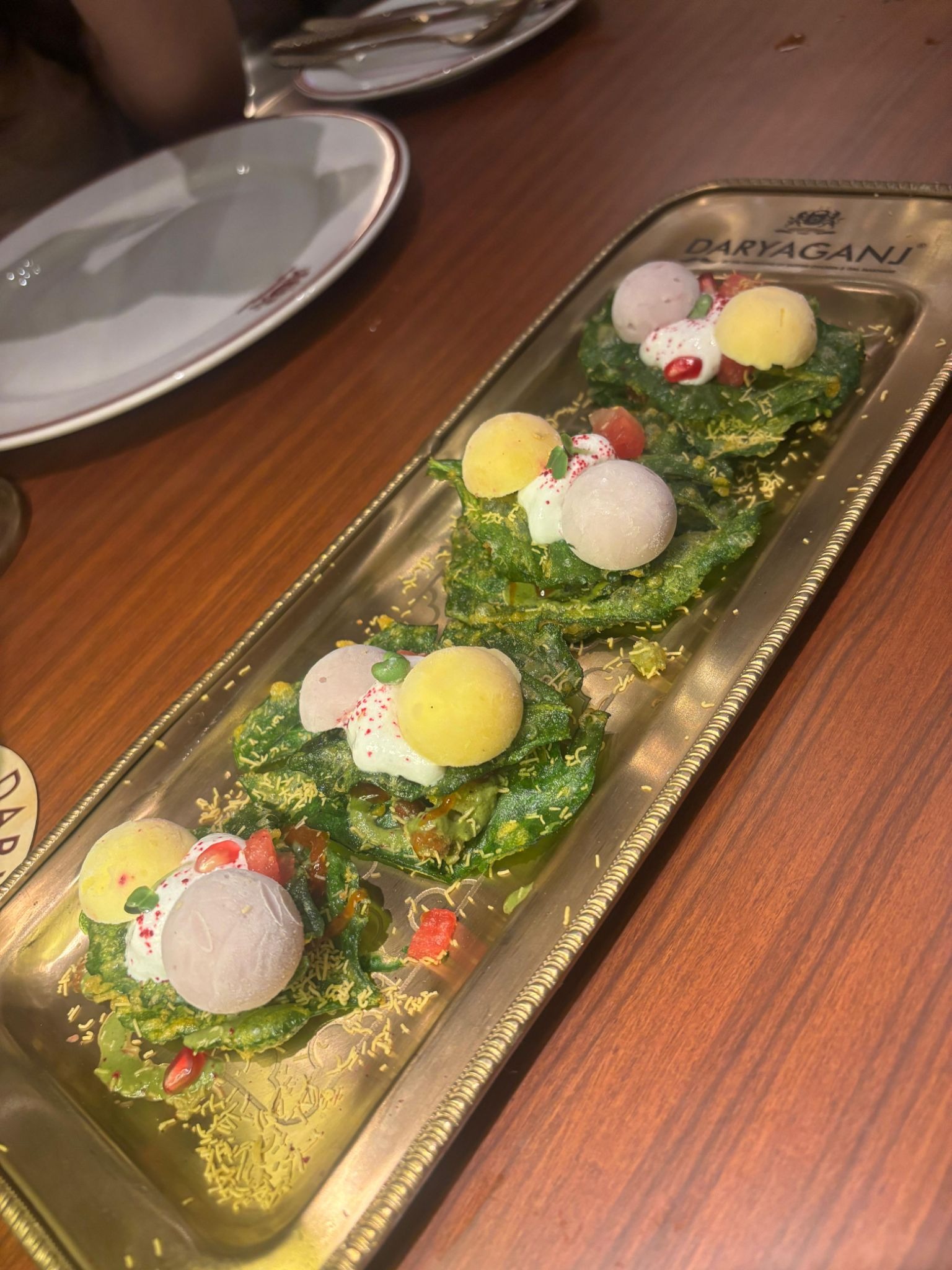
A contemporary interpretation of the classic Palak Patta Chaat
Rating: 4 / 5
Before we had finished the chaat, the India Gate Avocado Bhel Puri arrived on a newspaper plate, and the presentation deserves particular attention. The newspaper plating is effortless brand storytelling, a nod to the Delhi Hindustan Times era, crowned with a pink edible flower. The dish itself is a recalibration: avocado as the base adds a velvety dimension to the familiar bhel, transforming a roadside staple into something metropolitan and globally conscious, the bhel spirit fully present underneath. Crafted in the heart of Delhi, speaking a language the world understands.
Rating: 5/5
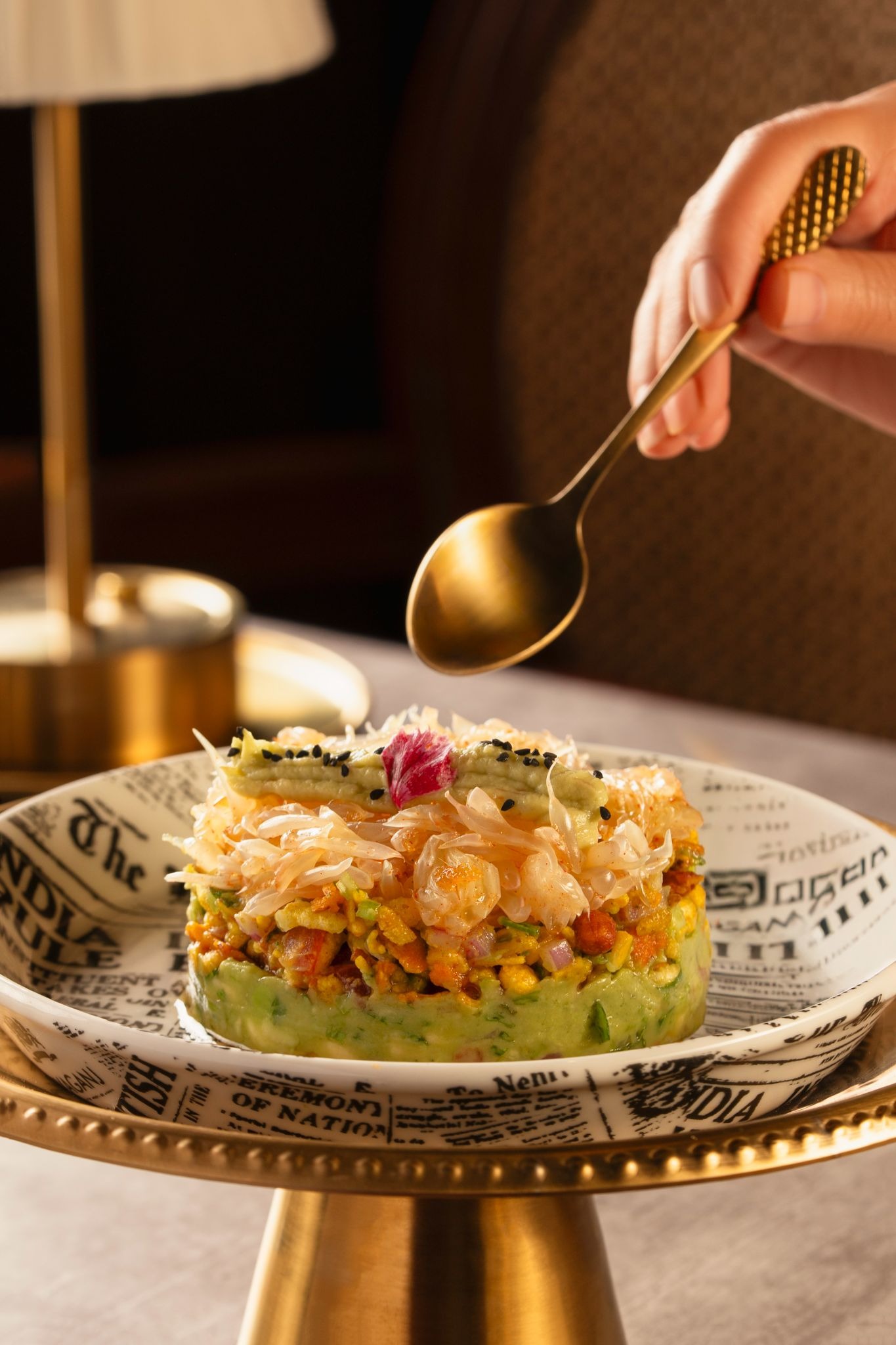
The India Gate Avocado Bhel Puri served on the newspaper plate backdrop
AND IT KEPT COMING
The gravity of the dishes gradually started increasing. The focus shifted from light rustic bites to more dense foods with their rich caloric profile. The spices became more anchored, and the plates began to reflect the robust soul of a classic tandoor. Starting with the tangy chicken tikka tossed with crispy kale leaves around and topped with makhanas (fox-nuts) Considering the nutritional value, it was a ‘protein powerhouse’ because of the char-grilled chunks of the chicken with kale adding the fibre content. For those who want to get in their protein intake, this dish was enough to suffice for most of it. The smoky and soft texture of the chicken against the airy snap of the makhana makes the overall dish tasteful as it is nutritious.
Rating: 5/5
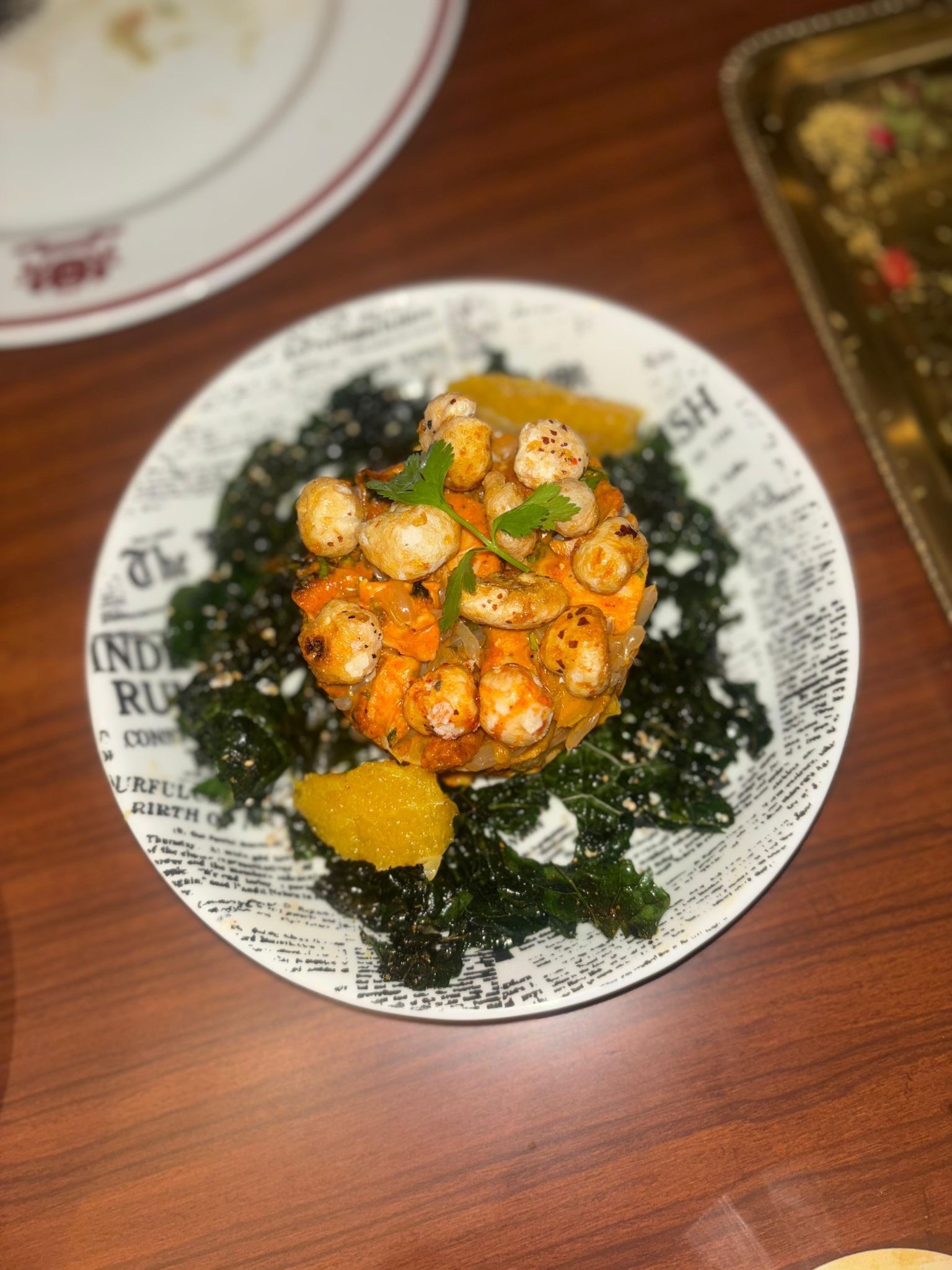
Smoky char-grilled chicken tikka contrasted with kale and makhanas
The weight of the dishes kept getting denser, with the Kebab Platter taking the spotlight, including the Salmon Tikka, Mutton Kebab, Chicken Malai Tikka, and Chicken Pakora. The Headliners were the Salmon Tikka with its juicy and soft interior and mildly spicy exterior without overwhelming the fish’s richness. Joining it was the Chicken Pakora with its crisp exterior that made the platter more percussive. Along with the Mutton Kebab, providing a deeper spice profile, the Malai Chicken Tikka softens the blow of the more aggressive spices. The common element with this was also the green chutney and lemon, which was a classic Indian way, and felt like a bonus added to the existing flavors. Pairing it with the Mushroom Ram Ladoo Lollipops propped upright with a reimagined take on Delhi’s beloved street snack, added with truffle oil which was the ultimate game changer and amplified the ‘funk’ of mushrooms. The only drawback was that it was finished in two bites, which felt like a tease, wishing the experience lasted longer.
Rating: 4/5
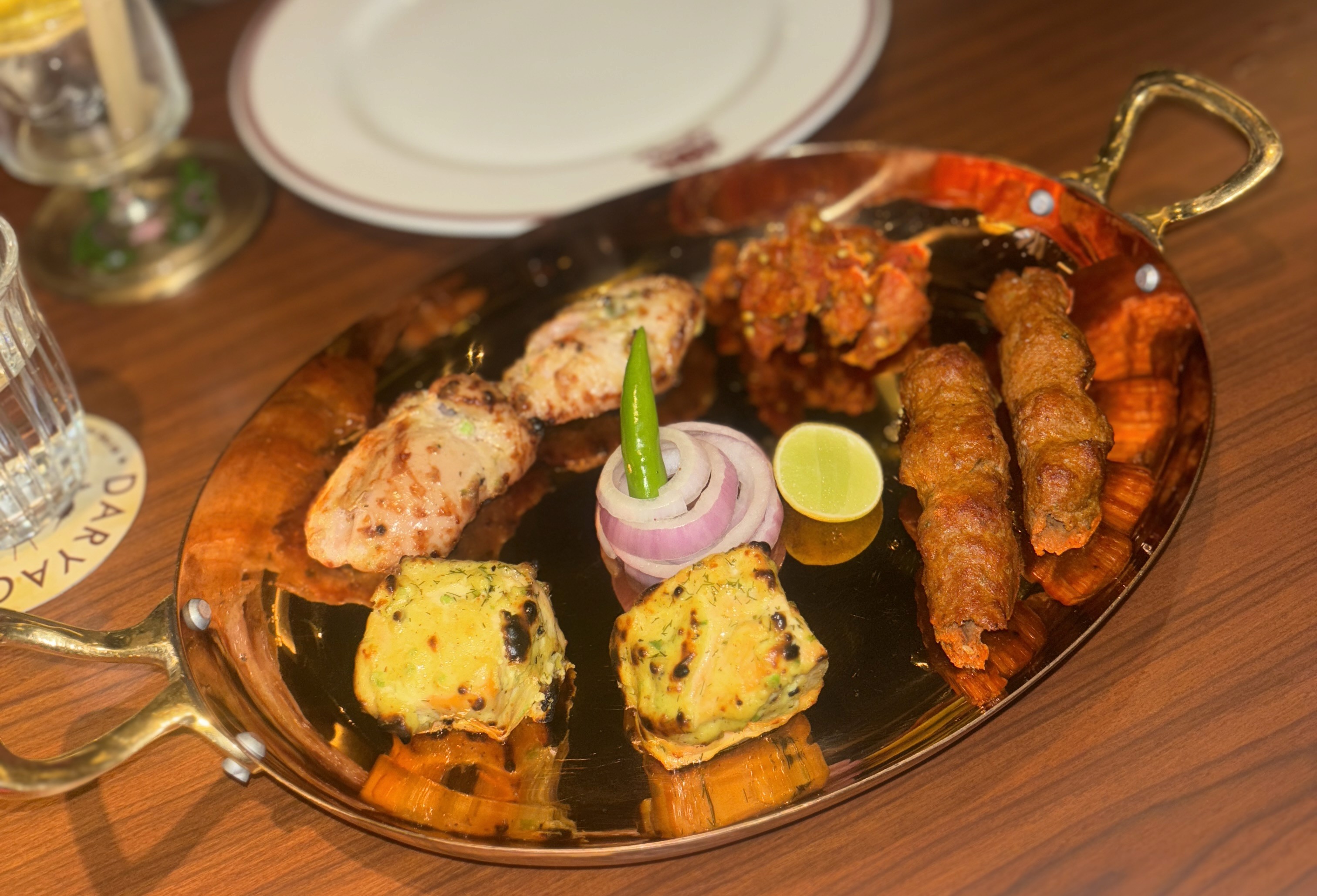
The Robust Kebab Platter with Mutton Kebab, Chicken Pakora, Salmon Tikka, and Malai Chicken Tikka
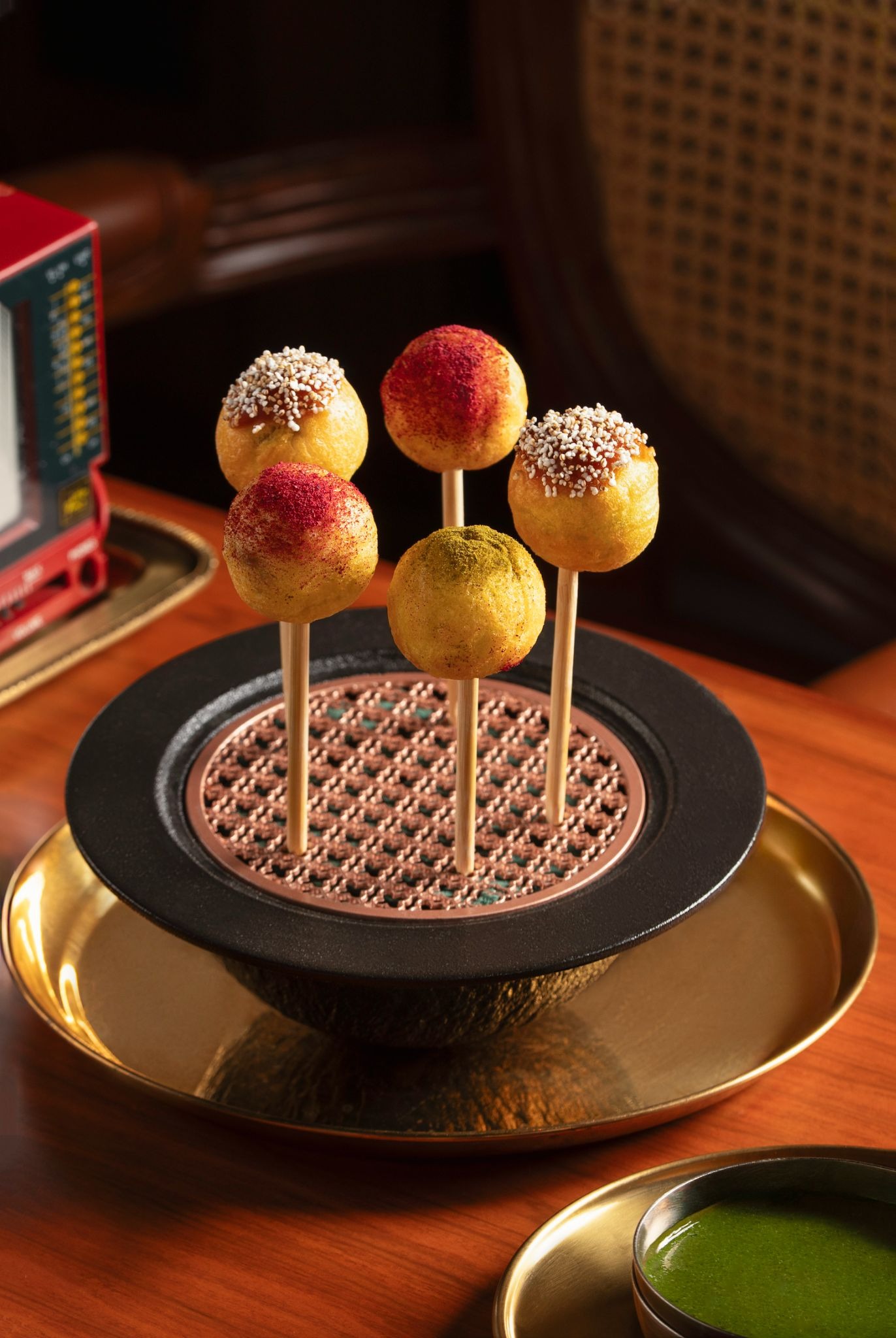
Mushroom Ram Ladoo with Truffle oil
With the lighter courses giving way, the meal deepened into its more indulgent offerings, where comfort and familiarity took centre stage. The table centerpiece, featuring the 5-senses chicken curry, was served in the homely Indian style of a gold pressure cooker, which already hit close to home. Then came the 1947 Dal Makhani and Butter Chicken. Despite our stomachs being full and being almost on the verge of going into a food coma, it still became a mandatory rite of passage for us to make space for it. Making space for these two dishes was never a question. To leave the table without experiencing them would be to leave the story half-told. These are the dishes that built this brand, the dishes that a grandfather invented from the remnants of a partition-era kitchen, the dishes that fed a Prime Minister, the dishes that have been slow-cooked in continuity from 1947 to this evening without interruption. It felt less like a recipe and more of a tribute to heritage. Understated in presentation in signature gold brass but exceptional in depth. The creaminess of the Dal and Butter Chicken was enough to pull us back in. Slow-cooked, which no shortcut can replicate: the core of Daryaganj and rightfully so. Complemented by equally traditional delicacies, such as the Nargisi Kofta: a visual standout of perfectly halved eggs in a savoury minced meat shell and swimming in a glossy gravy, a precursor to the popular scotch eggs, as per Mr. Bagga. The 24 Karat Biryani rounded out the table, aromatic basmati, layered spicing, meat falling from the bone with the ease that only slow cooking produces.
Rating: 4.5/ 5
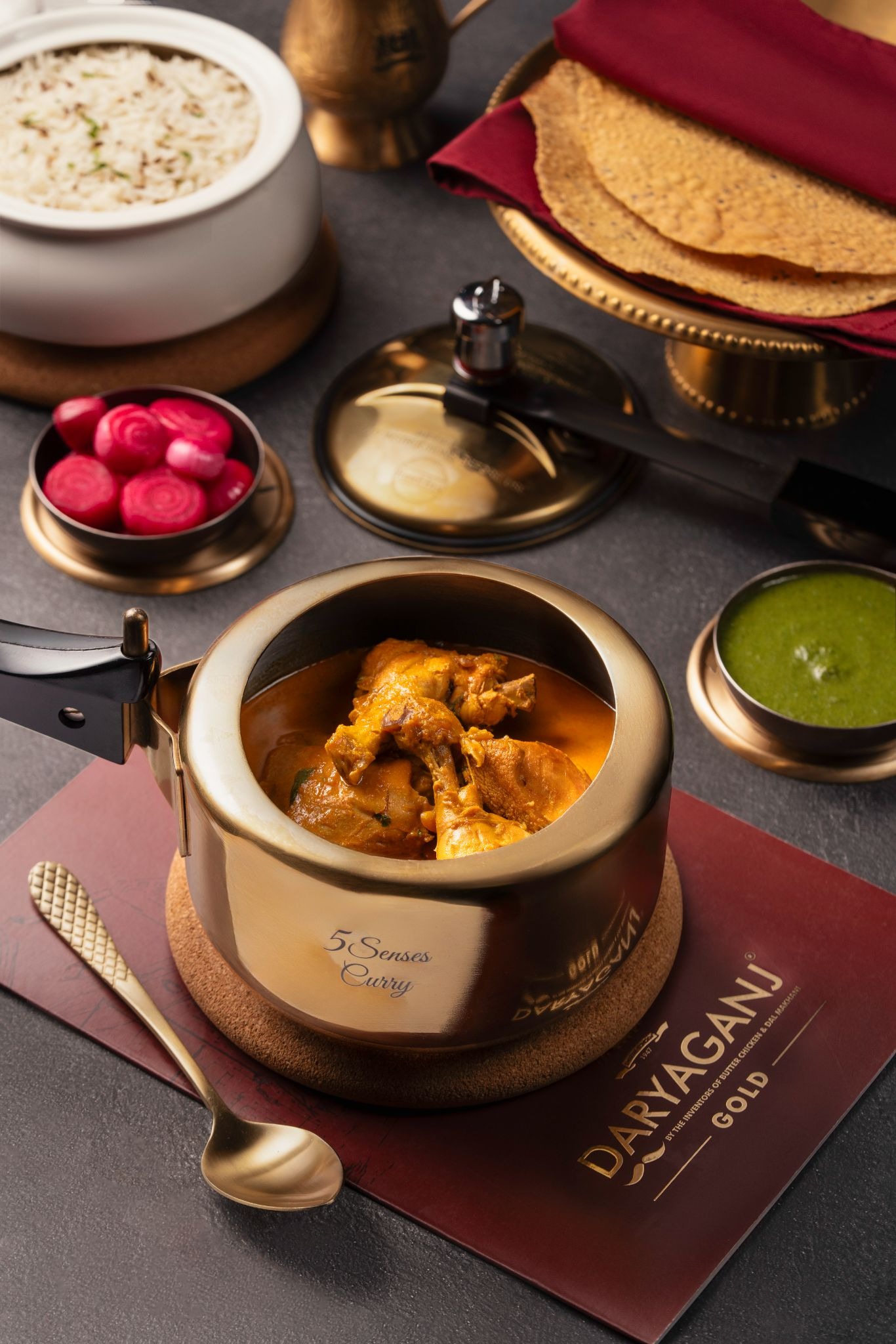
A homestyle presentation of the 5 senses chicken curry
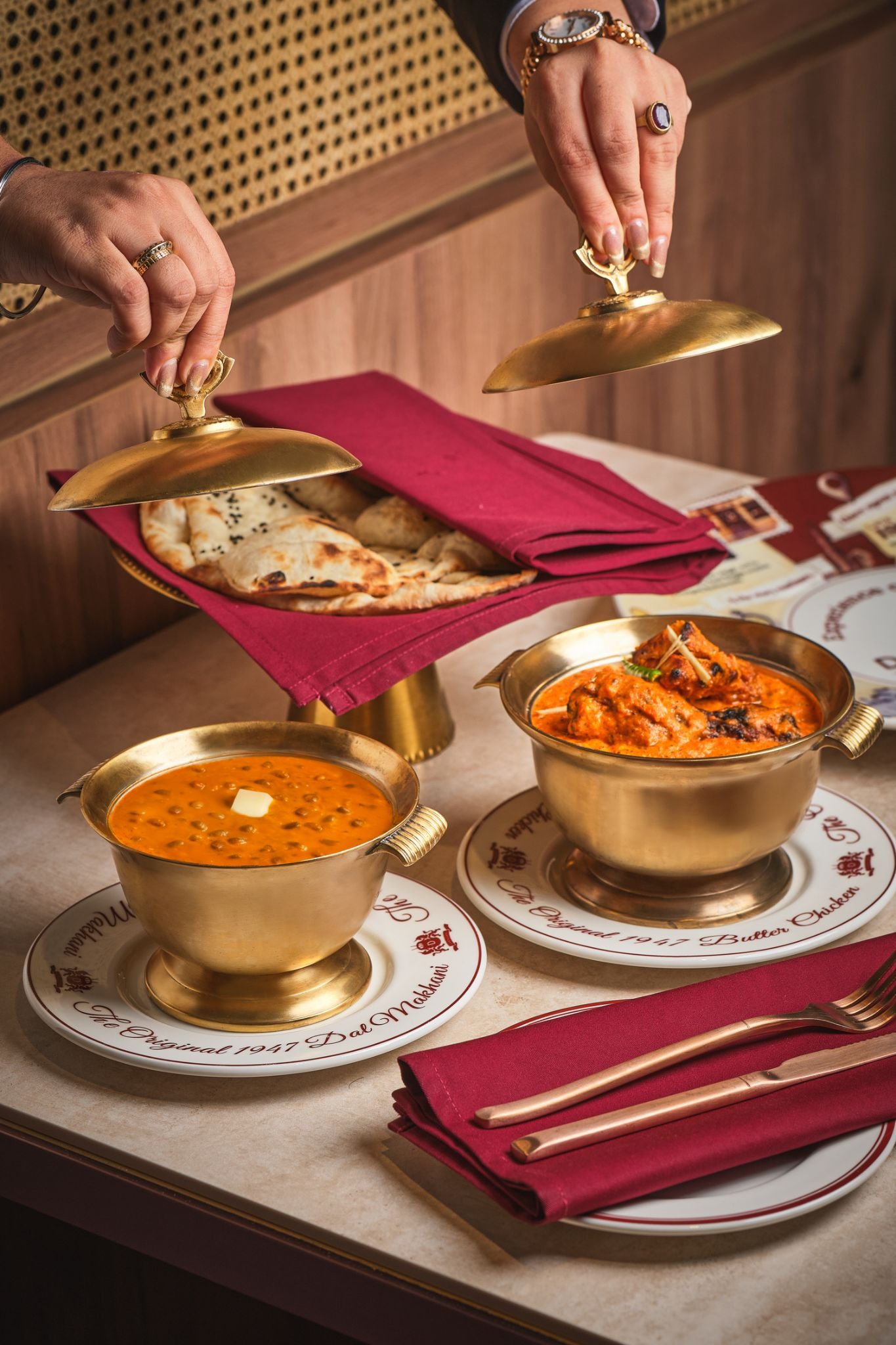
Daryaganj’s signature staple: The 1947 Dal Makhani and Butter Chicken
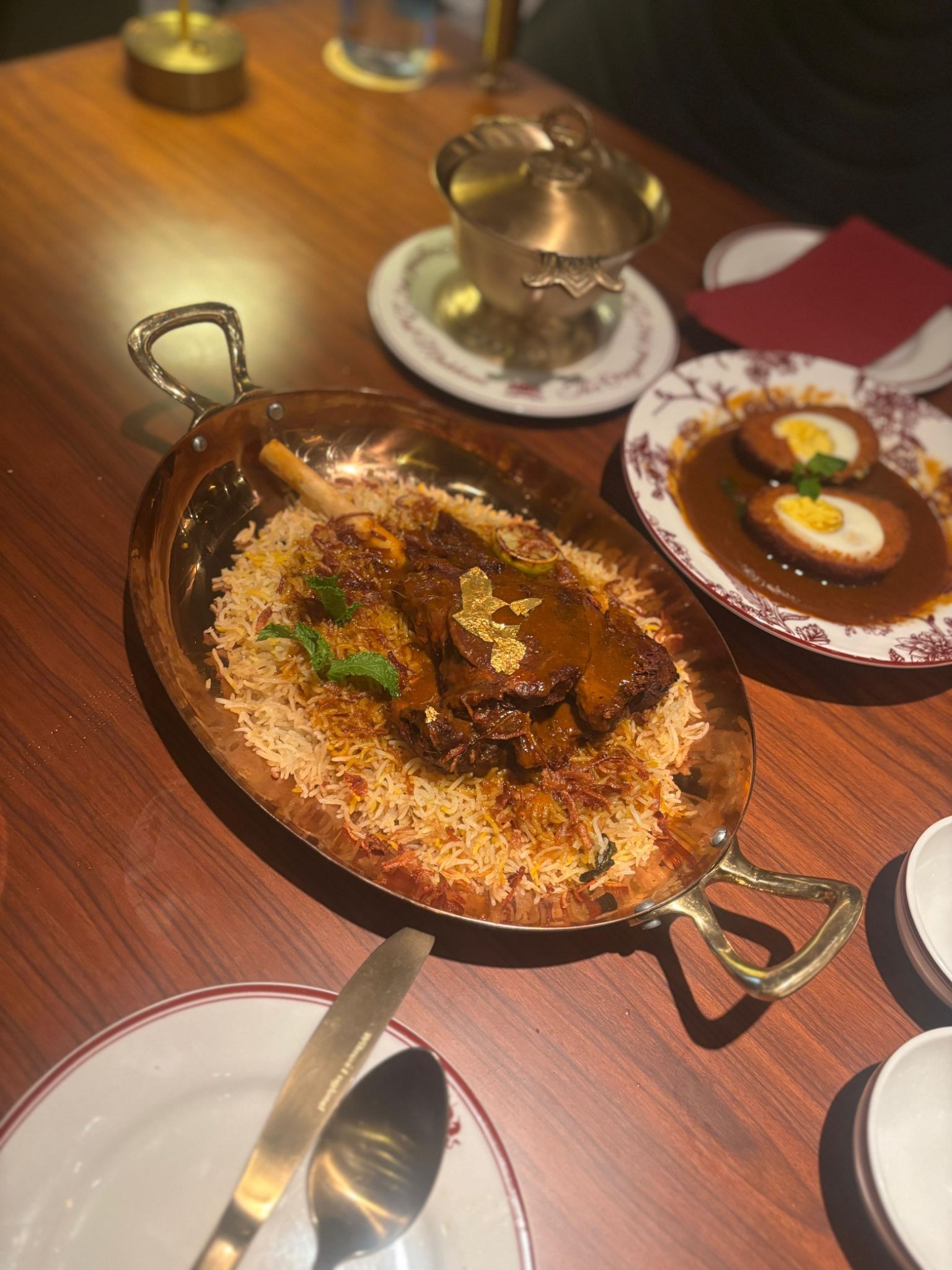
The 24 Karat mutton biryani with slow-cooked spices and fall off the bone tenderness
The Sweet Finish
After a hearty meal arrived to break the potency of the spices came in the desserts. It was a walk down memory lane. The Jelly Fruit Cream Custard became reminiscent of childhood desserts, recalling the custard bowls of birthdays, the kind made at home with whatever fruit was in season. Served in a coupe glass, topped with fruit pearls, it was the kind of dessert that didn’t feel the need to announce itself. Next to it were the Gulab Jamuns in a gold bowl, syrup-soaked and finished with pistachios, reinforcing the comfort-driven narrative of the menu, and lastly, the Kulfi, which required no introduction; the presence was enough to speak for itself.
Rating: 4/5
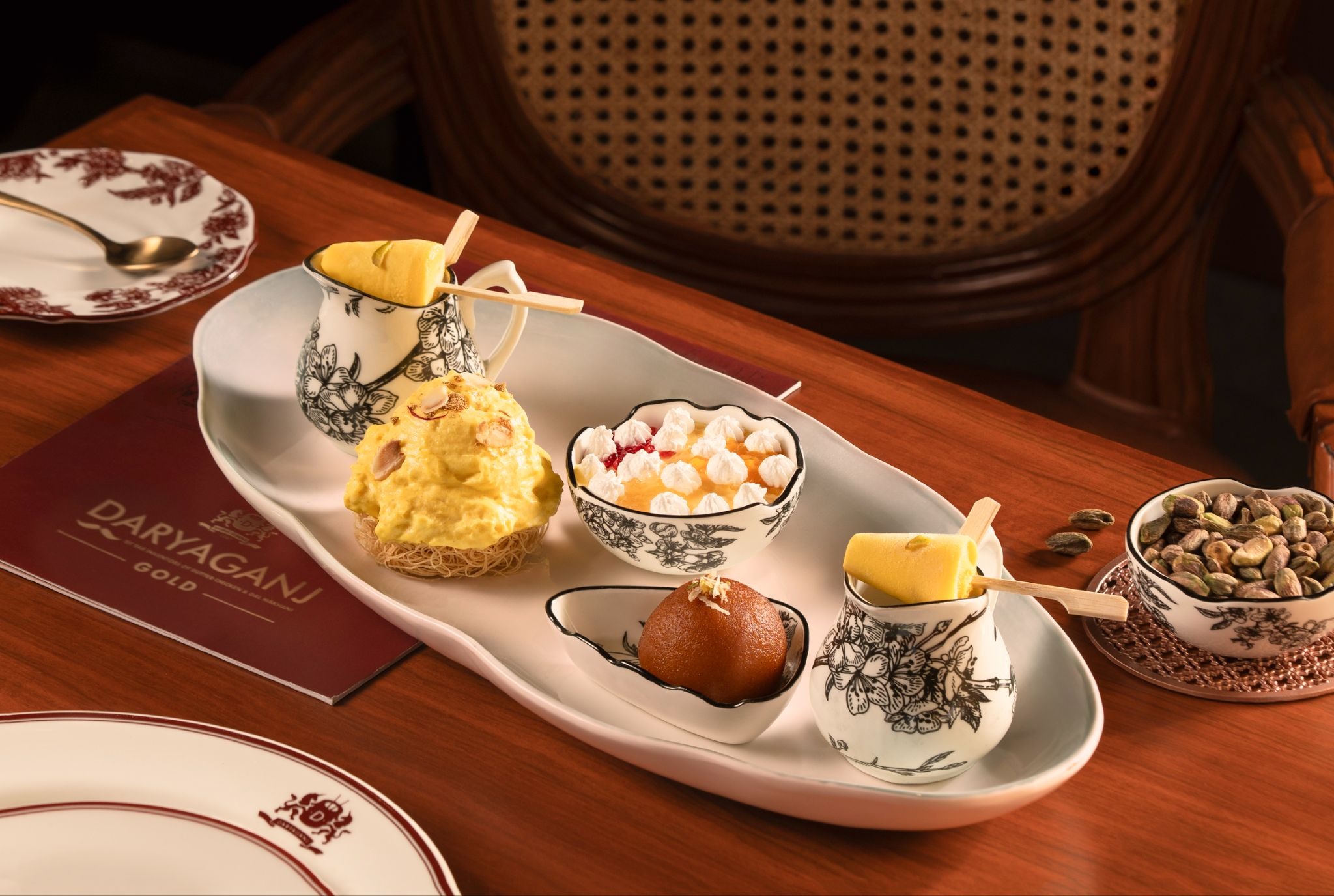
The Fruit Cream Custard paired with Gulab Jamun and Kulfi
THE FINAL POUR
As the evening wound toward its close, we ventured into more spirited territory. The cocktail menu at Daryaganj Gold is its own considered world: understated, Indian in its sensibility, and confident enough to let the ingredients speak without theatrical flourish. Two drinks arrived at our table in the final stretch of the evening, each one a different register of that same philosophy.
The Mango Gold came first. Exclusive to the Gold menu and built around a fruit that runs through the entire Indian summer like a cultural thread, it carried a depth that the name alone does not prepare you for. Where you might expect something straightforwardly sweet and seasonal, the Mango Gold arrived layered and considered: the fruit's natural richness present at the front, with a warm, slightly spiced undertow that kept each sip interesting long after it landed. It was the kind of drink that earns its name rather than simply wearing it, and felt entirely at home on a menu built around the idea of the classic made more precise.
Rating: 4.5/5
The Anarkali followed, catching our attention partly for the name, partly for the vivid hot-pink that preceded any tasting. The colour suggested something effusively sweet and soft. The drink had other plans. Lean, strong, with a backbone that matched the richness of everything that had come before, it carried the finish of a cocktail for people who had already had a full and satisfying evening and were in no hurry to end it. Refreshing enough to settle the senses, sharp enough to remind the table that the night had plenty left in it.
Rating 4.5/ 5
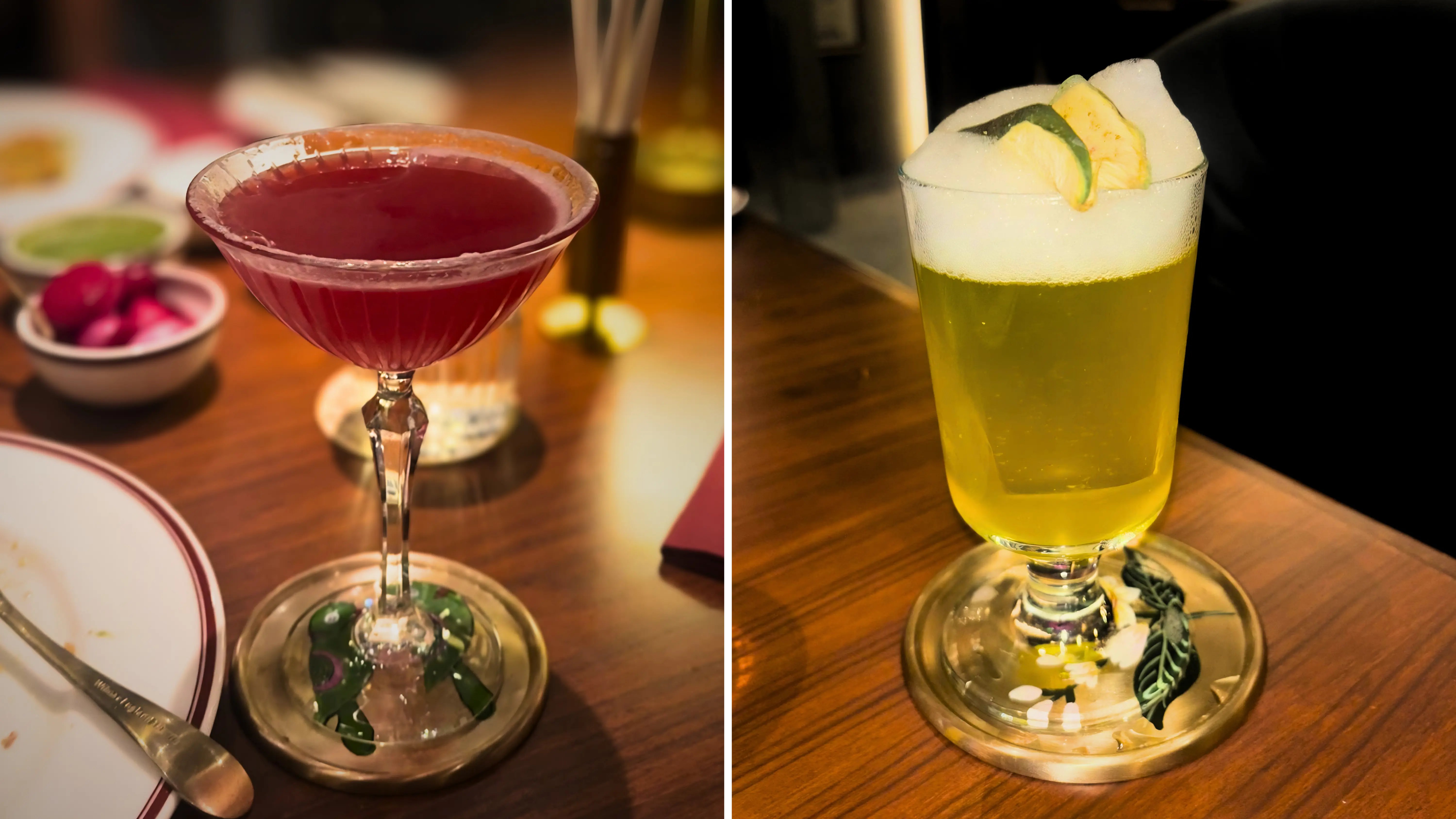
Anarkali: A playful cocktail with a sharper finish; Mango Gold: The Gold menu's most Indian cocktail, and its most subtly confident.
THE VERDICT
Daryaganj Gold, Aerocity, carries the full weight of what it claims to be, and that is, in the Delhi dining landscape, rarer than it sounds.
Kundan Lal Jaggi arrived in the capital with a cook's hands and a refugee's determination, and from those foundations authored two of the most beloved dishes in the world. Butter Chicken and Dal Makhani are recipes as old as independent India itself, born the same year as the tricolour was raised, woven into the country's identity as deeply as any monument or founding document. They belong to this nation's story in the most literal sense.
What Raghav Jaggi and Amit Bagga have built in his name, 15 outlets, a Shark Tank deal, 63 awards, an international debut in Bangkok under the Gold format, and now this flagship back in Delhi, is the living continuation of that story. The Gold format at Aerocity holds the line between the two things that define great food culture: technique that moves forward and flavour that stays home. The presentation is modern. The plating is considered. The cocktails are inventive and seasonally aware. The Avocado Bhel Puri speaks a globalised language. And the Dal Makhani, slow-cooked through the night exactly as Jaggi made it in 1947, reminds you that some things are already complete. They only need to be maintained.
The looking glasses, the antique plates, the hand-placed relics along the entrance wall, the monochrome illustration of old Daryaganj: all of it is documentation. The restaurant is saying, this is where we came from, and we have not forgotten a single detail of it.
An evening here lingers long after the meal is over. The continuity does that.
Editor’s rating: 4.5/5
TO BE CONTINUED, FOR SUBSCRIBERS ONLY.
This is where the surface ends and the reporting begins.
The complete piece, the full archive, and access to The French Press Circle. Reporting answerable only to its readers.
Already a subscriber ?
Login
Read these on the house, with our compliments.
A selection from the current issue, open to all readers. Read them in full. The rest is one decision away.








Keeping up with Delhi's dining scene has become a relentless pursuit, one that has steadily displaced the authenticity and legacy the city once carried so naturally. Most places have adapted westernisation too liberally, chasing relevance at the cost of identity and cultural heritage.
Daryaganj stands apart. The gem of Delhi's history, a space fiercely loyal to its legacy and balanced with a calibrated dose of modernity that never once forgets where it came from.
Daryaganj Gold, Aerocity: Where legacy is reinvented.
A STORY ROOTED IN 1947
Before there was a restaurant, there was a refugee and a tandoor.
In 1947, as the tremors of Partition reshuffled an entire subcontinent, a man named Kundan Lal Jaggi arrived in Delhi with almost nothing. A native of Peshawar who had honed his craft at the restaurant of his mentor Mokha Singh in the 1930s, Jaggi carried no capital, no property, only a mastery of tandoori cuisine and an unflinching resolve to rebuild. He found a modest shop in a neighbourhood called Daryaganj in Old Delhi, and alongside two partners, Kundan Lal Gujral and Thakur Dass Mago, opened the city's first tandoor restaurant. In doing so, they quietly started a revolution.
The two most iconic dishes of North Indian cuisine were born from necessity and improvisation, not from any recipe book. One late evening in 1947, as Jaggi prepared to close, a group of unexpected guests arrived. The kitchen was nearly empty, save for leftover portions of tandoori chicken. A Bengali diner suggested making a gravy so that everyone could eat. Jaggi worked with what he had: tomatoes, fresh butter, a handful of spices, and folded the tandoori chicken in. The guests never left a morsel. That accidental dish became Butter Chicken. Dal Makhani followed soon after, when a regular named Sucha Singh urged Jaggi to do something more creative with the humble maa ki dal. Jaggi slow-cooked black lentils overnight on the tandoor with tomatoes, fresh white butter, herbs and spices. By morning, the lentils had transformed into something creamy, deep, and wholly extraordinary. He named it Dal Makhani, buttery, because no other word would do.
These were recipes born in the same year as independent India itself. Butter Chicken, Dal Makhani, the Original Tandoori Chicken: they did not merely define a cuisine, they became inseparable from the identity of a newly independent nation finding its flavour. Recipes as old as the Indian tricolour, as deeply embedded in the country's cultural fabric as any monument or anthem. The restaurant drew dignitaries and eventually earned the patronage of Prime Minister Jawaharlal Nehru. Kundan Lal Jaggi had, from the ashes of displacement, invented the two most universally loved dishes in Indian cuisine.
The original restaurant was sold in 1992. Jaggi passed away in 2018, his closely guarded recipes and uncompromising philosophy already passed through his family, already safe. The legacy went quiet. It was never lost.
In 2019, Raghav Jaggi, Kundan Lal Jaggi's grandson, and his childhood friend, restaurateur Amit Bagga, decided it was time to bring it back. Growing up in the long shadow of his grandfather's legendary kitchen, Raghav had always understood the weight of what that man built. Together, they launched Daryaganj, By the Inventors of Butter Chicken and Dal Makhani, with one founding conviction: to present the original 1947 recipes to a contemporary India that had largely only ever tasted versions of them. Not interpretations. The originals, reconstructed from within the family, cooked the way they were before blenders and shortcuts existed.
DARYAGANJ GOLD, AEROCITY: WHERE LEGACY IS REINVENTED
Walking into Daryaganj is like stepping into a culinary history book. The ambiance was a coherent balance between old-school charm and modern flair. Our evening began with the pleasure of interacting with Amit Bagga, the co-founder and CEO, the man behind the meticulous details and the driving vision that defines Daryaganj. Speaking with Mr Bagga provided us with an immersive insight into a story rooted in tradition, friendship, and family honor as much as it is about the food.
Amit Bagga, Co-Founder and CEO of Daryaganj: The man behind the details.
IT’S ALL IN THE DETAILS
The entrance serves as a reminder of how Daryaganj embodies the cultural essence of Delhi. The walls are lined with pictures and antique plates, framing the ancestral delicacies of the place: the Butter Chicken and the Dal Makhani, the symbolic dishes of Daryaganj since 1947. Looking at every corner reflects an obsession with the granular, a commitment to each detail that makes the space feel less like a restaurant and more like a curated cultural archive. Every relic placed here earns its place. The antiques feel like evidence. Like documents. The space makes its heritage tangible, and that is what separates Daryaganj from the many restaurants that reach for nostalgia as an aesthetic without truly living inside it.
We proceeded towards the carefully curated and illustrated painting of the old town of Daryaganj. It almost transported us back in time, offering a glimpse of Old Delhi before the city reinvented itself. The monochrome strokes pull you in a specific direction, a tour through the 1940s, making the history Amit Bagga spoke about feel entirely real and within reach.
The space blends old-world charm with posh refinement.
Old Town Daryaganj Hand-drawn Illustration
The hand-painted wall also encompassed an AI-generated video through a screen, a theme recurring across the interiors of the restaurant, depicting a glimpse of what Kundan Lal Jaggi’s original kitchen must have looked like in 1947. Finally, a use of AI we can wholeheartedly get behind! What stood out the most was that this painting was accompanied by a looking glass below. In the age of digital screens and gadgets, there is something extremely enchanting about leaning into a looking glass and getting a glimpse into the architectural wonders of Delhi, allowing history to unfold. It offered an invitation to unwind and pause from the tumultuous hindrances of the day.
A visual journey to the architectural wonders of Delhi
Moreover, the waterfall acts as the centrepiece of the restaurant. It creates a layer of serenity and tranquility in the bustling dining room, and its soft lighting reflected off the marble and brick, along with the earthy colour palette used in the overall restaurant, providing a slight Bohemian texture as well.
A softly illuminated waterfall reflecting Daryaganj’s balance of warmth, heritage, and modernity.
THE OPEN KITCHEN AS THE USP
The transparency of Mr Bagga's vision is literal. The restaurant features a striking open kitchen, a bold and, for this cuisine, innovative move. North Indian cooking carries a long tradition of the back kitchen, where the process is hidden and the plate simply arrives. Daryaganj inverts that entirely. Here, you watch the chefs work. You see the tandoors breathe fire, the dough being rolled, the proteins being placed with care and pulled out at exactly the right moment. The cleanliness, the precision, the freshness of the ingredients moving from hand to flame to plate: all of it visible, all of it deliberate. For a cuisine built on techniques passed down through generations, the open kitchen is a statement of confidence. There is everything to show.
It also deepens the relationship between the diner and the plate. Watching the rhythmic, fiery dance of the golden tandoors creates a sentimental connection to the food, an understanding that while the presentation keeps evolving, the process of making it stays true to its roots. The soul of the cooking remains raw, grounded, and entirely without pretence.
What makes Daryaganj's menu truly compelling is how it holds both worlds in the same hand. The technique is innovation-forward: plating is modern, ingredients are thoughtfully sourced, and dishes like the avocado bhel puri or the truffle mushroom lollipops push familiar forms into unexpected territory. The flavours, however, remain exactly where they have always been: classic, consistent, and perfected over decades of unbroken practice. The recipes themselves have not moved. They have only been framed differently. That balance between a modern eye and an ancestral palate is what sets Daryaganj apart in a category where most restaurants choose one or the other, rarely holding both at once.
Then comes the bar area, placing itself elegantly beside the vintage and antique pieces. The lighting plays a significant role in mood-setting, casting the drinks in warm, considered tones. It manages to feel cool and entirely approachable, providing a sleek restraint that has made it a fixture in Delhi's dining landscape.
The open kitchen offers a glimpse into the precision and craft of Daryaganj’s tandoors
The bar balances minimal modernism with vintage warmth.
FROM SHARK TANK TO THE WORLD STAGE
By 2023, Daryaganj had become the subject of national conversation in a way few restaurants ever manage. Raghav Jaggi, Amit Bagga, and brand chef Gurpreet Singh walked onto the set of Shark Tank India Season 2 and made history as the first casual dining restaurant to be featured on the show. Their pitch was characteristically direct: they served Butter Chicken and Dal Makhani straight to the Sharks, letting the food do the talking. They entered asking for ₹90 lakhs for 0.5% equity at a valuation of ₹180 crore, anchored by three reasons: an irreplicable legacy, individually profitable outlets, and exceptional cash flow. After vigorous exchanges across the panel, they struck a deal with Aman Gupta, co-founder of boAt and already a long-standing Daryaganj regular, for ₹90 lakhs at 1% equity. They walked out carrying a cultural endorsement that no marketing budget can manufacture.
That moment affirmed what the food had always said. Daryaganj has since accumulated over 63 prestigious awards, including recognition among the FOOD FOOD Top 50 Restaurants in India, Zomato's User's Choice Award for Best Butter Chicken and Best Dal Makhani, and a Restaurateur of the Year title for Amit Bagga, while sustaining a 59% repeat customer rate and serving over 2.7 million guests. The Aerocity flagship now generates 80% higher revenue than in its first year, a number that speaks to the compounding power of legacy tended to with care.
The next chapter was international. In May 2025, with 15 outlets operating across India, Daryaganj made its first move beyond Indian borders, opening at Park Plaza Bangkok, Sukhumvit Soi 18, inside a five-star hotel in the world's most visited city. The Bangkok outpost was launched under the brand's premium vertical, Daryaganj Gold. The format was conceived to carry the founding legacy into a more elevated, innovation-forward presentation, keeping the soul of the 1947 recipes completely intact. The Gold menu offered diners two renditions of Butter Chicken side by side: the Original 1947 version, with its coarse, tomato-forward gravy and on-the-bone tandoori chicken made without cream or modern shortcuts, and the contemporary version, smoother and richer, for the palates of today. It was a conversation between two eras served on the same table.
The success of Bangkok brought the Daryaganj Gold vision home. The Aerocity outlet we dined at this evening is that format on home soil, the Gold standard transplanted to Delhi's most cosmopolitan corridor, where diplomats, global travellers, and long-standing locals converge. What began as a tribute to a grandfather's recipes in 2019 has become a living global brand carrying the full weight of Indian culinary history.
SIP & FEAST
Looking at the drinks menu and the bar, ‘being tempted’ was an understatement. Due to the variety of cocktails, we were unable to decide which one we should commence the evening with. So, instead of mindlessly scanning the menu, we left it in the hands of the mixologists and the real tastemakers to surprise us. A move that intricately showcased the staff’s intuitive understanding of their craft.
What arrived were two cocktails that felt like summer in a glass: The Gulabo and The Do Rum. In the midst of the scorching Delhi heat, this was exactly the need of the hour.
The Gulabo, the name says it all, had a floral and fruity taste. It was fragrant at its best and had that nostalgic ‘sweet Indian taste’ we all grew up loving, but executed with a sophisticated restraint. It managed to capture the delicate essence of the rose with the right amount of sweetness without triggering any dreaded icy brain freeze, balanced with a slight crispness to keep the palate sharp.
Rating:4/5
The Do Rum is also a personal favourite of Mr Bagga, and it’s easy to understand why. The botanical punch of the lemongrass infused drink with both black and white rum served a citrusy edge that acted as a refreshing, boozy intervention against the heat. The delicious irony of the drink was that, despite it being a cocktail, it tasted like a cleanser to the body and wonderfully resonated with Mr Bagga’s overall philosophy: clean, sharp, and revitalising.
Rating: 5/5
A vibrant start to the evening with citrusy-forward cocktails
Now onto the food!
Our feast and introduction to the menu began with the bite-sized Mango Tart. Served on a plate that beautifully narrated the visual timeline of Daryaganj’s legacy from Kundan Lal Jaggi’s late 1930s to Raghav Jaggi and Amit Bagga redefining the current avatar in 2019.
The exterior of the tart was crisp and buttery, cradling a bright, fresh mango salsa punctuated with herbs. The mango provided a tropical lead-in to the North Indian flavours, melting into the mouth, the touch of herb keeping the freshness intact. A bright, zesty start: a fruit central to Indian summers, wrapped in a delicate pastry shell, doing exactly what a good amuse-bouche should.
A bite-sized mango tart with an evolving timeline of Daryaganj’s history
Then arrived the celebrated Palak Patta Chaat, selected by our Executive Editor-in-Chief, Sia Sethi. Crunchy crisp leaves as a base, sitting atop kaala khatta and mango spheres, followed by the cold, creamy burst of yogurt spheres forming a bittersweet contrast with the fruit. The chaat spirit is honoured here while carrying a more polished touch. Familiar and refined in the same mouthful.
A contemporary interpretation of the classic Palak Patta Chaat
Rating: 4 / 5
Before we had finished the chaat, the India Gate Avocado Bhel Puri arrived on a newspaper plate, and the presentation deserves particular attention. The newspaper plating is effortless brand storytelling, a nod to the Delhi Hindustan Times era, crowned with a pink edible flower. The dish itself is a recalibration: avocado as the base adds a velvety dimension to the familiar bhel, transforming a roadside staple into something metropolitan and globally conscious, the bhel spirit fully present underneath. Crafted in the heart of Delhi, speaking a language the world understands.
Rating: 5/5
The India Gate Avocado Bhel Puri served on the newspaper plate backdrop
AND IT KEPT COMING
The gravity of the dishes gradually started increasing. The focus shifted from light rustic bites to more dense foods with their rich caloric profile. The spices became more anchored, and the plates began to reflect the robust soul of a classic tandoor. Starting with the tangy chicken tikka tossed with crispy kale leaves around and topped with makhanas (fox-nuts) Considering the nutritional value, it was a ‘protein powerhouse’ because of the char-grilled chunks of the chicken with kale adding the fibre content. For those who want to get in their protein intake, this dish was enough to suffice for most of it. The smoky and soft texture of the chicken against the airy snap of the makhana makes the overall dish tasteful as it is nutritious.
Rating: 5/5
Smoky char-grilled chicken tikka contrasted with kale and makhanas
The weight of the dishes kept getting denser, with the Kebab Platter taking the spotlight, including the Salmon Tikka, Mutton Kebab, Chicken Malai Tikka, and Chicken Pakora. The Headliners were the Salmon Tikka with its juicy and soft interior and mildly spicy exterior without overwhelming the fish’s richness. Joining it was the Chicken Pakora with its crisp exterior that made the platter more percussive. Along with the Mutton Kebab, providing a deeper spice profile, the Malai Chicken Tikka softens the blow of the more aggressive spices. The common element with this was also the green chutney and lemon, which was a classic Indian way, and felt like a bonus added to the existing flavors. Pairing it with the Mushroom Ram Ladoo Lollipops propped upright with a reimagined take on Delhi’s beloved street snack, added with truffle oil which was the ultimate game changer and amplified the ‘funk’ of mushrooms. The only drawback was that it was finished in two bites, which felt like a tease, wishing the experience lasted longer.
Rating: 4/5
The Robust Kebab Platter with Mutton Kebab, Chicken Pakora, Salmon Tikka, and Malai Chicken Tikka
Mushroom Ram Ladoo with Truffle oil
With the lighter courses giving way, the meal deepened into its more indulgent offerings, where comfort and familiarity took centre stage. The table centerpiece, featuring the 5-senses chicken curry, was served in the homely Indian style of a gold pressure cooker, which already hit close to home. Then came the 1947 Dal Makhani and Butter Chicken. Despite our stomachs being full and being almost on the verge of going into a food coma, it still became a mandatory rite of passage for us to make space for it. Making space for these two dishes was never a question. To leave the table without experiencing them would be to leave the story half-told. These are the dishes that built this brand, the dishes that a grandfather invented from the remnants of a partition-era kitchen, the dishes that fed a Prime Minister, the dishes that have been slow-cooked in continuity from 1947 to this evening without interruption. It felt less like a recipe and more of a tribute to heritage. Understated in presentation in signature gold brass but exceptional in depth. The creaminess of the Dal and Butter Chicken was enough to pull us back in. Slow-cooked, which no shortcut can replicate: the core of Daryaganj and rightfully so. Complemented by equally traditional delicacies, such as the Nargisi Kofta: a visual standout of perfectly halved eggs in a savoury minced meat shell and swimming in a glossy gravy, a precursor to the popular scotch eggs, as per Mr. Bagga. The 24 Karat Biryani rounded out the table, aromatic basmati, layered spicing, meat falling from the bone with the ease that only slow cooking produces.
Rating: 4.5/ 5
A homestyle presentation of the 5 senses chicken curry
Daryaganj’s signature staple: The 1947 Dal Makhani and Butter Chicken
The 24 Karat mutton biryani with slow-cooked spices and fall off the bone tenderness
The Sweet Finish
After a hearty meal arrived to break the potency of the spices came in the desserts. It was a walk down memory lane. The Jelly Fruit Cream Custard became reminiscent of childhood desserts, recalling the custard bowls of birthdays, the kind made at home with whatever fruit was in season. Served in a coupe glass, topped with fruit pearls, it was the kind of dessert that didn’t feel the need to announce itself. Next to it were the Gulab Jamuns in a gold bowl, syrup-soaked and finished with pistachios, reinforcing the comfort-driven narrative of the menu, and lastly, the Kulfi, which required no introduction; the presence was enough to speak for itself.
Rating: 4/5
The Fruit Cream Custard paired with Gulab Jamun and Kulfi
THE FINAL POUR
As the evening wound toward its close, we ventured into more spirited territory. The cocktail menu at Daryaganj Gold is its own considered world: understated, Indian in its sensibility, and confident enough to let the ingredients speak without theatrical flourish. Two drinks arrived at our table in the final stretch of the evening, each one a different register of that same philosophy.
The Mango Gold came first. Exclusive to the Gold menu and built around a fruit that runs through the entire Indian summer like a cultural thread, it carried a depth that the name alone does not prepare you for. Where you might expect something straightforwardly sweet and seasonal, the Mango Gold arrived layered and considered: the fruit's natural richness present at the front, with a warm, slightly spiced undertow that kept each sip interesting long after it landed. It was the kind of drink that earns its name rather than simply wearing it, and felt entirely at home on a menu built around the idea of the classic made more precise.
Rating: 4.5/5
The Anarkali followed, catching our attention partly for the name, partly for the vivid hot-pink that preceded any tasting. The colour suggested something effusively sweet and soft. The drink had other plans. Lean, strong, with a backbone that matched the richness of everything that had come before, it carried the finish of a cocktail for people who had already had a full and satisfying evening and were in no hurry to end it. Refreshing enough to settle the senses, sharp enough to remind the table that the night had plenty left in it.
Rating 4.5/ 5
Anarkali: A playful cocktail with a sharper finish; Mango Gold: The Gold menu's most Indian cocktail, and its most subtly confident.
THE VERDICT
Daryaganj Gold, Aerocity, carries the full weight of what it claims to be, and that is, in the Delhi dining landscape, rarer than it sounds.
Kundan Lal Jaggi arrived in the capital with a cook's hands and a refugee's determination, and from those foundations authored two of the most beloved dishes in the world. Butter Chicken and Dal Makhani are recipes as old as independent India itself, born the same year as the tricolour was raised, woven into the country's identity as deeply as any monument or founding document. They belong to this nation's story in the most literal sense.
What Raghav Jaggi and Amit Bagga have built in his name, 15 outlets, a Shark Tank deal, 63 awards, an international debut in Bangkok under the Gold format, and now this flagship back in Delhi, is the living continuation of that story. The Gold format at Aerocity holds the line between the two things that define great food culture: technique that moves forward and flavour that stays home. The presentation is modern. The plating is considered. The cocktails are inventive and seasonally aware. The Avocado Bhel Puri speaks a globalised language. And the Dal Makhani, slow-cooked through the night exactly as Jaggi made it in 1947, reminds you that some things are already complete. They only need to be maintained.
The looking glasses, the antique plates, the hand-placed relics along the entrance wall, the monochrome illustration of old Daryaganj: all of it is documentation. The restaurant is saying, this is where we came from, and we have not forgotten a single detail of it.
An evening here lingers long after the meal is over. The continuity does that.
Editor’s rating: 4.5/5
TO BE CONTINUED, FOR SUBSCRIBERS ONLY.
This is where the surface ends and the reporting begins.
The complete piece, the full archive, and access to The French Press Circle. Reporting answerable only to its readers.
Already a subscriber ?
Login
Read these on the house, with our compliments.
A selection from the current issue, open to all readers. Read them in full. The rest is one decision away.