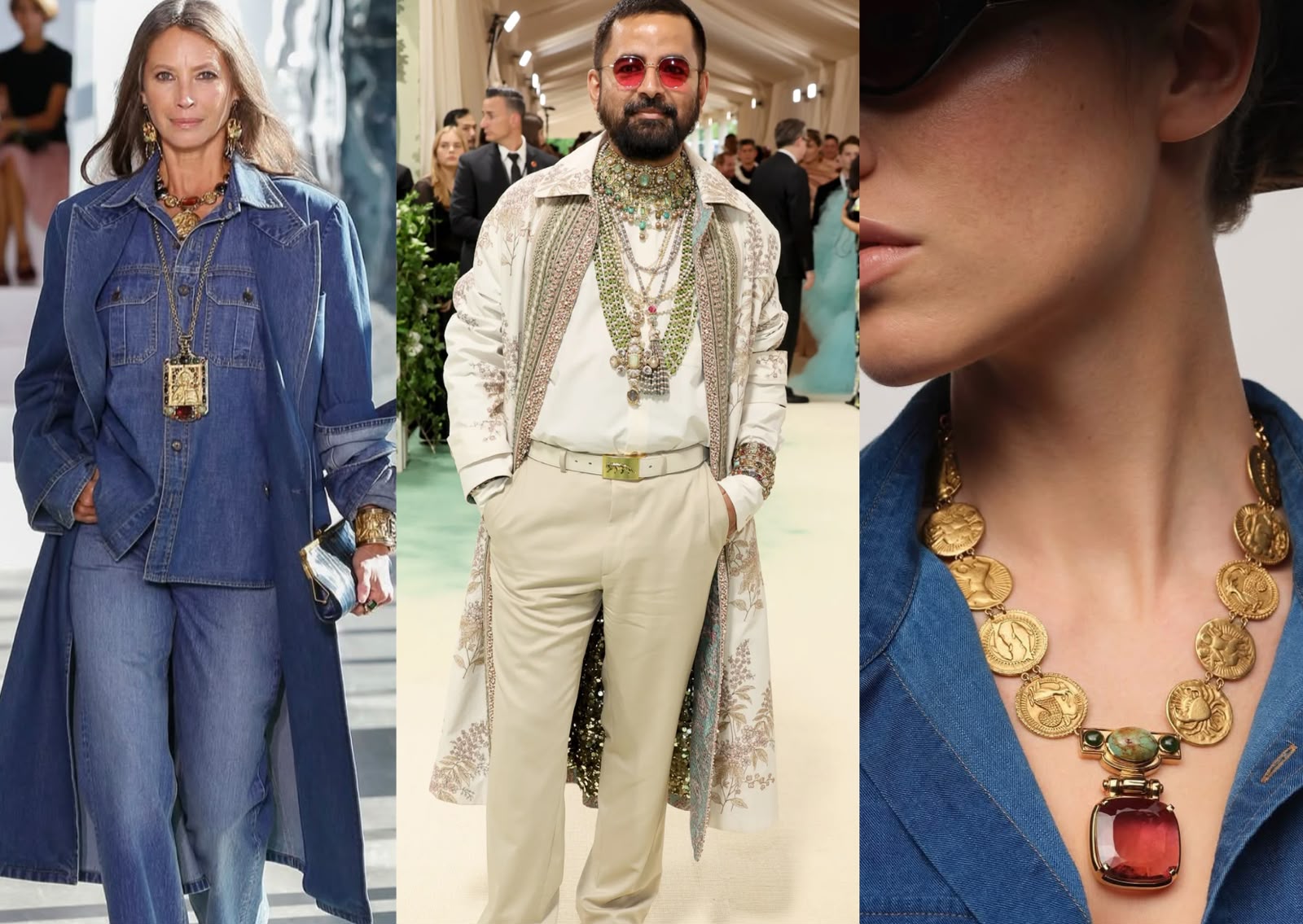
Seventeen years is a long time to hold a silence, and Sabyasachi Mukherjee held his with the same discipline he applies to a hand-embroidered hem. Yesterday, at the Edison Ballroom on West 47th Street, that silence broke in the most deliberate way possible: not with noise, but with restraint. Months before the show, Mukherjee had promised as much on Instagram, writing that his return would be "restrained," focused on clothes and craftsmanship rather than performance. What arrived on the runway kept that promise, and in doing so, said more about where the designer stands today than a hundred spectacular finales could have.
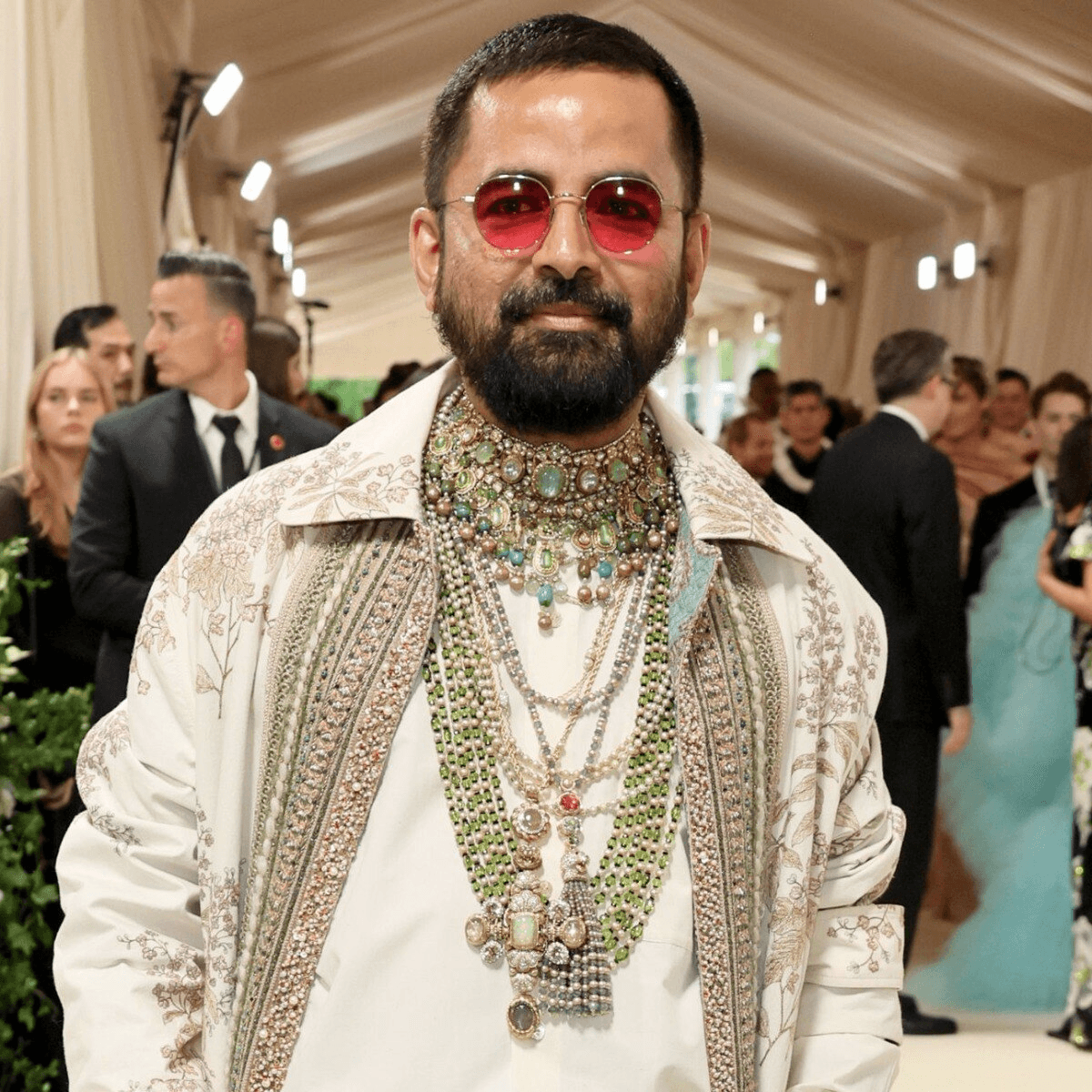
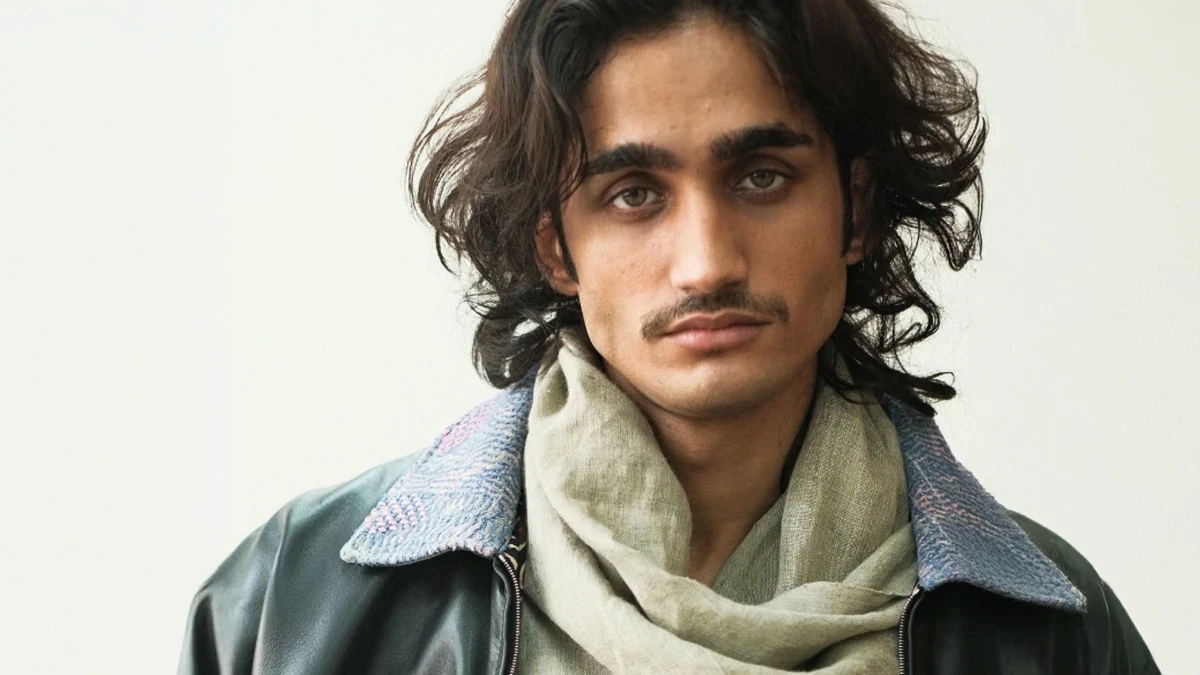
Designer Sabyasachi Mukherjee | Image Source: Google
The last time Mukherjee showed in New York was 2009, a ready-to-wear collection adapted for an American audience that, by his own admission, he wasn't yet built for. He has spoken about a conversation with fashion journalist Suzy Menkes from around that era, who told him plainly to come back only once he no longer needed New York to validate him. Nearly two decades of building later, that advice reads less like a rebuke and more like a blueprint he followed to the letter. This time, he arrived not as a designer hoping to be discovered, but as the architect of one of the most complete luxury ecosystems to come out of India in a generation, spanning bridal couture, fine jewelry, menswear, accessories, and now, a museum.
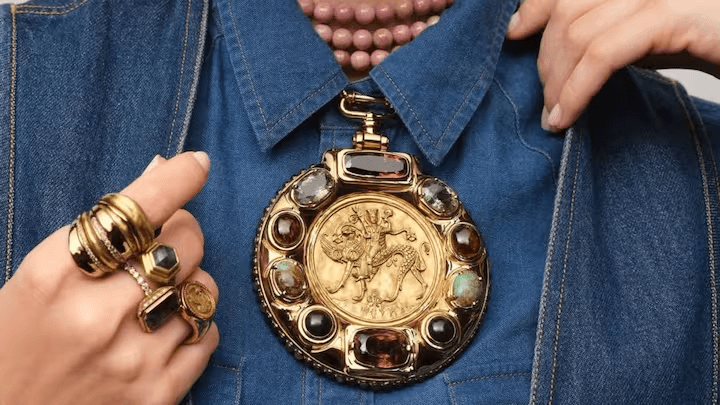
Sabyasachi Mukherjee's new multi-year collaboration with the Met debuts with a Byzantine-inspired high jewellery collection this September. Image Source: @sabyasachiofficial/Instagram
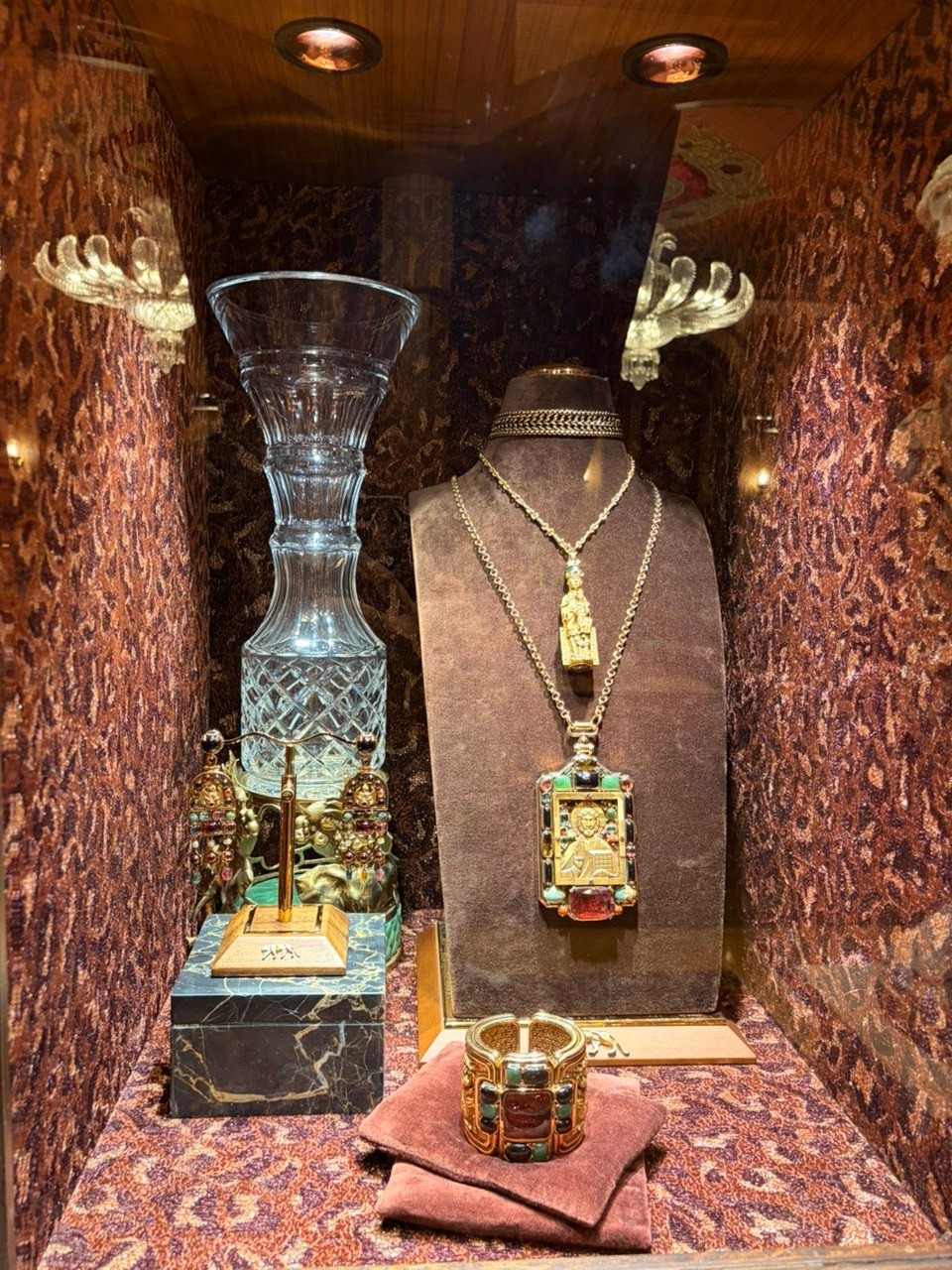
That last part carried the evening, and it deserves unpacking properly, because it is not a one-off collaboration so much as the opening move in something much longer. Mukherjee used the runway to unveil the first chapter of a multi-year partnership with the Metropolitan Museum of Art, one designed to mine roughly five thousand years of the museum's holdings across art and material culture from around the world. This inaugural chapter exists purely as high jewelry, six pieces drawn from the art of the Byzantine Empire, though both parties have signaled that future chapters will extend the same visual language into accessories and eventually clothing. The Met, in other words, is not lending Mukherjee a single motif. It is opening an archive, and the two sides have committed to returning to it repeatedly.
Mukherjee has explained what pulled him specifically toward Byzantium: a civilization defined not by one fixed geography but by centuries of trade and migration, where Egyptian, Greek, Roman, and Persian influences moved through each other continuously, India included, via routes like the Silk Road. He has drawn a direct line from that history to his own home city, describing Calcutta as a place shaped by the same currents of commercial and cultural exchange.
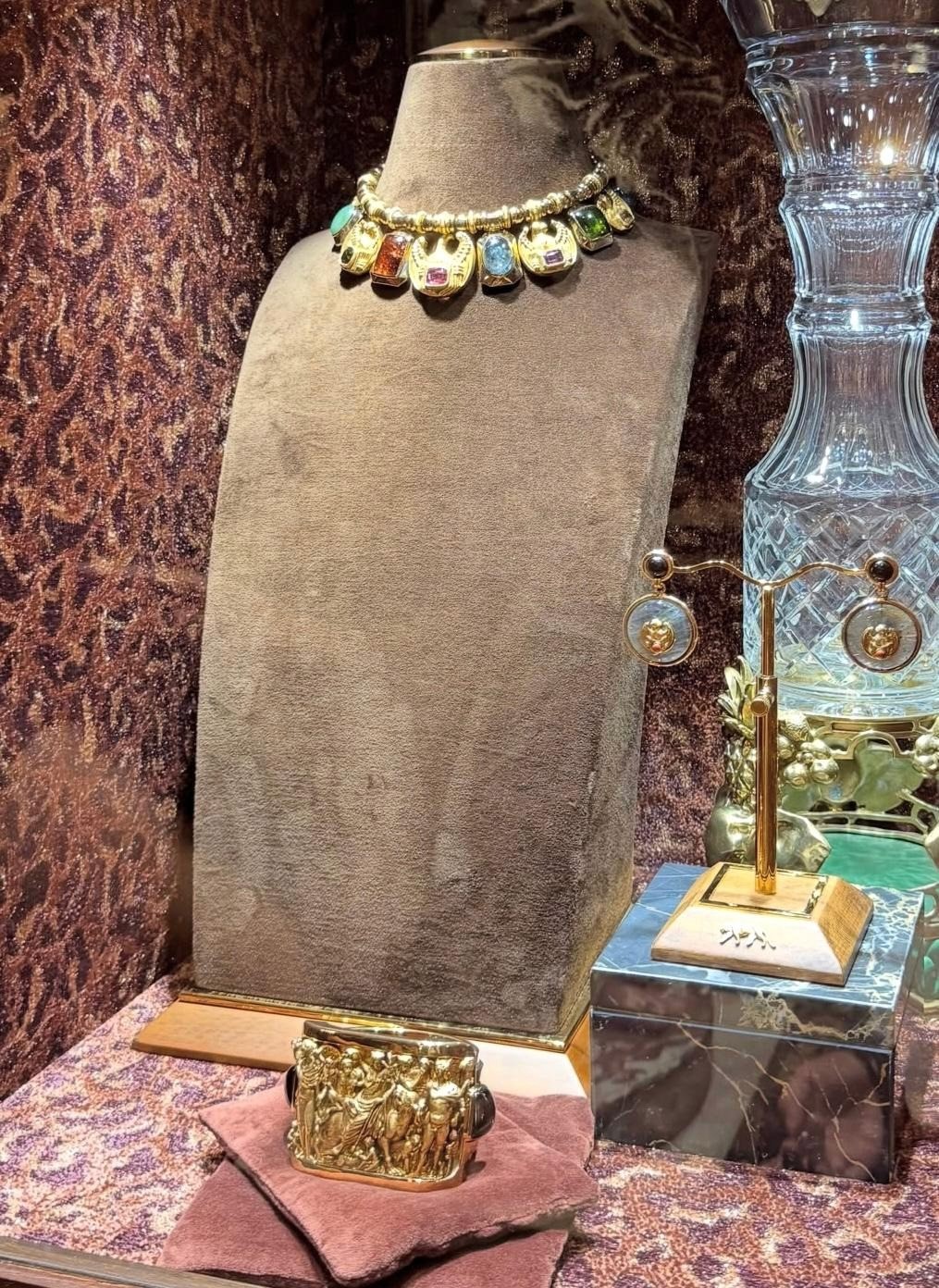
The collection draws from historical jewellery and art references, including Byzantine and Etruscan influences.
The jewelry translates that research with real specificity rather than borrowed grandeur. An eighteen and twenty-two karat gold cuff set with garnet cabochons and brown diamonds draws from a third-century Roman sarcophagus. A pendant necklace weaving together tourmaline, garnet, jasper, lapis lazuli, and jade references a Roman funerary relief. A tiger-claw necklace, rendered in the same gold with tourmaline and jade cabochons, reinterprets a twelfth-century Italian or Byzantine carved panel of animals, which lets Mukherjee's long-running tiger motif find an unlikely ancestor in medieval European stonework. Every piece was conceived, developed, and handcrafted in India through his own network of master artisans, a detail he has repeated deliberately, because it is the hinge the entire partnership turns on: the Met supplies the history, India supplies the hands, and the finished object returns to New York as something neither side could have produced alone.
Mukherjee has framed the collaboration as part of a larger reckoning he wants for Indian luxury altogether. For generations, he has said, the world came to India to make luxury, drawing on its gemstones, textiles, embroidery, and artisans while keeping the brands and the storytelling elsewhere. What interests him now is reversing that arrangement, so that Indian companies own the ideas and the cultural narrative built on top of that expertise, not just the labor beneath it. He has also pointed to a shift among the world's most discerning luxury customers, who he believes are growing tired of ubiquity and are actively searching for discovery instead, a gap he clearly intends the Met partnership to fill. The jewelry will roll out at Sabyasachi's flagship on Christopher Street in New York's West Village, across his other stores, and through select specialty retailers worldwide, which means the collaboration's ambitions are commercial as much as symbolic.
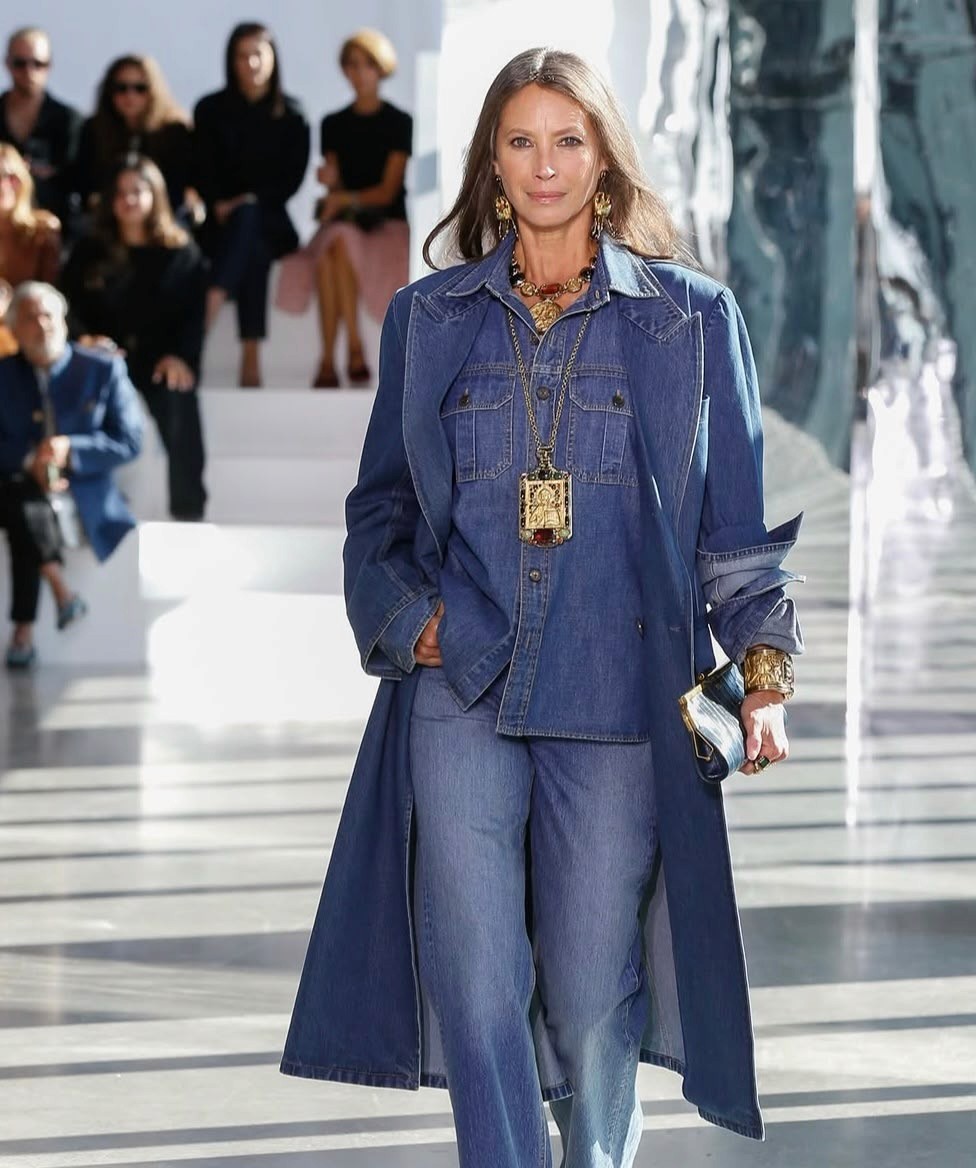

Sabyasachi in New York, where maximalism meets modernity, and every layer tells a story. | Image Source: Instagram
If New York gave that story its runway, Delhi gave it a home to live in first. Three weeks before the show, French Press was invited to walk through Mukherjee's new flagship in Mehrauli, and calling it a store barely covers what he built. Spread across 26,000 square feet at The Citadel, more than double the footprint of his previous Delhi space, the store unfolds like a private museum that happens to sell clothes. Around 120 chandeliers hang overhead. Close to 300 original artworks from the Sabyasachi Art Foundation share wall space with nearly 200 antique carpets and more than a hundred pieces of antique textile and vintage furniture. One installation recreates a Calcutta tramcar entirely in wood and etched star-cut glass, a piece of transit history reborn as retail architecture, and a life-size sculptural Bengal tiger presides over the space with the quiet authority of a mascot who has always belonged there. Archival garments spanning Mukherjee's career sit within reach of a preview of the very Byzantine jewelry that would debut in New York days later, so that walking through Mehrauli in late August meant, in effect, previewing New York Fashion Week before New York got to see it. Menswear was given its own dedicated section rather than a corner, a signal that the house is investing in that category with the same seriousness it has long applied to bridal.
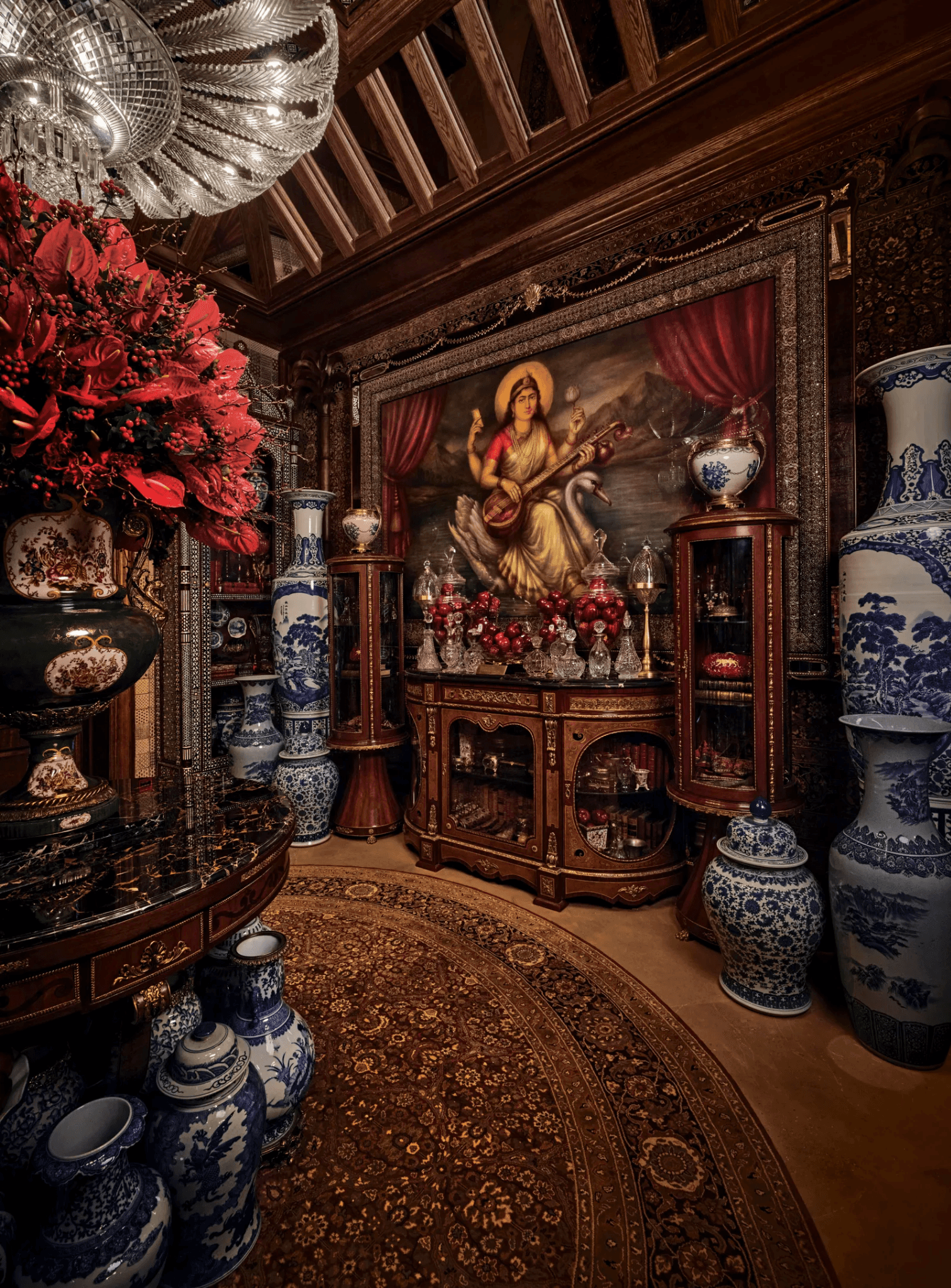
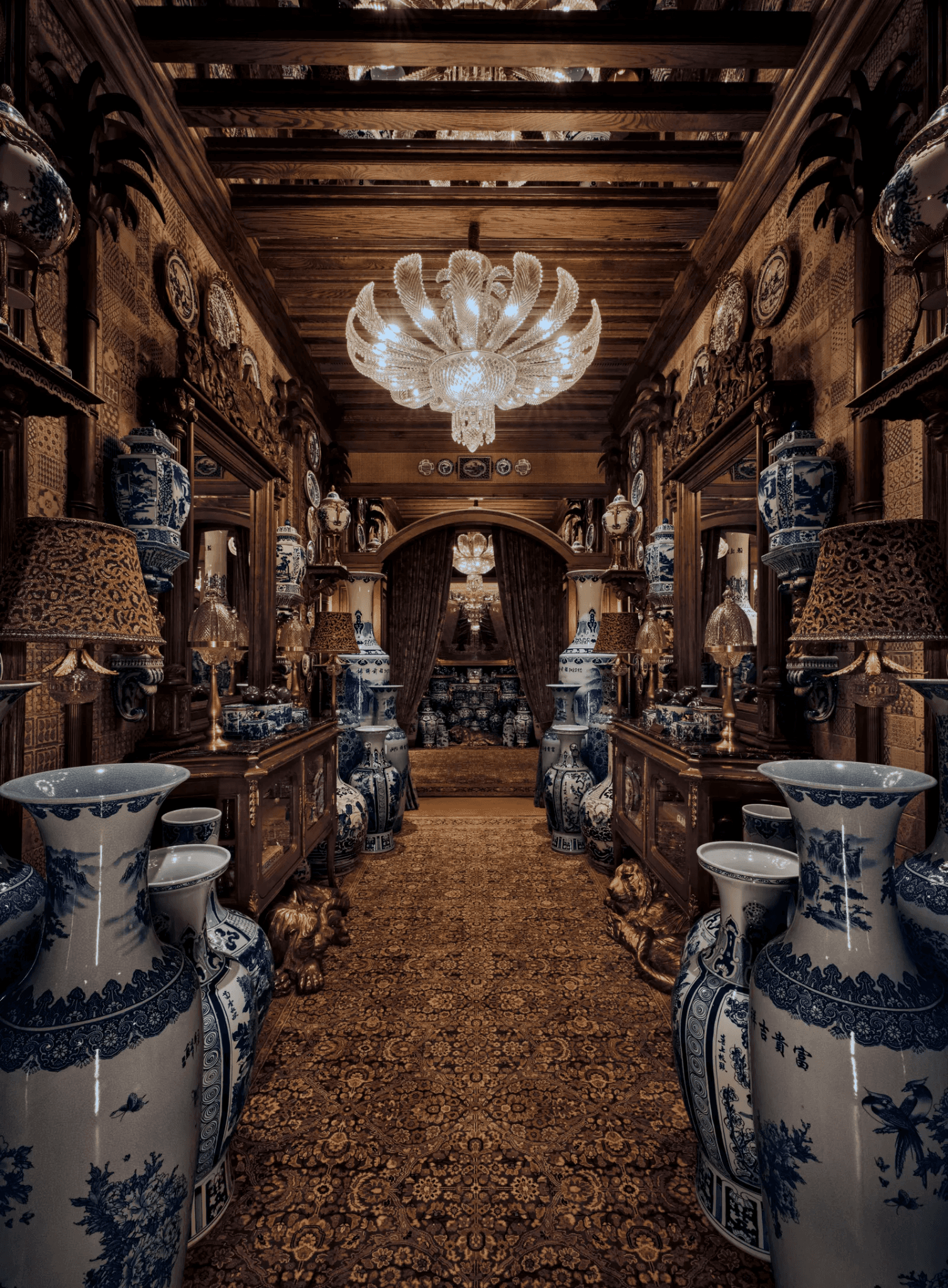
Sabyasachi Store in Delhi | Image source: Google
Mukherjee has said he has never believed a luxury store should simply sell products, that commerce brings people through the door but culture is what makes them stay, and the Mehrauli flagship makes that philosophy tangible rather than aspirational. It is easy to describe a store as experiential. It is harder to build one where every chandelier, carpet, and glass panel is doing narrative work, telling the story of a designer who has spent twenty-five years turning nostalgia for old Calcutta into a global vocabulary.
What ties Mehrauli to the Edison Ballroom is the same instinct: Mukherjee building his own infrastructure of meaning before he asks the world to look at it. The Met collaboration didn't happen because Sabyasachi needed New York's permission. It happened because a designer who once entered that city too early built, over seventeen patient years, a house substantial enough that one of the world's greatest museums wanted to open its archive to him, repeatedly, for years to come. That is not a comeback story in the ordinary sense. It is closer to a homecoming, staged on his own terms, in a room on West 47th Street that, for one afternoon, belonged entirely to him.
TO BE CONTINUED, FOR SUBSCRIBERS ONLY.
This is where the surface ends and the reporting begins.
The complete piece, the full archive, and access to The French Press Circle. Reporting answerable only to its readers.
Already a subscriber ?
Login
Read these on the house, with our compliments.
A selection from the current issue, open to all readers. Read them in full. The rest is one decision away.




Seventeen years is a long time to hold a silence, and Sabyasachi Mukherjee held his with the same discipline he applies to a hand-embroidered hem. Yesterday, at the Edison Ballroom on West 47th Street, that silence broke in the most deliberate way possible: not with noise, but with restraint. Months before the show, Mukherjee had promised as much on Instagram, writing that his return would be "restrained," focused on clothes and craftsmanship rather than performance. What arrived on the runway kept that promise, and in doing so, said more about where the designer stands today than a hundred spectacular finales could have.
Designer Sabyasachi Mukherjee | Image Source: Google
The last time Mukherjee showed in New York was 2009, a ready-to-wear collection adapted for an American audience that, by his own admission, he wasn't yet built for. He has spoken about a conversation with fashion journalist Suzy Menkes from around that era, who told him plainly to come back only once he no longer needed New York to validate him. Nearly two decades of building later, that advice reads less like a rebuke and more like a blueprint he followed to the letter. This time, he arrived not as a designer hoping to be discovered, but as the architect of one of the most complete luxury ecosystems to come out of India in a generation, spanning bridal couture, fine jewelry, menswear, accessories, and now, a museum.
Sabyasachi Mukherjee's new multi-year collaboration with the Met debuts with a Byzantine-inspired high jewellery collection this September. Image Source: @sabyasachiofficial/Instagram
That last part carried the evening, and it deserves unpacking properly, because it is not a one-off collaboration so much as the opening move in something much longer. Mukherjee used the runway to unveil the first chapter of a multi-year partnership with the Metropolitan Museum of Art, one designed to mine roughly five thousand years of the museum's holdings across art and material culture from around the world. This inaugural chapter exists purely as high jewelry, six pieces drawn from the art of the Byzantine Empire, though both parties have signaled that future chapters will extend the same visual language into accessories and eventually clothing. The Met, in other words, is not lending Mukherjee a single motif. It is opening an archive, and the two sides have committed to returning to it repeatedly.
Mukherjee has explained what pulled him specifically toward Byzantium: a civilization defined not by one fixed geography but by centuries of trade and migration, where Egyptian, Greek, Roman, and Persian influences moved through each other continuously, India included, via routes like the Silk Road. He has drawn a direct line from that history to his own home city, describing Calcutta as a place shaped by the same currents of commercial and cultural exchange.
The collection draws from historical jewellery and art references, including Byzantine and Etruscan influences.
The jewelry translates that research with real specificity rather than borrowed grandeur. An eighteen and twenty-two karat gold cuff set with garnet cabochons and brown diamonds draws from a third-century Roman sarcophagus. A pendant necklace weaving together tourmaline, garnet, jasper, lapis lazuli, and jade references a Roman funerary relief. A tiger-claw necklace, rendered in the same gold with tourmaline and jade cabochons, reinterprets a twelfth-century Italian or Byzantine carved panel of animals, which lets Mukherjee's long-running tiger motif find an unlikely ancestor in medieval European stonework. Every piece was conceived, developed, and handcrafted in India through his own network of master artisans, a detail he has repeated deliberately, because it is the hinge the entire partnership turns on: the Met supplies the history, India supplies the hands, and the finished object returns to New York as something neither side could have produced alone.
Mukherjee has framed the collaboration as part of a larger reckoning he wants for Indian luxury altogether. For generations, he has said, the world came to India to make luxury, drawing on its gemstones, textiles, embroidery, and artisans while keeping the brands and the storytelling elsewhere. What interests him now is reversing that arrangement, so that Indian companies own the ideas and the cultural narrative built on top of that expertise, not just the labor beneath it. He has also pointed to a shift among the world's most discerning luxury customers, who he believes are growing tired of ubiquity and are actively searching for discovery instead, a gap he clearly intends the Met partnership to fill. The jewelry will roll out at Sabyasachi's flagship on Christopher Street in New York's West Village, across his other stores, and through select specialty retailers worldwide, which means the collaboration's ambitions are commercial as much as symbolic.
Sabyasachi in New York, where maximalism meets modernity, and every layer tells a story. | Image Source: Instagram
If New York gave that story its runway, Delhi gave it a home to live in first. Three weeks before the show, French Press was invited to walk through Mukherjee's new flagship in Mehrauli, and calling it a store barely covers what he built. Spread across 26,000 square feet at The Citadel, more than double the footprint of his previous Delhi space, the store unfolds like a private museum that happens to sell clothes. Around 120 chandeliers hang overhead. Close to 300 original artworks from the Sabyasachi Art Foundation share wall space with nearly 200 antique carpets and more than a hundred pieces of antique textile and vintage furniture. One installation recreates a Calcutta tramcar entirely in wood and etched star-cut glass, a piece of transit history reborn as retail architecture, and a life-size sculptural Bengal tiger presides over the space with the quiet authority of a mascot who has always belonged there. Archival garments spanning Mukherjee's career sit within reach of a preview of the very Byzantine jewelry that would debut in New York days later, so that walking through Mehrauli in late August meant, in effect, previewing New York Fashion Week before New York got to see it. Menswear was given its own dedicated section rather than a corner, a signal that the house is investing in that category with the same seriousness it has long applied to bridal.
Sabyasachi Store in Delhi | Image source: Google
Mukherjee has said he has never believed a luxury store should simply sell products, that commerce brings people through the door but culture is what makes them stay, and the Mehrauli flagship makes that philosophy tangible rather than aspirational. It is easy to describe a store as experiential. It is harder to build one where every chandelier, carpet, and glass panel is doing narrative work, telling the story of a designer who has spent twenty-five years turning nostalgia for old Calcutta into a global vocabulary.
What ties Mehrauli to the Edison Ballroom is the same instinct: Mukherjee building his own infrastructure of meaning before he asks the world to look at it. The Met collaboration didn't happen because Sabyasachi needed New York's permission. It happened because a designer who once entered that city too early built, over seventeen patient years, a house substantial enough that one of the world's greatest museums wanted to open its archive to him, repeatedly, for years to come. That is not a comeback story in the ordinary sense. It is closer to a homecoming, staged on his own terms, in a room on West 47th Street that, for one afternoon, belonged entirely to him.
TO BE CONTINUED, FOR SUBSCRIBERS ONLY.
This is where the surface ends and the reporting begins.
The complete piece, the full archive, and access to The French Press Circle. Reporting answerable only to its readers.
Already a subscriber ?
Login
Read these on the house, with our compliments.
A selection from the current issue, open to all readers. Read them in full. The rest is one decision away.

