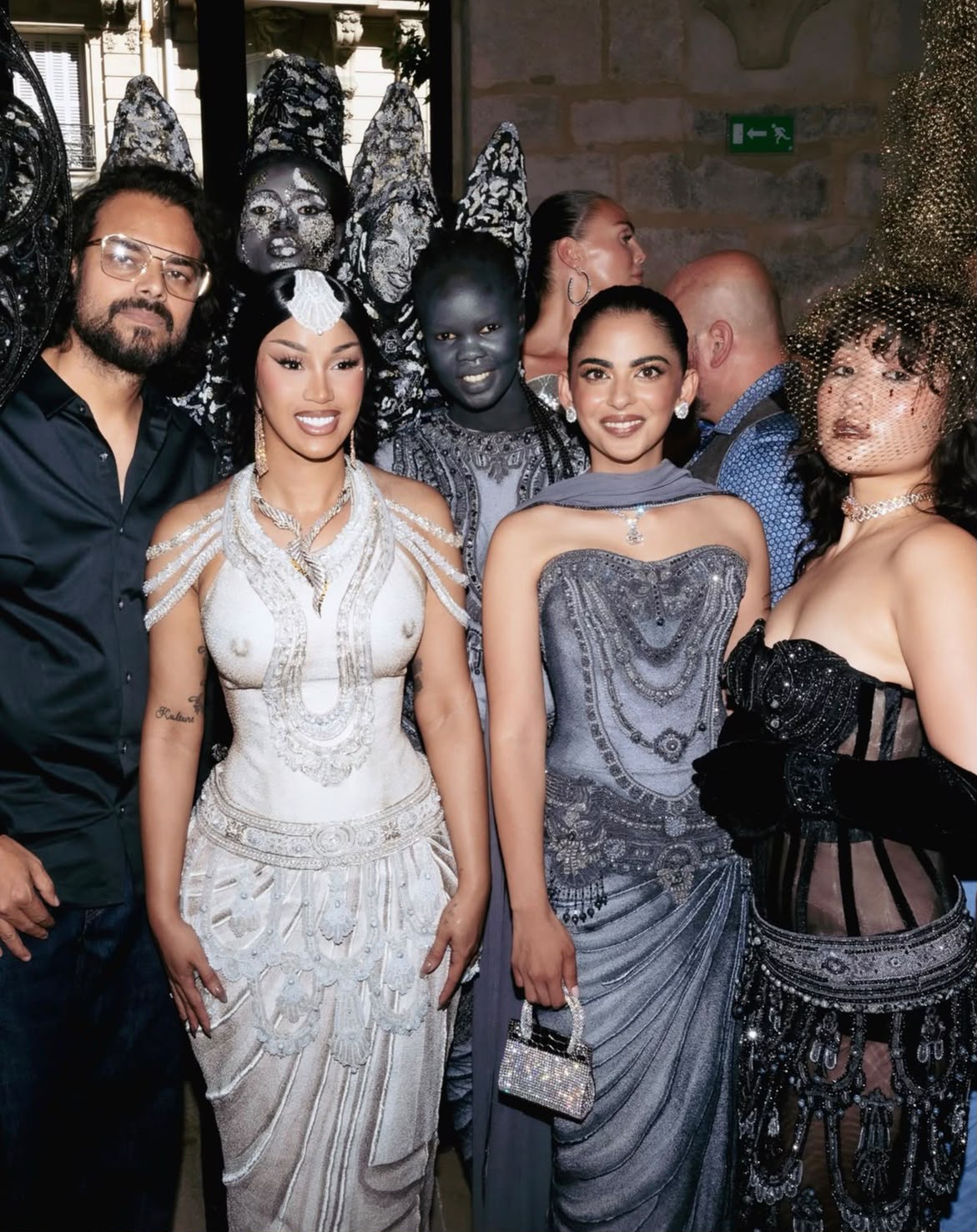
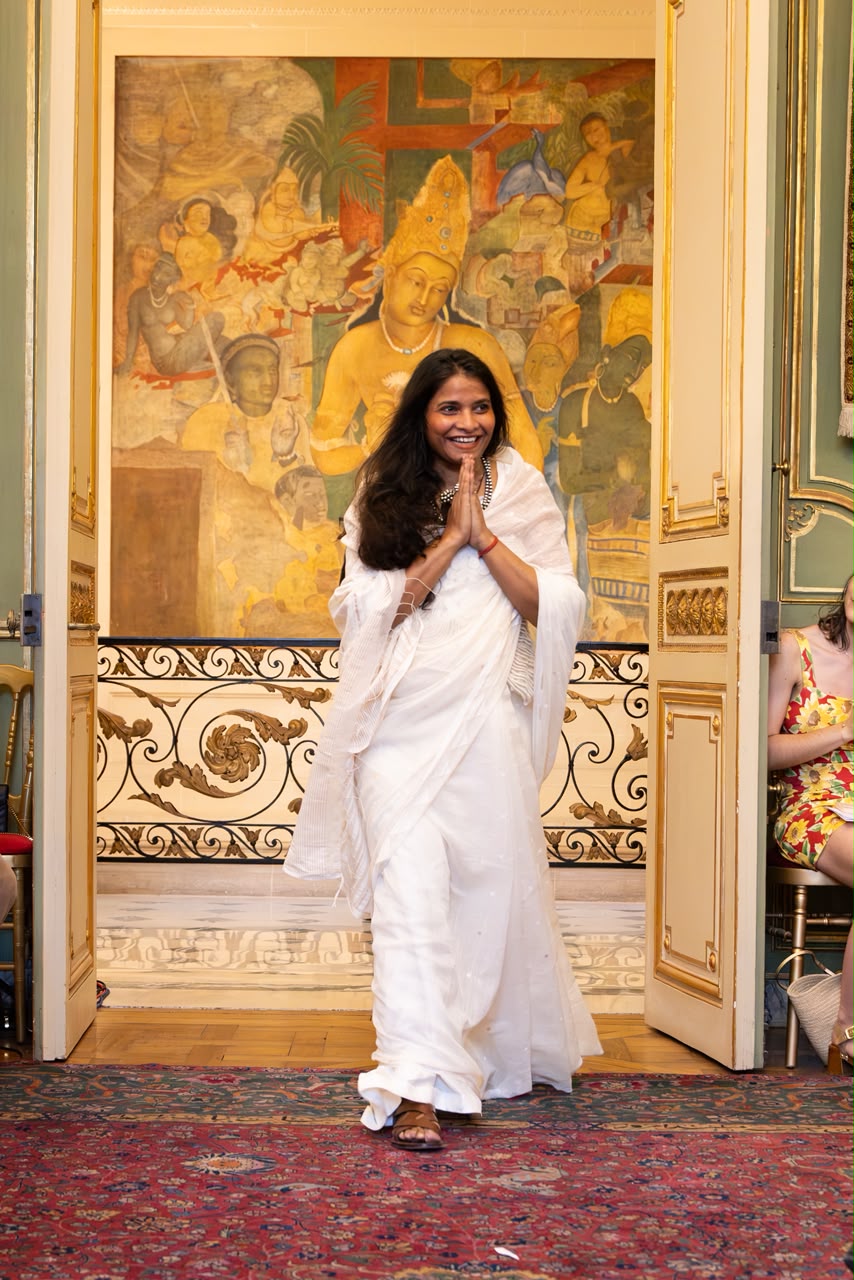
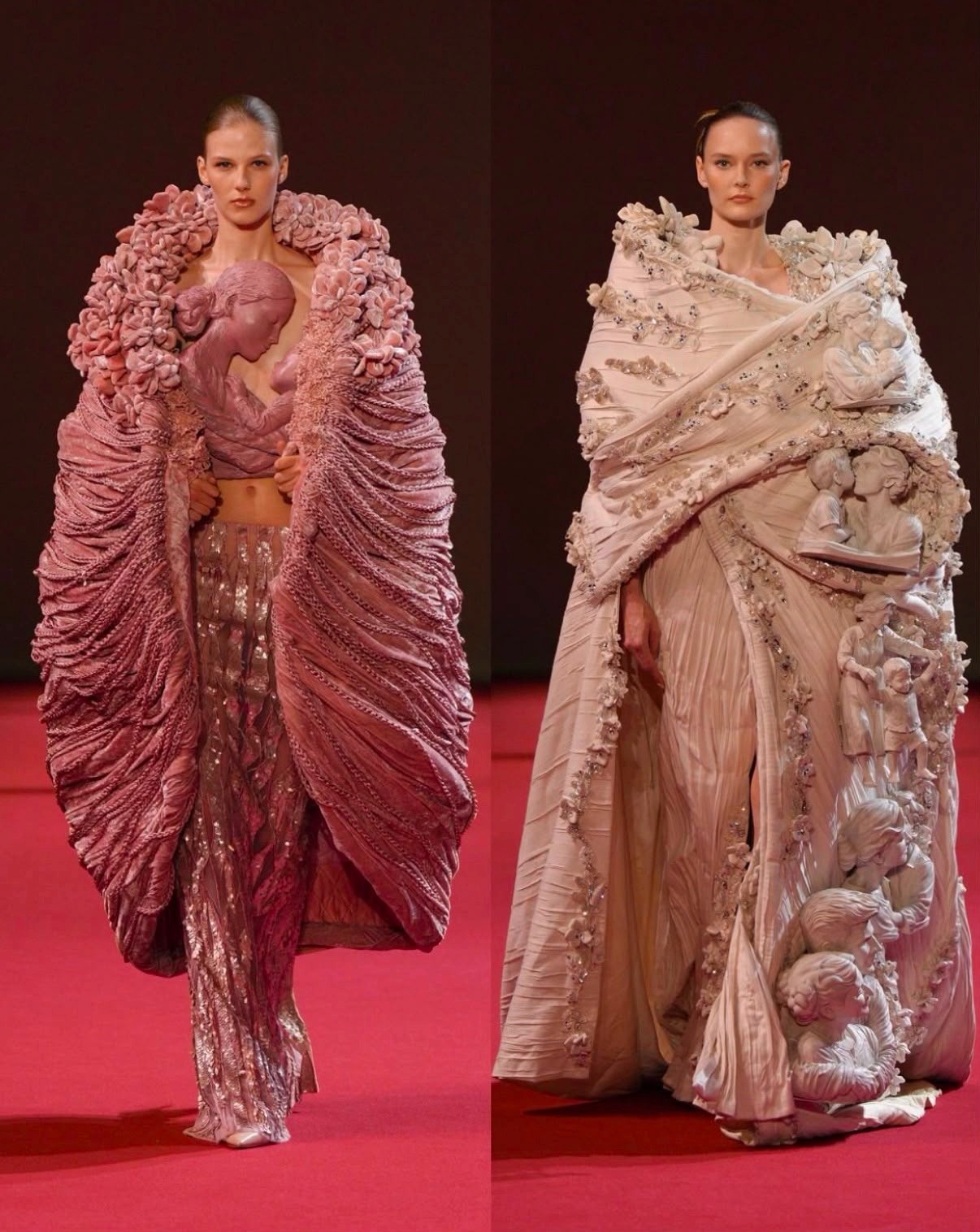
There is a look in Manish Malhotra’s Paris debut where a sculpted mother cradles her child right at the chest of the gown, moulded into the fabric itself like a relief lifted off a gallery wall, and it stops you mid-scroll. Watching the show online from India, the way most of us experience couture now, that was the frame worth pausing on. It carries the whole story of this collection in one image: Maa, named for Sudarshan “Garima” Malhotra, who passed away peacefully in March at ninety-four, shown by her son on the biggest stage of his career four months later. This is my read: it reminds me of Souza’s Mother and Child in that sculptural torso, and yes, it is the most tender thing anyone put on a runway this week. A son honouring his mother this way is beautiful, full stop, and if it were any of us, we’d probably have done the same thing.
Manish Malhotra debuts his collection ‘MAA’ at Paris Haute Couture Week 2026
The critique begins where the tribute ends, because a review has to hold both. The mother-and-child pieces are the heart of this collection. The oxblood and champagne palette ties the whole show together beautifully, and the new high jewellery line launched alongside it gives the house a genuinely serious new arm. Several of the sculptural pieces are stellar, and the embroidery work running through the entire show, dense, precise, unmistakably couture-grade, is thirty-five years of atelier expertise on full display, whatever one thinks of any single silhouette.

Manish Malhotra Fall 2026 collection, ‘MAA’, presented at Haute Couture Week, Paris.
The bronze cape dress with the twin triangular wings is the standout: it holds its shape stiffly away from the body instead of draping, with real air between the wing and the torso, and that is the one look that earns the Iris van Herpen comparison honestly and not in a bad way.

Manish Malhotra Fall 2026 collection, ‘MAA’, presented at Haute Couture Week, Paris.
The strapless floral column is where things get uncomfortable. A tube of a dress worked head to toe in raised, three-dimensional floral embroidery, it is Rahul Mishra’s signature down to the stitch: dimensional florals as sculpture, gowns as gardens, a vocabulary he has spent a decade building across his own body of work. You could put any of his older shows next to this one, Malhotra look, and the gown could sit in either one without anybody noticing the swap. One house spent years earning that silhouette. The other borrowed it for a single, very visible night.
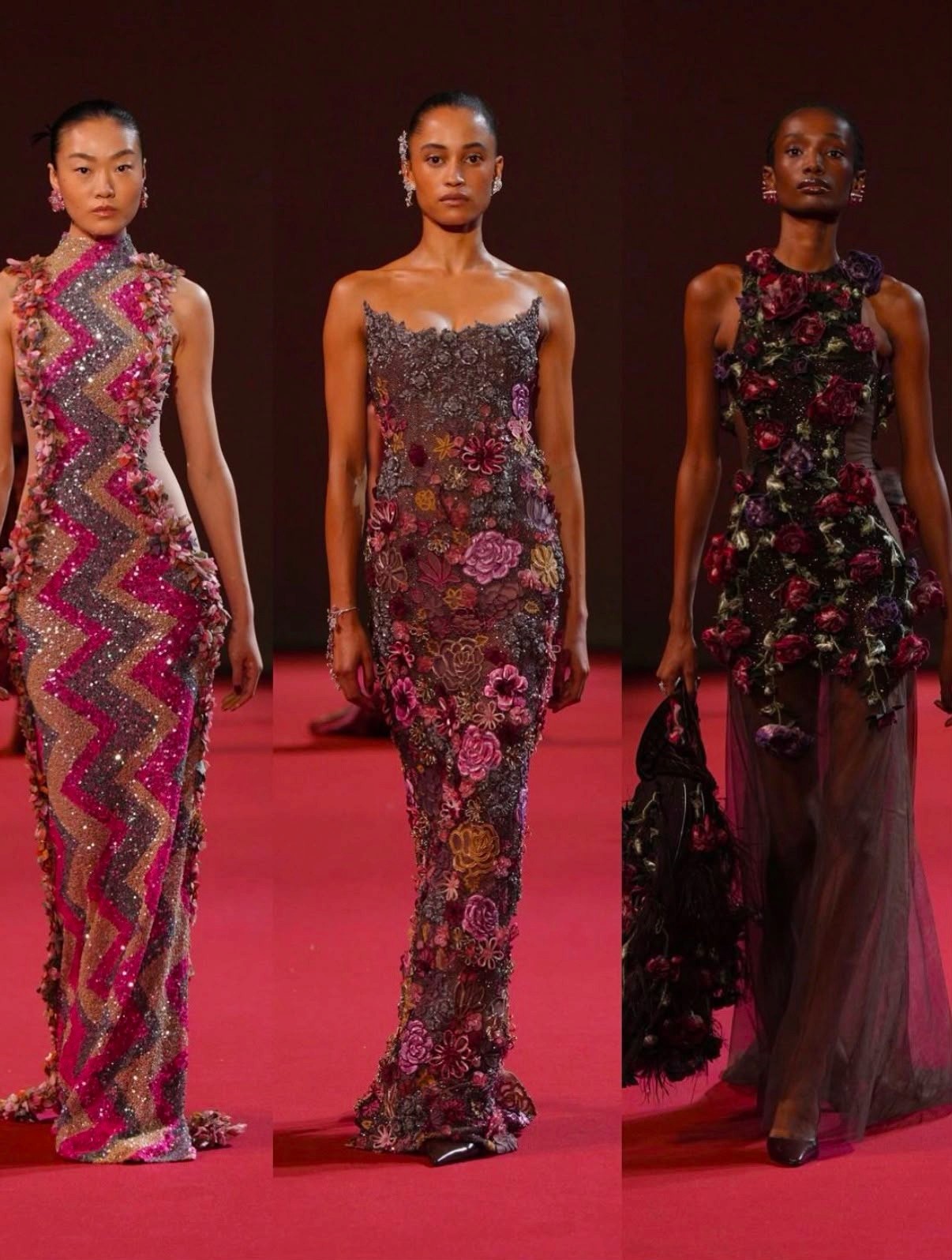
Manish Malhotra Fall 2026 collection, ‘MAA’, presented at Haute Couture Week, Paris.

Rahul Mishra’s collection ‘Phalgun’, Couture festive 2025
Some looks confuse. The gold piece with tassels spilling out of cut-out holes reads like very expensive drapery hardware, curtains with a runway pass, and it is anyone’s guess what the atelier was reaching for there. The exaggerated shoulder structures across the collection sit inside a much wider couture trend this season, oversized shoulders have been everywhere in Paris this week, so this reads more like a shared industry reflex than a personal signature of his own.
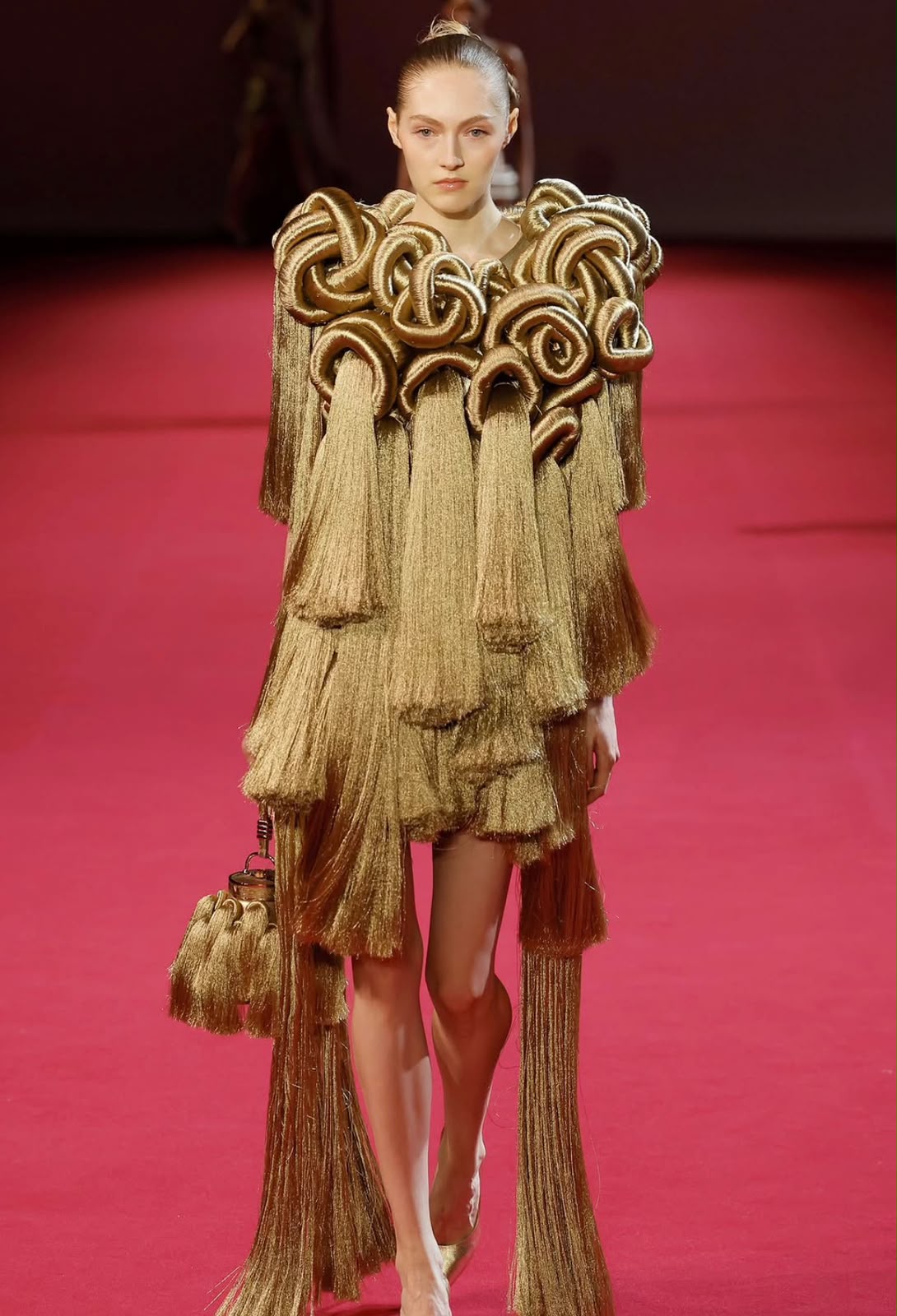
Manish Malhotra Fall 2026 collection, ‘MAA’, presented at Haute Couture Week, Paris.
And then there is the red beaded cage look, a full-body veil of strung beadwork over a frame, in which the model visibly cannot walk. Couture is allowed to be difficult. Couture that physically defeats the person wearing it on its own runway has crossed from difficult into self-defeating, and someone in the fitting should have said so.
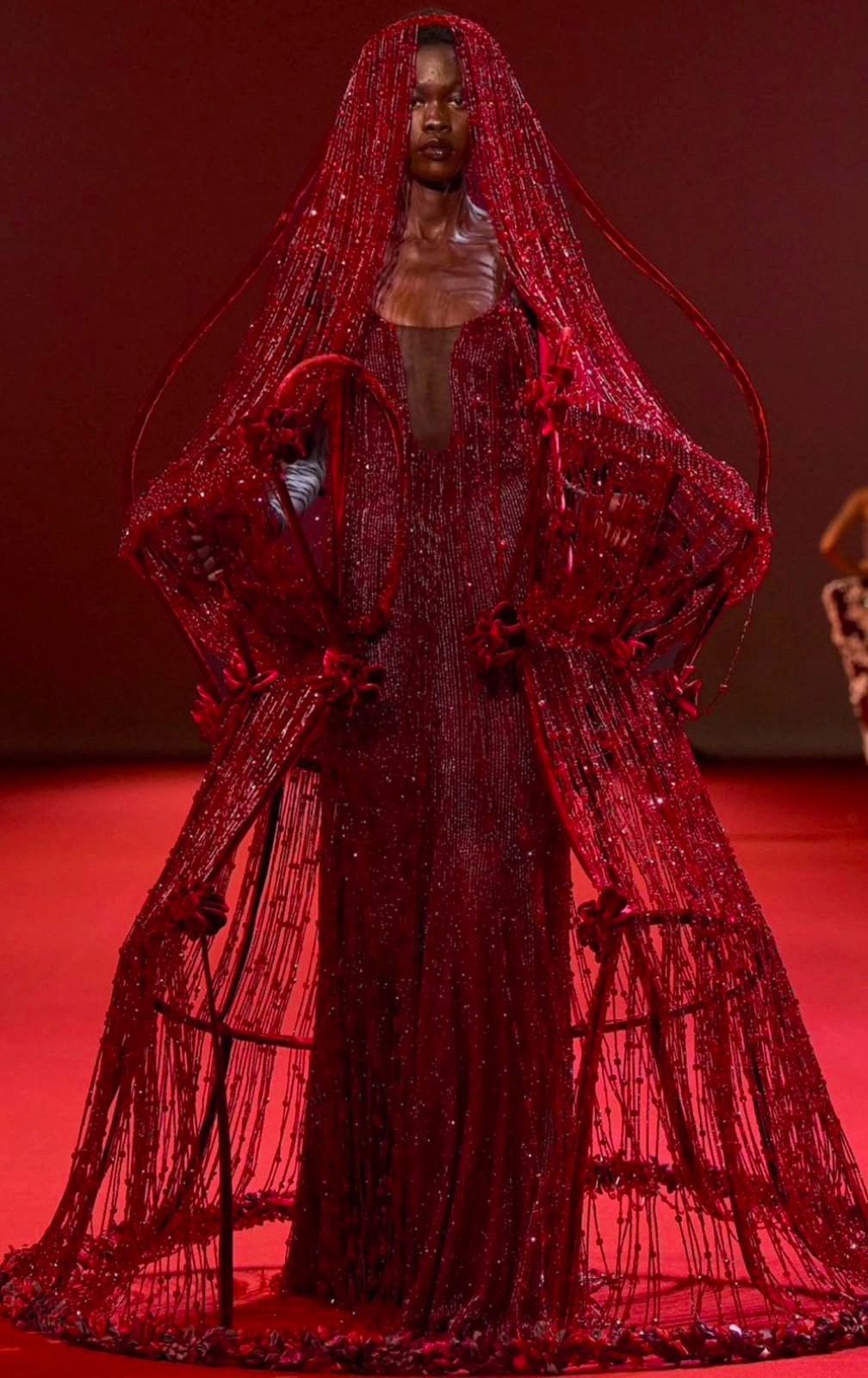
Manish Malhotra Fall 2026 collection, ‘MAA’, presented at Haute Couture Week, Paris.
None of that should read as dismissal, because for a first attempt, this is genuinely accomplished work. I say this as someone who has never counted herself a Manish Malhotra fan, and this show still did not fully win me over. But plenty of it is good, cleanly executed, confidently staged, better than what the whispers in fashion journalism circles expected. The problem with several pieces is not quality of construction, it is wearability: they are well made and still nobody’s actual evening out, and that gap is worth naming without pretending the craft behind them isn’t real.

Manish Malhotra Fall 2026 collection, ‘MAA’, presented at Haute Couture Week, Paris.
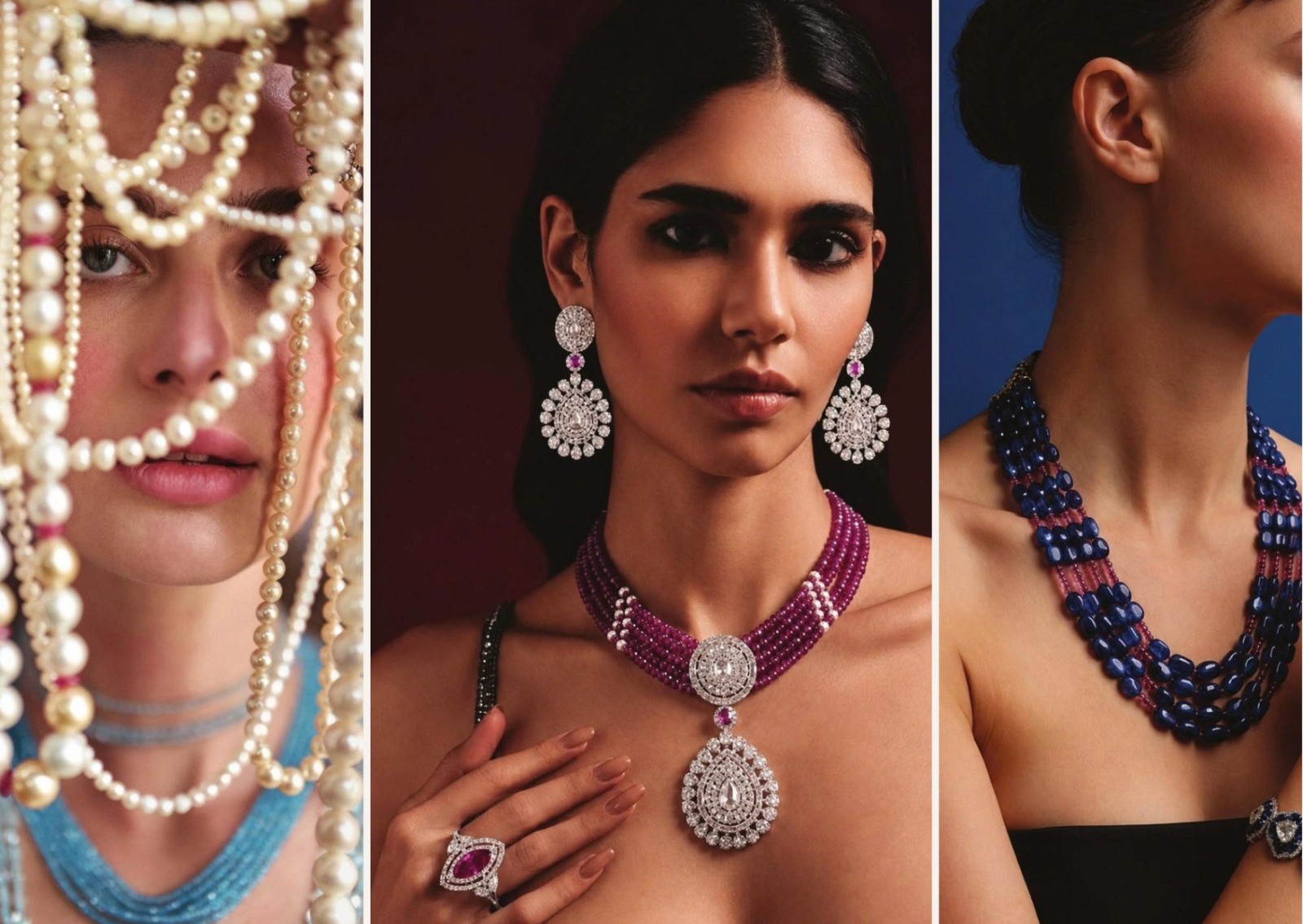
If there is one part of this debut that deserved to be the headline rather than a footnote, it is the high jewellery line launched alongside the clothes. This is the most exciting thing the house showed in Paris, full stop. Bold, sculptural, genuinely cutting-edge pieces, worked in that same oxblood and champagne register as the collection, with a scale and confidence that made most of the garments around them look almost cautious by comparison. I would have happily watched an entire show built around this jewellery alone. If Malhotra’s real Paris story this season is a new high jewellery house arriving fully formed, that is the story worth telling loudest, and it is a shame it had to share the runway with everything else rather than getting the room to breathe on its own.

Manish Malhotra jewellery collection, presented at Haute Couture Week, Paris.
And that is really the thing sitting underneath all of it: this collection doesn’t quite have one point of view holding it together. There’s a little of this and a little of that and a little of this and a little of that, and it never fully resolves into a single sentence you could use to describe the show. The gothic sequinned column feels like one idea, the teddy-coat-and-fringe look like another, the Van Herpen-adjacent wing family a third, the Mishra-adjacent floral family a fourth, the rolled bolster mini a fifth, each genuinely well made on its own terms, but the styling and sequencing don’t quite make them speak to each other. It’s less a collection with a clear beginning, middle and end, and more, as I said, a couture salad: excellent ingredients, not yet one dish. A debut is allowed to show range while a house finds its footing, and Malhotra clearly has range to spare. What it’s still finding is the one idea that ties all of that range together.

Manish Malhotra Fall 2026 collection, ‘MAA’, presented at Haute Couture Week, Paris.
There’s a principle I keep coming back to, one I remember Tarun Tahiliani articulating in a completely different context, in what I believe was one of our podcast conversations: couture has to be wearable in a real life, and the moment it stops being wearable, it becomes costume rather than couture. He was speaking generally, about the industry’s fondness for shock-factor runway theatre, the kind of spectacle where a woman can barely walk or move in the clothes, not about this show, and he has not commented on Malhotra’s collection. But it is exactly the lens this collection needs. By that standard, several pieces here fail outright. The wing cape, the jaw-swallowing pleated collar, the rolled bolster mini, the red beaded cage: these exist for sixty seconds of runway footage and the still image after, not for a woman to actually move through a room in. Tahiliani has spent decades proving the alternative is possible: couture that is heavily worked and unmistakably grand, and still something a woman can sit down in, get through an evening in, without an army managing the hem. No shock tactics, no stunt casting, no theatre for its own sake, because none of it survives contact with a real body in a real room. He is also known for a stricter discipline most of the trade does not bother with, refusing to let a piece sent out for press or sourcing quietly reappear on the sales floor afterwards. That is what real luxury actually looks like, and there is a great deal the rest of the industry could learn from it.
None of this takes anything away from Rahul Mishra, Gaurav Gupta or Vaishali Shadangule, all of whom have earned their place on this same Paris calendar and are each excellent in their own right. It also doesn’t take anything away from what Malhotra pulled off here. It simply means Tahiliani’s own design legacy, the one this calendar has still not made room for, deserves to be part of this conversation too, whether or not he has ever chosen to pursue a Paris slot himself.
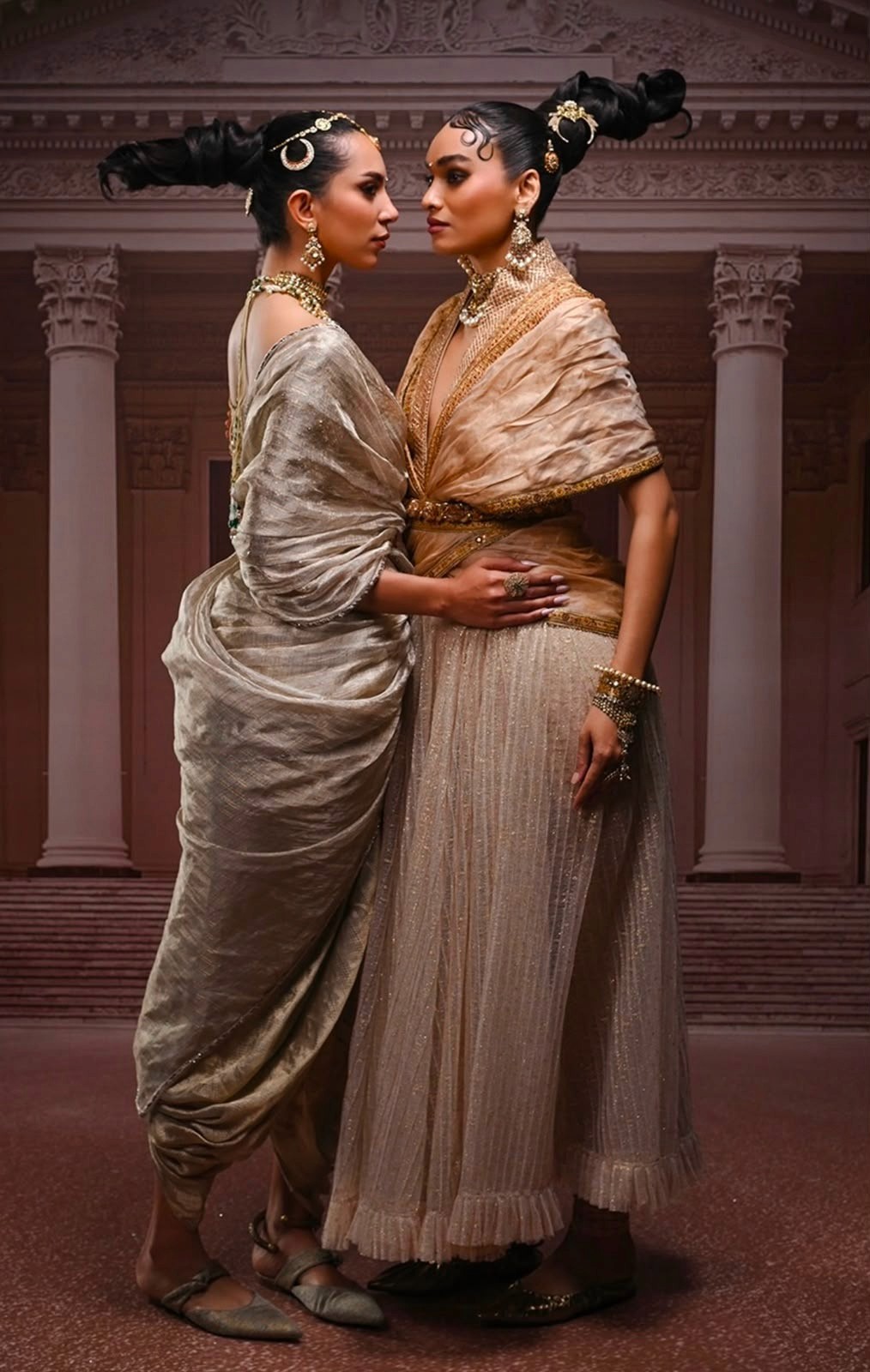
Tarun Tahiliani’s collection ‘Ever More’ showcased at TT’s 30 year celebration
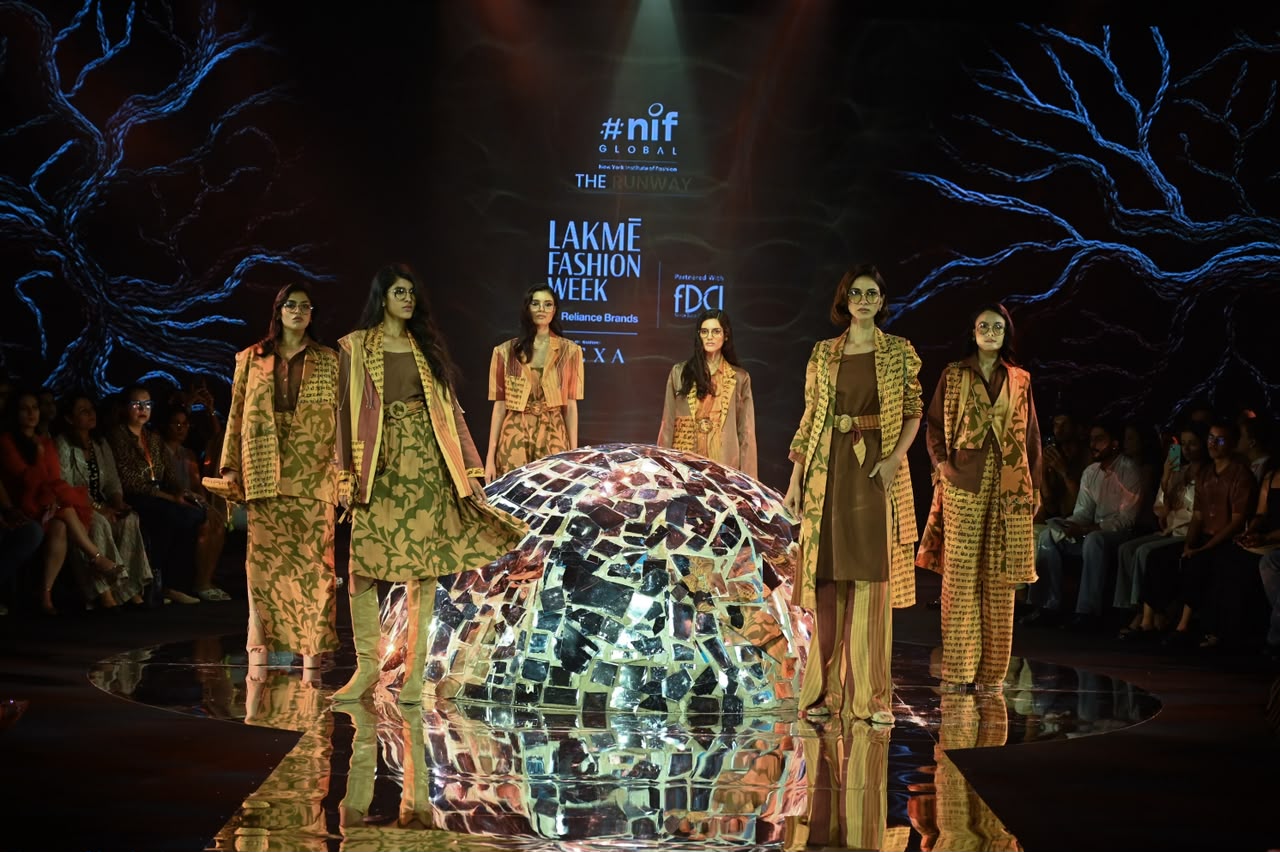
The merit question deserves saying plainly. A debut slot on the official Paris calendar rewards a business case as much as a design case, and Malhotra’s business case is formidable: Reliance’s stake, the retail footprint, twelve million followers, the Met Gala visibility. Vaishali Shadangule deserves a permanent place on that same calendar, not guest status. She has spent twenty-five years building handloom couture that is genuinely immaculate, an intentional, disciplined language built almost entirely on hand-woven textile and craft rather than machine work.
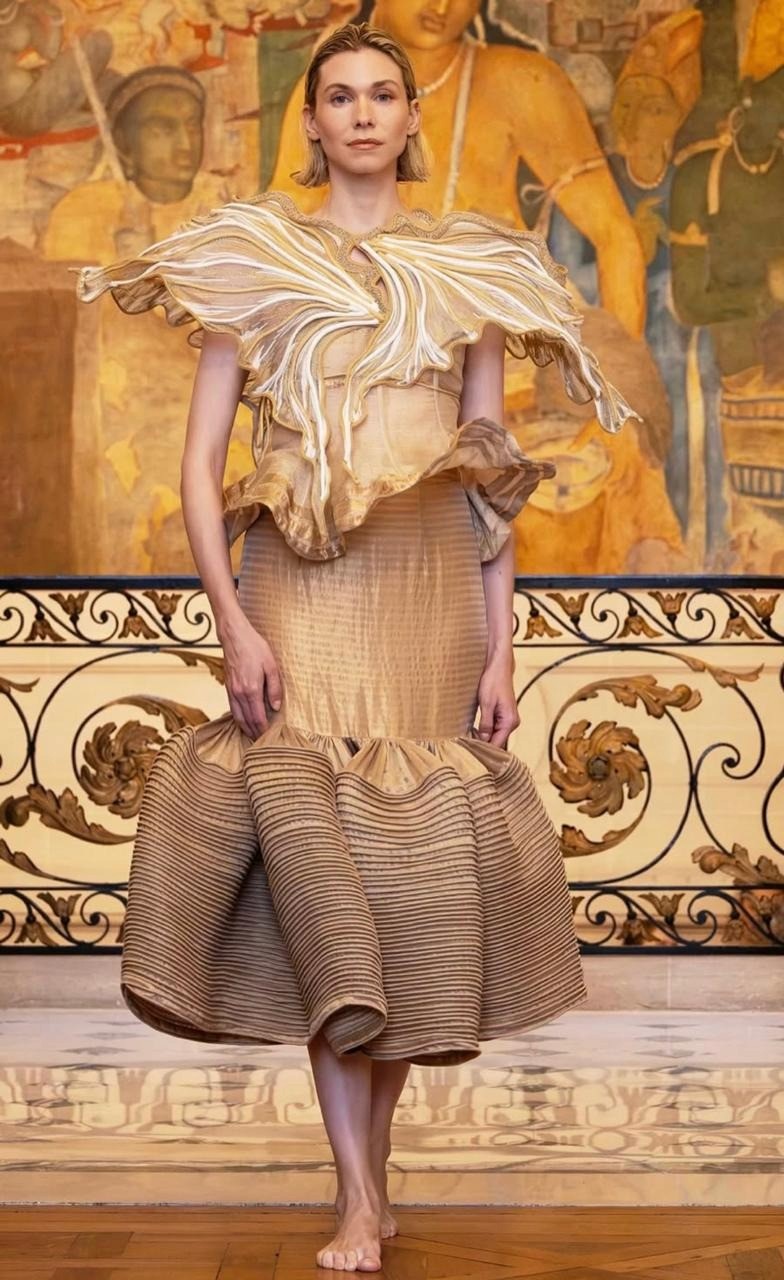
Vaishali S Fall 2026 collection, ‘Swayam’, showcased in Paris during Haute Couture Week.
Amit Aggarwal belongs there too, and has for years. His FDCI India Couture Week showcase last year, Arcanum, built around the architecture of DNA itself, cocoon-like openings giving way to petal-pleated blooms and metal veinwork that seemed to pulse across the body, was genuinely immaculate, proof that his structural, materially inventive language is more than ready for a Paris stage on its own terms.
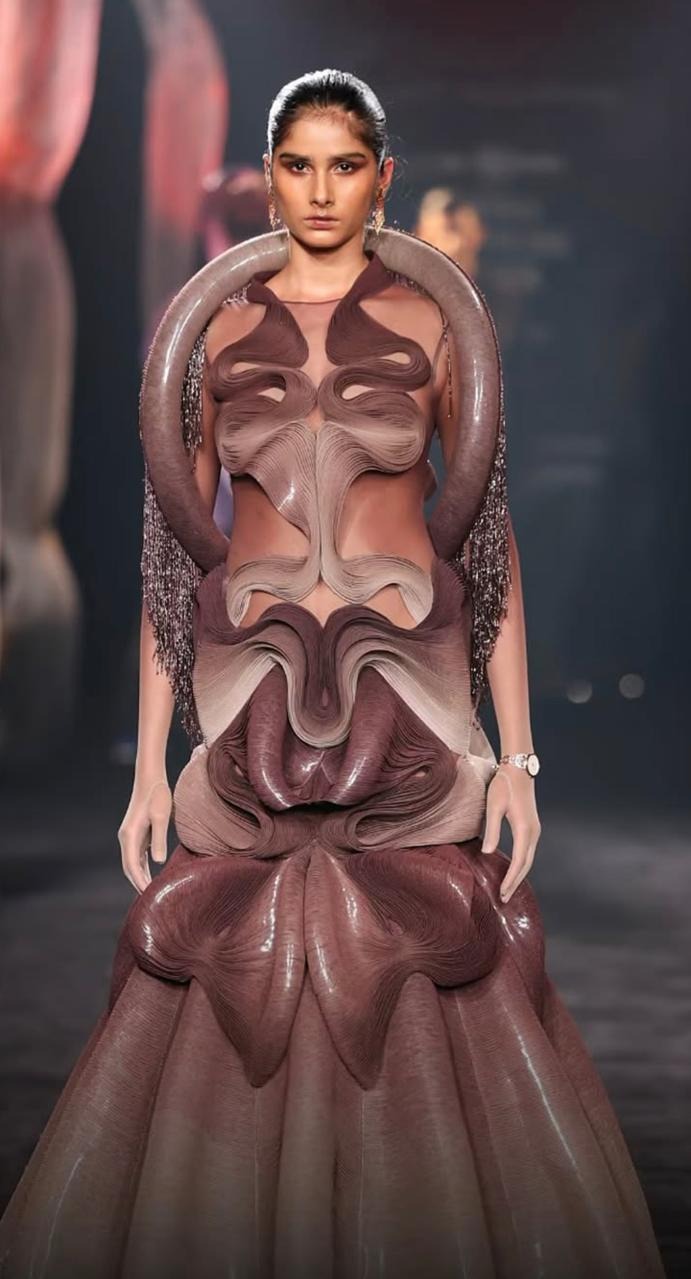
Amit Aggarwal’s collection Arcanum was unveiled at India Couture Week, 2025
Good for Malhotra, genuinely, and the tribute to his mother will outlast every critical note written this week. The loudest business case in the room is still a different thing from the strongest design case, and both sentences belong in the same review.
TO BE CONTINUED, FOR SUBSCRIBERS ONLY.
This is where the surface ends and the reporting begins.
The complete piece, the full archive, and access to The French Press Circle. Reporting answerable only to its readers.
Already a subscriber ?
Login
Read these on the house, with our compliments.
A selection from the current issue, open to all readers. Read them in full. The rest is one decision away.







There is a look in Manish Malhotra’s Paris debut where a sculpted mother cradles her child right at the chest of the gown, moulded into the fabric itself like a relief lifted off a gallery wall, and it stops you mid-scroll. Watching the show online from India, the way most of us experience couture now, that was the frame worth pausing on. It carries the whole story of this collection in one image: Maa, named for Sudarshan “Garima” Malhotra, who passed away peacefully in March at ninety-four, shown by her son on the biggest stage of his career four months later. This is my read: it reminds me of Souza’s Mother and Child in that sculptural torso, and yes, it is the most tender thing anyone put on a runway this week. A son honouring his mother this way is beautiful, full stop, and if it were any of us, we’d probably have done the same thing.
Manish Malhotra debuts his collection ‘MAA’ at Paris Haute Couture Week 2026
The critique begins where the tribute ends, because a review has to hold both. The mother-and-child pieces are the heart of this collection. The oxblood and champagne palette ties the whole show together beautifully, and the new high jewellery line launched alongside it gives the house a genuinely serious new arm. Several of the sculptural pieces are stellar, and the embroidery work running through the entire show, dense, precise, unmistakably couture-grade, is thirty-five years of atelier expertise on full display, whatever one thinks of any single silhouette.
Manish Malhotra Fall 2026 collection, ‘MAA’, presented at Haute Couture Week, Paris.
The bronze cape dress with the twin triangular wings is the standout: it holds its shape stiffly away from the body instead of draping, with real air between the wing and the torso, and that is the one look that earns the Iris van Herpen comparison honestly and not in a bad way.
Manish Malhotra Fall 2026 collection, ‘MAA’, presented at Haute Couture Week, Paris.
The strapless floral column is where things get uncomfortable. A tube of a dress worked head to toe in raised, three-dimensional floral embroidery, it is Rahul Mishra’s signature down to the stitch: dimensional florals as sculpture, gowns as gardens, a vocabulary he has spent a decade building across his own body of work. You could put any of his older shows next to this one, Malhotra look, and the gown could sit in either one without anybody noticing the swap. One house spent years earning that silhouette. The other borrowed it for a single, very visible night.
Manish Malhotra Fall 2026 collection, ‘MAA’, presented at Haute Couture Week, Paris.
Rahul Mishra’s collection ‘Phalgun’, Couture festive 2025
Some looks confuse. The gold piece with tassels spilling out of cut-out holes reads like very expensive drapery hardware, curtains with a runway pass, and it is anyone’s guess what the atelier was reaching for there. The exaggerated shoulder structures across the collection sit inside a much wider couture trend this season, oversized shoulders have been everywhere in Paris this week, so this reads more like a shared industry reflex than a personal signature of his own.
Manish Malhotra Fall 2026 collection, ‘MAA’, presented at Haute Couture Week, Paris.
And then there is the red beaded cage look, a full-body veil of strung beadwork over a frame, in which the model visibly cannot walk. Couture is allowed to be difficult. Couture that physically defeats the person wearing it on its own runway has crossed from difficult into self-defeating, and someone in the fitting should have said so.
Manish Malhotra Fall 2026 collection, ‘MAA’, presented at Haute Couture Week, Paris.
None of that should read as dismissal, because for a first attempt, this is genuinely accomplished work. I say this as someone who has never counted herself a Manish Malhotra fan, and this show still did not fully win me over. But plenty of it is good, cleanly executed, confidently staged, better than what the whispers in fashion journalism circles expected. The problem with several pieces is not quality of construction, it is wearability: they are well made and still nobody’s actual evening out, and that gap is worth naming without pretending the craft behind them isn’t real.
Manish Malhotra Fall 2026 collection, ‘MAA’, presented at Haute Couture Week, Paris.
If there is one part of this debut that deserved to be the headline rather than a footnote, it is the high jewellery line launched alongside the clothes. This is the most exciting thing the house showed in Paris, full stop. Bold, sculptural, genuinely cutting-edge pieces, worked in that same oxblood and champagne register as the collection, with a scale and confidence that made most of the garments around them look almost cautious by comparison. I would have happily watched an entire show built around this jewellery alone. If Malhotra’s real Paris story this season is a new high jewellery house arriving fully formed, that is the story worth telling loudest, and it is a shame it had to share the runway with everything else rather than getting the room to breathe on its own.
Manish Malhotra jewellery collection, presented at Haute Couture Week, Paris.
And that is really the thing sitting underneath all of it: this collection doesn’t quite have one point of view holding it together. There’s a little of this and a little of that and a little of this and a little of that, and it never fully resolves into a single sentence you could use to describe the show. The gothic sequinned column feels like one idea, the teddy-coat-and-fringe look like another, the Van Herpen-adjacent wing family a third, the Mishra-adjacent floral family a fourth, the rolled bolster mini a fifth, each genuinely well made on its own terms, but the styling and sequencing don’t quite make them speak to each other. It’s less a collection with a clear beginning, middle and end, and more, as I said, a couture salad: excellent ingredients, not yet one dish. A debut is allowed to show range while a house finds its footing, and Malhotra clearly has range to spare. What it’s still finding is the one idea that ties all of that range together.
Manish Malhotra Fall 2026 collection, ‘MAA’, presented at Haute Couture Week, Paris.
There’s a principle I keep coming back to, one I remember Tarun Tahiliani articulating in a completely different context, in what I believe was one of our podcast conversations: couture has to be wearable in a real life, and the moment it stops being wearable, it becomes costume rather than couture. He was speaking generally, about the industry’s fondness for shock-factor runway theatre, the kind of spectacle where a woman can barely walk or move in the clothes, not about this show, and he has not commented on Malhotra’s collection. But it is exactly the lens this collection needs. By that standard, several pieces here fail outright. The wing cape, the jaw-swallowing pleated collar, the rolled bolster mini, the red beaded cage: these exist for sixty seconds of runway footage and the still image after, not for a woman to actually move through a room in. Tahiliani has spent decades proving the alternative is possible: couture that is heavily worked and unmistakably grand, and still something a woman can sit down in, get through an evening in, without an army managing the hem. No shock tactics, no stunt casting, no theatre for its own sake, because none of it survives contact with a real body in a real room. He is also known for a stricter discipline most of the trade does not bother with, refusing to let a piece sent out for press or sourcing quietly reappear on the sales floor afterwards. That is what real luxury actually looks like, and there is a great deal the rest of the industry could learn from it.
None of this takes anything away from Rahul Mishra, Gaurav Gupta or Vaishali Shadangule, all of whom have earned their place on this same Paris calendar and are each excellent in their own right. It also doesn’t take anything away from what Malhotra pulled off here. It simply means Tahiliani’s own design legacy, the one this calendar has still not made room for, deserves to be part of this conversation too, whether or not he has ever chosen to pursue a Paris slot himself.
Tarun Tahiliani’s collection ‘Ever More’ showcased at TT’s 30 year celebration
The merit question deserves saying plainly. A debut slot on the official Paris calendar rewards a business case as much as a design case, and Malhotra’s business case is formidable: Reliance’s stake, the retail footprint, twelve million followers, the Met Gala visibility. Vaishali Shadangule deserves a permanent place on that same calendar, not guest status. She has spent twenty-five years building handloom couture that is genuinely immaculate, an intentional, disciplined language built almost entirely on hand-woven textile and craft rather than machine work.
Vaishali S Fall 2026 collection, ‘Swayam’, showcased in Paris during Haute Couture Week.
Amit Aggarwal belongs there too, and has for years. His FDCI India Couture Week showcase last year, Arcanum, built around the architecture of DNA itself, cocoon-like openings giving way to petal-pleated blooms and metal veinwork that seemed to pulse across the body, was genuinely immaculate, proof that his structural, materially inventive language is more than ready for a Paris stage on its own terms.
Amit Aggarwal’s collection Arcanum was unveiled at India Couture Week, 2025
Good for Malhotra, genuinely, and the tribute to his mother will outlast every critical note written this week. The loudest business case in the room is still a different thing from the strongest design case, and both sentences belong in the same review.
TO BE CONTINUED, FOR SUBSCRIBERS ONLY.
This is where the surface ends and the reporting begins.
The complete piece, the full archive, and access to The French Press Circle. Reporting answerable only to its readers.
Already a subscriber ?
Login
Read these on the house, with our compliments.
A selection from the current issue, open to all readers. Read them in full. The rest is one decision away.