
Titled Rawalgarh, the collection showed at FDCI’s Hyundai India Couture Week 2026 and by Rawal's own account it is the brand's most expansive menswear outing to date, over 140 looks exploring the many occasions the Kunal Rawal man dresses for.
Before a single look made its way down the runway in the traditional sense, Rawalgarh opened with a staged performance piece. That earthiness matched the set and the music. The soundtrack leaned hard into desi Punjabi energy, fast-paced, high-adrenaline, built for a runway walk which gave the whole show a sense of momentum. With the collection's title track, "Rawalgarh Di Jugni," effectively giving the whole showcase its name and rhythm.
Rather than lean on the label's established codes, Rawal went back to the earliest ideas that defined the brand and reworked them through a more contemporary lens, He paired Indian textiles with very utilitarian construction and a strong emphasis on functionality. This entirely new colour vocabulary, as he calls it, had its roots in "Dhup Chao"- the label's 2025 presentation at couture week that first set the process in motion. That showed up most clearly in the palette. With deeper charcoals, wines and mulberries, the groom's palette this season stretched to champagne, ivory tones that felt lived-in.
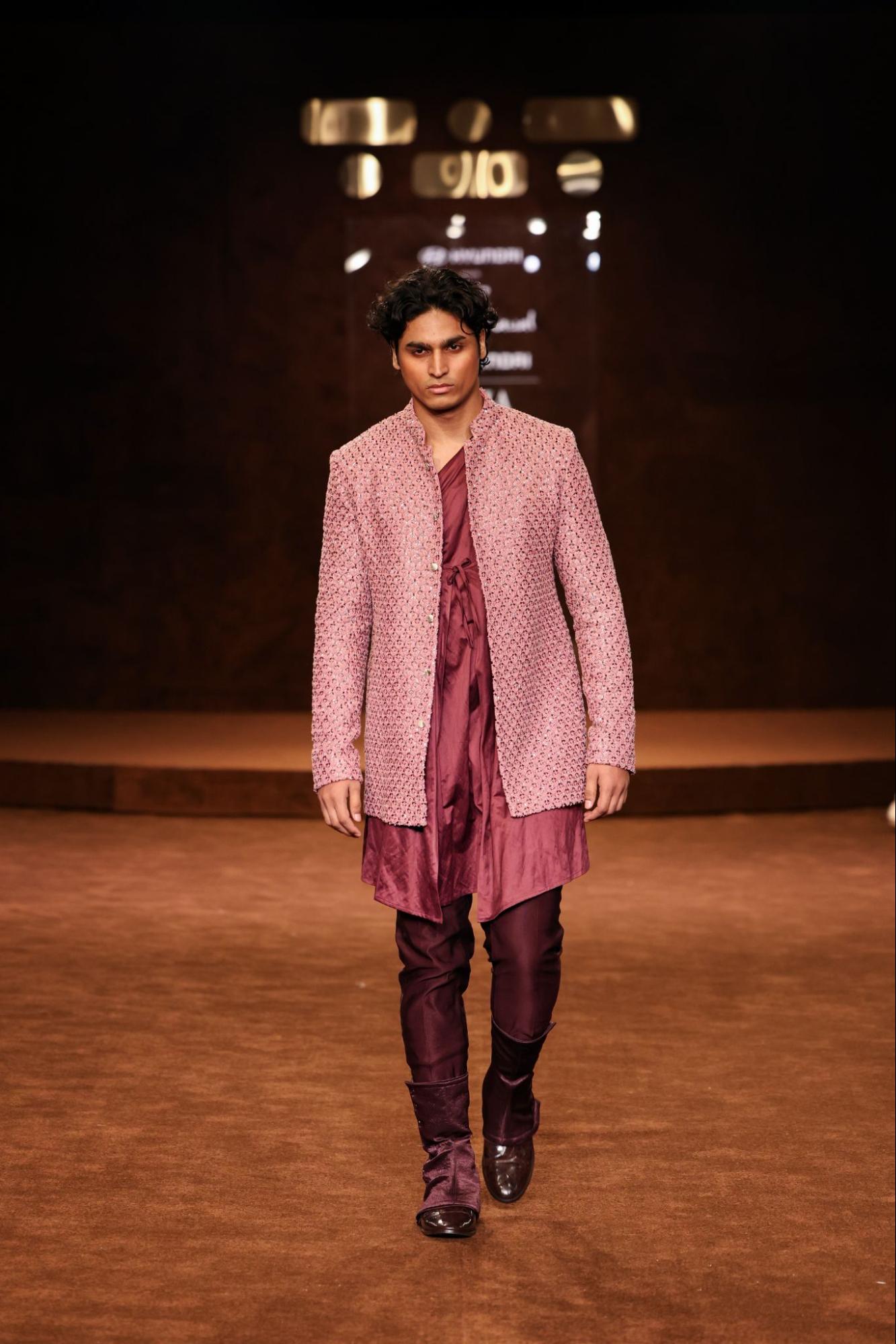

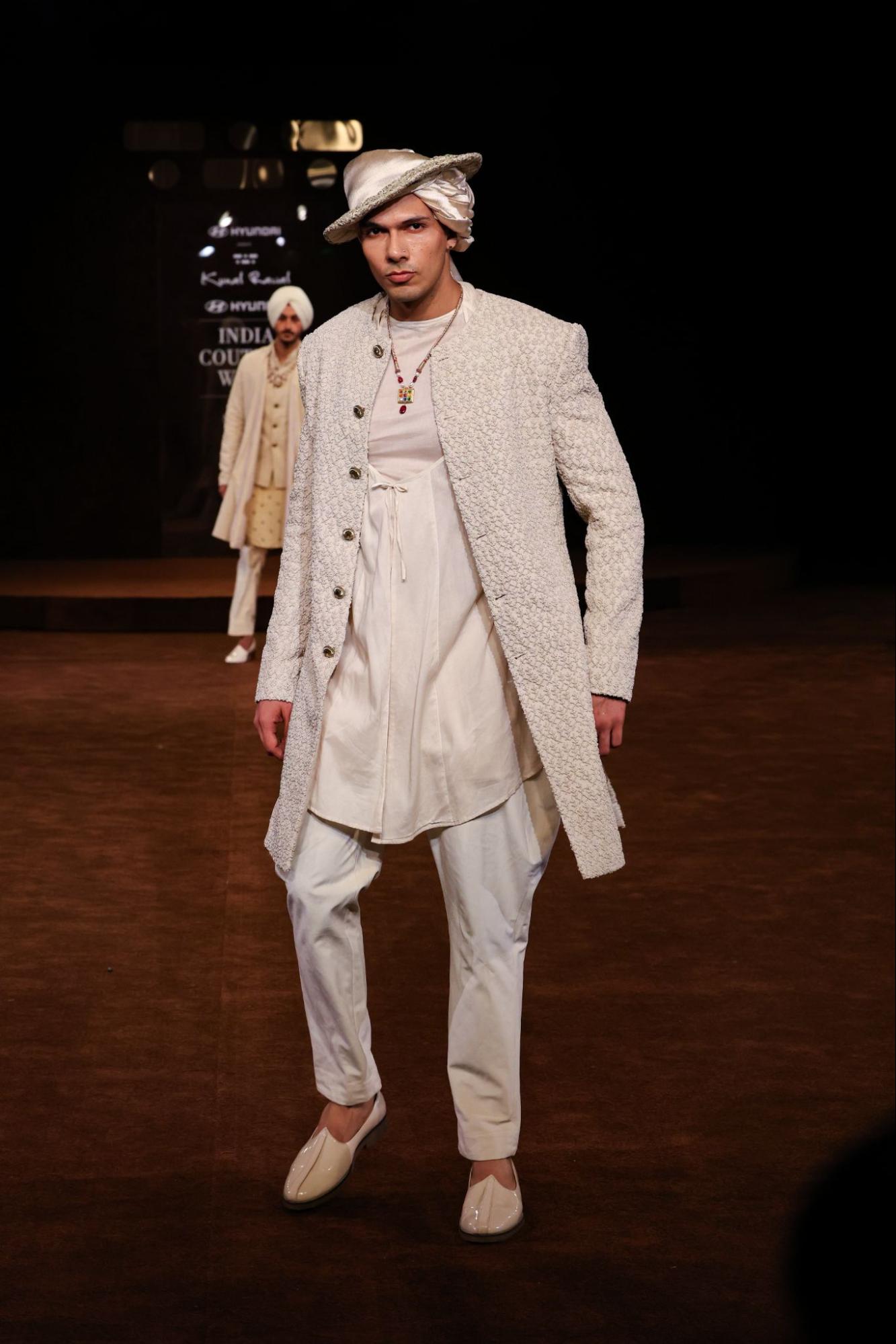
A range of colours at Kunal Rawal’s show
The silhouettes this season were lighter and more adaptable than in previous years, with military-inspired tailoring continuing to shape how garments are constructed. That read clearly in the collection's use of structured bandhgalas, nehru-style vests, and coats with distinctly uniformed high collars, button lines, a sense of order to the cut.
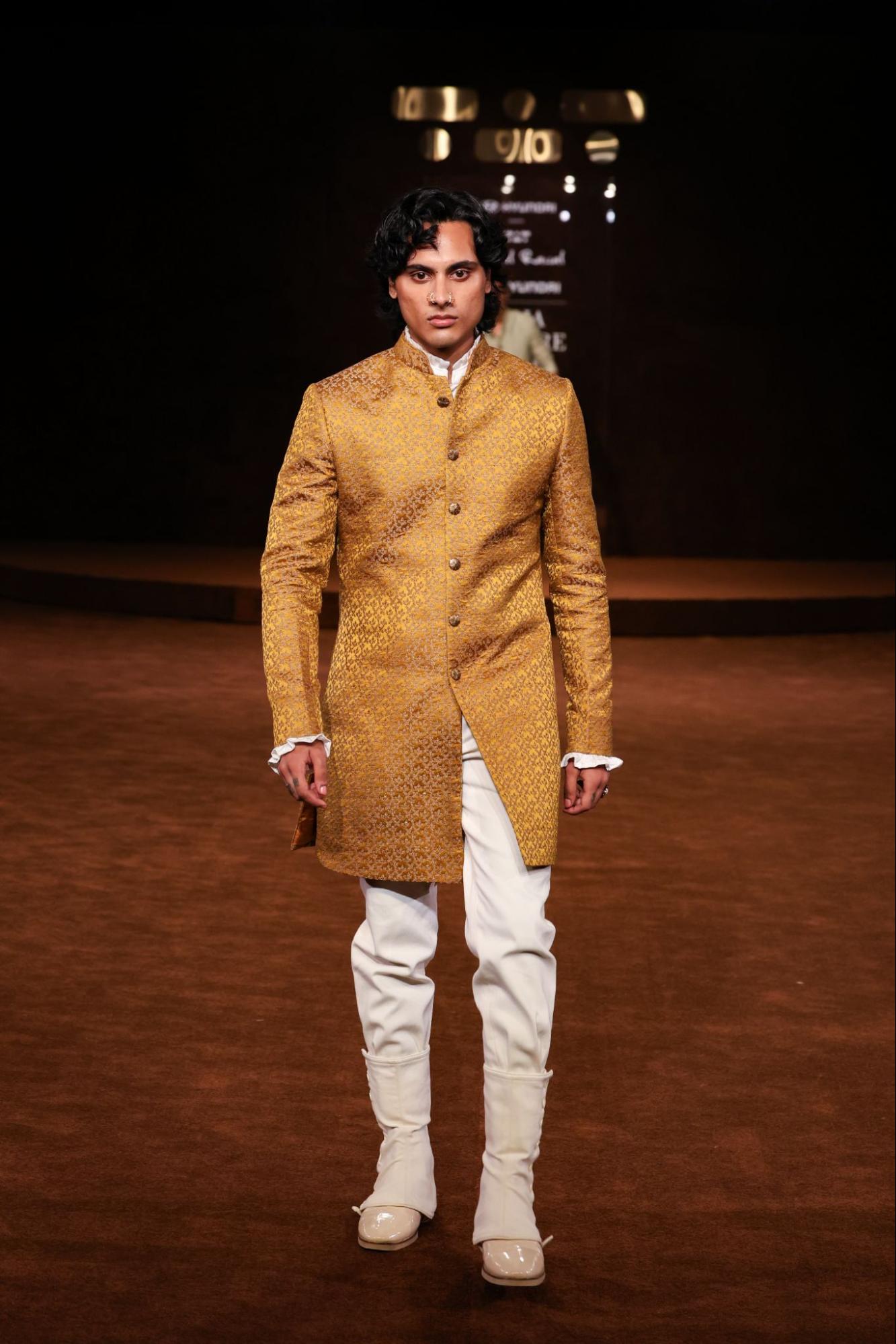
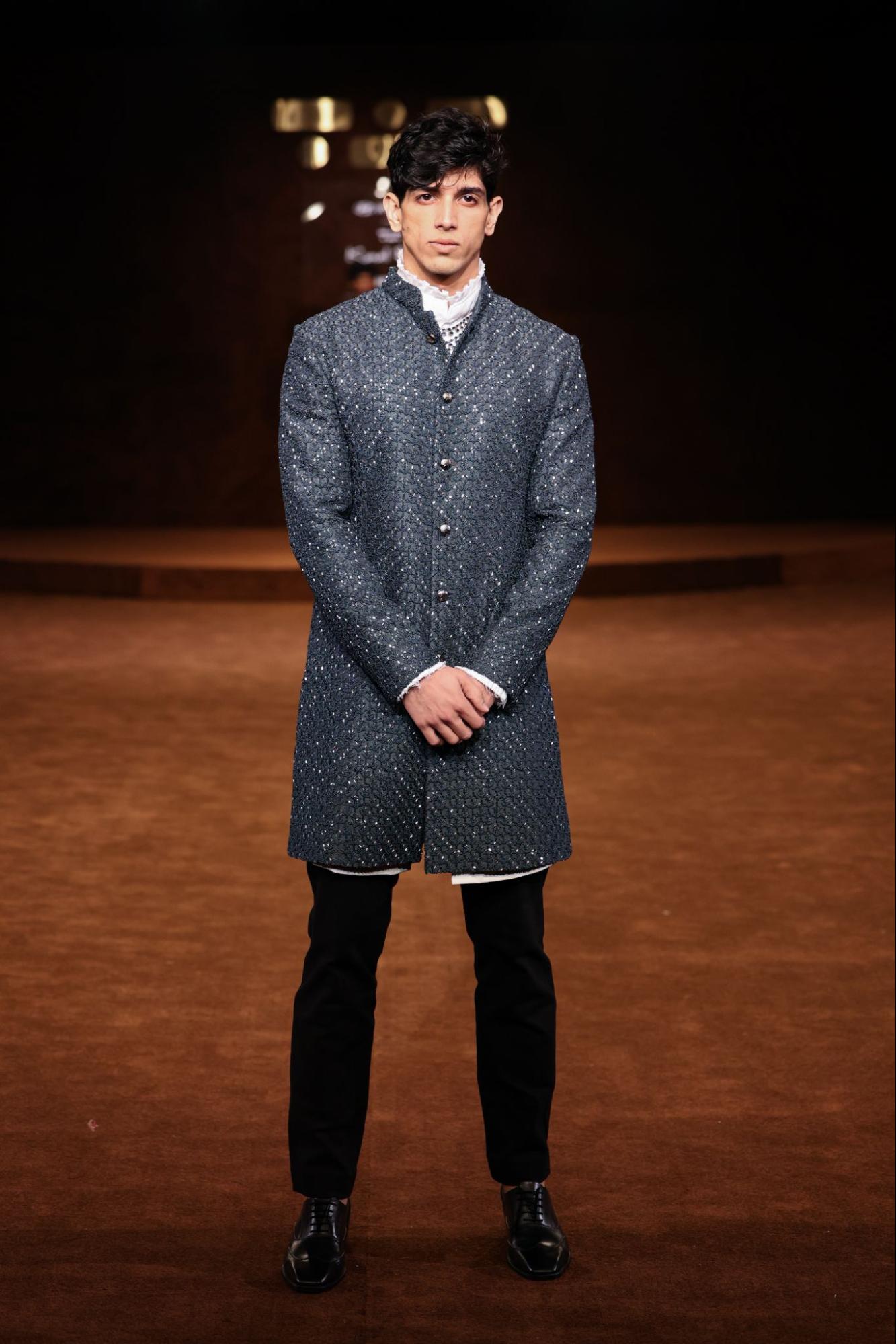

Range of silhouettes seen at his show
Nothing in the show was static. A longer coat that can be shed to reveal a vest, layered kurtas underneath jackets, sashes and belts that cinch a silhouette back into shape.
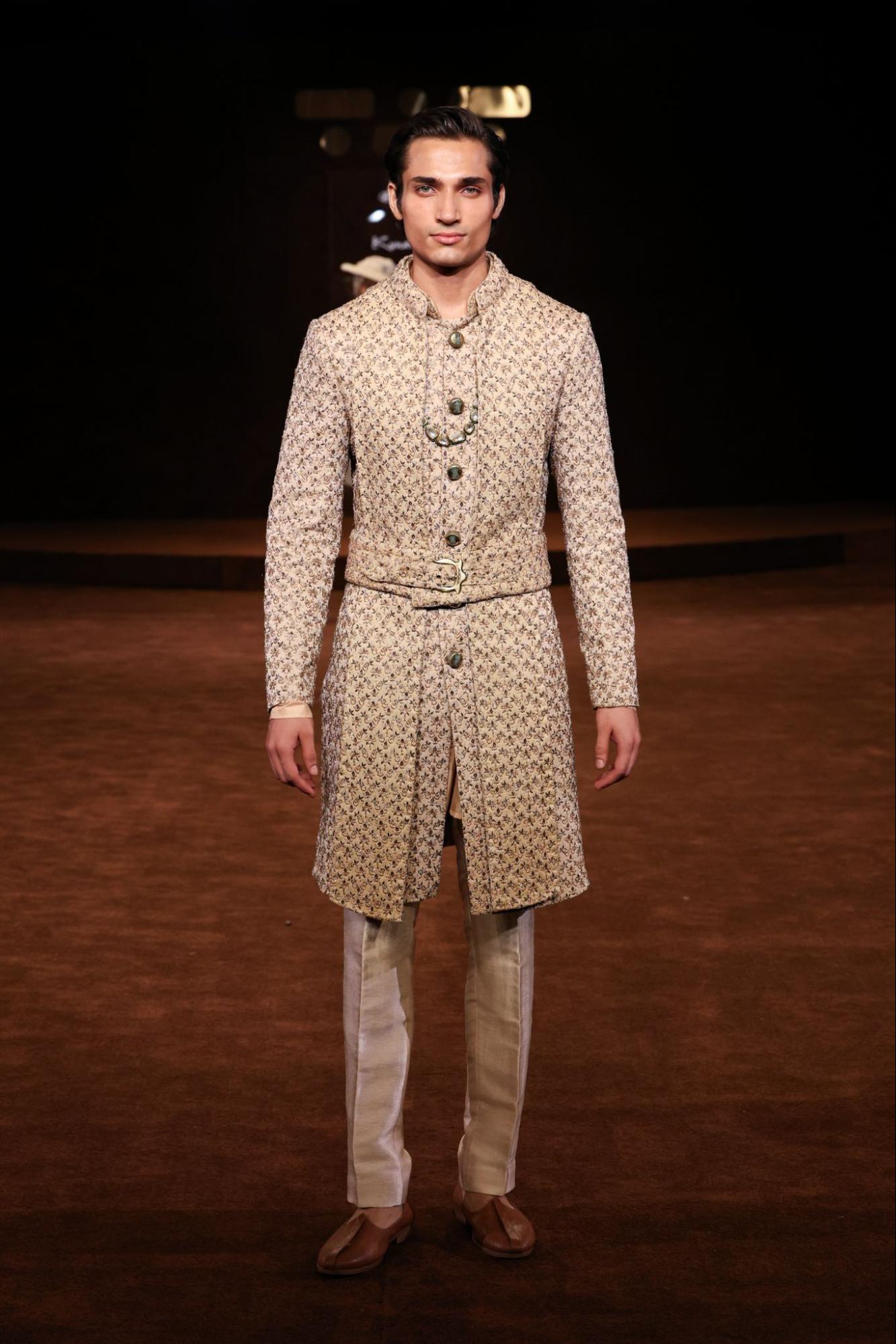
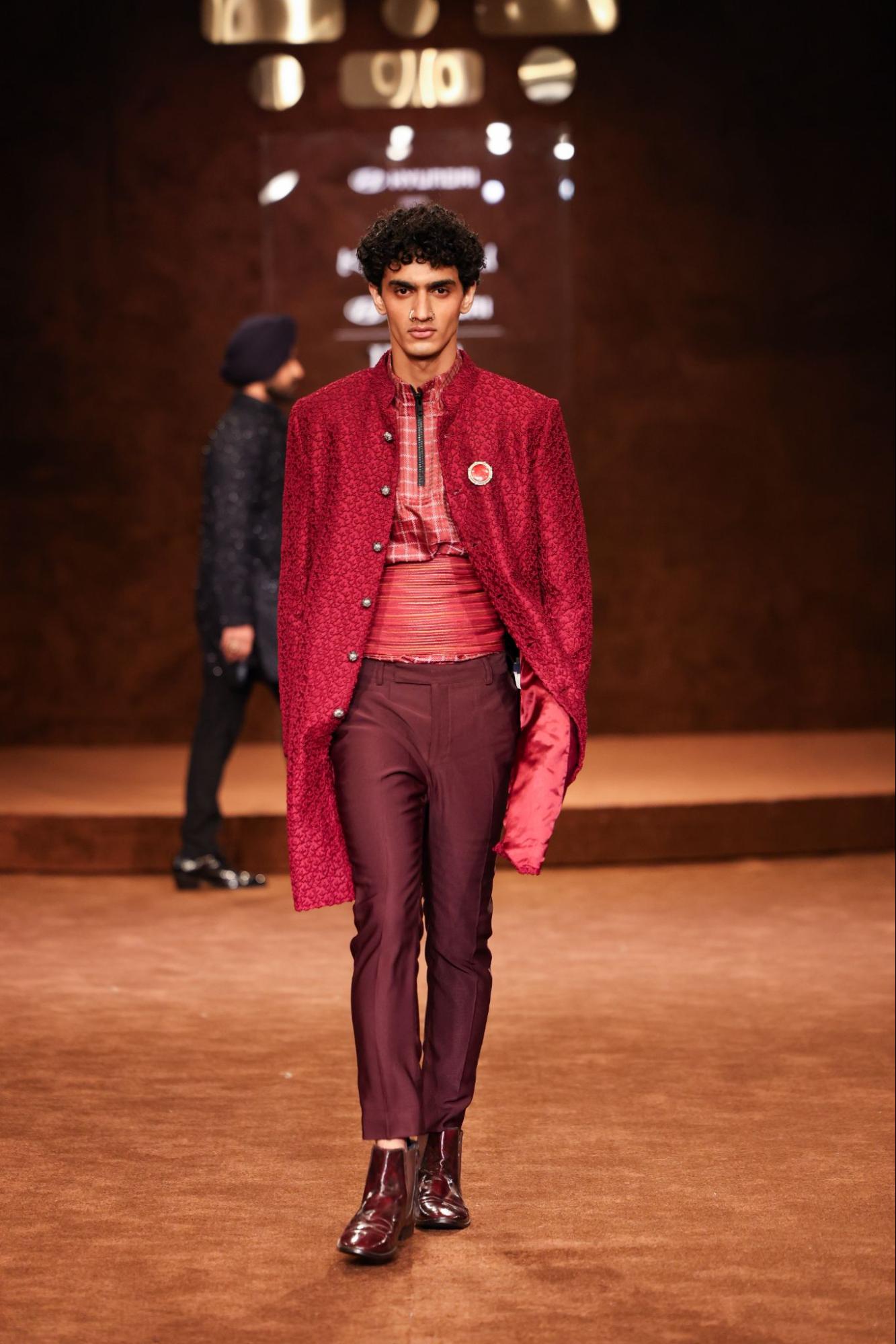
The accessories, shoulder-straps across jackets and bandhgalas, giving otherwise formal silhouettes a utilitarian edge, kamarbandhs were treated as an extension of the bandhgala itself rather than an accessory laid on top, tying the whole look together at the middle.
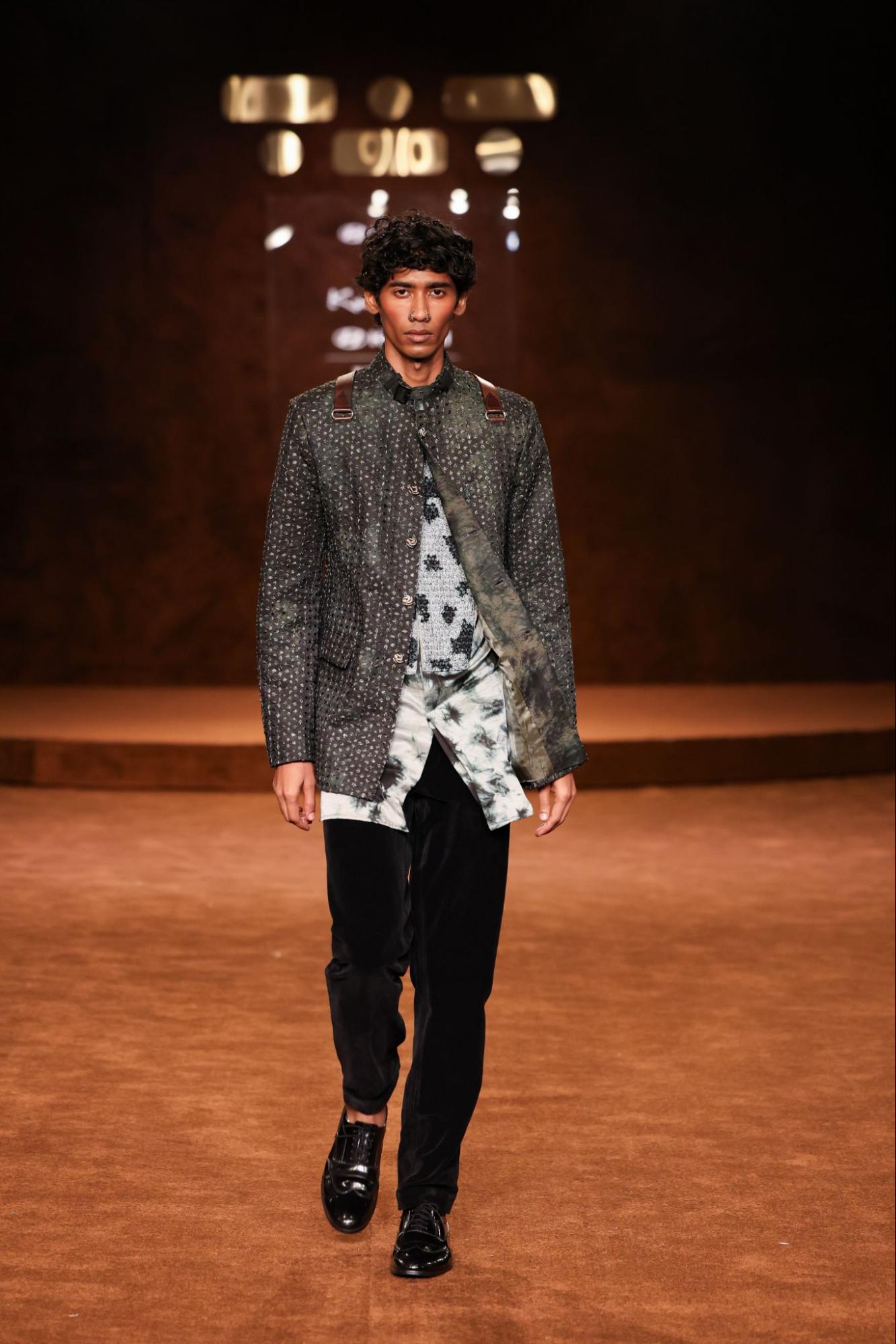
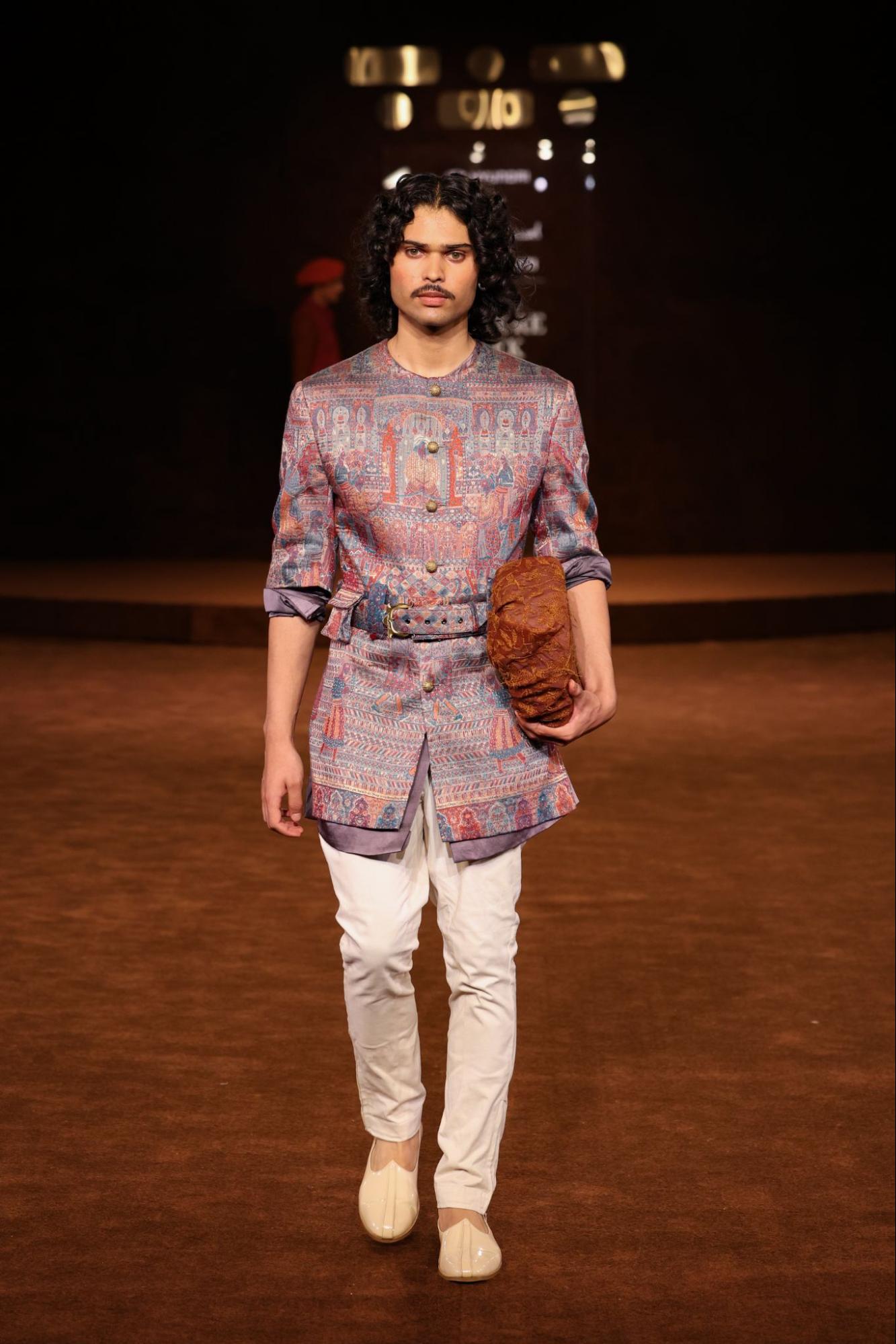
Riding boots were everywhere, brown leather, laced up over cropped trousers or churidars Turbans appeared in soft, and berets showed up in tweed and jacquard, giving certain looks an almost European, roguish quality against otherwise very Indian tailoring.

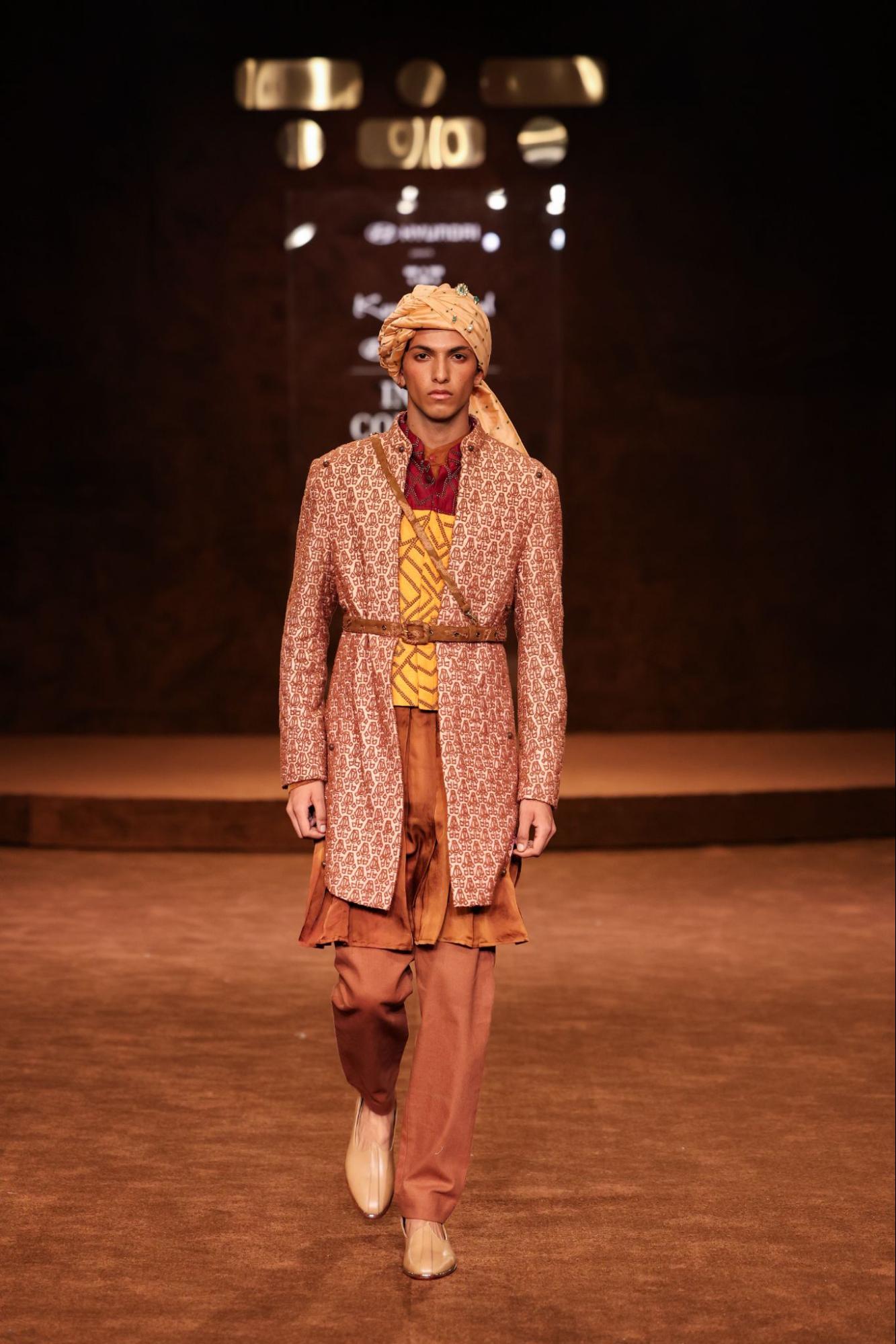
Riding boots and turbands gave that true “Indian” feel
Rawal has spent nearly two decades reshaping Indian menswear, from launching Dstress in 2006 as one of the youngest designers at Lakmé Fashion Week, to becoming a go-to name in Indian couture. So when he talks about returning to the brand's earliest ideas, it carries real weight. This is a designer revisiting the foundation of a label that helped define contemporary Indian menswear.
Kunal Rawal's continued presence at India Couture Week matters for reasons beyond any single show. Couture in India has historically been a womenswear-dominated conversation, and Rawal has spent years arguing, through collections like Dstress, Dhup Chao and now Rawalgarh, that menswear deserves the same creative ambition, craftsmanship and storytelling as bridal wear gets. Rawalgarh, with its sand-textured set, its adrenaline-charged soundtrack, and its 140 looks of belted, booted and experimental tailoring, felt like the most confident version yet of that argument.
TO BE CONTINUED, FOR SUBSCRIBERS ONLY.
This is where the surface ends and the reporting begins.
The complete piece, the full archive, and access to The French Press Circle. Reporting answerable only to its readers.
Already a subscriber ?
Login
Read these on the house, with our compliments.
A selection from the current issue, open to all readers. Read them in full. The rest is one decision away.


Titled Rawalgarh, the collection showed at FDCI’s Hyundai India Couture Week 2026 and by Rawal's own account it is the brand's most expansive menswear outing to date, over 140 looks exploring the many occasions the Kunal Rawal man dresses for.
Before a single look made its way down the runway in the traditional sense, Rawalgarh opened with a staged performance piece. That earthiness matched the set and the music. The soundtrack leaned hard into desi Punjabi energy, fast-paced, high-adrenaline, built for a runway walk which gave the whole show a sense of momentum. With the collection's title track, "Rawalgarh Di Jugni," effectively giving the whole showcase its name and rhythm.
Rather than lean on the label's established codes, Rawal went back to the earliest ideas that defined the brand and reworked them through a more contemporary lens, He paired Indian textiles with very utilitarian construction and a strong emphasis on functionality. This entirely new colour vocabulary, as he calls it, had its roots in "Dhup Chao"- the label's 2025 presentation at couture week that first set the process in motion. That showed up most clearly in the palette. With deeper charcoals, wines and mulberries, the groom's palette this season stretched to champagne, ivory tones that felt lived-in.
A range of colours at Kunal Rawal’s show
The silhouettes this season were lighter and more adaptable than in previous years, with military-inspired tailoring continuing to shape how garments are constructed. That read clearly in the collection's use of structured bandhgalas, nehru-style vests, and coats with distinctly uniformed high collars, button lines, a sense of order to the cut.
Range of silhouettes seen at his show
Nothing in the show was static. A longer coat that can be shed to reveal a vest, layered kurtas underneath jackets, sashes and belts that cinch a silhouette back into shape.
The accessories, shoulder-straps across jackets and bandhgalas, giving otherwise formal silhouettes a utilitarian edge, kamarbandhs were treated as an extension of the bandhgala itself rather than an accessory laid on top, tying the whole look together at the middle.
Riding boots were everywhere, brown leather, laced up over cropped trousers or churidars Turbans appeared in soft, and berets showed up in tweed and jacquard, giving certain looks an almost European, roguish quality against otherwise very Indian tailoring.
Riding boots and turbands gave that true “Indian” feel
Rawal has spent nearly two decades reshaping Indian menswear, from launching Dstress in 2006 as one of the youngest designers at Lakmé Fashion Week, to becoming a go-to name in Indian couture. So when he talks about returning to the brand's earliest ideas, it carries real weight. This is a designer revisiting the foundation of a label that helped define contemporary Indian menswear.
Kunal Rawal's continued presence at India Couture Week matters for reasons beyond any single show. Couture in India has historically been a womenswear-dominated conversation, and Rawal has spent years arguing, through collections like Dstress, Dhup Chao and now Rawalgarh, that menswear deserves the same creative ambition, craftsmanship and storytelling as bridal wear gets. Rawalgarh, with its sand-textured set, its adrenaline-charged soundtrack, and its 140 looks of belted, booted and experimental tailoring, felt like the most confident version yet of that argument.
TO BE CONTINUED, FOR SUBSCRIBERS ONLY.
This is where the surface ends and the reporting begins.
The complete piece, the full archive, and access to The French Press Circle. Reporting answerable only to its readers.
Already a subscriber ?
Login
Read these on the house, with our compliments.
A selection from the current issue, open to all readers. Read them in full. The rest is one decision away.