
The anticipation in the room was its own character. A designer's first couture show always carries a different kind of scrutiny and this was the moment to see if her signature language of colour, embroidery, and ease could hold up on a bigger, more exacting stage. It did.
Instead of a stark runway, at Mehta’s show, the space was styled like an opulent lounge with couches, and soft lamp-lit corners framing the walk path, giving the whole show an intimate, almost drawing-room energy rather than just a runway. It made the couture feel wearable and lived-in even at its most bejewelled. That mood was also carried through in the music of the show: a soundtrack of peppy numbers kept the energy tap-happy and celebratory, all just adding to the atmosphere of the showcase.
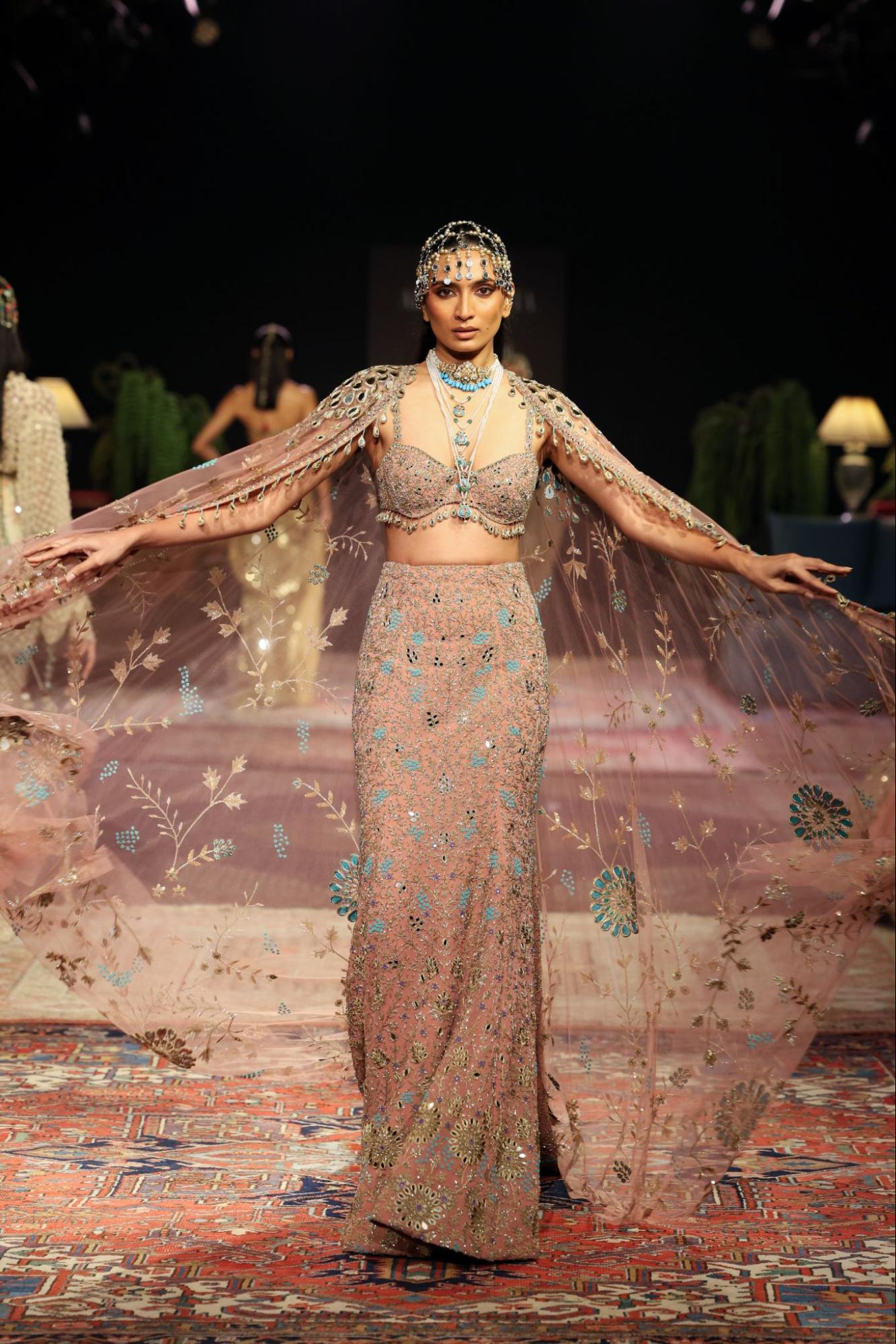
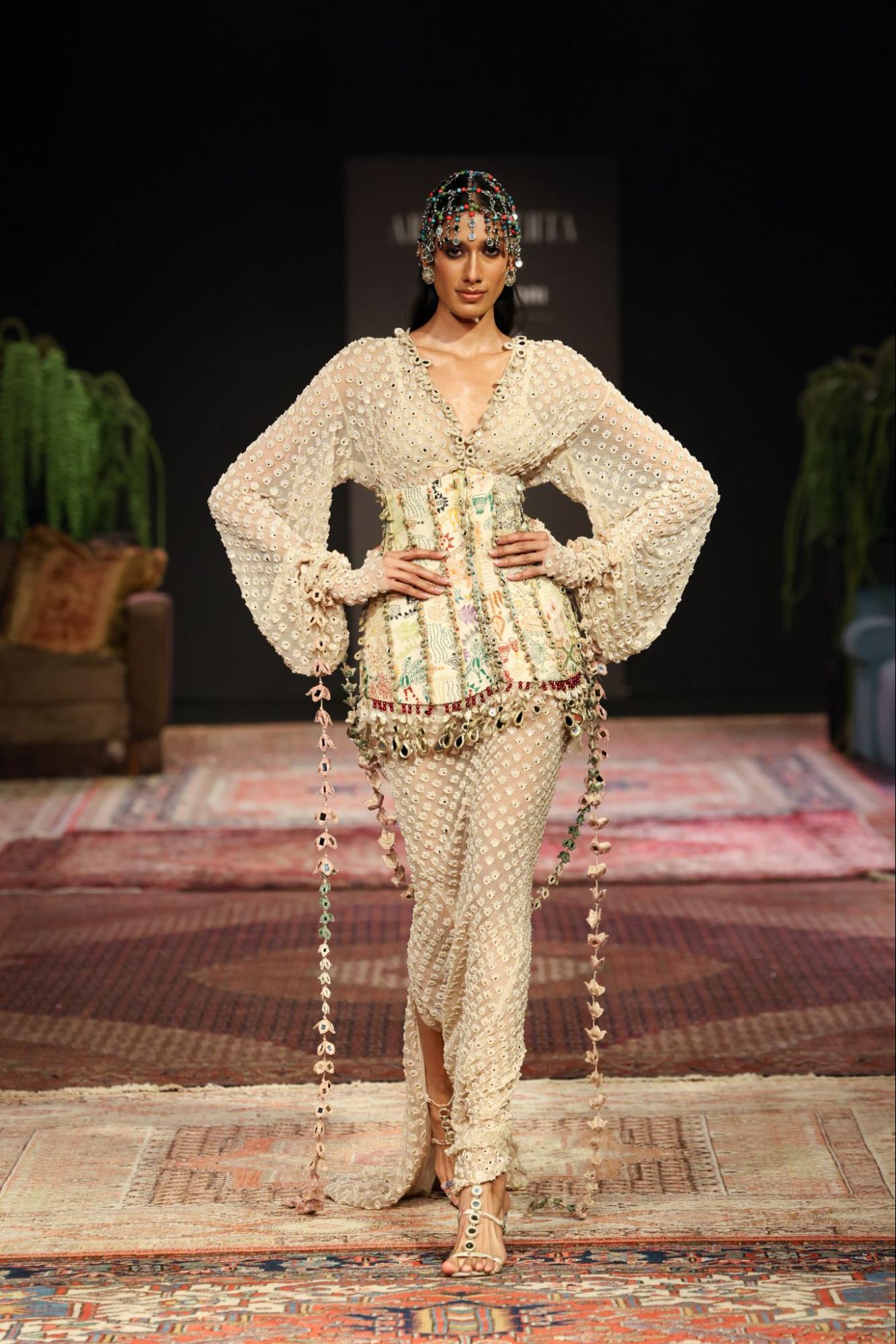
Coming to the awaited collection. If there's one word for this collection, it's bejewelled, from the first model to the last. Mehta's most striking styling choice was her hair accessories: elaborate jhoomar-style head chains, beaded skullcaps, and matha pattis studded with stones ran through nearly every look, turning the hair accessories into a somewhat of a second collection all their own. It's a detail worth dwelling on, drawing a clever parallel to 20’s flapper headpieces spliced with Indian ornamentation, and on the runway, that fusion read exactly right, heirloom meets drama.
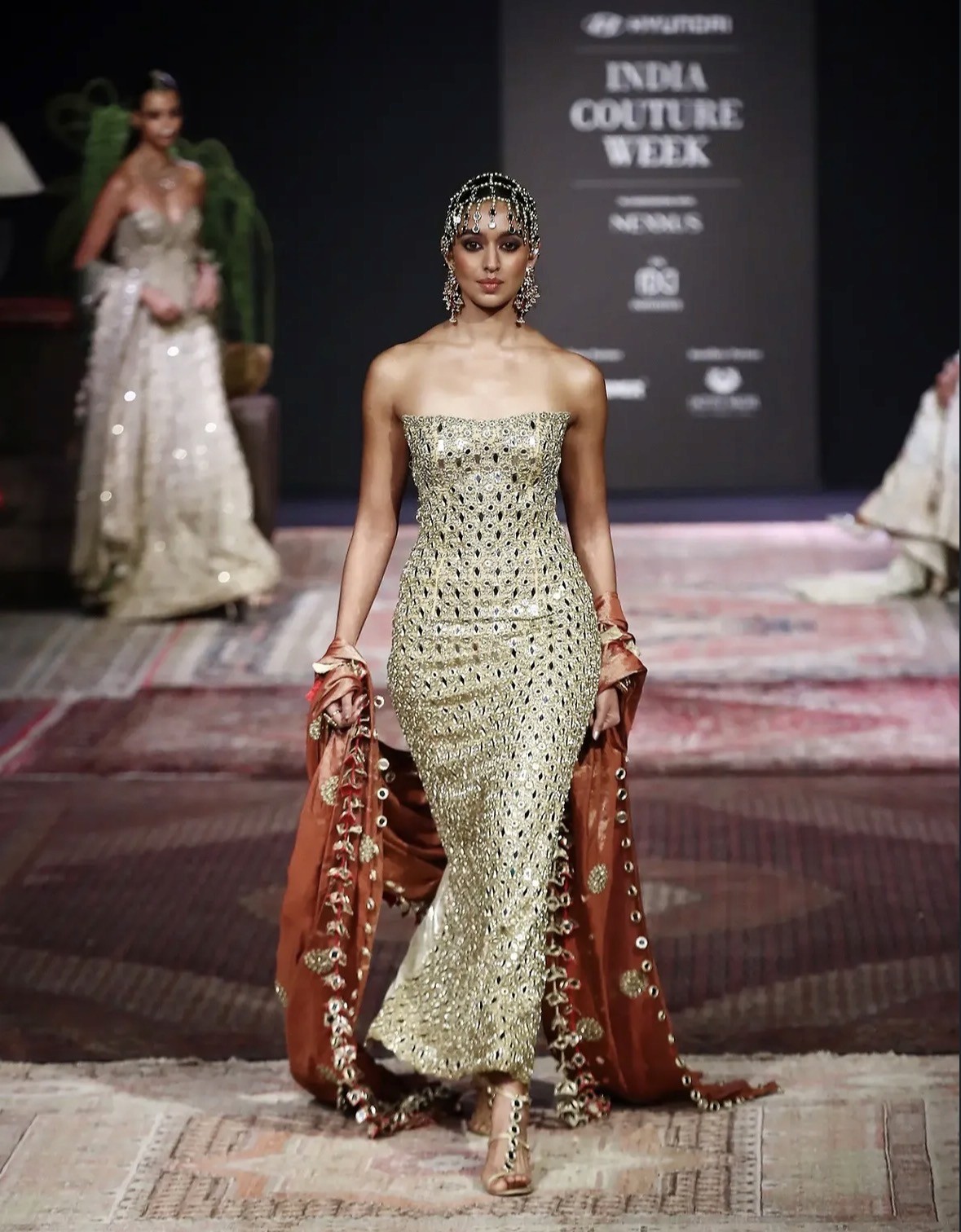
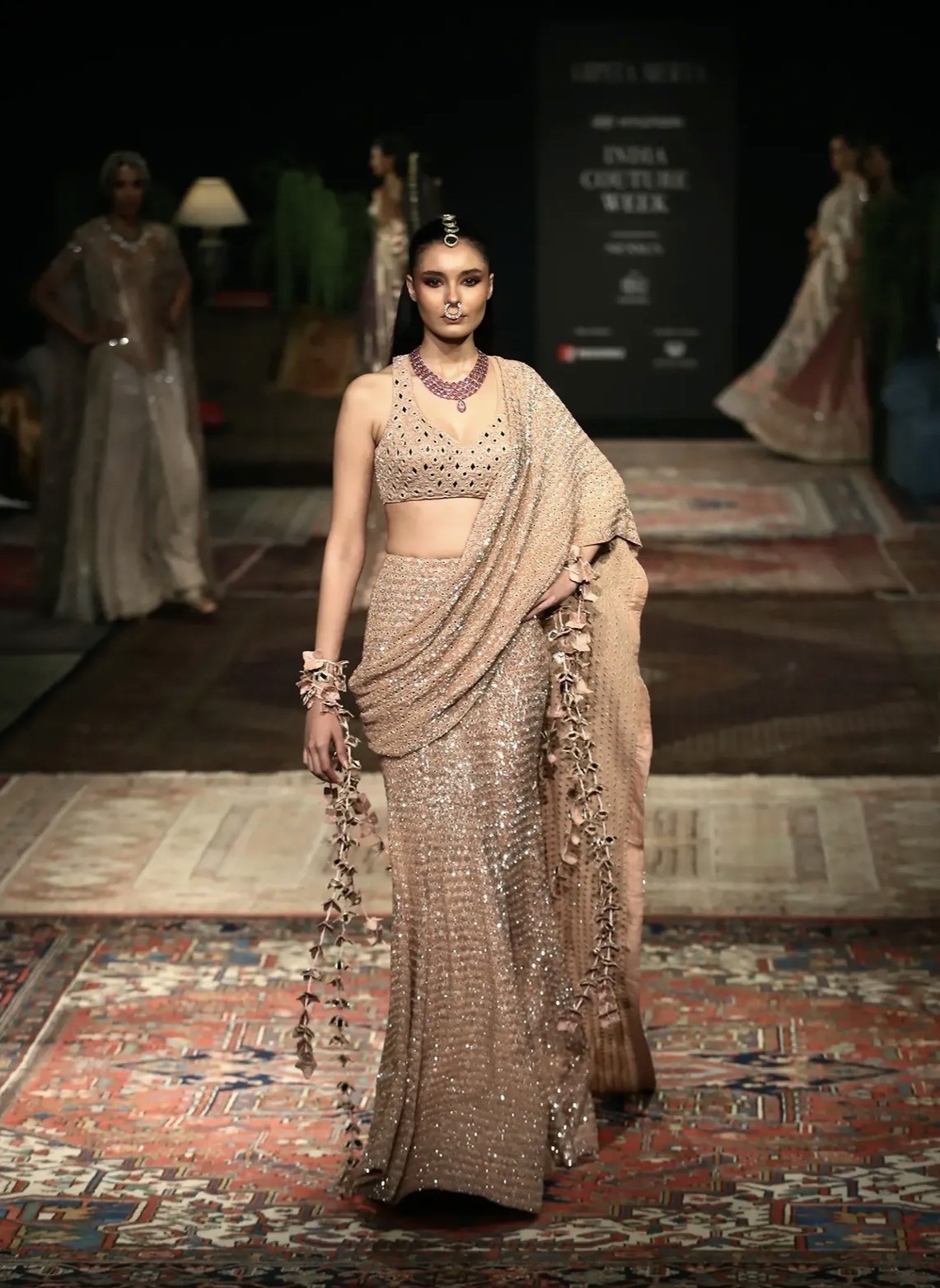
From skullcaps to matha pattis, the hair game outshone everything else on this runway.
The necklines and waists were equally loaded. The gemstone-studded bandeau blouses were the star of the show and bustiers appeared again and again, some finished with fringe, others with dangling mirror-work tassels, making the accessories and the garment construction feel just right.
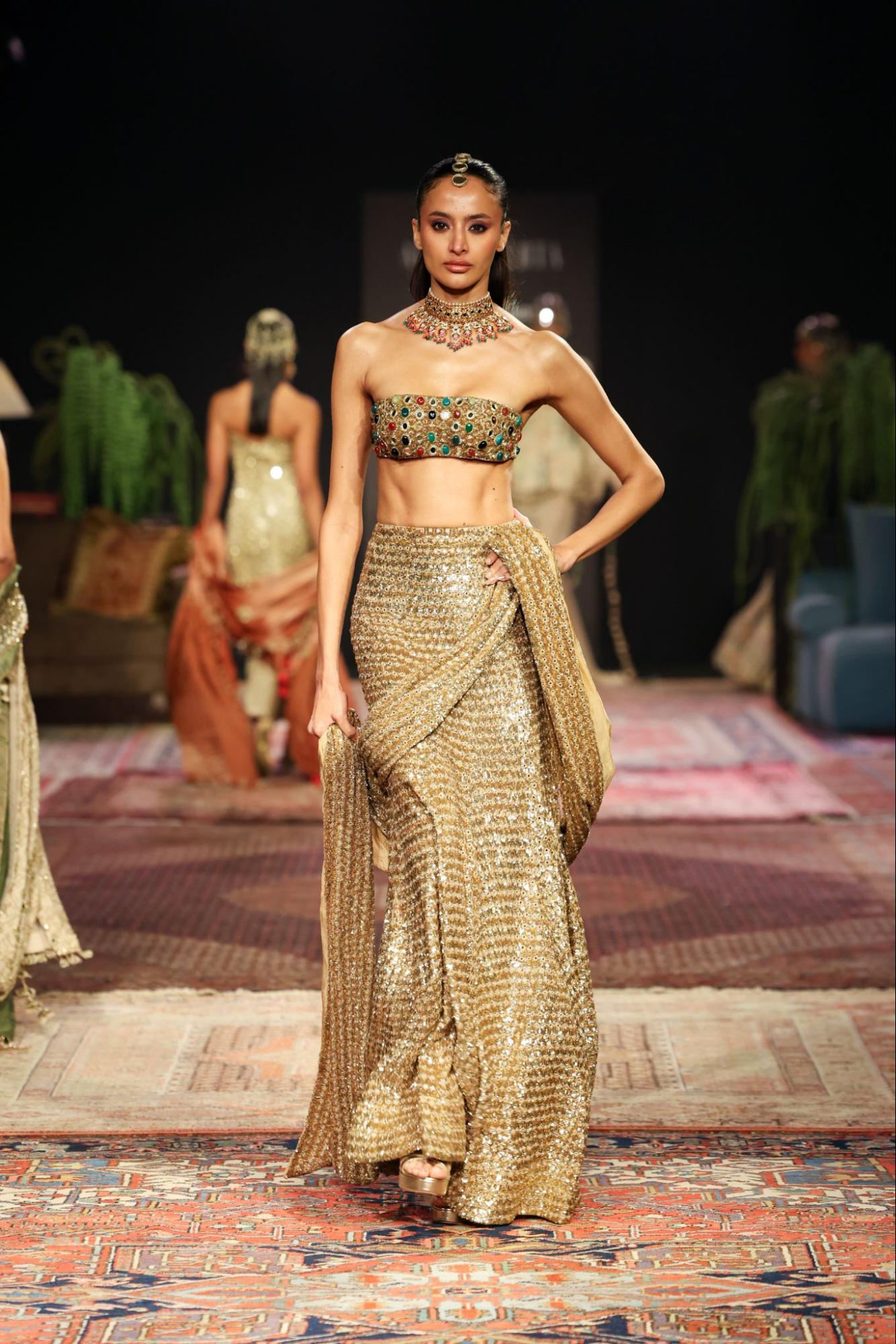
Stone-studded and unmissable: the bandeau blouse that turned heads at Arpita Mehta's couture debut.
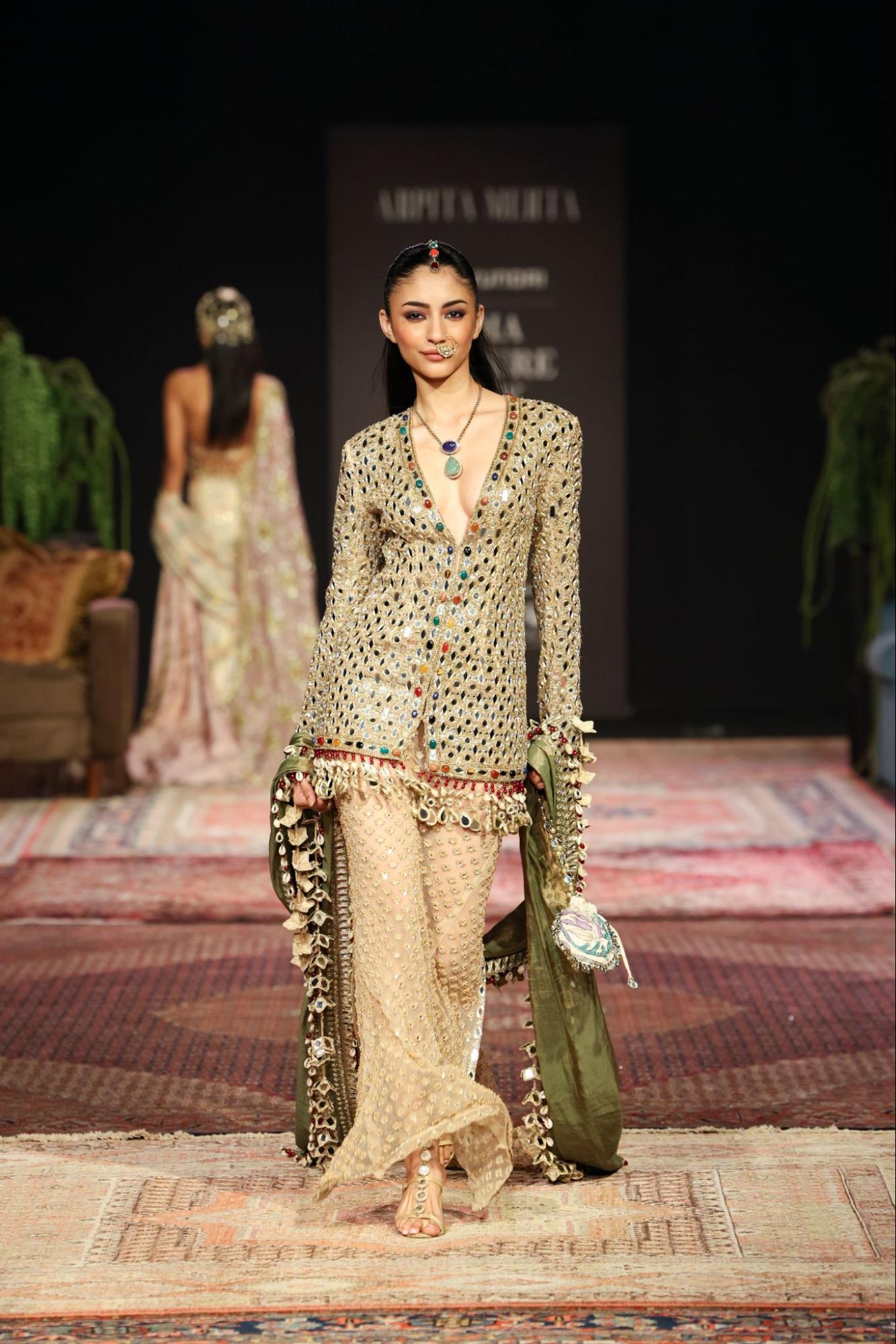
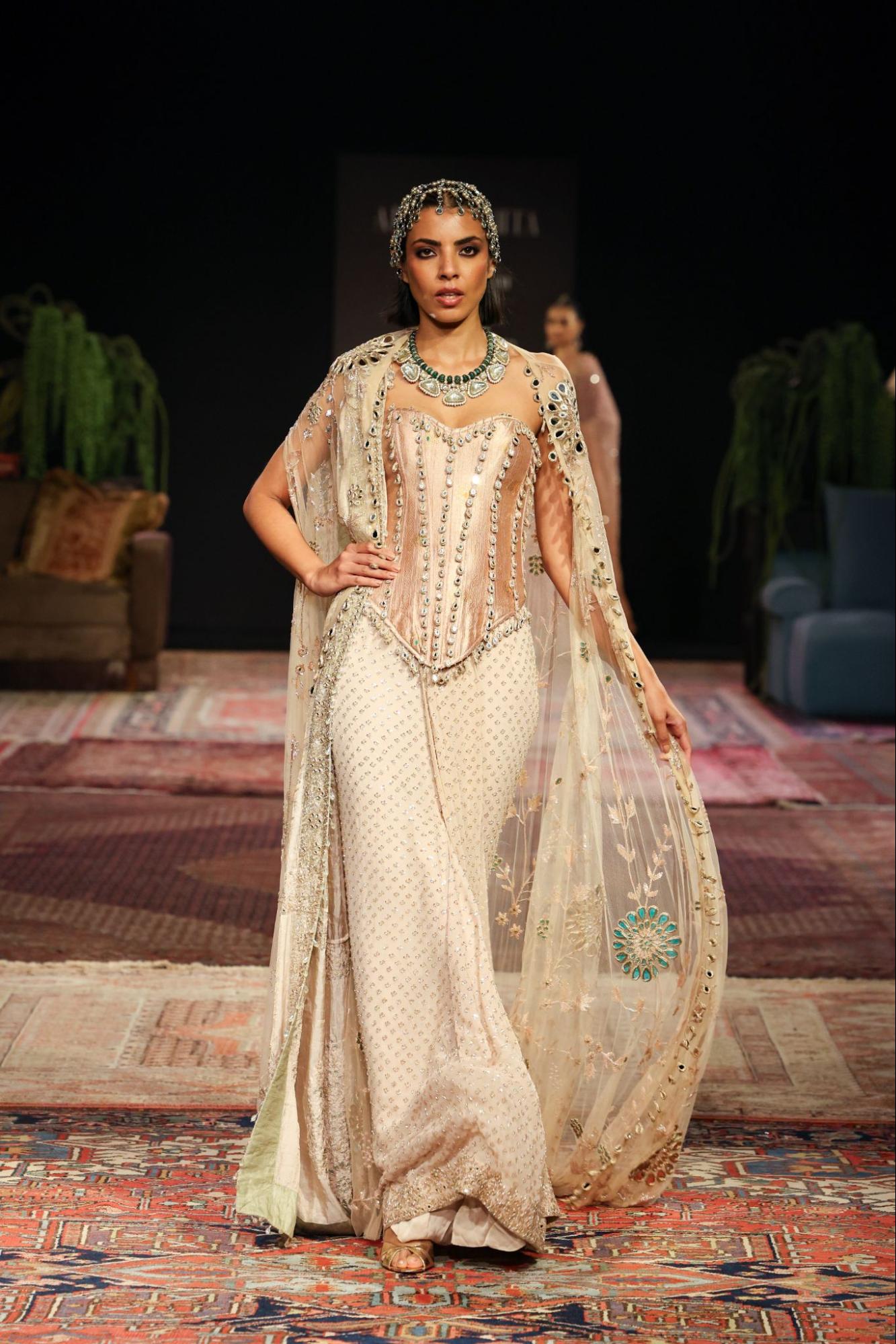
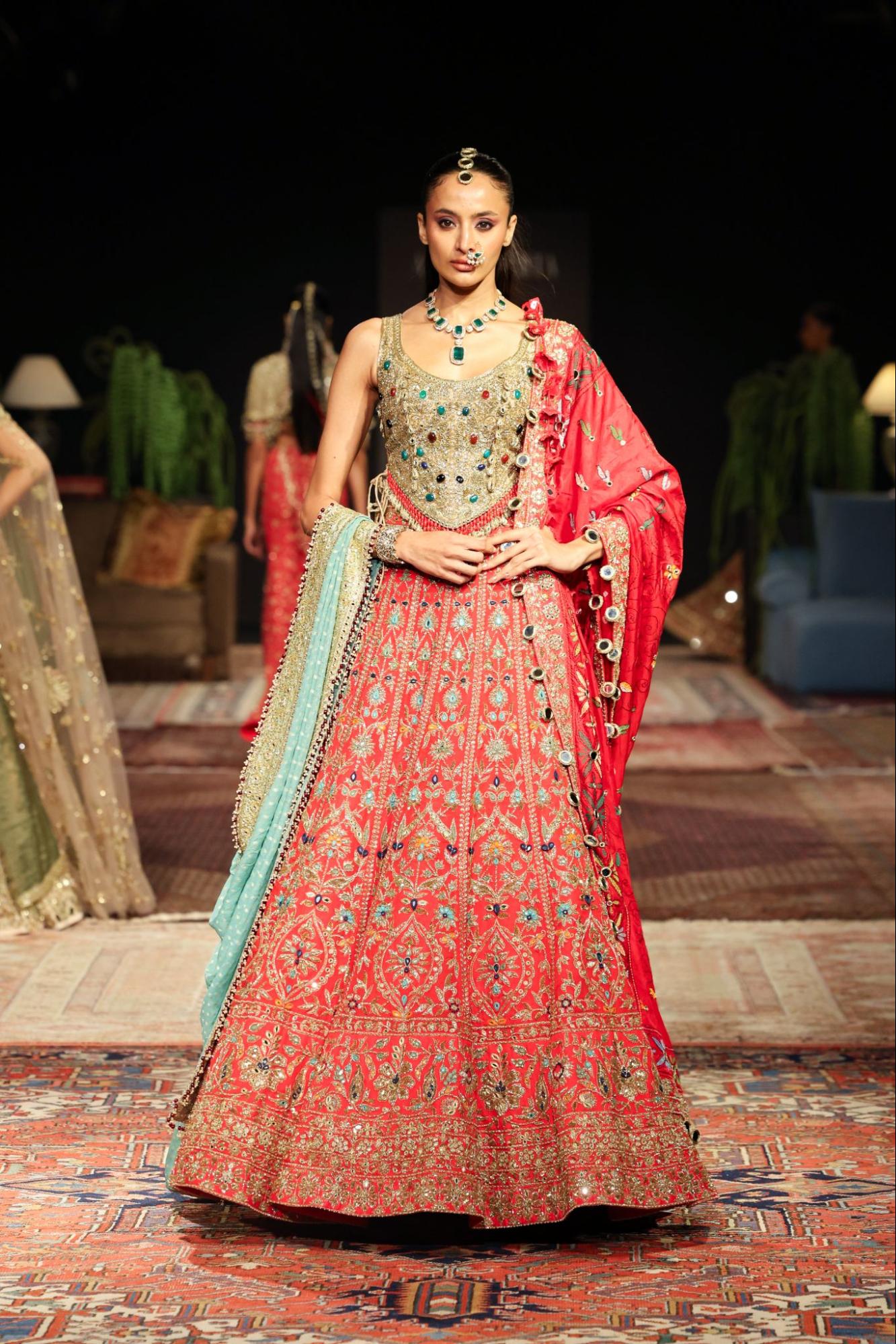
Some fringe. Some mirror work. Every bit Arpita Mehta.
Where the show departed from a safe palette was in its colour story. There was no single mood; deep violet lehengas sat beside the blush pinks, ivory and cream look with pastel florals, gold sequin drapes, and rust-orange dupattas. It was maximalist by design, colour layered on colour, refusing to let any one shade dominate. A personal favourite was the violet gown embellished with mirror work, paired with a scarlet red Kantha-work dupatta. Styled with a pale-aqua gem-studded necklace, it was a refreshing burst of colour
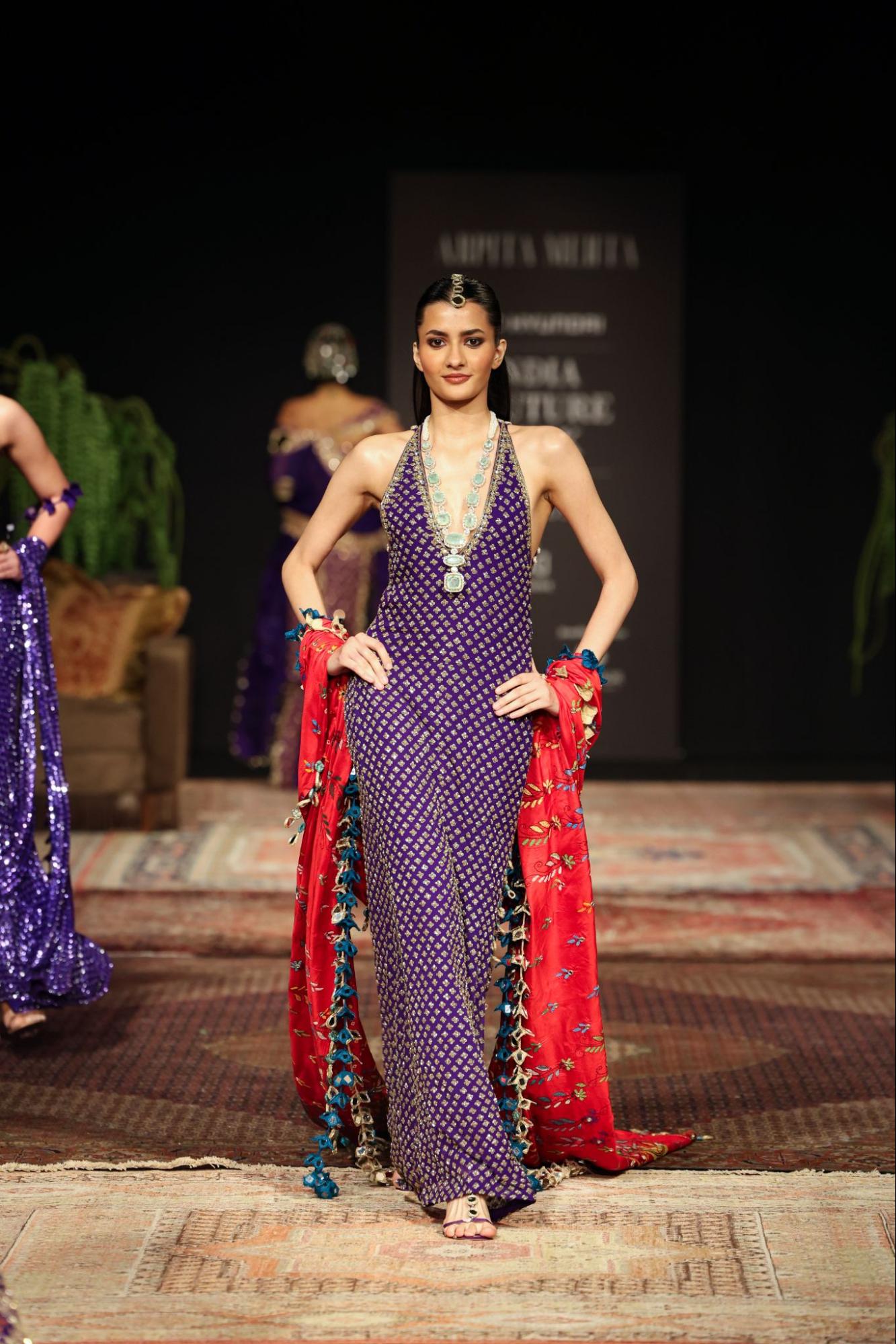
Underneath the styling, the collection was also rooted in heritage textile techniques with Bandhani, Banarasi, tissue fabric, and Mehta's signature mirror work, with Kantha embroidery making its debut in her couture vocabulary. Rather than reinterpreting these crafts beyond recognition, she let them stay authentic while placing them in contemporary silhouettes. A sight to see!
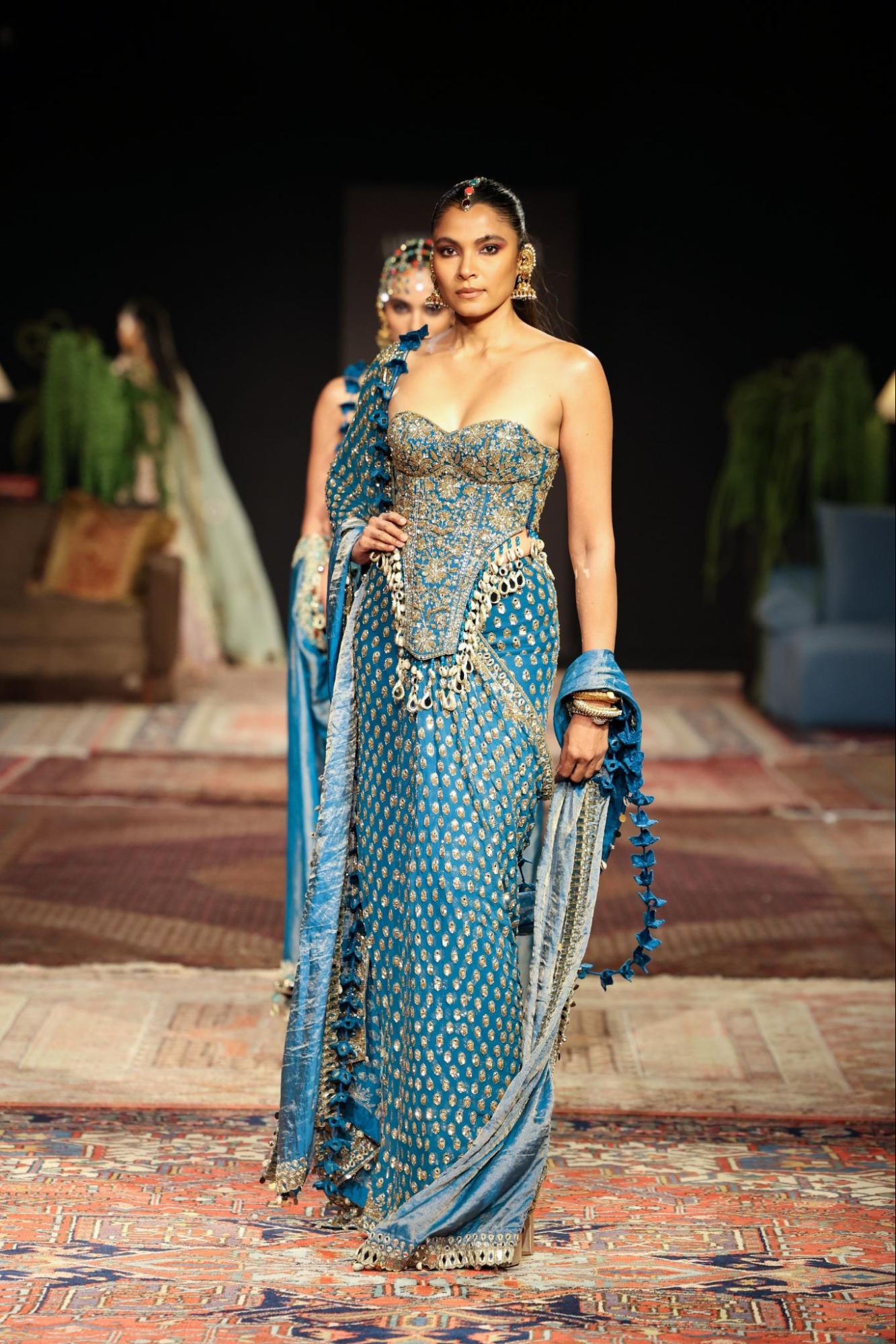

Not a dull moment on the runway.
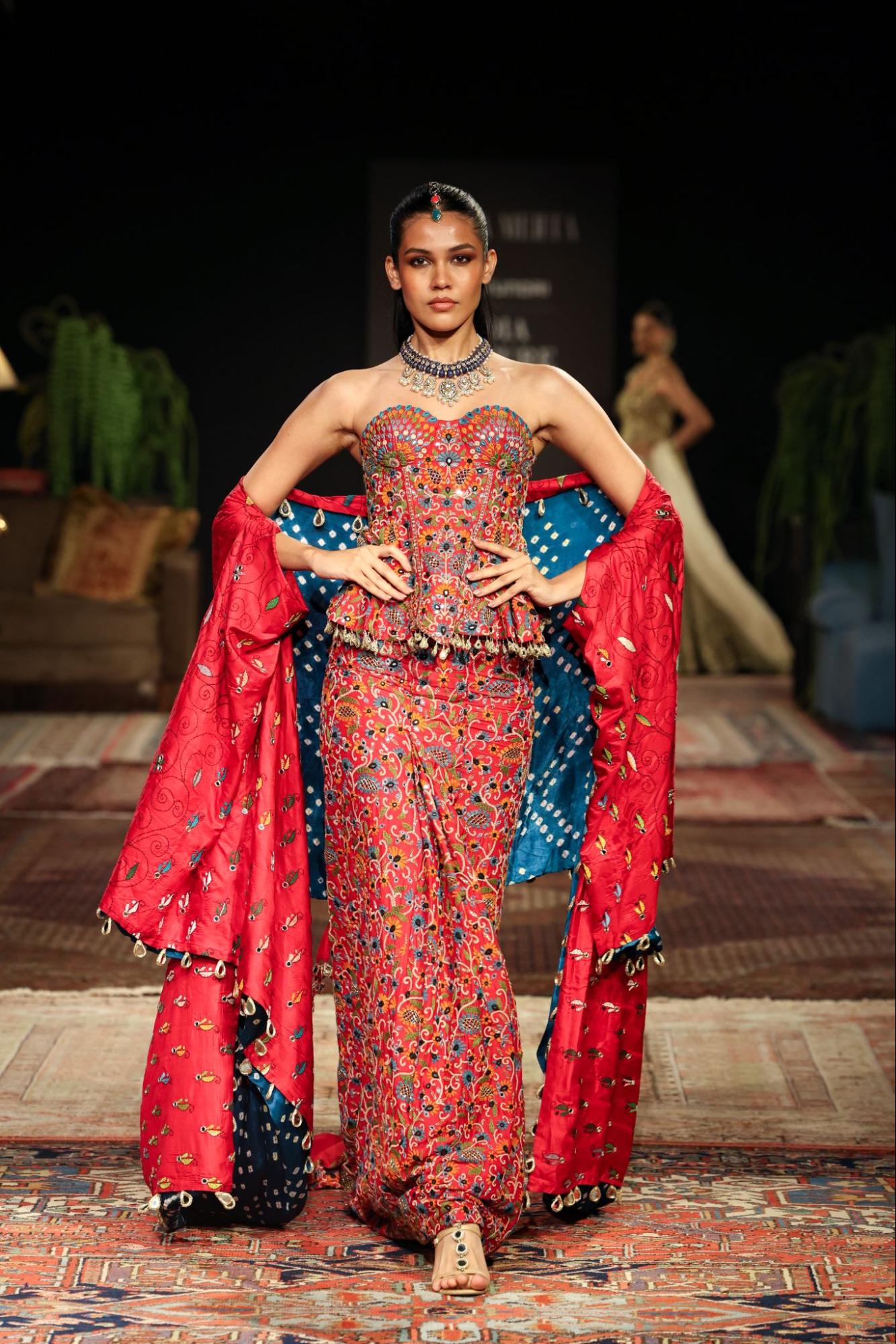
India's textile traditions took centre stage with Kantha and Bandhani
Arpita Mehta has spent over a decade building her name making her debut with "Violet Garden", known above all for her signature mirror work and fearless use of colour. Ceremonial was never meant to be a quiet debut. A decade into her career, Arpita Mehta chose to enter couture on her own terms trading the sterile hush of a typical runway for a room styled like a lived-in lounge, and dressing every look as though restraint simply wasn't part of the brief. The jewellery piled on without apology, the colours refused to settle into a single mood, and India's textile traditions ran through it all, not as a nod to heritage, but as the very language of the collection. The result was a debut that arrived fully formed, unmistakably colourful, and entirely, distinctly Arpita Mehta.
TO BE CONTINUED, FOR SUBSCRIBERS ONLY.
This is where the surface ends and the reporting begins.
The complete piece, the full archive, and access to The French Press Circle. Reporting answerable only to its readers.
Already a subscriber ?
Login
Read these on the house, with our compliments.
A selection from the current issue, open to all readers. Read them in full. The rest is one decision away.



The anticipation in the room was its own character. A designer's first couture show always carries a different kind of scrutiny and this was the moment to see if her signature language of colour, embroidery, and ease could hold up on a bigger, more exacting stage. It did.
Instead of a stark runway, at Mehta’s show, the space was styled like an opulent lounge with couches, and soft lamp-lit corners framing the walk path, giving the whole show an intimate, almost drawing-room energy rather than just a runway. It made the couture feel wearable and lived-in even at its most bejewelled. That mood was also carried through in the music of the show: a soundtrack of peppy numbers kept the energy tap-happy and celebratory, all just adding to the atmosphere of the showcase.
Coming to the awaited collection. If there's one word for this collection, it's bejewelled, from the first model to the last. Mehta's most striking styling choice was her hair accessories: elaborate jhoomar-style head chains, beaded skullcaps, and matha pattis studded with stones ran through nearly every look, turning the hair accessories into a somewhat of a second collection all their own. It's a detail worth dwelling on, drawing a clever parallel to 20’s flapper headpieces spliced with Indian ornamentation, and on the runway, that fusion read exactly right, heirloom meets drama.
From skullcaps to matha pattis, the hair game outshone everything else on this runway.
The necklines and waists were equally loaded. The gemstone-studded bandeau blouses were the star of the show and bustiers appeared again and again, some finished with fringe, others with dangling mirror-work tassels, making the accessories and the garment construction feel just right.
Stone-studded and unmissable: the bandeau blouse that turned heads at Arpita Mehta's couture debut.
Some fringe. Some mirror work. Every bit Arpita Mehta.
Where the show departed from a safe palette was in its colour story. There was no single mood; deep violet lehengas sat beside the blush pinks, ivory and cream look with pastel florals, gold sequin drapes, and rust-orange dupattas. It was maximalist by design, colour layered on colour, refusing to let any one shade dominate. A personal favourite was the violet gown embellished with mirror work, paired with a scarlet red Kantha-work dupatta. Styled with a pale-aqua gem-studded necklace, it was a refreshing burst of colour
Underneath the styling, the collection was also rooted in heritage textile techniques with Bandhani, Banarasi, tissue fabric, and Mehta's signature mirror work, with Kantha embroidery making its debut in her couture vocabulary. Rather than reinterpreting these crafts beyond recognition, she let them stay authentic while placing them in contemporary silhouettes. A sight to see!
Not a dull moment on the runway.
India's textile traditions took centre stage with Kantha and Bandhani
Arpita Mehta has spent over a decade building her name making her debut with "Violet Garden", known above all for her signature mirror work and fearless use of colour. Ceremonial was never meant to be a quiet debut. A decade into her career, Arpita Mehta chose to enter couture on her own terms trading the sterile hush of a typical runway for a room styled like a lived-in lounge, and dressing every look as though restraint simply wasn't part of the brief. The jewellery piled on without apology, the colours refused to settle into a single mood, and India's textile traditions ran through it all, not as a nod to heritage, but as the very language of the collection. The result was a debut that arrived fully formed, unmistakably colourful, and entirely, distinctly Arpita Mehta.
TO BE CONTINUED, FOR SUBSCRIBERS ONLY.
This is where the surface ends and the reporting begins.
The complete piece, the full archive, and access to The French Press Circle. Reporting answerable only to its readers.
Already a subscriber ?
Login
Read these on the house, with our compliments.
A selection from the current issue, open to all readers. Read them in full. The rest is one decision away.