
Dolly J opened BRĀHM with her signature design language. The first few looks belonged unmistakably to the bride, embroidered lehengas in classic reds with intricate zardozi work, ornate veils, heirloom-worthy embellishments and the kind of craftsmanship that has long defined the designer’s couture vocabulary. The narrative unfolded as the show proceeded.
The opening soundtrack immediately established the show’s mood. Opening with Mahishasura Mardini, the runway carried an unmistakable energy of resilience and authority. We saw that sense of power translate into the clothes themselves. While undeniably glamorous, these were garments designed for women who command attention rather than simply occupy it.
Dolly J's 'BRĀHM' takes its name and soul from the Brahma Kamal, the rare Himalayan bloom long revered as a symbol of purity and spiritual awakening. Rather than reaching for grandeur through excess, the collection finds its power in restraint where every silhouette conceived as an expression of embodied strength, where embellishment reads like poetry. Intricate jali work and delicate kashidakari embroidery move throughout. The palette mirrors the many moods of the Himalayas from dusk to dawn – deep reds, golds, earthy rusts and wines meeting pinks, and ivories.
Instead of relying on one dominant palette, BRĀHM progressed through colour. Vermilion oranges presented first, which then gave way to rich reds before melting into bright pinks, muted champagnes, smoky blues, deep maroons and browns. The gradual transitions created distinct chapters within the show, allowing each colour story to captivate the room while remaining part of a cohesive whole.

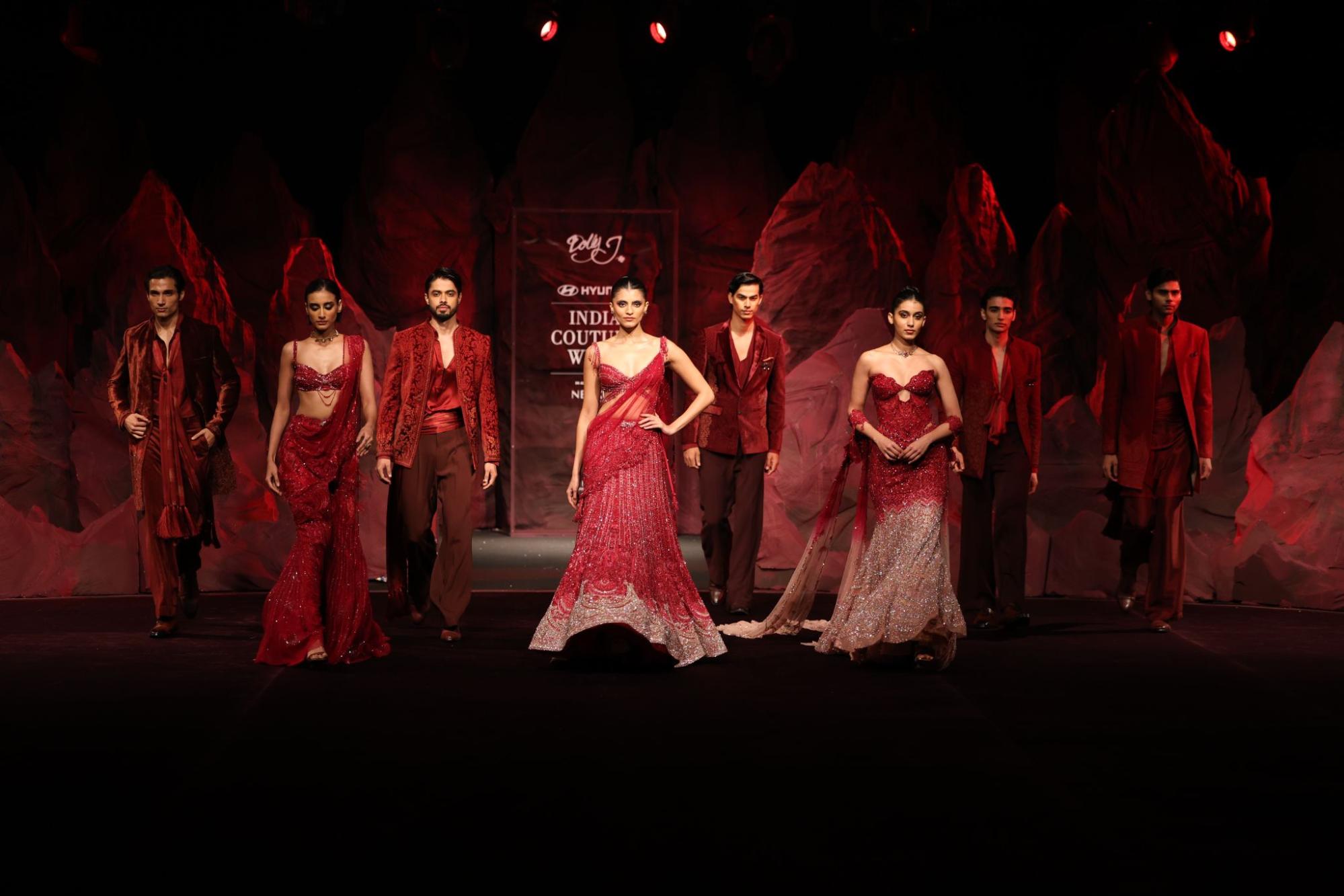
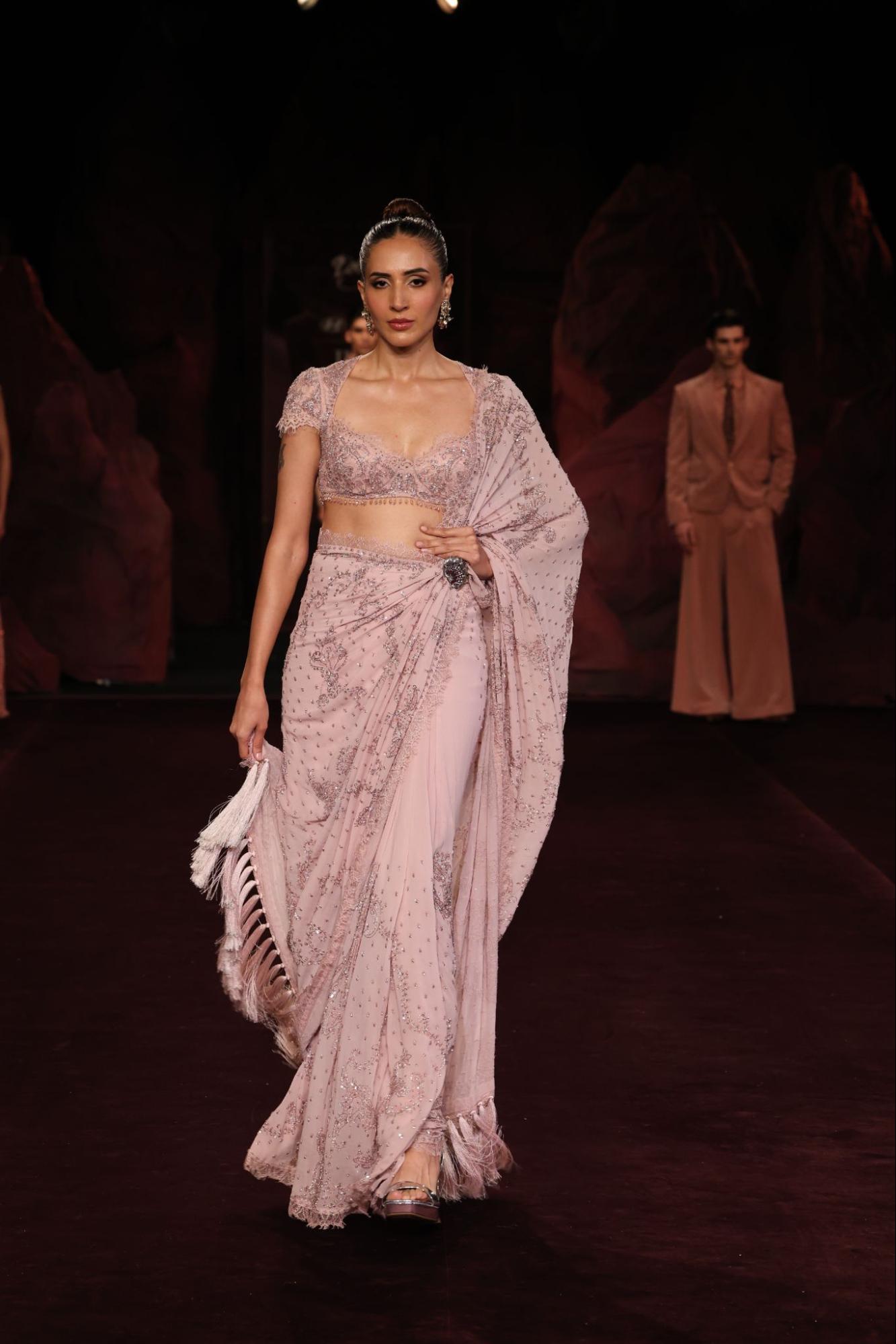

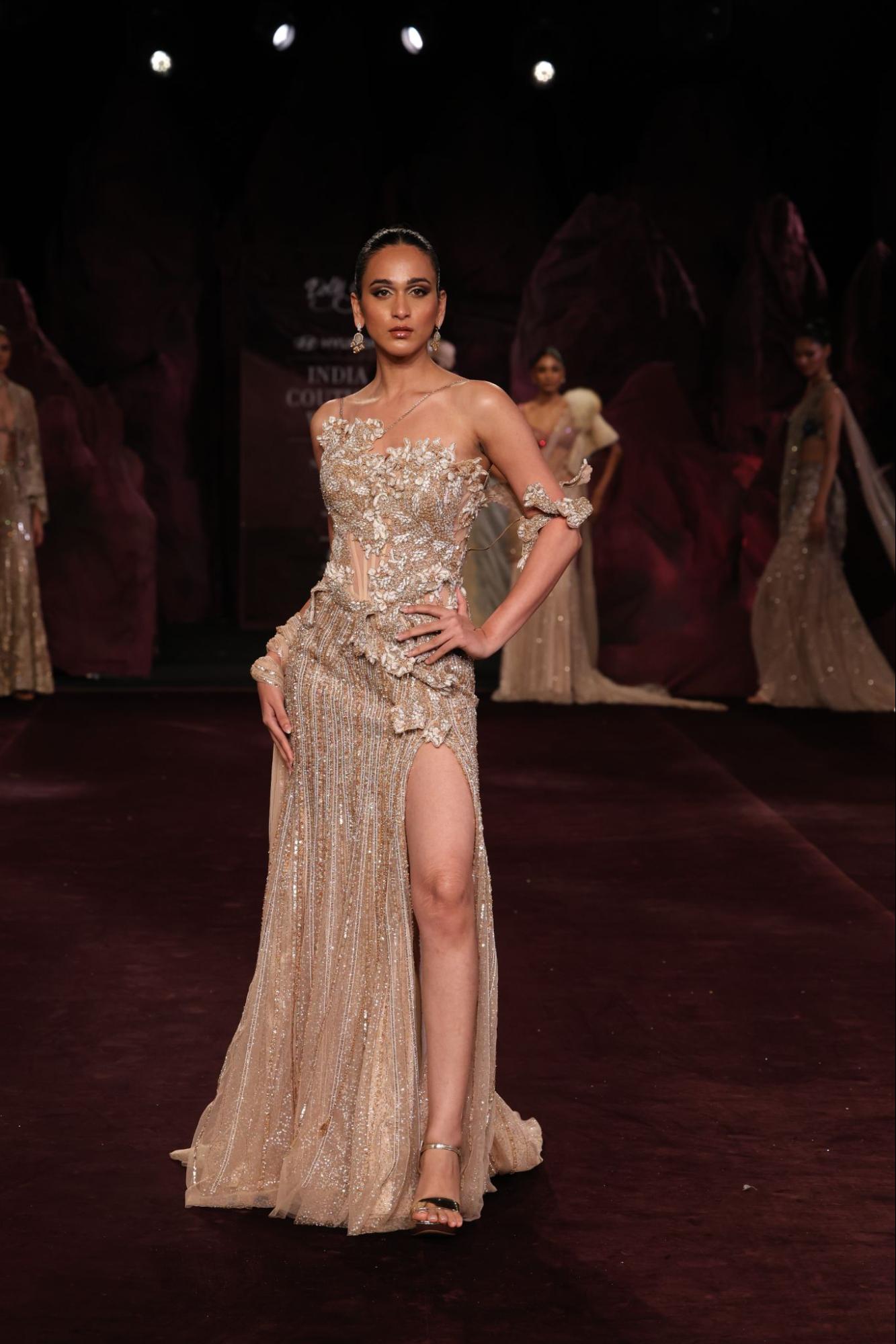
A full range of colours ran through Dolly J's collection
What tied these chapters together was Dolly J’s unmistakable command over embellishment. Sequins, crystals, beads, metallic embroidery and intricate thread work layered effortlessly over sheer tulles and fluid drapes. The collection leaned heavily into shimmer, yet did not feel excessive because the silhouettes remained light but still contemporary. It included zardozi and kashidakari work proving the range of Indian textiles.
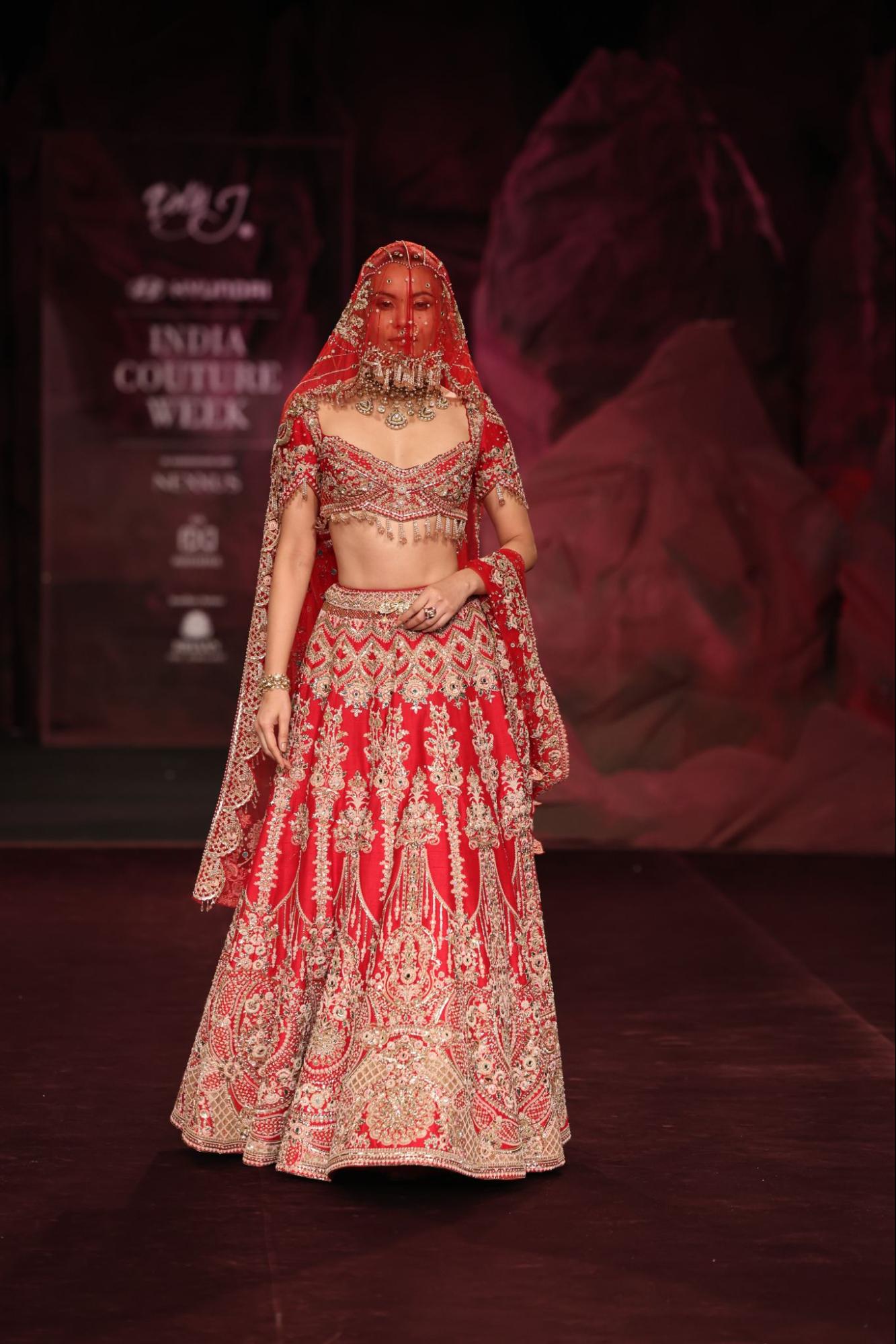
Zardozi at its finest on signature red bridal lehengas.
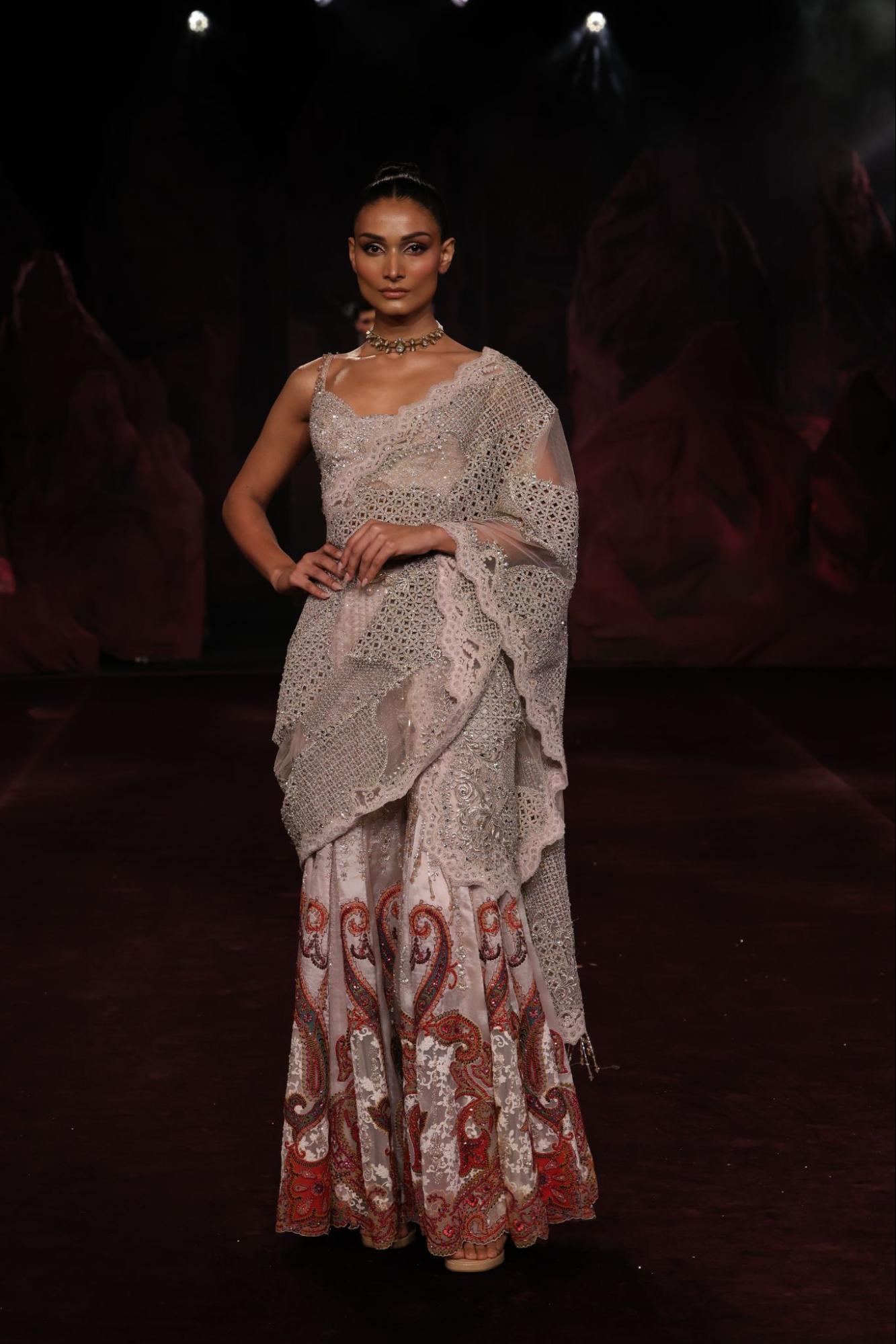
Lace and paisley, paired for one of the most striking looks of the show.
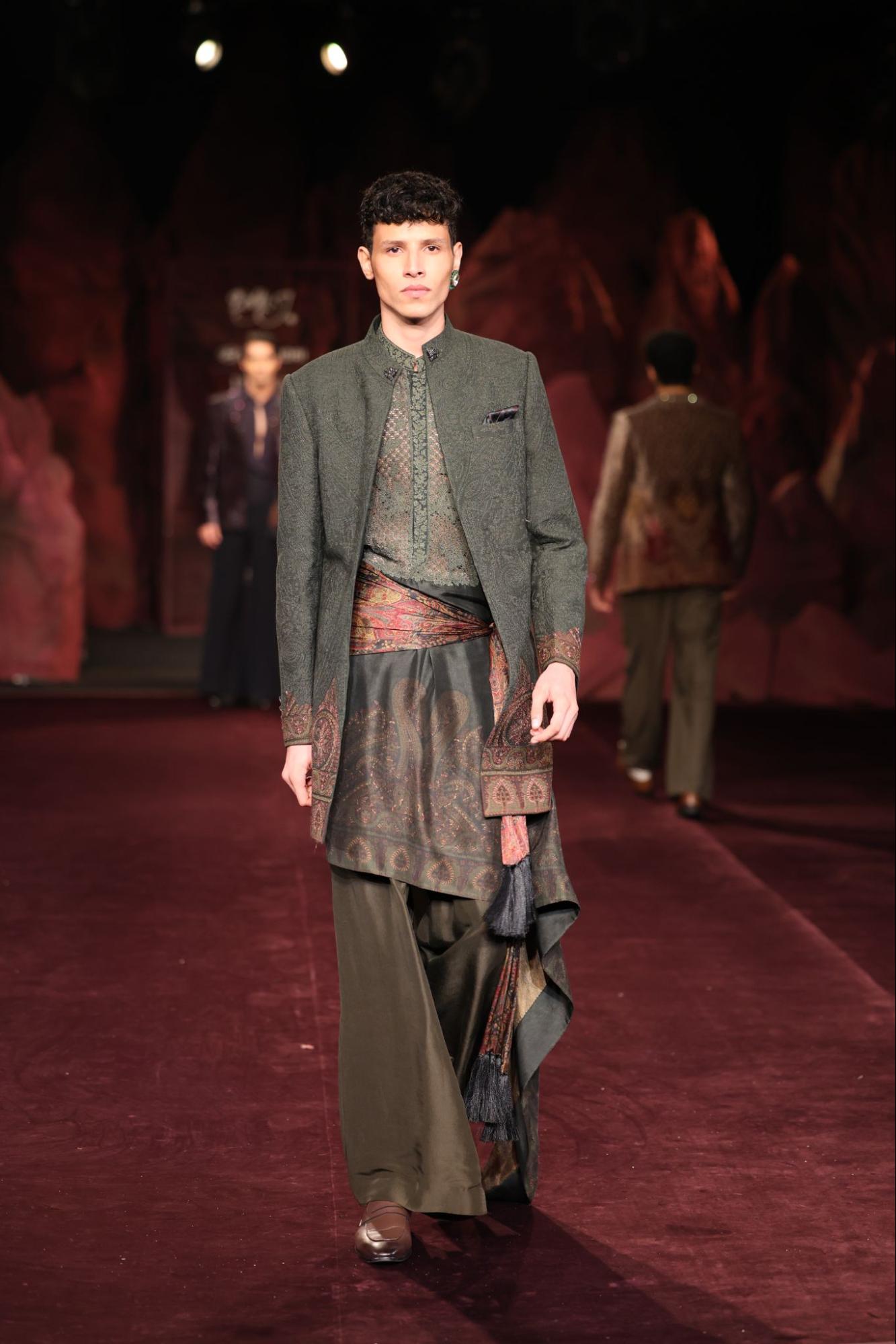
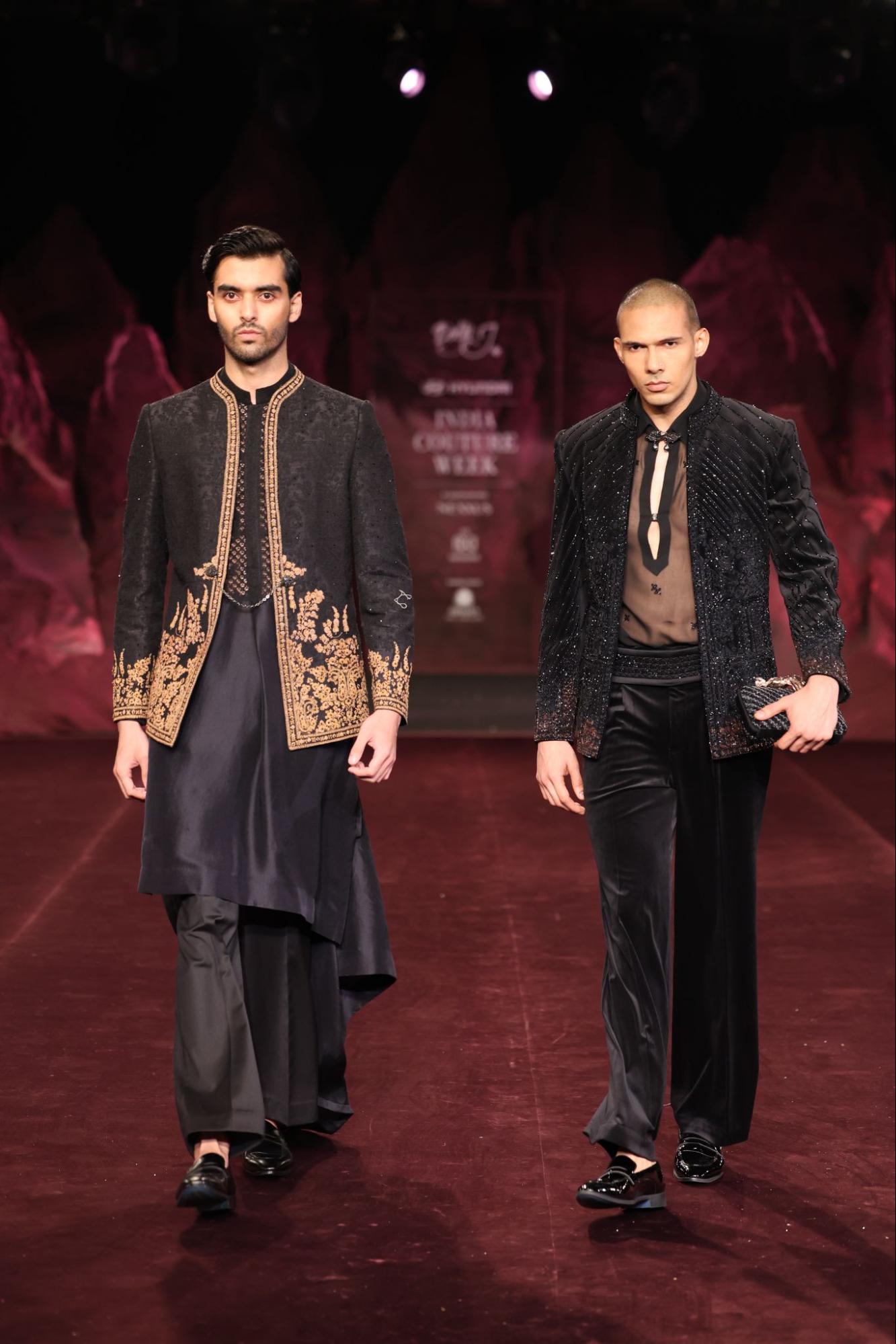
Kashidakari embroidery meets contemporary menswear tailoring.

Sequins ruled at Dolly J's showcase
One of the collection’s strongest visual signatures and a personal favourite to watch was the recurring use of ombré. Lehengas and gowns dissolved seamlessly from one hue into another, reds fading into blush, pinks melting into ivory. The break from the monotonous colours with this use of gradient work was a refreshing change. Dolly J allowed it to move across the garment, giving familiar silhouettes a renewed sense of depth.


Cathedral balm gowns complete with concealed pockets offered a subtle reminder that couture can accommodate practicality without compromising elegance. Fishtail-cut lehengas were back in full swing and the pallu saw itself in a new, modern drape. They were small details, but one that reflected changing expectations of couture tonight.
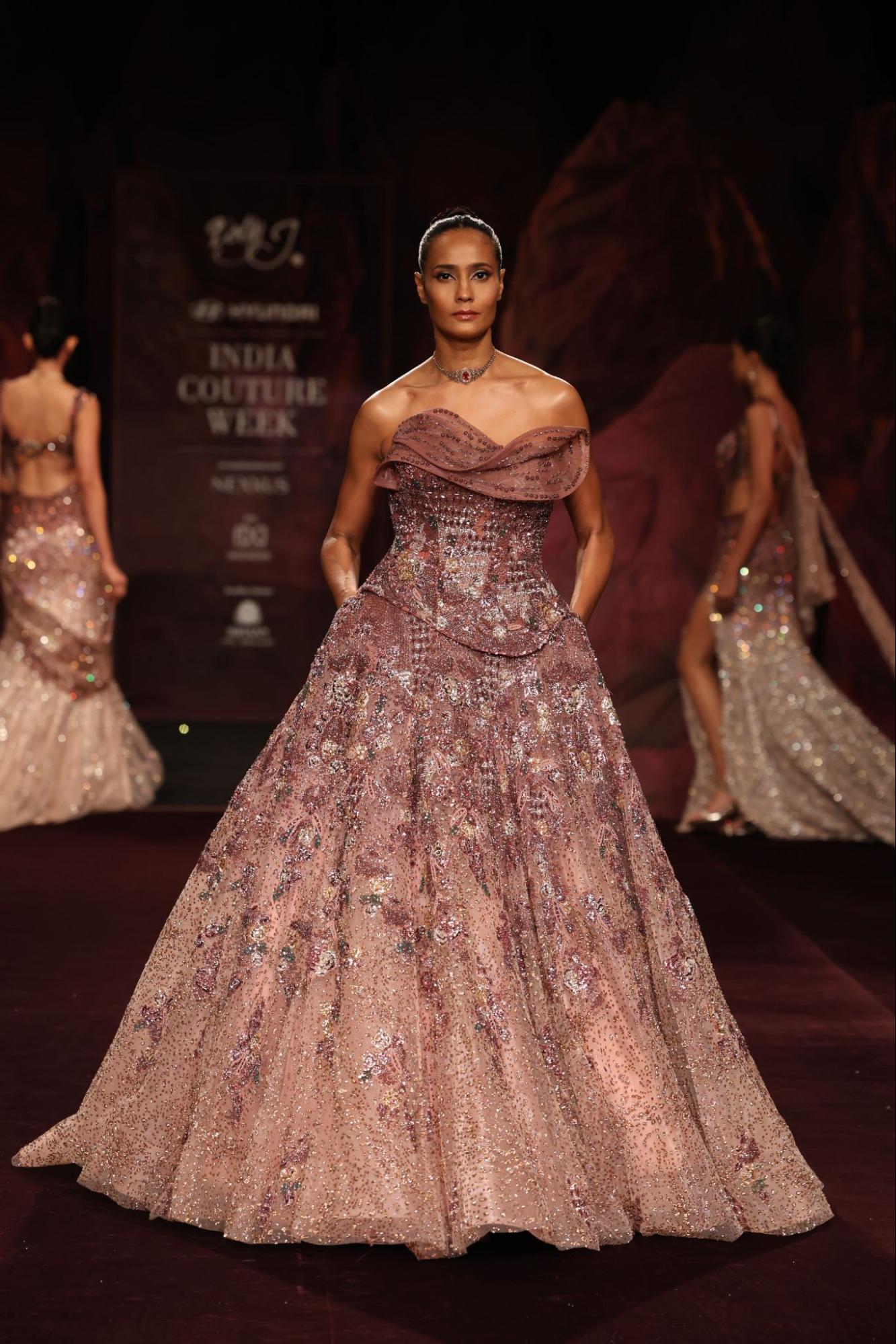
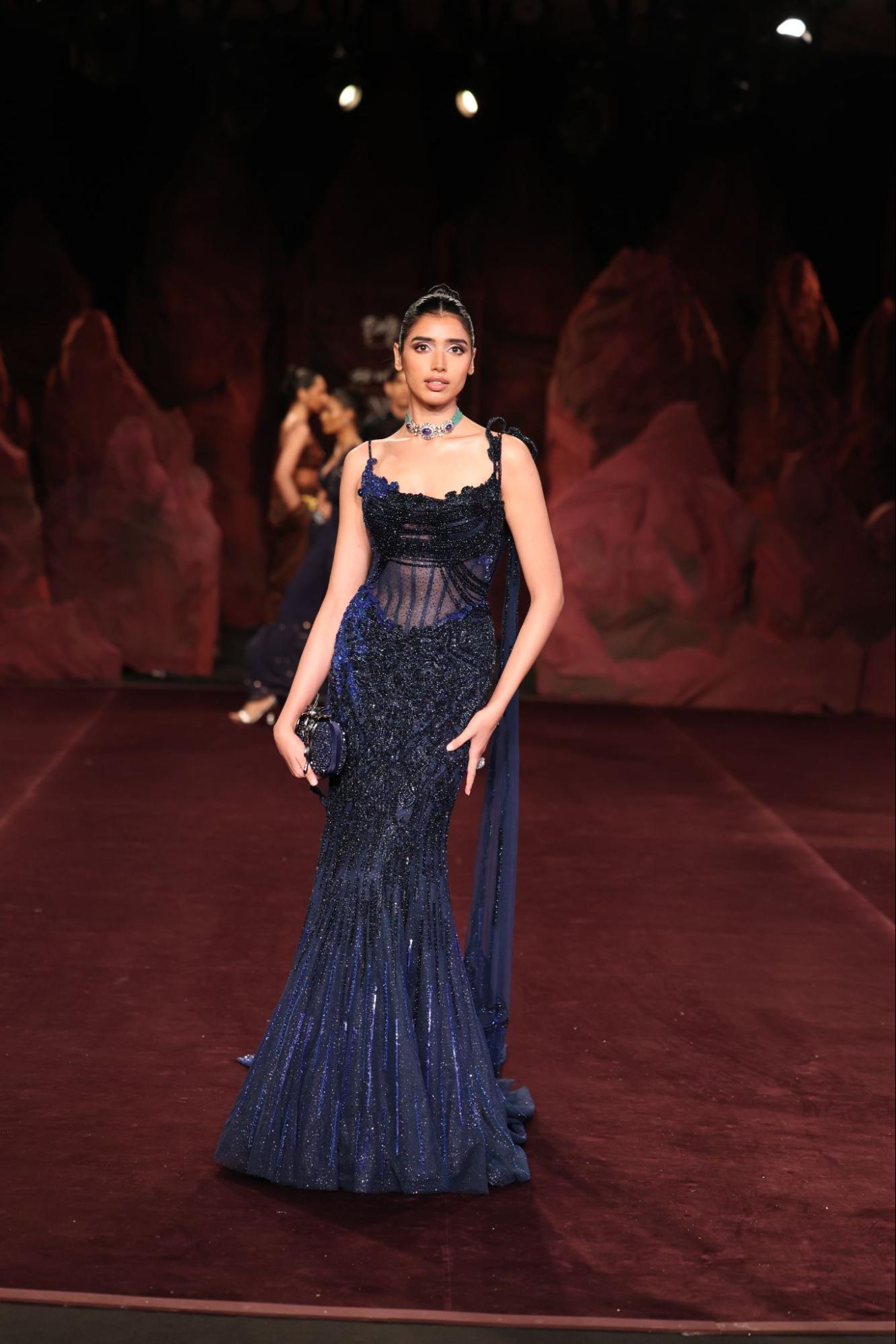
The different silhouettes of the night
Menswear, too, emerged as one of the show’s subtle strengths. Rather than serving merely as transitional looks between womenswear, the tailored jackets, layering and richly textured-velvet, tonal brocade-the evening ensembles stood confidently on their own. They matched the collection’s palette while bringing a softer, contemporary interpretation of formal menswear to the runway.
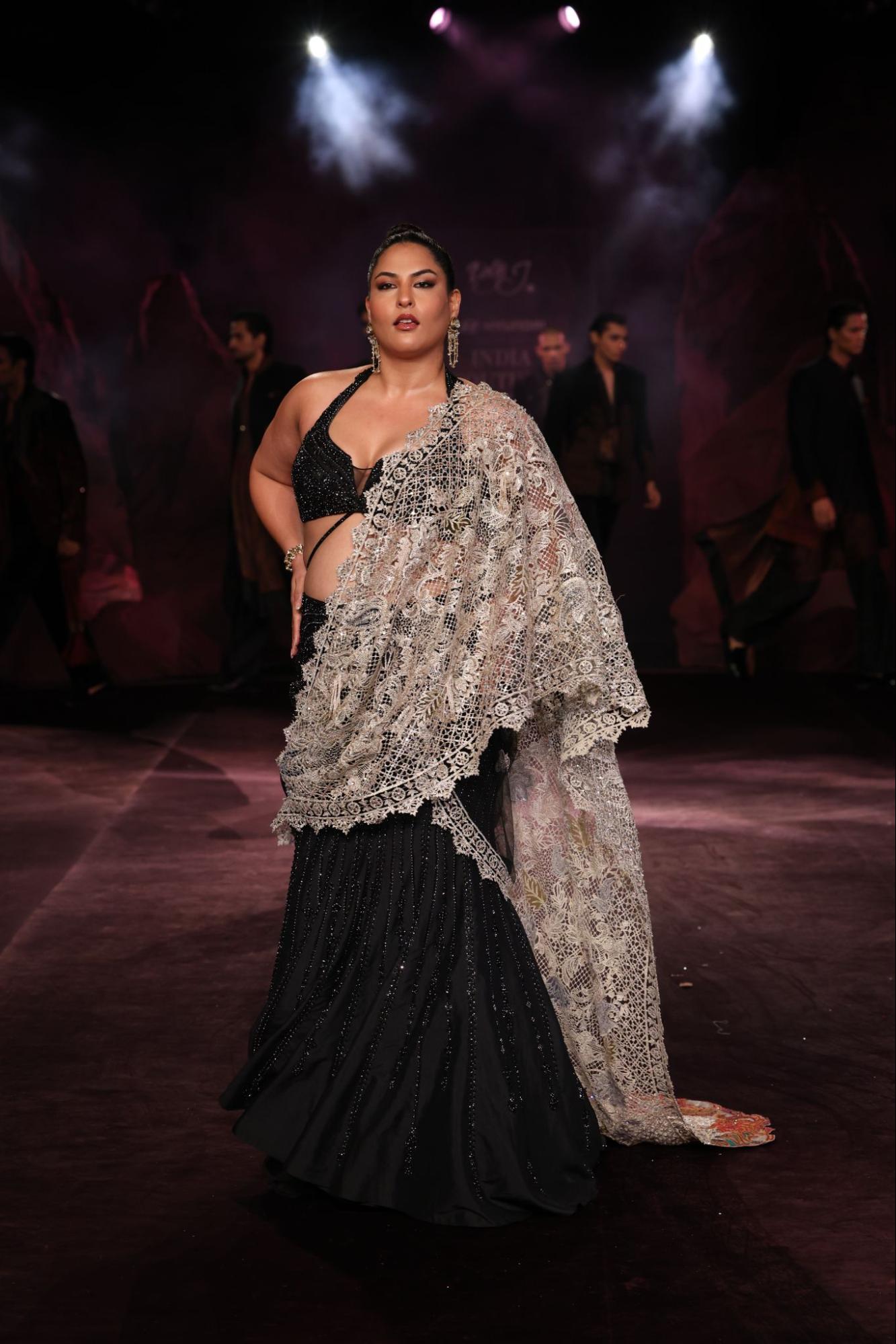
The show concluded with Vaani Kapoor, marking the first celebrity showstopper of FDCI’s Hyundai India Couture Week 2026. She closed the runway in a deep wine-hued, heavily embellished ensemble featuring an off-shoulder sculpted blouse, a draped sari-inspired skirt with a dramatic thigh-high slit, and a flowing embellished pallu. Equal parts sensual and regal, the look perfectly encapsulated the collection’s central message, that contemporary couture can embrace softness while projecting undeniable strength.

Vaani Kapoor walked as the showstopper for Dolly J
Founded by Dolly Jhunjhunwala, Dolly J has, over the years, built its identity as an Indian luxury label defined by meticulous craftsmanship. The house has long drawn on heritage techniques, Lucknowi chikankari, zardozi, and Banarasi weaves sourced from skilled artisan clusters across India. Dolly’s own introduction to design came early, learning at her mother’s fashion studio before building this into one of India’s recognisable bridal-couture names. That same juxtaposition; old-world hand embroidery against modern, wearable silhouettes has remained the throughline of the label ever since, and it was very much on display in BRĀHM.
Dolly J has built her reputation on glamour, and BRĀHM stayed true to that identity while refining it for today’s couture client. The palette was more expansive and the styling less dependent on excess, allowing craftsmanship to remain the focal point.
BRĀHM refined what the label has always done best: meticulous embellishment, fluid femininity and occasion dressing that feels both timeless and unmistakably modern.
TO BE CONTINUED, FOR SUBSCRIBERS ONLY.
This is where the surface ends and the reporting begins.
The complete piece, the full archive, and access to The French Press Circle. Reporting answerable only to its readers.
Already a subscriber ?
Login
Read these on the house, with our compliments.
A selection from the current issue, open to all readers. Read them in full. The rest is one decision away.



Dolly J opened BRĀHM with her signature design language. The first few looks belonged unmistakably to the bride, embroidered lehengas in classic reds with intricate zardozi work, ornate veils, heirloom-worthy embellishments and the kind of craftsmanship that has long defined the designer’s couture vocabulary. The narrative unfolded as the show proceeded.
The opening soundtrack immediately established the show’s mood. Opening with Mahishasura Mardini, the runway carried an unmistakable energy of resilience and authority. We saw that sense of power translate into the clothes themselves. While undeniably glamorous, these were garments designed for women who command attention rather than simply occupy it.
Dolly J's 'BRĀHM' takes its name and soul from the Brahma Kamal, the rare Himalayan bloom long revered as a symbol of purity and spiritual awakening. Rather than reaching for grandeur through excess, the collection finds its power in restraint where every silhouette conceived as an expression of embodied strength, where embellishment reads like poetry. Intricate jali work and delicate kashidakari embroidery move throughout. The palette mirrors the many moods of the Himalayas from dusk to dawn – deep reds, golds, earthy rusts and wines meeting pinks, and ivories.
Instead of relying on one dominant palette, BRĀHM progressed through colour. Vermilion oranges presented first, which then gave way to rich reds before melting into bright pinks, muted champagnes, smoky blues, deep maroons and browns. The gradual transitions created distinct chapters within the show, allowing each colour story to captivate the room while remaining part of a cohesive whole.
A full range of colours ran through Dolly J's collection
What tied these chapters together was Dolly J’s unmistakable command over embellishment. Sequins, crystals, beads, metallic embroidery and intricate thread work layered effortlessly over sheer tulles and fluid drapes. The collection leaned heavily into shimmer, yet did not feel excessive because the silhouettes remained light but still contemporary. It included zardozi and kashidakari work proving the range of Indian textiles.
Zardozi at its finest on signature red bridal lehengas.
Lace and paisley, paired for one of the most striking looks of the show.
Kashidakari embroidery meets contemporary menswear tailoring.
Sequins ruled at Dolly J's showcase
One of the collection’s strongest visual signatures and a personal favourite to watch was the recurring use of ombré. Lehengas and gowns dissolved seamlessly from one hue into another, reds fading into blush, pinks melting into ivory. The break from the monotonous colours with this use of gradient work was a refreshing change. Dolly J allowed it to move across the garment, giving familiar silhouettes a renewed sense of depth.
Cathedral balm gowns complete with concealed pockets offered a subtle reminder that couture can accommodate practicality without compromising elegance. Fishtail-cut lehengas were back in full swing and the pallu saw itself in a new, modern drape. They were small details, but one that reflected changing expectations of couture tonight.
The different silhouettes of the night
Menswear, too, emerged as one of the show’s subtle strengths. Rather than serving merely as transitional looks between womenswear, the tailored jackets, layering and richly textured-velvet, tonal brocade-the evening ensembles stood confidently on their own. They matched the collection’s palette while bringing a softer, contemporary interpretation of formal menswear to the runway.
The show concluded with Vaani Kapoor, marking the first celebrity showstopper of FDCI’s Hyundai India Couture Week 2026. She closed the runway in a deep wine-hued, heavily embellished ensemble featuring an off-shoulder sculpted blouse, a draped sari-inspired skirt with a dramatic thigh-high slit, and a flowing embellished pallu. Equal parts sensual and regal, the look perfectly encapsulated the collection’s central message, that contemporary couture can embrace softness while projecting undeniable strength.
Vaani Kapoor walked as the showstopper for Dolly J
Founded by Dolly Jhunjhunwala, Dolly J has, over the years, built its identity as an Indian luxury label defined by meticulous craftsmanship. The house has long drawn on heritage techniques, Lucknowi chikankari, zardozi, and Banarasi weaves sourced from skilled artisan clusters across India. Dolly’s own introduction to design came early, learning at her mother’s fashion studio before building this into one of India’s recognisable bridal-couture names. That same juxtaposition; old-world hand embroidery against modern, wearable silhouettes has remained the throughline of the label ever since, and it was very much on display in BRĀHM.
Dolly J has built her reputation on glamour, and BRĀHM stayed true to that identity while refining it for today’s couture client. The palette was more expansive and the styling less dependent on excess, allowing craftsmanship to remain the focal point.
BRĀHM refined what the label has always done best: meticulous embellishment, fluid femininity and occasion dressing that feels both timeless and unmistakably modern.
TO BE CONTINUED, FOR SUBSCRIBERS ONLY.
This is where the surface ends and the reporting begins.
The complete piece, the full archive, and access to The French Press Circle. Reporting answerable only to its readers.
Already a subscriber ?
Login
Read these on the house, with our compliments.
A selection from the current issue, open to all readers. Read them in full. The rest is one decision away.