
There’s a particular kind of frame the West has reserved for India, one that hasn’t changed in decades. Saffron robes, dusty lanes, wide-eyed children, a backdrop just exotic enough to photograph well. It’s not malicious, exactly. It’s just selective. And once you notice it, you start noticing it everywhere, in music videos, in Oscar-winning films, in the travel reels of strangers who spent four days in a country of 1.4 billion people and came back with a “story.” This is about that frame, and everything it leaves out.
I remember sitting in a mass communication lecture during my bachelor’s, half-distracted, half-curious, when our professor dimmed the lights and played a music video. It was Coldplay’s “Hymn for the Weekend,” with Beyoncé draped in jewels, wandering through Mumbai’s lanes during Holi, surrounded by saffron-clad sadhus and children with painted faces. The class hummed along. It’s a catchy song, after all. Then she paused the video and asked one question: “What did you just learn about India?”
Nobody answered immediately. We sat there, a room full of Indian students, trying to reconcile what we’d just watched with the lives we actually lived. India on screen was colourful, yes, but also dusty, crumbling, and frozen in a pre-modern haze. There were no malls, no airports, no skyline, no Wi-Fi, none of the India we got up and commuted through every single day. And that disconnect has stayed with me for years, because it wasn’t really about one song. It was about a pattern.
Coldplay: The Hymn for the weekend- https://www.youtube.com/watch?v=YykjpeuMNEk&list=RDYykjpeuMNEk&start_radio=1
One Frame, Forever Looping
Hymn for the Weekend has been criticised for reproducing reductive tropes originally meant to preserve Western dominance, turning India into an exotic playground that rich outsiders can explore and extract cultural capital from. And honestly, that criticism lands. The video wasn’t malicious, but it was selective in a very specific way. It picked the temples, the street kids, the chaos, the colour, and left out everything else. No high-rises. No metro lines. No coffee chains on every corner. Just an aesthetic, curated like a Pinterest board titled “exotic.” Content and marketing strategist Vishwas Nanda puts it plainly: the camera almost never holds India’s multiplicity, “it picks one note and plays it for two minutes because that note is legible to an audience that’s never been there.”
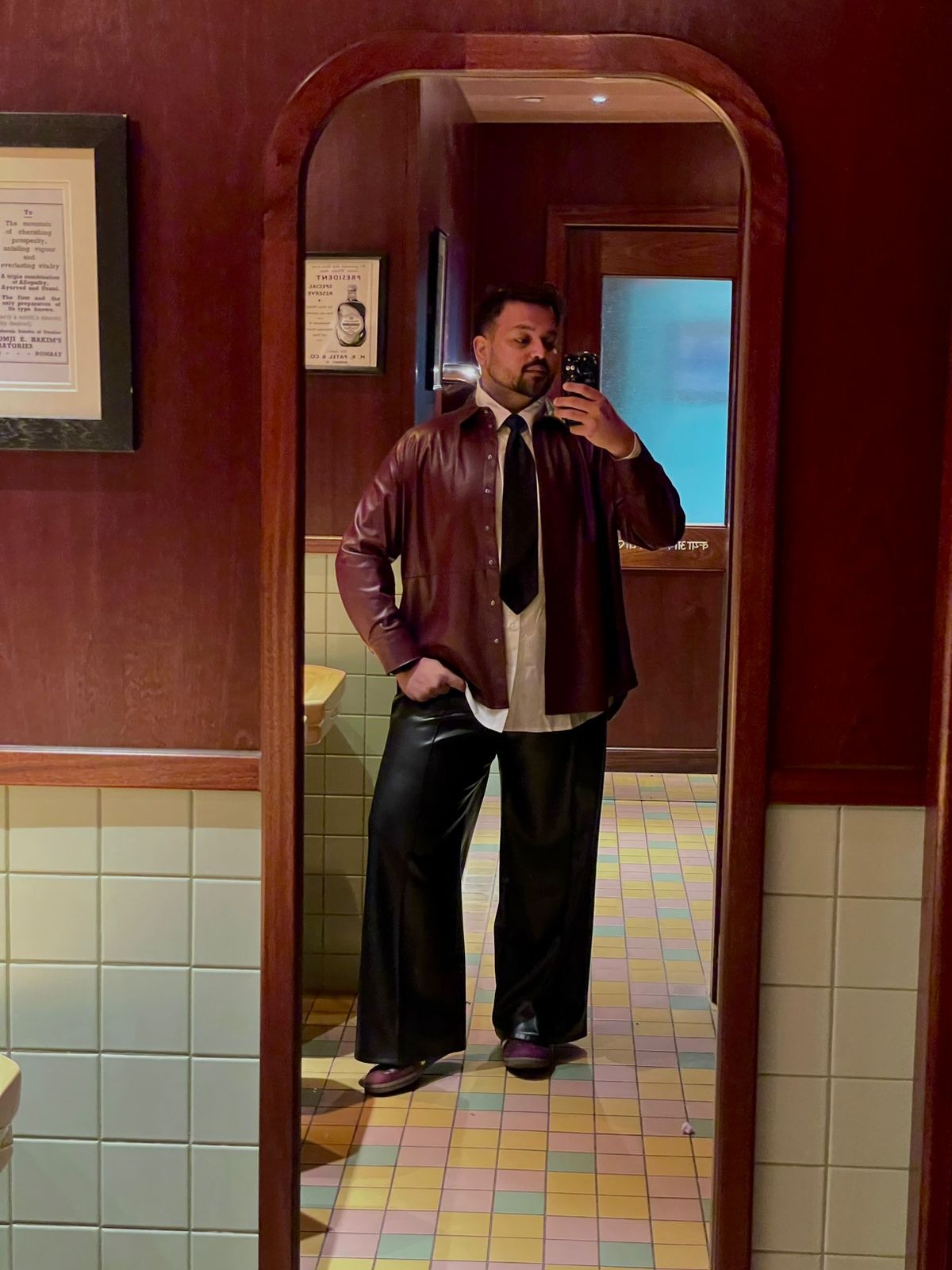
Vishwas Nanda, Content & Marketing Strategist
This isn’t new, and it isn’t isolated to one band. Slumdog Millionaire, the 2008 film by British director Danny Boyle, became one of the most awarded films through this lens, centred on an 18-year-old from Mumbai trying to win a TV quiz show. It swept the Oscars. The world watched it, applauded it, and walked away believing they understood India a little better. The film largely ignored the country’s rapidly evolving reality, focusing instead on slums, mud huts, and decaying buildings, leading audiences to believe India was simply underdeveloped.
SLUMDOG MILLIONAIRE: https://www.youtube.com/watch?v=IGtXiJ9HZjs
What gets left out is almost more telling than what gets included. India has put its own communications satellite into orbit, built a nuclear submarine, and its mathematicians gave the world the Fibonacci sequence centuries before the West rediscovered it. None of that fits the frame, though, because that frame was never designed to be accurate. It was designed to be marketable.
The Same Five Shots, On Repeat
Whenever India enters a Western frame, the same inventory appears with almost clockwork reliability: crowded streets, dust, pollution, broken roads, and cows wandering through traffic, set up in deliberate contrast against the cleanliness of the West, even though the biggest Indian cities are full of expressways and skyscrapers that almost never make it onto camera. And the cow thing genuinely cracks me up, because anyone who actually visits will notice cows mostly belong to rural, pastoral areas and are rarely part of city life, the way films suggest.
It’s not just Slumdog either. Films like The Darjeeling Limited or Million Dollar Arm tend to flatten entire cities into nothing but shoddy shacks and barefoot children, generalising the whole country as a single undeveloped sprawl, even when Indian filmmakers shooting in similar locations are careful to frame it as one specific neighbourhood rather than the nation itself.
Even superhero movies haven’t resisted the urge. When The Avengers featured scenes set in Kolkata slums, the reaction back home was sharp. A software professional was quoted as saying it had become something of a habit for Western productions to show Indian slums alongside a foreigner stepping in to help, while a bank employee simply asked when Hollywood would stop profiting off the country’s poverty. DJ Ayushman Jhawar goes further, pointing to something the conversation rarely names: “The West doesn’t just pick poor India. It picks a specific complexion of poor India. Darker skin is associated with dust and struggle, while lighter skin is associated with glamour. India is never shown as a whole; the West shows an India it can patronise.”

Ayushman Jhanwar, DJ
The India That Never Makes the Cut
Here’s the part that frustrates me most, and it’s the part I keep coming back to whenever I’m working on anything related to brand or culture for international clients. The India that gets exported through pop culture is one frozen sometime around the early 2000s. Meanwhile, the actual India, the one I live in, wake up in, and work in every day, looks nothing like that.
This is a country where global luxury houses are opening flagship stores because the appetite for high fashion here isn’t a trend; it’s a market force. The embroidery, the textiles, the handwork behind some of the world’s most coveted couture pieces often originates quietly in Indian workshops that never make it into a glossy magazine spread. Designer Jatin Malik is unambiguous about the scale of that erasure: “International luxury houses have, for decades, benefited enormously from Indian embroidery and craftsmanship, yet the recognition and mileage they receive are disproportionately larger than the credit given to the artisans and traditions they build upon.” The backend of a couture garment, as he puts it, is really the front end; craftsmanship is the backbone on which brands are built, whether or not the label ever says so.

Jatin Malik, Designer
And look, I’m not saying the poverty doesn’t exist, or that showing it is inherently wrong. It does exist, and pretending otherwise would be its own kind of dishonesty. Even within India, there’s been pushback against this gaze; the actor Nargis Dutt once criticised acclaimed filmmaker Satyajit Ray’s work for leaning on poverty, arguing it only found international praise because Western audiences wanted to see India in a diminished state. That tension isn’t new. It’s generational. And it has its own uncomfortable logic, as Ayushman points out: “Poverty campaigns win awards. Why was only Slumdog Millionaire made? Why not a story about the richest aristocracy? Both exist. And then classism inside India made it worse; the elite didn’t want their complex story told either.”
Influencers, Hostels, and the Hunt for “Authentic”
Then there’s the influencer economy, which somehow makes all of this worse in a quieter way. A huge number of creators who travel to India gravitate toward the same handful of experiences: the cheap street food, the budget hostels, the “spiritual awakening” narrative shot against peeling walls. It’s not that these places don’t exist or shouldn’t be shown. It’s that they become the entire story, packaged as “real India” for an audience that has no reference point to question it.
Meanwhile, the rooftop bars, the design studios, the five-star wellness retreats, the fashion weeks, the architecture firms reshaping entire skylines, none of that gets the same hashtag energy. It doesn’t fit the “backpacker discovers soul” arc that performs well on a feed. Vishwas Nanda traces this back to something structural: the colonial-era visual grammar of “exotic but impoverished” was built over 150 years and is cheap to reproduce because everyone already recognises it. “Indian couture doesn’t give the viewer that emotional transaction,” he says, referring to the saviour-complex comfort that poverty imagery offers Western audiences. “So it gets passed over even when it’s right there.”
We Know Exactly Who We Are
This isn’t just about hurt pride or wanting better PR. As one Indian commentator put it, unless filmmakers start showing a country that includes its middle and upper classes with all their complexities, the world will keep reducing India to a montage of dusty railway tracks, and that responsibility doesn’t sit only with foreign directors but with Indian storytellers too, who often choose the same well-worn narratives when pitching to international audiences.
Vishwas resists framing it as a simple either/or. “It’s not ‘the West’ as a monolith versus ‘Indians with platforms’ as a monolith,” he says. “It’s an incentive structure. Western productions reach for the familiar image because it tests well; Indian creators with global reach often do too, because it’s the version of India that travels, gets funding, wins the festival slot.” Ayushman agrees, but with sharper edges: “The ones who do make it often make it by not challenging the narrative. The world’s biggest artists come to India to perform in front of millions, yet they choose not to show the real India.”
Representation shapes perception, and perception shapes everything from tourism and trade to how seriously a country is taken on the global stage. We are proud of our culture, our colours, our festivals, our craft, all of it. But pride in that culture is exactly why it shouldn’t be the only thing the camera ever lingers on. India is not a single note. It’s an entire composition, and the world keeps hitting replay on the same eight bars. Jatin Malik, who has spent years building a label rooted in Indian craft without flattening it for outside consumption, puts the responsibility back where it belongs: “Authenticity and a strong point of view are what ultimately make a brand timeless. The brand should shape the audience, not the other way around.” The same logic applies well beyond fashion.
Ask either of them what image they’d put in front of a global audience, and the answers are telling. Ayushman doesn’t reach for a landmark or a skyline; he reaches for sound. “The pandits playing instruments in the South, all the way to the Himalayan people producing music from the sounds of the valley. The Carnatic rhythm that became the foundation of a genre the world dances to, and how India never got credited for it. That story would make the world feel indebted to India.” Vishwash goes quieter still: a wide shot of an ordinary middle-class apartment in Indore or Kochi, laundry on the line, a kid doing homework on a tablet, a grandmother on a video call. “No poverty, no opulence, no spirituality performed for the camera,” he says. “Just the unremarkable texture of a billion lives that Western media has never bothered to find interesting.”
Both answers, different as they are, point at the same thing: the India that exists between the postcard and the poverty shot. The one that has always been there, just never invited in front of the lens.
I often think back to that classroom moment, watching Beyoncé dance through a Holi crowd while my classmates and I sat, slightly confused about which story we were even supposed to be watching. Maybe that confusion was the point all along. Maybe it’s time the cameras finally turned toward the India that’s been standing there the whole time, just out of frame.
Borgen Project (2024) India's Cinema and Poverty. Available at: https://borgenproject.org/indias-cinema-and-poverty/
Ripple Foundation Wave Blog (2025) The Portrayal of India in the West. Available at: https://blog.ripplefoundation.ca/the-portrayal-of-india-in-the-west/
ScreenRant (2022) 15 Stereotypes Indians Are Tired Of Seeing In Western Movies & TV. Available at: https://screenrant.com/indian-stereotypes-western-film-tv/
The Quint (2017) Dear Academy, It's Time You Looked Beyond Poverty in Indian Films. Available at: https://www.thequint.com/entertainment/why-does-the-academy-seem-to-have-a-penchant-for-choosing-indian-films-that-highlight-poverty-slums-and-oppression
NBC News (2012) Indians Angered by Avengers Slum Scenes. Available at: https://www.nbcnews.com/pop-culture/pop-culture-news/indians-angered-avengers-slum-scenes-flna757564
TO BE CONTINUED, FOR SUBSCRIBERS ONLY.
This is where the surface ends and the reporting begins.
The complete piece, the full archive, and access to The French Press Circle. Reporting answerable only to its readers.
Already a subscriber ?
Login
Read these on the house, with our compliments.
A selection from the current issue, open to all readers. Read them in full. The rest is one decision away.







There’s a particular kind of frame the West has reserved for India, one that hasn’t changed in decades. Saffron robes, dusty lanes, wide-eyed children, a backdrop just exotic enough to photograph well. It’s not malicious, exactly. It’s just selective. And once you notice it, you start noticing it everywhere, in music videos, in Oscar-winning films, in the travel reels of strangers who spent four days in a country of 1.4 billion people and came back with a “story.” This is about that frame, and everything it leaves out.
I remember sitting in a mass communication lecture during my bachelor’s, half-distracted, half-curious, when our professor dimmed the lights and played a music video. It was Coldplay’s “Hymn for the Weekend,” with Beyoncé draped in jewels, wandering through Mumbai’s lanes during Holi, surrounded by saffron-clad sadhus and children with painted faces. The class hummed along. It’s a catchy song, after all. Then she paused the video and asked one question: “What did you just learn about India?”
Nobody answered immediately. We sat there, a room full of Indian students, trying to reconcile what we’d just watched with the lives we actually lived. India on screen was colourful, yes, but also dusty, crumbling, and frozen in a pre-modern haze. There were no malls, no airports, no skyline, no Wi-Fi, none of the India we got up and commuted through every single day. And that disconnect has stayed with me for years, because it wasn’t really about one song. It was about a pattern.
Coldplay: The Hymn for the weekend- https://www.youtube.com/watch?v=YykjpeuMNEk&list=RDYykjpeuMNEk&start_radio=1
One Frame, Forever Looping
Hymn for the Weekend has been criticised for reproducing reductive tropes originally meant to preserve Western dominance, turning India into an exotic playground that rich outsiders can explore and extract cultural capital from. And honestly, that criticism lands. The video wasn’t malicious, but it was selective in a very specific way. It picked the temples, the street kids, the chaos, the colour, and left out everything else. No high-rises. No metro lines. No coffee chains on every corner. Just an aesthetic, curated like a Pinterest board titled “exotic.” Content and marketing strategist Vishwas Nanda puts it plainly: the camera almost never holds India’s multiplicity, “it picks one note and plays it for two minutes because that note is legible to an audience that’s never been there.”
Vishwas Nanda, Content & Marketing Strategist
This isn’t new, and it isn’t isolated to one band. Slumdog Millionaire, the 2008 film by British director Danny Boyle, became one of the most awarded films through this lens, centred on an 18-year-old from Mumbai trying to win a TV quiz show. It swept the Oscars. The world watched it, applauded it, and walked away believing they understood India a little better. The film largely ignored the country’s rapidly evolving reality, focusing instead on slums, mud huts, and decaying buildings, leading audiences to believe India was simply underdeveloped.
SLUMDOG MILLIONAIRE: https://www.youtube.com/watch?v=IGtXiJ9HZjs
What gets left out is almost more telling than what gets included. India has put its own communications satellite into orbit, built a nuclear submarine, and its mathematicians gave the world the Fibonacci sequence centuries before the West rediscovered it. None of that fits the frame, though, because that frame was never designed to be accurate. It was designed to be marketable.
The Same Five Shots, On Repeat
Whenever India enters a Western frame, the same inventory appears with almost clockwork reliability: crowded streets, dust, pollution, broken roads, and cows wandering through traffic, set up in deliberate contrast against the cleanliness of the West, even though the biggest Indian cities are full of expressways and skyscrapers that almost never make it onto camera. And the cow thing genuinely cracks me up, because anyone who actually visits will notice cows mostly belong to rural, pastoral areas and are rarely part of city life, the way films suggest.
It’s not just Slumdog either. Films like The Darjeeling Limited or Million Dollar Arm tend to flatten entire cities into nothing but shoddy shacks and barefoot children, generalising the whole country as a single undeveloped sprawl, even when Indian filmmakers shooting in similar locations are careful to frame it as one specific neighbourhood rather than the nation itself.
Even superhero movies haven’t resisted the urge. When The Avengers featured scenes set in Kolkata slums, the reaction back home was sharp. A software professional was quoted as saying it had become something of a habit for Western productions to show Indian slums alongside a foreigner stepping in to help, while a bank employee simply asked when Hollywood would stop profiting off the country’s poverty. DJ Ayushman Jhawar goes further, pointing to something the conversation rarely names: “The West doesn’t just pick poor India. It picks a specific complexion of poor India. Darker skin is associated with dust and struggle, while lighter skin is associated with glamour. India is never shown as a whole; the West shows an India it can patronise.”
Ayushman Jhanwar, DJ
The India That Never Makes the Cut
Here’s the part that frustrates me most, and it’s the part I keep coming back to whenever I’m working on anything related to brand or culture for international clients. The India that gets exported through pop culture is one frozen sometime around the early 2000s. Meanwhile, the actual India, the one I live in, wake up in, and work in every day, looks nothing like that.
This is a country where global luxury houses are opening flagship stores because the appetite for high fashion here isn’t a trend; it’s a market force. The embroidery, the textiles, the handwork behind some of the world’s most coveted couture pieces often originates quietly in Indian workshops that never make it into a glossy magazine spread. Designer Jatin Malik is unambiguous about the scale of that erasure: “International luxury houses have, for decades, benefited enormously from Indian embroidery and craftsmanship, yet the recognition and mileage they receive are disproportionately larger than the credit given to the artisans and traditions they build upon.” The backend of a couture garment, as he puts it, is really the front end; craftsmanship is the backbone on which brands are built, whether or not the label ever says so.
Jatin Malik, Designer
And look, I’m not saying the poverty doesn’t exist, or that showing it is inherently wrong. It does exist, and pretending otherwise would be its own kind of dishonesty. Even within India, there’s been pushback against this gaze; the actor Nargis Dutt once criticised acclaimed filmmaker Satyajit Ray’s work for leaning on poverty, arguing it only found international praise because Western audiences wanted to see India in a diminished state. That tension isn’t new. It’s generational. And it has its own uncomfortable logic, as Ayushman points out: “Poverty campaigns win awards. Why was only Slumdog Millionaire made? Why not a story about the richest aristocracy? Both exist. And then classism inside India made it worse; the elite didn’t want their complex story told either.”
Influencers, Hostels, and the Hunt for “Authentic”
Then there’s the influencer economy, which somehow makes all of this worse in a quieter way. A huge number of creators who travel to India gravitate toward the same handful of experiences: the cheap street food, the budget hostels, the “spiritual awakening” narrative shot against peeling walls. It’s not that these places don’t exist or shouldn’t be shown. It’s that they become the entire story, packaged as “real India” for an audience that has no reference point to question it.
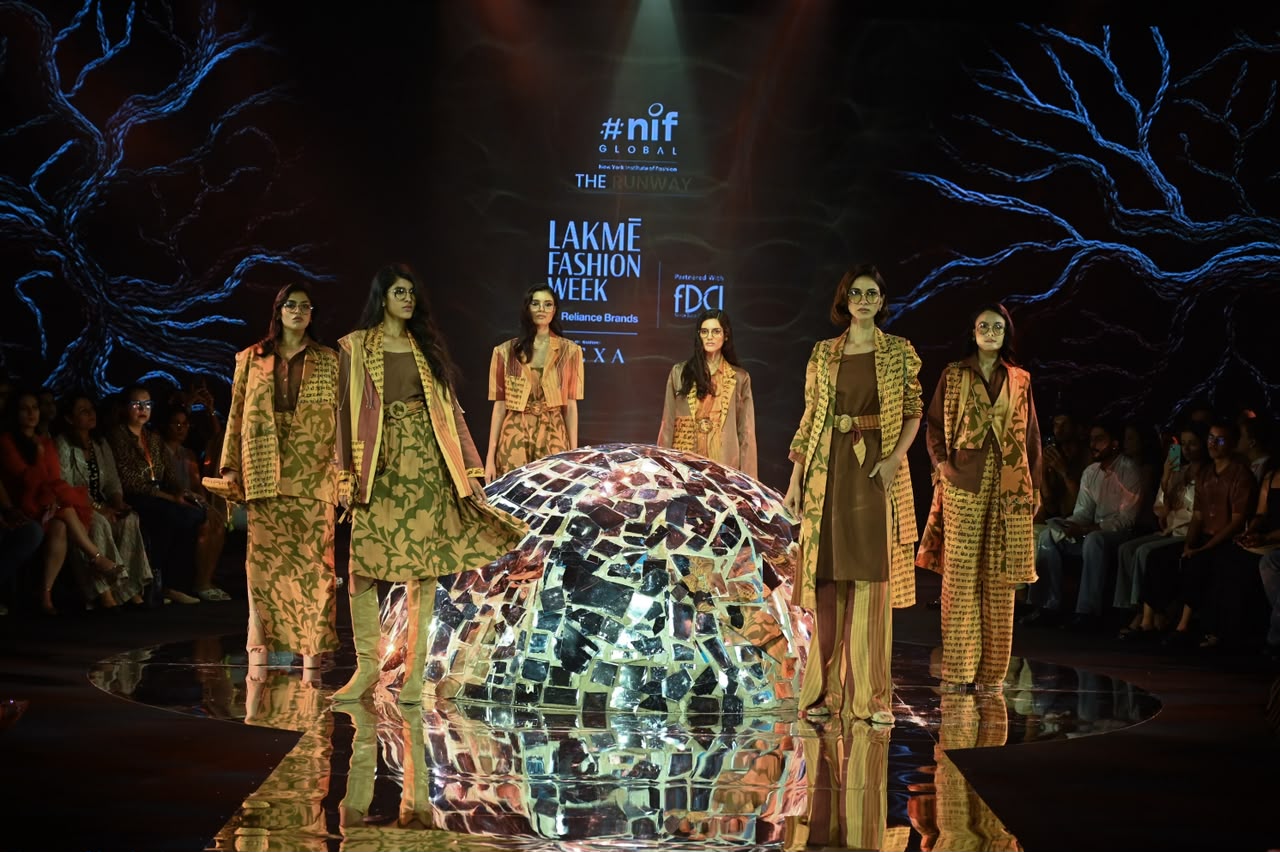
Meanwhile, the rooftop bars, the design studios, the five-star wellness retreats, the fashion weeks, the architecture firms reshaping entire skylines, none of that gets the same hashtag energy. It doesn’t fit the “backpacker discovers soul” arc that performs well on a feed. Vishwas Nanda traces this back to something structural: the colonial-era visual grammar of “exotic but impoverished” was built over 150 years and is cheap to reproduce because everyone already recognises it. “Indian couture doesn’t give the viewer that emotional transaction,” he says, referring to the saviour-complex comfort that poverty imagery offers Western audiences. “So it gets passed over even when it’s right there.”
We Know Exactly Who We Are
This isn’t just about hurt pride or wanting better PR. As one Indian commentator put it, unless filmmakers start showing a country that includes its middle and upper classes with all their complexities, the world will keep reducing India to a montage of dusty railway tracks, and that responsibility doesn’t sit only with foreign directors but with Indian storytellers too, who often choose the same well-worn narratives when pitching to international audiences.
Vishwas resists framing it as a simple either/or. “It’s not ‘the West’ as a monolith versus ‘Indians with platforms’ as a monolith,” he says. “It’s an incentive structure. Western productions reach for the familiar image because it tests well; Indian creators with global reach often do too, because it’s the version of India that travels, gets funding, wins the festival slot.” Ayushman agrees, but with sharper edges: “The ones who do make it often make it by not challenging the narrative. The world’s biggest artists come to India to perform in front of millions, yet they choose not to show the real India.”
Representation shapes perception, and perception shapes everything from tourism and trade to how seriously a country is taken on the global stage. We are proud of our culture, our colours, our festivals, our craft, all of it. But pride in that culture is exactly why it shouldn’t be the only thing the camera ever lingers on. India is not a single note. It’s an entire composition, and the world keeps hitting replay on the same eight bars. Jatin Malik, who has spent years building a label rooted in Indian craft without flattening it for outside consumption, puts the responsibility back where it belongs: “Authenticity and a strong point of view are what ultimately make a brand timeless. The brand should shape the audience, not the other way around.” The same logic applies well beyond fashion.
Ask either of them what image they’d put in front of a global audience, and the answers are telling. Ayushman doesn’t reach for a landmark or a skyline; he reaches for sound. “The pandits playing instruments in the South, all the way to the Himalayan people producing music from the sounds of the valley. The Carnatic rhythm that became the foundation of a genre the world dances to, and how India never got credited for it. That story would make the world feel indebted to India.” Vishwash goes quieter still: a wide shot of an ordinary middle-class apartment in Indore or Kochi, laundry on the line, a kid doing homework on a tablet, a grandmother on a video call. “No poverty, no opulence, no spirituality performed for the camera,” he says. “Just the unremarkable texture of a billion lives that Western media has never bothered to find interesting.”
Both answers, different as they are, point at the same thing: the India that exists between the postcard and the poverty shot. The one that has always been there, just never invited in front of the lens.
I often think back to that classroom moment, watching Beyoncé dance through a Holi crowd while my classmates and I sat, slightly confused about which story we were even supposed to be watching. Maybe that confusion was the point all along. Maybe it’s time the cameras finally turned toward the India that’s been standing there the whole time, just out of frame.
Borgen Project (2024) India's Cinema and Poverty. Available at: https://borgenproject.org/indias-cinema-and-poverty/
Ripple Foundation Wave Blog (2025) The Portrayal of India in the West. Available at: https://blog.ripplefoundation.ca/the-portrayal-of-india-in-the-west/
ScreenRant (2022) 15 Stereotypes Indians Are Tired Of Seeing In Western Movies & TV. Available at: https://screenrant.com/indian-stereotypes-western-film-tv/
The Quint (2017) Dear Academy, It's Time You Looked Beyond Poverty in Indian Films. Available at: https://www.thequint.com/entertainment/why-does-the-academy-seem-to-have-a-penchant-for-choosing-indian-films-that-highlight-poverty-slums-and-oppression
NBC News (2012) Indians Angered by Avengers Slum Scenes. Available at: https://www.nbcnews.com/pop-culture/pop-culture-news/indians-angered-avengers-slum-scenes-flna757564
TO BE CONTINUED, FOR SUBSCRIBERS ONLY.
This is where the surface ends and the reporting begins.
The complete piece, the full archive, and access to The French Press Circle. Reporting answerable only to its readers.
Already a subscriber ?
Login
Read these on the house, with our compliments.
A selection from the current issue, open to all readers. Read them in full. The rest is one decision away.