
The Hierarchy Nobody Talks About: Being at Cannes vs Belonging to Cannes
Before we get into the films, the jury, and the deals, let us say something that the industry whispers and the internet ignores entirely.
There is a hierarchy at Cannes. It is real, it is immediately legible to anyone who works in film, luxury, or global media, and it separates people within approximately three seconds of conversation.
It goes like this.
There is being at Cannes. There is being photographed at Cannes. There is being invited into Cannes. And then there is actually belonging to the Cannes ecosystem. These are four entirely different things, and only two of them carries lasting weight.
The institutional spine of Cannes 2026 runs through its official partners: Chopard, L’Oreal Paris, Kering, BMW, Campari, Air France, Nespresso, Dessange, and Orient Express Sailing Yachts. These are access architectures. When you attend Cannes through one of these partners, you are entering the festival’s own circulatory system.
A Chopard guest list is a room where Oscar winners, jury members, global luxury clients, studio executives, and financiers sit at the same table. Kering’s Women in Motion programme is one of the most substantive industry conversations happening anywhere on the Croisette, with real gravitational pull. L’Oreal Paris’s presence on the red carpet is one of the most powerful access pipelines at the entire festival, placing talent directly inside official premiere allocations and Palais-level visibility.
Access to the real Cannes flows through premiere invitations, accredited badges, film sales houses, studios, distributors, competition films, and official partner allocations. It does not flow through third-party red carpet packages, yacht-event middlemen, influencer handlers, or what the industry has quietly started calling “walk the carpet” brokers. Most of what gets sold under those arrangements amounts to a step-and-repeat somewhere in the vicinity of Cannes, nowhere near the official staircase of the Palais des Festivals. I was there in 2016 and know this first hand.
The industry knows the difference instantly. Someone attending through a competition film, a sales house, a studio, Chopard, Kering, or L’Oreal Paris carries institutional validation. Someone who has purchased proximity carries optics. The Croisette has always been fluent in this distinction, even when it is too polite to say so out loud.
Inside the industry, when someone announces loudly that they walked Cannes, the unspoken follow-up is always the same: with whom? Because at Cannes, proximity matters. Not the staircase itself.
This is the logic of a festival built entirely on the premise that context is everything. The films screened inside the Palais carry weight because of the rigour of the selection process, the authority of the jury, and the decades of institutional credibility behind every programme. The same principle applies to every room, every dinner, every appearance. Cannes confers legitimacy. But it only confers it on those who enter through the right doors.
There is a version of Cannes that has taken hold in the popular imagination. And it is almost entirely wrong.
In this version, Cannes Film Festival 2026 is a red carpet, a yacht party, a brand activation, a fashion moment. It is the Croisette as catwalk, the Palais as backdrop. It is influencers in ball gowns and perfume launches dressed up as high order events. It is a city that smells of sunscreen and deal anxiety for eleven days every May, and then returns to being a quiet Riviera resort town that serves very good fish.
That version exists. It is loud and well-documented and thoroughly Instagrammed. But it is not Cannes.
Cannes is a film festival. The most prestigious, the most rigorous, the most uncompromising, and in every meaningful sense the most influential film festival in the world. And in 2026, its 79th edition, running from 12 to 23 May, the Festival de Cannes has reasserted that identity with a lineup that reads like a love letter to serious cinema: dense with auteurs, alive with ambition, and entirely uninterested in the noise that has accumulated around its own name.
If you were there in 2016, as some of us were, you remember what the real Cannes feels like. You remember the silence that falls inside the Grand Theatre Lumiere when the lights go down. You remember filmmakers speaking to audiences through the unmediated language of image and sound, with no algorithm between them. You remember that the people in the room, producers, directors, distributors, financiers, programmers, are the people who actually build the global film industry, and they are here to work. The parties are a side effect. The films are the reason.
That Cannes is very much alive in 2026. This is what it looks like.
Cannes Film Festival 2026: Dates, Edition, and Key Facts
The 79th annual Cannes Film Festival runs from 12 to 23 May 2026. Festival director Thierry Fremaux noted that 2,541 feature films were submitted for official selection, roughly 1,000 more than a decade ago, from 141 countries, approaching what he called “Olympic-level numbers.” The selection from that volume: 22 films in Competition for the Palme d’Or, and an expansive Official Selection spanning Un Certain Regard, Cannes Premiere, Out of Competition, Special Screenings, La Cinef, and Cannes Classics. Running alongside as an independent parallel section is the Directors’ Fortnight, focused on independent cinema and emerging filmmakers.
Festival president Iris Knobloch acknowledged the uneasy global backdrop, noting that “we find ourselves in a time of great uncertainty,” and pointed out that the Cannes Film Festival was itself born out of crisis, in 1939, when bringing together artists from around the world “was not a luxury, it was a necessity.” Today, she argued, that mission remains unchanged.
The festival opened on 12 May with Pierre Salvadori’s French period-comedy The Electric Kiss, and closes on 23 May with the Palme d’Or ceremony. Three Honorary Palmes d’Or have been awarded: to Peter Jackson at the opening ceremony, to John Travolta before the world premiere of Propeller One-Way Night Coach, and to Barbra Streisand at the closing ceremony, though Streisand will not attend in person due to a knee injury.
Eleven days. The world’s most powerful film industry. One strip of Mediterranean coastline. The stakes, as always, are everything.
The Cannes 2026 Jury: Park Chan-wook Leads a Formidable Panel
South Korean filmmaker Park Chan-wook serves as jury president for the main competition at Cannes 2026. Park is one of the most formally precise and morally complex directors working in world cinema, the man behind Oldboy, The Handmaiden, and Decision to Leave, and his sensibility will almost certainly pull the jury toward films that are visually rigorous and emotionally unresolved. He does not do tidy.
Alongside Park Chan-wook, the Cannes 2026 jury includes actors Demi Moore, Stellan Skarsgard, Ruth Negga, and Isaach De Bankole, alongside Oscar-winning director Chloe Zhao, Chilean filmmaker Diego Cespedes, Belgian director Laura Wandel, and Ken Loach’s longtime screenwriter Paul Laverty.
The composition matters. Moore returns to Cannes after her starring role in Coralie Fargeat’s The Substance, which won Best Screenplay at Cannes in 2024 and earned her an Oscar nomination. Skarsgard starred in last year’s Grand Prix winner Sentimental Value, directed by Joachim Trier, which went on to win the Oscar for Best International Film. This is a jury that has lived inside Cannes-calibre work, not simply visited it. They know what they are looking for.
Cannes 2026 Films in Competition: The Lineup That Matters
This year’s Competition is, without overstating it, extraordinary. Here are the most anticipated Competition films at Cannes 2026.
Ryusuke Hamaguchi: All of a Sudden

Hamaguchi returns to Cannes for the first time since 2021’s Drive My Car, which took three awards in Competition before winning the Best International Feature Oscar. All of a Sudden marks his first film shot outside Japan, following a woman who runs a struggling nursing home and a stage director with terminal cancer, led by Virginie Efira and Tao Okamoto. The film has earned rave reviews and is widely regarded among the press corps as the outstanding Palme d’Or contender, with Efira also drawing attention as a potential Best Actress candidate. This is the frontrunner. Watch it.
Na Hong-Jin: Hope

A genre thriller following a police chief in a remote South Korean village drawn into a spiralling mystery after a tiger sighting. The cast includes Hwang Jung-min, Zo In-sung, Jung Ho-yeon, Michael Fassbender, and Alicia Vikander. The cinematographer is Hong Kyung-pyo of Parasite. Na Hong-Jin, whose previous films The Chaser, The Yellow Sea, and The Wailing all premiered at Cannes, delivers the most commercially formidable entry in this year’s Competition.
Pawel Pawlikowski: Fatherland
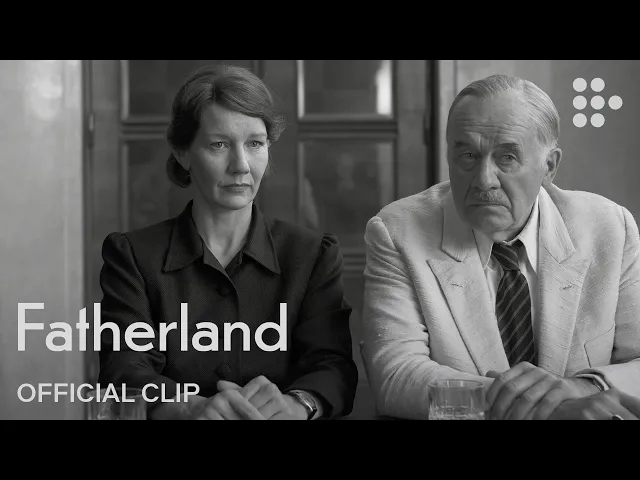
Pawlikowski’s Thomas Mann-inspired postwar road trip stars Sandra Huller, one of the most celebrated European actors currently working. The director of Ida and Cold War has a gift for formal restraint that turns economy into devastation. Fatherland is among the most anticipated Competition entries for critics at Cannes 2026.
James Gray: Paper Tiger

A crime thriller starring Scarlett Johansson, Miles Teller, and Adam Driver, about two brothers whose pursuit of the American Dream leads their family into the orbit of the Russian mafia. Gray has been a Cannes regular since The Yards competed in 2000. This is his fifth time in Competition, and early word places it among the strongest American entries in years.
Lukas Dhont: Coward
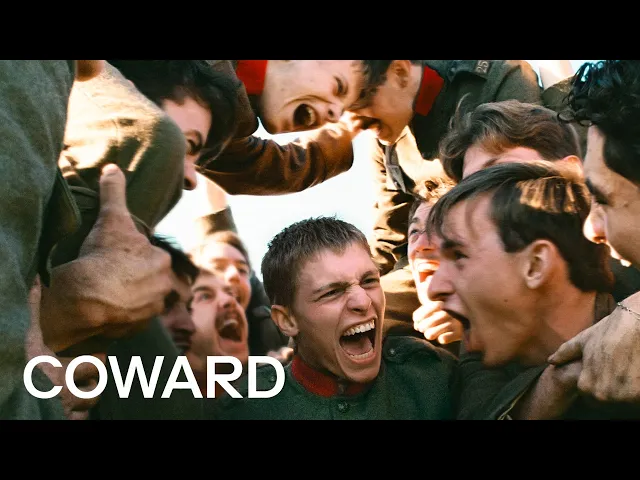
Dhont’s First World War drama explores heroism and cowardice from the perspectives of young soldiers, partially shot on the actual battlefields near Ypres, Belgium. Both of his previous features premiered at Cannes: Girl (2018) in Un Certain Regard, and Close (2022) in Competition, the latter Oscar-nominated. Dhont is one of the most emotionally fearless young directors in European cinema, and Coward is already generating serious awards conversation.
Pedro Almodovar: Amarga Navidad (Bitter Christmas)

Almodovar’s Bitter Christmas is the only Competition film that had its world premiere before the festival. Almodovar at Cannes is always an event. This year is no different.
Asghar Farhadi: Histoires Paralleles (Parallel Tales)

Farhadi’s third film set in Europe stars Isabelle Huppert as a writer who spies on her neighbours across the street for novelistic inspiration. The supporting cast includes Catherine Deneuve, Vincent Cassel, and Virginie Efira. Reviews from the trades have been mixed, but Farhadi films reward patience, and a jury of this makeup will not dismiss him lightly.
Ira Sachs: The Man I Love

Described as “a musical fantasia of a city under duress,” set in New York during the late-1980s AIDS crisis, with Rami Malek as a downtown artist alongside Tom Sturridge and Rebecca Hall. Sachs is the only American filmmaker in Competition at Cannes 2026, a reminder that independent American cinema, at its best, still has something to say.
Marie Kreutzer: Gentle Monster
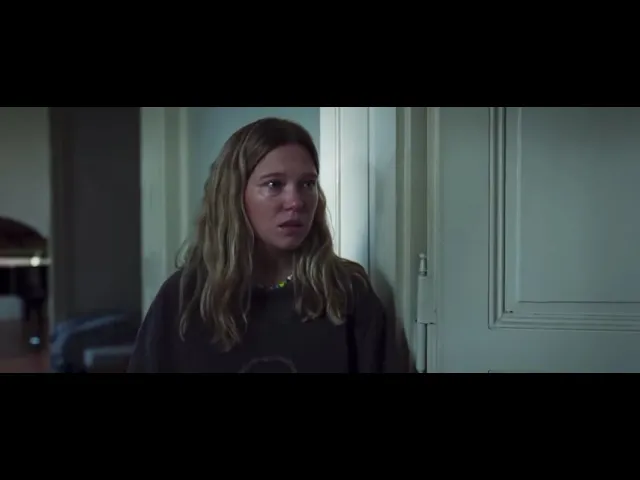
Lea Seydoux headlines a film about a renowned pianist who relocates her family to the countryside, only to uncover a life-changing truth. Supporting cast includes Catherine Deneuve, Laurence Rupp, and Jella Haase. Kreutzer’s Corsage was a Un Certain Regard highlight in 2022. This is her first time in Competition.
Andrey Zvyagintsev: Minotaur
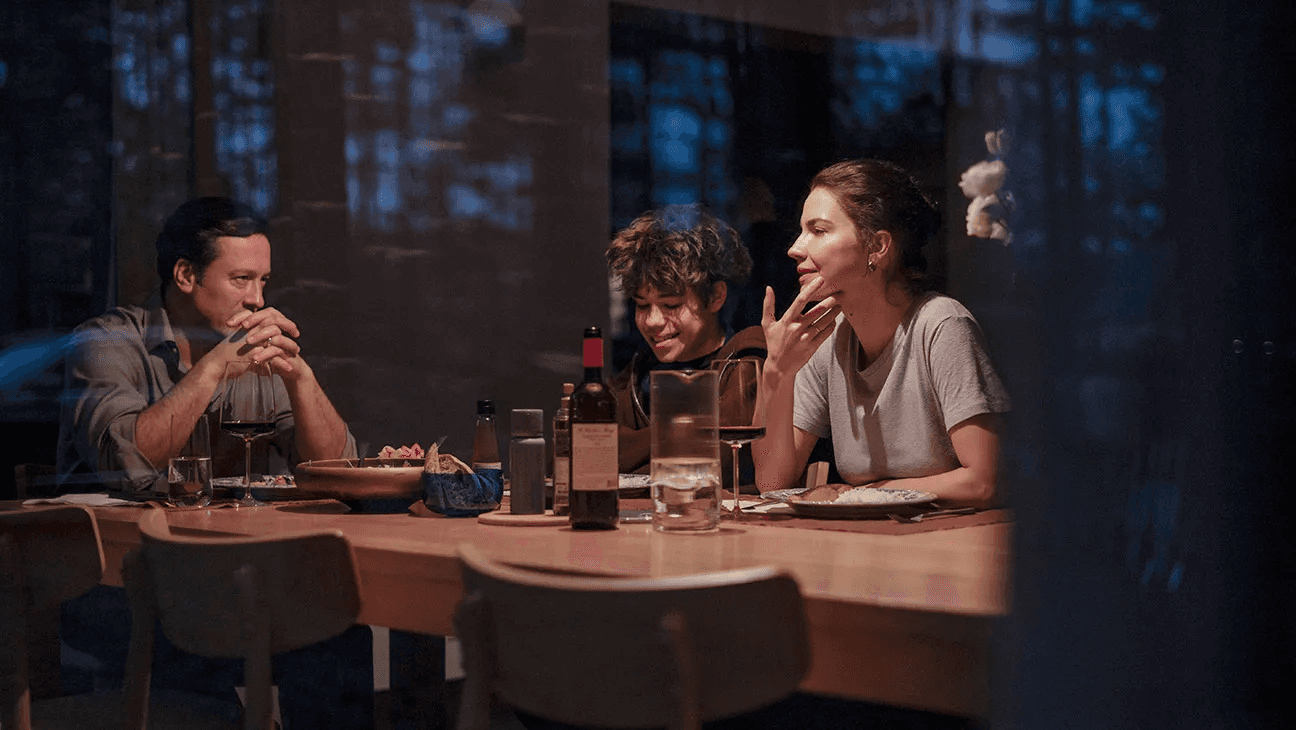
The exiled Russian filmmaker returns with his first feature since 2017, a political fable about a Russian businessman confronting crisis and trauma, shot in Latvia. Zvyagintsev’s Leviathan and Loveless are two of the defining European art films of the last decade. His return is one of the most politically charged moments of Cannes 2026.
Indian Films at Cannes 2026: A Full Picture
The relationship between Indian cinema and Cannes is long and deeply earned. In 1946, Chetan Anand’s Neecha Nagar became the first Indian film to gain recognition at the festival, sharing the Grand Prix at the inaugural edition. In 1956, Satyajit Ray’s Pather Panchali won the Best Human Document special award, introducing Ray to the world stage. In 1988, Mira Nair’s Salaam Bombay! won the Camera d’Or for best debut feature. In 2013, Ritesh Batra’s The Lunchbox took the Critics’ Week Viewers’ Choice Award. And in 2024, Payal Kapadia’s All We Imagine as Light won the Grand Prix, a landmark moment for contemporary Indian cinema.
In 2026, India shows up across multiple sections and platforms: two titles in the Official Selection proper, and a strong contingent of films at the Marche du Film. The breadth is the real story.
Shadows of the Moonless Night: FTII at La Cinef
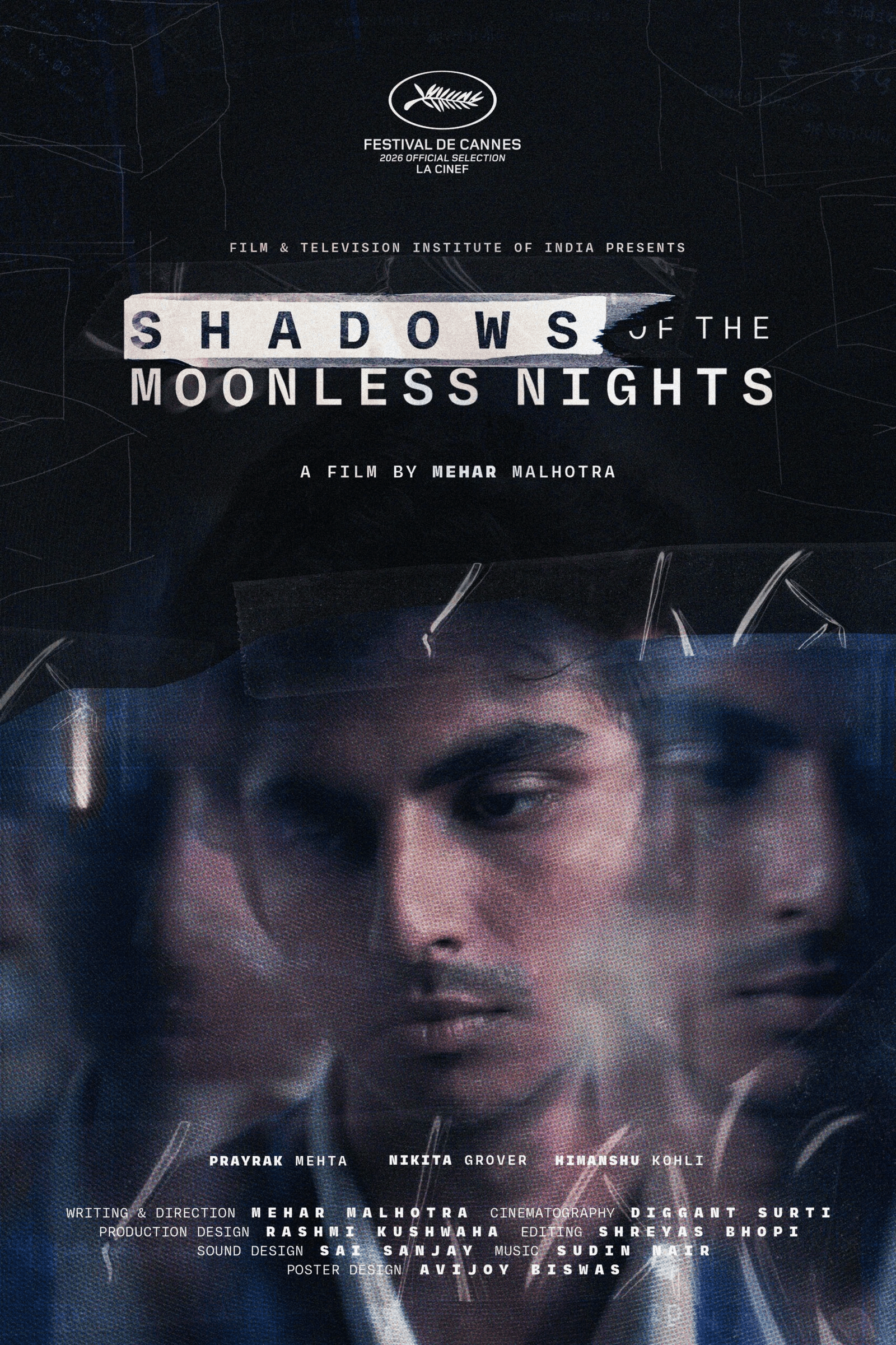
This Punjabi-language short film, directed by Film and Television Institute of India student Mehar Malhotra, is selected for the La Cinef competitive section of the Official Selection. The story follows Rajan, a factory worker trapped in exhausting night shifts, financial instability, and emotional isolation. La Cinef is among the most prestigious platforms for emerging filmmakers globally. An FTII student earning selection here is a serious achievement, and a signal of the quality coming out of India’s film training institutions.
September 21: World Premiere at the Palais Theatre
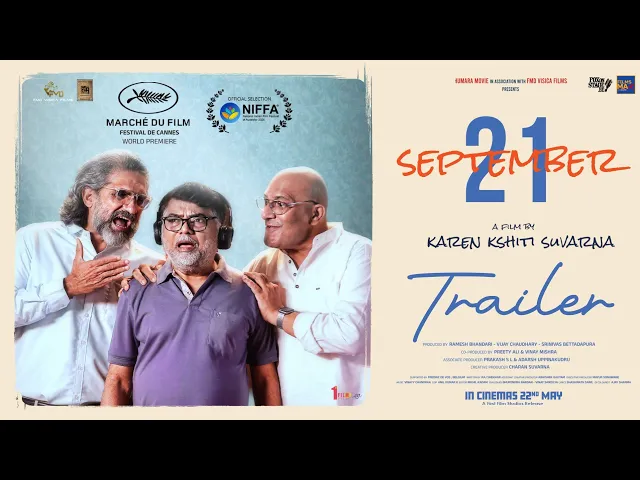
Karen Kshiti Suvarna’s debut bilingual Hindi-Kannada film September 21 had its World Premiere on 16 May at the Palais Theatre, Cannes, as part of the Marche du Film programme. The film centres on an elderly Alzheimer’s patient who becomes convinced his wife is quarantined during the COVID-19 pandemic. As memory loss progresses, his estranged son is forced to choose between personal ambition and caregiving. Securing a world premiere at the Palais Theatre, even within the Marche programme, is a serious platform for a debut feature.
Chardikala: Punjabi Cinema on the Global Stage

Starring Ammy Virk and Roopi Gill, Chardikala directed by Amarjit Singh Saron follows a nurse whose life is shattered after being falsely implicated in a major incident. Isolated from society, she transforms her suffering into strength by helping struggling families. The film screens at the Marche du Film before its theatrical release on 29 May. Punjabi cinema at Cannes is a statement in itself: a regional language, a deeply specific cultural world, making its case on the global stage.
Gudgudi: Caregiving and Memory
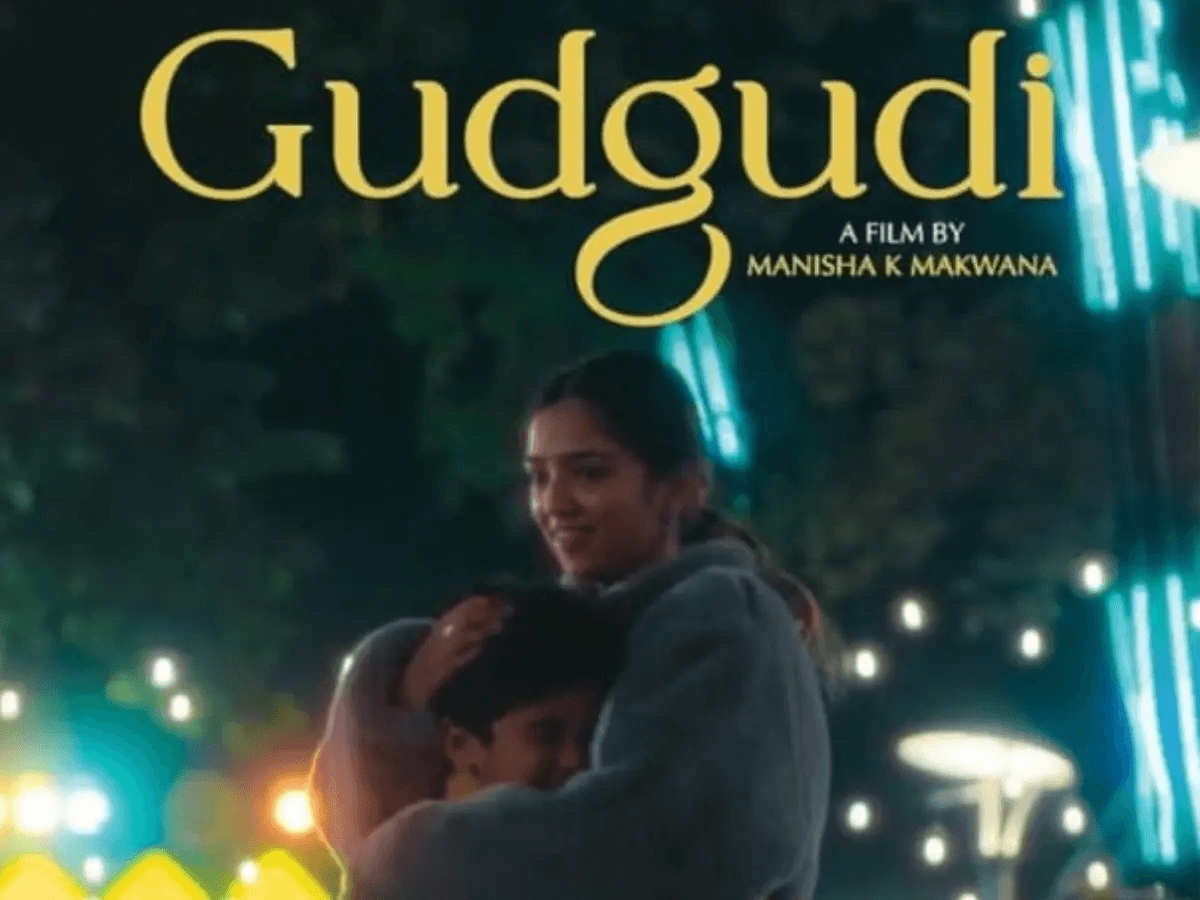
Directed by Manisha K Makwana and starring Ahsaas Channa, produced by Mukesh Chhabra and White Peacock Films, Gudgudi screens at the Marche du Film. The film adds to a growing tradition of Indian cinema exploring Alzheimer’s and the emotional labour of caregiving, territory that, when done well, travels far beyond its origin.
Balan: The Boy: Malayalam Cinema at the Marche
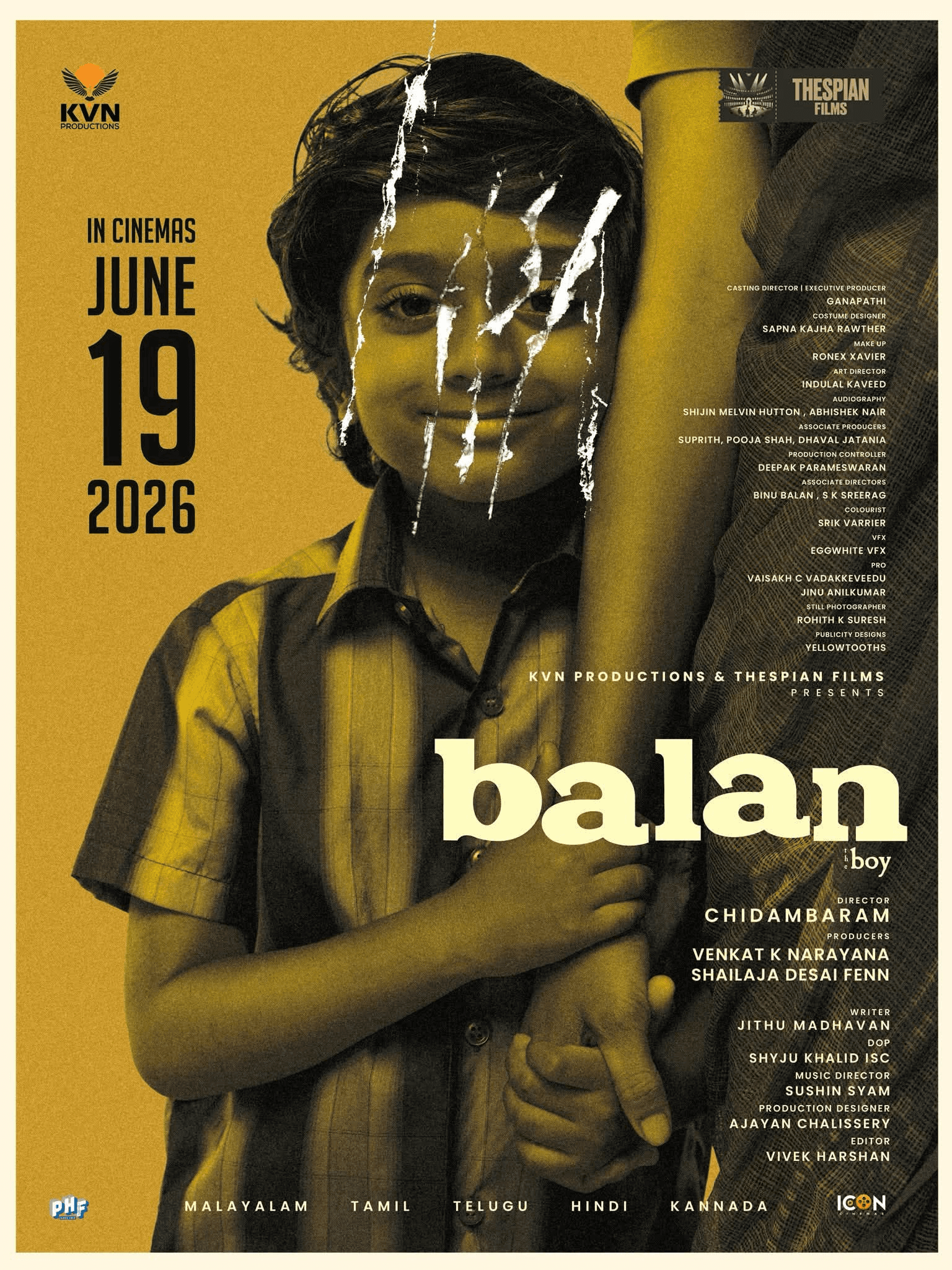
Balan: The Boy screens at the Marche du Film. Director Chidambaram has described the film as being about “what we carry without knowing, the weight of where we come from, and the hunger to find where we belong.” Cannes, he added, “has always been a home for cinema that trusts its audience with exactly that kind of truth.”
Spirit of the Wildflower: A Documentary That Demands Attention

London-based filmmaker Shrimoyee Chakraborty’s documentary screens at the Marche du Film, following two sisters running India’s first legal mahua distillery. One dreams of turning their traditional village brew into a global brand; the other is on a deeply personal journey of gender transition. The film explores identity, tradition, gender, and societal expectations in rural India. Specific. Political. Rooted in a world most audiences have never seen.
The 1986 Malayalam classic Amma Ariyan by John Abraham screens in Cannes Classics, part of the Official Selection, its restoration a global recognition of its continued relevance.
Together, these Indian films at Cannes 2026 reflect the country’s growing creative diversity: two titles in the Official Selection proper, with Shadows of the Moonless Night in La Cinef and Amma Ariyan in Cannes Classics, and a strong cohort of films making their case at the Marche du Film, from debut features to documentaries, Punjabi to Malayalam, student shorts to commercial cinema.
The Marche du Film 2026: The Business of Cinema at Cannes
Here is what the lifestyle coverage of Cannes consistently fails to explain. The Palais des Festivals is, simultaneously, one of the world’s great artistic institutions and one of its most consequential commercial venues. These two things are not in tension. They are the entire point.
The Marche du Film was established in 1959 and is considered the most important film market on the planet. The 2026 edition drew around 16,000 registered participants presenting approximately 4,000 films and projects from over 140 countries, generating a total turnover of between $600 million and $1 billion. The 2026 Marche du Film ran from 12 to 20 May, offering over 250 industry events and 1,500 film market screenings. Japan is this year’s Country of Honour, with a dedicated platform connecting Japanese IP rights holders and international producers through pitch sessions and panels.
What makes Cannes uniquely powerful is that festival prestige and commercial deal-making happen in simultaneous proximity. A title’s festival performance directly affects its market price in real time. A documentary screening in Un Certain Regard generates buyer interest that flows immediately into acquisition negotiations inside the Palais. A debut feature that earns a standing ovation on a Tuesday morning can have a distribution deal by Thursday afternoon.
This year’s marquee deal: A24 acquired worldwide rights to Jordan Firstman’s debut feature Club Kid, outmaneuvering Focus Features, Searchlight, Netflix, and MUBI to take it. Reports place the deal north of $15 million (Variety) and as high as $17 million (TheWrap). For a market that had been calling for a genuine breakout, it was the shot of adrenaline the Croisette needed. Amazon separately inked the largest package sale of the market, acquiring most international rights to Pumping Black, a psychological thriller from director Mimi Cave starring Jonathan Bailey and Natalie Portman.
The independent film industry is navigating real structural pressure. Streaming has disrupted the pre-sale model that sustained indie production for decades, but the audience for independent film has not gone anywhere. It is simply waiting to be reached in new ways. Cannes remains the place where that audience is conjured first, where a film becomes real, gains its public, and earns its commercial life.
Why Cannes Film Festival 2026 Still Matters
The noise will not stop. There will be yacht parties and brand activations and conversations that reference cinema without ever quite touching it. That is fine. Cannes is large enough to contain all of it.
But the festival’s authority derives entirely from what happens in the screening rooms. It derives from the fact that Fremaux and his team read 2,541 features from 141 countries and made difficult, subjective, artistically honest decisions about which 22 belong in Competition. It derives from the fact that a jury of nine, led by one of the most demanding directors alive, will spend eleven days watching those films and debating, in private and in earnest, what the best of them means.
It derives from the fact that an FTII student from India can make a Punjabi short film about a night-shift factory worker, and the most influential film festival in the world will screen it in competition. And that a Kannada-speaking debut director can have her first film premiere in the Palais Theatre, on 16 May 2026, in front of the world.
That is what Cannes is. That is what it has always been.
Everything else, and we say this with great affection for the everything else, is the footnote.
TO BE CONTINUED, FOR SUBSCRIBERS ONLY.
This is where the surface ends and the reporting begins.
The complete piece, the full archive, and access to The French Press Circle. Reporting answerable only to its readers.
Already a subscriber ?
Login
Read these on the house, with our compliments.
A selection from the current issue, open to all readers. Read them in full. The rest is one decision away.








The Hierarchy Nobody Talks About: Being at Cannes vs Belonging to Cannes
Before we get into the films, the jury, and the deals, let us say something that the industry whispers and the internet ignores entirely.
There is a hierarchy at Cannes. It is real, it is immediately legible to anyone who works in film, luxury, or global media, and it separates people within approximately three seconds of conversation.
It goes like this.
There is being at Cannes. There is being photographed at Cannes. There is being invited into Cannes. And then there is actually belonging to the Cannes ecosystem. These are four entirely different things, and only two of them carries lasting weight.
The institutional spine of Cannes 2026 runs through its official partners: Chopard, L’Oreal Paris, Kering, BMW, Campari, Air France, Nespresso, Dessange, and Orient Express Sailing Yachts. These are access architectures. When you attend Cannes through one of these partners, you are entering the festival’s own circulatory system.
A Chopard guest list is a room where Oscar winners, jury members, global luxury clients, studio executives, and financiers sit at the same table. Kering’s Women in Motion programme is one of the most substantive industry conversations happening anywhere on the Croisette, with real gravitational pull. L’Oreal Paris’s presence on the red carpet is one of the most powerful access pipelines at the entire festival, placing talent directly inside official premiere allocations and Palais-level visibility.
Access to the real Cannes flows through premiere invitations, accredited badges, film sales houses, studios, distributors, competition films, and official partner allocations. It does not flow through third-party red carpet packages, yacht-event middlemen, influencer handlers, or what the industry has quietly started calling “walk the carpet” brokers. Most of what gets sold under those arrangements amounts to a step-and-repeat somewhere in the vicinity of Cannes, nowhere near the official staircase of the Palais des Festivals. I was there in 2016 and know this first hand.
The industry knows the difference instantly. Someone attending through a competition film, a sales house, a studio, Chopard, Kering, or L’Oreal Paris carries institutional validation. Someone who has purchased proximity carries optics. The Croisette has always been fluent in this distinction, even when it is too polite to say so out loud.
Inside the industry, when someone announces loudly that they walked Cannes, the unspoken follow-up is always the same: with whom? Because at Cannes, proximity matters. Not the staircase itself.
This is the logic of a festival built entirely on the premise that context is everything. The films screened inside the Palais carry weight because of the rigour of the selection process, the authority of the jury, and the decades of institutional credibility behind every programme. The same principle applies to every room, every dinner, every appearance. Cannes confers legitimacy. But it only confers it on those who enter through the right doors.
There is a version of Cannes that has taken hold in the popular imagination. And it is almost entirely wrong.
In this version, Cannes Film Festival 2026 is a red carpet, a yacht party, a brand activation, a fashion moment. It is the Croisette as catwalk, the Palais as backdrop. It is influencers in ball gowns and perfume launches dressed up as high order events. It is a city that smells of sunscreen and deal anxiety for eleven days every May, and then returns to being a quiet Riviera resort town that serves very good fish.
That version exists. It is loud and well-documented and thoroughly Instagrammed. But it is not Cannes.
Cannes is a film festival. The most prestigious, the most rigorous, the most uncompromising, and in every meaningful sense the most influential film festival in the world. And in 2026, its 79th edition, running from 12 to 23 May, the Festival de Cannes has reasserted that identity with a lineup that reads like a love letter to serious cinema: dense with auteurs, alive with ambition, and entirely uninterested in the noise that has accumulated around its own name.
If you were there in 2016, as some of us were, you remember what the real Cannes feels like. You remember the silence that falls inside the Grand Theatre Lumiere when the lights go down. You remember filmmakers speaking to audiences through the unmediated language of image and sound, with no algorithm between them. You remember that the people in the room, producers, directors, distributors, financiers, programmers, are the people who actually build the global film industry, and they are here to work. The parties are a side effect. The films are the reason.
That Cannes is very much alive in 2026. This is what it looks like.
Cannes Film Festival 2026: Dates, Edition, and Key Facts
The 79th annual Cannes Film Festival runs from 12 to 23 May 2026. Festival director Thierry Fremaux noted that 2,541 feature films were submitted for official selection, roughly 1,000 more than a decade ago, from 141 countries, approaching what he called “Olympic-level numbers.” The selection from that volume: 22 films in Competition for the Palme d’Or, and an expansive Official Selection spanning Un Certain Regard, Cannes Premiere, Out of Competition, Special Screenings, La Cinef, and Cannes Classics. Running alongside as an independent parallel section is the Directors’ Fortnight, focused on independent cinema and emerging filmmakers.
Festival president Iris Knobloch acknowledged the uneasy global backdrop, noting that “we find ourselves in a time of great uncertainty,” and pointed out that the Cannes Film Festival was itself born out of crisis, in 1939, when bringing together artists from around the world “was not a luxury, it was a necessity.” Today, she argued, that mission remains unchanged.
The festival opened on 12 May with Pierre Salvadori’s French period-comedy The Electric Kiss, and closes on 23 May with the Palme d’Or ceremony. Three Honorary Palmes d’Or have been awarded: to Peter Jackson at the opening ceremony, to John Travolta before the world premiere of Propeller One-Way Night Coach, and to Barbra Streisand at the closing ceremony, though Streisand will not attend in person due to a knee injury.
Eleven days. The world’s most powerful film industry. One strip of Mediterranean coastline. The stakes, as always, are everything.
The Cannes 2026 Jury: Park Chan-wook Leads a Formidable Panel
South Korean filmmaker Park Chan-wook serves as jury president for the main competition at Cannes 2026. Park is one of the most formally precise and morally complex directors working in world cinema, the man behind Oldboy, The Handmaiden, and Decision to Leave, and his sensibility will almost certainly pull the jury toward films that are visually rigorous and emotionally unresolved. He does not do tidy.
Alongside Park Chan-wook, the Cannes 2026 jury includes actors Demi Moore, Stellan Skarsgard, Ruth Negga, and Isaach De Bankole, alongside Oscar-winning director Chloe Zhao, Chilean filmmaker Diego Cespedes, Belgian director Laura Wandel, and Ken Loach’s longtime screenwriter Paul Laverty.
The composition matters. Moore returns to Cannes after her starring role in Coralie Fargeat’s The Substance, which won Best Screenplay at Cannes in 2024 and earned her an Oscar nomination. Skarsgard starred in last year’s Grand Prix winner Sentimental Value, directed by Joachim Trier, which went on to win the Oscar for Best International Film. This is a jury that has lived inside Cannes-calibre work, not simply visited it. They know what they are looking for.
Cannes 2026 Films in Competition: The Lineup That Matters
This year’s Competition is, without overstating it, extraordinary. Here are the most anticipated Competition films at Cannes 2026.
Ryusuke Hamaguchi: All of a Sudden
Hamaguchi returns to Cannes for the first time since 2021’s Drive My Car, which took three awards in Competition before winning the Best International Feature Oscar. All of a Sudden marks his first film shot outside Japan, following a woman who runs a struggling nursing home and a stage director with terminal cancer, led by Virginie Efira and Tao Okamoto. The film has earned rave reviews and is widely regarded among the press corps as the outstanding Palme d’Or contender, with Efira also drawing attention as a potential Best Actress candidate. This is the frontrunner. Watch it.
Na Hong-Jin: Hope
A genre thriller following a police chief in a remote South Korean village drawn into a spiralling mystery after a tiger sighting. The cast includes Hwang Jung-min, Zo In-sung, Jung Ho-yeon, Michael Fassbender, and Alicia Vikander. The cinematographer is Hong Kyung-pyo of Parasite. Na Hong-Jin, whose previous films The Chaser, The Yellow Sea, and The Wailing all premiered at Cannes, delivers the most commercially formidable entry in this year’s Competition.
Pawel Pawlikowski: Fatherland
Pawlikowski’s Thomas Mann-inspired postwar road trip stars Sandra Huller, one of the most celebrated European actors currently working. The director of Ida and Cold War has a gift for formal restraint that turns economy into devastation. Fatherland is among the most anticipated Competition entries for critics at Cannes 2026.
James Gray: Paper Tiger
A crime thriller starring Scarlett Johansson, Miles Teller, and Adam Driver, about two brothers whose pursuit of the American Dream leads their family into the orbit of the Russian mafia. Gray has been a Cannes regular since The Yards competed in 2000. This is his fifth time in Competition, and early word places it among the strongest American entries in years.
Lukas Dhont: Coward
Dhont’s First World War drama explores heroism and cowardice from the perspectives of young soldiers, partially shot on the actual battlefields near Ypres, Belgium. Both of his previous features premiered at Cannes: Girl (2018) in Un Certain Regard, and Close (2022) in Competition, the latter Oscar-nominated. Dhont is one of the most emotionally fearless young directors in European cinema, and Coward is already generating serious awards conversation.
Pedro Almodovar: Amarga Navidad (Bitter Christmas)
Almodovar’s Bitter Christmas is the only Competition film that had its world premiere before the festival. Almodovar at Cannes is always an event. This year is no different.
Asghar Farhadi: Histoires Paralleles (Parallel Tales)
Farhadi’s third film set in Europe stars Isabelle Huppert as a writer who spies on her neighbours across the street for novelistic inspiration. The supporting cast includes Catherine Deneuve, Vincent Cassel, and Virginie Efira. Reviews from the trades have been mixed, but Farhadi films reward patience, and a jury of this makeup will not dismiss him lightly.
Ira Sachs: The Man I Love
Described as “a musical fantasia of a city under duress,” set in New York during the late-1980s AIDS crisis, with Rami Malek as a downtown artist alongside Tom Sturridge and Rebecca Hall. Sachs is the only American filmmaker in Competition at Cannes 2026, a reminder that independent American cinema, at its best, still has something to say.
Marie Kreutzer: Gentle Monster
Lea Seydoux headlines a film about a renowned pianist who relocates her family to the countryside, only to uncover a life-changing truth. Supporting cast includes Catherine Deneuve, Laurence Rupp, and Jella Haase. Kreutzer’s Corsage was a Un Certain Regard highlight in 2022. This is her first time in Competition.
Andrey Zvyagintsev: Minotaur
The exiled Russian filmmaker returns with his first feature since 2017, a political fable about a Russian businessman confronting crisis and trauma, shot in Latvia. Zvyagintsev’s Leviathan and Loveless are two of the defining European art films of the last decade. His return is one of the most politically charged moments of Cannes 2026.
Indian Films at Cannes 2026: A Full Picture
The relationship between Indian cinema and Cannes is long and deeply earned. In 1946, Chetan Anand’s Neecha Nagar became the first Indian film to gain recognition at the festival, sharing the Grand Prix at the inaugural edition. In 1956, Satyajit Ray’s Pather Panchali won the Best Human Document special award, introducing Ray to the world stage. In 1988, Mira Nair’s Salaam Bombay! won the Camera d’Or for best debut feature. In 2013, Ritesh Batra’s The Lunchbox took the Critics’ Week Viewers’ Choice Award. And in 2024, Payal Kapadia’s All We Imagine as Light won the Grand Prix, a landmark moment for contemporary Indian cinema.
In 2026, India shows up across multiple sections and platforms: two titles in the Official Selection proper, and a strong contingent of films at the Marche du Film. The breadth is the real story.
Shadows of the Moonless Night: FTII at La Cinef
This Punjabi-language short film, directed by Film and Television Institute of India student Mehar Malhotra, is selected for the La Cinef competitive section of the Official Selection. The story follows Rajan, a factory worker trapped in exhausting night shifts, financial instability, and emotional isolation. La Cinef is among the most prestigious platforms for emerging filmmakers globally. An FTII student earning selection here is a serious achievement, and a signal of the quality coming out of India’s film training institutions.
September 21: World Premiere at the Palais Theatre
Karen Kshiti Suvarna’s debut bilingual Hindi-Kannada film September 21 had its World Premiere on 16 May at the Palais Theatre, Cannes, as part of the Marche du Film programme. The film centres on an elderly Alzheimer’s patient who becomes convinced his wife is quarantined during the COVID-19 pandemic. As memory loss progresses, his estranged son is forced to choose between personal ambition and caregiving. Securing a world premiere at the Palais Theatre, even within the Marche programme, is a serious platform for a debut feature.
Chardikala: Punjabi Cinema on the Global Stage
Starring Ammy Virk and Roopi Gill, Chardikala directed by Amarjit Singh Saron follows a nurse whose life is shattered after being falsely implicated in a major incident. Isolated from society, she transforms her suffering into strength by helping struggling families. The film screens at the Marche du Film before its theatrical release on 29 May. Punjabi cinema at Cannes is a statement in itself: a regional language, a deeply specific cultural world, making its case on the global stage.
Gudgudi: Caregiving and Memory
Directed by Manisha K Makwana and starring Ahsaas Channa, produced by Mukesh Chhabra and White Peacock Films, Gudgudi screens at the Marche du Film. The film adds to a growing tradition of Indian cinema exploring Alzheimer’s and the emotional labour of caregiving, territory that, when done well, travels far beyond its origin.
Balan: The Boy: Malayalam Cinema at the Marche
Balan: The Boy screens at the Marche du Film. Director Chidambaram has described the film as being about “what we carry without knowing, the weight of where we come from, and the hunger to find where we belong.” Cannes, he added, “has always been a home for cinema that trusts its audience with exactly that kind of truth.”
Spirit of the Wildflower: A Documentary That Demands Attention
London-based filmmaker Shrimoyee Chakraborty’s documentary screens at the Marche du Film, following two sisters running India’s first legal mahua distillery. One dreams of turning their traditional village brew into a global brand; the other is on a deeply personal journey of gender transition. The film explores identity, tradition, gender, and societal expectations in rural India. Specific. Political. Rooted in a world most audiences have never seen.
The 1986 Malayalam classic Amma Ariyan by John Abraham screens in Cannes Classics, part of the Official Selection, its restoration a global recognition of its continued relevance.
Together, these Indian films at Cannes 2026 reflect the country’s growing creative diversity: two titles in the Official Selection proper, with Shadows of the Moonless Night in La Cinef and Amma Ariyan in Cannes Classics, and a strong cohort of films making their case at the Marche du Film, from debut features to documentaries, Punjabi to Malayalam, student shorts to commercial cinema.
The Marche du Film 2026: The Business of Cinema at Cannes
Here is what the lifestyle coverage of Cannes consistently fails to explain. The Palais des Festivals is, simultaneously, one of the world’s great artistic institutions and one of its most consequential commercial venues. These two things are not in tension. They are the entire point.
The Marche du Film was established in 1959 and is considered the most important film market on the planet. The 2026 edition drew around 16,000 registered participants presenting approximately 4,000 films and projects from over 140 countries, generating a total turnover of between $600 million and $1 billion. The 2026 Marche du Film ran from 12 to 20 May, offering over 250 industry events and 1,500 film market screenings. Japan is this year’s Country of Honour, with a dedicated platform connecting Japanese IP rights holders and international producers through pitch sessions and panels.
What makes Cannes uniquely powerful is that festival prestige and commercial deal-making happen in simultaneous proximity. A title’s festival performance directly affects its market price in real time. A documentary screening in Un Certain Regard generates buyer interest that flows immediately into acquisition negotiations inside the Palais. A debut feature that earns a standing ovation on a Tuesday morning can have a distribution deal by Thursday afternoon.
This year’s marquee deal: A24 acquired worldwide rights to Jordan Firstman’s debut feature Club Kid, outmaneuvering Focus Features, Searchlight, Netflix, and MUBI to take it. Reports place the deal north of $15 million (Variety) and as high as $17 million (TheWrap). For a market that had been calling for a genuine breakout, it was the shot of adrenaline the Croisette needed. Amazon separately inked the largest package sale of the market, acquiring most international rights to Pumping Black, a psychological thriller from director Mimi Cave starring Jonathan Bailey and Natalie Portman.
The independent film industry is navigating real structural pressure. Streaming has disrupted the pre-sale model that sustained indie production for decades, but the audience for independent film has not gone anywhere. It is simply waiting to be reached in new ways. Cannes remains the place where that audience is conjured first, where a film becomes real, gains its public, and earns its commercial life.
Why Cannes Film Festival 2026 Still Matters
The noise will not stop. There will be yacht parties and brand activations and conversations that reference cinema without ever quite touching it. That is fine. Cannes is large enough to contain all of it.
But the festival’s authority derives entirely from what happens in the screening rooms. It derives from the fact that Fremaux and his team read 2,541 features from 141 countries and made difficult, subjective, artistically honest decisions about which 22 belong in Competition. It derives from the fact that a jury of nine, led by one of the most demanding directors alive, will spend eleven days watching those films and debating, in private and in earnest, what the best of them means.
It derives from the fact that an FTII student from India can make a Punjabi short film about a night-shift factory worker, and the most influential film festival in the world will screen it in competition. And that a Kannada-speaking debut director can have her first film premiere in the Palais Theatre, on 16 May 2026, in front of the world.
That is what Cannes is. That is what it has always been.
Everything else, and we say this with great affection for the everything else, is the footnote.
TO BE CONTINUED, FOR SUBSCRIBERS ONLY.
This is where the surface ends and the reporting begins.
The complete piece, the full archive, and access to The French Press Circle. Reporting answerable only to its readers.
Already a subscriber ?
Login
Read these on the house, with our compliments.
A selection from the current issue, open to all readers. Read them in full. The rest is one decision away.