
Cosmetic fillers occupy a peculiar space in beauty. They are injected with needles, performed in clinics, but sold, discussed and booked with the ease of a beauty appointment. People swap stories about their injector the way they do about their hairdresser, comparing syringe counts over coffee and debating whether 0.5 ml would have looked better than 1 ml. Most appointments end with an ice pack and the usual suspects: swelling, bruising, maybe a bit of asymmetry. Things you just wait a few weeks to settle down.
In February 2026, 56-year-old Estée Lauder executive Kendal Ascher died in his apartment. According to The New York Post, he died in his husband's arms after feeling lightheaded following a shower. Ascher’s husband claimed it all happened within 8 seconds.
Months later, the New York City Office of Chief Medical Examiner ruled his death accidental, attributing it to acute respiratory failure caused by pulmonary embolism of foreign material following cosmetic filler injections.
The medical examiner left the most crucial details untouched: the type of filler, the quantity, even the injection site. The blanks remain, conspicuously, unfilled.

Dr Simal Soin, Chief Dermatologist and Founder, AAYNA clinics
Credit: Dr Simal Soin
A pulmonary embolism happens when something blocks blood flow in the lungs. Usually, it is a blood clot. With fillers, the path is different. Dr Simal Soin, Chief Dermatologist and Founder, AAYNA clinics, explains that the material would need to slip into a vein, pass through the right side of the heart, and lodge in the lung’s blood vessels.
“Without reviewing the procedural details, imaging, pathology and autopsy findings, it would be inappropriate to speculate on what happened in any individual case,” Dr Simal says.
The sequence is medically possible but exceptionally rare. Most serious complications with facial fillers involve an artery rather than a vein. Filler entering an artery can interrupt blood supply to the skin and, in rare cases, affect vision. Only a few filler-related pulmonary embolisms have been documented.

Dr Jaishree Sharad, Dermatologist, Global Faculty, Author, TEDx speaker,
Credit: Dr Jaishree Sharad
Dr Jaishree Sharad, Dermatologist, Global faculty, Author and TEDx speaker, who has been injecting fillers since 2004 and is an international trainer in injectables, points out that the term "cosmetic filler" encompasses more than one product. Hyaluronic acid fillers are commonly used in small quantities for facial treatments. Silicone, polyacrylamide and polymethylmethacrylate are synthetic fillers with different properties. “It is highly, highly unlikely that it is a hyaluronic acid filler,” she says. Her assessment is based on the limited information available, since the filler involved in Ascher’s case has not been identified
“Rare should never be interpreted as impossible,” Dr Soin adds. Most filler appointments are completed without serious complications, but the word becomes harder to distinguish from who is holding the syringe. Dr Jaishree holds a similar opinion, stating, “Rare complications can happen not so rarely if the injector is not qualified.”
“Rare” gets thrown around in cosmetic circles like a comforting blanket. It is reassuring, but not always useful. A complication may be unlikely yet serious enough to warrant a place in the consultation.
Which is precisely why the conversation cannot stop at swelling, bruising, and the duration of the results.
All three doctors interviewed believe patients should be told about the risks, including the ones they are unlikely to encounter. Dr Simal describes the balance simply: patients need “not unnecessary fear, but not false reassurance either.” For Dr Ishaan, the conversation should leave the doctor and patient “on the same wavelength” before a syringe comes anywhere near the face.
Because understanding risk is one part of informed consent. Knowing how to avoid it begins somewhere else.
“Anatomy, anatomy, anatomy.” The mantra stuck with Dr Ishaan Sardesai, Facial Cosmetic Surgeon and founder of The Face Centre, and years later it still shapes his approach. Poor technique, poor product selection, or limited anatomical knowledge can turn a face into a cautionary tale. Overfilled faces, skin necrosis, infection, vascular or nerve injury, and rarely even blindness are all on the menu.
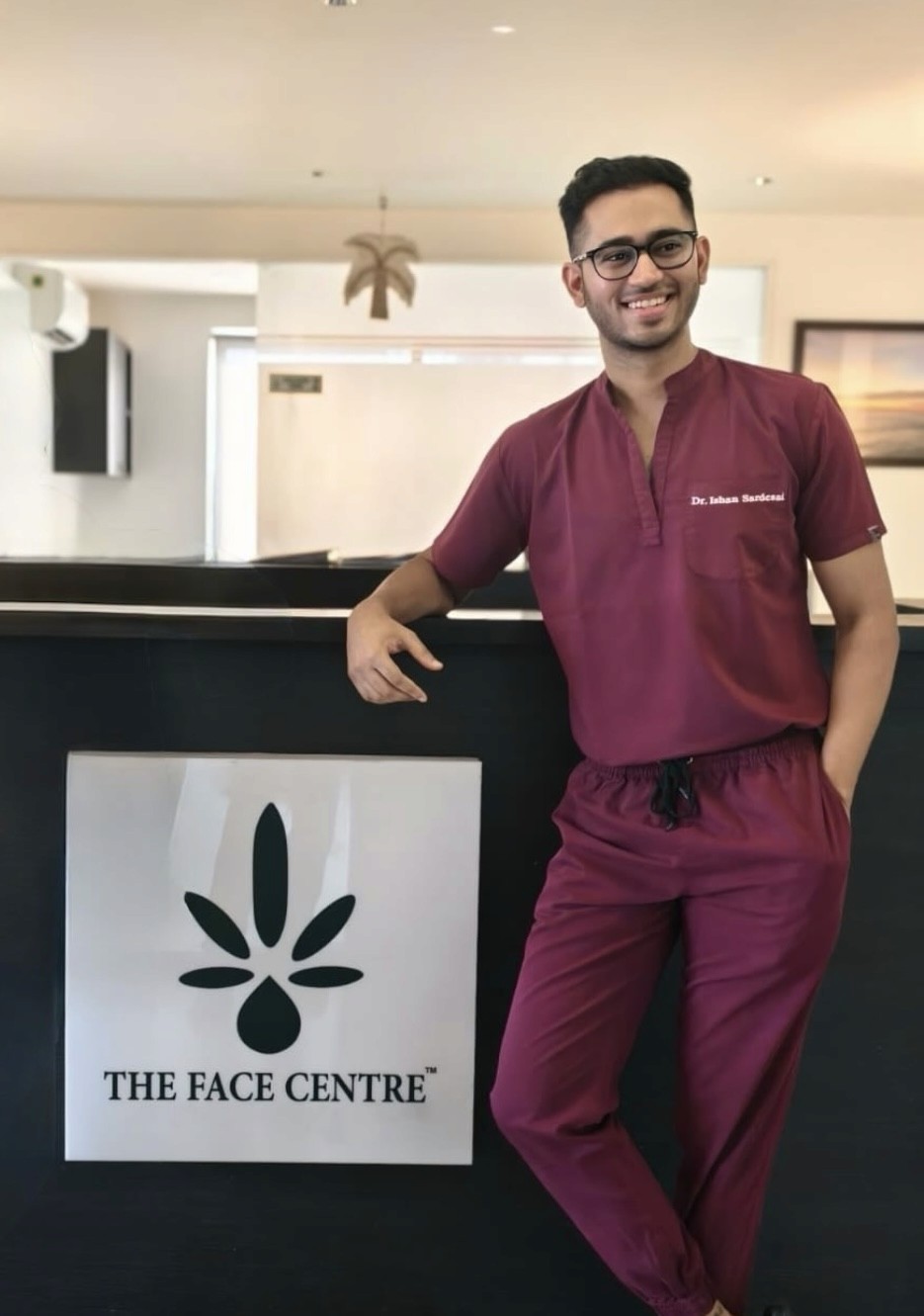
Dr Ishaan Sardesai, Facial Cosmetic Surgeon and founder of The Face Centre.
Credit: Dr ishaan Sardesai
The growing number of injection videos online has made some of that expertise look surprisingly easy. A face appears on screen. Coloured lines map out the anatomy. A needle goes in and just like that the transformation is done in the blink of an eye.
“The number of reels showing how they are done and what the anatomy is makes people feel that these are very simplified beauty treatments,” says Dr Jaishree. “But the truth is that these are complicated medical procedures. They have to be done by someone who is qualified and has extensive training. Just a regular dermatologist or a plastic surgeon with no training can also not do it,” she says
Training does not end at knowing where to place the needle. “The doctor should know which type of filler to use in which area. What quantity has to be used? Most importantly, if there is a complication, how to identify it on time and treat that complication,” Sharad adds.
Sudden severe pain or a change in skin colour can be an early warning sign. Dr Ishaan believes the person performing the treatment should be prepared to recognise and manage a complication if one occurs. The ability to produce the result and to respond when something goes wrong belong to the same job.
A clinic can look the part long before anyone checks whether the person inside it is qualified to play it.
“A lot of these clinics now are very posh looking; they’re very chic, the ambience is great, the decor, the interiors, everything is great,” Dr Jaishree says. The marble desk, expensive machinery and carefully lit treatment rooms can make a clinic feel credible before a patient has looked up a single qualification.
Even the website may not offer a straight answer. Dr Jaishree recalls coming across a practitioner whose listed qualifications appeared to change over time. “Her degree changed, from BUMS, it became BAMS on the website,” she says. “From there, now all that has disappeared, and on the website it just says dermatologist.” A title is easy to place beneath a name. Verifying it takes considerably more work.
India’s price sensitivity is another story. A cheaper syringe can look like a better deal when the treatment appears identical on social media. The same lips. The same cheeks. The same one-hour appointment. What’s actually inside the syringe may be less obvious.
“If there’s somebody who’s selling a filler cheaper, then people will go there,” Dr Jaishree says. She has seen injectors use products with unclear origins, including what she describes as “random non-US FDA-approved filler,” counterfeit products, or fillers sourced from manufacturers patients may know nothing about.
The discount is obvious. The difference inside the syringe is not.
Dr Simal and Jishree both emphasise the importance of choosing an injector based on training, experience, and safety standards rather than cost or social media popularity. The questions are less glamorous than the clinic tour. What are the doctor’s qualifications? Are they trained specifically in injectables? Which product is being used? Where was it sourced? What happens if something goes wrong?
Most filler appointments start with 0.5 or 1 ml. They should probably start with a few more questions before that.
Responsibility is not a one-way street. A good injector is always weighing whether the treatment should happen at all.
Qualifications indicate whether someone can inject. They do not tell you if that person knows when to put the syringe down.
Dr Simal has declined patients with unrealistic expectations, requests for unnecessary correction, or an incomplete understanding of the risks. “Sometimes saying no is the safest and most ethical decision a doctor makes,” Soin says. Dr Jaishree takes a similar approach with patients who are too young, asking for excessive treatment, showing signs of body dysmorphic concerns, or making a decision that feels impulsive.
It is an awkward idea in an industry built around saying yes. Yes to another millilitre. Yes to a sharper jaw. Yes to the reference photo. A treatment can be medically possible yet unnecessary.
Kendal Ascher’s death is a tragedy and an exceptionally rare case, with crucial details still missing. It is not proof that every filler appointment is dangerous. It should, if anything, make us wonder how a procedure involving needles, anatomy, prescription drugs, and the possibility of real complications became so easy to discuss without mentioning medicine at all.
Most filler appointments will still end with an ice pack. The conversation before them deserves more than a choice between 0.5 and 1 ml.
TO BE CONTINUED, FOR SUBSCRIBERS ONLY.
This is where the surface ends and the reporting begins.
The complete piece, the full archive, and access to The French Press Circle. Reporting answerable only to its readers.
Already a subscriber ?
Login
Read these on the house, with our compliments.
A selection from the current issue, open to all readers. Read them in full. The rest is one decision away.








Cosmetic fillers occupy a peculiar space in beauty. They are injected with needles, performed in clinics, but sold, discussed and booked with the ease of a beauty appointment. People swap stories about their injector the way they do about their hairdresser, comparing syringe counts over coffee and debating whether 0.5 ml would have looked better than 1 ml. Most appointments end with an ice pack and the usual suspects: swelling, bruising, maybe a bit of asymmetry. Things you just wait a few weeks to settle down.
In February 2026, 56-year-old Estée Lauder executive Kendal Ascher died in his apartment. According to The New York Post, he died in his husband's arms after feeling lightheaded following a shower. Ascher’s husband claimed it all happened within 8 seconds.
Months later, the New York City Office of Chief Medical Examiner ruled his death accidental, attributing it to acute respiratory failure caused by pulmonary embolism of foreign material following cosmetic filler injections.
The medical examiner left the most crucial details untouched: the type of filler, the quantity, even the injection site. The blanks remain, conspicuously, unfilled.
Dr Simal Soin, Chief Dermatologist and Founder, AAYNA clinics
Credit: Dr Simal Soin
A pulmonary embolism happens when something blocks blood flow in the lungs. Usually, it is a blood clot. With fillers, the path is different. Dr Simal Soin, Chief Dermatologist and Founder, AAYNA clinics, explains that the material would need to slip into a vein, pass through the right side of the heart, and lodge in the lung’s blood vessels.
“Without reviewing the procedural details, imaging, pathology and autopsy findings, it would be inappropriate to speculate on what happened in any individual case,” Dr Simal says.
The sequence is medically possible but exceptionally rare. Most serious complications with facial fillers involve an artery rather than a vein. Filler entering an artery can interrupt blood supply to the skin and, in rare cases, affect vision. Only a few filler-related pulmonary embolisms have been documented.
Dr Jaishree Sharad, Dermatologist, Global Faculty, Author, TEDx speaker,
Credit: Dr Jaishree Sharad
Dr Jaishree Sharad, Dermatologist, Global faculty, Author and TEDx speaker, who has been injecting fillers since 2004 and is an international trainer in injectables, points out that the term "cosmetic filler" encompasses more than one product. Hyaluronic acid fillers are commonly used in small quantities for facial treatments. Silicone, polyacrylamide and polymethylmethacrylate are synthetic fillers with different properties. “It is highly, highly unlikely that it is a hyaluronic acid filler,” she says. Her assessment is based on the limited information available, since the filler involved in Ascher’s case has not been identified
“Rare should never be interpreted as impossible,” Dr Soin adds. Most filler appointments are completed without serious complications, but the word becomes harder to distinguish from who is holding the syringe. Dr Jaishree holds a similar opinion, stating, “Rare complications can happen not so rarely if the injector is not qualified.”
“Rare” gets thrown around in cosmetic circles like a comforting blanket. It is reassuring, but not always useful. A complication may be unlikely yet serious enough to warrant a place in the consultation.
Which is precisely why the conversation cannot stop at swelling, bruising, and the duration of the results.
All three doctors interviewed believe patients should be told about the risks, including the ones they are unlikely to encounter. Dr Simal describes the balance simply: patients need “not unnecessary fear, but not false reassurance either.” For Dr Ishaan, the conversation should leave the doctor and patient “on the same wavelength” before a syringe comes anywhere near the face.
Because understanding risk is one part of informed consent. Knowing how to avoid it begins somewhere else.
“Anatomy, anatomy, anatomy.” The mantra stuck with Dr Ishaan Sardesai, Facial Cosmetic Surgeon and founder of The Face Centre, and years later it still shapes his approach. Poor technique, poor product selection, or limited anatomical knowledge can turn a face into a cautionary tale. Overfilled faces, skin necrosis, infection, vascular or nerve injury, and rarely even blindness are all on the menu.
Dr Ishaan Sardesai, Facial Cosmetic Surgeon and founder of The Face Centre.
Credit: Dr ishaan Sardesai
The growing number of injection videos online has made some of that expertise look surprisingly easy. A face appears on screen. Coloured lines map out the anatomy. A needle goes in and just like that the transformation is done in the blink of an eye.
“The number of reels showing how they are done and what the anatomy is makes people feel that these are very simplified beauty treatments,” says Dr Jaishree. “But the truth is that these are complicated medical procedures. They have to be done by someone who is qualified and has extensive training. Just a regular dermatologist or a plastic surgeon with no training can also not do it,” she says
Training does not end at knowing where to place the needle. “The doctor should know which type of filler to use in which area. What quantity has to be used? Most importantly, if there is a complication, how to identify it on time and treat that complication,” Sharad adds.
Sudden severe pain or a change in skin colour can be an early warning sign. Dr Ishaan believes the person performing the treatment should be prepared to recognise and manage a complication if one occurs. The ability to produce the result and to respond when something goes wrong belong to the same job.
A clinic can look the part long before anyone checks whether the person inside it is qualified to play it.
“A lot of these clinics now are very posh looking; they’re very chic, the ambience is great, the decor, the interiors, everything is great,” Dr Jaishree says. The marble desk, expensive machinery and carefully lit treatment rooms can make a clinic feel credible before a patient has looked up a single qualification.
Even the website may not offer a straight answer. Dr Jaishree recalls coming across a practitioner whose listed qualifications appeared to change over time. “Her degree changed, from BUMS, it became BAMS on the website,” she says. “From there, now all that has disappeared, and on the website it just says dermatologist.” A title is easy to place beneath a name. Verifying it takes considerably more work.
India’s price sensitivity is another story. A cheaper syringe can look like a better deal when the treatment appears identical on social media. The same lips. The same cheeks. The same one-hour appointment. What’s actually inside the syringe may be less obvious.
“If there’s somebody who’s selling a filler cheaper, then people will go there,” Dr Jaishree says. She has seen injectors use products with unclear origins, including what she describes as “random non-US FDA-approved filler,” counterfeit products, or fillers sourced from manufacturers patients may know nothing about.
The discount is obvious. The difference inside the syringe is not.
Dr Simal and Jishree both emphasise the importance of choosing an injector based on training, experience, and safety standards rather than cost or social media popularity. The questions are less glamorous than the clinic tour. What are the doctor’s qualifications? Are they trained specifically in injectables? Which product is being used? Where was it sourced? What happens if something goes wrong?
Most filler appointments start with 0.5 or 1 ml. They should probably start with a few more questions before that.
Responsibility is not a one-way street. A good injector is always weighing whether the treatment should happen at all.
Qualifications indicate whether someone can inject. They do not tell you if that person knows when to put the syringe down.
Dr Simal has declined patients with unrealistic expectations, requests for unnecessary correction, or an incomplete understanding of the risks. “Sometimes saying no is the safest and most ethical decision a doctor makes,” Soin says. Dr Jaishree takes a similar approach with patients who are too young, asking for excessive treatment, showing signs of body dysmorphic concerns, or making a decision that feels impulsive.
It is an awkward idea in an industry built around saying yes. Yes to another millilitre. Yes to a sharper jaw. Yes to the reference photo. A treatment can be medically possible yet unnecessary.
Kendal Ascher’s death is a tragedy and an exceptionally rare case, with crucial details still missing. It is not proof that every filler appointment is dangerous. It should, if anything, make us wonder how a procedure involving needles, anatomy, prescription drugs, and the possibility of real complications became so easy to discuss without mentioning medicine at all.
Most filler appointments will still end with an ice pack. The conversation before them deserves more than a choice between 0.5 and 1 ml.
TO BE CONTINUED, FOR SUBSCRIBERS ONLY.
This is where the surface ends and the reporting begins.
The complete piece, the full archive, and access to The French Press Circle. Reporting answerable only to its readers.
Already a subscriber ?
Login
Read these on the house, with our compliments.
A selection from the current issue, open to all readers. Read them in full. The rest is one decision away.