
The real star of the show was in its silhouettes: corseted bodices next to big voluminous skirts, sheer black fabrics against dense, jewel-toned embroidery; structured Victorian-style boning meeting the fluid drape of a sari. It felt less like a single collection and more like a design label testing the edges of its own language.
This is the first time black has entered her signature palette, and that single addition does a lot of work – it gives the radiance of the sequins and metallic thread something to sit against. Zardozi and traditional thread work have been deliberately lightened and re-engineered to move with the body instead of sitting stiffly on it. The silhouettes, corsets, kaftans, skirts carry all that handwork without losing fluidity. It's couture built on proportion and intention rather than volume of embellishment.
The show opened and closed in tonal opposites, deep blacks with intricate zardozi and embroidery work accessorised with a Kashmiri topi and molten golds, and that push-pull ran through nearly every look. Elsewhere, an all-black gown built entirely from sharp, petal-like fabric folds cut close to the body before flaring into a fishtail hem, proving Reddy is equally comfortable in avant-garde tailoring as she is in embroidery-heavy traditional wear.
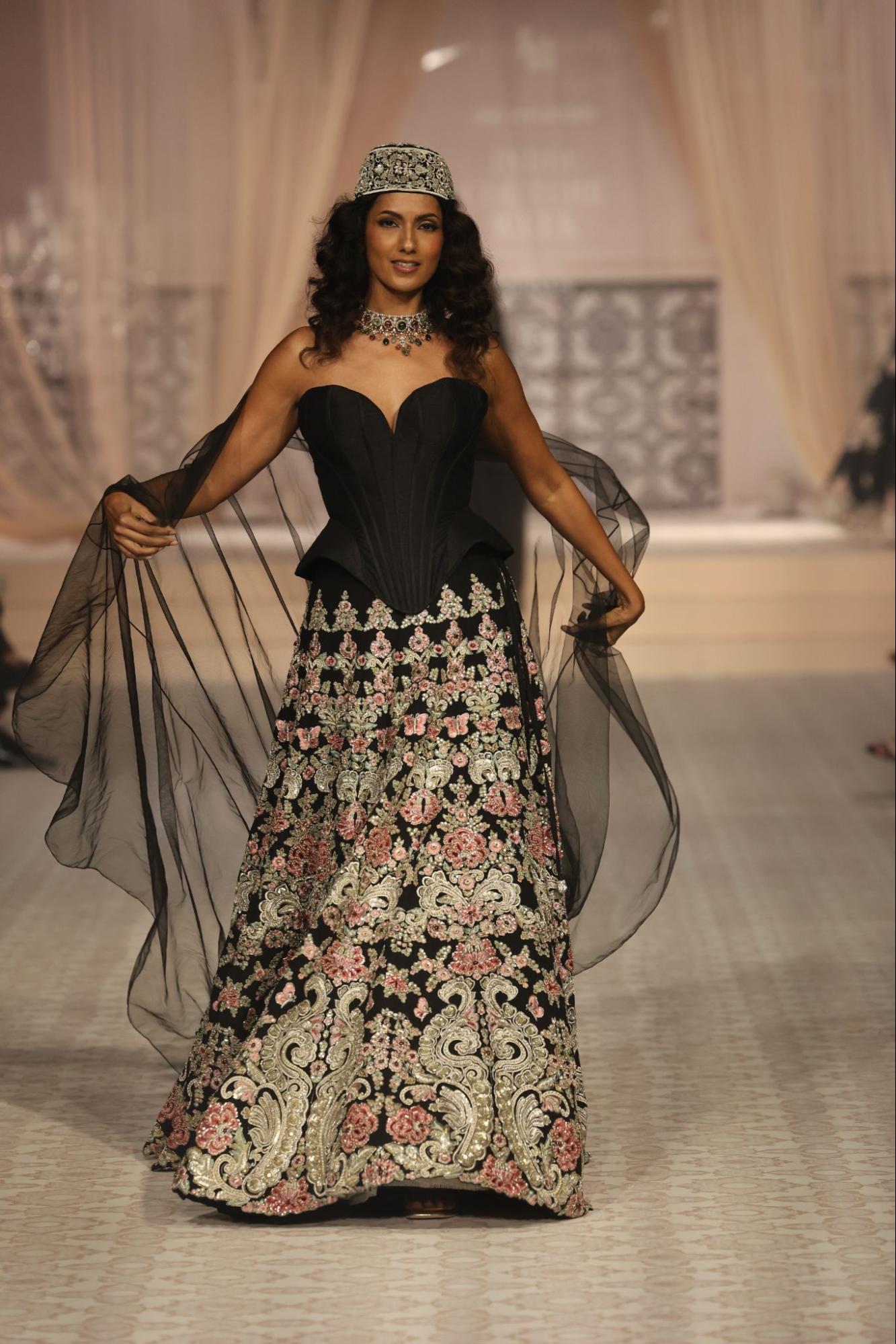
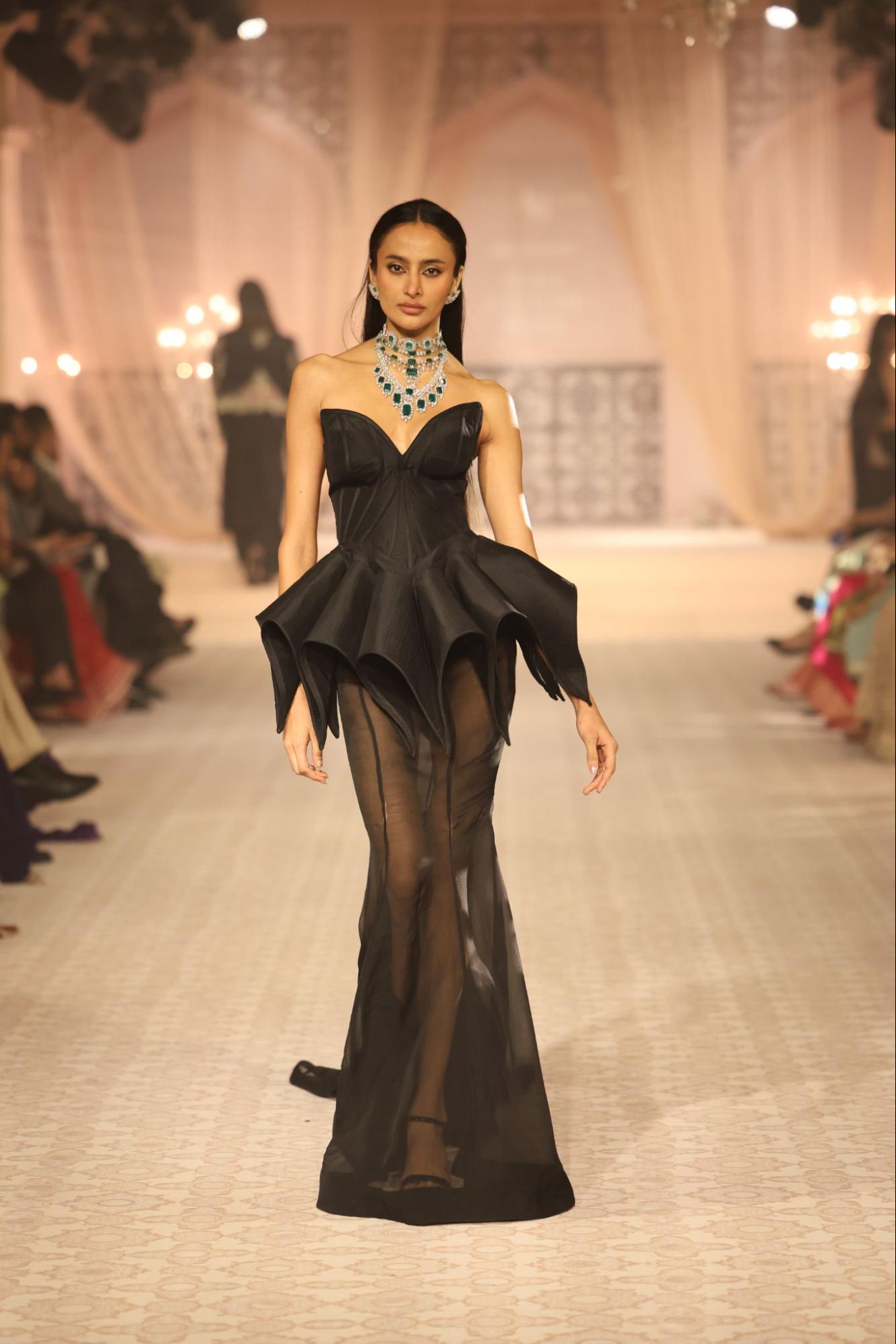
The show opened with a series of beautifully embroidered black garments
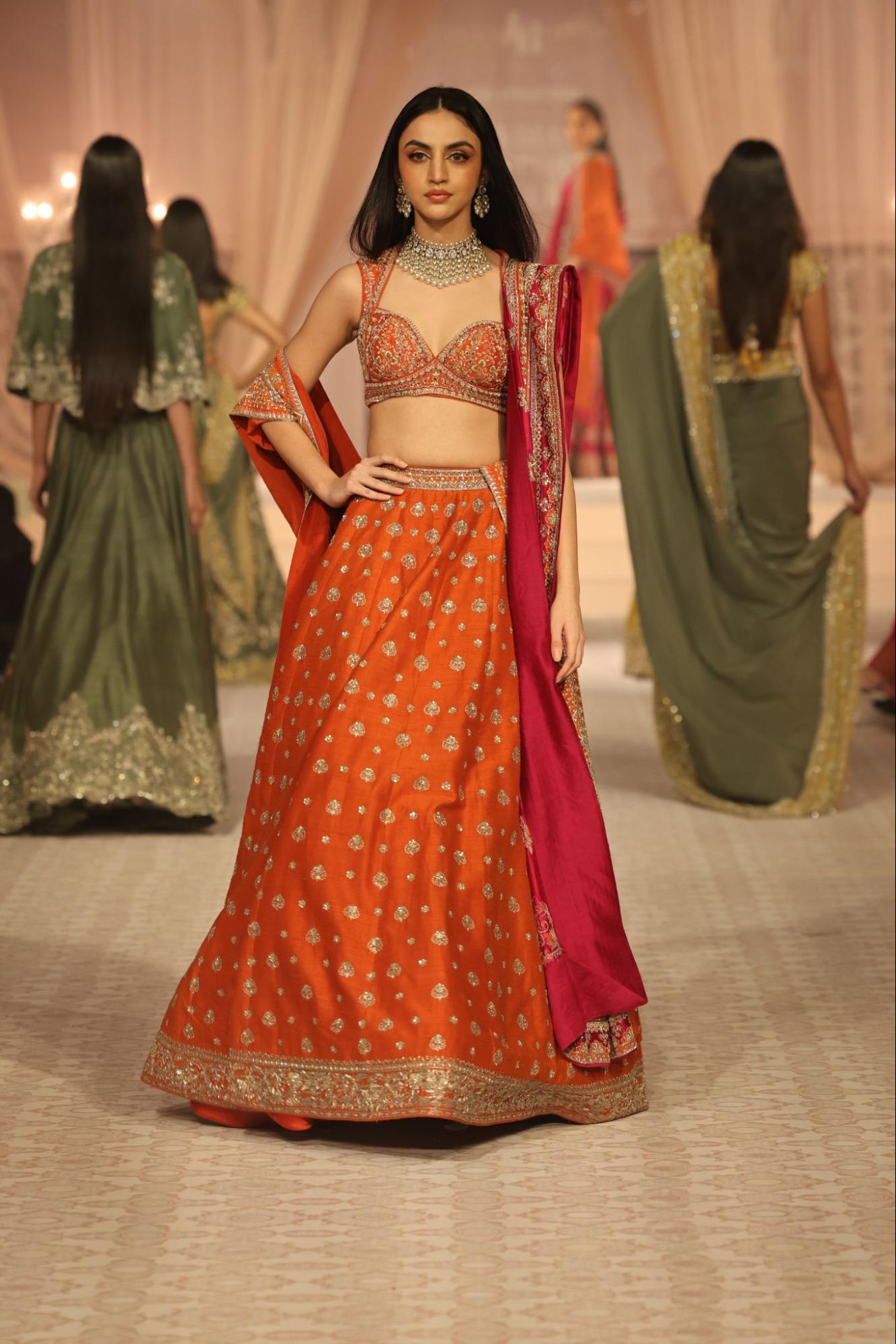
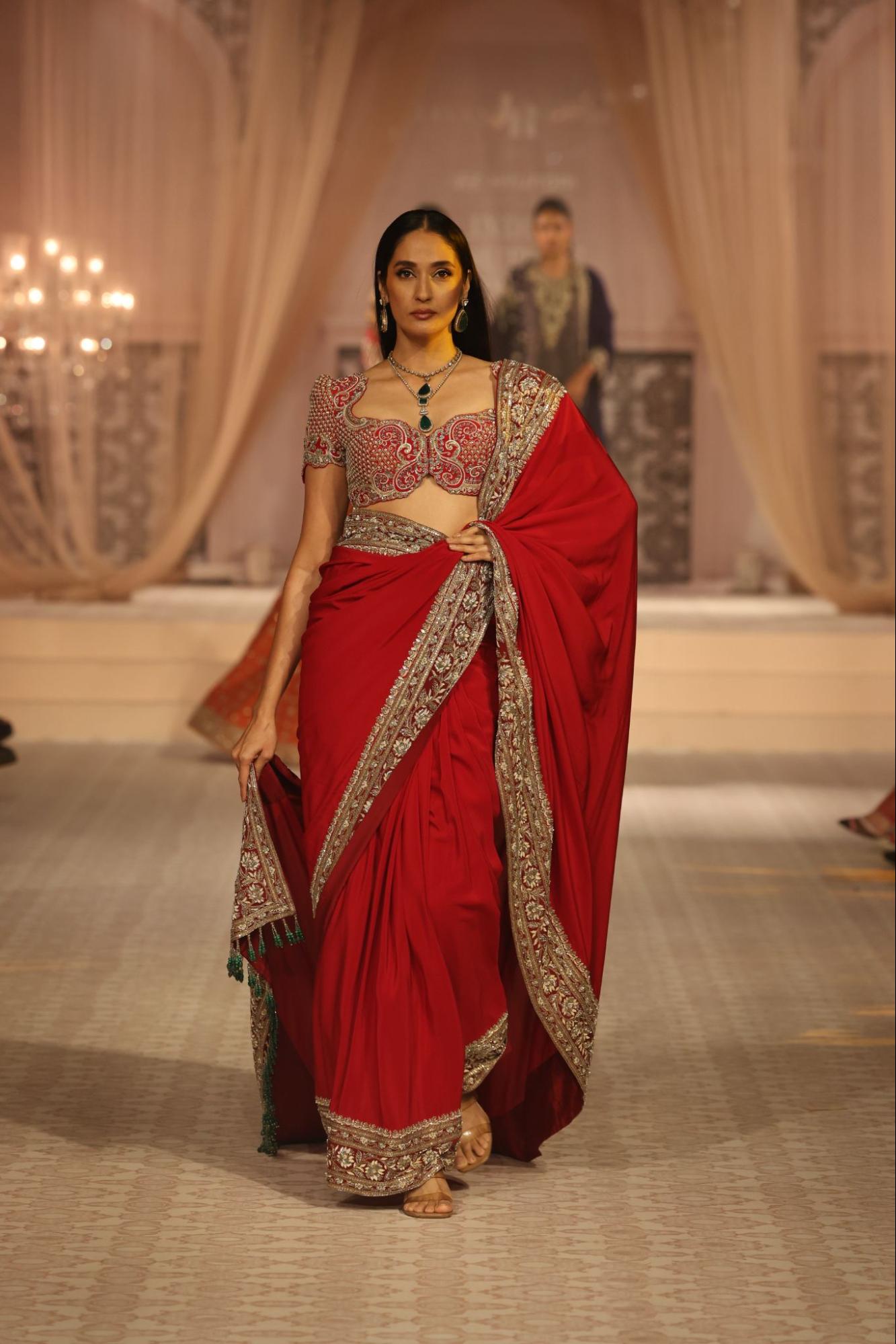
Then came the pastels: sage greens, golds, and champagne beiges shown in corseted blouses over lehengas, styled with lace dripping in pearls and tassels. Then the palette shifted again into vivid pops with an orange lehenga with a fuchsia dupatta, a sari rendered almost entirely in metallic thread work before landing on the classic signature reds.
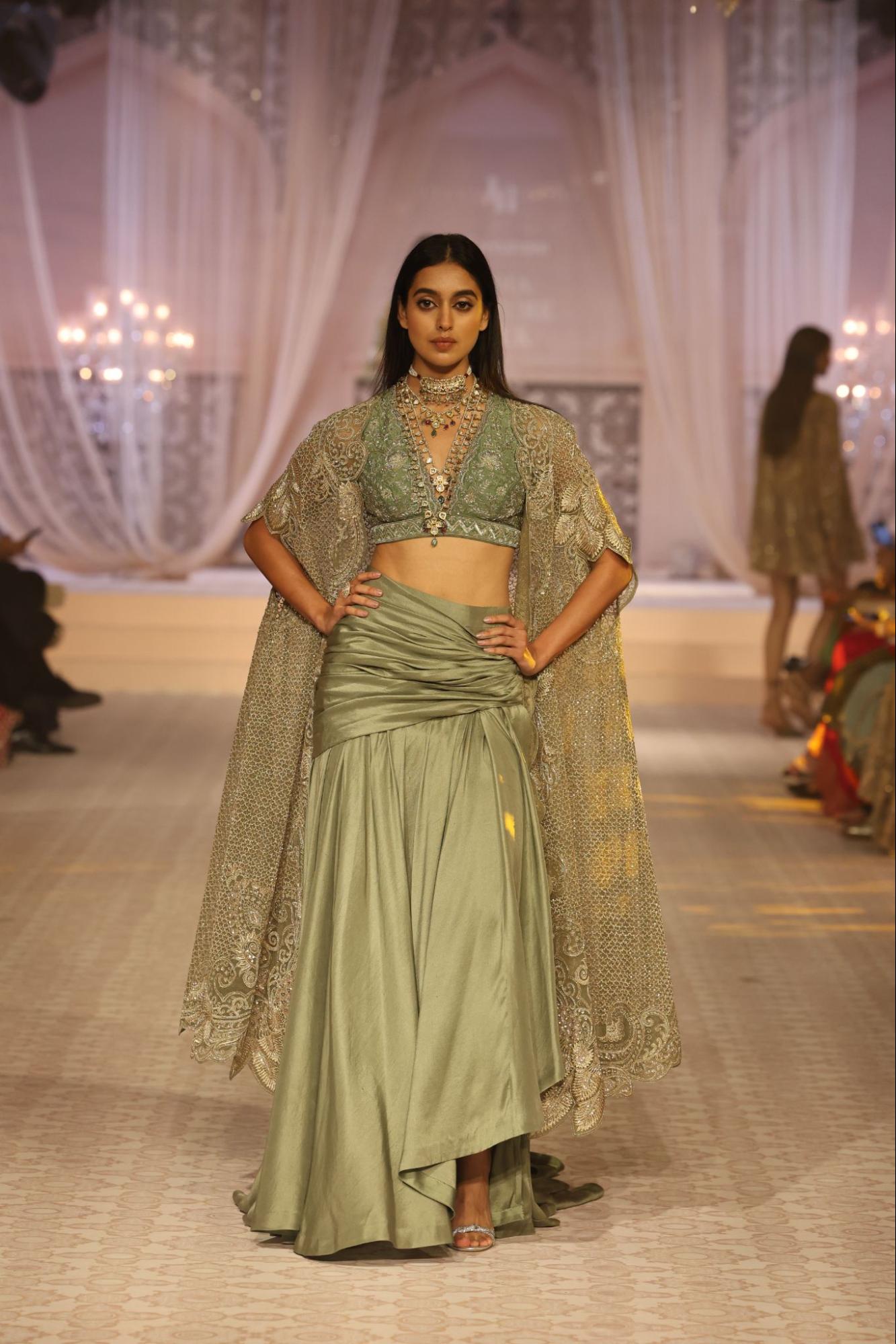
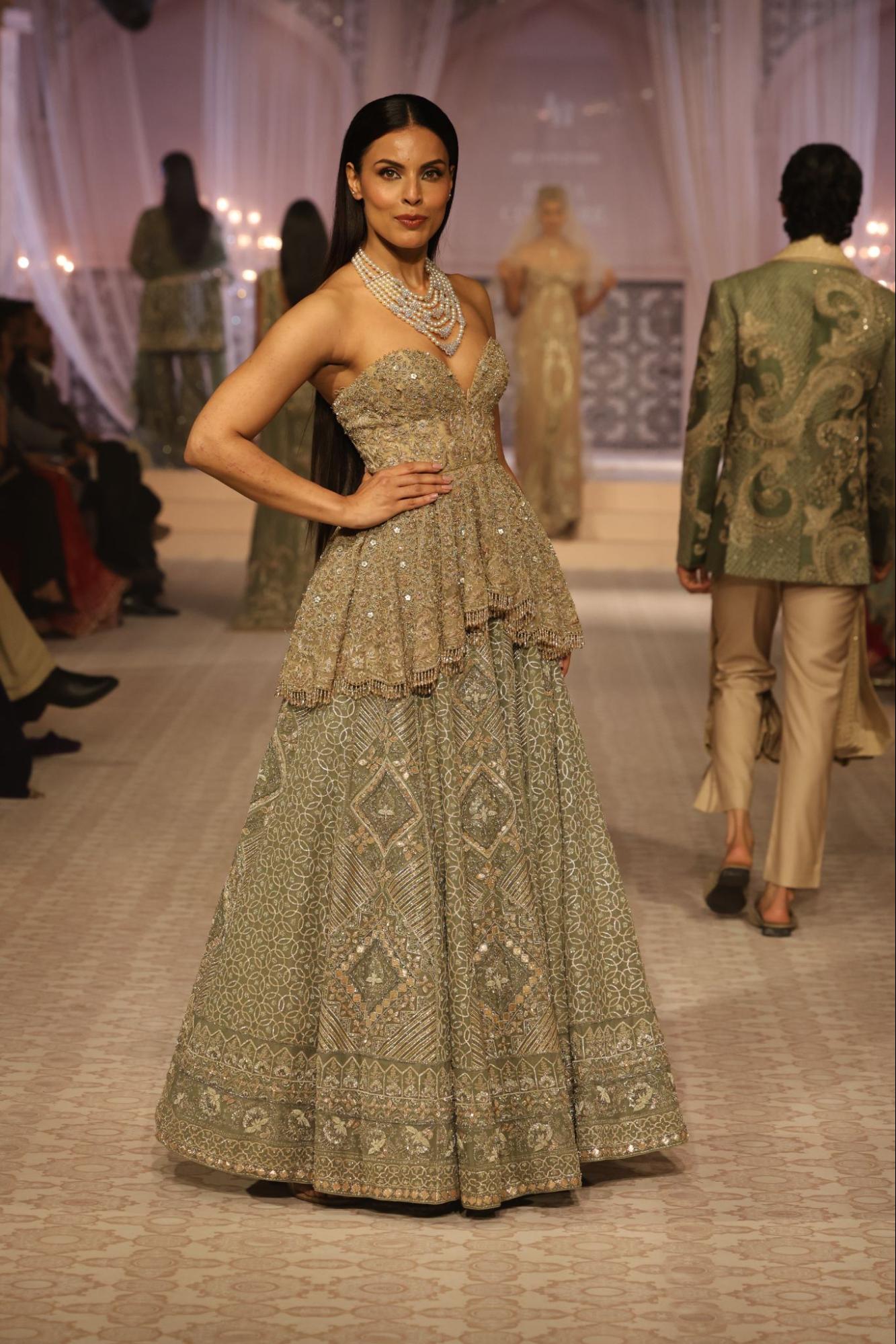
What tied it together wasn't colour but light. Sheer tulle, metallic embroidery, and experimental cutouts caught the stage lighting differently from look to look, so that the same show could feel sculptural one moment, and romantic the next. Reddy plays with structure, transparency, and volume rather than repeating a single silhouette across the line.
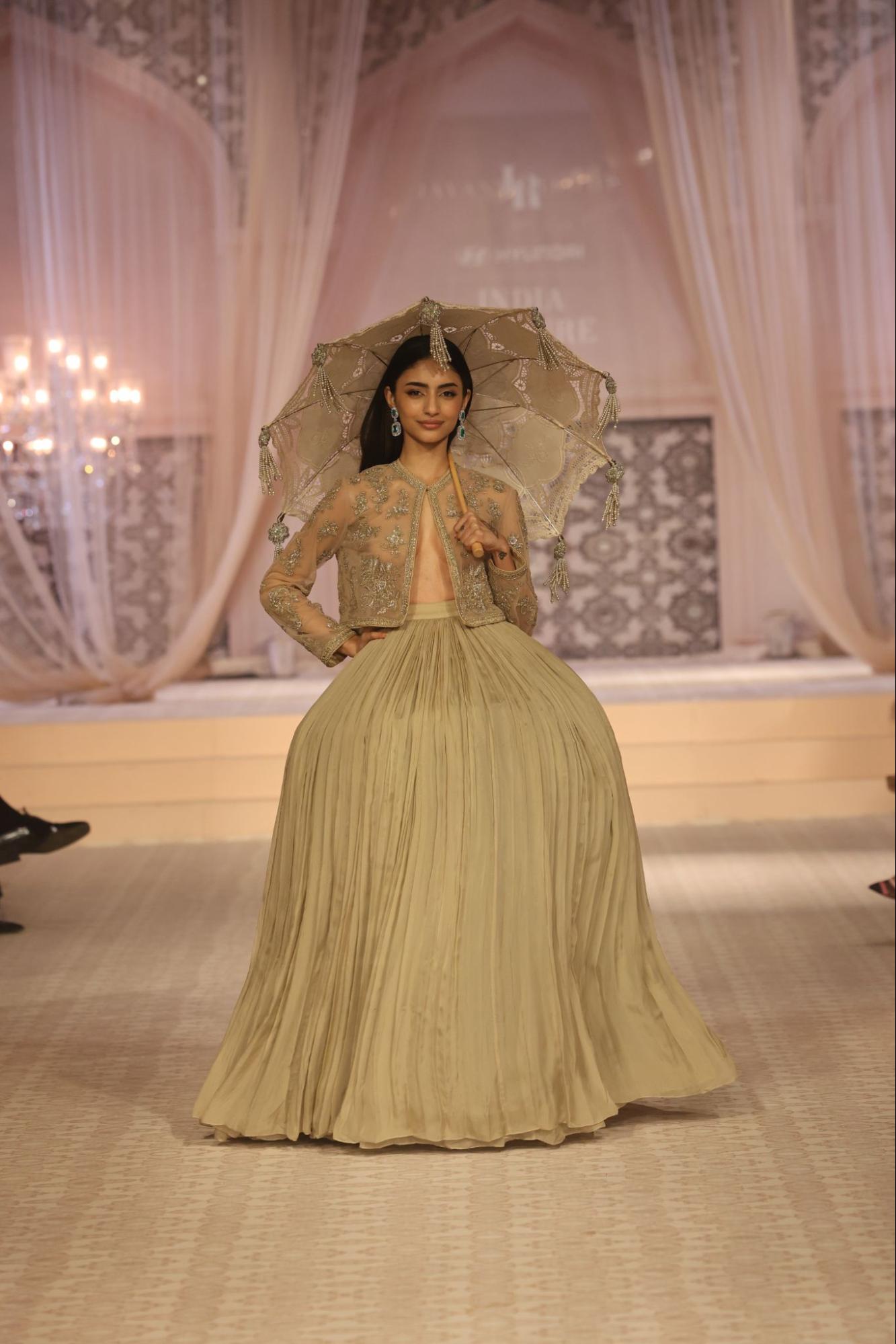

Sheer and structural garments- the range in Jayanti Reddy’s showcase
The collection closed with Aditi Rao Hydari and Siddharth walking hand-in-hand as the showstoppers, closing the showcase in coordinated heritage-inspired outfits. Aditi wore a gold-embellished peplum bodice paired with a sharara, continuing a personal thread – she has walked for Reddy at ICW before – while Siddharth wore an embroidered sherwani with dhoti-style trousers, finished with a multi-layered pearl and emerald necklace. The show closed with the trio posing together against the stage arches, a warm, romantic finale to a collection that spent most of its runway time in contrast and tension.
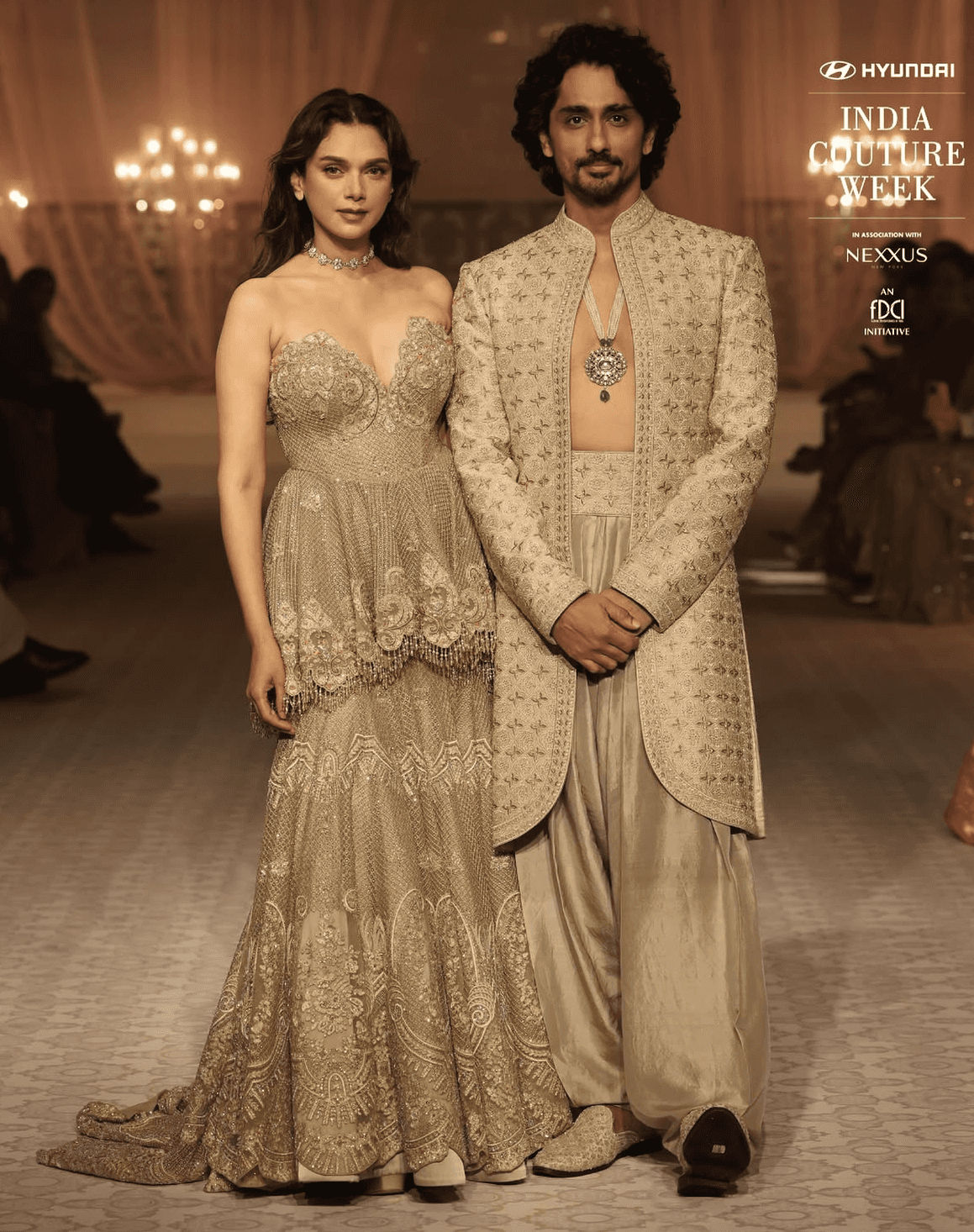
Aditi Rao Hydari and Siddharth closed the show at Jayanti Reddy’s show
Jayanti Reddy's path to this stage wasn't a conventional one. She started her label in 2012 as a self-taught designer. Over more than a decade, the label built its identity around hand-woven Indian textiles, and intricate hand embroidery, with her Hyderabadi roots as a recurring anchor point. She has worked directly with weavers from Varanasi, creating what has become the brand's signature: a juxtaposition of traditional Banarasi textiles with hand-embroidered zardozi work. That commitment to craft has stayed consistent even as her silhouettes have gotten bolder season over season. This year's show, with its corsetry and sheer panelling, is very much an evolution of that same "old-world charm meets modern woman" philosophy rather than a departure from it.
This is her third show at Hyundai India Couture Week and The Gilded Era continues that thread while pushing further into structural, almost architectural silhouettes. It was, in the end, a show about range: a designer known for old-world bridal opulence proving she can also cut, sculpt, and play with shadow, without losing the handwork and heritage that built her name.
TO BE CONTINUED, FOR SUBSCRIBERS ONLY.
This is where the surface ends and the reporting begins.
The complete piece, the full archive, and access to The French Press Circle. Reporting answerable only to its readers.
Already a subscriber ?
Login
Read these on the house, with our compliments.
A selection from the current issue, open to all readers. Read them in full. The rest is one decision away.



The real star of the show was in its silhouettes: corseted bodices next to big voluminous skirts, sheer black fabrics against dense, jewel-toned embroidery; structured Victorian-style boning meeting the fluid drape of a sari. It felt less like a single collection and more like a design label testing the edges of its own language.
This is the first time black has entered her signature palette, and that single addition does a lot of work – it gives the radiance of the sequins and metallic thread something to sit against. Zardozi and traditional thread work have been deliberately lightened and re-engineered to move with the body instead of sitting stiffly on it. The silhouettes, corsets, kaftans, skirts carry all that handwork without losing fluidity. It's couture built on proportion and intention rather than volume of embellishment.
The show opened and closed in tonal opposites, deep blacks with intricate zardozi and embroidery work accessorised with a Kashmiri topi and molten golds, and that push-pull ran through nearly every look. Elsewhere, an all-black gown built entirely from sharp, petal-like fabric folds cut close to the body before flaring into a fishtail hem, proving Reddy is equally comfortable in avant-garde tailoring as she is in embroidery-heavy traditional wear.
The show opened with a series of beautifully embroidered black garments
Then came the pastels: sage greens, golds, and champagne beiges shown in corseted blouses over lehengas, styled with lace dripping in pearls and tassels. Then the palette shifted again into vivid pops with an orange lehenga with a fuchsia dupatta, a sari rendered almost entirely in metallic thread work before landing on the classic signature reds.
What tied it together wasn't colour but light. Sheer tulle, metallic embroidery, and experimental cutouts caught the stage lighting differently from look to look, so that the same show could feel sculptural one moment, and romantic the next. Reddy plays with structure, transparency, and volume rather than repeating a single silhouette across the line.
Sheer and structural garments- the range in Jayanti Reddy’s showcase
The collection closed with Aditi Rao Hydari and Siddharth walking hand-in-hand as the showstoppers, closing the showcase in coordinated heritage-inspired outfits. Aditi wore a gold-embellished peplum bodice paired with a sharara, continuing a personal thread – she has walked for Reddy at ICW before – while Siddharth wore an embroidered sherwani with dhoti-style trousers, finished with a multi-layered pearl and emerald necklace. The show closed with the trio posing together against the stage arches, a warm, romantic finale to a collection that spent most of its runway time in contrast and tension.
Aditi Rao Hydari and Siddharth closed the show at Jayanti Reddy’s show
Jayanti Reddy's path to this stage wasn't a conventional one. She started her label in 2012 as a self-taught designer. Over more than a decade, the label built its identity around hand-woven Indian textiles, and intricate hand embroidery, with her Hyderabadi roots as a recurring anchor point. She has worked directly with weavers from Varanasi, creating what has become the brand's signature: a juxtaposition of traditional Banarasi textiles with hand-embroidered zardozi work. That commitment to craft has stayed consistent even as her silhouettes have gotten bolder season over season. This year's show, with its corsetry and sheer panelling, is very much an evolution of that same "old-world charm meets modern woman" philosophy rather than a departure from it.
This is her third show at Hyundai India Couture Week and The Gilded Era continues that thread while pushing further into structural, almost architectural silhouettes. It was, in the end, a show about range: a designer known for old-world bridal opulence proving she can also cut, sculpt, and play with shadow, without losing the handwork and heritage that built her name.
TO BE CONTINUED, FOR SUBSCRIBERS ONLY.
This is where the surface ends and the reporting begins.
The complete piece, the full archive, and access to The French Press Circle. Reporting answerable only to its readers.
Already a subscriber ?
Login
Read these on the house, with our compliments.
A selection from the current issue, open to all readers. Read them in full. The rest is one decision away.