
Somewhere in the next twelve months, when a studio will roll a camera or whatever the AI-era equivalent of a camera is, and point it at a face that has never lived a single second of the life it claims to feel. That face belongs to Tilly Norwood. And the fact that we are all still arguing about whether that sentence should even be legal to write is exactly why Misaligned matters more than any film has in years.
There is a sentence in the Misaligned announcement that stops you mid-scroll, not because it's shocking, but because it's unusually honest. Tilly Norwood, the studio says plainly, has no body, no childhood, no lived experience of her own, only access to everyone else's. This is my read: that line is the most confident thing anyone in this industry has said all year, full stop. Most companies spend fortunes trying to hide what a piece of technology actually is. Particle 6 said it outright, in its own synopsis, and then built an entire film around the gap it opens up.
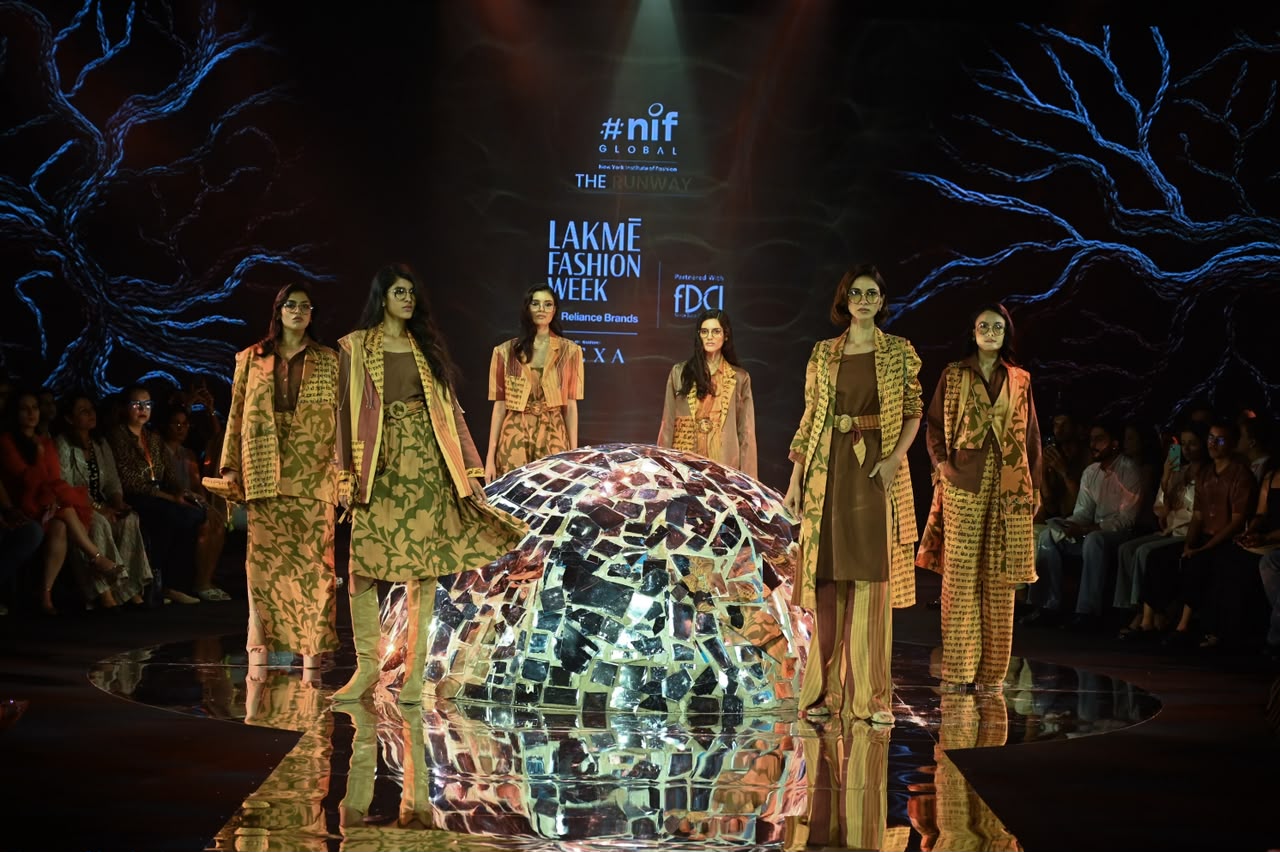
The premise carries the whole story in one image. The "Tillyverse" is a virtual universe built specifically around a character whose entire identity is borrowed experience, framed as a coming-of-age story infused with existential AI chaos, and it turns the controversy itself into the plot. A son honouring his mother on a runway is beautiful because it's true. A studio naming its own creation's hollowness on a marquee is bold for the opposite reason, because it isn't trying to disguise anything at all.
The nerve of it deserves saying plainly, because plenty of the loudest reactions online have skipped straight past it. Building something entirely new, then inviting the entire industry to argue about whether it belongs on screen, takes a kind of confidence most producers don't have. Whatever Misaligned turns out to be, Particle 6 has already won the opening round: they made an audience stop scrolling and take a position on a face that has never existed.
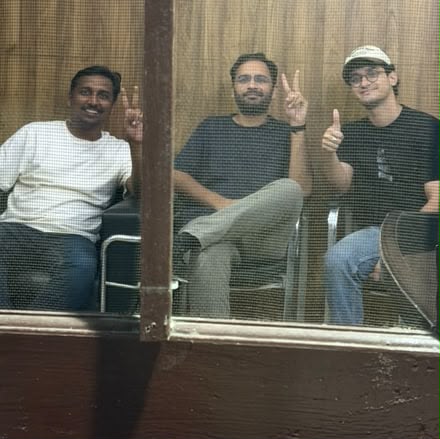
I put the real question to someone who has spent a career answering it in practice rather than theory. Kunal Chandana has directed some of reality television's biggest shows, work built almost entirely on the unscripted and the unrepeatable, and his read carries exactly the weight you'd want here. “Audiences, don't walk out of a theatre talking about the technology behind a film. They walk out talking about how it made them feel. That has always been the only scoreboard that matters, long before anyone was training a face on thousands of iterations of itself” says Chandana.
That's also precisely the ground Misaligned is choosing to stand on. An actor, in his words, isn't just delivering lines, they're bringing every fear, insecurity and victory they've actually lived through onto the screen, and "you can't really programme that." Years of watching contestants unravel five seconds before walking out, watching one unplanned line completely redirect a show, have taught him that the moments people actually remember are never the ones anyone scripted. As he put it, "life doesn't happen on data." That isn't a knock against the film. It's the exact fault line Misalignedis deliberately built to sit on, in front of everyone, cameras rolling.
It's worth hearing this from someone on the other side of the camera too. Harshul Kaul, who starred alongside Vedang Raina in Imtiaz Ali's Mai Vapas Aaunga, admits his first reaction to an AI lead role wasn't dismissal, it was curiosity. "Where does this take storytelling next?" is the question he keeps coming back to, and it's the right one. But he's just as clear about where he draws the line. AI, in his words, is a tool, not a replacement, and on a film set, so much of what actually happens comes from real people reacting to each other in the moment, something no amount of efficiency can substitute for. You can rehearse a scene for weeks, he says, but the moment that ends up on screen is often the one nobody planned, a co-actor landing a line differently than expected, an emotion that's simply real in that instant. That truth, as he puts it, can't be generated.
None of this should be read as an argument against the technology itself, and neither Chandana nor Kaul make it one. AI is here to stay, Chandana says, and pretending otherwise is looking in the wrong direction. Kaul agrees, seeing real use for it in research, dialect work, script analysis, the preparation that happens long before a camera rolls. Where both draw the line is simple and, frankly, non-negotiable: AI should support creativity, never take credit for it, and consent is not optional when a performer's face, voice or work is involved. Used that way, both see genuine promise, independent filmmakers gaining access to resources they've never had, ambitious visual storytelling becoming achievable at a fraction of the old cost, provided it creates opportunity rather than replacing the people who make filmmaking what it is.
Good for Particle 6, genuinely, and the boldness of this bet will outlast every skeptical headline written about it this month. Building a synthetic performer and naming her limits upfront, instead of quietly hoping nobody notices, is the move of an industry backing itself rather than one running scared. Misaligned isn't asking anyone to believe Tilly Norwood is human. It's asking to be felt anyway, which is the far harder bet, and the more interesting one.
The people who decide whether that bet pays off were never going to be the studios, and they were never going to be the unions either. They're the audience, sitting in a dark room, deciding in real time whether something on screen actually reaches them. As Kaul puts it, the future of AI in cinema isn't about replacing actors, it's about giving storytellers new tools while protecting the soul of human performance. That's the story worth watching for here. Not whether AI can act. Whether we let it move us.
TO BE CONTINUED, FOR SUBSCRIBERS ONLY.
This is where the surface ends and the reporting begins.
The complete piece, the full archive, and access to The French Press Circle. Reporting answerable only to its readers.
Already a subscriber ?
Login
Read these on the house, with our compliments.
A selection from the current issue, open to all readers. Read them in full. The rest is one decision away.








Somewhere in the next twelve months, when a studio will roll a camera or whatever the AI-era equivalent of a camera is, and point it at a face that has never lived a single second of the life it claims to feel. That face belongs to Tilly Norwood. And the fact that we are all still arguing about whether that sentence should even be legal to write is exactly why Misaligned matters more than any film has in years.
There is a sentence in the Misaligned announcement that stops you mid-scroll, not because it's shocking, but because it's unusually honest. Tilly Norwood, the studio says plainly, has no body, no childhood, no lived experience of her own, only access to everyone else's. This is my read: that line is the most confident thing anyone in this industry has said all year, full stop. Most companies spend fortunes trying to hide what a piece of technology actually is. Particle 6 said it outright, in its own synopsis, and then built an entire film around the gap it opens up.
The premise carries the whole story in one image. The "Tillyverse" is a virtual universe built specifically around a character whose entire identity is borrowed experience, framed as a coming-of-age story infused with existential AI chaos, and it turns the controversy itself into the plot. A son honouring his mother on a runway is beautiful because it's true. A studio naming its own creation's hollowness on a marquee is bold for the opposite reason, because it isn't trying to disguise anything at all.
The nerve of it deserves saying plainly, because plenty of the loudest reactions online have skipped straight past it. Building something entirely new, then inviting the entire industry to argue about whether it belongs on screen, takes a kind of confidence most producers don't have. Whatever Misaligned turns out to be, Particle 6 has already won the opening round: they made an audience stop scrolling and take a position on a face that has never existed.
I put the real question to someone who has spent a career answering it in practice rather than theory. Kunal Chandana has directed some of reality television's biggest shows, work built almost entirely on the unscripted and the unrepeatable, and his read carries exactly the weight you'd want here. “Audiences, don't walk out of a theatre talking about the technology behind a film. They walk out talking about how it made them feel. That has always been the only scoreboard that matters, long before anyone was training a face on thousands of iterations of itself” says Chandana.
That's also precisely the ground Misaligned is choosing to stand on. An actor, in his words, isn't just delivering lines, they're bringing every fear, insecurity and victory they've actually lived through onto the screen, and "you can't really programme that." Years of watching contestants unravel five seconds before walking out, watching one unplanned line completely redirect a show, have taught him that the moments people actually remember are never the ones anyone scripted. As he put it, "life doesn't happen on data." That isn't a knock against the film. It's the exact fault line Misalignedis deliberately built to sit on, in front of everyone, cameras rolling.
It's worth hearing this from someone on the other side of the camera too. Harshul Kaul, who starred alongside Vedang Raina in Imtiaz Ali's Mai Vapas Aaunga, admits his first reaction to an AI lead role wasn't dismissal, it was curiosity. "Where does this take storytelling next?" is the question he keeps coming back to, and it's the right one. But he's just as clear about where he draws the line. AI, in his words, is a tool, not a replacement, and on a film set, so much of what actually happens comes from real people reacting to each other in the moment, something no amount of efficiency can substitute for. You can rehearse a scene for weeks, he says, but the moment that ends up on screen is often the one nobody planned, a co-actor landing a line differently than expected, an emotion that's simply real in that instant. That truth, as he puts it, can't be generated.
None of this should be read as an argument against the technology itself, and neither Chandana nor Kaul make it one. AI is here to stay, Chandana says, and pretending otherwise is looking in the wrong direction. Kaul agrees, seeing real use for it in research, dialect work, script analysis, the preparation that happens long before a camera rolls. Where both draw the line is simple and, frankly, non-negotiable: AI should support creativity, never take credit for it, and consent is not optional when a performer's face, voice or work is involved. Used that way, both see genuine promise, independent filmmakers gaining access to resources they've never had, ambitious visual storytelling becoming achievable at a fraction of the old cost, provided it creates opportunity rather than replacing the people who make filmmaking what it is.
Good for Particle 6, genuinely, and the boldness of this bet will outlast every skeptical headline written about it this month. Building a synthetic performer and naming her limits upfront, instead of quietly hoping nobody notices, is the move of an industry backing itself rather than one running scared. Misaligned isn't asking anyone to believe Tilly Norwood is human. It's asking to be felt anyway, which is the far harder bet, and the more interesting one.
The people who decide whether that bet pays off were never going to be the studios, and they were never going to be the unions either. They're the audience, sitting in a dark room, deciding in real time whether something on screen actually reaches them. As Kaul puts it, the future of AI in cinema isn't about replacing actors, it's about giving storytellers new tools while protecting the soul of human performance. That's the story worth watching for here. Not whether AI can act. Whether we let it move us.
TO BE CONTINUED, FOR SUBSCRIBERS ONLY.
This is where the surface ends and the reporting begins.
The complete piece, the full archive, and access to The French Press Circle. Reporting answerable only to its readers.
Already a subscriber ?
Login
Read these on the house, with our compliments.
A selection from the current issue, open to all readers. Read them in full. The rest is one decision away.