
There is a particular kind of hush that falls over the Taj Falaknuma Palace when a show begins with nothing but the clothes to announce themselves. On July 23, the hush opened the nineteenth edition of FDCI’s Hyundai India Couture Week, as Anamika Khanna took the stage in Hyderabad for the very first time the event has ever stepped outside Delhi. Six days later, on July 29, Rahul Mishra closed the week back at the Taj Palace with Devi: The Eternal Muse, a collection fresh off Paris Haute Couture Week and built around the sringara traditions of temple sculpture. In between, thirteen runway presentations carried India's biggest couture names, Falguni Shane Peacock, Rohit Bal marking three decades of his own artistry, House of Masaba making its couture debut after a six-year break from the ramp, JJ Valaya, Tarun Tahiliani, Rimzim Dadu, Arpita Mehta, Dolly J, Jayanti Reddy.
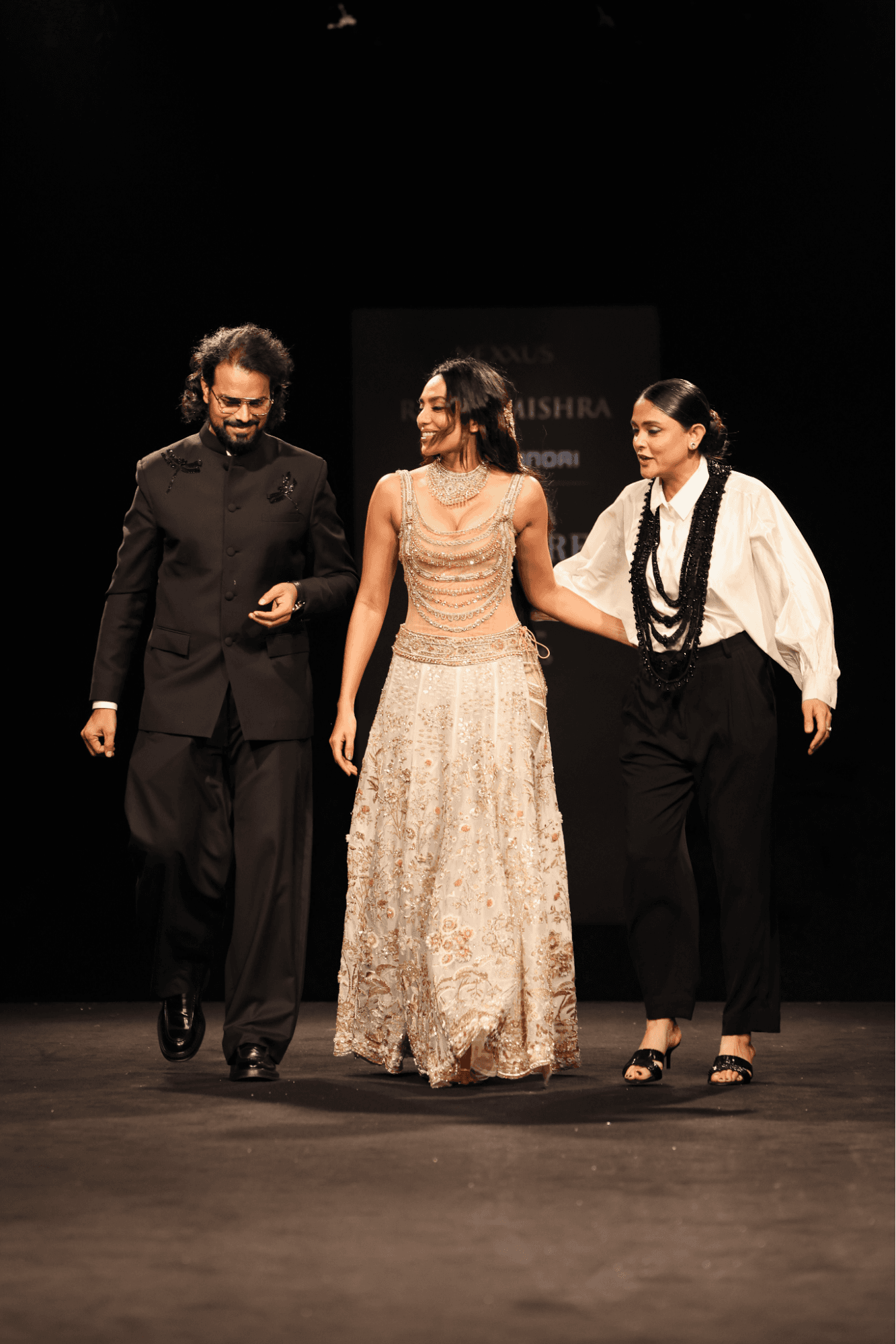
Sobhita Dhulipala as showstopper for Rahul Misra at FDCI’s Hyundai India Couture Week 2026
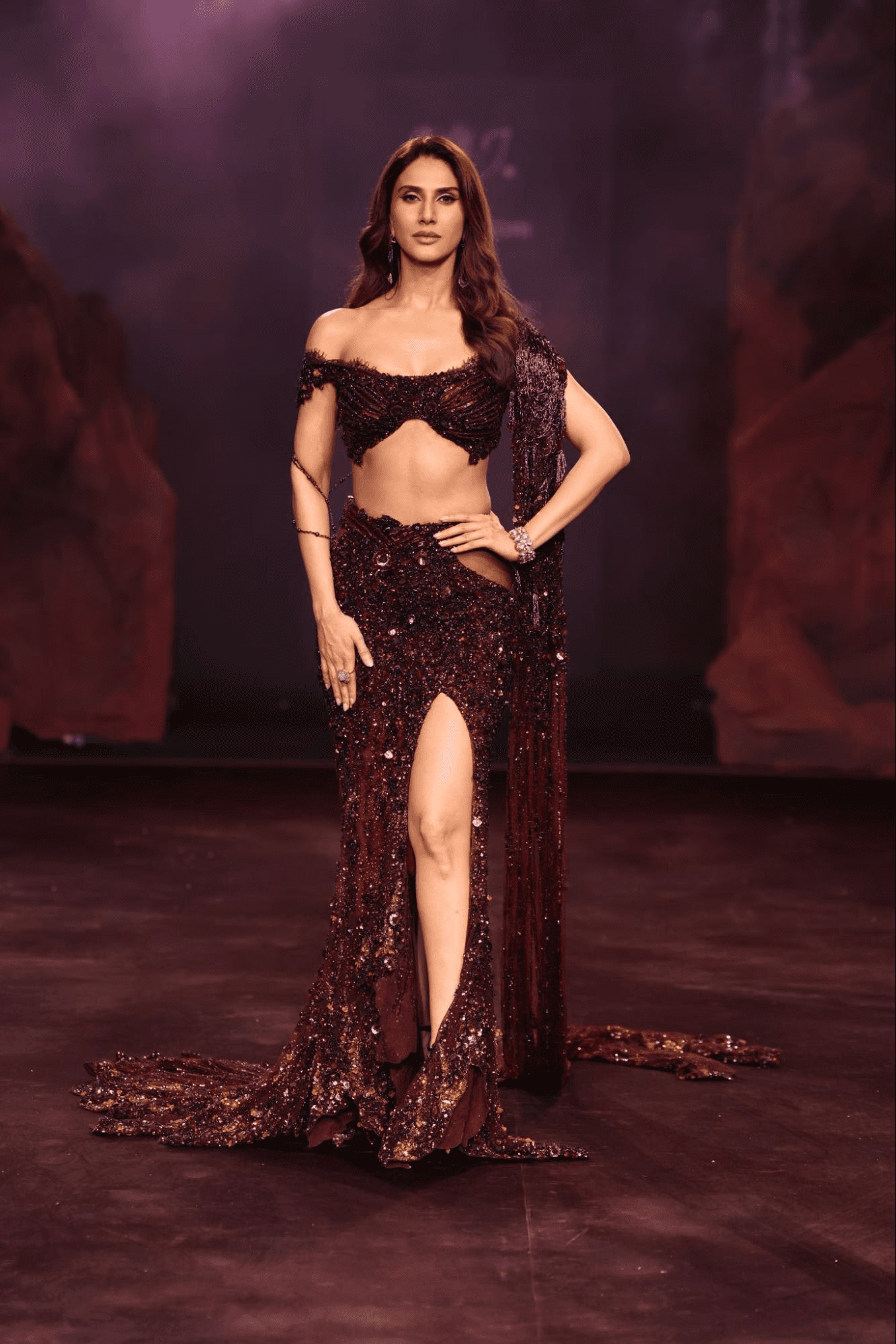
Vaani Kapoor walked as the showstopper for Dolly J
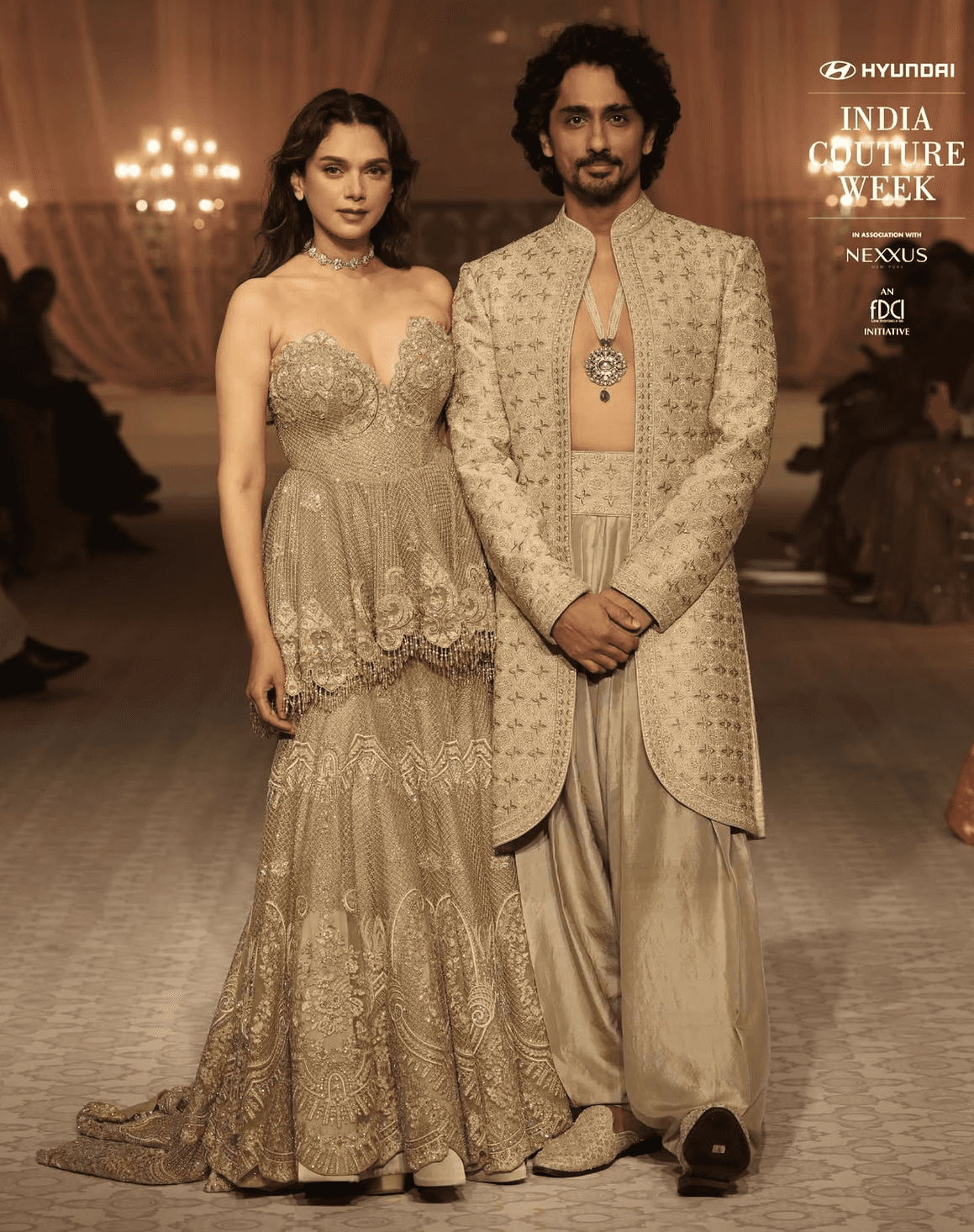
Aditi Rao Hydari and Siddharth closed the show at Jayanti Reddy’s 2026 FDCI HICW presentation
Of those thirteen shows, exactly three brought in a Bollywood name to close them. Vaani Kapoor closed for Dolly J's BRĀHM, a collection meditating on spiritual transformation through the elusive Brahma Kamal flower. Aditi Rao Hydari and her husband Siddharth walked hand in hand to close Jayanti Reddy's The Gilded Era, a tribute to Hyderabad's Nizami embroidery traditions. And Sobhita Dhulipala closed the grand finale for Rahul Mishra, embodying what the designer called the eternal muse who has inspired sculptors and artisans for centuries. Three shows, out of thirteen. Everywhere else, the closing position, the one moment every fashion week is built to remember, belonged to the women who have been walking runways since long before any of this season's headlines existed.
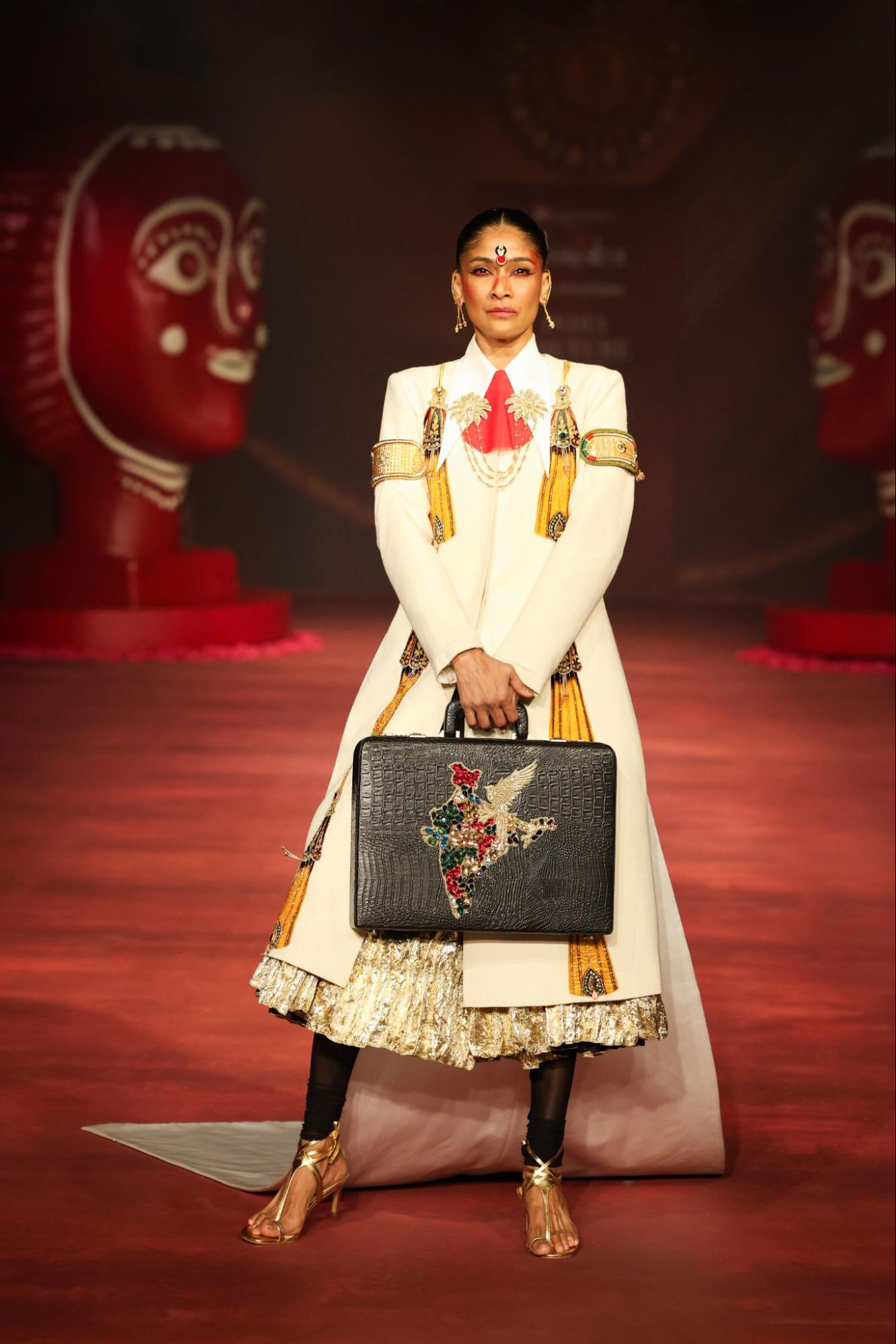
Carol Gracias makes a comeback to the runway as she opens the show for the debut of House of Masaba at FDCI’s Hyundai India Couture Week 2026
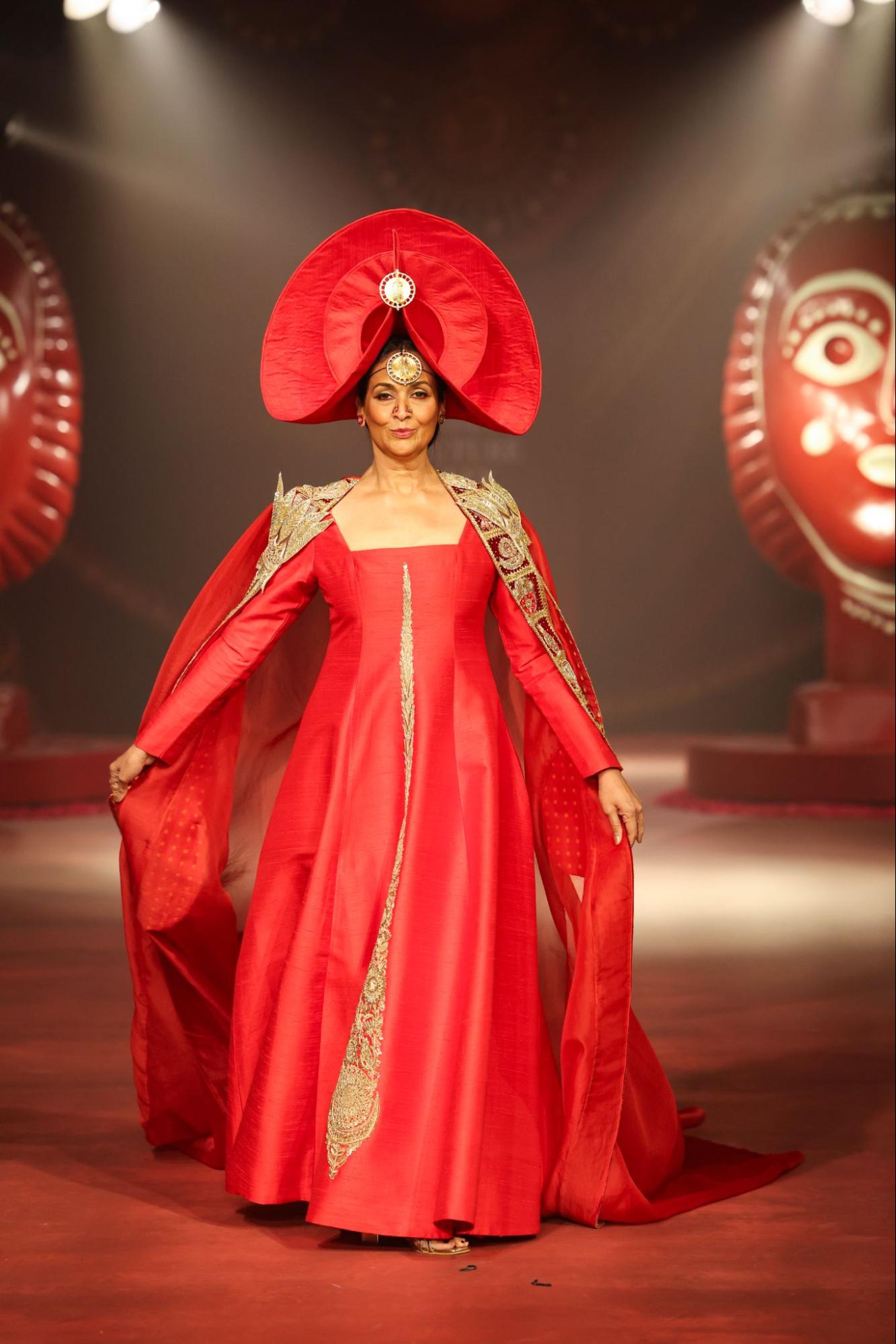
Madhu Sapre in Masaba’s iteration of the red Indian bride
At House of Masaba's debut, Carol Gracias opened the show carrying a briefcase embroidered with the map of India, and Madhu Sapre closed it in a red bridal look that Masaba Gupta herself called a vision of a quintessential Indian bride. Two supermodels, decades into their careers, framing an entire collection between them. It is worth sitting with what that means for a season that could so easily have reached for a younger, more Instagram-famous face instead, and chose not to.
The Season That Let Couture Be the Headline
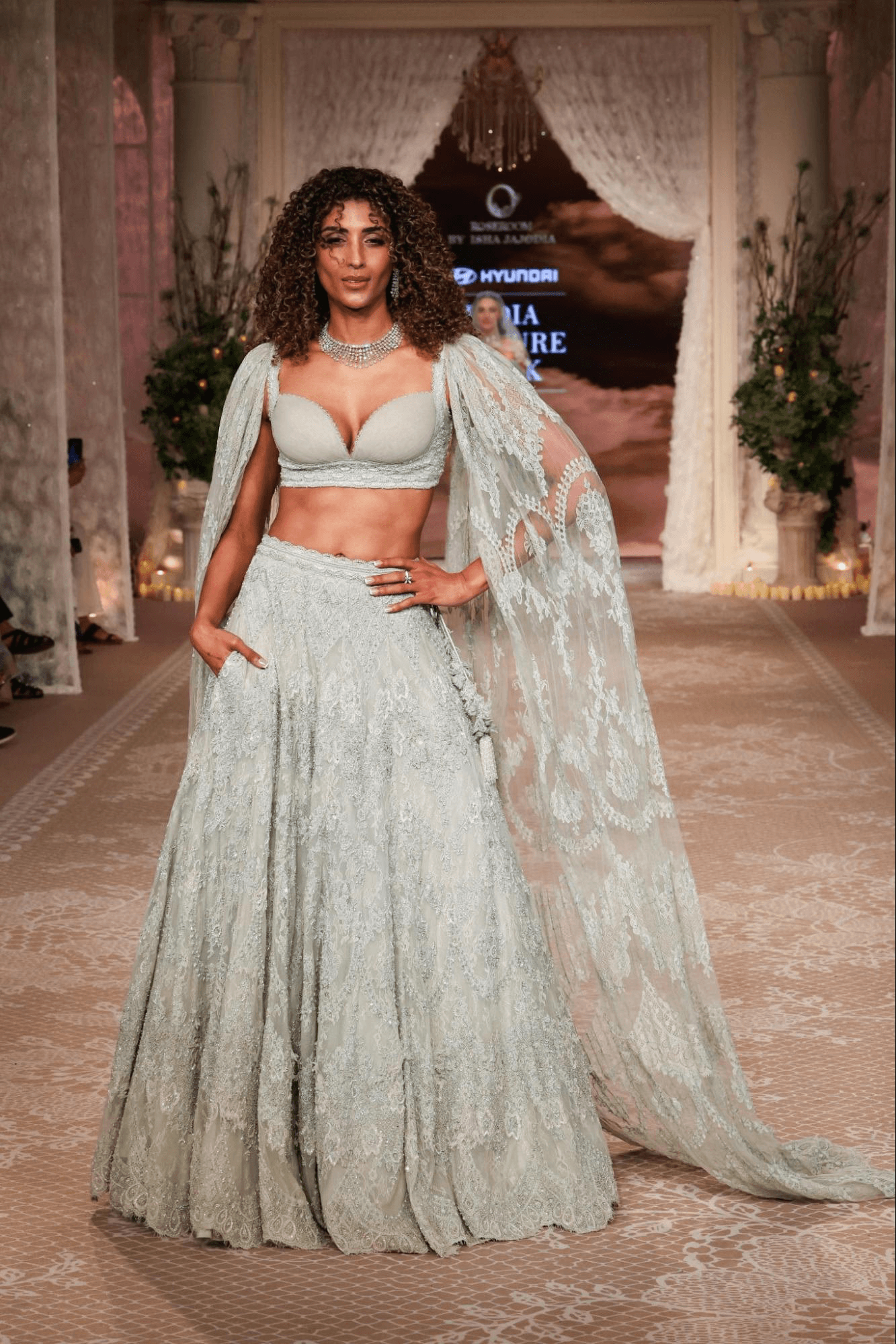
Vasuki Punj in a mint green lace lehenga from Softly, Strong by ROSEROOM by Isha Jajodia, at FDCI’s Hyundai India Couture Week 2026
For years, an India Couture Week season has been discussed by the showstopper line up. The morning-after coverage goes to whoever closed which show, and a designer's actual collection becomes a footnote beneath whichever actor wore the finale look. This season inverted that entirely, and the inversion did not happen by accident. It happened because the industry's own veterans, the women who taught this business what a showstopper is supposed to do in the first place, walked back into that closing position and reminded everyone exactly what it was built for.

Anu Ahuja, show director and former model. Image via personal archive.
Anu Ahuja, who modelled for twelve years alongside Mehr Jesia and Madhu Sapre before becoming one of the industry's most trusted show directors, does not see this as some kind of victory lap. "I don't see it as vindication," she said. "Fashion keeps evolving, and every era finds its own language." Her belief has stayed consistent across her career: a showstopper should serve the story of the collection, never become the story itself. When a celebrity genuinely belongs inside that narrative, she is the first to say it works beautifully, and she points to Manish Malhotra's runway as the clearest example, where his decades-long relationship with Bollywood makes a star's presence feel like a natural extension of his own creative world rather than a marketing decision bolted on afterward. But when a celebrity is there only to create noise, she said, "the clothes inevitably become secondary." Watching supermodels reclaim the closing spot this season felt exciting to her precisely because they are trained to communicate fashion, to make the designer's vision the hero rather than themselves.
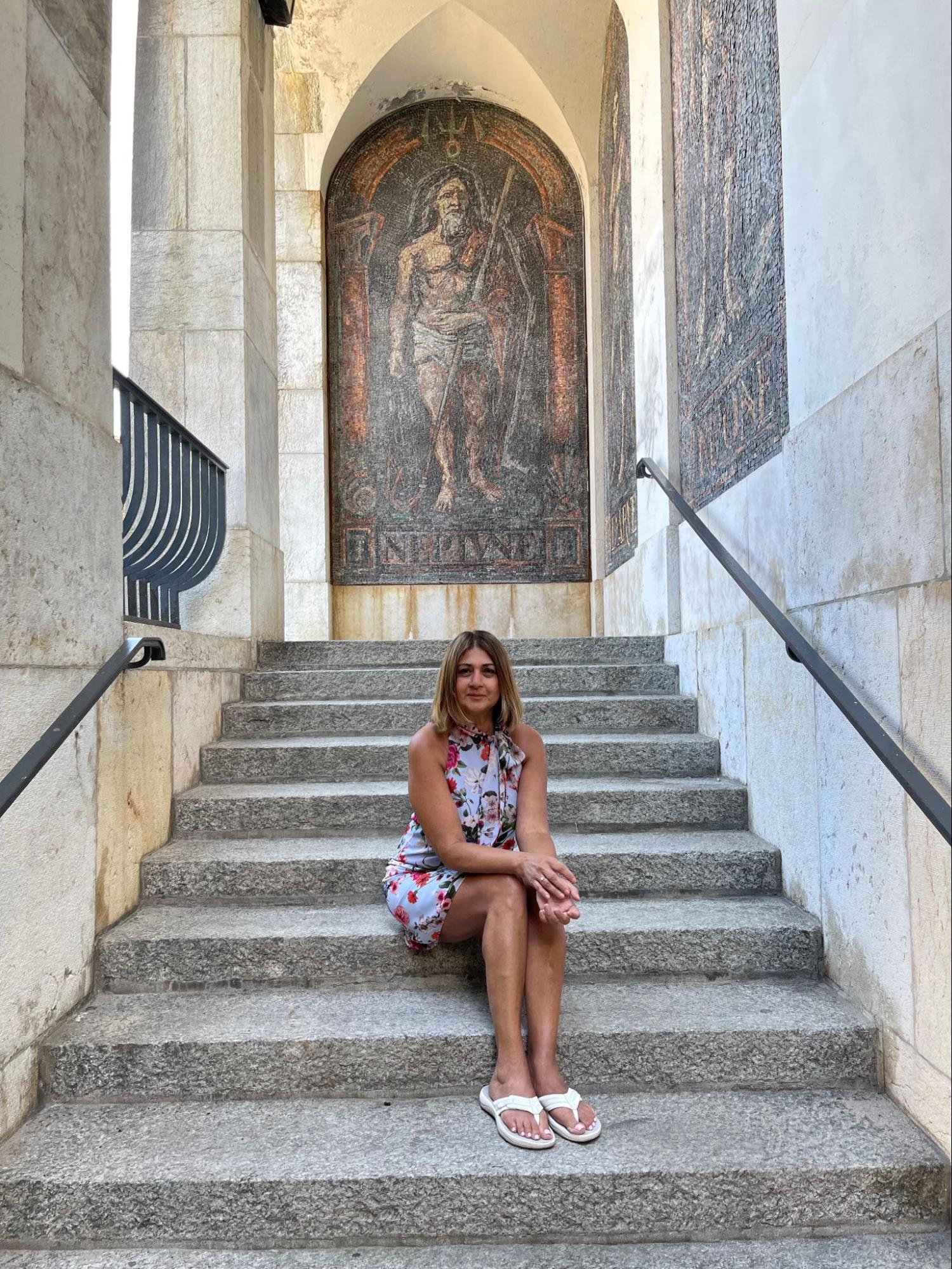
Lubna Adam, show director. Image via personal archive.
Ask her whether designers actually get to choose freely, and Lubna Adams, who has choreographed and directed runway shows for more than three decades, answers without hesitation. This decision, she said, is always the designer's on paper, but rarely theirs in practice. She described the real pressure that comes from sponsors and organisers, the quiet fear that without a recognisable face closing a show, a designer risks losing the media coverage. Unfortunately, the manner in which the media works today, the showstopper continues to be the headline, and the designer’s collection becomes a footnote. It is a pressure she has watched shape decisions for years, no matter how hard she has tried to find exceptions to it.
What makes this season different, in her account, is what happens once that pressure lifts. She described in vivid detail what a celebrity showstopper actually costs a designer backstage: a team running between the star's vanity van and a final fitting, last-minute outfit changes that abandon the designer's original vision entirely, security logistics competing with a hundred other backstage fires, showstoppers who have stumbled on the ramp simply because there was no time for proper rehearsal. "It takes away from what the design of the designer actually was," she said, "and creates a distraction where the media is covering the celebrity, and not the designer's garb." Her sharpest observation may be the simplest one: the same handful of faces close for four or five designers within a single season, until audiences stop registering which designer they were even watching in the first place.
Grace That Was Trained, Long Before Any Camera Found It
It is worth remembering that the entire tradition of the celebrity showstopper did not begin with Bollywood glamour at all. It began with women who were models first, Aishwarya Rai Bachchan chief among them, who carried onto her earliest showstopper walks the exact poise and command she had spent years building on the ramp before a single film camera ever found her. The grace audiences remember from that era of showstoppers was never a performance borrowed from cinema. It was a craft these women had already mastered, one that simply followed them into a different spotlight.
Lubna Adams makes the case for why that particular skill resists easy substitution. She separates what training can build, the stride, the expression, the discipline of holding a pose under lights, from what a model has to already carry inside their own presence, the part no amount of coaching manufactures from scratch. "What a potential model needs is a belief," she said, "that they have the potential, and they're willing to work hard for it in a professional manner." It is a demanding standard, and it happens to be the exact standard every one of this season's veteran showstoppers has spent a career meeting.
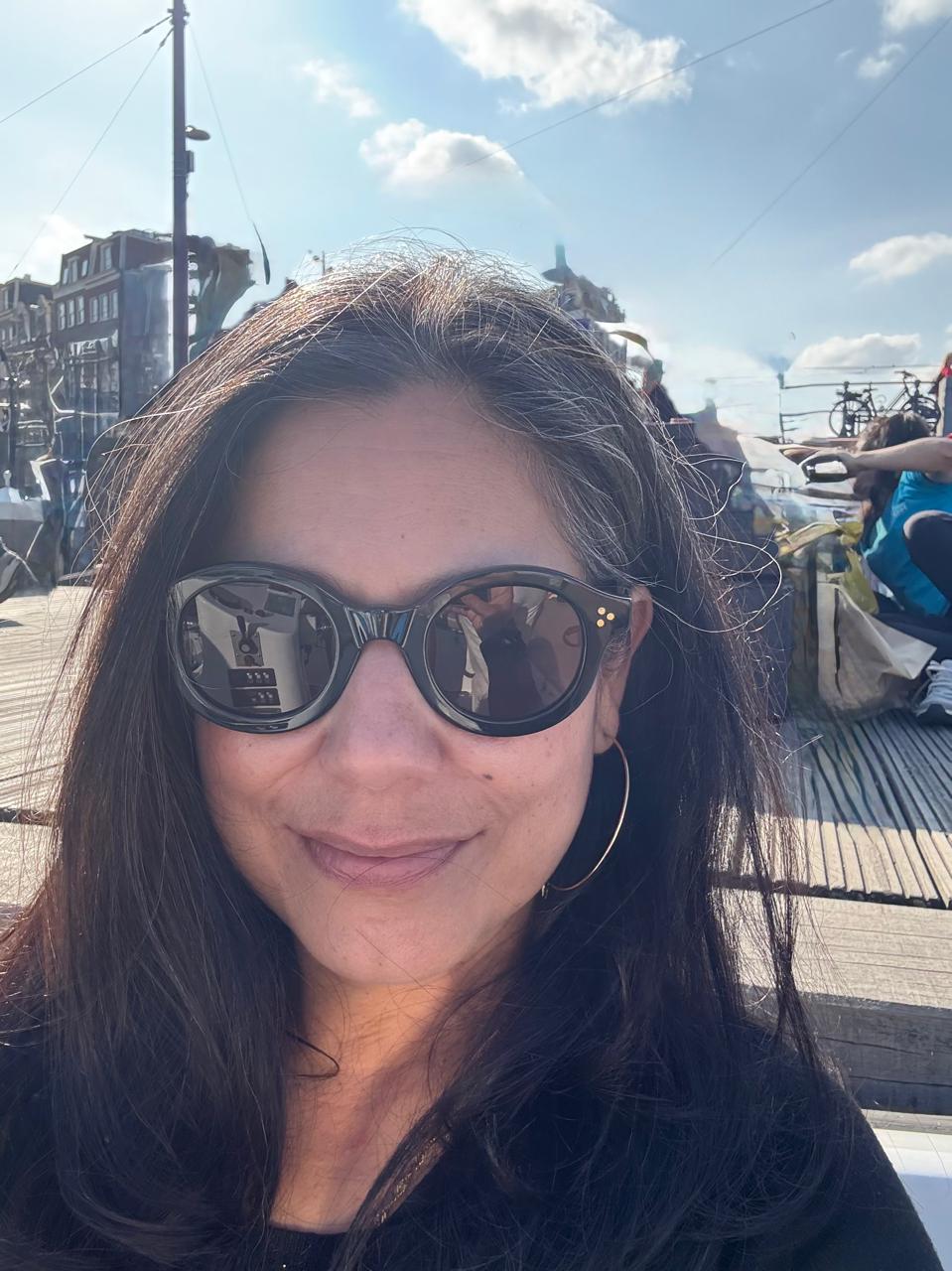
Aparna Bahl Bedi, co-founder of Preferred Professionals, and show director. Image via personal archive.
Aparna Bahl Bedi, who has spent thirty one years shaping runway shows through Preferred Professionals, the company she co-founded with Anisha Bahl and Tania LeFebvre back in 1995, traces the entire arc of how the industry arrived at this crossroads. In the earliest years of Indian fashion, she explained, shows were built almost entirely around supermodels, back when even assembling a cast of thirty models felt ambitious and half of them were the kind of stature names, Mehr Jesia, Madhu Sapre, Milind Soman, that filled a runway with the same glamour the rest of the world associated with supermodel status. The shift began later, she said, once corporate sponsors entered the picture and asked for a level of public visibility only a famous face could deliver. She is candid that she remains, in her own words, "a purist" who prefers a professionally trained model over an actor in nearly every circumstance, though she is quick to name the exceptions that work, a Ranveer Singh who clears his schedule and gives real rehearsal time, an Arjun Rampal whose presence on a Rohit Bal runway simply never feels wrong.
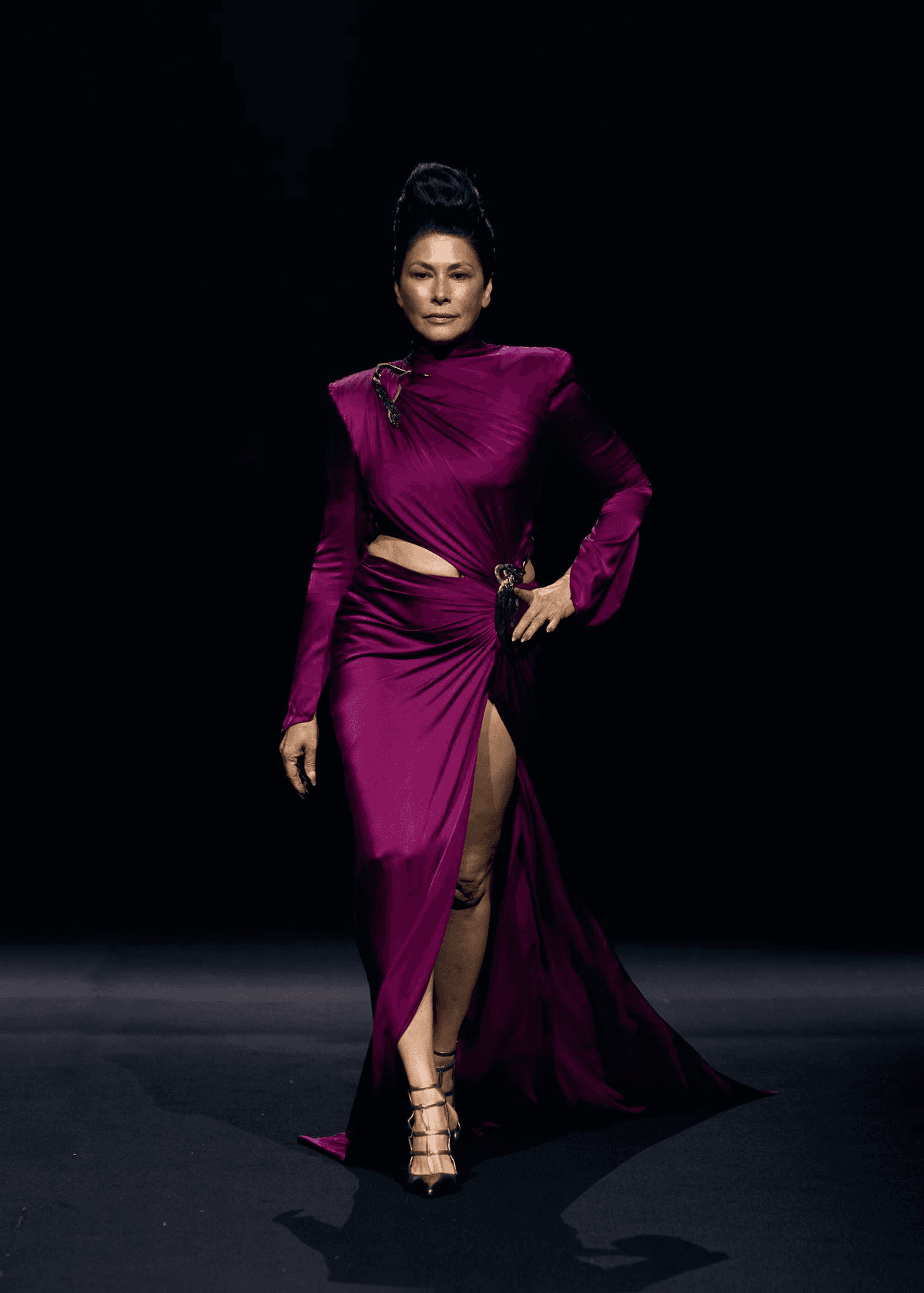
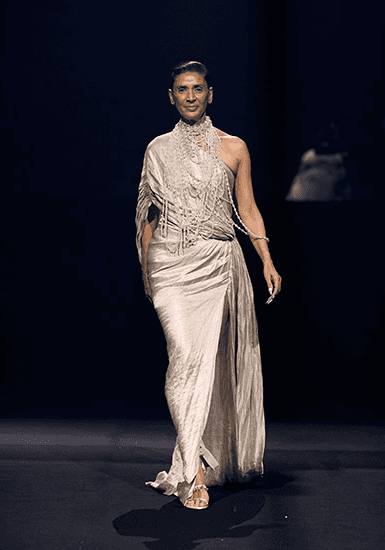
Mehr Jesia and Feroze Gujral returned to the runway for Gaurav Gupta’s ‘The Light Song’ collection unveiled independently at Jio World Convention Centre on July 17
Her clearest insight speaks directly to what made this season different. When a celebrity closing dominates the coverage, she said, "a lot of the other crucial moments just fade," moments that would have carried equal weight had a camera not been trained entirely on one entrance. With three showstopper moments this season instead of thirteen, the craft finally had room to be the thing people actually remembered.
What the Numbers Don't Erase
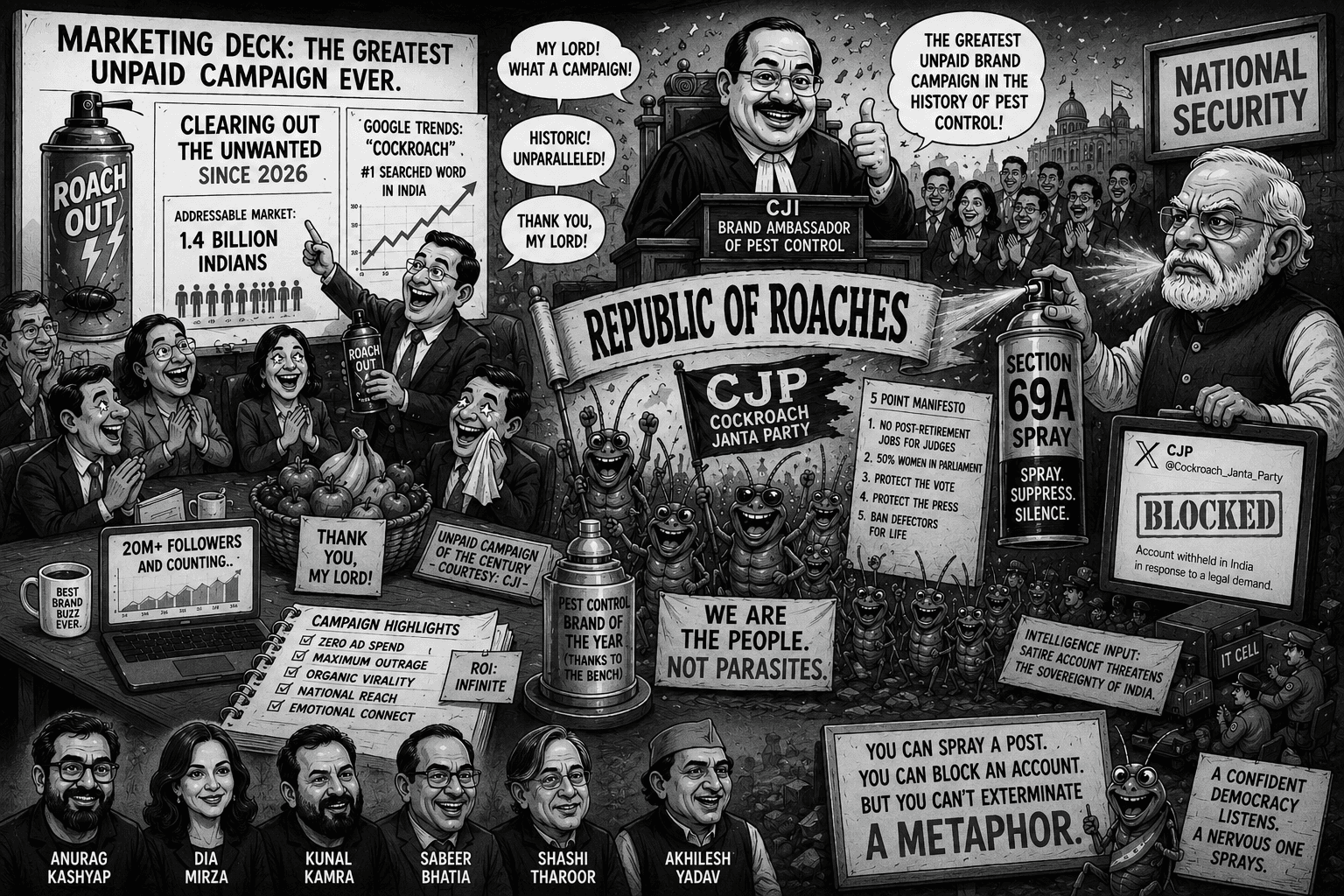
There was a more apparent reason, too, that the showstopper count this season stayed as low as it did. The week opened while the CJP protests were still filling Jantar Mantar, weeks of student-led agitation over the exam paper leaks that had turned the national mood tense and grave, and several of the celebrities who might ordinarily have closed a show silently stepped away from the commitment. A red-carpet turn at a couture finale sat awkwardly against footage of tear gas and hunger strikes, and the caution was understandable. Some withdrew close to the date, others never confirmed at all. For designers who had built a show around a famous face, the absence could have read as a gap. Instead it opened a door. The models who have always known how to hold a runway were right there, ready to walk into the space the season had unexpectedly cleared for them, and they walked into it as though it had been theirs all along.
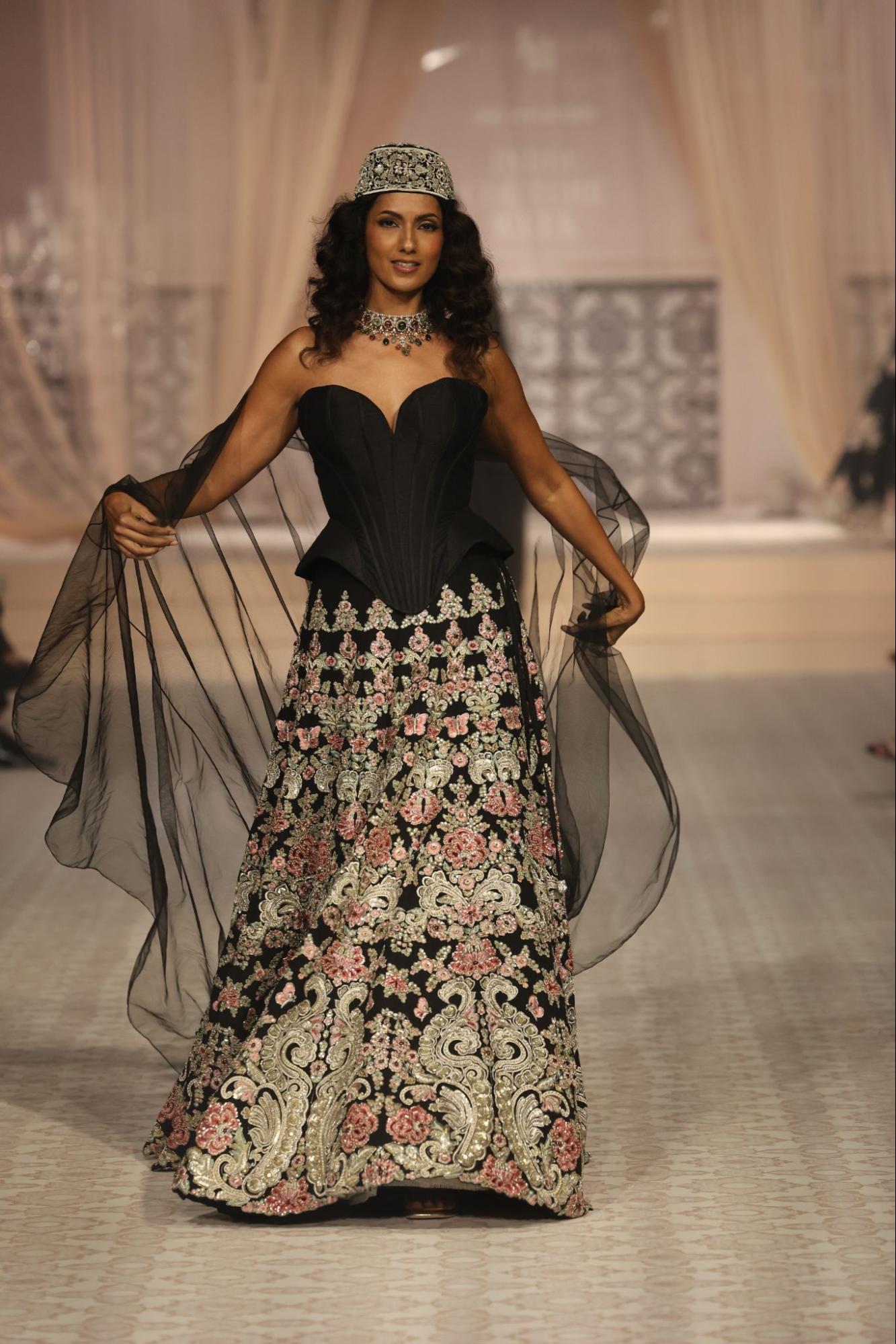
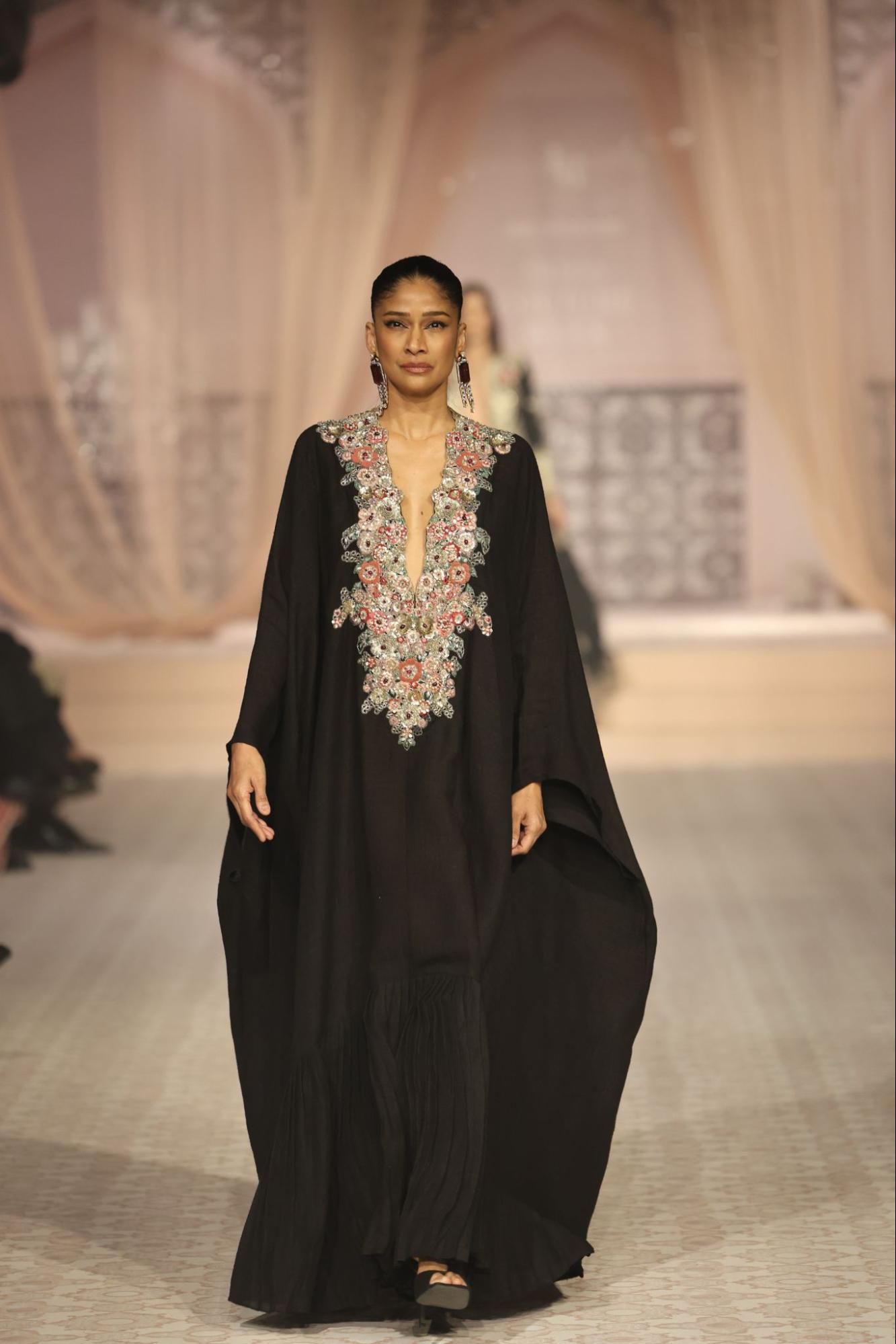
Sheetal Malhar and Carol Gracias walk the ramp for Jayanti Reddy at FDCI’s Hyundai India Couture Week
None of this reporting is an argument against Bollywood, and not one of the women behind it framed it that way. Aditi Rao Hydari and Siddharth brought real warmth to Jayanti Reddy's runway, and Sobhita Dhulipala's closing look for Rahul Mishra was, by every account, one of the season's most striking images, a crystal-draped, sculptural gown built to embody a muse drawn from eleventh-century bronze. Vaani Kapoor's wine-toned, sculpted look for Dolly J belonged entirely to that collection's own quiet, meditative mood. The point this season makes is not that these three moments were wrong. It is that there were three, in a week of thirteen shows, and that ten other designers chose instead to let a Carol Gracias, a Madhu Sapre, or the couture itself carry the final word.

Lakshmi Rana steals the show at the Rohit Bal FDCI’s Hyundai India Couture Week
Adams offered the most direct version of what she hopes that choice signals going forward. She wants Indian couture to give its supermodels the career stability their counterparts abroad still receive, rising fees, sustained work, real credit, rather than watching the country's best talent leave for markets that pay them what they are worth. "Bring back the supermodel in India," she said. "We have the potential here."
For one season, at least, thirteen runways gave that potential exactly the room it needed. The couture was the headline, because for once, almost nothing else was competing for the title.
TO BE CONTINUED, FOR SUBSCRIBERS ONLY.
This is where the surface ends and the reporting begins.
The complete piece, the full archive, and access to The French Press Circle. Reporting answerable only to its readers.
Already a subscriber ?
Login
Read these on the house, with our compliments.
A selection from the current issue, open to all readers. Read them in full. The rest is one decision away.


There is a particular kind of hush that falls over the Taj Falaknuma Palace when a show begins with nothing but the clothes to announce themselves. On July 23, the hush opened the nineteenth edition of FDCI’s Hyundai India Couture Week, as Anamika Khanna took the stage in Hyderabad for the very first time the event has ever stepped outside Delhi. Six days later, on July 29, Rahul Mishra closed the week back at the Taj Palace with Devi: The Eternal Muse, a collection fresh off Paris Haute Couture Week and built around the sringara traditions of temple sculpture. In between, thirteen runway presentations carried India's biggest couture names, Falguni Shane Peacock, Rohit Bal marking three decades of his own artistry, House of Masaba making its couture debut after a six-year break from the ramp, JJ Valaya, Tarun Tahiliani, Rimzim Dadu, Arpita Mehta, Dolly J, Jayanti Reddy.
Sobhita Dhulipala as showstopper for Rahul Misra at FDCI’s Hyundai India Couture Week 2026
Vaani Kapoor walked as the showstopper for Dolly J
Aditi Rao Hydari and Siddharth closed the show at Jayanti Reddy’s 2026 FDCI HICW presentation
Of those thirteen shows, exactly three brought in a Bollywood name to close them. Vaani Kapoor closed for Dolly J's BRĀHM, a collection meditating on spiritual transformation through the elusive Brahma Kamal flower. Aditi Rao Hydari and her husband Siddharth walked hand in hand to close Jayanti Reddy's The Gilded Era, a tribute to Hyderabad's Nizami embroidery traditions. And Sobhita Dhulipala closed the grand finale for Rahul Mishra, embodying what the designer called the eternal muse who has inspired sculptors and artisans for centuries. Three shows, out of thirteen. Everywhere else, the closing position, the one moment every fashion week is built to remember, belonged to the women who have been walking runways since long before any of this season's headlines existed.
Carol Gracias makes a comeback to the runway as she opens the show for the debut of House of Masaba at FDCI’s Hyundai India Couture Week 2026
Madhu Sapre in Masaba’s iteration of the red Indian bride
At House of Masaba's debut, Carol Gracias opened the show carrying a briefcase embroidered with the map of India, and Madhu Sapre closed it in a red bridal look that Masaba Gupta herself called a vision of a quintessential Indian bride. Two supermodels, decades into their careers, framing an entire collection between them. It is worth sitting with what that means for a season that could so easily have reached for a younger, more Instagram-famous face instead, and chose not to.
The Season That Let Couture Be the Headline
Vasuki Punj in a mint green lace lehenga from Softly, Strong by ROSEROOM by Isha Jajodia, at FDCI’s Hyundai India Couture Week 2026
For years, an India Couture Week season has been discussed by the showstopper line up. The morning-after coverage goes to whoever closed which show, and a designer's actual collection becomes a footnote beneath whichever actor wore the finale look. This season inverted that entirely, and the inversion did not happen by accident. It happened because the industry's own veterans, the women who taught this business what a showstopper is supposed to do in the first place, walked back into that closing position and reminded everyone exactly what it was built for.
Anu Ahuja, show director and former model. Image via personal archive.
Anu Ahuja, who modelled for twelve years alongside Mehr Jesia and Madhu Sapre before becoming one of the industry's most trusted show directors, does not see this as some kind of victory lap. "I don't see it as vindication," she said. "Fashion keeps evolving, and every era finds its own language." Her belief has stayed consistent across her career: a showstopper should serve the story of the collection, never become the story itself. When a celebrity genuinely belongs inside that narrative, she is the first to say it works beautifully, and she points to Manish Malhotra's runway as the clearest example, where his decades-long relationship with Bollywood makes a star's presence feel like a natural extension of his own creative world rather than a marketing decision bolted on afterward. But when a celebrity is there only to create noise, she said, "the clothes inevitably become secondary." Watching supermodels reclaim the closing spot this season felt exciting to her precisely because they are trained to communicate fashion, to make the designer's vision the hero rather than themselves.
Lubna Adam, show director. Image via personal archive.
Ask her whether designers actually get to choose freely, and Lubna Adams, who has choreographed and directed runway shows for more than three decades, answers without hesitation. This decision, she said, is always the designer's on paper, but rarely theirs in practice. She described the real pressure that comes from sponsors and organisers, the quiet fear that without a recognisable face closing a show, a designer risks losing the media coverage. Unfortunately, the manner in which the media works today, the showstopper continues to be the headline, and the designer’s collection becomes a footnote. It is a pressure she has watched shape decisions for years, no matter how hard she has tried to find exceptions to it.
What makes this season different, in her account, is what happens once that pressure lifts. She described in vivid detail what a celebrity showstopper actually costs a designer backstage: a team running between the star's vanity van and a final fitting, last-minute outfit changes that abandon the designer's original vision entirely, security logistics competing with a hundred other backstage fires, showstoppers who have stumbled on the ramp simply because there was no time for proper rehearsal. "It takes away from what the design of the designer actually was," she said, "and creates a distraction where the media is covering the celebrity, and not the designer's garb." Her sharpest observation may be the simplest one: the same handful of faces close for four or five designers within a single season, until audiences stop registering which designer they were even watching in the first place.
Grace That Was Trained, Long Before Any Camera Found It
It is worth remembering that the entire tradition of the celebrity showstopper did not begin with Bollywood glamour at all. It began with women who were models first, Aishwarya Rai Bachchan chief among them, who carried onto her earliest showstopper walks the exact poise and command she had spent years building on the ramp before a single film camera ever found her. The grace audiences remember from that era of showstoppers was never a performance borrowed from cinema. It was a craft these women had already mastered, one that simply followed them into a different spotlight.
Lubna Adams makes the case for why that particular skill resists easy substitution. She separates what training can build, the stride, the expression, the discipline of holding a pose under lights, from what a model has to already carry inside their own presence, the part no amount of coaching manufactures from scratch. "What a potential model needs is a belief," she said, "that they have the potential, and they're willing to work hard for it in a professional manner." It is a demanding standard, and it happens to be the exact standard every one of this season's veteran showstoppers has spent a career meeting.
Aparna Bahl Bedi, co-founder of Preferred Professionals, and show director. Image via personal archive.
Aparna Bahl Bedi, who has spent thirty one years shaping runway shows through Preferred Professionals, the company she co-founded with Anisha Bahl and Tania LeFebvre back in 1995, traces the entire arc of how the industry arrived at this crossroads. In the earliest years of Indian fashion, she explained, shows were built almost entirely around supermodels, back when even assembling a cast of thirty models felt ambitious and half of them were the kind of stature names, Mehr Jesia, Madhu Sapre, Milind Soman, that filled a runway with the same glamour the rest of the world associated with supermodel status. The shift began later, she said, once corporate sponsors entered the picture and asked for a level of public visibility only a famous face could deliver. She is candid that she remains, in her own words, "a purist" who prefers a professionally trained model over an actor in nearly every circumstance, though she is quick to name the exceptions that work, a Ranveer Singh who clears his schedule and gives real rehearsal time, an Arjun Rampal whose presence on a Rohit Bal runway simply never feels wrong.
Mehr Jesia and Feroze Gujral returned to the runway for Gaurav Gupta’s ‘The Light Song’ collection unveiled independently at Jio World Convention Centre on July 17
Her clearest insight speaks directly to what made this season different. When a celebrity closing dominates the coverage, she said, "a lot of the other crucial moments just fade," moments that would have carried equal weight had a camera not been trained entirely on one entrance. With three showstopper moments this season instead of thirteen, the craft finally had room to be the thing people actually remembered.
What the Numbers Don't Erase
There was a more apparent reason, too, that the showstopper count this season stayed as low as it did. The week opened while the CJP protests were still filling Jantar Mantar, weeks of student-led agitation over the exam paper leaks that had turned the national mood tense and grave, and several of the celebrities who might ordinarily have closed a show silently stepped away from the commitment. A red-carpet turn at a couture finale sat awkwardly against footage of tear gas and hunger strikes, and the caution was understandable. Some withdrew close to the date, others never confirmed at all. For designers who had built a show around a famous face, the absence could have read as a gap. Instead it opened a door. The models who have always known how to hold a runway were right there, ready to walk into the space the season had unexpectedly cleared for them, and they walked into it as though it had been theirs all along.
Sheetal Malhar and Carol Gracias walk the ramp for Jayanti Reddy at FDCI’s Hyundai India Couture Week
None of this reporting is an argument against Bollywood, and not one of the women behind it framed it that way. Aditi Rao Hydari and Siddharth brought real warmth to Jayanti Reddy's runway, and Sobhita Dhulipala's closing look for Rahul Mishra was, by every account, one of the season's most striking images, a crystal-draped, sculptural gown built to embody a muse drawn from eleventh-century bronze. Vaani Kapoor's wine-toned, sculpted look for Dolly J belonged entirely to that collection's own quiet, meditative mood. The point this season makes is not that these three moments were wrong. It is that there were three, in a week of thirteen shows, and that ten other designers chose instead to let a Carol Gracias, a Madhu Sapre, or the couture itself carry the final word.
Lakshmi Rana steals the show at the Rohit Bal FDCI’s Hyundai India Couture Week
Adams offered the most direct version of what she hopes that choice signals going forward. She wants Indian couture to give its supermodels the career stability their counterparts abroad still receive, rising fees, sustained work, real credit, rather than watching the country's best talent leave for markets that pay them what they are worth. "Bring back the supermodel in India," she said. "We have the potential here."
For one season, at least, thirteen runways gave that potential exactly the room it needed. The couture was the headline, because for once, almost nothing else was competing for the title.
TO BE CONTINUED, FOR SUBSCRIBERS ONLY.
This is where the surface ends and the reporting begins.
The complete piece, the full archive, and access to The French Press Circle. Reporting answerable only to its readers.
Already a subscriber ?
Login
Read these on the house, with our compliments.
A selection from the current issue, open to all readers. Read them in full. The rest is one decision away.