
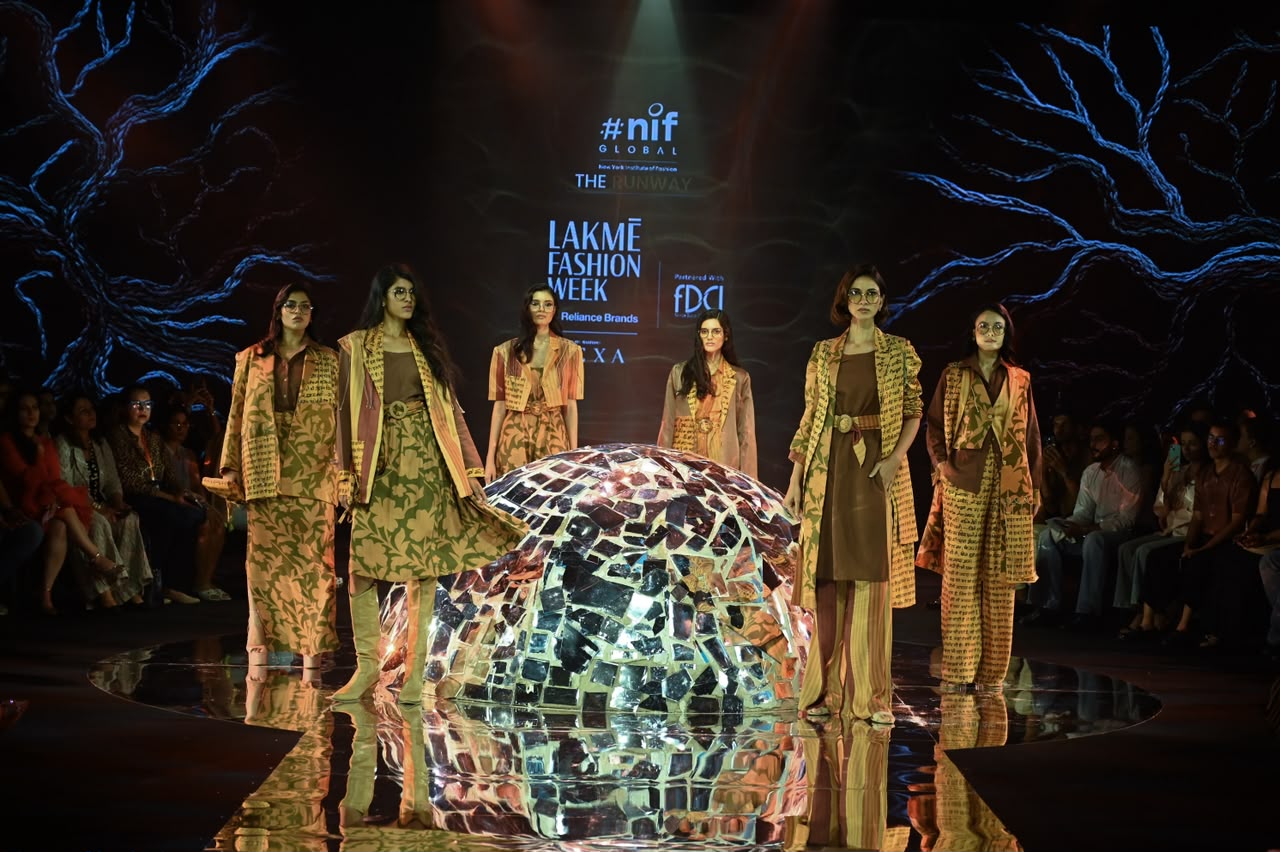
The brand calls it a debut, and for AK|OK, the label Anamika Khanna built with her twin sons Viraj and Vishesh, that is accurate. For Khanna herself, it is a return, and the distinction changes what the apartment, the objects, and the cut of the clothes say. When AFP previewed the Paris ready-to-wear calendar in September 2007, it reported that two Indian designers, Manish Arora and Khanna, then showing as Ana Mika, were moving their presentations from London to Paris, and that Khanna was entirely self-taught. Business of Fashion later described Ana-Mika as a diffusion label that catered to a Western clientele.

That wire story holds a detail the industry has since smoothed over. Both Arora and Khanna have spent years being introduced as the first Indian designer to show at Paris Fashion Week, yet the announcement at the time named them together as the first Indian designers to participate independently under their own labels. Each biography is defensible, and the singular crown is a convenience Indian fashion media keeps placing on one head because a pair makes a weaker headline. Accuracy would serve both designers better.

After that season, their paths separated. Arora relocated to Paris, entered the federation, and was appointed creative director of Paco Rabanne’s womenswear in 2011, leaving in May 2012. Khanna kept her studio in Kolkata and held a contract with Harrods, and for nineteen years she let Paris remain one line on a biography.

The year 2007 came with an invitation for Anamika Khanna to showcase at Paris Fashion Week.
She has described the room she walked into in 2007. There was no social media and little global understanding of Indian fashion, and people routinely questioned Indian designers on quality, wearability, and relevance, often dismissing them as “too Indian.” She has also said that Eastern culture was long perceived as costume and judged unwearable in everyday life.
Costume is the word worth holding onto. A costume lives behind glass, admired from a distance and photographed from the front row. A wardrobe lives on a hanger beside everything else a person owns, and the whole argument of Spring/Summer 2027 is made in that second register.

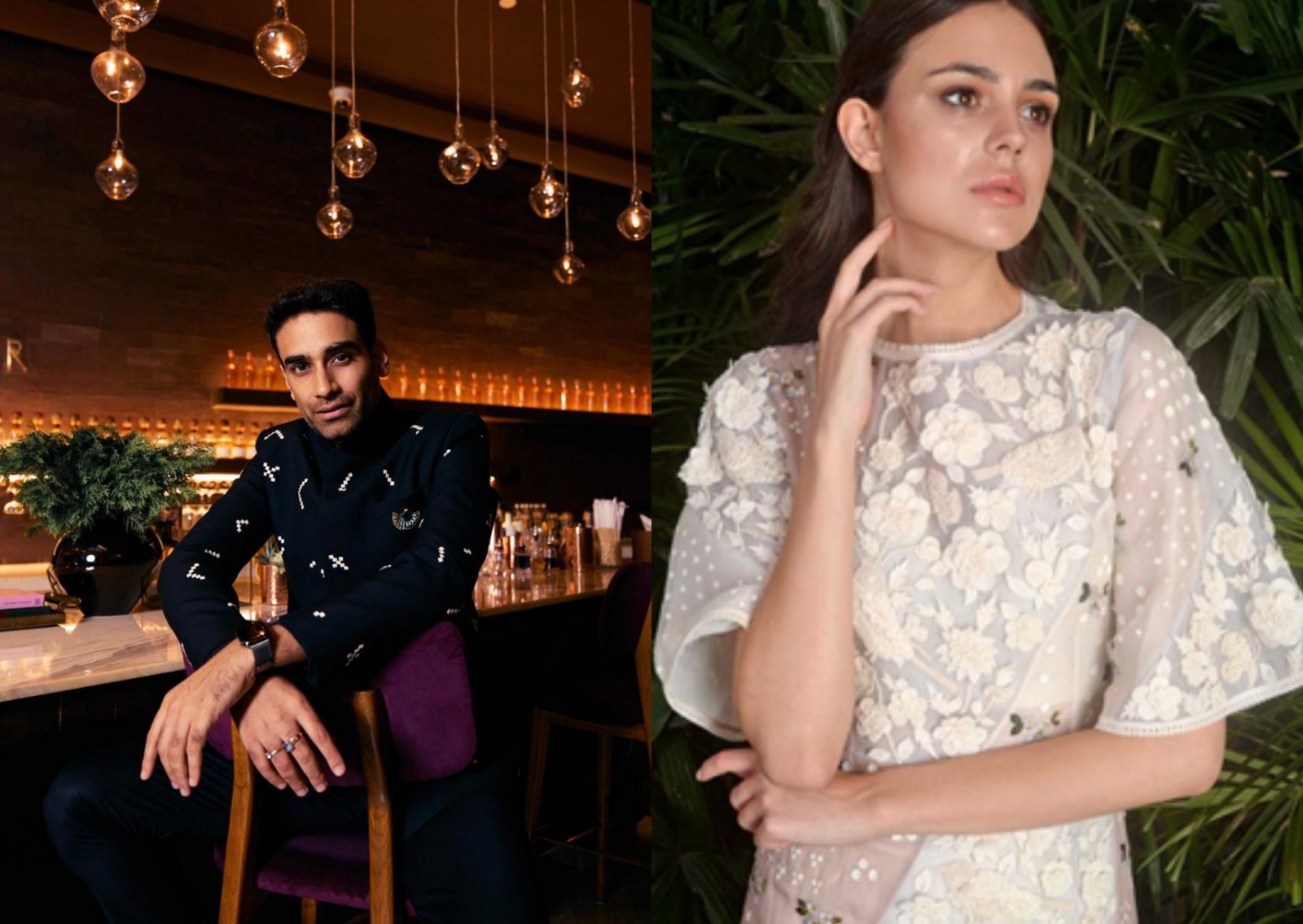
AK|OK held its showroom on 4 and 5 October, with an exclusive presentation on the 5th, inside a Parisian apartment arranged as a modern Indian home. The collection’s references sit at household scale: a bird, a flowerpot, a suggestion of forest, hand painting dissolving into print, embroidery laid over embroidery. Every garment belongs to the plainest category in fashion, and each is reworked through proportion and construction so it can move between moods and identities. Chikankari, the Lucknow embroidery tradition the brand also calls shadow work, shares the surface with hand painting, print and metal thread embroidery, each displaced and stacked over the next. The craft is old, and the garment is a shirt, and that pairing answers the 2007 question without raising its voice.

Khanna describes the collection as an act of looking again. “We took familiar pieces and looked at them differently, through proportion, craft and the way they are worn,” she says, and there is, in her words, something very liberating about taking what you know and making it your own. The title carries the same instinct. “C’est OK is about giving yourself permission to be exactly who you are,” she says, and for her that is the spirit of AK|OK: ease, individuality and the freedom to find your own way.
The setting is a decision. A runway invites a verdict, a showroom seats a buyer, and an apartment seats a guest who is expected to touch things, sit down and stay a while. The brand frames the visit as a first conversation with press, buyers, stylists, talent and industry stakeholders, with collaborations and activations promised to follow. After nineteen years, Khanna chose to enter Paris through the front door of a home.
The name holds the most revealing part of the story. In 2007, she arrived under Ana Mika. In 2026, she arrives under her own initials. By the label’s own account, AK|OK began as a coded message between Khanna and her twin sons during a time apart, borrowed from NASA’s “A-OK” and personalised with their mother’s initials. The launch statement describes it as born in a time of crisis, with the founding reassurance “Don’t worry, everything will be AK-OK.” Forbes India places the label’s beginnings after a sudden health scare in 2019 forced Khanna to take a break.

Ownership belongs in this story, because the return was built on it. AK|OK launched in 2021 as a 60:40 joint venture in which Reliance Brands Limited owns and develops the label, with Khanna as creative director. Khanna credits the corporate structure with propelling the label onto a global footing, and the itinerary shows it: Saks Fifth Avenue, a London Fashion Week debut in September 2025 after eight shows in four years, and a Selfridges shop-in-shop carrying its first international resort collection. The 2007 trip came by way of a federation’s invitation. The 2026 return arrives with Saks and Selfridges already on the record, and the difference describes how an Indian international career gets financed now. The industry that celebrates this return should be equally candid about what such a return takes, so that designers watching from smaller studios can read the arithmetic.
In 2007, the city wanted to know whether this could be worn. Nineteen years is a long time to hold an answer, and Khanna has chosen a quiet room in which to give it.
TO BE CONTINUED, FOR SUBSCRIBERS ONLY.
This is where the surface ends and the reporting begins.
The complete piece, the full archive, and access to The French Press Circle. Reporting answerable only to its readers.
Already a subscriber ?
Login
Read these on the house, with our compliments.
A selection from the current issue, open to all readers. Read them in full. The rest is one decision away.






The brand calls it a debut, and for AK|OK, the label Anamika Khanna built with her twin sons Viraj and Vishesh, that is accurate. For Khanna herself, it is a return, and the distinction changes what the apartment, the objects, and the cut of the clothes say. When AFP previewed the Paris ready-to-wear calendar in September 2007, it reported that two Indian designers, Manish Arora and Khanna, then showing as Ana Mika, were moving their presentations from London to Paris, and that Khanna was entirely self-taught. Business of Fashion later described Ana-Mika as a diffusion label that catered to a Western clientele.
That wire story holds a detail the industry has since smoothed over. Both Arora and Khanna have spent years being introduced as the first Indian designer to show at Paris Fashion Week, yet the announcement at the time named them together as the first Indian designers to participate independently under their own labels. Each biography is defensible, and the singular crown is a convenience Indian fashion media keeps placing on one head because a pair makes a weaker headline. Accuracy would serve both designers better.
After that season, their paths separated. Arora relocated to Paris, entered the federation, and was appointed creative director of Paco Rabanne’s womenswear in 2011, leaving in May 2012. Khanna kept her studio in Kolkata and held a contract with Harrods, and for nineteen years she let Paris remain one line on a biography.
The year 2007 came with an invitation for Anamika Khanna to showcase at Paris Fashion Week.
She has described the room she walked into in 2007. There was no social media and little global understanding of Indian fashion, and people routinely questioned Indian designers on quality, wearability, and relevance, often dismissing them as “too Indian.” She has also said that Eastern culture was long perceived as costume and judged unwearable in everyday life.
Costume is the word worth holding onto. A costume lives behind glass, admired from a distance and photographed from the front row. A wardrobe lives on a hanger beside everything else a person owns, and the whole argument of Spring/Summer 2027 is made in that second register.
AK|OK held its showroom on 4 and 5 October, with an exclusive presentation on the 5th, inside a Parisian apartment arranged as a modern Indian home. The collection’s references sit at household scale: a bird, a flowerpot, a suggestion of forest, hand painting dissolving into print, embroidery laid over embroidery. Every garment belongs to the plainest category in fashion, and each is reworked through proportion and construction so it can move between moods and identities. Chikankari, the Lucknow embroidery tradition the brand also calls shadow work, shares the surface with hand painting, print and metal thread embroidery, each displaced and stacked over the next. The craft is old, and the garment is a shirt, and that pairing answers the 2007 question without raising its voice.
Khanna describes the collection as an act of looking again. “We took familiar pieces and looked at them differently, through proportion, craft and the way they are worn,” she says, and there is, in her words, something very liberating about taking what you know and making it your own. The title carries the same instinct. “C’est OK is about giving yourself permission to be exactly who you are,” she says, and for her that is the spirit of AK|OK: ease, individuality and the freedom to find your own way.
The setting is a decision. A runway invites a verdict, a showroom seats a buyer, and an apartment seats a guest who is expected to touch things, sit down and stay a while. The brand frames the visit as a first conversation with press, buyers, stylists, talent and industry stakeholders, with collaborations and activations promised to follow. After nineteen years, Khanna chose to enter Paris through the front door of a home.
The name holds the most revealing part of the story. In 2007, she arrived under Ana Mika. In 2026, she arrives under her own initials. By the label’s own account, AK|OK began as a coded message between Khanna and her twin sons during a time apart, borrowed from NASA’s “A-OK” and personalised with their mother’s initials. The launch statement describes it as born in a time of crisis, with the founding reassurance “Don’t worry, everything will be AK-OK.” Forbes India places the label’s beginnings after a sudden health scare in 2019 forced Khanna to take a break.
Ownership belongs in this story, because the return was built on it. AK|OK launched in 2021 as a 60:40 joint venture in which Reliance Brands Limited owns and develops the label, with Khanna as creative director. Khanna credits the corporate structure with propelling the label onto a global footing, and the itinerary shows it: Saks Fifth Avenue, a London Fashion Week debut in September 2025 after eight shows in four years, and a Selfridges shop-in-shop carrying its first international resort collection. The 2007 trip came by way of a federation’s invitation. The 2026 return arrives with Saks and Selfridges already on the record, and the difference describes how an Indian international career gets financed now. The industry that celebrates this return should be equally candid about what such a return takes, so that designers watching from smaller studios can read the arithmetic.
In 2007, the city wanted to know whether this could be worn. Nineteen years is a long time to hold an answer, and Khanna has chosen a quiet room in which to give it.
TO BE CONTINUED, FOR SUBSCRIBERS ONLY.
This is where the surface ends and the reporting begins.
The complete piece, the full archive, and access to The French Press Circle. Reporting answerable only to its readers.
Already a subscriber ?
Login
Read these on the house, with our compliments.
A selection from the current issue, open to all readers. Read them in full. The rest is one decision away.

