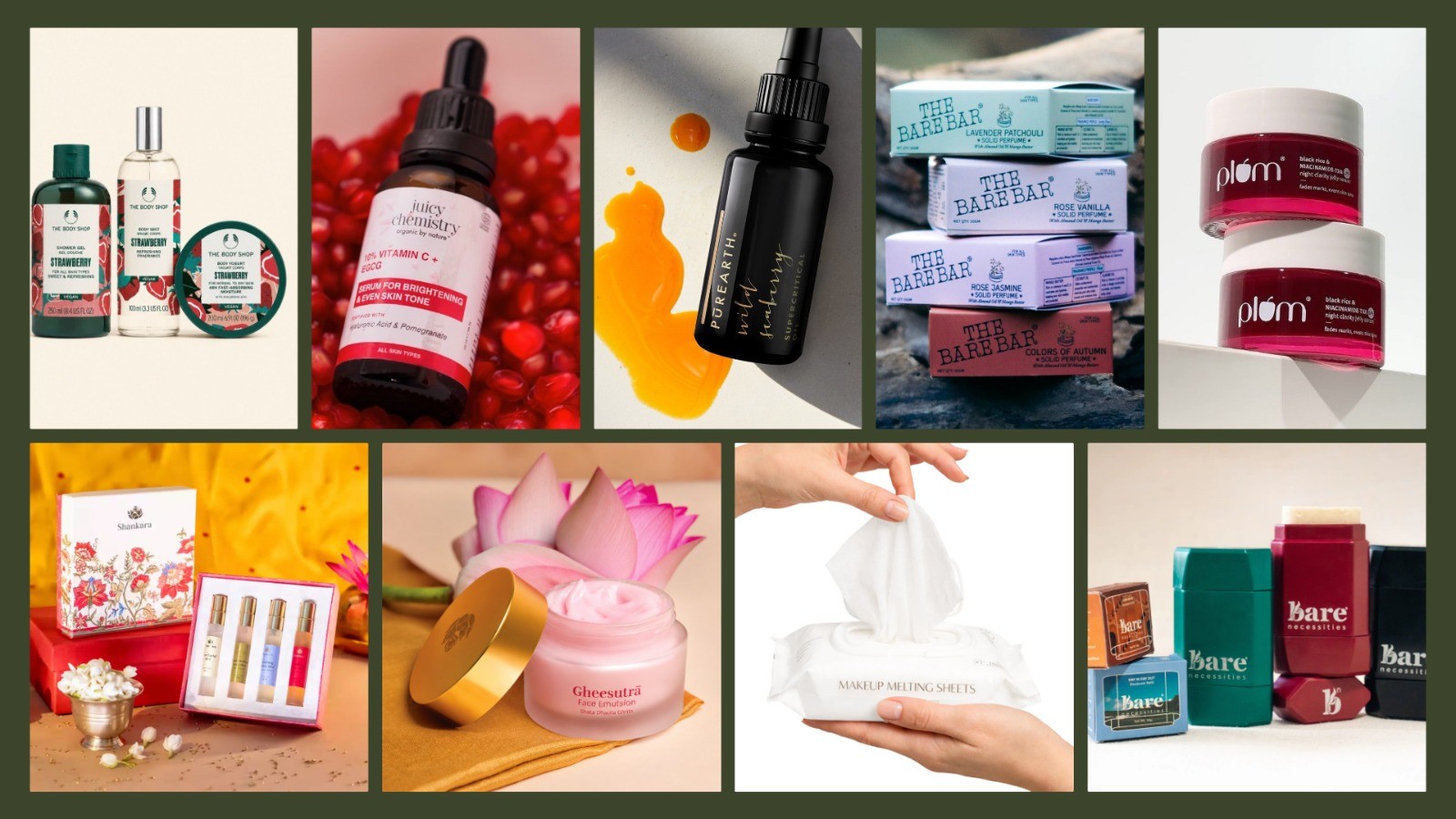
“Sustainable beauty” has become one of the industry's most frequently used phrases. Natural, clean, conscious, green, eco-friendly and planet-positive now appear across everything from skincare bottles to beauty websites. But strip away the adjectives and a more useful question emerges: what is the actual mechanism behind the claim?
The more interesting beauty brands are answering that question in very different ways. Some are redesigning packaging, others are creating systems to recover what consumers throw away, while others are changing the way ingredients are sourced or putting their businesses through third-party certification.
So, rather than simply calling these brands “sustainable”, here is what they are actually doing and, importantly, what consumers can check.
01. PERSONAL TOUCH SKINCARE - WHEN CERTIFICATION BACKS THE FORMULA
The mechanism: certified quality systems + Ecocert approval + cruelty-free formulations
Personal Touch Skincare approaches responsible beauty through the standards behind its formulations, rather than relying solely on the increasingly broad language of “clean” or “conscious” skincare.
The brand's credentials include ISO 9001, Ecocert approval, GMP certification and cruelty-free formulations, four distinct markers that speak to different aspects of how its products are developed and manufactured. ISO 9001 relates to quality management systems, while GMP focuses on manufacturing practices and consistency. Ecocert approval provides an additional external benchmark, and the cruelty-free positioning addresses the brand's approach to animal testing.
Together, these credentials offer a more tangible way to examine the brand's claims. Rather than treating sustainability as a single label, they demonstrate that responsible beauty can also be considered through how products are formulated, manufactured and quality-controlled.
The distinction is important because certifications and approvals are not interchangeable. Each one addresses a different part of the beauty-making process, and consumers should look at the specific standard attached to a claim rather than assuming one certification covers the entire product portfolio.
Claim check: Look beyond the word “clean”. Check which standards a product or manufacturing process has actually been certified or approved against and what each credential covers.

02. BARE NECESSITIES - MAKING ZERO WASTE THE BUSINESS MODEL
The mechanism: B Corp certification + plastic-free alternatives
Bare Necessities approaches sustainability from the opposite direction to many mainstream beauty brands. Rather than taking an existing conventional beauty product and changing its packaging, the company was built around creating alternatives to plastic-heavy everyday products.
The brand is also a Certified B Corporation, with B Lab listing Bare Necessities Zero Waste Solutions Pvt. Ltd. as certified since April 2024. Its B Corp profile identifies the business as a personal-care manufacturer operating in India.
Its model focuses on plastic-free alternatives, locally and naturally sourced ingredients, and packaging designed to have a responsible end-of-life including repurposable, recyclable and/or biodegradable formats.
The significance of the B Corp certification is that it moves the conversation beyond one product. B Corp assessment looks at the wider business rather than simply asking whether one bottle can be recycled.
That makes Bare Necessities an interesting example of a sustainability claim that operates at the business level, rather than stopping at the bathroom shelf.
Claim check: Ask whether a sustainability claim relates to an individual product or has been assessed across the wider business.

03. PLUM - WHAT HAPPENS AFTER YOU FINISH THE BOTTLE?
The mechanism: consumer take-back and recycling
“Recyclable packaging” sounds promising, but it leaves one obvious question unanswered: what actually happens when the consumer finishes the product?
Plum's #Empties4Good programme attempts to close that gap. Consumers can return eligible empty Plum plastic bottles, caps and jars through the brand's free pickup system. The brand says these empties are sent for responsible recycling, while consumers receive PlumCash as an incentive for participating.
The distinction between recyclable packaging and a take-back programme is significant.
A package being recyclable means it can potentially enter a recycling stream. A take-back system creates a defined route for the brand's own packaging to be collected after use.
Plum is also unusually direct about the limitations of its current packaging. The brand states that most of its packaging is recyclable, while acknowledging that it does not currently use special biodegradable grades across its packaging.
Claim check: Don't stop at the word “recyclable”. Find out whether the brand provides a collection system and what materials it actually accepts.

04. JUICY CHEMISTRY - WHEN “ORGANIC” COMES WITH PROOF
The mechanism: COSMOS Organic certification
“Organic” may be one of the most powerful words in beauty marketing and one of the easiest for consumers to take at face value.
Juicy Chemistry provides a useful counterexample because its organic positioning comes with third-party certification. The brand states that it has been certified by Ecocert since 2017 under the COSMOS standard, and describes the certification process as covering areas including ingredients, sourcing, processing and packaging.
Ecocert's own database lists Juicy Chemistry as a certified brand holder/manufacturer under the COSMOS V4 standard, with certification covering cosmetic categories including care, cleansing and makeup.
This matters because “natural” and “organic” are not interchangeable terms. Certification introduces defined criteria and an external assessment.
The result is a useful lesson in beauty literacy: sometimes the most important part of a sustainability claim is not the claim itself, but who has verified it.
Claim check: Search the certifier, not just the brand. Then check exactly which products and categories are covered.

05. SHANKARA - TURNING EMPTY BOTTLES INTO AN EXCHANGE
The mechanism: bottle take-back + consumer incentive
Shankara's approach is refreshingly straightforward: instead of asking consumers to simply dispose of their empty beauty packaging responsibly, it gives them a reason to bring it back.
Through its Exchange for Change initiative, consumers can return five empty Shankara bottles to the brand. Once the containers are inspected and recorded, the consumer receives a free full-sized product with their next purchase.
It is a small intervention, but one that addresses an important weakness in beauty packaging conversations: consumer behaviour.
A beautifully designed recyclable bottle is still dependent on what happens after it leaves the bathroom shelf. Take-back systems create a direct relationship between the brand and the packaging at the end of its first life.
The incentive also makes participation tangible. Rather than relying entirely on consumers to make an environmentally conscious choice with no immediate benefit, Shankara creates a reason to return the material.
Claim check: Look at the actual terms of the take-back programme, what packaging is accepted, how much must be returned and what happens after collection.

06. THE BODY SHOP - RECYCLED PLASTIC WITH A HUMAN SUPPLY CHAIN
The mechanism: Community Fair Trade recycled plastic
Recycled plastic is often reduced to a number on a packaging label. But The Body Shop's Community Fair Trade recycled-plastic programme demonstrates that there is another story behind the material: who collects it?
The brand works with Plastics for Change, Hasiru Dala and Hasiru Dala Innovation in India to source recycled plastic from waste pickers. The programme is designed to provide waste pickers with better working conditions, fairer prices and more stable opportunities.
The recycled material is used in The Body Shop's packaging, including its 250ml shampoo and conditioner bottles. The brand says these bottles are made using recycled plastic, with its Community Fair Trade material forming part of that supply chain.
This makes the programme more interesting than a simple “recycled plastic” claim. It connects the environmental intervention - recovering existing plastic with a social intervention involving the people who collect it.
It is a reminder that sustainability can involve both material flows and human livelihoods.
Claim check: When a product says “recycled”, ask where the material came from, who collected it and whether the people in that supply chain benefit.

07. PUREARTH — WHEN SUSTAINABILITY EXTENDS INTO THE SUPPLY CHAIN
The mechanism: ethical sourcing + community impact + B Corp certification
Purearth takes a different route from packaging-first sustainability. The luxury Ayurvedic skincare and wellness brand builds its environmental and social positioning around Himalayan botanicals, grassroots producer communities and ethical sourcing.
Its supply chain works with women's self-help groups across the Himalayas, sourcing oils and raw materials through these grassroots collectives. The brand also states that it directs 10% of its profits towards its Pure Purpose Foundation, supporting initiatives including sanitation, afforestation and rural education.
More recently, Purearth received another independently verifiable credential: B Lab lists Purearth Limited as a Certified B Corporation, certified in August 2026.
That gives the brand's sustainability narrative two layers: the impact it describes within its supply chain and social initiatives, and an external business certification.
It also illustrates why sustainability in beauty cannot be reduced to packaging alone. The environmental footprint of a product begins long before the bottle reaches the consumer with ingredients, sourcing, production and the communities involved.
Claim check: When evaluating an ethical-sourcing claim, look at who produces the ingredients, how they are sourced and whether the business model has been independently assessed.

08. THE BARE BAR - MAKING PACKAGING PART OF THE PRODUCT
The mechanism: compostable, reusable and biodegradable packaging
The Bare Bar takes a packaging-first approach, positioning itself around body care that is intended to minimise waste.
The brand states that its products use compostable, reusable or biodegradable packaging, while its wider sustainability philosophy is built around a circular approach in which materials are designed to avoid becoming unnecessary waste.
The brand also manufactures its products in-house in Bengaluru, giving it closer control over formulation and production.
What makes The Bare Bar relevant to this list is the specificity of its packaging language. Instead of simply saying “eco-friendly”, it identifies the types of materials and end-of-life pathways it is aiming for.
That distinction is particularly important in beauty, where packaging is often responsible for a significant part of the product's physical footprint.
Claim check: “Biodegradable”, “compostable” and “recyclable” describe different end-of-life pathways. Look for the material, disposal conditions and instructions rather than treating the words as interchangeable.

THE FINAL CLAIM CHECK
The common thread across these eight brands is not that they have solved sustainability. No beauty product exists without an environmental footprint, and no single certification or initiative answers every question.
The more useful approach is to identify the specific intervention.
Is a brand reducing waste? Creating a take-back system? Using recycled material? Certifying its ingredients? Changing its supply chain? Or subjecting its wider business practices to independent assessment?
Those are very different claims.
And that distinction is becoming increasingly important as sustainability language moves from a niche concern to a mainstream beauty selling point.
For consumers, the first step is simply to become more specific with the questions they ask. If a product says “organic”, ask who certified it. If it says “recyclable”, ask whether there is a collection pathway. If it says “recycled”, ask where the material came from. If it says “ethical”, ask who benefits from the supply chain.
The strongest sustainability claims are not necessarily the loudest ones. They are the ones that can be explained, measured and checked.
Because in beauty, “sustainable” is not the mechanism.
The mechanism is the claim.
TO BE CONTINUED, FOR SUBSCRIBERS ONLY.
This is where the surface ends and the reporting begins.
The complete piece, the full archive, and access to The French Press Circle. Reporting answerable only to its readers.
Already a subscriber ?
Login
Read these on the house, with our compliments.
A selection from the current issue, open to all readers. Read them in full. The rest is one decision away.










“Sustainable beauty” has become one of the industry's most frequently used phrases. Natural, clean, conscious, green, eco-friendly and planet-positive now appear across everything from skincare bottles to beauty websites. But strip away the adjectives and a more useful question emerges: what is the actual mechanism behind the claim?
The more interesting beauty brands are answering that question in very different ways. Some are redesigning packaging, others are creating systems to recover what consumers throw away, while others are changing the way ingredients are sourced or putting their businesses through third-party certification.
So, rather than simply calling these brands “sustainable”, here is what they are actually doing and, importantly, what consumers can check.
01. PERSONAL TOUCH SKINCARE - WHEN CERTIFICATION BACKS THE FORMULA
The mechanism: certified quality systems + Ecocert approval + cruelty-free formulations
Personal Touch Skincare approaches responsible beauty through the standards behind its formulations, rather than relying solely on the increasingly broad language of “clean” or “conscious” skincare.
The brand's credentials include ISO 9001, Ecocert approval, GMP certification and cruelty-free formulations, four distinct markers that speak to different aspects of how its products are developed and manufactured. ISO 9001 relates to quality management systems, while GMP focuses on manufacturing practices and consistency. Ecocert approval provides an additional external benchmark, and the cruelty-free positioning addresses the brand's approach to animal testing.
Together, these credentials offer a more tangible way to examine the brand's claims. Rather than treating sustainability as a single label, they demonstrate that responsible beauty can also be considered through how products are formulated, manufactured and quality-controlled.
The distinction is important because certifications and approvals are not interchangeable. Each one addresses a different part of the beauty-making process, and consumers should look at the specific standard attached to a claim rather than assuming one certification covers the entire product portfolio.
Claim check: Look beyond the word “clean”. Check which standards a product or manufacturing process has actually been certified or approved against and what each credential covers.
02. BARE NECESSITIES - MAKING ZERO WASTE THE BUSINESS MODEL
The mechanism: B Corp certification + plastic-free alternatives
Bare Necessities approaches sustainability from the opposite direction to many mainstream beauty brands. Rather than taking an existing conventional beauty product and changing its packaging, the company was built around creating alternatives to plastic-heavy everyday products.
The brand is also a Certified B Corporation, with B Lab listing Bare Necessities Zero Waste Solutions Pvt. Ltd. as certified since April 2024. Its B Corp profile identifies the business as a personal-care manufacturer operating in India.
Its model focuses on plastic-free alternatives, locally and naturally sourced ingredients, and packaging designed to have a responsible end-of-life including repurposable, recyclable and/or biodegradable formats.
The significance of the B Corp certification is that it moves the conversation beyond one product. B Corp assessment looks at the wider business rather than simply asking whether one bottle can be recycled.
That makes Bare Necessities an interesting example of a sustainability claim that operates at the business level, rather than stopping at the bathroom shelf.
Claim check: Ask whether a sustainability claim relates to an individual product or has been assessed across the wider business.
03. PLUM - WHAT HAPPENS AFTER YOU FINISH THE BOTTLE?
The mechanism: consumer take-back and recycling
“Recyclable packaging” sounds promising, but it leaves one obvious question unanswered: what actually happens when the consumer finishes the product?
Plum's #Empties4Good programme attempts to close that gap. Consumers can return eligible empty Plum plastic bottles, caps and jars through the brand's free pickup system. The brand says these empties are sent for responsible recycling, while consumers receive PlumCash as an incentive for participating.
The distinction between recyclable packaging and a take-back programme is significant.
A package being recyclable means it can potentially enter a recycling stream. A take-back system creates a defined route for the brand's own packaging to be collected after use.
Plum is also unusually direct about the limitations of its current packaging. The brand states that most of its packaging is recyclable, while acknowledging that it does not currently use special biodegradable grades across its packaging.
Claim check: Don't stop at the word “recyclable”. Find out whether the brand provides a collection system and what materials it actually accepts.
04. JUICY CHEMISTRY - WHEN “ORGANIC” COMES WITH PROOF
The mechanism: COSMOS Organic certification
“Organic” may be one of the most powerful words in beauty marketing and one of the easiest for consumers to take at face value.
Juicy Chemistry provides a useful counterexample because its organic positioning comes with third-party certification. The brand states that it has been certified by Ecocert since 2017 under the COSMOS standard, and describes the certification process as covering areas including ingredients, sourcing, processing and packaging.
Ecocert's own database lists Juicy Chemistry as a certified brand holder/manufacturer under the COSMOS V4 standard, with certification covering cosmetic categories including care, cleansing and makeup.
This matters because “natural” and “organic” are not interchangeable terms. Certification introduces defined criteria and an external assessment.
The result is a useful lesson in beauty literacy: sometimes the most important part of a sustainability claim is not the claim itself, but who has verified it.
Claim check: Search the certifier, not just the brand. Then check exactly which products and categories are covered.
05. SHANKARA - TURNING EMPTY BOTTLES INTO AN EXCHANGE
The mechanism: bottle take-back + consumer incentive
Shankara's approach is refreshingly straightforward: instead of asking consumers to simply dispose of their empty beauty packaging responsibly, it gives them a reason to bring it back.
Through its Exchange for Change initiative, consumers can return five empty Shankara bottles to the brand. Once the containers are inspected and recorded, the consumer receives a free full-sized product with their next purchase.
It is a small intervention, but one that addresses an important weakness in beauty packaging conversations: consumer behaviour.
A beautifully designed recyclable bottle is still dependent on what happens after it leaves the bathroom shelf. Take-back systems create a direct relationship between the brand and the packaging at the end of its first life.
The incentive also makes participation tangible. Rather than relying entirely on consumers to make an environmentally conscious choice with no immediate benefit, Shankara creates a reason to return the material.
Claim check: Look at the actual terms of the take-back programme, what packaging is accepted, how much must be returned and what happens after collection.
06. THE BODY SHOP - RECYCLED PLASTIC WITH A HUMAN SUPPLY CHAIN
The mechanism: Community Fair Trade recycled plastic
Recycled plastic is often reduced to a number on a packaging label. But The Body Shop's Community Fair Trade recycled-plastic programme demonstrates that there is another story behind the material: who collects it?
The brand works with Plastics for Change, Hasiru Dala and Hasiru Dala Innovation in India to source recycled plastic from waste pickers. The programme is designed to provide waste pickers with better working conditions, fairer prices and more stable opportunities.
The recycled material is used in The Body Shop's packaging, including its 250ml shampoo and conditioner bottles. The brand says these bottles are made using recycled plastic, with its Community Fair Trade material forming part of that supply chain.
This makes the programme more interesting than a simple “recycled plastic” claim. It connects the environmental intervention - recovering existing plastic with a social intervention involving the people who collect it.
It is a reminder that sustainability can involve both material flows and human livelihoods.
Claim check: When a product says “recycled”, ask where the material came from, who collected it and whether the people in that supply chain benefit.
07. PUREARTH — WHEN SUSTAINABILITY EXTENDS INTO THE SUPPLY CHAIN
The mechanism: ethical sourcing + community impact + B Corp certification
Purearth takes a different route from packaging-first sustainability. The luxury Ayurvedic skincare and wellness brand builds its environmental and social positioning around Himalayan botanicals, grassroots producer communities and ethical sourcing.
Its supply chain works with women's self-help groups across the Himalayas, sourcing oils and raw materials through these grassroots collectives. The brand also states that it directs 10% of its profits towards its Pure Purpose Foundation, supporting initiatives including sanitation, afforestation and rural education.
More recently, Purearth received another independently verifiable credential: B Lab lists Purearth Limited as a Certified B Corporation, certified in August 2026.
That gives the brand's sustainability narrative two layers: the impact it describes within its supply chain and social initiatives, and an external business certification.
It also illustrates why sustainability in beauty cannot be reduced to packaging alone. The environmental footprint of a product begins long before the bottle reaches the consumer with ingredients, sourcing, production and the communities involved.
Claim check: When evaluating an ethical-sourcing claim, look at who produces the ingredients, how they are sourced and whether the business model has been independently assessed.
08. THE BARE BAR - MAKING PACKAGING PART OF THE PRODUCT
The mechanism: compostable, reusable and biodegradable packaging
The Bare Bar takes a packaging-first approach, positioning itself around body care that is intended to minimise waste.
The brand states that its products use compostable, reusable or biodegradable packaging, while its wider sustainability philosophy is built around a circular approach in which materials are designed to avoid becoming unnecessary waste.
The brand also manufactures its products in-house in Bengaluru, giving it closer control over formulation and production.
What makes The Bare Bar relevant to this list is the specificity of its packaging language. Instead of simply saying “eco-friendly”, it identifies the types of materials and end-of-life pathways it is aiming for.
That distinction is particularly important in beauty, where packaging is often responsible for a significant part of the product's physical footprint.
Claim check: “Biodegradable”, “compostable” and “recyclable” describe different end-of-life pathways. Look for the material, disposal conditions and instructions rather than treating the words as interchangeable.
THE FINAL CLAIM CHECK
The common thread across these eight brands is not that they have solved sustainability. No beauty product exists without an environmental footprint, and no single certification or initiative answers every question.
The more useful approach is to identify the specific intervention.
Is a brand reducing waste? Creating a take-back system? Using recycled material? Certifying its ingredients? Changing its supply chain? Or subjecting its wider business practices to independent assessment?
Those are very different claims.
And that distinction is becoming increasingly important as sustainability language moves from a niche concern to a mainstream beauty selling point.
For consumers, the first step is simply to become more specific with the questions they ask. If a product says “organic”, ask who certified it. If it says “recyclable”, ask whether there is a collection pathway. If it says “recycled”, ask where the material came from. If it says “ethical”, ask who benefits from the supply chain.
The strongest sustainability claims are not necessarily the loudest ones. They are the ones that can be explained, measured and checked.
Because in beauty, “sustainable” is not the mechanism.
The mechanism is the claim.
TO BE CONTINUED, FOR SUBSCRIBERS ONLY.
This is where the surface ends and the reporting begins.
The complete piece, the full archive, and access to The French Press Circle. Reporting answerable only to its readers.
Already a subscriber ?
Login
Read these on the house, with our compliments.
A selection from the current issue, open to all readers. Read them in full. The rest is one decision away.
