
At 2 am on 9 November, a monitor in Mundka measured PM2.5 at 3,744 micrograms per cubic metre, in a country whose standard for an entire day sits at 60, and yet the highest reading anywhere in the Central Pollution Control Board's own records for that night was 1,000. Private trackers had by then flashed AQI figures above 1,700 for parts of the capital, which sent most newsrooms chasing the spectacle of a single terrifying number, when the more revealing story sits in the distance between what the air did and what the official record admits it did.

Hourly PM2.5 at 59 stations, 8-9 November | White tiles mark missing readings
That distance has a paper trail. The Delhi Pollution Control Committee released its hourly readings around 8 pm on Monday, and every one of the 125 station-hours absent from the CPCB's records read above 1,000, with eleven DPCC stations crossing 2,000, JNU touching 3,023 at 4 am, and the two sources matching wherever both had a reading. At 1 am, 36 of Delhi's 59 stations had no PM2.5 reading in the CPCB's records at all, and an unnamed official, while acknowledging some technical glitches, maintained that all 43 stations were giving data. As of 7.58 pm on Monday, the released readings had still not appeared in the CPCB's own records. A system built to tell citizens what they are breathing went quiet in the hours when the answer mattered most, and it was a second agency's website that eventually filled the silence.

Ranison reads that sequence as a verdict on the institutions, whatever the engineers eventually find inside the machines. "Until the government proves what caused the monitoring gaps, I see this as an accountability failure, even if the underlying cause was technical," he says, and the logic he follows is hard to fault: "So the readings existed somewhere in the official system. Why were they not visible when people needed them most?" He holds that manipulation remains unproven, and he wants the evidence laid out in public view, which is why he insists that "I want the government to explain why those readings were missing from CPCB's display, with technical logs and independent scrutiny." The paperwork he has in mind runs long: "I want the authorities to publish the system logs, instrument limits, maintenance reports and a clear timeline of what went wrong." He applies the same discipline to the private monitors that produced the 1,700 headlines, whose calibration and methodology deserve examination before anyone treats them as scripture.
The scale itself compounds the problem, and here the editorial case writes itself. The Indian index stops at 500 for any hour above roughly 420 micrograms, which means a reading nearly nine times that level barely moves the published number, and Hindustan Times calculates that the 24 hours to 9 am would have come to about 384 with the new readings counted, against the 370 CPCB published. The ceiling makes the worst hours of the worst night statistically invisible, and a citizen reading the bulletin the next morning received a figure engineered, by design or by habit, to flatten the catastrophe into a familiar shade of red. Ranison does not soften his reaction. "I find it deeply irresponsible that the language of our official reporting can stop describing the scale of danger while the pollution keeps rising," he says. He accepts that an index exists to simplify, and he draws the line where simplification turns into concealment: "What citizens lose is the ability to understand just how extreme their exposure has become." His fix would cost the state nothing but candour: "CPCB should publish actual pollutant concentrations, hourly peaks and health warnings alongside the AQI."

On every Diwali night from 2018 to 2025, fewer stations had a PM2.5 reading at the lowest hour than on the same night a week earlier, and 2025 had the fewest of the eight, which was 12 of 40.
Averaging does the rest of the damage, and it lands squarely on the Supreme Court's desk. The Court ordered daily air quality reports before, during and after Diwali, and the matter returns for compliance on 16 December, which gives that hearing the job of deciding whether a daily figure, with its gaps and its ceiling, qualifies as evidence of anything. Ranison has a proposal for the bench. "I would request the Honourable Supreme Court to order an independent technical inquiry," he says, adding that "a daily average cannot show what people actually inhaled during the worst hours." His list of demands is specific enough to be written straight into an order: "The Court should demand the raw hourly data, a public explanation for every gap, instrument specifications and maintenance logs." He would go one step further and install a permanent check, since "I would also support at least two independent, quality-controlled monitoring partners reporting in parallel," so that "critical evidence cannot vanish from public view during an emergency."

The chart sets out every station hour by hour from 6 PM to 7 AM on Diwali night 2026, and an orange cell marks an hour when the station had no PM2.5 reading while its other pollutants were recorded. A red cell marks an hour when nothing was recorded for that station.
Enforcement carries the heavier charge, because the pattern predates this Diwali by years. Delhi's air worsened the morning after Diwali in eight of the past nine years, through bans, relaxations and green-only permissions alike, and the Supreme Court itself recorded that conventional crackers were being sold under the guise of green ones and that the ban had faltered on implementation. The Court's 29 October order handed police and district administrations the work of inspecting designated sale points, verifying QR codes on a random basis and confiscating conventional firecrackers, and of initiating prosecutions against violators. Ranison treats those directions as assignments with names attached, and he declines to let any single department carry the blame alone. "We are very good at making policies in India; we produce detailed rules, deadlines and certifications. Where we repeatedly fail is implementation," he says. "So I want to see the records: how many inspections, seizures and prosecutions actually took place?" His verdict on the alternative is short: "Even the best policy is just a piece of paper if the system meant to enforce it does not work."

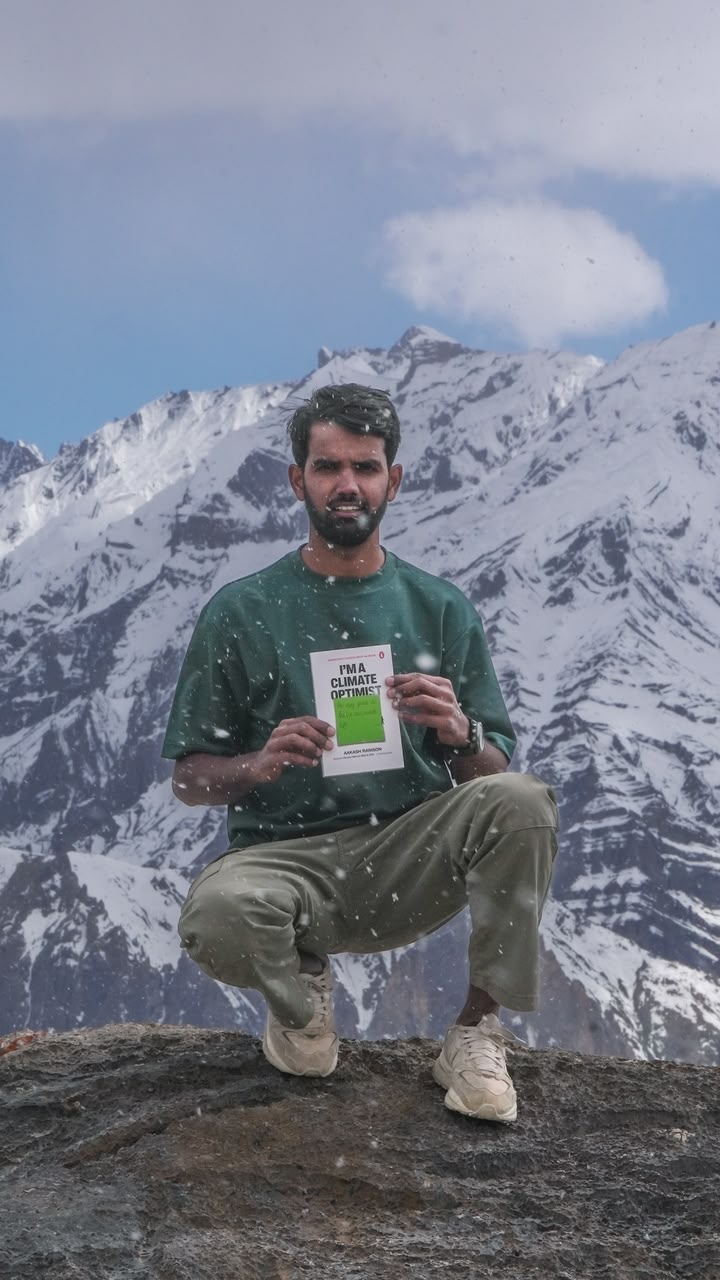
Aakash Ranison | Climate Activist
He asks for those records with some experience of how institutions respond, since he has already taken the CPCB before the National Green Tribunal this year. The process taught him that "evidence is essential, but evidence alone does not always move an institution. Pressure often does." The question that follows from that lesson carries the weight of a whole civic argument, namely why a citizen should need a courtroom before a regulator seriously examines the material placed before it, and his answer is a design principle for the regulator itself: "Accountability should be built into the institution."
He lifts his gaze to the top of the system as well. "I would have loved to see our Honourable Prime Minister release even a short video personally requesting young people not to burst crackers," Ranison says. "Millions listen to him." He wants leaders to stand visibly behind public-health measures, and he wants the receipts for all of it, because "accountability must be measurable: which authority checked sellers, how many violations were recorded, what action followed, and why are we repeating the same failure year after year?"

The recovery plan he sketches runs on two clocks. For the coming days, he says, "In the next 72 hours, I would prioritise clear health advisories, protecting children and vulnerable people, enforcing restrictions on construction dust and visibly polluting vehicles, and making public transport easier to use during the emergency." That emphasis tracks the data, since transport was projected at around 19 per cent of Delhi's pollution on 8 November, against 3.5 per cent for stubble burning. He is equally direct about the citizens the state keeps lecturing: "We ask people to carpool or take buses; have we built a system that makes that practical?" For the longer horizon, his demand reads like a charter for any government willing to sign it: "Before next winter, I want a coordinated regional plan with funded transport improvements, farmer support, enforcement targets, deadlines and public progress reports."
His closing warning doubles as a forecast. "Without sincerity and long-term commitment, we will have this conversation again," Ranison says, and the calendar agrees with him, because the next test of whether Delhi's institutions can count honestly arrives on 16 December, when the record of Diwali night either gets rebuilt in full, hour by hour and station by station, with the names of the officials who kept it, or joins the long archive of winters the capital has agreed to forget.
TO BE CONTINUED, FOR SUBSCRIBERS ONLY.
This is where the surface ends and the reporting begins.
The complete piece, the full archive, and access to The French Press Circle. Reporting answerable only to its readers.
Already a subscriber ?
Login
Read these on the house, with our compliments.
A selection from the current issue, open to all readers. Read them in full. The rest is one decision away.




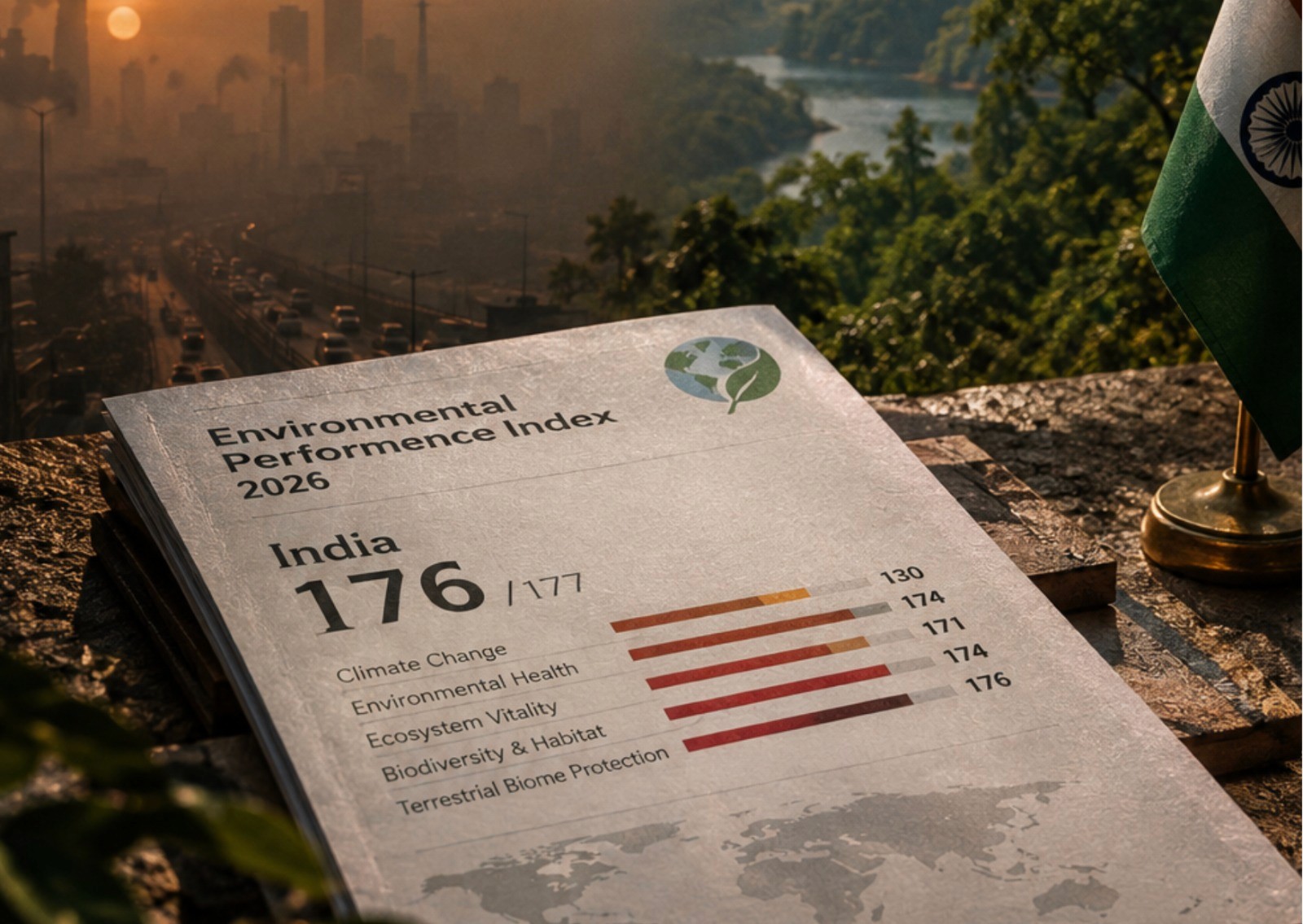


At 2 am on 9 November, a monitor in Mundka measured PM2.5 at 3,744 micrograms per cubic metre, in a country whose standard for an entire day sits at 60, and yet the highest reading anywhere in the Central Pollution Control Board's own records for that night was 1,000. Private trackers had by then flashed AQI figures above 1,700 for parts of the capital, which sent most newsrooms chasing the spectacle of a single terrifying number, when the more revealing story sits in the distance between what the air did and what the official record admits it did.
Hourly PM2.5 at 59 stations, 8-9 November | White tiles mark missing readings
That distance has a paper trail. The Delhi Pollution Control Committee released its hourly readings around 8 pm on Monday, and every one of the 125 station-hours absent from the CPCB's records read above 1,000, with eleven DPCC stations crossing 2,000, JNU touching 3,023 at 4 am, and the two sources matching wherever both had a reading. At 1 am, 36 of Delhi's 59 stations had no PM2.5 reading in the CPCB's records at all, and an unnamed official, while acknowledging some technical glitches, maintained that all 43 stations were giving data. As of 7.58 pm on Monday, the released readings had still not appeared in the CPCB's own records. A system built to tell citizens what they are breathing went quiet in the hours when the answer mattered most, and it was a second agency's website that eventually filled the silence.
Ranison reads that sequence as a verdict on the institutions, whatever the engineers eventually find inside the machines. "Until the government proves what caused the monitoring gaps, I see this as an accountability failure, even if the underlying cause was technical," he says, and the logic he follows is hard to fault: "So the readings existed somewhere in the official system. Why were they not visible when people needed them most?" He holds that manipulation remains unproven, and he wants the evidence laid out in public view, which is why he insists that "I want the government to explain why those readings were missing from CPCB's display, with technical logs and independent scrutiny." The paperwork he has in mind runs long: "I want the authorities to publish the system logs, instrument limits, maintenance reports and a clear timeline of what went wrong." He applies the same discipline to the private monitors that produced the 1,700 headlines, whose calibration and methodology deserve examination before anyone treats them as scripture.
The scale itself compounds the problem, and here the editorial case writes itself. The Indian index stops at 500 for any hour above roughly 420 micrograms, which means a reading nearly nine times that level barely moves the published number, and Hindustan Times calculates that the 24 hours to 9 am would have come to about 384 with the new readings counted, against the 370 CPCB published. The ceiling makes the worst hours of the worst night statistically invisible, and a citizen reading the bulletin the next morning received a figure engineered, by design or by habit, to flatten the catastrophe into a familiar shade of red. Ranison does not soften his reaction. "I find it deeply irresponsible that the language of our official reporting can stop describing the scale of danger while the pollution keeps rising," he says. He accepts that an index exists to simplify, and he draws the line where simplification turns into concealment: "What citizens lose is the ability to understand just how extreme their exposure has become." His fix would cost the state nothing but candour: "CPCB should publish actual pollutant concentrations, hourly peaks and health warnings alongside the AQI."
On every Diwali night from 2018 to 2025, fewer stations had a PM2.5 reading at the lowest hour than on the same night a week earlier, and 2025 had the fewest of the eight, which was 12 of 40.
Averaging does the rest of the damage, and it lands squarely on the Supreme Court's desk. The Court ordered daily air quality reports before, during and after Diwali, and the matter returns for compliance on 16 December, which gives that hearing the job of deciding whether a daily figure, with its gaps and its ceiling, qualifies as evidence of anything. Ranison has a proposal for the bench. "I would request the Honourable Supreme Court to order an independent technical inquiry," he says, adding that "a daily average cannot show what people actually inhaled during the worst hours." His list of demands is specific enough to be written straight into an order: "The Court should demand the raw hourly data, a public explanation for every gap, instrument specifications and maintenance logs." He would go one step further and install a permanent check, since "I would also support at least two independent, quality-controlled monitoring partners reporting in parallel," so that "critical evidence cannot vanish from public view during an emergency."
The chart sets out every station hour by hour from 6 PM to 7 AM on Diwali night 2026, and an orange cell marks an hour when the station had no PM2.5 reading while its other pollutants were recorded. A red cell marks an hour when nothing was recorded for that station.
Enforcement carries the heavier charge, because the pattern predates this Diwali by years. Delhi's air worsened the morning after Diwali in eight of the past nine years, through bans, relaxations and green-only permissions alike, and the Supreme Court itself recorded that conventional crackers were being sold under the guise of green ones and that the ban had faltered on implementation. The Court's 29 October order handed police and district administrations the work of inspecting designated sale points, verifying QR codes on a random basis and confiscating conventional firecrackers, and of initiating prosecutions against violators. Ranison treats those directions as assignments with names attached, and he declines to let any single department carry the blame alone. "We are very good at making policies in India; we produce detailed rules, deadlines and certifications. Where we repeatedly fail is implementation," he says. "So I want to see the records: how many inspections, seizures and prosecutions actually took place?" His verdict on the alternative is short: "Even the best policy is just a piece of paper if the system meant to enforce it does not work."
Aakash Ranison | Climate Activist
He asks for those records with some experience of how institutions respond, since he has already taken the CPCB before the National Green Tribunal this year. The process taught him that "evidence is essential, but evidence alone does not always move an institution. Pressure often does." The question that follows from that lesson carries the weight of a whole civic argument, namely why a citizen should need a courtroom before a regulator seriously examines the material placed before it, and his answer is a design principle for the regulator itself: "Accountability should be built into the institution."
He lifts his gaze to the top of the system as well. "I would have loved to see our Honourable Prime Minister release even a short video personally requesting young people not to burst crackers," Ranison says. "Millions listen to him." He wants leaders to stand visibly behind public-health measures, and he wants the receipts for all of it, because "accountability must be measurable: which authority checked sellers, how many violations were recorded, what action followed, and why are we repeating the same failure year after year?"
The recovery plan he sketches runs on two clocks. For the coming days, he says, "In the next 72 hours, I would prioritise clear health advisories, protecting children and vulnerable people, enforcing restrictions on construction dust and visibly polluting vehicles, and making public transport easier to use during the emergency." That emphasis tracks the data, since transport was projected at around 19 per cent of Delhi's pollution on 8 November, against 3.5 per cent for stubble burning. He is equally direct about the citizens the state keeps lecturing: "We ask people to carpool or take buses; have we built a system that makes that practical?" For the longer horizon, his demand reads like a charter for any government willing to sign it: "Before next winter, I want a coordinated regional plan with funded transport improvements, farmer support, enforcement targets, deadlines and public progress reports."
His closing warning doubles as a forecast. "Without sincerity and long-term commitment, we will have this conversation again," Ranison says, and the calendar agrees with him, because the next test of whether Delhi's institutions can count honestly arrives on 16 December, when the record of Diwali night either gets rebuilt in full, hour by hour and station by station, with the names of the officials who kept it, or joins the long archive of winters the capital has agreed to forget.
TO BE CONTINUED, FOR SUBSCRIBERS ONLY.
This is where the surface ends and the reporting begins.
The complete piece, the full archive, and access to The French Press Circle. Reporting answerable only to its readers.
Already a subscriber ?
Login
Read these on the house, with our compliments.
A selection from the current issue, open to all readers. Read them in full. The rest is one decision away.