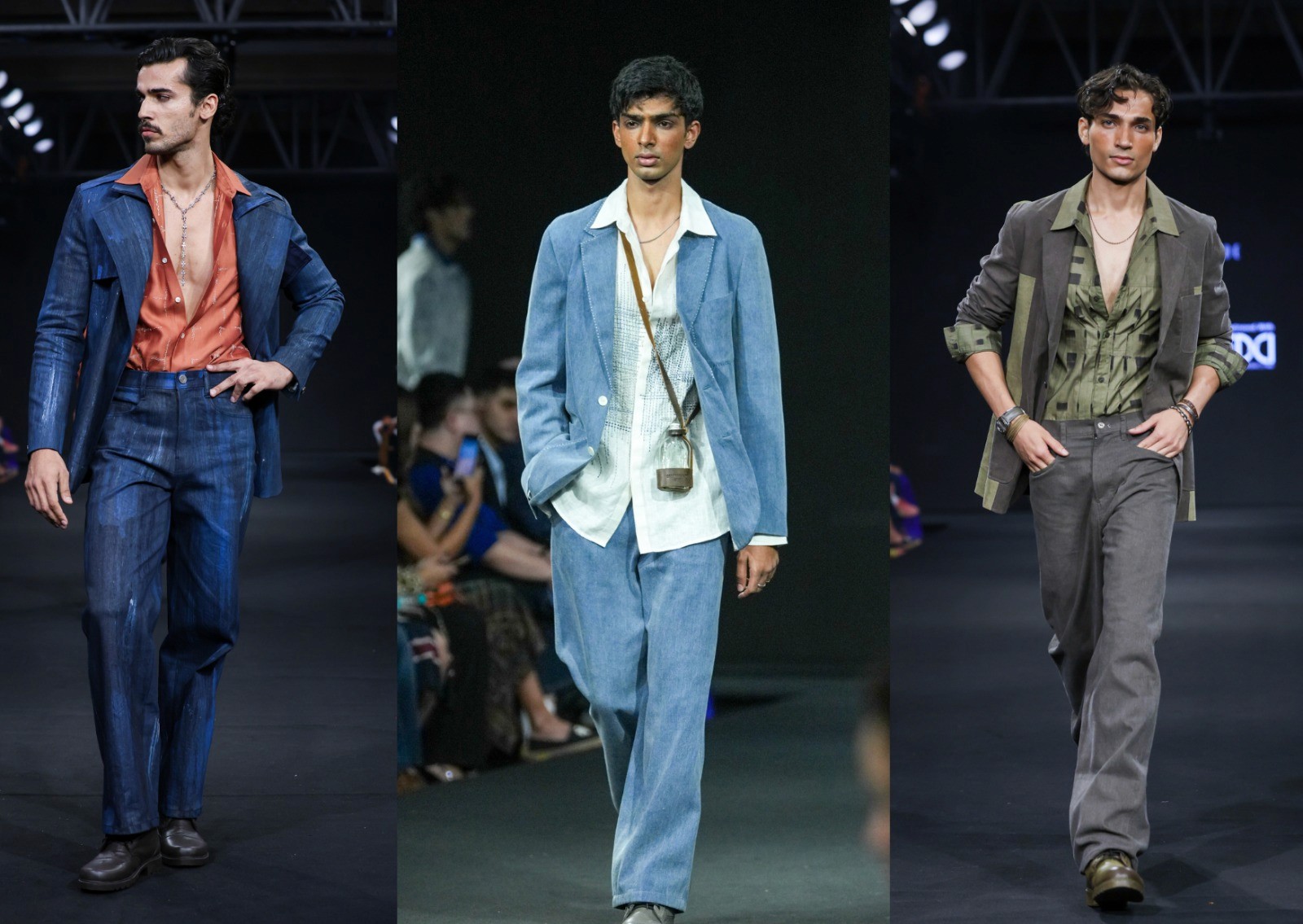
The most telling piece in Pawan Sachdevaa's RECAST on Saturday night was a pair of black rubber boots. They came down the ramp at The Runway, Taj Palace, ribbed and glossy, beneath a black jacket with patch pockets and broad strokes of chalk white dragged across the weave as if one hand had pulled the dye through in a single pass. Indian craft in menswear has spent decades confined to a short list of occasions, the wedding, the festive evening, the sherwani and the bandhgala. Sachdevaa sent it out in the clothes a man wears on an ordinary Tuesday.

RECAST, Recasting the Familiar. Redefining the Modern Silhouette, took the penultimate night of Lakmē Fashion Week x FDCI, presented with the Fashion Design Council of India. "RECAST is about respecting the richness of Indian craftsmanship while allowing it to evolve," Sachdevaa said, a sentence that could sit in any designer's show notes and that this collection backed up garment by garment, with shorts dropping to the knee, trousers falling wide and full, shirts cut long and coats built to swing open as the model walks.

It opened in indigo. Acid, enzyme and stone washes gave the first suit clouds of colour beneath tones of moss and mustard, with a peaked lapel, a shirt cut from the same washed cloth and wide trousers finished with polished derbies, and a slouching black leather tote carried in one hand. Ombré dyeing pooled colour at the hems, and the chalky surface of the washes made the clothes look worn in before they reached the ramp.

The black and white group came next, and it is where the techniques were easiest to read from the front row. Beside the chalk-streaked jacket and its rubber boots, a cropped black jacket carried bands of fine white lines and scattered dots that recalled the tied points of Bandhani, layered over a long white shirt and a black knit with pleated trousers and derbies. A third look, a jacket in pale foliage worked through a resist pattern, sat over a white shirt falling below the hem, with black shorts and laced combat boots. The palette stayed tight and the silhouette stayed close to one idea, the long shirt under a boxy jacket over a short, and by the third repeat the section had made its point and the eye was ready to move on.

It moved on to the strongest clothes of the evening. A long ecru coat with a spread collar carried small grids of dark stitches, counted and evenly spaced, set where a pocket or a seam would normally hold the eye, so the needlework became the structure of the coat. It opened over a black shirt scattered with the same stitched geometry and brushed, striped trousers falling wide over black derbies. Walking beside it, a loose ecru shirt dipped into indigo at the hem, the dye climbing the cotton in soft vertical streaks, under a draped jacket with pleated trousers and woven leather sandals. Here the proportions varied more than anywhere else in the show, and the restraint in colour gave the cut room to carry the look.
The fabric list read like a working studio's inventory. Kala Cotton Khadi brought a dry, even grain, Khadi Silk and Matka Silk carried a slubbed texture that caught the light unevenly, Habutai Silk ran fine and fluid, and bouclé added loops at the surface, with denim holding the whole range together in a palette of indigo, ecru, black and mustard.

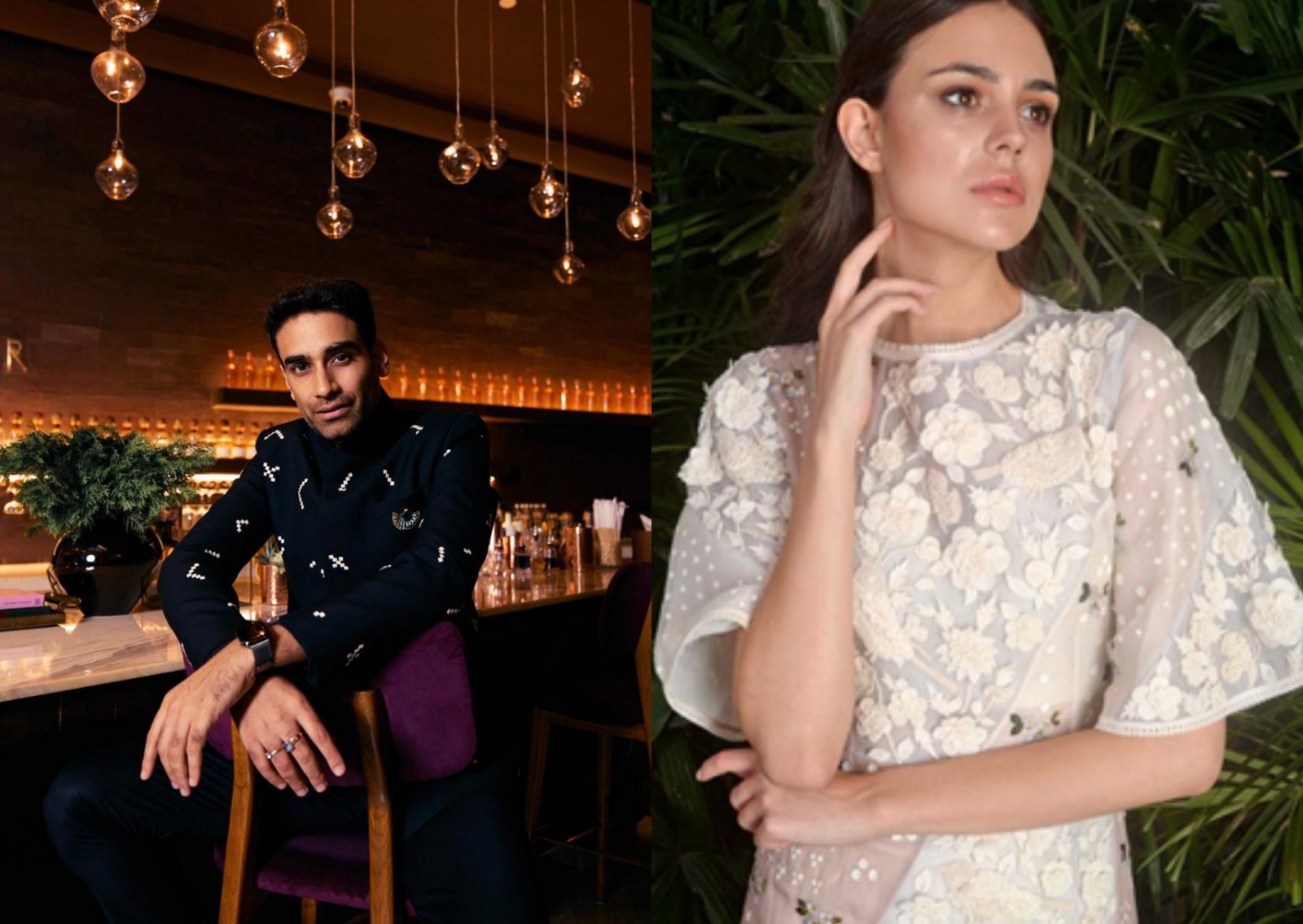
Veer Pahariya closed the show in the darkest register of the collection. He wore a long navy coat with the sleeves pushed to the forearm, an inner jacket lined with rows of running stitch, a dark shirt, deep pleated trousers belted thin and lug-soled boots, and the coat opened around his legs with each step while the stitched panel picked up the stage light in fine silver lines. "For me, style is about expressing who you are with confidence, while keeping it effortless," Pahariya said, adding that what stayed with him from the show was the way traditional elements arrived through modern silhouettes.
Sachdevaa launched his label in 1999 and has worked for more than 27 years on fit, detail and the quiet authority of a well-cut garment, with a presence in Delhi and an international footprint across Europe and the Middle East. His March showing in Mumbai put embroidered khadi into denim, and RECAST extends that thinking into a full wardrobe for daily dressing, travel and long evenings. Fashion weeks are generous with the word heritage and sparing with the evidence, and RECAST supplies the evidence, craft placed in the pattern-cutting where it shapes the garment. Any label that credits the artisan in its show notes now has a clear standard to meet on the ramp.
TO BE CONTINUED, FOR SUBSCRIBERS ONLY.
This is where the surface ends and the reporting begins.
The complete piece, the full archive, and access to The French Press Circle. Reporting answerable only to its readers.
Already a subscriber ?
Login
Read these on the house, with our compliments.
A selection from the current issue, open to all readers. Read them in full. The rest is one decision away.




The most telling piece in Pawan Sachdevaa's RECAST on Saturday night was a pair of black rubber boots. They came down the ramp at The Runway, Taj Palace, ribbed and glossy, beneath a black jacket with patch pockets and broad strokes of chalk white dragged across the weave as if one hand had pulled the dye through in a single pass. Indian craft in menswear has spent decades confined to a short list of occasions, the wedding, the festive evening, the sherwani and the bandhgala. Sachdevaa sent it out in the clothes a man wears on an ordinary Tuesday.
RECAST, Recasting the Familiar. Redefining the Modern Silhouette, took the penultimate night of Lakmē Fashion Week x FDCI, presented with the Fashion Design Council of India. "RECAST is about respecting the richness of Indian craftsmanship while allowing it to evolve," Sachdevaa said, a sentence that could sit in any designer's show notes and that this collection backed up garment by garment, with shorts dropping to the knee, trousers falling wide and full, shirts cut long and coats built to swing open as the model walks.
It opened in indigo. Acid, enzyme and stone washes gave the first suit clouds of colour beneath tones of moss and mustard, with a peaked lapel, a shirt cut from the same washed cloth and wide trousers finished with polished derbies, and a slouching black leather tote carried in one hand. Ombré dyeing pooled colour at the hems, and the chalky surface of the washes made the clothes look worn in before they reached the ramp.
The black and white group came next, and it is where the techniques were easiest to read from the front row. Beside the chalk-streaked jacket and its rubber boots, a cropped black jacket carried bands of fine white lines and scattered dots that recalled the tied points of Bandhani, layered over a long white shirt and a black knit with pleated trousers and derbies. A third look, a jacket in pale foliage worked through a resist pattern, sat over a white shirt falling below the hem, with black shorts and laced combat boots. The palette stayed tight and the silhouette stayed close to one idea, the long shirt under a boxy jacket over a short, and by the third repeat the section had made its point and the eye was ready to move on.
It moved on to the strongest clothes of the evening. A long ecru coat with a spread collar carried small grids of dark stitches, counted and evenly spaced, set where a pocket or a seam would normally hold the eye, so the needlework became the structure of the coat. It opened over a black shirt scattered with the same stitched geometry and brushed, striped trousers falling wide over black derbies. Walking beside it, a loose ecru shirt dipped into indigo at the hem, the dye climbing the cotton in soft vertical streaks, under a draped jacket with pleated trousers and woven leather sandals. Here the proportions varied more than anywhere else in the show, and the restraint in colour gave the cut room to carry the look.
The fabric list read like a working studio's inventory. Kala Cotton Khadi brought a dry, even grain, Khadi Silk and Matka Silk carried a slubbed texture that caught the light unevenly, Habutai Silk ran fine and fluid, and bouclé added loops at the surface, with denim holding the whole range together in a palette of indigo, ecru, black and mustard.
Veer Pahariya closed the show in the darkest register of the collection. He wore a long navy coat with the sleeves pushed to the forearm, an inner jacket lined with rows of running stitch, a dark shirt, deep pleated trousers belted thin and lug-soled boots, and the coat opened around his legs with each step while the stitched panel picked up the stage light in fine silver lines. "For me, style is about expressing who you are with confidence, while keeping it effortless," Pahariya said, adding that what stayed with him from the show was the way traditional elements arrived through modern silhouettes.
Sachdevaa launched his label in 1999 and has worked for more than 27 years on fit, detail and the quiet authority of a well-cut garment, with a presence in Delhi and an international footprint across Europe and the Middle East. His March showing in Mumbai put embroidered khadi into denim, and RECAST extends that thinking into a full wardrobe for daily dressing, travel and long evenings. Fashion weeks are generous with the word heritage and sparing with the evidence, and RECAST supplies the evidence, craft placed in the pattern-cutting where it shapes the garment. Any label that credits the artisan in its show notes now has a clear standard to meet on the ramp.
TO BE CONTINUED, FOR SUBSCRIBERS ONLY.
This is where the surface ends and the reporting begins.
The complete piece, the full archive, and access to The French Press Circle. Reporting answerable only to its readers.
Already a subscriber ?
Login
Read these on the house, with our compliments.
A selection from the current issue, open to all readers. Read them in full. The rest is one decision away.