Look at What is Happening Globally Right Now.
The Louvre has opened its galleries to couture, placing contemporary fashion within the same architectural and intellectual framework as decorative arts. The Metropolitan Museum of Art continues to position clothing as evidence of social history, not seasonal display. Paris’s Palais Galliera is mounting multi-year programmes dedicated not merely to designers, but to the trades, ateliers, and construction systems behind fashion. In Europe and the United States, fashion is curated as part of the cultural zeitgeist, studied as industry, preserved as authorship, and funded as institutional memory.
These are extensions of permanent archival structures backed by acquisition policies, conservation laboratories, research departments, and dedicated funding streams.
India, meanwhile, is often described as a country that does not archive fashion. The statement is rhetorically effective, but it is not entirely accurate.
India archives extensively. The Calico Museum of Textiles in Ahmedabad holds one of the most significant historic textile collections in the world. The National Museum in Delhi preserves Mughal garments and court textiles with scholarly care. Indian textiles are meticulously catalogued not only domestically but in international institutions. Technique, craft lineage, weave systems, and dye traditions have been preserved with seriousness and respect.
What India has not yet Systemised is the Archiving of Modern Fashion as Societal Record.
Textile preservation and fashion archiving are not interchangeable. Textile preservation documents technique and craft heritage. Fashion archiving documents authorship, silhouette, industrial transformation, aesthetic codes, and the relationship between clothing and the era in which it was produced.
If one wanted to study the evolution of Kanchipuram weaving, the resources exist. If one wanted to study the evolution of Indian couture from the liberalisation era of the 1990s to today’s global luxury positioning, the documentation is fragmented.
The 1990s were not a minor chapter in Indian fashion. Post-liberalisation India saw designers such as Rohit Bal, Ritu Kumar, Suneet Varma, and Tarun Tahiliani shaping the language of Indian couture for a newly aspirational economy. This was the decade when fashion weeks began to take form, when Indian designers started to move from export ateliers to public authorship, when bridal wear began its transformation into an industry rather than a seasonal category.
The early 2000s institutionalised runway culture. Fashion weeks became recurring platforms. Designers such as Manish Arora introduced a distinct Indian maximalism to international markets. Later, Sabyasachi Mukherjee redefined bridal couture as heritage-luxury narrative. Vaishali Shadangule positioned handcraft within a global contemporary framework, taking Indian textile intelligence to international couture platforms. A new generation began engaging with global red carpets, international stockists, and digital audiences.
These were structural shifts. They reflected economic change, media expansion, and a recalibration of India’s position within global luxury conversations.
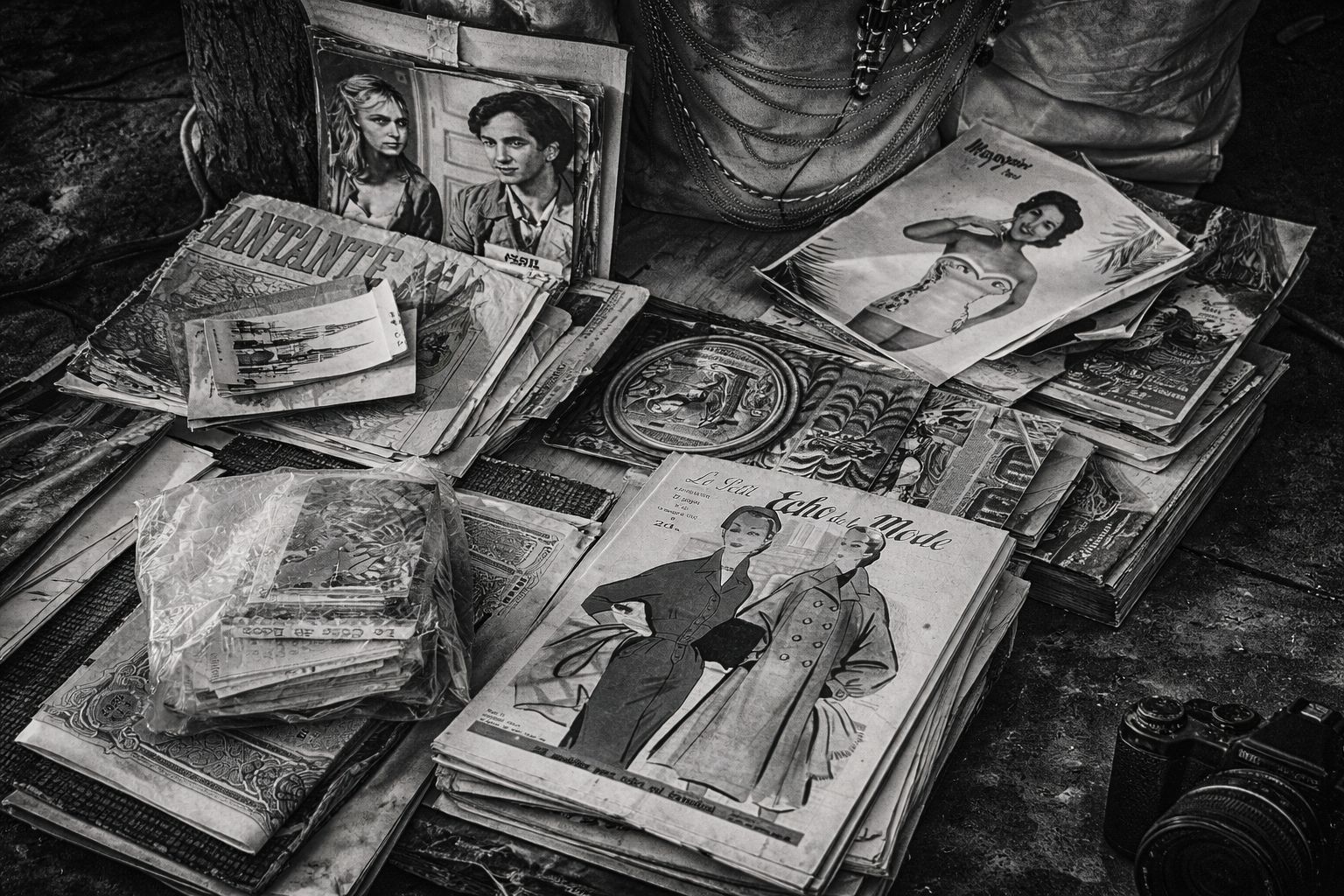
Yet there is no single publicly accessible institution where representative looks from these eras are conserved under museum standards, catalogued within a unified system, and contextualised for future scholarship. Garments remain in designer archives, private storage, or circulation. Runway images exist, but without central integration. Oral histories are rarely recorded in structured format.
The Absence is Infrastructural.
In Europe and the United States, museum budgets operate at a scale that allows acquisition, conservation, and research to function continuously. The Metropolitan Museum of Art’s annual operating expenses run into hundreds of millions of dollars. The Victoria and Albert Museum operates with substantial public funding and private patronage. Even a single fundraising evening dedicated to the Costume Institute generates capital equivalent to the annual budget of multiple smaller institutions.
India’s public museum allocations, while improving, are spread across a vast national mandate. Fashion does not yet have a ring-fenced institutional framework with comparable resources. The result is episodic excellence rather than systemic preservation.
Recent initiatives demonstrate that the appetite exists. The exhibition India in Fashion at the Nita Mukesh Ambani Cultural Centre mapped India’s influence on global fashion and placed contemporary designers within a historical continuum. It was a serious curatorial gesture and a signal that institutional ambition is possible when vision and funding align.
The Next Step is Permanence.
If India intends to be taken seriously as a luxury capital rather than a seasonal market, it must treat contemporary fashion as part of the country’s societal narrative. That requires several shifts, none of them confrontational.
Designers can begin by preserving at least one complete look from every collection under controlled conditions for future study and valuation. As I write the article, I have suddenly realised that I need to do this myself, and while I have preserved looks from every collection that I’ve created, this write up is just reassuring and reminding about how I need to do this in a much more systematic way.
Institutions can develop acquisition policies that prioritise milestone collections across decades. Fashion wings within existing museums in Delhi, Mumbai, and Ahmedabad could integrate textile heritage with modern design evolution rather than treating them as separate conversations.
A national digital fashion archive could unify runway documentation, sketches, textile provenance, campaign imagery, and atelier narratives within a searchable public system. India has already built digital infrastructures for museum documentation and antiquities. Extending that framework to fashion is an administrative decision, and very much possible.
India’s OTT ecosystem could commission documentary series that chronicle the evolution of Indian fashion across eras, as structured industry history. Public literacy precedes institutional respect.
Most importantly, the industry must agree on a simple premise. Contemporary fashion is not disposable commerce. It is evidence of a societal moment.
India has preserved the loom with devotion. It now needs to preserve the runway with discipline.
The conversation should be framed as coordination as opposed to an accusation. Designers, patrons, institutions, collectors, and policymakers all hold pieces of the archive already. What is missing is integration.
India is not starting from absence. It is starting from abundance without system.
Fashion that is not archived fades into anecdote.
Fashion that is archived becomes part of the historical record.
The opportunity now is not to ask whether India archived.
It is to decide whether India is ready to build memory deliberately.
TO BE CONTINUED, FOR SUBSCRIBERS ONLY.
This is where the surface ends and the reporting begins.
The complete piece, the full archive, and access to The French Press Circle. Reporting answerable only to its readers.
Already a subscriber ?
Login
Read these on the house, with our compliments.
A selection from the current issue, open to all readers. Read them in full. The rest is one decision away.









Look at What is Happening Globally Right Now.
The Louvre has opened its galleries to couture, placing contemporary fashion within the same architectural and intellectual framework as decorative arts. The Metropolitan Museum of Art continues to position clothing as evidence of social history, not seasonal display. Paris’s Palais Galliera is mounting multi-year programmes dedicated not merely to designers, but to the trades, ateliers, and construction systems behind fashion. In Europe and the United States, fashion is curated as part of the cultural zeitgeist, studied as industry, preserved as authorship, and funded as institutional memory.
These are extensions of permanent archival structures backed by acquisition policies, conservation laboratories, research departments, and dedicated funding streams.
India, meanwhile, is often described as a country that does not archive fashion. The statement is rhetorically effective, but it is not entirely accurate.
India archives extensively. The Calico Museum of Textiles in Ahmedabad holds one of the most significant historic textile collections in the world. The National Museum in Delhi preserves Mughal garments and court textiles with scholarly care. Indian textiles are meticulously catalogued not only domestically but in international institutions. Technique, craft lineage, weave systems, and dye traditions have been preserved with seriousness and respect.
What India has not yet Systemised is the Archiving of Modern Fashion as Societal Record.
Textile preservation and fashion archiving are not interchangeable. Textile preservation documents technique and craft heritage. Fashion archiving documents authorship, silhouette, industrial transformation, aesthetic codes, and the relationship between clothing and the era in which it was produced.
If one wanted to study the evolution of Kanchipuram weaving, the resources exist. If one wanted to study the evolution of Indian couture from the liberalisation era of the 1990s to today’s global luxury positioning, the documentation is fragmented.
The 1990s were not a minor chapter in Indian fashion. Post-liberalisation India saw designers such as Rohit Bal, Ritu Kumar, Suneet Varma, and Tarun Tahiliani shaping the language of Indian couture for a newly aspirational economy. This was the decade when fashion weeks began to take form, when Indian designers started to move from export ateliers to public authorship, when bridal wear began its transformation into an industry rather than a seasonal category.
The early 2000s institutionalised runway culture. Fashion weeks became recurring platforms. Designers such as Manish Arora introduced a distinct Indian maximalism to international markets. Later, Sabyasachi Mukherjee redefined bridal couture as heritage-luxury narrative. Vaishali Shadangule positioned handcraft within a global contemporary framework, taking Indian textile intelligence to international couture platforms. A new generation began engaging with global red carpets, international stockists, and digital audiences.
These were structural shifts. They reflected economic change, media expansion, and a recalibration of India’s position within global luxury conversations.
Yet there is no single publicly accessible institution where representative looks from these eras are conserved under museum standards, catalogued within a unified system, and contextualised for future scholarship. Garments remain in designer archives, private storage, or circulation. Runway images exist, but without central integration. Oral histories are rarely recorded in structured format.
The Absence is Infrastructural.
In Europe and the United States, museum budgets operate at a scale that allows acquisition, conservation, and research to function continuously. The Metropolitan Museum of Art’s annual operating expenses run into hundreds of millions of dollars. The Victoria and Albert Museum operates with substantial public funding and private patronage. Even a single fundraising evening dedicated to the Costume Institute generates capital equivalent to the annual budget of multiple smaller institutions.
India’s public museum allocations, while improving, are spread across a vast national mandate. Fashion does not yet have a ring-fenced institutional framework with comparable resources. The result is episodic excellence rather than systemic preservation.
Recent initiatives demonstrate that the appetite exists. The exhibition India in Fashion at the Nita Mukesh Ambani Cultural Centre mapped India’s influence on global fashion and placed contemporary designers within a historical continuum. It was a serious curatorial gesture and a signal that institutional ambition is possible when vision and funding align.
The Next Step is Permanence.
If India intends to be taken seriously as a luxury capital rather than a seasonal market, it must treat contemporary fashion as part of the country’s societal narrative. That requires several shifts, none of them confrontational.
Designers can begin by preserving at least one complete look from every collection under controlled conditions for future study and valuation. As I write the article, I have suddenly realised that I need to do this myself, and while I have preserved looks from every collection that I’ve created, this write up is just reassuring and reminding about how I need to do this in a much more systematic way.
Institutions can develop acquisition policies that prioritise milestone collections across decades. Fashion wings within existing museums in Delhi, Mumbai, and Ahmedabad could integrate textile heritage with modern design evolution rather than treating them as separate conversations.
A national digital fashion archive could unify runway documentation, sketches, textile provenance, campaign imagery, and atelier narratives within a searchable public system. India has already built digital infrastructures for museum documentation and antiquities. Extending that framework to fashion is an administrative decision, and very much possible.
India’s OTT ecosystem could commission documentary series that chronicle the evolution of Indian fashion across eras, as structured industry history. Public literacy precedes institutional respect.
Most importantly, the industry must agree on a simple premise. Contemporary fashion is not disposable commerce. It is evidence of a societal moment.
India has preserved the loom with devotion. It now needs to preserve the runway with discipline.
The conversation should be framed as coordination as opposed to an accusation. Designers, patrons, institutions, collectors, and policymakers all hold pieces of the archive already. What is missing is integration.
India is not starting from absence. It is starting from abundance without system.
Fashion that is not archived fades into anecdote.
Fashion that is archived becomes part of the historical record.
The opportunity now is not to ask whether India archived.
It is to decide whether India is ready to build memory deliberately.
TO BE CONTINUED, FOR SUBSCRIBERS ONLY.
This is where the surface ends and the reporting begins.
The complete piece, the full archive, and access to The French Press Circle. Reporting answerable only to its readers.
Already a subscriber ?
Login
Read these on the house, with our compliments.
A selection from the current issue, open to all readers. Read them in full. The rest is one decision away.