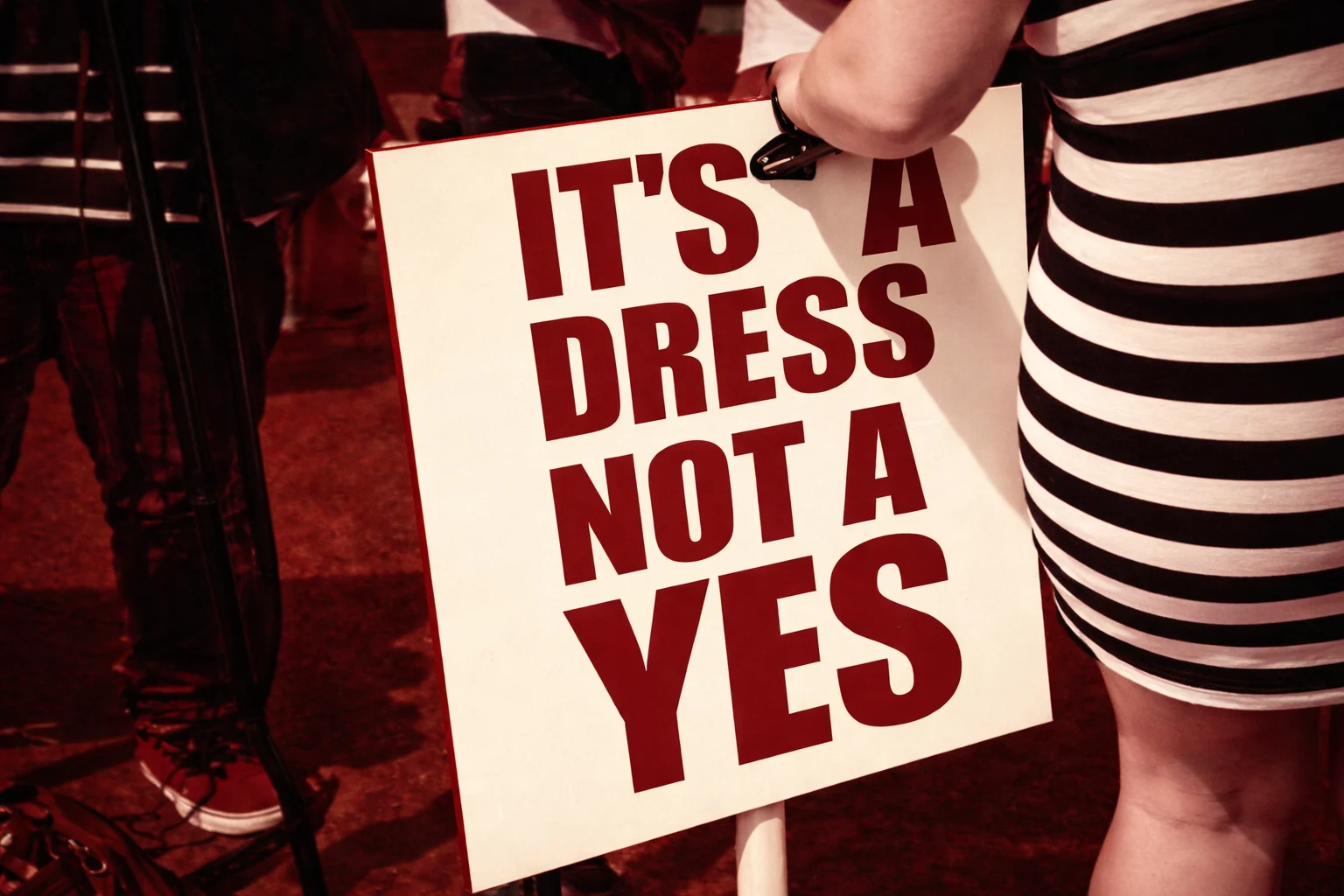
For a country with no shortage of violence against women, we have an oddly persistent national obsession: women’s clothes.
Every time a woman is harassed, assaulted, or violated, the same question resurfaces.
What was she wearing?
The implication rarely needs to be stated. Somewhere between the hemline and the neckline, society believes it will find an explanation.
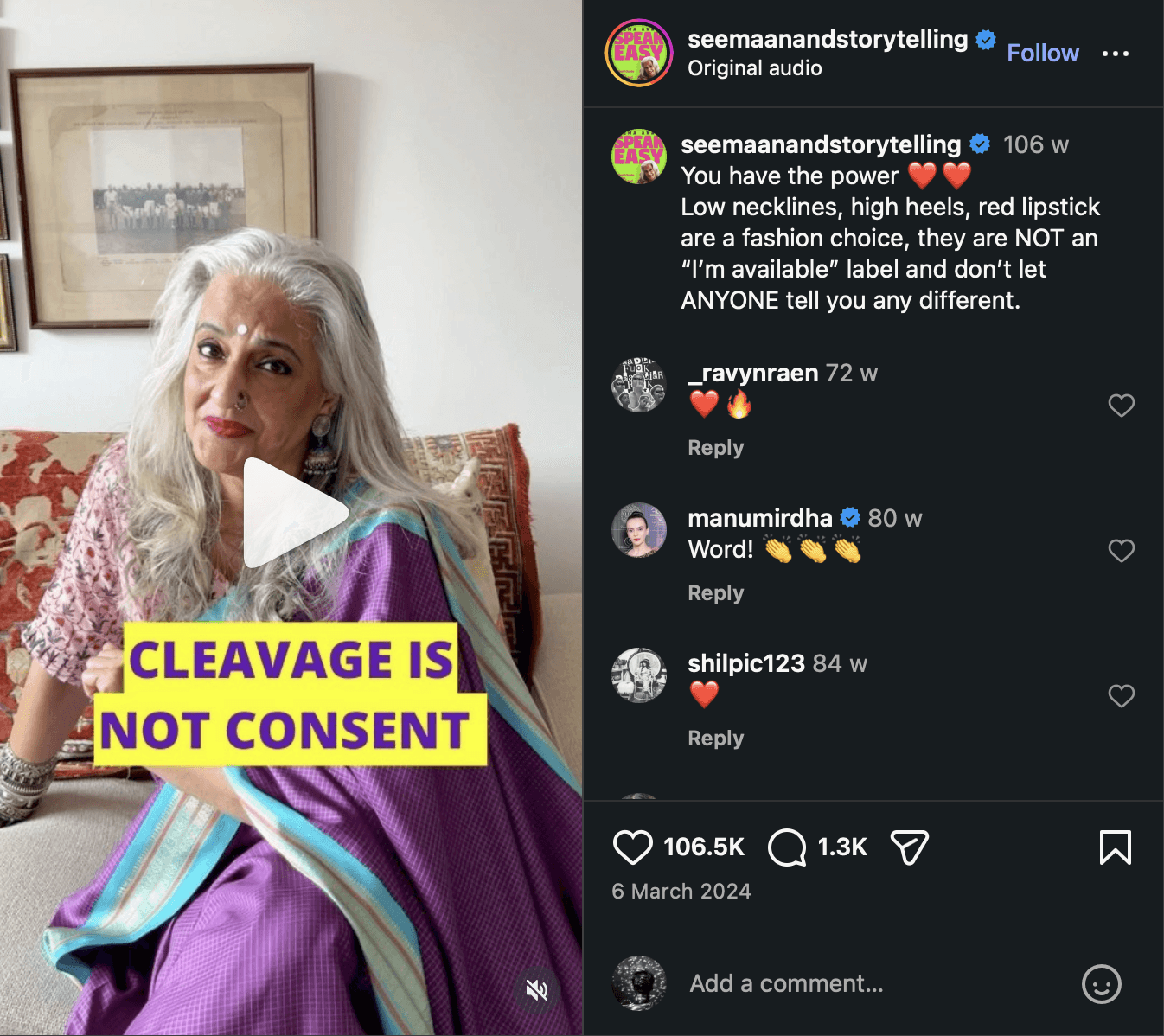
Seema Anand was wearing a sari with her signature halter-neck blouse, six yards of fabric carrying legacy and heritage, draped with the ease and precision that comes from a lifetime of wearing it. At sixty-three, Anand is a mythologist and storyteller, a sex educator who has spent decades studying ancient Indian texts and the ways they once understood women’s autonomy and desire.
At a formal reception, she sat beside her husband when a man from another table walked over. Without introducing himself or asking permission, he reached behind her and lifted the curtain of her long hair off her back to look at the knot of her blouse.
“I’ve just come to see your blouse,” he said callously. “All the women at my table think it’s the sexiest blouse in the room.”
The table he had come from included his wife and sisters-in-law. And while that should not matter, the gesture carried the audacity of someone who assumed the boundary did not exist.
Anand remembers sitting there, stunned, her husband equally unsure how to respond, both of them caught in the familiar social instinct that discourages confrontation in polite company. Something ingrained in Indian women since birth. The moment lingered with her, partly because of the setting, a room full of well-dressed, respectable guests, and partly because it was the first time she had experienced this form of male entitlement publicly.
The question of women’s clothing choices should have died decades ago. Instead, it thrives with viral persistence.
It's whispered in police stations and hospitals. Debated in courtrooms. Dissected at family dinners. The question that transforms the perpetrator into a footnote and the victim into a defendant.
In India, a woman's clothing isn't only fabric.
It's evidence. Testimony. Provocation.
We've built an entire tradition of blame around the length of a hemline, and in doing so, perfected the art of looking everywhere except at the man who committed the crime.
The Convenient Scapegoat
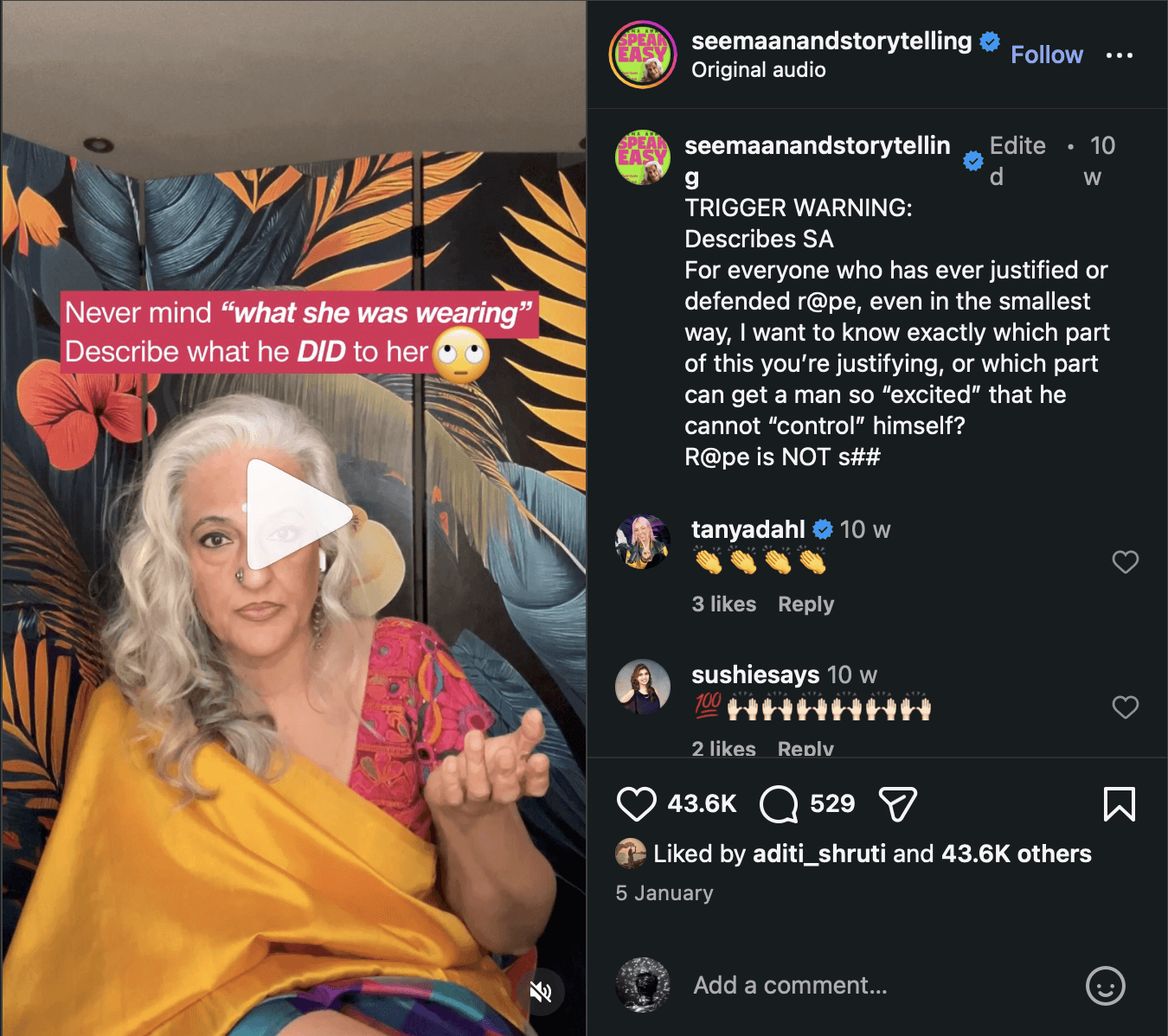
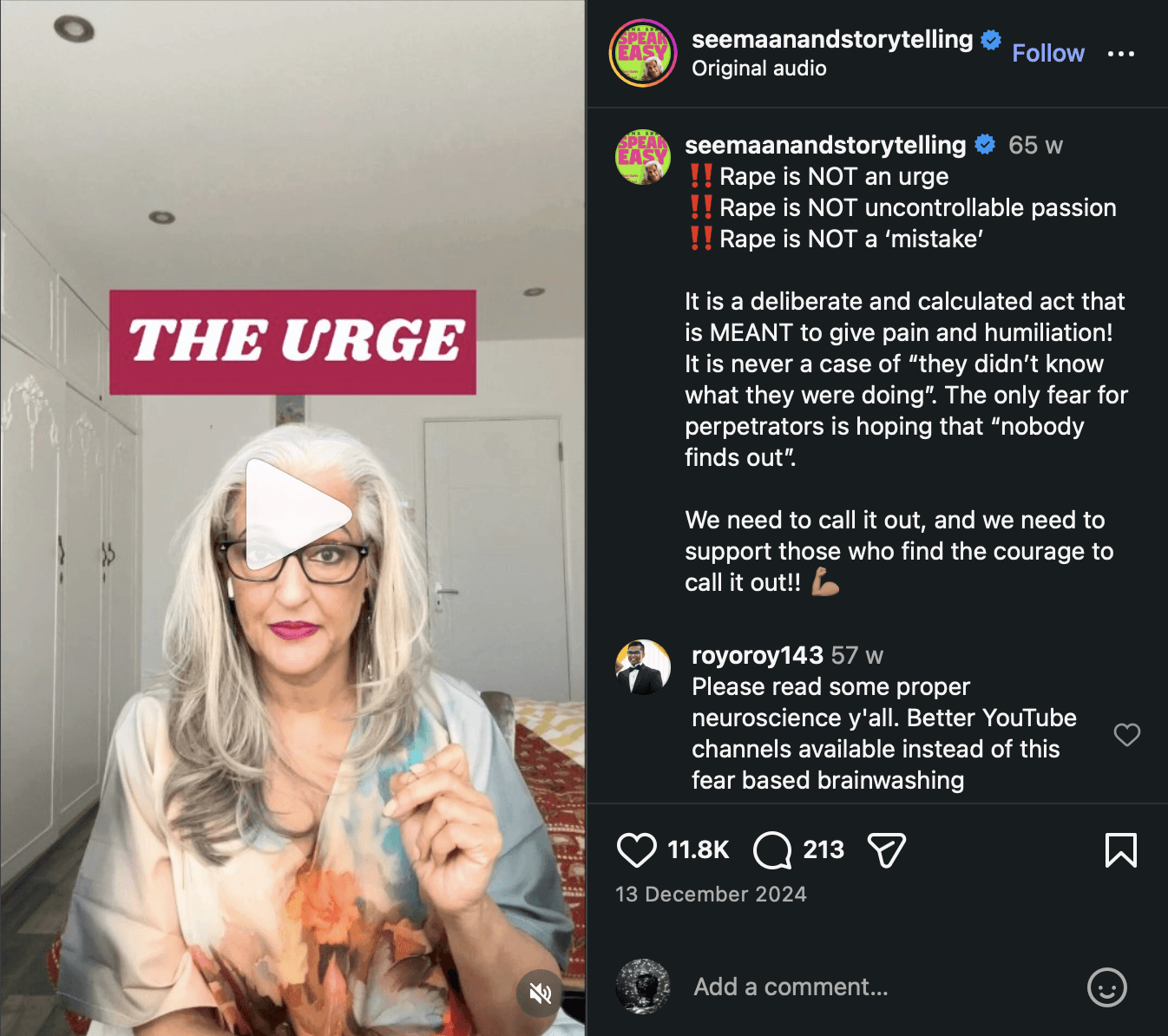
Patriarchy, as Seema Anand explains, is the ultimate get-out clause. It's easier to control what women wear than to address male entitlement and violence. So, we've created this elaborate fiction that women's clothing is somehow responsible for men's actions, as if men are incapable of self-control, as if they're animals who can't be expected to behave like human beings. Women are always blamed as long as the ‘raaja beta’ can be protected.
The irony cuts deep. This supposed tradition of extreme modesty, this obsessive policing of women's bodies, is relatively recent. Historically, women in India were never as confined as they are today. Look at ancient sculptures, temple art, the texts Anand has spent her life studying. The Kamasutra celebrated women's beauty, their shringar, as auspicious activities. The obsessive covering up, the moral panic around women's clothing, much of that came in with colonial rule and has been weaponised ever since. The blouse of the saree, which becomes an ‘invitation to harass’ today, did not even exist before the British came in with the western idea of what modesty should look like.
We, as a society, are regressing. Despite all our claims of modernity, of being a global power, of technological advancement, we're moving backwards when it comes to women's autonomy. Social media and AI haven't liberated women. They've created new tools for violence, for harassment, for control. Now a woman can be morphed into pornography with a few clicks. Her image can be weaponised, distributed, used to shame her, threaten her, destroy her reputation. She can be made to “wear” anything, even nothing, without any say in it.
Indian fashion designer Mandira Wirk understands this intimately. Clothing, she explains, has become moral evidence. It's the easiest shortcut to judgment, the most obvious way to blame a victim. When something terrible happens to a woman, examining her clothing choices requires no critical thinking, no confrontation with uncomfortable truths about male violence, no reckoning with systemic failures. Just a quick glance at her hemline and the case is closed in the court of public opinion.
But here's what Wirk voices that society refuses to acknowledge: there's a vast gap between a woman's intent in getting dressed, and how that clothing is interpreted. A woman might choose an outfit for comfort, for self-expression, for the weather, for a job interview, for a thousand reasons that have nothing to do with inviting male attention. But society interprets that choice through the lens of male desire, entitlement, and violence. The contract a woman thinks she's entering when she gets dressed in the morning, the choice she believes she's making, gets overridden by a society that treats her body as public property.
Getting Dressed, or Risk Assessment?
Every morning, women all over the country carry out complex calculations - the kind of math most men never have to study. Roshni Kumar, a body positivity activist who has spent years documenting the intersection of appearance, mental health, and social autonomy, sees this clearly. In our times, and as a woman living in India, the mundane act of dressing for your day isn't just about fashion or even personal expression. It's a risk assessment in itself. A daily negotiation with a society that holds women responsible for male behaviour. It is a matter that requires the precision of a surgeon - one inch here or there, and the situation turns lethal.
Will this outfit make me a target? Will it invite comments, stares, harassment? Will it make people question my character, my morality, my worth? Will it put me in danger?
I wish this was plain old paranoia. But no. Today, they're survival calculations based on lived experience. And they take a devastating toll on mental health. The constant hypervigilance, the perpetual self-policing, the exhausting awareness that your body is always being watched, always being judged, always potentially being used as evidence against you. It creates anxiety, depression, body dysmorphia, and eating disorders. It makes women hate their own bodies, not because there's anything wrong with their bodies, but because society has taught them that their bodies are problems to be managed, threats to be contained, provocations to be covered up.
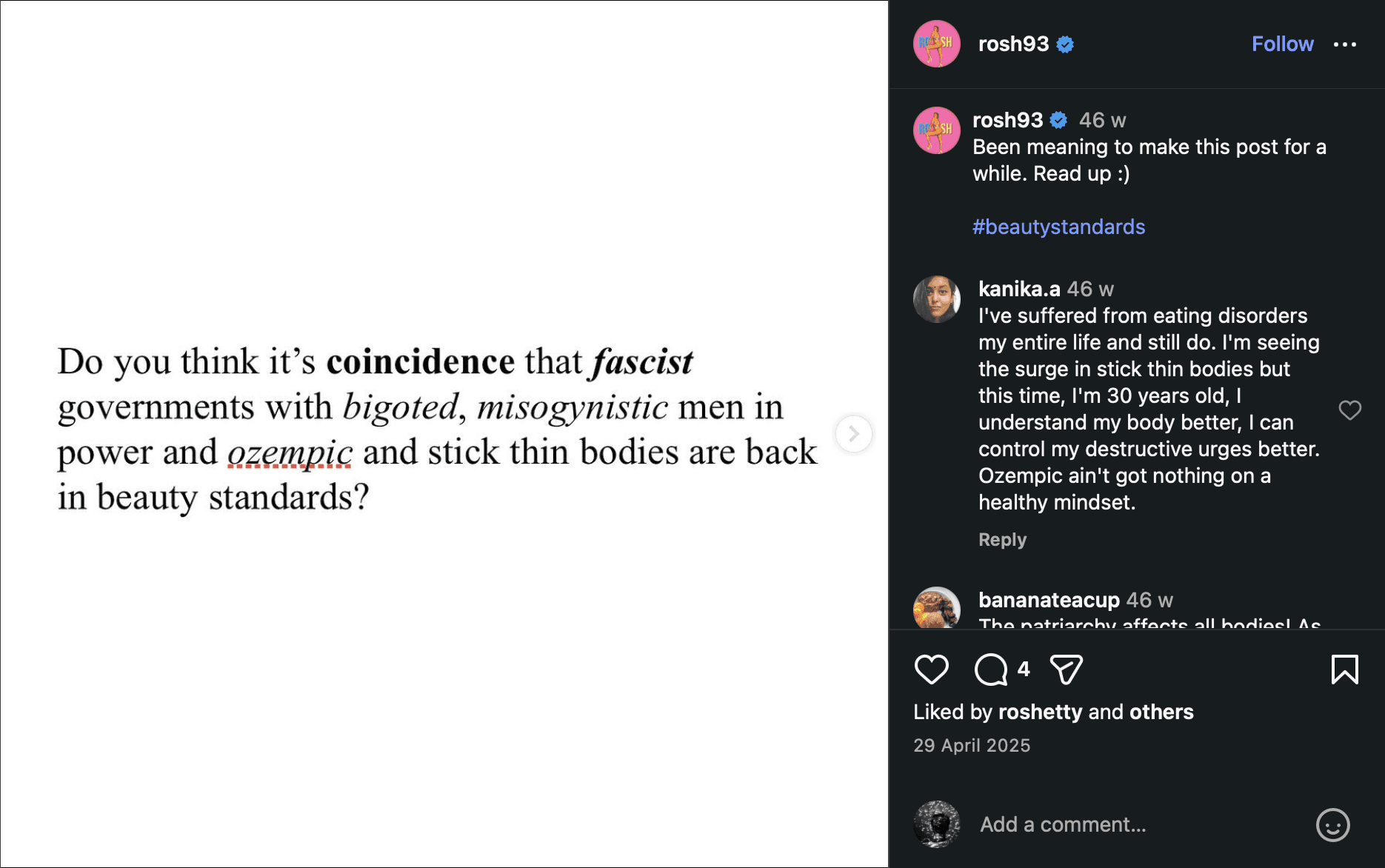
Kumar sees the consequences daily. Young women edit themselves through filters, chasing beauty standards that change faster than anyone can keep up with. Ozempic becomes shorthand for the new body ideal. Eating disorders subtly resurface on pinterest boards, runways and Instagram reels. Bodies are shrunk, softened, erased in the pursuit of acceptability. And still it does not offer protection. Still, someone will still have the audacity to ask what they were wearing.
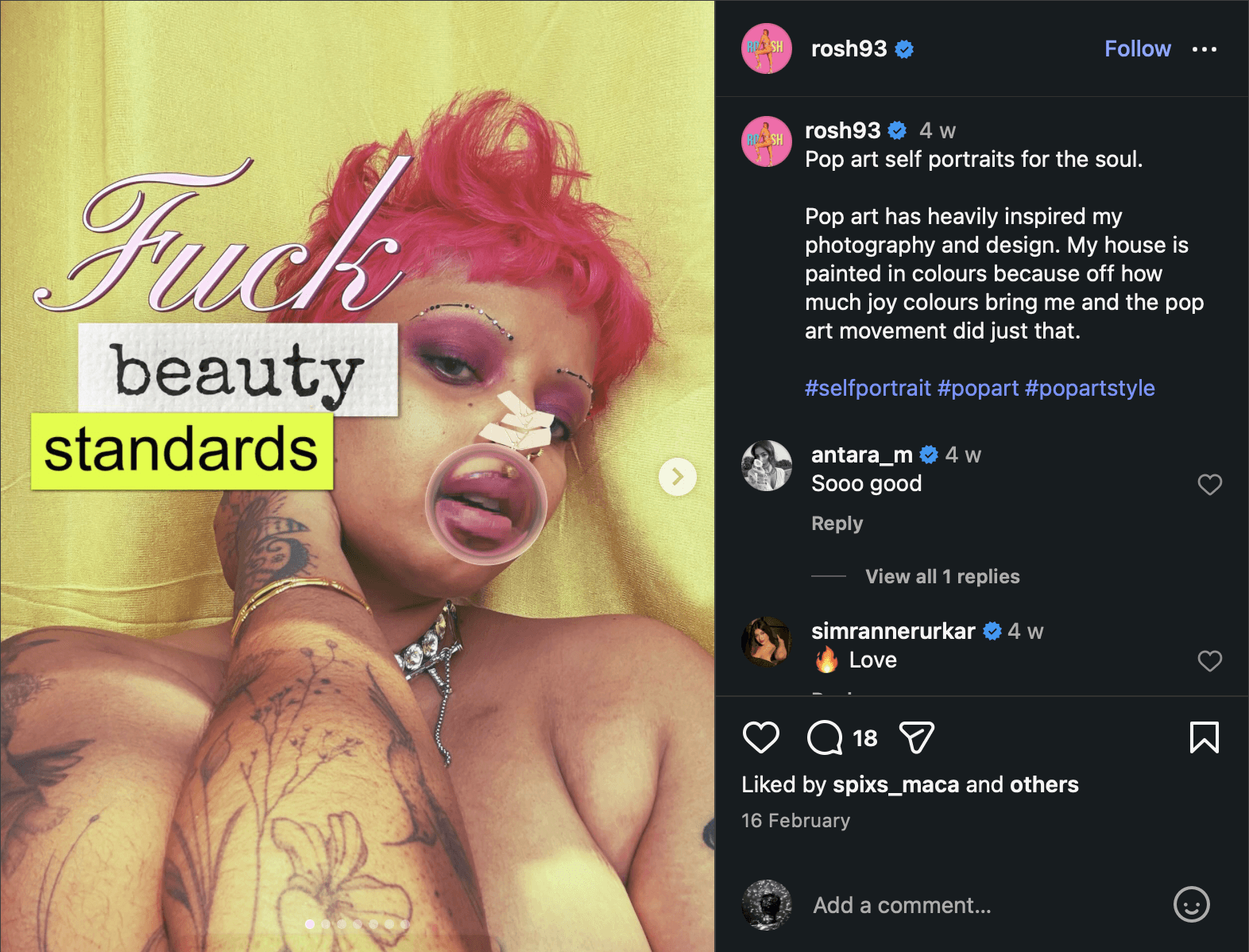
Seema Anand often reflects on the irony embedded in that question. In the ancient texts she has spent decades studying, adornment carried a very different meaning. Shringar, she explains, was considered auspicious. Beautifying oneself was woven into everyday life as something associated with vitality and prosperity.
Classical literature describes women’s appearance with an ease that now feels almost ahead of its time. A queen’s beauty is observed carefully, in meticulous detail: the texture of her hair, the glow of her skin, the jewellery adorned in her ears, the folds at her waist that earlier cultures celebrated as marks of femininity. Anand frequently notes that those folds were once admired openly. “Three folds at the waist,” she says, referring to descriptions in classical texts, “were considered the ultimate sign of beauty.”
Even the Kamasutra, so frequently reduced to caricature, preserves traces of that sensibility. Anand recalls a passage from a later medieval discussion of alankar, or poetic ornamentation, in which a lover arrives home earlier than expected. The woman rushes out to greet him while still dressing. One eye carries kohl while the other remains unfinished. One earring has been fastened, the other forgotten. Jewellery has been misplaced in the rush, a waist chain thrown around her neck, her hair slightly undone.
“A man who sees his lover in that state,” Anand says, “is considered the most blessed of all.”
Placed beside contemporary anxieties about women’s appearance, those descriptions feel strikingly distant. A similar image today - a woman stepping outside with her hair dishevelled or a bindi slightly smudged - often invites suspicion or commentary. The phrase “walk of shame” appears almost automatically, revealing how dramatically the cultural lens has shifted.
Seema believes that shift is closely tied to control. At some point, she suggests, admiration turned into objectification because regulating women’s bodies became an easier way of asserting power. “Instead of doing things to prove you are in charge,” she observes, “the easier way is to put the other person down.”
She traces some of this shift in attitude to moments in history when power began to reorganise itself around control. In Europe at the end of the nineteenth century, during the fin de siècle era that followed the Industrial Revolution, social hierarchies started to change. Men who had once been confined to rigid class positions could suddenly build wealth and move between social strata through trade and business. Anand notes that this transition created its own moral anxieties. Commerce required negotiation, persuasion, sometimes even deception, which clashed with the deeply religious belief systems many people had been raised with. “You were brought up to believe that lying would send you straight to hell,” she explains. “So spiritual leaders told men something fascinating: you might sin in the world of business, but if your wife remained pure enough, good enough, she could save your soul.” Women were elevated onto a pedestal of moral perfection, expected to embody virtue not only for themselves but for the men around them.
That pedestal, Anand argues, became another form of control. Women were encouraged to take pride in that role, and many did. “Imagine being told that you are so good you can defeat the devil,” she says. “That kind of power is seductive.” The cultural script that followed rewarded women who performed that moral superiority, often through visible markers of modesty, domesticity, and restraint.
Versions of that logic continue to echo today, particularly within elite social circles. Anand observes a growing wave of upper-class and upper-caste women who publicly reject feminism, presenting their dependence on wealth and marriage as a badge of honour. She recounts conversations where women proudly declare that they “don’t have to work” because their husbands are wealthy, treating that statement as evidence of status rather than limitation. The troubling part is not simply the sentiment itself but the space it occupies. When privileged women dominate conversations about gender while celebrating regression, the realities faced by women in rural India - those still fighting for education, mobility, and basic autonomy - are pushed even further out of view. Platforms that could amplify those struggles instead become stages for a nostalgia for restriction.
And in that atmosphere, clothing continues to carry moral weight far beyond fabric. Fashion has always been tied to class and identity, Anand notes, whether through jewels sewn into aristocratic garments centuries ago or through contemporary signals of quiet luxury. Yet when harassment or violence enters the conversation, those markers suddenly become evidence. The sari, the dress, the confidence with which a woman walks into a room - any of it can be turned into an explanation. “You could be wearing anything,” Anand says plainly. “You could be wearing a sack. If a woman carries herself with confidence, that confidence itself can threaten someone.”
Which is why the argument about clothing rarely holds up under scrutiny. Infants, children, women in uniforms, women in saris - none of it alters the pattern of violence. Clothing simply offers a convenient excuse. It is visible, legible, endlessly open to interpretation. A hemline becomes a subject of discussion. A blouse becomes a point of judgment. Gradually the body itself enters public conversation.
The intersectionality within feminism is essential to understand. Privilege, caste, class, all of it shapes how a woman's clothing is interpreted and how much danger she faces. A wealthy woman in designer clothes might face different harassment than a working-class woman in the same outfit. A woman from a marginalised caste might be punished more severely for the same clothing choices that a privileged woman can make with relative impunity. The policing isn't uniform, but it's universal. Every woman, regardless of background, faces some version of this scrutiny.
Senior model Aparna Verma has watched this dynamic play out across decades. Older women aren't policed less than younger women. They're policed more. Society expects women to become invisible as they age, to cover up, to fade into the background, to stop taking up space. When an older woman dresses with confidence, with style, with any hint of sexuality or self-expression, the backlash is swift and vicious. How dare she. Doesn't she know her place? Doesn't she understand that her body is no longer acceptable, no longer allowed to be visible?
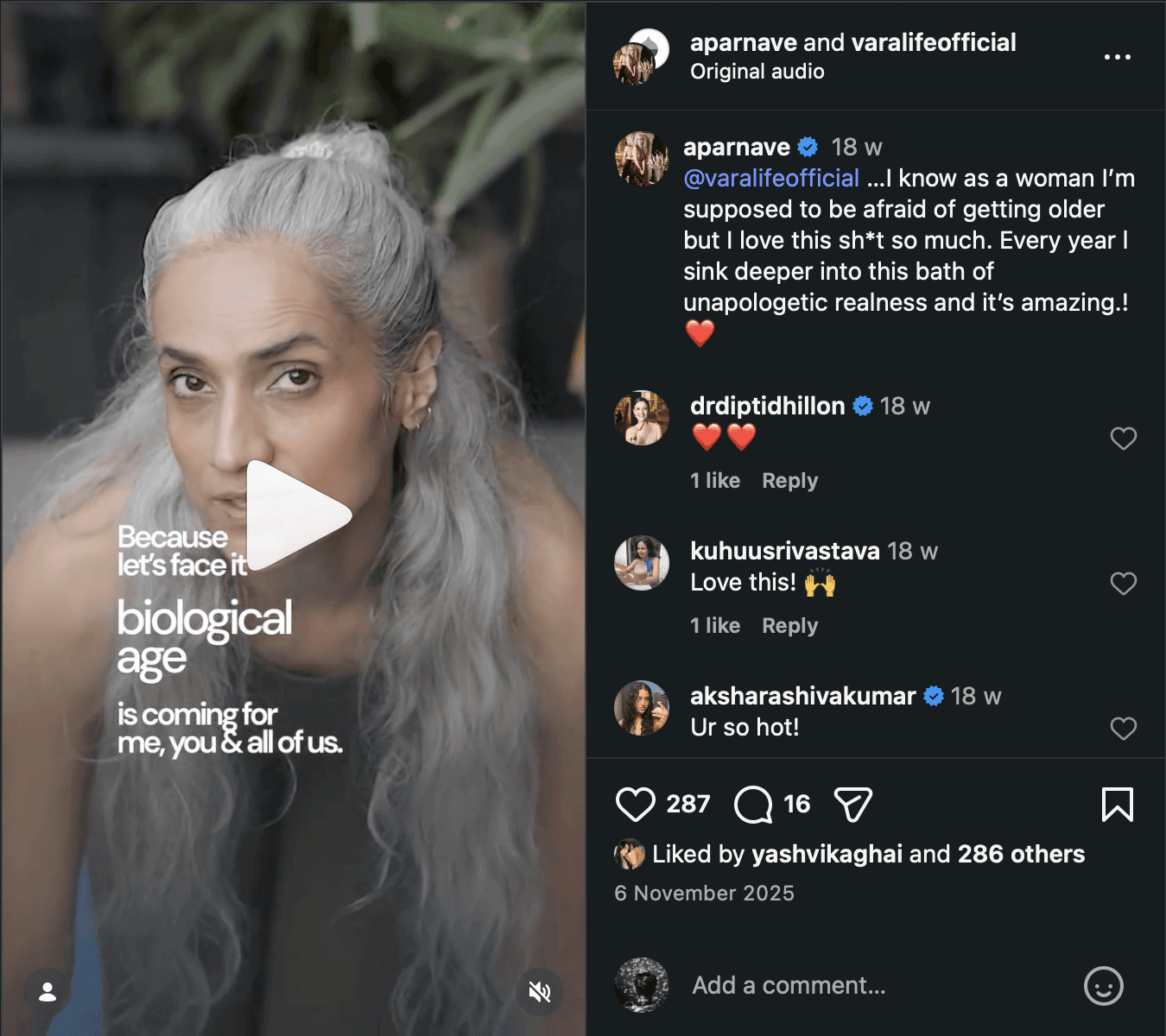
Verma's framing cuts to the heart of it: Stop asking what she was wearing. Start asking why he felt entitled.
That's the real question. Not what fabric she chose, what length her skirt was, how much skin was visible. The question is why a man looked at a woman and decided her body was his to comment on, his to touch, his to violate. Why he felt entitled to her space, her attention, her body. Why he believed his desire trumped her autonomy.
Fashion Between The Seams
Aparna Verma understands something crucial that society desperately wants to deny: when women dress for comfort rather than approval, it disrupts entrenched power imbalances. Comfort is radical because it centers the woman's experience rather than the male gaze. When a woman wears what makes her feel good, not what makes her acceptable, she's refusing to participate in her own subjugation. And that terrifies people who benefit from women's compliance.
There's also a crucial distinction that gets lost in these conversations: performance versus permission. A woman might dress provocatively as performance, as art, as self-expression, as reclamation of her own body. But that performance is not permission. It's not an invitation. It's not consent. The fact that we still have to explain this in 2026 is damning.
Women modulate their clothing choices constantly, but not for morality. It is for safety. They're not trying to be good or respectable or modest. They're trying not to get harassed, assaulted, killed. They're trying to navigate a world that treats their bodies as public property and their clothing as evidence of their character. And even then, even when they do everything right, even when they cover up and make themselves small and invisible, it doesn't protect them. Because obviously, it was never really about what she was wearing.
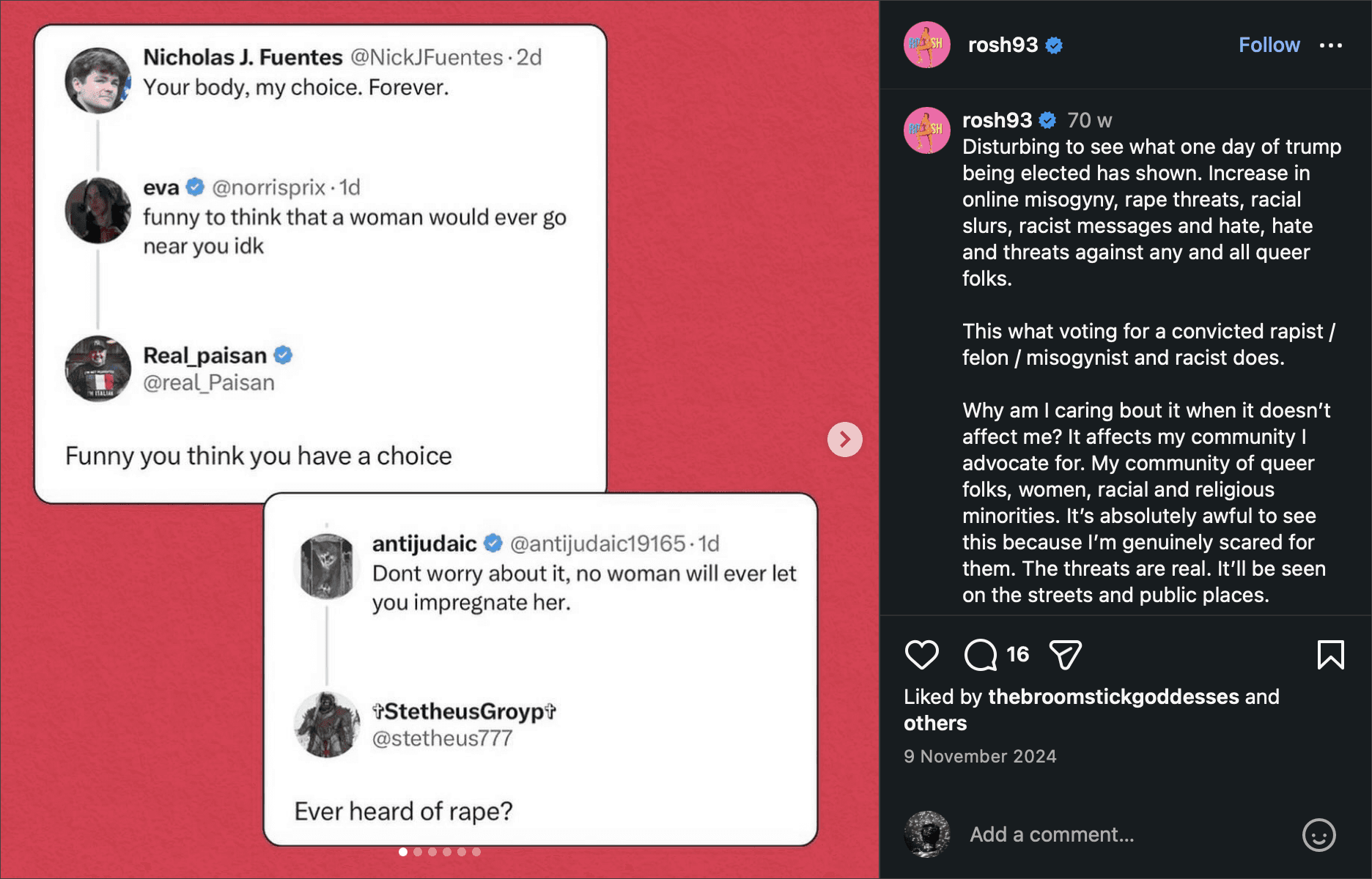
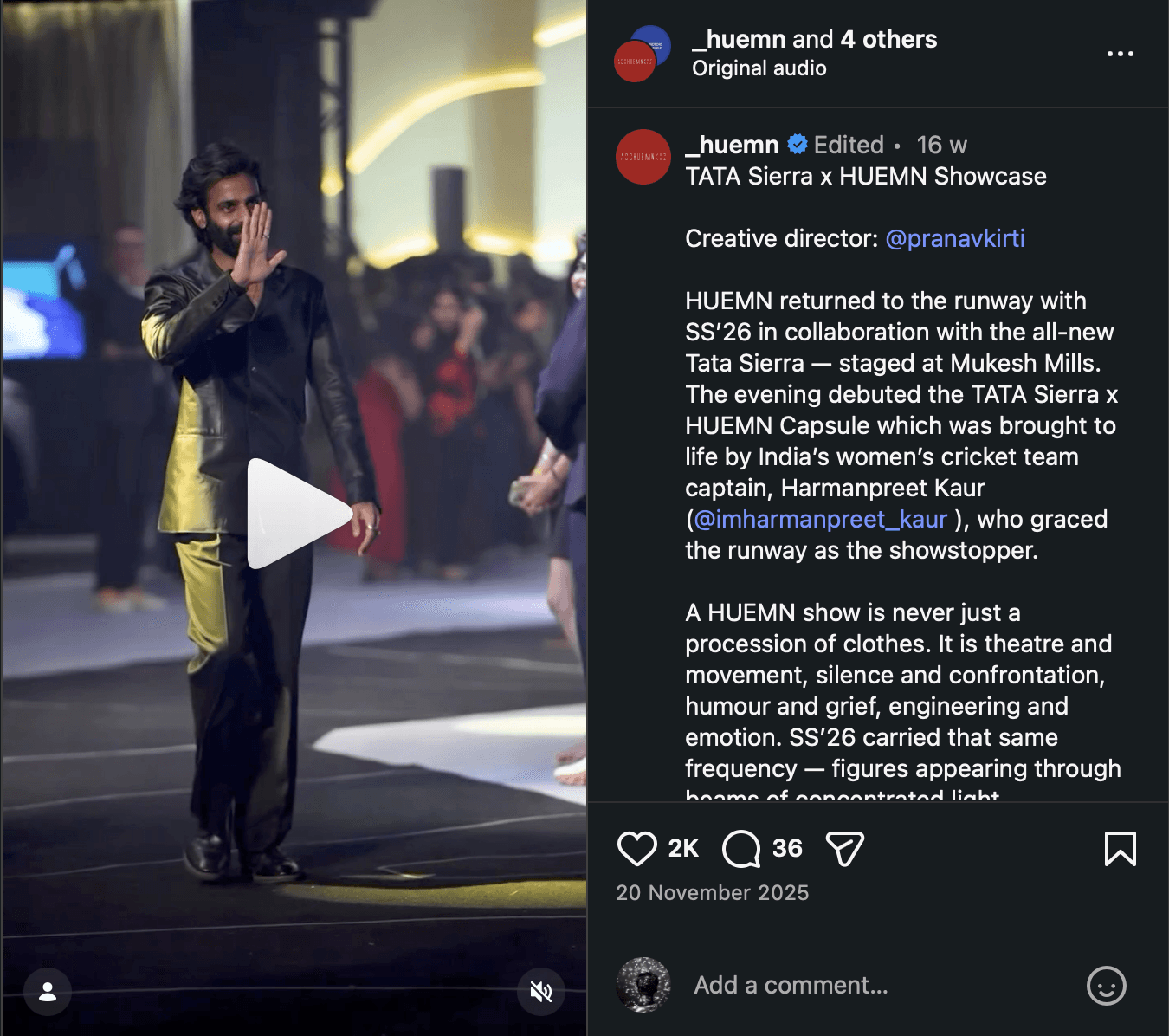
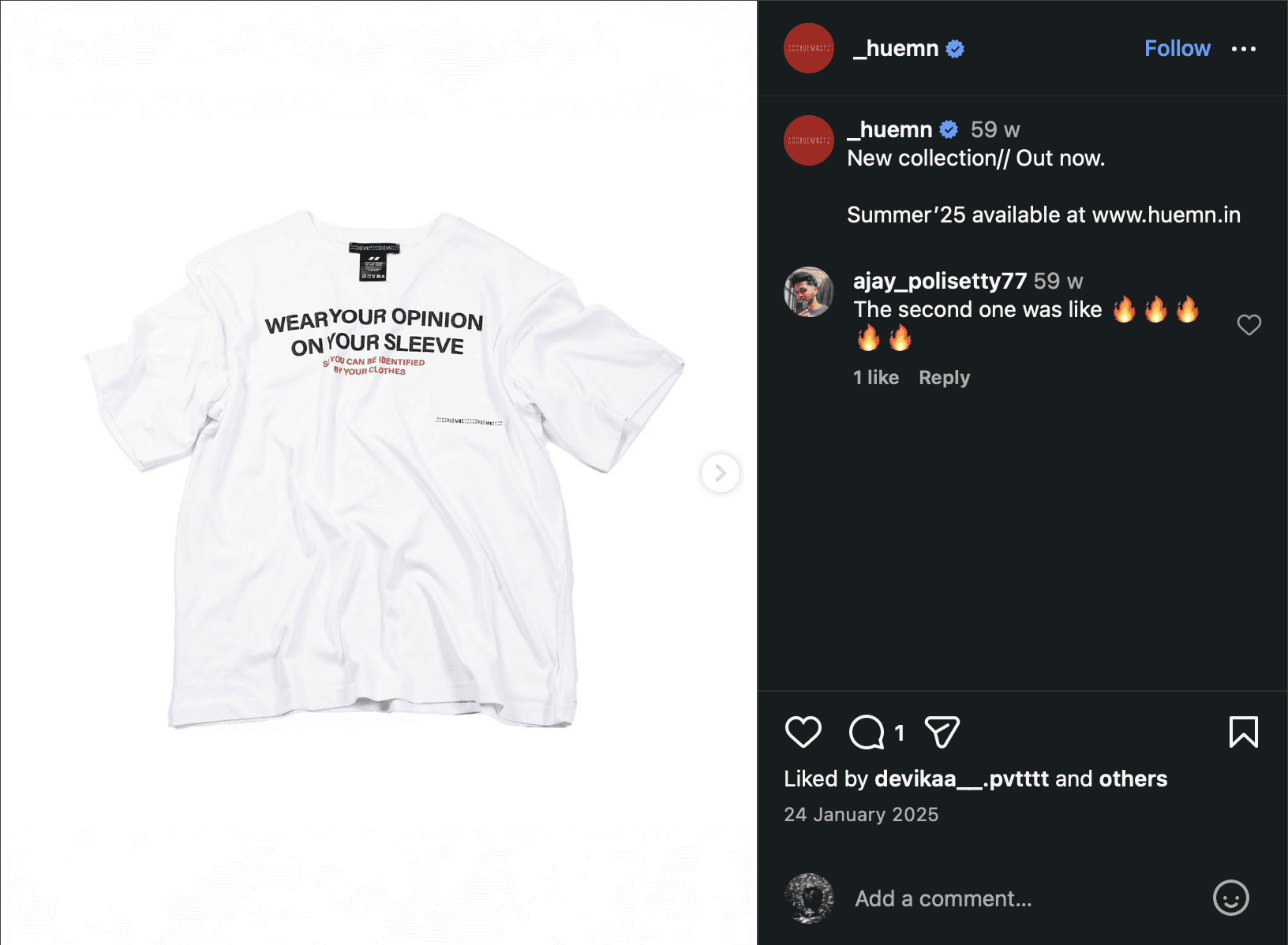
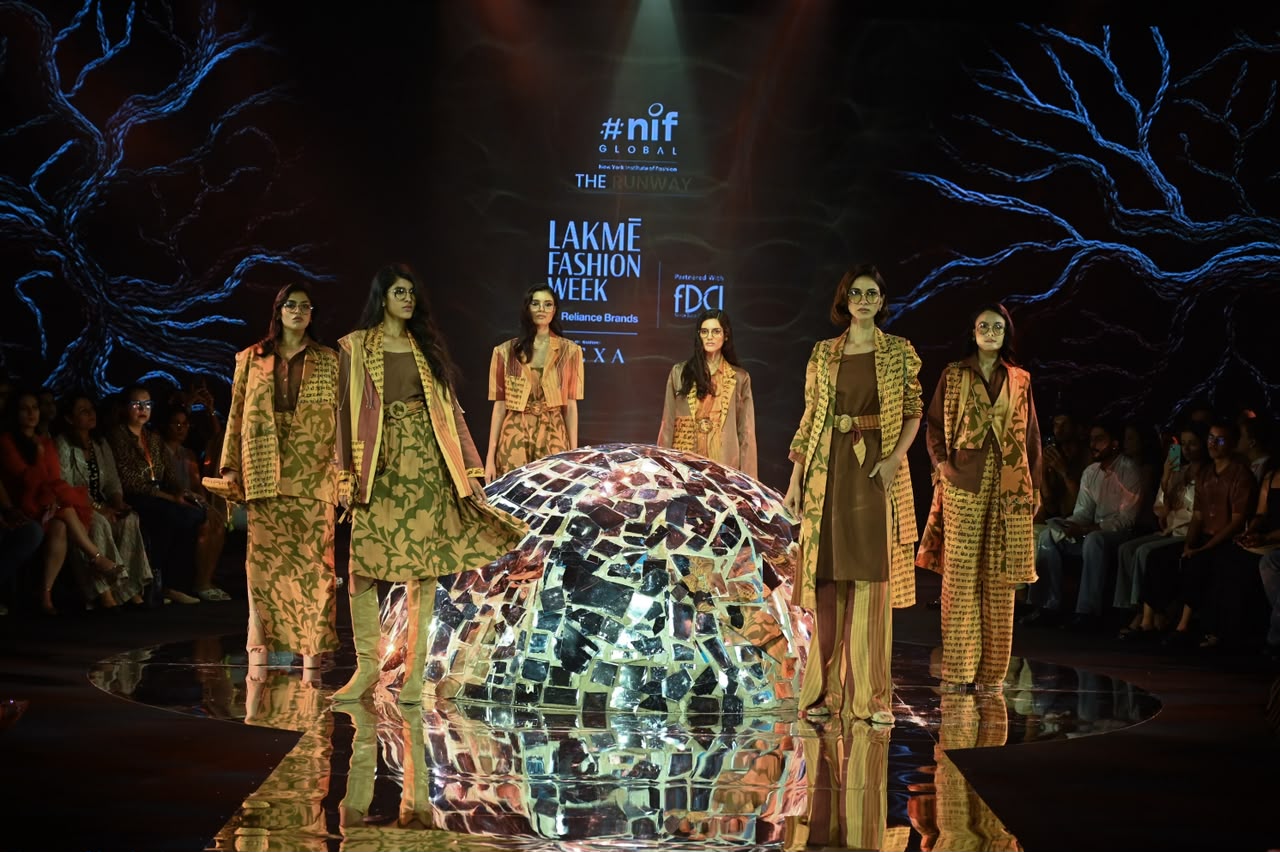
Pranav Kirti, founder of the fashion brand HUEMN, has built a career on understanding fashion as a platform for bringing light to issues that need it, without putting too much of a spotlight that it completely blinds you - he has perfected the art of subtlety. He has spent the past fifteen years treating fashion less like a seasonal product and more like a cultural medium. For him, clothing sits in the same creative ecosystem as cinema, literature, and music. “It’s just another medium,” he explains. “A filmmaker tells a story through film, a writer through words. I use clothing to talk about things I believe in.”
That perspective has shaped HUEMN’s identity from the beginning. Kirti describes the brand as an extension of conversations about society, politics, gender, and human experience - subjects that rarely find space in traditional fashion narratives. Over the years, the label has deliberately stepped into areas many brands prefer to avoid. Campaigns have addressed topics like menstruation and body politics, subjects that once felt uncomfortable within mainstream fashion imagery. When HUEMN placed a burqa-inspired dress on the runway, it triggered conversations across media platforms, even though Kirti insists the decision felt entirely natural at the time. “When we were doing it,” he recalls, “it didn’t feel like we were doing something radical. It felt like there was an elephant in the room. Why is no one talking about it?”
Clothing, in his view, operates as a language through which belief systems become visible. What someone chooses to wear signals identity, values, and sometimes resistance. When those choices challenge social expectations, the reaction can reveal more about the audience than the garment itself. In India especially, women who dress with confidence or unconventionality often encounter hostility. Their presence unsettles deeply ingrained assumptions about modesty, morality, and public behaviour.
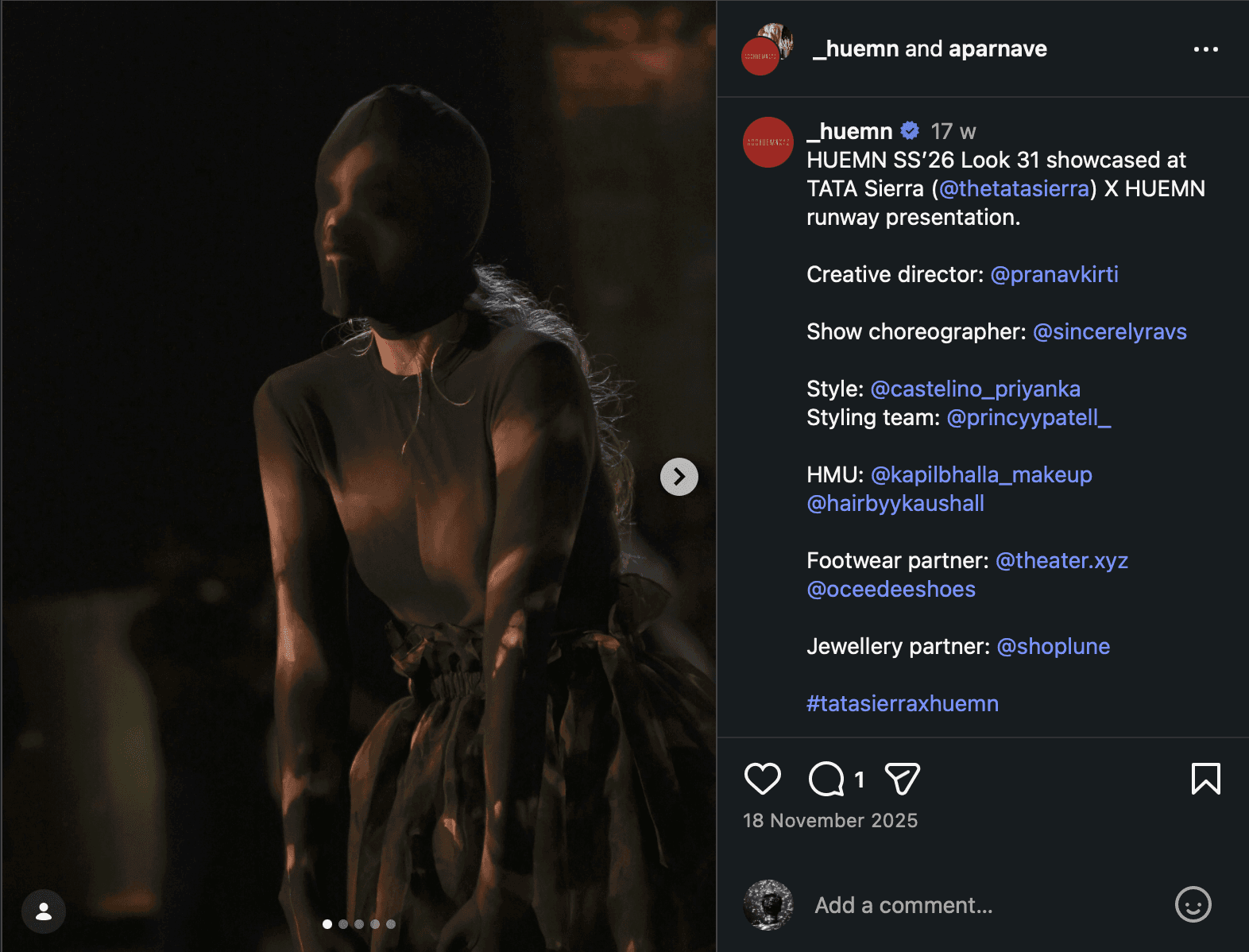
Kirti recognises that fashion exists within a reality where beauty and violence often occupy the same space. Society carries both, and creative work inevitably absorbs traces of that tension. “You look around and there’s so much violence in society,” he says, reflecting on collections where bruises and marks appeared in the visual language of the garments. “But there’s beauty as well. Both of those things exist together.”
For him, the responsibility of a designer lies in acknowledging that complexity while remaining honest to the work itself. Authenticity becomes the only viable compass. A designer cannot respond to every issue, he argues; meaningful engagement requires clarity about which conversations genuinely matter to you. “The battles you take till the end are the ones you really believe in,” he says. “Otherwise everything becomes noise.”
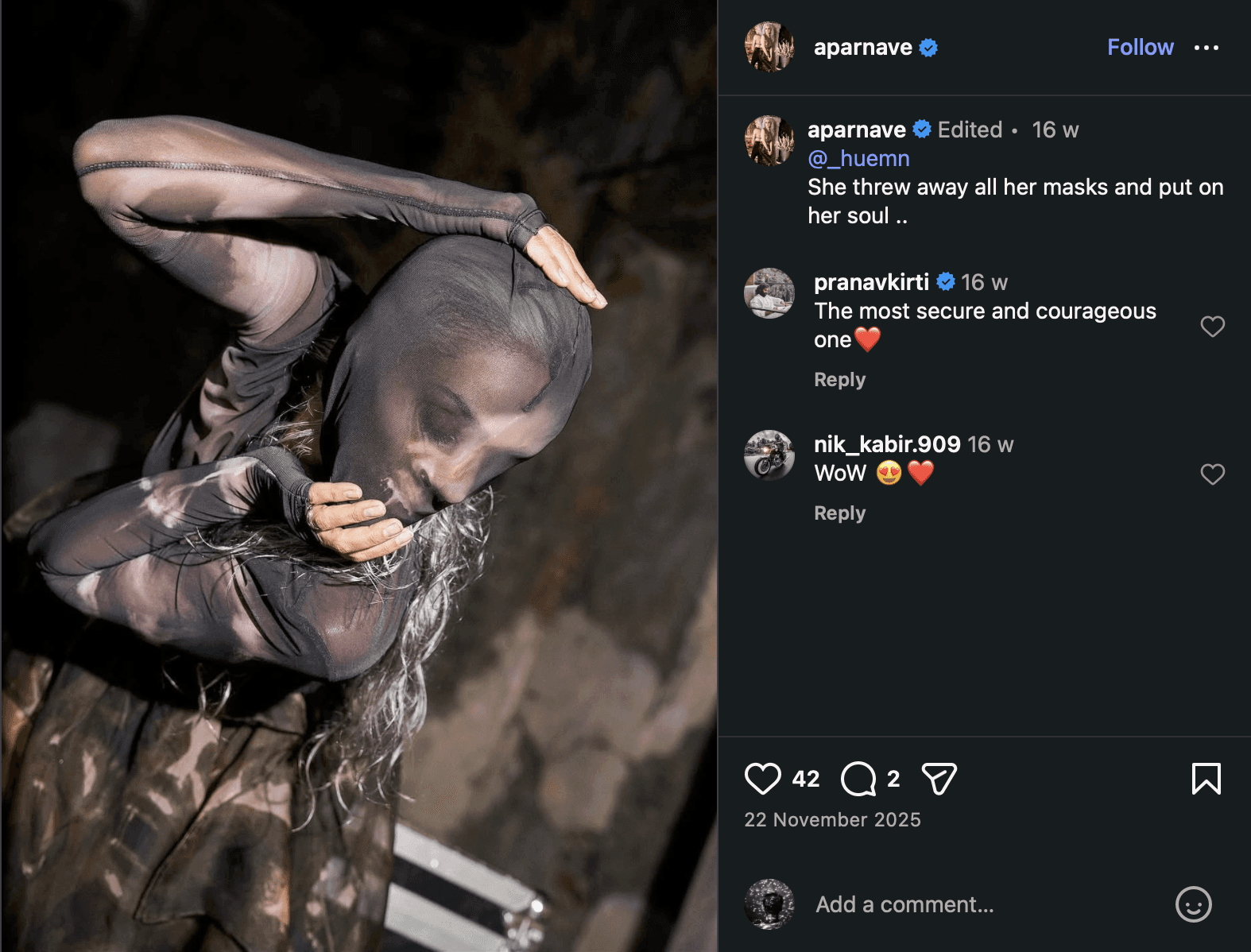
That honesty extends to how art is interpreted. Kirti does not attempt to control how audiences read his work, nor does he believe artists should attempt to simplify their intentions to avoid misunderstanding. “It’s not my responsibility to spoon-feed society,” he says. “Too much spoon-feeding actually paralyses the audience.”
Interpretation, he suggests, belongs partly to the viewer. A work of art reveals as much about the audience as it does about the creator. If the research behind the work is thorough and the intention remains sincere, the conversation that follows becomes part of the process rather than a disruption.
Personal experience also shapes how those narratives emerge in his collections. Kirti often describes himself as a witness to the world around him, absorbing moments, conflicts, and contradictions that later surface in his work almost unconsciously. Over time, those observations accumulate and eventually translate into imagery, silhouettes, and textures. “I store all of that,” he says of the violence and social tension he observes in public discourse. “It processes somewhere inside, and later it comes out through the work.”
Within that framework, fashion becomes less about aesthetic spectacle and more about expression. The garment may be the visible object, yet the ideas behind it carry equal weight. As Kirti often reminds his own team, participation in the HUEMN ethos does not even require wearing the brand itself. A person who embodies the values of empathy, courage, and authenticity, he jokes, might be “the most human phenomenon” in the room, regardless of what they are wearing.
That philosophy ultimately returns to the same question that sits at the centre of this conversation: how clothing is interpreted in public pop culture. Fashion may appear superficial at first glance, but its symbolism runs deeper. Through clothing, societies project aspiration, morality, rebellion, and fear. Designers who recognise that complexity inevitably find themselves navigating a space where art, politics, and lived reality intersect.
And when fashion is used thoughtfully, it can open conversations that extend far beyond the runway.
The Price of Visibility
Akshay Sharma, founder of the fashion label Vulgar, chose the name of his brand with intention. The word has long been used to shame people whose appearance or identity strays from accepted norms, particularly women and queer communities. By reclaiming it, Sharma shifted the meaning of the insult itself. What once functioned as a judgment now becomes an act of ownership. “Anything that was slightly different from the conventional societal norm was called vulgar,” he explains. “So we take the ownership of it. Once you do that, you take away the power of that word to hurt you.”
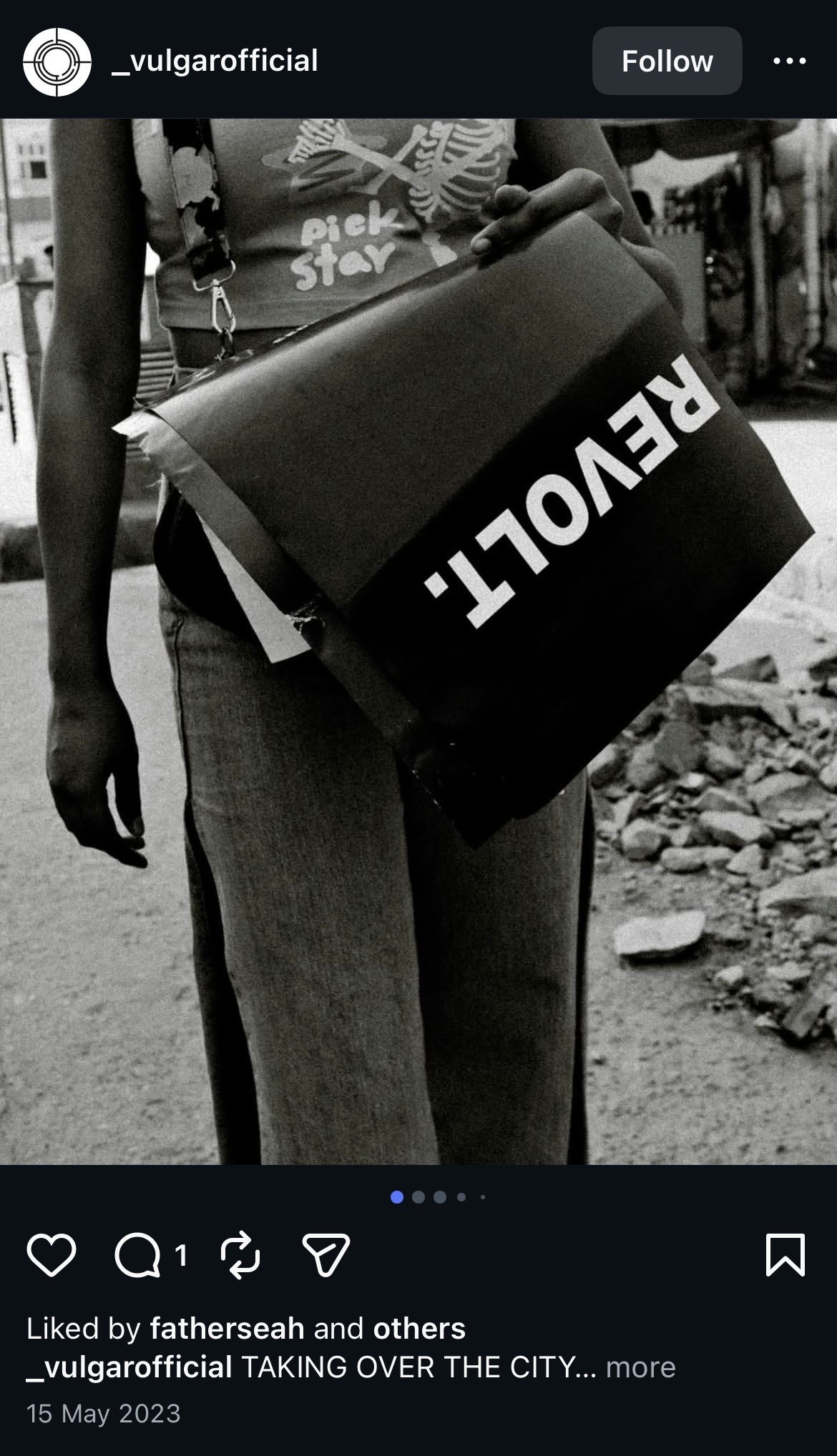
The act of reclamation does more than neutralise language. It creates community. For many people who encounter the brand, that sense of recognition becomes immediate. Sharma often notices how shared experiences bring people together under the label. “You realise you’re not the only one going through something,” he says. “Other women, girls, queer people have faced the same things. That support system is how we survive.”
That context shapes how he responds to the question that still surfaces in public discourse: What was she wearing? For Sharma, the question reveals a deeper cultural impulse to simplify violence by attaching it to something visible. Clothing becomes the most immediate reference point. “It’s tangible. It’s visible,” he explains. When people encounter something disturbing or difficult to understand, the eye instinctively looks for an explanation that feels concrete. Fabric offers that surface. “People want answers quickly,” he says. “The first thing you see when you look at a person is their body and what they’re wearing.”
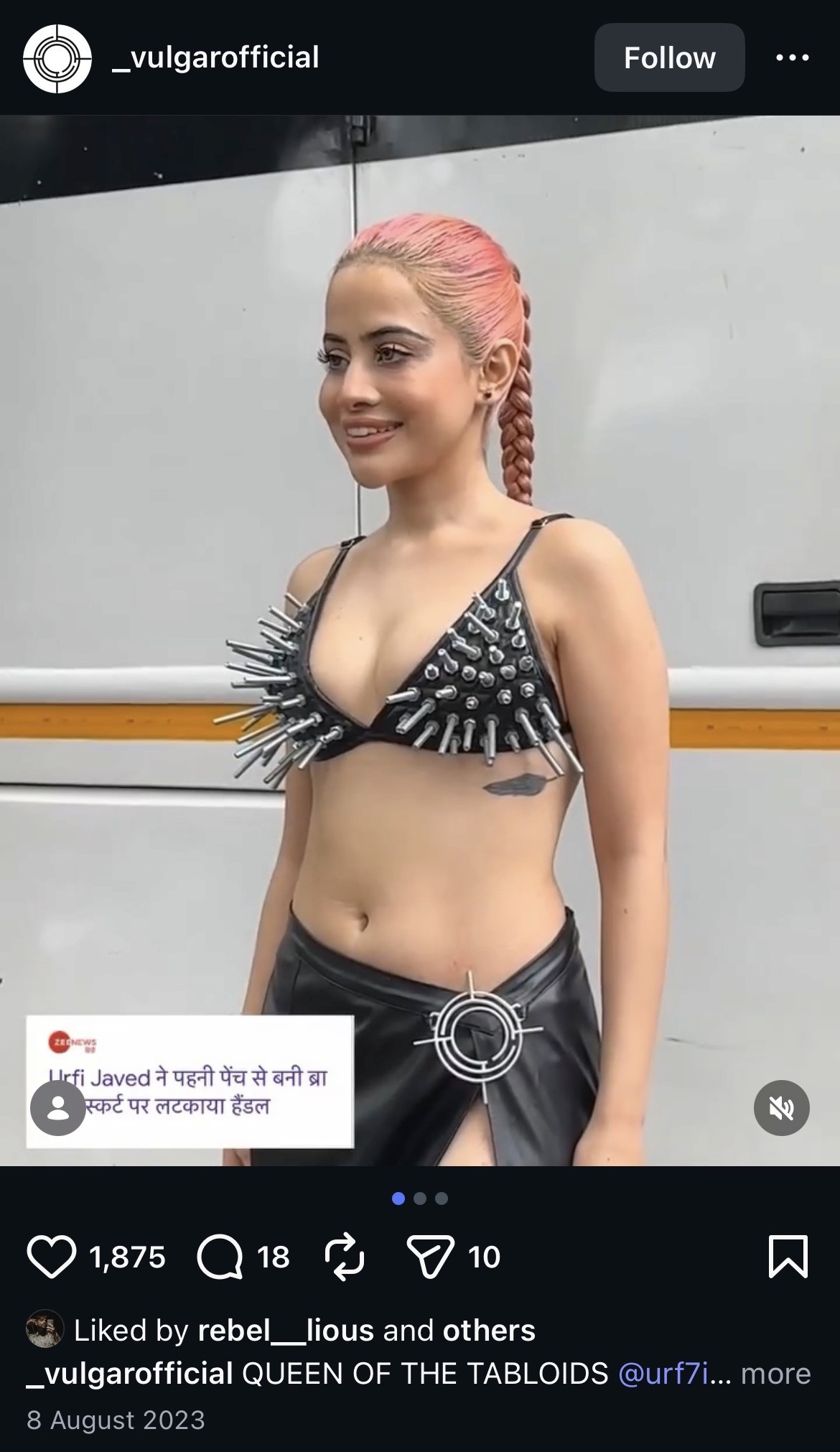
Yet the simplicity of that explanation is precisely what makes it dangerous. The conversation is redirected away from behaviour and toward appearance. Sharma describes the question itself as deeply troubling. “When people ask this, it’s heartbreaking,” he says. “The conversation should be about the lens through which someone looked at her.”
With this, clothing becomes moral evidence. A hemline or neckline is examined as though it carries an explanation for violence. Cultural narratives surrounding modesty, respectability, and propriety slowly attach themselves to particular garments. These associations are reinforced over generations, until the presence of a certain outfit appears to confirm a story people have already decided to believe.
Sharma sees the consequences of this thinking across public life. Moral policing circulates through media, everyday interactions, and even within the fashion industry itself. Social media has intensified that scrutiny. Images can be captured, shared, distorted, and weaponised within seconds. Surveillance expands through the same digital platforms that were once celebrated as spaces of freedom.
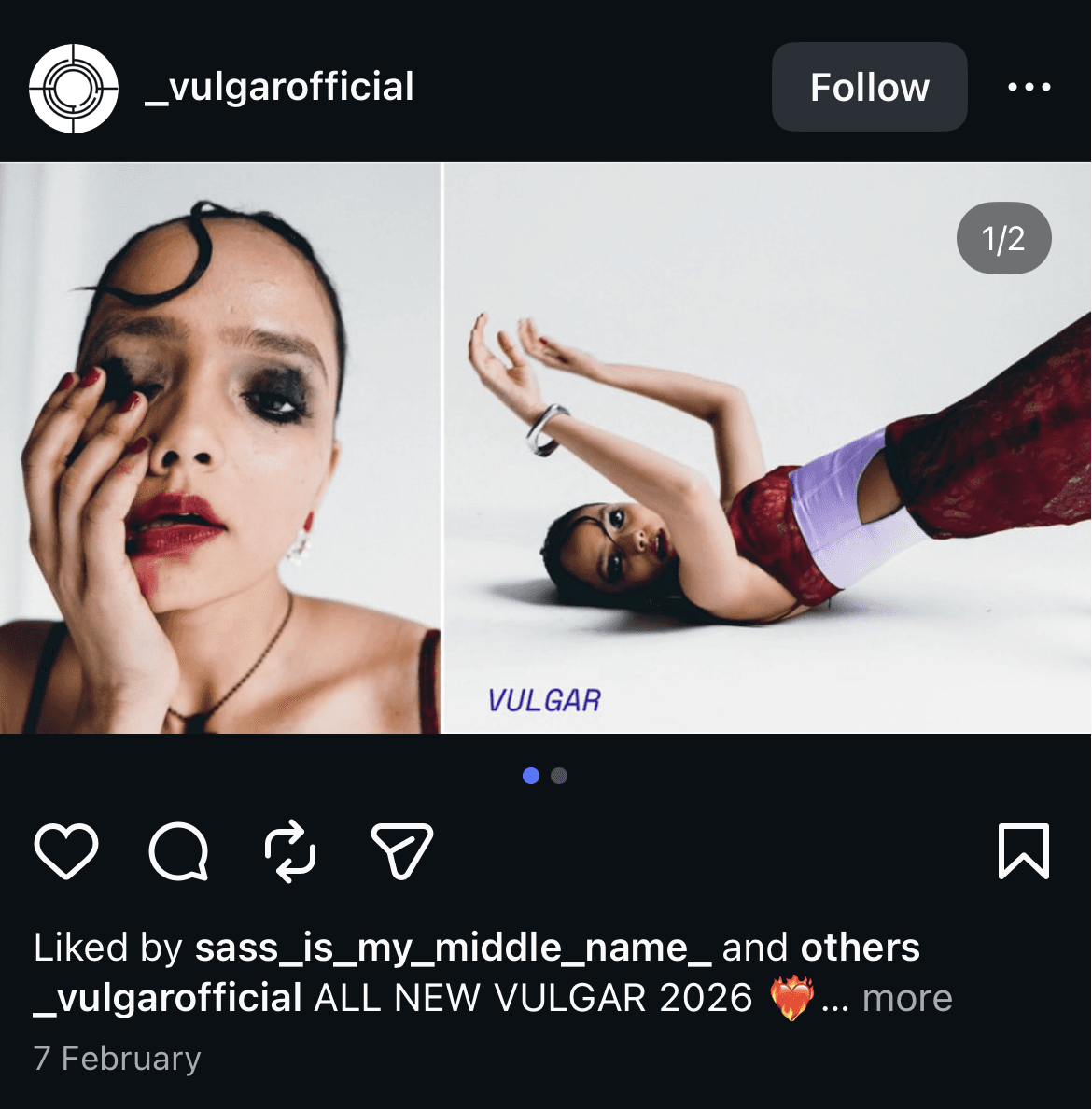
In that environment, visibility carries a price. A person who dresses differently, speaks openly, or refuses to conform often becomes a target. Sharma understands this tension well. As the founder of an independent brand, he navigates the complicated space where artistic expression intersects with economic survival and political climate. Speaking openly carries risks. Creative work becomes one of the few avenues where difficult ideas can still be expressed with some degree of protection. “That’s the beauty of art,” he reflects. Through design and storytelling, artists are able to communicate what might otherwise remain unsaid.
At the same time, he acknowledges that silence within the fashion industry is sometimes misunderstood. Designers operate within systems of power, funding, and regulation that shape what can be said publicly. Businesses must continue to function even as social conversations unfold around them. That tension produces a complicated balance between expression and survival.
Even within those constraints, Sharma believes art and fashion still carry the potential to push conversations forward. Designers, writers, and artists contribute through their respective mediums. “You are doing your part by writing this,” he tells me. “My work is through my work.”
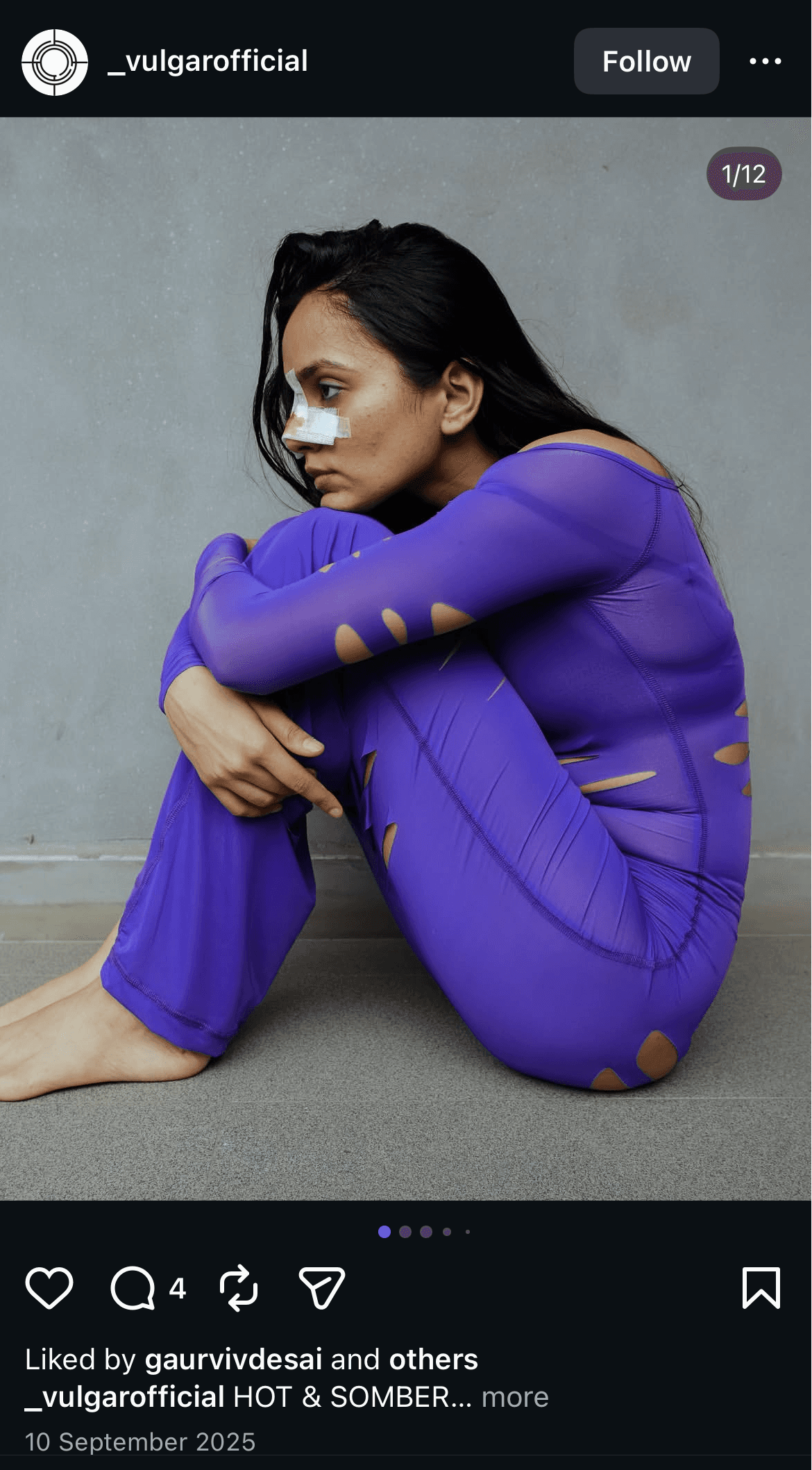
And in moments when harassment moves into digital spaces, practical action remains essential. Reporting threats and manipulated images to cyber authorities, Sharma emphasises, becomes one of the few immediate tools available to women navigating online abuse. Legal mechanisms may not offer complete protection, yet they remain an important step in resisting the growing landscape of digital violence.
What emerges from Sharma’s perspective is a simple but uncomfortable truth. Clothing rarely explains violence. It simply offers a visible surface onto which society projects its assumptions. The real issue lies elsewhere, in the gaze that interprets the body and the power structures that allow that gaze to remain unquestioned.
The Industry's Reckoning
The fashion industry itself is finally confronting this issue, though the confrontation is often more performative than substantive. Designers post black squares on Instagram, make statements about supporting women, and create campaigns around empowerment. But how many are actually changing their practices? How many are creating size-diverse collections, paying fair wages, challenging beauty standards, using their platforms to advocate for systemic change?
Pranav Kirti is clear about the responsibility designers have. Fashion isn't just about aesthetics. It's about who gets to be visible, who gets to be beautiful, who gets to take up space. When designers only create for certain body types, when they only feature certain kinds of women in their campaigns, when they perpetuate narrow beauty standards, they're complicit in the status quo that polices women's bodies.
Cultural nuance matters too. What works in one context might not work in another. Designers need to understand the specific ways that women in India face harassment and violence, the particular forms that policing takes, the intersections of caste and class and religion that shape women's experiences. Cookie-cutter feminism doesn't work. The solutions have to be as complex as the problem.
Mandira Wirk adds another layer: the control of aspiration. When women are told that certain clothing is inappropriate, that certain styles are too bold, that certain expressions are too much, what's really being controlled is their aspiration. Their desire to be visible, to be confident, to take up space, to be more than what society has decided they should be. Clothing becomes a way to keep women in their place, to remind them that their bodies are not their own, that their choices are subject to collective approval.
The mental tax of this is staggering. Every woman carries it. The constant awareness that her body is being watched, judged, used as evidence. The exhausting calculations about what to wear, where to go, how to move through the world. The knowledge that no matter what she does, she might still be blamed if something happens to her. This isn't just about fashion or aesthetic choices. It's about the fundamental right to exist in a body without fear, without shame, without the constant threat of violence.
The Digital Escalation
Social media and AI have created new frontiers of harassment and control. Women's images can be stolen, morphed, weaponised with terrifying ease. Deepfakes, AI-generated pornography, morphed images that destroy reputations and lives. The technology that was supposed to connect us, to democratise information, to create new possibilities, has instead become a tool for the most ancient form of control: the policing of women's bodies.
Roshni Kumar sees the damage in real time. Young women who are terrified to post photos of themselves, who use filters to erase their features, who develop eating disorders trying to conform to algorithmically generated beauty standards. The pressure is relentless and it's everywhere. Every scroll through social media is a reminder that your body is not acceptable, that you need to be thinner, prettier, more filtered, more perfect. And even then, even when you conform, you're still not safe. Still vulnerable to harassment, to morphing, to having your image used against you.
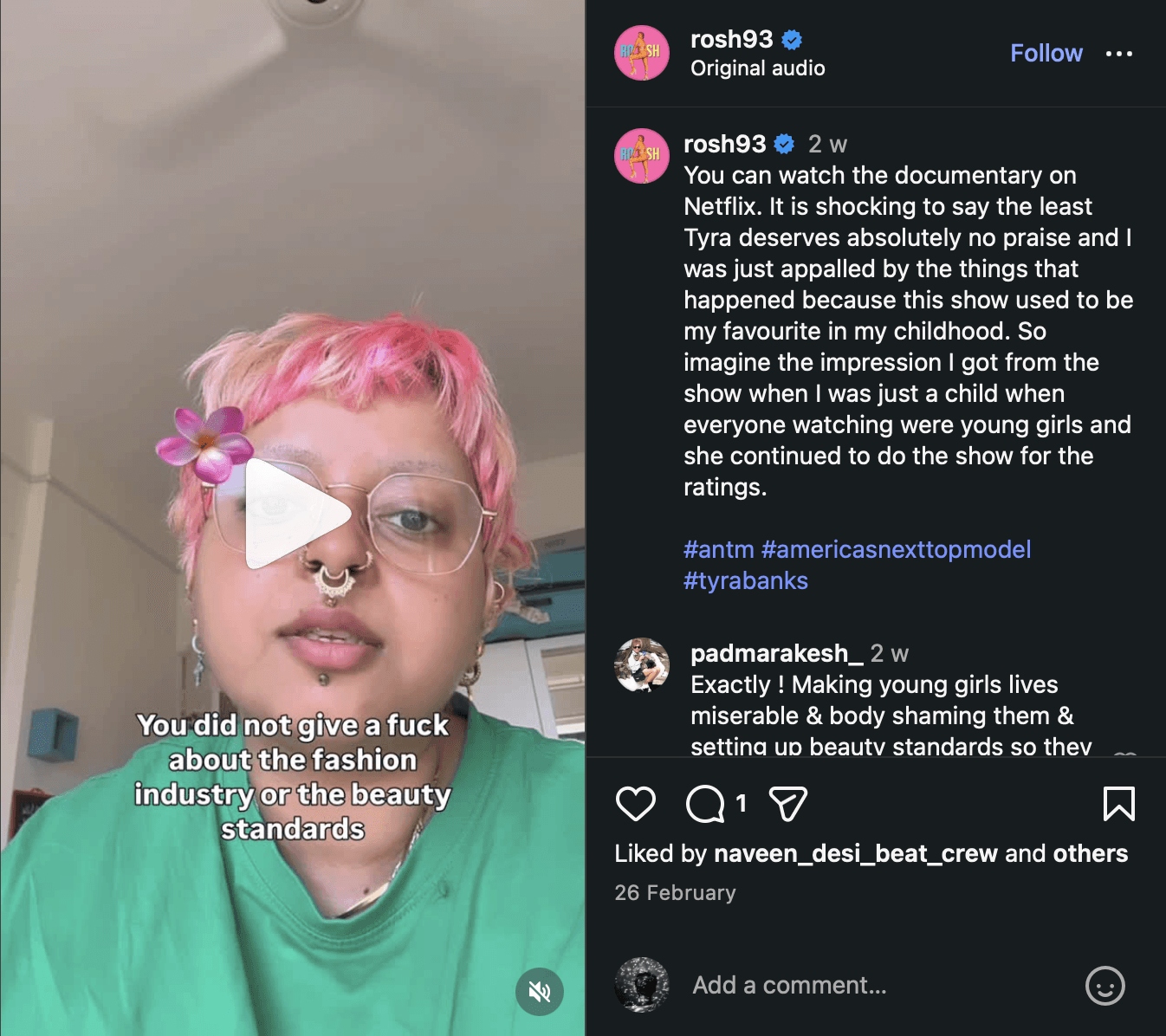
Filters themselves have become a quiet form of digital violence. They train women to believe that their natural faces are incomplete, that skin must be smoothed, eyes brightened, and features reshaped before they can appear online. An artificial standard is created and circulated so widely that it begins to feel normal, even though no real person can ever fully resemble it. Hours are spent adjusting photos, softening edges, correcting shadows, erasing small imperfections. Gradually a performance of femininity takes shape, carefully edited and endlessly repeated, while the person behind the image becomes harder to see.
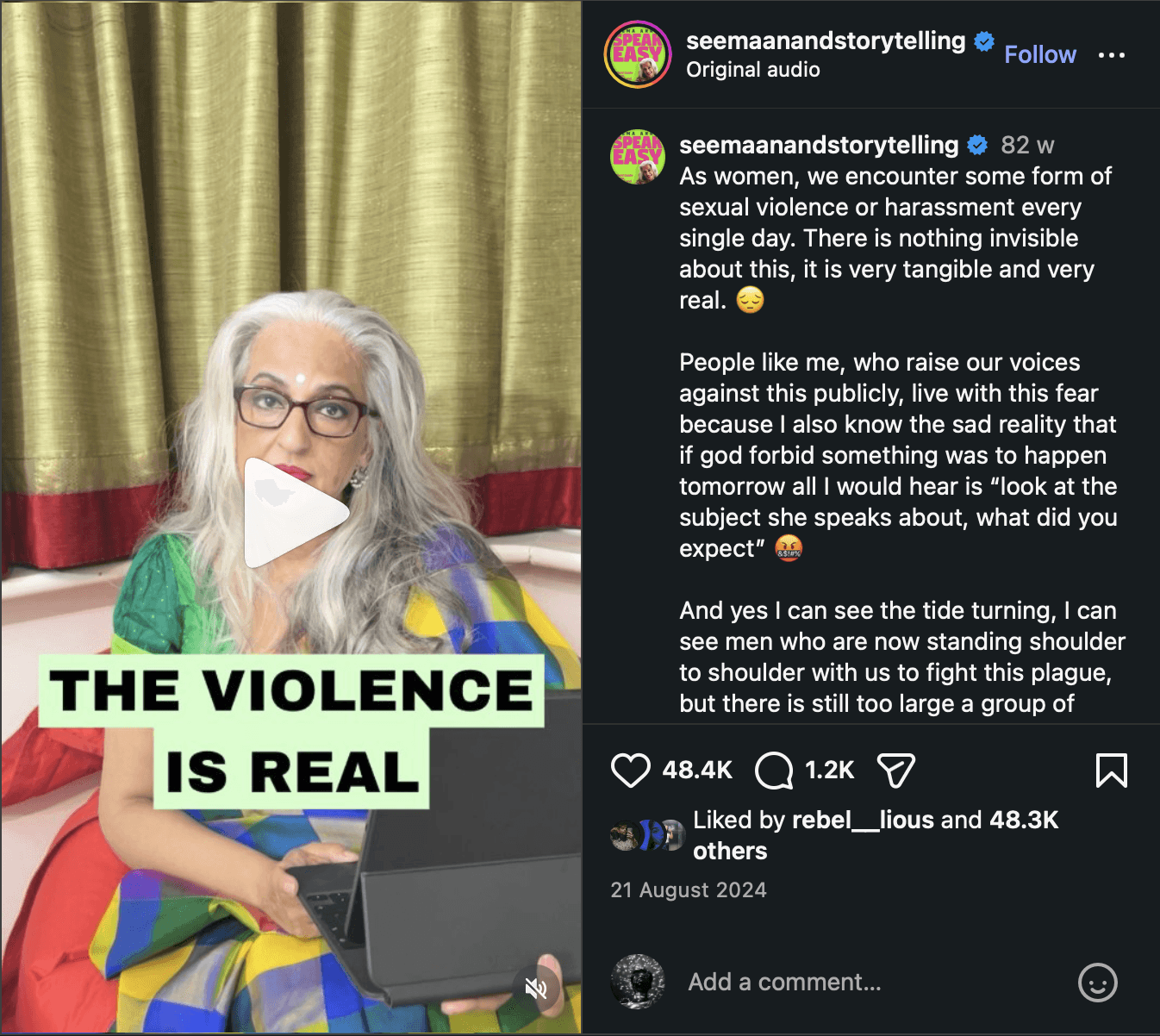
Seema Anand, now 63, continues to experience harassment that moves easily between physical and digital spaces. Messages arrive in the form of rape threats and death threats. Images are manipulated through AI and circulated online without consent. Her age offers no insulation from that hostility. Neither do decades of scholarship, public work, or cultural expertise. The harassment persists because the issue has never truly centred on clothing, behaviour, or personal choices. At its core lies a belief that a woman’s body remains open to scrutiny and commentary, something that can be claimed, threatened, or reshaped through a screen.
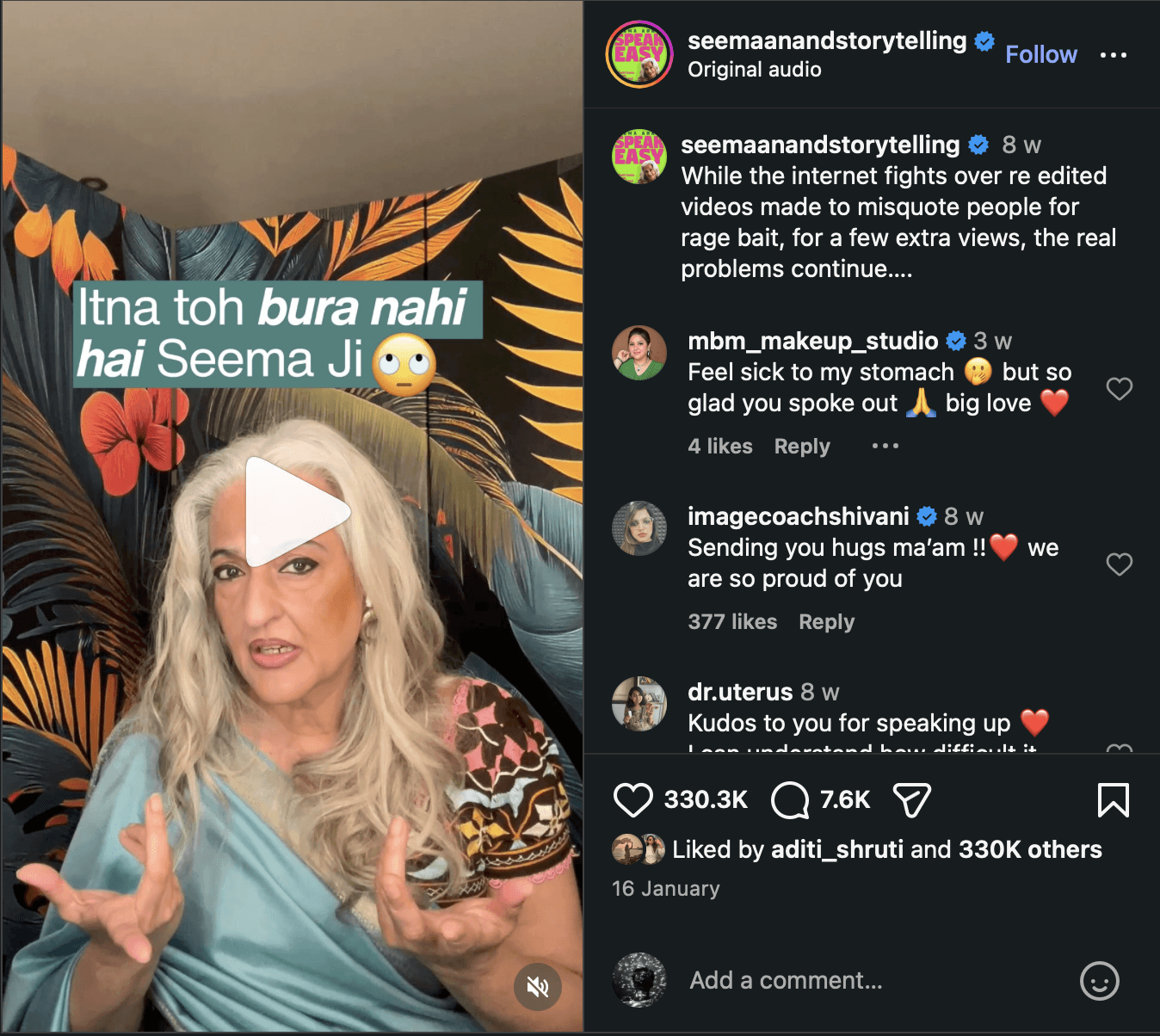
The result reveals a troubling dimension of contemporary life. Technology expands possibilities for connection and expression, yet the same tools are frequently used to intensify surveillance and control. Women find themselves navigating digital spaces where images can be altered instantly and reputations can be damaged just as quickly. Innovation moves forward, but vulnerability travels with it, carried through the networks that now shape everyday life.
The Responsibility of Platform
Everyone with a platform has a responsibility to speak up. And silence is complicity. When designers, models, influencers, celebrities, anyone with visibility stays quiet about the harassment women face, about the victim-blaming that pervades our society, about the way clothing is used as evidence against women, they're choosing to protect the system rather than challenge it.
Aparna Verma is clear about this. As a senior model with decades in the industry, she's seen the patterns. She's watched women be blamed for their own harassment, watched clothing become the focus instead of the perpetrator, watched the industry perform concern while doing nothing substantive to change. Speaking up is uncomfortable. It invites backlash. It can cost you work, relationships, opportunities. But the alternative is worse. The alternative is watching women continue to be blamed, harassed, assaulted, killed, while everyone with the power to say something stays silent.
More outspoken women are widely targeted. This isn't coincidental. When women use their platforms to challenge the status quo, to call out harassment, to demand accountability, they become targets. The harassment intensifies. The threats multiply. The attempts to silence them become more aggressive. This is by design. It's meant to scare other women into silence, to make speaking up so costly that most women decide it's not worth it.
But some women speak up anyway. Seema continues to talk about ancient Indian texts and women's sexual autonomy, despite the rape threats. Aparna continues to model and advocate for older women's visibility, despite the criticism. Roshni continues to promote body positivity and call out harmful beauty standards, despite the backlash. Pranav and Akshay continue to create fashion that challenges norms, despite the risk.
They speak up because silence is not an option. Because every woman who stays silent makes it harder for the next woman to speak. Because the only way to change a culture is to refuse to participate in it, to name it, to make visible the violence it perpetuates.
Art as Weapon and Shield
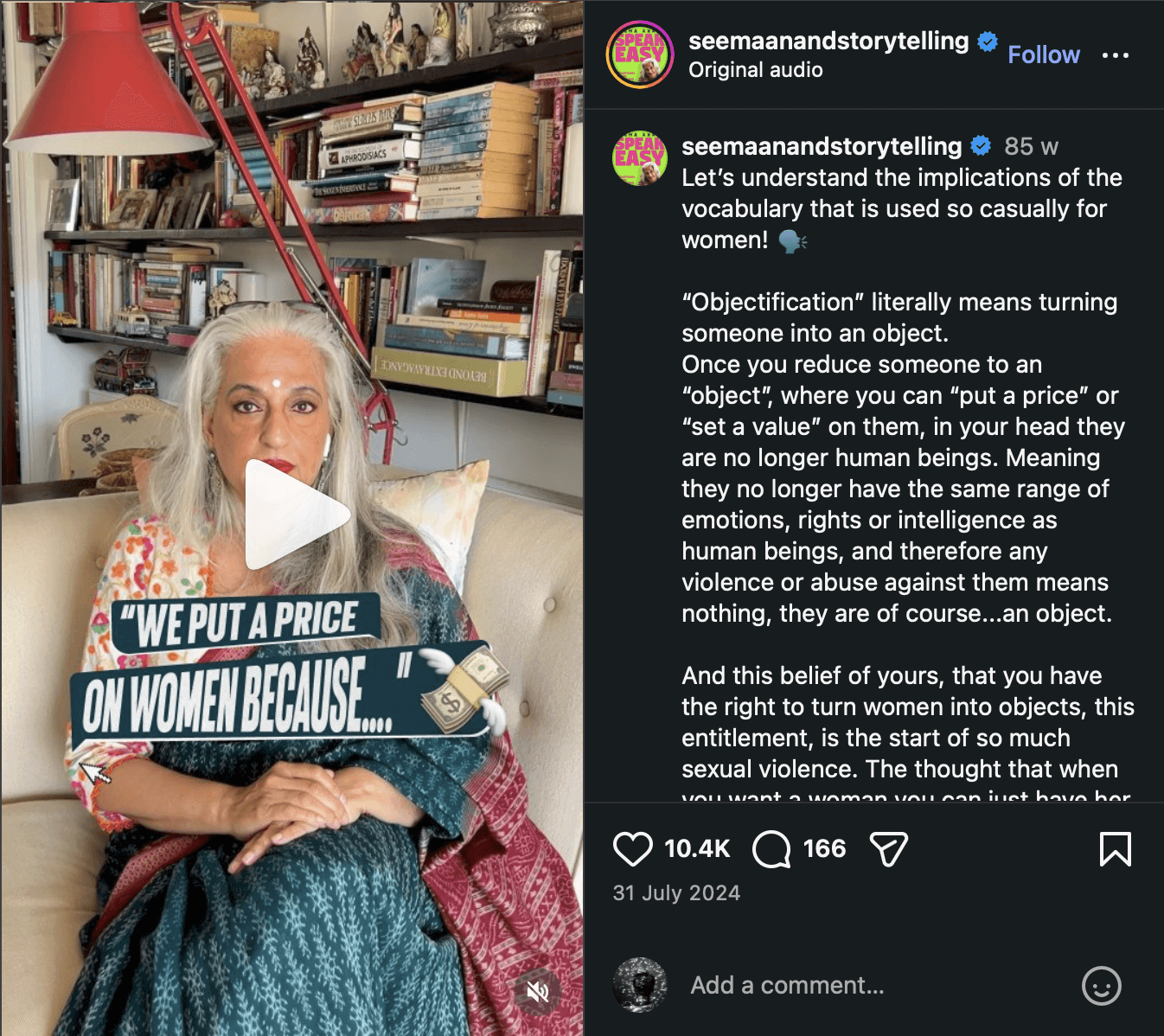
Art becomes both a weapon and shield in this fight. Fashion, when done with intention, can make visible the things society wants to hide. It can challenge beauty standards, disrupt power dynamics, and create space for bodies that are usually excluded. It can be a form of protest, a way of saying: I refuse to make myself small. I refuse to disappear. I refuse to accept that my body is public property.
But art also provides protection. When you make a political statement through fashion or design or creative expression, there's a layer of abstraction that offers some safety. It's not as direct as standing on a street corner with a megaphone. It's not as vulnerable as writing an essay that names names and calls out specific instances of violence. The art creates distance, allows for interpretation, makes it harder for people to attack you directly.
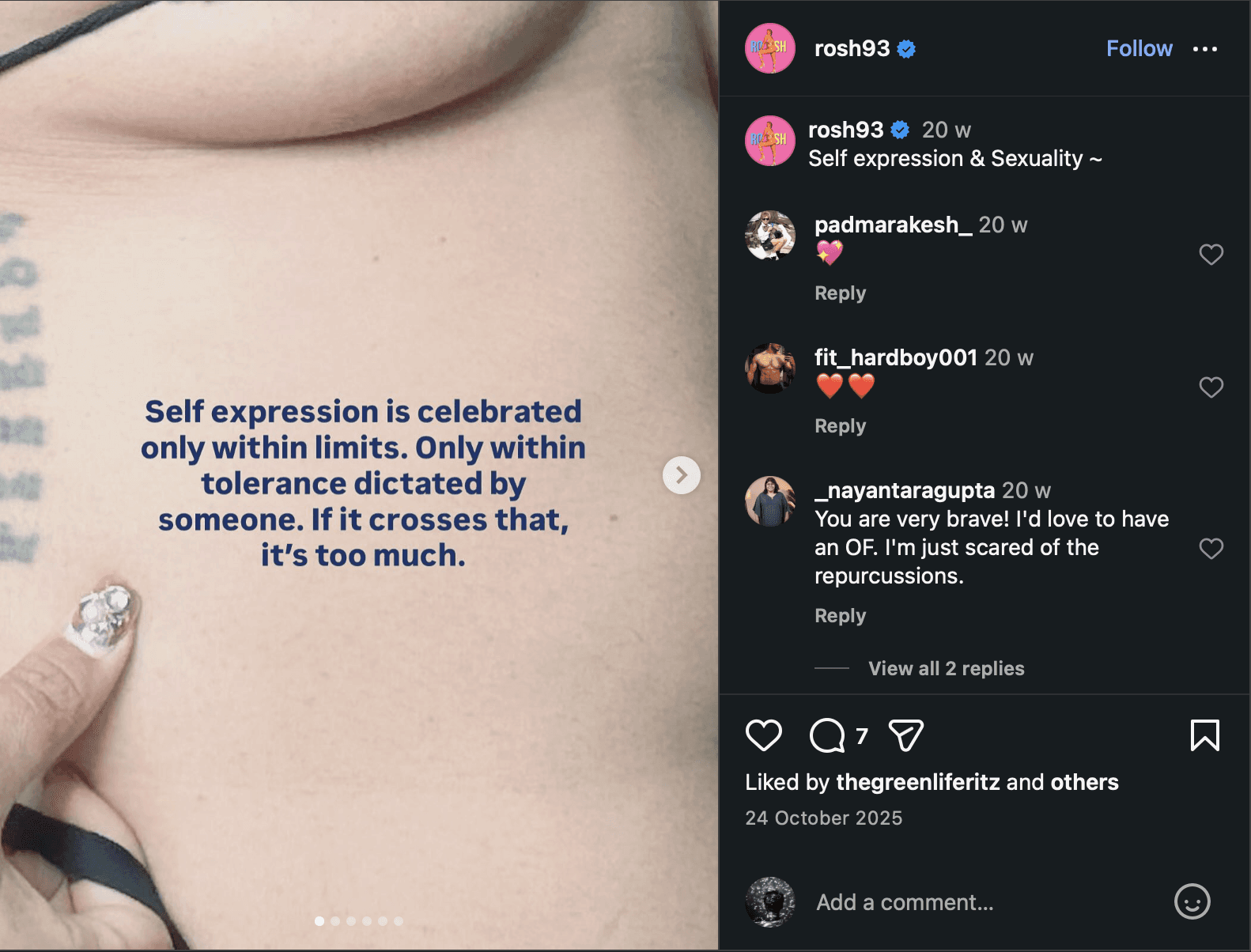
This doesn't mean art is safe. Artists, especially women artists who challenge norms, face harassment and threats. But it's a different kind of risk than direct activism. And right now, we need both. We need people willing to take every kind of risk, to use every tool available, to fight back against a culture that treats women's bodies as problems to be solved rather than humans to be respected.
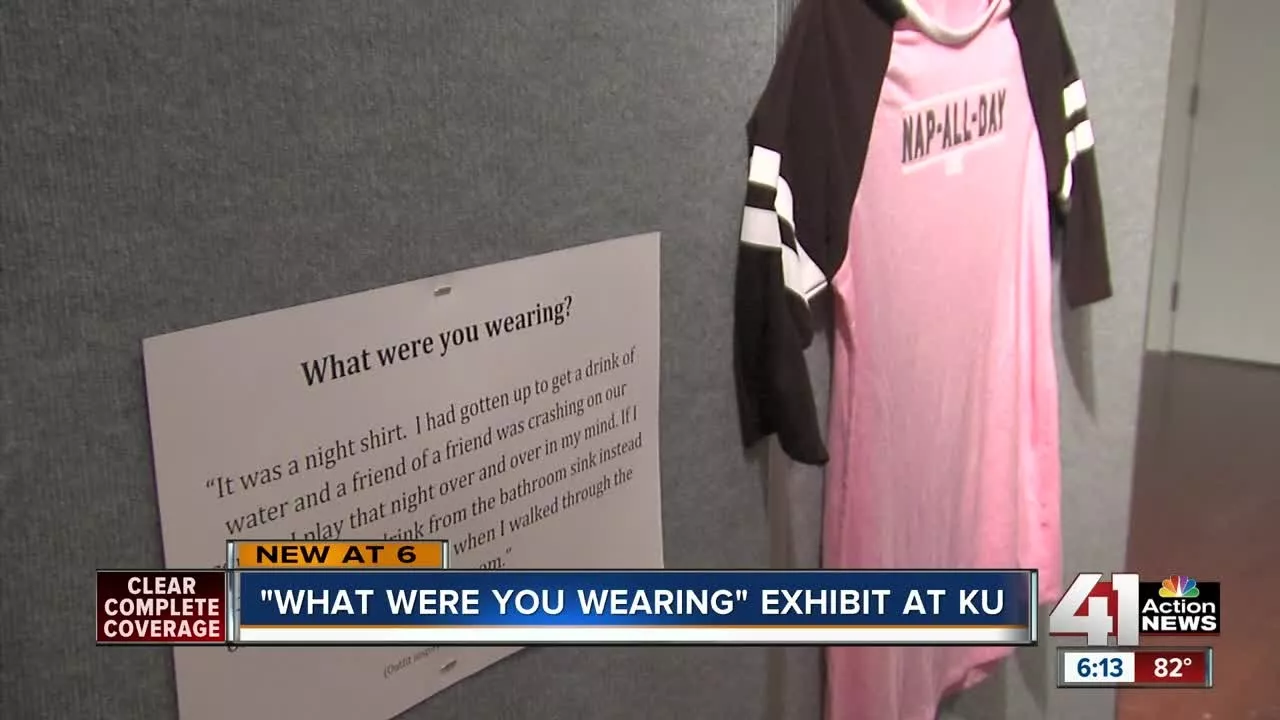
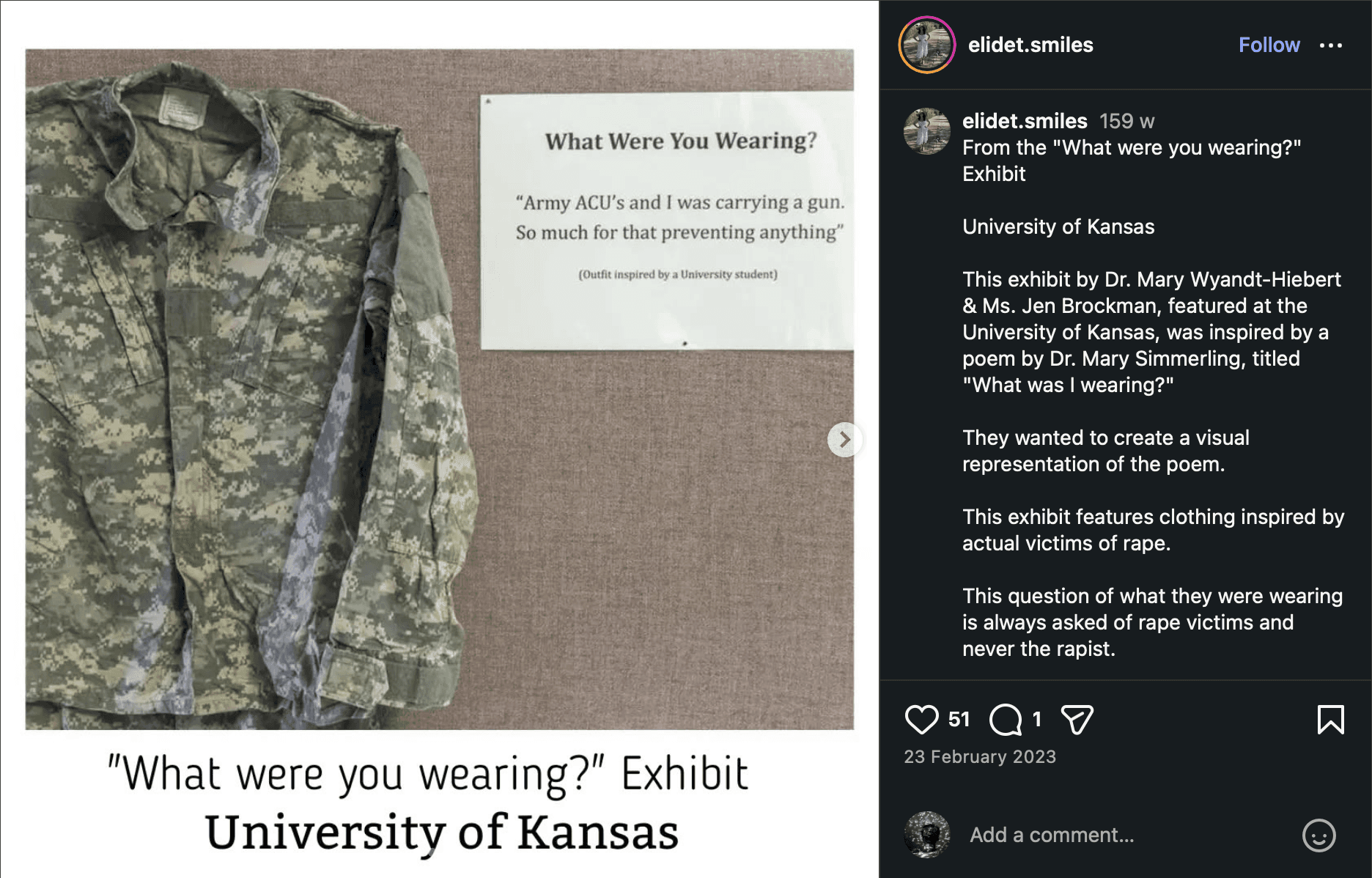
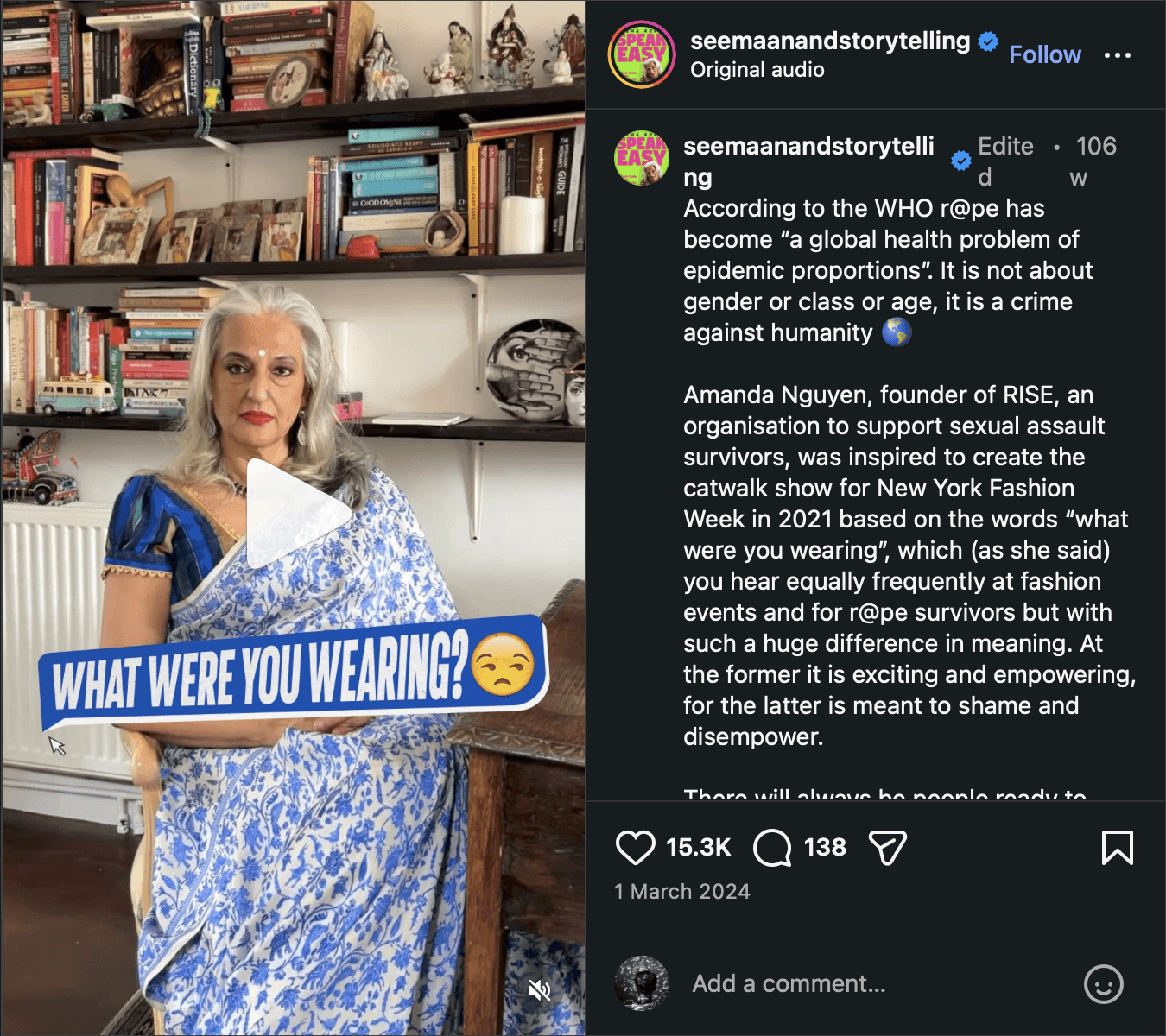
The "What Were You Wearing?" exhibition that originated at the University of Kansas and traveled internationally understood this. By recreating the actual outfits worn by people when they were raped, assaulted, or killed, the exhibition obliterated the narrative that clothing could ever justify violence. Jeans. T-shirts. Casual dresses. Children's pajamas. Everyday clothing that made devastatingly clear: it was never about what they were wearing.
Yet these movements remain niche. Their impact is limited. Changing cultural attitudes is an uphill battle, especially in a country where tradition is weaponised to justify oppression and where women's autonomy is treated as a Western import rather than a fundamental right.
The Truth We Keep Avoiding
Here's what we know, what we've always known, what we refuse to admit: A woman in a burkha gets harassed. A woman in a sari gets harassed. A woman in jeans gets harassed. A woman on a pyre gets violated. A child in school uniform gets harassed. The clothing is irrelevant. It has always been irrelevant.
What matters is a culture that grants men entitlement to women's bodies. What matters is a legal system that protects male violence more vigorously than it protects female autonomy. What matters is a society so invested in controlling women that it would rather audit their wardrobes than address the men who assault them.
Mandira Wirk's concept of clothing as moral evidence is the key to understanding this. Clothing is the easiest thing to point to, the most visible shortcut to judgment. It requires no critical thinking, no uncomfortable confrontation with systemic failures, no reckoning with male violence. Just a quick glance at the neckline and the case is closed. She was asking for it. She should have known better. She should have covered up.
But the gap between intent and outcome is vast. A woman gets dressed with a specific purpose: comfort, self-expression, weather appropriateness, professional requirements, cultural expectations, personal preference. Society interprets that choice through the lens of male desire and male entitlement. The contract she thought she was entering, the choice she believed she was making, gets overridden by a culture that treats her body as public property.
This is the mental tax women pay every day. The constant calculations, the perpetual self-policing, the exhausting awareness that their bodies are always being watched, always being judged, always potentially being used as evidence against them. It's not just about fashion. It's about the fundamental right to exist in a body without fear.
The Question We Should Be Asking
The question "What was she wearing?" isn't a question at all. It's an accusation. A deflection. A get-out-of-jail-free card for perpetrators and a life sentence of shame for victims.
So here's a better question, the only question that actually matters: Why are we still asking?
The answer should terrify us. Because as long as we keep asking what she was wearing, we're admitting that we believe women's clothing is a reasonable factor in male violence. We're admitting that we see women's bodies as public property, subject to collective regulation and judgment. We're admitting that we value male comfort over female safety, male desire over female autonomy, male violence over female humanity.
Individual acts of resistance are important, but they're not enough. We need collective action. We need men to speak up, to call out other men, to stop being complicit in this system. We need institutions to change: media, law enforcement, education, entertainment. We need to make it socially unacceptable to ask what she was wearing, and socially mandatory to ask why he thought he had the right.
We need the fashion industry to do more than perform concern. We need size diversity, fair wages, campaigns that challenge beauty standards rather than perpetuate them. We need designers to use their platforms for actual advocacy, not just Instagram posts that get forgotten by the next news cycle.
We need better cyber policing, better legal protections, better support systems for women who face harassment and violence. We need to treat digital violence as seriously as physical violence, to recognise that AI-morphed images and deepfakes and online harassment cause real trauma, destroy real lives.
We need to stop teaching girls to protect themselves and start teaching boys not to be predators. We need to stop asking what she was wearing and start asking why we've built a society where that question seems reasonable.
The Only Answer That Matters
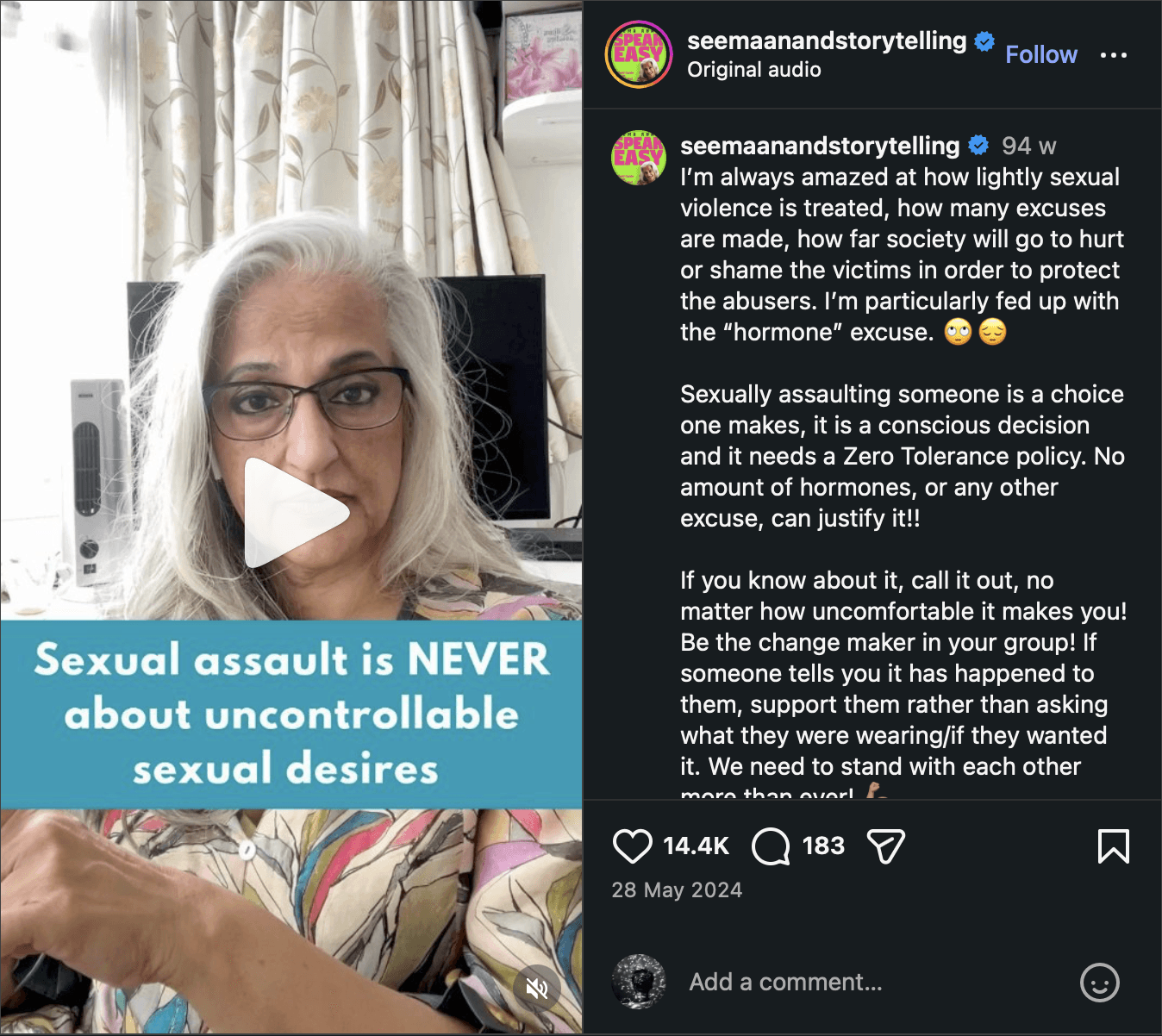
Stop asking what she was wearing.
Start asking why he felt entitled to her body. Start asking why we've built a culture that protects predators and prosecutes victims. Start asking why, in 2024, we're still having this conversation at all.
And then, finally, urgently, unequivocally, start holding the right people accountable.
Not the woman in the dress. Not the girl in the tank top. Not the survivor in whatever she happened to be wearing when someone decided her body was his to violate.
The man who made that choice. Every single time.
Because the only thing that causes rape is a rapist. The only thing that causes harassment is a harasser. The only thing that causes violence is someone who chooses to be violent.
Everything else - the dress, the sari, the jeans, the skirt, the fabric, the hemline, the neckline, every single thread - just another way we avoid looking at the truth.
And the truth is this: We've always known what she was wearing doesn't matter.
We just haven't been brave enough to admit it.
Until we do, until we stop auditing hemlines and start prosecuting rapists with the same vigor, until we stop asking what she was wearing and start asking why he thought he had the right, we're complicit. Every single one of us.
So the next time someone asks what she was wearing, pause for a moment.
Not because the question deserves an answer.
Because it deserves to be replaced.
Ask instead who taught him that entitlement.
Ask what allowed him to believe her body was open for commentary or control.
Ask why society still treats women’s presence in public space as conditional.
The truth has never been difficult to see. It has only been easy to ignore.
And until that changes, the question will keep returning, not because it holds meaning, but because it protects the people who benefit from asking it.

TO BE CONTINUED, FOR SUBSCRIBERS ONLY.
This is where the surface ends and the reporting begins.
The complete piece, the full archive, and access to The French Press Circle. Reporting answerable only to its readers.
Already a subscriber ?
Login
Read these on the house, with our compliments.
A selection from the current issue, open to all readers. Read them in full. The rest is one decision away.






For a country with no shortage of violence against women, we have an oddly persistent national obsession: women’s clothes.
Every time a woman is harassed, assaulted, or violated, the same question resurfaces.
What was she wearing?
The implication rarely needs to be stated. Somewhere between the hemline and the neckline, society believes it will find an explanation.
Seema Anand was wearing a sari with her signature halter-neck blouse, six yards of fabric carrying legacy and heritage, draped with the ease and precision that comes from a lifetime of wearing it. At sixty-three, Anand is a mythologist and storyteller, a sex educator who has spent decades studying ancient Indian texts and the ways they once understood women’s autonomy and desire.
At a formal reception, she sat beside her husband when a man from another table walked over. Without introducing himself or asking permission, he reached behind her and lifted the curtain of her long hair off her back to look at the knot of her blouse.
“I’ve just come to see your blouse,” he said callously. “All the women at my table think it’s the sexiest blouse in the room.”
The table he had come from included his wife and sisters-in-law. And while that should not matter, the gesture carried the audacity of someone who assumed the boundary did not exist.
Anand remembers sitting there, stunned, her husband equally unsure how to respond, both of them caught in the familiar social instinct that discourages confrontation in polite company. Something ingrained in Indian women since birth. The moment lingered with her, partly because of the setting, a room full of well-dressed, respectable guests, and partly because it was the first time she had experienced this form of male entitlement publicly.
The question of women’s clothing choices should have died decades ago. Instead, it thrives with viral persistence.
It's whispered in police stations and hospitals. Debated in courtrooms. Dissected at family dinners. The question that transforms the perpetrator into a footnote and the victim into a defendant.
In India, a woman's clothing isn't only fabric.
It's evidence. Testimony. Provocation.
We've built an entire tradition of blame around the length of a hemline, and in doing so, perfected the art of looking everywhere except at the man who committed the crime.
The Convenient Scapegoat
Patriarchy, as Seema Anand explains, is the ultimate get-out clause. It's easier to control what women wear than to address male entitlement and violence. So, we've created this elaborate fiction that women's clothing is somehow responsible for men's actions, as if men are incapable of self-control, as if they're animals who can't be expected to behave like human beings. Women are always blamed as long as the ‘raaja beta’ can be protected.
The irony cuts deep. This supposed tradition of extreme modesty, this obsessive policing of women's bodies, is relatively recent. Historically, women in India were never as confined as they are today. Look at ancient sculptures, temple art, the texts Anand has spent her life studying. The Kamasutra celebrated women's beauty, their shringar, as auspicious activities. The obsessive covering up, the moral panic around women's clothing, much of that came in with colonial rule and has been weaponised ever since. The blouse of the saree, which becomes an ‘invitation to harass’ today, did not even exist before the British came in with the western idea of what modesty should look like.
We, as a society, are regressing. Despite all our claims of modernity, of being a global power, of technological advancement, we're moving backwards when it comes to women's autonomy. Social media and AI haven't liberated women. They've created new tools for violence, for harassment, for control. Now a woman can be morphed into pornography with a few clicks. Her image can be weaponised, distributed, used to shame her, threaten her, destroy her reputation. She can be made to “wear” anything, even nothing, without any say in it.
Indian fashion designer Mandira Wirk understands this intimately. Clothing, she explains, has become moral evidence. It's the easiest shortcut to judgment, the most obvious way to blame a victim. When something terrible happens to a woman, examining her clothing choices requires no critical thinking, no confrontation with uncomfortable truths about male violence, no reckoning with systemic failures. Just a quick glance at her hemline and the case is closed in the court of public opinion.
But here's what Wirk voices that society refuses to acknowledge: there's a vast gap between a woman's intent in getting dressed, and how that clothing is interpreted. A woman might choose an outfit for comfort, for self-expression, for the weather, for a job interview, for a thousand reasons that have nothing to do with inviting male attention. But society interprets that choice through the lens of male desire, entitlement, and violence. The contract a woman thinks she's entering when she gets dressed in the morning, the choice she believes she's making, gets overridden by a society that treats her body as public property.
Getting Dressed, or Risk Assessment?
Every morning, women all over the country carry out complex calculations - the kind of math most men never have to study. Roshni Kumar, a body positivity activist who has spent years documenting the intersection of appearance, mental health, and social autonomy, sees this clearly. In our times, and as a woman living in India, the mundane act of dressing for your day isn't just about fashion or even personal expression. It's a risk assessment in itself. A daily negotiation with a society that holds women responsible for male behaviour. It is a matter that requires the precision of a surgeon - one inch here or there, and the situation turns lethal.
Will this outfit make me a target? Will it invite comments, stares, harassment? Will it make people question my character, my morality, my worth? Will it put me in danger?
I wish this was plain old paranoia. But no. Today, they're survival calculations based on lived experience. And they take a devastating toll on mental health. The constant hypervigilance, the perpetual self-policing, the exhausting awareness that your body is always being watched, always being judged, always potentially being used as evidence against you. It creates anxiety, depression, body dysmorphia, and eating disorders. It makes women hate their own bodies, not because there's anything wrong with their bodies, but because society has taught them that their bodies are problems to be managed, threats to be contained, provocations to be covered up.
Kumar sees the consequences daily. Young women edit themselves through filters, chasing beauty standards that change faster than anyone can keep up with. Ozempic becomes shorthand for the new body ideal. Eating disorders subtly resurface on pinterest boards, runways and Instagram reels. Bodies are shrunk, softened, erased in the pursuit of acceptability. And still it does not offer protection. Still, someone will still have the audacity to ask what they were wearing.
Seema Anand often reflects on the irony embedded in that question. In the ancient texts she has spent decades studying, adornment carried a very different meaning. Shringar, she explains, was considered auspicious. Beautifying oneself was woven into everyday life as something associated with vitality and prosperity.
Classical literature describes women’s appearance with an ease that now feels almost ahead of its time. A queen’s beauty is observed carefully, in meticulous detail: the texture of her hair, the glow of her skin, the jewellery adorned in her ears, the folds at her waist that earlier cultures celebrated as marks of femininity. Anand frequently notes that those folds were once admired openly. “Three folds at the waist,” she says, referring to descriptions in classical texts, “were considered the ultimate sign of beauty.”
Even the Kamasutra, so frequently reduced to caricature, preserves traces of that sensibility. Anand recalls a passage from a later medieval discussion of alankar, or poetic ornamentation, in which a lover arrives home earlier than expected. The woman rushes out to greet him while still dressing. One eye carries kohl while the other remains unfinished. One earring has been fastened, the other forgotten. Jewellery has been misplaced in the rush, a waist chain thrown around her neck, her hair slightly undone.
“A man who sees his lover in that state,” Anand says, “is considered the most blessed of all.”
Placed beside contemporary anxieties about women’s appearance, those descriptions feel strikingly distant. A similar image today - a woman stepping outside with her hair dishevelled or a bindi slightly smudged - often invites suspicion or commentary. The phrase “walk of shame” appears almost automatically, revealing how dramatically the cultural lens has shifted.
Seema believes that shift is closely tied to control. At some point, she suggests, admiration turned into objectification because regulating women’s bodies became an easier way of asserting power. “Instead of doing things to prove you are in charge,” she observes, “the easier way is to put the other person down.”
She traces some of this shift in attitude to moments in history when power began to reorganise itself around control. In Europe at the end of the nineteenth century, during the fin de siècle era that followed the Industrial Revolution, social hierarchies started to change. Men who had once been confined to rigid class positions could suddenly build wealth and move between social strata through trade and business. Anand notes that this transition created its own moral anxieties. Commerce required negotiation, persuasion, sometimes even deception, which clashed with the deeply religious belief systems many people had been raised with. “You were brought up to believe that lying would send you straight to hell,” she explains. “So spiritual leaders told men something fascinating: you might sin in the world of business, but if your wife remained pure enough, good enough, she could save your soul.” Women were elevated onto a pedestal of moral perfection, expected to embody virtue not only for themselves but for the men around them.
That pedestal, Anand argues, became another form of control. Women were encouraged to take pride in that role, and many did. “Imagine being told that you are so good you can defeat the devil,” she says. “That kind of power is seductive.” The cultural script that followed rewarded women who performed that moral superiority, often through visible markers of modesty, domesticity, and restraint.
Versions of that logic continue to echo today, particularly within elite social circles. Anand observes a growing wave of upper-class and upper-caste women who publicly reject feminism, presenting their dependence on wealth and marriage as a badge of honour. She recounts conversations where women proudly declare that they “don’t have to work” because their husbands are wealthy, treating that statement as evidence of status rather than limitation. The troubling part is not simply the sentiment itself but the space it occupies. When privileged women dominate conversations about gender while celebrating regression, the realities faced by women in rural India - those still fighting for education, mobility, and basic autonomy - are pushed even further out of view. Platforms that could amplify those struggles instead become stages for a nostalgia for restriction.
And in that atmosphere, clothing continues to carry moral weight far beyond fabric. Fashion has always been tied to class and identity, Anand notes, whether through jewels sewn into aristocratic garments centuries ago or through contemporary signals of quiet luxury. Yet when harassment or violence enters the conversation, those markers suddenly become evidence. The sari, the dress, the confidence with which a woman walks into a room - any of it can be turned into an explanation. “You could be wearing anything,” Anand says plainly. “You could be wearing a sack. If a woman carries herself with confidence, that confidence itself can threaten someone.”
Which is why the argument about clothing rarely holds up under scrutiny. Infants, children, women in uniforms, women in saris - none of it alters the pattern of violence. Clothing simply offers a convenient excuse. It is visible, legible, endlessly open to interpretation. A hemline becomes a subject of discussion. A blouse becomes a point of judgment. Gradually the body itself enters public conversation.
The intersectionality within feminism is essential to understand. Privilege, caste, class, all of it shapes how a woman's clothing is interpreted and how much danger she faces. A wealthy woman in designer clothes might face different harassment than a working-class woman in the same outfit. A woman from a marginalised caste might be punished more severely for the same clothing choices that a privileged woman can make with relative impunity. The policing isn't uniform, but it's universal. Every woman, regardless of background, faces some version of this scrutiny.
Senior model Aparna Verma has watched this dynamic play out across decades. Older women aren't policed less than younger women. They're policed more. Society expects women to become invisible as they age, to cover up, to fade into the background, to stop taking up space. When an older woman dresses with confidence, with style, with any hint of sexuality or self-expression, the backlash is swift and vicious. How dare she. Doesn't she know her place? Doesn't she understand that her body is no longer acceptable, no longer allowed to be visible?
Verma's framing cuts to the heart of it: Stop asking what she was wearing. Start asking why he felt entitled.
That's the real question. Not what fabric she chose, what length her skirt was, how much skin was visible. The question is why a man looked at a woman and decided her body was his to comment on, his to touch, his to violate. Why he felt entitled to her space, her attention, her body. Why he believed his desire trumped her autonomy.
Fashion Between The Seams
Aparna Verma understands something crucial that society desperately wants to deny: when women dress for comfort rather than approval, it disrupts entrenched power imbalances. Comfort is radical because it centers the woman's experience rather than the male gaze. When a woman wears what makes her feel good, not what makes her acceptable, she's refusing to participate in her own subjugation. And that terrifies people who benefit from women's compliance.
There's also a crucial distinction that gets lost in these conversations: performance versus permission. A woman might dress provocatively as performance, as art, as self-expression, as reclamation of her own body. But that performance is not permission. It's not an invitation. It's not consent. The fact that we still have to explain this in 2026 is damning.
Women modulate their clothing choices constantly, but not for morality. It is for safety. They're not trying to be good or respectable or modest. They're trying not to get harassed, assaulted, killed. They're trying to navigate a world that treats their bodies as public property and their clothing as evidence of their character. And even then, even when they do everything right, even when they cover up and make themselves small and invisible, it doesn't protect them. Because obviously, it was never really about what she was wearing.
Pranav Kirti, founder of the fashion brand HUEMN, has built a career on understanding fashion as a platform for bringing light to issues that need it, without putting too much of a spotlight that it completely blinds you - he has perfected the art of subtlety. He has spent the past fifteen years treating fashion less like a seasonal product and more like a cultural medium. For him, clothing sits in the same creative ecosystem as cinema, literature, and music. “It’s just another medium,” he explains. “A filmmaker tells a story through film, a writer through words. I use clothing to talk about things I believe in.”
That perspective has shaped HUEMN’s identity from the beginning. Kirti describes the brand as an extension of conversations about society, politics, gender, and human experience - subjects that rarely find space in traditional fashion narratives. Over the years, the label has deliberately stepped into areas many brands prefer to avoid. Campaigns have addressed topics like menstruation and body politics, subjects that once felt uncomfortable within mainstream fashion imagery. When HUEMN placed a burqa-inspired dress on the runway, it triggered conversations across media platforms, even though Kirti insists the decision felt entirely natural at the time. “When we were doing it,” he recalls, “it didn’t feel like we were doing something radical. It felt like there was an elephant in the room. Why is no one talking about it?”
Clothing, in his view, operates as a language through which belief systems become visible. What someone chooses to wear signals identity, values, and sometimes resistance. When those choices challenge social expectations, the reaction can reveal more about the audience than the garment itself. In India especially, women who dress with confidence or unconventionality often encounter hostility. Their presence unsettles deeply ingrained assumptions about modesty, morality, and public behaviour.
Kirti recognises that fashion exists within a reality where beauty and violence often occupy the same space. Society carries both, and creative work inevitably absorbs traces of that tension. “You look around and there’s so much violence in society,” he says, reflecting on collections where bruises and marks appeared in the visual language of the garments. “But there’s beauty as well. Both of those things exist together.”
For him, the responsibility of a designer lies in acknowledging that complexity while remaining honest to the work itself. Authenticity becomes the only viable compass. A designer cannot respond to every issue, he argues; meaningful engagement requires clarity about which conversations genuinely matter to you. “The battles you take till the end are the ones you really believe in,” he says. “Otherwise everything becomes noise.”
That honesty extends to how art is interpreted. Kirti does not attempt to control how audiences read his work, nor does he believe artists should attempt to simplify their intentions to avoid misunderstanding. “It’s not my responsibility to spoon-feed society,” he says. “Too much spoon-feeding actually paralyses the audience.”
Interpretation, he suggests, belongs partly to the viewer. A work of art reveals as much about the audience as it does about the creator. If the research behind the work is thorough and the intention remains sincere, the conversation that follows becomes part of the process rather than a disruption.
Personal experience also shapes how those narratives emerge in his collections. Kirti often describes himself as a witness to the world around him, absorbing moments, conflicts, and contradictions that later surface in his work almost unconsciously. Over time, those observations accumulate and eventually translate into imagery, silhouettes, and textures. “I store all of that,” he says of the violence and social tension he observes in public discourse. “It processes somewhere inside, and later it comes out through the work.”
Within that framework, fashion becomes less about aesthetic spectacle and more about expression. The garment may be the visible object, yet the ideas behind it carry equal weight. As Kirti often reminds his own team, participation in the HUEMN ethos does not even require wearing the brand itself. A person who embodies the values of empathy, courage, and authenticity, he jokes, might be “the most human phenomenon” in the room, regardless of what they are wearing.
That philosophy ultimately returns to the same question that sits at the centre of this conversation: how clothing is interpreted in public pop culture. Fashion may appear superficial at first glance, but its symbolism runs deeper. Through clothing, societies project aspiration, morality, rebellion, and fear. Designers who recognise that complexity inevitably find themselves navigating a space where art, politics, and lived reality intersect.
And when fashion is used thoughtfully, it can open conversations that extend far beyond the runway.
The Price of Visibility
Akshay Sharma, founder of the fashion label Vulgar, chose the name of his brand with intention. The word has long been used to shame people whose appearance or identity strays from accepted norms, particularly women and queer communities. By reclaiming it, Sharma shifted the meaning of the insult itself. What once functioned as a judgment now becomes an act of ownership. “Anything that was slightly different from the conventional societal norm was called vulgar,” he explains. “So we take the ownership of it. Once you do that, you take away the power of that word to hurt you.”
The act of reclamation does more than neutralise language. It creates community. For many people who encounter the brand, that sense of recognition becomes immediate. Sharma often notices how shared experiences bring people together under the label. “You realise you’re not the only one going through something,” he says. “Other women, girls, queer people have faced the same things. That support system is how we survive.”
That context shapes how he responds to the question that still surfaces in public discourse: What was she wearing? For Sharma, the question reveals a deeper cultural impulse to simplify violence by attaching it to something visible. Clothing becomes the most immediate reference point. “It’s tangible. It’s visible,” he explains. When people encounter something disturbing or difficult to understand, the eye instinctively looks for an explanation that feels concrete. Fabric offers that surface. “People want answers quickly,” he says. “The first thing you see when you look at a person is their body and what they’re wearing.”
Yet the simplicity of that explanation is precisely what makes it dangerous. The conversation is redirected away from behaviour and toward appearance. Sharma describes the question itself as deeply troubling. “When people ask this, it’s heartbreaking,” he says. “The conversation should be about the lens through which someone looked at her.”
With this, clothing becomes moral evidence. A hemline or neckline is examined as though it carries an explanation for violence. Cultural narratives surrounding modesty, respectability, and propriety slowly attach themselves to particular garments. These associations are reinforced over generations, until the presence of a certain outfit appears to confirm a story people have already decided to believe.
Sharma sees the consequences of this thinking across public life. Moral policing circulates through media, everyday interactions, and even within the fashion industry itself. Social media has intensified that scrutiny. Images can be captured, shared, distorted, and weaponised within seconds. Surveillance expands through the same digital platforms that were once celebrated as spaces of freedom.
In that environment, visibility carries a price. A person who dresses differently, speaks openly, or refuses to conform often becomes a target. Sharma understands this tension well. As the founder of an independent brand, he navigates the complicated space where artistic expression intersects with economic survival and political climate. Speaking openly carries risks. Creative work becomes one of the few avenues where difficult ideas can still be expressed with some degree of protection. “That’s the beauty of art,” he reflects. Through design and storytelling, artists are able to communicate what might otherwise remain unsaid.
At the same time, he acknowledges that silence within the fashion industry is sometimes misunderstood. Designers operate within systems of power, funding, and regulation that shape what can be said publicly. Businesses must continue to function even as social conversations unfold around them. That tension produces a complicated balance between expression and survival.
Even within those constraints, Sharma believes art and fashion still carry the potential to push conversations forward. Designers, writers, and artists contribute through their respective mediums. “You are doing your part by writing this,” he tells me. “My work is through my work.”
And in moments when harassment moves into digital spaces, practical action remains essential. Reporting threats and manipulated images to cyber authorities, Sharma emphasises, becomes one of the few immediate tools available to women navigating online abuse. Legal mechanisms may not offer complete protection, yet they remain an important step in resisting the growing landscape of digital violence.
What emerges from Sharma’s perspective is a simple but uncomfortable truth. Clothing rarely explains violence. It simply offers a visible surface onto which society projects its assumptions. The real issue lies elsewhere, in the gaze that interprets the body and the power structures that allow that gaze to remain unquestioned.
The Industry's Reckoning
The fashion industry itself is finally confronting this issue, though the confrontation is often more performative than substantive. Designers post black squares on Instagram, make statements about supporting women, and create campaigns around empowerment. But how many are actually changing their practices? How many are creating size-diverse collections, paying fair wages, challenging beauty standards, using their platforms to advocate for systemic change?
Pranav Kirti is clear about the responsibility designers have. Fashion isn't just about aesthetics. It's about who gets to be visible, who gets to be beautiful, who gets to take up space. When designers only create for certain body types, when they only feature certain kinds of women in their campaigns, when they perpetuate narrow beauty standards, they're complicit in the status quo that polices women's bodies.
Cultural nuance matters too. What works in one context might not work in another. Designers need to understand the specific ways that women in India face harassment and violence, the particular forms that policing takes, the intersections of caste and class and religion that shape women's experiences. Cookie-cutter feminism doesn't work. The solutions have to be as complex as the problem.
Mandira Wirk adds another layer: the control of aspiration. When women are told that certain clothing is inappropriate, that certain styles are too bold, that certain expressions are too much, what's really being controlled is their aspiration. Their desire to be visible, to be confident, to take up space, to be more than what society has decided they should be. Clothing becomes a way to keep women in their place, to remind them that their bodies are not their own, that their choices are subject to collective approval.
The mental tax of this is staggering. Every woman carries it. The constant awareness that her body is being watched, judged, used as evidence. The exhausting calculations about what to wear, where to go, how to move through the world. The knowledge that no matter what she does, she might still be blamed if something happens to her. This isn't just about fashion or aesthetic choices. It's about the fundamental right to exist in a body without fear, without shame, without the constant threat of violence.
The Digital Escalation
Social media and AI have created new frontiers of harassment and control. Women's images can be stolen, morphed, weaponised with terrifying ease. Deepfakes, AI-generated pornography, morphed images that destroy reputations and lives. The technology that was supposed to connect us, to democratise information, to create new possibilities, has instead become a tool for the most ancient form of control: the policing of women's bodies.
Roshni Kumar sees the damage in real time. Young women who are terrified to post photos of themselves, who use filters to erase their features, who develop eating disorders trying to conform to algorithmically generated beauty standards. The pressure is relentless and it's everywhere. Every scroll through social media is a reminder that your body is not acceptable, that you need to be thinner, prettier, more filtered, more perfect. And even then, even when you conform, you're still not safe. Still vulnerable to harassment, to morphing, to having your image used against you.
Filters themselves have become a quiet form of digital violence. They train women to believe that their natural faces are incomplete, that skin must be smoothed, eyes brightened, and features reshaped before they can appear online. An artificial standard is created and circulated so widely that it begins to feel normal, even though no real person can ever fully resemble it. Hours are spent adjusting photos, softening edges, correcting shadows, erasing small imperfections. Gradually a performance of femininity takes shape, carefully edited and endlessly repeated, while the person behind the image becomes harder to see.
Seema Anand, now 63, continues to experience harassment that moves easily between physical and digital spaces. Messages arrive in the form of rape threats and death threats. Images are manipulated through AI and circulated online without consent. Her age offers no insulation from that hostility. Neither do decades of scholarship, public work, or cultural expertise. The harassment persists because the issue has never truly centred on clothing, behaviour, or personal choices. At its core lies a belief that a woman’s body remains open to scrutiny and commentary, something that can be claimed, threatened, or reshaped through a screen.
The result reveals a troubling dimension of contemporary life. Technology expands possibilities for connection and expression, yet the same tools are frequently used to intensify surveillance and control. Women find themselves navigating digital spaces where images can be altered instantly and reputations can be damaged just as quickly. Innovation moves forward, but vulnerability travels with it, carried through the networks that now shape everyday life.
The Responsibility of Platform
Everyone with a platform has a responsibility to speak up. And silence is complicity. When designers, models, influencers, celebrities, anyone with visibility stays quiet about the harassment women face, about the victim-blaming that pervades our society, about the way clothing is used as evidence against women, they're choosing to protect the system rather than challenge it.
Aparna Verma is clear about this. As a senior model with decades in the industry, she's seen the patterns. She's watched women be blamed for their own harassment, watched clothing become the focus instead of the perpetrator, watched the industry perform concern while doing nothing substantive to change. Speaking up is uncomfortable. It invites backlash. It can cost you work, relationships, opportunities. But the alternative is worse. The alternative is watching women continue to be blamed, harassed, assaulted, killed, while everyone with the power to say something stays silent.
More outspoken women are widely targeted. This isn't coincidental. When women use their platforms to challenge the status quo, to call out harassment, to demand accountability, they become targets. The harassment intensifies. The threats multiply. The attempts to silence them become more aggressive. This is by design. It's meant to scare other women into silence, to make speaking up so costly that most women decide it's not worth it.
But some women speak up anyway. Seema continues to talk about ancient Indian texts and women's sexual autonomy, despite the rape threats. Aparna continues to model and advocate for older women's visibility, despite the criticism. Roshni continues to promote body positivity and call out harmful beauty standards, despite the backlash. Pranav and Akshay continue to create fashion that challenges norms, despite the risk.
They speak up because silence is not an option. Because every woman who stays silent makes it harder for the next woman to speak. Because the only way to change a culture is to refuse to participate in it, to name it, to make visible the violence it perpetuates.
Art as Weapon and Shield
Art becomes both a weapon and shield in this fight. Fashion, when done with intention, can make visible the things society wants to hide. It can challenge beauty standards, disrupt power dynamics, and create space for bodies that are usually excluded. It can be a form of protest, a way of saying: I refuse to make myself small. I refuse to disappear. I refuse to accept that my body is public property.
But art also provides protection. When you make a political statement through fashion or design or creative expression, there's a layer of abstraction that offers some safety. It's not as direct as standing on a street corner with a megaphone. It's not as vulnerable as writing an essay that names names and calls out specific instances of violence. The art creates distance, allows for interpretation, makes it harder for people to attack you directly.
This doesn't mean art is safe. Artists, especially women artists who challenge norms, face harassment and threats. But it's a different kind of risk than direct activism. And right now, we need both. We need people willing to take every kind of risk, to use every tool available, to fight back against a culture that treats women's bodies as problems to be solved rather than humans to be respected.
The "What Were You Wearing?" exhibition that originated at the University of Kansas and traveled internationally understood this. By recreating the actual outfits worn by people when they were raped, assaulted, or killed, the exhibition obliterated the narrative that clothing could ever justify violence. Jeans. T-shirts. Casual dresses. Children's pajamas. Everyday clothing that made devastatingly clear: it was never about what they were wearing.
Yet these movements remain niche. Their impact is limited. Changing cultural attitudes is an uphill battle, especially in a country where tradition is weaponised to justify oppression and where women's autonomy is treated as a Western import rather than a fundamental right.
The Truth We Keep Avoiding
Here's what we know, what we've always known, what we refuse to admit: A woman in a burkha gets harassed. A woman in a sari gets harassed. A woman in jeans gets harassed. A woman on a pyre gets violated. A child in school uniform gets harassed. The clothing is irrelevant. It has always been irrelevant.
What matters is a culture that grants men entitlement to women's bodies. What matters is a legal system that protects male violence more vigorously than it protects female autonomy. What matters is a society so invested in controlling women that it would rather audit their wardrobes than address the men who assault them.
Mandira Wirk's concept of clothing as moral evidence is the key to understanding this. Clothing is the easiest thing to point to, the most visible shortcut to judgment. It requires no critical thinking, no uncomfortable confrontation with systemic failures, no reckoning with male violence. Just a quick glance at the neckline and the case is closed. She was asking for it. She should have known better. She should have covered up.
But the gap between intent and outcome is vast. A woman gets dressed with a specific purpose: comfort, self-expression, weather appropriateness, professional requirements, cultural expectations, personal preference. Society interprets that choice through the lens of male desire and male entitlement. The contract she thought she was entering, the choice she believed she was making, gets overridden by a culture that treats her body as public property.
This is the mental tax women pay every day. The constant calculations, the perpetual self-policing, the exhausting awareness that their bodies are always being watched, always being judged, always potentially being used as evidence against them. It's not just about fashion. It's about the fundamental right to exist in a body without fear.
The Question We Should Be Asking
The question "What was she wearing?" isn't a question at all. It's an accusation. A deflection. A get-out-of-jail-free card for perpetrators and a life sentence of shame for victims.
So here's a better question, the only question that actually matters: Why are we still asking?
The answer should terrify us. Because as long as we keep asking what she was wearing, we're admitting that we believe women's clothing is a reasonable factor in male violence. We're admitting that we see women's bodies as public property, subject to collective regulation and judgment. We're admitting that we value male comfort over female safety, male desire over female autonomy, male violence over female humanity.
Individual acts of resistance are important, but they're not enough. We need collective action. We need men to speak up, to call out other men, to stop being complicit in this system. We need institutions to change: media, law enforcement, education, entertainment. We need to make it socially unacceptable to ask what she was wearing, and socially mandatory to ask why he thought he had the right.
We need the fashion industry to do more than perform concern. We need size diversity, fair wages, campaigns that challenge beauty standards rather than perpetuate them. We need designers to use their platforms for actual advocacy, not just Instagram posts that get forgotten by the next news cycle.
We need better cyber policing, better legal protections, better support systems for women who face harassment and violence. We need to treat digital violence as seriously as physical violence, to recognise that AI-morphed images and deepfakes and online harassment cause real trauma, destroy real lives.
We need to stop teaching girls to protect themselves and start teaching boys not to be predators. We need to stop asking what she was wearing and start asking why we've built a society where that question seems reasonable.
The Only Answer That Matters
Stop asking what she was wearing.
Start asking why he felt entitled to her body. Start asking why we've built a culture that protects predators and prosecutes victims. Start asking why, in 2024, we're still having this conversation at all.
And then, finally, urgently, unequivocally, start holding the right people accountable.
Not the woman in the dress. Not the girl in the tank top. Not the survivor in whatever she happened to be wearing when someone decided her body was his to violate.
The man who made that choice. Every single time.
Because the only thing that causes rape is a rapist. The only thing that causes harassment is a harasser. The only thing that causes violence is someone who chooses to be violent.
Everything else - the dress, the sari, the jeans, the skirt, the fabric, the hemline, the neckline, every single thread - just another way we avoid looking at the truth.
And the truth is this: We've always known what she was wearing doesn't matter.
We just haven't been brave enough to admit it.
Until we do, until we stop auditing hemlines and start prosecuting rapists with the same vigor, until we stop asking what she was wearing and start asking why he thought he had the right, we're complicit. Every single one of us.
So the next time someone asks what she was wearing, pause for a moment.
Not because the question deserves an answer.
Because it deserves to be replaced.
Ask instead who taught him that entitlement.
Ask what allowed him to believe her body was open for commentary or control.
Ask why society still treats women’s presence in public space as conditional.
The truth has never been difficult to see. It has only been easy to ignore.
And until that changes, the question will keep returning, not because it holds meaning, but because it protects the people who benefit from asking it.
TO BE CONTINUED, FOR SUBSCRIBERS ONLY.
This is where the surface ends and the reporting begins.
The complete piece, the full archive, and access to The French Press Circle. Reporting answerable only to its readers.
Already a subscriber ?
Login
Read these on the house, with our compliments.
A selection from the current issue, open to all readers. Read them in full. The rest is one decision away.