CAN FASHION REALLY AFFORD TO BE ETHICAL?
Who really pays for ‘conscious’ clothing?
Just like a fad, many brands claim to be ethical because editorial and social media has called sustainability cool. The tags we see are: Sustainable. Responsible. Conscious. Planet-first. Artisan-led. The list has more but we get the drift. The vocabulary has become so universal that if you removed the logos and left only the sustainability claims, half the industry would read like it was written by the same copywriter on the same deadline.
And yet when margins tighten, something always gives.
A fabric is quietly swapped. A wage is delayed. A production timeline is ‘optimised.’ A promise is softened. A certification disappears from the website or printed inner label without an explanation.
So the question is whether fashion can afford to be ethical despite every intention to that or be perceived as such without outsourcing the cost of virtue to the weakest part of the chain, or to the consumer who is paying more but still shopping blind.
Let’s take a forensic look at economics so that this stops looking like some moral takedown.
The Sustainability Performance: The Semantics of It All!
‘Sustainability’ has become a marketing & PR language language first. The practice is almost always secondary for a majority of brands that we have around us. It is the easiest story to tell because it offers what fashion loves most: a clean narrative. A good-versus-bad binary. A feeling of righteousness that photographs well in beiges, greens and hues of browns etc.. A virtue signal that sells without needing the mess of proof. Aha. That proof is where it goes out of the window.
All sustainability claims are never created equal.
Some are for sure measurable: verified fibre standards, audited wage systems, traceable supply chains, disclosed vendor lists, public impact reports, third-party assurance. Most are not.
Most are vibes: ‘eco,’ ‘green,’ ‘planet friendly,’ ‘responsible,’ ‘conscious.’ The words are elastic enough to cover anything from genuinely low-impact manufacturing to one recycled capsule on a website that otherwise runs on conventional production.
On this, Vaishali Shadangule of Vaishali S. Couture comments, “Unfortunately, there is still a lot of green washing, actually more greenwashing than real sustainability. I always say that this is a pity, because for young people this becomes a hurdle even to understand what real sustainability means. I am seeing more and more brands shouting about their sustainability and how sustainable they are, while their garments and processes are just shouting the opposite.”
And increasingly, regulators are acknowledging that sustainability has been used as a marketing aesthetic, not an accountability framework. In the UK, the Competition and Markets Authority secured undertakings from major fashion retailers to ensure ‘green claims’ are accurate and not misleading, including avoiding vague terms and requiring substantiation.
This matters because fashion is one of the few industries where a narrative can become a substitute for evidence. You can say ‘artisan-led’ and still run late payments. It happens. The amount of back-end people who have complaints while being interviewed is mind numbing. You can say ‘community’ and still treat makers like expandable labour. You can say ‘heritage’ and still squeeze the cluster when the buyer or merchandiser who’s negotiating on behalf of a retailer demands a bigger discount.
So yes, sustainability is often a performance and not always because brands are evil. They often don’t have a choice when one takes a hard look at their balance sheets. Even the system for that matter, rewards performance and performative optics where a chunk of their spends go squeezing out their margins to sometimes less than 7- 10% EBITDA.
Which brings us to the real crack line.
The Margin Problem:
There is a simple, uncomfortable truth that most ‘conscious fashion’ storytelling tries to avoid. Ethical production is slower. It is more human. It is less scalable. And that has a huge input cost.
You can try to hide that cost behind better marketing, but you can’t delete it.
If you source with integrity: traceable inputs, safer processes, fairer wages, responsible dyeing, smaller batch runs, you usually pay in one (or more) of three ways:
Higher input costs (materials, compliance, audits, smaller MOQs)
Higher time cost (hand processes, slow manufacturing, relationship-based sourcing)
Higher operational cost (training, welfare, documentation, monitoring, waste management)
And fashion businesses being run for valuations for series A fundings or buyouts cannot afford higher input costs. Investors love speed, scale & predictable margins. They love growth curves. They love ‘more’ disguised as innovation. Big ticket investors across sectors look at businesses from this 101 lens.
So the moment the market turns: raw materials spike, shipping spikes, retail footfall weakens, customer acquisition costs climb, funding tightens, brands are forced into a decision:
Do we keep ethics intact and let profitability take the hit?
Or do we protect profitability and let ethics bend quietly where the customer can’t see?
We have watched this happen in real time across brands in India and overseas.
While most perish in the paradox of these questions, brands like Vaishali S. move towards sustainability by making it their mission, setting up the supply chain in a way that allows them to make it their foundation, leaving no space for ambiguity, and elevating their placement in the luxury segment by taking a firm position.. The founder, Vaishali Shadangule comments, “My brand was born for that, and sustainability is our DNA. We could never start cutting corners. I could never do that.”
During the pandemic, retailers cancelled an estimated $40 billion in orders leaving suppliers unpaid and workers without wages and public pressure campaigns pushed brands to pay a portion of what was owed.
And even beyond cancellations, the aftershocks show where the cost travels when brands protect themselves: the Worker Rights Consortium in the US has described billions in severance theft tied to garment workers losing legally owed pay when factories shut down.
This is the central truth of the ethical-fashion paradox:
Conscious fashion moves cost.
The question is: Who absorbs it?
Who Really Pays: The Artisan, The Atelier, or The Consumer?
If you want the spine of this story, it is this: Someone pays. The only question is whether the person paying is visible or buried under good typography.
1. The Artisan: Romance on the Edge
The artisan sits at the centre of fashion’s moral storytelling and too often at the edge of its financial security.
Because craft is seasonal. Demand fluctuates. Drops fail. Trends change. Retail orders get delayed. And in much of the craft economy, workers still operate without the cushions that formal industries take for granted: predictable wages, enforceable contracts, paid leave, healthcare, grievance systems, long-term security.
Many ‘artisan-led’ brands are genuinely trying. Some are not. But even when intentions are pure, the artisan can still be the shock absorber when business pressures rise.
Vaishali Shadangule of Vaishali S. Couture comments, “My brand was born out of ethical village life, to support the work of the hand weavers and not throw away anything of their work, to support local communities and their women. It is unfortunate that people still look at all this as a cost. You have to also think that this is a non-negotiable aspect of a brand nowadays, an asset that will get back to you loyal clients that believe in the mission of the brand.”
When we read ‘handmade,’ we must also ask: handmade under what protections? Under what negotiation power? Under what payment discipline? Under what continuity?
And if the brand’s ethics are real, the brand must be willing to tell the truth about the cost of keeping them real because silence becomes the space where exploitation hides.
2. The Designer and Studio: Ethics as a Personal Tax
Here is a truth most founders won’t say out loud because the industry glamorises struggle until it becomes embarrassing to admit you’re bleeding:
A lot of ethical brands survive by underpaying themselves, delaying their own salaries, and absorbing costs that should actually be distributed across the chain.
This is why sustainability, in practice, can become a personal tax on the founder especially in India, where craft-based brands can be celebrated editorially but still forced to compete against a market that expects discounts and speed.
And this is where interviews land like a punch.
Mariyam Khatri of BANANA Labs, trained at the Indian Institute of Crafts and Design frames sustainability as a decision about life itself as opposed to being a marketing buzzword:
“Even before sustainability became a buzzword, most conversations were only about materials being vegan or eco friendly. But for me, the bigger question was always about living beings, people, animals, and life itself. In the four pillars of sustainability, living beings matter the most. Nothing has value without life behind it.”
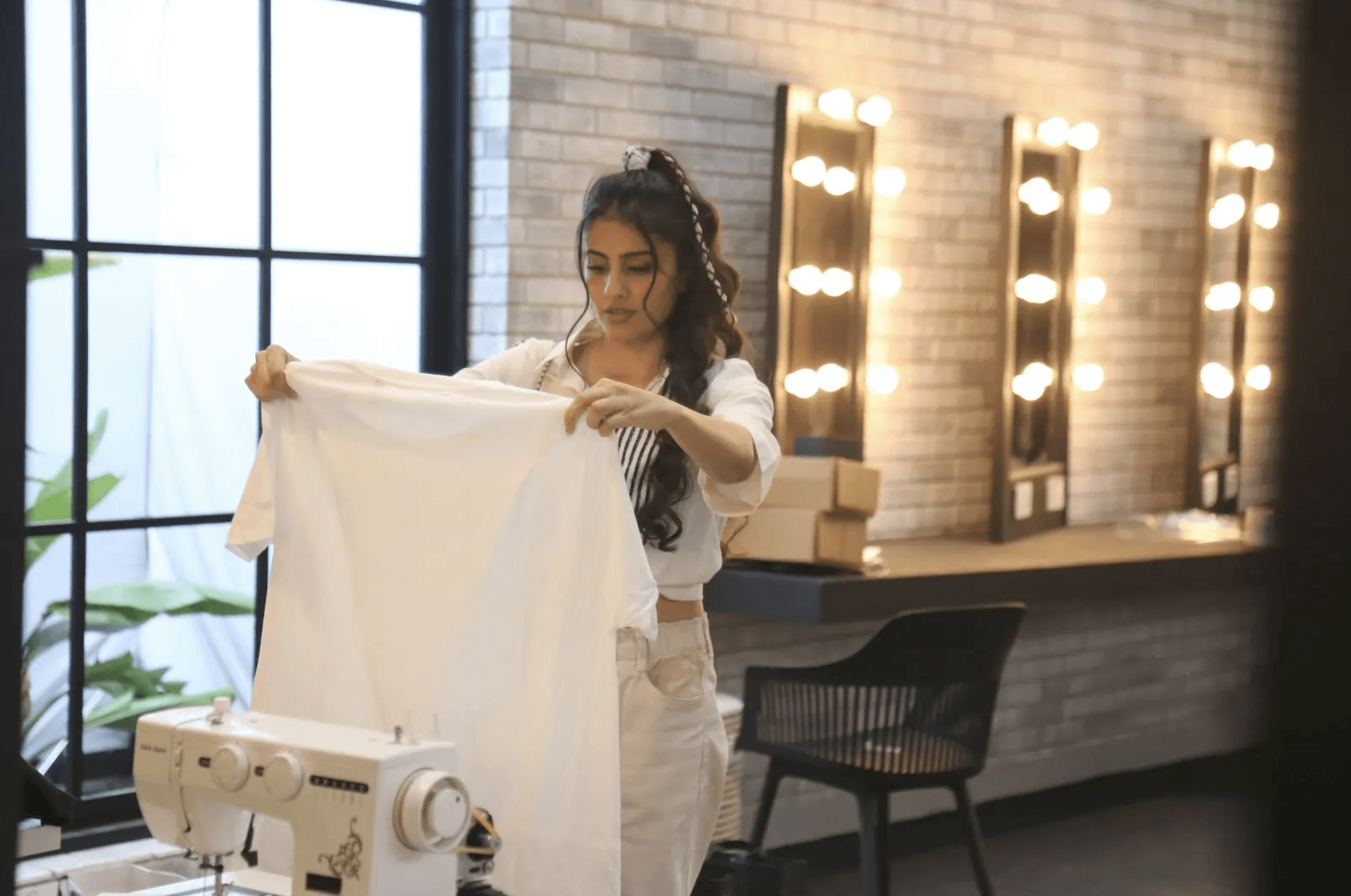
Then she goes where most founders refuse to go: into the specific moment where ethics are tested: margins. “Yes, we have been tested many times. It meant refusing rushed production, refusing large batch manufacturing, and saying no to big B2B orders that could have kept our workshop busy for a year but only by operating on wafer thin margins that would dilute everything we stand for.”
Read that again: orders that could have kept the workshop busy for a year. That’s not a small temptation. That’s survival money. That’s stability. That’s the kind of order that allows a brand to grow in public and breathe a bit.
And she says they walked away.
But then she makes the key point that separates ethics-from-inception brands from ethics-as-a-campaign brands. She talks about redesigning the business so people don’t absorb the damage without romanticising the damage:
“So instead of pushing artisans to work faster or cheaper, we focused on making the business smarter. We re-engineered patterns to reduce fabric waste, upcycled fabric waste and reused blocks and motifs across collections, planned better so there was less dead stock. We innovated in design. In the end, we chose to let the business adapt rather than asking the people behind it to absorb the cost.”
That last line is the thesis: adapt the business, don’t squeeze the maker.
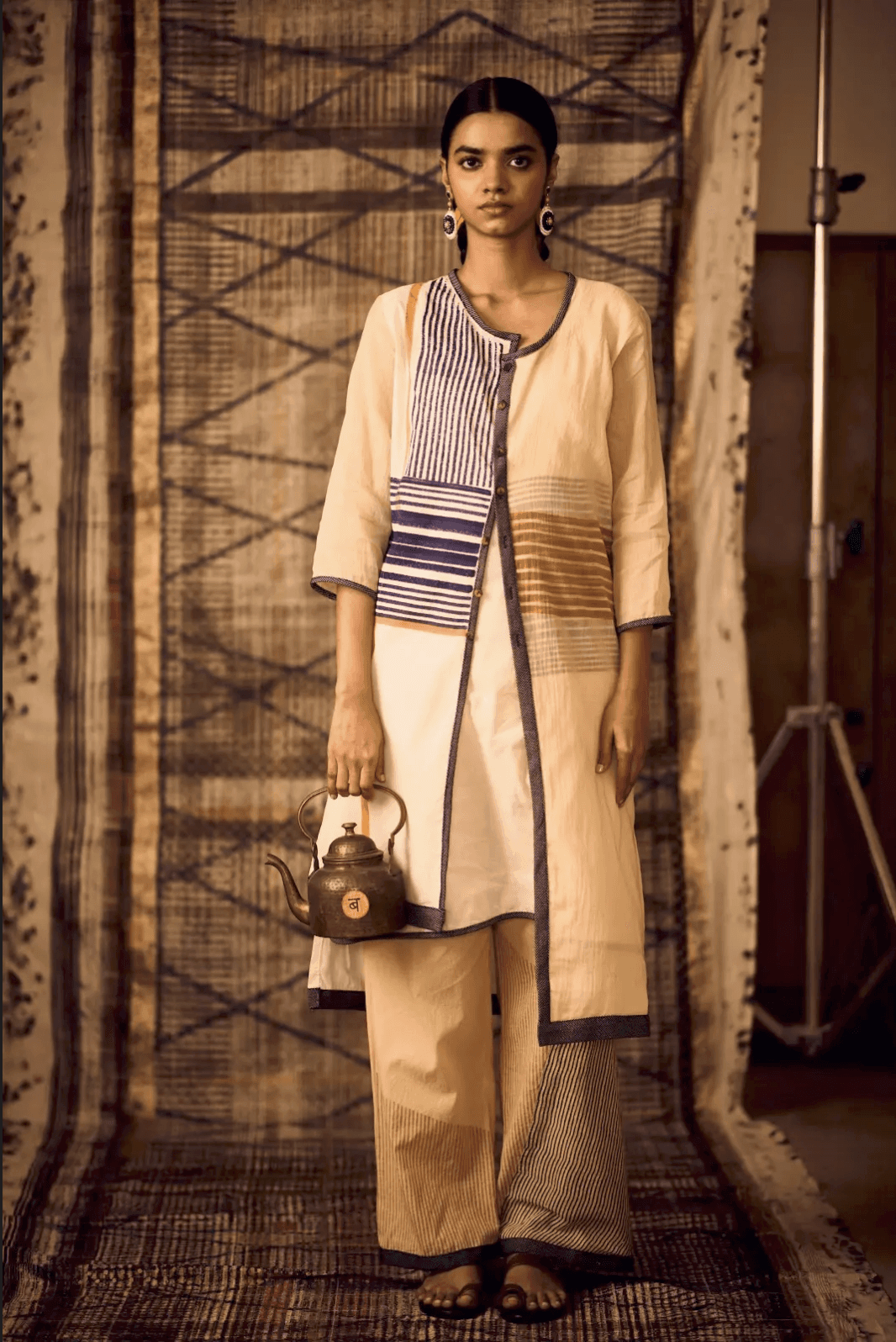
And then she offers the most honest version of what ethical fashion actually looks like: imperfect, human, un-Instagrammable in parts:
“We are a women led brand working with many women who come from difficult domestic and social circumstances, which means professionalism and consistency often have to be built, not assumed. That sometimes slows us down and makes the business harder to run.”
This is probably how values look like when they are inconvenient.
One of India’s leading couturiers: Sahil Kochhar, on the other hand, comes at it from a different angle: it’s all about a system
“It isn’t something I calculate, it’s something I commit to as part of doing business responsibly.”
And where Mariyam speaks about walking away from orders, Sahil speaks about building sustainability so deeply into the model that it becomes margin-positive over time:
“Sustainability is from inception, not perception. By avoiding unethical materials, we built quality and long-term value that strengthened the business and improved margins.” “Not just that: his payments are timely, his workers are well looked after, his overall practice is ethical, the workers work in excellent conditions and he never compromises on ethics,” said a former employee.
There’s a crucial difference between these two positions and the story becomes richer when you let them sit side by side.
Mariyam’s argument: ethics will repeatedly threaten your margins, so you must redesign the business to protect people. Sahil’s argument: if you build ethics into the DNA early enough, it stops being a cost and starts becoming value.
Both can be true depending on category, scale, customer, and pricing power. And that “depending” is where the business forward hunch of a creative house lives.
3. The Consumer: The Sustainability Tax and The Very BIG Trust Problem.
Now we get to the part the industry loves to weaponise: “But consumers won’t pay.”
That statement is often used as a blanket excuse to justify compromised wages, compromised materials, compromised transparency.
But consumer behaviour is not one thing. It is a spectrum. And our interviews show that spectrum beautifully because they are dead honest to a point of discomfort for the brands reading these.
Anu Ahuja, one of the most respected fashion show directors in India, says she would pay more, if the product is genuinely sustainable:
“I would wholeheartedly pay more for a genuinely sustainable product. Because you’re not only buying handmade, natural fabrics with no synthetic dyes but also sustaining production practices that don’t harm our environment plus providing and sustaining indigenous craftsmen who’s talent and knowledge would otherwise be lost.”
Then she adds the line every brand should print and tape above their marketing desk:
“Sustainable labels do act as a ‘Confidence Booster’ once the basics of design, fit, brand trust and usability are met. Many consumers are wary of greenwashing, so labels alone rarely motivate a purchase unless backed by transparency and storytelling.”
So: The label is not the reason. Trust is the reason.
Avantika Singh, a media personality, echoes a quieter version of the same truth:
Would she pay more? Yes, if there is transparency.
Do labels influence purchase? They reassure.
Does ethical fashion look different? Yes, she assumes so.
And then we have the most important voice for this story, because she disrupts the neat moral narrative:
Dr Sonia Lal Gupta loves discovering fashion labels and she is literally the kind of consumer brands imagine when they say “our audience has taste, the purchasing power and are discerning.” And she says:
“No I wouldn’t pay more even though I support sustainability!”
She supports the idea, but not the premium. She expects “better quality surely especially if I am paying more.” She sees labels as reassurance. She does not see them as purchase triggers.
This is what brands hate admitting: a consumer can emotionally support sustainability and still not financially subsidise it.
Tamira Shah and Sonya Vajifdar of Eco Fashion Week India give us the ideal, evolved consumer position like buy fewer, buy better but even they demand something that most brands still don’t provide:
“What matters most to us is knowing why something costs more and who benefits from that cost.”
They add:
“We don’t like paying more just because a brand says it’s ‘eco’ without explaining what that really means.”
This is the consumer contract of 2026:
Don’t just ask me to pay more. Show me where it goes.
Which leads us to the heart of it:
Is Sustainability a Business Model or a Marketing Story?
Sustainability became popular because it offered fashion a new kind of desirability: moral desirability. You could sell beauty with a conscience. But moral desirability collapses when the consumer senses theatre.
Spearheading the movement for traceable, ethical and transparent fashion in India, Vaishali comments, speaking of her namesake label, “People now understand well about its economics, or at least about the macro non-economics of it. Still aesthetics drives sales, but the good thing is that customers are starting to require transparency, and that is where we are really working hard, giving the transparent process for each garment, by scanning each QR code that we hang on them.”
And the consumer is sensing it. Hence internationally, some regulators stepping in on green claims.
At the same time, the industry’s material realities are moving slower than its storytelling. Fashion is still structurally dependent on fossil-fuel-derived fibres like polyester, and recycling systems still struggle to keep up with the volume being produced and consumed.
So we have an industry that wants the reputation benefits of sustainability faster than it wants the structural pain of becoming sustainable.
This is why the sustainability conversation often remains fragmented: a recycled capsule here, a craft campaign there, a carbon-neutral claim here, an artisan film there without the hard, boring, expensive work of building an accountable system end to end.
And Sahil Kochhar names that without sounding preachy:
“Often no. The conversation stays fragmented, avoiding the harder work of closing the loop.”
“Closing the loop” is the part that doesn’t photograph well. It’s vendor mapping. It’s long-term contracts. It’s pricing discipline. It’s refusing to overproduce. It’s paying on time even when cash flow is tight. It’s telling the truth when you fall short.
It’s the opposite of glamour. And yet it is the only place where ethics becomes real.
Can Ethical Fashion Exist at Scale or Does Growth Dilute Values?
The most useless question in fashion is “Is this brand sustainable?” It invites a yes/no answer for a problem that is not a yes/no.
The better question is: What model of sustainability is this brand practising and what are they willing to trade for it?
From what we’re seeing globally and in India, there are three dominant models that have a chance of being honest.
Model 1: Limited growth by design.
Some brands cap growth intentionally to protect craft ecosystems, quality, and labour integrity. They stay founder-controlled, resist certain types of funding, and accept that scarcity is part of ethics. The trade-off: they can be cult influential without becoming mass.
Most luxury brands have the positioning they do by monopolising supply and demand. In ethos, a luxury brand is supposed to be slow fashion, high quality and rare. While the luxury segment has become more of a marketing stunt rather than maintaining craftsmanship, the idea of a sustainable and ethical process remains integral to the ideals of a brand in this segment. On this, Vaishali notes, “Slow fashion is becoming more and more mainstream in the luxury segment where we are positioned. It goes in fact almost synonymously. Luxury is about bespoke, workmanship, details: the definition of slow fashion, or viceversa.”
Model 2: Transparency over perfection.
Other brands admit they are imperfect and publish what they can: supplier lists, wage policies, audits, learnings, goals, failures. They choose trust over polish. This is risky because transparency invites scrutiny but it’s also the only way to build adult consumers.
This is why Mariyam’s “imperfect and transparent” stance matters:
“There is always room to grow. No one can be perfect, really. And when something looks too perfect, I think it is time to scrape the layers and ask what is really underneath.”
Within an industry that often glamourises what it can’t cover up, an honest and critical approach to one’s own craft only adds to the conscientiousness of the label, and the designer themselves too. Vaishali remains committed to both her audience and the authenticity of her brand by highlighting her possible improvements with accountability.
“Cotton is still something painful for me. While we source organic cotton, still the supply chain needs too much water, and I am trying to sensibilize my supply chain to keep pushing to find more and more sustainable ways to grow it.”
Instead of only celebrating her achievements in her path of sustainability, she also remains evaluative of ways to refine and enhance her process.
That is a philosophy for how sustainability should perhaps be communicated.
Model 3: Scale, but slower and with systems.
This is the hardest model because it requires operational excellence. It requires building ethics into procurement, production planning, contracts, QA, HR, payments, and forecasting so that sustainability is not a marketing layer but a structural behaviour.
Sahil’s framing belongs here: “built into the system from day one.” But even here, the tension remains, because the broader fashion system (trend velocity, fashion week calendars, drop fatigue) is designed to reward speed.
Sahil doesn’t pretend otherwise. He says:
“Yes and that tension is exactly where the conversation needs to sit.”
That line is important because it tells you what this story is really about.
The uncomfortable truth: sustainability is a negotiation & no brand can be a 100% sustainable as it is a very wide topic and this article has not even scratched the surface yet.
The French Press Global take:
“Not every brand can be perfectly ethical. It is impossible. Pretending otherwise harms the ecosystem because it rewards dishonesty. What a brand can be: As sustainable as possible in its intent and practice. Transparency matters. And we can stop romanticising ethical fashion as a lifestyle choice that floats above economics. Ethics is a constant negotiation between ideals and survival.”
Mariyam says it plainly:
“It becomes unrealistic the moment your bank balance and your profitability tell you it is. That is the real point of reckoning. Ethics are easy to talk about until the numbers start pushing back.”
TO BE CONTINUED, FOR SUBSCRIBERS ONLY.
This is where the surface ends and the reporting begins.
The complete piece, the full archive, and access to The French Press Circle. Reporting answerable only to its readers.
Already a subscriber ?
Login
Read these on the house, with our compliments.
A selection from the current issue, open to all readers. Read them in full. The rest is one decision away.








CAN FASHION REALLY AFFORD TO BE ETHICAL?
Who really pays for ‘conscious’ clothing?
Just like a fad, many brands claim to be ethical because editorial and social media has called sustainability cool. The tags we see are: Sustainable. Responsible. Conscious. Planet-first. Artisan-led. The list has more but we get the drift. The vocabulary has become so universal that if you removed the logos and left only the sustainability claims, half the industry would read like it was written by the same copywriter on the same deadline.
And yet when margins tighten, something always gives.
A fabric is quietly swapped. A wage is delayed. A production timeline is ‘optimised.’ A promise is softened. A certification disappears from the website or printed inner label without an explanation.
So the question is whether fashion can afford to be ethical despite every intention to that or be perceived as such without outsourcing the cost of virtue to the weakest part of the chain, or to the consumer who is paying more but still shopping blind.
Let’s take a forensic look at economics so that this stops looking like some moral takedown.
The Sustainability Performance: The Semantics of It All!
‘Sustainability’ has become a marketing & PR language language first. The practice is almost always secondary for a majority of brands that we have around us. It is the easiest story to tell because it offers what fashion loves most: a clean narrative. A good-versus-bad binary. A feeling of righteousness that photographs well in beiges, greens and hues of browns etc.. A virtue signal that sells without needing the mess of proof. Aha. That proof is where it goes out of the window.
All sustainability claims are never created equal.
Some are for sure measurable: verified fibre standards, audited wage systems, traceable supply chains, disclosed vendor lists, public impact reports, third-party assurance. Most are not.
Most are vibes: ‘eco,’ ‘green,’ ‘planet friendly,’ ‘responsible,’ ‘conscious.’ The words are elastic enough to cover anything from genuinely low-impact manufacturing to one recycled capsule on a website that otherwise runs on conventional production.
On this, Vaishali Shadangule of Vaishali S. Couture comments, “Unfortunately, there is still a lot of green washing, actually more greenwashing than real sustainability. I always say that this is a pity, because for young people this becomes a hurdle even to understand what real sustainability means. I am seeing more and more brands shouting about their sustainability and how sustainable they are, while their garments and processes are just shouting the opposite.”
And increasingly, regulators are acknowledging that sustainability has been used as a marketing aesthetic, not an accountability framework. In the UK, the Competition and Markets Authority secured undertakings from major fashion retailers to ensure ‘green claims’ are accurate and not misleading, including avoiding vague terms and requiring substantiation.
This matters because fashion is one of the few industries where a narrative can become a substitute for evidence. You can say ‘artisan-led’ and still run late payments. It happens. The amount of back-end people who have complaints while being interviewed is mind numbing. You can say ‘community’ and still treat makers like expandable labour. You can say ‘heritage’ and still squeeze the cluster when the buyer or merchandiser who’s negotiating on behalf of a retailer demands a bigger discount.
So yes, sustainability is often a performance and not always because brands are evil. They often don’t have a choice when one takes a hard look at their balance sheets. Even the system for that matter, rewards performance and performative optics where a chunk of their spends go squeezing out their margins to sometimes less than 7- 10% EBITDA.
Which brings us to the real crack line.
The Margin Problem:
There is a simple, uncomfortable truth that most ‘conscious fashion’ storytelling tries to avoid. Ethical production is slower. It is more human. It is less scalable. And that has a huge input cost.
You can try to hide that cost behind better marketing, but you can’t delete it.
If you source with integrity: traceable inputs, safer processes, fairer wages, responsible dyeing, smaller batch runs, you usually pay in one (or more) of three ways:
Higher input costs (materials, compliance, audits, smaller MOQs)
Higher time cost (hand processes, slow manufacturing, relationship-based sourcing)
Higher operational cost (training, welfare, documentation, monitoring, waste management)
And fashion businesses being run for valuations for series A fundings or buyouts cannot afford higher input costs. Investors love speed, scale & predictable margins. They love growth curves. They love ‘more’ disguised as innovation. Big ticket investors across sectors look at businesses from this 101 lens.
So the moment the market turns: raw materials spike, shipping spikes, retail footfall weakens, customer acquisition costs climb, funding tightens, brands are forced into a decision:
Do we keep ethics intact and let profitability take the hit?
Or do we protect profitability and let ethics bend quietly where the customer can’t see?
We have watched this happen in real time across brands in India and overseas.
While most perish in the paradox of these questions, brands like Vaishali S. move towards sustainability by making it their mission, setting up the supply chain in a way that allows them to make it their foundation, leaving no space for ambiguity, and elevating their placement in the luxury segment by taking a firm position.. The founder, Vaishali Shadangule comments, “My brand was born for that, and sustainability is our DNA. We could never start cutting corners. I could never do that.”
During the pandemic, retailers cancelled an estimated $40 billion in orders leaving suppliers unpaid and workers without wages and public pressure campaigns pushed brands to pay a portion of what was owed.
And even beyond cancellations, the aftershocks show where the cost travels when brands protect themselves: the Worker Rights Consortium in the US has described billions in severance theft tied to garment workers losing legally owed pay when factories shut down.
This is the central truth of the ethical-fashion paradox:
Conscious fashion moves cost.
The question is: Who absorbs it?
Who Really Pays: The Artisan, The Atelier, or The Consumer?
If you want the spine of this story, it is this: Someone pays. The only question is whether the person paying is visible or buried under good typography.
1. The Artisan: Romance on the Edge
The artisan sits at the centre of fashion’s moral storytelling and too often at the edge of its financial security.
Because craft is seasonal. Demand fluctuates. Drops fail. Trends change. Retail orders get delayed. And in much of the craft economy, workers still operate without the cushions that formal industries take for granted: predictable wages, enforceable contracts, paid leave, healthcare, grievance systems, long-term security.
Many ‘artisan-led’ brands are genuinely trying. Some are not. But even when intentions are pure, the artisan can still be the shock absorber when business pressures rise.
Vaishali Shadangule of Vaishali S. Couture comments, “My brand was born out of ethical village life, to support the work of the hand weavers and not throw away anything of their work, to support local communities and their women. It is unfortunate that people still look at all this as a cost. You have to also think that this is a non-negotiable aspect of a brand nowadays, an asset that will get back to you loyal clients that believe in the mission of the brand.”
When we read ‘handmade,’ we must also ask: handmade under what protections? Under what negotiation power? Under what payment discipline? Under what continuity?
And if the brand’s ethics are real, the brand must be willing to tell the truth about the cost of keeping them real because silence becomes the space where exploitation hides.
2. The Designer and Studio: Ethics as a Personal Tax
Here is a truth most founders won’t say out loud because the industry glamorises struggle until it becomes embarrassing to admit you’re bleeding:
A lot of ethical brands survive by underpaying themselves, delaying their own salaries, and absorbing costs that should actually be distributed across the chain.
This is why sustainability, in practice, can become a personal tax on the founder especially in India, where craft-based brands can be celebrated editorially but still forced to compete against a market that expects discounts and speed.
And this is where interviews land like a punch.
Mariyam Khatri of BANANA Labs, trained at the Indian Institute of Crafts and Design frames sustainability as a decision about life itself as opposed to being a marketing buzzword:
“Even before sustainability became a buzzword, most conversations were only about materials being vegan or eco friendly. But for me, the bigger question was always about living beings, people, animals, and life itself. In the four pillars of sustainability, living beings matter the most. Nothing has value without life behind it.”
Then she goes where most founders refuse to go: into the specific moment where ethics are tested: margins. “Yes, we have been tested many times. It meant refusing rushed production, refusing large batch manufacturing, and saying no to big B2B orders that could have kept our workshop busy for a year but only by operating on wafer thin margins that would dilute everything we stand for.”
Read that again: orders that could have kept the workshop busy for a year. That’s not a small temptation. That’s survival money. That’s stability. That’s the kind of order that allows a brand to grow in public and breathe a bit.
And she says they walked away.
But then she makes the key point that separates ethics-from-inception brands from ethics-as-a-campaign brands. She talks about redesigning the business so people don’t absorb the damage without romanticising the damage:
“So instead of pushing artisans to work faster or cheaper, we focused on making the business smarter. We re-engineered patterns to reduce fabric waste, upcycled fabric waste and reused blocks and motifs across collections, planned better so there was less dead stock. We innovated in design. In the end, we chose to let the business adapt rather than asking the people behind it to absorb the cost.”
That last line is the thesis: adapt the business, don’t squeeze the maker.
And then she offers the most honest version of what ethical fashion actually looks like: imperfect, human, un-Instagrammable in parts:
“We are a women led brand working with many women who come from difficult domestic and social circumstances, which means professionalism and consistency often have to be built, not assumed. That sometimes slows us down and makes the business harder to run.”
This is probably how values look like when they are inconvenient.
One of India’s leading couturiers: Sahil Kochhar, on the other hand, comes at it from a different angle: it’s all about a system
“It isn’t something I calculate, it’s something I commit to as part of doing business responsibly.”
And where Mariyam speaks about walking away from orders, Sahil speaks about building sustainability so deeply into the model that it becomes margin-positive over time:
“Sustainability is from inception, not perception. By avoiding unethical materials, we built quality and long-term value that strengthened the business and improved margins.” “Not just that: his payments are timely, his workers are well looked after, his overall practice is ethical, the workers work in excellent conditions and he never compromises on ethics,” said a former employee.
There’s a crucial difference between these two positions and the story becomes richer when you let them sit side by side.
Mariyam’s argument: ethics will repeatedly threaten your margins, so you must redesign the business to protect people. Sahil’s argument: if you build ethics into the DNA early enough, it stops being a cost and starts becoming value.
Both can be true depending on category, scale, customer, and pricing power. And that “depending” is where the business forward hunch of a creative house lives.
3. The Consumer: The Sustainability Tax and The Very BIG Trust Problem.
Now we get to the part the industry loves to weaponise: “But consumers won’t pay.”
That statement is often used as a blanket excuse to justify compromised wages, compromised materials, compromised transparency.
But consumer behaviour is not one thing. It is a spectrum. And our interviews show that spectrum beautifully because they are dead honest to a point of discomfort for the brands reading these.
Anu Ahuja, one of the most respected fashion show directors in India, says she would pay more, if the product is genuinely sustainable:
“I would wholeheartedly pay more for a genuinely sustainable product. Because you’re not only buying handmade, natural fabrics with no synthetic dyes but also sustaining production practices that don’t harm our environment plus providing and sustaining indigenous craftsmen who’s talent and knowledge would otherwise be lost.”
Then she adds the line every brand should print and tape above their marketing desk:
“Sustainable labels do act as a ‘Confidence Booster’ once the basics of design, fit, brand trust and usability are met. Many consumers are wary of greenwashing, so labels alone rarely motivate a purchase unless backed by transparency and storytelling.”
So: The label is not the reason. Trust is the reason.
Avantika Singh, a media personality, echoes a quieter version of the same truth:
Would she pay more? Yes, if there is transparency.
Do labels influence purchase? They reassure.
Does ethical fashion look different? Yes, she assumes so.
And then we have the most important voice for this story, because she disrupts the neat moral narrative:
Dr Sonia Lal Gupta loves discovering fashion labels and she is literally the kind of consumer brands imagine when they say “our audience has taste, the purchasing power and are discerning.” And she says:
“No I wouldn’t pay more even though I support sustainability!”
She supports the idea, but not the premium. She expects “better quality surely especially if I am paying more.” She sees labels as reassurance. She does not see them as purchase triggers.
This is what brands hate admitting: a consumer can emotionally support sustainability and still not financially subsidise it.
Tamira Shah and Sonya Vajifdar of Eco Fashion Week India give us the ideal, evolved consumer position like buy fewer, buy better but even they demand something that most brands still don’t provide:
“What matters most to us is knowing why something costs more and who benefits from that cost.”
They add:
“We don’t like paying more just because a brand says it’s ‘eco’ without explaining what that really means.”
This is the consumer contract of 2026:
Don’t just ask me to pay more. Show me where it goes.
Which leads us to the heart of it:
Is Sustainability a Business Model or a Marketing Story?
Sustainability became popular because it offered fashion a new kind of desirability: moral desirability. You could sell beauty with a conscience. But moral desirability collapses when the consumer senses theatre.
Spearheading the movement for traceable, ethical and transparent fashion in India, Vaishali comments, speaking of her namesake label, “People now understand well about its economics, or at least about the macro non-economics of it. Still aesthetics drives sales, but the good thing is that customers are starting to require transparency, and that is where we are really working hard, giving the transparent process for each garment, by scanning each QR code that we hang on them.”
And the consumer is sensing it. Hence internationally, some regulators stepping in on green claims.
At the same time, the industry’s material realities are moving slower than its storytelling. Fashion is still structurally dependent on fossil-fuel-derived fibres like polyester, and recycling systems still struggle to keep up with the volume being produced and consumed.
So we have an industry that wants the reputation benefits of sustainability faster than it wants the structural pain of becoming sustainable.
This is why the sustainability conversation often remains fragmented: a recycled capsule here, a craft campaign there, a carbon-neutral claim here, an artisan film there without the hard, boring, expensive work of building an accountable system end to end.
And Sahil Kochhar names that without sounding preachy:
“Often no. The conversation stays fragmented, avoiding the harder work of closing the loop.”
“Closing the loop” is the part that doesn’t photograph well. It’s vendor mapping. It’s long-term contracts. It’s pricing discipline. It’s refusing to overproduce. It’s paying on time even when cash flow is tight. It’s telling the truth when you fall short.
It’s the opposite of glamour. And yet it is the only place where ethics becomes real.
Can Ethical Fashion Exist at Scale or Does Growth Dilute Values?
The most useless question in fashion is “Is this brand sustainable?” It invites a yes/no answer for a problem that is not a yes/no.
The better question is: What model of sustainability is this brand practising and what are they willing to trade for it?
From what we’re seeing globally and in India, there are three dominant models that have a chance of being honest.
Model 1: Limited growth by design.
Some brands cap growth intentionally to protect craft ecosystems, quality, and labour integrity. They stay founder-controlled, resist certain types of funding, and accept that scarcity is part of ethics. The trade-off: they can be cult influential without becoming mass.
Most luxury brands have the positioning they do by monopolising supply and demand. In ethos, a luxury brand is supposed to be slow fashion, high quality and rare. While the luxury segment has become more of a marketing stunt rather than maintaining craftsmanship, the idea of a sustainable and ethical process remains integral to the ideals of a brand in this segment. On this, Vaishali notes, “Slow fashion is becoming more and more mainstream in the luxury segment where we are positioned. It goes in fact almost synonymously. Luxury is about bespoke, workmanship, details: the definition of slow fashion, or viceversa.”
Model 2: Transparency over perfection.
Other brands admit they are imperfect and publish what they can: supplier lists, wage policies, audits, learnings, goals, failures. They choose trust over polish. This is risky because transparency invites scrutiny but it’s also the only way to build adult consumers.
This is why Mariyam’s “imperfect and transparent” stance matters:
“There is always room to grow. No one can be perfect, really. And when something looks too perfect, I think it is time to scrape the layers and ask what is really underneath.”
Within an industry that often glamourises what it can’t cover up, an honest and critical approach to one’s own craft only adds to the conscientiousness of the label, and the designer themselves too. Vaishali remains committed to both her audience and the authenticity of her brand by highlighting her possible improvements with accountability.
“Cotton is still something painful for me. While we source organic cotton, still the supply chain needs too much water, and I am trying to sensibilize my supply chain to keep pushing to find more and more sustainable ways to grow it.”
Instead of only celebrating her achievements in her path of sustainability, she also remains evaluative of ways to refine and enhance her process.
That is a philosophy for how sustainability should perhaps be communicated.
Model 3: Scale, but slower and with systems.
This is the hardest model because it requires operational excellence. It requires building ethics into procurement, production planning, contracts, QA, HR, payments, and forecasting so that sustainability is not a marketing layer but a structural behaviour.
Sahil’s framing belongs here: “built into the system from day one.” But even here, the tension remains, because the broader fashion system (trend velocity, fashion week calendars, drop fatigue) is designed to reward speed.
Sahil doesn’t pretend otherwise. He says:
“Yes and that tension is exactly where the conversation needs to sit.”
That line is important because it tells you what this story is really about.
The uncomfortable truth: sustainability is a negotiation & no brand can be a 100% sustainable as it is a very wide topic and this article has not even scratched the surface yet.
The French Press Global take:
“Not every brand can be perfectly ethical. It is impossible. Pretending otherwise harms the ecosystem because it rewards dishonesty. What a brand can be: As sustainable as possible in its intent and practice. Transparency matters. And we can stop romanticising ethical fashion as a lifestyle choice that floats above economics. Ethics is a constant negotiation between ideals and survival.”
Mariyam says it plainly:
“It becomes unrealistic the moment your bank balance and your profitability tell you it is. That is the real point of reckoning. Ethics are easy to talk about until the numbers start pushing back.”
TO BE CONTINUED, FOR SUBSCRIBERS ONLY.
This is where the surface ends and the reporting begins.
The complete piece, the full archive, and access to The French Press Circle. Reporting answerable only to its readers.
Already a subscriber ?
Login
Read these on the house, with our compliments.
A selection from the current issue, open to all readers. Read them in full. The rest is one decision away.