Back in June of 2025, the regular programming during the then ongoing Spring/Summer 2026 menswear show at Milan Fashion Week was interrupted when Prada introduced their new leather sandals on the runway. What should have been a moment reserved for headlines of fashion editorials or niche couture-covering social media accounts became a global controversy. You see, the seemingly innocuous footwear looked exactly like the ones that had been gracing the feet of millions of Indians for many, many years before the Prada showcase: the humble yet solid Kolhapuri sandals.
The handcrafted leather sandals have been made for centuries in and around districts in Maharashtra and Karnataka and earned a Geographical Indication (GI) tag in 2019, recognising their cultural specificity and heritage. The collective ire around the globe stemmed from how Prada omitted any mention of the sandals’ Indian roots, going as far as to list them as being worth ₹1.2 Lakh. The move was slammed across the board for being a classic case of cultural appropriation, arguing that the brand was blatantly commodifying a humble craft without acknowledging its origin or the people who sustain it.

Mere days after this controversy, Jonathan Anderson debuted his collection for Dior at the Paris Fashion Week. A coat sent down the runway fuelled the flames already set by the Kolhapuri sandals when critics noted that the nearly ₹2 crore worth coat was made using Mukaish embroidery, a metal strand embroidery technique from Lucknow. The lack of credit continued to propel the conversation forward.
The Thing About Appropriation and Authorship
In contemporary fashion, culture is increasingly treated like a moodboard from which motifs, texture and forms are cherry picked and packaged to appeal to global consumers. Take the infamous Zara ‘lungi’ skirt from 2018 that resembled the traditional Indian garment but was being sold at a price vastly different than its Indian counterpart.

The global fashion industry has long drawn on Indian heritage, from textile to accessories, but seldom with meaningful credit to the artisans and communities that form the foundation of these traditions. The uproar following the Prada Kolhapuri incident, or the many similar examples that have cropped up over the past years, is more than aesthetic ire. The pricing disparity alone has become emblematic of structural inequalities with the staggering markups underscoring how cultural borrowing can translate into immense profits for luxury brands with zero direct benefits to the artisans themselves.
What makes these moments especially complex in India is the intersection with caste and communal histories. Traditional makers of leather footwear, including the Kolhapuri chappals in question, have historically been artisanal communities like the Chamars whose labour was assigned on the basis of caste and ritual notions of ‘impurity’. Yet when these craft languages make home on runways around the world, what gets highlighted is the aesthetic and not the centuries of marginalised labour that shaped its identity.
In her 1996 book Clothing Matters: Dress and Identity in India, anthropologist Emma Tarlo notes that clothing in India cannot be read as neutral. Dress, she notes, is deeply bound up with social identities and hierarchies, functioning as a language through which class, community and status are negotiated. This is precisely why the issue of major fashion houses like Prada and Dior appropriating Indian crafts that have been associated with marginalised castes and religious communities managed to open up the Pandora’s box of conversation that rarely happens around fashion. These communities face stigma and intense socio-economic disparity while their heritage and work is rebranded by elite fashion economies.
In a 2024 paper published in the Indian Journal of Fashion Technology, author Jessica Brown sought to understand the impact of appropriation on cultural heritage and identity. Her findings note that when fashion adopts cultural forms without respect or reciprocity, marginalised communities bear the cost both in lost recognition and in erasure of their lived identities. In the book Scheduled Castes in the Indian Labour Market: Employment Discrimination and Its Impact on Poverty, authors Sukhadeo Thorat, S Madheswaran, and B P Vani document how caste identity significantly shapes access to remunerative work, wages and occupational mobility, with Scheduled Castes frequently confined to lower-paid and insecure labour even as their work is foundational to larger economies. This can be seen in the cases of appropriation in fashion where artisans remain hidden behind the vague term of ‘heritage’ while designers become ‘creators’. It’s clear that the systematic valuation of authorship is clearly skewed.
Can Conversation Bring Change?
Now that the conversation is gaining momentum, it's important to understand what we’re fighting for and against. A useful way to parse these debates is to distinguish between appropriation, appreciation and reclamation. Appropriation happens when cultural elements are extracted without context, and more importantly, consent. Appreciation, on the other hand, involves informed engagement with acknowledgement and reclamation is when communities assert authorship and economic benefit from their own cultural heritage. In India’s fashion landscape, the latter remains elusive but not completely out of the scene.
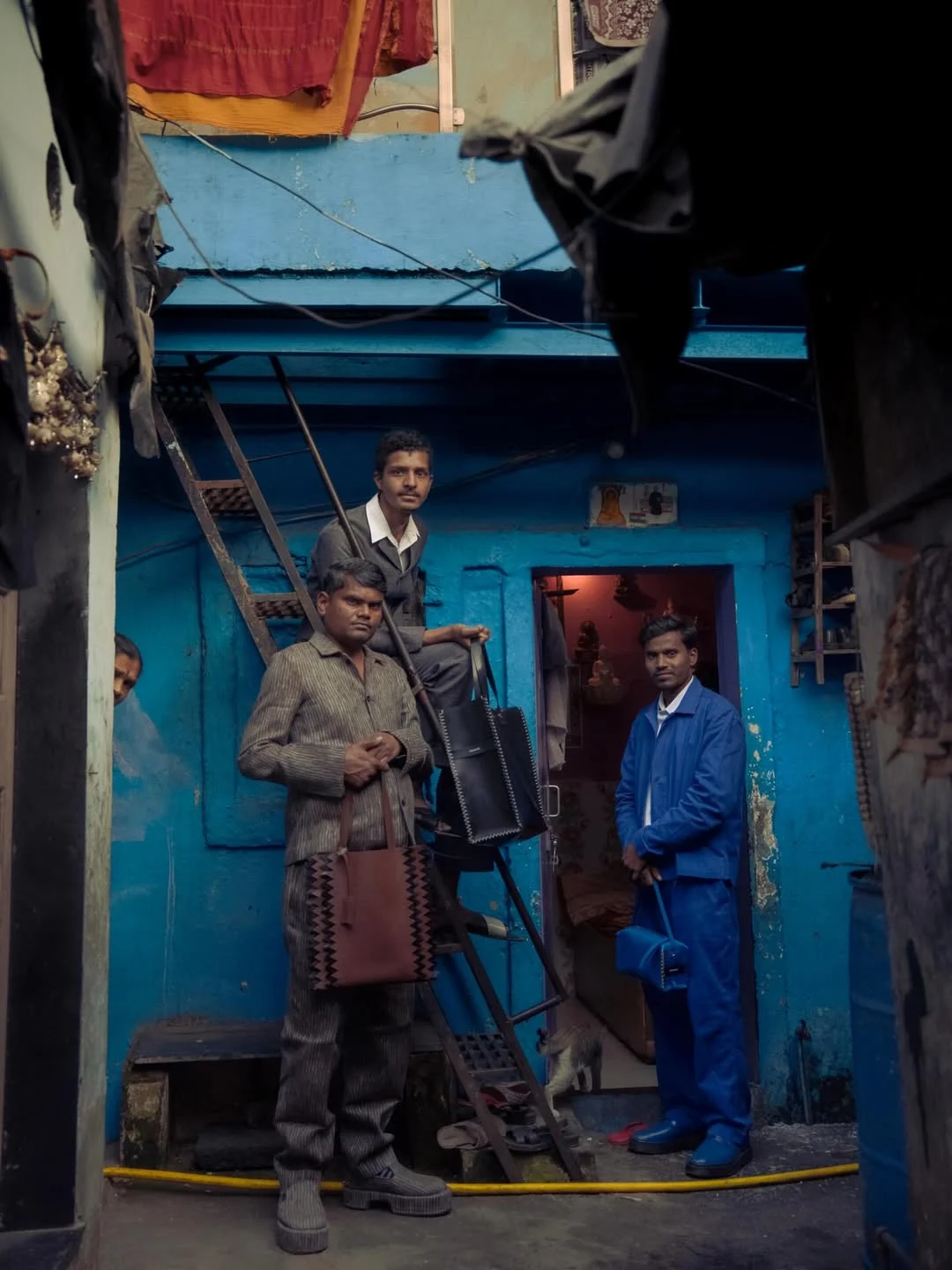
Take community-rooted initiatives like Chamar Studio. Artist and activist Sudheer Rajbhar wanted to uplift the Dalit and muslim communities in India who had lost their jobs as leather workers following the 2015 beef ban by the government. This formed the foundation of the accessory brand that aimed to “shift traditional social vision tie to intouchables by lending prestige” to the marginalised communities through their craft.
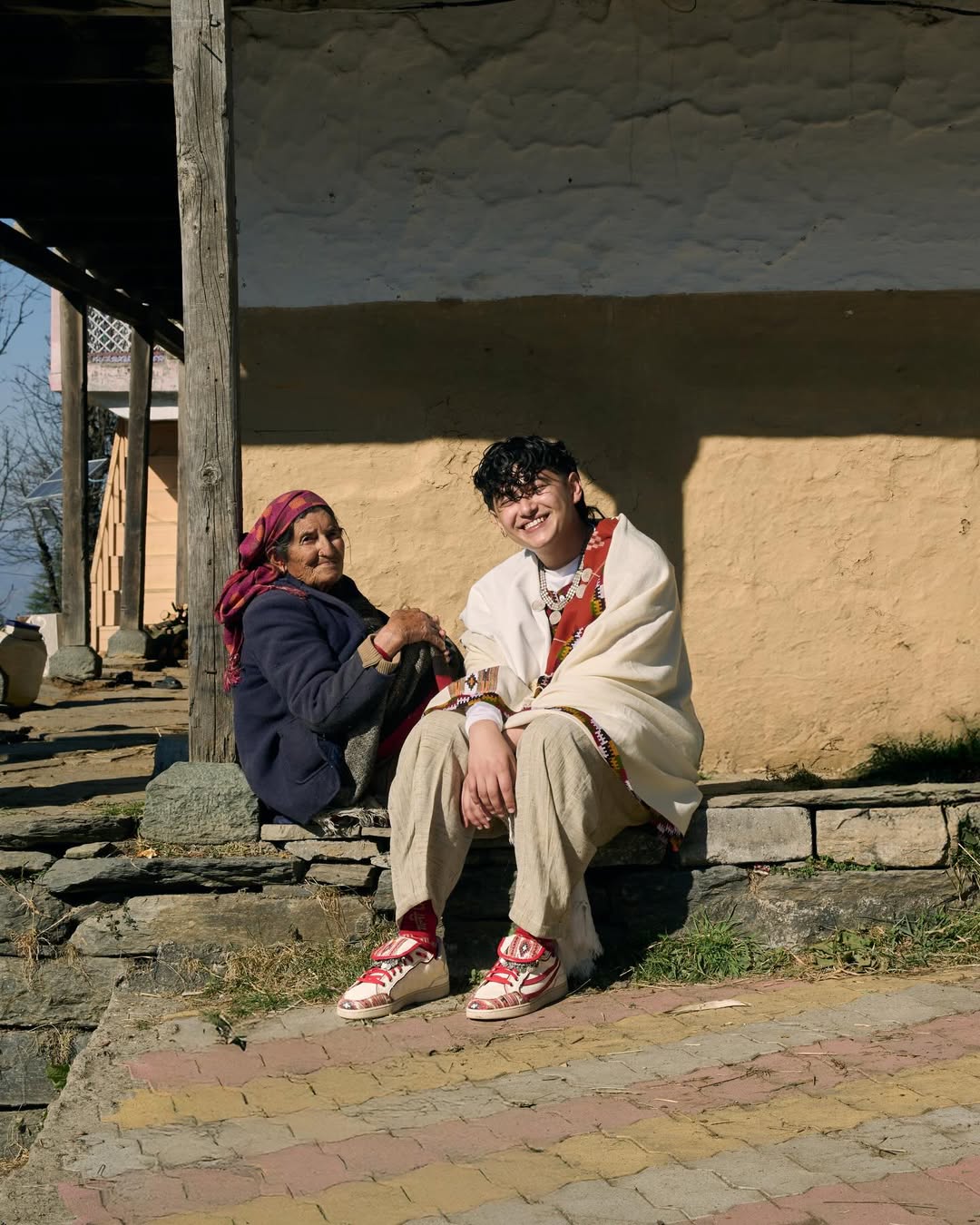
Similarly, homegrown brands have started building long-term partnerships with artisan collectives by offering revenue sharing, trasnparent attribution and shared creative credit, signalling an ethical shift. Footwear label Gully Labs partnered with musician Aryan Katoch for a pair of sneakers inspired from the singer’s Himachal roots. Through his music, Katoch aims to bring his culture to the forefront and this collaboration managed to be an example of how craft can be co-authored rather than appropriated.
So when it comes to questioning whether continued conversation and its impact on cultural appropriation, Prada’s response to the backlash is all the answer that one needs. Following the outrage, the Italian label announced a line of limited edition footwear inspired by the Indian-made Kolhapuri sandals. The collection will feature 2000 pairs of sandals made in the states of Maharashtra and Karnataka. In December 2025, Maharashtra's Social Justice Minister Sanjay Shirsat spoke to BBC Marathi about the new initiative: ‘Prada Made in India’. “Keeping in mind Prada's requirements and demand, some artisans will receive special training from Prada and LIDCOM (a state-backed entity supporting the leather industry in Maharashtra). Additionally, around 200 Kolhapuri chappal artisans will be given three years of training in Italy,” he said.

While this is a big step towards safeguarding the rights and agency of marginalised artisans across the globe, it’s clear that a cultural shift is long overdue. This means an overhaul of systems that prevent legal and institutional innovation that can support economic agency, authorship rights, and sustained visibility for craft communities.
In a culturally rich and diverse country like India, heritage cannot be treated like an open-access archive. It’s sustained by people and their intergenerational knowledge. For the world to truly engage with this ecosystem ethically, it must move beyond the aesthetics of admiration and towards recognition and recompense. Culture, at the end of the day, is not a moodboard.
TO BE CONTINUED, FOR SUBSCRIBERS ONLY.
This is where the surface ends and the reporting begins.
The complete piece, the full archive, and access to The French Press Circle. Reporting answerable only to its readers.
Already a subscriber ?
Login
Read these on the house, with our compliments.
A selection from the current issue, open to all readers. Read them in full. The rest is one decision away.











Back in June of 2025, the regular programming during the then ongoing Spring/Summer 2026 menswear show at Milan Fashion Week was interrupted when Prada introduced their new leather sandals on the runway. What should have been a moment reserved for headlines of fashion editorials or niche couture-covering social media accounts became a global controversy. You see, the seemingly innocuous footwear looked exactly like the ones that had been gracing the feet of millions of Indians for many, many years before the Prada showcase: the humble yet solid Kolhapuri sandals.
The handcrafted leather sandals have been made for centuries in and around districts in Maharashtra and Karnataka and earned a Geographical Indication (GI) tag in 2019, recognising their cultural specificity and heritage. The collective ire around the globe stemmed from how Prada omitted any mention of the sandals’ Indian roots, going as far as to list them as being worth ₹1.2 Lakh. The move was slammed across the board for being a classic case of cultural appropriation, arguing that the brand was blatantly commodifying a humble craft without acknowledging its origin or the people who sustain it.
Mere days after this controversy, Jonathan Anderson debuted his collection for Dior at the Paris Fashion Week. A coat sent down the runway fuelled the flames already set by the Kolhapuri sandals when critics noted that the nearly ₹2 crore worth coat was made using Mukaish embroidery, a metal strand embroidery technique from Lucknow. The lack of credit continued to propel the conversation forward.
The Thing About Appropriation and Authorship
In contemporary fashion, culture is increasingly treated like a moodboard from which motifs, texture and forms are cherry picked and packaged to appeal to global consumers. Take the infamous Zara ‘lungi’ skirt from 2018 that resembled the traditional Indian garment but was being sold at a price vastly different than its Indian counterpart.
The global fashion industry has long drawn on Indian heritage, from textile to accessories, but seldom with meaningful credit to the artisans and communities that form the foundation of these traditions. The uproar following the Prada Kolhapuri incident, or the many similar examples that have cropped up over the past years, is more than aesthetic ire. The pricing disparity alone has become emblematic of structural inequalities with the staggering markups underscoring how cultural borrowing can translate into immense profits for luxury brands with zero direct benefits to the artisans themselves.
What makes these moments especially complex in India is the intersection with caste and communal histories. Traditional makers of leather footwear, including the Kolhapuri chappals in question, have historically been artisanal communities like the Chamars whose labour was assigned on the basis of caste and ritual notions of ‘impurity’. Yet when these craft languages make home on runways around the world, what gets highlighted is the aesthetic and not the centuries of marginalised labour that shaped its identity.
In her 1996 book Clothing Matters: Dress and Identity in India, anthropologist Emma Tarlo notes that clothing in India cannot be read as neutral. Dress, she notes, is deeply bound up with social identities and hierarchies, functioning as a language through which class, community and status are negotiated. This is precisely why the issue of major fashion houses like Prada and Dior appropriating Indian crafts that have been associated with marginalised castes and religious communities managed to open up the Pandora’s box of conversation that rarely happens around fashion. These communities face stigma and intense socio-economic disparity while their heritage and work is rebranded by elite fashion economies.
In a 2024 paper published in the Indian Journal of Fashion Technology, author Jessica Brown sought to understand the impact of appropriation on cultural heritage and identity. Her findings note that when fashion adopts cultural forms without respect or reciprocity, marginalised communities bear the cost both in lost recognition and in erasure of their lived identities. In the book Scheduled Castes in the Indian Labour Market: Employment Discrimination and Its Impact on Poverty, authors Sukhadeo Thorat, S Madheswaran, and B P Vani document how caste identity significantly shapes access to remunerative work, wages and occupational mobility, with Scheduled Castes frequently confined to lower-paid and insecure labour even as their work is foundational to larger economies. This can be seen in the cases of appropriation in fashion where artisans remain hidden behind the vague term of ‘heritage’ while designers become ‘creators’. It’s clear that the systematic valuation of authorship is clearly skewed.
Can Conversation Bring Change?
Now that the conversation is gaining momentum, it's important to understand what we’re fighting for and against. A useful way to parse these debates is to distinguish between appropriation, appreciation and reclamation. Appropriation happens when cultural elements are extracted without context, and more importantly, consent. Appreciation, on the other hand, involves informed engagement with acknowledgement and reclamation is when communities assert authorship and economic benefit from their own cultural heritage. In India’s fashion landscape, the latter remains elusive but not completely out of the scene.
Take community-rooted initiatives like Chamar Studio. Artist and activist Sudheer Rajbhar wanted to uplift the Dalit and muslim communities in India who had lost their jobs as leather workers following the 2015 beef ban by the government. This formed the foundation of the accessory brand that aimed to “shift traditional social vision tie to intouchables by lending prestige” to the marginalised communities through their craft.
Similarly, homegrown brands have started building long-term partnerships with artisan collectives by offering revenue sharing, trasnparent attribution and shared creative credit, signalling an ethical shift. Footwear label Gully Labs partnered with musician Aryan Katoch for a pair of sneakers inspired from the singer’s Himachal roots. Through his music, Katoch aims to bring his culture to the forefront and this collaboration managed to be an example of how craft can be co-authored rather than appropriated.
So when it comes to questioning whether continued conversation and its impact on cultural appropriation, Prada’s response to the backlash is all the answer that one needs. Following the outrage, the Italian label announced a line of limited edition footwear inspired by the Indian-made Kolhapuri sandals. The collection will feature 2000 pairs of sandals made in the states of Maharashtra and Karnataka. In December 2025, Maharashtra's Social Justice Minister Sanjay Shirsat spoke to BBC Marathi about the new initiative: ‘Prada Made in India’. “Keeping in mind Prada's requirements and demand, some artisans will receive special training from Prada and LIDCOM (a state-backed entity supporting the leather industry in Maharashtra). Additionally, around 200 Kolhapuri chappal artisans will be given three years of training in Italy,” he said.
While this is a big step towards safeguarding the rights and agency of marginalised artisans across the globe, it’s clear that a cultural shift is long overdue. This means an overhaul of systems that prevent legal and institutional innovation that can support economic agency, authorship rights, and sustained visibility for craft communities.
In a culturally rich and diverse country like India, heritage cannot be treated like an open-access archive. It’s sustained by people and their intergenerational knowledge. For the world to truly engage with this ecosystem ethically, it must move beyond the aesthetics of admiration and towards recognition and recompense. Culture, at the end of the day, is not a moodboard.
TO BE CONTINUED, FOR SUBSCRIBERS ONLY.
This is where the surface ends and the reporting begins.
The complete piece, the full archive, and access to The French Press Circle. Reporting answerable only to its readers.
Already a subscriber ?
Login
Read these on the house, with our compliments.
A selection from the current issue, open to all readers. Read them in full. The rest is one decision away.