
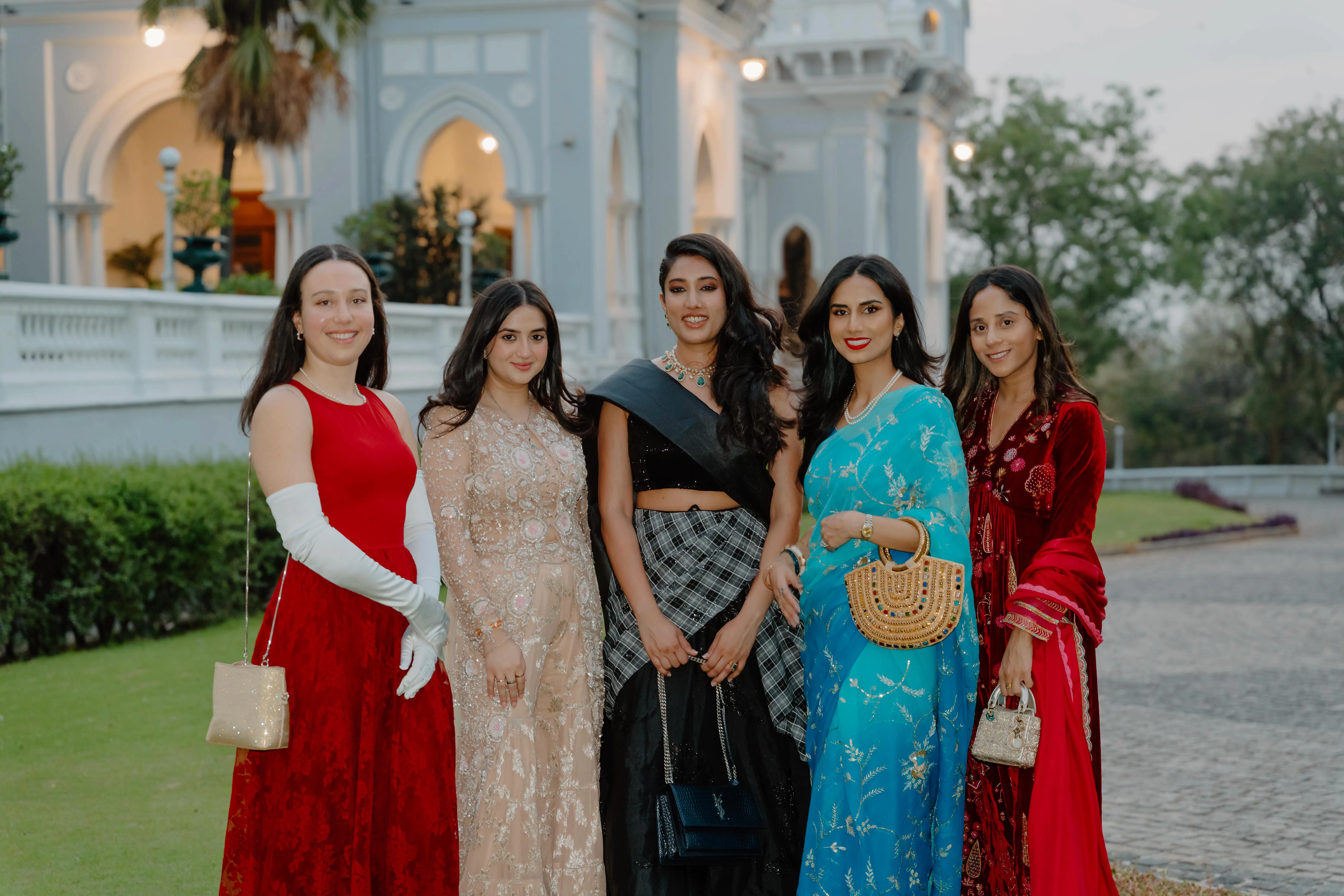
Natalya, Aradhana, Akshita, Raj, Malvika - young ambassadors of The London Season's Queen Charlotte's Ball pose in the gardens of Taj Falaknuma Palace | Photo by @podbharat
It’s the ball made famous by Netflix series Bridgerton, portrayed with all the tension and undercurrents that mark a good drama. In real life, King George III threw the very first ball for his wife, Queen Charlotte’s birthday to raise funds for a hospital way back in 1780. It would become a continuous, yearly event in society’s calendar (up until 1976, after which it was ‘revived’ by current chairman Jennie Hallam-Peel) that would introduce London’s most promising young women, aged 16-17 to the monarch, as debutantes, marking the beginning of the ‘London Season’.
No one could have imagined that the London Season (the charitable organisation that puts together the Ball) would travel around the world, to Hyderabad for the first International Debutante Ambassadors’ Weekend, thanks to royal connections with that city, to felicitate, mostly Indian-origin young achievers as its official ambassadors, in a palace owned by the world’s richest man at one time.
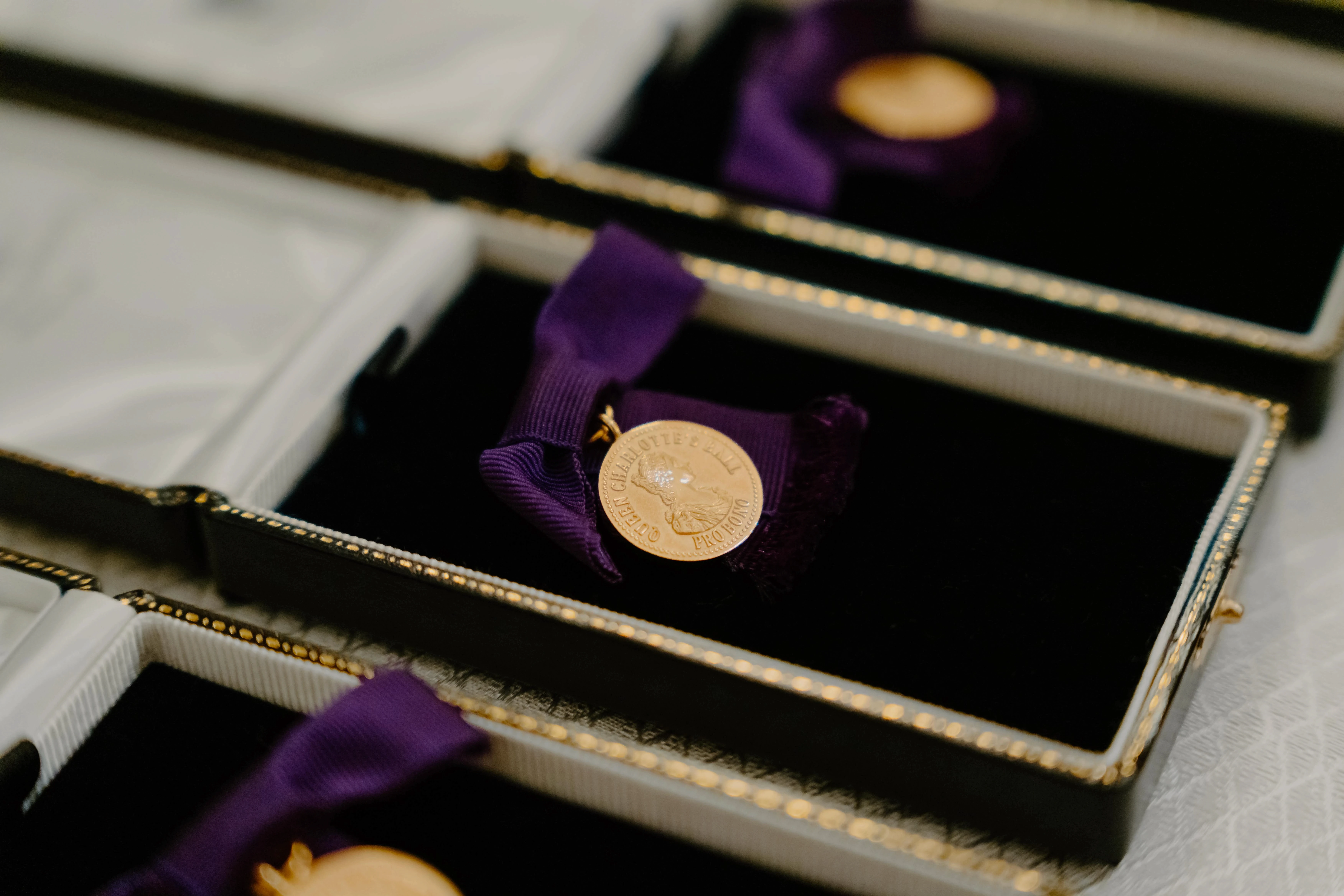
The ambassadors' medallion made by the Royal Mint, UK | Photo by @podbharat
A Medallion for Merit
It’s a moonlit night at the Taj Falaknuma Palace, and a felicitation ceremony is under way, where specially made medallions from the Royal Mint, UK, are presented by the Duchess of Somerset (the Duke of Somerset has been a patron of the Ball for 25 years) to each of the 12 young women of Indian origin, connect, or heritage, in their mid-20s or early 30s, who represent both legacy and modern achievement.
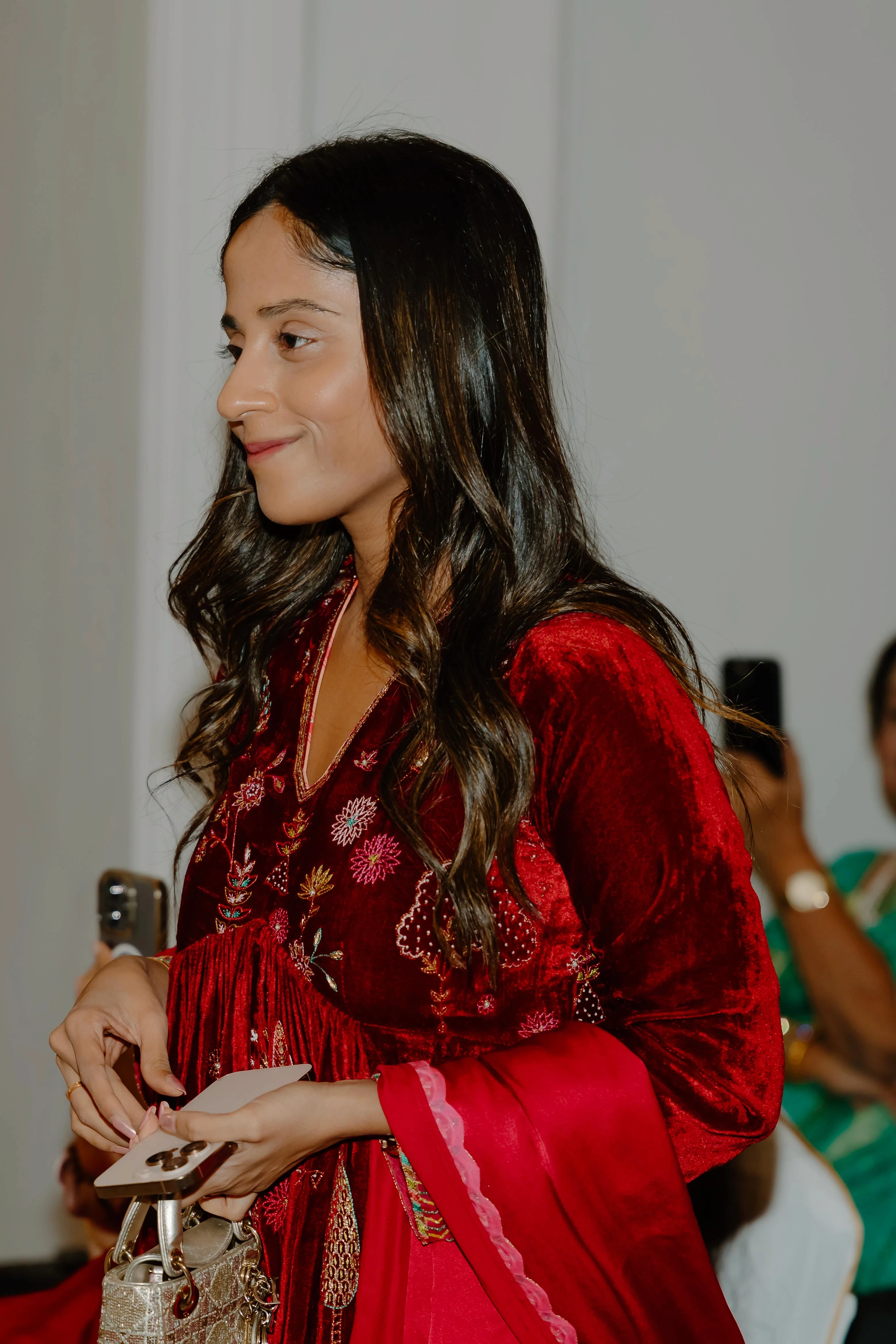
Malvika Rathod of the Cello Group, receiving her medallion | Photo by @podbharat
The young women include Vedika Arun, scion of the Murugappa Group, Malvika Rathod, scion of the Cello group, actor-turned entrepreneur Sophia Azad, founder of wellness brand Kachchi, Aradhana Bhandari, Natalya, founder of an art app, and many more, who have on this day become ‘ambassadors’ of this world-famous ball, chosen for their academic talent, entrepreneurship, and charitable work – a notable feature that the world’s oldest ball is not just a high-society gig, but is also a platform to recognise young women for their achievements.
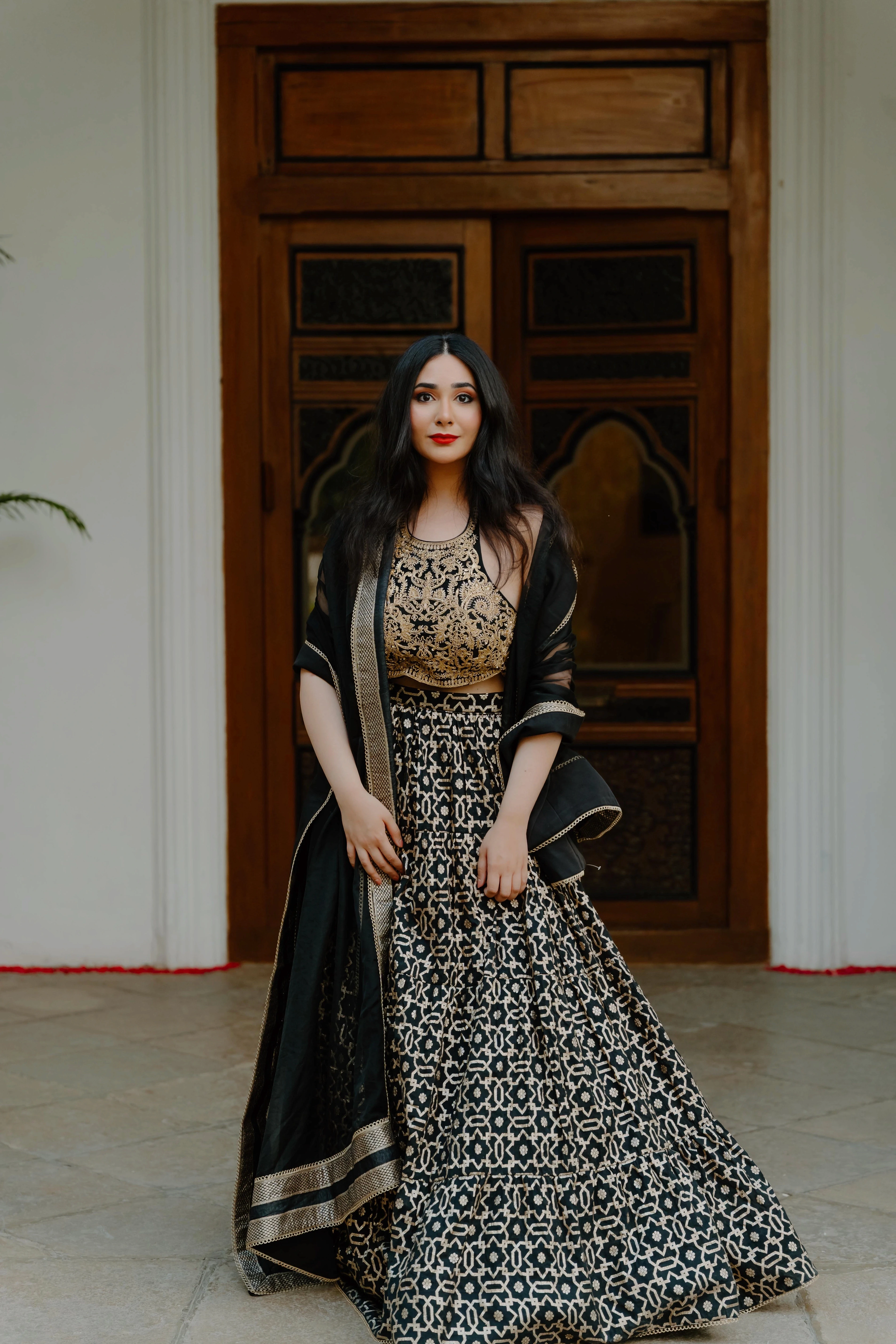
Shivina Kumari, ambassador of The London Season's Queen Charlotte's Ball for India | Photo by @podbharat
And now celebrating its ambassadors, in India. “Under the chairmanship of Jennie Hallam-Peel, the Ball has evolved into a more global and inclusive platform, focusing not only on heritage but also on personal achievement and individual merit,” says London-based Shivina Kumari (great-granddaughter of polo ace Maharaj Prem Singh of Jodhpur), who works at Goldman-Sachs, one of the first Indian debutantes at the Ball three years ago, and today, The London Season’s India ambassador, who has organised this felicitation dinner.
It is a special connect with the late Nawab Mir Mohsin Ali Khan, founder of the World Peace and Prosperity Foundation (that promotes inclusivity and supports the underprivileged, through education and health initiatives), that has brought the Ball to Hyderabad, explains Shivina, who is here with her grandmother, Rani Aruna Singh of Koela.
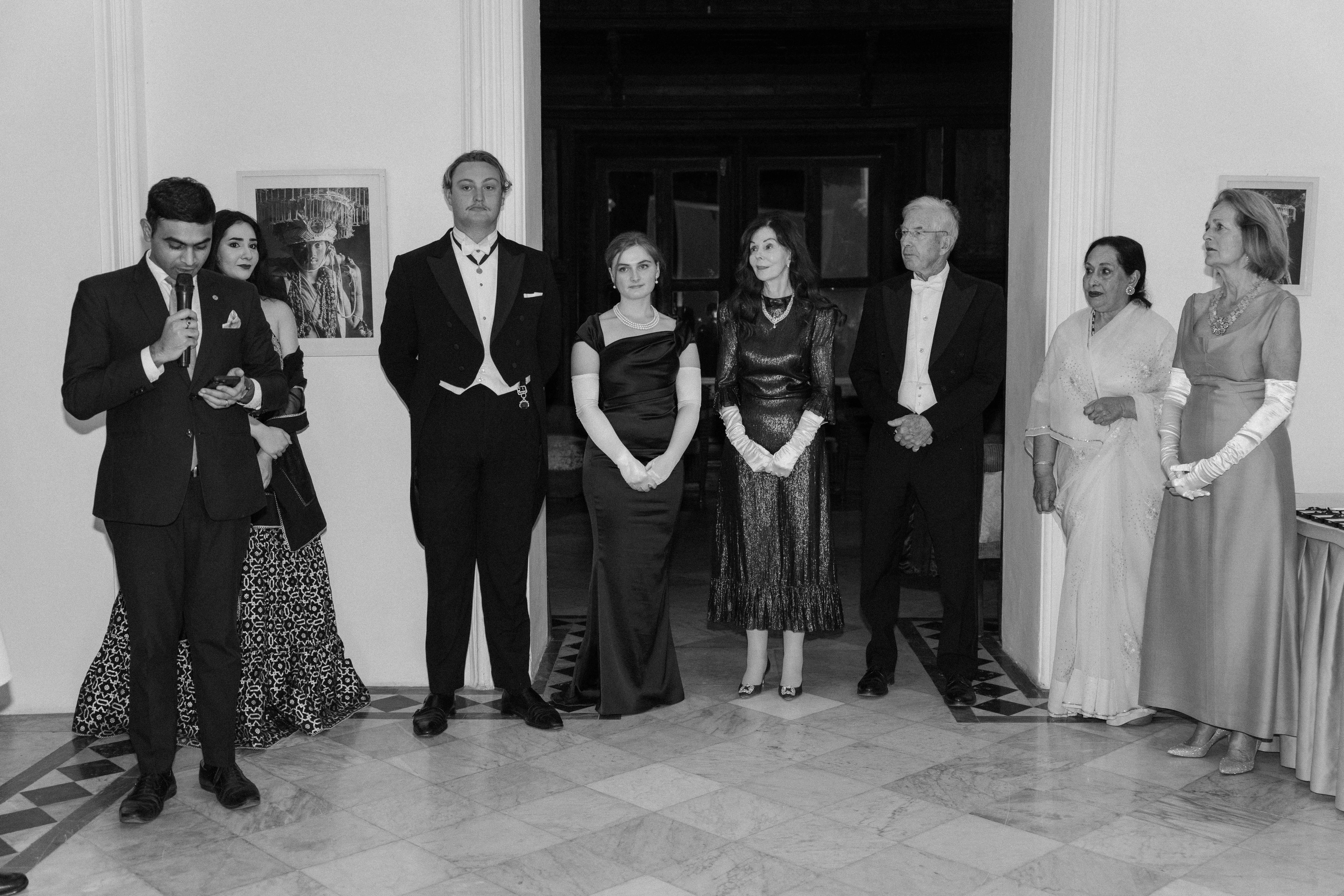
At the Medallion investiture ceremony, for the young ambassadors, in the presence of the Duke and Duchess of Somerset, and Chairman of The London Season, Ms Jennie Hallam-Peel (centre) | Photo by @podbharat
“Four years ago, we were very saddened by the death of Prince Mohsin Ali Khan, a very beloved patron of the Ball,” says Jennie Hallam-Peel, chairman of The London Season, “My husband and I were honoured when the prince’s executors offered we take over the administration of the late prince’s foundation. We were delighted to accept.”
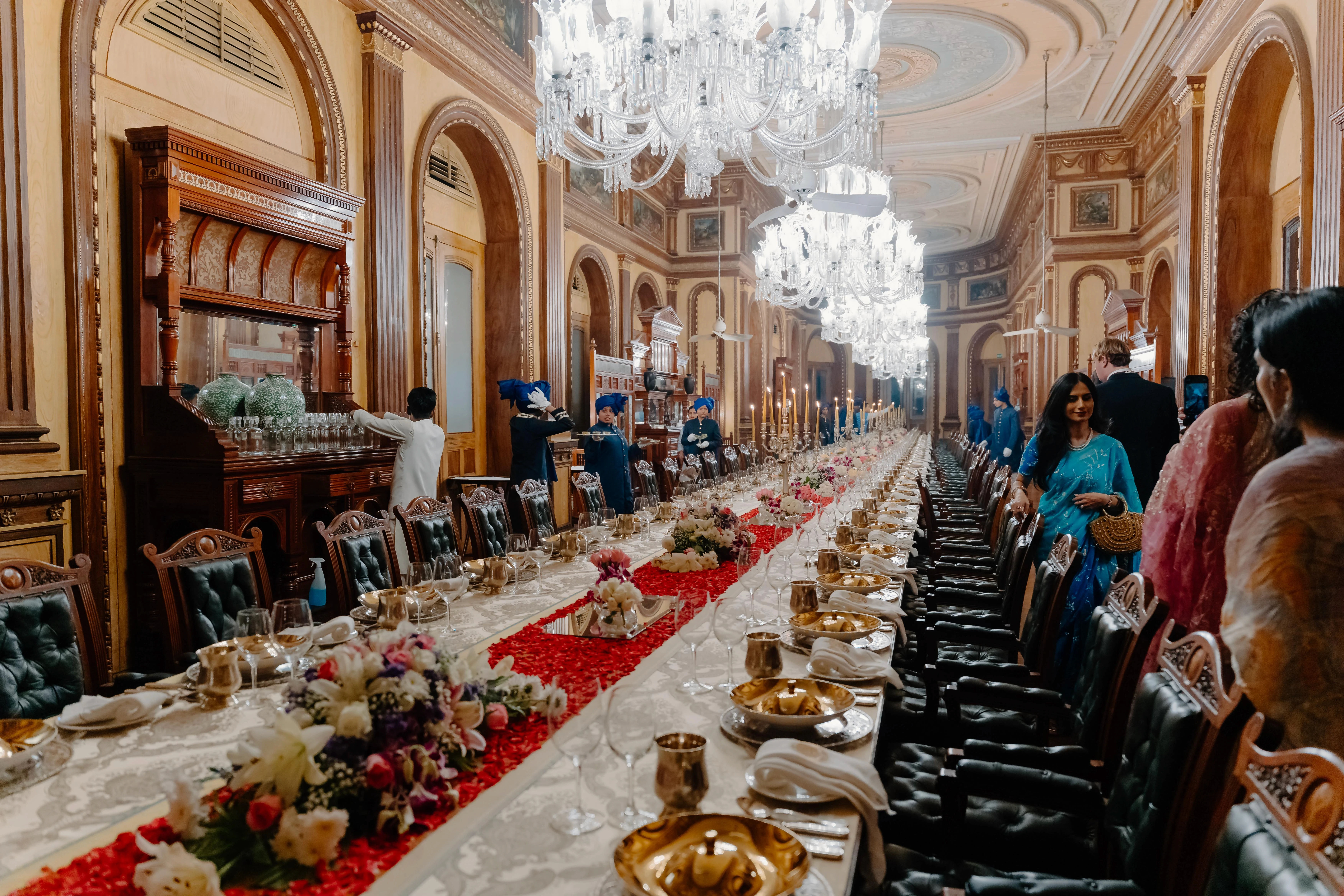
The Nizam's table is set for dinner with the young ambassadors and guests from around the world | Photo by @podbharat
Newly Minted Ambassadors for the World’s Oldest Ball
A succulent five-course dinner on the world’s longest table – the famous dining table where the sixth Nizam, Nawab Mahbud Ali Khan once hosted dinners for 101 guests, including the Tsar of Russia – to celebrate the young ladies who have become ambassadors, include guests from the UK, USA, royals, industrial scions, and entrepreneurs, sets the scene for an unforgettable night.
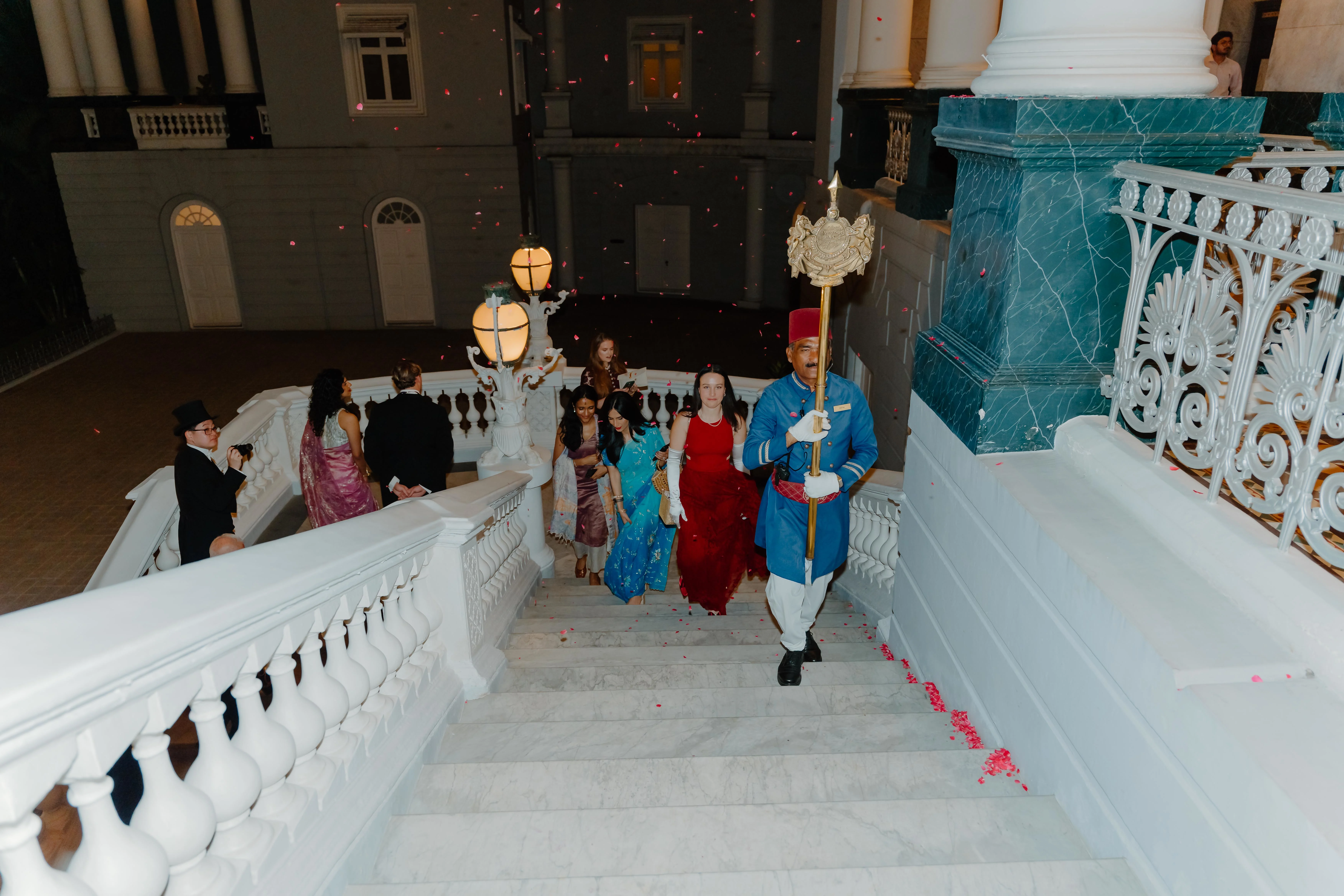
The young ambassadors climbing the grand staircase of the Taj Falaknuma Palace | Photo by @podbharat
Squash champion and Georgetown and Yale graduate Vedika Arun (daughter of Arun Murugappan, Executive Chairman of the US$ 10 billion Murugappan Group), studied at Millfield boarding school in the UK, before her studies in the US (where she was on the squash varsity team at Georgetown), and worked for Morgan Stanley, in wealth management. “But my dad wanted me back home, and was very persistent,” she says dressed in an Anamika Khanna saree, as we climb the grand Falaknuma staircase to the chandelier-heavy dining hall. “So I came back, and now work in our EV vertical, Montra Electric.” Her family’s company, in which she’s learning the ropes, from the ground up. makes small eco-friendly electric three-wheelers, that are used to ferry products all across India.
“With this accolade (the ambassador’s medallion), I don't even have to go to the Ball,” she says, “You get this for your leadership qualities and your success, right here in India.”
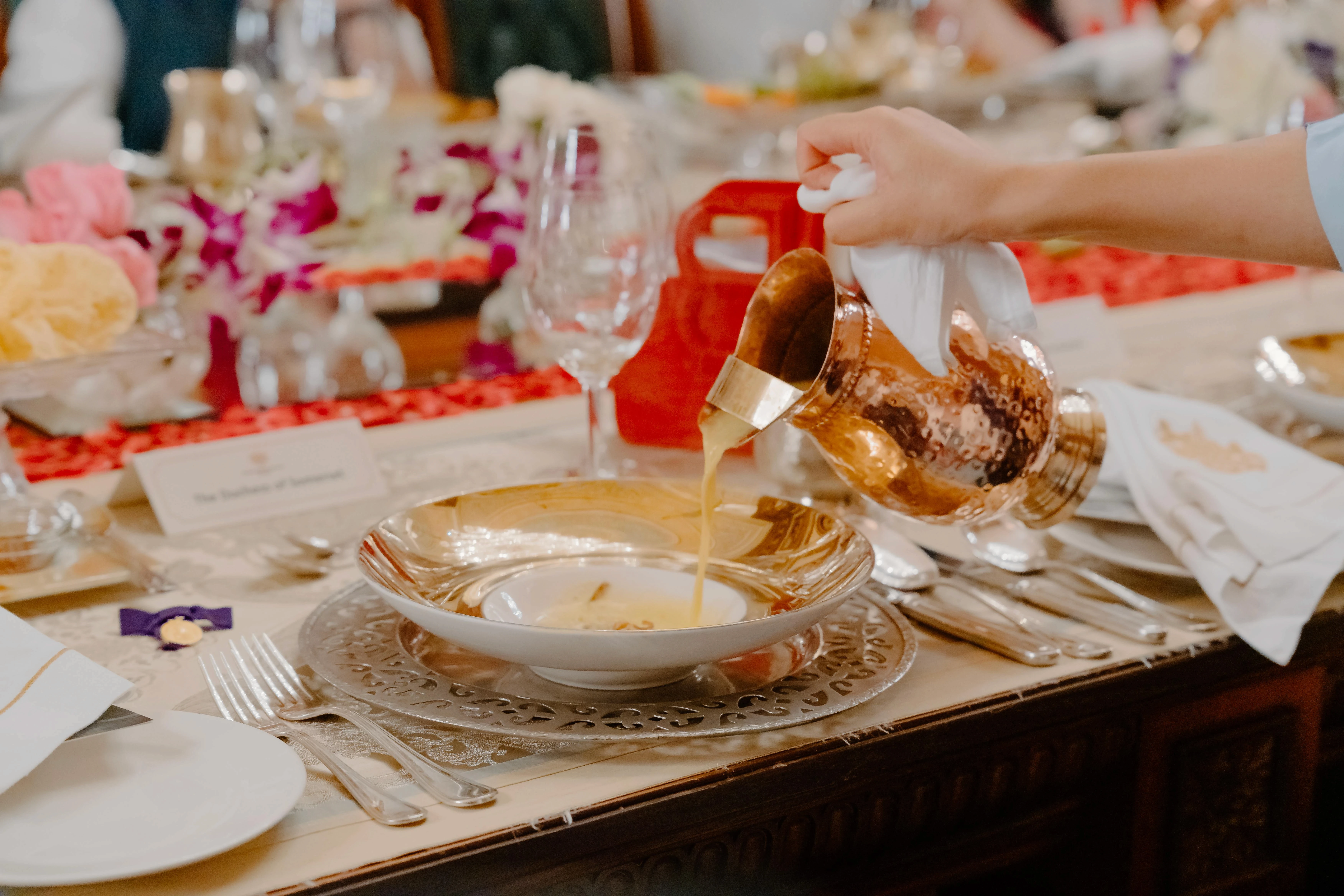
A five course meal for the young ambassadors | Photo by @podbharat
Aradhana Bhandari is a true-blue Londoner (she grew up in Northwood), who attended SOAS, founder of health and wellness brand Kacchi London (they sell Indian healing herbs like turmeric), is currently the chair of Young Women’s India Association of the UK. “It’s the youth wing of Women's India Association, the oldest Asian charity in the UK,” says Aradhana, “Which was founded by Vijaya Lakshmi Pandit, in the 1960s, when she was Indian High Commissioner to the UK.”
Its purpose at the time was to create a community space for Indians in London. “A safe space,” she says, “And it’s a volunteer organisation, where we do ticket sales for large events like a Diwali mela to raise funds. In fact, one of the largest events I did was with my friend whom I attended SOAS with, Maharawal Chaitanya Raj Singh of Jaisalmer (who is present at this dinner). It was sold out.”
Aradhana says that most of the proceeds from such an event go to India. “We have schools in India, and other organisations, but we're also required to give to charities in the UK,” she says.
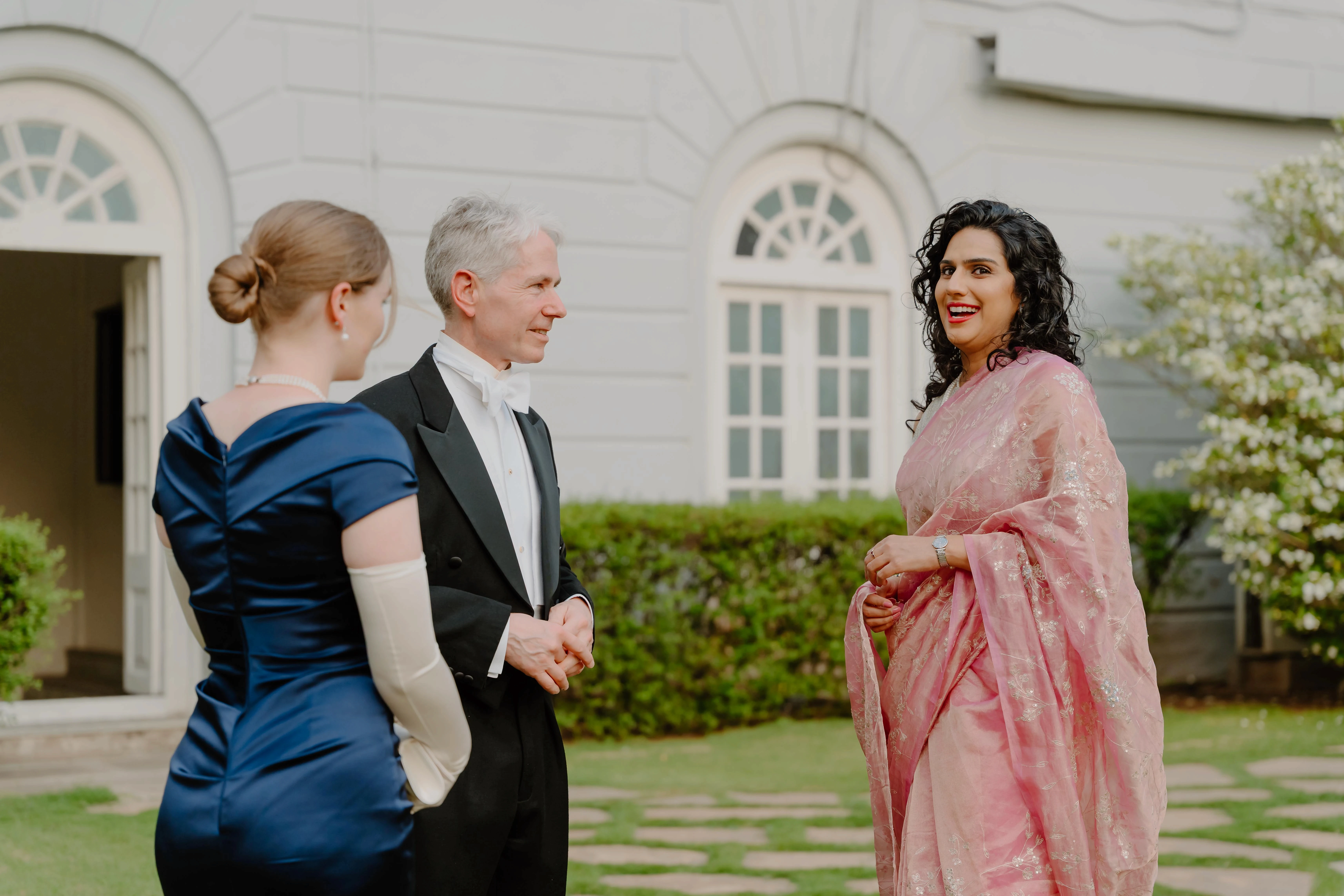
Mira Kumari and guests at Falaknuma Palace | Photo by @podbharat
Persian-Indian actor-turned entrepreneur Sophia Azad, who has worn a gold lehenga for the occasion (and curtsied graciously to the Duchess of Somerset during the medallion presentation), studied at the University of Amsterdam, worked in Telugu films (she was in the Samantha Ruth Prabhu starrer Yashoda) before switching to work at Kshema General Insurance, an agricultural insurance firm particularly focusing on small land holders. “I love the old style and traditional values associated with the Ball,” she says. “It’s been an honour to be recognised.”
Another ambassador, Malvika Rathod, the daughter of the founder of Cello World (the kitchenware and plastic manufacturer, with a yearly turnover of over US$ 250 million), studied at Imperial College, worked at Apple, and a gaming company (Candy Crush, anyone?), and founded a dining/storytelling startup in UK, Andiamo SW1, before packing her bags to work at her father’s Goregaon East office in Mumbai.
“My first step of action is just to learn everything I can,” says Malvika, who admits hating drawing any kind of attention to herself and could not see herself as a debutante. “I've never really worked in a manufacturing business, as my experience has been in tech companies.”
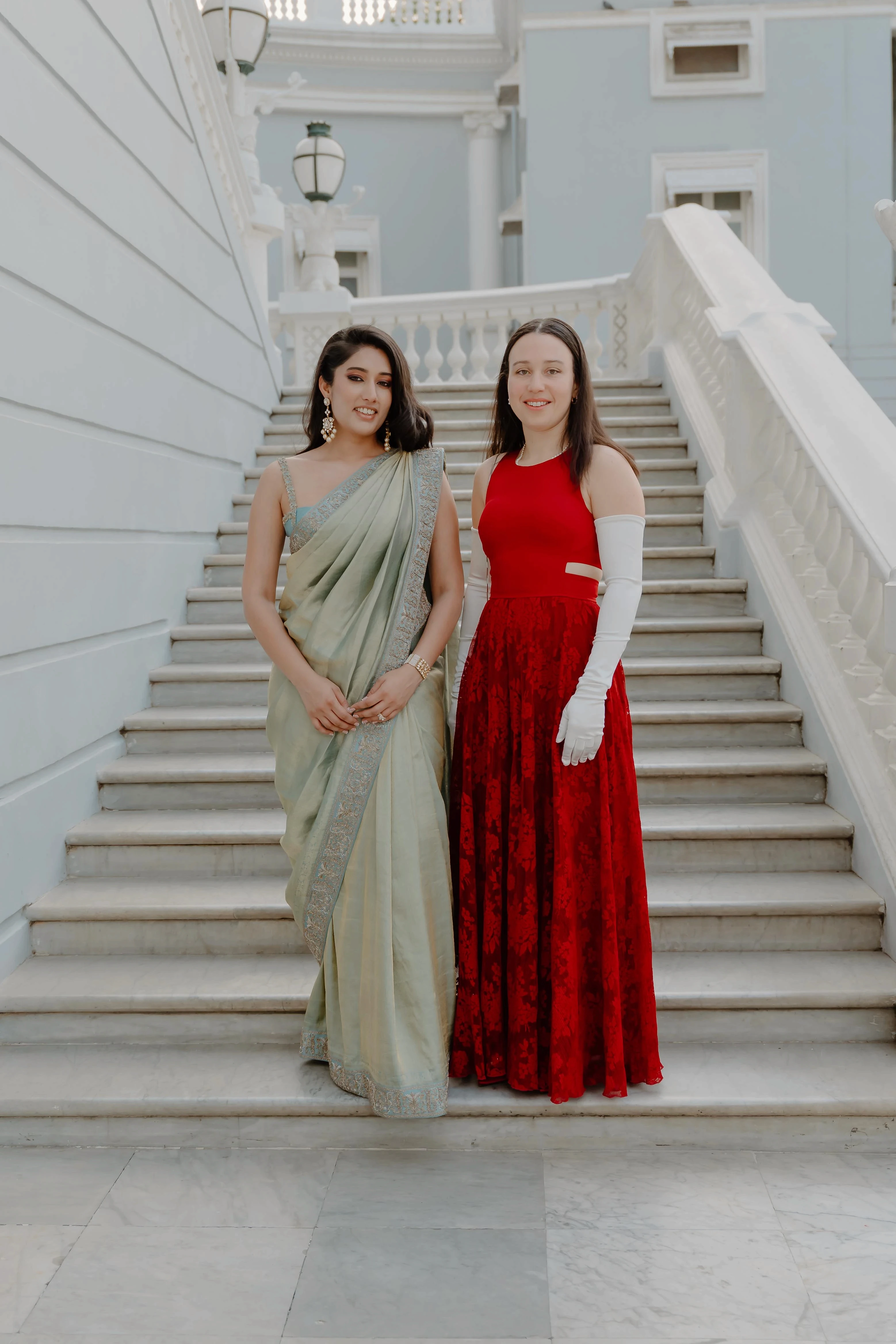
Akshita Bhanj Deo and Natalya Doris, two ambassadors formally dressed for the dinner | Photo by @podbharat
A young ambassador from the US, Natalya Doris from Miami, Florida, who studied at Cambridge, and worked at Morgan Stanley and BlackRock, has just designed an app, Minerva, for artists to connect directly to gallery owners. “Let the artist meet the galleries,” she says, “So they can sell their art.” About getting her medallion, she says, “I’m just lucky to be here and meet all the other women.”
UK-raised Mira Kumari of Gujarat’s Deodar royal family - an investment banker, artist, and AI startup founder, was also in attendance. A guest speaker at Oxford’s Women Leaders Series, she co-chairs the SV Foundation with sisters Rajeshwari and Suman (former Debutante), uplifting girls. Reflecting with Rajeshwari, she called the weekend “a reminder of young women’s power to drive change.”
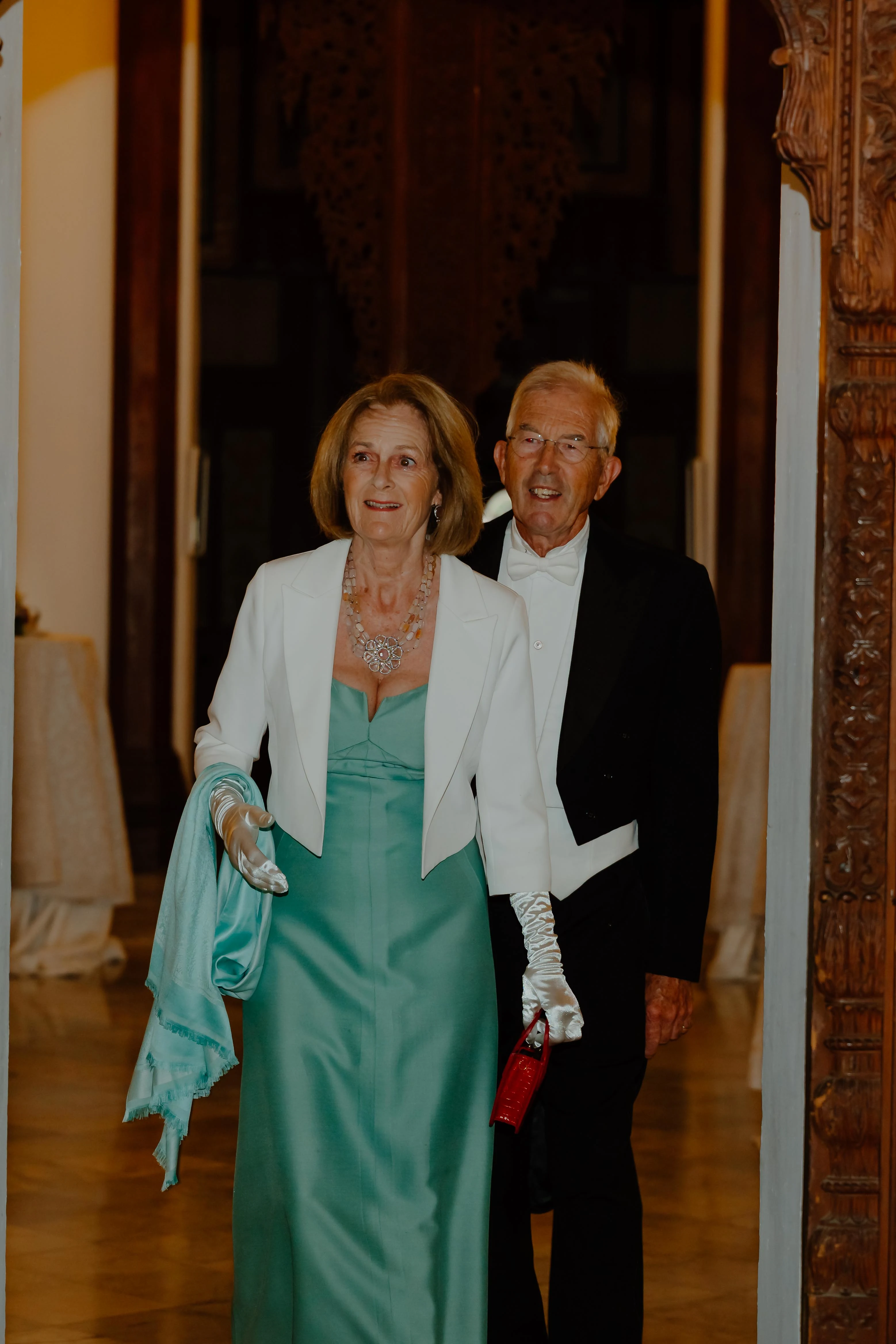
The Duke and Duchess of Somerset, patrons of the Ball | Photo by @podbharat
A Mission to Serve
Patrons of the Ball have included members of the British aristocracy, such as the Duke and Duchess of Somerset (who are present at the Falaknuma Palace), the Duke and Duchess of St Albans, Francis Stainton (former Mayor of London), alongside European royals, and families from the United States that date back to the Mayflower, and closer home, Rani Reena Kumari of Labhowa, Ayesha Shah of Lahore, and the late Nawab Mir Mohsin Ali Khan of Hyderabad. Each year, the Ball focuses on a specific charity.
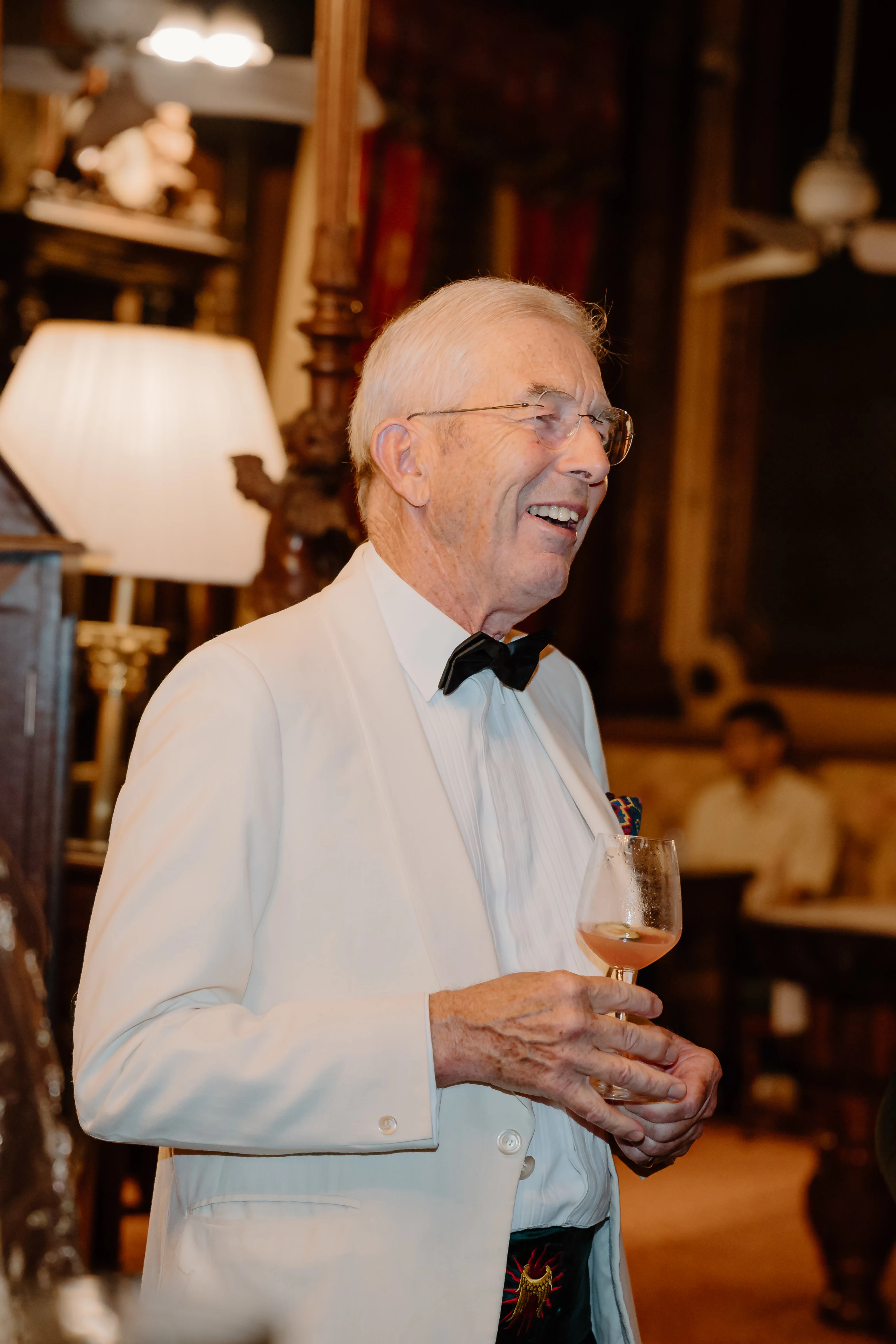
The Duke of Somerset | Photo by @podbharat
“This year, the event (which takes place each year in September, in London) is in aid of Gam Med, which is a beautiful word, it’s to do with a medical charity that works in Gambia, one of the poorest countries in Africa,” says the Duke of Somerset. “They operate hospitals with few facilities under difficult circumstances. Teams of young volunteer doctors will come out and operate on children who have been born with deformities. That is why the London Season is raising funds to transform the lives to buy more medical equipment.”
The Very Modern Debs of Queen Charlotte’s Ball
“Being a debutante is so much more than just going to the Ball,” says The London Season’s liaison director, 18-year old Emily Wilson, who was a deb at 15. “It’s all about meeting new people, and getting out of your comfort zone. “It’s a good tradition.”
And traditions evolve. “The Ball has always been about charity work, with like-minded people, but modern debs are career-focused,” says Emily. “They go to university (many study at Oxford or Cambridge), and do good work, and acquire confidence.”
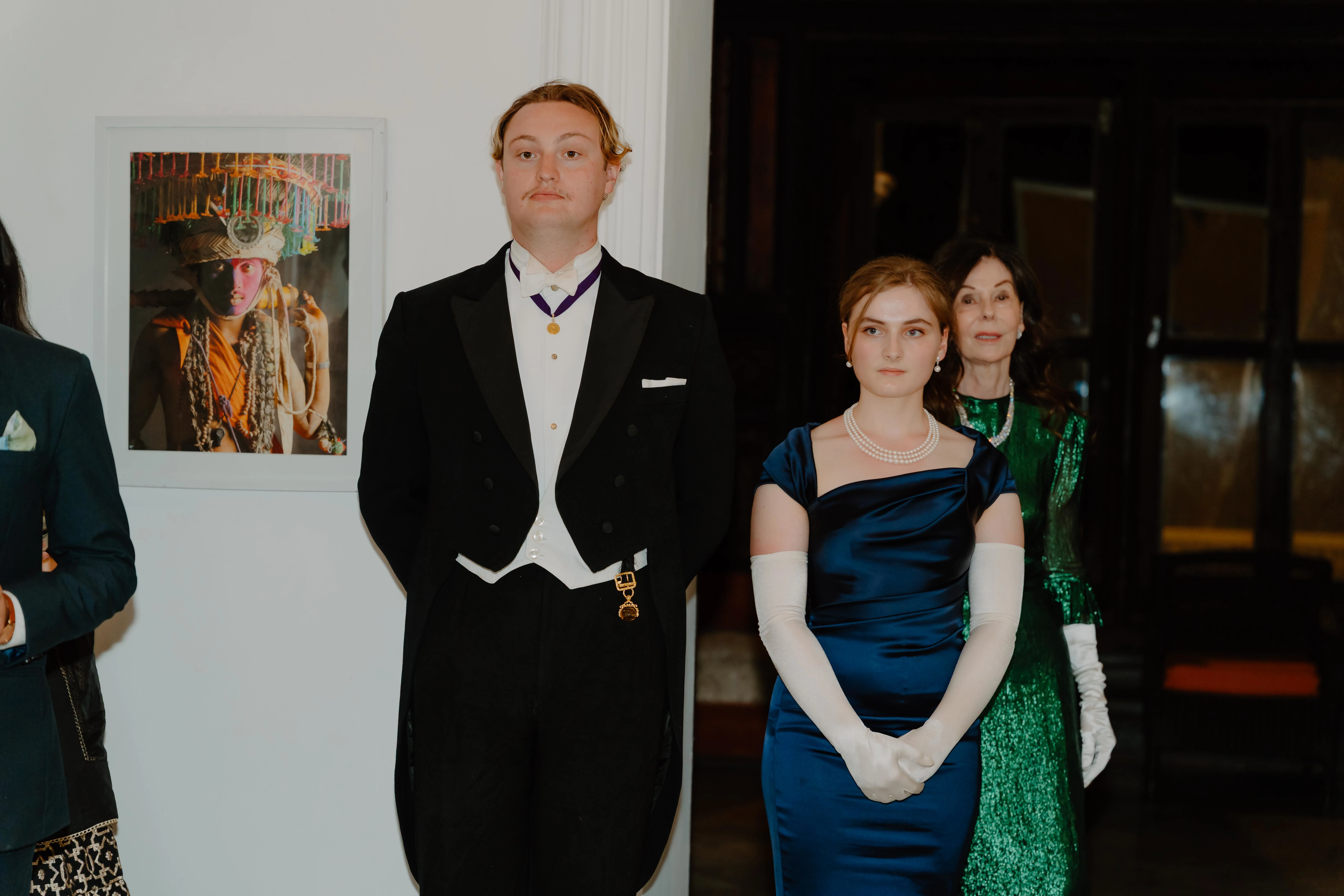
Photo by @podbharat
“At the Queen Charlotte’s Ball, there is a six-foot cake every year (to celebrate Queen Charlotte’s birthday), with royal guards, followed by ambassadors and consorts, and the Duke of Somerset,” says Jennie Hallam-Peel, who was a deb, as were her mother and grandmother, who was presented to King George! “Everything has changed since then. I was the only who went to university at that time. Today, everyone goes to university.”
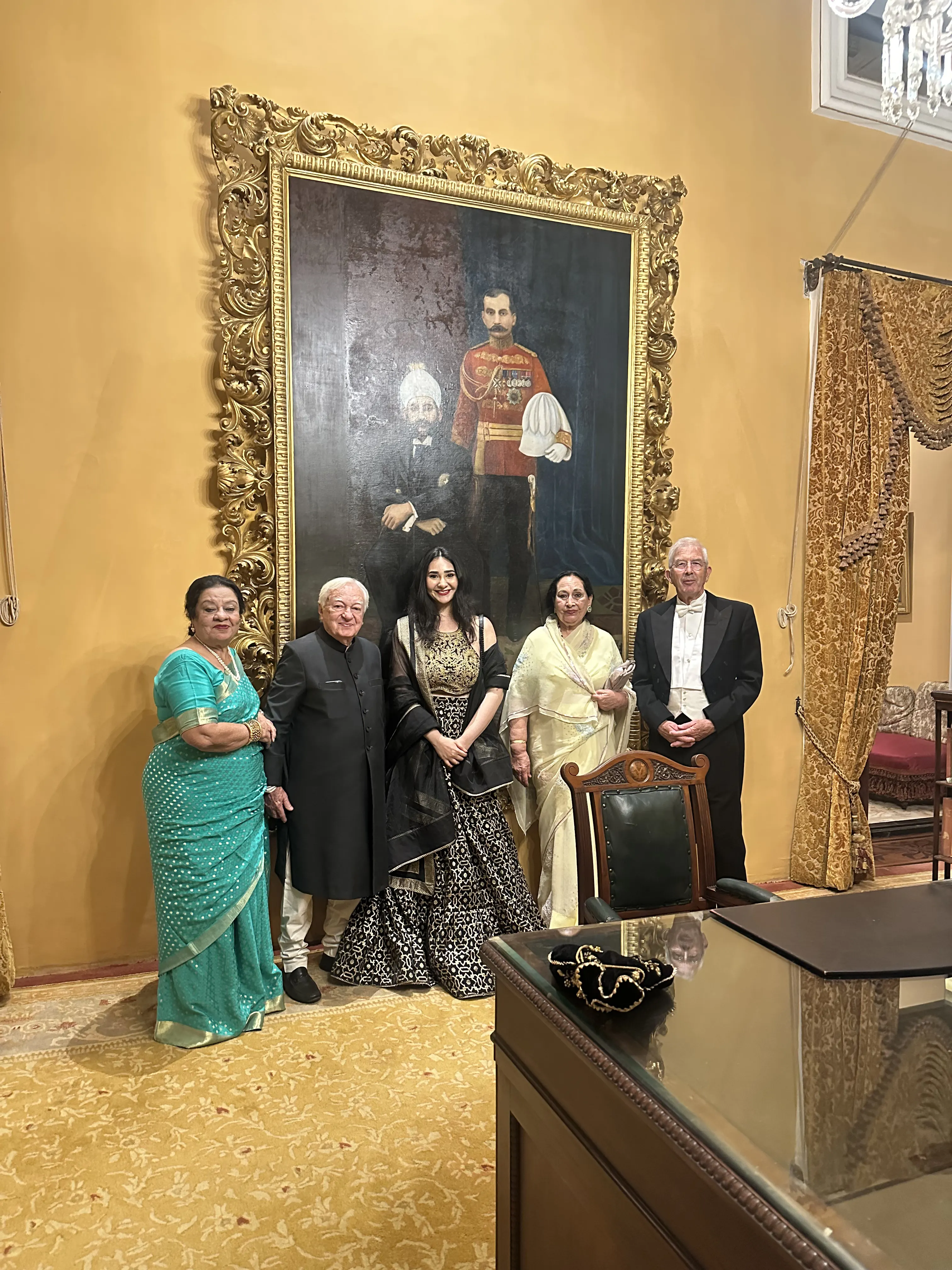
Shivina Kumari with her grandmother Rani Aruna Singh of Koela, and royal guests | Photo by @podbharat
As for the Ball’s India connect, Shivina is clear: “We hope to see this evolve further into cementing historic ties, and building newer relationships between India, UK, and other countries, and foster a sorority of next-gen leaders,” she says. “That all the young women chosen are using their position to help others and uplift humanity, is such an important message for the next generation.”
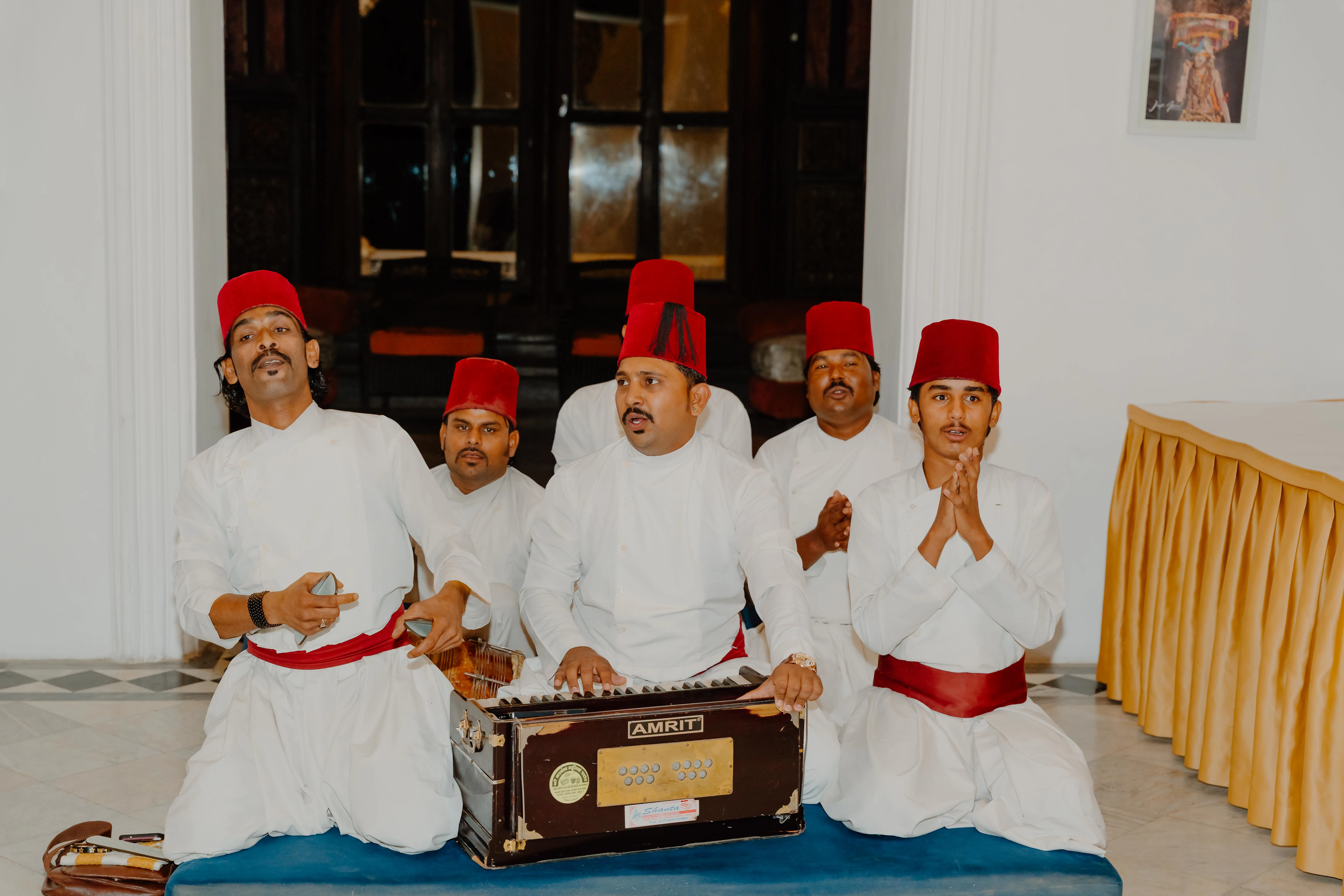
The Manganiyars of Barmer performing at dinner | Photo by @podbharat
TO BE CONTINUED, FOR SUBSCRIBERS ONLY.
This is where the surface ends and the reporting begins.
The complete piece, the full archive, and access to The French Press Circle. Reporting answerable only to its readers.
Already a subscriber ?
Login
Read these on the house, with our compliments.
A selection from the current issue, open to all readers. Read them in full. The rest is one decision away.



Natalya, Aradhana, Akshita, Raj, Malvika - young ambassadors of The London Season's Queen Charlotte's Ball pose in the gardens of Taj Falaknuma Palace | Photo by @podbharat
It’s the ball made famous by Netflix series Bridgerton, portrayed with all the tension and undercurrents that mark a good drama. In real life, King George III threw the very first ball for his wife, Queen Charlotte’s birthday to raise funds for a hospital way back in 1780. It would become a continuous, yearly event in society’s calendar (up until 1976, after which it was ‘revived’ by current chairman Jennie Hallam-Peel) that would introduce London’s most promising young women, aged 16-17 to the monarch, as debutantes, marking the beginning of the ‘London Season’.
No one could have imagined that the London Season (the charitable organisation that puts together the Ball) would travel around the world, to Hyderabad for the first International Debutante Ambassadors’ Weekend, thanks to royal connections with that city, to felicitate, mostly Indian-origin young achievers as its official ambassadors, in a palace owned by the world’s richest man at one time.
The ambassadors' medallion made by the Royal Mint, UK | Photo by @podbharat
A Medallion for Merit
It’s a moonlit night at the Taj Falaknuma Palace, and a felicitation ceremony is under way, where specially made medallions from the Royal Mint, UK, are presented by the Duchess of Somerset (the Duke of Somerset has been a patron of the Ball for 25 years) to each of the 12 young women of Indian origin, connect, or heritage, in their mid-20s or early 30s, who represent both legacy and modern achievement.
Malvika Rathod of the Cello Group, receiving her medallion | Photo by @podbharat
The young women include Vedika Arun, scion of the Murugappa Group, Malvika Rathod, scion of the Cello group, actor-turned entrepreneur Sophia Azad, founder of wellness brand Kachchi, Aradhana Bhandari, Natalya, founder of an art app, and many more, who have on this day become ‘ambassadors’ of this world-famous ball, chosen for their academic talent, entrepreneurship, and charitable work – a notable feature that the world’s oldest ball is not just a high-society gig, but is also a platform to recognise young women for their achievements.
Shivina Kumari, ambassador of The London Season's Queen Charlotte's Ball for India | Photo by @podbharat
And now celebrating its ambassadors, in India. “Under the chairmanship of Jennie Hallam-Peel, the Ball has evolved into a more global and inclusive platform, focusing not only on heritage but also on personal achievement and individual merit,” says London-based Shivina Kumari (great-granddaughter of polo ace Maharaj Prem Singh of Jodhpur), who works at Goldman-Sachs, one of the first Indian debutantes at the Ball three years ago, and today, The London Season’s India ambassador, who has organised this felicitation dinner.
It is a special connect with the late Nawab Mir Mohsin Ali Khan, founder of the World Peace and Prosperity Foundation (that promotes inclusivity and supports the underprivileged, through education and health initiatives), that has brought the Ball to Hyderabad, explains Shivina, who is here with her grandmother, Rani Aruna Singh of Koela.
At the Medallion investiture ceremony, for the young ambassadors, in the presence of the Duke and Duchess of Somerset, and Chairman of The London Season, Ms Jennie Hallam-Peel (centre) | Photo by @podbharat
“Four years ago, we were very saddened by the death of Prince Mohsin Ali Khan, a very beloved patron of the Ball,” says Jennie Hallam-Peel, chairman of The London Season, “My husband and I were honoured when the prince’s executors offered we take over the administration of the late prince’s foundation. We were delighted to accept.”
The Nizam's table is set for dinner with the young ambassadors and guests from around the world | Photo by @podbharat
Newly Minted Ambassadors for the World’s Oldest Ball
A succulent five-course dinner on the world’s longest table – the famous dining table where the sixth Nizam, Nawab Mahbud Ali Khan once hosted dinners for 101 guests, including the Tsar of Russia – to celebrate the young ladies who have become ambassadors, include guests from the UK, USA, royals, industrial scions, and entrepreneurs, sets the scene for an unforgettable night.
The young ambassadors climbing the grand staircase of the Taj Falaknuma Palace | Photo by @podbharat
Squash champion and Georgetown and Yale graduate Vedika Arun (daughter of Arun Murugappan, Executive Chairman of the US$ 10 billion Murugappan Group), studied at Millfield boarding school in the UK, before her studies in the US (where she was on the squash varsity team at Georgetown), and worked for Morgan Stanley, in wealth management. “But my dad wanted me back home, and was very persistent,” she says dressed in an Anamika Khanna saree, as we climb the grand Falaknuma staircase to the chandelier-heavy dining hall. “So I came back, and now work in our EV vertical, Montra Electric.” Her family’s company, in which she’s learning the ropes, from the ground up. makes small eco-friendly electric three-wheelers, that are used to ferry products all across India.
“With this accolade (the ambassador’s medallion), I don't even have to go to the Ball,” she says, “You get this for your leadership qualities and your success, right here in India.”
A five course meal for the young ambassadors | Photo by @podbharat
Aradhana Bhandari is a true-blue Londoner (she grew up in Northwood), who attended SOAS, founder of health and wellness brand Kacchi London (they sell Indian healing herbs like turmeric), is currently the chair of Young Women’s India Association of the UK. “It’s the youth wing of Women's India Association, the oldest Asian charity in the UK,” says Aradhana, “Which was founded by Vijaya Lakshmi Pandit, in the 1960s, when she was Indian High Commissioner to the UK.”
Its purpose at the time was to create a community space for Indians in London. “A safe space,” she says, “And it’s a volunteer organisation, where we do ticket sales for large events like a Diwali mela to raise funds. In fact, one of the largest events I did was with my friend whom I attended SOAS with, Maharawal Chaitanya Raj Singh of Jaisalmer (who is present at this dinner). It was sold out.”
Aradhana says that most of the proceeds from such an event go to India. “We have schools in India, and other organisations, but we're also required to give to charities in the UK,” she says.
Mira Kumari and guests at Falaknuma Palace | Photo by @podbharat
Persian-Indian actor-turned entrepreneur Sophia Azad, who has worn a gold lehenga for the occasion (and curtsied graciously to the Duchess of Somerset during the medallion presentation), studied at the University of Amsterdam, worked in Telugu films (she was in the Samantha Ruth Prabhu starrer Yashoda) before switching to work at Kshema General Insurance, an agricultural insurance firm particularly focusing on small land holders. “I love the old style and traditional values associated with the Ball,” she says. “It’s been an honour to be recognised.”
Another ambassador, Malvika Rathod, the daughter of the founder of Cello World (the kitchenware and plastic manufacturer, with a yearly turnover of over US$ 250 million), studied at Imperial College, worked at Apple, and a gaming company (Candy Crush, anyone?), and founded a dining/storytelling startup in UK, Andiamo SW1, before packing her bags to work at her father’s Goregaon East office in Mumbai.
“My first step of action is just to learn everything I can,” says Malvika, who admits hating drawing any kind of attention to herself and could not see herself as a debutante. “I've never really worked in a manufacturing business, as my experience has been in tech companies.”
Akshita Bhanj Deo and Natalya Doris, two ambassadors formally dressed for the dinner | Photo by @podbharat
A young ambassador from the US, Natalya Doris from Miami, Florida, who studied at Cambridge, and worked at Morgan Stanley and BlackRock, has just designed an app, Minerva, for artists to connect directly to gallery owners. “Let the artist meet the galleries,” she says, “So they can sell their art.” About getting her medallion, she says, “I’m just lucky to be here and meet all the other women.”
UK-raised Mira Kumari of Gujarat’s Deodar royal family - an investment banker, artist, and AI startup founder, was also in attendance. A guest speaker at Oxford’s Women Leaders Series, she co-chairs the SV Foundation with sisters Rajeshwari and Suman (former Debutante), uplifting girls. Reflecting with Rajeshwari, she called the weekend “a reminder of young women’s power to drive change.”
The Duke and Duchess of Somerset, patrons of the Ball | Photo by @podbharat
A Mission to Serve
Patrons of the Ball have included members of the British aristocracy, such as the Duke and Duchess of Somerset (who are present at the Falaknuma Palace), the Duke and Duchess of St Albans, Francis Stainton (former Mayor of London), alongside European royals, and families from the United States that date back to the Mayflower, and closer home, Rani Reena Kumari of Labhowa, Ayesha Shah of Lahore, and the late Nawab Mir Mohsin Ali Khan of Hyderabad. Each year, the Ball focuses on a specific charity.
The Duke of Somerset | Photo by @podbharat
“This year, the event (which takes place each year in September, in London) is in aid of Gam Med, which is a beautiful word, it’s to do with a medical charity that works in Gambia, one of the poorest countries in Africa,” says the Duke of Somerset. “They operate hospitals with few facilities under difficult circumstances. Teams of young volunteer doctors will come out and operate on children who have been born with deformities. That is why the London Season is raising funds to transform the lives to buy more medical equipment.”
The Very Modern Debs of Queen Charlotte’s Ball
“Being a debutante is so much more than just going to the Ball,” says The London Season’s liaison director, 18-year old Emily Wilson, who was a deb at 15. “It’s all about meeting new people, and getting out of your comfort zone. “It’s a good tradition.”
And traditions evolve. “The Ball has always been about charity work, with like-minded people, but modern debs are career-focused,” says Emily. “They go to university (many study at Oxford or Cambridge), and do good work, and acquire confidence.”
Photo by @podbharat
“At the Queen Charlotte’s Ball, there is a six-foot cake every year (to celebrate Queen Charlotte’s birthday), with royal guards, followed by ambassadors and consorts, and the Duke of Somerset,” says Jennie Hallam-Peel, who was a deb, as were her mother and grandmother, who was presented to King George! “Everything has changed since then. I was the only who went to university at that time. Today, everyone goes to university.”
Shivina Kumari with her grandmother Rani Aruna Singh of Koela, and royal guests | Photo by @podbharat
As for the Ball’s India connect, Shivina is clear: “We hope to see this evolve further into cementing historic ties, and building newer relationships between India, UK, and other countries, and foster a sorority of next-gen leaders,” she says. “That all the young women chosen are using their position to help others and uplift humanity, is such an important message for the next generation.”
The Manganiyars of Barmer performing at dinner | Photo by @podbharat
TO BE CONTINUED, FOR SUBSCRIBERS ONLY.
This is where the surface ends and the reporting begins.
The complete piece, the full archive, and access to The French Press Circle. Reporting answerable only to its readers.
Already a subscriber ?
Login
Read these on the house, with our compliments.
A selection from the current issue, open to all readers. Read them in full. The rest is one decision away.