On the 5th of May, 1862, General Ignacio Zaragoza led a Mexican army against French imperial forces at the Battle of Puebla and won, against odds so steep that the outcome registered less as military strategy and more as collective will made manifest on a battlefield. France returned, occupied Mexico for years, and installed a European emperor on its soil. The war continued long after Puebla. And yet the date embedded itself permanently into Mexican consciousness, becoming cause for celebration across generations, honouring a single afternoon of defiance whose immediate consequences were soon undone.
Even though it was not an absolute victory, it remains a cause of celebration across the world today because it is an illustration of hope, of a struggle and injustice rebutted with resilience, something all colonised nations would understand very well. The kind that says: we are still here, and tonight, we are going to eat, drink, and dance as proof. That is, at its core, what Cinco de Mayo is. And if you are Indian, I suspect it resonates somewhere in your bones before you even consciously register why.
Let’s set the record straight. It is not Mexican Independence Day. That would be September 16th, 1810, a date that most margarita-drinking Americans celebrating in May have never once Googled. The west turned Cinco de Mayo into a commercial event anchored loosely to Mexican-American identity and very firmly to margarita revenue, draining the date of its historical weight in exchange for a more marketable version of festivity. The actual story, the one about an outnumbered army and the stubborn insistence of a nation on its own dignity, gets buried under that noise. Cinco de Mayo commemorates the 5th of May, 1862, when a ragtag Mexican army, outnumbered, under-resourced, and by every measure expected to lose, defeated France, which, at the time, was the most formidable military power in the world. Mexico had no business winning that battle. And yet a single, almost improbable act of defiance against an empire became a symbol. Sound familiar?
A Shared Grammar of Resistance
India has spent centuries developing fluency in exactly this register. The act of honouring a moment because of what it represented morally, even when the outcome remained unresolved for years and the empire eventually reasserted itself, is woven through Indian historical consciousness in ways that shaped how this country understands commemoration altogether. The siege of Chittor in 1568, where Rajput warriors chose collective death over surrender to Akbar's forces, became a story of honour rather than defeat, retold and celebrated for centuries after the fortress fell. The rebellion of 1857, crushed within a year by the British, was nonetheless absorbed into Indian consciousness as a founding act of resistance, its leaders immortalised in folk song and sculpture long before independence arrived ninety years later. Tipu Sultan lost Seringapatam and his life in 1799, and yet his refusal to negotiate with the East India Company made him a symbol that outlasted the empire that killed him. Resistance as identity, the refusal to let a defining moment dissolve into the general fog of defeat, is a framework Indians carry almost constitutionally, formed through a history that demanded it repeatedly and across centuries.
India and Mexico are not countries that are supposed to have much in common. Separated by oceans, by language, by geography, by the specific flavour of colonialism that shaped them - and yet spend any real time thinking about the two, and the resemblances start piling up in ways that feel almost eerie. Both civilisations are ancient in the truest sense of the word, with pre-colonial identities so layered and complex that they survived centuries of external imposition without fully surrendering. Both cultures built their identities around food as a community ritual, celebration as resistance, and the family unit as the fundamental organising principle of society. Both place an almost sacred weight on colour - in textiles, in festivals, in the way local streets look on an ordinary afternoon.
The material culture of both countries keeps producing these moments of recognition. Mexican Otomi embroidery and Indian kantha work share a foundational impulse: fabric as archive, textile as a medium through which a community records what it refuses to forget, passing memory forward through generations of hands. Both traditions treat textiles as a site of cultural survival rather than merely decoration. The chilli, which defines the flavour philosophy of both cuisines and functions in both as an agent of awakening rather than merely seasoning, travelled from the Americas to Asia through the Columbian Exchange of the 16th century, permanently altering what Indian food would become. It arrived through Portuguese colonial trade routes and was so thoroughly absorbed into the subcontinent's culinary identity that it is arguably the single most transformative culinary event in Indian history. Every time we add mirch to our daily dal, there is an invisible thread connecting our kitchen to Mexico. Most of us just never noticed it.
The two cultures also built their philosophy of celebration on the same premise: that gathering is a reaffirmation, a collective insistence that life exceeds the difficulties it arrives with. The mariachi band and the dhol player serve structurally identical social functions, announcing with volume and conviction that joy is an argument rather than an indulgence. The marigold, called ‘cempasúchil’ in Latin culture, that carpets Mexican altars on Día de los Muertos is the same flower that garlands Indian doorways at Diwali and drapes temple idols from Varanasi to Madurai. That philosophy is produced by our shared cultures that have had to fight for the right to be festive, just as we have had to fight for the right to be free.
What Don Julio Actually Carries
Don Julio González began distilling in the highlands of Jalisco in 1942, at seventeen years old, in the Los Altos region where volcanic soil and high altitude produce a blue weber agave of unusual depth and character, at just seventeen years old. Over the following four decades he built an extended argument through craft: that tequila deserved the same reverence accorded to aged cognac or single malt Scotch, and that Mexican excellence in distillation was worth insisting upon even before the world had any framework to receive that insistence. He planted each agave further apart than convention dictated, prioritising quality over yield at a time when no one expected it out of the region. The brand that carries his name has been making the argument for Mexican excellence over the span of eighty years.
Don Julio arrived in India in December 2023, under Diageo's stewardship, and the reception confirmed what the brand had understood intuitively: India was a market that had developed its own rigorous vocabulary for luxury. As Prathmesh Mishra, Chief Commercial Officer of Diageo India, put it at the time of the 1942 launch: "Don Julio 1942 is the toast of the most exclusive cocktail bars, restaurants and nightclubs around the world. It is the choice of the connoisseurs and the who's-who of the society and the glitterati." By 2024, the Indian premium spirits market had grown to an estimated Rs 2,500 crore, driven by a generation of consumers with genuine discernment and an appetite for spirits that carry a story rather than simply a label.
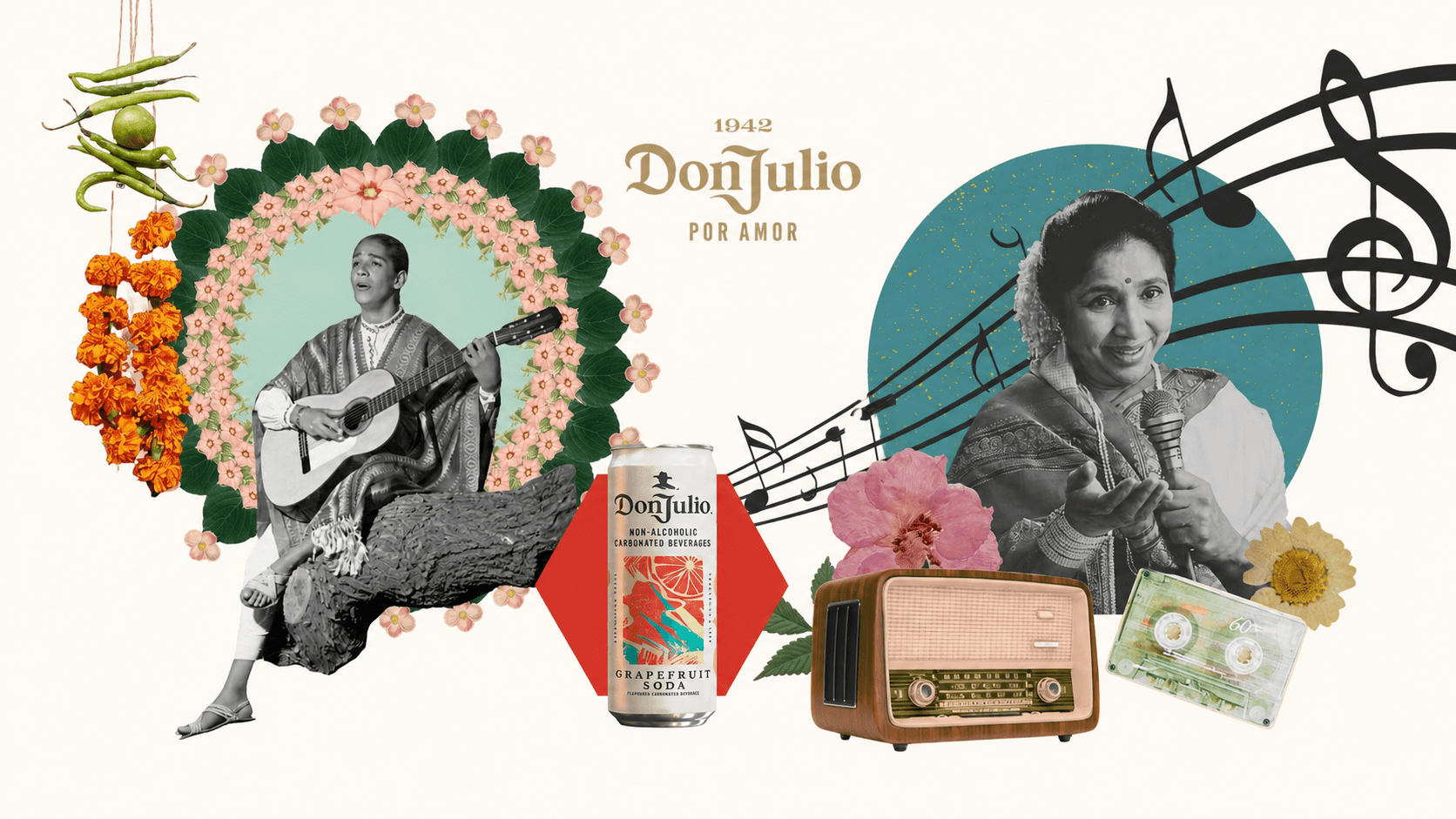
Don Julio's non-alcoholic carbonated beverage range, which served as the centrepiece of the Delhi Cinco de Mayo celebration this year, extends the brand's core philosophy into territory the Indian market is particularly equipped to appreciate. The ritual of a meticulously crafted drink, the care and intention behind its making, holds its meaning independently of alcohol content. For a market as layered and diverse as India, where choices around drinking are shaped by personal conviction, religious practice, and a growing orientation toward mindful consumption, that understanding reflects cultural intelligence.
On the jimadors of Jalisco: Since 1947, three generations of jimador families have worked with Don Julio, hand-harvesting each agave plant individually, assessing the age and health of each one before cutting. The knowledge lives in the hands rather than in any manual, passed through seasons and bodies across generations. India carries its own traditions of this kind of embodied craft intelligence, held by communities of weavers, embroiderers, and dyers for whom technique is inherited rather than taught. The two traditions have rarely been placed in conversation. They should be.
New Delhi, 2nd May
At The Leela Palace in New Delhi on the 2nd of May, the banquet hall had been transformed into something that walked the precise line between reverence and festivity - an elevated, refined version of a Mexican fiesta, with none of the kitsch and all of the soul. Palomas and picantes moved through the room. The crowd had that quality of evenings that have been genuinely thought about: people present rather than merely attending.
Around half past nine, a mariachi band entered from the front of the hall, unannounced, moving through the crowd as though they had been guests all along who had simply decided the moment had arrived to play. The room followed the music into the main banquet space with collective movement that no event producer can manufacture, pulled forward by something older and more instinctive than a programme. There is something about a mariachi entrance that bypasses every layer of social composure a room has constructed. The music carried that quality intrinsic to great mariachi: celebratory in a format that has clearly been earned, cheerful with the full knowledge of what cheerfulness costs.
The evening moved into a fashion showcase by Anamika Khanna, one of the few Indian designers whose work operates in the same intellectual framework as the evening's broader argument. Khanna, who has spent three decades insisting that Indian craft is "completely non-contemporary modern and experimental," presented five looks placing Indian embroidery in direct dialogue with Mexican textile sensibility, her signature zardozi and resham work meeting the warmth and weight of Mexicana in silhouettes that felt neither borrowed nor imposed. For a designer whose stated ambition has always been to ensure Indian craft is seen as high fashion on a global stage, a Cinco de Mayo showcase was a coherent extension of a career-long position. The evening concluded in dancing. The truest, most fitting possible conclusion to an Indian fiesta.
Por Amor
I want to resist the urge to be cynical about this. It is easy, when a luxury brand stages a cultural evening, to dismiss it as aestheticised marketing. And yes, of course Don Julio has commercial interests in India. That is not a secret and it is not a sin. But there is a difference between a brand that appropriates a culture and a brand that takes the trouble to understand the cultural significance of its own product, and subsequently, expansion. Cinco de Mayo, as an idea, is built on the notion that identity must be protected and celebrated even when it exists in inconvenient circumstances. Don Julio has carried that idea from the highlands of Jalisco for over eight decades.
Bringing it to Delhi, to a city that knows something about ancient civilisation rubbing up against imperial history, feels less like an imposition and more like an introduction between old friends who somehow never met. Delhi is a city where history sits underneath every ordinary evening, where the weight of what has been endured and survived is present in the architecture and the air. Marking a date because of what it meant, and celebrating because celebration is itself an act of memory and refusal, requires no translation here.
Cinco de Mayo is a statement about how cultures define themselves through what they choose to commemorate and how they choose to do it. Mexico chose one afternoon in Puebla, in 1862, when an outnumbered army held its ground against the most powerful military force in the world and prevailed. The war continued. The date endured. India has its own versions of that calculus, its own afternoons that mattered more than the outcomes that followed them, its own practice of carrying forward the moral weight of a moment that history tried to minimise.
Don Julio brought a real story to India this May, and found a country already fluent in its language.
Por Amor.
TO BE CONTINUED, FOR SUBSCRIBERS ONLY.
This is where the surface ends and the reporting begins.
The complete piece, the full archive, and access to The French Press Circle. Reporting answerable only to its readers.
Already a subscriber ?
Login
Read these on the house, with our compliments.
A selection from the current issue, open to all readers. Read them in full. The rest is one decision away.




On the 5th of May, 1862, General Ignacio Zaragoza led a Mexican army against French imperial forces at the Battle of Puebla and won, against odds so steep that the outcome registered less as military strategy and more as collective will made manifest on a battlefield. France returned, occupied Mexico for years, and installed a European emperor on its soil. The war continued long after Puebla. And yet the date embedded itself permanently into Mexican consciousness, becoming cause for celebration across generations, honouring a single afternoon of defiance whose immediate consequences were soon undone.
Even though it was not an absolute victory, it remains a cause of celebration across the world today because it is an illustration of hope, of a struggle and injustice rebutted with resilience, something all colonised nations would understand very well. The kind that says: we are still here, and tonight, we are going to eat, drink, and dance as proof. That is, at its core, what Cinco de Mayo is. And if you are Indian, I suspect it resonates somewhere in your bones before you even consciously register why.
Let’s set the record straight. It is not Mexican Independence Day. That would be September 16th, 1810, a date that most margarita-drinking Americans celebrating in May have never once Googled. The west turned Cinco de Mayo into a commercial event anchored loosely to Mexican-American identity and very firmly to margarita revenue, draining the date of its historical weight in exchange for a more marketable version of festivity. The actual story, the one about an outnumbered army and the stubborn insistence of a nation on its own dignity, gets buried under that noise. Cinco de Mayo commemorates the 5th of May, 1862, when a ragtag Mexican army, outnumbered, under-resourced, and by every measure expected to lose, defeated France, which, at the time, was the most formidable military power in the world. Mexico had no business winning that battle. And yet a single, almost improbable act of defiance against an empire became a symbol. Sound familiar?
A Shared Grammar of Resistance
India has spent centuries developing fluency in exactly this register. The act of honouring a moment because of what it represented morally, even when the outcome remained unresolved for years and the empire eventually reasserted itself, is woven through Indian historical consciousness in ways that shaped how this country understands commemoration altogether. The siege of Chittor in 1568, where Rajput warriors chose collective death over surrender to Akbar's forces, became a story of honour rather than defeat, retold and celebrated for centuries after the fortress fell. The rebellion of 1857, crushed within a year by the British, was nonetheless absorbed into Indian consciousness as a founding act of resistance, its leaders immortalised in folk song and sculpture long before independence arrived ninety years later. Tipu Sultan lost Seringapatam and his life in 1799, and yet his refusal to negotiate with the East India Company made him a symbol that outlasted the empire that killed him. Resistance as identity, the refusal to let a defining moment dissolve into the general fog of defeat, is a framework Indians carry almost constitutionally, formed through a history that demanded it repeatedly and across centuries.
India and Mexico are not countries that are supposed to have much in common. Separated by oceans, by language, by geography, by the specific flavour of colonialism that shaped them - and yet spend any real time thinking about the two, and the resemblances start piling up in ways that feel almost eerie. Both civilisations are ancient in the truest sense of the word, with pre-colonial identities so layered and complex that they survived centuries of external imposition without fully surrendering. Both cultures built their identities around food as a community ritual, celebration as resistance, and the family unit as the fundamental organising principle of society. Both place an almost sacred weight on colour - in textiles, in festivals, in the way local streets look on an ordinary afternoon.
The material culture of both countries keeps producing these moments of recognition. Mexican Otomi embroidery and Indian kantha work share a foundational impulse: fabric as archive, textile as a medium through which a community records what it refuses to forget, passing memory forward through generations of hands. Both traditions treat textiles as a site of cultural survival rather than merely decoration. The chilli, which defines the flavour philosophy of both cuisines and functions in both as an agent of awakening rather than merely seasoning, travelled from the Americas to Asia through the Columbian Exchange of the 16th century, permanently altering what Indian food would become. It arrived through Portuguese colonial trade routes and was so thoroughly absorbed into the subcontinent's culinary identity that it is arguably the single most transformative culinary event in Indian history. Every time we add mirch to our daily dal, there is an invisible thread connecting our kitchen to Mexico. Most of us just never noticed it.
The two cultures also built their philosophy of celebration on the same premise: that gathering is a reaffirmation, a collective insistence that life exceeds the difficulties it arrives with. The mariachi band and the dhol player serve structurally identical social functions, announcing with volume and conviction that joy is an argument rather than an indulgence. The marigold, called ‘cempasúchil’ in Latin culture, that carpets Mexican altars on Día de los Muertos is the same flower that garlands Indian doorways at Diwali and drapes temple idols from Varanasi to Madurai. That philosophy is produced by our shared cultures that have had to fight for the right to be festive, just as we have had to fight for the right to be free.
What Don Julio Actually Carries
Don Julio González began distilling in the highlands of Jalisco in 1942, at seventeen years old, in the Los Altos region where volcanic soil and high altitude produce a blue weber agave of unusual depth and character, at just seventeen years old. Over the following four decades he built an extended argument through craft: that tequila deserved the same reverence accorded to aged cognac or single malt Scotch, and that Mexican excellence in distillation was worth insisting upon even before the world had any framework to receive that insistence. He planted each agave further apart than convention dictated, prioritising quality over yield at a time when no one expected it out of the region. The brand that carries his name has been making the argument for Mexican excellence over the span of eighty years.
Don Julio arrived in India in December 2023, under Diageo's stewardship, and the reception confirmed what the brand had understood intuitively: India was a market that had developed its own rigorous vocabulary for luxury. As Prathmesh Mishra, Chief Commercial Officer of Diageo India, put it at the time of the 1942 launch: "Don Julio 1942 is the toast of the most exclusive cocktail bars, restaurants and nightclubs around the world. It is the choice of the connoisseurs and the who's-who of the society and the glitterati." By 2024, the Indian premium spirits market had grown to an estimated Rs 2,500 crore, driven by a generation of consumers with genuine discernment and an appetite for spirits that carry a story rather than simply a label.
Don Julio's non-alcoholic carbonated beverage range, which served as the centrepiece of the Delhi Cinco de Mayo celebration this year, extends the brand's core philosophy into territory the Indian market is particularly equipped to appreciate. The ritual of a meticulously crafted drink, the care and intention behind its making, holds its meaning independently of alcohol content. For a market as layered and diverse as India, where choices around drinking are shaped by personal conviction, religious practice, and a growing orientation toward mindful consumption, that understanding reflects cultural intelligence.
On the jimadors of Jalisco: Since 1947, three generations of jimador families have worked with Don Julio, hand-harvesting each agave plant individually, assessing the age and health of each one before cutting. The knowledge lives in the hands rather than in any manual, passed through seasons and bodies across generations. India carries its own traditions of this kind of embodied craft intelligence, held by communities of weavers, embroiderers, and dyers for whom technique is inherited rather than taught. The two traditions have rarely been placed in conversation. They should be.
New Delhi, 2nd May
At The Leela Palace in New Delhi on the 2nd of May, the banquet hall had been transformed into something that walked the precise line between reverence and festivity - an elevated, refined version of a Mexican fiesta, with none of the kitsch and all of the soul. Palomas and picantes moved through the room. The crowd had that quality of evenings that have been genuinely thought about: people present rather than merely attending.
Around half past nine, a mariachi band entered from the front of the hall, unannounced, moving through the crowd as though they had been guests all along who had simply decided the moment had arrived to play. The room followed the music into the main banquet space with collective movement that no event producer can manufacture, pulled forward by something older and more instinctive than a programme. There is something about a mariachi entrance that bypasses every layer of social composure a room has constructed. The music carried that quality intrinsic to great mariachi: celebratory in a format that has clearly been earned, cheerful with the full knowledge of what cheerfulness costs.
The evening moved into a fashion showcase by Anamika Khanna, one of the few Indian designers whose work operates in the same intellectual framework as the evening's broader argument. Khanna, who has spent three decades insisting that Indian craft is "completely non-contemporary modern and experimental," presented five looks placing Indian embroidery in direct dialogue with Mexican textile sensibility, her signature zardozi and resham work meeting the warmth and weight of Mexicana in silhouettes that felt neither borrowed nor imposed. For a designer whose stated ambition has always been to ensure Indian craft is seen as high fashion on a global stage, a Cinco de Mayo showcase was a coherent extension of a career-long position. The evening concluded in dancing. The truest, most fitting possible conclusion to an Indian fiesta.
Por Amor
I want to resist the urge to be cynical about this. It is easy, when a luxury brand stages a cultural evening, to dismiss it as aestheticised marketing. And yes, of course Don Julio has commercial interests in India. That is not a secret and it is not a sin. But there is a difference between a brand that appropriates a culture and a brand that takes the trouble to understand the cultural significance of its own product, and subsequently, expansion. Cinco de Mayo, as an idea, is built on the notion that identity must be protected and celebrated even when it exists in inconvenient circumstances. Don Julio has carried that idea from the highlands of Jalisco for over eight decades.
Bringing it to Delhi, to a city that knows something about ancient civilisation rubbing up against imperial history, feels less like an imposition and more like an introduction between old friends who somehow never met. Delhi is a city where history sits underneath every ordinary evening, where the weight of what has been endured and survived is present in the architecture and the air. Marking a date because of what it meant, and celebrating because celebration is itself an act of memory and refusal, requires no translation here.
Cinco de Mayo is a statement about how cultures define themselves through what they choose to commemorate and how they choose to do it. Mexico chose one afternoon in Puebla, in 1862, when an outnumbered army held its ground against the most powerful military force in the world and prevailed. The war continued. The date endured. India has its own versions of that calculus, its own afternoons that mattered more than the outcomes that followed them, its own practice of carrying forward the moral weight of a moment that history tried to minimise.
Don Julio brought a real story to India this May, and found a country already fluent in its language.
Por Amor.
TO BE CONTINUED, FOR SUBSCRIBERS ONLY.
This is where the surface ends and the reporting begins.
The complete piece, the full archive, and access to The French Press Circle. Reporting answerable only to its readers.
Already a subscriber ?
Login
Read these on the house, with our compliments.
A selection from the current issue, open to all readers. Read them in full. The rest is one decision away.