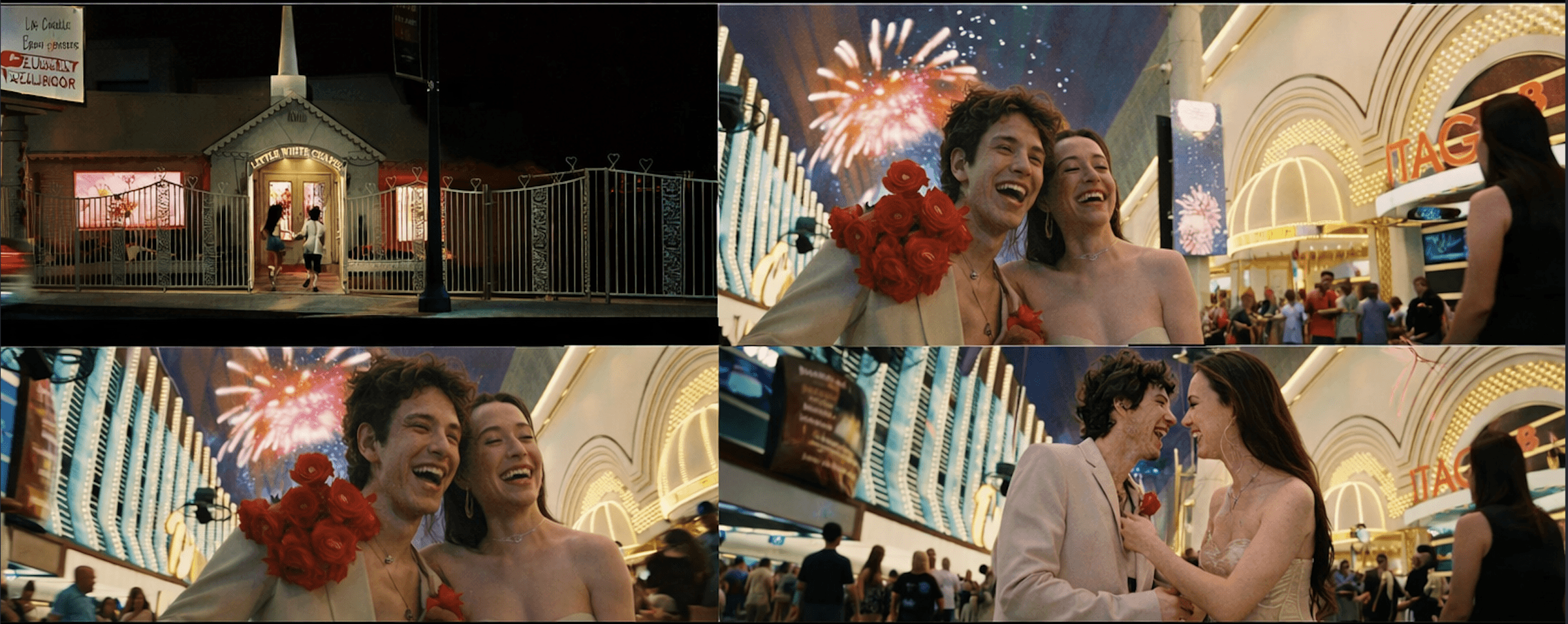
There is a reason why Netflix's Anora lingers long after it ends, and it has very little to do with the spectacle of a stripper marrying into wealth. What the film quietly dismantles is something far more familiar, far more uncomfortable, and far closer to home: the idea that a woman can transcend class through proximity to a man who already has access to it.
Ani is a working-class woman who understands the economy she operates in. She is not naïve. She knows that intimacy can be monetised, that attention can be engineered, that desire; if handled correctly can be turned into access. Her world is transactional, but it is also honest in a way that most of ours is not. Because what she does explicitly, many women across societies, particularly in India, are taught to do implicitly!
We just call it something else.
We often call it marriage in many cases.
In India, especially within ecosystems like South Delhi, South Bombay, and legacy business families, marriage has long functioned as a strategic alignment. It is less about two individuals finding each other and more about two systems recognising mutual benefit. Surnames, balance sheets, social capital, legacy, and access all sit quietly beneath the language of love. Families ask where you come from, what you bring, and how you can integrate into a world that existed long before you arrived with superhuman abilities.
And yet, layered on top of this deeply strategic structure is the performance of romance. The Indian wedding industry - one of the largest in the world sells a very specific fantasy. That this union is transformative. That this moment, this entry, this alliance will change your life. The couture, the destination venues, the curated guest lists, the editorialised photography it is all production design for upward mobility disguised as love.
On a quick side note: many people still ask me why I chose to step away from editing a wedding magazine. The truth is, I began to feel an increasing discomfort…almost a dissonance participating in and perpetuating a socio-cultural fantasy that did not believe in. The relentless emphasis on perfection or the flawless makeup, the couture, the solah shringar, the curated rituals of becoming the “ideal” bride or bahu started to feel more like reiterating conditioning. It felt like I was feeding an ecosystem built on performance, and optics.
Over time, I found that what we were often constructing was not a reflection of two people coming together in any meaningful, emotional sense, but a carefully staged narrative designed to signal status, aspiration, and social alignment. The wedding, in many ways, had become a spectacle of pretence - an elaborate facade that prioritised perception over authenticity. Because if two people were truly, deeply in love, one wonders whether they would feel the need for such theatrical affirmation at all. The legal framework of marriage, of course, serves its purpose, but the cultural excess surrounding it - the scale, the symbolism, the performative perfection often feels like an endorsement of an idea that is at times, quietly toxic.
This is precisely the illusion Anora holds up and quietly fractures in a very different and distinctive setting.
When Ani meets Ivan, the son of a Russian oligarch, their relationship begins exactly as it should within her world: as a transaction. He pays for her time. Then for more of it. Then for exclusivity. And eventually, impulsively, for marriage. What looks like chaos is, structurally, not unfamiliar. A woman from outside the system is pulled into it through a man who belongs to it. For a brief, intoxicating moment, she is reclassified because her proximity has changed.
She enters his world. The private jets, the hotels, the velocity of wealth. It feels like access, but more importantly, it feels like arrival.
But class does not dissolve just because it has been momentarily entertained.
What Anora understands with brutal clarity is that capital will consume the working class for pleasure, but it will not absorb it for legitimacy. The system allows Ani to enter, but it does not allow her to belong. And the moment her presence threatens to destabilise that order, the machinery moves swiftly to correct it. The family intervenes. The marriage is dismantled. The disruption is erased.
This is where the film stops being about a sex worker and becomes about something far more universal. Because Ani’s real miscalculation is that she believed the rules would change for her and not that she believed in the man.
And that belief is not hers alone.
Across cultures, and particularly in India, women are still quietly fed the idea that they do not need to build power if they can align with it. That desirability, if leveraged well enough, can become mobility. That being chosen can replace becoming. It is a seductive narrative, reinforced by real social structures that reward proximity far more quickly than they reward independence.
But proximity is not power. It is permission. And permission can always be revoked.

Instagram Link : https://www.instagram.com/p/DGuQbGlRhQ_/?igsh=Ym00NXVmODJkdGM5
The most devastating moment in Anora is what follows after the annulment. Ani does not collapse gracefully. She does not retreat with dignity. She howls. It is raw, uncontained, almost animal in its grief. Because what is breaking in that moment is an entire imagined future. The belief that she had crossed over. That she had been chosen for permanence over desire.
And then, in the middle of that emotional wreckage, something even more destabilising happens. Igor, who has existed on the periphery of power, offers her something she has never been trained to recognise. Just… care over transaction and lust.
When he tries to kiss her, it is sans expectation and sans exchange. It is not something she has to earn or reciprocate in measurable terms. It is, perhaps for the first time in her life, an attempt at something real.
And Ani recoils.
Most likely because she has never been taught how to receive something that does not come with a price. She knows how to perform intimacy. She knows how to control it, shape it, sell it. But she does not know how to sit inside it when it is freely given. Real love, without transaction, without agenda, without negotiation, feels foreign and almost unsafe psychologically.
And this is where the film cuts deepest, particularly in an Indian context.
Because how many women are trained for performance, but not for intimacy? How many know how to present, adjust, assimilate, and sustain a marriage that looks perfect from the outside but have never been given the language to ask for emotional safety, or to recognise tenderness when it arrives without conditions? How many have been taught to be desirable, accommodating, strategic but not to be held, or to be seen, or to receive without calculating what it might cost?
Ani’s breakdown about losing the story she briefly believed she was living. And in that loss comes a kind of clarity that is far more brutal than heartbreak. The understanding that the system is not broken. It worked exactly as it was designed to.
Anora, to me is a commentary on the architecture of aspiration. On how women, across class lines, are still navigating economies of desire in the hope that they might convert it into something more permanent. On how marriage continues to function, in many cases, as a socially acceptable version of that transaction just dressed in couture and sanctified by ritual.
And perhaps the most uncomfortable truth it leaves us with is this: You can learn how to be wanted. You can master it, even. You can build an entire life around it. But if no one ever teaches you how to be loved - you will not recognise it when it finally arrives.
And by then, it may already be too late.
TO BE CONTINUED, FOR SUBSCRIBERS ONLY.
This is where the surface ends and the reporting begins.
The complete piece, the full archive, and access to The French Press Circle. Reporting answerable only to its readers.
Already a subscriber ?
Login
Read these on the house, with our compliments.
A selection from the current issue, open to all readers. Read them in full. The rest is one decision away.










There is a reason why Netflix's Anora lingers long after it ends, and it has very little to do with the spectacle of a stripper marrying into wealth. What the film quietly dismantles is something far more familiar, far more uncomfortable, and far closer to home: the idea that a woman can transcend class through proximity to a man who already has access to it.
Ani is a working-class woman who understands the economy she operates in. She is not naïve. She knows that intimacy can be monetised, that attention can be engineered, that desire; if handled correctly can be turned into access. Her world is transactional, but it is also honest in a way that most of ours is not. Because what she does explicitly, many women across societies, particularly in India, are taught to do implicitly!
We just call it something else.
We often call it marriage in many cases.
In India, especially within ecosystems like South Delhi, South Bombay, and legacy business families, marriage has long functioned as a strategic alignment. It is less about two individuals finding each other and more about two systems recognising mutual benefit. Surnames, balance sheets, social capital, legacy, and access all sit quietly beneath the language of love. Families ask where you come from, what you bring, and how you can integrate into a world that existed long before you arrived with superhuman abilities.
And yet, layered on top of this deeply strategic structure is the performance of romance. The Indian wedding industry - one of the largest in the world sells a very specific fantasy. That this union is transformative. That this moment, this entry, this alliance will change your life. The couture, the destination venues, the curated guest lists, the editorialised photography it is all production design for upward mobility disguised as love.
On a quick side note: many people still ask me why I chose to step away from editing a wedding magazine. The truth is, I began to feel an increasing discomfort…almost a dissonance participating in and perpetuating a socio-cultural fantasy that did not believe in. The relentless emphasis on perfection or the flawless makeup, the couture, the solah shringar, the curated rituals of becoming the “ideal” bride or bahu started to feel more like reiterating conditioning. It felt like I was feeding an ecosystem built on performance, and optics.
Over time, I found that what we were often constructing was not a reflection of two people coming together in any meaningful, emotional sense, but a carefully staged narrative designed to signal status, aspiration, and social alignment. The wedding, in many ways, had become a spectacle of pretence - an elaborate facade that prioritised perception over authenticity. Because if two people were truly, deeply in love, one wonders whether they would feel the need for such theatrical affirmation at all. The legal framework of marriage, of course, serves its purpose, but the cultural excess surrounding it - the scale, the symbolism, the performative perfection often feels like an endorsement of an idea that is at times, quietly toxic.
This is precisely the illusion Anora holds up and quietly fractures in a very different and distinctive setting.
When Ani meets Ivan, the son of a Russian oligarch, their relationship begins exactly as it should within her world: as a transaction. He pays for her time. Then for more of it. Then for exclusivity. And eventually, impulsively, for marriage. What looks like chaos is, structurally, not unfamiliar. A woman from outside the system is pulled into it through a man who belongs to it. For a brief, intoxicating moment, she is reclassified because her proximity has changed.
She enters his world. The private jets, the hotels, the velocity of wealth. It feels like access, but more importantly, it feels like arrival.
But class does not dissolve just because it has been momentarily entertained.
What Anora understands with brutal clarity is that capital will consume the working class for pleasure, but it will not absorb it for legitimacy. The system allows Ani to enter, but it does not allow her to belong. And the moment her presence threatens to destabilise that order, the machinery moves swiftly to correct it. The family intervenes. The marriage is dismantled. The disruption is erased.
This is where the film stops being about a sex worker and becomes about something far more universal. Because Ani’s real miscalculation is that she believed the rules would change for her and not that she believed in the man.
And that belief is not hers alone.
Across cultures, and particularly in India, women are still quietly fed the idea that they do not need to build power if they can align with it. That desirability, if leveraged well enough, can become mobility. That being chosen can replace becoming. It is a seductive narrative, reinforced by real social structures that reward proximity far more quickly than they reward independence.
But proximity is not power. It is permission. And permission can always be revoked.
Instagram Link : https://www.instagram.com/p/DGuQbGlRhQ_/?igsh=Ym00NXVmODJkdGM5
The most devastating moment in Anora is what follows after the annulment. Ani does not collapse gracefully. She does not retreat with dignity. She howls. It is raw, uncontained, almost animal in its grief. Because what is breaking in that moment is an entire imagined future. The belief that she had crossed over. That she had been chosen for permanence over desire.
And then, in the middle of that emotional wreckage, something even more destabilising happens. Igor, who has existed on the periphery of power, offers her something she has never been trained to recognise. Just… care over transaction and lust.
When he tries to kiss her, it is sans expectation and sans exchange. It is not something she has to earn or reciprocate in measurable terms. It is, perhaps for the first time in her life, an attempt at something real.
And Ani recoils.
Most likely because she has never been taught how to receive something that does not come with a price. She knows how to perform intimacy. She knows how to control it, shape it, sell it. But she does not know how to sit inside it when it is freely given. Real love, without transaction, without agenda, without negotiation, feels foreign and almost unsafe psychologically.
And this is where the film cuts deepest, particularly in an Indian context.
Because how many women are trained for performance, but not for intimacy? How many know how to present, adjust, assimilate, and sustain a marriage that looks perfect from the outside but have never been given the language to ask for emotional safety, or to recognise tenderness when it arrives without conditions? How many have been taught to be desirable, accommodating, strategic but not to be held, or to be seen, or to receive without calculating what it might cost?
Ani’s breakdown about losing the story she briefly believed she was living. And in that loss comes a kind of clarity that is far more brutal than heartbreak. The understanding that the system is not broken. It worked exactly as it was designed to.
Anora, to me is a commentary on the architecture of aspiration. On how women, across class lines, are still navigating economies of desire in the hope that they might convert it into something more permanent. On how marriage continues to function, in many cases, as a socially acceptable version of that transaction just dressed in couture and sanctified by ritual.
And perhaps the most uncomfortable truth it leaves us with is this: You can learn how to be wanted. You can master it, even. You can build an entire life around it. But if no one ever teaches you how to be loved - you will not recognise it when it finally arrives.
And by then, it may already be too late.
TO BE CONTINUED, FOR SUBSCRIBERS ONLY.
This is where the surface ends and the reporting begins.
The complete piece, the full archive, and access to The French Press Circle. Reporting answerable only to its readers.
Already a subscriber ?
Login
Read these on the house, with our compliments.
A selection from the current issue, open to all readers. Read them in full. The rest is one decision away.