
French Press Global hosted the fourth edition of the Tastemaker's Table on 18 June 2026 at Olive Bar & Kitchen, Mehrauli. The French Press Circle gathered to mark the launch of Issue Four, the 25th anniversaries of Olive and Vaishali S., and Isvari India, a Maison French Press ecosystem brand. The dinner was a preview of Chef Dhruv Oberoi's upcoming new menu for Olive: six courses built on classical French formats and entirely Indian sourcing. It will be a while before I stop thinking about the smoked liver.
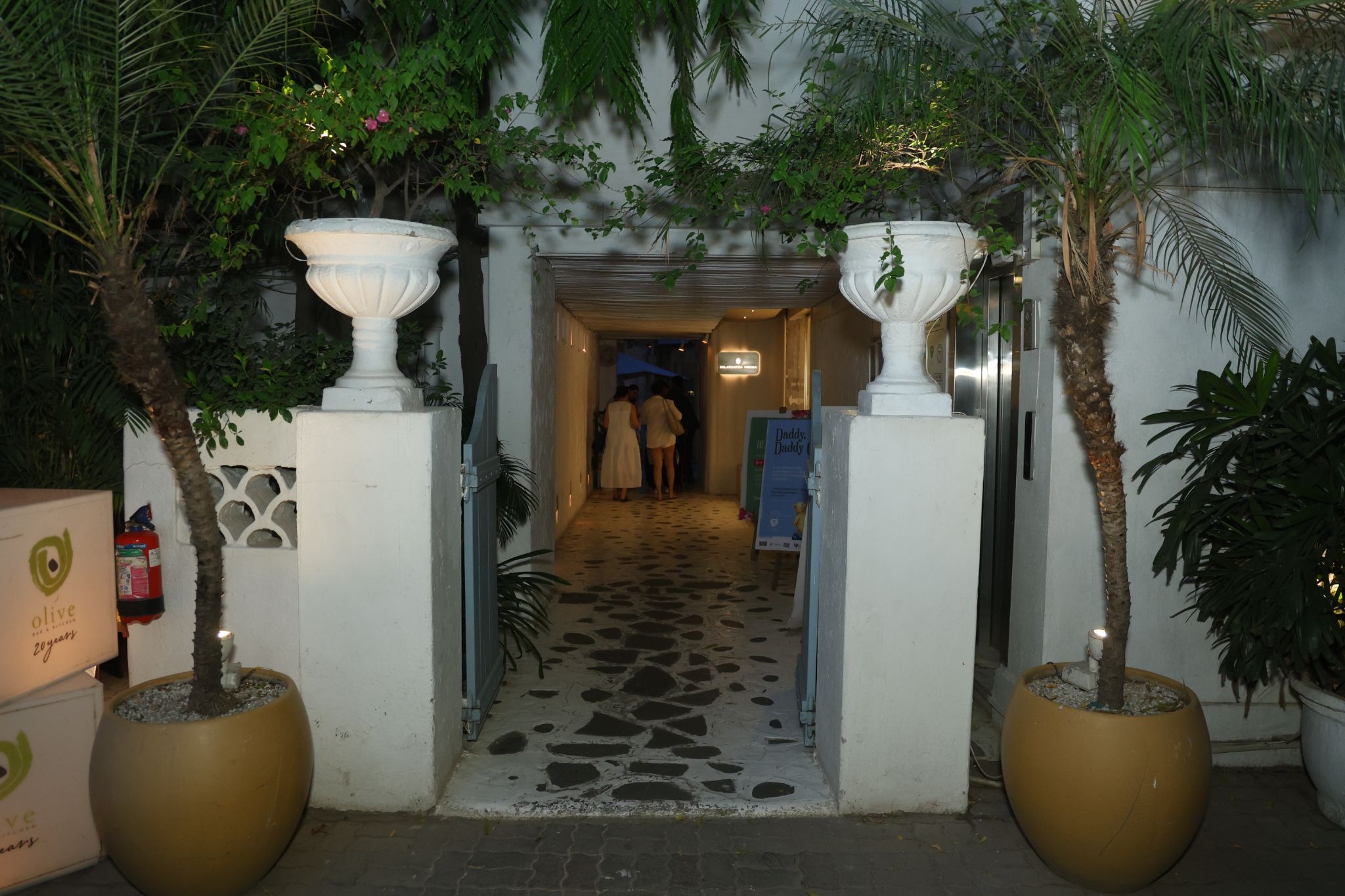
AD Singh opened Olive Bar & Kitchen in Mehrauli in 2003, on the ruins of a 19th-century Delhi merchant's stables, in the shadow of the Qutub Minar. Condé Nast Traveler named it one of the hottest new restaurants in the world that year. The neighbourhood around it was, at the time, more archaeological site than cultural destination, a stretch of South Delhi that many cafes had begun to stake a claim in but which had not yet found its shape as the address it would eventually become. What Olive did over the following two decades was less about cuisine and more about civic imagination: it gave Mehrauli a reason to exist on Delhi's mental map in a way that proved contagious. The galleries came after. The concept stores came after. The Friday evening traffic on Mehrauli Road came after.
Twenty-five years in, the restaurant Singh built carries a cultural authority that anniversaries alone cannot manufacture. It is a room that has held first dates and farewell dinners, fashion weeks and magazine launches, the kind of evenings that become reference points in a city's social memory. Chef Dhruv Oberoi has been the architect of Olive Mehrauli's kitchen for years, and the menu he previewed at the Tastemaker's Table Edition IV is the fullest expression yet of what he has been working toward: Indian ingredients treated as primary material, placed inside mediterranean formats that give them structure and finesse.
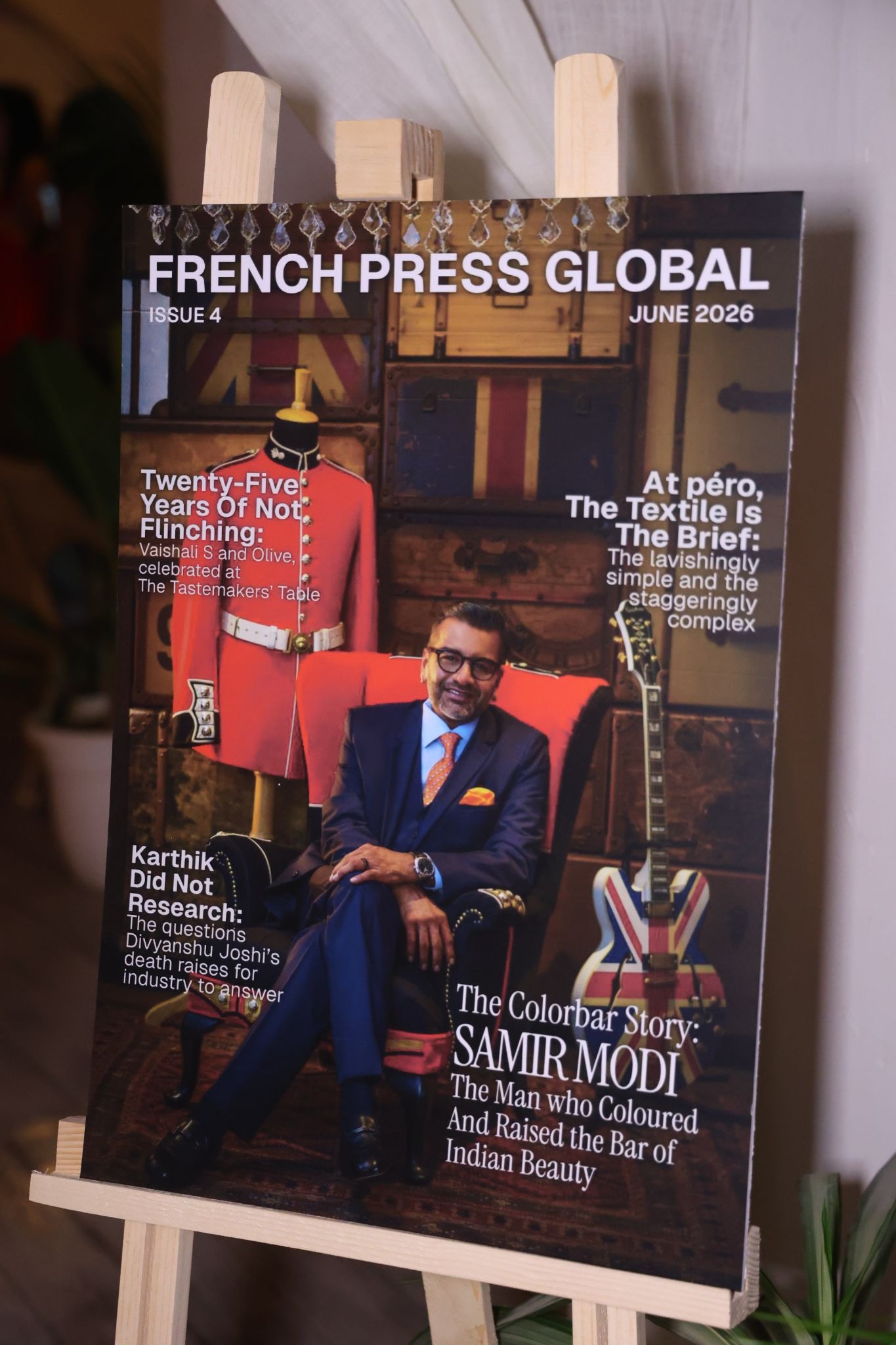
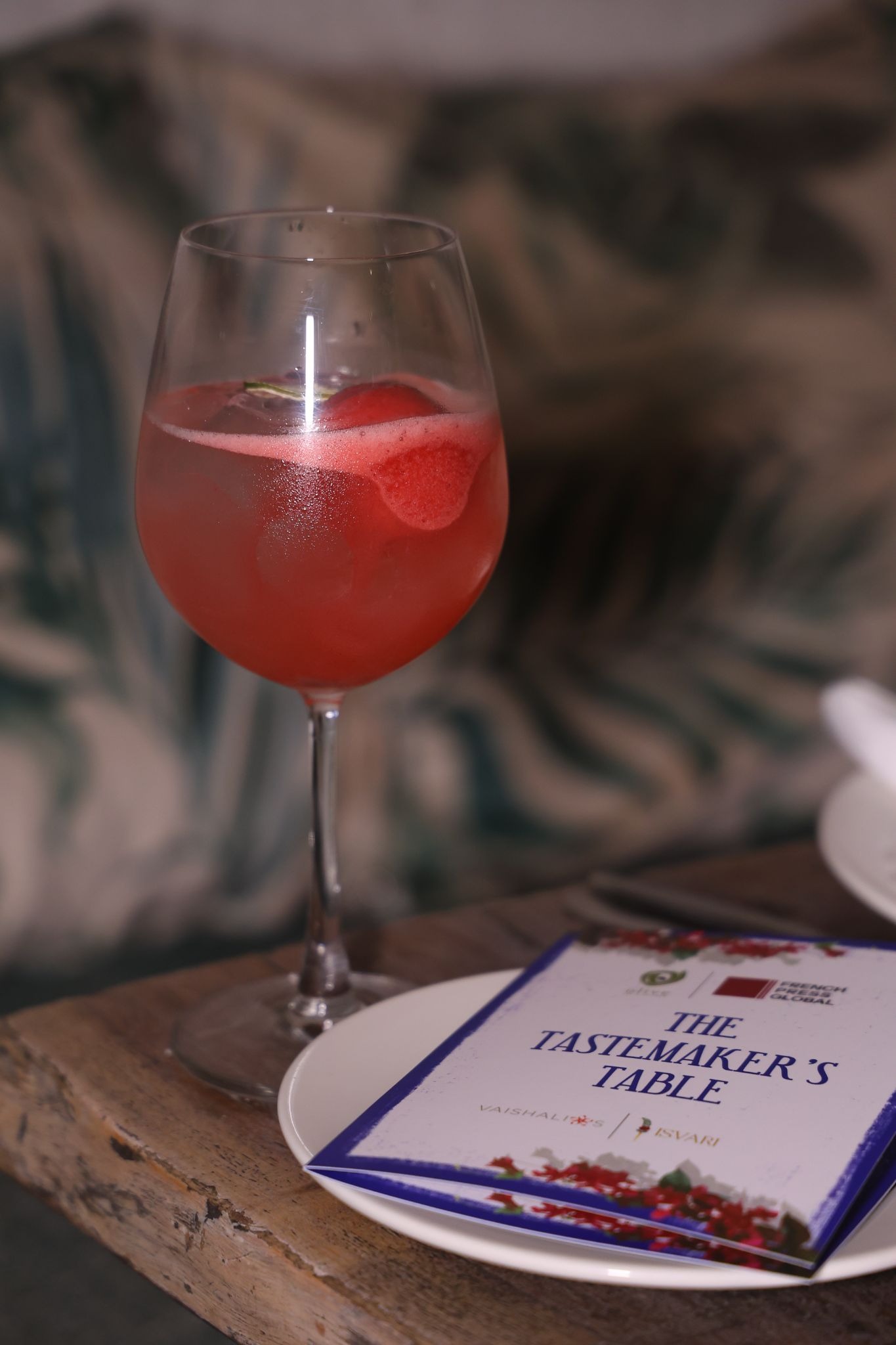
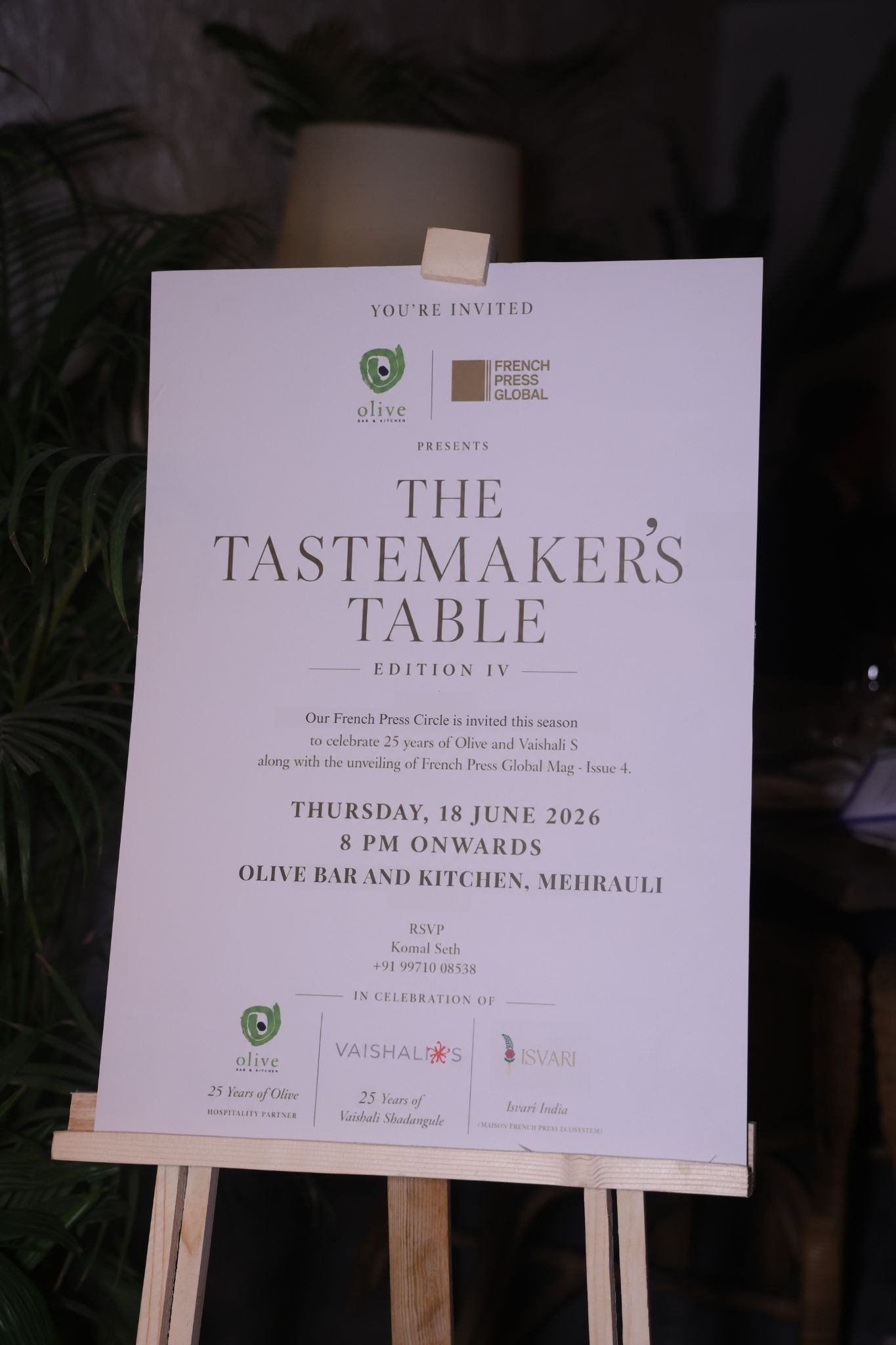
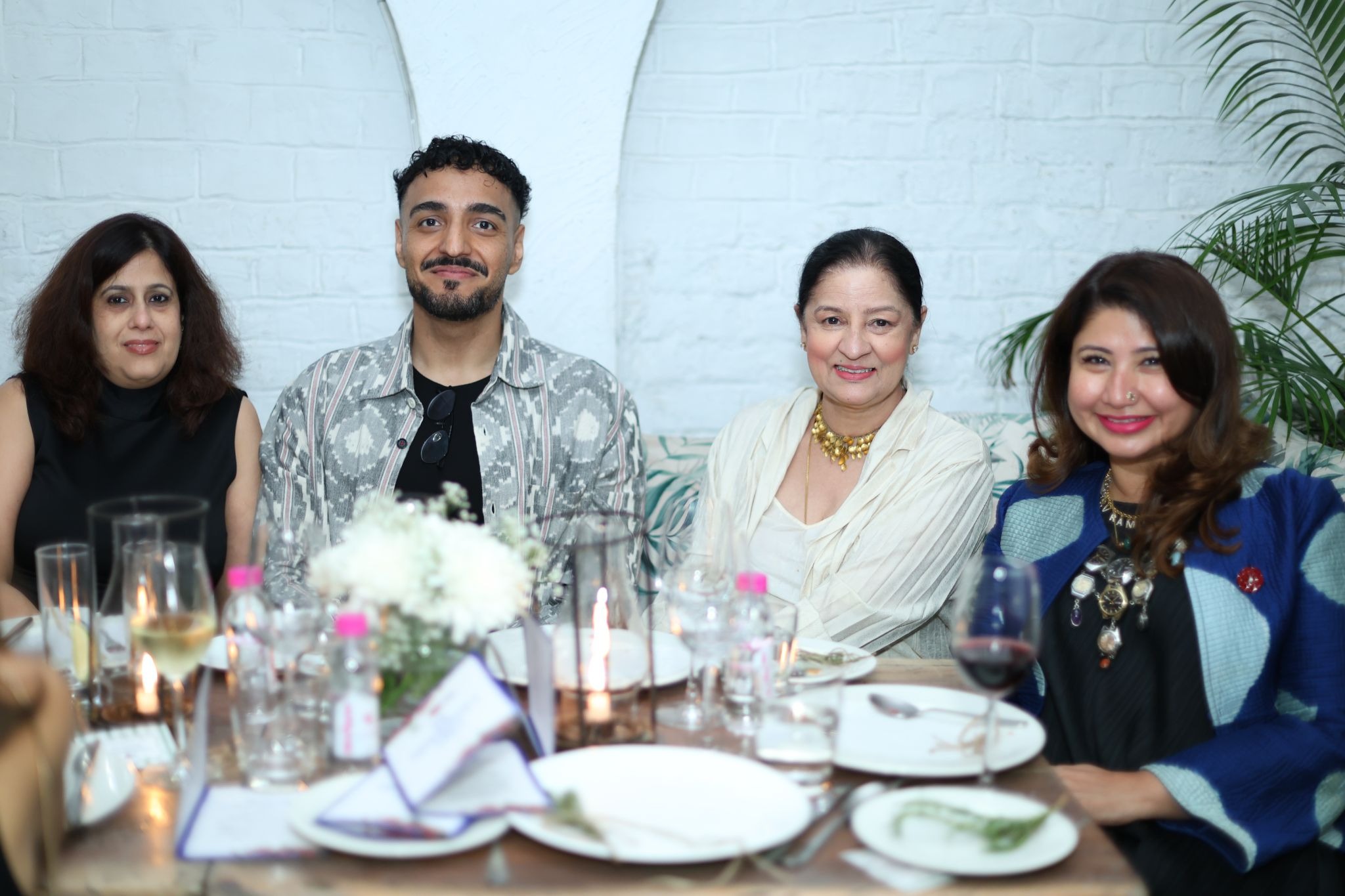
The French Press Circle this year included art curators, independent designers, editors from across the cultural press, and Samir Modi, the focus of the cover story for FPG Issue 04. Our Editorial Director and Founder, Chaiti Narula, opened the evening with a toast celebrating the launch of our latest magazine issue and 25 years of Olive and Vaishali S.
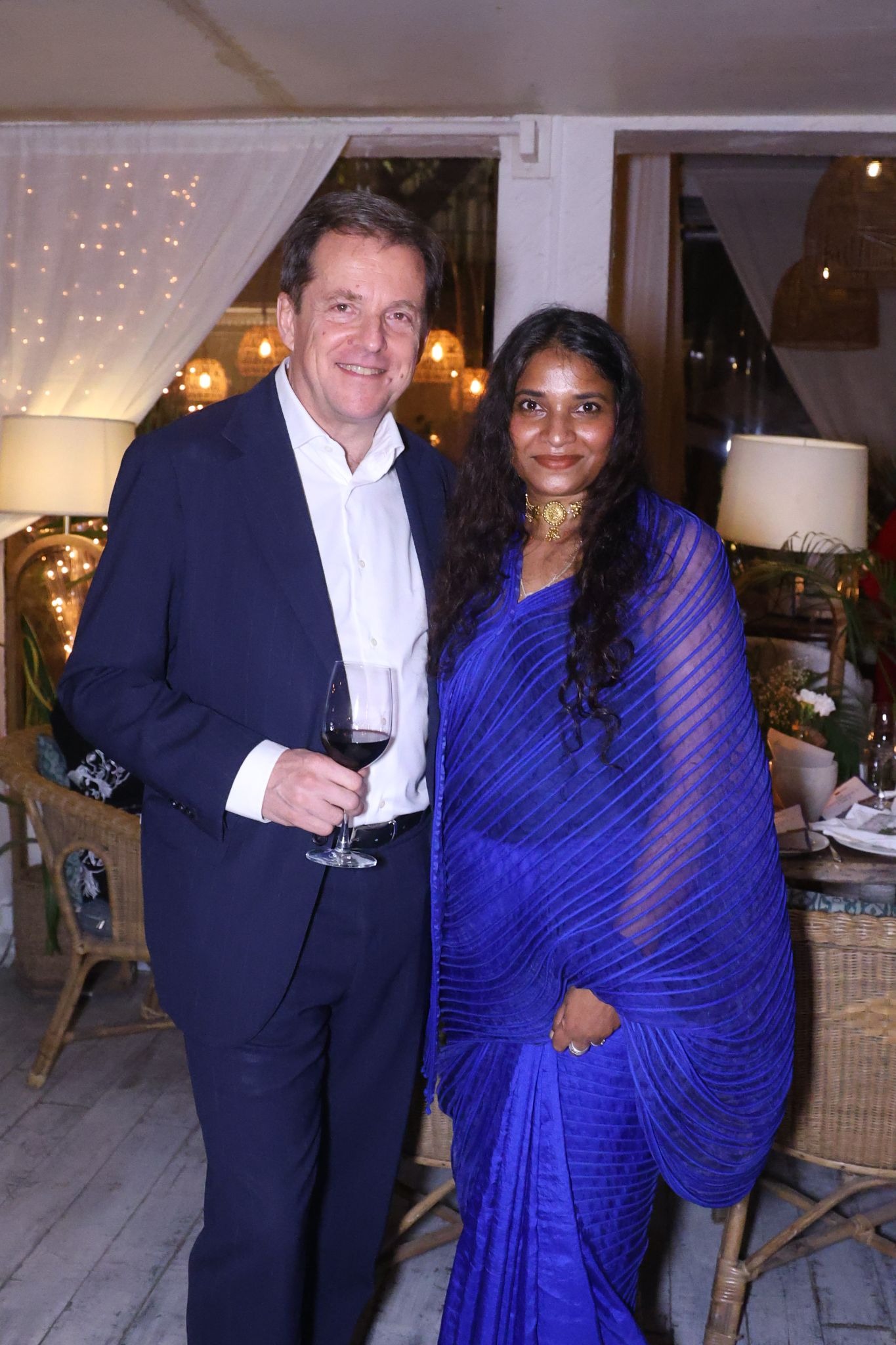

The co-celebrants carried their own histories. Vaishali Shadangule, the woman behind the Vaishali S label, has spent 25 years building a body of work from Indian handweaving that the global fashion industry spent most of that time failing to categorise, before the Fédération de la Haute Couture et de la Mode recognised her as the first Indian woman designer on the official Paris Haute Couture calendar in 2021. She now has a store on Boulevard Saint-Germain, adjacent to Café de Flore. Isvari India, a jewellery house and Maison French Press ecosystem brand, brought to the table a craft lineage that sat in easy conversation with everything the evening was arguing about Indian material culture.
Then the food arrived.
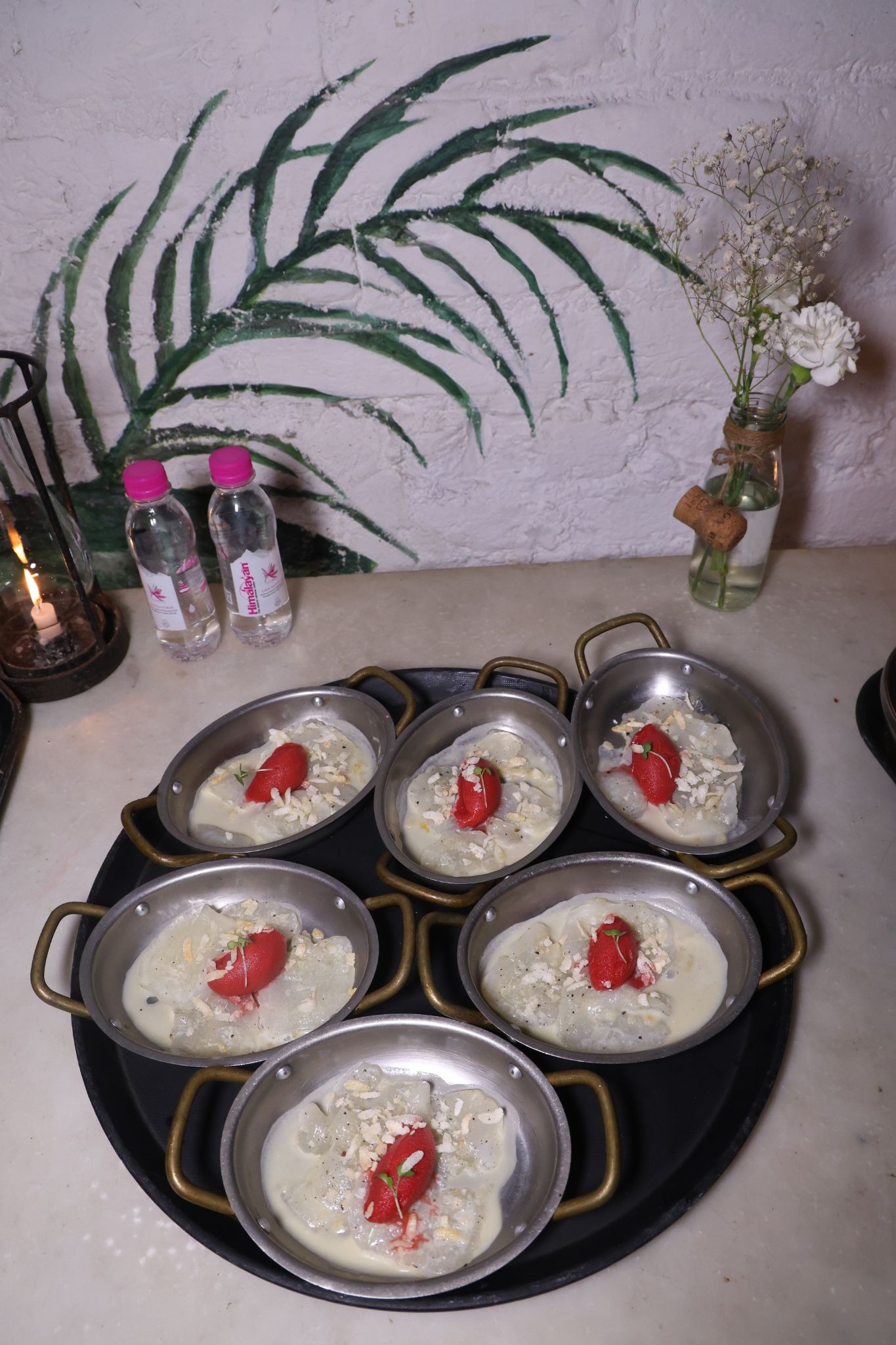
Red Tamarind & Tadgola
The non-vegetarian menu opened, as the vegetarian did, with a carpaccio of tadgola with coconut and red tamarind gastrique. Tadgola, the ice apple, is one of those summer ingredients that appears abundantly across coastal India and rarely on a tasting menu. Chef Oberoi slices it thin enough that its translucency becomes part of the presentation, the pale rounds arranged across the plate with coconut pooled beneath and the gastrique drawn across the surface. The texture is cool and faintly resistant, somewhere between a water chestnut and a lychee, with a sweetness that carries almost no sugar heat. The tamarind gastrique introduced an acidity precise enough to pull the fruit into focus without overwriting it, and the coconut sat between the two as a softening note rather than a flavour in its own right. The plate registered as effortless, which is always the hardest quality to achieve.
Rating: 4.5/5
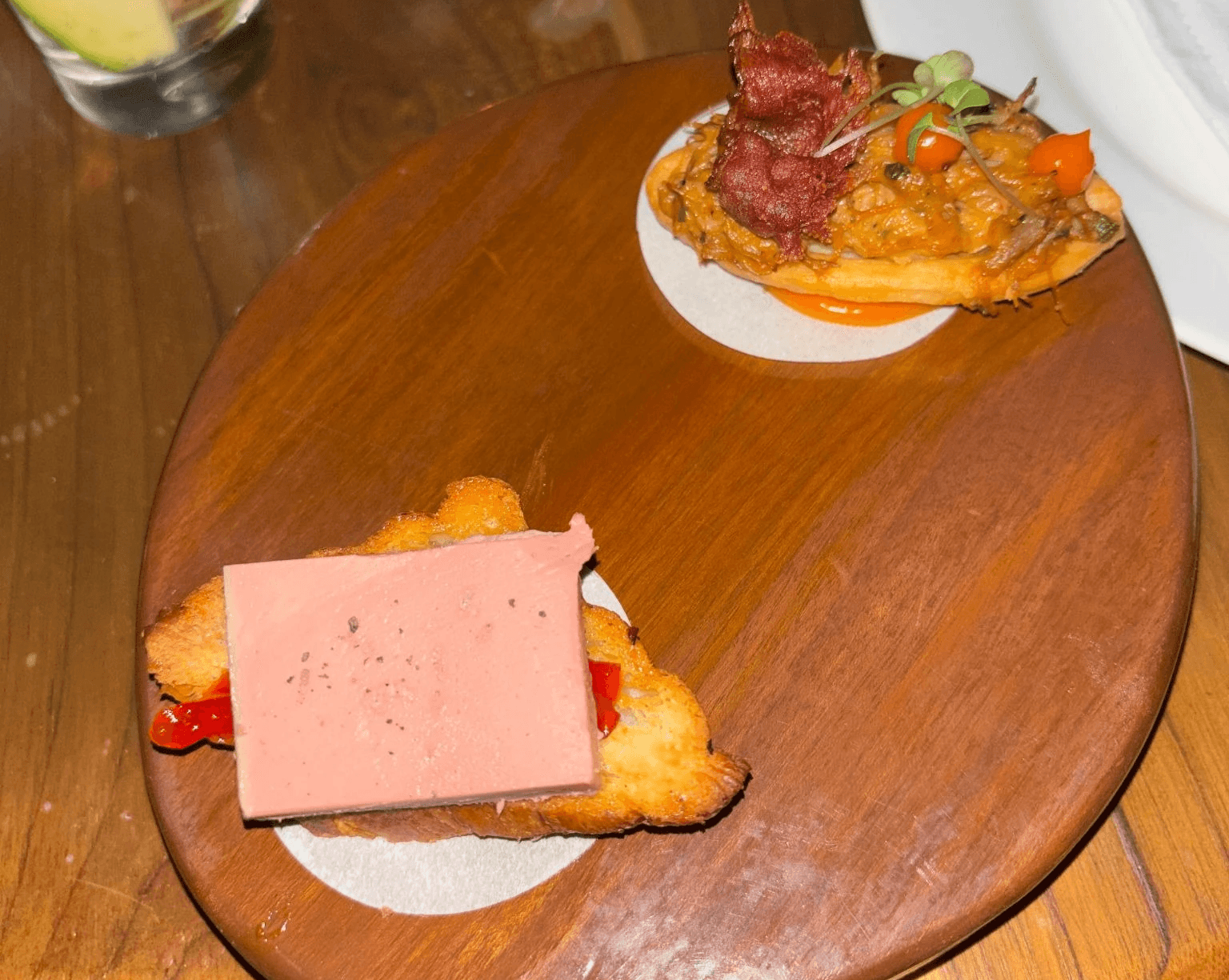
Pâté of smoked liver on Guntur chilli-glazed salt-crusted bread
Guntur Chillies & Liver
The pâté of smoked liver on a Guntur chilli-glazed salt-crusted bread was the course that stopped conversation at the table. The liver had been smoked long enough for its fat to take on a depth that rearranges the ingredient entirely, less iron-forward, more layered, with a char quality that sits in the finish rather than the first note. The presentation placed it in a clean quenelle on the bread, unembellished, the kind of plating that communicates certainty. The Guntur chilli glaze on the crust beneath it was the structural decision that made the whole plate work: Guntur chillies build their heat over several seconds rather than announcing themselves on contact, so the bread began as a savoury base and became something warmer and more insistent as the course progressed. The salt crust gave it enough textural resistance that the bread was part of the eating experience rather than a vehicle for what sat above it. Nothing on this plate was not earning its place.
Rating: 4.8/5

Soufflé of Himalayan Gruyère with jamun
Jamun & Himalayan Gruyere
The soufflé of Himalayan Gruyère with jamun appeared identically across both menus and was the crowd favourite of the evening by some distance. It rose and held, its surface golden, its interior set enough to carry both ingredients without collapsing into either. Himalayan Gruyère has a drier, more mineral quality than its Swiss counterpart, less sweet, with a sharpness that leans toward the alpine end of aged cheese. Jamun's astringency is equally uncompromising. It is not a fruit that softens toward sweetness, and it did not do so here. Chef Oberoi placed the jamun in small pieces distributed through the soufflé rather than swirled through as a coulis, so it arrived as distinct, textural moments rather than a continuous flavour note. The Gruyère's mineral sharpness and the jamun's dark, slightly tannic edge neither resolved nor competed; they simply coexisted at high volume inside something very light. The table finished it and talked about it through the next course.
Rating: 5/5
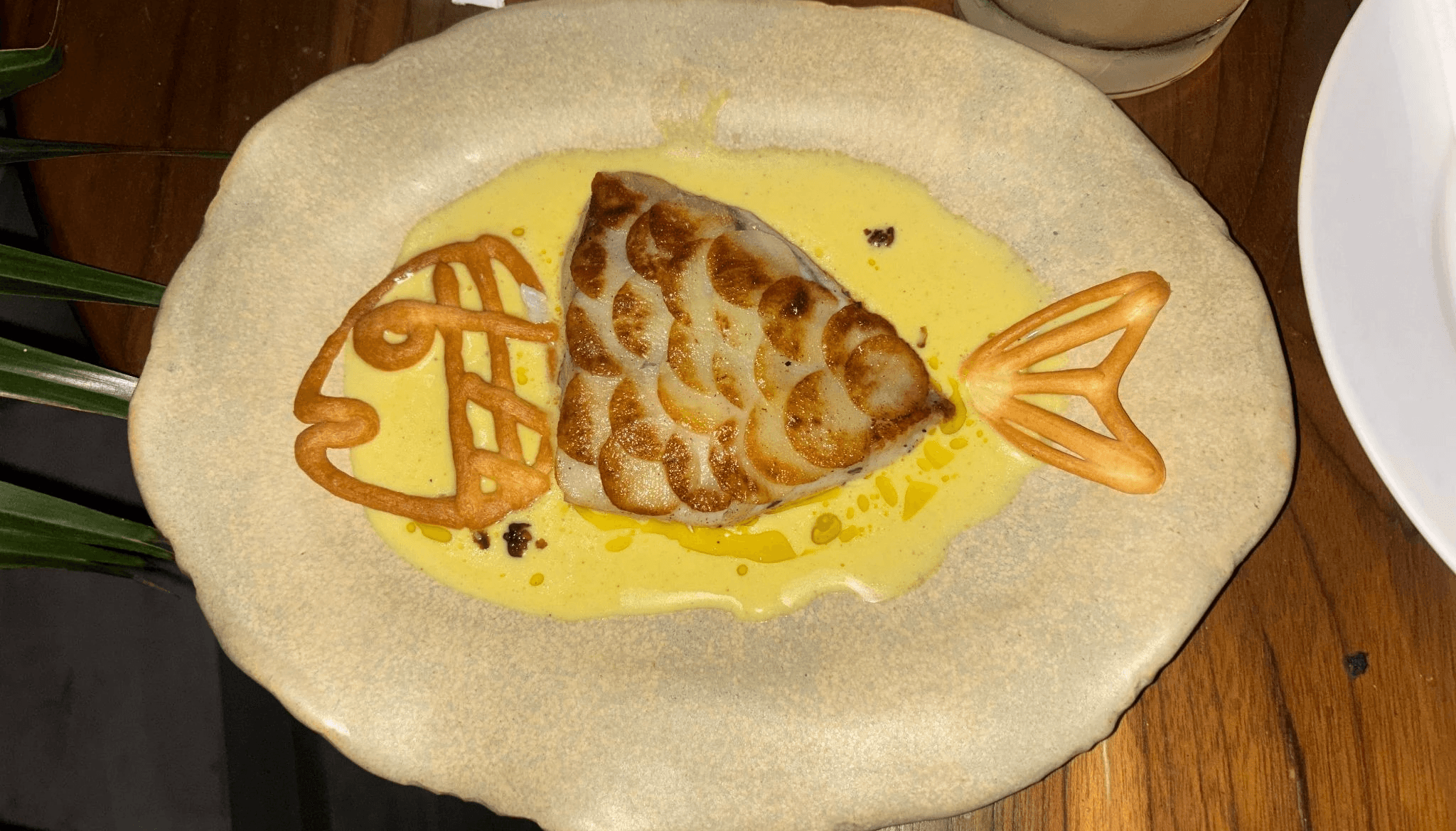
Vadouvan & Kolkata Bass
The meunière of Kolkata bass with French curry was the most composed plate of the evening, and the one that best illustrated what Chef Oberoi's new menu is doing architecturally. Vadouvan, the Tamil-origin spice blend that entered French curry tradition centuries ago and has been reclaimed by the Indian fine dining kitchen over the last decade, was the backbone of the sauce without being its loudest note. The bass had been cooked to the exact point where the flesh separated along its natural flake with no resistance, the skin crisped and the interior still holding its moisture. The meunière butter had developed a light, nutty quality that the vadouvan deepened rather than competed with. The spicing arrived as fragrance before it arrived as flavour, in the nose before it was on the palate, which is the longer route and the more telling one. The plate came out knowing its own proportions: the bass centred, the sauce present rather than pooled, nothing performing, and looking almost too cute to eat, with fins stylised with breadsticks. A whimsical note on an otherwise sophisticated menu.
Rating: 4.7/5
Mahua & Brandy
The crème caramel with whiskey-soaked mahua closed the menu with the kind of restraint that the preceding courses had earned the right to deploy. Mahua is a forest flower used across central and eastern India for generations, in ways that fine dining has historically treated as outside its remit. The whiskey soak had concentrated its natural sweetness into something richer and slightly fermented, closer to a very good dried fruit than to the flower's raw form. Chef Oberoi placed it in small, dense pieces through the custard rather than incorporating it into the caramel or the base, so the mahua arrived as a distinct textural moment rather than a background sweetness. The custard itself was set at a point that read as silk rather than gel, and its sweetness was calibrated low enough to give the mahua room to be itself.
Rating: 4.8/5
On the Drinks
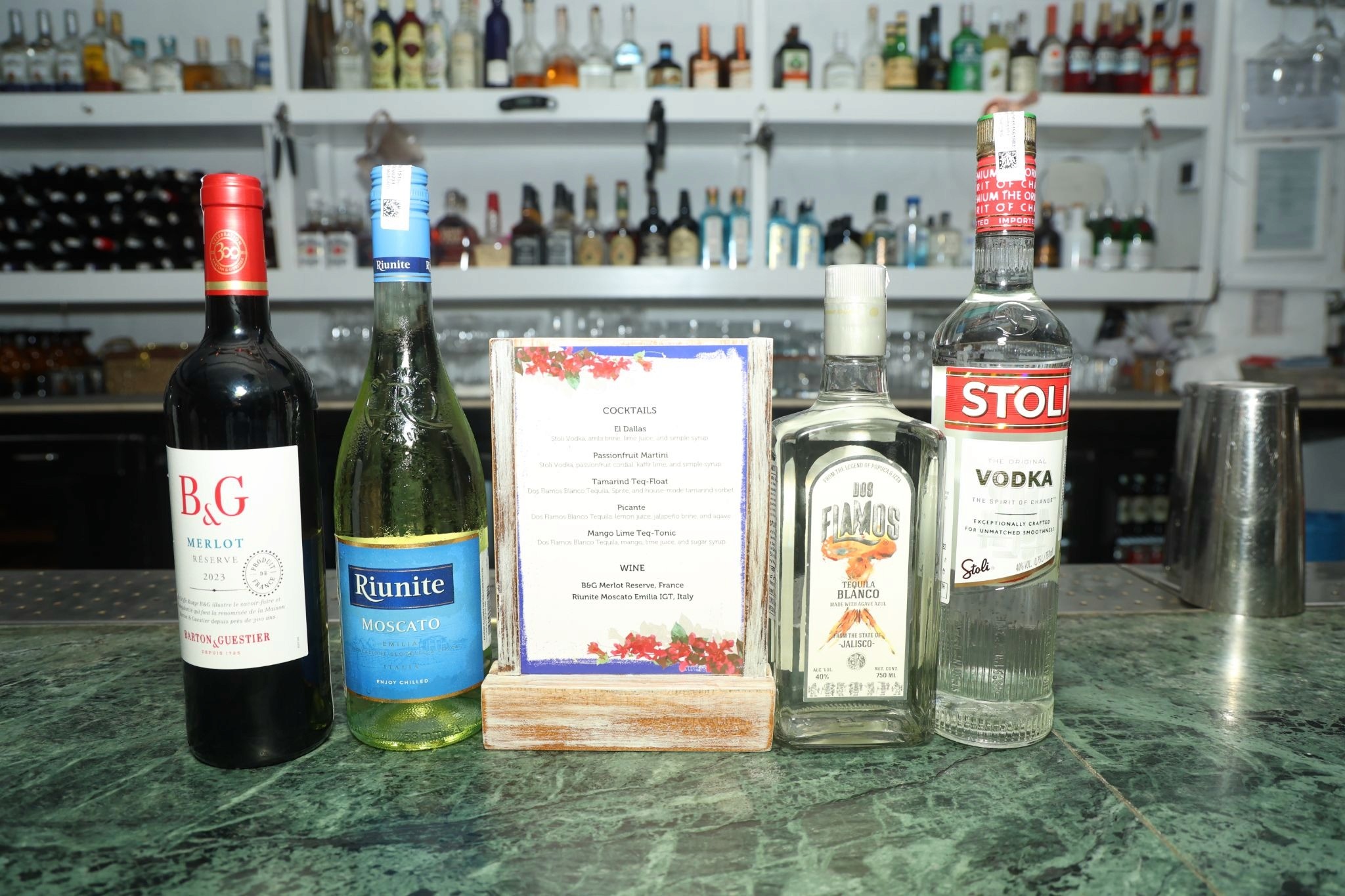

The cocktail menu for the evening ran across two spirits, Stoli Vodka and Dos Flamos Blanco Tequila, and I moved through three of the five options.
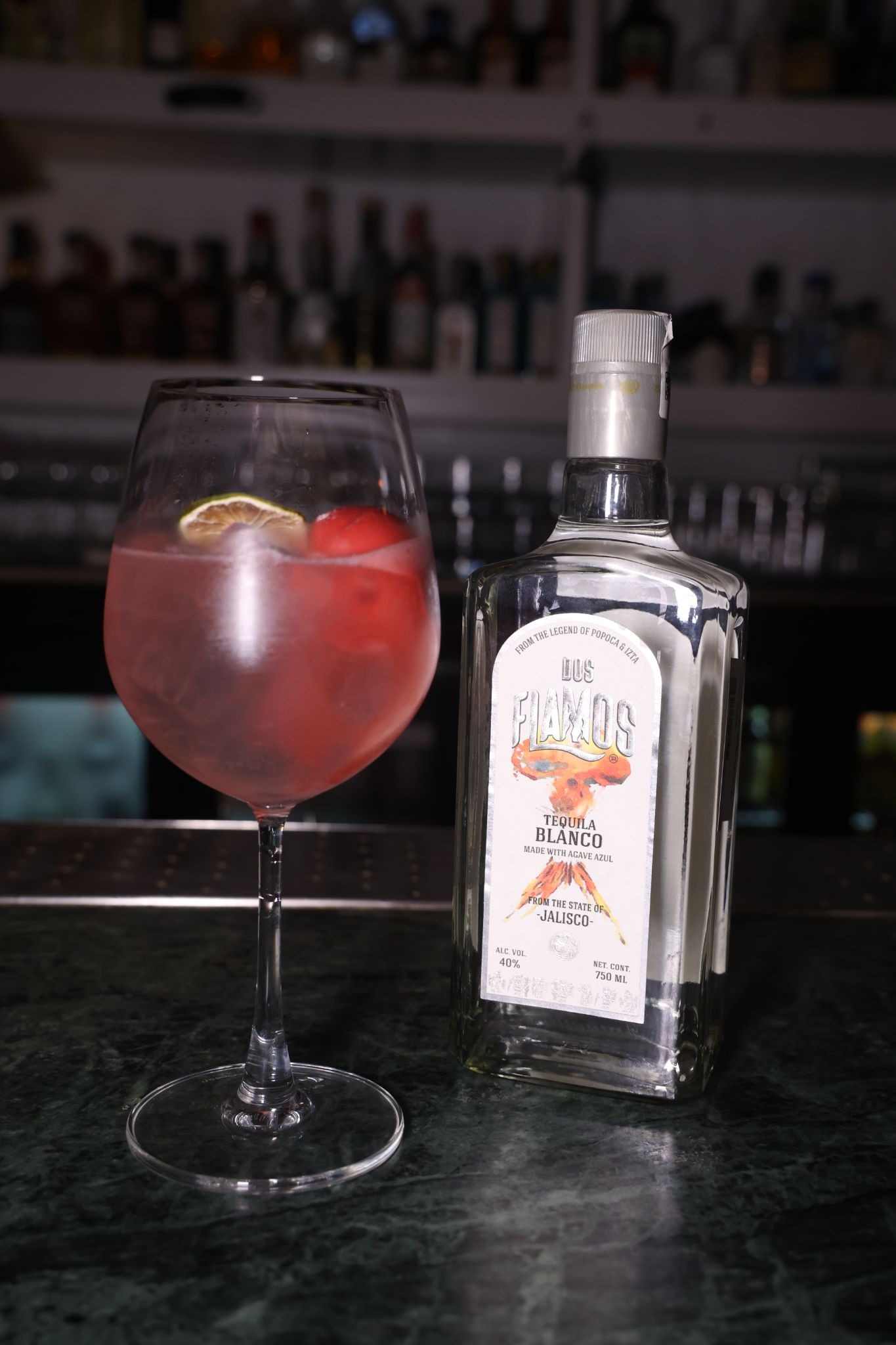
The Passionfruit Martini, Stoli Vodka with passionfruit cordial, kaffir lime, and simple syrup, was the drink the room kept returning to through the first half of the evening and one of the three crowd favourites of the night alongside the Jamun soufflé and the Mango Lime Teq-Tonic. The kaffir lime is the detail that separates it from the version of this drink that exists on every rooftop bar menu in Delhi: it introduces a floral, slightly resinous fragrance that arrives in the nose ahead of the cordial's sweetness, so the drink reads as more layered than its components suggest. Light, clear, and precise without drawing attention to any of those qualities.
Rating: 4.3/5
The Picante, Dos Flamos Blanco Tequila with lemon juice, jalapeño brine, and agave, arrived mid-dinner and found the liver course waiting for it. The jalapeño brine gave it a savoury heat that built cleanly rather than spiked, echoing the Guntur chilli in the bread beneath the pâté without the two competing for the same register. The agave kept the lemon juice from turning angular, and the tequila's grassy quality stayed audible underneath both. The most structurally disciplined cocktail of the three, and the one I ordered twice.
Rating: 4.6/5
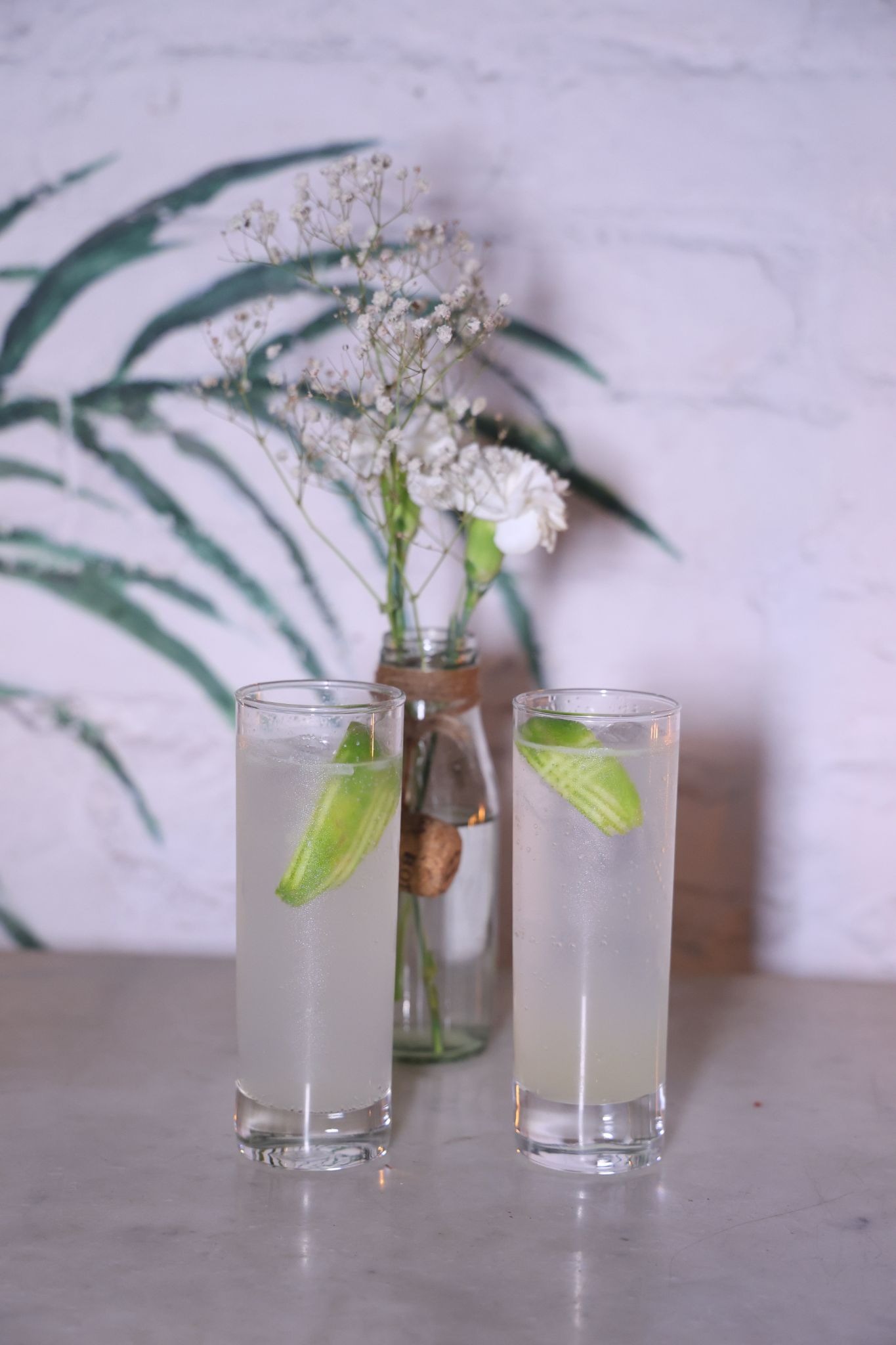
The Mango Lime Teq-Tonic, Dos Flamos Blanco with mango, lime juice, and sugar syrup, was where the table landed by dessert. The mango sat at the back of the drink rather than leading it, so the lime and tequila carried the first impression and the fruit came in at the finish, rounding it without pulling it into sweetness. It went alongside the mahua crème caramel with an ease that suggested either very good menu planning or very good instinct. At Olive, after twenty-five years, the two symbiotically become synonymous with each other.
Rating: 4.2/5
What Chef Dhruv Oberoi has assembled in this preview is a statement of intent about where Olive's kitchen goes from here. Tadgola, jamun, mahua, Guntur chilli, vadouvan, Kolkata bass: each ingredient sourced with specificity, each one placed inside a Med format that gives it a new angle without rewriting what it is. The carpaccio does not exoticify the tadgola. The meunière does not domesticate the vadouvan. The crème caramel does not sentimentalise the mahua. The menu arrives, course by course, and lets the ingredients speak for themselves.
The room that received the preview brought its own weight to the table. Art curators in conversation with fashion designers. Samir Modi at the table as Issue Four landed in the world. Editors comparing notes on the soufflé. Twenty-five years of Olive, twenty-five years of Vaishali S, and a magazine in its fourth issue covering both. AD Singh built something in Mehrauli in 2003 that the city has been growing into ever since. On the evening of 18 June 2026, Chef Oberoi let the next chapter speak for itself, and the tastemakers of the city gathered the way they always do for an occasion that matters: present, curious, and unhurried.
Editor's Rating: 4.7/5