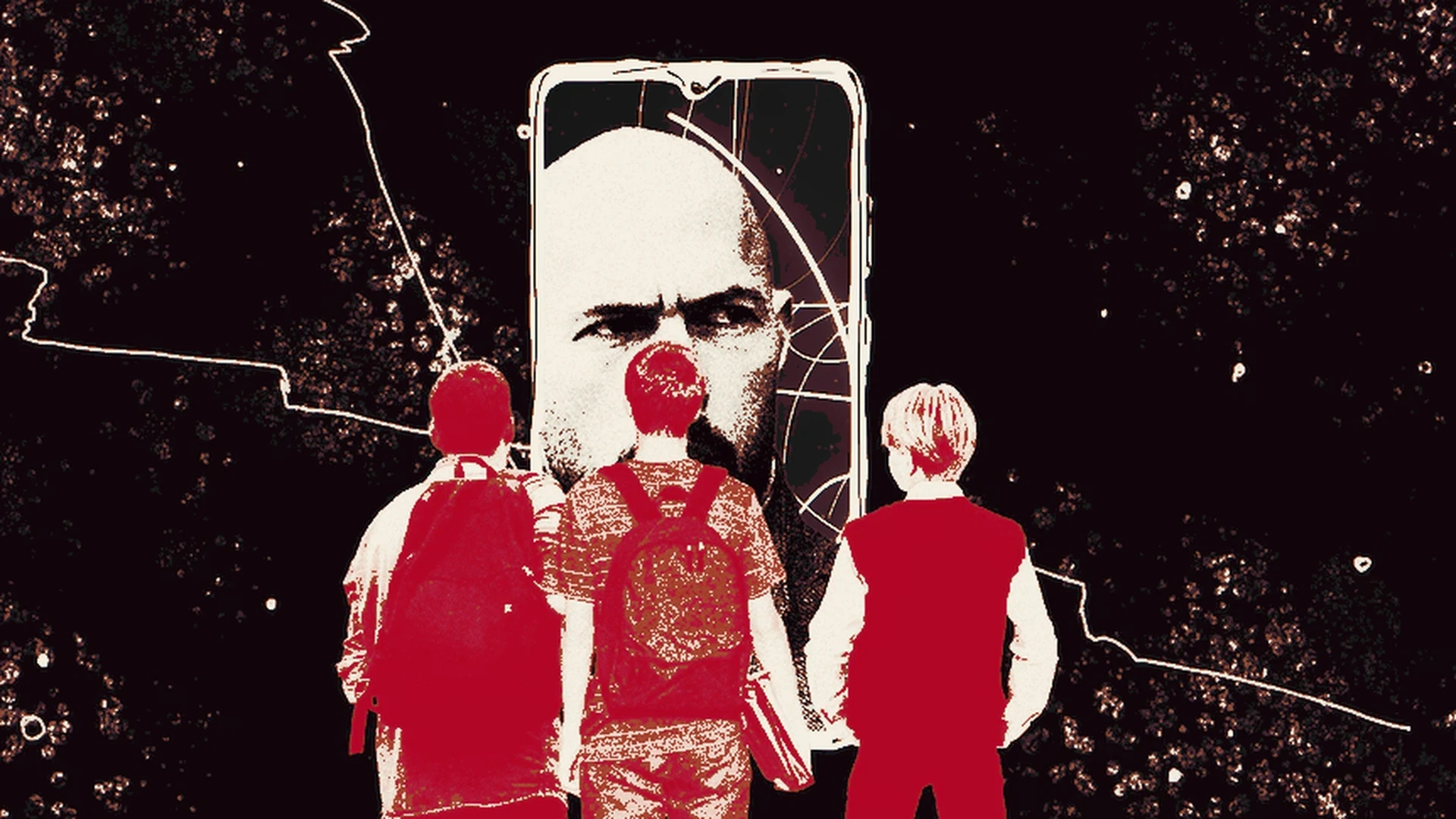
Let’s drop the fake shock.
Nothing in Louis Theroux: Inside The Manosphere is new. Not the misogyny. Not the conspiracy theories. Not the men sitting behind microphones pretending they’ve decoded the world.
What’s new is how efficiently it sells.
Because what we are calling the manosphere is an ecosystem. A network of communities that range from pickup artists and incel forums to men’s rights activists, “alpha male” coaches and a new generation of podcast entrepreneurs who have turned grievance into a scalable business model.
Different language. Same script.
The world has failed you.
Women are the problem.
Power is something you take back.
That’s the pitch.
And historically, this didn’t start here but evolved and took form though click-baitey algorithms. What began as fringe internet subcultures in the early 2000s has now been industrialised by social media. Because then came the algorithm.
And the algorithm only cares about what performs and it doesn’t necessarily have to be true.
That is the part people still underestimate.
Figures like Andrew Tate and Myron Gaines are operators. They have become fluent in the grammar of the platform. They understand that certainty travels faster than doubt, that humiliation is sticky, that outrage converts, and that controversy is free distribution.
Say something extreme.
Say it with conviction.
Repeat it enough times.
Monetise the attention.
That’s the business model.
And let’s call it what it is. It is a shortcut. A shortcut to fame. A shortcut to money. A shortcut to relevance. No rigour, no responsibility, no accountability. Just volume and velocity.
What makes it worse is that it works.
It works because it offers something dangerously efficient. A fast track to identity for people who feel dislocated, invisible or economically stalled. It tells them why they are angry. It gives them villains. It gives them a script. And then it sells them a lifestyle that looks aspirational enough to believe in.
Cars. Money. Women reduced to categories. Power dressed up as control.
And then it wraps all of this in language like “red pill”, as though what is being sold is insight rather than branding.
Because that is what this really is.
Marketing.
And like all good marketing, it understands its audience. Research has already shown that many who enter these spaces do so during periods of loneliness, confusion or low self-worth. They are being converted into them extremists arriving from a place of deep vulnerability.
Slowly, systematically and profitably. Because their attention is the product.
And the more extreme the content becomes, the more the system rewards it. Recommendation engines push it this material out. They escalate it. They create pathways from mild discontent to hard ideology without the user even realising it.
This is infrastructure. And this is where the discomfort sharpens. Because the manosphere is the system. Just stripped of polish.
We all know journalists who spread half-truths because it drives traffic. We all know platforms that sensationalise because outrage performs better than accuracy. The distance between a conspiracy theorist with a podcast and a media professional chasing ratings is, at times, just branding.
That’s it.
So when Louis Theroux walks into this world, he does something almost radical. He does not perform outrage, or try to win or turn it into spectacle. He just sits. He listens. And that is where the entire farce begins to unravel.
Because when you remove the performance, when you take away the speed and the noise, what is left is repetition, contradiction and a very visible lack of depth. The confidence begins to feel rehearsed. The logic starts collapsing under its own weight. Just slow, precise exposure.
That is long form pop culture journalism.
And watching this unfold on Netflix or any streaming platform feels strangely refreshing. Which is absurd, because this should be the baseline. Instead, we are so used to noise, speed and half-formed narratives that when something takes its time, when something respects the intelligence of its audience, it feels rare.
That is where we are.
A space where misinformation spreads faster than fact. Where influence is mistaken for authority. Where entire belief systems are engineered, packaged and sold in real time. And we are all, whether we admit it or not, feeding it. Because the algorithm amplifies what we engage with. And right now, outrage is more engaging than nuance.
So yes, the manosphere is toxic. But it is also efficient. It understands the system better than most institutions that are supposed to counter it. Which is the real problem. Because if this is what scales, then what chance does intelligence have? This is why work like this matters. But because it documents the system without distortion. It shows you the machinery. It restores context in a culture that has been stripped of it.
And context is the one thing the algorithm cannot monetise easily.
We need more of this.
More long-form journalism.
More documentarians willing to sit in uncomfortable spaces.
More platforms willing to fund work that does not chase immediacy.
Because increasingly, real journalism is emerging through long-form documentary, through slow observation, through storytellers who are willing to stay in the room long enough for the truth to surface as opposed to the places that claim to own it.
Streaming platforms have reach. Documentary has depth. Together, they can do what most media currently does not. Because right now, the loudest people in the room just the most optimised and not necessarily the smartest.
And that should worry all of us. Take a bow, Louis Theroux.
TO BE CONTINUED, FOR SUBSCRIBERS ONLY.
This is where the surface ends and the reporting begins.
The complete piece, the full archive, and access to The French Press Circle. Reporting answerable only to its readers.
Already a subscriber ?
Login
Read these on the house, with our compliments.
A selection from the current issue, open to all readers. Read them in full. The rest is one decision away.












Let’s drop the fake shock.
Nothing in Louis Theroux: Inside The Manosphere is new. Not the misogyny. Not the conspiracy theories. Not the men sitting behind microphones pretending they’ve decoded the world.
What’s new is how efficiently it sells.
Because what we are calling the manosphere is an ecosystem. A network of communities that range from pickup artists and incel forums to men’s rights activists, “alpha male” coaches and a new generation of podcast entrepreneurs who have turned grievance into a scalable business model.
Different language. Same script.
The world has failed you.
Women are the problem.
Power is something you take back.
That’s the pitch.
And historically, this didn’t start here but evolved and took form though click-baitey algorithms. What began as fringe internet subcultures in the early 2000s has now been industrialised by social media. Because then came the algorithm.
And the algorithm only cares about what performs and it doesn’t necessarily have to be true.
That is the part people still underestimate.
Figures like Andrew Tate and Myron Gaines are operators. They have become fluent in the grammar of the platform. They understand that certainty travels faster than doubt, that humiliation is sticky, that outrage converts, and that controversy is free distribution.
Say something extreme.
Say it with conviction.
Repeat it enough times.
Monetise the attention.
That’s the business model.
And let’s call it what it is. It is a shortcut. A shortcut to fame. A shortcut to money. A shortcut to relevance. No rigour, no responsibility, no accountability. Just volume and velocity.
What makes it worse is that it works.
It works because it offers something dangerously efficient. A fast track to identity for people who feel dislocated, invisible or economically stalled. It tells them why they are angry. It gives them villains. It gives them a script. And then it sells them a lifestyle that looks aspirational enough to believe in.
Cars. Money. Women reduced to categories. Power dressed up as control.
And then it wraps all of this in language like “red pill”, as though what is being sold is insight rather than branding.
Because that is what this really is.
Marketing.
And like all good marketing, it understands its audience. Research has already shown that many who enter these spaces do so during periods of loneliness, confusion or low self-worth. They are being converted into them extremists arriving from a place of deep vulnerability.
Slowly, systematically and profitably. Because their attention is the product.
And the more extreme the content becomes, the more the system rewards it. Recommendation engines push it this material out. They escalate it. They create pathways from mild discontent to hard ideology without the user even realising it.
This is infrastructure. And this is where the discomfort sharpens. Because the manosphere is the system. Just stripped of polish.
We all know journalists who spread half-truths because it drives traffic. We all know platforms that sensationalise because outrage performs better than accuracy. The distance between a conspiracy theorist with a podcast and a media professional chasing ratings is, at times, just branding.
That’s it.
So when Louis Theroux walks into this world, he does something almost radical. He does not perform outrage, or try to win or turn it into spectacle. He just sits. He listens. And that is where the entire farce begins to unravel.
Because when you remove the performance, when you take away the speed and the noise, what is left is repetition, contradiction and a very visible lack of depth. The confidence begins to feel rehearsed. The logic starts collapsing under its own weight. Just slow, precise exposure.
That is long form pop culture journalism.
And watching this unfold on Netflix or any streaming platform feels strangely refreshing. Which is absurd, because this should be the baseline. Instead, we are so used to noise, speed and half-formed narratives that when something takes its time, when something respects the intelligence of its audience, it feels rare.
That is where we are.
A space where misinformation spreads faster than fact. Where influence is mistaken for authority. Where entire belief systems are engineered, packaged and sold in real time. And we are all, whether we admit it or not, feeding it. Because the algorithm amplifies what we engage with. And right now, outrage is more engaging than nuance.
So yes, the manosphere is toxic. But it is also efficient. It understands the system better than most institutions that are supposed to counter it. Which is the real problem. Because if this is what scales, then what chance does intelligence have? This is why work like this matters. But because it documents the system without distortion. It shows you the machinery. It restores context in a culture that has been stripped of it.
And context is the one thing the algorithm cannot monetise easily.
We need more of this.
More long-form journalism.
More documentarians willing to sit in uncomfortable spaces.
More platforms willing to fund work that does not chase immediacy.
Because increasingly, real journalism is emerging through long-form documentary, through slow observation, through storytellers who are willing to stay in the room long enough for the truth to surface as opposed to the places that claim to own it.
Streaming platforms have reach. Documentary has depth. Together, they can do what most media currently does not. Because right now, the loudest people in the room just the most optimised and not necessarily the smartest.
And that should worry all of us. Take a bow, Louis Theroux.
TO BE CONTINUED, FOR SUBSCRIBERS ONLY.
This is where the surface ends and the reporting begins.
The complete piece, the full archive, and access to The French Press Circle. Reporting answerable only to its readers.
Already a subscriber ?
Login
Read these on the house, with our compliments.
A selection from the current issue, open to all readers. Read them in full. The rest is one decision away.