We were asked to gather in the lobby at 7 and “leave distractions behind,” which felt like a small request - until we realised how much of our lives are built around not doing exactly that.
It sounds simple enough until you realise how much of your day is built around not doing that. The message came from Agent 403, a digital guide who had already begun shaping the evening before we had even stepped out, slightly cryptic, faintly theatrical, and just persuasive enough to make you comply without overthinking it.
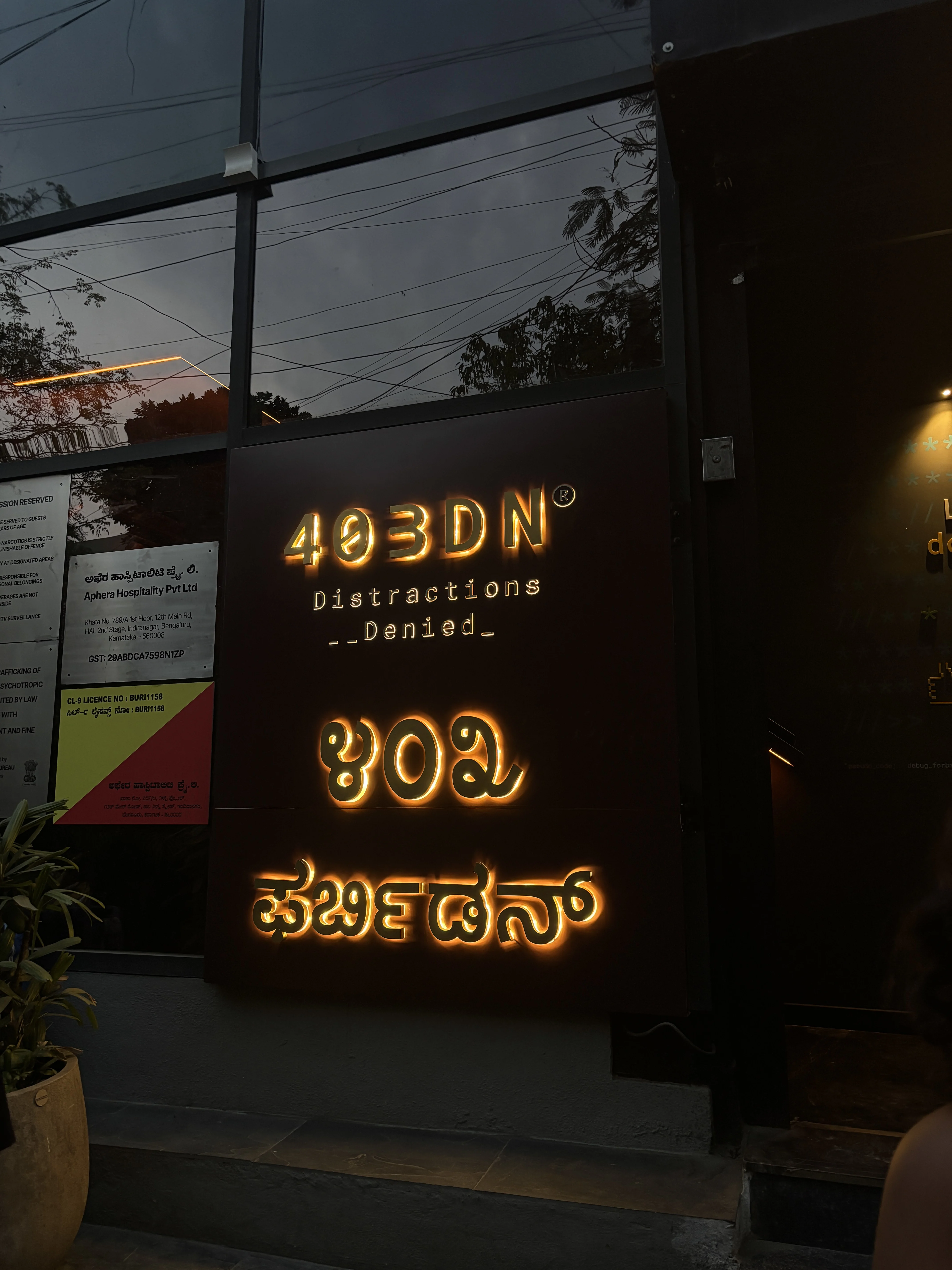
403 Forbidden's Unassuming Exterior
We were escorted to our cars and driven across the city, and as we approached 403 Forbidden, it became apparent fairly quickly that this space wasn’t interested in competing with the usual grammar of Indiranagar. The neighbourhood thrives on excess, on lights that blink a little too hard and music that spills out onto the street. But 403 Forbidden does not participate in the neon chaos or thematic gimmicks. It stood there with restraint that felt refreshing, like someone at a party who doesn’t feel the need to announce their presence but somehow still becomes the centre of attention, and of course you can't help but check it out.
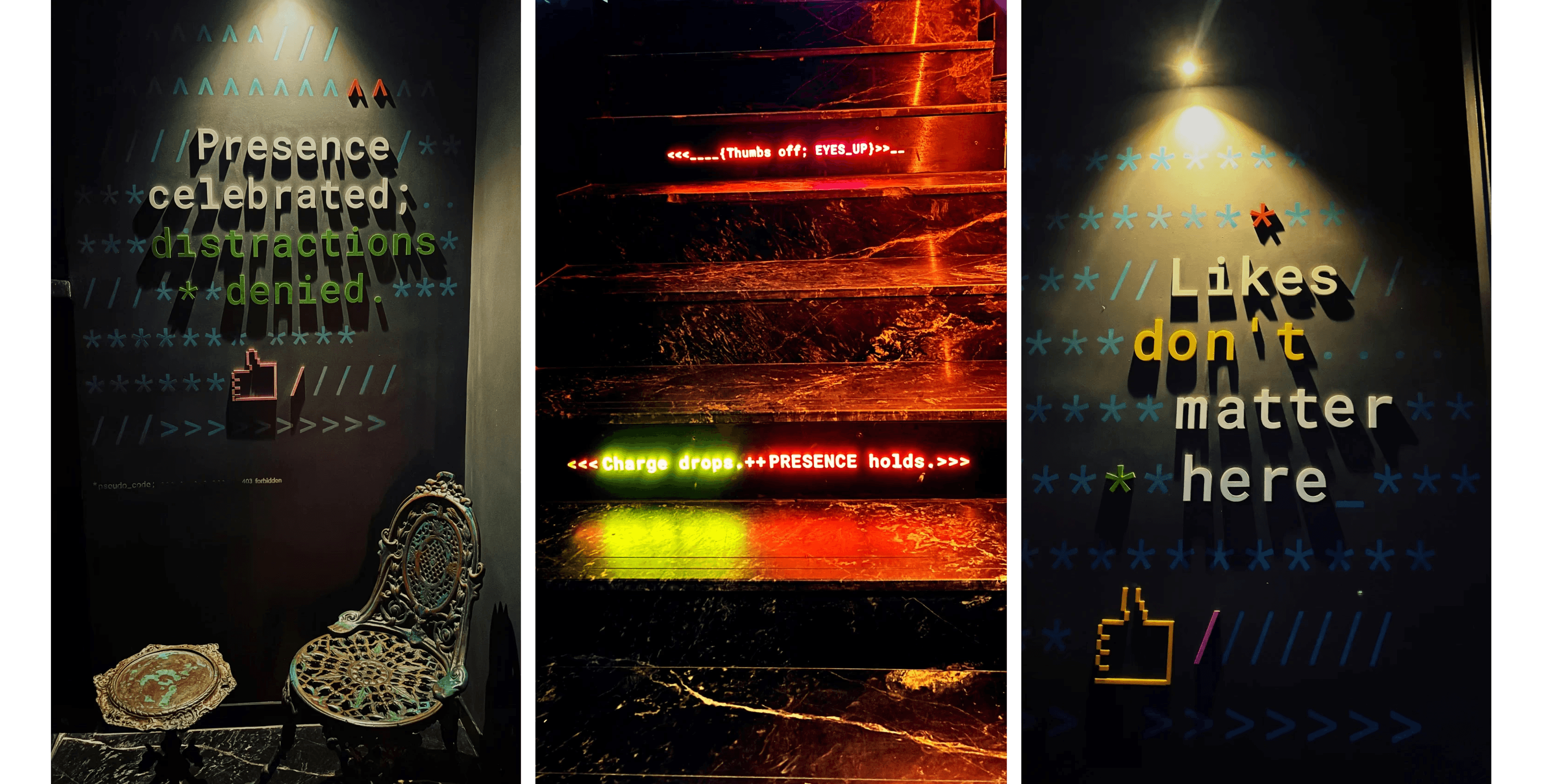
The staircase and lobby with their signature quotes, urging you to disconnect for a night.
Inside, a lit staircase led us upward, almost observatory-like, with phrases running along the walls that didn’t quite behave like decor. “Thumbs off, eyes up.” “Likes don’t matter here.” They read like reminders you didn’t realise you needed, the sort of lines that feel different when you encounter them physically rather than scrolling past them at speed, inviting you to participate.
It brought back a kind of muscle memory I hadn’t realised we’d collectively lost. It reminded me, strangely, of pre-smartphone India. Of dinners where the only notification was your mother asking you about your day. Of full tables, long conversations, and the unspoken rule that if you were present, you were fully present.
The feeling of nostalgia creeps up on you, early in the evening, but it doesn’t overwhelm. It settles in slowly, like a background note.
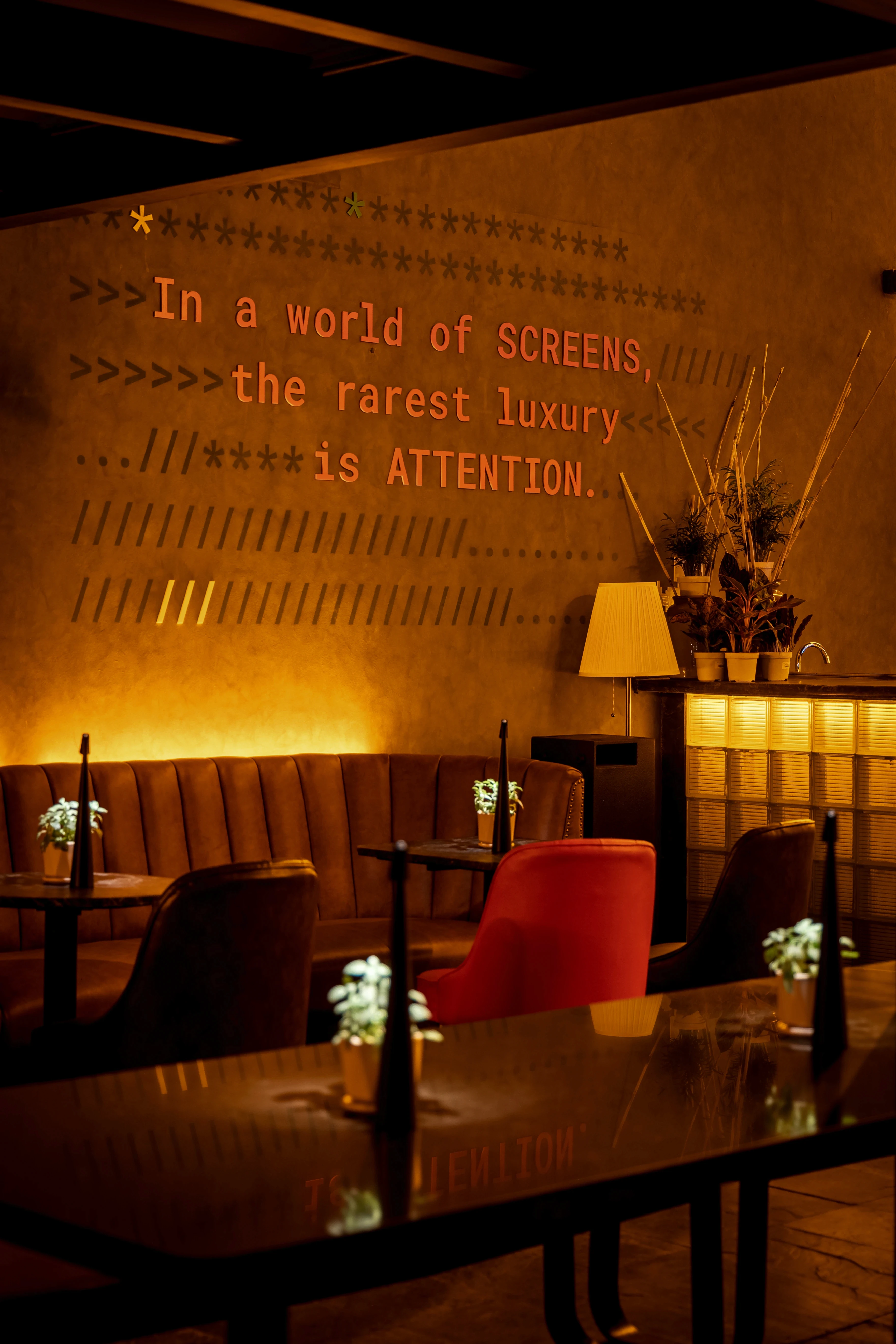
The space opens up to this quote that becomes more of a motto by the end of the night.
We were welcomed by the team and taken through the space by co-founder Aman Dua, whose 16 years of experience read like a map of India’s evolving bar culture. At the entrance, their signature dinosaur sits quietly, referencing Google’s ‘offline’ game, a small, not-so-subtle reminder that losing connection might actually be the point.
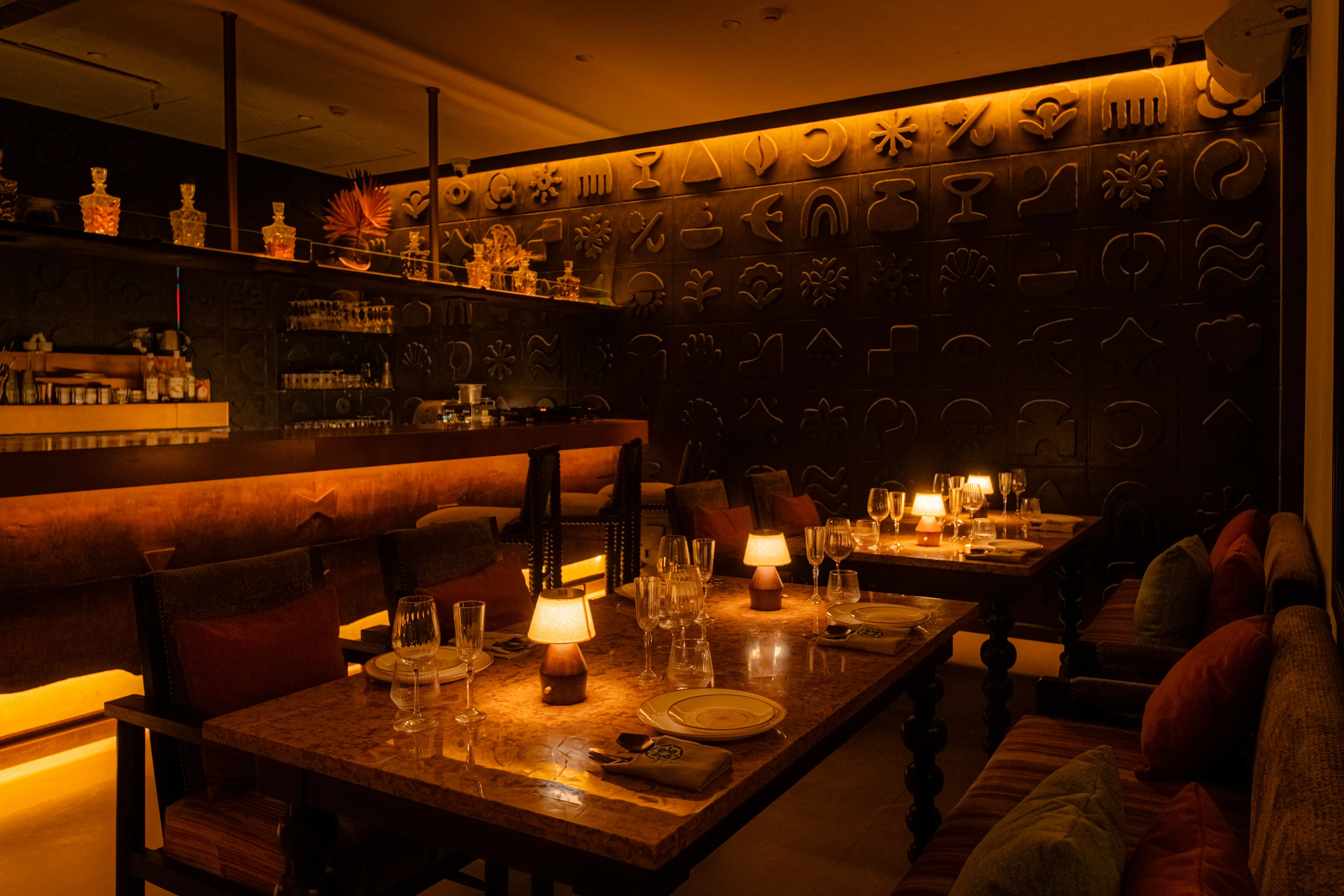
The space opens up in layers. A large table anchors the centre, encouraging a sense of gathering, while the rest of the room allows for quieter corners where conversations can stretch without interruption. It feels familiar in a way that is difficult to immediately place, somewhere between a well-hosted dinner at home and a thoughtfully designed bar.
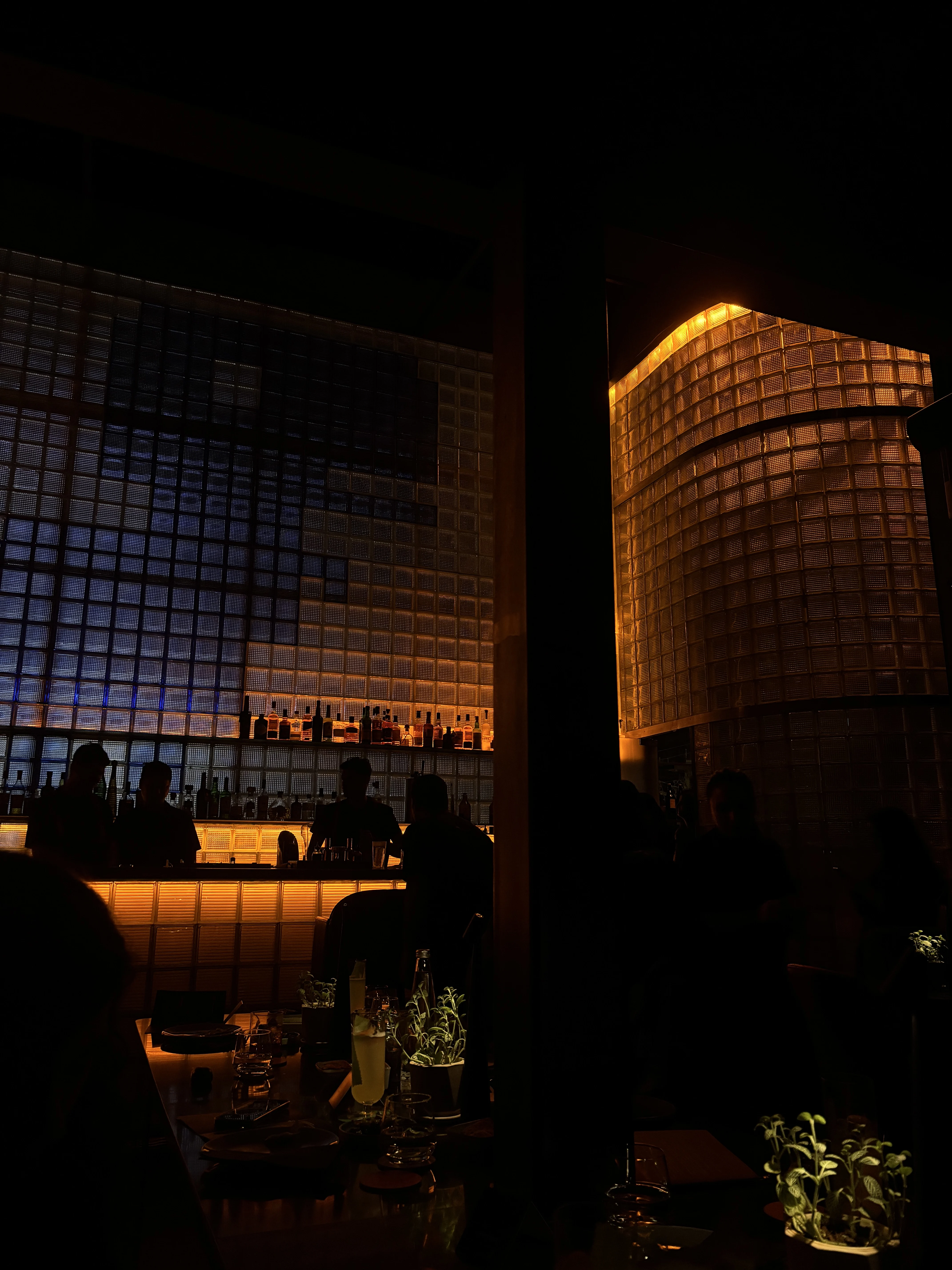
And then comes the star of the show, or rather the elephant in the room - the bar.
At first glance, it reads like something closer to a laboratory than a conventional cocktail station. Glassware arranged with the precision of surgical tools, equipment that belongs as much in a research setup as it does in hospitality, liquids resting in various stages of transformation, separating, settling, waiting. The CODE.LAB sits at the centre of it all, where drinks are developed like experiments. Trial and error, multiple iterations, all to bring you the best of something you haven’t even had yet. The philosophy revolves around patience that feels almost rebellious in a culture built on immediacy.
As we are asked to head upstairs, the staircase repeats its quiet insistence, almost like a refrain.
Upstairs opens into a balcony overlooking the bar, what Aman calls a “theatre of cocktails.” And suddenly, the metaphor lands. The bar is the stage. The bartenders, performers. The drinks, a script that unfolds over time. And you get to pick your seats to sit back and view the show, which is already destined to end in a standing ovation.
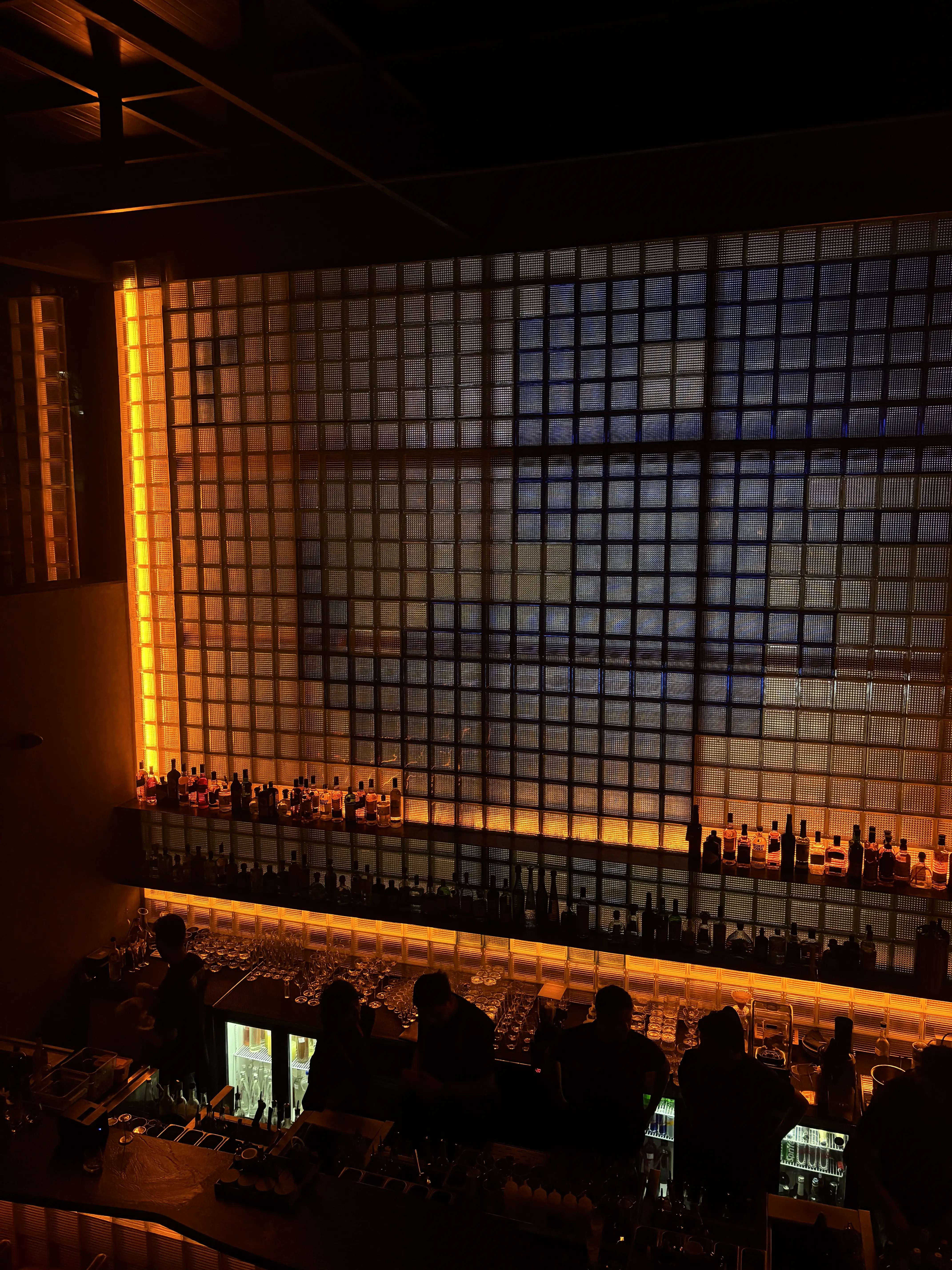
The view of the bar from the balcony with their dinosaur iconography centerstage.
To the side, a small smoking section holds its own kind of theatre. Tobacco, conversation, time stretching just enough to feel cinematic. It feels like a scene that could belong equally in a Gulzar poem or an Imtiaz Ali film, where nothing dramatic is happening and yet you’re on the edge of your seat in anticipation.
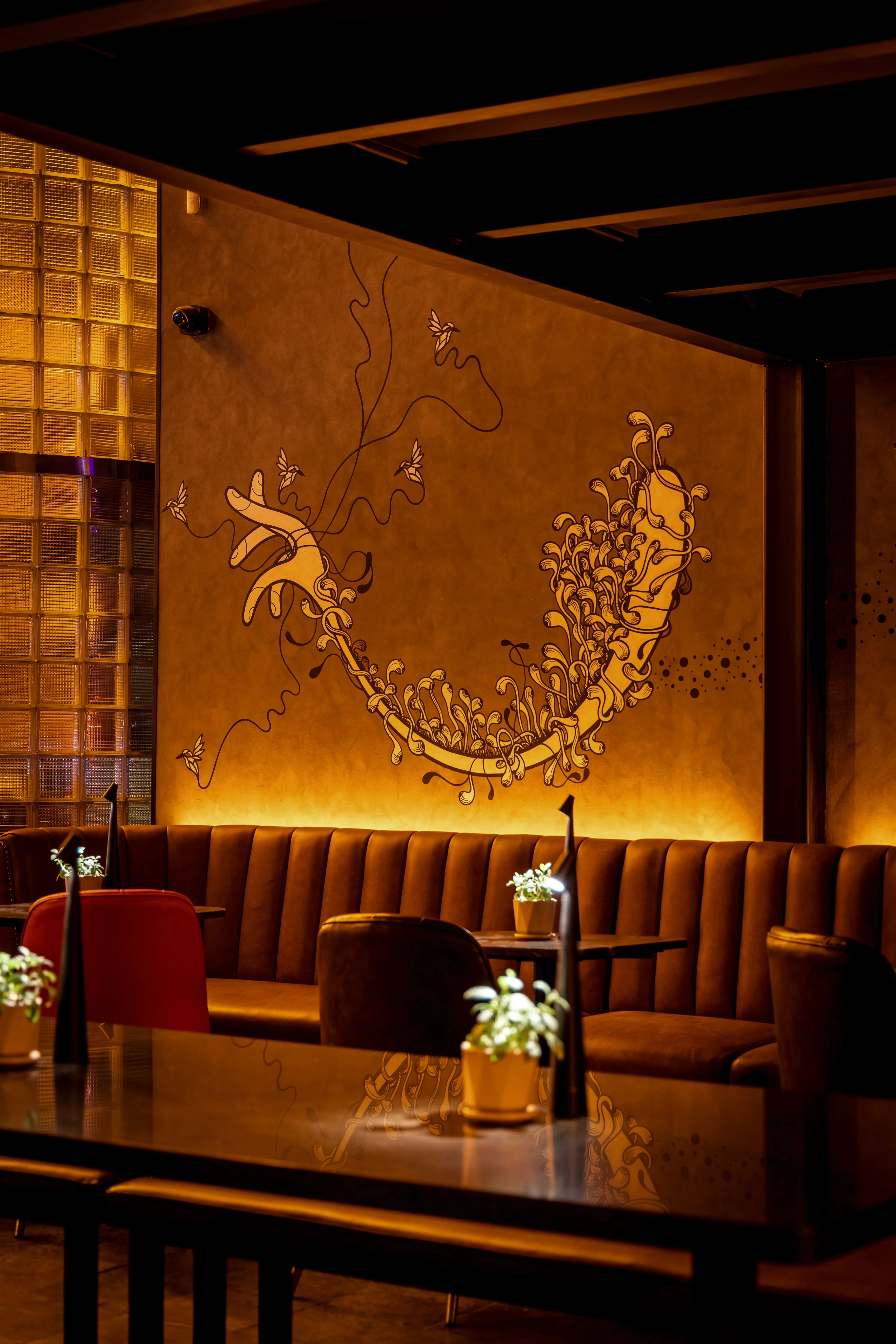
The mesmerising artwork at 403 Forbidden
The artwork pulls you in next. Tentacles curling into light fixtures, abstract yet oddly tactile, almost as if the space itself is asking you to experience it through more than just sight. Like something out of a fever dream or a Miyazaki frame. You find yourself looking longer than you intended, which, in a place built around attention, feels entirely intentional. Which, I suspect, is the point.
We take our seats.
A fermented welcome aperitif arrives first, subtle but purposeful, waking the palate in a way that feels preparatory and sets the tone with finesse. An intricate prologue, calibrating the senses for what’s to follow.
And then, the curtains finally rise, and the stage is set. The show begins with the first cocktail set synchronously on our table.
Life In A Metro
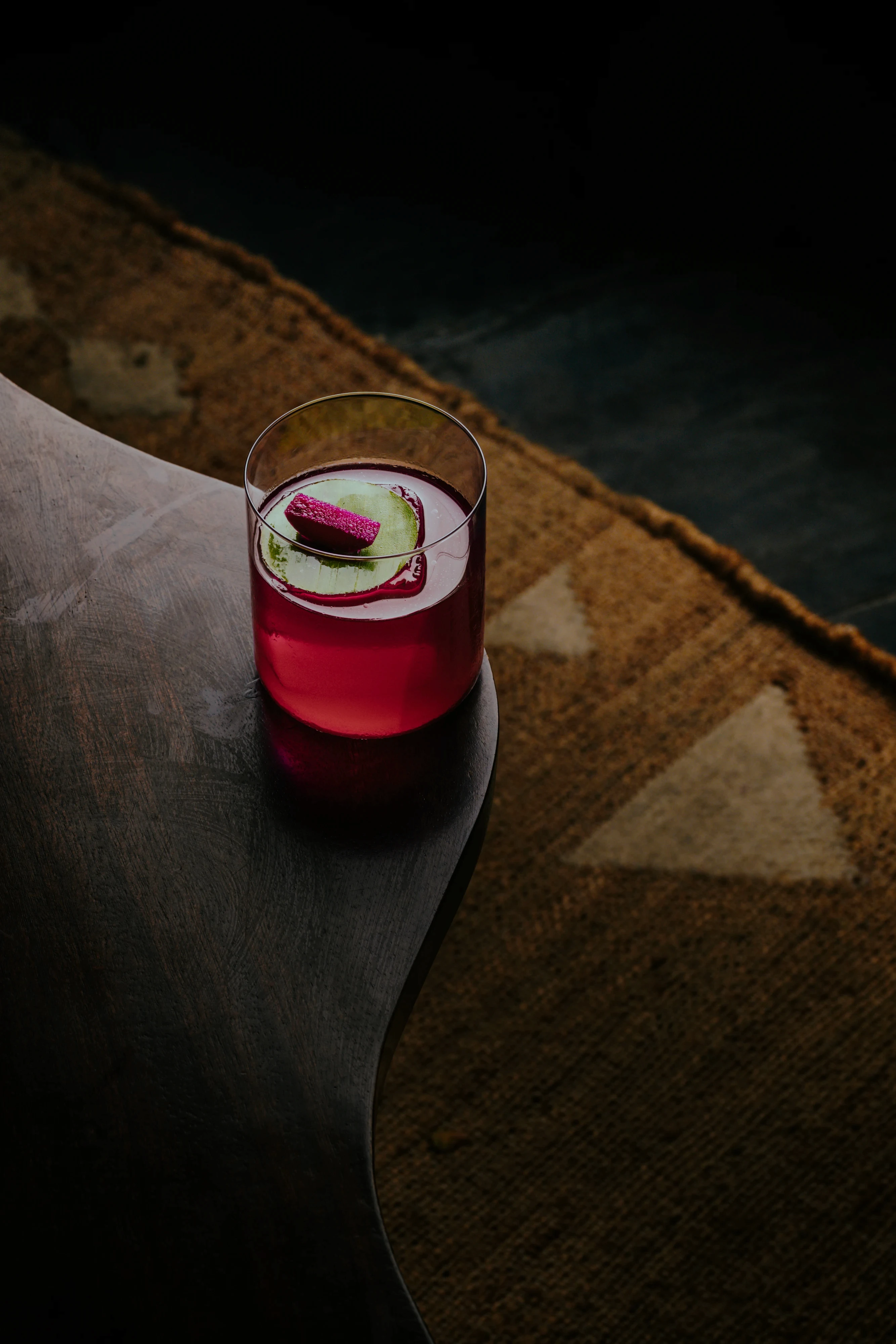
The first drink arrives with context already in motion. Inspired by Aman’s early years navigating Delhi NCR, it carries with it the feeling of a city that never quite resolves itself, chaotic, layered, contradictory.
Earlier that evening, Agent 403 had sent us an audio note. We’re asked to play it now.
A basil mist cuts through the air, the aroma sprayed just before the sip, like a cue. Aman goes on to explain that each drink is crafted not just for your tastebuds but to give you a complete immersive experience. There really is no space for distractions here.
Built on Patrón Silver, the drink draws its structure from a beetroot and amla pickle base that has been developed over days in the CODE.LAB, allowing fermentation, salinity, and time to do the work that sugar and citrus usually would. The result unfolds on the palate. Earthy, gently tangy, with a mineral finish that lingers, almost deliberately. Setting an extremely high bar for themselves right from the get-go, I was looking forward to seeing them top this.
There is something deeply Indian about it, not at first glance, but in how it carries nostalgia. Pickle left to mature. Flavours that deepen over time. A revelation that dawns on you as you continue to sip it, perhaps intentionally designed that way, to hold your attention. If you’re only here for one drink, this would be the one to order.
Rating: 5/5
Let’s Start
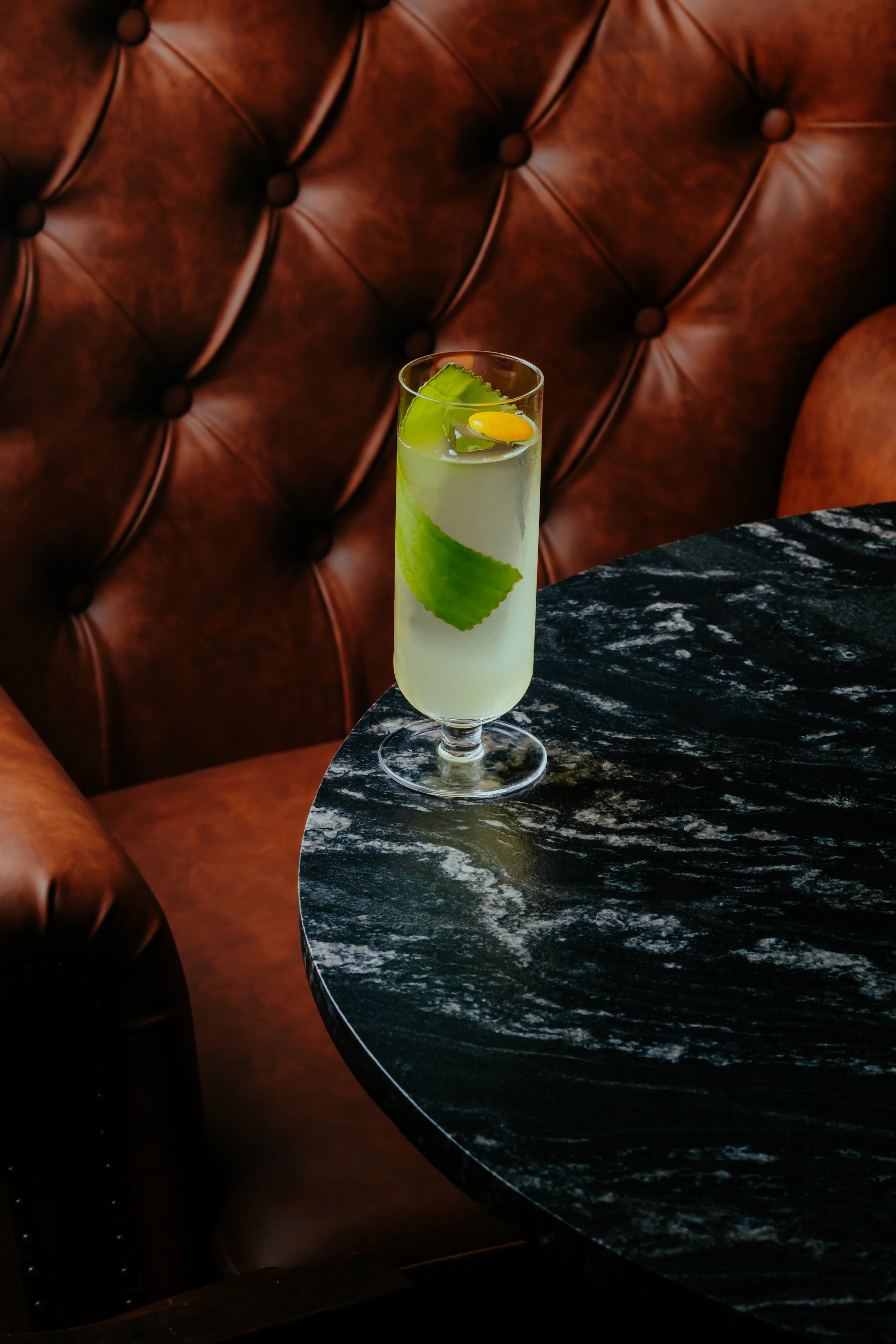
The second cocktail arrives almost translucent, catching light in a way that feels engineered.
Clarified pineapple gives it a glass-like clarity, while a house distillate of lemongrass, ginger, and kaffir lime builds the aromatic structure. These are flavours that exist comfortably within Indian culinary memory, from roadside juice stalls to home remedies, but here they are treated with a level of precision that shifts how they are experienced.
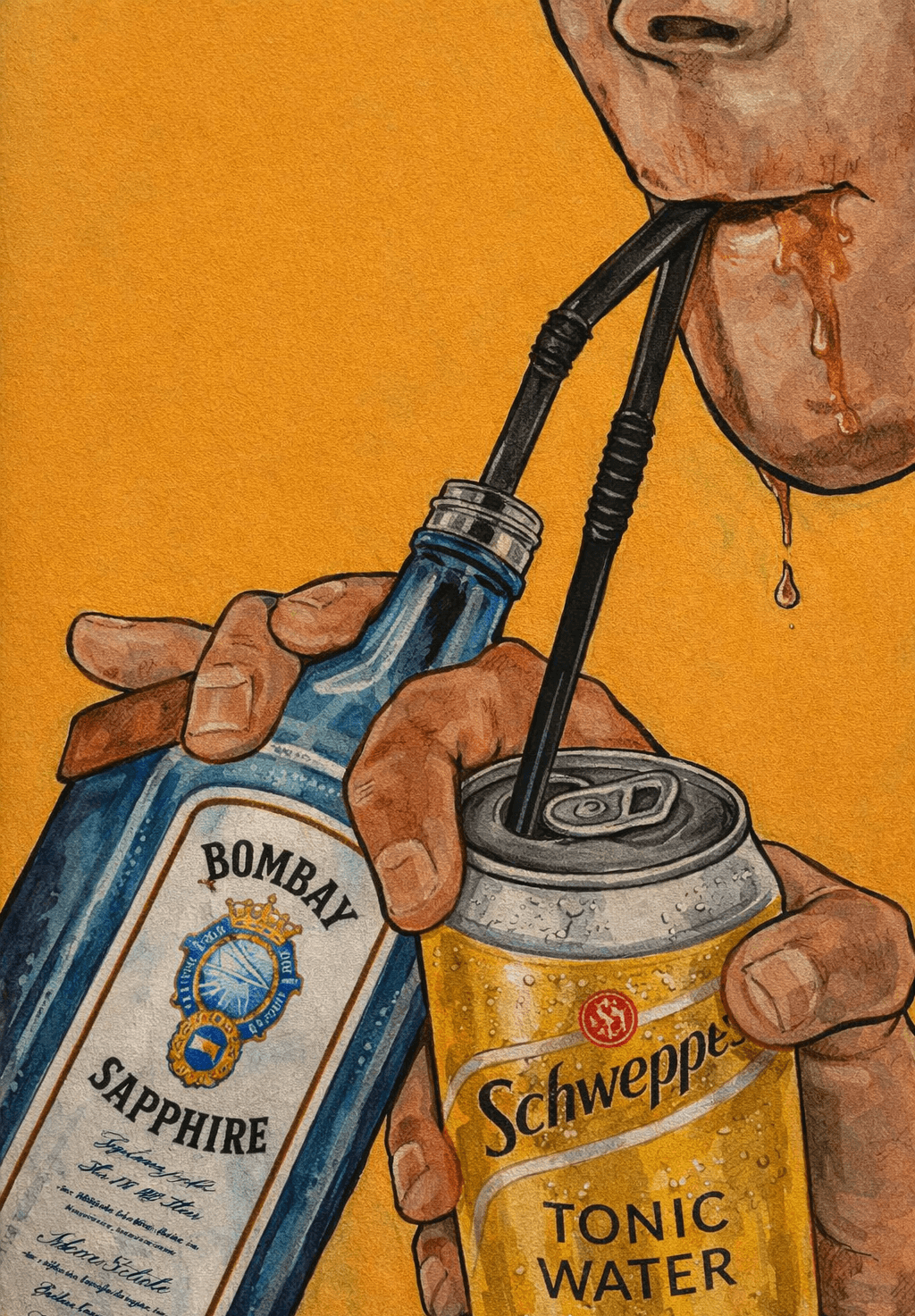
With a Bombay Sapphire base, the pineapple, clarified through centrifugation, retains its brightness while shedding its density. The distillate captures aroma without heat, allowing the nose to lead before the palate follows.
Salinity plays a crucial role here, sharpening the flavour and extending the finish. Each sip feels composed, layered, and quietly complex, encouraging you to return not out of habit of a classic, but curiosity for perfection.
Rating: 4.5/5
At this point, Prithvi from the 403 team walks us into the alluring CODE.LAB
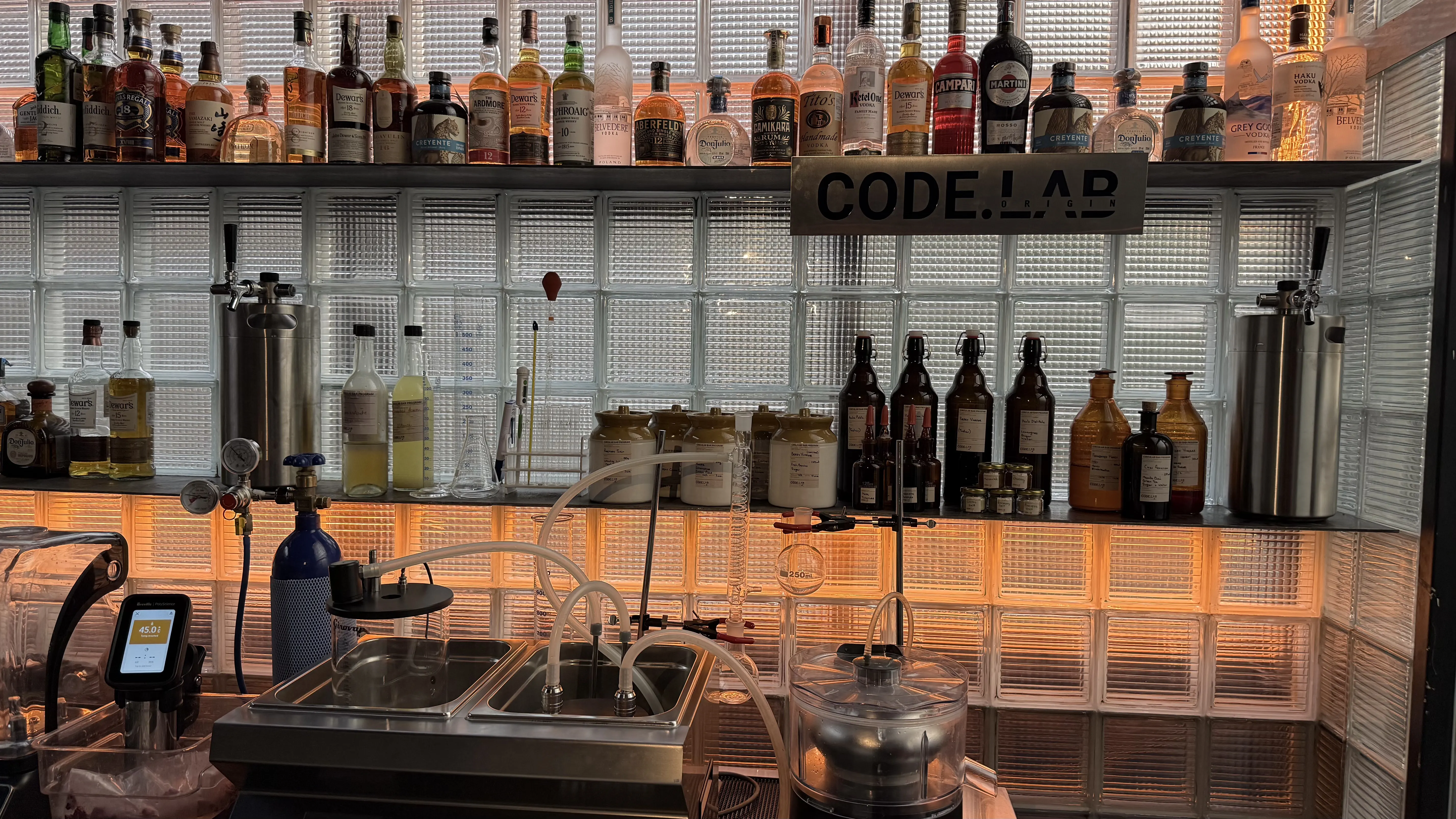
And for the first time, what you’ve been tasting all evening begins to reveal itself as part of a meticulous system, and the experience of this backstage access is like stepping into the kitchen of a Michelin restaurant after the tasting menu is over and realising just how much went into what felt effortless.
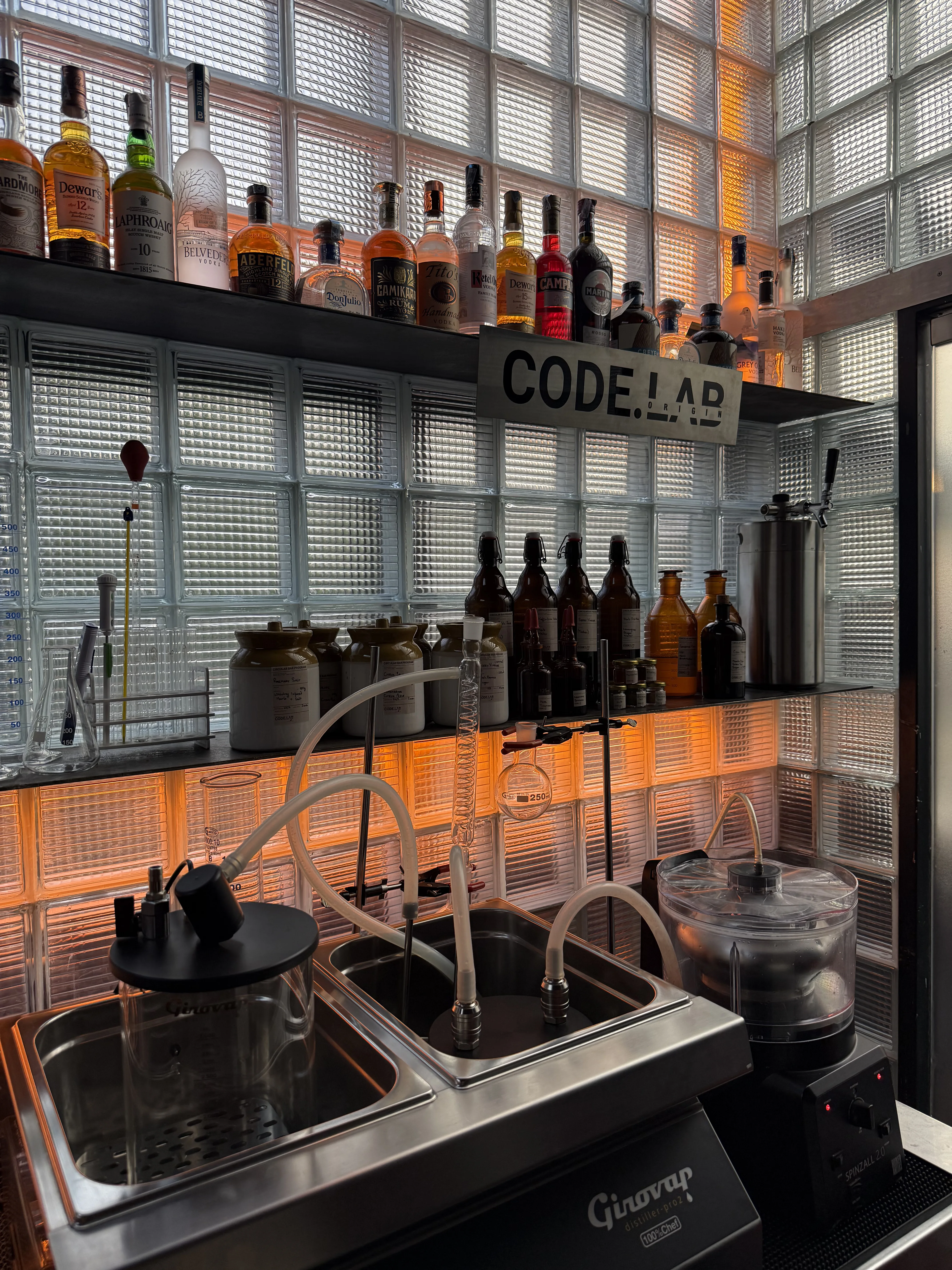
Positioned openly within the bar, with a separate lighthouse-esque room storing all the secret elixirs concocted by the team over the past couple months, the CODE.LAB functions as a working studio rather than a showpiece. This is where every drink on the menu is developed, tested, broken down, and rebuilt until balance feels just right. You’re not looking at your basic bar prep, you’re looking at alchemy in motion.
Centrifuges hum quietly in the background, separating liquid from fibre with surgical precision. A Girovap sits almost unassumingly, pulling out delicate aromatics at low temperatures so nothing burns or distorts. Sous-vide baths hold spirits infused with fruit, herbs, and spice, allowing extraction to happen in its time, for the fruit of patience is sweet, and in this case, sugar-free too. Carbonation rigs line the side, waiting to inject life into otherwise still liquids.
But what really stands out isn’t just the equipment, it’s the restraint.
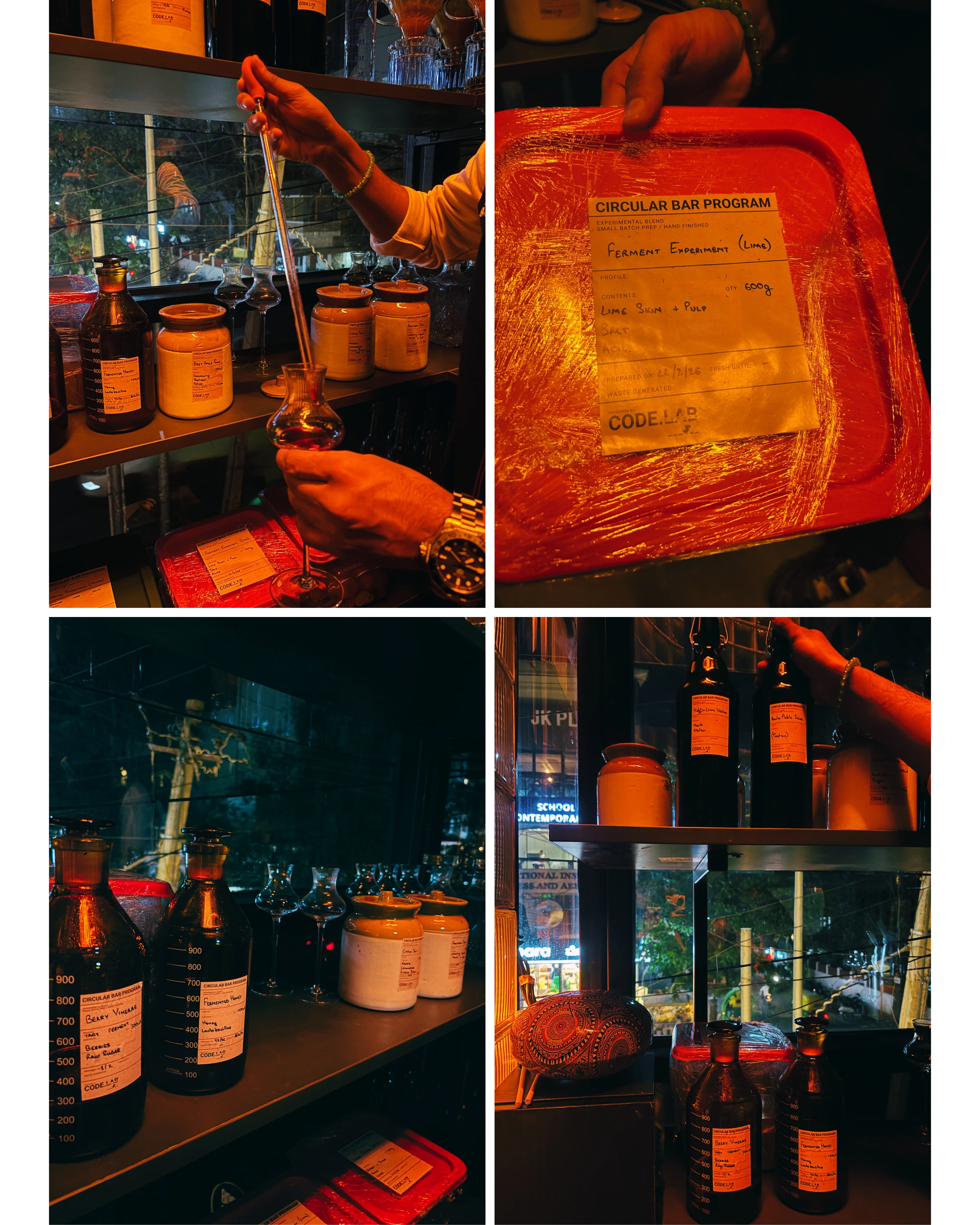
A sneak peek into CODE.LAB experiments
The House Method, as they call it, is a philosophy rooted in patience. Components rest for 48 to 72 hours, sometimes longer, vinegars mellow, pickle bases deepen, elements soften into each other until sharp edges dissolve and what remains feels complete.
There is also an unmistakable familiarity to it. It mirrors the way Indian kitchens have always functioned. Achars left in the sun. Marinades resting overnight. Gravies tasting better the next day. It reminds us to stop looking at time as delay, and start considering it a measure of intention.
The system is circular in a way that feels both sustainable and intuitive. Citrus peels return as extracts. Clarified solids are repurposed. Spent herbs find their way into new builds. Nothing is treated as waste, truly solidifying the concept as a deeply rooted philosophy rather than another gimmick in the city’s bustling nightlife..
And then comes the part that subtly rewires your understanding of cocktails, the idea of “skinny” drinks with zero added sugar. The finesse it is executed with, it does not feel you’re missing out on anything. Sweetness is perfectly replaced with salinity, texture, and aroma. Acidity is softened, not sharpened. The result feels lighter on the body, but more layered on the palate.
Standing there, you realise something slightly absurd and slightly impressive at the same time - your drink has probably gone through more R&D than most startup decks.
ON AND ON AND ON
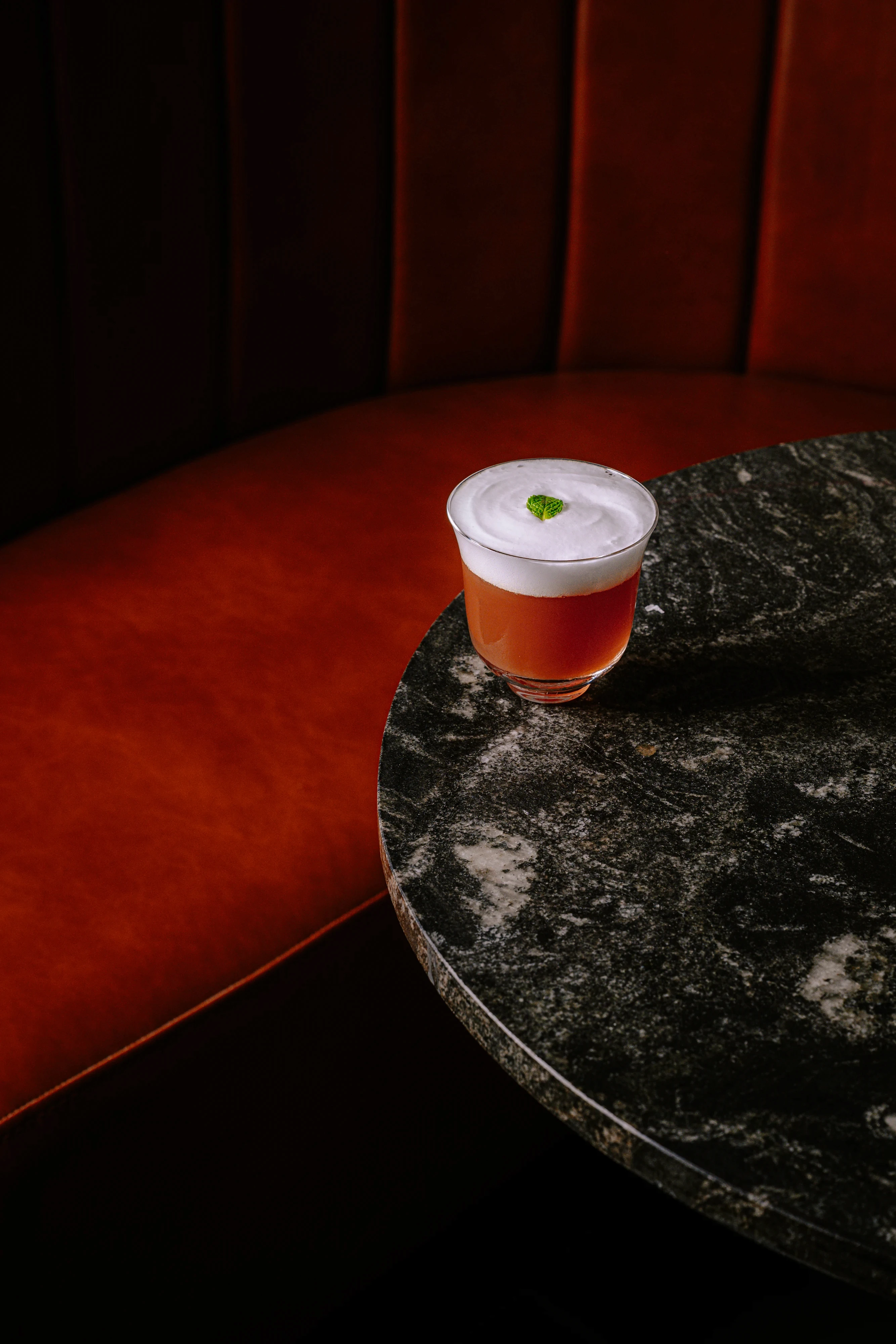
This drink leans into warmth.
A chai reduction layered with Earl Grey and orange peel develops a profile that is immediately recognisable, almost comforting. The kind of flavour that evokes winter evenings, long conversations, and cups of chai that stretch beyond their intended duration - a quintessential Indian household activity.
The mint foam introduces contrast, lifting the drink just enough to keep it from settling too heavily. The addition of an Earl Grey biscuit - a surprisingly almost perfect biscuit you’d mistake for a bakery’s, derived from the same base, reinforces the circular thinking of the CODE.LAB, where components are repurposed with innovation instead of being scrapped.
Rating: 4/5
Around this point, the food begins to arrive, folding into the evening in a way that feels natural, almost inevitable after the progression of drinks.
Prithvi and Shona moved through the table with an ease that felt almost intuitive, guiding us through the menu, nudging us toward certain dishes, making sure we didn’t miss out on anything worth trying. We went along with it, and it paid off almost immediately. The same clarity and precision that defined the cocktails showed up on the plate, carried through in flavour, in innovation, and in how each dish was put together.
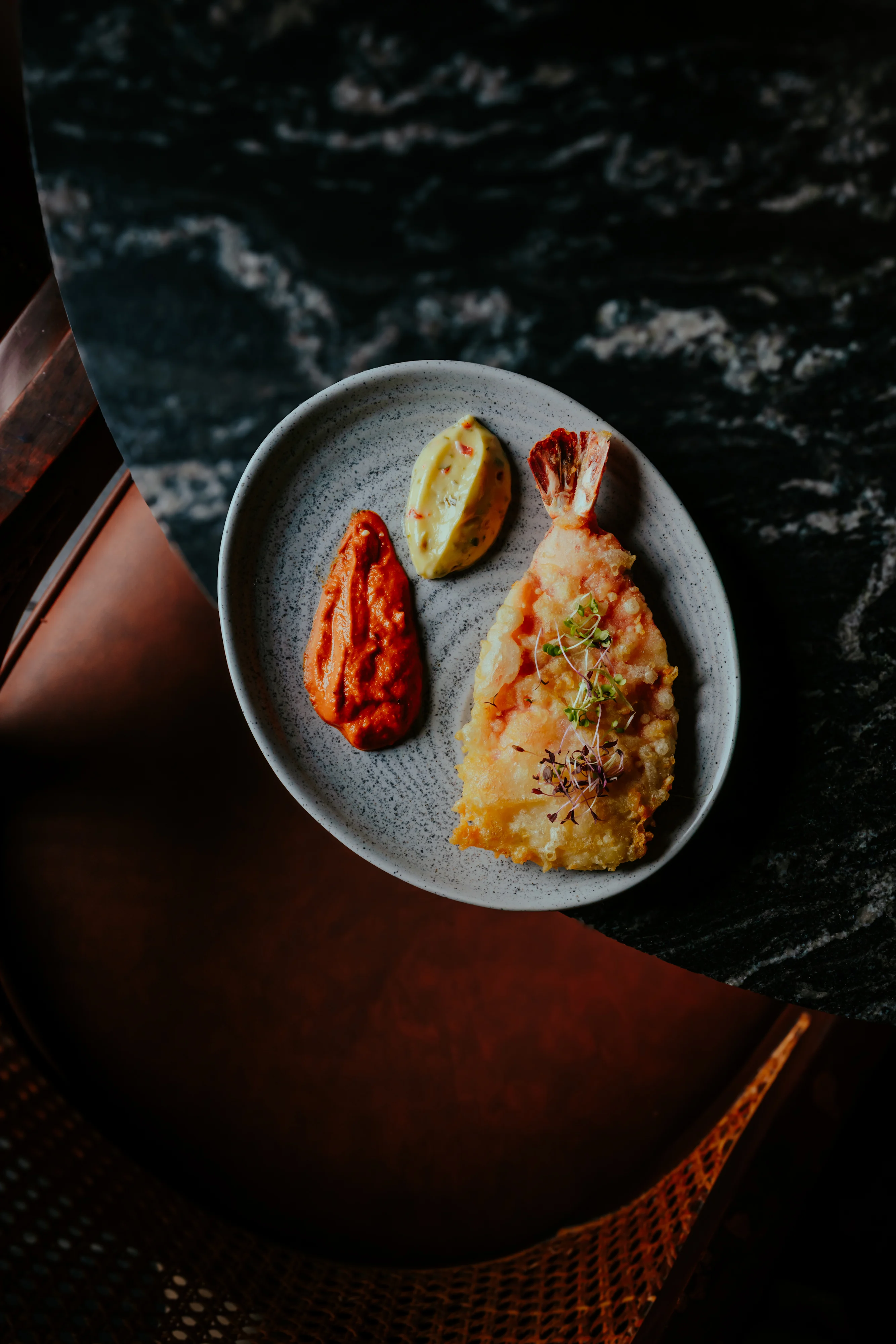
The shrimp lands first, perfectly timed, carrying a freshness that holds up even after a few rounds of cocktails. Lightly seasoned, well balanced, and indulgently fried to perfection, it lets the ingredient lead, with subtle intervention to take it up a notch. The sushi follows closely, composed with restraint, each element placed with intent. You can tell when a kitchen lets its ingredients be the hero on your plate, and this one clearly does.
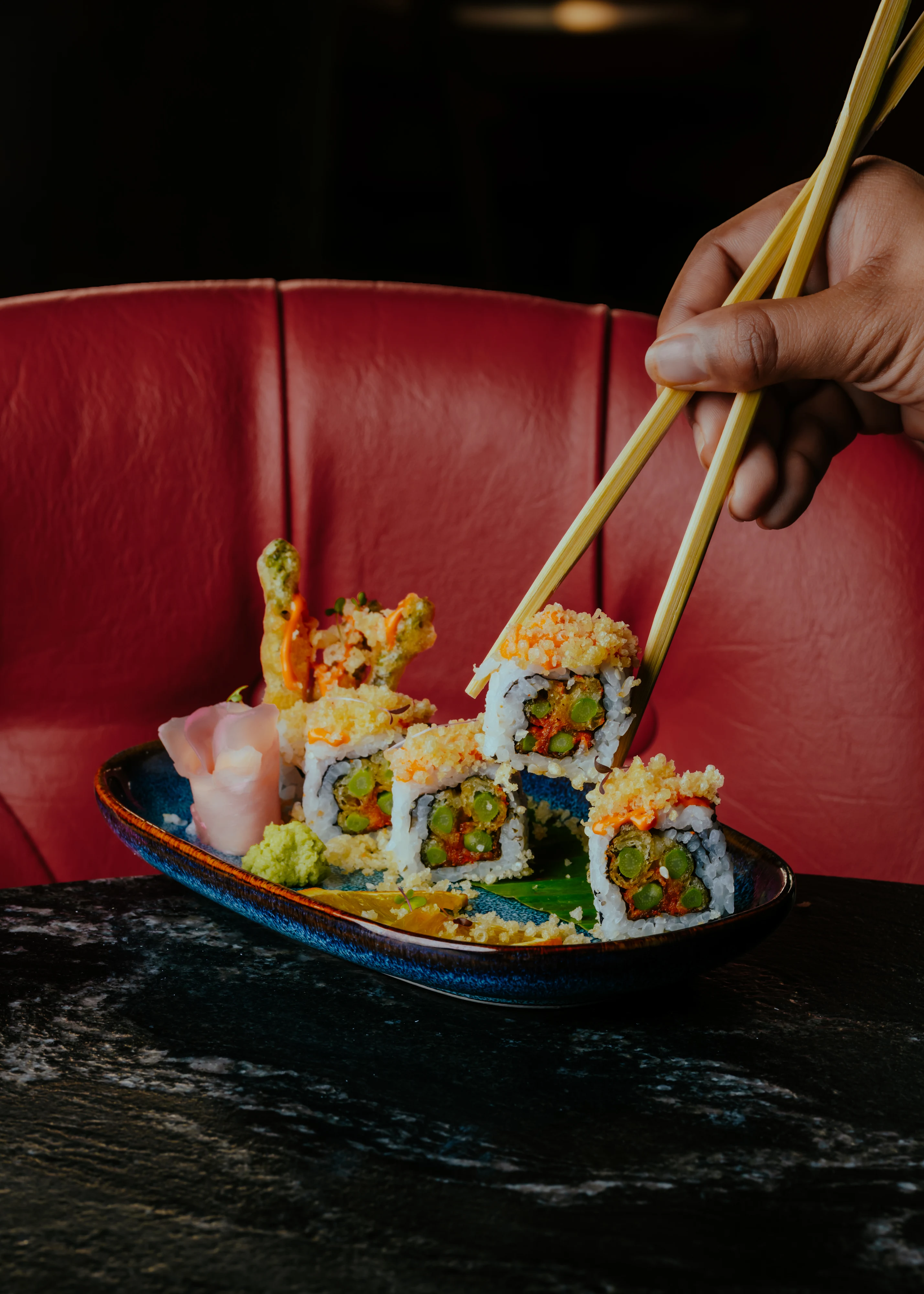
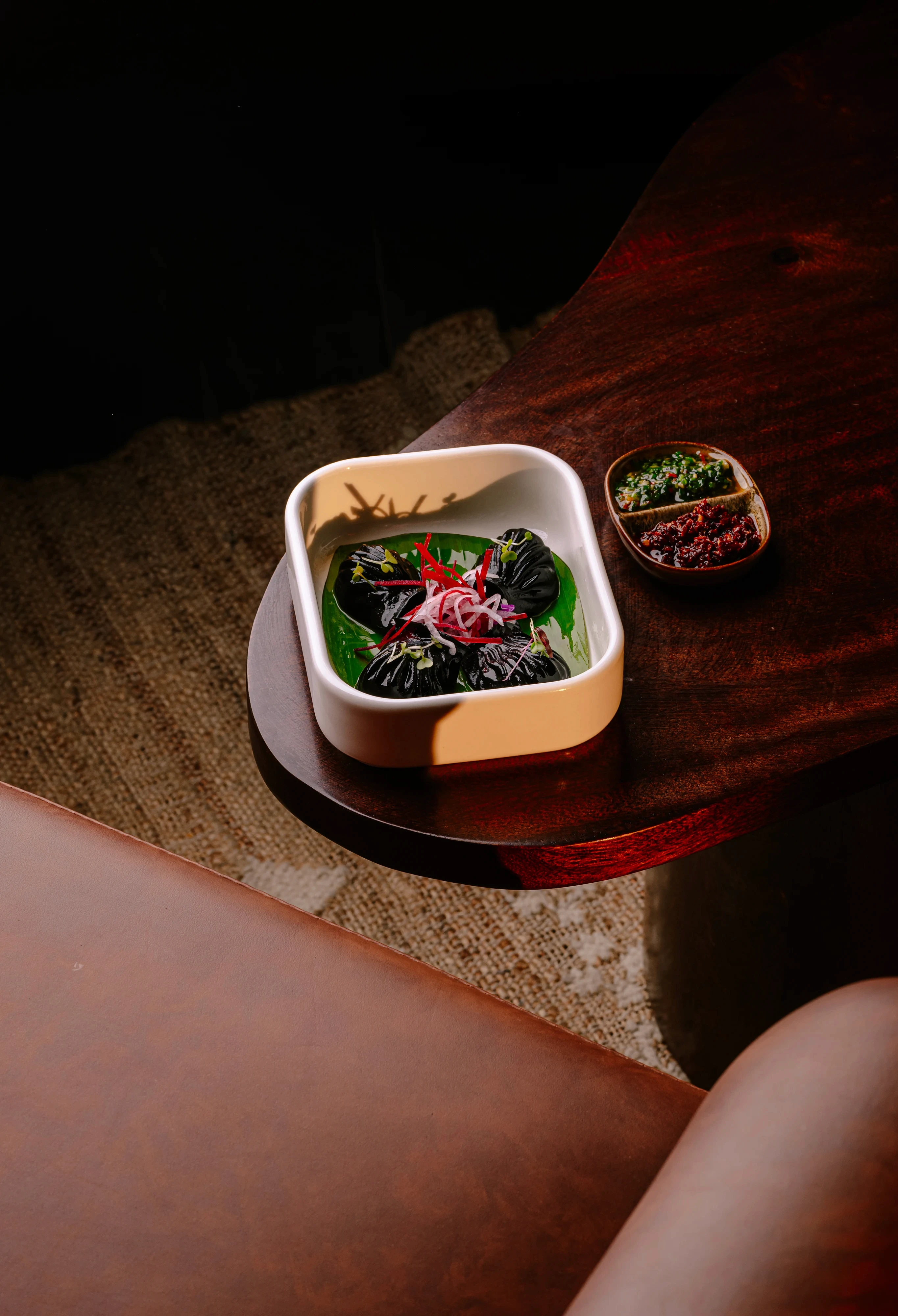
The dim sums arrive next, both varieties making an impression in different ways. The chicken dim sums bring a certain softness to the table, delicate in structure, comforting in flavour, the kind of dish that disappears quickly without much discussion. And then the cream cheese dim sum, richer, slightly indulgent, the kind you think about ordering again before you’ve even finished the first.
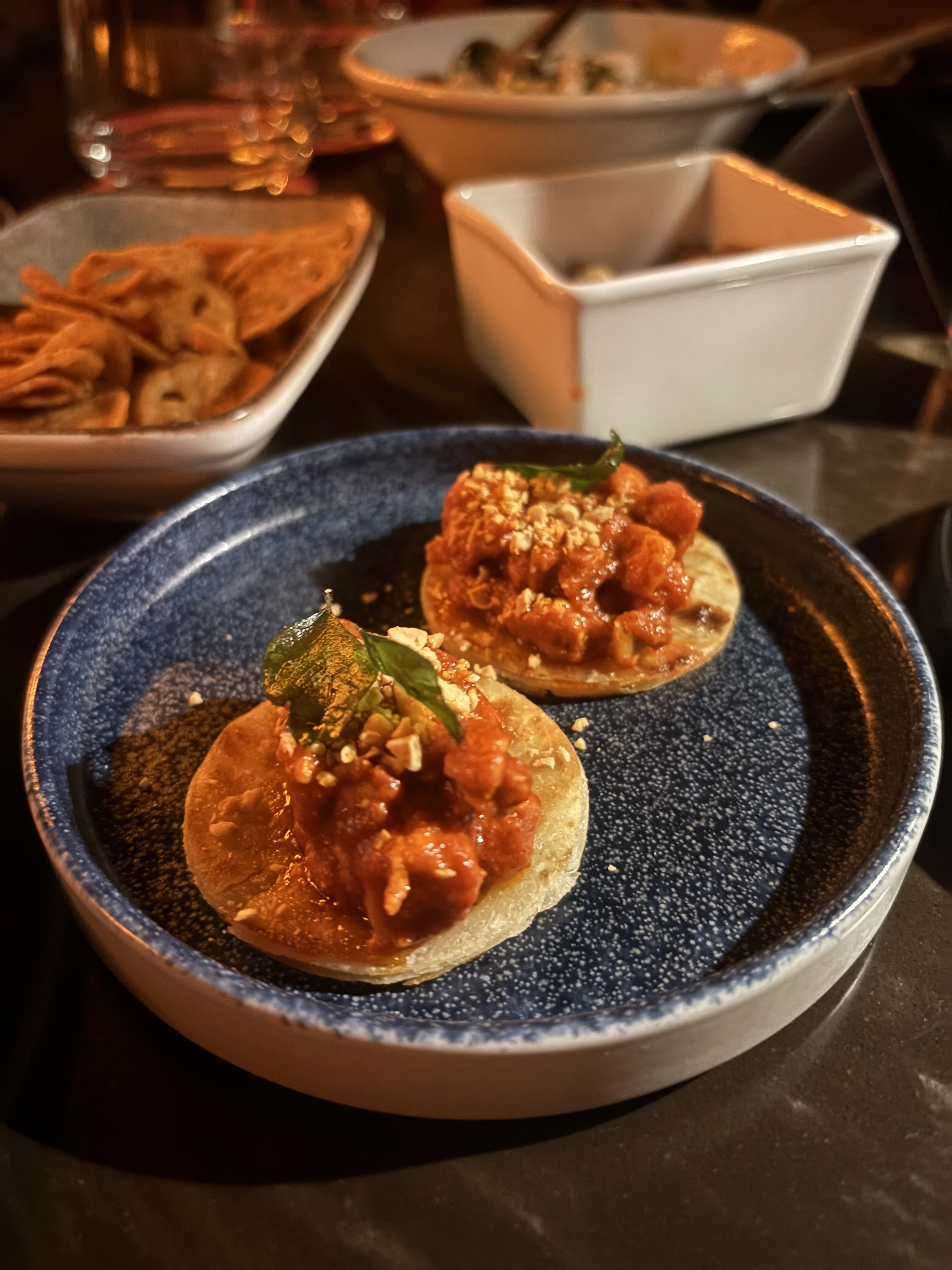
And then the ghee roast coin parotta arrived, shifting the tone of the table entirely. Crisp at the edges, soft within, coated in a spiced richness that felt deeply satisfying, it anchored the progression of the evening in something unmistakably familiar. After a sequence of layered cocktails, this was grounding in the best possible way.
As the plates circulate and conversations deepen, the connection between the bar and the kitchen becomes clearer with each course. Ingredients move between the two, techniques echo across both, and the circular philosophy that begins in the CODE.LAB continues here without needing to be explained. You taste it in the way flavours are layered, in how everything feels connected, cross referencing between themselves.
Somewhere along the way, the process of observing gave way to simply being present at the table. It all comes together perfectly, to remind you with each fleeting detail that you notice, that distractions are denied for the night.
Food Rating: 4.5/5
Roller Coaster
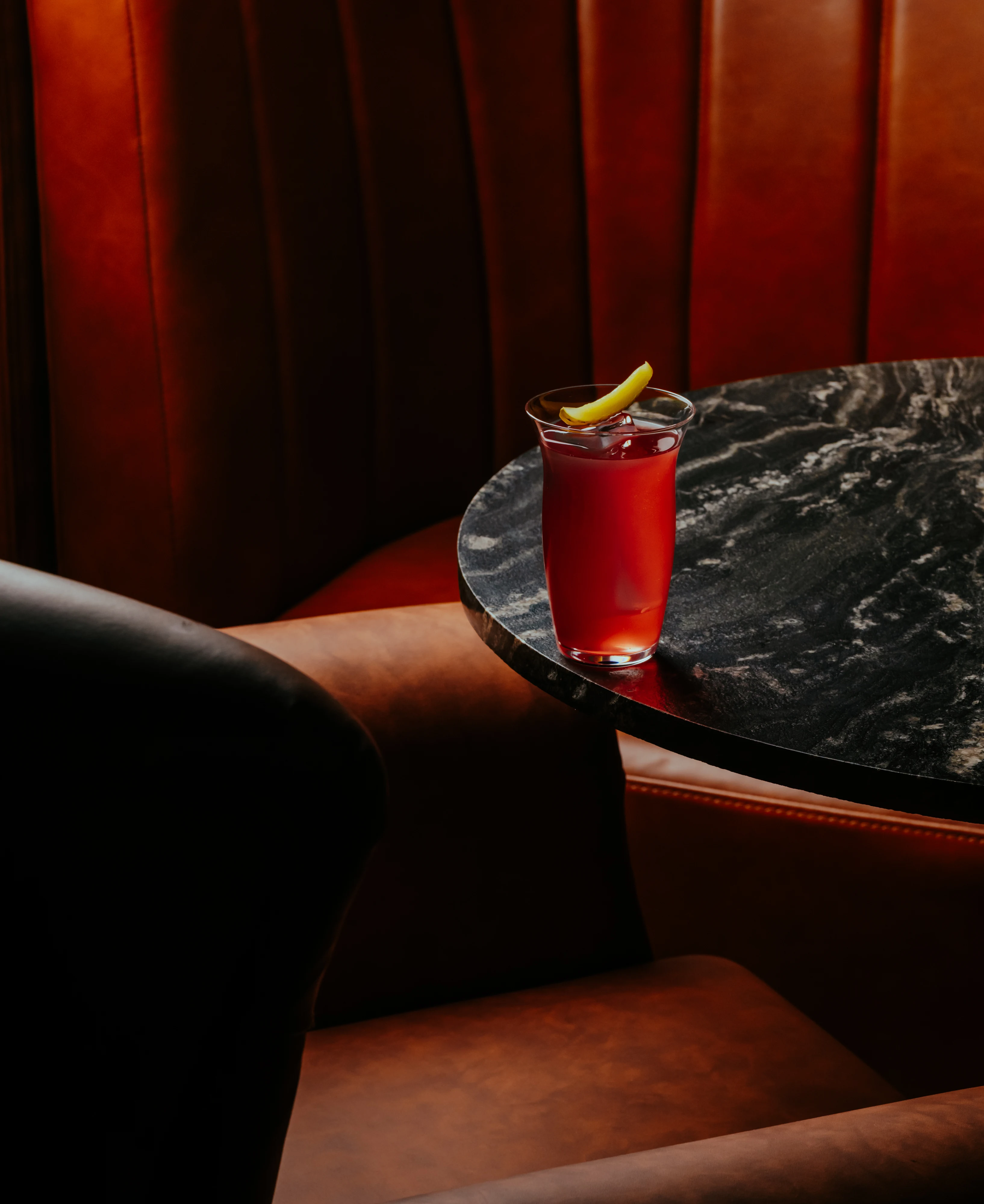
By the time this arrives, the evening has already settled into a rhythm, and this one shifts it again.
The base begins with a berry vinegar that has been developed over days, (which we also got to taste behind the scenes at CODE.LAB) allowing fruit, acidity, and natural sweetness to integrate without relying on topical citrus. There’s a refined depth here instead of being too on-the-nose, like the difference between freshly cut fruit and something that has been left to macerate.
Coconut water enters quietly, softening the edges, bringing a subtle sweetness that doesn’t remain confined to the surface, but moves through the drink. A small amount of coconut syrup refines it further, but never tips it into overdrive.
Fully carbonated, the drink lifts itself with every sip. The bubbles don’t just sit there, they transport the flavour across your palate, exaggerating shifts, stretching acidity, sharpening aroma. There’s a sense of motion that feels intentional, almost playful, like the drink is changing its mind mid-sip and inviting you to keep up.
You taste the tang first, then the softness, then the lift. It keeps you slightly off balance, but in a way that feels controlled, like a well-designed ride, a roller coaster that won’t throw you in for a loop, quite literally.
Rating: 4.5/5
Reborn
The final drink arrives like a reset, but not in a way that discounts anything that came before. It delivers as a memorable summary.
The tequila here is gently sous-vided with passion fruit, a process that allows the fruit to integrate into the spirit without overwhelming it. There’s no sharp acidity, no aggressive sweetness. What you get instead is a clean, tropical lift that feels measured and composed.
The in-house kaffir lime soda is how the drink opens up. Bright, aromatic, lightly effervescent, it brings freshness without dominating the profile. The citrus sits more in the nose than on the tongue, allowing the structure of the drink to remain intact.
Salinity runs quietly through it, tightening the edges, extending the finish, making sure the drink doesn’t dissipate too quickly.
After a sequence of layered, structured cocktails, this feels almost like stepping out into fresh air after being indoors for too long. You don’t notice how much you needed it until you’re introduced.
Rating: 4/5
And just when you think the night has found its conclusion, you’re thrown in for another surprise.
We’re told we’re heading to Aman’s other space. A short drive later, we arrive at CBD, Central Bar District, and the shift in energy is immediate.
Where 403 feels composed, almost meditative in its pacing, CBD feels like the after-party you didn’t plan for but are glad you showed up to. The lighting is warmer, the mood more relaxed, conversations louder, easier.
And then the food arrives.
An Amritsari kulcha, hot, slightly crisp on the outside, soft within, served with accompaniments that don’t try to reinvent anything because they don’t need to. After a night of structured, precise cocktails, this hits differently. Comfort food, in the most literal sense.
There’s something deeply satisfying about that moment. Sitting there, slightly tipsy, tearing into kulcha with your hands, conversations overlapping, laughter coming easier than it did a few hours ago. It feels like the most natural extension of the evening.
More drinks follow, of course, but the tone has shifted. They feel less like part of a sequence and more like companions to the moment.
Across both spaces, what stays consistent is a certain finesse. A clarity in execution that doesn’t demand recognition, yet becomes impossible to not draw the connection between the two.
What 403 Forbidden taps into extends beyond the experience of a single evening.
Food, in the Indian context, has never been an individual act. It has always existed within community. From thalis shared across families to wedding feasts where excess becomes a language of celebration, from langars that feed thousands to late-night addas over chai and cigarettes, the act of eating and drinking has always been deeply collective.
What we are seeing now across urban India feels like a re-emergence of that instinct, shaped by contemporary contexts.
Supper clubs in Bombay where strangers gather around a single table and leave having shared more than just a meal. Omakase counters in Bangalore and Delhi where diners relinquish control and engage with the chef’s narrative. Speakeasies that prioritise discovery, intimacy, and time over visibility.
These are not isolated trends. They reflect a broader cultural movement, a subtle recalibration away from hyper-individualised consumption towards shared, immersive experiences.
Even in fashion, there is a parallel. A shift from fast, transactional consumption towards community-driven spaces, pop-ups, collectives, where experience holds as much value as the product itself.
403 Forbidden sits within this shift with clarity.
The venue and the team behind it understand the underlying instinct, the desire for connection, for presence, for shared experience, and translates it into a language that feels contemporary, urban, and relevant.
A cocktail becomes more than a drink. It becomes a moment of attention. A table becomes more than seating. It becomes a space for exchange.
And somewhere between the first sip and the last, between the lab and the table, between the conversation and the silence that follows it, something unexpected happens.
You stay longer than you planned.
You notice more than you expected.
And at some point, without realising when, your phone stops mattering.
For a brief moment, you return to something that has always existed within Indian culture, the simple act of being present, together. And that moment is always up for grabs at 403 Forbidden.
Editor’s Rating: 4.6/5
TO BE CONTINUED, FOR SUBSCRIBERS ONLY.
This is where the surface ends and the reporting begins.
The complete piece, the full archive, and access to The French Press Circle. Reporting answerable only to its readers.
Already a subscriber ?
Login
Read these on the house, with our compliments.
A selection from the current issue, open to all readers. Read them in full. The rest is one decision away.





We were asked to gather in the lobby at 7 and “leave distractions behind,” which felt like a small request - until we realised how much of our lives are built around not doing exactly that.
It sounds simple enough until you realise how much of your day is built around not doing that. The message came from Agent 403, a digital guide who had already begun shaping the evening before we had even stepped out, slightly cryptic, faintly theatrical, and just persuasive enough to make you comply without overthinking it.
403 Forbidden's Unassuming Exterior
We were escorted to our cars and driven across the city, and as we approached 403 Forbidden, it became apparent fairly quickly that this space wasn’t interested in competing with the usual grammar of Indiranagar. The neighbourhood thrives on excess, on lights that blink a little too hard and music that spills out onto the street. But 403 Forbidden does not participate in the neon chaos or thematic gimmicks. It stood there with restraint that felt refreshing, like someone at a party who doesn’t feel the need to announce their presence but somehow still becomes the centre of attention, and of course you can't help but check it out.
The staircase and lobby with their signature quotes, urging you to disconnect for a night.
Inside, a lit staircase led us upward, almost observatory-like, with phrases running along the walls that didn’t quite behave like decor. “Thumbs off, eyes up.” “Likes don’t matter here.” They read like reminders you didn’t realise you needed, the sort of lines that feel different when you encounter them physically rather than scrolling past them at speed, inviting you to participate.
It brought back a kind of muscle memory I hadn’t realised we’d collectively lost. It reminded me, strangely, of pre-smartphone India. Of dinners where the only notification was your mother asking you about your day. Of full tables, long conversations, and the unspoken rule that if you were present, you were fully present.
The feeling of nostalgia creeps up on you, early in the evening, but it doesn’t overwhelm. It settles in slowly, like a background note.
The space opens up to this quote that becomes more of a motto by the end of the night.
We were welcomed by the team and taken through the space by co-founder Aman Dua, whose 16 years of experience read like a map of India’s evolving bar culture. At the entrance, their signature dinosaur sits quietly, referencing Google’s ‘offline’ game, a small, not-so-subtle reminder that losing connection might actually be the point.
The space opens up in layers. A large table anchors the centre, encouraging a sense of gathering, while the rest of the room allows for quieter corners where conversations can stretch without interruption. It feels familiar in a way that is difficult to immediately place, somewhere between a well-hosted dinner at home and a thoughtfully designed bar.
And then comes the star of the show, or rather the elephant in the room - the bar.
At first glance, it reads like something closer to a laboratory than a conventional cocktail station. Glassware arranged with the precision of surgical tools, equipment that belongs as much in a research setup as it does in hospitality, liquids resting in various stages of transformation, separating, settling, waiting. The CODE.LAB sits at the centre of it all, where drinks are developed like experiments. Trial and error, multiple iterations, all to bring you the best of something you haven’t even had yet. The philosophy revolves around patience that feels almost rebellious in a culture built on immediacy.
As we are asked to head upstairs, the staircase repeats its quiet insistence, almost like a refrain.
Upstairs opens into a balcony overlooking the bar, what Aman calls a “theatre of cocktails.” And suddenly, the metaphor lands. The bar is the stage. The bartenders, performers. The drinks, a script that unfolds over time. And you get to pick your seats to sit back and view the show, which is already destined to end in a standing ovation.
The view of the bar from the balcony with their dinosaur iconography centerstage.
To the side, a small smoking section holds its own kind of theatre. Tobacco, conversation, time stretching just enough to feel cinematic. It feels like a scene that could belong equally in a Gulzar poem or an Imtiaz Ali film, where nothing dramatic is happening and yet you’re on the edge of your seat in anticipation.
The mesmerising artwork at 403 Forbidden
The artwork pulls you in next. Tentacles curling into light fixtures, abstract yet oddly tactile, almost as if the space itself is asking you to experience it through more than just sight. Like something out of a fever dream or a Miyazaki frame. You find yourself looking longer than you intended, which, in a place built around attention, feels entirely intentional. Which, I suspect, is the point.
We take our seats.
A fermented welcome aperitif arrives first, subtle but purposeful, waking the palate in a way that feels preparatory and sets the tone with finesse. An intricate prologue, calibrating the senses for what’s to follow.
And then, the curtains finally rise, and the stage is set. The show begins with the first cocktail set synchronously on our table.
Life In A Metro
The first drink arrives with context already in motion. Inspired by Aman’s early years navigating Delhi NCR, it carries with it the feeling of a city that never quite resolves itself, chaotic, layered, contradictory.
Earlier that evening, Agent 403 had sent us an audio note. We’re asked to play it now.
A basil mist cuts through the air, the aroma sprayed just before the sip, like a cue. Aman goes on to explain that each drink is crafted not just for your tastebuds but to give you a complete immersive experience. There really is no space for distractions here.
Built on Patrón Silver, the drink draws its structure from a beetroot and amla pickle base that has been developed over days in the CODE.LAB, allowing fermentation, salinity, and time to do the work that sugar and citrus usually would. The result unfolds on the palate. Earthy, gently tangy, with a mineral finish that lingers, almost deliberately. Setting an extremely high bar for themselves right from the get-go, I was looking forward to seeing them top this.
There is something deeply Indian about it, not at first glance, but in how it carries nostalgia. Pickle left to mature. Flavours that deepen over time. A revelation that dawns on you as you continue to sip it, perhaps intentionally designed that way, to hold your attention. If you’re only here for one drink, this would be the one to order.
Rating: 5/5
Let’s Start
The second cocktail arrives almost translucent, catching light in a way that feels engineered.
Clarified pineapple gives it a glass-like clarity, while a house distillate of lemongrass, ginger, and kaffir lime builds the aromatic structure. These are flavours that exist comfortably within Indian culinary memory, from roadside juice stalls to home remedies, but here they are treated with a level of precision that shifts how they are experienced.
With a Bombay Sapphire base, the pineapple, clarified through centrifugation, retains its brightness while shedding its density. The distillate captures aroma without heat, allowing the nose to lead before the palate follows.
Salinity plays a crucial role here, sharpening the flavour and extending the finish. Each sip feels composed, layered, and quietly complex, encouraging you to return not out of habit of a classic, but curiosity for perfection.
Rating: 4.5/5
At this point, Prithvi from the 403 team walks us into the alluring CODE.LAB
And for the first time, what you’ve been tasting all evening begins to reveal itself as part of a meticulous system, and the experience of this backstage access is like stepping into the kitchen of a Michelin restaurant after the tasting menu is over and realising just how much went into what felt effortless.
Positioned openly within the bar, with a separate lighthouse-esque room storing all the secret elixirs concocted by the team over the past couple months, the CODE.LAB functions as a working studio rather than a showpiece. This is where every drink on the menu is developed, tested, broken down, and rebuilt until balance feels just right. You’re not looking at your basic bar prep, you’re looking at alchemy in motion.
Centrifuges hum quietly in the background, separating liquid from fibre with surgical precision. A Girovap sits almost unassumingly, pulling out delicate aromatics at low temperatures so nothing burns or distorts. Sous-vide baths hold spirits infused with fruit, herbs, and spice, allowing extraction to happen in its time, for the fruit of patience is sweet, and in this case, sugar-free too. Carbonation rigs line the side, waiting to inject life into otherwise still liquids.
But what really stands out isn’t just the equipment, it’s the restraint.
A sneak peek into CODE.LAB experiments
The House Method, as they call it, is a philosophy rooted in patience. Components rest for 48 to 72 hours, sometimes longer, vinegars mellow, pickle bases deepen, elements soften into each other until sharp edges dissolve and what remains feels complete.
There is also an unmistakable familiarity to it. It mirrors the way Indian kitchens have always functioned. Achars left in the sun. Marinades resting overnight. Gravies tasting better the next day. It reminds us to stop looking at time as delay, and start considering it a measure of intention.
The system is circular in a way that feels both sustainable and intuitive. Citrus peels return as extracts. Clarified solids are repurposed. Spent herbs find their way into new builds. Nothing is treated as waste, truly solidifying the concept as a deeply rooted philosophy rather than another gimmick in the city’s bustling nightlife..
And then comes the part that subtly rewires your understanding of cocktails, the idea of “skinny” drinks with zero added sugar. The finesse it is executed with, it does not feel you’re missing out on anything. Sweetness is perfectly replaced with salinity, texture, and aroma. Acidity is softened, not sharpened. The result feels lighter on the body, but more layered on the palate.
Standing there, you realise something slightly absurd and slightly impressive at the same time - your drink has probably gone through more R&D than most startup decks.
ON AND ON AND ON
This drink leans into warmth.
A chai reduction layered with Earl Grey and orange peel develops a profile that is immediately recognisable, almost comforting. The kind of flavour that evokes winter evenings, long conversations, and cups of chai that stretch beyond their intended duration - a quintessential Indian household activity.
The mint foam introduces contrast, lifting the drink just enough to keep it from settling too heavily. The addition of an Earl Grey biscuit - a surprisingly almost perfect biscuit you’d mistake for a bakery’s, derived from the same base, reinforces the circular thinking of the CODE.LAB, where components are repurposed with innovation instead of being scrapped.
Rating: 4/5
Around this point, the food begins to arrive, folding into the evening in a way that feels natural, almost inevitable after the progression of drinks.
Prithvi and Shona moved through the table with an ease that felt almost intuitive, guiding us through the menu, nudging us toward certain dishes, making sure we didn’t miss out on anything worth trying. We went along with it, and it paid off almost immediately. The same clarity and precision that defined the cocktails showed up on the plate, carried through in flavour, in innovation, and in how each dish was put together.
The shrimp lands first, perfectly timed, carrying a freshness that holds up even after a few rounds of cocktails. Lightly seasoned, well balanced, and indulgently fried to perfection, it lets the ingredient lead, with subtle intervention to take it up a notch. The sushi follows closely, composed with restraint, each element placed with intent. You can tell when a kitchen lets its ingredients be the hero on your plate, and this one clearly does.
The dim sums arrive next, both varieties making an impression in different ways. The chicken dim sums bring a certain softness to the table, delicate in structure, comforting in flavour, the kind of dish that disappears quickly without much discussion. And then the cream cheese dim sum, richer, slightly indulgent, the kind you think about ordering again before you’ve even finished the first.
And then the ghee roast coin parotta arrived, shifting the tone of the table entirely. Crisp at the edges, soft within, coated in a spiced richness that felt deeply satisfying, it anchored the progression of the evening in something unmistakably familiar. After a sequence of layered cocktails, this was grounding in the best possible way.
As the plates circulate and conversations deepen, the connection between the bar and the kitchen becomes clearer with each course. Ingredients move between the two, techniques echo across both, and the circular philosophy that begins in the CODE.LAB continues here without needing to be explained. You taste it in the way flavours are layered, in how everything feels connected, cross referencing between themselves.
Somewhere along the way, the process of observing gave way to simply being present at the table. It all comes together perfectly, to remind you with each fleeting detail that you notice, that distractions are denied for the night.
Food Rating: 4.5/5
Roller Coaster
By the time this arrives, the evening has already settled into a rhythm, and this one shifts it again.
The base begins with a berry vinegar that has been developed over days, (which we also got to taste behind the scenes at CODE.LAB) allowing fruit, acidity, and natural sweetness to integrate without relying on topical citrus. There’s a refined depth here instead of being too on-the-nose, like the difference between freshly cut fruit and something that has been left to macerate.
Coconut water enters quietly, softening the edges, bringing a subtle sweetness that doesn’t remain confined to the surface, but moves through the drink. A small amount of coconut syrup refines it further, but never tips it into overdrive.
Fully carbonated, the drink lifts itself with every sip. The bubbles don’t just sit there, they transport the flavour across your palate, exaggerating shifts, stretching acidity, sharpening aroma. There’s a sense of motion that feels intentional, almost playful, like the drink is changing its mind mid-sip and inviting you to keep up.
You taste the tang first, then the softness, then the lift. It keeps you slightly off balance, but in a way that feels controlled, like a well-designed ride, a roller coaster that won’t throw you in for a loop, quite literally.
Rating: 4.5/5
Reborn
The final drink arrives like a reset, but not in a way that discounts anything that came before. It delivers as a memorable summary.
The tequila here is gently sous-vided with passion fruit, a process that allows the fruit to integrate into the spirit without overwhelming it. There’s no sharp acidity, no aggressive sweetness. What you get instead is a clean, tropical lift that feels measured and composed.
The in-house kaffir lime soda is how the drink opens up. Bright, aromatic, lightly effervescent, it brings freshness without dominating the profile. The citrus sits more in the nose than on the tongue, allowing the structure of the drink to remain intact.
Salinity runs quietly through it, tightening the edges, extending the finish, making sure the drink doesn’t dissipate too quickly.
After a sequence of layered, structured cocktails, this feels almost like stepping out into fresh air after being indoors for too long. You don’t notice how much you needed it until you’re introduced.
Rating: 4/5
And just when you think the night has found its conclusion, you’re thrown in for another surprise.
We’re told we’re heading to Aman’s other space. A short drive later, we arrive at CBD, Central Bar District, and the shift in energy is immediate.
Where 403 feels composed, almost meditative in its pacing, CBD feels like the after-party you didn’t plan for but are glad you showed up to. The lighting is warmer, the mood more relaxed, conversations louder, easier.
And then the food arrives.
An Amritsari kulcha, hot, slightly crisp on the outside, soft within, served with accompaniments that don’t try to reinvent anything because they don’t need to. After a night of structured, precise cocktails, this hits differently. Comfort food, in the most literal sense.
There’s something deeply satisfying about that moment. Sitting there, slightly tipsy, tearing into kulcha with your hands, conversations overlapping, laughter coming easier than it did a few hours ago. It feels like the most natural extension of the evening.
More drinks follow, of course, but the tone has shifted. They feel less like part of a sequence and more like companions to the moment.
Across both spaces, what stays consistent is a certain finesse. A clarity in execution that doesn’t demand recognition, yet becomes impossible to not draw the connection between the two.
What 403 Forbidden taps into extends beyond the experience of a single evening.
Food, in the Indian context, has never been an individual act. It has always existed within community. From thalis shared across families to wedding feasts where excess becomes a language of celebration, from langars that feed thousands to late-night addas over chai and cigarettes, the act of eating and drinking has always been deeply collective.
What we are seeing now across urban India feels like a re-emergence of that instinct, shaped by contemporary contexts.
Supper clubs in Bombay where strangers gather around a single table and leave having shared more than just a meal. Omakase counters in Bangalore and Delhi where diners relinquish control and engage with the chef’s narrative. Speakeasies that prioritise discovery, intimacy, and time over visibility.
These are not isolated trends. They reflect a broader cultural movement, a subtle recalibration away from hyper-individualised consumption towards shared, immersive experiences.
Even in fashion, there is a parallel. A shift from fast, transactional consumption towards community-driven spaces, pop-ups, collectives, where experience holds as much value as the product itself.
403 Forbidden sits within this shift with clarity.
The venue and the team behind it understand the underlying instinct, the desire for connection, for presence, for shared experience, and translates it into a language that feels contemporary, urban, and relevant.
A cocktail becomes more than a drink. It becomes a moment of attention. A table becomes more than seating. It becomes a space for exchange.
And somewhere between the first sip and the last, between the lab and the table, between the conversation and the silence that follows it, something unexpected happens.
You stay longer than you planned.
You notice more than you expected.
And at some point, without realising when, your phone stops mattering.
For a brief moment, you return to something that has always existed within Indian culture, the simple act of being present, together. And that moment is always up for grabs at 403 Forbidden.
Editor’s Rating: 4.6/5
TO BE CONTINUED, FOR SUBSCRIBERS ONLY.
This is where the surface ends and the reporting begins.
The complete piece, the full archive, and access to The French Press Circle. Reporting answerable only to its readers.
Already a subscriber ?
Login
Read these on the house, with our compliments.
A selection from the current issue, open to all readers. Read them in full. The rest is one decision away.